

ASTM F3599-23
(Guide)Standard Guide for Aerospace/Aviation Powerplant Personnel Certification
General Information
- Abstract
SIGNIFICANCE AND USE
4.1 The guide is intended to be used to assess competencies of qualified individuals who wish to become certified as a Powerplant Technician through any certified program.
4.2 The guide is intended to be used in concert with a certification provider’s structure and materials for management, exam delivery, and candidate preparation.
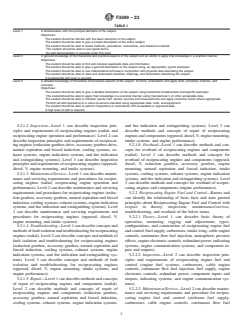
4.3 Each section is categorized into theory, inspection, maintenance/service, troubleshooting, repair, and overhaul with each of these categories having a relevant competency level assigned (reference Table 1).
SCOPE
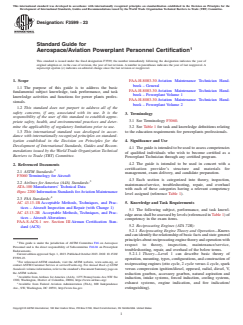
1.1 The purpose of this guide is to address the basic fundamental subject knowledge, task performance, and task knowledge activities and functions for power plants professionals.
1.2 This standard does not purport to address all of the safety concerns, if any, associated with its use. It is the responsibility of the user of this standard to establish appropriate safety, health, and environmental practices and determine the applicability of regulatory limitations prior to use.
1.3 This international standard was developed in accordance with internationally recognized principles on standardization established in the Decision on Principles for the Development of International Standards, Guides and Recommendations issued by the World Trade Organization Technical Barriers to Trade (TBT) Committee.
- Status
- Published
- Publication Date
- 31-Aug-2023
- Technical Committee
- F46 - Aerospace Personnel
- Drafting Committee
- F46.04 - Powerplant Endorsements
Overview
ASTM F3599-23: Standard Guide for Aerospace/Aviation Powerplant Personnel Certification provides a structured framework to evaluate and certify the competencies of individuals aspiring to become certified Powerplant Technicians. Developed by ASTM International and aligned with global standardization practices, this standard supports both industry-recognized certification programs and training providers. The guidance provided ensures certification processes encompass the comprehensive subject knowledge, task performance skills, and safety practices necessary for professionals working with aircraft and aviation powerplants.
Key Topics
Competency Assessment Framework
The standard defines clear levels of knowledge and skill - from basic familiarization (Level 1) to advanced application (Level 3). These tiers help certification providers and employers evaluate candidates effectively, ensuring personnel can safely and competently perform maintenance, inspection, and overhaul tasks.Structured Category Breakdown
All content is categorized into:- Theory: Foundational knowledge of systems, concepts, and operation principles.
- Inspection: Principles and requirements for system assessment.
- Maintenance/Service: Procedures for routine servicing and upkeep.
- Troubleshooting: Methods for fault isolation and diagnostic procedures.
- Repair: Techniques and concepts for fixing identified issues.
- Overhaul: Processes for comprehensive restoration, including disassembly and reassembly.
Practical Focus
Emphasis on practical skill levels through:- Locating and using technical reference materials
- Interpreting data, sketches, and schematics
- Applying appropriate tools and measurement equipment
- Performing operations to return-to-service standards
Alignment with International Standards
The guide is consistent with recognized global principles and incorporates references to key documents such as FAA maintenance handbooks and industry-specific terminology standards.
Applications
ASTM F3599-23 has multiple practical applications across the aviation and aerospace sectors:
Powerplant Technician Certification Programs
Training institutions and certification authorities use the standard to structure exam content, skill demonstrations, and preparation materials-ensuring candidates meet industry expectations for theory and practice.Quality Assurance in Aircraft Maintenance
Airlines, maintenance organizations, and regulatory agencies implement this guide to verify personnel qualifications, improve maintenance safety, and comply with both national and international aviation regulations.Workforce Development
Employers utilize the standard to define job requirements for hiring, promotion, and professional development of powerplant technicians.Standardized Curriculum Development
Educational organizations create curricula based on ASTM F3599-23, providing consistent and comprehensive study paths for students in aviation maintenance programs.
Related Standards
The following industry standards and references are closely linked to ASTM F3599-23:
- ASTM F3060: Terminology for Aircraft
- ATA 100: Manufacturers’ Technical Data Specification (Airlines for America)
- iSpec 2200: Information Standards for Aviation Maintenance
- FAA-H-8083-30: Aviation Maintenance Technician Handbook (General & Powerplant Volumes)
- AC 43.13-1B / AC 43.13-2B: FAA Acceptable Methods, Techniques, and Practices for Aircraft Maintenance and Alterations
- FAA-S-ACS-1: Airman Certification Standards
By referencing ASTM F3599-23, organizations and individuals ensure alignment with best practices for aerospace powerplant personnel certification, promoting safety, technical competency, and operational reliability across the aviation industry.
Get Certified
Connect with accredited certification bodies for this standard

BSI Group
BSI (British Standards Institution) is the business standards company that helps organizations make excellence a habit.

Bureau Veritas
Bureau Veritas is a world leader in laboratory testing, inspection and certification services.

DNV
DNV is an independent assurance and risk management provider.
Sponsored listings
Frequently Asked Questions
ASTM F3599-23 is a guide published by ASTM International. Its full title is "Standard Guide for Aerospace/Aviation Powerplant Personnel Certification". This standard covers: SIGNIFICANCE AND USE 4.1 The guide is intended to be used to assess competencies of qualified individuals who wish to become certified as a Powerplant Technician through any certified program. 4.2 The guide is intended to be used in concert with a certification provider’s structure and materials for management, exam delivery, and candidate preparation. 4.3 Each section is categorized into theory, inspection, maintenance/service, troubleshooting, repair, and overhaul with each of these categories having a relevant competency level assigned (reference Table 1). SCOPE 1.1 The purpose of this guide is to address the basic fundamental subject knowledge, task performance, and task knowledge activities and functions for power plants professionals. 1.2 This standard does not purport to address all of the safety concerns, if any, associated with its use. It is the responsibility of the user of this standard to establish appropriate safety, health, and environmental practices and determine the applicability of regulatory limitations prior to use. 1.3 This international standard was developed in accordance with internationally recognized principles on standardization established in the Decision on Principles for the Development of International Standards, Guides and Recommendations issued by the World Trade Organization Technical Barriers to Trade (TBT) Committee.
SIGNIFICANCE AND USE 4.1 The guide is intended to be used to assess competencies of qualified individuals who wish to become certified as a Powerplant Technician through any certified program. 4.2 The guide is intended to be used in concert with a certification provider’s structure and materials for management, exam delivery, and candidate preparation. 4.3 Each section is categorized into theory, inspection, maintenance/service, troubleshooting, repair, and overhaul with each of these categories having a relevant competency level assigned (reference Table 1). SCOPE 1.1 The purpose of this guide is to address the basic fundamental subject knowledge, task performance, and task knowledge activities and functions for power plants professionals. 1.2 This standard does not purport to address all of the safety concerns, if any, associated with its use. It is the responsibility of the user of this standard to establish appropriate safety, health, and environmental practices and determine the applicability of regulatory limitations prior to use. 1.3 This international standard was developed in accordance with internationally recognized principles on standardization established in the Decision on Principles for the Development of International Standards, Guides and Recommendations issued by the World Trade Organization Technical Barriers to Trade (TBT) Committee.
ASTM F3599-23 is classified under the following ICS (International Classification for Standards) categories: 49.020 - Aircraft and space vehicles in general; 49.050 - Aerospace engines and propulsion systems. The ICS classification helps identify the subject area and facilitates finding related standards.
ASTM F3599-23 is available in PDF format for immediate download after purchase. The document can be added to your cart and obtained through the secure checkout process. Digital delivery ensures instant access to the complete standard document.
Standards Content (Sample)
This international standard was developed in accordance with internationally recognized principles on standardization established in the Decision on Principles for the
Development of International Standards, Guides and Recommendations issued by the World Trade Organization Technical Barriers to Trade (TBT) Committee.
Designation: F3599 − 23
Standard Guide for
Aerospace/Aviation Powerplant Personnel Certification
This standard is issued under the fixed designation F3599; the number immediately following the designation indicates the year of
original adoption or, in the case of revision, the year of last revision. A number in parentheses indicates the year of last reapproval. A
superscript epsilon (´) indicates an editorial change since the last revision or reapproval.
1. Scope FAA-H-8083-30 Aviation Maintenance Technician Hand-
book – General
1.1 The purpose of this guide is to address the basic
FAA-H-8083-30 Aviation Maintenance Technician Hand-
fundamental subject knowledge, task performance, and task
book – Powerplant Volume 1
knowledge activities and functions for power plants profes-
FAA-H-8083-30 Aviation Maintenance Technician Hand-
sionals.
book – Powerplant Volume 2
1.2 This standard does not purport to address all of the
safety concerns, if any, associated with its use. It is the
3. Terminology
responsibility of the user of this standard to establish appro-
3.1 See Terminology F3060.
priate safety, health, and environmental practices and deter-
mine the applicability of regulatory limitations prior to use.
3.2 See Table 1 for task and knowledge definitions relating
1.3 This international standard was developed in accor- to the education requirements for powerplants professionals.
dance with internationally recognized principles on standard-
ization established in the Decision on Principles for the 4. Significance and Use
Development of International Standards, Guides and Recom-
4.1 The guide is intended to be used to assess competencies
mendations issued by the World Trade Organization Technical
of qualified individuals who wish to become certified as a
Barriers to Trade (TBT) Committee.
Powerplant Technician through any certified program.
4.2 The guide is intended to be used in concert with a
2. Referenced Documents
certification provider’s structure and materials for
2.1 ASTM Standards:
management, exam delivery, and candidate preparation.
F3060 Terminology for Aircraft
4.3 Each section is categorized into theory, inspection,
2.2 Airlines for America (A4A) Standards:
maintenance/service, troubleshooting, repair, and overhaul
ATA-100 Manufacturers’ Technical Data
with each of these categories having a relevant competency
iSpec 2200 Information Standards for Aviation Maintenance
level assigned (reference Table 1).
2.3 FAA Standards:
AC 43.13-1B Acceptable Methods, Techniques, and Prac- 5. Knowledge and Task Requirements
tices – Aircraft Inspection and Repair (with Change 1)
5.1 The following subject, performance, and task knowl-
AC 43.13-2B Acceptable Methods, Techniques, and Prac-
edge areas shall be assessed by levels (referenced in Table 1) of
tices – Aircraft Alterations
competency in the exam items.
FAA-S-ACS-1 rev. Section III Airman Certification Stan-
5.2 Reciprocating Engines (ATA 72R):
dard (ACS)
5.2.1 Reciprocating Engine Theory and Operation—Knows
and can identify the relationship of basic facts and state general
principles about reciprocating engine theory and operation with
This guide is under the jurisdiction of ASTM Committee F46 on Aerospace
respect to theory, inspection, maintenance/service,
Personnel and is the direct responsibility of Subcommittee F46.04 on Powerplant
troubleshooting, repair, and overhaul of the below terms.
Endorsements.
Current edition approved Sept. 1, 2023. Published October 2023. DOI: 10.1520/
5.2.1.1 Theory—Level 1 can describe basic theory of
F3599-23.
operation, mounting, types, configurations, and construction of
For referenced ASTM standards, visit the ASTM website, www.astm.org, or
reciprocating engines (otto cycle, 2 cycle versus 4 cycle, spark
contact ASTM Customer Service at service@astm.org. For Annual Book of ASTM
versus compression ignition/diesel, opposed, radial, diesel, V,
Standards volume information, refer to the standard’s Document Summary page on
the ASTM website.
reduction gearbox, accessory gearbox, natural aspiration and
Available from Airlines for America (A4A), 1275 Pennsylvania Ave NW Ste
induction, intake systems, forced induction, cooling systems,
1300, Washington, District of Columbia, 20004, https://www.airlines.org/.
exhaust systems, engine indication, and fire indication/
Available from Federal Aviation Administration (FAA), 800 Independence
Ave., SW, Washington, DC 20591, http://www.faa.gov. extinguishing).
Copyright © ASTM International, 100 Barr Harbor Drive, PO Box C700, West Conshohocken, PA 19428-2959. United States
F3599 − 23
TABLE 1
Level 1 A familiarization with the principal elements of the subject.
Objectives:
The student should be familiar with the basic elements of the subject.
The student should be able to give a simple description of the entire subject.
The student should be able to locate methods, procedures, instructions, and reference material.
The student should be able to use typical terms.
No skill demonstration is required under this level.
Level 2 A general knowledge of the theoretical and practical aspects of the subject and an ability to apply that knowledge in a practical manner.
Objectives:
The student should be able to find and interpret applicable data and information.
The student should be able to give a general description of the subject using, as appropriate, typical examples.
The student should be able to use mathematical formulae in conjunction with physical laws describing the subject.
The student should be able to read and understand sketches, drawings, and schematics describing the subject.
A fundamental skill level is required.
Level 3 A detailed knowledge of theoretical and practical aspects of the subject. To know, understand, and apply facts, principles, theories, and
concepts.
Objectives:
The student should be able to give a detailed description of the subject using theoretical fundamentals and specific examples.
The studentshould be able to apply their knowledge in a practical manner using manufacturer’s or other acceptable data.
The student should be able to interpret results from various sources and measurements and apply corrective action where appropriate.
Perform all skill operations to a return-to-service standard using appropriate data, tools, and equipment.
The student should be able to perform inspections in accordance with acceptable or approved data.
A high level of skill is required.
5.2.1.2 Inspection—Level 1 can describe inspection prin- and fire indication and extinguishing systems). Level 3 can
ciples and requirements of reciprocating engines (radial, and describe methods and concepts of repair of reciprocating
reciprocating engine operation and performance). Level 2 can engines and components (opposed, diesel, V, engine mounting,
describe inspection principles and requirements of reciprocat- intake systems, and engine performance).
ing engines (reduction gearbox drive, accessory gearbox drive, 5.2.1.6 Overhaul—Level 1 can describe methods and con-
natural aspiration and forced induction, cooling systems, ex- cepts for overhaul of reciprocating engines and components
haust systems, engine indication systems, and fire indication (radial). Level 2 can describe methods and concepts for
and extinguishing systems). Level 3 can describe inspection overhaul of reciprocating engines and components (opposed,
principles and requirements of reciprocating engines (opposed, diesel, V, reduction gearbox, accessory gearbox, engine
diesel, V, engine mounting, and intake systems). mounting, natural aspiration and forced induction, intake
5.2.1.3 Maintenance/Service—Level 1 can describe mainte- systems, cooling systems, exhaust systems, engine indication
nance and servicing requirements and procedures for recipro- systems, and fire indication and extinguishing systems). Level
cating engines (radial, reciprocating engine operation and 3 can describe methods and concepts for overhaul of recipro-
performance). Level 2 can describe maintenance and servicing cating engines and components (engine performance).
requirements and procedures for reciprocating engines (reduc- 5.2.2 Reciprocating Engine Fuel and Control—Knows and
tion gearbox, accessory gearbox, natural aspiration and forced can identify the relationship of basic facts and state general
induction, cooling systems, exhaust systems, engine indication principles about Reciprocating Engine Fuel and Control with
systems, and fire indication and extinguishing systems). Level respect to theory, inspection, maintenance/service,
3 can describe maintenance and servicing requirements and troubleshooting, and overhaul of the below terms.
procedures for reciprocating engines (opposed, diesel, V, 5.2.2.1 Theory—Level 1 can describe basic theory of
engine mounting, and intake systems). operation, mounting, rigging and adjustment, types,
5.2.1.4 Troubleshooting—Level 1 can describe concepts and configurations, and construction of reciprocating engine fuel
methods of fault isolation and troubleshooting for reciprocating and control (fuel supply, carburetors, intake icing, cable engine
engines (radial). Level 2 can describe concepts and methods of controls, continuous flow fuel injection, atmospheric pressure
fault isolation and troubleshooting for reciprocating engines effects, engine electronic controls, redundant power, indicating
(reduction gearbox, accessory gearbox, natural aspiration and systems, engine communication systems, and component in-
forced induction, cooling systems, exhaust systems, engine puts and outputs).
indication systems, and fire indication and extinguishing sys- 5.2.2.2 Inspection—Level 2 can describe inspection prin-
tems). Level 3 can describe concepts and methods of fault ciples and requirements of reciprocating engine fuel and
isolation and troubleshooting for reciprocating engines control (engine fuel systems, carburetors, cable engine
(opposed, diesel, V, engine mounting, intake systems, and controls, continuous flow fuel injection, fuel supply, engine
engine performance). electronic controls, redundant power, component inputs and
5.2.1.5 Repair—Level 1 can describe methods and concepts outputs, indicating systems, and engine communication sys-
of repair of reciprocating engines and components (radial). tems).
Level 2 can describe methods and concepts of repair of 5.2.2.3 Maintenance/Service—Level 2 can describe mainte-
reciprocating engines and components (reduction gearbox, nance and servicing requirements and procedure for recipro-
accessory gearbox, natural aspiration and forced induction, cating engine fuel and control (airframe fuel supply,
cooling systems, exhaust systems, engine indication systems, carburetors, cable engine controls, continuous flow fuel
F3599 − 23
injection, reciprocating engine electronic controls, redundant 5.2.3.4 Troubleshooting—Level 1 can describe concepts and
power, component inputs and outputs, indicating systems, and methods of fault isolation and troubleshooting for engine
engine communication systems). Level 3 can describe mainte- lubrication systems (use of sampling). Level 2 can describe
nance and servicing requirements and procedure for recipro- concepts and methods of fault isolation and troubleshooting for
cating engine fuel and control (adjustment/rigging of
engine lubrication systems (reciprocating engine lubrication
carburetors, intake icing, and engine performance). systems, types and uses of oils, wet and dry sump, cooling,
filter types and media, adjustments and effects, and indicating
5.2.2.4 Troubleshooting—Level 2 can describe concepts and
systems).
methods of fault isolation and troubleshooting for reciprocating
engine fuel and control (carburetors, cable engine controls,
5.2.3.5 Repair—Level 1 can describe methods and concepts
continuous flow fuel injection, airframe fuel supply, atmo-
of repair of engine lubrication systems (use of sampling). Level
spheric pressure effects, reciprocating engine electronic
2 can describe methods and concepts of repair of engine
controls, redundant power, component inputs and outputs,
lubrication systems (reciprocating engine lubrication systems,
indicating systems communication, and engine communication
types and uses of oils, wet and dry sump, cooling, filter types
systems). Level 3 can describe concepts and methods of fault
and media, adjustments and effects, and indicating systems).
isolation and troubleshooting for reciprocating engine fuel and
5.2.3.6 Overhaul—Level 1 can describe methods and con-
control (airframe fuel supply, carburetors, engine performance,
cepts for overhaul of engine lubrication systems (reciprocating
and intake icing).
engine lubrication systems, types and uses of oils, wet and dry
5.2.2.5 Repair—Level 2 can describe methods and concepts
sump, cooling, filter types and media, inspecting filter media,
of repair of reciprocating engine fuel and control (carburetors,
adjustments and effects, use of sampling, and indicating
cable engine controls, continuous flow fuel injection, airframe
systems).
fuel supply, atmospheric pressure effects, reciprocating engine
5.2.4 Reciprocating Engine Electrical—Knows and can
electronic controls, redundant power, component inputs and
identify the relationship of basic facts and state general
outputs, indicating systems communication, and engine com-
principles about reciprocating engine electrical with respect to
munications). Level 3 can describe methods and concepts of
theory, inspection, maintenance/service, troubleshooting, and
repair of reciprocating engine fuel and control (airframe fuel
overhaul of the below terms.
supply, carburetors, engine performance, and intake icing).
5.2.4.1 Theory—Level 1 can describe basic theory of
5.2.2.6 Overhaul—Level 1 can describe methods and con-
operation, mounting, rigging and adjustment, types,
cepts for overhaul of reciprocating engine fuel and control
configurations, and construction of reciprocating engine elec-
(engine electronic controls, redundant power, component in-
trical systems (reciprocating engine charging systems, recipro-
puts and outputs, indicating systems communications, and
cating engine starting systems, and engine wire harness).
engine communications). Level 3 can describe methods and
5.2.4.2 Inspection—Level 2 can describe inspection prin-
concepts for overhaul of reciprocating engine fuel and control
ciples and requirements of reciprocating engine electrical
(carburetors and engine performance).
systems (reciprocating engine charging systems, reciprocating
5.2.3 Reciprocating Engine Lubrication—Knows and can
engine starting systems, and engine wire harnesses). Level 3
identify the relationship of basic facts and state general
can describe inspection principles and requirements of recip-
principles about reciprocating engine lubrication with respect
rocating engine electrical systems (reciprocating engine charg-
to theory, inspection, maintenance/service, troubleshooting,
ing systems).
and overhaul of the below terms.
5.2.4.3 Maintenance/Service—Level 2 can describe mainte-
5.2.3.1 Theory—Level 1 can describe basic theory of
nance and servicing requirements and procedure for recipro-
operation, types, construction, adjustments, troubleshooting,
cating engine electrical systems (reciprocating engine charging
and configurations of engine lubrication systems (types and
systems, reciprocating engine starting systems, and engine wire
uses of oils, wet and dry sump, cooling, filter types and media,
harnesses). Level 3 can describe maintenance and servicing
and indicating systems).
requirements and procedure for reciprocating engine electrical
5.2.3.2 Inspection—Level 1 can describe inspection prin-
systems (reciprocating engine charging systems).
ciples and requirements of engine lubrication systems (inspect-
5.2.4.4 Troubleshooting—Level 2 can describe concepts and
ing filter media and use of sampling). Level 2 can describe
methods of fault isolation and troubleshooting for reciprocating
inspection principles and requirements of engine lubrication
engine electrical systems (reciprocating engine charging
systems (reciprocating engine lubrication systems, types and
systems, reciprocating engine starting systems, and engine wire
uses of oils, wet and dry sump, cooling, filter types and media,
harnesses). Level 3 can describe concepts and methods of fault
adjustments and effects, and indicating systems).
isolation and troubleshooting for reciprocating engine electri-
5.2.3.3 Maintenance/Service—Level 1 can describe mainte-
cal systems (reciprocating engine charging systems).
nance and servicing requirements and procedures for engine
5.2.4.5 Repair—Level 2 can describe methods and concepts
lubrication systems (use of sampling). Level 2 can describe
maintenance and servicing requirements and procedures for of repair of engine electrical systems (reciprocating engine
engine lubrication systems (reciprocating engine lubrications charging systems, reciprocating engine starting systems, and
systems, types and uses of oils, wet and dry sump, cooling, engine wire harnesses). Level 3 can describe methods and
filter types and media, adjustments and effects, and indicating concepts of repair of engine electrical systems (reciprocating
systems). engine charging systems).
F3599 − 23
5.2.4.6 Overhaul—Level 1 can describe methods and con- fire indicating and extinguishing systems, inspection principles
cepts for overhaul of engine electrical systems (reciprocating of turbine engines, performance of turbine engines, and rotor-
engine charging systems, reciprocating engine starting craft power theory, configuration, and differences).
systems, engine wire harnesses, and reciprocating engine
5.3.1.2 Inspection—Level 1 can describe inspection prin-
charging systems).
ciples and requirements of turbine engines (turbojet). Level 2
5.2.5 Reciprocating Engine Ignition—Knows and can iden-
can describe inspection principles and requirements of turbine
tify the relationship of basic facts and state general principles
engines (turbofan, turboprop, turboshaft, APU, inlet
about reciprocating engine ignition with respect to theory,
configuration, turbine engine ice and rain protection, compres-
inspection, maintenance/service, troubleshooting, and overhaul
sor section, compressor types, surge and surge controls,
of the below terms.
sources and airframe uses of bleed air, engine use of air for
5.2.5.1 Theory—Level 1 can describe basic theory of
cooling and sealing, diffuser section, combustion section, types
operation, mounting, rigging and adjustment, types,
of combustors, turbine section, multi-stage turbines, free and
configurations, and construction of reciprocating engine igni-
direct drive turbines, active tip clearance, turbine engine
tion (magneto operation, magneto maintenance and
exhaust systems, regeneration/afterburning, accessory gearbox
adjustment, spark plugs, impulse coupling or shower of sparks,
and drive, turbine engine indicating systems, turbine engine
and electronic ignition systems).
fire indicating and extinguishing systems, inspection principles
5.2.5.2 Inspection—Level 2 can describe inspection prin-
of turbine engines, performance of turbine engines, and rotor-
ciples and requirements of reciprocating engine ignition (spark
craft power theory, configuration, and differences).
plugs, impulse coupling or shower of sparks, and electronic
5.3.1.3 Maintenance/Service—Level 1 can describe mainte-
ignition systems).
nance and servicing requirements and procedure for turbine
5.2.5.3 Maintenance/Service—Level 2 can describe mainte-
engines (turbojet). Level 3 can describe maintenance and
nance and servicing requirements and procedures for recipro-
servicing requirements and procedure for turbine engines
cating engine ignition systems (magneto operation, magneto
(turbojet, turbofan, turboprop, turboshaft, APU, inlet
maintenance and adjustment, spark plugs, impulse coupling or
configuration, turbine engine ice and rain protection, compres-
shower of sparks, and electronic ignition systems).
sor section, compressor types, surge and surge controls,
5.2.5.4 Troubleshooting—Level 2 can describe concepts and
sources and airframe uses of bleed air, engine use of air for
methods of fault isolation and troubleshooting for reciprocating
cooling and sealing, diffuser section, combustion section, types
engine ignition systems (magneto operation, magneto mainte-
of combustors, turbine section, multi-stage turbines, free and
nance and adjustment, spark plugs, impulse coupling or shower
direct drive turbines, active tip clearance, turbine engine
of sparks, and electronic ignition systems).
exhaust systems, regeneration/afterburning, accessory gearbox
5.2.5.5 Repair—Level 2 can describe methods and concepts
and drive, turbine engine indicating systems, turbine engine
of repair of reciprocating engine ignition systems (magneto
fire indicating and extinguishing systems, inspection principles
operation, magneto maintenance and adjustment, spark plugs,
of turbine engines, performance of turbine engines, and rotor-
impulse coupling or shower of sparks, and electronic ignition
craft power theory, configuration, and differences).
systems).
5.3.1.4 Troubleshooting—Level 1 can describe concepts and
5.2.5.6 Overhaul—Level 1 can describe methods and con-
methods of fault isolation and troubleshooting for turbine
cepts for overhaul of reciprocating engine ignition systems
engines (turbojet). Level 3 can describe concepts and methods
(magneto operation, magneto maintenance and adjustment,
of fault isolation and troubleshooting for turbine engines
spark plugs, impulse coupling or shower of sparks, and
(turbojet, turbofan, turboprop, turboshaft, APU, inlet
electronic ignition).
configuration, turbine engine ice and rain protection, compres-
sor section, compressor types, surge and surge controls,
5.3 Turbine Engine (ATA 72T):
sources and airframe uses of bleed air, engine use of air for
5.3.1 Turbine Engine Theory and Operation—Knows and
cooling and sealing, diffuser section, combustion section, types
can identify the relationship of basic facts and state general
of combustors, turbine section, multi-stage turbines, free and
principles about turbine engine theory and operation with
direct drive turbines, active tip clearance, turbine engine
respect to theory, inspection, maintenance/service,
exhaust systems, regeneration/afterburning, accessory gearbox
troubleshooting, and overhaul of the below terms.
and drive, turbine engine indicating systems, turbine engine
5.3.1.1 Theory—Level 1 can describe basic theory of
fire indicating and extinguishing systems, inspection principles
operation, mounting, rigging and adjustment, types,
of turbine engines, performance of turbine engines, and rotor-
configurations, and construction of turbine engine theory and
craft power theory, configuration, and differences).
operation (turbojet, turbofan, turboprop, turboshaft, APU, inlet
configuration, turbine engine ice and rain protection, compres- 5.3.1.5 Repair—Level 1 can describe methods and concepts
sor section, compressor types, surge and surge controls, of repair of turbine engines (turbojet). Level 2 can describe
sources and airframe uses of bleed air, engine use of air for methods and concepts of repair of reciprocating engine fuel
cooling and sealing, diffuser section, combustion section, types and control (turbojet, turbofan, turboprop, turboshaft, APU,
of combustors, turbine section, multi-stage turbines, free and inlet configuration, turbine engine ice and rain protection,
direct drive turbines, active tip clearance, turbine engine compressor section, compressor types, surge and surge
exhaust systems, regeneration/afterburning, accessory gearbox controls, sources and airframe uses of bleed air, engine use of
and drive, turbine engine indicating systems, turbine engine air for cooling and sealing, diffuser section, combustion
F3599 − 23
section, types of combustors, turbine section, multi-stage munications and synch. Level 3 can describe inspection prin-
turbines, free and direct drive turbines, active tip clearance, ciples and requirements of fuel nozzles and spray patterns, and
turbine engine exhaust systems, regeneration/afterburning, ac- adjusting and effects.
cessory gearbox and drive, turbine engine indicating systems,
5.3.2.3 Maintenance/Service—Level 2 can describe mainte-
turbine engine fire indicating and extinguishing systems, in-
nance and servicing requirements and procedures for airframe
spection principles of turbine engines, performance of turbine
supply to engine, turbine fuel controls, hydromechanical fuel
engines, and rotorcraft power theory, configuration, and differ-
controls, role of pneumatics in hydromechanical fuel controls,
ences).
surge c
...