


ISO/IEC 11518-6:1996
(Main)Information technology - High-Performance Parallel Interface - Part 6: Physical Switch Control (HIPPI-SC)
Information technology - High-Performance Parallel Interface - Part 6: Physical Switch Control (HIPPI-SC)
General Information
- Status
- Published
- Publication Date
- 05-Jun-1996
- Technical Committee
- ISO/IEC JTC 1/SC 25 - Interconnection of information technology equipment
- Current Stage
- DELPUB - Deleted Publication
- Start Date
- 06-Jun-1996
- Completion Date
- 14-Feb-2026
Relations
- Effective Date
- 05-Sep-2023
Overview
ISO/IEC 11518-6:1996 - Information technology - High‑Performance Parallel Interface - Part 6: Physical Switch Control (HIPPI‑SC) defines the control protocol for HIPPI physical‑layer switches. As Part 6 of the HIPPI family, HIPPI‑SC specifies how Connection Control Information (CCI) / I‑Fields are formatted and interpreted to establish, maintain and tear down connections across a HIPPI fabric made up of one or more physical switches. The standard focuses on the physical‑layer switch behaviour rather than higher‑level error recovery.
Key topics and technical requirements
- CCI / I‑Field format: Defines bit‑level semantics for the I‑Field used during connection sequences. Important bit fields described include:
- L (bit 31) - Locally administered indicator.
- VU (bits 30–29) - Vendor‑unique bits passed unchanged to the destination.
- W (bit 28) - Double‑wide indicator (0 = 800 Mbit/s, 32‑bit DATA BUS via Cable‑A; 1 = 1600 Mbit/s, 64‑bit DATA BUS using Cable‑A and Cable‑B).
- D (bit 27) - Direction bit controlling which end of the routing control field is current.
- PS (bits 26–25) - Path selection: source routing or logical addressing modes.
- C (bit 24) - Camp‑on flag: instructs switches whether to reject or wait for busy paths.
- Source routing: When PS = 00, the Routeing Control field is split into subfields sized by switch port count (subfield size = ceil(log2(N))). Switches consume the current subfield to select an output port and insert their input port number for reverse pathing.
- Logical addressing: When PS indicates logical addressing, switches select routes based on stored logical addresses and route tables.
- Fabric support: I‑Fields and CCIs can span multiple switches across a fabric; the standard supports fabrics composed of switches with differing port counts.
- Camp‑on semantics: Camp‑on allows sources to request that switches retry busy paths instead of immediately rejecting; selection among multiple camped sources is implementation‑specific.
- Annexes: Informative annexes provide routing examples, destination‑address usage, connections between fabrics and implementation observations (including special considerations for camp‑on and interpretation of bits/signals).
Applications and users
HIPPI‑SC is relevant to:
- Switch and NIC vendors implementing HIPPI physical‑layer switches and ports.
- Systems integrators and data centre architects designing high‑performance HIPPI fabrics for compute clusters, visualization systems, and block‑transfer peripherals.
- Firmware and hardware engineers responsible for implementing I‑Field parsing, source routing and camp‑on behavior at the physical layer.
- Use cases include high‑bandwidth, low‑latency interconnects where deterministic physical switch control and direct path routing are required.
Related standards
- ISO/IEC 11518‑1:1995 (HIPPI‑PH) - Mechanical, electrical and signalling protocol (physical layer).
- ISO/IEC 11518‑3:1996 (HIPPI‑LE) - Link encapsulation.
- Other HIPPI parts cover framing, memory interface and command mappings.
Keywords: ISO/IEC 11518-6:1996, HIPPI‑SC, HIPPI switch control, I‑Field, CCI, source routing, logical address, camp‑on, HIPPI fabric.

Get Certified
Connect with accredited certification bodies for this standard

BSI Group
BSI (British Standards Institution) is the business standards company that helps organizations make excellence a habit.

NYCE
Mexican standards and certification body.
Sponsored listings
Frequently Asked Questions
ISO/IEC 11518-6:1996 is a standard published by the International Electrotechnical Commission (IEC). Its full title is "Information technology - High-Performance Parallel Interface - Part 6: Physical Switch Control (HIPPI-SC)". This standard covers: Information technology - High-Performance Parallel Interface - Part 6: Physical Switch Control (HIPPI-SC)
Information technology - High-Performance Parallel Interface - Part 6: Physical Switch Control (HIPPI-SC)
ISO/IEC 11518-6:1996 is classified under the following ICS (International Classification for Standards) categories: 35.200 - Interface and interconnection equipment. The ICS classification helps identify the subject area and facilitates finding related standards.
ISO/IEC 11518-6:1996 has the following relationships with other standards: It is inter standard links to ISO/IEC 11518-6:2000. Understanding these relationships helps ensure you are using the most current and applicable version of the standard.
ISO/IEC 11518-6:1996 is available in PDF format for immediate download after purchase. The document can be added to your cart and obtained through the secure checkout process. Digital delivery ensures instant access to the complete standard document.
Standards Content (Sample)
INTERNATIONAL
lSO/lEC
STANDARD
11518-6
First edition
1996-06-15
Information technology - High-Performance
Parallel Interface -
Part 6:
Physical Switch Control (HIPPI-SC)
Technologies de I’informa tion - Interface parall&le 2 haute performance -
Partie 6: Commande de commutation physique (HIPPI-SC)
Reference number
lSO/lEC II 518-6:1996(E)
Contents
Page
. . .
III
Foreword . . . . . . . . . . . . . . . . . . . . . . . . . . . . . . . . . . . . . . . . . . . . . . . . . . . . . . . . . . . . . . .*.
iv
Introduction . . . . . . . . . . . . . . . . . . . . . . . . . . . . . . . . . . . . . . . . . . . . . . . . . . . . . . . . . . . . . . . . . . . . . . . . . . . . . . . . . . . . . . . .
1 Scope . . . . . .*.*.
2 Normative references .,,.
3 Definitions and conventions . . . . . . . . . . . . . . . . . . . . . . . . . . . . . . . . . . . . . . . . . . . . . . . . . . . . . . . . . . . . 1
. . . . . . . . . . . . . . . . . . . . . . . . . . . . . . . . . . . . . . . . . . . . . . . . . . . . . . . . . . . . . . . . . . . . . . . . . . . 1
31 . Definitions
Editorial conventions . . . . . . . . . . . . . . . . . . . . . . . . . . . . . . . . . . .*. 2
32 .
. . . . . . . . . . . . . . . . . . . . . . . . . . . . . . . . . . . . . . . . . . . . . . . . . . . . . . . . . . . . . . . . .~. 2
4 CCI and I-Field formats
. . . . . . . . . . . . . . . . . . . . . . . . . . . . . . . . . . . . . . . . . . . . . . . . . . . . . . . . . . . . . . . . . . . . . . . . . . . . . . . . 2
41 . Format
. . . . . . . . . . . . . . . . . . . . . . . . . . . . . . . . . . . . . . . . . . . . . . . . . . .*. 3
42 . Source routeing
. . . . . . . . . . . . . . . . . . . . . . . . . . . . . . . . . . . . . . . . . . . . . . . . . . . . . . . . . . . . . . . . . . 3
43 Logical address
. . . . . . . . . . . . . . . . . . . . . . . . . . . . . . . . . . . . . . . . . . . . . . . . . . . . . . . . . . . 3
4’4 . Reserved addresses
5 Switch behaviour . . . . . . . . . . . . . . . . .*.
. . . . . . . . . . . . . . . . . . . . . . . . . . . . . . . . . . . . . . . . . . 3
51 . Use of INTERCONNECT signals
52 . CLOCK signal . . . . . . . . . . . . . . . . . . . . . . . . . . . . . . .‘.
Connection request successful . . . . . . . . . . . . . . . . . . . . . . . . . . . . . . . . . . . . . . . . . . . 5
53 .
. Breaking a connection . . . . . . . . . . . . . . . . . . . . . . . . . . . . . . . . . . . . . . . . . . . . . . . . . . . . . . . .
Connection request unsuccessful . . . . . . . . . . . . . . . . . . . . . . . . . . . . . . . . . . . . . . . 5
55 .
Annexes
. . . . . . . . . . . . . . . . . . . . . . . . . . . . . . . . . . . . . . .*.*. 6
A Routeing with the CCI and I-Field
. . . . . . . . . . . . . . . . . . . . . . . . . . . . . . . . . . . . . . . . . . . . . . . . . . . . . . . . . . . . . . . . 6
Al General example
. . . . . . . . . . . . . . . . . . . . . . . . . . . . . . . . . . . . . . . . . . . . . . . . . . . . . . . . . . . . . . . . . . 6
A’2 Source routeing
. . . . . . . . . . . . . . . . . . . . . . . . . . . . . . . . . . . . . . . . . . . . . . . . 7
A’3 Using a destination address
. . . . . . . . . . . . . . . . . . . . . . . . . . . . . . . . . . . . . . . . . . . . . . 9
A’4 . Connections between fabrics
. . . . . . . . . . . . . . . . . . . . . . . . . . . . . . . . . . . . . . . . . . . . . . . . . . . . . . . 10
B Implementation observations
. . . . . . . . . . . . . . . . . . . . . . . . . . . . . . . . . . . 10
Bl Special consideration for Camp-on
B-2 . Interpretation of the W bit and INTERCONNECT signals.1 0
II
C Bibliography . .~.
Figures
.......................................................................... iv
1 HIPPI documents
..................................................................... 4
2 CCI and I-Field format
.................. 4
3 I-Field with source routeing, D = 0, and 16 by 16 switch
............... .4
4 I-Field with source routeing, D = 1, and 32 by 32 switch.
....................................... 4
5 I-Field with destination address and D = 0
....................................... 4
6 I-Field with destination address and D = 1
0 lSO/IEC 1996
All rights reserved. Unless otherwise specified, no part of this publication may be
reproduced or utilized in any form or by any means, electronic or mechanical, including
photocopying and microfilm, without permission in writing from the publisher.
ISO/I EC Copyright Office l Case postale 56 l CH-1211 Geneve 20 l Switzerland
Printed in Switzerland
Physical Switch Control (HIPPI-SC)
ii
@ lSO/IEC
Foreword
IS0 (the International Organization for Standardization) and IEC (the International
Electrotechnical Commission) form the specialized system for worldwide standardiz-
ation. National bodies that are members of IS0 or IEC participate in the development
of International Standards through technical committees established by the respective
organization to deal with particular fields of technical activity. IS0 and IEC technical
committees collaborate in fields of mutual interest. Other international organizations,
governmental and non-governmental, in liaison with IS0 and IEC, also take part in the
work.
In the field of information technology, IS0 and IEC have established a joint technical
Draft International Standards adopted by the joint
committee, ISO/IEC JTC 1.
technical committee are circulated to national bodies for voting. Publication as an
International Standard requires approval by at least 75% of the national bodies casting
a vote.
International Standard lSO/IEC 11518-6 was prepared by Joint Technical Committee
ISO/IEC JTC 1, Information technology, Subcommittee SC 25, Interconnection of
information technology equipment.
ISO/IEC 11518 will consist of the following parts, under the general title Information
technology - High- Performance Parallel Interface:
- Part I: Mechanical, electrical, and signaling protocol specification (HIPPI-PH)
- Part 2: Framing Protocol (HIPPI-FP)
- Part 3: Encapsulation of /SO//EC 8802-Z (IEEE Std 802.2) Logicial fink Control
Protocol Data Units (HIPPI-LE)
- Part 4: Mapping of HIPPI to IPI device generic command sets (HIPPI-IPI)
- Parf 5: Memory Interface (HIPPI-MI)
- Part 6: Physical Switch Control (HIPPI-SC)
Annexes A to C of this part of ISO/IEC 11518 are for information only.
. . .
III
Physical Switch Control (HI PPI-SC)
ISO/IEC 11518=6:1996(E) 0 lSO/IEC
Introduction
This part of ISO/IEC 11518 defines the control for HIPPI physical layer switches. HlPPil
by itself is an efficient simplex high-performance point-to-point interface. The physical
switch control allows the interconnection of multiple HIPPI based equipments with HIPPI
physical layer switches.
Characteristics of this HIPPI physical switch control protocol include
- Support for both source routeing and destination addresses.
- I-Fields and CCls can span multiple physical layer switches within a fabric.
- When a Destination end-point receives a packet, it can easily manipulate the I-Field
received to return a reply packet to the Source.
- Support for physical layer switches with differing numbers of ports, all within the
same fabric.
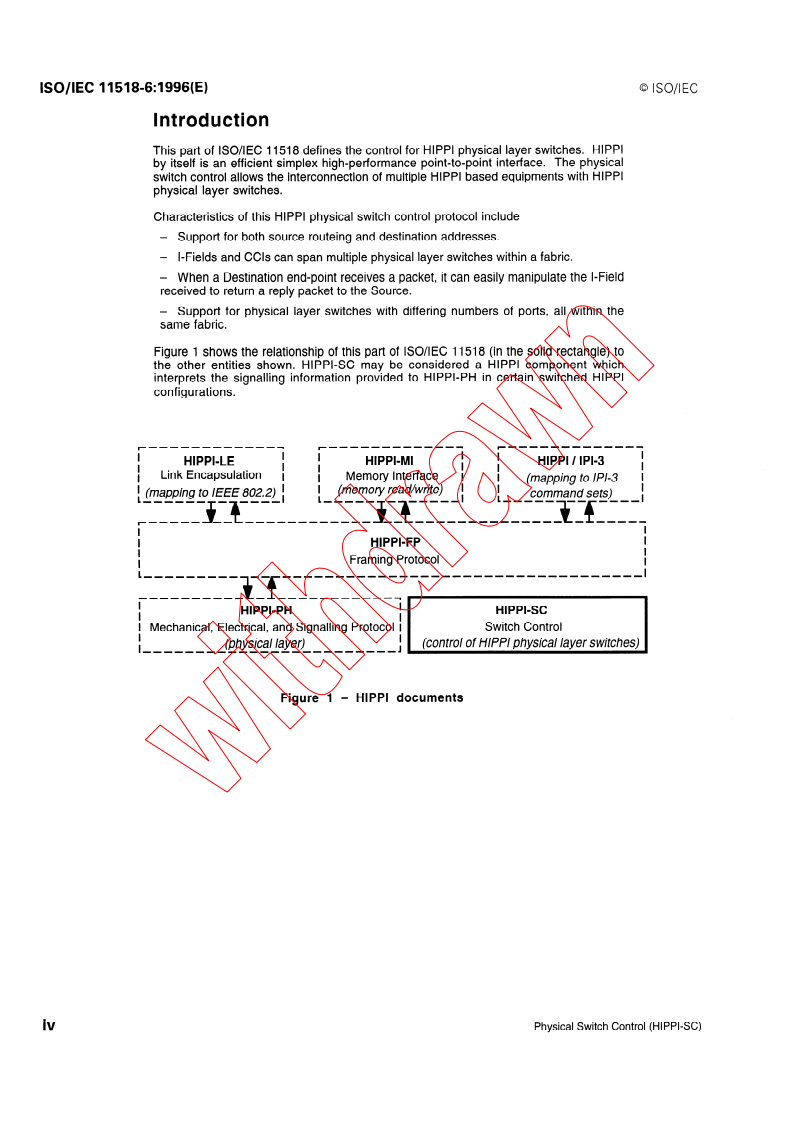
Figure 1 shows the relationship of this part of ISOAEC 11518 (in the solid rectangle) to
the other entities shown. HIPPI-SC may be considered a HIPPI component which
interprets the signalling information provided to HIPPI-PH in certain switched HIPPI
configurations.
~----~----~-I~ rI-I---------y r------------‘I
I I I
I I I
HIPPI-LE HIPPI-MI HIPPI / IPI-
I I I
I I I
Link Encapsulation t I
Memory Interface I I
I (mapping to IPI- 1
I (memory read/write) 1 I
I (mapping to IEEE 802.2) 1
command sets) I
------ - ---- I 1 ----- -- -me-
mm-I-I--I--- 3* DB m-m----------- if - -m--q
I
I
HIPPI-FP
I
Framing Protocol
I
i I~~I----I-I~---------I~~--IIII~--III---I~-~I--- I
--I-----m- II-------IIy A
I
I
tkP”PH HIPPI-SC
I
I
I Mechanical, Electrical, and Signalling Protocol I Switch Control
I
(physical layer) 1 (control of HlPPl physical layer switches)
I ----II---II-I-II-I----II ,
Figure 1 - HIPPI documents
iv Physical Switch Control (HI PPI-SC)
INTERNATIONAL STANDARD @ lSO/K
ISO/IEC 11518=6:1996(E)
Information technology -
High-Performance Parallel Interface -
Part 6:
Physical Switch Control (HIPPI-SC)
1 Scope 3 Definitions and conventions
This part of ISO/IEC 11518 provides switch control for
physical layer switches using the High-Performance 3.1 Definitions
Parallel Interface (HIPPI), a high-performance point-to-
point interface between data-processing equipment. This For the purposes of this part of ISO/IEC 11518, the follow-
part of ISO/IEC 11518 does not protect against errors ing definitions apply.
introduced by intermediate devices interconnecting
3.1 .I connection: Condition of the HIPPI-PH when
multiple HIPPI-PHs.
data transfers from a Source end-point to a Destination
end-point are possible.
The purpose of this part of lSO/IEC 11518 is to facilitate
the development and use of the HIPPI in computer
3.1.2 connection control information (Ccl): A
systems by providing common physical switch control. It
parameter sent as part of the sequence of operations
provides switch control structures for physical layer
establishing a connection from a Source to a Destination.
switches interconnecting computers, high-performance
3.1.3 end-point: The equipment at either end of the
display systems, and high-performance, intelligent block-
fabric for a particular connection.
transfer peripherals. This part of ISO/IEC 11518 also
applies to point-to-point HIPPI topologies.
3.1.4 Destination: The equipment at the end of the
interface that receives the data.
3.1.5 Destination end-point: The equipment at the
end of the fabric that receives the data.
2 Normative references
3.1.6 fabric: A group of one or more physical layer
switches that can be traversed with one I-Field.
The following standards contain provisions which, through
3.1.7 I-Field: A 32-bit field that is sent as part of the
reference in this text, constitute provisions of this part of
lSO/IEC 11518. At the time of publication, the editions sequence of the physical layer operations establishing a
connection from a Source to a Destination.
indicated were valid. All standards are subject to revision,
and parties to agreements based on this part of ISO/IEC
3.1.8 interface: The set of protocols and control
11518 are encouraged to investigate the possibility of
signals used to connect a Source and Destination, as
applying the most recent editions of the standards
defined by HIPPI-PH. Within a fabric, an interface
Members of IEC and IS0 maintain
indicated below.
connects an end-point to a switch or a switch to a
registers of currently valid International Standards.
neighbouring switch.
ISO/I EC 11518- 1: 1995, Information technology, High-
3.1.9 Logical Address: An address stored in an I-
Performance Parallel Interface - Part I: Mechanical,
Field that uniquely identifies a Destination end-point or set
electrical, and signalling protocol specification (HIPPI-
of end-points.
.
W
3.1 .I 0 optional: Features that are not required by
this part of lSO/IEC 11518. However, if any optional
lSO/IEC 11518-3:1996, Information technology, High-
feature defined by this part of lSO/IEC 11518 is
Performance Parallel Interface - Part 3: Encapsulation of
implemented, it shall be implemented according to this part
ISO/IEC 8802-Z (IEEE Std 802.2) Logical Link Control
of ISO/IEC 11518.
Protocol Data Units (HIPPI-LE).
3.1 .I 1 packet: A data set, as defined by HIPPI-PH,
sent from Source to Destination. A packet is composed of
one or more bursts.
Physical Switch Control (HI PPI-SC)
0 lSO/IEC
ISO/IEC 11518=6:1996(E)
W = Double-wide (bit 28) = 0 designates that the Source is
3.1 .I 2 physical layer switch: A device which
using the 800 Mbit/s data rate option (DATA BUS is 32 bits
allows a single HIPPI physical layer interface to switch
wide as defined in HIPPI-PH); the switch shall connect
between multiple HIPPI physical layer interfaces without
through Cable-A. W = 1 designates that the Source is
involving protocols above the HIPPI Mechanical,
using the 1 600 Mbit/s data rate option (DATA BUS is 64
Electrical, and Signalling Protocol Specification (HIPPI
bits wide); the switch shall connect through both Cable-A
physical layer).
and Cable-B.
3.1 .I 3 Source: The equipment at the end of the
interface that transmits the data.
NOTE 2 - The W bit is used in conjunction with the
INTERCONNECT signals on Cable-A and Cable-B. The
3.1.14 Source Address: An address stored in an
INTERCONNECT signals, as defined in HIPPI-PH, tell a switch
l-field that uniquely identifies a Source end-point or set of
or end-point that the cable is physically attached to an active
end-points.
HIPPI port. The W bit is used to tell the switch, or Destination
end-point, whether or not Cable-B is being used in particular
3. 1.15 Source end-point: The equi pment at the end
connection.
of the fabric that transmits the data
D = Direction (bit 27) = 0, designates that the right-hand
3.1 .I 6 source routeing: A means of packet routeing
end (least significant bits) of the Routeing Control field
whereby the Source end-point specifies the action of each
shall be the current sub-field. D = 1 designates that the
switch on the way to the Destination.
left-hand end (most significant bits) of the Routeing
Control field shall be the current sub-field.
3.2 Editorial conventions
NOTE3 - When a reverse path exists, a Destination end-point
may return a reply to a received packet by simply using the
In this part of lSO/IEC 11518, certain terms that are
same I-Field that it received with the D bit complemented. For
proper names of signals, state mnemonics, or similar
this to work correctly with source routeing (PS = 00) then the
terms are printed in upper case to avoid possible con- return path must be symmetrical with the forward path.
fusion with other uses of the same words (e.g.,
REQUEST). Any lower case uses of these words have the
PS = Path Selection (bits 26,25). Used to select either (1)
normal technical English meaning.
a source route, i.e., a specific route through the switches,
with output port numbers specified for each switch, or (2)
A number of conditions, sequences, parameters, events, to specify the Logical Address.
states, or similar terms are printed with the first letter of
00 = source routeing: Source selects the route through
each word in upper case and the rest lower case (e.g.,
the switches.
Source). Any lower case uses of these words have the
01 = Logical address: Switches select the first route
normal technical English meaning.
from a list of possible routes.
IO = reserved
11 = logical address: Switches select a route.
4 CCI and I-Field formats
C = Camp-on (bit 24) = 0 specifies that the switch shall
reply with a connection reject sequence if unable to
4.1 Format
complete the connection. C = 1 specifies that the switch
shall attempt to establish a connection until either the
The connection control information (Ccl) shall be used for
connection is completed or the Source aborts the
controlling HIPPI physical layer switches. Within ISO/IEC
connection request.
11518-I (HIPPI-PH) the CCI is used as the I-Field, and is
asserted on the HIPPI-PH Data Bus during a connection
Camp-on is used by the Source to tell a switch to wait for
sequence. The format of the CCI (l-Field) is shown in
the selected path (or paths) to become available, i.e., the
figure 2. Examples of CCI and I-Field usage for routeing
switch should not generate a rejected connection
are contained in annex A.
\ sequence because the selected path is busy. The
algorithm used by a switch to select among multiple
L = Locally Administered (bit 31) = 0 designates that the I-
Sources camped-on to a single Destination is
Field is defined by this part of lSO/IEC 11518. L = 1
implementation-specific and is not specified in this part of
designates that the rest of the I-Field, bits 30 - 0, are
ISO/IEC 11518.
locally administered and are not defined by this part of
NOTE 4 - A HIPPI rejected connection has a different set of
lSO/IEC 11518.
meanings depending on whether or not the Camp-on feature is
being used. See clause B .l for details.
VU = Vendor Unique (bits 30,29). The contents of the
Vendor Unique bits are not defined in this part of ISO/IEC
11518,~witches shall pass these bits unmodified to the
Destination.
NOTE 1 - These bits are available for providing signals to
Destinations. Such signals can be used to modify the
Destination’s behaviour or supply it with additional information
on the purpose of the attempted connection.
Physical Switch Control (HIPPI-SC)
@ lSO/IEC
ISO/IEC 11518=6:1996(E)
4.2 Source routeing
111111100001 All IP protocol traffic conventionally
directed to the IS0 8802-I broadcast
When PS = 00, i.e., source routeing, the Routeing Control
address as described in RFC 1042
field shall be split into multiple sub-fields, with the size of
“Standard for IP transmission over 802
each sub-field dependent upon the size of the switch that
networks.” [2]
is using it. The number of bits in the sub-field is described
1111 11100010 RFC 1112 Host extensions for IP
as r Log2N1 where N is the switch size. For example, a 16
multicasting Class D addresses not
by 16 switch would use a four-bit sub-field.
assigned below. [3]
1111 11100011 RFC 1131 OSPF specification All
When D = 0, a switch shall use the current sub-field (right
Routers (Class D address 224.0.0.5)
most bits of the routeing control field) to select the switch
PI
The switch shall right shift the routeing
output port.
111111100100 RFC 1131 OSPF specification All
control field by the number of bits in the sub-field, and
Designated Routers (Class D address
shall insert the switch input port number in the left most
224.0.0.6) [4]
bits of the routeing control field. See figure 3.
When D = 1, the same actions occur except that the
1111 1110 1000
lSO/IEC 9542:1988 CLNP ES-IS all
current sub-field shall be at the left end of the Routeing
ES’s [5]
Control field. The Routeing Control field shall be shifted
111111101001 lSO/IEC 9542:1988 CLNP ES-IS all
left, and the input port number shall be inserted at the right
IS’S [5]
end of the Routeing Control field. See figure 4.
111111101010 ISO/IEC 10589:1992 IS-IS all Level 1
A switch shall not alter the I-Field except when PS=OO, and
IS’s [6]
then, only the Routeing Control field shall be modified.
111111101011 ISO/IEC 10589:1992 IS-IS all Level 2
IS’s [6]
4.3 Logical address
111111101100 IS0 8802-I MAC Bridging flooding [7]
When PS = 01 or 11, i.e., logical address, the Routeing
111111101101 IS0 8802-I MAC Bridging Spanning
Control field shall be split into two 12-bit fields. One 12-bit
Tree Protocol [7]
field specifies the address of the Destination end-point(s),
the other specifies the address of the Source end-point.
111111111111 Unknown or unassigned address. This
When the direction D bit = 0, the right-hand 12 bits shall
value should never be used to address
specify the Destination end-points Logical Address and
a Destination or Destinations. It can be
the left-hand 12 bits shall specify the Source end-points
used to indicate that the Source is
Logical Address (see figure 5). When D = 1, the opposite
unaware of its Source Address in the
is true (see figure 6).
Ccl, or to signify an unknown Logical
Address in higher layer protocols.
4.4 Reserved Addresses
The protocols used to access these services and the
means whereby these services keep track of their
Part of the range of logical addresses are reserved to
configuration of the network is outside the scope of this
designate the addresses of network services whose
part of ISO/IEC 11518.
location in the network may vary. All others are available
for assignment to specific Destinations.
1111 lloxxxxx Reserved for local use
1111 lllxxxxx Globally assigned
5 Switch behaviour
Globally assigned addresses assigned at the time this
part of lSO/IEC 11518 was approved include the following
(shown in binary notation).
A HIPPI physical switch has input ports (attachments to
HIPPI Sources) and output ports (attachments to HIPPI
NOTE - Later registrations will be added as an amendment to
Destinations). This clause defines how an HIPPI physical
this part of ISO/IEC 11518.
switch behaves with regards to the states of the HIPPI-PH
control signals on the input and output ports for a
1111 1110 0000 Messages pertaining to switch
particular connection operation.
including HIPPI-LE
configuration,
Address Resolution requests as
described in RFC 1374 “IP and ARP on
5.1 Use of INTERCONNECT signals
HIPPI.” [I]
As defined in HIPPI-PH, each switch input port and output
port shall generate an INTERCONNECT signal when that
port is “on-line”; i.e., powered on and enabled for HIPPI
connections. Each switch input and output port shall
Physical Switch Control (HIPPI-SC)
ISO/IEC 11518=6:1996(E) @ lSO/IEC
Bi 31 7 0
23 15
I I I I I I I I I I I I I I I I I I I I I I I I I I I I I I I I
L vu W D PS C
Routeing Control
,
Figure 2 - CCI and I-Field format
- Log 9 0
Bit 31 7
I I I I I I I I I I I I I I I I I I I I I I I I I I I I I I I I I
\
Input
L vu W D PS c Dest
Other routeing information
to the
0 xx x 0 00 x Port
switch
I \I
I\
Output L VU W D f’s C Source
from the
Other routeing information
Port
0 xx x 0 00 x
switch
Figure 3 - I-Field with source routeing, D = 0, and 16 by 16 switch
Log2N 0
Bi 31 7 -
23 15
I I I I I I I I I I I I I I I I I I I I I I I I I I I I I I I I
I
Input
Dest
L vu W D PS c
Other routeing information
to the
Port
0 xx xl 00 x
switch
I/ /I
-
output
Source
L VU W D PS C
Other routeing information
from the
Port
0 xx x 1 00 x
switch
Figure 4 - I-Field with source routeing, D = 1, and 32 by 32 switch
Bit 31 0
I I I I I I I I I I I I I I I I I I I I I I I I I I I I I I I I I
L VU W D PS C
Source Address Logical Address
0 xx x0 xl x
/
- I-Field with logical addressing and D = 0
Figure 5
Bit 31
I I I I I I I I I I I I I I I I I I I I I I I I I I I I I I I I I
Logical Address Source Address
I-Field with logical addressing and D = 1
Figure 6 -
Physical Switch Control (HIPPI-SC)
0 lSO/IEC ISO/IEC 11518-6:1996(E)
monitor the received INTERCONNECT signal and shall use
5.5 Connection request unsuccessful
this signal to validate all other HIPPI control signals.
Connection requests can be unsuccessful due to
NOTE - A switch port may deassert the INTERCONNECT signal
- Unavailable Destination end-points
when that port is disabled for maintenance or diagnostics.
- Unavailable fabric resources
- Errors
5.2 CLOCK signal
5.5.1 Down-stream connection reject
The HIPPI CLOCK signal generated by the switch output
A rejected connection sequence can be initiated by either
port (a HIPPI Source) shall be continuous and shall
a down-stream switch or the Destination end-point. A
conform to the HIPPI-PH specification at all times.
rejected connection sequence shall be propagated
through the switch without change. When the switch
detects the CONNECT signal is false, at the end of the
5.3 Connection request successful
sequence, the connection through the switch shall be
broken.
Once a connection is completed the switch shall be
transparent, with the exception of switch induced latency,
5.5.2
Switch-generated connection reject
to the HIPPI signal sequences.
The switch input port logic shall initiate a rejected
NOTE - The switch acts as a repeater under the constraints
connection sequence to the Source end-point, and shall
imposed by subclause 7.9 of ISO/IEC 115184, -and can
not complete the connection through the switch, in the
change the number of idle words between bursts or packets.
following situations
- When the selected output port(s), or Destination end-
5.4 Breaking a connection
point, does not exist or is unavailable. For example,
when the INTERCONNECT signal received by the
Either the Source end-point or the Destination end-point
...
Questions, Comments and Discussion
Ask us and Technical Secretary will try to provide an answer. You can facilitate discussion about the standard in here.
Loading comments...