

ISO 19023:2018
(Main)Dentistry — Orthodontic anchor screws
General Information
- Abstract
ISO 19023:2018 specifies requirements and test methods for orthodontic anchor screws used in orthodontic treatment. ISO 19023:2018 gives details of methods to compare physical and mechanical properties of orthodontic anchor screws together with test methods and packaging and labelling information. NOTE Orthodontic anchor screws are used to provide temporary intraoral skeletal anchorage during orthodontic treatment and are removed at the end of the orthodontic treatment. Similar to endosseous dental implants, they are, therefore inserted into the maxillo-facial bone structures.
- Status
- Published
- Publication Date
- 08-Feb-2018
- Technical Committee
- ISO/TC 106/SC 1 - Filling and restorative materials
- Drafting Committee
- ISO/TC 106/SC 1 - Filling and restorative materials
- Current Stage
- 9093 - International Standard confirmed
- Start Date
- 27-Jun-2023
- Completion Date
- 29-Aug-2026
Buy Documents
ISO 19023:2018 - Dentistry -- Orthodontic anchor screws
ISO 19023:2018 - Dentistry — Orthodontic anchor screws/9/2018
ISO 19023:2018 - Médecine bucco-dentaire -- Vis d'ancrage orthodontiques
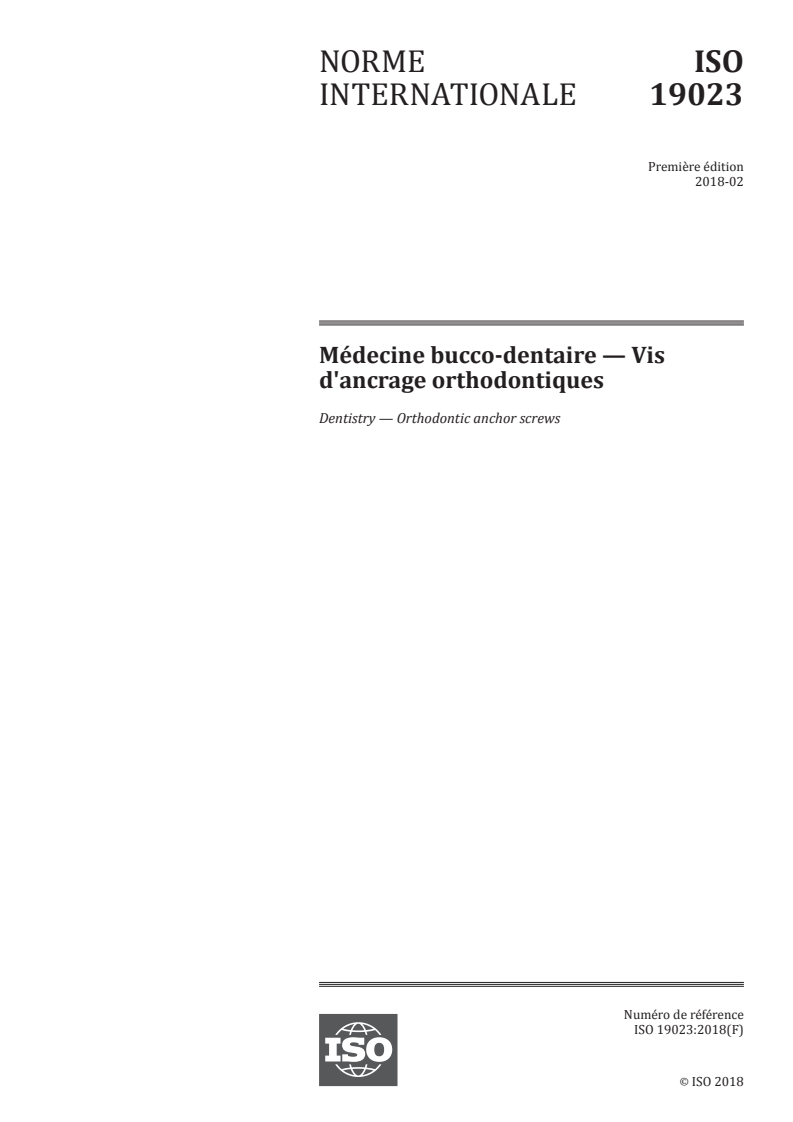
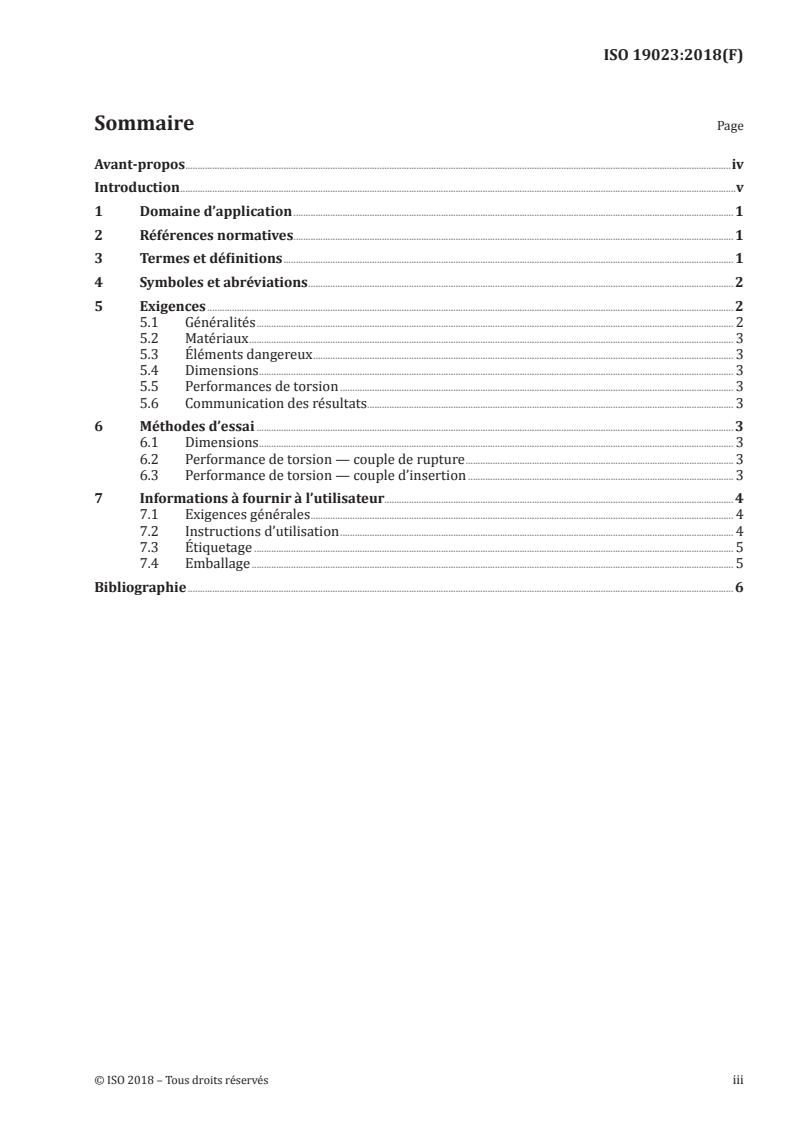
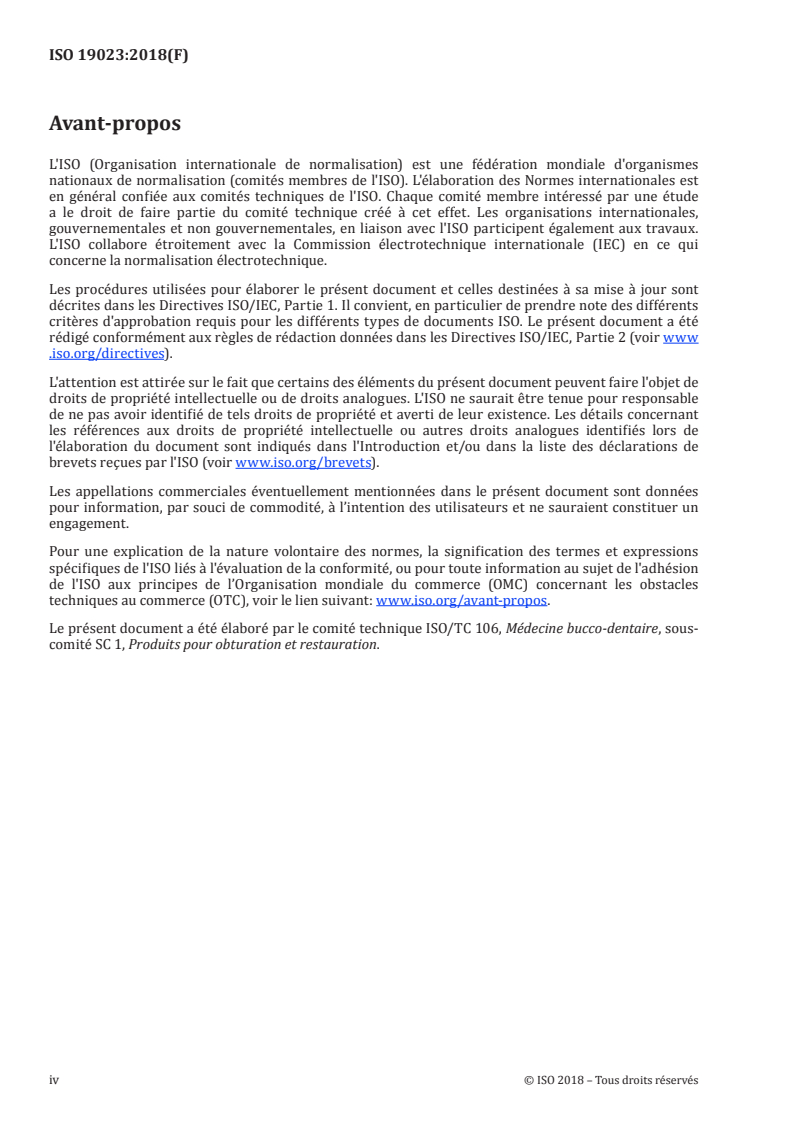
ISO 19023:2018 - Médecine bucco-dentaire — Vis d'ancrage orthodontiques/9/2018
Overview
ISO 19023:2018 is an international standard established by the International Organization for Standardization (ISO) which specifies requirements and test methods for orthodontic anchor screws used in orthodontic treatment. These screws are temporary medical devices inserted into the maxillo-facial bone to provide intraoral skeletal anchorage for orthodontic appliances. Unlike permanent dental implants that require osseointegration, orthodontic anchor screws are intended for temporary use and are removed once orthodontic treatment concludes.
This standard addresses the need for unified criteria to compare physical and mechanical properties of these screws, covers test methods for torsional performance, dimensional accuracy, and defines requirements for packaging and labelling. By adhering to ISO 19023, manufacturers can ensure product consistency while enabling clinicians to make informed decisions based on reliable, comparable data.
Key Topics
Material Specifications
Orthodontic anchor screws must be manufactured using materials conforming to recognized standards such as ISO 5832-2, ISO 5832-3, ASTM F67, or ASTM F136. Hazardous elements like cadmium, beryllium, lead, and nickel must be declared and controlled due to their potential biological risks.Dimensional Requirements
The standard defines critical screw dimensions, including major thread diameter, shaft length, and head height, facilitating consistent sizing and fit across different brands and manufacturers.Torsional Performance Testing
- Fracture Torque: Measures the maximum torque the screw can withstand before breaking.
- Insertion Torque: Assesses the torque required during screw insertion into a synthetic bone analogue simulating the highest bone density.
Both tests follow established protocols such as ASTM F543-17 to ensure accuracy and repeatability.
Packaging and Labelling
Packaging must maintain sterility and protect against contamination where applicable. Labelling requirements include manufacturer details, product name, batch number, quantity, sterility state, and expiration date. Instructions for use must cover intended use, insertion methods, torque specifications, sterilization procedures, and safety warnings.
Applications
ISO 19023:2018 applies primarily to manufacturers, dental laboratories, and orthodontic clinicians who utilize orthodontic anchor screws in:
- Providing temporary skeletal anchorage to improve orthodontic treatment effectiveness
- Assisting in complex tooth movement cases by stabilizing anchorage points intraorally
- Enhancing patient outcomes by ensuring product safety, mechanical reliability, and clinical predictability
- Supporting regulatory compliance and quality assurance processes in dental device manufacturing and distribution
Clinicians benefit from standardized product information, improved screw performance assessment, and safer clinical use through adherence to this standard.
Related Standards
ISO 19023:2018 works in conjunction with several important standards that reinforce its scope and ensure comprehensive safety and effectiveness of orthodontic anchor screws:
- ISO 10993-1 – Biological evaluation of medical devices to assess biocompatibility and toxicological risks
- ISO 7405 – Evaluation of biocompatibility specific to dentistry applications
- ISO 5832-2 and ISO 5832-3 – Specifications for metallic materials, including titanium alloys for surgical implants
- ASTM F543-17 – Standard test methods for metallic medical bone screws, covering torsional performance protocols
- ISO 8601 – Standardized representation of dates and times for labelling accuracy
By integrating ISO 19023 with these standards, manufacturers and clinical users ensure orthodontic anchor screws meet stringent quality, safety, and performance benchmarks.
Keywords: orthodontic anchor screws, ISO 19023, orthodontic treatment, torsional performance, medical device standards, dental implants, screw dimensions, packaging and labelling, biocompatibility, orthodontic anchorage, maxillo-facial bone, screw fracture torque, insertion torque, orthodontic appliances standard, dental device regulations.
Relations
- Effective Date
- 12-Feb-2026
Buy Documents
ISO 19023:2018 - Dentistry -- Orthodontic anchor screws
ISO 19023:2018 - Dentistry — Orthodontic anchor screws/9/2018
ISO 19023:2018 - Médecine bucco-dentaire -- Vis d'ancrage orthodontiques
ISO 19023:2018 - Médecine bucco-dentaire — Vis d'ancrage orthodontiques/9/2018
Get Certified
Connect with accredited certification bodies for this standard

BSI Group
BSI (British Standards Institution) is the business standards company that helps organizations make excellence a habit.

TÜV Rheinland
TÜV Rheinland is a leading international provider of technical services.

TÜV SÜD
TÜV SÜD is a trusted partner of choice for safety, security and sustainability solutions.
Sponsored listings
Frequently Asked Questions
ISO 19023:2018 is a standard published by the International Organization for Standardization (ISO). Its full title is "Dentistry — Orthodontic anchor screws". This standard covers: ISO 19023:2018 specifies requirements and test methods for orthodontic anchor screws used in orthodontic treatment. ISO 19023:2018 gives details of methods to compare physical and mechanical properties of orthodontic anchor screws together with test methods and packaging and labelling information. NOTE Orthodontic anchor screws are used to provide temporary intraoral skeletal anchorage during orthodontic treatment and are removed at the end of the orthodontic treatment. Similar to endosseous dental implants, they are, therefore inserted into the maxillo-facial bone structures.
ISO 19023:2018 specifies requirements and test methods for orthodontic anchor screws used in orthodontic treatment. ISO 19023:2018 gives details of methods to compare physical and mechanical properties of orthodontic anchor screws together with test methods and packaging and labelling information. NOTE Orthodontic anchor screws are used to provide temporary intraoral skeletal anchorage during orthodontic treatment and are removed at the end of the orthodontic treatment. Similar to endosseous dental implants, they are, therefore inserted into the maxillo-facial bone structures.
ISO 19023:2018 is classified under the following ICS (International Classification for Standards) categories: 11.060.10 - Dental materials. The ICS classification helps identify the subject area and facilitates finding related standards.
ISO 19023:2018 has the following relationships with other standards: It is inter standard links to EN ISO 19023:2018. Understanding these relationships helps ensure you are using the most current and applicable version of the standard.
ISO 19023:2018 is available in PDF format for immediate download after purchase. The document can be added to your cart and obtained through the secure checkout process. Digital delivery ensures instant access to the complete standard document.
Standards Content (Sample)
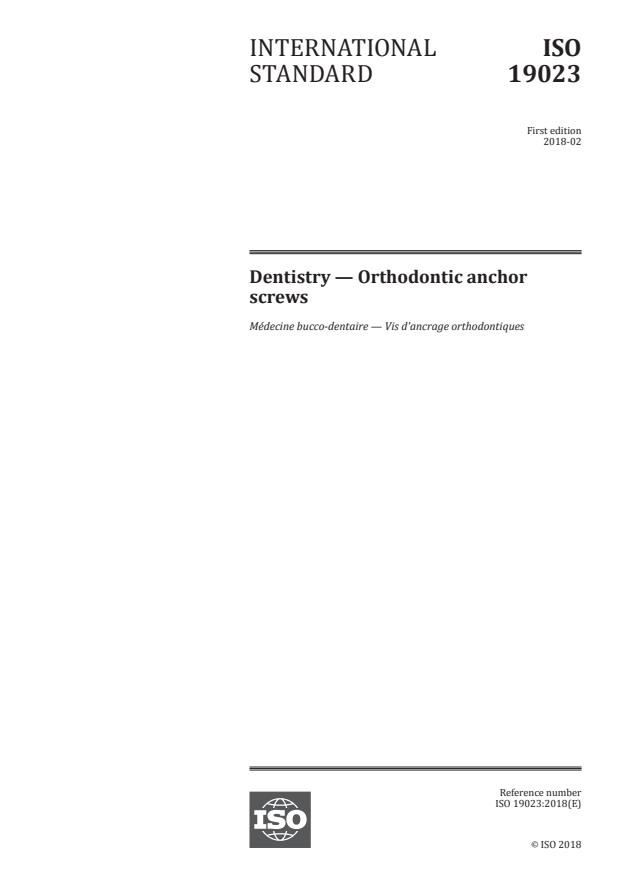
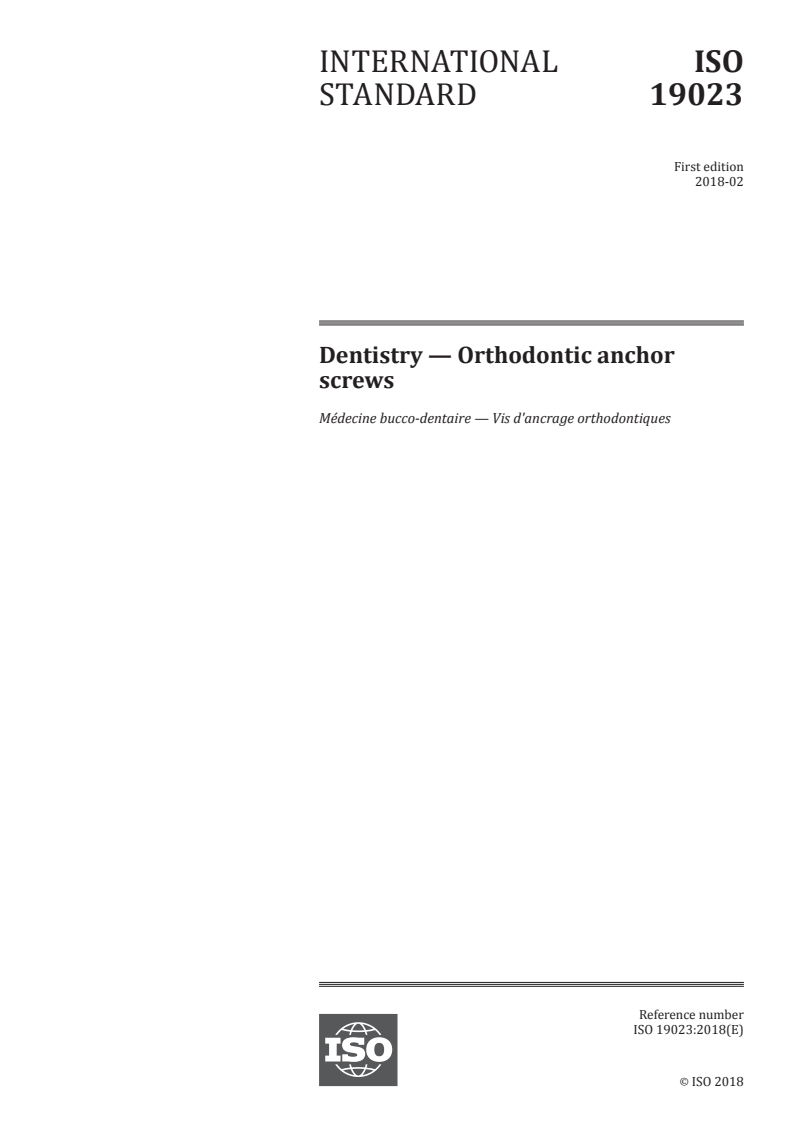
INTERNATIONAL ISO
STANDARD 19023
First edition
2018-02
Dentistry — Orthodontic anchor
screws
Médecine bucco-dentaire — Vis d'ancrage orthodontiques
Reference number
©
ISO 2018
© ISO 2018
All rights reserved. Unless otherwise specified, or required in the context of its implementation, no part of this publication may
be reproduced or utilized otherwise in any form or by any means, electronic or mechanical, including photocopying, or posting
on the internet or an intranet, without prior written permission. Permission can be requested from either ISO at the address
below or ISO’s member body in the country of the requester.
ISO copyright office
CP 401 • Ch. de Blandonnet 8
CH-1214 Vernier, Geneva, Switzerland
Tel. +41 22 749 01 11
Fax +41 22 749 09 47
copyright@iso.org
www.iso.org
Published in Switzerland
ii © ISO 2018 – All rights reserved
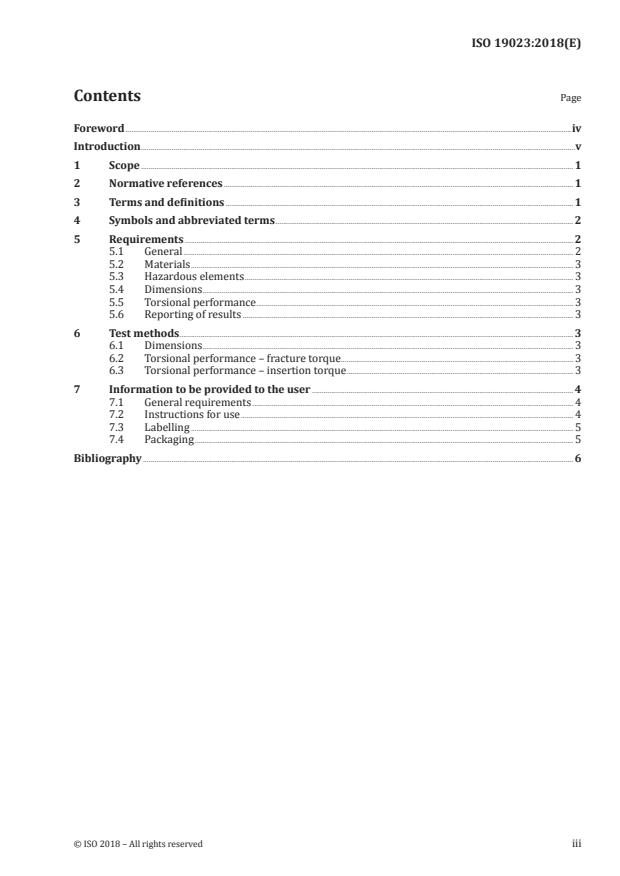
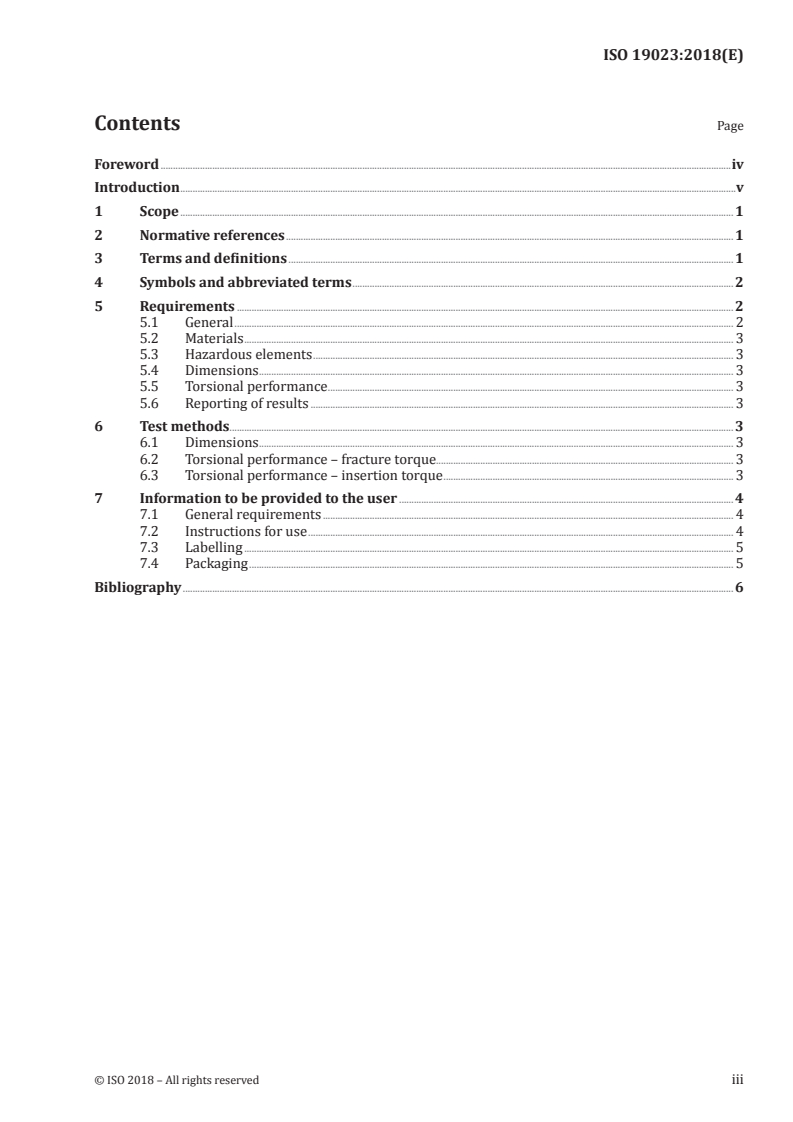
Contents Page
Foreword .iv
Introduction .v
1 Scope . 1
2 Normative references . 1
3 Terms and definitions . 1
4 Symbols and abbreviated terms . 2
5 Requirements . 2
5.1 General . 2
5.2 Materials . 3
5.3 Hazardous elements . 3
5.4 Dimensions . 3
5.5 Torsional performance . 3
5.6 Reporting of results . 3
6 Test methods . 3
6.1 Dimensions . 3
6.2 Torsional performance – fracture torque. 3
6.3 Torsional performance – insertion torque . 3
7 Information to be provided to the user . 4
7.1 General requirements . 4
7.2 Instructions for use . 4
7.3 Labelling . 5
7.4 Packaging . 5
Bibliography . 6
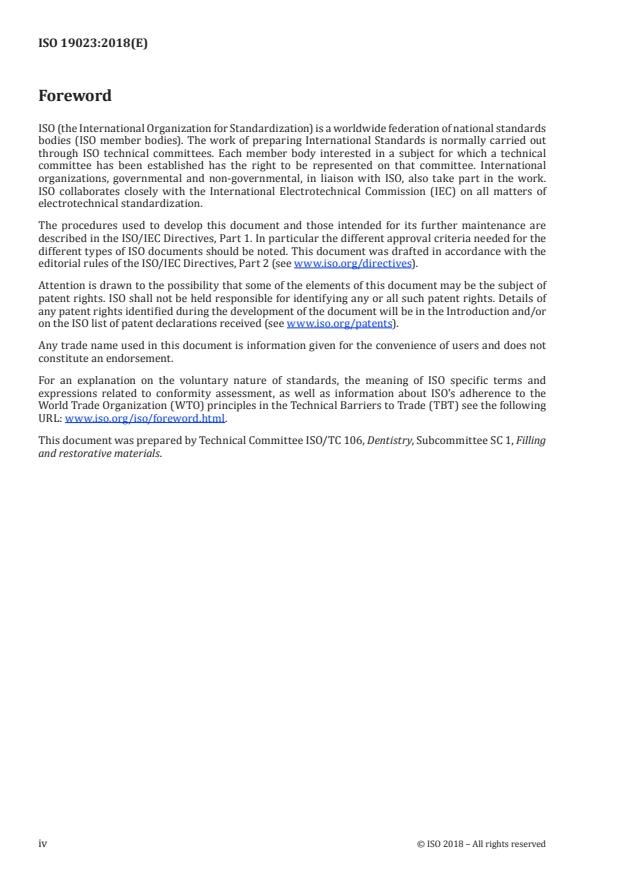
Foreword
ISO (the International Organization for Standardization) is a worldwide federation of national standards
bodies (ISO member bodies). The work of preparing International Standards is normally carried out
through ISO technical committees. Each member body interested in a subject for which a technical
committee has been established has the right to be represented on that committee. International
organizations, governmental and non-governmental, in liaison with ISO, also take part in the work.
ISO collaborates closely with the International Electrotechnical Commission (IEC) on all matters of
electrotechnical standardization.
The procedures used to develop this document and those intended for its further maintenance are
described in the ISO/IEC Directives, Part 1. In particular the different approval criteria needed for the
different types of ISO documents should be noted. This document was drafted in accordance with the
editorial rules of the ISO/IEC Directives, Part 2 (see www.iso.org/directives).
Attention is drawn to the possibility that some of the elements of this document may be the subject of
patent rights. ISO shall not be held responsible for identifying any or all such patent rights. Details of
any patent rights identified during the development of the document will be in the Introduction and/or
on the ISO list of patent declarations received (see www.iso.org/patents).
Any trade name used in this document is information given for the convenience of users and does not
constitute an endorsement.
For an explanation on the voluntary nature of standards, the meaning of ISO specific terms and
expressions related to conformity assessment, as well as information about ISO's adherence to the
World Trade Organization (WTO) principles in the Technical Barriers to Trade (TBT) see the following
URL: www.iso.org/iso/foreword.html.
This document was prepared by Technical Committee ISO/TC 106, Dentistry, Subcommittee SC 1, Filling
and restorative materials.
iv © ISO 2018 – All rights reserved
Introduction
Orthodontic anchor screws for temporary skeletal anchorage of orthodontic appliances are considered
as auxiliary orthodontic devices.
Orthodontic anchor screws are medical devices used in dentistry. Unlike implants, such as endosseous
dental implants, which are intended to remain permanently inside the bone and where, therefore,
osseointegration is desired, orthodontic anchor screws are removed at the end of the orthodontic
treatment. Insertion and removal of orthodontic anchor screws require the appropriate instruments
and adapters.
This document has been developed as a result of the difficulty often encountered by clinicians to make
meaningful comparisons between orthodontic anchor screws using the information currently available
from manufacturers and suppliers.
Thus the purpose of this document is to facilitate communication between manufacturers and clinicians
which will allow comparison between various orthodontic anchor screws.
Specific qualitative and quantitative test methods for demonstrating freedom from unacceptable
biological hazard are not included in this document, but it is recommended that, for the assessment of
possible biological or toxicological hazards, reference should be made to ISO 10993-1 and ISO 7405.
---------------------
...
INTERNATIONAL ISO
STANDARD 19023
First edition
2018-02
Dentistry — Orthodontic anchor
screws
Médecine bucco-dentaire — Vis d'ancrage orthodontiques
Reference number
©
ISO 2018
© ISO 2018
All rights reserved. Unless otherwise specified, or required in the context of its implementation, no part of this publication may
be reproduced or utilized otherwise in any form or by any means, electronic or mechanical, including photocopying, or posting
on the internet or an intranet, without prior written permission. Permission can be requested from either ISO at the address
below or ISO’s member body in the country of the requester.
ISO copyright office
CP 401 • Ch. de Blandonnet 8
CH-1214 Vernier, Geneva, Switzerland
Tel. +41 22 749 01 11
Fax +41 22 749 09 47
copyright@iso.org
www.iso.org
Published in Switzerland
ii © ISO 2018 – All rights reserved
Contents Page
Foreword .iv
Introduction .v
1 Scope . 1
2 Normative references . 1
3 Terms and definitions . 1
4 Symbols and abbreviated terms . 2
5 Requirements . 2
5.1 General . 2
5.2 Materials . 3
5.3 Hazardous elements . 3
5.4 Dimensions . 3
5.5 Torsional performance . 3
5.6 Reporting of results . 3
6 Test methods . 3
6.1 Dimensions . 3
6.2 Torsional performance – fracture torque. 3
6.3 Torsional performance – insertion torque . 3
7 Information to be provided to the user . 4
7.1 General requirements . 4
7.2 Instructions for use . 4
7.3 Labelling . 5
7.4 Packaging . 5
Bibliography . 6
Foreword
ISO (the International Organization for Standardization) is a worldwide federation of national standards
bodies (ISO member bodies). The work of preparing International Standards is normally carried out
through ISO technical committees. Each member body interested in a subject for which a technical
committee has been established has the right to be represented on that committee. International
organizations, governmental and non-governmental, in liaison with ISO, also take part in the work.
ISO collaborates closely with the International Electrotechnical Commission (IEC) on all matters of
electrotechnical standardization.
The procedures used to develop this document and those intended for its further maintenance are
described in the ISO/IEC Directives, Part 1. In particular the different approval criteria needed for the
different types of ISO documents should be noted. This document was drafted in accordance with the
editorial rules of the ISO/IEC Directives, Part 2 (see www.iso.org/directives).
Attention is drawn to the possibility that some of the elements of this document may be the subject of
patent rights. ISO shall not be held responsible for identifying any or all such patent rights. Details of
any patent rights identified during the development of the document will be in the Introduction and/or
on the ISO list of patent declarations received (see www.iso.org/patents).
Any trade name used in this document is information given for the convenience of users and does not
constitute an endorsement.
For an explanation on the voluntary nature of standards, the meaning of ISO specific terms and
expressions related to conformity assessment, as well as information about ISO's adherence to the
World Trade Organization (WTO) principles in the Technical Barriers to Trade (TBT) see the following
URL: www.iso.org/iso/foreword.html.
This document was prepared by Technical Committee ISO/TC 106, Dentistry, Subcommittee SC 1, Filling
and restorative materials.
iv © ISO 2018 – All rights reserved
Introduction
Orthodontic anchor screws for temporary skeletal anchorage of orthodontic appliances are considered
as auxiliary orthodontic devices.
Orthodontic anchor screws are medical devices used in dentistry. Unlike implants, such as endosseous
dental implants, which are intended to remain permanently inside the bone and where, therefore,
osseointegration is desired, orthodontic anchor screws are removed at the end of the orthodontic
treatment. Insertion and removal of orthodontic anchor screws require the appropriate instruments
and adapters.
This document has been developed as a result of the difficulty often encountered by clinicians to make
meaningful comparisons between orthodontic anchor screws using the information currently available
from manufacturers and suppliers.
Thus the purpose of this document is to facilitate communication between manufacturers and clinicians
which will allow comparison between various orthodontic anchor screws.
Specific qualitative and quantitative test methods for demonstrating freedom from unacceptable
biological hazard are not included in this document, but it is recommended that, for the assessment of
possible biological or toxicological hazards, reference should be made to ISO 10993-1 and ISO 7405.
---------------------
...
NORME ISO
INTERNATIONALE 19023
Première édition
2018-02
Médecine bucco-dentaire — Vis
d'ancrage orthodontiques
Dentistry — Orthodontic anchor screws
Numéro de référence
©
ISO 2018
DOCUMENT PROTÉGÉ PAR COPYRIGHT
© ISO 2018
Tous droits réservés. Sauf prescription différente ou nécessité dans le contexte de sa mise en oeuvre, aucune partie de cette
publication ne peut être reproduite ni utilisée sous quelque forme que ce soit et par aucun procédé, électronique ou mécanique,
y compris la photocopie, ou la diffusion sur l’internet ou sur un intranet, sans autorisation écrite préalable. Une autorisation peut
être demandée à l’ISO à l’adresse ci-après ou au comité membre de l’ISO dans le pays du demandeur.
ISO copyright office
Case postale 401 • Ch. de Blandonnet 8
CH-1214 Vernier, Geneva
Tél.: +41 22 749 01 11
Fax: +41 22 749 09 47
E-mail: copyright@iso.org
Web: www.iso.org
Publié en Suisse
ii © ISO 2018 – Tous droits réservés
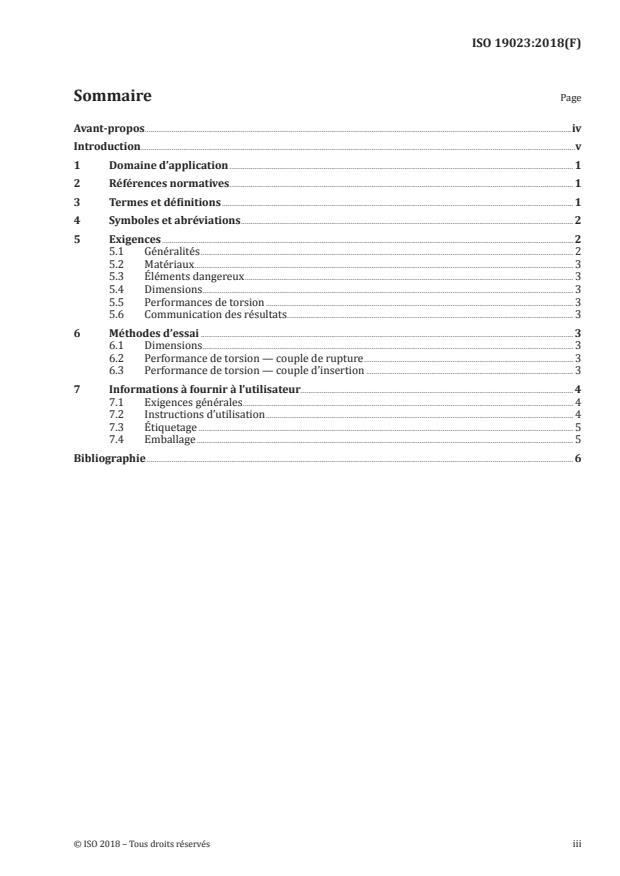
Sommaire Page
Avant-propos .iv
Introduction .v
1 Domaine d’application . 1
2 Références normatives . 1
3 Termes et définitions . 1
4 Symboles et abréviations . 2
5 Exigences . 2
5.1 Généralités . 2
5.2 Matériaux . 3
5.3 Éléments dangereux . 3
5.4 Dimensions . 3
5.5 Performances de torsion . 3
5.6 Communication des résultats . 3
6 Méthodes d’essai . 3
6.1 Dimensions . 3
6.2 Performance de torsion — couple de rupture . 3
6.3 Performance de torsion — couple d’insertion . 3
7 Informations à fournir à l’utilisateur. 4
7.1 Exigences générales . 4
7.2 Instructions d’utilisation . 4
7.3 Étiquetage . 5
7.4 Emballage . 5
Bibliographie . 6
Avant-propos
L'ISO (Organisation internationale de normalisation) est une fédération mondiale d'organismes
nationaux de normalisation (comités membres de l'ISO). L'élaboration des Normes internationales est
en général confiée aux comités techniques de l'ISO. Chaque comité membre intéressé par une étude
a le droit de faire partie du comité technique créé à cet effet. Les organisations internationales,
gouvernementales et non gouvernementales, en liaison avec l'ISO participent également aux travaux.
L'ISO collabore étroitement avec la Commission électrotechnique internationale (IEC) en ce qui
concerne la normalisation électrotechnique.
Les procédures utilisées pour élaborer le présent document et celles destinées à sa mise à jour sont
décrites dans les Directives ISO/IEC, Partie 1. Il convient, en particulier de prendre note des différents
critères d'approbation requis pour les différents types de documents ISO. Le présent document a été
rédigé conformément aux règles de rédaction données dans les Directives ISO/IEC, Partie 2 (voir www
.iso .org/ directives).
L'attention est attirée sur le fait que certains des éléments du présent document peuvent faire l'objet de
droits de propriété intellectuelle ou de droits analogues. L'ISO ne saurait être tenue pour responsable
de ne pas avoir identifié de tels droits de propriété et averti de leur existence. Les détails concernant
les références aux droits de propriété intellectuelle ou autres droits analogues identifiés lors de
l'élaboration du document sont indiqués dans l'Introduction et/ou dans la liste des déclarations de
brevets reçues par l'ISO (voir www .iso .org/ brevets).
Les appellations commerciales éventuellement mentionnées dans le présent document sont données
pour information, par souci de commodité, à l’intention des utilisateurs et ne sauraient constituer un
engagement.
Pour une explication de la nature volontaire des normes, la signification des termes et expressions
spécifiques de l'ISO liés à l'évaluation de la conformité, ou pour toute information au sujet de l'adhésion
de l'ISO aux principes de l’Organisation mondiale du commerce (OMC) concernant les obstacles
techniques au commerce (OTC), voir le lien suivant: www .iso .org/ avant -propos.
Le présent document a été élaboré par le comité technique ISO/TC 106, Médecine bucco-dentaire, sous-
comité SC 1, Produits pour obturation et restauration.
iv © ISO 2018 – Tous droits réservés
Introduction
Les vis d’ancrage orthodontiques pour ancrage squelettique temporaire d’appareils orthodontiques
sont considérées comme des dispositifs orthodontiques auxiliaires.
Les vis d’ancrage orthodontiques sont des dispositifs médicaux utilisés en médecine bucco-dentaire.
Contrairement aux implants, tels que les implants dentaires endo-osseux, qui sont destinés à rester
en permanence à l’intérieur de l’os et pour lesquels une ostéointégration est donc souhaitable, les vis
d’ancrage orthodontiques sont retirées à la fin du traitement orthodontique. L’insertion et le retrait des
vis d’ancrage orthodontiques exigent des instruments et adaptateurs appropriés.
Le présent document a été élaboré en réponse aux difficultés souvent rencontrées par les cliniciens pour
établir des comparaisons valables entre les vis d’ancrage orthodontiques sur la base des informations
actuellement disponibles auprès des fabricants et des fournisseurs.
Par conséquent, l’objectif du présent document est de faciliter la communication entre les fabricants et
les cliniciens pour permettre une comparaison entre les différentes vis d’ancrage orthodontiques.
Le présent document ne spécifie pas de méthodes d’essai qualitatives et quantitatives spécifiques pour
démontrer l’absence de risques biologiques inacceptables, mais il est recommandé de se reporter à
l’ISO 10993-1 et à l’ISO 7405 pour l’évaluation des éventuels risques biologiques ou toxicologiques.
NORME INTERNATIONALE ISO 19023:2018(F)
Médecine bucco-dentaire — Vis d'ancrage orthodontiques
1 Domaine d’application
Le présent document spécifie des exigences
...
NORME ISO
INTERNATIONALE 19023
Première édition
2018-02
Médecine bucco-dentaire — Vis
d'ancrage orthodontiques
Dentistry — Orthodontic anchor screws
Numéro de référence
©
ISO 2018
DOCUMENT PROTÉGÉ PAR COPYRIGHT
© ISO 2018
Tous droits réservés. Sauf prescription différente ou nécessité dans le contexte de sa mise en oeuvre, aucune partie de cette
publication ne peut être reproduite ni utilisée sous quelque forme que ce soit et par aucun procédé, électronique ou mécanique,
y compris la photocopie, ou la diffusion sur l’internet ou sur un intranet, sans autorisation écrite préalable. Une autorisation peut
être demandée à l’ISO à l’adresse ci-après ou au comité membre de l’ISO dans le pays du demandeur.
ISO copyright office
Case postale 401 • Ch. de Blandonnet 8
CH-1214 Vernier, Geneva
Tél.: +41 22 749 01 11
Fax: +41 22 749 09 47
E-mail: copyright@iso.org
Web: www.iso.org
Publié en Suisse
ii © ISO 2018 – Tous droits réservés
Sommaire Page
Avant-propos .iv
Introduction .v
1 Domaine d’application . 1
2 Références normatives . 1
3 Termes et définitions . 1
4 Symboles et abréviations . 2
5 Exigences . 2
5.1 Généralités . 2
5.2 Matériaux . 3
5.3 Éléments dangereux . 3
5.4 Dimensions . 3
5.5 Performances de torsion . 3
5.6 Communication des résultats . 3
6 Méthodes d’essai . 3
6.1 Dimensions . 3
6.2 Performance de torsion — couple de rupture . 3
6.3 Performance de torsion — couple d’insertion . 3
7 Informations à fournir à l’utilisateur. 4
7.1 Exigences générales . 4
7.2 Instructions d’utilisation . 4
7.3 Étiquetage . 5
7.4 Emballage . 5
Bibliographie . 6
Avant-propos
L'ISO (Organisation internationale de normalisation) est une fédération mondiale d'organismes
nationaux de normalisation (comités membres de l'ISO). L'élaboration des Normes internationales est
en général confiée aux comités techniques de l'ISO. Chaque comité membre intéressé par une étude
a le droit de faire partie du comité technique créé à cet effet. Les organisations internationales,
gouvernementales et non gouvernementales, en liaison avec l'ISO participent également aux travaux.
L'ISO collabore étroitement avec la Commission électrotechnique internationale (IEC) en ce qui
concerne la normalisation électrotechnique.
Les procédures utilisées pour élaborer le présent document et celles destinées à sa mise à jour sont
décrites dans les Directives ISO/IEC, Partie 1. Il convient, en particulier de prendre note des différents
critères d'approbation requis pour les différents types de documents ISO. Le présent document a été
rédigé conformément aux règles de rédaction données dans les Directives ISO/IEC, Partie 2 (voir www
.iso .org/ directives).
L'attention est attirée sur le fait que certains des éléments du présent document peuvent faire l'objet de
droits de propriété intellectuelle ou de droits analogues. L'ISO ne saurait être tenue pour responsable
de ne pas avoir identifié de tels droits de propriété et averti de leur existence. Les détails concernant
les références aux droits de propriété intellectuelle ou autres droits analogues identifiés lors de
l'élaboration du document sont indiqués dans l'Introduction et/ou dans la liste des déclarations de
brevets reçues par l'ISO (voir www .iso .org/ brevets).
Les appellations commerciales éventuellement mentionnées dans le présent document sont données
pour information, par souci de commodité, à l’intention des utilisateurs et ne sauraient constituer un
engagement.
Pour une explication de la nature volontaire des normes, la signification des termes et expressions
spécifiques de l'ISO liés à l'évaluation de la conformité, ou pour toute information au sujet de l'adhésion
de l'ISO aux principes de l’Organisation mondiale du commerce (OMC) concernant les obstacles
techniques au commerce (OTC), voir le lien suivant: www .iso .org/ avant -propos.
Le présent document a été élaboré par le comité technique ISO/TC 106, Médecine bucco-dentaire, sous-
comité SC 1, Produits pour obturation et restauration.
iv © ISO 2018 – Tous droits réservés
Introduction
Les vis d’ancrage orthodontiques pour ancrage squelettique temporaire d’appareils orthodontiques
sont considérées comme des dispositifs orthodontiques auxiliaires.
Les vis d’ancrage orthodontiques sont des dispositifs médicaux utilisés en médecine bucco-dentaire.
Contrairement aux implants, tels que les implants dentaires endo-osseux, qui sont destinés à rester
en permanence à l’intérieur de l’os et pour lesquels une ostéointégration est donc souhaitable, les vis
d’ancrage orthodontiques sont retirées à la fin du traitement orthodontique. L’insertion et le retrait des
vis d’ancrage orthodontiques exigent des instruments et adaptateurs appropriés.
Le présent document a été élaboré en réponse aux difficultés souvent rencontrées par les cliniciens pour
établir des comparaisons valables entre les vis d’ancrage orthodontiques sur la base des informations
actuellement disponibles auprès des fabricants et des fournisseurs.
Par conséquent, l’objectif du présent document est de faciliter la communication entre les fabricants et
les cliniciens pour permettre une comparaison entre les différentes vis d’ancrage orthodontiques.
Le présent document ne spécifie pas de méthodes d’essai qualitatives et quantitatives spécifiques pour
démontrer l’absence de risques biologiques inacceptables, mais il est recommandé de se reporter à
l’ISO 10993-1 et à l’ISO 7405 pour l’évaluation des éventuels risques biologiques ou toxicologiques.
NORME INTERNATIONALE ISO 19023:2018(F)
Médecine bucco-dentaire — Vis d'ancrage orthodontiques
1 Domaine d’application
Le présent document spécifie des exigences
...