

ASTM B364-18
(Specification)Standard Specification for Tantalum and Tantalum Alloy Ingots
General Information
- Abstract
ABSTRACT
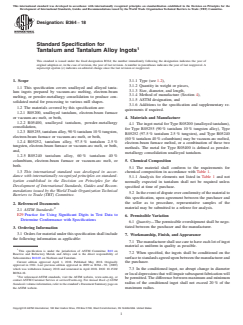
This specification covers unalloyed and alloyed tantalum ingots prepared by vacuum-arc melting, electron-beam melting, or powder-metallurgy consolidation to produce consolidated metal for processing to various mill shapes. The materials covered by this specification are classified according to types: R05200; R05400; R05255; R05252; and R05240. The ingot metal for types R05200, R05255, R05252, and R05240 may be prepared by vacuum-arc melting, electron beam furnace melting, or a combination of these two methods. The metal for type R05400 is defined as powder-metallurgy consolidation unalloyed tantalum. The material shall conform to the chemical composition requirements for carbon, oxygen, nitrogen, hydrogen, niobium, iron, titanium, tungsten, molybdenum, silicon, nickel, and tantalum.
SIGNIFICANCE AND USE
8.1 For the purpose of determining compliance with the specified limit for requirements of the properties listed in the tables, an observed value or a calculated value shall be rounded as indicated in accordance with the rounding method of Practice E29.
SCOPE
1.1 This specification covers unalloyed and alloyed tantalum ingots prepared by vacuum-arc melting, electron-beam melting, or powder-metallurgy consolidation to produce consolidated metal for processing to various mill shapes.
1.2 The materials covered by this specification are:
1.2.1 R05200, unalloyed tantalum, electron-beam furnace or vacuum-arc melt, or both,
1.2.2 R05400, unalloyed tantalum, powder-metallurgy consolidation,
1.2.3 R05255, tantalum alloy, 90 % tantalum 10 % tungsten, electron-beam furnace or vacuum-arc melt, or both,
1.2.4 R05252, tantalum alloy, 97.5 % tantalum 2.5 % tungsten, electron-beam furnace or vacuum-arc melt, or both, and,
1.2.5 R05240 tantalum alloy, 60 % tantalum 40 % columbium, electron-beam furnace or vacuum-arc melt, or both.
1.3 This international standard was developed in accordance with internationally recognized principles on standardization established in the Decision on Principles for the Development of International Standards, Guides and Recommendations issued by the World Trade Organization Technical Barriers to Trade (TBT) Committee.
- Status
- Published
- Publication Date
- 31-Mar-2018
- Technical Committee
- B10 - Reactive and Refractory Metals and Alloys
- Drafting Committee
- B10.03 - Niobium, Tantalum, and Vanadium


Overview
ASTM B364-18: Standard Specification for Tantalum and Tantalum Alloy Ingots establishes the minimum requirements for unalloyed and alloyed tantalum ingots. Developed by ASTM, this standard addresses the preparation, chemical composition, manufacturing methods, and acceptance criteria for tantalum products destined for further processing into various mill forms. The scope encompasses vacuum-arc melting, electron-beam melting, and powder-metallurgy consolidation, ensuring consistent material quality for critical industrial applications.
The covered tantalum materials include unalloyed and alloyed types, with specific grades such as R05200, R05400, R05255, R05252, and R05240. These tantalum ingots are fundamental for high-performance uses where exceptional corrosion resistance and high temperature stability are required.
Key Topics
Material Grades and Types
- R05200: Unalloyed tantalum, produced by electron-beam or vacuum-arc melting, or both.
- R05400: Unalloyed tantalum, consolidated by powder-metallurgy processes.
- R05255: Tantalum alloy with 90% tantalum and 10% tungsten, produced by melting techniques.
- R05252: Tantalum alloy with 97.5% tantalum and 2.5% tungsten.
- R05240: Tantalum alloy with 60% tantalum and 40% columbium (niobium).
Manufacturing Processes
- Vacuum-arc melting and electron-beam melting are used for consolidating metal and achieving the required chemical and mechanical properties.
- Powder-metallurgy consolidation applies specifically to unalloyed tantalum (R05400).
Chemical Composition Requirements
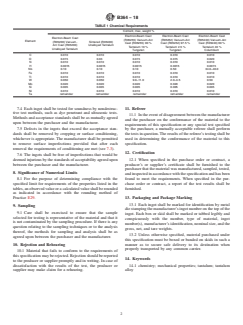
- Strict limits for elements such as carbon, oxygen, nitrogen, hydrogen, niobium, iron, titanium, tungsten, molybdenum, silicon, nickel, and tantalum ensure material purity and predictable performance.
Quality Assurance and Testing
- Ingots must be tested for soundness using nondestructive tests like dye penetrant and ultrasonic methods.
- Sampling and testing procedures must ensure that the ingots are representative and free from contamination.
- Certification and packaging requirements support traceability and safe transport.
Applications
Tantalum and tantalum alloy ingots produced in compliance with ASTM B364-18 are used in industries demanding high levels of performance and reliability, including:
- Chemical processing: Due to their excellent corrosion resistance in aggressive environments, tantalum ingots are essential for fabricating heat exchangers, reactor linings, and process equipment.
- Aerospace and defense: Alloys with tungsten and columbium offer high melting points and mechanical strength, suitable for aerospace components and military hardware.
- Electronics: Unalloyed tantalum is widely used for manufacturing capacitors, sputtering targets, and semiconductors.
- Medical devices: The biocompatibility of tantalum makes it ideal for surgical implants and specialized medical equipment.
Related Standards
When specifying tantalum and tantalum alloy ingots, the following ASTM standards are commonly referenced in conjunction:
- ASTM E29: Practice for Using Significant Digits in Test Data to Determine Conformance with Specifications, relevant for rounding and compliance determination.
- Other ASTM tantalum and niobium standards: Address further processing, product forms, and testing procedures for mill products derived from ingots.
- International standards: ASTM B364-18 aligns with World Trade Organization (WTO) guidelines for the harmonization of technical barriers to trade.
By adhering to ASTM B364-18, manufacturers and end-users ensure consistent quality, performance, and traceability of tantalum ingots, supporting reliable production across critical high-tech and industrial sectors.
Relations
- Replaces
ASTM B364-96(2009) - Standard Specification for Tantalum and Tantalum Alloy Ingots (Withdrawn 2018) - Effective Date
- 01-Apr-2018
- Effective Date
- 01-Oct-2008
- Effective Date
- 15-Nov-2006
- Effective Date
- 15-Sep-2006
- Effective Date
- 01-May-2006
- Effective Date
- 01-Dec-2004
- Effective Date
- 10-May-2002
- Effective Date
- 10-May-1999
Get Certified
Connect with accredited certification bodies for this standard

Element Materials Technology
Materials testing and product certification.

Inštitut za kovinske materiale in tehnologije
Institute of Metals and Technology. Materials testing, metallurgical analysis, NDT.
Sponsored listings
Frequently Asked Questions
ASTM B364-18 is a technical specification published by ASTM International. Its full title is "Standard Specification for Tantalum and Tantalum Alloy Ingots". This standard covers: ABSTRACT This specification covers unalloyed and alloyed tantalum ingots prepared by vacuum-arc melting, electron-beam melting, or powder-metallurgy consolidation to produce consolidated metal for processing to various mill shapes. The materials covered by this specification are classified according to types: R05200; R05400; R05255; R05252; and R05240. The ingot metal for types R05200, R05255, R05252, and R05240 may be prepared by vacuum-arc melting, electron beam furnace melting, or a combination of these two methods. The metal for type R05400 is defined as powder-metallurgy consolidation unalloyed tantalum. The material shall conform to the chemical composition requirements for carbon, oxygen, nitrogen, hydrogen, niobium, iron, titanium, tungsten, molybdenum, silicon, nickel, and tantalum. SIGNIFICANCE AND USE 8.1 For the purpose of determining compliance with the specified limit for requirements of the properties listed in the tables, an observed value or a calculated value shall be rounded as indicated in accordance with the rounding method of Practice E29. SCOPE 1.1 This specification covers unalloyed and alloyed tantalum ingots prepared by vacuum-arc melting, electron-beam melting, or powder-metallurgy consolidation to produce consolidated metal for processing to various mill shapes. 1.2 The materials covered by this specification are: 1.2.1 R05200, unalloyed tantalum, electron-beam furnace or vacuum-arc melt, or both, 1.2.2 R05400, unalloyed tantalum, powder-metallurgy consolidation, 1.2.3 R05255, tantalum alloy, 90 % tantalum 10 % tungsten, electron-beam furnace or vacuum-arc melt, or both, 1.2.4 R05252, tantalum alloy, 97.5 % tantalum 2.5 % tungsten, electron-beam furnace or vacuum-arc melt, or both, and, 1.2.5 R05240 tantalum alloy, 60 % tantalum 40 % columbium, electron-beam furnace or vacuum-arc melt, or both. 1.3 This international standard was developed in accordance with internationally recognized principles on standardization established in the Decision on Principles for the Development of International Standards, Guides and Recommendations issued by the World Trade Organization Technical Barriers to Trade (TBT) Committee.
ABSTRACT This specification covers unalloyed and alloyed tantalum ingots prepared by vacuum-arc melting, electron-beam melting, or powder-metallurgy consolidation to produce consolidated metal for processing to various mill shapes. The materials covered by this specification are classified according to types: R05200; R05400; R05255; R05252; and R05240. The ingot metal for types R05200, R05255, R05252, and R05240 may be prepared by vacuum-arc melting, electron beam furnace melting, or a combination of these two methods. The metal for type R05400 is defined as powder-metallurgy consolidation unalloyed tantalum. The material shall conform to the chemical composition requirements for carbon, oxygen, nitrogen, hydrogen, niobium, iron, titanium, tungsten, molybdenum, silicon, nickel, and tantalum. SIGNIFICANCE AND USE 8.1 For the purpose of determining compliance with the specified limit for requirements of the properties listed in the tables, an observed value or a calculated value shall be rounded as indicated in accordance with the rounding method of Practice E29. SCOPE 1.1 This specification covers unalloyed and alloyed tantalum ingots prepared by vacuum-arc melting, electron-beam melting, or powder-metallurgy consolidation to produce consolidated metal for processing to various mill shapes. 1.2 The materials covered by this specification are: 1.2.1 R05200, unalloyed tantalum, electron-beam furnace or vacuum-arc melt, or both, 1.2.2 R05400, unalloyed tantalum, powder-metallurgy consolidation, 1.2.3 R05255, tantalum alloy, 90 % tantalum 10 % tungsten, electron-beam furnace or vacuum-arc melt, or both, 1.2.4 R05252, tantalum alloy, 97.5 % tantalum 2.5 % tungsten, electron-beam furnace or vacuum-arc melt, or both, and, 1.2.5 R05240 tantalum alloy, 60 % tantalum 40 % columbium, electron-beam furnace or vacuum-arc melt, or both. 1.3 This international standard was developed in accordance with internationally recognized principles on standardization established in the Decision on Principles for the Development of International Standards, Guides and Recommendations issued by the World Trade Organization Technical Barriers to Trade (TBT) Committee.
ASTM B364-18 is classified under the following ICS (International Classification for Standards) categories: 77.150.99 - Other products of non-ferrous metals. The ICS classification helps identify the subject area and facilitates finding related standards.
ASTM B364-18 has the following relationships with other standards: It is inter standard links to ASTM B364-96(2009), ASTM E29-08, ASTM E29-06b, ASTM E29-06a, ASTM E29-06, ASTM E29-04, ASTM E29-02e1, ASTM E29-93a(1999). Understanding these relationships helps ensure you are using the most current and applicable version of the standard.
ASTM B364-18 is available in PDF format for immediate download after purchase. The document can be added to your cart and obtained through the secure checkout process. Digital delivery ensures instant access to the complete standard document.
Standards Content (Sample)
This international standard was developed in accordance with internationally recognized principles on standardization established in the Decision on Principles for the
Development of International Standards, Guides and Recommendations issued by the World Trade Organization Technical Barriers to Trade (TBT) Committee.
Designation:B364 −18
Standard Specification for
Tantalum and Tantalum Alloy Ingots
This standard is issued under the fixed designation B364; the number immediately following the designation indicates the year of
original adoption or, in the case of revision, the year of last revision. A number in parentheses indicates the year of last reapproval. A
superscript epsilon (´) indicates an editorial change since the last revision or reapproval.
1. Scope 3.1.1 Type (see 1.2),
3.1.2 Quantity in weight or pieces,
1.1 This specification covers unalloyed and alloyed tanta-
3.1.3 Size, diameter, and length,
lum ingots prepared by vacuum-arc melting, electron-beam
3.1.4 Method of manufacture (Section 4),
melting, or powder-metallurgy consolidation to produce con-
3.1.5 ASTM designation, and
solidated metal for processing to various mill shapes.
3.1.6 Additions to the specification and supplementary re-
1.2 The materials covered by this specification are:
quirements if required.
1.2.1 R05200, unalloyed tantalum, electron-beam furnace
or vacuum-arc melt, or both,
4. Materials and Manufacture
1.2.2 R05400, unalloyed tantalum, powder-metallurgy
4.1 The ingot metal for Type R05200 (unalloyed tantalum),
consolidation,
for Type R05255 (90 % tantalum 10 % tungsten alloy), Type
1.2.3 R05255,tantalumalloy,90 %tantalum10 %tungsten,
R05252 (97.5 % tantalum 2.5 % tungsten), and Type R05240
electron-beam furnace or vacuum-arc melt, or both,
(60 % tantalum 40 % columbium) may be vacuum-arc melted,
1.2.4 R05252, tantalum alloy, 97.5 % tantalum 2.5 %
electron-beam furnace melted, or a combination of these two
tungsten, electron-beam furnace or vacuum-arc melt, or both,
methods. The metal for Type R05400 is defined as powder-
and,
metallurgy consolidation unalloyed tantalum.
1.2.5 R05240 tantalum alloy, 60 % tantalum 40 %
columbium, electron-beam furnace or vacuum-arc melt, or
5. Chemical Composition
both.
5.1 The material shall conform to the requirements for
1.3 This international standard was developed in accor-
chemical composition in accordance with Table 1.
dance with internationally recognized principles on standard-
5.1.1 Analysis for elements not listed in Table 1 and not
ization established in the Decision on Principles for the
normally expected in tantalum shall not be required unless
Development of International Standards, Guides and Recom-
specified at time of purchase.
mendations issued by the World Trade Organization Technical
5.2 Intheeventofdisputeoverconformityofthematerialto
Barriers to Trade (TBT) Committee.
this specification, upon agreement between the purchaser and
the seller as to procedure, representative samples of the
2. Referenced Documents
material may be submitted to a referee for analysis.
2.1 ASTM Standards:
E29 Practice for Using Significant Digits in Test Data to
6. Permissible Variation
Determine Conformance with Specifications
6.1 Quantity—The permissible overshipment shall be nego-
tiated between the purchaser and the manufacturer.
3. Ordering Information
3.1 Orders for material under this specification shall include
7. Workmanship, Finish, and Appearance
the following information as applicable:
7.1 Themanufacturershallusecaretohaveeachlotofingot
material as uniform in quality as possible.
This specification is under the jurisdiction of ASTM Committee B10 on
7.2 When specified, the ingots shall be conditioned on the
Reactive and Refractory Metals and Alloys and is the direct responsibility of
surfacetostandardsagreeduponbetweenthemanufacturerand
Subcommittee B10.03 on Niobium and Tantalum.
Current edition approved April 1, 2018. Published May 2018. Originally
the purchaser.
approved in 1961. Last previous edition approved in 2009 as B364 – 96 (2009)
7.3 In the conditioned ingot, no abrupt change in diameter
which was withdrawn January 2018 and reinstated in April 2018. DOI: 10.1520/
B0364-18.
orlocaldepressionsthatwillimpairsubsequentfabricationwill
For referenced ASTM standards, visit the ASTM website, www.astm.org, or
be permitted. The difference between maximum and minimum
contact ASTM Customer Service at service@astm.org. For Annual Book of ASTM
radius of the conditioned ingot shall not exceed 20 % of the
Standards volume information, refer to the standard’s Document Summary page on
the ASTM website. maximum radius.
Copyright ©ASTM International, 100 Barr Harbor Drive, PO Box C700, West Conshohocken, PA19428-2959. United States
B364−18
TABLE 1 Chemical Requirements
Content, max, weight %
Electron-Beam Cast Electron-Beam Cast Electron-Beam Cast
Electron-Beam Cast
(R05255) Vacuum-Arc (R05252) Vacuum-Arc (R05240) Vacuum-Arc
Element
(R05200) Vacuum- Sintered (R05400)
Cast (R05255) 90% Cast (R05252) 97.5% Cast (R05240)60%
Arc Cast (R05200) Unalloyed Tantalum
Tantalum 10% Tantalum 2.5% Tantalum40%
Unalloyed Tant
...