

ASTM E986-04(2024)
(Practice)Standard Practice for Scanning Electron Microscope Beam Size Characterization
General Information
- Abstract
SIGNIFICANCE AND USE
4.1 The traditional resolution test of the SEM requires, as a first step, a photomicrograph of a fine particulate sample taken at a high magnification. The operator is required to measure a distance on the photomicrograph between two adjacent, but separate edges. These edges are usually less than one millimetre apart. Their image quality is often less than optimum limited by the S/N ratio of a beam with such a small diameter and low current. Operator judgment is dependent on the individual acuity of the person making the measurement and can vary significantly.
4.2 Use of this practice results in SEM electron beam size characterization which is significantly more reproducible than the traditional resolution test using a fine particulate sample.
SCOPE
1.1 This practice provides a reproducible means by which one aspect of the performance of a scanning electron microscope (SEM) may be characterized. The resolution of an SEM depends on many factors, some of which are electron beam voltage and current, lens aberrations, contrast in the specimen, and operator-instrument-material interaction. However, the resolution for any set of conditions is limited by the size of the electron beam. This size can be quantified through the measurement of an effective apparent edge sharpness for a number of materials, two of which are suggested. This practice requires an SEM with the capability to perform line-scan traces, for example, Y-deflection waveform generation, for the suggested materials. The range of SEM magnification at which this practice is of utility is from 1000 × to 50 000 × . Higher magnifications may be attempted, but difficulty in making precise measurements can be expected.
1.2 This standard does not purport to address all of the safety concerns, if any, associated with its use. It is the responsibility of the user of this standard to establish appropriate safety, health, and environmental practices and determine the applicability of regulatory limitations prior to use.
1.3 This international standard was developed in accordance with internationally recognized principles on standardization established in the Decision on Principles for the Development of International Standards, Guides and Recommendations issued by the World Trade Organization Technical Barriers to Trade (TBT) Committee.
- Status
- Published
- Publication Date
- 31-Mar-2024
- Technical Committee
- E04 - Metallography
- Drafting Committee
- E04.11 - X-Ray and Electron Metallography


Overview
ASTM E986-04(2024), Standard Practice for Scanning Electron Microscope (SEM) Beam Size Characterization, offers a reproducible method to evaluate one critical aspect of SEM performance: the characterization of electron beam size. As the resolution of a scanning electron microscope is fundamentally limited by beam diameter, this standard guides users in obtaining reliable and consistent measurements of effective beam spot size. The practice helps overcome the subjective variability inherent in traditional resolution tests by utilizing a defined procedure with reproducible outcomes, crucial for ensuring SEM performance and comparability across laboratories and instruments.
Key Topics
- SEM Beam Size Characterization: The standard details how to measure the electron beam diameter, which determines the maximum achievable resolution of an SEM under set operating conditions.
- Reproducibility: Unlike traditional edge resolution tests that rely on operator judgment and photographic measurement, this method employs line-scan traces and Y-deflection waveform analysis to greatly improve reproducibility of results.
- Recommended Materials: For accuracy and stability, ASTM E986 suggests using nonmagnetic samples like carbon fibers (NIST SRM 2069B) or the fractured edge of a cleaved thin silicon wafer. These materials provide sharply defined edges and require minimal preparation.
- Instrument Calibration and Conditions: The procedure requires SEMs capable of Y-deflection waveform generation and line-scan tracing, used at magnifications ranging from 1,000x to 50,000x. Proper magnification calibration (see ASTM E766) and stable, clean vacuum conditions are essential.
Applications
ASTM E986-04(2024) is widely applicable for:
- SEM Performance Verification: Laboratories can confirm that a scanning electron microscope meets required resolution specifications after installation, repair, or adjustment.
- Routine Quality Assurance: Periodic beam size characterization ensures ongoing SEM functionality and provides documentation for audits and laboratory accreditation.
- Comparative Analysis: By standardizing the method and materials, results from different instruments and operators become more directly comparable, facilitating benchmarking and instrument evaluation.
- Instrument Troubleshooting: Regular testing according to this standard can quickly reveal instrument drift, beam misalignment, or contamination issues, supporting preventive maintenance.
Related Standards
For comprehensive SEM performance characterization and accurate measurement, refer to these related standards:
- ASTM E7 - Terminology Relating to Metallography: Provides essential definitions for terms used in this practice.
- ASTM E766 - Practice for Calibrating the Magnification of a Scanning Electron Microscope: Ensures the required precision in magnification necessary for edge measurement procedures.
Employing ASTM E986-04(2024) as part of SEM performance verification protocols enables laboratories to maintain high standards of measurement accuracy and reproducibility. This practice supports compliance with internationally recognized quality principles and aligns with global trade and technical barrier guidelines.
Keywords: SEM beam size characterization, ASTM E986, SEM performance, electron microscopy, magnification calibration, resolution, scanning electron microscope, reproducibility, NIST SRM 2069B, waveform analysis, quality assurance.
Relations
- Replaces
ASTM E986-04(2017) - Standard Practice for Scanning Electron Microscope Beam Size Characterization - Effective Date
- 01-Apr-2024
- Effective Date
- 01-Apr-2024
- Effective Date
- 01-Apr-2024
Frequently Asked Questions
ASTM E986-04(2024) is a standard published by ASTM International. Its full title is "Standard Practice for Scanning Electron Microscope Beam Size Characterization". This standard covers: SIGNIFICANCE AND USE 4.1 The traditional resolution test of the SEM requires, as a first step, a photomicrograph of a fine particulate sample taken at a high magnification. The operator is required to measure a distance on the photomicrograph between two adjacent, but separate edges. These edges are usually less than one millimetre apart. Their image quality is often less than optimum limited by the S/N ratio of a beam with such a small diameter and low current. Operator judgment is dependent on the individual acuity of the person making the measurement and can vary significantly. 4.2 Use of this practice results in SEM electron beam size characterization which is significantly more reproducible than the traditional resolution test using a fine particulate sample. SCOPE 1.1 This practice provides a reproducible means by which one aspect of the performance of a scanning electron microscope (SEM) may be characterized. The resolution of an SEM depends on many factors, some of which are electron beam voltage and current, lens aberrations, contrast in the specimen, and operator-instrument-material interaction. However, the resolution for any set of conditions is limited by the size of the electron beam. This size can be quantified through the measurement of an effective apparent edge sharpness for a number of materials, two of which are suggested. This practice requires an SEM with the capability to perform line-scan traces, for example, Y-deflection waveform generation, for the suggested materials. The range of SEM magnification at which this practice is of utility is from 1000 × to 50 000 × . Higher magnifications may be attempted, but difficulty in making precise measurements can be expected. 1.2 This standard does not purport to address all of the safety concerns, if any, associated with its use. It is the responsibility of the user of this standard to establish appropriate safety, health, and environmental practices and determine the applicability of regulatory limitations prior to use. 1.3 This international standard was developed in accordance with internationally recognized principles on standardization established in the Decision on Principles for the Development of International Standards, Guides and Recommendations issued by the World Trade Organization Technical Barriers to Trade (TBT) Committee.
SIGNIFICANCE AND USE 4.1 The traditional resolution test of the SEM requires, as a first step, a photomicrograph of a fine particulate sample taken at a high magnification. The operator is required to measure a distance on the photomicrograph between two adjacent, but separate edges. These edges are usually less than one millimetre apart. Their image quality is often less than optimum limited by the S/N ratio of a beam with such a small diameter and low current. Operator judgment is dependent on the individual acuity of the person making the measurement and can vary significantly. 4.2 Use of this practice results in SEM electron beam size characterization which is significantly more reproducible than the traditional resolution test using a fine particulate sample. SCOPE 1.1 This practice provides a reproducible means by which one aspect of the performance of a scanning electron microscope (SEM) may be characterized. The resolution of an SEM depends on many factors, some of which are electron beam voltage and current, lens aberrations, contrast in the specimen, and operator-instrument-material interaction. However, the resolution for any set of conditions is limited by the size of the electron beam. This size can be quantified through the measurement of an effective apparent edge sharpness for a number of materials, two of which are suggested. This practice requires an SEM with the capability to perform line-scan traces, for example, Y-deflection waveform generation, for the suggested materials. The range of SEM magnification at which this practice is of utility is from 1000 × to 50 000 × . Higher magnifications may be attempted, but difficulty in making precise measurements can be expected. 1.2 This standard does not purport to address all of the safety concerns, if any, associated with its use. It is the responsibility of the user of this standard to establish appropriate safety, health, and environmental practices and determine the applicability of regulatory limitations prior to use. 1.3 This international standard was developed in accordance with internationally recognized principles on standardization established in the Decision on Principles for the Development of International Standards, Guides and Recommendations issued by the World Trade Organization Technical Barriers to Trade (TBT) Committee.
ASTM E986-04(2024) is classified under the following ICS (International Classification for Standards) categories: 31.120 - Electronic display devices; 37.020 - Optical equipment. The ICS classification helps identify the subject area and facilitates finding related standards.
ASTM E986-04(2024) has the following relationships with other standards: It is inter standard links to ASTM E986-04(2017), ASTM D8544-24, ASTM F561-19. Understanding these relationships helps ensure you are using the most current and applicable version of the standard.
ASTM E986-04(2024) is available in PDF format for immediate download after purchase. The document can be added to your cart and obtained through the secure checkout process. Digital delivery ensures instant access to the complete standard document.
Standards Content (Sample)
This international standard was developed in accordance with internationally recognized principles on standardization established in the Decision on Principles for the
Development of International Standards, Guides and Recommendations issued by the World Trade Organization Technical Barriers to Trade (TBT) Committee.
Designation: E986 − 04 (Reapproved 2024)
Standard Practice for
Scanning Electron Microscope Beam Size Characterization
This standard is issued under the fixed designation E986; the number immediately following the designation indicates the year of
original adoption or, in the case of revision, the year of last revision. A number in parentheses indicates the year of last reapproval. A
superscript epsilon (´) indicates an editorial change since the last revision or reapproval.
1. Scope 3. Terminology
1.1 This practice provides a reproducible means by which 3.1 Definitions: For definitions of terms used in this
one aspect of the performance of a scanning electron micro- practice, see Terminology E7.
scope (SEM) may be characterized. The resolution of an SEM
3.2 Definitions of Terms Specific to This Standard:
depends on many factors, some of which are electron beam
3.2.1 Y-deflection waveform—the trace on a CRT resulting
voltage and current, lens aberrations, contrast in the specimen,
from modulating the CRT with the output of the electron
and operator-instrument-material interaction. However, the
detector. Contrast in the electron signal is displayed as a
resolution for any set of conditions is limited by the size of the
change in Y (vertical) rather than brightness on the screen. This
electron beam. This size can be quantified through the mea-
operating method is often called Y-modulation.
surement of an effective apparent edge sharpness for a number
of materials, two of which are suggested. This practice requires 4. Significance and Use
an SEM with the capability to perform line-scan traces, for
4.1 The traditional resolution test of the SEM requires, as a
example, Y-deflection waveform generation, for the suggested
first step, a photomicrograph of a fine particulate sample taken
materials. The range of SEM magnification at which this
at a high magnification. The operator is required to measure a
practice is of utility is from 1000 × to 50 000 × . Higher
distance on the photomicrograph between two adjacent, but
magnifications may be attempted, but difficulty in making
separate edges. These edges are usually less than one millime-
precise measurements can be expected.
tre apart. Their image quality is often less than optimum
1.2 This standard does not purport to address all of the
limited by the S/N ratio of a beam with such a small diameter
safety concerns, if any, associated with its use. It is the
and low current. Operator judgment is dependent on the
responsibility of the user of this standard to establish appro-
individual acuity of the person making the measurement and
priate safety, health, and environmental practices and deter-
can vary significantly.
mine the applicability of regulatory limitations prior to use.
4.2 Use of this practice results in SEM electron beam size
1.3 This international standard was developed in accor-
characterization which is significantly more reproducible than
dance with internationally recognized principles on standard-
the traditional resolution test using a fine particulate sample.
ization established in the Decision on Principles for the
Development of International Standards, Guides and Recom-
5. Suggested Materials
mendations issued by the World Trade Organization Technical
5.1 SEM resolution performance as measured using the
Barriers to Trade (TBT) Committee.
procedure specified in this practice will depend on the material
used; hence, only comparisons using the same material have
2. Referenced Documents
meaning. There are a number of criteria for a suitable material
2.1 ASTM Standards:
to be used in this practice. Through an evaluation of these
E7 Terminology Relating to Metallography
criteria, two samples have been suggested. These samples are
E766 Practice for Calibrating the Magnification of a Scan-
nonmagnetic; no surface preparation or coating is required;
ning Electron Microscope
thus, the samples have long-term structural stability. The
sample-electron beam interaction should produce a sharply
rising signal without inflections as the beam scans across the
This practice is under the jurisdiction of ASTM Committee E04 on Metallog-
raphy and is the direct responsibility of Subcommittee E04.11 on X-Ray and
edge. Two such samples are:
Electron Metallography. 3
5.1.1 Carbon fibers, NIST—SRM 2069B.
Current edition approved April 1, 2024. Published April 2024. Originally
5.1.2 Fracture edge of a thin silicon wafer, cleaved on a
approved in 1984. Last previous edition approved in 2017 as E986 – 04(2017). DOI:
10.1520/E0986-04R24. (111) plane.
For referenced ASTM standards, visit the ASTM website, www.astm.org, or
contact ASTM Customer Service at service@astm.org. For Annual Book of ASTM
Standards volume information, refer to the standard’s Document Summary page on Available from National Institute of Standards and Technology (NIST), 100
the ASTM website. Bureau Dr., Stop 1070, Gaithersburg, MD 20899-1070, http://www.nist.gov.
Copyright © ASTM International, 100 Barr Harbor Drive, PO Box C700, West Conshohocken, PA 19428-2959. United States
E986 − 04 (2024)
6. Procedure
6.1 Inspect the specimen for cleanliness. If the specimen
appears contaminated, a new sample is recommended as any
cleaning may adversely affect the quality of the specimen edge.
6.2 Ensure good electrical contact with the specimen by
using a conductive cement to hold the specimen on a SEM
stub, or by clamping the specimen on the stage of the SEM.
Mount the specimen rigidly in the SEM to minimize any image
degradation caused by vibration.
6.3 Verify magnification calibration for both X and Y direc-
tions. This can be accomplished by using Practice E766.
− 2 − 4
6.4 Use a clean vacuum of 1.33 by 10 Pa (10 mm Hg)
or better to minimize specimen contamination resulting from
electron beam and residual hydrocarbons interacting during
examination. The presence of a contamination layer has a
deleterious effect on image-edge quality.
6.5 Allow a minimum of 30 min for stabilization of elec-
tronic components, vacuum stability, and thermal equilibrium
for the electron gun and lenses. The selection of optimum SEM
parameters is at the discretion of the operator. For measuring
the ultimate resolution, these will typically be: high kV
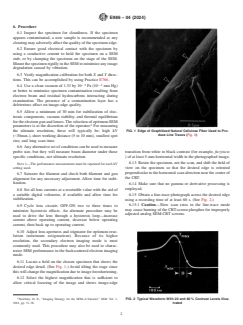
FIG. 1 Edge of Graphitized Natural Cellulose Fiber Used to Pro-
duce Line Traces (Fig. 3)
(~30max.), short working di
...