

ASTM D4766-21
(Test Method)Standard Test Method for Vinyl Chloride in Workplace Atmospheres (Charcoal Tube Method)
General Information
- Abstract
SIGNIFICANCE AND USE
5.1 Vinyl chloride monomer (VCM) is the starting material for the manufacture of poly(vinyl chloride) (PVC), which is used extensively in construction, electronics, packaging, and other industries. The vinyl chloride gas can escape during manufacturing, transportation, and polymerization stages. Residual monomer can also escape during subsequent fabrication processes.
5.2 Vinyl chloride is a toxic and explosive hazardous material.
5.3 Vinyl chloride is suspected to be a carcinogenic agent (4), and occupational exposure limits (OELs) have been established for this agent. For instance, the present U.S. Occupational Safety and Health Administration (OSHA) permissible exposure limit (PEL) for VCM is 1.0 ppm (v) with a 0.5-ppm (v) action level; the maximum length of operator exposure at 5 ppm (v) is 15 min (5).
5.4 This test method is made selective for vinyl chloride by choosing chromatographic columns that will separate vinyl chloride from other organic compounds in the sample.
5.5 This test method meets requirements (for example, those of OSHA and NIOSH) for monitoring workplace atmospheres in vinyl chloride and poly(vinyl chloride) production and fabrication processes.
SCOPE
1.1 This test method describes the determination of vinyl chloride monomer (VCM) in workplace atmospheres using a modified charcoal tube method (see Practice D3686).
1.2 This procedure is compatible with low-flow rate personal sampling equipment. It can be used for personal or stationary monitoring. It cannot be used to determine instantaneous fluctuations in concentration to detect maximum values. Alternative on-site procedures, such as gas chromatography or infrared spectrometry, are required to measure fast-changing concentrations.
1.3 The range of this test method is from the limit of quantitation approximately 0.03 to 100 ppm (v).
1.4 The sampling method provides a time-weighted average sample.
1.5 The values stated in SI units are to be regarded as standard. The values given in parentheses after SI units are provided for information only and are not considered standard.
1.6 This standard does not purport to address all of the safety concerns, if any, associated with its use. It is the responsibility of the user of this standard to establish appropriate safety, health, and environmental practices and determine the applicability of regulatory limitations prior to use. For more specific precautionary statements, see Section 9, 10.2.3, and 11.1.3.
1.7 This international standard was developed in accordance with internationally recognized principles on standardization established in the Decision on Principles for the Development of International Standards, Guides and Recommendations issued by the World Trade Organization Technical Barriers to Trade (TBT) Committee.
- Status
- Published
- Publication Date
- 28-Feb-2021
- Technical Committee
- D22 - Air Quality
- Drafting Committee
- D22.04 - Workplace Air Quality
Buy Documents
ASTM D4766-21 - Standard Test Method for Vinyl Chloride in Workplace Atmospheres (Charcoal Tube Method)
REDLINE ASTM D4766-21 - Standard Test Method for Vinyl Chloride in Workplace Atmospheres (Charcoal Tube Method)
Overview
ASTM D4766-21 is the internationally recognized standard test method for determining vinyl chloride monomer (VCM) concentration in workplace atmospheres using the charcoal tube method. Developed by ASTM International, this standard addresses the need for reliable monitoring of airborne vinyl chloride, a hazardous and carcinogenic gas used predominantly in the production of poly(vinyl chloride) (PVC). The method supports occupational safety by enabling accurate measurement of workplace exposure to VCM, ensuring compliance with established exposure limits such as those mandated by OSHA and NIOSH.
Key Topics
- Vinyl Chloride Hazards: VCM is toxic, flammable, and a suspected carcinogen. Strict occupational exposure limits (OELs) are enforced, with OSHA setting a permissible exposure limit (PEL) of 1 ppm and a 0.5 ppm action level.
- Sampling Method: The test uses a modified charcoal tube, compatible with low-flow personal and stationary sampling equipment, to capture time-weighted average concentrations of VCM in air.
- Analytical Procedure: The captured VCM is desorbed from the charcoal and analyzed by gas chromatography, employing selective columns to separate VCM from potential organic interferences.
- Calibration and Quality Control: Instrument calibration is performed using standard solutions. Field blanks and desorption efficiency checks ensure accuracy and reliability.
- Limits and Range: The method quantifies VCM in concentrations from approximately 0.03 to 100 ppm, covering typical exposure scenarios in industrial settings.
Applications
The ASTM D4766-21 standard is essential for a broad spectrum of industries where vinyl chloride is present, especially those involved in the manufacture and processing of PVC products. Typical application areas include:
- Industrial Hygiene and Workplace Safety:
- Regular monitoring of air in PVC manufacturing plants.
- Assessment of worker exposure during VCM polymerization, handling, and storage.
- Environmental Health and Compliance:
- Verifying that workplace exposure levels comply with national and international regulations.
- Supporting environmental audits and health risk assessments.
- Process Monitoring and Leak Detection:
- Identifying and quantifying VCM emissions during production and fabrication.
- Informing safety protocols and engineering controls.
This method is particularly suited for scenarios requiring accurate time-weighted averages, and where portability and ease of personal monitoring are important. However, it is not intended for capturing rapid concentration fluctuations or instantaneous peaks.
Related Standards
ASTM D4766-21 is often utilized in conjunction with other air monitoring and analysis standards to provide comprehensive worker exposure assessments:
- ASTM D1356: Terminology Relating to Sampling and Analysis of Atmospheres.
- ASTM D3686: Practice for Sampling Atmospheres to Collect Organic Compound Vapors (Activated Charcoal Tube Adsorption Method).
- ASTM E355: Practice for Gas Chromatography Terms and Relationships.
Other relevant standards and guidelines include OSHA regulations for VCM exposure, NIOSH analytical methods, and national consensus standards for environmental sampling.
Keywords: vinyl chloride, ASTM D4766-21, workplace atmosphere, charcoal tube method, air monitoring, occupational exposure, industrial hygiene, PVC manufacturing, OSHA regulations, gas chromatography.
Relations
- Effective Date
- 01-Sep-2020
- Effective Date
- 15-Mar-2020
- Effective Date
- 01-Mar-2020
- Effective Date
- 15-Oct-2015
- Effective Date
- 01-Jul-2015
- Effective Date
- 01-Dec-2014
- Effective Date
- 01-May-2014
- Effective Date
- 15-Jan-2014
- Effective Date
- 01-Apr-2013
- Effective Date
- 01-Apr-2010
- Effective Date
- 15-Dec-2008
- Effective Date
- 01-Mar-2007
- Effective Date
- 01-May-2005
- Effective Date
- 01-Jan-2001
- Effective Date
- 01-Jan-2001
Buy Documents
ASTM D4766-21 - Standard Test Method for Vinyl Chloride in Workplace Atmospheres (Charcoal Tube Method)
REDLINE ASTM D4766-21 - Standard Test Method for Vinyl Chloride in Workplace Atmospheres (Charcoal Tube Method)
Get Certified
Connect with accredited certification bodies for this standard

CIS Institut d.o.o.
Personal Protective Equipment (PPE) certification body. Notified Body NB-2890 for EU Regulation 2016/425 PPE.

Kiwa BDA Testing
Building and construction product certification.
Kmetijski inštitut Slovenije
Agricultural Institute of Slovenia. Soil testing, plant health, agricultural product analysis.
Sponsored listings
Frequently Asked Questions
ASTM D4766-21 is a standard published by ASTM International. Its full title is "Standard Test Method for Vinyl Chloride in Workplace Atmospheres (Charcoal Tube Method)". This standard covers: SIGNIFICANCE AND USE 5.1 Vinyl chloride monomer (VCM) is the starting material for the manufacture of poly(vinyl chloride) (PVC), which is used extensively in construction, electronics, packaging, and other industries. The vinyl chloride gas can escape during manufacturing, transportation, and polymerization stages. Residual monomer can also escape during subsequent fabrication processes. 5.2 Vinyl chloride is a toxic and explosive hazardous material. 5.3 Vinyl chloride is suspected to be a carcinogenic agent (4), and occupational exposure limits (OELs) have been established for this agent. For instance, the present U.S. Occupational Safety and Health Administration (OSHA) permissible exposure limit (PEL) for VCM is 1.0 ppm (v) with a 0.5-ppm (v) action level; the maximum length of operator exposure at 5 ppm (v) is 15 min (5). 5.4 This test method is made selective for vinyl chloride by choosing chromatographic columns that will separate vinyl chloride from other organic compounds in the sample. 5.5 This test method meets requirements (for example, those of OSHA and NIOSH) for monitoring workplace atmospheres in vinyl chloride and poly(vinyl chloride) production and fabrication processes. SCOPE 1.1 This test method describes the determination of vinyl chloride monomer (VCM) in workplace atmospheres using a modified charcoal tube method (see Practice D3686). 1.2 This procedure is compatible with low-flow rate personal sampling equipment. It can be used for personal or stationary monitoring. It cannot be used to determine instantaneous fluctuations in concentration to detect maximum values. Alternative on-site procedures, such as gas chromatography or infrared spectrometry, are required to measure fast-changing concentrations. 1.3 The range of this test method is from the limit of quantitation approximately 0.03 to 100 ppm (v). 1.4 The sampling method provides a time-weighted average sample. 1.5 The values stated in SI units are to be regarded as standard. The values given in parentheses after SI units are provided for information only and are not considered standard. 1.6 This standard does not purport to address all of the safety concerns, if any, associated with its use. It is the responsibility of the user of this standard to establish appropriate safety, health, and environmental practices and determine the applicability of regulatory limitations prior to use. For more specific precautionary statements, see Section 9, 10.2.3, and 11.1.3. 1.7 This international standard was developed in accordance with internationally recognized principles on standardization established in the Decision on Principles for the Development of International Standards, Guides and Recommendations issued by the World Trade Organization Technical Barriers to Trade (TBT) Committee.
SIGNIFICANCE AND USE 5.1 Vinyl chloride monomer (VCM) is the starting material for the manufacture of poly(vinyl chloride) (PVC), which is used extensively in construction, electronics, packaging, and other industries. The vinyl chloride gas can escape during manufacturing, transportation, and polymerization stages. Residual monomer can also escape during subsequent fabrication processes. 5.2 Vinyl chloride is a toxic and explosive hazardous material. 5.3 Vinyl chloride is suspected to be a carcinogenic agent (4), and occupational exposure limits (OELs) have been established for this agent. For instance, the present U.S. Occupational Safety and Health Administration (OSHA) permissible exposure limit (PEL) for VCM is 1.0 ppm (v) with a 0.5-ppm (v) action level; the maximum length of operator exposure at 5 ppm (v) is 15 min (5). 5.4 This test method is made selective for vinyl chloride by choosing chromatographic columns that will separate vinyl chloride from other organic compounds in the sample. 5.5 This test method meets requirements (for example, those of OSHA and NIOSH) for monitoring workplace atmospheres in vinyl chloride and poly(vinyl chloride) production and fabrication processes. SCOPE 1.1 This test method describes the determination of vinyl chloride monomer (VCM) in workplace atmospheres using a modified charcoal tube method (see Practice D3686). 1.2 This procedure is compatible with low-flow rate personal sampling equipment. It can be used for personal or stationary monitoring. It cannot be used to determine instantaneous fluctuations in concentration to detect maximum values. Alternative on-site procedures, such as gas chromatography or infrared spectrometry, are required to measure fast-changing concentrations. 1.3 The range of this test method is from the limit of quantitation approximately 0.03 to 100 ppm (v). 1.4 The sampling method provides a time-weighted average sample. 1.5 The values stated in SI units are to be regarded as standard. The values given in parentheses after SI units are provided for information only and are not considered standard. 1.6 This standard does not purport to address all of the safety concerns, if any, associated with its use. It is the responsibility of the user of this standard to establish appropriate safety, health, and environmental practices and determine the applicability of regulatory limitations prior to use. For more specific precautionary statements, see Section 9, 10.2.3, and 11.1.3. 1.7 This international standard was developed in accordance with internationally recognized principles on standardization established in the Decision on Principles for the Development of International Standards, Guides and Recommendations issued by the World Trade Organization Technical Barriers to Trade (TBT) Committee.
ASTM D4766-21 is classified under the following ICS (International Classification for Standards) categories: 13.040.30 - Workplace atmospheres. The ICS classification helps identify the subject area and facilitates finding related standards.
ASTM D4766-21 has the following relationships with other standards: It is inter standard links to ASTM D1356-20a, ASTM D1356-20, ASTM D3686-20, ASTM D1356-15a, ASTM D1356-15, ASTM D1356-14b, ASTM D1356-14a, ASTM D1356-14, ASTM D3686-13, ASTM D1356-05(2010), ASTM D3686-08, ASTM E355-96(2007), ASTM D1356-05, ASTM E355-96, ASTM E355-96(2001). Understanding these relationships helps ensure you are using the most current and applicable version of the standard.
ASTM D4766-21 is available in PDF format for immediate download after purchase. The document can be added to your cart and obtained through the secure checkout process. Digital delivery ensures instant access to the complete standard document.
Standards Content (Sample)
This international standard was developed in accordance with internationally recognized principles on standardization established in the Decision on Principles for the
Development of International Standards, Guides and Recommendations issued by the World Trade Organization Technical Barriers to Trade (TBT) Committee.
Designation: D4766 − 21
Standard Test Method for
Vinyl Chloride in Workplace Atmospheres (Charcoal Tube
Method)
This standard is issued under the fixed designation D4766; the number immediately following the designation indicates the year of
original adoption or, in the case of revision, the year of last revision.Anumber in parentheses indicates the year of last reapproval.A
superscript epsilon (´) indicates an editorial change since the last revision or reapproval.
1. Scope 2. Referenced Documents
2.1 ASTM Standards:
1.1 This test method describes the determination of vinyl
D1356Terminology Relating to Sampling and Analysis of
chloride monomer (VCM) in workplace atmospheres using a
Atmospheres
modified charcoal tube method (see Practice D3686).
D3686Practice for Sampling Atmospheres to Collect Or-
1.2 This procedure is compatible with low-flow rate per-
ganic Compound Vapors (Activated Charcoal Tube Ad-
sonal sampling equipment. It can be used for personal or
sorption Method)
stationary monitoring. It cannot be used to determine instan- E355PracticeforGasChromatographyTermsandRelation-
taneous fluctuations in concentration to detect maximum val- ships
ues. Alternative on-site procedures, such as gas chromatogra-
3. Terminology
phy or infrared spectrometry, are required to measure fast-
3.1 Definitions—For definitions of terms relating to this test
changing concentrations.
method, refer to Terminology D1356 and Practice E355.
1.3 The range of this test method is from the limit of
4. Summary of Test Method
quantitation approximately 0.03 to 100 ppm (v).
4.1 Knownvolumesofsampledairarepassedthroughglass
1.4 Thesamplingmethodprovidesatime-weightedaverage
ormetaltubespackedwithactivatedcharcoal.Vinylchlorideis
sample.
adsorbed on the charcoal and thus removed from the flowing
1.5 The values stated in SI units are to be regarded as
gas stream (1-3).
standard. The values given in parentheses after SI units are
4.2 A two-section tube containing a front and a backup
providedforinformationonlyandarenotconsideredstandard.
section of adsorbent is used to collect the sample.
1.6 This standard does not purport to address all of the
4.3 Thevinylchlorideisdesorbedwithcarbondisulfideand
safety concerns, if any, associated with its use. It is the
analyzed with a gas chromatograph equipped with a flame
responsibility of the user of this standard to establish appro-
ionization detector. Two or more different columns are to be
priate safety, health, and environmental practices and deter-
used to reveal interferences that might otherwise not be
mine the applicability of regulatory limitations prior to use. detected.
For more specific precautionary statements, see Section 9,
4.4 Adsorption/desorption efficiencies are determined by
10.2.3, and 11.1.3.
the same techniques used for the atmospheric analysis applied
1.7 This international standard was developed in accor-
to known standards. Instrument calibrations are made with
dance with internationally recognized principles on standard-
prepared standard solutions of vinyl chloride in carbon disul-
ization established in the Decision on Principles for the
fide.
Development of International Standards, Guides and Recom-
5. Significance and Use
mendations issued by the World Trade Organization Technical
Barriers to Trade (TBT) Committee. 5.1 Vinyl chloride monomer (VCM) is the starting material
for the manufacture of poly(vinyl chloride) (PVC), which is
1 2
This test method is under the jurisdiction of ASTM Committee D22 on Air For referenced ASTM standards, visit the ASTM website, www.astm.org, or
Quality and is the direct responsibility of Subcommittee D22.04 on WorkplaceAir contact ASTM Customer Service at service@astm.org. For Annual Book of ASTM
Quality. Standards volume information, refer to the standard’s Document Summary page on
Current edition approved March 1, 2021. Published July 2021. Originally the ASTM website.
approved in 1988. Last previous edition approved in 2014 as D4766–98 (2014). The boldface numbers in parentheses refer to a list of references at the end of
DOI: 10.1520/D4766-21. this standard.
Copyright © ASTM International, 100 Barr Harbor Drive, PO Box C700, West Conshohocken, PA 19428-2959. United States
D4766 − 21
used extensively in construction, electronics, packaging, and 7.1.4 The pressure drop across the charcoal tube should be
other industries. The vinyl chloride gas can escape during no greater than 3.3 kPa (2.5 cm Hg) at a flowrate of 1000
manufacturing, transportation, and polymerization stages. Re- mL/min.
sidual monomer can also escape during subsequent fabrication
7.1.5 Glasstubesshallbeheldinsuitableprotectiveholders
processes.
to prevent breakage during sampling.
5.2 Vinyl chloride is a toxic and explosive hazardous
7.2 Syringes:
material.
7.2.1 Gas-Tight Syringe, 1 to 2-mL capacity.
5.3 Vinyl chloride is suspected to be a carcinogenic agent 7.2.2 Microlitre Syringes, 10, 25, and 100-µL or other
(4), and occupational exposure limits (OELs) have been
convenient sizes for preparing standard solutions.
established for this agent. For instance, the present U.S.
7.3 Polyethylene End Caps, for capping charcoal tubes.
Occupational Safety and Health Administration (OSHA) per-
Caps must fit snugly to prevent leakage.
missible exposure limit (PEL) for VCM is 1.0 ppm (v) with a
0.5-ppm (v) action level; the maximum length of operator
7.4 Vials, glass, approximately 12 mL(3-dram), for desorb-
exposure at 5 ppm (v) is 15 min (5).
ing samples and holding standard solutions: polyethylene or
TFE-fluorocarbon-lined screw cap or septum valve. A 30-mL
5.4 This test method is made selective for vinyl chloride by
(1-oz) vial with the same types of seal is needed for standard
choosing chromatographic columns that will separate vinyl
preparation.
chloride from other organic compounds in the sample.
7.5 Plastic Bags—Poly(vinylidine chloride) or poly(vinyl
5.5 This test method meets requirements (for example,
fluoride), 50 to 100 L, for preparing known concentrations of
those of OSHA and NIOSH) for monitoring workplace atmo-
vinyl chloride. The significant solubility of vinyl chloride in
spheres in vinyl chloride and poly(vinyl chloride) production
polytetrafluorethylene renders bags made of this type of film
and fabrication processes.
unsuitable. Other equivalent containers for preparing known
concentrations are also suitable.
6. Interferences
7.6 Sampling Equipment—See Ref (6) for general informa-
6.1 Organic components that have the same or nearly the
tion on air sampling instrumentation.
same retention time as vinyl chloride during gas-
7.6.1 Personal Sampling Pump, with flow rate accurately
chromatographicanalysiswillpotentiallyinterfere.Othervola-
determined to within 65 % and set at the desired sampling
tile organic compounds in the collected samples require con-
rate. Pumps having stable low flow rates (10 to 200 mL/min)
sideration.
are preferable for long period sampling (up to 8 h) or for short
6.2 Suchinterferencescanbeminimizedbyproperselection
periods when concentration of organic vapors are expected to
of gas-chromatographic columns.Amass spectrometric detec-
be high. All sampling pumps must be carefully flow-rate
tor can be used to confirm the presence of vinyl chloride.
adjusted with a charcoal tube in the proper sampling position.
(See Practice D3686 and Annex A1.)
6.3 Water mists and high humidity affect adsorption effi-
ciencies by reducing the adsorptive capacity of the activated 7.6.2 Tubing, rubber or plastic, 6-mm ( ⁄4 in.), bore about
charcoal for vinyl chloride. 0.9m(3ft)long,equippedwithaspringcliptoholdthetubing
and charcoal tube in place on worker’s lapel area. Sampling
tubes shall not be used with plastic or rubber tubing upstream
7. Apparatus
of the charcoal. Absorption by the tubing may introduce
7.1 Charcoal Sampling Tube:
sampling errors.
7.1.1 Description—A sampling tube consists of a length of
7.7 Gas Chromatograph:
glass tubing containing two sections of activated charcoal that
are held in place by non-adsorbent material and sealed at each 7.7.1 Gas chromatographs that employ either a flame ion-
end.
ization detector or a detector whose specifications are equiva-
lent in sensitivity and selectivity shall be used. Detectors shall
7.1.2 Sampling tubes are commercially available and nor-
mally consist of a glass tube 110 mm long, 10 mm in outside be capable of determining vinyl chloride concentrations of
interest with a signal-to-noise ratio of at least 10 to 1. Suitable
diameter, and 8 mm in inside diameter. They contain two
−10
sections of 20/40 mesh activated charcoal, 800 and 200 mg, detectorsarecapableofdetectingapproximately5×10 gof
vinyl chloride per injection.
each separated by a 2-mm section of urethane foam. The front
sectionisretainedbyaplugofglasswoolandthebacksection
7.7.2 A gas-chromatographic column capable of separating
isretainedbyasecond2-mmportionofurethanefoamorother
vinylchloridefromothercomponentsisrequired.Anumberof
retainer, such as glass wool. The ends of the tube are flame
suitable columns have been discussed in the literature (7).
sealed.
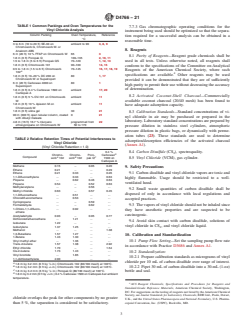
Table 1 lists 14 columns and the oven temperatures used for
7.1.3 The back section of the sample tube (200 mg) adsorbs vinylchloridedetermination.Table2liststherelativeretention
vapors that penetrate the front section and is used to determine timesofsomepotentialinterferencesforfourchromatographic
whether the collection capacity of the tube has been exceeded. columns. Column suitability must be verified by testing with
Instead of a single tube, two tubes in series may be used if two or more columns of dissimilar packings to ensure the
breakthrough is observed (see 11.1.11). absenceofinterferences.Ifthechromatographicpeakforvinyl
D4766 − 21
TABLE 1 Common Packings and Oven Temperatures for the
7.7.3 Gas chromatographic operating conditions for the
Vinyl Chloride Analysis
instrument being used should be optimized so that the separa-
Column Packing Oven Temperature, Reference
tion required for a successful analysis can be obtained in a
°C
reasonable time.
3to6m(10 to 20 ft) SE-30 on ambient to 90 3, 8, 9
Chromosorb G, Chromosorb W. or
8. Reagents
Anakrom ABS
6 m (20 ft) 10 % FFAP on Chromosorb W 65 3
8.1 Purity of Reagents—Reagent grade chemicals shall be
1.8 m (6 ft) Poropak Q 100–135 2, 10, 11
used in all tests. Unless otherwise noted, all reagents shall
1.5 to 1.8 m (5 to 6 ft) Poropak QS 70–120 1, 12, 13
1.8 m (6 ft) Chromosorb 101 90–100 14, 15
conform to the specifications of the Committee on Analytical
0.5 to 1.8 m (1.5 to 6 ft) Chromosorb 70–145 16, 17, 18, 19
Reagents of the American Chemical Society, where such
A
specifications are available. Other reagents may be used
1.8 m (6 ft) 10–20 % DC 200 on 80 1, 17
Chromosorb W or Supelcoport
provided it can be demonstrated that they are of sufficiently
6 m (20 ft) Carbowax 4000 on 80 1
high purity to permit their use without decreasing the accuracy
Supelcoport
of determination.
1.8 m (6 ft) 0.4 % Carbowax 1500 on ambient 17, 20
Carbopak A
8.2 Activated Coconut-Shell Charcoal—Commercially
1.8 m (6 ft) 5 % OV-101 on Chromosorb ambient 11
W available coconut charcoal (20/40 mesh) has been found to
1.8 m (6 ft) 10 % Apiezon M on ambient 11
have adequate adsorption capacity.
Chromosorb W
1.8 m (6 ft) silica gel 30 21
8.3 Calibration Standards—Standard concentrations of vi-
90 m (300 ft) open tubular column, coated 0 21
nyl chloride in air may be purchased or prepared in the
with dibutyl maleate
laboratory.Laboratorystandardconcentrationsarepreparedby
4.8 m (16 ft) 16.7 % triscyano programmed from 22
ethoxypropane on Chromosorb W 50 to 170
pressure dilution in stainless steel cylinders, atmospheric
pressure dilution in plastic bags, or dynamically with perme-
ation tubes (23). These standards are used to determine
TABLE 2 Relative Retention Times of Potential Interferences to
adsorption/desorption efficiencies of the activated charcoal
Vinyl Chloride
(Annex A1).
(Vinyl Chloride Retention = 1.0)
0.4 % 8.4 Carbon Disulfide (CS ), spectroquality.
D
Chromo- Chromo- Poro-
Carbowax
Compound
A B C
8.5 Vinyl Chloride (VCM), gas cylinder.
sorb 102 sorb 102 pak Q 1500 on
Carbopak A
Methane 0.15 . 0.05 0.20
9. Safety Precautions
Ethane 0.21 . . 0.29
Ethene 0.21 0.33 . 0.26
9.1 Carbondisulfideandvinylchloridevaporsaretoxicand
1,1-Difluoroethylene . 0.33 . 0.63
highly flammable. Usage should be restricted to a well-
Propene . 0.62 0.46 0.63
ventilated hood.
Propane 0.54 . 0.52 0.63
Methylacetylene . . 0.56 .
9.2 Small waste quantities of carbon disulfide shall be
Methyl chloride 0.63 . 0.57 0.45
disposed of only in accordance with local regulations and
1,1-Difluoroethane . 0.51 . .
Chlorodifluoromethane . 0.53 . .
accepted practices.
Cyclopropane . . 0.59 .
Formaldehyde . . 0.62 . 9.3 Thevaporsofvinylchlorideshouldnotbeinhaledsince
1-Chloro-1,1-difluoro- . 0.92 . .
they have anesthetic properties and are suspected to be
ethane
carcinogenic.
Acetyladehyde 0.93 . 0.95 0.77
Dichlorotetrafluoroethane . 1.21 . .
9.4 Avoid skin contact with carbon disulfide, solutions of
Isobutane 1.22 . . .
vinyl chloride in CS , and vinyl chloride liquid.
Isobutylene 1.37 1.25 . .
Methanol . . . 1.38
1,3-Butadiene 1.57 1.27 . .
10. Calibration and Standardization
1-Butene 1.43 1.30 . .
Vinyl methyl ether . 1.36 . . 10.1 Pump Flow Setting—Set the sampling pump flow rate
Trans-2-butene 1.57 1.38 . 2.92
in accordance with Practice D3686 and Annex A1.
Ethyl chloride 1.70 . . 1.54
Cis-2-butene 1.73 1.43 . .
10.2 Standardization:
Vinyl bromide . 1.85 . .
10.2.1 Prepare calibration standards as micrograms of vinyl
1,1-dichloroethylene 2.00 . . .
chloride per 10 mL of carbon disulfide over range of interest.
A
1.8 m by 3.2 mm (6 ft by ⁄8 in.) Chromosorb 102 (80/100 mesh) at 100°C.
B
1 10.2.2 Pipet 30 mL of carbon disulfide into a 30-mL (1-oz)
1.8 m by 3.2 mm (6 ft by ⁄8 in.) Chromosorb 102 (80/100 mesh) at 145°C.
C
1.8 m by 3.2 mm (6 ft by ⁄8 in.) Poropak Q (80/100 mesh) at 100°C.
bottle and seal.
D
1.8mby3.2mm(6ftby ⁄8 in.) 0.4 % Carbowax 1500 on Carbopak A at ambient
temperature.
ACS Reagent Chemicals, Specifications and Procedures for Reagents and
Standard-Grade Reference Materials, American Chemical Society, Washington,
DC. For suggestions on the testing of reagents not listed by theAmerican Chemical
Society, see Analar Standards for Laboratory Chemicals, BDH Ltd., Poole, Dorset,
chloride overlaps the peak for other components by no greater
U.K., and the United States Pharmacopeia and National Formulary, U.S. Pharma-
than 5%, the separation is considered to be satisfactory. copeial Convention, Inc. (USPC), Rockville, MD.
D4766 − 21
10.2.3 Fill a 1.0-mL gas-tight syringe with pure vinyl 11.1.3 For a breathing zone sample, fasten the sampling
chloride vapor from a cylinder of pure vinyl chloride. pumptotheworkerandattachthesamplingtubeasclosetothe
(Warning—Handle the pure vinyl chloride gas in a hood.) worker’s breathing zone as possible. Position the tube in a
10.2.4 Inject 1.0 mL of vinyl chloride vapor (through the vertical position to avoid channeling of air through adsorber
sections. (Warning—Ensure that the presence of the sampling
septum) directly into the carbon disulfide in the vial. Mix
thoroughly.Thisstandardcontains852µgofvinylchlorideper equipment is not a safety hazard to the worker.)
10 mLof carbon disulfide and is equivalent to 13.3 ppm in air 11.1.4 Turn on the pump, which has previously been ad-
based on a 25-L sample. Prepare in duplicate (see Note 1). justedandcalibratedtoprovideasamplingrateof100mL/min
for a 4-h sample time or 50 mL/min for an 8-h sample time.
NOTE 1—The concentration of the standard solution is based on
Note and record the time, flow rate or pump register,
injectionof1.0mLofgasat25°Cand1atmosphere(101.3kPa).Forother
temperature, and barometric pressure.
conditions of temperature and pressure, the concentration should be
multiplied by a correction factor, as follows: 11.1.5 Sample volumes up to 25 L are sufficient for deter-
mining vinyl chloride concentrations for compliance purposes.
barometricpressure ~kPa! 298
CorrectionFactor 5 3 (1)
Attempting to collect larger quantities at high concentrations,
101.3kPa °C1273
high flow rates, or long sampl
...
This document is not an ASTM standard and is intended only to provide the user of an ASTM standard an indication of what changes have been made to the previous version. Because
it may not be technically possible to adequately depict all changes accurately, ASTM recommends that users consult prior editions as appropriate. In all cases only the current version
of the standard as published by ASTM is to be considered the official document.
Designation: D4766 − 98 (Reapproved 2014) D4766 − 21
Standard Test Method for
Vinyl Chloride in Workplace Atmospheres (Charcoal Tube
Method)
This standard is issued under the fixed designation D4766; the number immediately following the designation indicates the year of
original adoption or, in the case of revision, the year of last revision. A number in parentheses indicates the year of last reapproval. A
superscript epsilon (´) indicates an editorial change since the last revision or reapproval.
1. Scope
1.1 This test method describes the determination of vinyl chloride monomer (VCM) in workplace atmospheres using a modified
charcoal tube method (see Practice D3686).
1.2 This procedure is compatible with low flow low-flow rate personal sampling equipment. It can be used for personal or
stationary monitoring. It cannot be used to determine instantaneous fluctuations in concentration to detect maximum values.
Alternative on-site procedures, such as gas chromatography or infrared spectrometry, must be used are required to measure
fast-changing concentrations.
1.3 The range of this test method is from the limit of detection of quantitation approximately 0.010.03 to 100 ppm (v).
1.4 The sampling method provides a time-weighted average sample.
1.5 The values stated in SI units are to be regarded as standard. The values given in parentheses are mathematical conversions to
inch-pound units that after SI units are provided for information only and are not considered standard.
1.6 This standard does not purport to address all of the safety concerns, if any, associated with its use. It is the responsibility
of the user of this standard to establish appropriate safety safety, health, and healthenvironmental practices and determine the
applicability of regulatory limitations prior to use. For more specific precautionary statements, see Section 9 and Warnings in ,
10.2.3, and 11.1.3.
1.7 This international standard was developed in accordance with internationally recognized principles on standardization
established in the Decision on Principles for the Development of International Standards, Guides and Recommendations issued
by the World Trade Organization Technical Barriers to Trade (TBT) Committee.
2. Referenced Documents
2.1 ASTM Standards:
D1356 Terminology Relating to Sampling and Analysis of Atmospheres
D3686 Practice for Sampling Atmospheres to Collect Organic Compound Vapors (Activated Charcoal Tube Adsorption Method)
E355 Practice for Gas Chromatography Terms and Relationships
This test method is under the jurisdiction of ASTM Committee D22 on Air Quality and is the direct responsibility of Subcommittee D22.04 on Workplace Air Quality.
Current edition approved Sept. 1, 2014March 1, 2021. Published September 2014July 2021. Originally approved in 1988. Last previous edition approved in 20092014
ε1
as D4766 – 98 (2009)(2014). . DOI: 10.1520/D4766-98R14.10.1520/D4766-21.
For referenced ASTM standards, visit the ASTM website, www.astm.org, or contact ASTM Customer Service at service@astm.org. For Annual Book of ASTM Standards
volume information, refer to the standard’sstandard’s Document Summary page on the ASTM website.
Copyright © ASTM International, 100 Barr Harbor Drive, PO Box C700, West Conshohocken, PA 19428-2959. United States
D4766 − 21
3. Terminology
3.1 Definitions—For definitions of terms relating to this test method, refer to Terminology D1356 and Practice E355.
4. Summary of Test Method
4.1 Known volumes of samplesampled air are passed through glass or metal tubes packed with activated charcoal. Vinyl chloride
is adsorbed on the charcoal and thus removed from the flowing gas stream (1-3).
4.2 A two-section tube containing a front and a backup section of adsorbent is used to collect the sample.
4.3 The vinyl chloride is desorbed with carbon disulfide and analyzed with a gas chromatograph equipped with a flame ionization
detector. Two or more different columns are to be used to reveal interferences that might otherwise not be detected.
4.4 Adsorption/desorption efficiencies are determined by the same techniques used for the atmospheric analysis applied to known
standards. Instrument calibrations are made with prepared standard solutions of vinyl chloride in carbon disulfide.
5. Significance and Use
5.1 Vinyl chloride monomer (VCM) is the starting material for the manufacture of poly(vinyl chloride) (PVC), which is used
extensively in construction, electronics, packaging, and other industries. The vinyl chloride gas can escape during manufacturing,
transportation, and polymerization stages. Residual monomer can also escape during subsequent fabrication processes.
5.2 Vinyl chloride is a toxic and explosive hazardous material.
5.3 Vinyl chloride is suspected to be a carcinogenic agent (4), and occupational exposure limits (OELs) have been established for
this agent. For instance, the present U.S. Occupational Safety and Health Administration (OSHA) standard permissible exposure
limit (PEL) for VCM is 1.0 ppm (v) with a 0.5-ppm (v) action level; the maximum length of operator exposure at 5 ppm (v) is
15 min.min (5).
5.4 The This test method is made selective for vinyl chloride by choosing chromatographchromatographic columns that will
separate vinyl chloride from other organic compounds in the sample.
5.5 The This test method meets requirements (for example, those of OSHA) OSHA and NIOSH) for monitoring workplace
atmospheres in vinyl chloride and poly(vinyl chloride) production and fabrication processes.
6. Interferences
6.1 Organic components that have the same or nearly the same retention time as vinyl chloride during gas-chromatographic
analysis will interfere.potentially interfere. Other volatile organic compounds in the collected samples require consideration.
6.2 Other volatile organic compounds in the area samples should be given consideration.
6.2 Such interferences can be minimized by proper selection of gas-chromatographic columns. A mass spectrometric detector can
be used to confirm the presence of vinyl chloride.
6.3 Water mists and high humidity affect adsorption efficiencies by reducing the adsorptive capacity of the activated charcoal for
vinyl chloride.
7. Apparatus
7.1 Charcoal Sampling Tube:
The boldface numbers in parentheses refer to thea list of references at the end of this test method.standard.
D4766 − 21
7.1.1 Description—A sampling tube consists of a length of glass tubing containing two sections of activated charcoal that are held
in place by nonadsorbentnon-adsorbent material and sealed at each end.
7.1.2 Sampling tubes are commercially available and normally consist of a glass tube 110 mm long, 10 mm in outside diameter,
and 8 mm in inside diameter. They contain two sections of 20/40 mesh activated charcoal, 800 and 200 mg, each separated by a
2-mm section of urethane foam. The front section is retained by a plug of glass wool and the back section is retained by a second
2-mm portion of urethane foam or other retainer, such as glass wool. The ends of the tube are flame sealed.
7.1.3 The back section of the sample tube (200 mg) adsorbs vapors that penetrate the front section and is used to determine
whether the collection capacity of the tube has been exceeded. Instead of a single tube, two tubes in series may be used if
breakthrough is observed (see 11.1.11).
7.1.4 The pressure drop across the charcoal tube should be no greater than 2.5 cm Hg [3.3 kPa]3.3 kPa (2.5 cm Hg) at a flowrate
of 1000 mL/min.
7.1.5 Glass tubes mustshall be held in suitable protective holders to prevent breakage during sampling.
7.2 Syringes:
7.2.1 Gas-Tight Syringe, 1 to 2-mL capacity.
7.2.2 Microlitre Syringes, 10, 25, and 100-μL or other convenient sizes for making standards.preparing standard solutions.
7.3 Polyethylene End Caps, for capping charcoal tube.tubes. Caps must fit snugly to prevent leakage.
7.4 Vials, glass, approximately 12 mL (3-dram), for desorbing samples and holding standards, standard solutions: polyethylene or
TFE-fluorocarbon-lined screw cap or septum valve. A 1-oz 30-mL (1-oz) vial with the same types of closureseal is needed for
standard preparation.
7.5 Plastic Bags—Poly(vinylidine chloride) or poly(vinyl fluoride), 50 to 100 L, for preparing known concentrations of vinyl
chloride. The significant solubility of vinyl chloride in polytetrafluorethylene renders bags made of this type of film unsuitable.
Other equivalent containers for preparing known concentrations are also suitable.
7.6 Sampling Equipment—See Ref (56) for general information on air sampling instrumentation.
7.6.1 Any pump whose flow rate can be accurately determined and set at the desired sampling rate is suitable.
7.6.1 Personal Sampling Pump, with flow rate accurately determined to within 65 % and set at the desired sampling rate. Pumps
having stable low flow rates (10 to 200 mL/min) are preferable for long period sampling (up to 8 h) or for short periods when
concentration of organic vapors are expected to be high. All sampling pumps must be carefully flow-rate adjusted with a charcoal
tube in the proper sampling position. (See Practice D3686 and Annex A1.)
7.6.3 All sampling pumps must be carefully calibrated with a charcoal tube in the proper sampling position. (See Practice D3686
and Annex A1.)
7.6.2 Tubing, rubber or plastic, 6-mm [( ⁄4 in.],in.), bore about 0.9 m [3 ft](3 ft) long, equipped with a spring clip to hold the tubing
and charcoal tube in place on worker’sworker’s lapel area (area. SamplingNote 1). tubes shall not be used with plastic or rubber
tubing upstream of the charcoal. Absorption by the tubing may introduce sampling errors.
NOTE 1—Sampling tubes must not be used with plastic or rubber tubing upstream of the charcoal. Absorption by the tubing may introduce sampling errors.
7.7 Gas Chromatograph:
7.7.1 Gas chromatographs that employ either a flame ionization detector or a detector whose specifications are equivalent in
D4766 − 21
sensitivity and selectivity shouldshall be used. Detectors mustshall be capable of determining vinyl chloride concentrations of
−10
interest with a signal-to-noise ratio of at least 10 to 1. Suitable detectors are capable of detecting approximately 5 × 10 g of vinyl
chloride per injection.
7.7.2 A gas-chromatographic column capable of separating vinyl chloride from other components is required. A number of suitable
columns have been discussed in the literature (67).Table 1 lists 14 columns and the oven temperatures used for vinyl chloride
determination. Table 2 lists the relative retention times of some potential interferences for four chromatographic columns. Column
suitability must be verified by testing with two or more columns of dissimilar packings to ensure the absence of interferences. If
the chromatographic peak for vinyl chloride overlaps the peak for other components by no greater than 5 %, the separation is
considered to be satisfactory.
TABLE 1 Common Packings and Oven Temperatures for the
Vinyl Chloride Analysis
Column Packing Oven Temperature, Reference
°C
10 to 20 ft [3 to 6 m] SE-30 on ambient to 90 3, 7, 8
Chromosorb G, Chromosorb W. or
Anakrom ABS
20 ft [6 m] 10 % FFAP on Chromosorb 65 3
W
6 ft [1.8 m] Poropak Q 100–135 2, 9, 10
5 to 6 ft [1.5 to 1.8 m] Poropak QS 70–120 1, 11, 12
6 ft [1.8 m] Chromosorb 101 90–100 13, 14
1.5 to 6 ft [0.5 to 1.8 m] Chromosorb 70–145 15, 16, 17, 18
A
6 ft [1.8 m] 10–20 % DC 200 on 80 1, 16
Chromosorb W or Supelcoport
20 ft [6 m] Carbowax 4000 on 80 1
Supelcoport
6 ft [1.8 m] 0.4 % Carbowax 1500 on ambient 16, 19
Carbopak A
6 ft [1.8 m] 5 % OV-101 on ambient 10
Chromosorb W
6 ft [1.8 m] 10 % Apiezon M on ambient 10
Chromosorb W
6 ft [1.8 m] silica gel 30 20
300 ft [90 m] open tubular column, 0 20
coated with dibutyl maleate
16 ft [4.8 m] 16.7 % triscyano programmed 21
ethoxypropane on Chromosorb W from 50 to 170
TABLE 1 Common Packings and Oven Temperatures for the
Vinyl Chloride Analysis
Column Packing Oven Temperature, Reference
°C
3 to 6 m (10 to 20 ft) SE-30 on ambient to 90 3, 8, 9
Chromosorb G, Chromosorb W. or
Anakrom ABS
6 m (20 ft) 10 % FFAP on Chromosorb 65 3
W
1.8 m (6 ft) Poropak Q 100–135 2, 10, 11
1.5 to 1.8 m (5 to 6 ft) Poropak QS 70–120 1, 12, 13
1.8 m (6 ft) Chromosorb 101 90–100 14, 15
0.5 to 1.8 m (1.5 to 6 ft) Chromosorb 70–145 16, 17, 18, 19
A
1.8 m (6 ft) 10–20 % DC 200 on 80 1, 17
Chromosorb W or Supelcoport
6 m (20 ft) Carbowax 4000 on 80 1
Supelcoport
1.8 m (6 ft) 0.4 % Carbowax 1500 on ambient 17, 20
Carbopak A
1.8 m (6 ft) 5 % OV-101 on ambient 11
Chromosorb W
1.8 m (6 ft) 10 % Apiezon M on ambient 11
Chromosorb W
1.8 m (6 ft) silica gel 30 21
90 m (300 ft) open tubular column, 0 21
coated with dibutyl maleate
4.8 m (16 ft) 16.7 % triscyano programmed 22
ethoxypropane on Chromosorb W from 50 to 170
D4766 − 21
TABLE 2 Relative Retention Times of Potential Interferences to
Vinyl Chloride
(Vinyl Chloride Retention = 1.0)
0.4 %
D
Chromo- Chromo- Poro-
Carbowax
Compound
A B C
sorb 102 sorb 102 pak Q 1500 on
Carbopak A
Methane 0.15 . 0.05 0.20
Ethane 0.21 . . 0.29
Ethene 0.21 0.33 . 0.26
1,1-Difluoroethylene . 0.33 . 0.63
Propene . 0.62 0.46 0.63
Propane 0.54 . 0.52 0.63
Methylacetylene . . 0.56 .
Methyl chloride 0.63 . 0.57 0.45
1,1-Difluoroethane . 0.51 . .
Chlorodifluoromethane . 0.53 . .
Cyclopropane . . 0.59 .
Formaldehyde . . 0.62 .
1-Chloro-1,1-difluoro- . 0.92 . .
ethane
Acetyladehyde 0.93 . 0.95 0.77
Dichlorotetrafluoroethane . 1.21 . .
Isobutane 1.22 . . .
Isobutylene 1.37 1.25 . .
Methanol . . . 1.38
1,3-Butadiene 1.57 1.27 . .
1-Butene 1.43 1.30 . .
Vinyl methyl ether . 1.36 . .
Trans-2-butene 1.57 1.38 . 2.92
Ethyl chloride 1.70 . . 1.54
Cis-2-butene 1.73 1.43 . .
Vinyl bromide . 1.85 . .
1,1-dichloroethylene 2.00 . . .
A
6 1.8 m by 3.2 mm (6 ft by ⁄8 in.in.) Chromosorb 102 (80/100 mesh) at 100°C.
B
6 1.8 m by 3.2 mm (6 ft by ⁄8 in.in.) Chromosorb 102 (80/100 mesh) at 145°C.
C
6 1.8 m by 3.2 mm (6 ft by ⁄8 in.in.) Poropak Q (80/100 mesh) at 100°C.
D
6 1.8 m by 3.2 mm (6 ft by ⁄8 in.in.) 0.4 % Carbowax 1500 on Carbopak A at
ambient temperature.
7.7.3 Gas chromatographic operating conditions for the instrument being used should be optimized so that the separation required
for a successful analysis can be obtained in a reasonable time.
8. Reagents
8.1 Purity of Reagents—Reagent grade chemicals shall be used in all tests. Unless otherwise noted, all reagents shall conform to
the specifications of the Committee on Analytical Reagents of the American Chemical Society, where such specifications are
available. Other reagents may be used provided it can be demonstrated that they are of sufficiently high purity to permit their use
without decreasing the accuracy of determination.
8.2 Activated Coconut-Shell Charcoal—Commercially available coconut charcoal (20/40 mesh) has been found to have adequate
adsorption capacity.
8.3 Calibration Standards—Standard concentrations of vinyl chloride in air may be purchased or prepared in the laboratory.
Laboratory standard concentrations are prepared by pressure dilution in stainless steel cylinders, atmospheric pressure dilution in
plastic bags, or dynamically with permeation tubes (2223). These standards are used to determine adsorption/desorption
efficiencies of the activated charcoal (Annex A1).
8.4 Carbon Disulfide (CS ), spectroquality.
Federal Register, 39, 194 (1974).
Reagent Chemicals, American Chemical Society Specifications,ACS Reagent Chemicals, Specifications and Procedures for Reagents and Standard-Grade Reference
Materials, American Chemical Society, Washington, DC. For suggestions on the testing of reagents not listed by the American Chemical Society, see Analar Standards for
Laboratory Chemicals, BDH Ltd., Poole, Dorset, U.K., and the United States Pharmacopeia and National Formulary, U.S. Pharmacopeial Convention, Inc. (USPC),
Rockville, MD.
D4766 − 21
8.5 Vinyl Chloride (VCM), gas cylinder.
9. Safety Precautions
9.1 Carbon disulfide and vinyl chloride vapors are toxic and highly flammable. Usage should be restricted to a well-ventilated
hood.
9.2 Small waste quantities of carbon disulfide shall be disposed of only in accordance with local regulations and accepted
practices.
9.3 The vapors of vinyl chloride should not be inhaled since they have anesthetic properties and are suspected to be carcinogenic.
9.4 Avoid skin contact with carbon disulfide, solutions of vinyl chloride in CS , and vinyl chloride liquid.
10. Calibration and Standardization
10.1 Sample Pump Calibration—Flow Setting—CalibrateSet the samplesampling pump flow rate in accordance with Practice
D3686 and Annex A1.
10.2 Standardization:
10.2.1 Prepare calibration standards as micrograms of vinyl chloride per 10 mL of carbon disulfide over range of interest.
10.2.2 Pipet 30 mL of carbon disulfide into a 1-oz 30-mL (1-oz) bottle and seal.
10.2.3 Fill a 1.0-mL gas-tight syringe with pure vinyl chloride vapor from a cylinder of pure vinyl chloride. (Warning—Handle
the pure vinyl chloride gas in a hood.)
10.2.4 Inject 1.0 mL of vinyl chloride vapor (through the septum) directly into the carbon disulfide in the vial. Mix thoroughly.
This standard contains 852 μg of vinyl chloride per 10 mL of carbon disulfide and is equivalent to 13.3 ppm in air based on a 25-L
sample. Prepare in duplicate ((see Note 21).
NOTE 1—The concentration of the standard solution is based on injection of 1.0 mL of gas at 25°C and 1 atmosphere (101.3 kPa). For other conditions
of temperature and pressure, the concentration should be multiplied by a correction factor, as follows:
barometric pressure kPa 2
...