

ASTM E2181/E2181M-19
(Specification)Standard Specification for Compacted Mineral-Insulated, Metal-Sheathed, Noble Metal Thermocouples and Thermocouple Cable
General Information
- Abstract
ABSTRACT
This specification establishes the requirements for materials and manufacturing, dimensions, inspection and testing, and processing of compacted, mineral-insulated, metal-sheathed Type S (platinum-10 % rhodium versus platinum), Type R (platinum-13 % rhodium versus platinum), and Type B (platinum-30 % rhodium versus platinum-6 % rhodium) noble metal thermocouples, and thermocouple cables with at least one noble metal thermoelement pair. This specification describes both the required processing and testing requirements, and also the optional supplementary testing and quality assurance requirements. Additionally, provisions are made herein for selecting the type of noble metal thermocouple or thermoelements, either magnesia (MgO) or alumina (Al2O3) insulation, and a noble metal alloy or other alternate heat-resistant sheath material. Provisions are also made for selecting a thermocouple measuring junction style and for a transition or termination.
SCOPE
1.1 This specification establishes dimensional and material requirements for compacted, mineral-insulated, metal-sheathed (MIMS), Type S (platinum-10 % rhodium versus platinum), Type R (platinum-13 % rhodium versus platinum), and Type B (platinum-30 % rhodium versus platinum-6 % rhodium) noble metal thermocouples. This specification also establishes dimensional recommendations and material requirements for compacted MIMS cable with at least one noble metal thermoelement pair.
1.2 This specification describes both the required processing and testing requirements and also the optional supplementary testing and quality assurance requirements.
1.3 Provisions are made for selecting the type of noble metal thermocouple or thermoelements, either magnesia (MgO) or alumina (Al2O3) insulation, and a noble metal alloy or another heat-resistant sheath material. Provisions are also made for selecting a thermocouple-measuring junction style and for a transition or termination.
1.4 The values stated in inch-pound units or SI (metric) units may be regarded separately as standard. The values stated in each system are not the exact equivalents, and each system shall be used independently of the other.
1.5 This standard does not purport to address all of the safety concerns, if any, associated with its use. It is the responsibility of the user of this standard to establish appropriate safety, health, and environmental practices and determine the applicability of regulatory limitations prior to use.
1.6 This international standard was developed in accordance with internationally recognized principles on standardization established in the Decision on Principles for the Development of International Standards, Guides and Recommendations issued by the World Trade Organization Technical Barriers to Trade (TBT) Committee.
- Status
- Published
- Publication Date
- 31-Aug-2019
- Technical Committee
- E20 - Temperature Measurement
- Drafting Committee
- E20.12 - Thermocouples - Specifications
Buy Documents
ASTM E2181/E2181M-19 - Standard Specification for Compacted Mineral-Insulated, Metal-Sheathed, Noble Metal Thermocouples and Thermocouple Cable
REDLINE ASTM E2181/E2181M-19 - Standard Specification for Compacted Mineral-Insulated, Metal-Sheathed, Noble Metal Thermocouples and Thermocouple Cable
Overview
ASTM E2181/E2181M-19 is the internationally recognized standard specification for compacted, mineral-insulated, metal-sheathed (MIMS), noble metal thermocouples and thermocouple cable. This standard, developed by ASTM International, outlines key requirements for materials, manufacturing, dimensions, inspection, and testing of thermocouples, specifically those using Type S, R, or B noble metal thermoelements and MIMS cable with at least one noble metal pair. It also details provisions for selecting insulation materials, sheath types, and junction configurations, ensuring reliable performance in extreme temperature settings where precise measurement and durability are critical.
Key Topics
- Types of Noble Metal Thermocouples: Covers Type S (platinum-10% rhodium vs. platinum), Type R (platinum-13% rhodium vs. platinum), and Type B (platinum-30% rhodium vs. platinum-6% rhodium).
- Material and Manufacturing Requirements: Specifies noble metal thermoelements, magnesia (MgO) or alumina (Al₂O₃) insulation, and heat-resistant metal sheaths, including platinum and various stainless steel and nickel-chrome alloys.
- Dimensional Requirements: Includes guidelines on sheath diameters, wall thicknesses, thermoelement sizes, and insulation thickness, ensuring mechanical integrity and measurement accuracy.
- Inspection and Testing: Outlines required and optional testing for electrical continuity, insulation resistance, polarity, and calibration versus standard emf tables, along with supplementary options (radiographic inspection, weld integrity tests).
- Junction and Termination Selection: Provides for grounded, ungrounded, common, and isolated junction styles, as well as specification of transition or termination methods.
- Order and Quality Assurance Requirements: Details purchaser responsibilities for specifying dimensions, material types, operating temperatures, tolerances, and desired testing or documentation.
Applications
Mineral-insulated, metal-sheathed noble metal thermocouples built to ASTM E2181/E2181M-19 specifications offer superior stability and longevity at high temperatures where base metal thermocouples fall short. Key application areas include:
- Metals and Glass Processing: Precise monitoring and control of extremely high process temperatures.
- Aerospace and Power Generation: Reliable temperature measurement in turbines, reactors, and research laboratories.
- Industrial Furnaces and Kilns: Continuous operation in environments reaching up to 1700°C (3100°F).
- Semiconductor Manufacturing: Where contamination resistance and accurate high-temperature measurement are crucial.
- Scientific and Material Testing Labs: Demanding calibration consistency and traceability to international standards.
ASTM E2181/E2181M-19’s compatibility with both SI and inch-pound units facilitates global adoption and integration into systems requiring compliance with exacting material, design, and performance specifications.
Related Standards
For full compliance and optimal application, ASTM E2181/E2181M-19 references several important related standards, including:
- ASTM E230/E230M: Standardized emf-temperature tables for thermocouples
- ASTM E839: Test methods for sheathed thermocouples and cables
- ASTM E1652: Powder and insulators for manufacture of thermocouples
- ASTM E220: Calibration of thermocouples by comparison techniques
- ASTM E608/E608M: Base metal MIMS thermocouples
- ASTM A213/A213M, A269/A269M,.A249/A249M, A632: Alloy and stainless steel tubing
- ASTM B163/B167/B516: Nickel and nickel alloy tubing specifications
- ANSI B46.1: Surface texture guidance
Practical Value
Implementing ASTM E2181/E2181M-19 ensures that mineral-insulated, metal-sheathed, noble metal thermocouples and cables meet stringent quality, reliability, and performance standards. Compliance enhances process safety, product consistency, and regulatory acceptance in critical, high-temperature measurement applications worldwide.
Keywords: noble metal thermocouple, mineral-insulated thermocouple, metal-sheathed thermocouple, Type S, Type R, Type B, MIMS cable, platinum thermocouple, high-temperature measurement, ASTM standards, industrial temperature sensors.
Relations
- Effective Date
- 01-Apr-2024
- Effective Date
- 01-Mar-2024
- Effective Date
- 01-Mar-2024
- Effective Date
- 01-Dec-2023
- Effective Date
- 01-Nov-2023
- Effective Date
- 01-Nov-2023
- Effective Date
- 01-May-2023
- Effective Date
- 01-Nov-2019
- Effective Date
- 01-Sep-2019
- Effective Date
- 01-Sep-2019
- Effective Date
- 01-Nov-2018
- Effective Date
- 01-Nov-2018
- Effective Date
- 01-Sep-2018
- Effective Date
- 01-Jul-2018
- Effective Date
- 01-Apr-2018
Buy Documents
ASTM E2181/E2181M-19 - Standard Specification for Compacted Mineral-Insulated, Metal-Sheathed, Noble Metal Thermocouples and Thermocouple Cable
REDLINE ASTM E2181/E2181M-19 - Standard Specification for Compacted Mineral-Insulated, Metal-Sheathed, Noble Metal Thermocouples and Thermocouple Cable
Get Certified
Connect with accredited certification bodies for this standard

IMQ S.p.A. (Certification)
Italian electrical product certification.

SLG Prüf- und Zertifizierungs GmbH
German testing and certification body.

UL Solutions
Global safety science company with testing, inspection and certification.
Sponsored listings
Frequently Asked Questions
ASTM E2181/E2181M-19 is a technical specification published by ASTM International. Its full title is "Standard Specification for Compacted Mineral-Insulated, Metal-Sheathed, Noble Metal Thermocouples and Thermocouple Cable". This standard covers: ABSTRACT This specification establishes the requirements for materials and manufacturing, dimensions, inspection and testing, and processing of compacted, mineral-insulated, metal-sheathed Type S (platinum-10 % rhodium versus platinum), Type R (platinum-13 % rhodium versus platinum), and Type B (platinum-30 % rhodium versus platinum-6 % rhodium) noble metal thermocouples, and thermocouple cables with at least one noble metal thermoelement pair. This specification describes both the required processing and testing requirements, and also the optional supplementary testing and quality assurance requirements. Additionally, provisions are made herein for selecting the type of noble metal thermocouple or thermoelements, either magnesia (MgO) or alumina (Al2O3) insulation, and a noble metal alloy or other alternate heat-resistant sheath material. Provisions are also made for selecting a thermocouple measuring junction style and for a transition or termination. SCOPE 1.1 This specification establishes dimensional and material requirements for compacted, mineral-insulated, metal-sheathed (MIMS), Type S (platinum-10 % rhodium versus platinum), Type R (platinum-13 % rhodium versus platinum), and Type B (platinum-30 % rhodium versus platinum-6 % rhodium) noble metal thermocouples. This specification also establishes dimensional recommendations and material requirements for compacted MIMS cable with at least one noble metal thermoelement pair. 1.2 This specification describes both the required processing and testing requirements and also the optional supplementary testing and quality assurance requirements. 1.3 Provisions are made for selecting the type of noble metal thermocouple or thermoelements, either magnesia (MgO) or alumina (Al2O3) insulation, and a noble metal alloy or another heat-resistant sheath material. Provisions are also made for selecting a thermocouple-measuring junction style and for a transition or termination. 1.4 The values stated in inch-pound units or SI (metric) units may be regarded separately as standard. The values stated in each system are not the exact equivalents, and each system shall be used independently of the other. 1.5 This standard does not purport to address all of the safety concerns, if any, associated with its use. It is the responsibility of the user of this standard to establish appropriate safety, health, and environmental practices and determine the applicability of regulatory limitations prior to use. 1.6 This international standard was developed in accordance with internationally recognized principles on standardization established in the Decision on Principles for the Development of International Standards, Guides and Recommendations issued by the World Trade Organization Technical Barriers to Trade (TBT) Committee.
ABSTRACT This specification establishes the requirements for materials and manufacturing, dimensions, inspection and testing, and processing of compacted, mineral-insulated, metal-sheathed Type S (platinum-10 % rhodium versus platinum), Type R (platinum-13 % rhodium versus platinum), and Type B (platinum-30 % rhodium versus platinum-6 % rhodium) noble metal thermocouples, and thermocouple cables with at least one noble metal thermoelement pair. This specification describes both the required processing and testing requirements, and also the optional supplementary testing and quality assurance requirements. Additionally, provisions are made herein for selecting the type of noble metal thermocouple or thermoelements, either magnesia (MgO) or alumina (Al2O3) insulation, and a noble metal alloy or other alternate heat-resistant sheath material. Provisions are also made for selecting a thermocouple measuring junction style and for a transition or termination. SCOPE 1.1 This specification establishes dimensional and material requirements for compacted, mineral-insulated, metal-sheathed (MIMS), Type S (platinum-10 % rhodium versus platinum), Type R (platinum-13 % rhodium versus platinum), and Type B (platinum-30 % rhodium versus platinum-6 % rhodium) noble metal thermocouples. This specification also establishes dimensional recommendations and material requirements for compacted MIMS cable with at least one noble metal thermoelement pair. 1.2 This specification describes both the required processing and testing requirements and also the optional supplementary testing and quality assurance requirements. 1.3 Provisions are made for selecting the type of noble metal thermocouple or thermoelements, either magnesia (MgO) or alumina (Al2O3) insulation, and a noble metal alloy or another heat-resistant sheath material. Provisions are also made for selecting a thermocouple-measuring junction style and for a transition or termination. 1.4 The values stated in inch-pound units or SI (metric) units may be regarded separately as standard. The values stated in each system are not the exact equivalents, and each system shall be used independently of the other. 1.5 This standard does not purport to address all of the safety concerns, if any, associated with its use. It is the responsibility of the user of this standard to establish appropriate safety, health, and environmental practices and determine the applicability of regulatory limitations prior to use. 1.6 This international standard was developed in accordance with internationally recognized principles on standardization established in the Decision on Principles for the Development of International Standards, Guides and Recommendations issued by the World Trade Organization Technical Barriers to Trade (TBT) Committee.
ASTM E2181/E2181M-19 is classified under the following ICS (International Classification for Standards) categories: 29.060.20 - Cables; 29.120.30 - Plugs, socket-outlets, couplers. The ICS classification helps identify the subject area and facilitates finding related standards.
ASTM E2181/E2181M-19 has the following relationships with other standards: It is inter standard links to ASTM B516-24, ASTM A269/A269M-24, ASTM A249/A249M-24, ASTM E344-23, ASTM E230/E230M-23a, ASTM B167-23, ASTM E230/E230M-23, ASTM A213/A213M-19, ASTM A632-19, ASTM E344-19, ASTM B516-18, ASTM B163-18, ASTM A213/A213M-18a, ASTM A249/A249M-18, ASTM E344-18. Understanding these relationships helps ensure you are using the most current and applicable version of the standard.
ASTM E2181/E2181M-19 is available in PDF format for immediate download after purchase. The document can be added to your cart and obtained through the secure checkout process. Digital delivery ensures instant access to the complete standard document.
Standards Content (Sample)
This international standard was developed in accordance with internationally recognized principles on standardization established in the Decision on Principles for the
Development of International Standards, Guides and Recommendations issued by the World Trade Organization Technical Barriers to Trade (TBT) Committee.
Designation: E2181/E2181M −19 An American National Standard
Standard Specification for
Compacted Mineral-Insulated, Metal-Sheathed, Noble Metal
Thermocouples and Thermocouple Cable
ThisstandardisissuedunderthefixeddesignationE2181/E2181M;thenumberimmediatelyfollowingthedesignationindicatestheyear
of original adoption or, in the case of revision, the year of last revision.Anumber in parentheses indicates the year of last reapproval.
A superscript epsilon (´) indicates an editorial change since the last revision or reapproval.
1. Scope 2. Referenced Documents
2.1 The following documents of the latest issue form a part
1.1 This specification establishes dimensional and material
requirementsforcompacted,mineral-insulated,metal-sheathed of this specification to the extent specified herein. In the event
of a conflict between this specification and other specifications
(MIMS), Type S (platinum-10% rhodium versus platinum),
Type R (platinum-13% rhodium versus platinum), andType B referenced herein, this specification shall take precedence.
(platinum-30% rhodium versus platinum-6% rhodium) noble 2
2.2 ASTM Standards:
metal thermocouples. This specification also establishes di-
A213/A213MSpecification for Seamless Ferritic and Aus-
mensional recommendations and material requirements for
tenitic Alloy-Steel Boiler, Superheater, and Heat-
compacted MIMS cable with at least one noble metal thermo-
Exchanger Tubes
element pair.
A249/A249MSpecification for Welded Austenitic Steel
1.2 Thisspecificationdescribesboththerequiredprocessing Boiler, Superheater, Heat-Exchanger, and Condenser
and testing requirements and also the optional supplementary Tubes
A269/A269MSpecification for Seamless and Welded Aus-
testing and quality assurance requirements.
tenitic Stainless Steel Tubing for General Service
1.3 Provisions are made for selecting the type of noble
A632Specification for Seamless and Welded Austenitic
metal thermocouple or thermoelements, either magnesia
Stainless Steel Tubing (Small-Diameter) for General Ser-
(MgO) or alumina (Al O ) insulation, and a noble metal alloy
2 3
vice
or another heat-resistant sheath material. Provisions are also
B163Specification for Seamless Nickel and Nickel Alloy
made for selecting a thermocouple-measuring junction style
Condenser and Heat-Exchanger Tubes
and for a transition or termination.
B167Specification for Nickel-Chromium-AluminumAlloys
1.4 The values stated in inch-pound units or SI (metric)
(UNS N06699), Nickel-Chromium-Iron Alloys (UNS
unitsmayberegardedseparatelyasstandard.Thevaluesstated
N06600, N06601, N06603, N06690, N06693, N06025,
in each system are not the exact equivalents, and each system
N06045, and N06696), Nickel-Chromium-Cobalt-
shall be used independently of the other.
Molybdenum Alloy (UNS N06617), Nickel-Iron-
1.5 This standard does not purport to address all of the Chromium-Tungsten Alloy (UNS N06674), and
safety concerns, if any, associated with its use. It is the B516 Specification for Welded Nickel-Chromium-
responsibility of the user of this standard to establish appro- Aluminum Alloy (UNS N06699) and Nickel-Chromium-
priate safety, health, and environmental practices and deter- Iron Alloy (UNS N06600, UNS N06601, UNS N06603,
mine the applicability of regulatory limitations prior to use. UNS N06025, UNS N06045, UNS N06690, and UNS
1.6 This international standard was developed in accor- N06693) Tubes
E165/E165MPractice for Liquid Penetrant Testing for Gen-
dance with internationally recognized principles on standard-
ization established in the Decision on Principles for the eral Industry
Development of International Standards, Guides and Recom- E220Test Method for Calibration of Thermocouples By
Comparison Techniques
mendations issued by the World Trade Organization Technical
Barriers to Trade (TBT) Committee. E230/E230MSpecification for Temperature-Electromotive
Force (emf) Tables for Standardized Thermocouples
E344Terminology Relating to Thermometry and Hydrom-
etry
This specification is under the jurisdiction of ASTM Committee E20 on
Temperature Measurement and is the direct responsibility of Subcommittee E20.12
on Thermocouples - Specifications. For referenced ASTM standards, visit the ASTM website, www.astm.org, or
Current edition approved Sept. 1, 2019. Published October 2019. Originally contact ASTM Customer Service at service@astm.org. For Annual Book of ASTM
approved in 2001. Last previous edition approved in 2011 as E2181/E2181M–11. Standards volume information, refer to the standard’s Document Summary page on
DOI: 10.1520/E2181_E2181M-19. theASTM website.
Copyright © ASTM International, 100 Barr Harbor Drive, PO Box C700, West Conshohocken, PA 19428-2959. United States
E2181/E2181M − 19
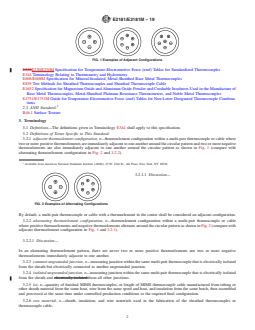
FIG. 2 Examples of Alternating Configurations
FIG. 1 Examples of Adjacent Configurations
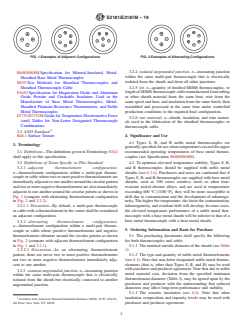
3.2.4 isolated ungrounded junction, n—measuring junction
E608/E608MSpecification for Mineral-Insulated, Metal-
within the same multi-pair thermocouple that is electrically
Sheathed Base Metal Thermocouples
isolated from the sheath and from all other junctions.
E839 Test Methods for Sheathed Thermocouples and
Sheathed Thermocouple Cable 3.2.5 lot, n—quantity of finished MIMS thermocouples, or
lengthofMIMSthermocouplecablemanufacturedfromtubing
E1652Specification for Magnesium Oxide and Aluminum
Oxide Powder and Crushable Insulators Used in the or other sheath material from the same heat, wire from the
same spool and heat, and insulation from the same batch, then
Manufacture of Base Metal Thermocouples, Metal-
Sheathed Platinum Resistance Thermometers, and Noble assembled and processed at the same time under controlled
Metal Thermocouples production conditions to the required final configuration.
E1751/E1751MGuideforTemperatureElectromotiveForce
3.2.6 raw material, n—sheath, insulation, and wire materi-
(emf) Tables for Non-Letter Designated Thermocouple
als used in the fabrication of the sheathed thermocouples or
Combinations
thermocouple cable.
2.3 ANSI Standard:
4. Significance and Use
B46.1Surface Texture
4.1 Types S, R, and B noble metal thermocouples are
3. Terminology
generallyspecifiedforusewhentemperaturesexceedtheupper
3.1 Definitions—ThedefinitionsgiveninTerminologyE344
recommended operating temperatures of base metal thermo-
shall apply to this specification. couples (see Specification E608/E608M).
3.2 Definitions of Terms Specific to This Standard:
4.2 To optimize elevated temperature stability, Types S, R,
3.2.1 adjacent thermoelement configuration, and B thermocouples should be supplied with noble metal
n—thermoelement configuration within a multi-pair thermo-
sheaths (see 6.3.1). Purchasers and users are cautioned that if
coupleorcablewheretwoormorepositivethermoelementsare Types S, R, and B thermocouples are supplied with base metal
immediatelyadjacenttooneanotheraroundthecircularpattern
sheaths, such as 300 series stainless steels or other heat-
andtwoormorenegativethermoelementsarealsoimmediately resistant nickel-chrome alloys, and are used at temperatures
adjacenttooneanotheraroundthecircularpatternasshownin
exceeding 600°C [1100°F], they will be more susceptible to
Fig. 1 (compare with alternating thermoelement configuration drift due to contamination and the development of inhomoge-
in Fig. 2 and 3.2.2). neity.Thehigherthetemperature,thefasterthecontamination,
3.2.1.1 Discussion—By default, a multi-pair thermocouple inhomogeneity, and resultant drift will develop. In some cases,
orcablewithathermoelementinthecentershallbeconsidered the elevated temperature performance of a noble metal ther-
an adjacent configuration. mocouple with a base metal sheath will be inferior to that of a
base metal thermocouple with a base metal sheath.
3.2.2 alternating thermoelement configuration,
n—thermoelement configuration within a multi-pair thermo-
5. Ordering Information and Basis for Purchase
couple or cable where positive thermoelements and negative
thermoelements alternate around the circular pattern as shown 5.1 The purchasing documents shall specify the following
in Fig. 2 (compare with adjacent thermoelement configuration for both thermocouples and cable:
in Fig. 1 and 3.2.1). 5.1.1 The nominal outside diameter of the sheath (see Table
3.2.2.1 Discussion—In an alternating thermoelement 1).
pattern, there are never two or more positive thermoelements 5.1.2 The type and quantity of noble metal thermoelements
nor two or more negative thermoelements immediately adja- (see 6.1). Note that non-letter designated noble metal thermo-
cent to one another. elements (that is, other than Types S, R, and B) may be used
withpurchaserandproduceragreement.Notethatduetonoble
3.2.3 common ungrounded junction, n—measuring junction
metal material cost, deviation from the specified minimum
within the same multi-pair thermocouple that is electrically
thermoelement diameter (Table 3), may be agreed upon by the
isolated from the sheath but electrically connected to another
purchaser and producer with the understanding that reduced
ungrounded junction.
diameters may affect long-term performance and stability.
5.1.3 The ceramic insulation (see 6.2). Note that other
insulation composition and impurity levels may be used with
Available fromAmerican National Standards Institute (ANSI), 25 W. 43rd St.,
4th Floor, New York, NY 10036. purchaser and producer agreement.
E2181/E2181M − 19
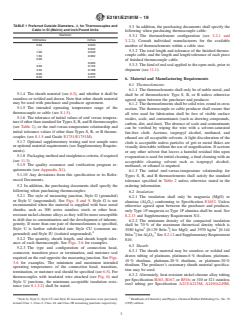
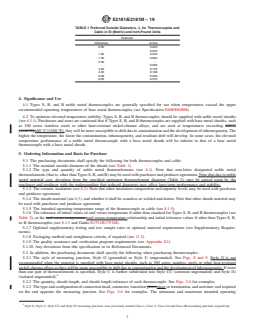
TABLE 1 Preferred Outside Diameters, A, for Thermocouples and
5.3 In addition, the purchasing documents shall specify the
Cable in SI (Metric) and Inch-Pound Units
following when purchasing thermocouple cable:
Diameter
5.3.1 The thermoelement configuration (see 3.2.1 and
millimetres inches
3.2.2). Consult individual manufacturers for the available
0.50 0.020
number of thermoelements within a cable size.
. . . 0.032
5.3.2 The total length and tolerance of the finished thermo-
1.00 0.040
couple cable, and the length and length tolerance of each piece
1.50 0.062
2.00 . . .
of finished thermocouple cable.
. . . 0.093
5.3.3 The kind of end seal applied to the open ends, prior to
3.00 0.125
4.50 0.188 shipment (see 11.1).
6.00 0.250
8.00 0.375
6. Material and Manufacturing Requirements
6.1 Thermoelements:
6.1.1 The thermoelements shall only be of noble metal, and
5.1.4 The sheath material (see 6.3), and whether it shall be
shall be of thermoelectric Type S, R, or B unless otherwise
seamless or welded and drawn. Note that other sheath material
agreed upon between the purchaser and producer.
may be used with purchaser and producer agreement.
6.1.2 Thethermoelementsshallbesolidwire,roundincross
5.1.5 The intended operating temperature range of the
section. The thermocouple or cable producer shall ensure that
thermocouple or cable (see 8.1.5).
all wire used for fabrication shall be free of visible surface
5.1.6 The tolerance of initial values of emf versus tempera-
oxides, scale, and contaminants (such as drawing compounds,
tureifotherthanstandardforTypesS,R,andBthermocouples
carbon, dirt, and dust). The absence of scale and contaminants
(see Table 2), or the emf-versus-temperature relationship and
can be verified by wiping the wire with a solvent-saturated
initial tolerance values if other than Types S, R, or B thermo-
lint-free cloth. Acetone, isopropyl alcohol, methanol, and
couples (see 8.1.5 and Guide E1751/E1751M).
ethanol are all acceptable solvents.Alight discoloration of the
5.1.7 Optional supplementary testing and test sample rates
cloth is acceptable unless particles of grit or metal flakes are
oroptionalmaterialrequirements(seeSupplementaryRequire-
visuallydetectablewithouttheuseofmagnification.Ifacetone
ments).
or any other solvent that leaves a harmful residual film upon
5.1.8 Packagingmethodandstraightnesscriteria,ifrequired
evaporationisusedforinitialcleaning,afinalcleaningwithan
(see 11.3).
acceptable cleaning solvent such as isopropyl alcohol,
5.1.9 The quality assurance and verification program re-
methanol, or ethanol is required.
quirements (see Appendix X1).
6.1.3 The initial emf-versus-temperature relationship for
5.1.10 Any deviations from this specification or its Refer-
Types S, R, and B thermoelements shall satisfy the standard
enced Documents.
tolerance specified in Table 2 unless otherwise stated in the
ordering information.
5.2 In addition, the purchasing documents shall specify the
following when purchasing thermocouples:
6.2 Insulation:
5.2.1 The style of measuring junction, Style G (grounded)
6.2.1 The insulation shall only be magnesia (MgO) or
or Style U (ungrounded). See Figs. 8 and 9. Style G is not
alumina (Al O ) conforming to Specification E1652. Unless
2 3
recommended when the material is supplied with base metal
otherwise agreed upon between the purchaser and producer,
sheaths, such as 300 series stainless steels or other heat-
only Type 1Pmagnesia or Type 1Palumina shall be used. See
resistant nickel-chrome alloys as they will be more susceptible
8.2.13 and Supplementary Requirement S11.
to drift due to contamination and the development of inhomo-
6.2.2 The minimum density of the compacted insulation
geneity. If more than one pair of thermoelements is specified,
shall be 70% of the maximum theoretical density which is
3 3 3
Style U is further subdivided into Style CU (common un-
3580 kg/m [0.129 lb/in. ] for MgO, and 3970 kg/m [0.144
3 5
grounded) and Style IU (isolated ungrounded).
lb/in. ]forAl O . See8.2.12andSupplementaryRequirement
2 3
5.2.2 The quantity, sheath length, and sheath length toler-
S10.
ance of each thermocouple. See Figs. 3-6 for examples.
6.3 Sheath:
5.2.3 The type and configuration of connection head,
6.3.1 The sheath material may be seamless or welded and
connector, transition piece or termination, and moisture seal
drawn tubing of platinum, platinum-6% rhodium, platinum-
required on the end opposite the measuring junction. See Figs.
10% rhodium, platinum-20% rhodium, or platinum-30%
3-6 for examples. The minimum and maximum intended
rhodium. The producer’s customary sheath material specifica-
operating temperatures of the connection head, transition,
tion may be used.
termination, or moisture seal should be specified (see 6.5). For
6.3.2 Alternately, heat-resistant nickel-chrome alloy tubing
thermocouples with insulated wire attached (see Fig. 6) and
perSpecificationB163,B167,orB516;or310or321stainless
Style U junctions, the minimum acceptable insulation resis-
steel tubing per Specification A213/A213M, A249/A249M,
tance (see 8.1.3.2) shall be stated.
4 5
Style G, Style U, Style CU and Style IU measuring junctions were previously Handbook of Chemistry and Physics, Chemical Rubber Publishing Co., No. 76
termed Class 1, Class 2, Class 2A and Class 2B measuring junctions respectively. (1995) edition.
E2181/E2181M − 19
TABLE 2 Tolerances on Initial Values of EMF versus Temperature for Types S, R, and B MIMS Thermocouples and MIMS Thermocouple
Cable
NOTE 1—Tolerances in this table apply to new platinum-sheathed MIMS thermocouples and thermocouple cable.
NOTE 2—Tolerances apply to new material as produced and do not allow for changes in thermoelectric characteristics of the materials during use.The
magnitude of such changes depends upon such factors as sheath and thermoelement size, temperature, time of exposure, and environment.
NOTE 3—Where tolerances are given in percent, the percentage applies to the temperature being measured when expressed in degrees Celsius.
NOTE 4—To determine the tolerance in degrees Fahrenheit, multiply the tolerance in degrees Celsius by 9/5.
Thermocouple Temperature Range Tolerances – Reference Junction 0 °C [32 °F]
Type °C °F Standard Tolerances Special Tolerances
°C °F °C °F
S, R 0 to 1480 32 to 2700 The greater of ±1.5 °C or ±0.25 % Note 4 The greater of ±0.6 °C or ±0.1 % Note 4
B 870 to 1700 1600 to 3100 ±0.50 % ±0.25 %
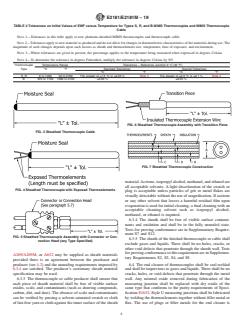
FIG. 6 Sheathed Thermocouple Assembly with Transition Piece
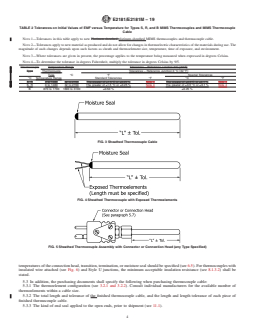
FIG. 3 Sheathed Thermocouple Cable
FIG. 7 Sheathed Thermocouple Construction
material.Acetone,isopropylalcohol,methanol,andethanolare
all acceptable solvents. A light discoloration of the swatch or
FIG. 4 Sheathed Thermocouple with Exposed Thermoelements
plug is acceptable unless particles of grit or metal flakes are
visuallydetectablewithouttheuseofmagnification.Ifacetone
or any other solvent that leaves a harmful residual film upon
evaporationisusedforinitialcleaning,afinalcleaningwithan
acceptable cleaning solvent such as isopropyl alcohol,
methanol, or ethanol is required.
6.3.4 The sheath shall be free of visible surface contami-
nants and oxidation and shall be in the fully annealed state.
Tests for proving conformance are in Supplementary Require-
ment S7 and S12.
FIG. 5 Sheathed Thermocouple Assembly with Connector or Con-
6.3.5 The sheath of the finished thermocouple or cable shall
nection Head (any Type Specified)
exclude gases and liquids. There shall be no holes, cracks, or
other void defects that penetrate through the sheath wall.Tests
forprovingconformancetothisrequirementareinSupplemen-
A269/A269M,or A632 may be supplied as sheath materials
tary Requirements S2, S3, S4, and S5.
provided there is an agreement between the purchaser and
producer (see 4.2) and the annealing requirements imposed by 6.4 The end closure of thermocouples shall be seal-welded
6.3.4 are satisfied. The producer’s customary sheath material and shall be impervious to gases and liquids.There shall be no
specification may be used. cracks, holes, or void defects that penetrate through the metal
6.3.3 The thermocouple or cable producer shall ensure that wall. Any mineral oxide removed during fabrication of the
each piece of sheath material shall be free of visible surface measuring junction shall be replaced with dry oxide of the
oxides, scale, and contaminants (such as drawing compounds, same type that conforms to the purity requirements of Speci-
carbon, dirt, and dust). The absence of scale and contaminants ficationE1652.StyleUmeasuringjunctionsshallbefabricated
can be verified by passing a solvent-saturated swatch or cloth by welding the thermoelements together without filler metal or
of lint-free yarn or cloth against the inner surface of the sheath flux. The use of plugs or filler metals for the end closure is
E2181/E2181M − 19
FIG. 8 Grounded Measuring Junction, Style G
FIG. 9 Ungrounded Measuring Junction, Style U
optional, provided they are of the same nominal chemical 7% of the nominal sheath outside diameter if 2 thermoele-
composition as the sheath. mentsareincluded,atleast5.5%ofthenominalsheathoutside
diameter if 4 thermoelements are included, or at least 4% of
6.5 Thermocouples shall be terminated at their reference
the nominal sheath outside diameter if 6 thermoelements are
junction end opposite the measuring junction in a manner
included. The inside sheath diameter is equal to Diameter A
specified by the purchaser.All exposed MgO orAl O shall be
2 3
minus2timesDimension B.Dimensionsshallbemeasuredper
sealedfrommoisturetokeeptheinsulationdry.Allconnectors,
Test Methods E839. The minimum dimensional requirements
connectionheads,ortransitionsshallincludeapositivemethod
for sheath wall thickness and insulation thickness are summa-
of preventing strain on the thermoelements emerging from the
rized in Table 3. The purchaser need specify only the outside
sheathed material. All transitional wire connections shall be
brazedorwelded.Themoisturesealandtermination(seeFigs. diameter and number of thermoelements in the ordering
3-6) shall be compatible with their intended installation and documents.
operating conditions (see 5.2.3).
7.2 In addition, the required measuring junction configura-
tions for thermocouples are shown in cross section in Figs. 8
7. Dimensional Requirements
and 9. The tip shape is optional as long as the dimensional
7.1 Dimensions—The dimensional and tolerance require-
requirements are maintained. The measuring junction dimen-
ments for sheath diameter and wall thickness, thermoelement
sional requirements are as follows:
diameter, and insulation thickness depicted in Fig. 3 shall be
7.2.1 Dimension A, End Closure Diameter, Styles G and
based on nominal sheath outside diameters. The preferred
U—Theendclosuremaximumdiametershallbenolargerthan
cable sizes are listed in Table 1. For any nominal sheath size,
thenominalsheathdiameterplusaweldallowanceof0.05mm
the outside diameter tolerance, A, shall be 60.025 mm
[0.002in.]or2%ofthenominalsheathdiameter,whicheveris
[0.001in.] or 61%, whichever is greater. The wall thickness,
larger. Localized reduction of the end closure diameter caused
B,shallbeatleast10%ofthenominalsheathoutsidediameter
byweldshrinkageshallnotexceed0.05mm[0.002in.]or2%
and shall be uniform within 20% of the minimum required
of the nominal sheath diameter, whichever is larger. This
wall thickness. Thermoelement diameters shall be determined
by agreement between the purchaser and producer. The insu- expanded end closure diametrical tolerance shall apply from
thetipoftheendclosureoveralengthnotexceedingtwicethe
lation thickness, C, either thermoelement to thermoelement or
thermoelement to inside surface of the sheath, shall be at least nominal sheath diameter.
E2181/E2181M − 19
TABLE 3 Summary of Thermocouple and Cable Dimensional TABLE 4 Room-Temperature Insulation Resistance Requirements
Requirements (Percent of Nominal Outside Diameter) for Thermocouple Cable in SI (Metric) and Inch-Pound Units
Number of Thermoelements 2 4 6 Insulation
Nominal Sheath Applied Voltage,
Minimum Sheath Thickness 10 % 10 % 10 % Resistance,
Outside Diameter min, V, dc
Minimum Insulation Thickness 7 % 5.5 % 4 % min, MΩ
Less than 0.80 mm [0.030 in.] 50 1000
0.80 to 1.45 mm [0.030 to 0.057 in.] 50 5000
Larger than 1.45 mm [0.057 in.] 500 10 000
7.2.2 Dimension D, Minimum Material Thickness, Styles G
and U J
...
This document is not an ASTM standard and is intended only to provide the user of an ASTM standard an indication of what changes have been made to the previous version. Because
it may not be technically possible to adequately depict all changes accurately, ASTM recommends that users consult prior editions as appropriate. In all cases only the current version
of the standard as published by ASTM is to be considered the official document.
Designation: E2181/E2181M − 11 E2181/E2181M − 19
Standard Specification for
Compacted Mineral-Insulated, Metal-Sheathed, Noble Metal
Thermocouples and Thermocouple Cable
This standard is issued under the fixed designation E2181/E2181M; the number immediately following the designation indicates the year
of original adoption or, in the case of revision, the year of last revision. A number in parentheses indicates the year of last reapproval.
A superscript epsilon (´) indicates an editorial change since the last revision or reapproval.
1. Scope
1.1 This specification establishes dimensional and material requirements for compacted, mineral-insulated, metal-sheathed
(MIMS), Type S (platinum-10 % rhodium versus platinum), Type R (platinum-13 % rhodium versus platinum), and Type B
(platinum-30 % rhodium versus platinum-6 % rhodium) noble metal thermocouples. This specification also establishes dimen-
sional recommendations and material requirements for compacted MIMS cable with at least one noble metal thermoelement pair.
1.2 This specification describes both the required processing and testing requirements and also the optional supplementary
testing and quality assurance requirements.
1.3 Provisions are made for selecting the type of noble metal thermocouple or thermoelements, either magnesia (MgO) or
alumina (Al O ) insulation, and a noble metal alloy or other alternate another heat-resistant sheath material. Provisions are also
2 3
made for selecting a thermocouple measuring thermocouple-measuring junction style and for a transition or termination.
1.4 The values stated in inch-pound units or SI (metric) units may be regarded separately as standard. The values stated in each
system are not the exact equivalents, and each system shall be used independently of the other.
1.5 This standard does not purport to address all of the safety concerns, if any, associated with its use. It is the responsibility
of the user of this standard to establish appropriate safety safety, health, and healthenvironmental practices and determine the
applicability of regulatory requirementslimitations prior to use.
1.6 This international standard was developed in accordance with internationally recognized principles on standardization
established in the Decision on Principles for the Development of International Standards, Guides and Recommendations issued
by the World Trade Organization Technical Barriers to Trade (TBT) Committee.
2. Referenced Documents
2.1 The following documents of the latest issue form a part of this specification to the extent specified herein. In the event of
a conflict between this specification and other specifications referenced herein, this specification shall take precedence.
2.2 ASTM Standards:
A213/A213M Specification for Seamless Ferritic and Austenitic Alloy-Steel Boiler, Superheater, and Heat-Exchanger Tubes
A249/A249M Specification for Welded Austenitic Steel Boiler, Superheater, Heat-Exchanger, and Condenser Tubes
A269A269/A269M Specification for Seamless and Welded Austenitic Stainless Steel Tubing for General Service
A632 Specification for Seamless and Welded Austenitic Stainless Steel Tubing (Small-Diameter) for General Service
B163 Specification for Seamless Nickel and Nickel Alloy Condenser and Heat-Exchanger Tubes
B167 Specification for Nickel-Chromium-Aluminum Alloys (UNS N06699), Nickel-Chromium-Iron Alloys (UNS N06600,
N06601, N06603, N06690, N06693, N06025, N06045, and N06696), Nickel-Chromium-Cobalt-Molybdenum Alloy (UNS
N06617), Nickel-Iron-Chromium-Tungsten Alloy (UNS N06674), and
B516 Specification for Welded Nickel-Chromium-Aluminum Alloy (UNS N06699) and Nickel-Chromium-Iron Alloy (UNS
N06600, UNS N06601, UNS N06603, UNS N06025, UNS N06045, UNS N06690, and UNS N06693) Tubes
E165E165/E165M Practice for Liquid Penetrant Testing for General Industry
E220 Test Method for Calibration of Thermocouples By Comparison Techniques
This specification is under the jurisdiction of ASTM Committee E20 on Temperature Measurement and is the direct responsibility of Subcommittee E20.12 on
Thermocouples - Specifications.
Current edition approved Nov. 1, 2011Sept. 1, 2019. Published December 2011October 2019. Originally approved in 2001. Last previous edition approved in 20062011
as E2181/E2181M – 06E2181/E2181M – 11.E01. DOI: 10.1520/E2181_E2181M-11.10.1520/E2181_E2181M-19.
For referenced ASTM standards, visit the ASTM website, www.astm.org, or contact ASTM Customer Service at service@astm.org. For Annual Book of ASTM Standards
volume information, refer to the standard’s Document Summary page on the ASTM website.
Copyright © ASTM International, 100 Barr Harbor Drive, PO Box C700, West Conshohocken, PA 19428-2959. United States
E2181/E2181M − 19
FIG. 1 Examples of Adjacent Configurations
E230E230/E230M Specification for Temperature-Electromotive Force (emf) Tables for Standardized Thermocouples
E344 Terminology Relating to Thermometry and Hydrometry
E608/E608M Specification for Mineral-Insulated, Metal-Sheathed Base Metal Thermocouples
E839 Test Methods for Sheathed Thermocouples and Sheathed Thermocouple Cable
E1652 Specification for Magnesium Oxide and Aluminum Oxide Powder and Crushable Insulators Used in the Manufacture of
Base Metal Thermocouples, Metal-Sheathed Platinum Resistance Thermometers, and Noble Metal Thermocouples
E1751/E1751M Guide for Temperature Electromotive Force (emf) Tables for Non-Letter Designated Thermocouple Combina-
tions
2.3 ANSI Standard:
B46.1 Surface Texture
3. Terminology
3.1 Definitions—The definitions given in Terminology E344 shall apply to this specification.
3.2 Definitions of Terms Specific to This Standard:
3.2.1 adjacent thermoelement configuration, n—thermoelement configuration within a multi-pair thermocouple or cable where
two or more positive thermoelements are immediately adjacent to one another around the circular pattern and two or more negative
thermoelements are also immediately adjacent to one another around the circular pattern as shown in Fig. 1 (compare with
alternating thermoelement configuration in Fig. 2 and 3.2.2).
Available from American National Standards Institute (ANSI), 25 W. 43rd St., 4th Floor, New York, NY 10036.
3.2.1.1 Discussion—
FIG. 2 Examples of Alternating Configurations
By default, a multi-pair thermocouple or cable with a thermoelement in the center shall be considered an adjacent configuration.
3.2.2 alternating thermoelement configuration, n—thermoelement configuration within a multi-pair thermocouple or cable
where positive thermoelements and negative thermoelements alternate around the circular pattern as shown in Fig. 2 (compare with
adjacent thermoelement configuration in Fig. 1 and 3.2.1).
3.2.2.1 Discussion—
In an alternating thermoelement pattern, there are never two or more positive thermoelements nor two or more negative
thermoelements immediately adjacent to one another.
3.2.3 common ungrounded junction, n—measuring junction within the same multi-pair thermocouple that is electrically isolated
from the sheath but electrically connected to another ungrounded junction.
3.2.4 isolated ungrounded junction, n—measuring junction within the same multi-pair thermocouple that is electrically isolated
from the sheath and electrically isolated from all other junctions.
3.2.5 lot, n—quantity of finished MIMS thermocouples, or length of MIMS thermocouple cable manufactured from tubing or
other sheath material from the same heat, wire from the same spool and heat, and insulation from the same batch, then assembled
and processed at the same time under controlled production conditions to the required final configuration.
3.2.6 raw material, n—sheath, insulation, and wire materials used in the fabrication of the sheathed thermocouples or
thermocouple cable.
E2181/E2181M − 19
TABLE 1 Preferred Outside Diameters, A, for Thermocouples and
Cable in SI (Metric) and Inch-Pound Units
Diameter
millimetres inches
0.50 0.020
. . . 0.032
1.00 0.040
1.50 0.062
2.00 . . .
. . . 0.093
3.00 0.125
4.50 0.188
6.00 0.250
8.00 0.375
4. Significance and Use
4.1 Types S, R, and B noble metal thermocouples are generally specified for use when temperatures exceed the upper
recommended operating temperatures of base metal thermocouples (see Specification E608/E608M).
4.2 To optimize elevated temperature stability, Types S, R, and B thermocouples should be supplied with noble metal sheaths
(see 6.3.1). Purchasers and users are cautioned that if Types S, R, and B thermocouples are supplied with base metal sheaths, such
as 300 series stainless steels or other heat-resistant nickel-chrome alloys, and are used at temperatures exceeding 600°C
[1100°F],600 °C [1100 °F], they will be more susceptible to drift due to contamination and the development of inhomogeneity. The
higher the temperature, the faster the contamination, inhomogeneity, and resultant drift will develop. In some cases, the elevated
temperature performance of a noble metal thermocouple with a base metal sheath will be inferior to that of a base metal
thermocouple with a base metal sheath.
5. Ordering Information and Basis for Purchase
5.1 The purchasing documents shall specify the following for both thermocouples and cable:
5.1.1 The nominal outside diameter of the sheath (see Table 1).
5.1.2 The type and quantity of noble metal thermoelements (see 6.1). Note that non-letter designated noble metal
thermoelements (that is, other than Types S, R, and B) may be used with purchaser and producer agreement. Note that due to noble
metal material cost, deviation from the specified minimum thermoelement diameter (Table 3), may be agreed upon by the
purchaser and producer with the understanding that reduced diameters may affect long-term performance and stability.
5.1.3 The ceramic insulation (see 6.2). Note that other insulation composition and impurity levels may be used with purchaser
and producer agreement.
5.1.4 The sheath material (see 6.3), and whether it shall be seamless or welded and drawn. Note that other sheath material may
be used with purchaser and producer agreement.
5.1.5 The intended operating temperature range of the thermocouple or cable (see 8.1.5).
5.1.6 The tolerance of initial values of emf versus temperature if other than standard for Types S, R, and B thermocouples (see
Table 2), or the emf versus temperature emf-versus-temperature relationship and initial tolerance values if other than Types S, R,
or B thermocouples (see 8.1.5 and Guide E1751/E1751M).
5.1.7 Optional supplementary testing and test sample rates or optional material requirements (see Supplementary Require-
ments).
5.1.8 Packaging method and straightness criteria, if required (see 11.3).
5.1.9 The quality assurance and verification program requirements (see Appendix X1).
5.1.10 Any deviations from this specification or its Referenced Documents.
5.2 In addition, the purchasing documents shall specify the following when purchasing thermocouples:
5.2.1 The style of measuring junction, Style G (grounded) or Style U (ungrounded). See Figs. 8 and 9. Style G is not
recommended when the material is supplied with base metal sheaths, such as 300 series stainless steels or other heat-resistant
nickel-chrome alloys as they will be more susceptible to drift due to contamination and the development of inhomogeneity. If more
than one pair of thermoelements is specified, Style U is further subdivided into Style CU (common ungrounded) and Style IU
(isolated ungrounded).
5.2.2 The quantity, sheath length, and sheath length tolerance of each thermocouple. See Figs. 3-6 for examples.
5.2.3 The type and configuration of connection head, connector, transition piece,piece or termination, and moisture seal required
on the end opposite the measuring junction. See Figs. 3-6 for examples. The minimum and maximum intended operating
Style G, Style U, Style CU and Style IU measuring junctions were previously termed Class 1, Class 2, Class 2A and Class 2B measuring junctions respectively.
E2181/E2181M − 19
TABLE 2 Tolerances on Initial Values of EMF versus Temperature for Types S, R, and B MIMS Thermocouples and MIMS Thermocouple
Cable
NOTE 1—Tolerances in this table apply to new Platinum sheathed platinum-sheathed MIMS thermocouples and thermocouple cable.
NOTE 2—Tolerances apply to new material as produced and do not allow for changes in thermoelectric characteristics of the materials during use. The
magnitude of such changes depends upon such factors as sheath and thermoelement size, temperature, time of exposure, and environment.
NOTE 3—Where tolerances are given in percent, the percentage applies to the temperature being measured when expressed in degrees Celsius.
NOTE 4—To determine the tolerance in degrees Fahrenheit, multiply the tolerance in degrees Celsius by 9/5.
Thermocouple Temperature Range Tolerances – Reference Junction 0°C [32°F]
Type Thermocouple Tolerances – Reference Junction 0 °C [32 °F]
Type °C °F Special Tolerances
°C Temperature Range Standard Tolerances °F °C °F
S, R 0 to 1480 32 to 2700 The greater of ±1.5°C or ±0.25 % Note 4 The greater of ±0.6°C or ±0.1 % Note 4
S, R 0 to 1480 32 to 2700 The greater of ±1.5 °C or ±0.25 % Note 4 The greater of ±0.6 °C or ±0.1 % Note 4
B 870 to 1700 1600 to 3100 ±0.50 % ±0.25 %
FIG. 3 Sheathed Thermocouple Cable
FIG. 4 Sheathed Thermocouple with Exposed Thermoelements
FIG. 5 Sheathed Thermocouple Assembly with Connector or Connection Head (any Type Specified)
temperatures of the connection head, transition, termination, or moisture seal should be specified (see 6.5). For thermocouples with
insulated wire attached (see Fig. 6) and Style U junctions, the minimum acceptable insulation resistance (see 8.1.3.2) shall be
stated.
5.3 In addition, the purchasing documents shall specify the following when purchasing thermocouple cable:
5.3.1 The thermoelement configuration (see 3.2.1 and 3.2.2). Consult individual manufacturers for the available number of
thermoelements within a cable size.
5.3.2 The total length and tolerance of the finished thermocouple cable, and the length and length tolerance of each piece of
finished thermocouple cable.
5.3.3 The kind of end seal applied to the open ends, prior to shipment (see 11.1).
E2181/E2181M − 19
FIG. 6 Sheathed Thermocouple Assembly with Transition Piece
FIG. 7 Sheathed Thermocouple Construction
6. Material and Manufacturing Requirements
6.1 Thermoelements:
6.1.1 The thermoelements shall only be of noble metal, and shall be of thermoelectric Type S, R, or B unless otherwise agreed
upon between the purchaser and producer.
6.1.2 The thermoelements shall be solid wire, round in cross section. The thermocouple or cable producer shall ensure that all
wire used for fabrication shall be free of visible surface oxides, scale, and contaminants, suchcontaminants (such as drawing
compounds, carbon, dirt, and dust.dust). The absence of scale and contaminants can be verified by wiping the wire with a
solvent-saturated lint-free cloth. Acetone, isopropyl alcohol, methanol, and ethanol are all acceptable solvents. A light discoloration
of the cloth is acceptable unless particles of grit or metal flakes are visually detectable without the use of magnification. If acetone
or any other solvent that leaves a harmful residual film upon evaporation is used for initial cleaning, a final cleaning with an
acceptable cleaning solvent,solvent such as isopropyl alcohol, methanol, or ethanol is required.
6.1.3 The initial emf versus temperature emf-versus-temperature relationship for Types S, R, and B thermoelements shall satisfy
the standard tolerance specified in Table 2 unless otherwise stated in the ordering information.
6.2 Insulation:
6.2.1 The insulation shall only be magnesia (MgO) or alumina (Al O ) conforming to Specification E1652. Unless otherwise
2 3
agreed upon between the purchaser and producer, only Type 11P magnesia or Type 11P alumina shall be used. See 8.2.13 and
Supplementary Requirement S11.
6.2.2 The minimum density of the compacted insulation shall be 70 % of the maximum theoretical density which is 3580 kg/m
3 3 3 5
[0.129 lb/in. ] for MgO, and 3970 kg/m [0.144 lb/in. ] for Al O . See 8.2.12 and Supplementary Requirement S10.
2 3
6.3 Sheath:
6.3.1 The sheath material may be seamless or welded and drawn tubing of platinum, platinum-6 % rhodium, platinum-10 %
rhodium, platinum-20 % rhodium, or platinum-30 % rhodium. The producer’s customary sheath material specification may be
used.
6.3.2 Alternately, heat-resistant nickel-chrome alloy tubing per SpecificationsSpecification B163, B167, or B516; or 310 or 321
stainless steel tubing per SpecificationsSpecification A213/A213M, A249/A249M, A269A269/A269M, or A632 may be supplied
as sheath materials provided there is an agreement between the purchaser and producer (see 4.2) and the annealing requirements
imposed by 6.3.4 are satisfied. The producer’s customary sheath material specification may be used.
6.3.3 The thermocouple or cable producer shall ensure that each piece of sheath material shall be free of visible surface oxides,
scale, and contaminants, suchcontaminants (such as drawing compounds, carbon, dirt, and dust.dust). The absence of scale and
contaminants can be verified by passing a solvent-saturated swatch or cloth of lint-free yarn or cloth against the inner surface of
the sheath material. Acetone, isopropyl alcohol, methanol, and ethanol are all acceptable solvents. A light discoloration of the
swatch or plug is acceptable unless particles of grit or metal flakes are visually detectable without the use of magnification. If
acetone or any other solvent that leaves a harmful residual film upon evaporation is used for initial cleaning, a final cleaning with
an acceptable cleaning solvent,solvent such as isopropyl alcohol, methanol, or ethanol is required.
6.3.4 The sheath shall be free of visible surface contaminants and oxidation and shall be in the fully annealed state. Tests for
proving conformance are in Supplementary Requirement S7 orand S12.
Handbook of Chemistry and Physics, Chemical Rubber Publishing Co., No. 76 (1995) edition.
E2181/E2181M − 19
FIG. 8 Grounded Measuring Junction, Style G
FIG. 9 Ungrounded Measuring Junction, Style U
6.3.5 The sheath of the finished thermocouple or cable shall exclude gases and liquids. There shall be no holes, cracks, or other
void defects that penetrate through the sheath wall. Tests for proving conformance to this requirement are in Supplementary
Requirements S2, S3, S4, and S5.
6.4 The end closure of thermocouples shall be seal welded seal-welded and shall be impervious to gases and liquids. There shall
be no cracks, holes, or void defects that penetrate through the metal wall. Any mineral oxide removed during fabrication of the
measuring junction shall be replaced with dry oxide of the same type that conforms to the purity requirements of Specification
E1652. Style U measuring junctions shall be fabricated by welding the thermoelements together without filler metal or flux. The
use of plugs or filler metals for the end closure is optional, provided they are of the same nominal chemical composition as the
sheath.
6.5 Thermocouples shall be terminated at their reference junction end opposite the measuring junction in a manner specified by
the purchaser. All exposed MgO or Al O shall be sealed from moisture to keep the insulation dry. All connectors, connection
2 3
heads, or transitions shall include a positive method of preventing strain on the thermoelements emerging from the sheathed
material. All transitional wire connections shall be brazed or welded. The moisture seal and termination (see Figs. 3-6) shall be
compatible with their intended installation and operating conditions (see 5.2.3).
7. Dimensional Requirements
7.1 Dimensions—The dimensional and tolerance requirements for sheath diameter and wall thickness, thermoelement diameter,
and insulation thickness depicted in Fig. 3 shall be based on nominal sheath outside diameters. The preferred cable sizes are listed
in Table 1. For any nominal sheath size, the outside diameter tolerance, A, shall be 60.025 mm [0.001 in.] [0.001 in.] or 61 %,
whichever is greater. The wall thickness, B, shall be at least 10 % of the nominal sheath outside diameter and shall be uniform
within 20 % of the minimum required wall thickness. The thermoelement diameters, Thermoelement D, shall be at least 15 % of
the nominal sheath outside diameter if 2 thermoelements are included, at least 12 % of the nominal sheath outside diameter if 4
thermoelements are included, or at least 9 % of the nominal sheath outside diameter if 6 thermoelements are included. All
thermoelement diameters shall be uniform within 20 % of their minimum required diameters.determined by agreement between
the purchaser and producer. The insulation thickness, C, either thermoelement to thermoelement or thermoelement to inside surface
of the sheath, shall be at least 7 % of the nominal sheath outside diameter if 2 thermoelements are included, at least 5.5 % of the
E2181/E2181M − 19
TABLE 3 Summary of Thermocouple and Cable Dimensional
Requirements (Percent of Nominal Outside Diameter)
Number of Thermoelements 2 4 6
Minimum Sheath Thickness 10 % 10 % 10 %
Minimum Thermoelement Diameter 15 % 12 % 9 %
Minimum Insulation Thickness 7 % 5.5 % 4 %
nominal sheath outside diameter if 4 thermoelements are included, or at least 4 % of the nominal sheath outside diameter if 6
thermoelements are included. The inside sheath diameter is equal to Diameter A minus 2 times Dimension B. Dimensions shall
be measured per Test Methods E839. The minimum dimensional requirements for sheath wall thickness, thermoelement diameter,
thickness and insulation thickness are summarized in Table 3. The purchaser need specify only the outside diameter and number
of thermoelements in the ordering documents.
7.2 In addition, the required measuring junction configurations for thermocouples are shown in cross section in Figs. 8 and 9.
The tip shape is optional as long as the dimensional requirements are maintained. The measuring junction dimensional
requirements are as follows:
7.2.1 Dimension A, End Closure Diameter, Styles G and U—The end closure maximum diameter shall be no larger than the
nominal sheath diameter plus a weld allowance of 0.05 mm [0.002 in.] or 2 % of the nominal sheath diameter, whichever is larger.
Localized reduction of the end closure diameter caused by weld shrinkage shall not exceed 0.05 mm [0.002 in.] or 2 % of the
nominal sheath diameter, whichever is larger. This expanded end closure diametrical tolerance shall apply from the tip of the end
closure over a length not exceeding twice the nomin
...