

ASTM D5341/D5341M-19
(Test Method)Standard Test Method for Measuring Coke Reactivity Index (CRI) and Coke Strength After Reaction (CSR)
General Information
- Abstract
SIGNIFICANCE AND USE
4.1 When coke lumps descend in the blast furnace, they are subjected to reaction with countercurrent CO2 and to abrasion as they rub together and against the walls of the furnace. These concurrent processes physically weaken and chemically react with the coke lumps, producing an excess of fines that can decrease burden permeability and result in increased coke rates and lost hot metal production. This test method is designed to measure indirectly this behavior of coke in the blast furnace.
SCOPE
1.1 This test method, patterned after the Nippon Steel test procedure (see Carbonization Research Report 91 and Nishi et al.2), describes the equipment and techniques used for determining lump coke reactivity in carbon dioxide (CO2) gas at elevated temperatures and its strength after reaction in CO2 gas by tumbling in a cylindrical chamber referred to as an I-tester.
1.2 The values stated in either SI units or inch-pound units are to be regarded separately as standard. The values stated in each system are not necessarily exact equivalents; therefore, to ensure conformance with the standard, each system shall be used independently of the other, and values from the two systems shall not be combined.
1.3 This standard does not purport to address all of the safety concerns, if any, associated with its use. It is the responsibility of the user of this standard to establish appropriate safety, health, and environmental practices and determine the applicability of regulatory limitations prior to use.
1.4 This international standard was developed in accordance with internationally recognized principles on standardization established in the Decision on Principles for the Development of International Standards, Guides and Recommendations issued by the World Trade Organization Technical Barriers to Trade (TBT) Committee.
- Status
- Published
- Publication Date
- 31-Dec-2018
- Technical Committee
- D05 - Coal and Coke
- Drafting Committee
- D05.15 - Metallurgical Properties of Coal and Coke
Buy Documents
ASTM D5341/D5341M-19 - Standard Test Method for Measuring Coke Reactivity Index (CRI) and Coke Strength After Reaction (CSR)
REDLINE ASTM D5341/D5341M-19 - Standard Test Method for Measuring Coke Reactivity Index (CRI) and Coke Strength After Reaction (CSR)
Overview
ASTM D5341/D5341M-19 is an international standard test method developed by ASTM for measuring the Coke Reactivity Index (CRI) and Coke Strength After Reaction (CSR). These two indices are critical for evaluating the quality of metallurgical coke, particularly regarding its behavior within a blast furnace. This standard describes the equipment, procedures, and sample preparation required to assess coke's chemical reactivity and mechanical strength after reaction with carbon dioxide (CO₂) at elevated temperatures.
The standard is widely referenced within the iron and steel manufacturing industries, as it enables operators to optimize coke properties for efficient and reliable blast furnace operation. ASTM D5341/D5341M-19 incorporates recognized best practices to ensure reproducibility and accuracy of results in both SI and inch-pound units, following the requirements from the World Trade Organization Technical Barriers to Trade (TBT) Committee.
Key Topics
- Coke Reactivity Index (CRI): Measures coke’s tendency to react with CO₂ gas at high temperatures. A sample is tested in a reaction vessel, and the percent mass loss determines the CRI.
- Coke Strength After Reaction (CSR): Evaluates the mechanical strength of coke after exposure to CO₂, determined by tumbling the reacted coke and analyzing the proportion of larger pieces retained, indicating resistance to breakage and abrasion.
- Sample Handling: Includes systematic collection, drying, sieving, and splitting procedures to ensure representative and repeatable testing results.
- Equipment: Specifies requirements for electric furnaces, reaction vessels, flowmeters, thermocouples, tumbling chambers, sieves, and balances used in testing.
- Precision and Reproducibility: Outlines measures to ensure consistent results within and between laboratories, including guidelines for performing duplicate tests and reporting results.
Applications
ASTM D5341/D5341M-19 is primarily used in:
- Blast Furnace Operations: Metallurgical and process engineers use CRI and CSR values to select and monitor coke quality, which affects blast furnace permeability, combustion efficiency, and overall productivity.
- Coke Oven Plants: Quality control departments use these indices to evaluate and control the properties of produced coke, ensuring it meets supplier and customer requirements.
- Research and Development: Laboratories and academic researchers adopt this standard for consistent evaluation of new coke materials and alternative processing methods.
- Supplier Specification: Steel makers specify CRI and CSR values in procurement contracts to ensure reliable supply of high-performance blast furnace coke.
Related Standards
Organizations using ASTM D5341/D5341M-19 often reference or align with the following standards:
- ASTM D346: Practice for Collection and Preparation of Coke Samples for Laboratory Analysis.
- ASTM E11: Specification for Woven Wire Test Sieve Cloth and Test Sieves.
- ASTM E691: Practice for Conducting an Interlaboratory Study to Determine the Precision of a Test Method.
- ISO 5725-6: Accuracy of Measurement Methods and Results – Part 6: Use in Practice of Accuracy Values.
Keywords: ASTM D5341, coke reactivity index, CRI, coke strength after reaction, CSR, blast furnace coke quality, metallurgical coke testing, coke testing standard, coke analysis, steel industry standards.
Relations
- Effective Date
- 01-Jan-2019
- Effective Date
- 01-Oct-2013
- Effective Date
- 01-May-2013
- Effective Date
- 01-Nov-2011
- Effective Date
- 01-May-2010
- Effective Date
- 01-May-2009
- Effective Date
- 01-Oct-2008
- Effective Date
- 01-Nov-2005
- Effective Date
- 01-May-2004
- Effective Date
- 01-Apr-2004
- Effective Date
- 01-Apr-2004
- Effective Date
- 10-May-2001
- Effective Date
- 10-May-2001
- Effective Date
- 10-May-1999
- Effective Date
- 10-Sep-1998
Buy Documents
ASTM D5341/D5341M-19 - Standard Test Method for Measuring Coke Reactivity Index (CRI) and Coke Strength After Reaction (CSR)
REDLINE ASTM D5341/D5341M-19 - Standard Test Method for Measuring Coke Reactivity Index (CRI) and Coke Strength After Reaction (CSR)
Get Certified
Connect with accredited certification bodies for this standard

Element Materials Technology
Materials testing and product certification.

ABS Group Brazil
ABS Group certification services in Brazil.

ABS Quality Evaluations Inc.
American Bureau of Shipping quality certification.
Sponsored listings
Frequently Asked Questions
ASTM D5341/D5341M-19 is a standard published by ASTM International. Its full title is "Standard Test Method for Measuring Coke Reactivity Index (CRI) and Coke Strength After Reaction (CSR)". This standard covers: SIGNIFICANCE AND USE 4.1 When coke lumps descend in the blast furnace, they are subjected to reaction with countercurrent CO2 and to abrasion as they rub together and against the walls of the furnace. These concurrent processes physically weaken and chemically react with the coke lumps, producing an excess of fines that can decrease burden permeability and result in increased coke rates and lost hot metal production. This test method is designed to measure indirectly this behavior of coke in the blast furnace. SCOPE 1.1 This test method, patterned after the Nippon Steel test procedure (see Carbonization Research Report 91 and Nishi et al.2), describes the equipment and techniques used for determining lump coke reactivity in carbon dioxide (CO2) gas at elevated temperatures and its strength after reaction in CO2 gas by tumbling in a cylindrical chamber referred to as an I-tester. 1.2 The values stated in either SI units or inch-pound units are to be regarded separately as standard. The values stated in each system are not necessarily exact equivalents; therefore, to ensure conformance with the standard, each system shall be used independently of the other, and values from the two systems shall not be combined. 1.3 This standard does not purport to address all of the safety concerns, if any, associated with its use. It is the responsibility of the user of this standard to establish appropriate safety, health, and environmental practices and determine the applicability of regulatory limitations prior to use. 1.4 This international standard was developed in accordance with internationally recognized principles on standardization established in the Decision on Principles for the Development of International Standards, Guides and Recommendations issued by the World Trade Organization Technical Barriers to Trade (TBT) Committee.
SIGNIFICANCE AND USE 4.1 When coke lumps descend in the blast furnace, they are subjected to reaction with countercurrent CO2 and to abrasion as they rub together and against the walls of the furnace. These concurrent processes physically weaken and chemically react with the coke lumps, producing an excess of fines that can decrease burden permeability and result in increased coke rates and lost hot metal production. This test method is designed to measure indirectly this behavior of coke in the blast furnace. SCOPE 1.1 This test method, patterned after the Nippon Steel test procedure (see Carbonization Research Report 91 and Nishi et al.2), describes the equipment and techniques used for determining lump coke reactivity in carbon dioxide (CO2) gas at elevated temperatures and its strength after reaction in CO2 gas by tumbling in a cylindrical chamber referred to as an I-tester. 1.2 The values stated in either SI units or inch-pound units are to be regarded separately as standard. The values stated in each system are not necessarily exact equivalents; therefore, to ensure conformance with the standard, each system shall be used independently of the other, and values from the two systems shall not be combined. 1.3 This standard does not purport to address all of the safety concerns, if any, associated with its use. It is the responsibility of the user of this standard to establish appropriate safety, health, and environmental practices and determine the applicability of regulatory limitations prior to use. 1.4 This international standard was developed in accordance with internationally recognized principles on standardization established in the Decision on Principles for the Development of International Standards, Guides and Recommendations issued by the World Trade Organization Technical Barriers to Trade (TBT) Committee.
ASTM D5341/D5341M-19 is classified under the following ICS (International Classification for Standards) categories: 75.160.10 - Solid fuels. The ICS classification helps identify the subject area and facilitates finding related standards.
ASTM D5341/D5341M-19 has the following relationships with other standards: It is inter standard links to ASTM D5341/D5341M-18, ASTM E11-13, ASTM E691-13, ASTM E691-11, ASTM D346-04(2010), ASTM E11-09e1, ASTM E691-08, ASTM E691-05, ASTM E11-04, ASTM D346-04e1, ASTM D346-04, ASTM E11-01, ASTM E11-95, ASTM E691-99, ASTM D346-90(1998). Understanding these relationships helps ensure you are using the most current and applicable version of the standard.
ASTM D5341/D5341M-19 is available in PDF format for immediate download after purchase. The document can be added to your cart and obtained through the secure checkout process. Digital delivery ensures instant access to the complete standard document.
Standards Content (Sample)
This international standard was developed in accordance with internationally recognized principles on standardization established in the Decision on Principles for the
Development of International Standards, Guides and Recommendations issued by the World Trade Organization Technical Barriers to Trade (TBT) Committee.
Designation: D5341/D5341M − 19
Standard Test Method for
Measuring Coke Reactivity Index (CRI) and Coke Strength
After Reaction (CSR)
This standard is issued under the fixed designation D5341/D5341M; the number immediately following the designation indicates the
year of original adoption or, in the case of revision, the year of last revision. A number in parentheses indicates the year of last
reapproval. A superscript epsilon (´) indicates an editorial change since the last revision or reapproval.
1. Scope E691 Practice for Conducting an Interlaboratory Study to
Determine the Precision of a Test Method
1.1 This test method, patterned after the Nippon Steel test
2.2 British Carbonization Research Association Report:
procedure (see Carbonization Research Report 91 and Nishi et
al. ), describes the equipment and techniques used for deter- Carbonization Research Report 91, “The Evaluation of the
Nippon Steel Corporation Reactivity and Post-Reaction-
mining lump coke reactivity in carbon dioxide (CO ) gas at
elevated temperatures and its strength after reaction in CO gas Strength Test for Coke.”
by tumbling in a cylindrical chamber referred to as an I-tester.
2.3 ISO Standard:
ISO 5725 - 6: 1994 Accuracy of Measurement Methods and
1.2 The values stated in either SI units or inch-pound units
Results – Part 6: Use in Practice of Accuracy Values
are to be regarded separately as standard. The values stated in
each system are not necessarily exact equivalents; therefore, to
3. Summary of Test Method
ensure conformance with the standard, each system shall be
used independently of the other, and values from the two
3.1 A sample of dried coke of designated origin and size is
systems shall not be combined.
reacted with CO gas in a retort at a specified elevated
1.3 This standard does not purport to address all of the temperature for a specified length of time. Two indices, coke
reactivity index (CRI) and coke strength after reaction (CSR),
safety concerns, if any, associated with its use. It is the
are determined using the reacted coke residue. The mass or
responsibility of the user of this standard to establish appro-
weight loss after reaction determines the CRI. The mass or
priate safety, health, and environmental practices and deter-
weight retained after sieving the tumbled reacted coke in a
mine the applicability of regulatory limitations prior to use.
designated number of revolutions over a designated turning
1.4 This international standard was developed in accor-
rate determines the CSR.
dance with internationally recognized principles on standard-
ization established in the Decision on Principles for the
4. Significance and Use
Development of International Standards, Guides and Recom-
mendations issued by the World Trade Organization Technical
4.1 When coke lumps descend in the blast furnace, they are
Barriers to Trade (TBT) Committee.
subjected to reaction with countercurrent CO and to abrasion
as they rub together and against the walls of the furnace.These
2. Referenced Documents
concurrent processes physically weaken and chemically react
2.1 ASTM Standards:
with the coke lumps, producing an excess of fines that can
D346 Practice for Collection and Preparation of Coke
decrease burden permeability and result in increased coke rates
Samples for Laboratory Analysis
and lost hot metal production. This test method is designed to
E11 Specification for Woven Wire Test Sieve Cloth and Test
measure indirectly this behavior of coke in the blast furnace.
Sieves
5. Reagents
This test method is under the jurisdiction of ASTM Committee D05 on Coal
5.1 Nitrogen, with purity greater than 99.9 % by volume,
and Coke and is the direct responsibility of Subcommittee D05.15 on Metallurgical
dryandwithtotaloxygenandcarbondioxideconcentrationsof
Properties of Coal and Coke.
less than 100 mg/kg.
Current edition approved Jan. 1, 2019. Published March 2019. Originally
approved in 1993. Last previous edition approved in 2018 as D5341/D5341M – 18.
DOI: 10.1520/D5341_D5341M-19.
Nishi, T., et al., Journal of the Fuel Society of Japan, Vol 61, No. 668, 1982,
pp. 1066-1073. Available from British Carbonization Research Association, Chesterfield,
For referenced ASTM standards, visit the ASTM website, www.astm.org, or Derbyshire, England.
contact ASTM Customer Service at service@astm.org. For Annual Book of ASTM Available from International Organization for Standardization (ISO), ISO
Standards volume information, refer to the standard’s Document Summary page on Central Secretariat, BIBC II, Chemin de Blandonnet 8, CP 401, 1214 Vernier,
the ASTM website. Geneva, Switzerland, http://www.iso.org.
Copyright © ASTM International, 100 Barr Harbor Drive, PO Box C700, West Conshohocken, PA 19428-2959. United States
D5341/D5341M − 19
does not leave scale, that, if not properly removed, can alter a coke sample
5.2 Carbon Dioxide, with purity of greater than 99.5 % by
mass or weight after the test.
volume,drywithanoxygenconcentrationlessthan100mg/kg.
6.3 Flowmeters—Rotometers or, preferably, mass flowme-
6. Apparatus
ters shall be used to monitor the amount of N and CO gases
2 2
used in the test. The accuracy of measuring gas flowrates
6.1 Electric Furnace (Fig. 1), capable of housing the reac-
should be 61 % of full scale since varying gas flow can cause
tion vessel assembly containing the coke sample and providing
variability in the test results. Gas pressures through the
a uniform temperature of 1100 °C 6 5 °C in the assembly. The
flowmeters should be maintained at the manufacturer’s cali-
position of the coke sample contained in the vessel assembly
brationspecification.Flowmetersshallbecalibratedforthegas
when housed in the furnace shall be in the center of the
beingused,ortheflowrateshallbecorrectedtoaccountforthe
controlled temperature zone. It is preferable that the furnace
difference in the density of the gas used for calibration.
haveindependentlycontrolledheatinginthreezonestoachieve
uniformity of heating in the retort and that this control be
6.4 Thermocouple (Fig. 1), of the K, S, or R type normal-
achieved with a programmable controller.
ized at 20 °C to 21 °C and enclosed in a heat-resistant steel or
nickel alloy or ceramic protection tube placed in the center of
6.2 Reaction Vessel (Fig. 1), constructed of a heat-resistant
the coke sample in the reaction vessel. A centering guide also
steel or nickel alloy (see Note 1) with an internal diameter of
made of heat-resistant material, ideally extended from the
78 mm 6 1 mm [3.07 in. 6 0.039 in.] and designed to fit
center of vessel lid and open on the opposite end to allow the
snugly inside the electric furnace selected for use. The coke to
thermocouple and protection tube to protrude is used to guide
betestedsitsonaperforatedplateinthereactionvessel.Below
the thermocouple into its proper location in the coke bed.
this perforated plate, a gas preheater, such as a bed of ceramic
Al O balls sitting on a second perforated plate, is used to
2 3 6.5 Sieves, used for sieving the coke during its preparation
diffuse the nitrogen (N ) and carbon dioxide (CO ) introduced
2 2
for reactivity testing and after tumbling for strength after
intothevesselupthroughthecokebedduringthecourseofthe
reaction testing. Square mesh sieves having 22.4 mm [ ⁄8 in.],
test. The gas enters through inlets positioned at the bottom of 3 3
19.0 mm [ ⁄4 in.], and 9.5 mm [ ⁄8 in.] actual openings between
the reaction vessel and exits through outlets at the top of the
the wires are to be used. Standard test sieves that conform to
1 5
reaction vessel varying from 6 mm to 15 mm [ ⁄4 in. to ⁄8 in.]
Specification E11 should always be used.
in inside diameter. During the test, it is important that no
6.6 Balance, capable of weighing up to 25 kg [55.1 lb] and
backpressure be detected when gas enters or exits through
sensitive to 0.1 g [0.000 22 lb].
these inlets or outlets. The reaction vessel is positioned such
6.7 Coke Strength After Reaction Tumbler (Fig. 2), consist-
that the coke sample contained in the vessel on top of the
ceramic Al O balls is in the center of the controlled tempera- ing of a cylindrical chamber with an internal length of 700 mm
2 3
5 3
6 10 mm [27 ⁄8 in. 6 ⁄8 in.] and an internal diameter 130 mm
ture zone in the furnace. The reaction vessel shall be inspected
1 1
prior to each use for wear, cracks, or deterioration. Clean and 65mm[5 ⁄8 in. 6 ⁄2 in.], with end caps of 10 mm thickness
or more (Note 2). This cylindrical chamber is attached to its
remove scale that could contaminate the test sample if present.
longitudinalcentertoanelectricmotorfittedwithadirectdrive
The vessel should also be checked for leaks prior to initial use
fixed gearbox, a drive belt, or, preferably, a hydraulic drive set
and at specified intervals. See 9.3.
for a revolving rate of 20 r/min 6 1 r/min (Note 3). A
NOTE 1—Inconel 601 is recommended over stainless steel. Inconel 601
revolution counter is fitted so that the power is cut off when the
cylinder has revolved 600 times in 30 min.
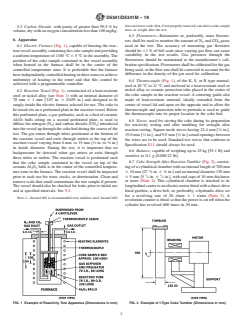
FIG. 1 Example of Reactivity Test Apparatus (Dimensions in mm) FIG. 2 Example of I-Type Coke Tumbler (Dimensions in mm)
D5341/D5341M − 19
NOTE 2—Mild carbon steel should be selected to fabricate this tumbler
the coke bed with its tip 50 mm [2 in.] from the top of the
apparatus.
perforated plate. Variations in coke density may result in
NOTE 3—Most Japanese publications refer to this as an I test.
600/10
different total coke bed heights in the reaction vessel.
Therefore,insituationswhere50 mm[2 in.]isnotthecenterof
7. Sampling
the coke bed, adjust the thermocouple tip accordingly.
7.1 The gross sample of coke shall be collected in accor-
9.3 Attach the N gas line to the reaction vessel inlet. Purge
dance with Practice D346. 2
the reaction vessel for 5 min at 5 L/min to 10 L/min of N
7.2 Forthestandardprocedure,thequantitymustbenotless
before loading the vessel into the furnace. The inlet side of the
than 57 kg [125 lb].
reaction vessel can also be checked for leaks during this purge
time. If a leak is detected on the inlet side of the assembly,
8. Preparation of Sample
remove the retort from service.
8.1 Sieve the gross sample at 25.0 mm [1 in.] and discard
9.4 Preheat the furnace to a temperature that will allow the
the undersize.
sample, when the sample is loaded into the furnace, to reach
8.2 With suitable crushing equipment, preferably a jaw or
1100 °C 6 5 °C in 30 min.
roll crusher, reduce the size of all of the remaining plus
7 9.5 Place the reaction vessel into the furnace and heat the
25.0 mm [1 in.] to pass a 22.4 mm [ ⁄8 in.] sieve opening.
sample to 1100 °C in the atmosphere of N gas. Once the
8.3 Sieve the crushed sample using a 22.4 mm [ ⁄8 in.] sieve
sample temperature of 1100 °C 6 5 °C is reached, soak the
placed on top of a 19.0 mm [ ⁄4 in.] sieve. Discard the minus
sample for 10 min in N gas for a total heat up time of 40 min.
19.0 mm [ ⁄4 in.] coke, and retain the 22.4 mm by 19.0 mm
Then heat the samples for 120 min in an atmosphere of CO
7 3
[ ⁄8 in. by ⁄4 in.] fraction for testing.
gas, with a flow rate of 5.0 L/min 6 1.0 % (Note 5). The
8.4 The size reduction of the plus 25.0 mm [1 in.] should be
furnace temperature may be increased just prior to the intro-
accomplishedinstagesbyrecrushinganyplus22.4mm[ ⁄8in.]
duction of the CO gas in order to compensate for a tempera-
coke remai
...
This document is not an ASTM standard and is intended only to provide the user of an ASTM standard an indication of what changes have been made to the previous version. Because
it may not be technically possible to adequately depict all changes accurately, ASTM recommends that users consult prior editions as appropriate. In all cases only the current version
of the standard as published by ASTM is to be considered the official document.
Designation: D5341/D5341M − 18 D5341/D5341M − 19
Standard Test Method for
Measuring Coke Reactivity Index (CRI) and Coke Strength
After Reaction (CSR)
This standard is issued under the fixed designation D5341/D5341M; the number immediately following the designation indicates the
year of original adoption or, in the case of revision, the year of last revision. A number in parentheses indicates the year of last
reapproval. A superscript epsilon (´) indicates an editorial change since the last revision or reapproval.
1. Scope
1.1 This test method, patterned after the Nippon Steel test procedure (see Carbonization Research Report 91 and Nishi et al. ),
describes the equipment and techniques used for determining lump coke reactivity in carbon dioxide (CO ) gas at elevated
temperatures and its strength after reaction in CO gas by tumbling in a cylindrical chamber referred to as an I-tester.
1.2 The values stated in either SI units or inch-pound units are to be regarded separately as standard. The values stated in each
system are not necessarily exact equivalents; therefore, to ensure conformance with the standard, each system shall be used
independently of the other, and values from the two systems shall not be combined.
1.3 This standard does not purport to address all of the safety concerns, if any, associated with its use. It is the responsibility
of the user of this standard to establish appropriate safety, health, and environmental practices and determine the applicability of
regulatory limitations prior to use.
1.4 This international standard was developed in accordance with internationally recognized principles on standardization
established in the Decision on Principles for the Development of International Standards, Guides and Recommendations issued
by the World Trade Organization Technical Barriers to Trade (TBT) Committee.
2. Referenced Documents
2.1 ASTM Standards:
D346 Practice for Collection and Preparation of Coke Samples for Laboratory Analysis
E11 Specification for Woven Wire Test Sieve Cloth and Test Sieves
E691 Practice for Conducting an Interlaboratory Study to Determine the Precision of a Test Method
2.2 British Carbonization Research Association Report:
Carbonization Research Report 91, “The Evaluation of the Nippon Steel Corporation Reactivity and Post-Reaction-Strength
Test for Coke.”
2.3 ISO Standard:
ISO 5725 - 6: 1994 Accuracy of Measurement Methods and Results – Part 6: Use in Practice of Accuracy Values
3. Summary of Test Method
3.1 A sample of dried coke of designated origin and size is reacted with CO gas in a retort at a specified elevated temperature
for a specified length of time. Two indices, coke reactivity index (CRI) and coke strength after reaction (CSR), are determined
using the reacted coke residue. The mass or weight loss after reaction determines the CRI. The mass or weight retained after sieving
the tumbled reacted coke in a designated number of revolutions over a designated turning rate determines the CSR.
4. Significance and Use
4.1 When coke lumps descend in the blast furnace, they are subjected to reaction with countercurrent CO and to abrasion as
they rub together and against the walls of the furnace. These concurrent processes physically weaken and chemically react with
This test method is under the jurisdiction of ASTM Committee D05 on Coal and Coke and is the direct responsibility of Subcommittee D05.15 on Metallurgical Properties
of Coal and Coke.
Current edition approved Dec. 1, 2018Jan. 1, 2019. Published January 2019March 2019. Originally approved in 1993. Last previous edition approved in 20172018 as
D5341/D5341M – 17a.D5341/D5341M – 18. DOI: 10.1520/D5341_D5341M-18.10.1520/D5341_D5341M-19.
Nishi, T., et al., Journal of the Fuel Society of Japan, Vol 61, No. 668, 1982, pp. 1066-1073.
For referenced ASTM standards, visit the ASTM website, www.astm.org, or contact ASTM Customer Service at service@astm.org. For Annual Book of ASTM Standards
volume information, refer to the standard’s Document Summary page on the ASTM website.
Available from British Carbonization Research Association, Chesterfield, Derbyshire, England.
Available from International Organization for Standardization (ISO), ISO Central Secretariat, BIBC II, Chemin de Blandonnet 8, CP 401, 1214 Vernier, Geneva,
Switzerland, http://www.iso.org.
Copyright © ASTM International, 100 Barr Harbor Drive, PO Box C700, West Conshohocken, PA 19428-2959. United States
D5341/D5341M − 19
the coke lumps, producing an excess of fines that can decrease burden permeability and result in increased coke rates and lost hot
metal production. This test method is designed to measure indirectly this behavior of coke in the blast furnace.
5. Reagents
5.1 Nitrogen, Nitrogen, with purity greater than 99.9 % by volume, dry and with total oxygen and carbon dioxide concentrations
of less than 100 mg/kg.
5.2 Carbon Dioxide, Carbon dioxide, with purity of greater than 99.5 % by volume, dry with an oxygen concentration less than
100 mg/kg.
6. Apparatus
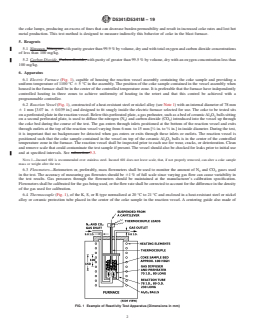
6.1 Electric Furnace (Fig. 1), capable of housing the reaction vessel assembly containing the coke sample and providing a
uniform temperature of 1100 °C 6 5 °C in the assembly. The position of the coke sample contained in the vessel assembly when
housed in the furnace shall be in the center of the controlled temperature zone. It is preferable that the furnace have independently
controlled heating in three zones to achieve uniformity of heating in the retort and that this control be achieved with a
programmable controller.
6.2 Reaction Vessel (Fig. 1), constructed of a heat-resistant steel or nickel alloy (see Note 1) with an internal diameter of 78 mm
6 1 mm [3.07 in. 6 0.039 in.] and designed to fit snugly inside the electric furnace selected for use. The coke to be tested sits
on a perforated plate in the reaction vessel. Below this perforated plate, a gas preheater, such as a bed of ceramic Al O balls sitting
2 3
on a second perforated plate, is used to diffuse the nitrogen (N ) and carbon dioxide (CO ) introduced into the vessel up through
2 2
the coke bed during the course of the test. The gas enters through inlets positioned at the bottom of the reaction vessel and exits
1 5
through outlets at the top of the reaction vessel varying from 6 mm to 15 mm [ ⁄4 in. to ⁄8 in.] in inside diameter. During the test,
it is important that no backpressure be detected when gas enters or exits through these inlets or outlets. The reaction vessel is
positioned such that the coke sample contained in the vessel on top of the ceramic Al O balls is in the center of the controlled
2 3
temperature zone in the furnace. The reaction vessel shall be inspected prior to each use for wear, cracks, or deterioration. Clean
and remove scale that could contaminate the test sample if present. The vessel should also be checked for leaks prior to initial use
and at specified intervals. See subsection 9.3.
NOTE 1—Inconel 601 is recommended over stainless steel. Inconel 601 does not leave scale, that, if not properly removed, can alter a coke sample
mass or weight after the test.
6.3 Flowmeters—Rotometers or, preferably, mass flowmeters shall be used to monitor the amount of N and CO gases used
2 2
in the test. The accuracy of measuring gas flowrates should be 61 % of full scale since varying gas flow can cause variability in
the test results. Gas pressures through the flowmeters should be maintained at the manufacturer’s calibration specification.
Flowmeters shall be calibrated for the gas being used, or the flow rate shall be corrected to account for the difference in the density
of the gas used for calibration.
6.4 Thermocouple (Fig. 1), of the K, S, or R type normalized at 20 °C to 21 °C and enclosed in a heat-resistant steel or nickel
alloy or ceramic protection tube placed in the center of the coke sample in the reaction vessel. A centering guide also made of
FIG. 1 Example of Reactivity Test Apparatus (Dimensions in mm)
D5341/D5341M − 19
heat-resistant material, ideally extended from the center of vessel lid and open on the opposite end to allow the thermocouple and
protection tube to protrude is used to guide the thermocouple into its proper location in the coke bed.
6.5 Sieves, used for sieving the coke during its preparation for reactivity testing and after tumbling for strength after reaction
7 3 3
testing. Square mesh sieves having 22.4 mm [ ⁄8 in.], 19.0 mm [ ⁄4 in.], and 9.5 mm [ ⁄8 in.] actual openings between the wires are
to be used. Standard test sieves that conform to Specification E11 should always be used.
6.6 Balance, capable of weighing up to 25 kg [55.1 lb] and sensitive to 0.1 g [0.000 22 lb].
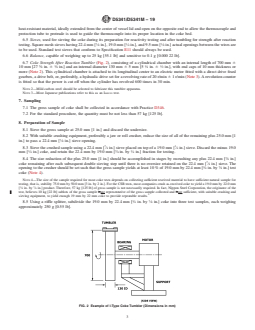
6.7 Coke Strength After Reaction Tumbler (Fig. 2), consisting of a cylindrical chamber with an internal length of 700 mm 6
5 3 1 1
10 mm [27 ⁄8 in. 6 ⁄8 in.] and an internal diameter 130 mm 6 5 mm [5 ⁄8 in. 6 ⁄2 in.], with end caps of 10 mm thickness or
more (Note 2). This cylindrical chamber is attached to its longitudinal center to an electric motor fitted with a direct drive fixed
gearbox, a drive belt, or, preferably, a hydraulic drive set for a revolving rate of 20 r/min 6 1 r/min (Note 3). A revolution counter
is fitted so that the power is cut off when the cylinder has revolved 600 times in 30 min.
NOTE 2—Mild carbon steel should be selected to fabricate this tumbler apparatus.
NOTE 3—Most Japanese publications refer to this as an I test.
600/10
7. Sampling
7.1 The gross sample of coke shall be collected in accordance with Practice D346.
7.2 For the standard procedure, the quantity must be not less than 57 kg [125 lb].
8. Preparation of Sample
8.1 Sieve the gross sample at 25.0 mm [1 in.] and discard the undersize.
8.2 With suitable crushing equipment, preferably a jaw or roll crusher, reduce the size of all of the remaining plus 25.0 mm [1
in.] to pass a 22.4 mm [ ⁄8 in.] sieve opening.
7 3
8.3 Sieve the crushed sample using a 22.4 mm [ ⁄8 in.] sieve placed on top of a 19.0 mm [ ⁄4 in.] sieve. Discard the minus 19.0
3 7 3
mm [ ⁄4 in.] coke, and retain the 22.4 mm by 19.0 mm [ ⁄8 in. by ⁄4 in.] fraction for testing.
8.4 The size reduction of the plus 25.0 mm [1 in.] should be accomplished in stages by recrushing any plus 22.4 mm [ ⁄8 in.]
coke remaining after each subsequent double sieving step until there is no oversize retained on the 22.4 mm [ ⁄8 in.] sieve. The
3 7
opening to the crusher should be set such that the gross sample yields at least 10 % of 19.0 mm by 22.4 mm [ ⁄4 in. by ⁄8 in.] test
coke (Note 4).
NOTE 4—The size of the sample required for most coke tests depends on collecting sufficient received material to have sufficient natural sample for
testing, that is, stability 75.0 mm by 50.0 mm [3 in. by 2 in.]. For the CSR tests, most companies crush as-received coke to yield a 19.0 mm by 22.0 mm
3 7
[ ⁄4 in. by ⁄8 in.] product. Therefore, 57 kg [125 lb] of gross sample is not necessarily required. In fact, Nippon Steel Corporation, the originator of the
test, believes 10 kg [22 lb] sublots of the gross sample isare representative of the gross sample collected and isare sufficient, with suitable crushing and
sieving equipment, to yield enough 19 mm by 22 mm coke to provide repeatable results.
3 7
8.5 Using a riffle splitter, subdivide the 19.0 mm by 22.4 mm [ ⁄4 in. by ⁄8 in.] coke into three test samples, each weighing
approximately 250 g [0.55 lb].
FIG. 2 Example of I-Type Coke Tumbler (Dimensions in mm)
D5341/D5341M − 19
8.6 Dry the test coke samples for a minimum of 2 h at 150 °C. As a final step, dedust the dri
...