

ASTM D6332-12(2021)
(Guide)Standard Guide for Testing Systems for Measuring Dynamic Responses of Carbon Monoxide Detectors to Gases and Vapors
General Information
- Abstract
SIGNIFICANCE AND USE
5.1 This guide provides information on testing systems and their components used for measuring responses of CO alarms or detectors subjected to gases, vapors, and their mixtures. Components of a testing system include a chamber, clean air supply module, humidification module, gas and vapor delivery module, and verification and control instrumentation.
5.2 The CO detector is tested by sequential exposure to CO and interference gases at the specified challenge concentrations. A properly functioning alarm/detector will sound upon sufficient exposure to CO but will not sound upon any exposure to interference gases consistent with applicable standards (for example, IAS 6-96 (1),5 L 2034).
SCOPE
1.1 This guide describes testing systems used for measuring responses of carbon monoxide (CO) alarms or detectors subjected to gases, vapors, and their mixtures.
1.2 The systems are used to evaluate responses of CO detectors to various CO concentrations, to verify that the detectors alarm at certain specified CO concentrations, and to verify that CO detectors do not alarm at certain other specified CO concentrations.
1.3 The systems are used for evaluating CO detector responses to gases and vapors that may interfere with the ability of detectors to respond to CO.
1.4 Major components of such a testing system include a chamber, clean air supply module, humidification module, gas and vapor delivery module, and verification and control instrumentation.
1.5 For each component, this guide provides a comparison of different approaches and discusses their advantages and disadvantages.
1.6 The guide also presents recommendations for a minimum configuration of a testing system.
1.7 Units—The values stated in SI units are to be regarded as standard. No other units of measurement are included in this standard.
1.8 This standard does not purport to address all of the safety concerns, if any, associated with its use. It is the responsibility of the user of this standard to establish appropriate safety, health, and environmental practices and determine the applicability of regulatory limitations prior to use. For more specific safety precautionary information, see 6.2.
1.9 This international standard was developed in accordance with internationally recognized principles on standardization established in the Decision on Principles for the Development of International Standards, Guides and Recommendations issued by the World Trade Organization Technical Barriers to Trade (TBT) Committee.
- Status
- Published
- Publication Date
- 31-Aug-2021
- Technical Committee
- D22 - Air Quality
- Drafting Committee
- D22.05 - Indoor Air
Overview
ASTM D6332-12(2021), "Standard Guide for Testing Systems for Measuring Dynamic Responses of Carbon Monoxide Detectors to Gases and Vapors," provides comprehensive guidance on designing and operating test systems used to evaluate the performance of carbon monoxide (CO) detectors and alarms. The guide focuses on methods for exposing CO detectors to controlled concentrations of CO, other gases, vapors, and gas/vapor mixtures to verify their response and resistance to interference. This standard enhances consistency, reliability, and safety in testing environments for both laboratory and industry applications.
Key Topics
- Testing System Components
The guide details the essential components required for a testing system, including:- Test chamber (static or dynamic)
- Clean air supply module (prepackaged or generated air)
- Humidification module (controls for relative humidity)
- Gas/vapor delivery module (for accurate gas concentration)
- Verification and control instrumentation
- Testing Procedures
- Sequential exposure of CO detectors to specified CO concentrations and interference gases to ensure proper operation in real-world conditions.
- Use of reference instruments for measurement and verification.
- Recommendations for a minimum system configuration to achieve reliable test results.
- System Configuration and Materials
- Guidance on constructing chambers from chemically inert materials and ensuring airtight conditions.
- Air change rates, temperature, and humidity controls for test environments.
- Avoidance of contaminants from chamber or supply materials.
Applications
ASTM D6332-12(2021) is crucial for quality assurance in the design, manufacturing, and evaluation of CO detectors and alarms. Its applications include:
- Product Certification and Compliance
- Supports compliance with relevant safety standards (e.g., UL 2034) for CO alarms.
- Provides a framework for meeting regulatory and certification requirements in North America and internationally.
- Product Development and Quality Control
- Enables manufacturers to verify CO detection performance under controlled laboratory conditions, reducing false alarms and ensuring accurate CO detection.
- Guides quality control testing for manufacturing consistency.
- Research and Development
- Useful for developing new sensor technologies by rigorously testing detector responses to CO and potential interference from other gases and vapors.
- Standard Test Methods Implementation
- Applicable for laboratories and third-party testing facilities responsible for CO detector evaluations.
Related Standards
Several other standards are referenced in ASTM D6332-12(2021) to ensure comprehensive evaluation of CO detectors:
- ASTM D1193 – Specification for Reagent Water
- ASTM D1356 – Terminology Relating to Sampling and Analysis of Atmospheres
- ASTM D3162 – Test Method for Carbon Monoxide in the Atmosphere (Nondispersive Infrared Spectrometry)
- ASTM D3249 – Practice for General Ambient Air Analyzer Procedures
- UL 2034 – Single and Multiple Station Carbon Monoxide Alarms
- Relevant EPA and international guidelines for air sampling and analysis
Practical Value
Implementing ASTM D6332-12(2021) helps ensure that carbon monoxide detectors are tested with precision and reliability, minimizing the risk of undetected CO exposure and false alarms. By following this standard, testing laboratories and manufacturers can:
- Improve product reliability and market acceptance
- Enhance safety for consumers and end-users
- Satisfy regulatory and quality requirements globally
This guide is integral to the development and ongoing evaluation of high-performance CO detection systems, supporting public health and safety through rigorous testing protocols.
Relations
- Effective Date
- 01-Sep-2020
- Effective Date
- 15-Mar-2020
- Effective Date
- 01-Oct-2019
- Effective Date
- 15-Oct-2015
- Effective Date
- 01-Jul-2015
- Effective Date
- 01-Dec-2014
- Effective Date
- 01-May-2014
- Effective Date
- 15-Jan-2014
- Effective Date
- 01-Apr-2012
- Effective Date
- 01-Oct-2011
- Effective Date
- 01-Apr-2010
- Effective Date
- 01-Jan-2010
- Effective Date
- 01-Oct-2007
- Effective Date
- 01-Mar-2006
- Effective Date
- 01-Oct-2005
Get Certified
Connect with accredited certification bodies for this standard

CIS Institut d.o.o.
Personal Protective Equipment (PPE) certification body. Notified Body NB-2890 for EU Regulation 2016/425 PPE.

Kiwa BDA Testing
Building and construction product certification.
Kmetijski inštitut Slovenije
Agricultural Institute of Slovenia. Soil testing, plant health, agricultural product analysis.
Sponsored listings
Frequently Asked Questions
ASTM D6332-12(2021) is a guide published by ASTM International. Its full title is "Standard Guide for Testing Systems for Measuring Dynamic Responses of Carbon Monoxide Detectors to Gases and Vapors". This standard covers: SIGNIFICANCE AND USE 5.1 This guide provides information on testing systems and their components used for measuring responses of CO alarms or detectors subjected to gases, vapors, and their mixtures. Components of a testing system include a chamber, clean air supply module, humidification module, gas and vapor delivery module, and verification and control instrumentation. 5.2 The CO detector is tested by sequential exposure to CO and interference gases at the specified challenge concentrations. A properly functioning alarm/detector will sound upon sufficient exposure to CO but will not sound upon any exposure to interference gases consistent with applicable standards (for example, IAS 6-96 (1),5 L 2034). SCOPE 1.1 This guide describes testing systems used for measuring responses of carbon monoxide (CO) alarms or detectors subjected to gases, vapors, and their mixtures. 1.2 The systems are used to evaluate responses of CO detectors to various CO concentrations, to verify that the detectors alarm at certain specified CO concentrations, and to verify that CO detectors do not alarm at certain other specified CO concentrations. 1.3 The systems are used for evaluating CO detector responses to gases and vapors that may interfere with the ability of detectors to respond to CO. 1.4 Major components of such a testing system include a chamber, clean air supply module, humidification module, gas and vapor delivery module, and verification and control instrumentation. 1.5 For each component, this guide provides a comparison of different approaches and discusses their advantages and disadvantages. 1.6 The guide also presents recommendations for a minimum configuration of a testing system. 1.7 Units—The values stated in SI units are to be regarded as standard. No other units of measurement are included in this standard. 1.8 This standard does not purport to address all of the safety concerns, if any, associated with its use. It is the responsibility of the user of this standard to establish appropriate safety, health, and environmental practices and determine the applicability of regulatory limitations prior to use. For more specific safety precautionary information, see 6.2. 1.9 This international standard was developed in accordance with internationally recognized principles on standardization established in the Decision on Principles for the Development of International Standards, Guides and Recommendations issued by the World Trade Organization Technical Barriers to Trade (TBT) Committee.
SIGNIFICANCE AND USE 5.1 This guide provides information on testing systems and their components used for measuring responses of CO alarms or detectors subjected to gases, vapors, and their mixtures. Components of a testing system include a chamber, clean air supply module, humidification module, gas and vapor delivery module, and verification and control instrumentation. 5.2 The CO detector is tested by sequential exposure to CO and interference gases at the specified challenge concentrations. A properly functioning alarm/detector will sound upon sufficient exposure to CO but will not sound upon any exposure to interference gases consistent with applicable standards (for example, IAS 6-96 (1),5 L 2034). SCOPE 1.1 This guide describes testing systems used for measuring responses of carbon monoxide (CO) alarms or detectors subjected to gases, vapors, and their mixtures. 1.2 The systems are used to evaluate responses of CO detectors to various CO concentrations, to verify that the detectors alarm at certain specified CO concentrations, and to verify that CO detectors do not alarm at certain other specified CO concentrations. 1.3 The systems are used for evaluating CO detector responses to gases and vapors that may interfere with the ability of detectors to respond to CO. 1.4 Major components of such a testing system include a chamber, clean air supply module, humidification module, gas and vapor delivery module, and verification and control instrumentation. 1.5 For each component, this guide provides a comparison of different approaches and discusses their advantages and disadvantages. 1.6 The guide also presents recommendations for a minimum configuration of a testing system. 1.7 Units—The values stated in SI units are to be regarded as standard. No other units of measurement are included in this standard. 1.8 This standard does not purport to address all of the safety concerns, if any, associated with its use. It is the responsibility of the user of this standard to establish appropriate safety, health, and environmental practices and determine the applicability of regulatory limitations prior to use. For more specific safety precautionary information, see 6.2. 1.9 This international standard was developed in accordance with internationally recognized principles on standardization established in the Decision on Principles for the Development of International Standards, Guides and Recommendations issued by the World Trade Organization Technical Barriers to Trade (TBT) Committee.
ASTM D6332-12(2021) is classified under the following ICS (International Classification for Standards) categories: 13.040.99 - Other standards related to air quality. The ICS classification helps identify the subject area and facilitates finding related standards.
ASTM D6332-12(2021) has the following relationships with other standards: It is inter standard links to ASTM D1356-20a, ASTM D1356-20, ASTM D3249-95(2019), ASTM D1356-15a, ASTM D1356-15, ASTM D1356-14b, ASTM D1356-14a, ASTM D1356-14, ASTM D3687-07(2012), ASTM D3249-95(2011), ASTM D1356-05(2010), ASTM D1945-03(2010), ASTM D3687-07, ASTM D1193-06, ASTM D3162-94(2005). Understanding these relationships helps ensure you are using the most current and applicable version of the standard.
ASTM D6332-12(2021) is available in PDF format for immediate download after purchase. The document can be added to your cart and obtained through the secure checkout process. Digital delivery ensures instant access to the complete standard document.
Standards Content (Sample)
This international standard was developed in accordance with internationally recognized principles on standardization established in the Decision on Principles for the
Development of International Standards, Guides and Recommendations issued by the World Trade Organization Technical Barriers to Trade (TBT) Committee.
Designation: D6332 − 12 (Reapproved 2021)
Standard Guide for
Testing Systems for Measuring Dynamic Responses of
Carbon Monoxide Detectors to Gases and Vapors
This standard is issued under the fixed designation D6332; the number immediately following the designation indicates the year of
original adoption or, in the case of revision, the year of last revision. A number in parentheses indicates the year of last reapproval. A
superscript epsilon (´) indicates an editorial change since the last revision or reapproval.
1. Scope mendations issued by the World Trade Organization Technical
Barriers to Trade (TBT) Committee.
1.1 This guide describes testing systems used for measuring
responses of carbon monoxide (CO) alarms or detectors
2. Referenced Documents
subjected to gases, vapors, and their mixtures.
2.1 ASTM Standards:
1.2 The systems are used to evaluate responses of CO
D1193 Specification for Reagent Water
detectors to various CO concentrations, to verify that the
D1356 Terminology Relating to Sampling and Analysis of
detectors alarm at certain specified CO concentrations, and to
Atmospheres
verify that CO detectors do not alarm at certain other specified
D1945 Test Method for Analysis of Natural Gas by Gas
CO concentrations.
Chromatography
1.3 The systems are used for evaluating CO detector re-
D3162 Test Method for Carbon Monoxide in the Atmo-
sponses to gases and vapors that may interfere with the ability
sphere (Continuous Measurement by Nondispersive Infra-
of detectors to respond to CO.
red Spectrometry)
D3195 Practice for Rotameter Calibration
1.4 Major components of such a testing system include a
D3249 Practice for General Ambient Air Analyzer Proce-
chamber, clean air supply module, humidification module, gas
dures
and vapor delivery module, and verification and control instru-
D3687 Test Method for Analysis of Organic Compound
mentation.
Vapors Collected by theActivated CharcoalTubeAdsorp-
1.5 For each component, this guide provides a comparison
tion Method
of different approaches and discusses their advantages and
2.2 Other Standards:
disadvantages.
CFR 1910.1450 Occupational Exposure to Hazardous
1.6 The guide also presents recommendations for a mini-
Chemicals in Laboratories
mum configuration of a testing system.
UL 2034 Single and Multiple Station Carbon Monoxide
Alarms
1.7 Units—The values stated in SI units are to be regarded
as standard. No other units of measurement are included in this
3. Terminology
standard.
3.1 Definitions—For definitions of terms used in this guide,
1.8 This standard does not purport to address all of the
refer to Terminology D1356.
safety concerns, if any, associated with its use. It is the
responsibility of the user of this standard to establish appro-
3.2 Definitions of Terms Specific to This Standard:
priate safety, health, and environmental practices and deter-
3.2.1 air change rate, n—the volume of clean, humidified
mine the applicability of regulatory limitations prior to use.
airpluscontaminantsthatentersthechamberin1h,dividedby
For more specific safety precautionary information, see 6.2.
the internal volume of the chamber, expressed as air changes
–1
1.9 This international standard was developed in accor-
per hour (h ).
dance with internationally recognized principles on standard-
ization established in the Decision on Principles for the
For referenced ASTM standards, visit the ASTM website, www.astm.org, or
Development of International Standards, Guides and Recom-
contact ASTM Customer Service at service@astm.org. For Annual Book of ASTM
Standards volume information, refer to the standard’s Document Summary page on
the ASTM website.
1 3
This guide is under the jurisdiction of ASTM Committee D22 on Air Quality Available from U.S. Government Printing Office, Superintendent of
and is the direct responsibility of Subcommittee D22.05 on Indoor Air. Documents, 732 N. Capitol St., NW, Washington, DC 20401-0001, http://
Current edition approved Sept. 1, 2021. Published September 2021. Originally www.access.gpo.gov.
approved in 1998. Last previous edition approved in 2017 as D6332 – 12 (2017). Available from Underwriters Laboratories (UL), UL Headquarters, 333 Pfing-
DOI: 10.1520/D6332-12R21. sten Road, Northbrook, IL, 60062, http://www.ul.com.
Copyright © ASTM International, 100 Barr Harbor Drive, PO Box C700, West Conshohocken, PA 19428-2959. United States
D6332 − 12 (2021)
3.2.2 chamber, n—an enclosed test volume composed of 6.2 Hazards—In a dynamic chamber, the air exiting cham-
chemicallyinertmaterialssuppliedwithamixtureofair,gases, ber will contain CO and interference gases or vapors that may
or vapors, or combination thereof, having known composi- be toxic. To avoid undue exposures of toxic gases and vapors
tions. to occupants of the laboratory (where the chamber is located),
the chamber should be properly vented to outside with an
3.2.3 CO alarm/detector, n—an alarm device consisting of
appropriate stack. For a static chamber, exposures to test gases
an assembly of electrical and mechanical components with
should be avoided in operating (for example, opening) the
chemical, electrochemical, solid-state electronic, or other types
chamber.
of sensors to detect the presence of CO gas in specified ranges
of concentrations.
6.3 Size of the Chamber—The chamber size can be large
3.2.4 sensor, n—the component included in the CO alarm/ (that is, room-size) or small and depends on the number of
detector that senses CO gas.
detectors to be tested. Detectors should be placed on a wire
rackorsimilarsupportingstructure.Detectorsshouldbeplaced
4. Summary of Guide
at least 0.10-m away from the chamber walls. If multiple
4.1 This guide describes components of systems for testing
detectors are undergoing simultaneous testing, they should be
CO detectors with mixtures of air and CO at different concen-
spaced at least 0.051 m from each other. The chamber size
trations of CO. The systems are also used for evaluating the
required by UL 2034 is a 0.91 by 0.91 by 0.91-m box, which
responses of CO detectors to mixtures of air and various gases
has been found to be practical for testing several detectors at a
or vapors, or both. Such systems require clean air with a
time.
preselected level of relative humidity supplied to an environ-
6.4 Material of Construction—Thechambershouldbemade
mental chamber. Gases and vapors are introduced in the clean
of relatively inert materials, such as glass, stainless steel, or
air supply or placed directly in the chamber to achieve desired
certain types of polymers/plastics. Materials, such as wood or
chamber concentration. The components of such systems
gypsum board, may not be appropriate because of their
include devices or modules for supplying pure air, humidifying
absorption, adsorption, and leakage characteristics. Joints
air, supplying gases or vapors, or both, to be tested, reference
should be well-sealed using inert caulking/sealing materials.
instruments for verifying concentrations of gases and vapors,
Gaskets should be used around doors and other closable
and a chamber for placing and exposing CO detectors. The
openings to achieve a good seal when closed.
guide describes various options for each component: chamber
(Section 6), clean air supply module (Section 7), humidifica-
6.5 Air Change Rate—The air change rate of a dynamic
–1
tion module (Section 8), gas/vapor delivery module (Section
chamber should be sufficient (for example, 1 h or higher) to
9), and verification and control module (Section10).The guide
overcome loss of chamber air through leakage and the deple-
further provides recommendations on a minimum configura-
tion of test gases and vapors due to factors, such as consump-
tion for the testing system (Section 11) and reporting results
tion through a chemical reaction or deposition.
(Section 12).
6.6 Mixing—To provide a uniform concentration for testing,
5. Significance and Use
the chamber air should be well mixed. With an adequate air
–1
change rate (for example, 1 h or higher), mixing can be
5.1 This guide provides information on testing systems and
achieved through proper placement and design of inlet and
their components used for measuring responses of CO alarms
outlet ports.The design and placement should be such that any
or detectors subjected to gases, vapors, and their mixtures.
short-circuiting of flow from inlet to outlet ports is avoided.A
Components of a testing system include a chamber, clean air
better alternative to promote mixing is to use a fan that is
supply module, humidification module, gas and vapor delivery
appropriately sized for the chamber volume. For example,
module, and verification and control instrumentation.
mixing within a large chamber having 23-m volume can be
5.2 The CO detector is tested by sequential exposure to CO
achieved by an 0.38-m /s fan. Ideally, the fan should be
and interference gases at the specified challenge concentra-
mounted on a shaft through the chamber wall, and the fan
tions. A properly functioning alarm/detector will sound upon
motor should be external to the chamber to prevent contami-
sufficientexposuretoCObutwillnotsounduponanyexposure
nation and heat load in the chamber. If a fan is used, the sensor
to interference gases consistent with applicable standards (for
ports should be shielded from direct air impingement. In
example, IAS 6-96 (1), L 2034).
addition to providing a uniform air concentration, the combi-
nation of air change rate and mixing should be such that it
6. Chamber
provides sufficient face velocity (for example, over 1 m/s) at
6.1 Types of Chamber—There are two types of chambers—
sensor head(s) through the detector housing.
static and dynamic. In a static chamber, air and known
quantities of gases are introduced and then the chamber is 6.7 The chamber should be able to provide accurate control
sealed. In a dynamic chamber, a characterized air-gas mixture of temperature and relative humidity at ambient pressure as
is continually introduced at a rate sufficient to maintain target indicated in Table 1. The chamber should be airtight to
concentrations. minimize any leakage of ambient air into or chamber air out of
the system. The environmental conditions cited in Table 1
cover ranges specified in standards listed in 2.2 and in the
The boldface numbers in parentheses refer to references at the end of this
standard. literature (1). Also, UL 2034 prescribes certain time period(s)
D6332 − 12 (2021)
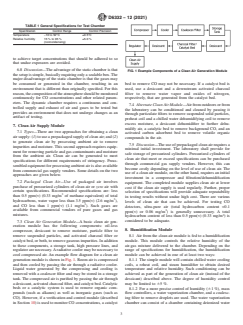
TABLE 1 General Specifications for Test Chamber
Specification Control Range Control Precision
Temperature –10 to 52°C ±0.5°C
Relative humidity 15 % to 95 % ±5.0 %
(noncondensing)
to achieve target concentrations that should be adhered to so
that undue exposures are avoided.
6.8 Discussion—The advantage of the static chamber is that
FIG. 1 Example Components of a Clean Air Generation Module
thesetupissimple,basicallyrequiringonlyasealablebox.The
major disadvantage of the static chamber is that the gases may
be consumed or generated in the chamber, resulting in an bed to remove CO may not be necessary. If a catalyst bed is
environment that is different than originally specified. For this used, use a desiccant and a downstream activated charcoal
reason,thecompositionoftheatmosphereshouldbemonitored filter to remove water vapor and oxides of nitrogen,
continuously for CO concentrations and other related param- respectively, that are generated from the catalyst bed.
eters. The dynamic chamber requires a continuous and con-
7.4 Alternate Clean Air Module—Airfromoutdoorsorfrom
trolled supply and exhaust of air and gases to be tested but
the laboratory can be conditioned and cleaned by passing it
provides an environment that does not undergo changes as an
through particulate filters to remove suspended solid particles,
artifact of testing.
preheat coil and a chilled water dehumidifying coil to remove
excess moisture, a desiccant dehumidifier to further dehu-
7. Clean Air Supply Module
midify air, a catalytic bed to remove background CO, and an
7.1 Types—There are two approaches for obtaining a clean
activated carbon adsorbent bed to remove volatile organic
airsupply:(1)touseaprepackagedsupplyofcleanair;and(2)
compounds in the air.
to generate clean air by processing ambient air to remove
7.5 Discussion—Theuseofprepackagedcleanairrequiresa
impurities and moisture. This second approach requires equip-
minimal initial investment. The laboratory shall provide for
ment for removing particle and gas contaminants and moisture
safe storage of pressurized cylinders. Pressurized cylinders of
from the ambient air. Clean air can be generated to meet
clean air that meet or exceed specifications can be purchased
specifications for different requirements of stringency. Preas-
through commercial gas supply vendors. However, this can
sembled equipment for processing ambient air is also available
become costly depending on the level of use of clean air. The
from commercial gas supply vendors. Some details on the two
use of a clean air module, on the other hand, requires an initial
approaches are given below.
investment in a compressor and filtration/dehumidification
7.2 Packaged Clean Air—Use of packaged air involves
equipment. The completed module supplies clean air at lower
purchase of pressurized cylinders of clean air or zero air with
cost if the clean air supply is used regularly. Further, proper
certain specifications. Recommended specifications are: less
selection of specifications will provide adequate repeatability
than 0.5 ppm(v) (0.33 mg/m of methane equivalent) of total
in testing results without undue high cost. There are various
hydrocarbons, water vapor less than 3.5 ppm(v) (2.6 mg/m ),
levels of clean air that can be achieved. For testing CO
and CO less than 1 ppm(v) (1.1 mg/m ). Such gases are
detectors, ultra-pure air (total hydrocarbon content <0.1
available from commercial vendors of pure gases and gas
ppm(v) or 0.06 mg/m ) is generally unnecessary. A total
mixtures.
hydrocarbon conten
...