


ASTM F3583-22
(Test Method)Standard Test Method for Exoskeleton Use: Beams
Standard Test Method for Exoskeleton Use: Beams
SIGNIFICANCE AND USE
5.1 Beams and beams with platforms can vary greatly in, for example: length, width, height, quantity, geometry, surface coatings, and for a variety of industries. Fig. 2 shows examples of various beams and beams with platforms.
FIG. 2 Example Beams: (a) Steel Construction Beams; (b) Steel Construction Beam to a Platform; (c) Log Construction Beam; (d) Playground Log Beam; (e) Log Beam across Water; and (f) Balance Beam used for Gymnastics
5.2 Exoskeletons are being used in the industrial/occupational, military, response, medical, and recreational sectors to enhance safety and effectiveness of the user to perform tasks. Traversing beams are used in many tasks performed and may include, for example, upper, lower, or full body movement in order to complete the task. Dependent upon the task, it may require people to traverse various ground and beam surfaces while wearing an exoskeleton. For example, an exoskeleton may be used to help during construction tasks where workers in exoskeletons traverse beams or beams and platforms with and without carrying loads, indoors or outdoors, as part of their daily activities. The testing results of exoskeletons shall describe, in a statistically significant way (see guidance in Appendix X1), how reliably the exoskeleton is able to support tasks within the specified types of environments, confinements, and terrains, and thus provide sufficiently high levels of confidence to determine the applicability of the exoskeleton.
5.3 This test method addresses exoskeleton safety and performance requirements expressed by manufacturing, emergency responders, military, or other organizations requesting this test. The safety and performance data captured within this test method are indicative of the test exoskeleton’s and the exoskeleton user’s capabilities. Having available direct information from tested exoskeleton(s) with associated performance data to guide procurement and deployment decisions is essential to exoskeleton purchasers an...
SCOPE
1.1 Purpose:
1.1.1 The purpose of this test method, as a part of a suite of exoskeleton use test methods, is to quantitatively evaluate an exoskeleton’s (see Terminology F3323) safety (see 1.4) or performance, or both, when traversing beams.
1.1.2 Exoskeletons shall possess a certain set of allowable exoskeleton user movement capabilities, including user-motion adaptability, to suit operations such as: industrial/occupational, military, response, medical, or recreational.
1.1.3 Environments in these typical sectors often pose constraints to exoskeleton user movement to various degrees. Being able to traverse beams, as intended by the user or test requestor, while using an exoskeleton, is essential for exoskeleton deployment for a variety of tasks (for example, ascending/descending stairs, ramps, hills). This test method specifies test setup, procedure, and recording to standardize this beams task for testing exoskeleton user movement.
1.1.4 Exoskeletons need to function as intended, regardless of types of tasks and terrain complexities (for example, carpet, metal, masonry, rock, wood). Required movement capabilities may include, for example: walking, running, crawling, climbing, traversing gaps, hurdles, stairs, beams, slopes, various types of floor surfaces or terrains, or confined spaces, or combinations thereof. Standard test methods are required to evaluate whether or not exoskeletons meet these requirements.
1.1.5 ASTM Subcommittee F48.03 develops and maintains international standards for task performance and environmental considerations that include but are not limited to, standards for safety, quality, and efficiency. This subcommittee aims to develop standards for any exoskeleton application as exemplified as in 1.1.2. The F48.03 test suite consists of a set of test methods for evaluating exoskeleton capability requirements. This beams test method is a part of the test suite. The setup, procedure,...
General Information
- Status
- Published
- Publication Date
- 14-Nov-2022
- Technical Committee
- F48 - Exoskeletons and Exosuits
- Drafting Committee
- F48.03 - Task Performance and Environmental Considerations
Relations
- Effective Date
- 15-Jun-2020
- Effective Date
- 01-Jun-2020
- Effective Date
- 01-Mar-2020
- Effective Date
- 01-Oct-2019
- Effective Date
- 01-Apr-2019
- Effective Date
- 01-Sep-2018
Overview
ASTM F3583-22: Standard Test Method for Exoskeleton Use: Beams establishes a standardized approach to quantitatively evaluate the safety and performance of exoskeletons when traversing beams and beams with platforms across industrial, military, medical, emergency response, and recreational sectors. This international standard provides detailed test setups, procedures, and documentation requirements to ensure consistency and comparability in data gathered from exoskeleton testing over varying beam configurations and environmental conditions.
Exoskeletons are increasingly relied upon to enhance user capability, safety, and efficiency when conducting tasks that require navigating narrow, elevated, or complex surfaces. As applications expand and user environments diversify, reliable performance metrics and safety data become essential for procurement decisions, user training, and deployment in real-world scenarios.
Key Topics
Test Applicability and Scope:
ASTM F3583-22 applies to various beam types, including construction beams, playground logs, balance beams, and beams over water, reflecting real-world conditions. Test methods account for variations in material, geometry, surface coating, and sector-specific requirements.Exoskeleton User Capabilities:
The standard evaluates an exoskeleton user's ability to traverse beams using upper, lower, or full body movement, under different terrains and environments. Required movements may include walking, running, climbing, crawling, transitioning between levels, and negotiating confined or complex spaces.Performance and Safety Metrics:
Tested parameters can include the number of beams traversed, ability to maintain balance, turnaround performance, transition abilities, and successful completion rates. Data such as heart rate, fatigue indicators, incidents of slips or falls, and other biomechanical measures are recorded to gauge both performance and user safety.Statistical Significance:
Results must provide statistically significant indications of reliability under varying conditions, offering confidence in task suitability and deployment decisions.Test Procedures:
The method defines detailed phased and full test processes, with repeatable start/end markers, environmental documentation practices, user preparation guidelines, and protocols for practice and repetitions.Documentation and Traceability:
Comprehensive reporting is required, detailing apparatus used, exoskeleton and user configurations, environmental factors, test parameters, and all notable incidents during testing. This ensures data integrity and comparability across organizations.
Applications
ASTM F3583-22 is valuable for a wide spectrum of industries and use cases, such as:
Industrial and Construction:
Evaluating exoskeletons for worker safety and effectiveness during beam traversal tasks, both indoors and outdoors, and under load-bearing situations.Military and Emergency Response:
Assessing the suitability of exoskeleton systems for navigating confined or hazardous spaces, climbing, and balancing in dynamic operational environments.Medical and Rehabilitation:
Testing exoskeleton-assisted mobility across various surfaces for rehabilitation, training, or therapeutic applications, accommodating broader beam platforms for safety personnel if required.Recreation and Fitness:
Standardizing performance benchmarks for exoskeleton use in sports, playgrounds, or recreational settings, such as gymnastics balance beams or obstacle courses.Procurement and Training:
Helping organizations make informed purchasing decisions and design effective training programs based on standardized safety and performance data.
Related Standards
Several related ASTM and international standards support and complement ASTM F3583-22, including:
- ASTM F3323: Terminology for Exoskeletons and Exosuits
- ASTM F3443: Practice for Load Handling When Using an Exoskeleton
- ASTM F3444/F3444M: Practice for Training Exoskeleton Users
- ASTM F3474: Practice for Establishing Exoskeleton Functional Ergonomic Parameters and Test Metrics
- ASTM F3517: Practice for Movement Tests When Using an Exoskeleton
- ASTM F3523: Test Method for Exoskeleton Use: Confined Space - Horizontal Movement
- ASTM F3527: Guide for Assessing Risks Related to Implementation of Exoskeletons in Task-Specific Environments
- ASTM F3528: Test Method for Exoskeleton Use: Gait
- ASTM F3613: Practice for Recording the Exoskeleton Fit to the User
- ISO 13482: Robots and Robotic Devices - Safety Requirements for Personal Care Robots
Keywords: ASTM F3583-22, exoskeleton testing, beams, exoskeleton safety, exoskeleton performance, industrial exoskeleton, standard test method, beam traversal, user safety, comparative exoskeleton evaluation, exoskeleton deployment.
Get Certified
Connect with accredited certification bodies for this standard

BSI Group
BSI (British Standards Institution) is the business standards company that helps organizations make excellence a habit.

TÜV Rheinland
TÜV Rheinland is a leading international provider of technical services.

TÜV SÜD
TÜV SÜD is a trusted partner of choice for safety, security and sustainability solutions.
Sponsored listings
Frequently Asked Questions
ASTM F3583-22 is a standard published by ASTM International. Its full title is "Standard Test Method for Exoskeleton Use: Beams". This standard covers: SIGNIFICANCE AND USE 5.1 Beams and beams with platforms can vary greatly in, for example: length, width, height, quantity, geometry, surface coatings, and for a variety of industries. Fig. 2 shows examples of various beams and beams with platforms. FIG. 2 Example Beams: (a) Steel Construction Beams; (b) Steel Construction Beam to a Platform; (c) Log Construction Beam; (d) Playground Log Beam; (e) Log Beam across Water; and (f) Balance Beam used for Gymnastics 5.2 Exoskeletons are being used in the industrial/occupational, military, response, medical, and recreational sectors to enhance safety and effectiveness of the user to perform tasks. Traversing beams are used in many tasks performed and may include, for example, upper, lower, or full body movement in order to complete the task. Dependent upon the task, it may require people to traverse various ground and beam surfaces while wearing an exoskeleton. For example, an exoskeleton may be used to help during construction tasks where workers in exoskeletons traverse beams or beams and platforms with and without carrying loads, indoors or outdoors, as part of their daily activities. The testing results of exoskeletons shall describe, in a statistically significant way (see guidance in Appendix X1), how reliably the exoskeleton is able to support tasks within the specified types of environments, confinements, and terrains, and thus provide sufficiently high levels of confidence to determine the applicability of the exoskeleton. 5.3 This test method addresses exoskeleton safety and performance requirements expressed by manufacturing, emergency responders, military, or other organizations requesting this test. The safety and performance data captured within this test method are indicative of the test exoskeleton’s and the exoskeleton user’s capabilities. Having available direct information from tested exoskeleton(s) with associated performance data to guide procurement and deployment decisions is essential to exoskeleton purchasers an... SCOPE 1.1 Purpose: 1.1.1 The purpose of this test method, as a part of a suite of exoskeleton use test methods, is to quantitatively evaluate an exoskeleton’s (see Terminology F3323) safety (see 1.4) or performance, or both, when traversing beams. 1.1.2 Exoskeletons shall possess a certain set of allowable exoskeleton user movement capabilities, including user-motion adaptability, to suit operations such as: industrial/occupational, military, response, medical, or recreational. 1.1.3 Environments in these typical sectors often pose constraints to exoskeleton user movement to various degrees. Being able to traverse beams, as intended by the user or test requestor, while using an exoskeleton, is essential for exoskeleton deployment for a variety of tasks (for example, ascending/descending stairs, ramps, hills). This test method specifies test setup, procedure, and recording to standardize this beams task for testing exoskeleton user movement. 1.1.4 Exoskeletons need to function as intended, regardless of types of tasks and terrain complexities (for example, carpet, metal, masonry, rock, wood). Required movement capabilities may include, for example: walking, running, crawling, climbing, traversing gaps, hurdles, stairs, beams, slopes, various types of floor surfaces or terrains, or confined spaces, or combinations thereof. Standard test methods are required to evaluate whether or not exoskeletons meet these requirements. 1.1.5 ASTM Subcommittee F48.03 develops and maintains international standards for task performance and environmental considerations that include but are not limited to, standards for safety, quality, and efficiency. This subcommittee aims to develop standards for any exoskeleton application as exemplified as in 1.1.2. The F48.03 test suite consists of a set of test methods for evaluating exoskeleton capability requirements. This beams test method is a part of the test suite. The setup, procedure,...
SIGNIFICANCE AND USE 5.1 Beams and beams with platforms can vary greatly in, for example: length, width, height, quantity, geometry, surface coatings, and for a variety of industries. Fig. 2 shows examples of various beams and beams with platforms. FIG. 2 Example Beams: (a) Steel Construction Beams; (b) Steel Construction Beam to a Platform; (c) Log Construction Beam; (d) Playground Log Beam; (e) Log Beam across Water; and (f) Balance Beam used for Gymnastics 5.2 Exoskeletons are being used in the industrial/occupational, military, response, medical, and recreational sectors to enhance safety and effectiveness of the user to perform tasks. Traversing beams are used in many tasks performed and may include, for example, upper, lower, or full body movement in order to complete the task. Dependent upon the task, it may require people to traverse various ground and beam surfaces while wearing an exoskeleton. For example, an exoskeleton may be used to help during construction tasks where workers in exoskeletons traverse beams or beams and platforms with and without carrying loads, indoors or outdoors, as part of their daily activities. The testing results of exoskeletons shall describe, in a statistically significant way (see guidance in Appendix X1), how reliably the exoskeleton is able to support tasks within the specified types of environments, confinements, and terrains, and thus provide sufficiently high levels of confidence to determine the applicability of the exoskeleton. 5.3 This test method addresses exoskeleton safety and performance requirements expressed by manufacturing, emergency responders, military, or other organizations requesting this test. The safety and performance data captured within this test method are indicative of the test exoskeleton’s and the exoskeleton user’s capabilities. Having available direct information from tested exoskeleton(s) with associated performance data to guide procurement and deployment decisions is essential to exoskeleton purchasers an... SCOPE 1.1 Purpose: 1.1.1 The purpose of this test method, as a part of a suite of exoskeleton use test methods, is to quantitatively evaluate an exoskeleton’s (see Terminology F3323) safety (see 1.4) or performance, or both, when traversing beams. 1.1.2 Exoskeletons shall possess a certain set of allowable exoskeleton user movement capabilities, including user-motion adaptability, to suit operations such as: industrial/occupational, military, response, medical, or recreational. 1.1.3 Environments in these typical sectors often pose constraints to exoskeleton user movement to various degrees. Being able to traverse beams, as intended by the user or test requestor, while using an exoskeleton, is essential for exoskeleton deployment for a variety of tasks (for example, ascending/descending stairs, ramps, hills). This test method specifies test setup, procedure, and recording to standardize this beams task for testing exoskeleton user movement. 1.1.4 Exoskeletons need to function as intended, regardless of types of tasks and terrain complexities (for example, carpet, metal, masonry, rock, wood). Required movement capabilities may include, for example: walking, running, crawling, climbing, traversing gaps, hurdles, stairs, beams, slopes, various types of floor surfaces or terrains, or confined spaces, or combinations thereof. Standard test methods are required to evaluate whether or not exoskeletons meet these requirements. 1.1.5 ASTM Subcommittee F48.03 develops and maintains international standards for task performance and environmental considerations that include but are not limited to, standards for safety, quality, and efficiency. This subcommittee aims to develop standards for any exoskeleton application as exemplified as in 1.1.2. The F48.03 test suite consists of a set of test methods for evaluating exoskeleton capability requirements. This beams test method is a part of the test suite. The setup, procedure,...
ASTM F3583-22 is classified under the following ICS (International Classification for Standards) categories: 11.180.10 - Aids and adaptation for moving; 25.040.30 - Industrial robots. Manipulators. The ICS classification helps identify the subject area and facilitates finding related standards.
ASTM F3583-22 has the following relationships with other standards: It is inter standard links to ASTM F3443-20, ASTM F3444/F3444M-20, ASTM F3427-20, ASTM F3323-19a, ASTM F3323-19, ASTM F3323-18. Understanding these relationships helps ensure you are using the most current and applicable version of the standard.
ASTM F3583-22 is available in PDF format for immediate download after purchase. The document can be added to your cart and obtained through the secure checkout process. Digital delivery ensures instant access to the complete standard document.
Standards Content (Sample)
This international standard was developed in accordance with internationally recognized principles on standardization established in the Decision on Principles for the
Development of International Standards, Guides and Recommendations issued by the World Trade Organization Technical Barriers to Trade (TBT) Committee.
Designation: F3583 − 22
Standard Test Method for
Exoskeleton Use: Beams
This standard is issued under the fixed designation F3583; the number immediately following the designation indicates the year of
original adoption or, in the case of revision, the year of last revision. A number in parentheses indicates the year of last reapproval. A
superscript epsilon (´) indicates an editorial change since the last revision or reapproval.
1. Scope 1.1.6 The test methods quantify elemental exoskeleton use
capabilities necessary for sector applications listed in 1.1.2 and
1.1 Purpose:
perhapsothers.Assuch,usersofthisstandardshoulduseeither
1.1.1 The purpose of this test method, as a part of a suite of
the entire suite or a subset based on their particular require-
exoskeleton use test methods, is to quantitatively evaluate an
ments. Users are also allowed to weight particular test methods
exoskeleton’s (see Terminology F3323) safety (see 1.4)or
or particular metrics within a test method differently, based on
performance, or both, when traversing beams.
their specific requirements. The testing results should collec-
1.1.2 Exoskeletons shall possess a certain set of allowable
tivelyrepresentanexoskeleton’soverallsafetyorperformance,
exoskeletonusermovementcapabilities,includinguser-motion
orboth,asrequiredforthetask.Theseperformancedatacanbe
adaptability, to suit operations such as: industrial/occupational,
military, response, medical, or recreational. used: to guide procurement specifications, for acceptance
1.1.3 Environments in these typical sectors often pose testing, and for training to use exoskeletons intended for
constraints to exoskeleton user movement to various degrees.
specified applications.
Being able to traverse beams, as intended by the user or test
NOTE 1—Additional test methods within the suite are anticipated to be
requestor, while using an exoskeleton, is essential for exoskel-
developed to address additional exoskeleton capability requirements,
etondeploymentforavarietyoftasks(forexample,ascending/
including newly identified requirements, and even for new application
descending stairs, ramps, hills). This test method specifies test
domains.
setup, procedure, and recording to standardize this beams task
1.2 Exoskeleton—The exoskeleton shall be used as intended
for testing exoskeleton user movement.
by the manufacturer to perform the test described in this test
1.1.4 Exoskeletons need to function as intended, regardless
method. If the exoskeleton is not designed for beam traversing
of types of tasks and terrain complexities (for example, carpet,
and the test requestor intends to use the exoskeleton to perform
metal, masonry, rock, wood). Required movement capabilities
a beam test (for example, for research, development of
may include, for example: walking, running, crawling,
beam-capable use by a manufacturer, beam training as in
climbing, traversing gaps, hurdles, stairs, beams, slopes, vari-
military applications), appropriate manufacturer approvals
ous types of floor surfaces or terrains, or confined spaces, or
combinations thereof. Standard test methods are required to should be sought prior to performing the test method.
evaluate whether or not exoskeletons meet these requirements.
1.3 Performing Location—This test method shall be per-
1.1.5 ASTM Subcommittee F48.03 develops and maintains
formedinatestinglaboratoryorinthefieldwherethespecified
internationalstandardsfortaskperformanceandenvironmental
apparatus and environmental conditions are implemented.
considerations that include but are not limited to, standards for
safety, quality, and efficiency. This subcommittee aims to
1.4 Units—The values stated in SI units are to be regarded
develop standards for any exoskeleton application as exempli-
as the standard.The values given in parentheses are not precise
fied as in 1.1.2. The F48.03 test suite consists of a set of test
mathematical conversions to inch-pound units. They are close
methods for evaluating exoskeleton capability requirements.
approximate equivalents for the purpose of specifying material
This beams test method is a part of the test suite. The setup,
dimensions or quantities that are readily available to avoid
procedure, and apparatuses associated with the test methods
excessive fabrication costs of test apparatuses while maintain-
challenge specific exoskeleton capabilities in repeatable ways
ing repeatability and reproducibility of the test method results.
to facilitate comparison of different exoskeleton models or
These values given in parentheses are provided for information
exoskeleton capabilities to tasks.
only and are not considered standard.
1.5 This standard does not purport to address all of the
This test method is under the jurisdiction of ASTM Committee F48 on
safety concerns, if any, associated with its use. It is the
Exoskeletons and Exosuits and is the direct responsibility of Subcommittee F48.03
responsibility of the user of this standard to establish appro-
on Task Performance and Environmental Considerations.
priate safety, health, and environmental practices and deter-
Current edition approved Nov. 15, 2022. Published January 2023. DOI: 10.1520/
F3583-22. mine the applicability of regulatory limitations prior to use.
Copyright © ASTM International, 100 Barr Harbor Drive, PO Box C700, West Conshohocken, PA 19428-2959. United States
F3583 − 22
1.6 This international standard was developed in accor- 3. Terminology
dance with internationally recognized principles on standard-
3.1 General terminology for ASTM F48 standards is listed
ization established in the Decision on Principles for the
inTerminology F3323.Terminology specific to this standard is
Development of International Standards, Guides and Recom-
shown in this section.
mendations issued by the World Trade Organization Technical
3.2 Definitions of Terms Specific to This Standard:
Barriers to Trade (TBT) Committee.
3.2.1 apparatus, n—a structure, object, test component, or
2. Referenced Documents
artifactthereof,foundorplacedinanenvironmentandusedfor
a test.
2.1 ASTM Standards:
F3323 Terminology for Exoskeletons and Exosuits
3.2.2 beam, n—a narrow horizontal bar, on or raised off the
F3427 Practice for Documenting Environmental Conditions
floor, on or over which a user traverses.
for Utilization with Exoskeleton Test Methods
3.2.3 platform, n—araisedlevelsurface,widerthanabeam,
F3443 Practice for Load Handling When Using an Exoskel-
on which a user can stand.
eton
F3444/F3444M Practice for Training Exoskeleton Users
3.2.3.1 Discussion—The platform may be attached to a
F3474 Practice for Establishing Exoskeleton Functional Er-
beam(s) as used in this test method.
gonomic Parameters and Test Metrics
3.2.4 test suite, n—designed collection of test methods that
F3517 Practice for Movement Tests When Using an Exo-
are used, collectively, to evaluate an exoskeleton’s safety
skeleton
and/or performance.
F3523 Test Method for Exoskeleton Use: Confined Space:
Horizontal Movement
4. Summary of Test Method
F3527 Guide forAssessing Risks Related to Implementation
of Exoskeletons in Task-Specific Environments
4.1 The task for this test method, exoskeleton-user traverses
F3528 Test Method for Exoskeleton Use: Gait
beam(s), is defined as the exoskeleton-user performing a beam
F3613 Practice for Recording the Exoskeleton Fit to the
traversal test, including a number of repetitions as set by the
User
test requestor. Guidance on number of repetitions for the test is
F3614 Practice for Recording the Exoskeleton User Infor-
shown in Appendix X1. An in-situ beam (for example, a log)
mation
or a beam and platform (for example, a construction beam to a
2.2 ISO Standards: landing) can be used for this test method. For ideal test
ISO 13482 Robots and robotic devices — Safety require- replication, standard beam apparatuses, which include: (a) a
beam or (b) a beam and platform(s), can be used for this test
ments for personal care robots
method. See Fig. 1 for an illustration.
4.2 The test is described as follows:
For referenced ASTM standards, visit the ASTM website, www.astm.org, or
4.2.1 This test can be used to assess aerobic function,
contact ASTM Customer Service at service@astm.org. For Annual Book of ASTM
endurance, beam traversal capability and speed, balance, or
Standards volume information, refer to the standard’s Document Summary page on
other parameters, or combinations thereof, as required by the
the ASTM website.
Available fromAmerican National Standards Institute (ANSI), 25 W. 43rd St., test requestor.
4th Floor, New York, NY 10036, http://www.ansi.org.
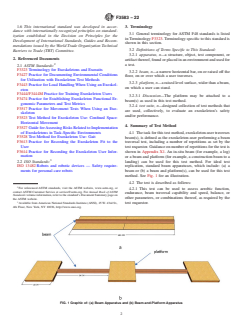
FIG. 1 Graphic of: (a) Beam Apparatus and (b) Beam-and-Platform Apparatus
F3583 − 22
4.2.2 The test metrics can include, for example, the follow- 4.7 The exoskeleton’s capability is defined as the exoskel-
ing: eton’s ability to complete the beams test where the user is
4.2.2.1 Number of beams traversed, capable of performing the task at the associated effective
4.2.2.2 Change(s) in user (for example, heart rate, fatigue, speed, stability, or other associated parameters, or combina-
stability, toe drag, missed steps, near falls/falls) by a specified tions thereof, as required by the test requestor. Further, the test
amount, requestor can specify the statistical reliability and confidence
4.2.2.3 Upontraversingabeam,theabilitytoturnaroundon levels of such a capability and thus, dictate the number of
a platform or floor and traverse a beam, and successful task performance repetitions that are required. In
4.2.2.4 The ability to transition from a platform or floor to a such a case, the average effective speed shall be used, instead,
beam. as the exoskeleton-user’s capability.
4.7.1 Guidance on the number of repetitions for a discrete,
4.3 For all tests, the specified START point to the END
binary variable test is provided in Appendix X1 (for example,
point and TURN point shall be defined by the test requestor
complete the test vs. failure to complete the test). If choosing
prior to the test. This test method can be combined with other
the number of repetitions for continuous variable (for example,
test methods, for example, Test Method F3528. The required
speed, distance) tests, consideration should include: variability
apparatuses are described in Section 5.
between subjects, user capability to perform the test, etc.
4.4 Afull beam or beam-and-platform test is defined as: the
4.8 The durability of the exoskeleton shall be such that it
user begins by standing behind a start marker, walks to the
can withstand the beams test requirements without failure, as
beam apparatus, traverses the beam or beams and platforms
specified by the manufacturer.
past the end marker, turns around 180°, repeats the traversal of
beam or beams and platforms, and walks past the start marker. 4.9 The user is allowed to practice before the test and if
A phased test includes portions of the full test as follows: practice occurs, practice time, activity, and other pertinent
informationshallbedocumentedinthenotessectiononthetest
Phased Beam Test
report, as practice can change the user. If practice occurs for
4.4.1 Phase 1—The user stands behind a start marker and
one subject, all subjects completing the test shall practice for
walks to the beam apparatus.
the same time and activity. She/he is also allowed to abstain
4.4.2 Phase 2—The user traverses the beam until reaching
from the test before it is started.
the opposite end of the beam.
4.10 The test requestor has the authority to select the test
4.4.3 Phase 3—The user steps off the beam and walks past
methodsthatconstitutethetestevent,toselectoneormoretest
the end marker.
site(s) and all test parameters (for example, environmental
4.4.4 Phase 4—The user turns around 180°.
conditions, apparatus materials if not standard) at which the
4.4.5 Phase 5—The user repeats Phase 1, although begin-
test methods are implemented, to determine the corresponding
ning behind the end marker.
statistical reliability and confidence levels of the results for
4.4.6 Phase 6—The user repeats Phase 2.
eachofthetestmethods,andtoestablishtheparticipationrules
4.4.7 Phase 7—The user repeats Phase 3, although walks
including the testing schedules and the test environmental
past the start marker.
conditions.
Phased Beam-and-Platform Test
4.11 Once the test begins, there shall be no verbal commu-
4.4.8 Phase 1—The user stands behind a start marker on a
nication between the exoskeleton user and the test supervisor
platform and steps onto the beam apparatus.
regarding the performance of a test repetition other than
4.4.9 Phase 2—The user traverses the beam, middle
instructionsonwhentostartandnotificationsoffaults,andany
platform, and second beam until reaching the opposite end of
safety related conditions. The user shall have the full respon-
the beam.
sibility to determine whether and when they are uncomfortable
4.4.10 Phase 3—The user steps off the beam and walks past
with completing the test, and notify the test supervisor accord-
the end marker on the platform.
ingly. However, it is the test supervisor’s authority to judge the
4.4.11 Phase 4—The user turns around 180°.
completeness of the repetition. Additionally, while it is the
4.4.12 Phase 5—The user repeats Phase 1, although begin-
user’sresponsibilitytoalertthetestsupervisorofasafetyissue
ning behind the end marker.
they experience, the test supervisor should also alert the user to
4.4.13 Phase 6—The user repeats Phase 2.
pause/stop the test if there are observable safety concerns (for
4.4.14 Phase 7—The user repeats Phase 3, although walks
example, too many falls, equipment malfunction, heart rate
past the start marker on the platform.
exceeds recommended heart rate for user’s age (1)).
NOTE 2—Practice could help establish the applicability of the exoskel-
4.5 The test requestor shall provide to the test supervisor
eton for the given test method. It allows the operator to gain familiarity
prior to the test, whether a full test or phased test will be
with the standard setup, procedure, apparatus, and environmental condi-
considered the ‘beams test’ and, if a phased test is requested,
tions. It also helps the test supervisor to establish the initial setup,
the phase numbers of the seven phases to be tested.
procedure, including both the user and testing personnel, or apparatus
setting, or combinations thereof, for the test when applicable.
4.6 The test requestor shall provide to the test supervisor
prior to the test, exoskeleton information (for example, age,
prior use, etc.), user experience, and practice time length and
The boldface numbers in parentheses refer to the list of references at the end of
activity. this standard.
F3583 − 22
4.12 The test requestor has the authority to select the ness of their exoskeleton(s) for tasks. For guidance on exo-
parameters that may affect the user for the beams task.The test skeleton training, see Practice F3444/F3444M.
requestor also has the authority to select test methods that
5.5 Although the test method was developed for the sectors
constitute the test event, to select one or more test site(s) at
listed in 5.2, it may be applicable to other operational domains.
which the test methods are implemented, to determine the
correspondingstatisticalreliabilityandconfidencelevelsofthe 6. Test Course and Apparatus
results for each of the test methods, and to establish the
6.1 The actual performance space where the exoskeleton is
participation rules, including the testing schedules and the test
to be used or apparatus of which will be used, or both, as
environmental conditions. As such, variations to this test
exemplifiedinFig.2,maybeusedforthistest.Intheeventthat
method are also described in this standard, including:
the actual performance space or apparatus, or both, is not
4.12.1 Traverse beams while carrying a load(s), and
available or the test is to be exactly replicated by others, or
4.12.2 Environmental conditions including, for example,
both, test setup and a standard beams test apparatus is also
ground surfaces that are hard or soft, dry or wet; temperatures
described in this section.
and humidity levels that are normal or extreme; precipitation
6.2 Optional Equipment:
that is no, low, or high.
6.2.1 Safety Equipment, for example: belay; gait belt; per-
sonalprotectiveequipment,suchas:kneepads,helmet,gloves;
5. Significance and Use
userhealthmonitoring,suchas:pulseoximeter,oxygensource,
5.1 Beamsandbeamswithplatformscanvarygreatlyin,for
Borg Breathlessness Scale, sphygmomanometer, inertial mea-
example: length, width, height, quantity, geometry, surface
surement units, joint angle and speed measurement equipment;
coatings, and for a variety of industries. Fig. 2 shows examples
and other safety equipment, such as: telephone, automated
of various beams and beams with platforms.
electronic defibrillator that can be at the ready as needed.
6.2.2 User Measurement Devices, for example: walkway or
5.2 Exoskeletons are being used in the industrial/
force plates for traversing beams analysis; step force/contact
occupational, military, response, medical, and recreational
measurement/detection devices, user tracking system; heart
sectors to enhance safety and effectiveness of the user to
rate, pulse, oxygen monitors, inertial measurement units, joint
perform tasks. Traversing beams are used in many tasks
angle and speed measurement equipment.
performed and may include, for example, upper, lower, or full
6.2.3 Loads, for example: tools, crates, bags (refer to
body movement in order to complete the task. Dependent upon
Practice F3443).
the task, it may require people to traverse various ground and
beam surfaces while wearing an exoskeleton. For example, an
6.3 ThetestcourseshallincludeSTARTandENDmarkings
exoskeleton may be used to help during construction tasks
near the beam apparatus.
where workers in exoskeletons traverse beams or beams and
6.4 Turnaround space for the user to reverse direction shall
platformswithandwithoutcarryingloads,indoorsoroutdoors,
be provided according to the apparatus being used. A starting
as part of their daily activities. The testing results of exoskel-
and ending line, which marks the START and END of the test
etons shall describe, in a statistically significant way (see
repetition,shouldbemarkedonthefloorusingbrightlycolored
guidance in Appendix X1), how reliably the exoskeleton is
tape.
able to support tasks within the specified types of
6.5 The use of exercise equipment is not recommended to
environments, confinements, and terrains, and thus provide
replace the beam or beam-and-platform apparatus for this test
sufficiently high levels of confidence to determine the applica-
method as users are unable to pace themselves on such
bility of the exoskeleton.
equipment. Exercise equipment test results, therefore, are not
5.3 This test method addresses exoskeleton safety and
interchangeable with beam apparatus tests.
performance requirements expressed by manufacturing, emer-
6.6 Required Apparatus:
gency responders, military, or other organizations requesting
6.6.1 1 m or greater straight, unimpeded path to the beam or
this test. The safety and performance data captured within this
beam-and-platform apparatus,
test method are indicative of the test exoskeleton’s and the
6.6.2 Beam or beam-and-platform apparatus,
exoskeleton user’s capabilities. Having available direct infor-
6.6.3 Timer(forexample,stopwatch)withatleast0.1 stime
mationfromtestedexoskeleton(s)withassociatedperformance
calibrated resolution,
data to guide procurement and deployment decisions is essen-
tial to exoskeleton purchasers and users.
NOTE 3—Other time-synchronized tools are: clock synchronized to
WWVB radio or computer-based timing synchronized to network time
5.4 The testing results of the candidate exoskeleton(s) shall
protocol.
describe, in a statistically significant way, how reliably the
6.6.4 Repetition counter,
exoskeleton user is able to negotiate beams. The test apparatus
6.6.5 Tape or similar marking (bright colored), and
described in 6.7 is intended to be a single, standardized beam
6.6.6 Test report (see Section 10).
or beam and platform where repeatable results between
exoskeletons, users, and organizations are comparable. The 6.7 Standard Beams or Beams-and-Platform Test Apparatus
standard test setup and apparatus can also be used to support (if used):
training and establish proficiency of exoskeleton users, as well 6.7.1 A standard beams or beams and platforms test appa-
as provide manufacturers with information about the useful- ratus is suggested for use to provide maximum repeatability in
F3583 − 22
FIG. 2 Example Beams: (a) Steel Construction Beams; (b) Steel Construction Beam to a Platform; (c) Log Construction Beam; (d) Play-
ground Log Beam; (e) Log Beam across Water; and (f) Balance Beam used for Gymnastics
test result comparison between testing organizations, users, or beams-and-platforms test apparatus’ are shown in Fig. 3 and
exoskeletons,orcombinationsthereof.Thestandardbeamsand Fig. 4, respectively, and are designed based on nominal lumber
F3583 − 22
FIG. 3 Beams Test Apparatus
FIG. 4 Beams-and-Platform Test Apparatus
size and materials. The apparatus dimensions are detailed in 6.8 Alternative Beams Apparatus:
Appendix X2.The surrounding structure is standardized across
6.8.1 Any alternative apparatus design, such as for in-
other exoskeleton test methods, for example: gait, hurdles, and
creased loading, raised beams and platforms, increased or
gaps, and allows standardized test setup, railings, and appara-
decreased sizing, alternative materials (for example, other
tus support. For the beams test, the surrounding structure may
woods,metals,composites,andcombinationsthereof),shallbe
not be necessary to include with the beam or beam-and-
engineered as needed to safely and effectively support the
platform apparatus.
required test.
6.7.2 Astandard beam or beam-and-platform test apparatus
6.8.2 Smaller turn-around space, located at the start or end
is to be constructed from readily available and nominal 2 by
locations, is a potential challenge to exoskeletons. Smaller
materialsmadefromSPF(spruce,pine,fir)wood,standardand
turn-around space(s) shall be engineered as needed to safely
appropriately sized fasteners, and can be weighted using
and effectively support the required test. If smaller turn-around
weights, or fixtured to the floor or ground surface to minimize
space is provided in actual apparatus settings (that is, not
apparatus movement.
F3583 − 22
designed and constructed), appropriate safety precautions and components, and their respective features and functionalities
test safety shall be used. See also Test Method F3523. including version or iteration details as applicable. The con-
6.8.3 Larger beam, platform, and surrounding structure figuration shall be subjected to all the test suites, as defined in
widths may be required, as with medical applications, where a 3.2.4, as appropriate. Any variation in the configuration shall
test technician, safety operator, etc. may walk beside the cause the resulting exoskeleton variant to be retested across all
exoskeletonuser.Assuch,theactualbeamapparatustobeused the test suites to provide a consistent and comprehensive
shall accommodate space to allow an exoskeleton user and the representation of the performance.
test technician, as well as any associated safety, measurement,
8.2 Once an exoskeleton user begins a test, by starting to
etc. equipment to perform the test without hindrance due to
execute the task as specified in 4.1, the exoskeleton shall be
space limitations. If a larger beam apparatus is to be designed,
used to perform the task for the specified number of repetitions
constructed, and used, the apparatus shall be engineered as
through completion without changing the exoskeleton or ap-
needed to safely and effectively support the required test.
paratus.
6.9 The test course layout for a full test is shown in Fig. 5
8.3 A battery may be changed or charged between
and, for consistency throughout this test method, illustrates the
repetitions,providedthatotherconfigurationsremainunaltered
use of the standard test apparatus.
and if allowed by the test requestor. Unless otherwise stated by
the requestor, during the test the exoskeleton shall not be
7. Hazards
allowed to have the energy/power source replenished, nor shall
7.1 Hazards for beam tests when using exoskeletons can be
the exoskeleton be allowed any human physical intervention,
as follows: slips, trips, falls, fatigue, and collisions dependent
including adjustment, maintenance, or repair.Any such actions
upon the exoskeleton, the test environment (for example,
shall be considered a fault condition and the test should be
lighting, moisture), and the apparatus (for example, beams).
restarted from the beginning.
Emergency egress from the area and apparatus should also be
8.4 The metric for this test method is the complete and
considered. Safety equipment should be considered to be used
successful beams test, as outlined in this test method, for the
during the test (for example, belay, gait belt). Refer to (2-4) in
specified number of continuous repetitions, as set by the test
order to characterize biomechanical stressors. Note that al-
requestor. In addition, the elapsed time for the user to success-
though these references address typical risks and mitigation
fully complete the beams test is a performance proficiency
procedures, they may not address safety issues for an exoskel-
indexreflectingthecombinationoftheexoskeleton’scapability
eton user.
and efficiency, and the user’s skill level. Therefore, this
7.2 Safety standards providing risks and mitigation proce-
temporal aspec
...
Questions, Comments and Discussion
Ask us and Technical Secretary will try to provide an answer. You can facilitate discussion about the standard in here.
Loading comments...