

ASTM F3340-22
(Test Method)Standard Test Method for Thermal Resistance of Camping Mattresses Using a Guarded Hot Plate Apparatus
General Information
- Abstract
SIGNIFICANCE AND USE
5.1 The thermal resistance of camping mattresses is an important indicator of insulation performance. This test method establishes criteria to measure this property consistently and in conditions relevant to the application. The measured value can be used for evaluating the thermal insulation performance of the camping mattresses, thus assisting with the product construction and design and providing guidance for consumers in comparing and selecting a mattress.
SCOPE
1.1 This test method covers the measurement of the thermal resistance of camping mattresses in conditions of steady-state heat transfer, using a two-plate apparatus. The camping mattress is held under constant compressive force between a guarded hot plate and a cold plate. The primary heat transfer for this method is one dimensional, vertically through the camping mattress thickness. As such this measured thermal insulation value is a repeatable comparative measurement. However, it needs to be noted that this value will not always correlate to actual insulation performance as it is feasible that real-world heat transfer will differ slightly because of additional heat losses possibly involved (for example, edge heat loss, uncovered surface heat loss, compression rate changes or posture changes during sleep).
1.2 This test method is applicable to all types of camping mattresses (for example, inflating air mattress with or without insulation, inflating air mattress with reflective materials, self-inflating open cell foam mattress with or without coring, closed cell non-inflatable foam mats). Auxiliary insulation of any type shall be excluded in the measurement. Auxiliary insulations are any type of material removable from the mattress (for example, sleeping bags, mattress covers).
1.3 The sample thickness shall not exceed the limit determined by the hot plate dimensions stated in 7.1.2.
1.4 Units—The values stated in SI units are to be regarded as the standard. No other units of measurement are included in this standard.
1.5 This standard does not purport to address all of the safety concerns, if any, associated with its use. It is the responsibility of the user of this standard to establish appropriate safety, health, and environmental practices and determine the applicability of regulatory limitations prior to use.
1.6 This international standard was developed in accordance with internationally recognized principles on standardization established in the Decision on Principles for the Development of International Standards, Guides and Recommendations issued by the World Trade Organization Technical Barriers to Trade (TBT) Committee.
- Status
- Published
- Publication Date
- 14-Jun-2022
- Technical Committee
- F08 - Sports Equipment, Playing Surfaces, and Facilities
- Drafting Committee
- F08.22 - Camping Softgoods
Buy Documents
ASTM F3340-22 - Standard Test Method for Thermal Resistance of Camping Mattresses Using a Guarded Hot Plate Apparatus
REDLINE ASTM F3340-22 - Standard Test Method for Thermal Resistance of Camping Mattresses Using a Guarded Hot Plate Apparatus
Overview
ASTM F3340-22 is the internationally recognized standard test method for determining the thermal resistance (R-value) of camping mattresses using a guarded hot plate apparatus. Developed by ASTM International, this method provides a consistent, repeatable basis to measure and compare the insulation properties of all types of camping mattresses, including inflatable air pads, self-inflating foam mats, and closed cell foam pads. The results help manufacturers optimize product design and enable consumers to compare products based on thermal performance.
Key Topics
- Thermal Resistance Measurement: This standard establishes how to accurately gauge the insulating ability (R-value) of camping mattresses under steady-state heat transfer conditions.
- Testing Conditions: Mattresses are tested vertically between a controlled temperature hot plate and a cold plate, ensuring one-dimensional heat flow through the mattress thickness. Testing excludes any auxiliary insulation such as sleeping bags or covers.
- Applicable Mattress Types: All mattress types (inflatable air, with or without insulation; air mats with reflective materials; self-inflating open cell foam; closed cell non-inflatable mats) are covered.
- Standardized Test Parameters: Only SI units are used. Key parameters like compressor pressure, inflation pressure, and temperature conditions are strictly defined to ensure repeatability and comparability of results.
- Sampling and Preparation: Typically, three specimens are tested at defined locations to account for material and construction variability.
- Reporting Requirements: Results are provided as RSI and R-value and must follow standardized documentation methods to ensure transparency.
- Precision and Bias: The standard includes detailed criteria for precision, repeatability, and calibration of test equipment, referencing NIST standards for verification.
Applications
- Product Development: Manufacturers use ASTM F3340-22 to assess and improve the thermal performance of camping mattresses, ensuring competitive, high-insulation products.
- Quality Control: The method serves as a reliable protocol for quality assurance, confirming that batches of mattresses meet insulation specifications.
- Consumer Guidance: Published R-values based on this standard help consumers select mattresses that best meet their insulation needs for various outdoor conditions.
- Regulatory Compliance: Organizations and retailers can specify compliance with ASTM F3340-22 for product listings, procurement, or certification schemes.
Related Standards
- ASTM C168 – Defines terminology relating to thermal insulation.
- ASTM C177 – Test method for steady-state heat flux measurements using guarded hot plate apparatus.
- ASTM D1518 – Test method for thermal resistance of batting systems (hot plate).
- ASTM E177 – Practice for use of terms "precision" and "bias" in ASTM test methods.
- ASTM E691 – Practice for conducting interlaboratory studies for determining test method precision.
- ISO 8302 – International method for determining steady-state thermal resistance through guarded hot plate apparatus.
Practical Value
Adhering to ASTM F3340-22 ensures reliable, valid, and comparable results for the thermal resistance of camping mattresses. Its robust methodology accounts for variables such as mattress inflation, specimen positioning, and test environment. The standard’s clear reporting and calibration requirements boost confidence among stakeholders-from product designers to retailers and end users-making it a critical tool in the outdoor gear industry.
Keywords: ASTM F3340, camping mattress thermal resistance, R-value, insulated sleeping pad, guarded hot plate, sleeping mat insulation, outdoor equipment standards, mattress R-value testing, ISO 8302, ASTM C177.
Relations
- Effective Date
- 15-Apr-2024
- Effective Date
- 15-Apr-2018
- Effective Date
- 01-Jun-2017
- Effective Date
- 15-Oct-2015
- Effective Date
- 01-Jun-2015
- Effective Date
- 01-May-2014
- Effective Date
- 01-May-2013
- Effective Date
- 01-May-2013
- Effective Date
- 01-Apr-2013
- Effective Date
- 01-Nov-2011
- Refers
ASTM D1518-11a - Standard Test Method for Thermal Resistance of Batting Systems Using a Hot Plate - Effective Date
- 01-Jul-2011
- Refers
ASTM D1518-11 - Standard Test Method for Thermal Resistance of Batting Systems Using a Hot Plate - Effective Date
- 01-Jan-2011
- Effective Date
- 01-Oct-2010
- Effective Date
- 01-Jun-2010
- Effective Date
- 01-Jan-2010
Buy Documents
ASTM F3340-22 - Standard Test Method for Thermal Resistance of Camping Mattresses Using a Guarded Hot Plate Apparatus
REDLINE ASTM F3340-22 - Standard Test Method for Thermal Resistance of Camping Mattresses Using a Guarded Hot Plate Apparatus
Get Certified
Connect with accredited certification bodies for this standard

BSMI (Bureau of Standards, Metrology and Inspection)
Taiwan's standards and inspection authority.
Sponsored listings
Frequently Asked Questions
ASTM F3340-22 is a standard published by ASTM International. Its full title is "Standard Test Method for Thermal Resistance of Camping Mattresses Using a Guarded Hot Plate Apparatus". This standard covers: SIGNIFICANCE AND USE 5.1 The thermal resistance of camping mattresses is an important indicator of insulation performance. This test method establishes criteria to measure this property consistently and in conditions relevant to the application. The measured value can be used for evaluating the thermal insulation performance of the camping mattresses, thus assisting with the product construction and design and providing guidance for consumers in comparing and selecting a mattress. SCOPE 1.1 This test method covers the measurement of the thermal resistance of camping mattresses in conditions of steady-state heat transfer, using a two-plate apparatus. The camping mattress is held under constant compressive force between a guarded hot plate and a cold plate. The primary heat transfer for this method is one dimensional, vertically through the camping mattress thickness. As such this measured thermal insulation value is a repeatable comparative measurement. However, it needs to be noted that this value will not always correlate to actual insulation performance as it is feasible that real-world heat transfer will differ slightly because of additional heat losses possibly involved (for example, edge heat loss, uncovered surface heat loss, compression rate changes or posture changes during sleep). 1.2 This test method is applicable to all types of camping mattresses (for example, inflating air mattress with or without insulation, inflating air mattress with reflective materials, self-inflating open cell foam mattress with or without coring, closed cell non-inflatable foam mats). Auxiliary insulation of any type shall be excluded in the measurement. Auxiliary insulations are any type of material removable from the mattress (for example, sleeping bags, mattress covers). 1.3 The sample thickness shall not exceed the limit determined by the hot plate dimensions stated in 7.1.2. 1.4 Units—The values stated in SI units are to be regarded as the standard. No other units of measurement are included in this standard. 1.5 This standard does not purport to address all of the safety concerns, if any, associated with its use. It is the responsibility of the user of this standard to establish appropriate safety, health, and environmental practices and determine the applicability of regulatory limitations prior to use. 1.6 This international standard was developed in accordance with internationally recognized principles on standardization established in the Decision on Principles for the Development of International Standards, Guides and Recommendations issued by the World Trade Organization Technical Barriers to Trade (TBT) Committee.
SIGNIFICANCE AND USE 5.1 The thermal resistance of camping mattresses is an important indicator of insulation performance. This test method establishes criteria to measure this property consistently and in conditions relevant to the application. The measured value can be used for evaluating the thermal insulation performance of the camping mattresses, thus assisting with the product construction and design and providing guidance for consumers in comparing and selecting a mattress. SCOPE 1.1 This test method covers the measurement of the thermal resistance of camping mattresses in conditions of steady-state heat transfer, using a two-plate apparatus. The camping mattress is held under constant compressive force between a guarded hot plate and a cold plate. The primary heat transfer for this method is one dimensional, vertically through the camping mattress thickness. As such this measured thermal insulation value is a repeatable comparative measurement. However, it needs to be noted that this value will not always correlate to actual insulation performance as it is feasible that real-world heat transfer will differ slightly because of additional heat losses possibly involved (for example, edge heat loss, uncovered surface heat loss, compression rate changes or posture changes during sleep). 1.2 This test method is applicable to all types of camping mattresses (for example, inflating air mattress with or without insulation, inflating air mattress with reflective materials, self-inflating open cell foam mattress with or without coring, closed cell non-inflatable foam mats). Auxiliary insulation of any type shall be excluded in the measurement. Auxiliary insulations are any type of material removable from the mattress (for example, sleeping bags, mattress covers). 1.3 The sample thickness shall not exceed the limit determined by the hot plate dimensions stated in 7.1.2. 1.4 Units—The values stated in SI units are to be regarded as the standard. No other units of measurement are included in this standard. 1.5 This standard does not purport to address all of the safety concerns, if any, associated with its use. It is the responsibility of the user of this standard to establish appropriate safety, health, and environmental practices and determine the applicability of regulatory limitations prior to use. 1.6 This international standard was developed in accordance with internationally recognized principles on standardization established in the Decision on Principles for the Development of International Standards, Guides and Recommendations issued by the World Trade Organization Technical Barriers to Trade (TBT) Committee.
ASTM F3340-22 is classified under the following ICS (International Classification for Standards) categories: 17.200.10 - Heat. Calorimetry; 97.200.30 - Camping equipment and camp-sites. The ICS classification helps identify the subject area and facilitates finding related standards.
ASTM F3340-22 has the following relationships with other standards: It is inter standard links to ASTM C168-24, ASTM C168-18, ASTM C168-17, ASTM C168-15a, ASTM C168-15, ASTM E177-14, ASTM E691-13, ASTM E177-13, ASTM C168-13, ASTM E691-11, ASTM D1518-11a, ASTM D1518-11, ASTM E177-10, ASTM C177-10, ASTM C168-10. Understanding these relationships helps ensure you are using the most current and applicable version of the standard.
ASTM F3340-22 is available in PDF format for immediate download after purchase. The document can be added to your cart and obtained through the secure checkout process. Digital delivery ensures instant access to the complete standard document.
Standards Content (Sample)
This international standard was developed in accordance with internationally recognized principles on standardization established in the Decision on Principles for the
Development of International Standards, Guides and Recommendations issued by the World Trade Organization Technical Barriers to Trade (TBT) Committee.
Designation: F3340 − 22
Standard Test Method for
Thermal Resistance of Camping Mattresses Using a
Guarded Hot Plate Apparatus
This standard is issued under the fixed designation F3340; the number immediately following the designation indicates the year of
original adoption or, in the case of revision, the year of last revision. A number in parentheses indicates the year of last reapproval. A
superscript epsilon (´) indicates an editorial change since the last revision or reapproval.
1. Scope ization established in the Decision on Principles for the
Development of International Standards, Guides and Recom-
1.1 This test method covers the measurement of the thermal
mendations issued by the World Trade Organization Technical
resistance of camping mattresses in conditions of steady-state
Barriers to Trade (TBT) Committee.
heat transfer, using a two-plate apparatus. The camping mat-
tress is held under constant compressive force between a
2. Referenced Documents
guarded hot plate and a cold plate. The primary heat transfer
for this method is one dimensional, vertically through the 2.1 ASTM Standards:
camping mattress thickness. As such this measured thermal
C168 Terminology Relating to Thermal Insulation
insulation value is a repeatable comparative measurement. C177 Test Method for Steady-State Heat Flux Measure-
However, it needs to be noted that this value will not always ments and Thermal Transmission Properties by Means of
correlate to actual insulation performance as it is feasible that the Guarded-Hot-Plate Apparatus
real-world heat transfer will differ slightly because of addi- D1518 Test Method for Thermal Resistance of Batting
tional heat losses possibly involved (for example, edge heat Systems Using a Hot Plate
loss, uncovered surface heat loss, compression rate changes or E177 Practice for Use of the Terms Precision and Bias in
posture changes during sleep). ASTM Test Methods
E691 Practice for Conducting an Interlaboratory Study to
1.2 This test method is applicable to all types of camping
Determine the Precision of a Test Method
mattresses (for example, inflating air mattress with or without
insulation, inflating air mattress with reflective materials, 2.2 ISO Standard:
ISO 8302 Thermal insulation — Determination of steady-
self-inflating open cell foam mattress with or without coring,
closed cell non-inflatable foam mats). Auxiliary insulation of state thermal resistance and related properties — Guarded
any type shall be excluded in the measurement. Auxiliary hot plate apparatus
insulations are any type of material removable from the
mattress (for example, sleeping bags, mattress covers). 3. Terminology
1.3 The sample thickness shall not exceed the limit deter- 3.1 Definitions—For definitions of terms used in this test
mined by the hot plate dimensions stated in 7.1.2. method, refer to Terminology C168 and 3.2.
1.4 Units—The values stated in SI units are to be regarded 3.2 Definitions of Terms Specific to This Standard:
as the standard. No other units of measurement are included in 3.2.1 ambient air speed, n—the air speed of environment
this standard. immediately surrounding the specimen and apparatus.
1.5 This standard does not purport to address all of the 3.2.2 ambient temperature, n—the air temperature of envi-
safety concerns, if any, associated with its use. It is the ronment immediately surrounding the specimen and apparatus.
responsibility of the user of this standard to establish appro-
3.2.3 cold plate, n—isothermal boundary created by a rigid
priate safety, health, and environmental practices and deter-
cooling plate that contacts one side of the specimen and is
mine the applicability of regulatory limitations prior to use.
parallel to the hot plate.
1.6 This international standard was developed in accor-
dance with internationally recognized principles on standard-
For referenced ASTM standards, visit the ASTM website, www.astm.org, or
This test method is under the jurisdiction of ASTM Committee F08 on Sports contact ASTM Customer Service at service@astm.org. For Annual Book of ASTM
Equipment, Playing Surfaces, and Facilities and is the direct responsibility of Standards volume information, refer to the standard’s Document Summary page on
Subcommittee F08.22 on Camping Softgoods. the ASTM website.
Current edition approved June 15, 2022. Published July 2022. Originally Available from International Organization for Standardization (ISO), ISO
approved in 2018. Last previous edition approved in 2018 as F3340 – 18. DOI: Central Secretariat, BIBC II, Chemin de Blandonnet 8, CP 401, 1214 Vernier,
10.1520/F3340-22. Geneva, Switzerland, http://www.iso.org.
Copyright © ASTM International, 100 Barr Harbor Drive, PO Box C700, West Conshohocken, PA 19428-2959. United States
F3340 − 22
3.2.4 guarded hot plate, n—constant temperature heat theproductconstructionanddesignandprovidingguidancefor
source that consists of a central metering plate and primary consumers in comparing and selecting a mattress.
guards surrounding the sides and backside of the metering
6. Interferences
plate.
6.1 It is feasible that departures from the procedures and
3.2.5 guards (thermal guards), n—means to prevent lateral
conditionsofthistestmethodwillleadtosignificantlydifferent
edge heat loss and promote one-dimensional heat flow in the
test results. It is necessary to report any departures from the
vertical direction through the test sample.
procedures and conditions of this test method with the results.
3.2.5.1 Discussion—The guards consist of a thermal guard
ring surrounding the metering plate and a backplate (counter-
6.2 Discussion—Technical knowledge concerning the
heating plate) parallel to the metering plate. The guards are
theory of heat transfer, temperature measurement and testing
heated independently to maintain the same surface temperature
practices is important for controlling test variables. The causes
as the metering plate surface temperature.
of measurement uncertainty and variation (AnnexA1) shall be
understood so that any known errors are corrected or elimi-
3.2.6 homogeneous mattress, n—a camping mattress with
nated to the extent possible, and the system is accurately
the same composition, average density, and distribution of
calibrated to ensure measurement accuracy and precision are
materials and construction method throughout.
satisfactory.
3.2.6.1 Discussion—This includes mattresses constructed of
a repeating pattern in which the length scale of the pattern is
7. Apparatus
less than half of the width of the metering plate. If it is unclear
whether the mattress meets these requirements, consider it a 7.1 Description—The apparatus consists of a guarded hot
non-homogenous mattress for the purposes of testing. plate, a cold plate, a compression system, a power source,
temperature sensors, and a controller. Fig. 1 illustrates the
3.2.7 metering plate, n—measurementregionoftheguarded
general assembly of the apparatus. Subsections 7.2 to 7.5
hot plate that is controllable to a constant temperature and
describe requirements for each part of the apparatus. The
capable of measuring heat loss from its surface in the form of
apparatusshallmeetthestatedtoleranceinSection8following
power.
procedures set forth in Annex A2.
3.2.8 non-homogeneous mattress, n—a camping mattress
7.1.1 The guarded hot plate and cold plate shall be designed
where the composition, average density of materials, and
and constructed using principles and construction which are
construction method vary from location to location.
well defined inTest Method C177,Test Method D1518, or ISO
3.2.9 R-value, n—thermal resistance of a material or a
8302. Existing guarded hot plate machines compliant to those
system in inch-pound units: F ft h/Btu.
standards, that also meet the requirements described in 7.2 and
3.2.9.1 Discussion—R-value is only used as a presentation
7.3, can be successfully converted to the apparatus of this
ofaconvertedfinalmaterial’sRSI-value.Itshallnotbeusedin
standard by adding a compression system.
any intermediate measurement data conversion or machine
7.1.2 Additional design consideration shall be given to the
calibration.
maximum specimen thickness limit. Maximum testable speci-
men thickness depends on plate construction and dimensions.
3.2.10 RSI-value, n—thermal resistance of a material or a
system in SI units: K m /W. As such, maximum testable thickness shall be stated on all test
reports for a given test apparatus. If a test sample exceeds the
3.2.11 two-plate guarded hot plate apparatus, n—apparatus
maximum testable thickness, it shall be excluded for testing on
that measures the heat transmission through a specimen from
that apparatus. Maximum thickness is determined by using the
the guarded hot plate to the cold plate.
formula in Section 2.2.1 of ISO 8302 and a 0.5 % threshold of
4. Summary of Test Method edge heat loss error (see Annex A4).
4.1 The specimen is compressed horizontally between a 7.2 Guarded Hot Plate:
guardedupperhotplateandalowercoldplate.Ifinflatable,the 7.2.1 Metering Plate—The heater shall provide uniform
specimen is inflated to a predetermined internal pressure. The temperature across the metering plate surface with a variation
hot plate and cold plate are maintained at fixed temperatures. oflessthan0.2°Cwhentestingmaterialsof R greaterthan0.1
ct
The ambient temperature is controlled to be equal to the Km /W. The surface of the metering plate shall have an
average temperature of the hot plate and cold plate. The heat emissivity of 0.9 (as measured at ambient temperature) or
flux through the specimen is measured during steady-state greater as to mimic the emissivity of human skin. The
condition. The thermal resistance is calculated by dividing the minimum dimension of the metering plate shall be 200 mm per
temperature difference with the heat flux (see Eq 1). sideifsquare,or200mmindiameterifcircular.Themaximum
heating capacity is designed to provide adequate heat flux and
5. Significance and Use
accuracy in the entire measurable range.
5.1 The thermal resistance of camping mattresses is an 7.2.2 Thermal Guard Ring—The combined size of the
important indicator of insulation performance. This test thermalguardringandmeteringplateshallbebetween400and
method establishes criteria to measure this property consis- 660 mm per side if square, or between 400 and 660 mm in
tently and in conditions relevant to the application. The diameter if circular, to accommodate most standard camping
measured value can be used for evaluating the thermal insula- mattresses. The material and construction of the thermal guard
tionperformanceofthecampingmattresses,thusassistingwith ringshallbethesameasthatofthemeteringplate.Theaverage
F3340 − 22
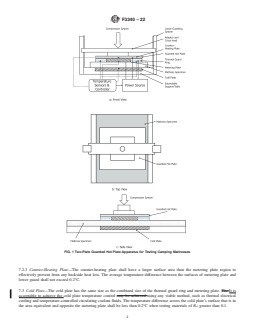
FIG. 1 Two-Plate Guarded Hot Plate Apparatus for Testing Camping Mattresses
temperature difference between the metering plate’s surface temperature difference between the surfaces of metering plate
and guard ring’s surface shall not exceed 0.2°C.The surface of
and lower guard shall not exceed 0.2°C.
the guard ring shall have an emissivity of 0.9 (as measured at
7.3 Cold Plate—The cold plate has the same size as the
ambient temperature) or greater as to mimic the emissivity of
combined size of the thermal guard ring and metering plate. It
human skin.
is acceptable to achieve the cold plate temperature control
7.2.3 Counter-Heating Plate—The counter-heating plate
usinganyviablemethod,suchasthermalelectricalcoolingand
shall have a larger surface area than the metering plate region
to effectively prevent from any backside heat loss.The average
F3340 − 22
with loose filling shall be inflated and conditioned in the orientation in
temperature-controlled circulating coolant fluids.The tempera-
which they are to be tested.
ture difference across the cold plate’s surface that is in the area
equivalent and opposite the metering plate shall be less than 9.3.2 Condition prefilled specimens in test environmental
0.2°C when testing materials of R greater than 0.1. conditions.
ct
9.3.2.1 Minimum 6 h for inflating mattresses.
7.4 Compression System:
9.3.2.2 Minimum 2 h for non-inflatable mattresses.
7.4.1 A means shall be provided for imposing a reproduc-
ible compression on the specimen. Compression can be 9.4 Measurement Locations in a Specimen:
achieved by any viable means, such as dead weight or 9.4.1 Rectangular Mattresses—Mark three locational mea-
constant-force springs. surementlinesevenlyspacedat0.25 L,0.5 L(centrallocation),
7.4.2 The hot plate and cold plate working surfaces shall be and 0.75 L, where L is the length of the mattress, see Fig. 2.If
parallel within 2 %. the specimen is shorter than double the length of the guarded
hotplate,thenthespecimenshallbemeasuredwiththeedgeof
7.5 Supporting Frame—Totestafull-sizecampingmattress,
the guarded hot plate aligned to the edge of the specimen at (1)
supports shall be provided outside the measurement area to
the head-end and (2) the foot-end. The third measurement
prevent the mattress from bending under its own weight. It is
needs to be taken at the center of the specimen.
possible that bending will decrease the measurement accuracy
9.4.2 Tapered Mattress—A tapered mattress typically has
due to sample distortion at the plate boundary. The support
narrower width in the head or leg section than the width of
needs to level the bottom of the sample mattress to the upper
guarded hot plate. It is possible that measurement location L1
surface of the cold plate and separate from the cold plate at
or L2 in 9.4.1 will need to be adjusted.
least 6 in. as long as the pad geometry allows this.
9.4.2.1 Locate the locations L1, L2 and L3 per 9.4.1 when
inflated to 3.7 kPa.
8. Calibration
9.4.2.2 Check if the full width of the guarded hot plate is
8.1 The apparatus shall be calibrated annually with NIST
covered at L1 and L2.
standard reference materials specified in Annex A2. After
9.4.2.3 If the full width of the guarded hot plate is not
following the procedure in Annex A2, the minimum and
covered at either location, calculate the minimum guard
maximum tolerances of the measured value shall be between
covering width using Eq A4.1 with acceptable measurement
–3 and +1 % of the target standard value.
error of 0.5 %, specimen thickness and metering plate dimen-
8.2 Calibration of the temperature sensors and heaters shall sion.
be performed regularly according to the manufacturer’s 9.4.2.4 If the calculated minimum guard covering width is
instructions,andatanytimetheaccuracyisfoundtobeoutside achieved at L1 or L2, then no adjustment is required.
the tolerances.
9. Sampling and Specimen Preparation
9.1 Sampling—Test three identical specimens. Any depar-
ture shall be noted in the test report.
9.2 Test Specimens:
9.2.1 Full-Size Specimen—Full-size samples are mattresses
in the size and shape as used by the end consumer. Full-size
samples, identical to the final design and construction of
production model, shall be used for any consumer-facing
claims that cite this test method.
9.2.2 Made-To-Fit Specimen—Small-size samples made to
fittheexteriorboundsoftheguardedhotplateorslightlylarger
can be used to provide comparative test results. Measurement
results from such samples need to be comparable, but not
identical, to full-size samples of the same construction, Results
from made-to-fit specimens cannot be used for consumer-
facing claims that cite this test method.
9.3 Specimen Pre-Inflating and Conditioning:
9.3.1 For Inflatable Mattresses, fill the specimen to 3.7 kPa
(0.2 kPa above the standard fill pressure to facilitate the fill
pressureequalization)withasuitablepump(forexample,araft
pump) in the test environmental conditions. Compressed air or
mouth blowing are not recommended to avoid introducing
moisture, particulates, and oils which are commonly found in
compressed air systems.
NOTE 1—To promote even distribution of insulation, test specimens FIG. 2 Rectangular Mattress Measurement Locations
F3340 − 22
9.4.2.5 If the calculated minimum guard covering width is 10.6 Ambient Temperature: 20 6 2°C, temperature devia-
not achieved at L1 or L2, then move L1 or L2 towards central tion less than 6 0.5°C from mean during steady-state.
location until the minimum guard covering width is achieved. NOTE 2—The ambient temperature is measured 150 6 10 mm laterally
from the edges of the hot plate apparatus and 150 6 10 mm from the
9.4.2.6 L3 is centered between L1 and L2, see Fig. 3.
surfaces of testing sample mattress.
9.4.3 Area Specific Thermal Measurement—In addition to
standardized testing locations defined in 9.4.1 and 9.4.2,itis 10.7 Ambient Air Speed: <0.4 m/s.
acceptable to measure Area Specific Thermal Resistance in
NOTE 3—Measure air speed 150 6 10 mm above and below the
specimen and on the ends.
location(s) specified by a customer. The specified location(s)
shall be measured on each of the three specimens.
11. Procedure
9.5 Test Options – Homogeneous versus Body Mapped
NOTE 4—For non-inflatable specimens, skip 11.1 and 11.7.
Mattresses:
NOTE 5—For made-to-fit specimens, skip 11.8.
9.5.1 Option 1—Test three independent specimens.
11.1 Set Fill Pressure—Place the specimen mattress on the
9.5.1.1 For full-size specimens, measure at three locations
apparatuswiththegroundsidecontactingthecoldplate.Check
for each specimen per 9.4.1 or 9.4.2. This is the preferred
the fill pressure, without compression, adjust it to achieve the
option because it adds consistency and gives full statistics with
test pressure 3.5 6 0.2 kPa. Record it as the beginning fill
results.
pressure.
9.5.1.2 For made-to-fit specimens, test three specimens,
each in one location at the center of the specimen.
11.2 Line up the width center of the specimen with the front
9.5.2 Option 2—Reduced test numbers.
center of the hot plate.
9.5.2.1 For a known homogeneous mattress, take one mea-
11.3 Align the central line from the side of the metering
surement at the central location for each of three mattress
plate with the marking line on specimen for the location to be
specimens.
tested.
9.5.2.2 For a mattress with unknown homogeneity, test the
first mattress specimen in three locations per 9.4.1 or 9.4.2.If
11.4 Lower the hot plate and apply a constant pressure on
the coefficient of variation of R within three locational
ct the specimen of 2 6 0.1 kPa and start the test.
measurements is less than 5 %, it is then acceptable to consider
11.5 Take pictures for one of the specimens from the side
the mattress as homogenous by conducting one test at the
angle and front angle to show plate interaction with the
central location for the second and the third specimens.
specimen. Include these pictures in the test report.
Otherwise, three locations shall be tested for all three speci-
mens.
11.6 Measure R at steady-state.
ct
11.6.1 The thermal steady-state is defined as: a minimum of
9.6 It is acceptable to use a mattress narrower than the full
30 min in which the temperature of the plates is within
width of guarded hot plate but still wider than the metering
tolerance (10.1, 10.2, 10.6) and the slope of R is below 1.5 %,
plate for testing. The maximum testable specimen thickness ct
and the coefficient of variation of R is below 2.0 %.
shall be calculated using Eq A4.1 with the actual guard
ct
coveringwidth.Samplewidthandmaximumtestablespecimen 11.6.2 After the system reaches and maintains at the steady-
thickness must be noted in the report. state conditions, record heat flux through the metering plate,
surface temperatures of the metering plate, the cooling plate,
10. Test Conditions
the thermal guards and the ambient temperature every 1 min.
for a minimum of 30 min.
10.1 Temperature of the Hot Plate: 35°C 6 0.1°C.
10.2 Temperature of the Cold Plate: 5°C 6 0.1°C.
11.7 Lift the hot plate. For inflatable specimens, measure
and record specimen end-point fill pressure without compres-
10.3 Specimen Inflation Pressure: 3.5 6 0.2 kPa.
sion. Accept the measurement if the end-point fill pressure is
10.4 Specimen Compression Pressure: 2.0 6 0.1 kPa.
3.5 6 0.2 kPa. If the end-point fill pressure is out of tolerance,
10.5 Ambient Relative Humidity: 20-70% 65%. the test is invalid.
FIG. 3 Tapered Mattress Measurement Locations
F3340 − 22
11.8 Repeat the tests at the second and the third locations of 13.2 Describe the camping mattress’ construction (homog-
the same specimen. enous or body mapping varying construction and so forth) and
the mattress dimensions (width, length, and thickness). Indi-
11.9 For three specimen tests, repeat 11.1 – 11.8 for the
cate the number of specimen used and the number of replica-
second and third specimens.
tions conducted. Provide photos showing the sample profile
12. Determination of Thermal Resistance
and i
...
This document is not an ASTM standard and is intended only to provide the user of an ASTM standard an indication of what changes have been made to the previous version. Because
it may not be technically possible to adequately depict all changes accurately, ASTM recommends that users consult prior editions as appropriate. In all cases only the current version
of the standard as published by ASTM is to be considered the official document.
Designation: F3340 − 18 F3340 − 22
Standard Test Method for
Thermal Resistance of Camping Mattresses Using a
Guarded Hot Plate Apparatus
This standard is issued under the fixed designation F3340; the number immediately following the designation indicates the year of
original adoption or, in the case of revision, the year of last revision. A number in parentheses indicates the year of last reapproval. A
superscript epsilon (´) indicates an editorial change since the last revision or reapproval.
1. Scope
1.1 This test method covers the measurement of the thermal resistance of camping mattresses in conditions of steady-state heat
transfer, using a two-plate apparatus. The camping mattress is held under constant compressive force between a guarded hot plate
and a cold plate. The primary heat transfer for this method is one dimensional, vertically through the camping mattress thickness.
As such this measured thermal insulation value is a repeatable comparative measurement. However, it should needs to be noted
that this value maywill not always correlate to actual insulation performance as it is feasible that real-world heat transfer maywill
differ slightly because of additional heat losses possibly involved (for example, edge heat loss, uncovered surface heat loss,
compression rate changes or posture changes during sleep).
1.2 This test method is applicable to all types of camping mattresses (for example, inflating air mattress with or without insulation,
inflating air mattress with reflective materials, self-inflating open cell foam mattress with or without coring, closed cell
non-inflatable foam mats). Auxiliary insulation of any type shall be excluded in the measurement. Auxiliary insulations are any
type of material removable from the mattress (for example, sleeping bags, mattress covers).
1.3 The sample thickness shall not exceed the limit determined by the hot plate dimensions stated in 7.1.2.
1.4 Units—The values stated in SI units are to be regarded as the standard. No other units of measurement are included in this
standard.
1.5 This standard does not purport to address all of the safety concerns, if any, associated with its use. It is the responsibility
of the user of this standard to establish appropriate safety, health, and environmental practices and determine the applicability of
regulatory limitations prior to use.
1.6 This international standard was developed in accordance with internationally recognized principles on standardization
established in the Decision on Principles for the Development of International Standards, Guides and Recommendations issued
by the World Trade Organization Technical Barriers to Trade (TBT) Committee.
2. Referenced Documents
2.1 ASTM Standards:
C168 Terminology Relating to Thermal Insulation
This test method is under the jurisdiction of ASTM Committee F08 on Sports Equipment, Playing Surfaces, and Facilities and is the direct responsibility of Subcommittee
F08.22 on Camping Softgoods.
Current edition approved Oct. 1, 2018June 15, 2022. Published November 2018July 2022. Originally approved in 2018. Last previous edition approved in 2018 as
F3340 – 18. DOI: 10.1520/F3340-18.10.1520/F3340-22.
For referenced ASTM standards, visit the ASTM website, www.astm.org, or contact ASTM Customer Service at service@astm.org. For Annual Book of ASTM Standards
volume information, refer to the standard’s Document Summary page on the ASTM website.
Copyright © ASTM International, 100 Barr Harbor Drive, PO Box C700, West Conshohocken, PA 19428-2959. United States
F3340 − 22
C177 Test Method for Steady-State Heat Flux Measurements and Thermal Transmission Properties by Means of the
Guarded-Hot-Plate Apparatus
D1518 Test Method for Thermal Resistance of Batting Systems Using a Hot Plate
E177 Practice for Use of the Terms Precision and Bias in ASTM Test Methods
E691 Practice for Conducting an Interlaboratory Study to Determine the Precision of a Test Method
2.2 ISO Standard:
ISO 8302 Thermal insulation — Determination of steady-state thermal resistance and related properties — Guarded hot plate
apparatus
3. Terminology
3.1 Definitions—For definitions of terms used in this test method, refer to Terminology C168 and 3.2.
3.2 Definitions of Terms Specific to This Standard:
3.2.1 ambient air speed, n—the air speed of environment immediately surrounding the specimen and apparatus.
3.2.2 ambient temperature, n—the air temperature of environment immediately surrounding the specimen and apparatus.
3.2.3 cold plate, n—isothermal boundary created by a rigid cooling plate that contacts one side of the specimen and is parallel to
the hot plate.
3.2.4 guarded hot plate, n—constant temperature heat source that consists of a central metering plate and primary guards
surrounding the sides and backside of the metering plate.
3.2.5 guards (thermal guards), n—means to prevent lateral edge heat loss and promote one-dimensional heat flow in the vertical
direction through the test sample.
3.2.5.1 Discussion—
The guards consist of a thermal guard ring surrounding the metering plate and a backplate (counter-heating plate) parallel to the
metering plate. The guards are heated independently to maintain the same surface temperature as the metering plate surface
temperature.
3.2.6 homogeneous mattress, n—a camping mattress with the same composition, average density, and distribution of materials and
construction method throughout.
3.2.6.1 Discussion—
This includes mattresses constructed of a repeating pattern in which the length scale of the pattern is less than half of the width
of the metering plate. If it is unclear whether the mattress meets these requirements, consider it a non-homogenous mattress for
the purposes of testing.
3.2.7 metering plate, n—measurement region of the guarded hot plate that is controllable to a constant temperature and capable
of measuring heat loss from its surface in the form of power.
3.2.8 non-homogeneous mattress, n—a camping mattress where the composition, average density of materials, and construction
method vary from location to location.
3.2.9 R-value, n—thermal resistance of a material or a system in inch-pound units: F ft h/Btu.
3.2.9.1 Discussion—
R-value is only used as a presentation of a converted final material’s RSI-value. It shall not be used in any intermediate
measurement data conversion or machine calibration.
3.2.10 RSI-value, n—thermal resistance of a material or a system in SI units: K m /W.
3.2.11 two-plate guarded hot plate apparatus, n—apparatus that measures the heat transmission through a specimen from the
guarded hot plate to the cold plate.
Available from International Organization for Standardization (ISO), ISO Central Secretariat, BIBC II, Chemin de Blandonnet 8, CP 401, 1214 Vernier, Geneva,
Switzerland, http://www.iso.org.
F3340 − 22
4. Summary of Test Method
4.1 The specimen is compressed horizontally between a guarded upper hot plate and a lower cold plate. If inflatable, the specimen
is inflated to a predetermined internal pressure. The hot plate and cold plate are maintained at fixed temperatures. The ambient
temperature is controlled to be equal to the average temperature of the hot plate and cold plate. The heat flux through the specimen
is measured during steady-state condition. The thermal resistance is calculated by dividing the temperature difference with the heat
flux (see Eq 1).
5. Significance and Use
5.1 The thermal resistance of camping mattresses is an important indicator of insulation performance. This test method establishes
criteria to measure this property consistently and in conditions relevant to the application. The measured value can be used for
evaluating the thermal insulation performance of the camping mattresses, thus assisting with the product construction and design
and providing guidance for consumers in comparing and selecting a mattress.
6. Interferences
6.1 Departures It is feasible that departures from the procedures and conditions of this test method maywill lead to significantly
different test results. It is necessary to report any departures from the procedures and conditions of this test method with the results.
6.2 Discussion—Technical knowledge concerning the theory of heat transfer, temperature measurement and testing practices is
important for controlling test variables. The causes of measurement uncertainty and variation (Annex A1) shall be understood so
that any known errors are corrected or eliminated to the extent possible, and the system is accurately calibrated to ensure
measurement accuracy and precision are satisfactory.
7. Apparatus
7.1 Description—The apparatus consists of a guarded hot plate, a cold plate, a compression system, a power source, temperature
sensors, and a controller. Fig. 1 illustrates the general assembly of the apparatus. Subsections 7.2 to 7.5 describe requirements for
each part of the apparatus. The apparatus shall meet the stated tolerance in Section 8 following procedures set forth in Annex A2.
7.1.1 The guarded hot plate and cold plate shall be designed and constructed using principles and construction which are well
defined in Test Method C177, Test Method D1518, or ISO 8302. Existing guarded hot plate machines compliant to those standards,
that also meet the requirements described in 7.2 and 7.3, can be successfully converted to the apparatus of this standard by adding
a compression system.
7.1.2 Additional design consideration shall be given to the maximum specimen thickness limit. Maximum testable specimen
thickness depends on plate construction and dimensions. As such, maximum testable thickness shall be stated on all test reports
for a given test apparatus. If a test sample exceeds the maximum testable thickness, it shall be excluded for testing on that
apparatus. Maximum thickness is determined by using the formula in Section 2.2.1 of ISO 8302 and a 0.5 % threshold of edge
heat loss error (see Annex A4).
7.2 Guarded Hot Plate:
7.2.1 Metering Plate—The heater shall provide uniform temperature across the metering plate surface with a variation of less than
0.2°C when testing materials of R greater than 0.1 K m /W. The surface of the metering plate shall have an emissivity of 0.9 (as
ct
measured at ambient temperature) or greater as to mimic the emissivity of human skin. The minimum dimension of the metering
plate shall be 200 mm per side if square, or 200 mm in diameter if circular. The maximum heating capacity is designed to provide
adequate heat flux and accuracy in the entire measurable range.
7.2.2 Thermal Guard Ring—The combined size of the thermal guard ring and metering plate shall be between 400 and 660 mm
per side if square, or between 400 and 660 mm in diameter if circular, to accommodate most standard camping mattresses. The
material and construction of the thermal guard ring shall be the same as that of the metering plate. The average temperature
difference between the metering plate’s surface and guard ring’s surface shall not exceed 0.2°C. The surface of the guard ring shall
have an emissivity of 0.9 (as measured at ambient temperature) or greater as to mimic the emissivity of human skin.
F3340 − 22
FIG. 1 Two-Plate Guarded Hot Plate Apparatus for Testing Camping Mattresses
7.2.3 Counter-Heating Plate—The counter-heating plate shall have a larger surface area than the metering plate region to
effectively prevent from any backside heat loss. The average temperature difference between the surfaces of metering plate and
lower guard shall not exceed 0.2°C.
7.3 Cold Plate—The cold plate has the same size as the combined size of the thermal guard ring and metering plate. The It is
acceptable to achieve the cold plate temperature control may be achieved using any viable method, such as thermal electrical
cooling and temperature-controlled circulating coolant fluids. The temperature difference across the cold plate’s surface that is in
the area equivalent and opposite the metering plate shall be less than 0.2°C when testing materials of R greater than 0.1.
ct
F3340 − 22
7.4 Compression System:
7.4.1 A means shall be provided for imposing a reproducible compression on the specimen. Compression can be achieved by any
viable means, such as dead weight or constant-force springs.
7.4.2 The hot plate and cold plate working surfaces shall be parallel within 2 %.
7.5 Supporting Frame—To test a full-size camping mattress, supports shall be provided outside the measurement area to prevent
the mattress from bending under its own weight. Bending may decrease accuracy of results by distorting the specimen at or near
the testable area. Supports shall be leveled with the It is possible that bending will decrease the measurement accuracy due to
sample distortion at the plate boundary. The support needs to level the bottom of the sample mattress to the upper surface of the
cold plate to keep the mattress flat.and separate from the cold plate at least 6 in. as long as the pad geometry allows this.
8. Calibration and Standardization
8.1 The apparatus shall be calibrated annually with NIST standard reference materials specified in Annex A2. After following the
procedure in Annex A2, the minimum and maximum tolerances of the measured value shall be between –3 and +1 % of the target
standard value.
8.2 Calibration of the temperature sensors and heaters shall be performed regularly according to the manufacturer’s instructions,
and at any time the accuracy is found to be outside the tolerances.
9. Sampling and Specimen Preparation
9.1 Sampling—Test three identical specimens. Any departure shall be noted in the test report.
9.2 Test Specimens:
9.2.1 Full-Size Specimen—Full-size samples are mattresses in the size and shape as used by the end consumer. Full-size samples,
identical to the final design and construction of production model, shall be used for any consumer-facing claims that cite this test
method.
9.2.2 Made-To-Fit Specimen—Small-size samples made to fit the exterior bounds of the guarded hot plate or slightly larger can
be used to provide comparative test results. Measurement results from such samples should need to be comparable, but not
identical, to full-size samples of the same construction, Results from made-to-fit specimens cannot be used for consumer-facing
claims that cite this test method.
9.3 Specimen Pre-Inflating and Conditioning:
9.3.1 For Inflatable Mattresses, fill the specimen to 3.7 kPa (0.2 kPa above the standard fill pressure to facilitate the fill pressure
equalization) with a suitable pump (for example, a raft pump) in the test environmental conditions. Compressed air or mouth
blowing are not recommended to avoid introducing moisture, particulates, and oils which are commonly found in compressed air
systems.
NOTE 1—To promote even distribution of insulation, test specimens with loose filling shall be inflated and conditioned in the orientation in which they
are to be tested.
9.3.2 Condition prefilled specimens in test environmental conditions.
9.3.2.1 Minimum 46 h for inflating mattresses after mattresses.9.3.1.
9.3.2.2 Minimum 2 h for non-inflatable mattresses.
9.4 Measurement Locations in a Specimen:
F3340 − 22
9.4.1 Rectangular Mattresses—Mark three locational measurement lines equallyevenly spaced at 0.25 L, 0.5 L (central location),
and 0.75 L, where L is the length of the mattress, see Fig. 2. If the specimen is shorter than double the length of the guarded hot
plate, then the specimen shall be measured with the edge of the guarded hot plate aligned to the edge of the specimen at (1) the
head-end and (2) the foot-end. The third measurement should needs to be taken at the center of the specimen.
9.4.2 Tapered Mattress—Mark three locational measurement lines as shown in Fig. 3. A tapered mattress will typically have head
or foot ends that cannot completely cover typically has narrower width in the head or leg section than the width of the guarded
hot plate at the locations defined guarded hot plate. It is possible that measurement location L1 or L2 in 9.4.1. In this case, the
effective length of the mattress ( L’) for R-value measurement purposes is the maximal length that can accommodate the full width
of the guarded hot plate. The first measurement shall be as close as possible to the head-end of the specimen with the specimen
still accommodating the full width of the guarded hot plate. The second measurement shall be similarly located toward the foot-end
of the specimen. The third measurement will be performed with the guarded hot plate centered at will need to be adjusted.L’/2 (see
Fig. 3).
9.4.2.1 Locate the locations L1, L2 and L3 per 9.4.1 when inflated to 3.7 kPa.
9.4.2.2 Check if the full width of the guarded hot plate is covered at L1 and L2.
9.4.2.3 If the full width of the guarded hot plate is not covered at either location, calculate the minimum guard covering width
using Eq A4.1 with acceptable measurement error of 0.5 %, specimen thickness and metering plate dimension.
9.4.2.4 If the calculated minimum guard covering width is achieved at L1 or L2, then no adjustment is required.
9.4.2.5 If the calculated minimum guard covering width is not achieved at L1 or L2, then move L1 or L2 towards central location
until the minimum guard covering width is achieved.
9.4.2.6 L3 is centered between L1 and L2, see Fig. 3.
FIG. 2 Rectangular Mattress Measurement Locations
F3340 − 22
FIG. 3 Tapered Mattress Measurement Locations
9.4.3 Area Specific Thermal Measurement—In addition to standardized testing locations defined in 9.4.1 and 9.4.2, it is acceptable
to measure Area Specific Thermal Resistance in location(s) specified by a customer. The specified location(s) shall be measured
on each of the three specimens.
9.5 Test Numbers: Options – Homogeneous versus Body Mapped Mattresses:
9.5.1 Option 1—Test three independent specimens.
9.5.1.1 For full-size specimens, measure at three locations for each specimen. specimen per 9.4.1 or 9.4.2. This is the preferred
option because it adds consistency and gives full statistics with results.
9.5.1.2 For made-to-fit specimens, measuretest three specimens, each in one location at the center of the specimen.
9.5.2 Option 2—Reduced test numbers.
9.5.2.1 For a known homogeneous mattress, take one measurement at the central location for each of three mattress specimens.
9.5.2.2 For a non-homogenous mattress, mattress with unknown homogeneity, test the first mattress specimen must be tested in
three defined locations.locations per 9.4.1 or 9.4.2. If the coefficient of variation of R within three locational measurements is less
ct
than 5 %, then the mattress may be consideredit is then acceptable to consider the mattress as homogenous by conducting one test
at the central location for the second and the third specimens. Otherwise, three locations shall be tested for all three specimens.
9.6 A It is acceptable to use a mattress narrower than the full width of guarded hot plate but still wider than the metering plate
may be used for testing. However, the The maximum testable specimen thickness shall be calculated using Eq A4.1 with the actual
covered width of the guard ring by the mattress. Thoseguard covering width. Sample width and maximum testable specimen
thickness must be noted in the report.
10. Test Conditions
10.1 Temperature of the Hot Plate: 35°C 6 0.1°C.
10.2 Temperature of the Cold Plate: 5°C 6 0.1°C.
10.3 Specimen Inflation Pressure: 3.5 6 0.2 kPa.
10.4 Specimen Compression Pressure: 2.0 6 0.1 kPa.
10.5 Ambient Relative Humidity: 20-70% 6 5 %.
10.6 Ambient Temperature: 20 6 2°C, temperature deviation less than 6 0.5°C from mean during steady-state.
F3340 − 22
NOTE 2—The ambient temperature is measured 150 6 10 mm laterally from the edges of the hot plate apparatus and 150 6 10 mm from the surfaces
of testing sample mattress.
10.7 Ambient Air Speed: <0.4 m/s.
NOTE 3—Measure air speed 150 6 10 mm above and below the specimen and on the ends.
11. Procedure
NOTE 4—For non-inflatable specimens, skip 11.1 and 11.7.
NOTE 5—For made-to-fit specimens, skip 11.8.
11.1 Set Fill Pressure—After sample conditioning and immediately before testing, check the specimen fill pressure. If necessary,
release or add air to achieve Place the specimen mattress on the apparatus with the ground side contacting the cold plate. Check
the fill pressure, without compression, adjust it to achieve the test pressure 3.5 6 0.2 kPa. Record it as the beginning fill pressure.
11.2 Line up the width center of the specimen with the front center of the hot plate.
11.3 Place the specimen on the apparatus with the ground face contacting the cold plate. Align the central line from the side of
the metering plate with the marking line on specimen for the location to be tested.
11.4 Lower the hot plate and apply a constant pressure on the specimen of 2 6 0.1 kPa and start the test.
11.5 Take pictures for one of the specimens from the side angle and front angle to show plate interaction with the specimen.
Include these pictures in the test report.
11.6 Measure R at steady-state.
ct
11.6.1 The thermal steady-state is defined as: a minimum of 30 min in which the temperature of the plates is within tolerance (10.1,
10.2, 10.6) and the slope of R is below 1.5 %, and the coefficient of variation of R is below 2.0 %.
ct ct
11.6.2 After the system reaches and maintains at the steady-state conditions, record heat flux through the metering plate, surface
temperatures of the metering plate, the cooling plate, the thermal guards and the ambient temperature every 1 min. for a minimum
of 30 min.
11.7 Lift the hot plate. For inflatable specimens, measure and record specimen end-point fill pressure without compression. Accept
the measurement if the end-point fill pressure is 3.5 6 0.2 kPa. If the end-point fill pressure is out of tolerance, the test is invalid.
11.8 Repeat the tests at the second and the third locations of the same specimen.
11.9 For three specimen tests, repeat 11.1 – 11.8 for the second and third specimens.
12. Determination of Thermal Resistance
12.1 Calculate the thermal Thermal resistance R for each measurement:at a location:
ct
R 5 T 2 T ⁄ q (1)
~ !
ct 1 2
where:
R = thermal resistance, K m /W,
ct
T = surface temperature of hot plate, K,
T = surface temperature of cold plate, K, and
q = one-dimensional heat flux (time rate of heat flow through metering area divided by the metering plate area A), W/m .
12.2 Average Calculate each specimen R by averaging the measurements collected at location 1 during the steady-state duration
ct
of test. Repeat for locations 2 and 3at the locations defined in 9.4.1 when testingor 9.4.2 full-sizeand 9.5specimens.
----------------------
...