


ASTM F146-12(2019)e1
(Test Method)Standard Test Methods for Fluid Resistance of Gasket Materials
Standard Test Methods for Fluid Resistance of Gasket Materials
SIGNIFICANCE AND USE
4.1 These test methods provide a standardized procedure to measure the effect of immersion in specified fluids under definite conditions of time and temperature. The results of these test methods are not intended to give any direct correlation with service conditions in view of the wide variations in temperature and special uses encountered in gasket applications. The specific test fluids and test conditions outlined were selected as typical for purposes of comparing different materials and can be used as a routine test when agreed upon between the purchaser and the manufacturer.
SCOPE
1.1 These test methods cover the determination of the effect on physical properties of nonmetallic gasketing materials after immersion in test fluids. The types of materials covered are Type 1, Type 2, Type 3, and Type 7 as described in Classification F104. These test methods are not applicable to the testing of vulcanized rubber, a procedure that is described in Test Method D471. It is designed for testing specimens cut from gasketing materials or from finished articles of commerce. These test methods may also be used as a pre-treatment for Multi-Layer Steel, MLS, or Metal Layer Gasket materials adhesion testing per Test Methods D3359. The pre-treatment of MLS or Metal Layer Gasket materials pertains only as a pre-cursor to the adhesion test. Other physical property tests described in this standard are not applicable to MLS or Metal Layer Gasket materials.
1.2 The values stated in SI units are to be regarded as the standard. The inch-pound units in parentheses are for information only.
1.3 Refer to the current Material Safety Data Sheet (MSDS) and any precautionary labeling provided by the supplier of any materials referred to in these test methods.
1.4 This standard does not purport to address all of the safety concerns, if any, associated with its use. It is the responsibility of the user of this standard to establish appropriate safety, health, and environmental practices and determine the applicability of regulatory limitations prior to use.
1.5 This international standard was developed in accordance with internationally recognized principles on standardization established in the Decision on Principles for the Development of International Standards, Guides and Recommendations issued by the World Trade Organization Technical Barriers to Trade (TBT) Committee.
General Information
- Status
- Published
- Publication Date
- 30-Apr-2019
- Technical Committee
- F03 - Gaskets
- Drafting Committee
- F03.40 - Chemical Test Methods
Relations
- Effective Date
- 01-May-2019
- Refers
ASTM F152-95(2017) - Standard Test Methods for Tension Testing of Nonmetallic Gasket Materials - Effective Date
- 01-May-2017
- Effective Date
- 01-May-2017
- Effective Date
- 01-May-2013
- Effective Date
- 01-Nov-2011
- Effective Date
- 01-Apr-2011
- Effective Date
- 01-Oct-2009
- Effective Date
- 01-Oct-2009
- Effective Date
- 01-Oct-2009
- Effective Date
- 01-Jun-2009
- Refers
ASTM F152-95(2009) - Standard Test Methods for Tension Testing of Nonmetallic Gasket Materials - Effective Date
- 01-May-2009
- Effective Date
- 01-Oct-2008
- Effective Date
- 01-Nov-2007
- Effective Date
- 01-Nov-2005
- Effective Date
- 01-Oct-2003
Overview
ASTM F146-12(2019)e1: Standard Test Methods for Fluid Resistance of Gasket Materials provides a comprehensive methodology for evaluating how nonmetallic gasketing materials respond to immersion in various fluids under controlled time and temperature conditions. Developed by ASTM, this international standard assists manufacturers and purchasers in comparing the fluid resistance of different gasket materials. It encompasses specimens cut from gasketing materials or finished articles and outlines tests that determine changes in physical properties such as tensile strength, compressibility, flexibility, volume, thickness, and weight after fluid exposure.
Key Topics
Scope of Application:
- Covers nonmetallic gasket materials including Type 1, Type 2, Type 3, and Type 7 per ASTM F104.
- Excludes testing of vulcanized rubber (addressed under ASTM D471).
- Appropriate for both raw materials and finished gasket products.
- Can be used as a pre-treatment for adhesion testing of Multi-Layer Steel (MLS) or Metal Layer Gasket materials per ASTM D3359.
Test Methods Include:
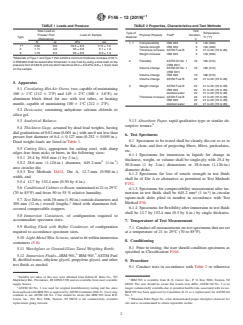
- Immersion in specified test fluids (such as IRM 901, IRM 903, ASTM Fuel B, distilled water, and others).
- Measurement of property changes: tensile strength, compressibility after softening, flexibility, weight, thickness, and volume.
- Standardized use of SI units, with inch-pound units provided for reference.
Laboratory and Reporting Requirements:
- Specifies equipment like circulating hot-air ovens, analytical balances, and thickness gauges.
- Calls for meticulous sample preparation and conditioning.
- Requires detailed documentation of material description, testing conditions, and results, enabling traceability and comparability.
Significance and Usage:
- Test results do not directly correlate with all service conditions due to possible variation in operational environments.
- Procedures are designed for material comparison and quality assessment, not for predicting in-service performance.
Applications
The ASTM F146-12(2019)e1 standard is widely utilized across industries where fluid sealing and chemical compatibility are critical, including:
- Automotive and Transportation: Evaluating gasket materials for engines, transmissions, and exhaust systems exposed to various oils, fuels, and coolants.
- Industrial Equipment: Assessing gasket performance in pumps, compressors, heat exchangers, and other fluid-handling systems.
- Chemical Processing: Selecting gasket materials for resistance to aggressive fluids in pipelines and processing vessels.
- Quality Assurance: Used by manufacturers and purchasers as a routine screening or comparative tool for incoming materials or finished gaskets.
- Material Development: Aids R&D teams in determining the fluid resistance of new gasket formulations before market introduction.
Related Standards
For comprehensive gasket and fluid resistance testing, this standard is often referenced alongside:
- ASTM F104: Classification System for Nonmetallic Gasket Materials
- ASTM D471: Rubber Property - Effect of Liquids (for vulcanized rubber)
- ASTM D3359: Test Methods for Rating Adhesion by Tape Test (for pre-treatment adhesion testing)
- ASTM F36: Compressibility and Recovery of Gasket Materials
- ASTM F147: Flexibility of Non-Metallic Gasket Materials
- ASTM F152: Tension Testing of Nonmetallic Gasket Materials
- ASTM E691: Practice for Conducting Interlaboratory Studies to Determine the Precision of a Test Method
Practical Value
By adopting ASTM F146-12(2019)e1, organizations gain:
- Standardized comparison: Ensuring that gasket materials meet consistent benchmarks for fluid resistance.
- Improved material selection: Facilitating the choice of gasket materials suitable for specific fluid environments.
- Enhanced reliability: Contributing to longer service life and reduced maintenance by selecting appropriate materials.
- Communication clarity: Enabling clearer agreements and documentation between material suppliers and purchasers.
Keywords: ASTM F146-12, fluid resistance, gasket materials, nonmetallic gaskets, immersion testing, compressibility, tensile strength, thickness change, oil resistance, coolant compatibility, weight change, material testing, ASTM International, MLS gaskets.
Get Certified
Connect with accredited certification bodies for this standard

Bureau Veritas Chile
Bureau Veritas certification services in Chile.
Bureau Veritas Peru
Bureau Veritas certification services in Peru.
BVQI Peru
Bureau Veritas certification in Peru.
Sponsored listings
Frequently Asked Questions
ASTM F146-12(2019)e1 is a standard published by ASTM International. Its full title is "Standard Test Methods for Fluid Resistance of Gasket Materials". This standard covers: SIGNIFICANCE AND USE 4.1 These test methods provide a standardized procedure to measure the effect of immersion in specified fluids under definite conditions of time and temperature. The results of these test methods are not intended to give any direct correlation with service conditions in view of the wide variations in temperature and special uses encountered in gasket applications. The specific test fluids and test conditions outlined were selected as typical for purposes of comparing different materials and can be used as a routine test when agreed upon between the purchaser and the manufacturer. SCOPE 1.1 These test methods cover the determination of the effect on physical properties of nonmetallic gasketing materials after immersion in test fluids. The types of materials covered are Type 1, Type 2, Type 3, and Type 7 as described in Classification F104. These test methods are not applicable to the testing of vulcanized rubber, a procedure that is described in Test Method D471. It is designed for testing specimens cut from gasketing materials or from finished articles of commerce. These test methods may also be used as a pre-treatment for Multi-Layer Steel, MLS, or Metal Layer Gasket materials adhesion testing per Test Methods D3359. The pre-treatment of MLS or Metal Layer Gasket materials pertains only as a pre-cursor to the adhesion test. Other physical property tests described in this standard are not applicable to MLS or Metal Layer Gasket materials. 1.2 The values stated in SI units are to be regarded as the standard. The inch-pound units in parentheses are for information only. 1.3 Refer to the current Material Safety Data Sheet (MSDS) and any precautionary labeling provided by the supplier of any materials referred to in these test methods. 1.4 This standard does not purport to address all of the safety concerns, if any, associated with its use. It is the responsibility of the user of this standard to establish appropriate safety, health, and environmental practices and determine the applicability of regulatory limitations prior to use. 1.5 This international standard was developed in accordance with internationally recognized principles on standardization established in the Decision on Principles for the Development of International Standards, Guides and Recommendations issued by the World Trade Organization Technical Barriers to Trade (TBT) Committee.
SIGNIFICANCE AND USE 4.1 These test methods provide a standardized procedure to measure the effect of immersion in specified fluids under definite conditions of time and temperature. The results of these test methods are not intended to give any direct correlation with service conditions in view of the wide variations in temperature and special uses encountered in gasket applications. The specific test fluids and test conditions outlined were selected as typical for purposes of comparing different materials and can be used as a routine test when agreed upon between the purchaser and the manufacturer. SCOPE 1.1 These test methods cover the determination of the effect on physical properties of nonmetallic gasketing materials after immersion in test fluids. The types of materials covered are Type 1, Type 2, Type 3, and Type 7 as described in Classification F104. These test methods are not applicable to the testing of vulcanized rubber, a procedure that is described in Test Method D471. It is designed for testing specimens cut from gasketing materials or from finished articles of commerce. These test methods may also be used as a pre-treatment for Multi-Layer Steel, MLS, or Metal Layer Gasket materials adhesion testing per Test Methods D3359. The pre-treatment of MLS or Metal Layer Gasket materials pertains only as a pre-cursor to the adhesion test. Other physical property tests described in this standard are not applicable to MLS or Metal Layer Gasket materials. 1.2 The values stated in SI units are to be regarded as the standard. The inch-pound units in parentheses are for information only. 1.3 Refer to the current Material Safety Data Sheet (MSDS) and any precautionary labeling provided by the supplier of any materials referred to in these test methods. 1.4 This standard does not purport to address all of the safety concerns, if any, associated with its use. It is the responsibility of the user of this standard to establish appropriate safety, health, and environmental practices and determine the applicability of regulatory limitations prior to use. 1.5 This international standard was developed in accordance with internationally recognized principles on standardization established in the Decision on Principles for the Development of International Standards, Guides and Recommendations issued by the World Trade Organization Technical Barriers to Trade (TBT) Committee.
ASTM F146-12(2019)e1 is classified under the following ICS (International Classification for Standards) categories: 23.100.60 - Filters, seals and contamination of fluids; 73.080 - Non-metalliferous minerals. The ICS classification helps identify the subject area and facilitates finding related standards.
ASTM F146-12(2019)e1 has the following relationships with other standards: It is inter standard links to ASTM F146-12, ASTM F152-95(2017), ASTM F147-87(2017), ASTM E691-13, ASTM E691-11, ASTM F104-11, ASTM F36-99(2009), ASTM F147-87(2009), ASTM F104-03(2009), ASTM D3359-09e1, ASTM F152-95(2009), ASTM E691-08, ASTM D3359-07, ASTM E691-05, ASTM F147-87(2003). Understanding these relationships helps ensure you are using the most current and applicable version of the standard.
ASTM F146-12(2019)e1 is available in PDF format for immediate download after purchase. The document can be added to your cart and obtained through the secure checkout process. Digital delivery ensures instant access to the complete standard document.
Standards Content (Sample)
This international standard was developed in accordance with internationally recognized principles on standardization established in the Decision on Principles for the
Development of International Standards, Guides and Recommendations issued by the World Trade Organization Technical Barriers to Trade (TBT) Committee.
´1
Designation: F146 − 12 (Reapproved 2019)
Standard Test Methods for
Fluid Resistance of Gasket Materials
ThisstandardisissuedunderthefixeddesignationF146;thenumberimmediatelyfollowingthedesignationindicatestheyearoforiginal
adoption or, in the case of revision, the year of last revision.Anumber in parentheses indicates the year of last reapproval.Asuperscript
epsilon (´) indicates an editorial change since the last revision or reapproval.
This standard has been approved for use by agencies of the U.S. Department of Defense.
ε NOTE—Editorial changes incorporated throughout in May 2019.
1. Scope 2. Referenced Documents
1.1 These test methods cover the determination of the effect 2.1 ASTM Standards:
on physical properties of nonmetallic gasketing materials after D412 Test Methods forVulcanized Rubber andThermoplas-
immersion in test fluids. The types of materials covered are tic Elastomers—Tension
Type 1, Type 2, Type 3, and Type 7 as described in Classifi- D471 Test Method for Rubber Property—Effect of Liquids
cation F104. These test methods are not applicable to the D3359 Test Methods for Rating Adhesion by Tape Test
testing of vulcanized rubber, a procedure that is described in E691 Practice for Conducting an Interlaboratory Study to
Test Method D471. It is designed for testing specimens cut Determine the Precision of a Test Method
from gasketing materials or from finished articles of com- F36 Test Method for Compressibility and Recovery of Gas-
merce. These test methods may also be used as a pre-treatment ket Materials
for Multi-Layer Steel, MLS, or Metal Layer Gasket materials F104 Classification System for Nonmetallic Gasket Materi-
adhesiontestingperTestMethodsD3359.Thepre-treatmentof als
MLS or Metal Layer Gasket materials pertains only as a F147 Test Method for Flexibility of Non-Metallic Gasket
pre-cursor to the adhesion test. Other physical property tests Materials
described in this standard are not applicable to MLS or Metal F152 Test Methods for Tension Testing of Nonmetallic
Layer Gasket materials. Gasket Materials
1.2 The values stated in SI units are to be regarded as the
3. Summary of Test Methods
standard. The inch-pound units in parentheses are for informa-
3.1 Appropriate test specimens are subjected to complete
tion only.
immersion in test fluids.After immersing the specimens in the
1.3 Refer to the current Material Safety Data Sheet (MSDS)
varioustestfluids,theeffectonphysicalpropertiesisexpressed
and any precautionary labeling provided by the supplier of any
as change in tensile strength, compressibility in softened
materials referred to in these test methods.
condition, flexibility, volume change, and thickness and weight
1.4 This standard does not purport to address all of the
changes from the original condition.
safety concerns, if any, associated with its use. It is the
4. Significance and Use
responsibility of the user of this standard to establish appro-
priate safety, health, and environmental practices and deter-
4.1 These test methods provide a standardized procedure to
mine the applicability of regulatory limitations prior to use.
measure the effect of immersion in specified fluids under
1.5 This international standard was developed in accor-
definite conditions of time and temperature. The results of
dance with internationally recognized principles on standard-
these test methods are not intended to give any direct correla-
ization established in the Decision on Principles for the
tion with service conditions in view of the wide variations in
Development of International Standards, Guides and Recom-
temperature and special uses encountered in gasket applica-
mendations issued by the World Trade Organization Technical
tions. The specific test fluids and test conditions outlined were
Barriers to Trade (TBT) Committee.
selected as typical for purposes of comparing different mate-
rials and can be used as a routine test when agreed upon
between the purchaser and the manufacturer.
These test methods are under the jurisdiction of ASTM Committee F03 on
Gaskets and are the direct responsibility of Subcommittee F03.40 on Chemical Test
Methods. For referenced ASTM standards, visit the ASTM website, www.astm.org, or
CurrenteditionapprovedMay1,2019.PublishedJuly2019.Originallyapproved contact ASTM Customer Service at service@astm.org. For Annual Book of ASTM
in1972.Lastpreviouseditionapprovedin2012asF146 – 12.DOI:10.1520/F0146- Standards volume information, refer to the standard’s Document Summary page on
12R19E01. the ASTM website.
Copyright © ASTM International, 100 Barr Harbor Drive, PO Box C700, West Conshohocken, PA 19428-2959. United States
´1
F146 − 12 (2019)
TABLE 1 Loads and Pressure TABLE 2 Properties, Characteristics and Test Methods
Total Load on Test
Type of Temperature,
Presser Foot Load on Sample Physical Property Fluid Duration,
Type Material °C (°F)
(Reference) h
N oz kPa psi
1, 7 Compressibility IRM 903 5 149 (300)
A
1 2.50 9.0 79.3 ± 6.9 11.5 ± 1.0
Tensile strength IRM 903 5 149 (300)
2 1.11 4.0 35 ± 6.9 5.1 ± 1.0
Thickness increase ASTM Fuel B 5 21 to 29 (70 to 85)
3 1.75 6.3 55 ± 6.9 8.0 ± 1.0
Weight increase IRM 903 5 149 (300)
A
MaterialsofType1andType7thatexhibitaminimumthicknessincreaseof35 %
2 Flexibility ASTM Oil No. 1 70 100 (212)
in IRM 903 shall be tested after immersion in any fluid by using a total load on the
(IRM 901)
pressurefootof0.83N(3.0oz)whichbecomes26.4±6.9-kPa(3.8±1.0-psi)load
Volume change ASTM Oil No. 1 70 100 (212)
on the sample.
(IRM 901)
Volume change IRM 903 70 100 (212)
Volume change ASTM Fuel B 22 21 to 29 (70 to 85)
5. Apparatus
3 Weight change ASTM Fuel B 22 21 to 29 (70 to 85)
5.1 Circulating-Hot-Air Ovens, two, capable of maintaining IRM 903 22 21 to 29 (70 to 85)
distilled water 22 21 to 29 (70 to 85)
100 6 1°C (212 6 2°F) and 149 6 2°C (300 6 3.6°F), or
Thickness increase ASTM Fuel B 22 21 to 29 (70 to 85)
aluminum block fitted for use with test tubes, or heating
IRM 903 22 21 to 29 (70 to 85)
mantle, capable of maintaining 100 6 1°C (212 6 2°F). distilled water 22 21 to 29 (70 to 85)
5.2 Desiccator, containing anhydrous calcium chloride or
silica gel.
5.13 Absorbent Paper, rapid qualitative-type or similar ab-
5.3 Analytical Balance.
sorptive texture.
5.4 Thickness Gage, actuated by dead load weights, having
dial graduations of 0.02 mm (0.001 in.) with anvil not less than
6. Test Specimens
presser foot diameter of 6.4 6 0.127 mm (0.252 6 0.005 in.).
6.1 Specimens to be tested shall be cleanly die-cut so as to
Dead weight loads are listed in Table 1.
be flat, clean, and free of projecting fibers, fillers, particulates,
5.5 Cutting Dies, appropriate for cutting steel, with sharp
etc.
edges free from nicks or burrs, in the following sizes:
6.1.1 Specimens for immersion in liquids for change in
5.5.1 25.4 by 50.8 mm (1 by 2 in.),
thickness, weight, or volume shall be single-ply with 25.4 by
2 2
5.5.2 28.6-mm (1.126-in.) diameter, 645.2-mm (1-in. )
50.8-mm (1 by 2-in.) dimensions or 28.6-mm (1.126-in.)
area circular die,
diameter disks.
5.5.3 Test Methods D412, Die A, 12.7-mm (0.500-in.)
6.1.2 Specimens for loss of tensile strength in test fluids
width, and
shall be of Die A or alternative as permitted in Test Methods
5.5.4 12.7 by 152.4 mm (0.50 by 6 in.).
F152.
5.6 ConditionedCabinetorRoom, maintained at 21 to 29°C
6.1.3 Specimens for compressibility measurement after im-
2 2
(70 to 85°F) and from 50 to 55 % relative humidity.
mersion in test fluids shall be 645.2 mm (1 in. ) in circular
square-inch disks plied in number in accordance with Test
5.7 TestTubes, with 38-mm (1.50-in.) outside diameters and
Method F36.
305-mm (12-in.) overall lengths, fitted with aluminum foil-
6.1.4 Specimens for flexibility after immersion in test fluids
covered compressible stoppers.
shall be 12.7 by 152.4 mm (0.5 by 6 in.) by single thickness.
5.8 Immersion Containers, of configuration required to
accommodate specimen sizes.
7. Temperature of Test Measurement
5.9 Boiling Flask with Reflux Condenser, of configuration
7.1 Conduct all measurements on test specimens that are set
required to accordance specimen sizes.
at a temperature of 21 to 29°C (70 to 85°F).
5.10 Light-MetalWireScreens,sizedtofitwithinimmersion
8. Conditioning
containers (5.8).
8.1 Prior to testing, the user should condition specimens as
5.11 Watchglass or Ground-Glass Tared Weighing Bottle.
specified in Classification F104.
4 5
5.12 Immersion Fluids—IRM 901, IRM 903, ASTM Fuel
B, distilled water, ethylene glycol, propylene glycol, and other
9. Procedure
test fluids as needed.
9.1 Conduct tests in accordance with Table 2 or otherwise
Suitable test tubes of this size were obtained from Edwin H. Benz Co., 703
Maplehurst Rd., Providence, RI 02908-5398 and are available from most scientific IRM 903 is available from R. E. Carrol, Inc., P. O. Box 5806, Trenton, NJ
supply houses. 08638. The user should be aware that results may differ. ASTM Oil No. 3 is no
ASTM Oil No. 1 was used for original interlaboratory testing and has since longer commercially available due to potential health risks associated with its use.
been replaced with IRM 901 as approved byASTM Committee D04-11. Users may IRM 903 has been approved by Committee D-11 as a replacement for ASTM Oil
continue to use ASTM Oil No. 1 but should be aware that IRM 901 from R.E. No. 3.
Carrol, Inc., P.O. Box 5806, Trenton, NJ 08638 is the commercially available Whatman Filter Paper No. 4 has demonstrated proper absorptive character for
replacement going forward. oils and is recommended to obtain repeatable results.
´1
F146 − 12 (2019)
agreed upon between the producer and the user. These test such information is not available, then the material should be
methods are applicable to ethylene glycol, propylene glycol, tested by itself in fresh fluid to determine compatibility with
commercial coolants and blends with water thereof (see Note said fluid.
1), distilled water, and other commercial oils and fuels. The
9.5 Compressibility After Immersion—After subjecting the
producer must be aware that different coolant mixtures may
specimens to immersion, test them in accordance with Test
yield different results.
Method F36, except the time to apply the major load shall be
between 5 and 10 s to avoid rupturing the test specimen.
NOTE 1—Coolant mixtures are typically tested under boiling reflux
conditions.
9.6 Tensile Strength After Immersion—After subjecting the
9.2 Thickness—Measure specimens with a thickness mea-
specimens to immersion in test fluid, test them in accordance
suringdeviceactuatedb
...
Questions, Comments and Discussion
Ask us and Technical Secretary will try to provide an answer. You can facilitate discussion about the standard in here.
Loading comments...