

ASTM D7666-12(2019)
(Specification)Standard Specification for Triglyceride Burner Fuel
General Information
- Abstract
ABSTRACT
This specification covers two grades of burner fuel consisting of triglycerides and naturally occurring constituents of triglycerides including monoglycerides, diglycerides, and free fatty acids and distinguished by the pour point. The triglyceride burner fuels, Grade TBF5 and Grade TBF6, are intended for use in commercial or industrial air or steam-atomized fuel oil burning equipment manufactured under various climatic and operating conditions for the purposes of heat generation. This specification describes the properties and limits for triglyceride burner fuels to provide acceptable performance in liquid fuel burning equipment. It also addresses significance and use, sample collection and handling, and properties that are those of greatest significance in obtaining acceptable performance of the burner. The requirements enumerated in this specification shall be determined in accordance with the following ASTM test methods except as noted: pour point (Test Method D97), flash point (Test Method D93, Procedure B, except when other methods may be prescribed by law), water and sediment (Test Method D1796), viscosity (Test Method D445), density (Test Methods D1298, D4052, D5355, or D7042), titer (Test Method D1982), acid number (Test Method D664), ash (Test Method D482), sulfur (Test Method D4294), insolubles (Grade TBF5 and Grade TBF6) (Test Method D128, Section 12, Method 1), and heating value (heat of combustion) (Test Method D240).
SCOPE
1.1 This specification covers two grades of burner fuel consisting of triglycerides and naturally occurring constituents of triglycerides including monoglycerides, diglycerides, and free fatty acids and distinguished by the pour point. The grade designation (TBF) identifies them as triglyceride burner fuels.
1.2 The triglyceride burner fuels specified are intended for use in commercial or industrial air or steam-atomized fuel oil burning equipment manufactured from materials compatible with fuels having an acid number as specified in Table 1 and under various climatic and operating conditions for the purposes of heat generation. The fuels specified herein are not intended for blending with conventional fuel oils for this purpose. They are not intended for use in burners 6 BTU/h) such as residential burners or small pressure atomization burners nor are they intended for use in internal combustion engines or marine applications.
Note 1: For information on the significance of the terminology and test methods used in this specification, see Appendix X1.
1.3 This specification does not address the frequency with which any particular test shall be run.
1.4 Nothing in this specification shall preclude observance of national or local regulations, which can be more restrictive.
1.5 The text of this standard references notes and footnotes that provide explanatory material and shall not be considered as requirements of the standard. The table in this standard references footnotes, and these are to be considered as requirements of the standard.
1.6 The values given in SI units are to be regarded as the standard. The values given in parentheses are for information only.
1.7 This standard does not purport to address all of the safety concerns, if any, associated with its use. It is the responsibility of the user of this standard to establish appropriate safety, health, and environmental practices and determine the applicability of regulatory limitations prior to use.
1.8 This international standard was developed in accordance with internationally recognized principles on standardization established in the Decision on Principles for the Development of International Standards, Guides and Recommendations issued by the World Trade Organization Technical Barriers to Trade (TBT) Committee.
- Status
- Published
- Publication Date
- 30-Nov-2019
- Technical Committee
- D02 - Petroleum Products, Liquid Fuels, and Lubricants
- Drafting Committee
- D02.P0 - Recycled Products
Overview
ASTM D7666-12(2019) is a standard specification developed by ASTM International for triglyceride burner fuel, commonly used in commercial and industrial burner applications. This specification establishes the requirements for two grades of burner fuels - Grade TBF5 and Grade TBF6 - both derived from triglycerides and their naturally occurring constituents, including monoglycerides, diglycerides, and free fatty acids. The standard ensures that triglyceride-based burner fuels provide acceptable performance in liquid fuel-burning equipment under various climate and operating conditions, primarily for heat generation.
This document is aimed at providing guidance for fuel suppliers, purchasers, equipment manufacturers, and regulators to ensure quality, consistency, and safety in the use of these alternative biofuels.
Key Topics
- Fuel Grades: Defines two grades - TBF5 and TBF6 - based on pour point temperature, which determines their suitability for specific storage and operating conditions.
- Composition: Specifies that fuels consist mainly of triglycerides, including recycled or unused cooking oils, greases, and rendered animal fats, along with monoglycerides, diglycerides, and free fatty acids.
- Intended Use: Designed for air- or steam-atomized fuel oil burning equipment in commercial and industrial settings for heat generation. Not intended for blending with conventional fuel oils, use in residential burners, small pressure atomization burners, internal combustion engines, or marine applications.
- Performance Properties: Enumerates essential fuel properties and corresponding ASTM test methods, such as pour point, flash point, water and sediment content, viscosity, density, titer, acid number, ash, sulfur, insolubles, and heating value.
- Sampling and Handling: Provides guidance on sample collection and handling to ensure representative test results and compliance with relevant safety and environmental guidelines.
Applications
Triglyceride burner fuels covered under ASTM D7666-12(2019) have critical applications in:
- Industrial Burners & Commercial Boilers: Used as a renewable alternative to petroleum-based burner fuels in systems with air- or steam-assisted atomization, such as industrial furnaces, kilns, and large-scale heating equipment.
- Waste Utilization: Enables the productive use of waste cooking oils, animal fats, and other recycled triglyceride-based materials as lower-emission biofuels for heat production.
- Regulatory Compliance: Provides a trading and evaluation standard that supports compliance with national and local emissions regulations concerning biofuels and alternative heating fuels.
- Operational Efficiency: Prescribes key fuel properties to ensure smooth operation, minimize maintenance issues, and prevent equipment fouling or corrosion.
Related Standards
Several ASTM and related standards support or are referenced by ASTM D7666-12(2019):
- ASTM D97: Test Method for Pour Point of Petroleum Products.
- ASTM D93: Flash Point by Pensky-Martens Closed Cup Tester.
- ASTM D1796: Water and Sediment in Fuel Oils by the Centrifuge Method.
- ASTM D445: Kinematic Viscosity of Transparent and Opaque Liquids.
- ASTM D1298: Density, Relative Density, or API Gravity of Petroleum Products by Hydrometer.
- ASTM D664: Acid Number of Petroleum Products by Potentiometric Titration.
- ASTM D482: Ash from Petroleum Products.
- ASTM D4294: Sulfur in Petroleum Products by X-ray Fluorescence.
- ASTM D240: Heat of Combustion of Liquid Hydrocarbon Fuels.
- ASTM D128: Analysis of Lubricating Grease – Method for Insolubles.
Additional references may include standards for sample preparation, handling, and additional testing relevant to biofuel and burner fuel applications.
Keywords: ASTM D7666, triglyceride burner fuel, Grade TBF5, Grade TBF6, biofuel specification, burner equipment fuel, recycled oil, waste cooking oil, animal fats, commercial boiler fuel, industrial burner fuel, alternative heating fuel, ASTM standards, liquid fuel testing.
Relations
- Effective Date
- 01-Dec-2019
- Effective Date
- 01-Apr-2024
- Refers
ASTM D4175-23a - Standard Terminology Relating to Petroleum Products, Liquid Fuels, and Lubricants - Effective Date
- 15-Dec-2023
- Effective Date
- 01-Nov-2023
- Effective Date
- 01-Oct-2023
- Refers
ASTM D4175-23e1 - Standard Terminology Relating to Petroleum Products, Liquid Fuels, and Lubricants - Effective Date
- 01-Jul-2023
- Effective Date
- 01-Aug-2020
- Effective Date
- 01-May-2020
- Effective Date
- 01-Sep-2019
- Effective Date
- 01-Jul-2019
- Effective Date
- 01-May-2019
- Effective Date
- 01-Apr-2019
- Effective Date
- 01-Apr-2018
- Effective Date
- 01-Apr-2018
- Effective Date
- 01-Jun-2017
Get Certified
Connect with accredited certification bodies for this standard

ECOCERT
Organic and sustainability certification.

Element Materials Technology
Materials testing and product certification.

ABS Group Brazil
ABS Group certification services in Brazil.
Sponsored listings
Frequently Asked Questions
ASTM D7666-12(2019) is a technical specification published by ASTM International. Its full title is "Standard Specification for Triglyceride Burner Fuel". This standard covers: ABSTRACT This specification covers two grades of burner fuel consisting of triglycerides and naturally occurring constituents of triglycerides including monoglycerides, diglycerides, and free fatty acids and distinguished by the pour point. The triglyceride burner fuels, Grade TBF5 and Grade TBF6, are intended for use in commercial or industrial air or steam-atomized fuel oil burning equipment manufactured under various climatic and operating conditions for the purposes of heat generation. This specification describes the properties and limits for triglyceride burner fuels to provide acceptable performance in liquid fuel burning equipment. It also addresses significance and use, sample collection and handling, and properties that are those of greatest significance in obtaining acceptable performance of the burner. The requirements enumerated in this specification shall be determined in accordance with the following ASTM test methods except as noted: pour point (Test Method D97), flash point (Test Method D93, Procedure B, except when other methods may be prescribed by law), water and sediment (Test Method D1796), viscosity (Test Method D445), density (Test Methods D1298, D4052, D5355, or D7042), titer (Test Method D1982), acid number (Test Method D664), ash (Test Method D482), sulfur (Test Method D4294), insolubles (Grade TBF5 and Grade TBF6) (Test Method D128, Section 12, Method 1), and heating value (heat of combustion) (Test Method D240). SCOPE 1.1 This specification covers two grades of burner fuel consisting of triglycerides and naturally occurring constituents of triglycerides including monoglycerides, diglycerides, and free fatty acids and distinguished by the pour point. The grade designation (TBF) identifies them as triglyceride burner fuels. 1.2 The triglyceride burner fuels specified are intended for use in commercial or industrial air or steam-atomized fuel oil burning equipment manufactured from materials compatible with fuels having an acid number as specified in Table 1 and under various climatic and operating conditions for the purposes of heat generation. The fuels specified herein are not intended for blending with conventional fuel oils for this purpose. They are not intended for use in burners 6 BTU/h) such as residential burners or small pressure atomization burners nor are they intended for use in internal combustion engines or marine applications. Note 1: For information on the significance of the terminology and test methods used in this specification, see Appendix X1. 1.3 This specification does not address the frequency with which any particular test shall be run. 1.4 Nothing in this specification shall preclude observance of national or local regulations, which can be more restrictive. 1.5 The text of this standard references notes and footnotes that provide explanatory material and shall not be considered as requirements of the standard. The table in this standard references footnotes, and these are to be considered as requirements of the standard. 1.6 The values given in SI units are to be regarded as the standard. The values given in parentheses are for information only. 1.7 This standard does not purport to address all of the safety concerns, if any, associated with its use. It is the responsibility of the user of this standard to establish appropriate safety, health, and environmental practices and determine the applicability of regulatory limitations prior to use. 1.8 This international standard was developed in accordance with internationally recognized principles on standardization established in the Decision on Principles for the Development of International Standards, Guides and Recommendations issued by the World Trade Organization Technical Barriers to Trade (TBT) Committee.
ABSTRACT This specification covers two grades of burner fuel consisting of triglycerides and naturally occurring constituents of triglycerides including monoglycerides, diglycerides, and free fatty acids and distinguished by the pour point. The triglyceride burner fuels, Grade TBF5 and Grade TBF6, are intended for use in commercial or industrial air or steam-atomized fuel oil burning equipment manufactured under various climatic and operating conditions for the purposes of heat generation. This specification describes the properties and limits for triglyceride burner fuels to provide acceptable performance in liquid fuel burning equipment. It also addresses significance and use, sample collection and handling, and properties that are those of greatest significance in obtaining acceptable performance of the burner. The requirements enumerated in this specification shall be determined in accordance with the following ASTM test methods except as noted: pour point (Test Method D97), flash point (Test Method D93, Procedure B, except when other methods may be prescribed by law), water and sediment (Test Method D1796), viscosity (Test Method D445), density (Test Methods D1298, D4052, D5355, or D7042), titer (Test Method D1982), acid number (Test Method D664), ash (Test Method D482), sulfur (Test Method D4294), insolubles (Grade TBF5 and Grade TBF6) (Test Method D128, Section 12, Method 1), and heating value (heat of combustion) (Test Method D240). SCOPE 1.1 This specification covers two grades of burner fuel consisting of triglycerides and naturally occurring constituents of triglycerides including monoglycerides, diglycerides, and free fatty acids and distinguished by the pour point. The grade designation (TBF) identifies them as triglyceride burner fuels. 1.2 The triglyceride burner fuels specified are intended for use in commercial or industrial air or steam-atomized fuel oil burning equipment manufactured from materials compatible with fuels having an acid number as specified in Table 1 and under various climatic and operating conditions for the purposes of heat generation. The fuels specified herein are not intended for blending with conventional fuel oils for this purpose. They are not intended for use in burners 6 BTU/h) such as residential burners or small pressure atomization burners nor are they intended for use in internal combustion engines or marine applications. Note 1: For information on the significance of the terminology and test methods used in this specification, see Appendix X1. 1.3 This specification does not address the frequency with which any particular test shall be run. 1.4 Nothing in this specification shall preclude observance of national or local regulations, which can be more restrictive. 1.5 The text of this standard references notes and footnotes that provide explanatory material and shall not be considered as requirements of the standard. The table in this standard references footnotes, and these are to be considered as requirements of the standard. 1.6 The values given in SI units are to be regarded as the standard. The values given in parentheses are for information only. 1.7 This standard does not purport to address all of the safety concerns, if any, associated with its use. It is the responsibility of the user of this standard to establish appropriate safety, health, and environmental practices and determine the applicability of regulatory limitations prior to use. 1.8 This international standard was developed in accordance with internationally recognized principles on standardization established in the Decision on Principles for the Development of International Standards, Guides and Recommendations issued by the World Trade Organization Technical Barriers to Trade (TBT) Committee.
ASTM D7666-12(2019) is classified under the following ICS (International Classification for Standards) categories: 71.080.60 - Alcohols. Ethers; 75.160.01 - Fuels in general. The ICS classification helps identify the subject area and facilitates finding related standards.
ASTM D7666-12(2019) has the following relationships with other standards: It is inter standard links to ASTM D7666-12, ASTM D445-24, ASTM D4175-23a, ASTM D445-23, ASTM D95-23, ASTM D4175-23e1, ASTM D93-20, ASTM D6892-03(2020), ASTM D5347-19a, ASTM D5453-19a, ASTM D3228-08(2019), ASTM D5347-19, ASTM D1266-18, ASTM D5185-18, ASTM D473-07(2017). Understanding these relationships helps ensure you are using the most current and applicable version of the standard.
ASTM D7666-12(2019) is available in PDF format for immediate download after purchase. The document can be added to your cart and obtained through the secure checkout process. Digital delivery ensures instant access to the complete standard document.
Standards Content (Sample)
This international standard was developed in accordance with internationally recognized principles on standardization established in the Decision on Principles for the
Development of International Standards, Guides and Recommendations issued by the World Trade Organization Technical Barriers to Trade (TBT) Committee.
Designation: D7666 −12 (Reapproved 2019)
Standard Specification for
Triglyceride Burner Fuel
This standard is issued under the fixed designation D7666; the number immediately following the designation indicates the year of
original adoption or, in the case of revision, the year of last revision.Anumber in parentheses indicates the year of last reapproval.A
superscript epsilon (´) indicates an editorial change since the last revision or reapproval.
1. Scope priate safety, health, and environmental practices and deter-
mine the applicability of regulatory limitations prior to use.
1.1 This specification covers two grades of burner fuel
1.8 This international standard was developed in accor-
consisting of triglycerides and naturally occurring constituents
dance with internationally recognized principles on standard-
of triglycerides including monoglycerides, diglycerides, and
ization established in the Decision on Principles for the
free fatty acids and distinguished by the pour point. The grade
Development of International Standards, Guides and Recom-
designation (TBF) identifies them as triglyceride burner fuels.
mendations issued by the World Trade Organization Technical
1.2 The triglyceride burner fuels specified are intended for
Barriers to Trade (TBT) Committee.
use in commercial or industrial air or steam-atomized fuel oil
burning equipment manufactured from materials compatible 2. Referenced Documents
with fuels having an acid number as specified in Table 1 and 2
2.1 ASTM Standards:
under various climatic and operating conditions for the pur-
D93Test Methods for Flash Point by Pensky-Martens
poses of heat generation. The fuels specified herein are not
Closed Cup Tester
intended for blending with conventional fuel oils for this
D95Test Method for Water in Petroleum Products and
purpose. They are not intended for use in burners <0.32GJ⁄h
Bituminous Materials by Distillation
(0.3×10 BTU⁄h)suchasresidentialburnersorsmallpressure
D97Test Method for Pour Point of Petroleum Products
atomization burners nor are they intended for use in internal
D128Test Methods for Analysis of Lubricating Grease
combustion engines or marine applications.
D240Test Method for Heat of Combustion of Liquid Hy-
drocarbon Fuels by Bomb Calorimeter
NOTE 1—For information on the significance of the terminology and
test methods used in this specification, see Appendix X1. D445Test Method for Kinematic Viscosity of Transparent
and Opaque Liquids (and Calculation of DynamicViscos-
1.3 This specification does not address the frequency with
ity)
which any particular test shall be run.
D473TestMethodforSedimentinCrudeOilsandFuelOils
1.4 Nothing in this specification shall preclude observance
by the Extraction Method
of national or local regulations, which can be more restrictive.
D482Test Method for Ash from Petroleum Products
D664Test Method for Acid Number of Petroleum Products
1.5 The text of this standard references notes and footnotes
by Potentiometric Titration
that provide explanatory material and shall not be considered
D974Test Method for Acid and Base Number by Color-
as requirements of the standard. The table in this standard
Indicator Titration
references footnotes, and these are to be considered as require-
D1266TestMethodforSulfurinPetroleumProducts(Lamp
ments of the standard.
Method)
1.6 The values given in SI units are to be regarded as the
D1298Test Method for Density, Relative Density, or API
standard. The values given in parentheses are for information
Gravity of Crude Petroleum and Liquid Petroleum Prod-
only.
ucts by Hydrometer Method
1.7 This standard does not purport to address all of the
D1552Test Method for Sulfur in Petroleum Products by
safety concerns, if any, associated with its use. It is the
High Temperature Combustion and Infrared (IR) Detec-
responsibility of the user of this standard to establish appro-
tion or Thermal Conductivity Detection (TCD)
D1796Test Method for Water and Sediment in Fuel Oils by
the Centrifuge Method (Laboratory Procedure)
This specification is under the jurisdiction of ASTM Committee D02 on
Petroleum Products, Liquid Fuels, and Lubricants and is the direct responsibility of
Subcommittee D02.P0 on Recycled Products. For referenced ASTM standards, visit the ASTM website, www.astm.org, or
Current edition approved Dec. 1, 2019. Published December 2019. Originally contact ASTM Customer Service at service@astm.org. For Annual Book of ASTM
approved in 2012. Last previous edition approved in 2012 as D7666–12. DOI: Standards volume information, refer to the standard’s Document Summary page on
10.1520/D7666-12R19. the ASTM website.
Copyright © ASTM International, 100 Barr Harbor Drive, PO Box C700, West Conshohocken, PA 19428-2959. United States
D7666 − 12 (2019)
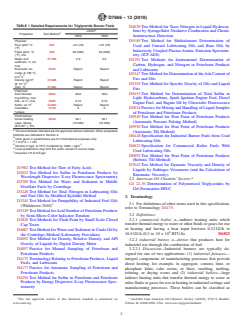
TABLE 1 Detailed Requirements for Triglyceride Burner Fuels
D4629Test Method for Trace Nitrogen in Liquid Hydrocar-
B
Limits bons by Syringe/Inlet Oxidative Combustion and Chemi-
A
Properties Test Method
TBF5 TBF6 luminescence Detection
Physical: D5185Test Method for Multielement Determination of
Pour point °C D97 <21 (70) $21 (70)
Used and Unused Lubricating Oils and Base Oils by
(°F)
Inductively Coupled Plasma Atomic Emission Spectrom-
Flash point, °C D93 93 (200) 93 (200)
(°F), min etry (ICP-AES)
Water and D1796 2.0 2.0
D5291Test Methods for Instrumental Determination of
sediment, % vol,
Carbon, Hydrogen, and Nitrogen in Petroleum Products
max
Kinematic vis- D445 Report Report
and Lubricants
cosity at 100 °C,
D5347TestMethodforDeterminationoftheAshContentof
2 C
mm /s
Fats and Oils
Density, kg/m D1298 Report Report
D
@15°C
D5355Test Method for Specific Gravity of Oils and Liquid
Titer, °C D1982 Report Report
Fats
Chemical:
D5453Test Method for Determination of Total Sulfur in
Acid Number, D664 30.0 30.0
mg KOH/g, max
Light Hydrocarbons, Spark Ignition Engine Fuel, Diesel
Ash, wt %, max D482 0.15 0.15
Engine Fuel, and Engine Oil by Ultraviolet Fluorescence
E
Sulfur, wt % D4294 Report Report
D5854Practice for Mixing and Handling of Liquid Samples
Insolubles, D128 22
%mass
of Petroleum and Petroleum Products
Performance:
D5949Test Method for Pour Point of Petroleum Products
Gross heating D240 36.1 36.1
(Automatic Pressure Pulsing Method)
value, MJ/kg (15 500) (15 500)
F
(BTU/lb ), min
D5950Test Method for Pour Point of Petroleum Products
A
The test methods indicated are the approved referee methods. Other acceptable
(Automatic Tilt Method)
methods are indicated in Section 8.
D6448Specification for Industrial Burner Fuels from Used
B
Units given in parentheses are for informational purposes only.
C 2
Lubricating Oils
1mm /s=1cSt.
D 3
Density in kg/L at 15°C multiplied by 1000 = kg/m .
D6823Specification for Commercial Boiler Fuels With
E
Local jurisdictions may limit the sulfur content in burner fuels.
Used Lubricating Oils
F
Assumes 7.6 lb ⁄US gal.
D6892Test Method for Pour Point of Petroleum Products
(Robotic Tilt Method)
D7042Test Method for Dynamic Viscosity and Density of
D1982Test Method for Titer of Fatty Acids
Liquids by Stabinger Viscometer (and the Calculation of
D2622Test Method for Sulfur in Petroleum Products by
Kinematic Viscosity)
Wavelength Dispersive X-ray Fluorescence Spectrometry 4
2.2 American Oil Chemists’ Society:
D2709Test Method for Water and Sediment in Middle
Cd 22–91Determination of Polymerized Triglycerides by
Distillate Fuels by Centrifuge
Gel-Permeation HPLC
D3228Test Method for Total Nitrogen in Lubricating Oils
and Fuel Oils by Modified Kjeldahl Method
3. Terminology
D3245Test Method for Pumpability of Industrial Fuel Oils
3.1 For definitions of other terms used in this specification,
(Withdrawn 2010)
refer to Terminology D4175.
D3339TestMethodforAcidNumberofPetroleumProducts
3.2 Definitions:
by Semi-Micro Color Indicator Titration
3.2.1 commercial boiler, n—indirect heating units which
D3828Test Methods for Flash Point by Small Scale Closed
transferthermalenergytowaterorotherfluidsorgasesforuse
Cup Tester
in heating and having a heat input between 0.32GJ⁄h to
D4007TestMethodforWaterandSedimentinCrudeOilby
10.5GJ⁄h (0.3 to 10 × 10 BTU⁄h). D6823
the Centrifuge Method (Laboratory Procedure)
D4052Test Method for Density, Relative Density, and API
3.2.2 industrial burner, n—device that produces heat for
Gravity of Liquids by Digital Density Meter
industrial use through the combustion of fuel.
D4057Practice for Manual Sampling of Petroleum and
3.2.2.1 Discussion—Industrial burners are typically de-
Petroleum Products
signed for one of two applications: (1) industrial furnaces—
D4175Terminology Relating to Petroleum Products, Liquid
integral components of manufacturing processes that provide
Fuels, and Lubricants
direct heating; for example, in aggregate, cement, lime, or
D4177Practice for Automatic Sampling of Petroleum and
phosphate kilns; coke ovens; or blast, smelting, melting,
Petroleum Products
refining, or drying ovens and (2) industrial boilers—large
D4294Test Method for Sulfur in Petroleum and Petroleum
indirect heating units that transfer thermal energy to water or
Products by Energy Dispersive X-ray Fluorescence Spec-
otherfluidsorgasesforuseinheatinginindustrialsettingsand
trometry
manufacturing processes. These boilers can be classified as
3 4
The last approved version of this historical standard is referenced on Available from American Oil Chemists’ Society (AOCS), 2710 S. Boulder,
www.astm.org. Urbana, IL 61802-6996, USA. www.aocs.org/goto/methods/
D7666 − 12 (2019)
utility/large industrial boilers with a heat input greater than satisfactoryatomization.Theextraequipmentandmaintenance
105GJ⁄h (100×10 BTU⁄h) or small industrial boilers with a requiredtohandlethisfuelgrademayprecludeitsuseinsmall
heat input of between 10.5 GJ⁄h to 105 GJ⁄h or unattended installations, or both.
(10to100×10 BTU⁄h). D6448
5.4 Triglycerideburnerfuelsshallremainhomogeneousand
3.3 Definitions of Terms Specific to This Standard: uniform in storage and shall not separate by gravity or aging
3.3.1 triglyceride burner fuel, n—anytriglyceride,including into layers under normal operating conditions.
recycled and unused cooking oil, greases, animal fats, and
NOTE 3—Prolonged storage or equipment downtime may necessitate
naturally occurring constituents of triglycerides including
circulation of the fuel oil in tank to prevent such separation.
monoglycerides, diglycerides, and free fatty acids, suitable for
5.5 The triglyceride burner fuel shall be free of solid or
the generation of heat by combustion in a furnace or firebox as
fibrousmatterthatcouldcausesystemhandlingormaintenance
a vapor or a spray or a combination of both with little or no
problems.
preconditioning other than preheating.
6. Sample Collection and Handling
4. Significance and Use
6.1 Inspection of the material shall be agreed upon between
4.1 This specification specifies the properties and limits for
the purchaser and the supplier as part of the purchase order or
triglyceride burner fuels to provide acceptable performance in
contract.
liquid fuel burning equipment. It is for use in contracts for the
6.2 Unlessotherwisespecified,takearepresentativesample
purchase of triglyceride burner fuels and for the guidance of
in accordance with Practice D4057, D4177 or other compa-
consumers of such fuels. It may also be used by third-party
rable sampling practices using a clean and appropriate sample
testing agencies in evaluating burner equipment for the pur-
container.Containerspreviouslyholdingasampleoranyother
poses of verifying performance and safety of the oil-burning
type of fluid are not considered appropriate containers.
appliances and by regulators of such fuel and equipment use.
NOTE 4—In case of dispute, Practice D4057 is recommended as the
5. Requirements
referee method.
5.1 The triglyceride burner fuels shall be homogeneous,
6.3 Aminimumsamplesizeof1Lisrecommendedforeach
consisting primarily of triglycerides and naturally occurring
sample taken before compositing.
constituents of triglycerides and shall conform to the limiting
6.4 Sample handling and mixing shall comply with Practice
requirements in Table 1.
D5854.
5.2 Buyer and seller may agree to modifications of limiting
requirementstomeetspecialoperatingconditionsprovidedthe
7. Test Properties
modificationsfallwithinthelimitsspecifiedinTable1foreach
7.1 The properties listed in this specification are those of
grade.
greatest significance in obtaining acceptable performance of
NOTE 2—The grades specified may or may not correlate directly with
the burner.
similar grades in other ASTM standards. The usage descriptions of each
NOTE 5—See X1.4 for the significance of test requirements.
grade may not describe all the uses but are included as general informa-
tion.
8. Test Methods
5.3 The triglyceride burner fuel grades are described as
8.1 The requirements enumerated in this specification shall
follows:
be determined in accordance with the following ASTM test
5.3.1 Grade TBF5—Aburnerfuelcomprisedofcommercial
methods except as noted:
recycledandunusedcookingoils,greasesandrenderedanimal
8.1.1 Pour Point—Test Method D97. Test Methods D5949,
fats having a pour point below 21°C in accordance with Test
D5950,or D6892 may alternatively be used with the same
Method D97. The requirements for this type of triglyceride
limits.Incaseofdispute,TestMethodD97shallbeusedasthe
burner fuel are presented in Table 1.This grade is intended for
referee method.
useinindustrialburnersandcommercialboilersequippedwith
8.1.2 Flash Point—Test Method D93, Procedure B, except
devices that use steam or compressed air to atomize fuel oil of
when other methods may be prescribed by law. For both
higherviscosity.Preheatingmaybenecessaryinsometypesof
grades,Test Method D3828 may alternatively be used with the
equipment for burning this fuel and in colder climates for ease
samelimits.Incaseofdispute,TestMethodD93,ProcedureB,
of handling.
shall be used as the referee method.
5.3.2 Grade TBF6—Aburnerfuelcomprisedofcommercial
8.1.3 Water and Sediment—TestMethodD1796.TestMeth-
recycledandunusedcookingoils,greasesandrenderedanimal
ods D2709 or D4007 may be used with the same limit. For
fats having a pour point equal to, or higher than, 21°C in
non-emulsifiedsamples,TestMethodsD95andD473mayalso
accordance with Test Method D97. The requirements for this
be used with the same limits. In case of dispute, Test Method
type of triglyceride burner fuel are presented in Table 1. This
D1796 shall be the referee method.
grade is intended for use in industrial burners and commercial
8.1.4 Viscosity—Test Method D445. For quality control,
boilersequippedwithdevicesthatusesteamorcompressedair
dynamic viscosity by Test Method D7042 may be used.
to atomize fuel oil of higher viscosity. The use of this grade
may require preheating in the storage tank to permit pumping.
NOTE 6—Information on the significance of viscosity and viscosity
Additionalpreheatingattheburnermaybenecessarytopermit ranges of triglyceride fuels and details for converting dynamic viscosity
D7666 − 12 (2019)
test results to kinematic viscosity may be found in X1.4.4.4.
8.1.11 Heating Value (Heat of Combustion)—Test Method
D240.
8.1.5 Density—Test Methods D1298, D4052, D5355,or
D7042.
8.2 One or more of the parameters listed in Table 1 may be
8.1.6 Titer—Test Method D1982.
usedasanindicatoroftheneedformoreextensivetesting.For
8.1.7 Acid Number—Test Method D664. Test Methods
example, a borderline flash point may be indicative of con-
D974orD3339maybeusedwiththesamelimits.TestMethod
tamination with low flash point material such as methanol or
D664 shall be used as the referee test method.
gasoline.
8.1.8 Ash—Test Method D482. Test Method D5347 may be
usedwiththesamelimits.Incaseofdispute,D482shallbethe
9. Keywords
referee method.
9.1 biofuel; boiler; cooking oil; crude glycerin; fats; fatty
8.1.9 Sulfur—TestMethodD4294.Alternatively,TestMeth-
acid; fuel; glycerin; heating fuel; industrial burner; recycled
odsD1266,D1552,D2622,D5185orD5453maybeusedwith
the same limits. oil; rendered animal fat; TBF; triglyceride; triglyceride fuel;
used fuel; used oil; used vegetable oil; vegetable oil; yellow
8.1.10 Insolubles (Grade TBF5 and Grade TBF6)—Test
Method D128, Section 12, Method 1. grease
APPENDIX
(Nonmandatory Information)
X1. SIGNIFICANCE OF ASTM SPECIFICATION FOR TRIGLYCERIDE BURNER FUELS
X1.1 Rationale X1.3 Terminology
X1.3.1 The following definitions are intended to be helpful
X1.1.1 This specification is the result of a request from the
inunderstandingsomeofthebasicterminologyassociatedwith
Used Oil Management Association (a United States trade
triglycer
...