

ASTM D5950-14(2020)
(Test Method)Standard Test Method for Pour Point of Petroleum Products (Automatic Tilt Method)
General Information
- Abstract
SIGNIFICANCE AND USE
5.1 The pour point of a petroleum product is an index of the lowest temperature of its utility for certain applications. Flow characteristics, like pour point, can be critical for the correct operation of lubricating oil systems, fuel systems, and pipeline operations.
5.2 Petroleum blending operations require precise measurement of the pour point.
5.3 This test method can determine the pour point of the test specimen with a resolution of 1.0 °C.
5.4 Test results from this test method can be determined at either 1 °C or 3 °C intervals.
5.5 This test method yields a pour point in a format similar to Test Method D97/IP15 when the 3 °C interval results are reported.
Note 3: Since some users may wish to report their results in a format similar to Test Method D97 (in 3 °C intervals) the precisions were derived for the temperatures rounded to the 3 °C intervals. For statements on bias relative to Test Method D97, see 13.3.
5.6 This test method has better repeatability and reproducibility relative to Test Method D97/IP15 as measured in the 1998 interlaboratory test program. (See Section 13.)
SCOPE
1.1 This test method covers the determination of pour point of petroleum products by an automatic instrument that tilts the test jar during cooling and detects movement of the surface of the test specimen with an optical device.
1.2 This test method is designed to cover the range of temperatures from −66 °C to +51 °C; however, the range of temperatures included in the 1992 interlaboratory test program only covered the temperature range from −39 °C to +6 °C, and the range of temperatures included in the 1998 interlaboratory test program was −51 °C to −11 °C. (See Section 13.)
1.3 Test results from this test method can be determined at 1 °C or 3 °C intervals.
1.4 This test method is not intended for use with crude oils.
Note 1: The applicability of this test method on residual fuel samples has not been verified. For further information on applicability, refer to 13.4.
1.5 The values stated in SI units are to be regarded as standard. No other units of measurement are included in this standard.
1.6 This standard does not purport to address all of the safety concerns, if any, associated with its use. It is the responsibility of the user of this standard to establish appropriate safety, health, and environmental practices and determine the applicability of regulatory limitations prior to use.
1.7 This international standard was developed in accordance with internationally recognized principles on standardization established in the Decision on Principles for the Development of International Standards, Guides and Recommendations issued by the World Trade Organization Technical Barriers to Trade (TBT) Committee.
- Status
- Published
- Publication Date
- 30-Apr-2020
- Technical Committee
- D02 - Petroleum Products, Liquid Fuels, and Lubricants
- Drafting Committee
- D02.07 - Flow Properties
Overview
ASTM D5950-14(2020) - Standard Test Method for Pour Point of Petroleum Products (Automatic Tilt Method) is an important standard developed by ASTM International. This method provides a precise procedure for determining the pour point-the lowest temperature at which movement of petroleum products is detected-using an automatic instrument that tilts the test jar and uses optical detection. Accurate pour point measurement is crucial for the use and formulation of lubricants, diesel fuels, base oils, and other petroleum products in cold environments.
The method offers high repeatability and reproducibility and provides results in either 1 °C or 3 °C intervals, addressing the needs of both automated and conventional reporting formats. The pour point is a vital index that directly impacts operational reliability in petroleum product applications.
Key Topics
Purpose and Significance
- Enables determination of the minimum temperature at which petroleum products can flow, making it a key criterion for product usability in various climates.
- Essential for blending operations and quality control in the manufacture of lubricating oils, fuels, and other refined products.
- Offers improved repeatability and reproducibility compared to traditional manual methods (e.g., ASTM D97/IP 15).
Scope and Applicability
- Applicable for petroleum products excluding crude oils; not validated for residual fuels.
- Covers a temperature range from −66 °C to +51 °C, addressing requirements for a wide spectrum of applications.
- Test is conducted using an automatic tilt apparatus with optical motion detection, reducing operator variability.
Testing Intervals and Reporting
- Results can be reported at 1 °C or 3 °C intervals, allowing harmonization with established methods.
- Results at 3 °C intervals provide direct comparability with ASTM D97/IP 15.
- Repeatability and reproducibility statistics support reliability for interlaboratory comparisons.
Applications
The ASTM D5950 automatic tilt method is widely used across the petroleum industry for:
Product Formulation and Blending
- Ensures that base oils and blending components meet flow property requirements in end-use conditions.
- Provides precise data for blend optimization, especially for low-temperature performance.
Quality Control in Lubricant and Fuel Production
- Critical for certifying that finished lubricants, hydraulic fluids, and diesel fuels comply with low-temperature flow specifications.
- Facilitates batch release and regulatory compliance in manufacturing settings.
Pipeline and Storage Operations
- Ensures that products remain pumpable and transferrable at expected storage and transportation temperatures, minimizing operational risks.
Research and Development
- Supports the development of new products with enhanced low-temperature properties.
- Enables benchmarking against industry standards and competitor products.
Related Standards
This method is closely connected to other key standards for petroleum product testing:
- ASTM D97 – Standard Test Method for Pour Point of Petroleum Products (manual method).
- ASTM D4057 – Practice for Manual Sampling of Petroleum and Petroleum Products.
- ASTM D4177 – Practice for Automatic Sampling of Petroleum and Petroleum Products.
- IP 15 – Pour Point of Petroleum Products (Energy Institute standard; similar manual method).
- ASTM D6708 – Practice for Statistical Assessment and Improvement of Expected Agreement Between Two Test Methods.
Using ASTM D5950 enables laboratories and manufacturers to streamline pour point testing, benefit from automated precision, and comply with international requirements, ensuring consistent product quality and performance in cold environments.
Keywords: ASTM D5950, automatic tilt method, pour point, petroleum products, lubricating oil, diesel fuel, low temperature flow, quality control, standard test method.
Relations
- Effective Date
- 01-Mar-2024
- Effective Date
- 01-May-2019
- Effective Date
- 01-Apr-2018
- Effective Date
- 01-Apr-2016
- Effective Date
- 01-Jan-2016
- Effective Date
- 01-Jul-2015
- Effective Date
- 01-May-2013
- Effective Date
- 01-Dec-2012
- Effective Date
- 01-Jun-2011
- Refers
ASTM D4057-06(2011) - Standard Practice for Manual Sampling of Petroleum and Petroleum Products - Effective Date
- 01-Jun-2011
- Effective Date
- 15-Apr-2009
- Effective Date
- 15-Dec-2008
- Effective Date
- 01-Sep-2008
- Effective Date
- 01-Dec-2007
- Effective Date
- 15-Nov-2007
Get Certified
Connect with accredited certification bodies for this standard

Element Materials Technology
Materials testing and product certification.

ABS Group Brazil
ABS Group certification services in Brazil.

ABS Quality Evaluations Inc.
American Bureau of Shipping quality certification.
Sponsored listings
Frequently Asked Questions
ASTM D5950-14(2020) is a standard published by ASTM International. Its full title is "Standard Test Method for Pour Point of Petroleum Products (Automatic Tilt Method)". This standard covers: SIGNIFICANCE AND USE 5.1 The pour point of a petroleum product is an index of the lowest temperature of its utility for certain applications. Flow characteristics, like pour point, can be critical for the correct operation of lubricating oil systems, fuel systems, and pipeline operations. 5.2 Petroleum blending operations require precise measurement of the pour point. 5.3 This test method can determine the pour point of the test specimen with a resolution of 1.0 °C. 5.4 Test results from this test method can be determined at either 1 °C or 3 °C intervals. 5.5 This test method yields a pour point in a format similar to Test Method D97/IP15 when the 3 °C interval results are reported. Note 3: Since some users may wish to report their results in a format similar to Test Method D97 (in 3 °C intervals) the precisions were derived for the temperatures rounded to the 3 °C intervals. For statements on bias relative to Test Method D97, see 13.3. 5.6 This test method has better repeatability and reproducibility relative to Test Method D97/IP15 as measured in the 1998 interlaboratory test program. (See Section 13.) SCOPE 1.1 This test method covers the determination of pour point of petroleum products by an automatic instrument that tilts the test jar during cooling and detects movement of the surface of the test specimen with an optical device. 1.2 This test method is designed to cover the range of temperatures from −66 °C to +51 °C; however, the range of temperatures included in the 1992 interlaboratory test program only covered the temperature range from −39 °C to +6 °C, and the range of temperatures included in the 1998 interlaboratory test program was −51 °C to −11 °C. (See Section 13.) 1.3 Test results from this test method can be determined at 1 °C or 3 °C intervals. 1.4 This test method is not intended for use with crude oils. Note 1: The applicability of this test method on residual fuel samples has not been verified. For further information on applicability, refer to 13.4. 1.5 The values stated in SI units are to be regarded as standard. No other units of measurement are included in this standard. 1.6 This standard does not purport to address all of the safety concerns, if any, associated with its use. It is the responsibility of the user of this standard to establish appropriate safety, health, and environmental practices and determine the applicability of regulatory limitations prior to use. 1.7 This international standard was developed in accordance with internationally recognized principles on standardization established in the Decision on Principles for the Development of International Standards, Guides and Recommendations issued by the World Trade Organization Technical Barriers to Trade (TBT) Committee.
SIGNIFICANCE AND USE 5.1 The pour point of a petroleum product is an index of the lowest temperature of its utility for certain applications. Flow characteristics, like pour point, can be critical for the correct operation of lubricating oil systems, fuel systems, and pipeline operations. 5.2 Petroleum blending operations require precise measurement of the pour point. 5.3 This test method can determine the pour point of the test specimen with a resolution of 1.0 °C. 5.4 Test results from this test method can be determined at either 1 °C or 3 °C intervals. 5.5 This test method yields a pour point in a format similar to Test Method D97/IP15 when the 3 °C interval results are reported. Note 3: Since some users may wish to report their results in a format similar to Test Method D97 (in 3 °C intervals) the precisions were derived for the temperatures rounded to the 3 °C intervals. For statements on bias relative to Test Method D97, see 13.3. 5.6 This test method has better repeatability and reproducibility relative to Test Method D97/IP15 as measured in the 1998 interlaboratory test program. (See Section 13.) SCOPE 1.1 This test method covers the determination of pour point of petroleum products by an automatic instrument that tilts the test jar during cooling and detects movement of the surface of the test specimen with an optical device. 1.2 This test method is designed to cover the range of temperatures from −66 °C to +51 °C; however, the range of temperatures included in the 1992 interlaboratory test program only covered the temperature range from −39 °C to +6 °C, and the range of temperatures included in the 1998 interlaboratory test program was −51 °C to −11 °C. (See Section 13.) 1.3 Test results from this test method can be determined at 1 °C or 3 °C intervals. 1.4 This test method is not intended for use with crude oils. Note 1: The applicability of this test method on residual fuel samples has not been verified. For further information on applicability, refer to 13.4. 1.5 The values stated in SI units are to be regarded as standard. No other units of measurement are included in this standard. 1.6 This standard does not purport to address all of the safety concerns, if any, associated with its use. It is the responsibility of the user of this standard to establish appropriate safety, health, and environmental practices and determine the applicability of regulatory limitations prior to use. 1.7 This international standard was developed in accordance with internationally recognized principles on standardization established in the Decision on Principles for the Development of International Standards, Guides and Recommendations issued by the World Trade Organization Technical Barriers to Trade (TBT) Committee.
ASTM D5950-14(2020) is classified under the following ICS (International Classification for Standards) categories: 75.080 - Petroleum products in general. The ICS classification helps identify the subject area and facilitates finding related standards.
ASTM D5950-14(2020) has the following relationships with other standards: It is inter standard links to ASTM D6708-24, ASTM D6708-19, ASTM D6708-18, ASTM D6708-16a, ASTM D6708-16, ASTM D6708-15, ASTM D6708-13e1, ASTM D97-12, ASTM D97-11, ASTM D4057-06(2011), ASTM D97-09, ASTM D6708-08, ASTM D97-08, ASTM D97-07, ASTM D6708-07. Understanding these relationships helps ensure you are using the most current and applicable version of the standard.
ASTM D5950-14(2020) is available in PDF format for immediate download after purchase. The document can be added to your cart and obtained through the secure checkout process. Digital delivery ensures instant access to the complete standard document.
Standards Content (Sample)
This international standard was developed in accordance with internationally recognized principles on standardization established in the Decision on Principles for the
Development of International Standards, Guides and Recommendations issued by the World Trade Organization Technical Barriers to Trade (TBT) Committee.
Designation: D5950 −14 (Reapproved 2020)
Standard Test Method for
Pour Point of Petroleum Products (Automatic Tilt Method)
This standard is issued under the fixed designation D5950; the number immediately following the designation indicates the year of
original adoption or, in the case of revision, the year of last revision.Anumber in parentheses indicates the year of last reapproval.A
superscript epsilon (´) indicates an editorial change since the last revision or reapproval.
INTRODUCTION
This test method covers an alternative procedure for the determination of pour point of petroleum
products using an automatic apparatus.
1. Scope 2. Referenced Documents
1.1 This test method covers the determination of pour point
2.1 ASTM Standards:
of petroleum products by an automatic instrument that tilts the
D97Test Method for Pour Point of Petroleum Products
test jar during cooling and detects movement of the surface of
D4057Practice for Manual Sampling of Petroleum and
the test specimen with an optical device.
Petroleum Products
D4177Practice for Automatic Sampling of Petroleum and
1.2 This test method is designed to cover the range of
Petroleum Products
temperatures from −66°C to +51°C; however, the range of
D6708Practice for StatisticalAssessment and Improvement
temperatures included in the 1992 interlaboratory test program
of Expected Agreement Between Two Test Methods that
only covered the temperature range from −39°C to +6°C, and
Purport to Measure the Same Property of a Material
the range of temperatures included in the 1998 interlaboratory
test program was −51°C to −11°C. (See Section 13.)
2.2 Energy Institute Standard:
IP15Test Method for Pour Point of Petroleum Products
1.3 Test results from this test method can be determined at
1°C or 3°C intervals.
3. Terminology
1.4 This test method is not intended for use with crude oils.
3.1 Definitions:
NOTE 1—The applicability of this test method on residual fuel samples
3.1.1 pour point, n—in petroleum products, the lowest
has not been verified. For further information on applicability, refer to
temperature at which movement of the test specimen is
13.4.
observed under the prescribed conditions of this test method.
1.5 The values stated in SI units are to be regarded as
standard. No other units of measurement are included in this 3.2 Definitions of Terms Specific to This Standard:
standard.
3.2.1 no-flow point, n—in petroleum products, the tempera-
ture of the test specimen at which a wax crystal structure or
1.6 This standard does not purport to address all of the
viscosity increase, or both, impedes movement of the surface
safety concerns, if any, associated with its use. It is the
of the test specimen under the conditions of the test.
responsibility of the user of this standard to establish appro-
priate safety, health, and environmental practices and deter-
3.2.1.1 Discussion—The no-flow point occurs when, upon
mine the applicability of regulatory limitations prior to use.
cooling,theformationofwaxcrystalstructuresortheviscosity
1.7 This international standard was developed in accor-
increase,orboth,hasprogressedtothepointwheretheapplied
dance with internationally recognized principles on standard-
observation device no longer detects movement under the
ization established in the Decision on Principles for the
conditions of the test. The preceding observation temperature,
Development of International Standards, Guides and Recom-
at which flow of the test specimen is last observed, is the pour
mendations issued by the World Trade Organization Technical
point.
Barriers to Trade (TBT) Committee.
1 2
This test method is under the jurisdiction of ASTM Committee D02 on For referenced ASTM standards, visit the ASTM website, www.astm.org, or
Petroleum Products, Liquid Fuels, and Lubricants and is the direct responsibility of contact ASTM Customer Service at service@astm.org. For Annual Book of ASTM
Subcommittee D02.07 on Flow Properties. Standards volume information, refer to the standard’s Document Summary page on
Current edition approved May 1, 2020. Published June 2020. Originally the ASTM website.
approved in 1996. Last previous edition approved in 2014 as D5950–14. DOI: Available from Energy Institute, 61 New Cavendish St., London, WIG 7AR,
10.1520/D5950-14R20. U.K., http://www.energyinst.org.uk.
Copyright © ASTM International, 100 Barr Harbor Drive, PO Box C700, West Conshohocken, PA 19428-2959. United States
D5950 − 14 (2020)
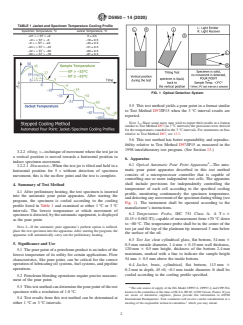
TABLE 1 Jacket and Specimen Temperature Cooling Profile
Specimen Temperature, °C Jacket Temperature, °C
+27>=ST > +9 0±0.5
+9>=ST > −6 −18±0.5
−6>=ST > −24 −33±0.5
−24>=ST > −42 −51±0.5
−42>=ST > −60 −69±0.5
−60>=ST > −78 −87±0.5
FIG. 1 Optical Detection System
5.5 This test method yields a pour point in a format similar
to Test Method D97/IP15 when the 3°C interval results are
reported.
NOTE 3—Since some users may wish to report their results in a format
similartoTestMethodD97(in3°Cintervals)theprecisionswerederived
for the temperatures rounded to the 3°C intervals. For statements on bias
relative to Test Method D97, see 13.3.
5.6 This test method has better repeatability and reproduc-
ibility relative to Test Method D97/IP15 as measured in the
1998 interlaboratory test program. (See Section 13.)
3.2.2 tilting, v—techniqueofmovementwherethetestjarin
a vertical position is moved towards a horizontal position to
6. Apparatus
induce specimen movement.
6.1 Optical Automatic Pour Point Apparatus —The auto-
3.2.2.1 Discussion—When the test jar is tilted and held in a
matic pour point apparatus described in this test method
horizontal position for 5 s without detection of specimen
consists of a microprocessor controller that is capable of
movement, this is the no-flow point and the test is complete.
controlling one or more independent test cells. The apparatus
shall include provisions for independently controlling the
4. Summary of Test Method
temperature of each cell according to the specified cooling
4.1 After preliminary heating, the test specimen is inserted
profile, monitoring continuously the specimen temperature,
into the automatic pour point apparatus. After starting the
anddetectinganymovementofthespecimenduringtilting(see
program, the specimen is cooled according to the cooling
Fig. 1). The instrument shall be operated according to the
profile listed in Table 1 and examined at either 1°C or 3°C
manufacturer’s instructions.
intervals. The lowest temperature at which movement of
6.2 Temperature Probe, IEC 751 Class A: ∆ T= 6
specimenisdetected,bytheautomaticequipment,isdisplayed
(0.15+0.002 |T|), capable of measurement from +70°C down
as the pour point.
to −80°C. The temperature probe shall be in the center of the
NOTE 2—If the automatic pour apparatus’s preheat option is utilized,
test jar and the top of the platinum tip immersed 3 mm below
place the test specimen into the apparatus.After starting the program, the
the surface of the oil.
apparatus will automatically carry out the preliminary heating.
6.3 Test Jar, clear cylindrical glass, flat bottom, 34mm 6
5. Significance and Use
0.5mm outside diameter, 1.4mm 6 0.15mm wall thickness,
120mm 6 0.5mm height, thickness of the bottom 2.4mm
5.1 Thepourpointofapetroleumproductisanindexofthe
maximum, marked with a line to indicate the sample height
lowest temperature of its utility for certain applications. Flow
54mm 6 0.5mm above the inside bottom.
characteristics, like pour point, can be critical for the correct
operation of lubricating oil systems, fuel systems, and pipeline
6.4 Jacket, brass, cylindrical, flat bottom, 113 mm 6
operations.
0.2mm in depth, 45+0,−0.1mm inside diameter. It shall be
cooled according to the cooling profile specified.
5.2 Petroleum blending operations require precise measure-
ment of the pour point.
5.3 Thistestmethodcandeterminethepourpointofthetest
The sole source of supply of the ISLModel CPP97-6, CPP97-2, and CPP-5Gs
specimen with a resolution of 1.0°C. knowntothecommitteeatthistimeisISLSA,BP40,14790Verson,France.Ifyou
are aware of alternative suppliers, please provide this information to ASTM
5.4 Test results from this test method can be determined at
International Headquarters. Your comments will receive careful consideration at a
either 1°C or 3°C intervals. meeting of the responsible technical committee, which you may attend.
D5950 − 14 (2020)
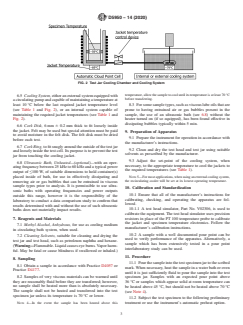
FIG. 2 Test Jar Cooling Chamber and Cooling System
temperature,allowthesampletocooluntilitstemperatureisatleast70°C
6.5 Cooling System,eitheranexternalsystemequippedwith
before transferring.
acirculatingpumpandcapableofmaintainingatemperatureat
least 10°C below the last required jacket temperature level 8.3 Forsomesampletypes,suchasviscouslubeoilsthatare
(see Table 1 and Fig. 2), or an internal system capable of prone to having entrained air or gas bubbles present in the
maintaining the required jacket temperatures (see Table 1 and sample, the use of an ultrasonic bath (see 6.8) without the
Fig. 2). heater turned on (if so equipped), has been found effective in
dissipating bubbles typically within 5 min.
6.6 Cork Disk, 6mm 6 0.2mm thick to fit loosely inside
the jacket. Felt may be used but special attention must be paid
9. Preparation of Apparatus
to avoid moisture in the felt disk. The felt disk must be dried
9.1 Prepare the instrument for operation in accordance with
before each test.
the manufacturer’s instructions.
6.7 Cork Ring,tofitsnuglyaroundtheoutsideofthetestjar
9.2 Clean and dry the test head and test jar using suitable
andlooselyinsidethetestcell.Itspurposeistopreventthetest
solvents as prescribed by the manufacturer.
jar from touching the cooling jacket.
9.3 Adjust the set-point of the cooling system, when
6.8 Ultrasonic Bath, Unheated—(optional)—with an oper-
necessary, to the appropriate temperature to cool the jackets to
atingfrequencybetween25kHzto60kHzandatypicalpower
the required temperatures (see Table 1).
output of ≤100 W, of suitable dimensions to hold container(s)
placed inside of bath, for use in effectively dissipating and
NOTE5—Formostapplications,whenusinganexternalcoolingsystem,
the recirculating cooler will be set at its lowest operating temperature.
removing air or gas bubbles that can be entrained in viscous
sample types prior to analysis. It is permissible to use ultra-
10. Calibration and Standardization
sonic baths with operating frequencies and power outputs
10.1 Ensure that all of the manufacturer’s instructions for
outside this range, however it is the responsibility of the
calibrating, checking, and operating the apparatus are fol-
laboratory to conduct a data comparison study to confirm that
lowed.
results determined with and without the use of such ultrasonic
10.1.1 A test head simulator, Part No. V02306, is used to
baths does not materially impact results.
calibrate the equipment.The test head simulator uses precision
7. Reagents and Materials resistors in place of the PT 100 temperature probe to calibrate
the jacket and specimen temperature electronics. Follow the
7.1 Methyl Alcohol, Anhydrous, for use as cooling medium
manufacturer’s calibration instructions.
in circulating bath system, when used.
10.2 A sample with a well documented pour point can be
7.2 Cleaning Solvents, suitable for cleaning and drying the
used to verify performance of the apparatus. Alternatively, a
test jar and test head, such as petroleum naphtha and hexane.
sample which has been extensively tested in a pour point
(Warning—Flamm
...