


ASTM C1478/C1478M-20
(Specification)Standard Specification for Storm Drain Resilient Connectors Between Reinforced Concrete Storm Sewer Structures, Pipes, and Laterals
Standard Specification for Storm Drain Resilient Connectors Between Reinforced Concrete Storm Sewer Structures, Pipes, and Laterals
ABSTRACT
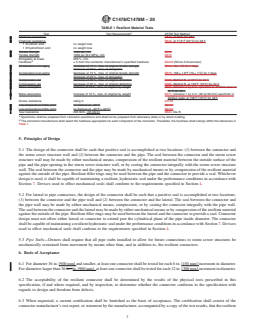
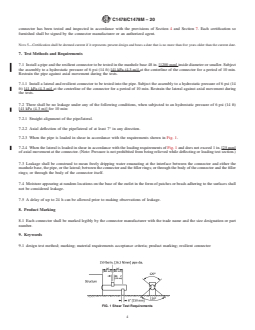
This specification covers the minimum performance and material requirements for resilient connectors used for connections between precast reinforced concrete storm sewer structures and pipes, and between precast reinforced concrete pipe and laterals for storm drainage systems. These connectors are designed to prevent soil migration between the pipe and storm sewer structure, and between the pipe and lateral. Resilient materials for connectors, filler rings, and mechanical devices shall be tested, and shall conform to the specified values chemical resistance, tensile strength, elongation hardness, accelerated oven-aging, compression set, water absorption, ozone resistance, low-temperature brittle point, and tear resistance. The design of the connector and the pipe stubs are detailed.
SCOPE
1.1 This specification covers the minimum performance and material requirements for resilient connectors used for connections between precast reinforced concrete storm sewer structures conforming to Specification C478/C478M and pipes, and between precast reinforced concrete pipe and laterals for storm drainage systems.
1.1.1 These connectors are designed to prevent soil migration between the pipe and storm sewer structure, and between the pipe and lateral.
1.2 The values stated in inch pound or SI units are to be regarded separately as standard. The SI units are shown in brackets. The values stated in each system may not be exact equivalents; therefore, each system shall be used independently of the other. Combining values from the two systems may result in nonconformance with the standard.
Note 1: This specification covers the design, material, and performance of the resilient connection only. Connections covered by this specification are adequate for hydrostatic pressures up to 6 psi (14 ft) [41 kPa (4.3 m)] without leakage when tested in accordance with Section 7. Infiltration quantities for an installed system are dependent upon many factors other than the connections between storm sewer structures and pipe, and allowable quantities must be covered by other specifications and suitable testing of the installed pipeline and system.
Note 2: For installations that exceed 6 psi (14 ft) [41 kPa (4.3 m)], the user is cautioned to verify the amount of hydrostatic head pressure the connector will experience. If the total pressure applied to the connector exceeds the 6 psi [41 kPa] limits of the specification, the user is advised to contact the connector manufacturer for alternative methods of connecting the pipe, or applicable alternative standards.
1.3 The following precautionary caveat pertains only to the test methods portion, Section 7, of this specification: This standard does not purport to address all of the safety concerns, if any, associated with its use. It is the responsibility of the user of this standard to establish appropriate safety, health, and environmental practices and determine the applicability of regulatory limitations prior to use. For a specific warning statement, see 7.2.4.
1.4 This international standard was developed in accordance with internationally recognized principles on standardization established in the Decision on Principles for the Development of International Standards, Guides and Recommendations issued by the World Trade Organization Technical Barriers to Trade (TBT) Committee.
General Information
- Status
- Published
- Publication Date
- 31-Aug-2020
- Technical Committee
- C13 - Concrete Pipe
- Drafting Committee
- C13.06 - Manholes and Specials
Relations
- Effective Date
- 01-Feb-2024
- Effective Date
- 01-Nov-2023
- Effective Date
- 01-Nov-2023
- Effective Date
- 01-Nov-2023
- Effective Date
- 01-Jan-2020
- Effective Date
- 01-Aug-2019
- Effective Date
- 15-Apr-2019
- Effective Date
- 01-Feb-2019
- Effective Date
- 01-Dec-2018
- Effective Date
- 01-Nov-2018
- Effective Date
- 01-Jan-2018
- Effective Date
- 15-Aug-2017
- Effective Date
- 01-Jul-2016
- Effective Date
- 01-Mar-2016
- Effective Date
- 01-Oct-2013
Overview
ASTM C1478/C1478M-20, titled Standard Specification for Storm Drain Resilient Connectors Between Reinforced Concrete Storm Sewer Structures, Pipes, and Laterals, establishes minimum performance and material requirements for resilient connectors. These connectors ensure reliable connections between precast reinforced concrete storm sewer structures and pipes, as well as between pipes and laterals, serving a crucial role in storm drainage systems.
The primary objective of this standard is to prevent soil migration at connection points, maintaining the structural integrity and functionality of storm sewers. By specifying design, material, and testing requirements, ASTM C1478/C1478M-20 supports long-term durability, resistance to environmental factors, and consistent performance under hydrostatic pressure.
Key Topics
- Resilient Connectors: Specifications address requirements for resilient materials, including natural and synthetic rubbers, used in the fabrication of connectors and filler rings.
- Performance Criteria: Connectors must maintain hydrostatic seals under pressures up to 6 psi (14 ft) [41 kPa (4.3 m)] for 10 minutes without leakage, as tested in accordance with the standard.
- Material Properties: Required properties include:
- Chemical resistance
- Tensile strength and elongation
- Hardness
- Resistance to aging, compression set, and water absorption
- Ozone and tear resistance
- Low-temperature brittleness
- Design Aspects:
- Positive seals at both the structure wall and pipe (and lateral)
- Use of mechanical means or compression for sealing
- Provisions for pipe stubs for future expansions, requiring restraint beyond the connector
- Test Methods: Detailed protocols for leak resistance, including shear and deflection tests, must be followed.
- Marking and Traceability: Each connector must be clearly marked with trade name and size designation or part number.
Applications
ASTM C1478/C1478M-20 is used widely in:
- Municipal and Civil Engineering Projects: Specifying resilient connectors for new and existing stormwater drainage infrastructure, ensuring connectors prevent infiltration and exfiltration at pipe-to-structure and pipe-to-lateral joints.
- Precast Concrete Manufacturing: Guiding manufacturers of manholes, catch basins, and other precast stormwater structures in selecting and installing compliant resilient connectors.
- Infrastructure Upgrades and Repairs: Ensuring that retrofitted or replacement connectors maintain soil tightness and leakage resistance, supporting the longevity and reliability of sewer networks.
- Inspection and Quality Control: Providing a basis for inspecting installations to ensure conformity with industry best practices and regulatory standards.
Using connectors conforming to ASTM C1478/C1478M-20 minimizes environmental impacts, reduces maintenance costs, and safeguards public infrastructure by ensuring effective connections in storm sewer systems.
Related Standards
Several other ASTM standards support and are referenced in ASTM C1478/C1478M-20, including:
- ASTM C478/C478M: Specification for Circular Precast Reinforced Concrete Manhole Sections, which details requirements for structures paired with resilient connectors.
- ASTM C913: Specification for Precast Concrete Water and Wastewater Structures.
- ASTM D412, D573, D624, D1149, D2137, D2240: Test methods relating to rubber and elastomer resilience, aging, and physical properties.
- ASTM A493, A666: Specifications for corrosion-resistant hardware used in mechanical connectors.
- ASTM C822, D883, D1566: Terminology standards for clarity in product specifications and communications.
By adhering to ASTM C1478/C1478M-20 and its related standards, engineers, manufacturers, and municipal authorities can ensure robust, leak-resistant, and long-lasting storm drain systems. This standard is essential to the effective design, construction, and maintenance of modern stormwater infrastructure.
Buy Documents


ASTM C1478/C1478M-20 - Standard Specification for Storm Drain Resilient Connectors Between Reinforced Concrete Storm Sewer Structures, Pipes, and Laterals
REDLINE ASTM C1478/C1478M-20 - Standard Specification for Storm Drain Resilient Connectors Between Reinforced Concrete Storm Sewer Structures, Pipes, and Laterals
Get Certified
Connect with accredited certification bodies for this standard

Institut za varilstvo d.o.o. (Welding Institute)
Slovenia's leading welding institute since 1952. ISO 3834, EN 1090, pressure equipment certification, NDT personnel, welder qualification. Only IIW Au
Sponsored listings
Frequently Asked Questions
ASTM C1478/C1478M-20 is a technical specification published by ASTM International. Its full title is "Standard Specification for Storm Drain Resilient Connectors Between Reinforced Concrete Storm Sewer Structures, Pipes, and Laterals". This standard covers: ABSTRACT This specification covers the minimum performance and material requirements for resilient connectors used for connections between precast reinforced concrete storm sewer structures and pipes, and between precast reinforced concrete pipe and laterals for storm drainage systems. These connectors are designed to prevent soil migration between the pipe and storm sewer structure, and between the pipe and lateral. Resilient materials for connectors, filler rings, and mechanical devices shall be tested, and shall conform to the specified values chemical resistance, tensile strength, elongation hardness, accelerated oven-aging, compression set, water absorption, ozone resistance, low-temperature brittle point, and tear resistance. The design of the connector and the pipe stubs are detailed. SCOPE 1.1 This specification covers the minimum performance and material requirements for resilient connectors used for connections between precast reinforced concrete storm sewer structures conforming to Specification C478/C478M and pipes, and between precast reinforced concrete pipe and laterals for storm drainage systems. 1.1.1 These connectors are designed to prevent soil migration between the pipe and storm sewer structure, and between the pipe and lateral. 1.2 The values stated in inch pound or SI units are to be regarded separately as standard. The SI units are shown in brackets. The values stated in each system may not be exact equivalents; therefore, each system shall be used independently of the other. Combining values from the two systems may result in nonconformance with the standard. Note 1: This specification covers the design, material, and performance of the resilient connection only. Connections covered by this specification are adequate for hydrostatic pressures up to 6 psi (14 ft) [41 kPa (4.3 m)] without leakage when tested in accordance with Section 7. Infiltration quantities for an installed system are dependent upon many factors other than the connections between storm sewer structures and pipe, and allowable quantities must be covered by other specifications and suitable testing of the installed pipeline and system. Note 2: For installations that exceed 6 psi (14 ft) [41 kPa (4.3 m)], the user is cautioned to verify the amount of hydrostatic head pressure the connector will experience. If the total pressure applied to the connector exceeds the 6 psi [41 kPa] limits of the specification, the user is advised to contact the connector manufacturer for alternative methods of connecting the pipe, or applicable alternative standards. 1.3 The following precautionary caveat pertains only to the test methods portion, Section 7, of this specification: This standard does not purport to address all of the safety concerns, if any, associated with its use. It is the responsibility of the user of this standard to establish appropriate safety, health, and environmental practices and determine the applicability of regulatory limitations prior to use. For a specific warning statement, see 7.2.4. 1.4 This international standard was developed in accordance with internationally recognized principles on standardization established in the Decision on Principles for the Development of International Standards, Guides and Recommendations issued by the World Trade Organization Technical Barriers to Trade (TBT) Committee.
ABSTRACT This specification covers the minimum performance and material requirements for resilient connectors used for connections between precast reinforced concrete storm sewer structures and pipes, and between precast reinforced concrete pipe and laterals for storm drainage systems. These connectors are designed to prevent soil migration between the pipe and storm sewer structure, and between the pipe and lateral. Resilient materials for connectors, filler rings, and mechanical devices shall be tested, and shall conform to the specified values chemical resistance, tensile strength, elongation hardness, accelerated oven-aging, compression set, water absorption, ozone resistance, low-temperature brittle point, and tear resistance. The design of the connector and the pipe stubs are detailed. SCOPE 1.1 This specification covers the minimum performance and material requirements for resilient connectors used for connections between precast reinforced concrete storm sewer structures conforming to Specification C478/C478M and pipes, and between precast reinforced concrete pipe and laterals for storm drainage systems. 1.1.1 These connectors are designed to prevent soil migration between the pipe and storm sewer structure, and between the pipe and lateral. 1.2 The values stated in inch pound or SI units are to be regarded separately as standard. The SI units are shown in brackets. The values stated in each system may not be exact equivalents; therefore, each system shall be used independently of the other. Combining values from the two systems may result in nonconformance with the standard. Note 1: This specification covers the design, material, and performance of the resilient connection only. Connections covered by this specification are adequate for hydrostatic pressures up to 6 psi (14 ft) [41 kPa (4.3 m)] without leakage when tested in accordance with Section 7. Infiltration quantities for an installed system are dependent upon many factors other than the connections between storm sewer structures and pipe, and allowable quantities must be covered by other specifications and suitable testing of the installed pipeline and system. Note 2: For installations that exceed 6 psi (14 ft) [41 kPa (4.3 m)], the user is cautioned to verify the amount of hydrostatic head pressure the connector will experience. If the total pressure applied to the connector exceeds the 6 psi [41 kPa] limits of the specification, the user is advised to contact the connector manufacturer for alternative methods of connecting the pipe, or applicable alternative standards. 1.3 The following precautionary caveat pertains only to the test methods portion, Section 7, of this specification: This standard does not purport to address all of the safety concerns, if any, associated with its use. It is the responsibility of the user of this standard to establish appropriate safety, health, and environmental practices and determine the applicability of regulatory limitations prior to use. For a specific warning statement, see 7.2.4. 1.4 This international standard was developed in accordance with internationally recognized principles on standardization established in the Decision on Principles for the Development of International Standards, Guides and Recommendations issued by the World Trade Organization Technical Barriers to Trade (TBT) Committee.
ASTM C1478/C1478M-20 is classified under the following ICS (International Classification for Standards) categories: 23.040.50 - Pipes and fittings of other materials. The ICS classification helps identify the subject area and facilitates finding related standards.
ASTM C1478/C1478M-20 has the following relationships with other standards: It is inter standard links to ASTM D883-24, ASTM D883-23, ASTM A493-23, ASTM C913-23, ASTM D883-20, ASTM D883-19c, ASTM D883-19a, ASTM D883-19, ASTM D883-18a, ASTM D883-18, ASTM C822-18, ASTM D883-17, ASTM C913-16, ASTM A493-16, ASTM A493-09(2013). Understanding these relationships helps ensure you are using the most current and applicable version of the standard.
ASTM C1478/C1478M-20 is available in PDF format for immediate download after purchase. The document can be added to your cart and obtained through the secure checkout process. Digital delivery ensures instant access to the complete standard document.
Standards Content (Sample)
This international standard was developed in accordance with internationally recognized principles on standardization established in the Decision on Principles for the
Development of International Standards, Guides and Recommendations issued by the World Trade Organization Technical Barriers to Trade (TBT) Committee.
Designation:C1478/C1478M −20
Standard Specification for
Storm Drain Resilient Connectors Between Reinforced
Concrete Storm Sewer Structures, Pipes, and Laterals
This standard is issued under the fixed designation C1478/C1478M; the number immediately following the designation indicates the
year of original adoption or, in the case of revision, the year of last revision. A number in parentheses indicates the year of last
reapproval. A superscript epsilon (´) indicates an editorial change since the last revision or reapproval.
1. Scope 1.4 This international standard was developed in accor-
dance with internationally recognized principles on standard-
1.1 This specification covers the minimum performance and
ization established in the Decision on Principles for the
material requirements for resilient connectors used for connec-
Development of International Standards, Guides and Recom-
tions between precast reinforced concrete storm sewer struc-
mendations issued by the World Trade Organization Technical
tures conforming to Specification C478/C478M and pipes, and
Barriers to Trade (TBT) Committee.
between precast reinforced concrete pipe and laterals for storm
drainage systems.
2. Referenced Documents
1.1.1 These connectors are designed to prevent soil migra-
tion between the pipe and storm sewer structure, and between 2.1 ASTM Standards:
the pipe and lateral. A493 Specification for Stainless Steel Wire and Wire Rods
for Cold Heading and Cold Forging
1.2 The values stated in inch pound or SI units are to be
A666 Specification forAnnealed or Cold-WorkedAustenitic
regarded separately as standard. The SI units are shown in
Stainless Steel Sheet, Strip, Plate, and Flat Bar
brackets. The values stated in each system may not be exact
C478/C478M Specification for Circular Precast Reinforced
equivalents;therefore,eachsystemshallbeusedindependently
Concrete Manhole Sections
of the other. Combining values from the two systems may
C822 Terminology Relating to Concrete Pipe and Related
result in nonconformance with the standard.
Products
NOTE 1—This specification covers the design, material, and perfor-
C913 Specification for Precast Concrete Water and Waste-
mance of the resilient connection only. Connections covered by this
water Structures
specification are adequate for hydrostatic pressures up to 6 psi (14 ft) [41
D395 Test Methods for Rubber Property—Compression Set
kPa (4.3 m)] without leakage when tested in accordance with Section 7.
D412 Test Methods for Vulcanized Rubber and Thermoplas-
Infiltration quantities for an installed system are dependent upon many
factors other than the connections between storm sewer structures and
tic Elastomers—Tension
pipe, and allowable quantities must be covered by other specifications and
D471 Test Method for Rubber Property—Effect of Liquids
suitable testing of the installed pipeline and system.
D543 Practices for Evaluating the Resistance of Plastics to
NOTE 2—For installations that exceed 6 psi (14 ft) [41 kPa (4.3 m)], the
Chemical Reagents
user is cautioned to verify the amount of hydrostatic head pressure the
connector will experience. If the total pressure applied to the connector D573 Test Method for Rubber—Deterioration in an Air
exceeds the 6 psi [41 kPa] limits of the specification, the user is advised
Oven
to contact the connector manufacturer for alternative methods of connect-
D624 Test Method for Tear Strength of Conventional Vul-
ing the pipe, or applicable alternative standards.
canized Rubber and Thermoplastic Elastomers
1.3 The following precautionary caveat pertains only to the
D883 Terminology Relating to Plastics
test methods portion, Section 7, of this specification: This
D1149 Test Methods for Rubber Deterioration—Cracking in
standard does not purport to address all of the safety concerns,
an Ozone Controlled Environment
if any, associated with its use. It is the responsibility of the user
D1566 Terminology Relating to Rubber
of this standard to establish appropriate safety, health, and
D2137 Test Methods for Rubber Property—Brittleness Point
environmental practices and determine the applicability of
of Flexible Polymers and Coated Fabrics
regulatory limitations prior to use. For a specific warning
D2240 Test Method for Rubber Property—Durometer Hard-
statement, see 7.2.4.
ness
This specification is under the jurisdiction of ASTM Committee C13 on
Concrete Pipe and is the direct responsibility of Subcommittee C13.06 on Manholes
and Specials. For referenced ASTM standards, visit the ASTM website, www.astm.org, or
Current edition approved Sept. 1, 2020. Published September 2020. Originally contact ASTM Customer Service at service@astm.org. For Annual Book of ASTM
approved in 2000. Last previous edition approved in 2019 as C1478 – 19. DOI: Standards volume information, refer to the standard’s Document Summary page on
10.1520/C1478_C1478M-20. the ASTM website.
Copyright © ASTM International, 100 Barr Harbor Drive, PO Box C700, West Conshohocken, PA 19428-2959. United States
C1478/C1478M−20
NOTE 3—For more information about wastewater structures, see Speci-
position requirements of Specification A493 and A666, Type
fication C913.
302 through Type 316.
NOTE 4—Experience has shown that successful performance of this
3. Terminology
product depends on the type of bedding and backfill and the care in the
3.1 Definitions:
field installation of the manhole storm sewer structure and connecting
3.1.1 Terms relating to plastics and rubber shall be as pipes.Theowneriscautionedtorequireinspectionattheconstructionsite.
defined in Terminologies D883 and D1566, respectively.
5. Principles of Design
3.1.2 Terms relating to precast concrete pipe, manholes, and
related products shall be as defined in Terminology C822.
5.1 The design of the connector shall be such that positive
3.2 Definitions of Terms Specific to This Standard:
seal is accomplished at two locations: (1) between the connec-
3.2.1 connector, n—the entire assembly, including resilient tor and the storm sewer structure wall and (2) between the
seals and metallic or nonmetallic mechanical devices, if any,
connector and the pipe.The seal between the connector and the
used therein. storm sewer structure wall may be made by either mechanical
means, compression of the resilient material between the
3.2.2 lateral, n—the small diameter pipe connected to the
outside surface of the pipe and the pipe opening in the storm
main line pipe.
sewer structure wall, or by casting the connector integrally
3.2.3 pipe, n—the inlet or outlet pipe connected to the
with the storm sewer structure wall. The seal between the
manhole.
connector and the pipe may be made by mechanical means or
3.2.4 pipe stub, n—a short section of pipe installed in the
by compression of the resilient material against the outside of
structure as an inlet or outlet pipe, for future connection.
the pipe. Resilient filler rings may be used between the pipe
and the connector to provide a seal. Whichever design is used,
4. Materials and Manufacture
it shall be capable of maintaining a resilient, hydrostatic seal
4.1 All materials shall conform to the following require- under the performance conditions in accordance with Section
7. Devices used to effect mechanical seals shall conform to the
ments:
4.1.1 Resilient materials for connectors and filler rings shall requirements specified in Section 4.
be manufactured from natural or synthetic rubber and shall
5.2 For lateral to pipe connectors, the design of the connec-
conform to the requirements prescribed in Table 1. If a splice
tor shall be such that a positive seal is accomplished at two
is used in the manu
...
This document is not an ASTM standard and is intended only to provide the user of an ASTM standard an indication of what changes have been made to the previous version. Because
it may not be technically possible to adequately depict all changes accurately, ASTM recommends that users consult prior editions as appropriate. In all cases only the current version
of the standard as published by ASTM is to be considered the official document.
Designation: C1478 − 19 C1478/C1478M − 20
Standard Specification for
Storm Drain Resilient Connectors Between Reinforced
Concrete Storm Sewer Structures, Pipes, and Laterals
This standard is issued under the fixed designation C1478;C1478/C1478M; the number immediately following the designation indicates
the year of original adoption or, in the case of revision, the year of last revision. A number in parentheses indicates the year of last
reapproval. A superscript epsilon (´) indicates an editorial change since the last revision or reapproval.
1. Scope
1.1 This specification covers the minimum performance and material requirements for resilient connectors used for connections
between precast reinforced concrete storm sewer structures conforming to Specification C478C478/C478M and pipes, and between
precast reinforced concrete pipe and laterals for storm drainage systems.
1.1.1 These connectors are designed to prevent soil migration between the pipe and storm sewer structure, and between the pipe
and lateral.
1.2 The values stated in inch-pound inch pound or SI units are to be regarded separately as standard. The values given in
parentheses are for information only.SI units are shown in brackets. The values stated in each system may not be exact equivalents;
therefore, each system shall be used independently of the other. Combining values from the two systems may result in
nonconformance with the standard.
NOTE 1—This specification covers the design, material, and performance of the resilient connection only. Connections covered by this specification are
adequate for hydrostatic pressures up to 6 psi (14 ft) [41 kPa (4.3 m)] without leakage when tested in accordance with Section 7. Infiltration quantities
for an installed system are dependent upon many factors other than the connections between storm sewer structures and pipe, and allowable quantities
must be covered by other specifications and suitable testing of the installed pipeline and system.
NOTE 2—For installations that exceed 6 psi (14 ft), ft) [41 kPa (4.3 m)], the user is cautioned to verify the amount of hydrostatic head pressure the
connector will experience. If the total pressure applied to the connector exceeds the 6 psi [41 kPa] limits of the specification, the user is advised to contact
the connector manufacturer for alternative methods of connecting the pipe, or applicable alternative standards.
1.3 The following precautionary caveat pertains only to the test methods portion, Section 7, of this specification: This standard
does not purport to address all of the safety concerns, if any, associated with its use. It is the responsibility of the user of this
standard to establish appropriate safety, health, and environmental practices and determine the applicability of regulatory
limitations prior to use. For a specific warning statement, see 7.2.4.
1.4 This international standard was developed in accordance with internationally recognized principles on standardization
established in the Decision on Principles for the Development of International Standards, Guides and Recommendations issued
by the World Trade Organization Technical Barriers to Trade (TBT) Committee.
2. Referenced Documents
2.1 ASTM Standards:
This specification is under the jurisdiction of ASTM Committee C13 on Concrete Pipe and is the direct responsibility of Subcommittee C13.06 on Manholes and Specials.
Current edition approved March 1, 2019Sept. 1, 2020. Published March 2019September 2020. Originally approved in 2000. Last previous edition approved in 20182019
as C1478 – 18.C1478 – 19. DOI: 10.1520/C1478-19.10.1520/C1478_C1478M-20.
For referenced ASTM standards, visit the ASTM website, www.astm.org, or contact ASTM Customer Service at service@astm.org. For Annual Book of ASTM Standards
volume information, refer to the standard’s Document Summary page on the ASTM website.
Copyright © ASTM International, 100 Barr Harbor Drive, PO Box C700, West Conshohocken, PA 19428-2959. United States
C1478/C1478M − 20
A493 Specification for Stainless Steel Wire and Wire Rods for Cold Heading and Cold Forging
A666 Specification for Annealed or Cold-Worked Austenitic Stainless Steel Sheet, Strip, Plate, and Flat Bar
C478C478/C478M Specification for Circular Precast Reinforced Concrete Manhole Sections (Metric) C0478_C0478M
C822 Terminology Relating to Concrete Pipe and Related Products
C913 Specification for Precast Concrete Water and Wastewater Structures
D395 Test Methods for Rubber Property—Compression Set
D412 Test Methods for Vulcanized Rubber and Thermoplastic Elastomers—Tension
D471 Test Method for Rubber Property—Effect of Liquids
D543 Practices for Evaluating the Resistance of Plastics to Chemical Reagents
D573 Test Method for Rubber—Deterioration in an Air Oven
D624 Test Method for Tear Strength of Conventional Vulcanized Rubber and Thermoplastic Elastomers
D883 Terminology Relating to Plastics
D1149 Test Methods for Rubber Deterioration—Cracking in an Ozone Controlled Environment
D1566 Terminology Relating to Rubber
D2137 Test Methods for Rubber Property—Brittleness Point of Flexible Polymers and Coated Fabrics
D2240 Test Method for Rubber Property—Durometer Hardness
NOTE 3—For more information about wastewater structures, see Specification C913.
3. Terminology
3.1 Definitions:
3.1.1 Terms relating to plastics and rubber shall be as defined in Terminologies D883 and D1566, respectively.
3.1.2 Terms relating to precast concrete pipe, manholes, and related products shall be as defined in Terminology C822.
3.2 Definitions of Terms Specific to This Standard:
3.2.1 connector—connector, n—the entire assembly, including resilient seals and metallic or nonmetallic mechanical devices, if
any, used therein.
3.2.2 lateral—lateral, n—the small diameter pipe connected to the main line pipe.
3.2.3 pipe—pipe, n—the inlet or outlet pipe connected to the manhole.
3.2.4 pipe stub—stub, n—a short section of pipe installed in the structure as an inlet or outlet pipe, for future connection.
4. Materials and Manufacture
4.1 All materials shall conform to the following requirements:
4.1.1 Resilient materials for connectors and filler rings shall be manufactured from natural or synthetic rubber and shall conform
to the requirements prescribed in Table 1. If a splice is used in the manufacture of the seal, its strength shall be such that the seal
shall withstand a 180° bend with no visible separation.
4.2 Mechanical Devices—Expansion rings, tension bands, and take-up devices used for mechanically compressing the resilient
portion of the connector against the pipe or storm sewer structure; shall be made from a material or materials in combination that
will ensure durability, strength, resistance to corrosion, and have properties that will ensure continued resistance to leakage. All
metallic mechanical devices, including castings and bolt assemblies used to mechanically deform resilient materials, shall be
constructed of corrosion resistant materials meeting the physical properties and chemical composition requirements of
Specification A493 and A666, Type 302 through Type 316.
NOTE 4—Experience has shown that successful performance of this product depends on the type of bedding and backfill and the care in the field
installation of the manhole storm sewer structure and connecting pipes. The owner is cautioned to require inspection at the construction site.
C1478/C1478M − 20
TABLE 1 Resilient Material Tests
A
Test Test Requirements ASTM Test Method
Chemical resistance: D543, at 22°C for 48 h
Chemical resistance: D543, at 71.6°F [22°C] for 48 h
1 N sulfuric acid no weight loss
1 N hydrochloric acid no weight loss
Tensile strength 1200 psi, min D412
Tensile strength 1200 psi [8.3 MPa], min D412
Elongation at break 350 %, min
B
Hardness ± 5 from the connector manufacturer’s specified hardness D2240 (Shore A Durometer)
Accelerated oven-aging decrease of 15 %, max, of original tensile strength D573, 70± 1°C for 7 days
d
...
Questions, Comments and Discussion
Ask us and Technical Secretary will try to provide an answer. You can facilitate discussion about the standard in here.
Loading comments...