

ASTM A832/A832M-17
(Specification)Standard Specification for Pressure Vessel Plates, Alloy Steel, Chromium-Molybdenum-Vanadium
General Information
- Abstract
ABSTRACT
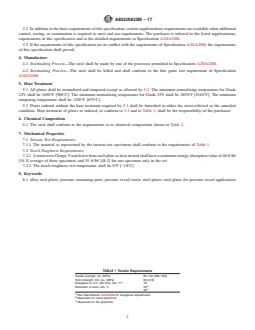
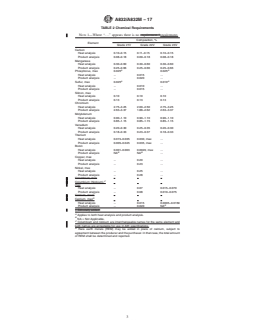
This specification covers the specific chromium-molybdenum-vanadium alloy steel plates intended primarily for the fabrication of welded pressure vessels. The steel shall be killed and shall conform to the fine grain size requirement. All plates shall undergo normalization and tempering. Heat and product analyses shall be conducted and the steel shall conform to the prescribed chemical composition in carbon, manganese, phosphorus, sulfur, silicon, chromium, molybdenum, vanadium, titanium, boron, and copper. Tension and notch toughness testing shall be performed on the material and shall meet the required mechanical properties such as tensile strength, yield strength, and elongation.
SCOPE
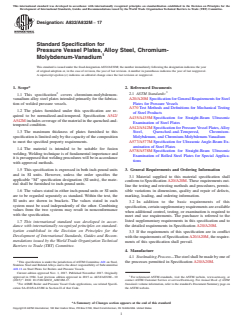
1.1 This specification2 covers chromium-molybdenum-vanadium alloy steel plates intended primarily for the fabrication of welded pressure vessels.
1.2 The plates furnished under this specification are required to be normalized-and-tempered. Specification A542/A542M includes coverage of the material in the quenched-and-tempered condition.
1.3 The maximum thickness of plates furnished to this specification is limited only by the capacity of the composition to meet the specified property requirements.
1.4 The material is intended to be suitable for fusion welding. Welding technique is of fundamental importance and it is presupposed that welding procedures will be in accordance with approved methods.
1.5 This specification is expressed in both inch-pound units and in SI units. However, unless the order specifies the applicable “M” specification designation (SI units), the material shall be furnished to inch-pound units.
1.6 The values stated in either inch-pound units or SI units are to be regarded separately as standard. Within the text, the SI units are shown in brackets. The values stated in each system must be used independently of the other. Combining values from the two systems may result in nonconformance with the specification.
1.7 This international standard was developed in accordance with internationally recognized principles on standardization established in the Decision on Principles for the Development of International Standards, Guides and Recommendations issued by the World Trade Organization Technical Barriers to Trade (TBT) Committee.
- Status
- Published
- Publication Date
- 31-Oct-2017
- Technical Committee
- A01 - Steel, Stainless Steel and Related Alloys
- Drafting Committee
- A01.11 - Steel Plates for Boilers and Pressure Vessels
Buy Documents

ASTM A832/A832M-17 - Standard Specification for Pressure Vessel Plates, Alloy Steel, Chromium-Molybdenum-Vanadium
REDLINE ASTM A832/A832M-17 - Standard Specification for Pressure Vessel Plates, Alloy Steel, Chromium-Molybdenum-Vanadium
Overview
ASTM A832/A832M-17 is a standard specification developed by ASTM International for pressure vessel plates made from chromium-molybdenum-vanadium alloy steel. This material is primarily intended for the fabrication of welded pressure vessels that demand high chemical and mechanical performance. Plates produced according to this standard are normalized and tempered to ensure optimal properties, such as tensile strength and notch toughness. The specification covers comprehensive requirements for chemical composition, mechanical properties, heat treatment, and suitability for welding.
Key Topics
Scope of Application:
- Applies to alloy steel plates used in the manufacture of welded pressure vessels.
- Suitable for use in both inch-pound and SI units, depending on order requirements.
Material and Manufacture:
- Plates must be made from chromium-molybdenum-vanadium steel.
- The steel shall be produced by an approved process, fully killed, and exhibit fine grain size.
- Includes detailed requirements for chemical composition including elements such as carbon, manganese, phosphorus, sulfur, silicon, chromium, molybdenum, vanadium, titanium, boron, and copper.
Heat Treatment:
- All plates are normalized and tempered.
- Minimum normalization and tempering temperatures ensure the designed mechanical properties are achieved.
- Alternative supply conditions are permitted if specified by the purchaser.
Mechanical Properties:
- Plates are subjected to stringent tensile and notch toughness testing.
- Specific properties such as tensile strength, yield strength, elongation, and reduction of area must be met.
Supplementary Requirements:
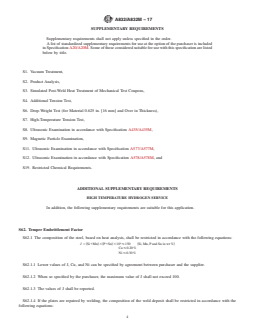
- Additional tests and controls available on request, such as vacuum treatment, simulated post-weld heat treatment, ultrasonic examination, magnetic particle testing, and more.
- Enhanced requirements for high-temperature hydrogen service and impact properties after step cooling can be specified.
Applications
ASTM A832/A832M-17 plates are ideal for:
- Fabrication of welded pressure vessels: Especially where high strength, toughness, and resistance to adverse service conditions are required.
- Chemical and petrochemical processing equipment: The alloy steel's strength and toughness support use in environments with high pressure and temperature.
- Power generation and industrial gas plants: Pressure boundaries and critical components benefit from the robust mechanical and toughness properties of qualified plates.
Other application scenarios may include:
- Specialized applications in industries where fusion welding and post-weld heat treatments are common.
- Situations demanding detailed specification of both chemical and mechanical standards for project or compliance needs.
Related Standards
For broader context and comprehensive compliance, the following ASTM standards and codes should be considered alongside ASTM A832/A832M-17:
- ASTM A20/A20M: General requirements for steel plates for pressure vessels, including testing, tolerances, and quality.
- ASTM A370: Defines test methods and terminology for mechanical testing of steel products.
- ASTM A435/A435M, A577/A577M, and A578/A578M: Specifications for ultrasonic examination of steel plates.
- ASTM A542/A542M: Covers similar alloy steels for pressure vessel plates in the quenched-and-tempered condition.
- ASME SA-832/SA-832M: The equivalent specification for Boiler and Pressure Vessel Code applications.
By adhering to ASTM A832/A832M-17, manufacturers and fabricators ensure that pressure vessel steel plates meet internationally recognized standards for safety, quality, and performance, supporting the reliability of high-pressure and high-temperature equipment in critical sectors.
Relations
- Effective Date
- 01-Nov-2017
- Effective Date
- 01-Mar-2024
- Effective Date
- 01-Nov-2023
- Effective Date
- 01-Nov-2023
- Effective Date
- 01-Nov-2023
- Effective Date
- 01-Jul-2019
- Effective Date
- 01-May-2019
- Effective Date
- 01-Mar-2018
- Refers
ASTM A370-17a - Standard Test Methods and Definitions for Mechanical Testing of Steel Products - Effective Date
- 15-Nov-2017
- Effective Date
- 15-Nov-2017
- Effective Date
- 01-Nov-2017
- Effective Date
- 01-Jan-2017
- Effective Date
- 01-Nov-2015
- Effective Date
- 01-Nov-2015
- Effective Date
- 01-Oct-2014
Buy Documents
ASTM A832/A832M-17 - Standard Specification for Pressure Vessel Plates, Alloy Steel, Chromium-Molybdenum-Vanadium
REDLINE ASTM A832/A832M-17 - Standard Specification for Pressure Vessel Plates, Alloy Steel, Chromium-Molybdenum-Vanadium
Get Certified
Connect with accredited certification bodies for this standard

Element Materials Technology
Materials testing and product certification.

Inštitut za kovinske materiale in tehnologije
Institute of Metals and Technology. Materials testing, metallurgical analysis, NDT.
Sponsored listings
Frequently Asked Questions
ASTM A832/A832M-17 is a technical specification published by ASTM International. Its full title is "Standard Specification for Pressure Vessel Plates, Alloy Steel, Chromium-Molybdenum-Vanadium". This standard covers: ABSTRACT This specification covers the specific chromium-molybdenum-vanadium alloy steel plates intended primarily for the fabrication of welded pressure vessels. The steel shall be killed and shall conform to the fine grain size requirement. All plates shall undergo normalization and tempering. Heat and product analyses shall be conducted and the steel shall conform to the prescribed chemical composition in carbon, manganese, phosphorus, sulfur, silicon, chromium, molybdenum, vanadium, titanium, boron, and copper. Tension and notch toughness testing shall be performed on the material and shall meet the required mechanical properties such as tensile strength, yield strength, and elongation. SCOPE 1.1 This specification2 covers chromium-molybdenum-vanadium alloy steel plates intended primarily for the fabrication of welded pressure vessels. 1.2 The plates furnished under this specification are required to be normalized-and-tempered. Specification A542/A542M includes coverage of the material in the quenched-and-tempered condition. 1.3 The maximum thickness of plates furnished to this specification is limited only by the capacity of the composition to meet the specified property requirements. 1.4 The material is intended to be suitable for fusion welding. Welding technique is of fundamental importance and it is presupposed that welding procedures will be in accordance with approved methods. 1.5 This specification is expressed in both inch-pound units and in SI units. However, unless the order specifies the applicable “M” specification designation (SI units), the material shall be furnished to inch-pound units. 1.6 The values stated in either inch-pound units or SI units are to be regarded separately as standard. Within the text, the SI units are shown in brackets. The values stated in each system must be used independently of the other. Combining values from the two systems may result in nonconformance with the specification. 1.7 This international standard was developed in accordance with internationally recognized principles on standardization established in the Decision on Principles for the Development of International Standards, Guides and Recommendations issued by the World Trade Organization Technical Barriers to Trade (TBT) Committee.
ABSTRACT This specification covers the specific chromium-molybdenum-vanadium alloy steel plates intended primarily for the fabrication of welded pressure vessels. The steel shall be killed and shall conform to the fine grain size requirement. All plates shall undergo normalization and tempering. Heat and product analyses shall be conducted and the steel shall conform to the prescribed chemical composition in carbon, manganese, phosphorus, sulfur, silicon, chromium, molybdenum, vanadium, titanium, boron, and copper. Tension and notch toughness testing shall be performed on the material and shall meet the required mechanical properties such as tensile strength, yield strength, and elongation. SCOPE 1.1 This specification2 covers chromium-molybdenum-vanadium alloy steel plates intended primarily for the fabrication of welded pressure vessels. 1.2 The plates furnished under this specification are required to be normalized-and-tempered. Specification A542/A542M includes coverage of the material in the quenched-and-tempered condition. 1.3 The maximum thickness of plates furnished to this specification is limited only by the capacity of the composition to meet the specified property requirements. 1.4 The material is intended to be suitable for fusion welding. Welding technique is of fundamental importance and it is presupposed that welding procedures will be in accordance with approved methods. 1.5 This specification is expressed in both inch-pound units and in SI units. However, unless the order specifies the applicable “M” specification designation (SI units), the material shall be furnished to inch-pound units. 1.6 The values stated in either inch-pound units or SI units are to be regarded separately as standard. Within the text, the SI units are shown in brackets. The values stated in each system must be used independently of the other. Combining values from the two systems may result in nonconformance with the specification. 1.7 This international standard was developed in accordance with internationally recognized principles on standardization established in the Decision on Principles for the Development of International Standards, Guides and Recommendations issued by the World Trade Organization Technical Barriers to Trade (TBT) Committee.
ASTM A832/A832M-17 is classified under the following ICS (International Classification for Standards) categories: 77.140.30 - Steels for pressure purposes; 77.140.50 - Flat steel products and semi-products. The ICS classification helps identify the subject area and facilitates finding related standards.
ASTM A832/A832M-17 has the following relationships with other standards: It is inter standard links to ASTM A832/A832M-10(2015)e1, ASTM A370-24, ASTM A435/A435M-17(2023), ASTM A578/A578M-17(2023), ASTM A577/A577M-17(2023), ASTM A370-19, ASTM A542/A542M-19, ASTM A20/A20M-18, ASTM A370-17a, ASTM A20/A20M-17, ASTM A578/A578M-17, ASTM A370-17, ASTM A370-15, ASTM A20/A20M-15, ASTM A20/A20M-14. Understanding these relationships helps ensure you are using the most current and applicable version of the standard.
ASTM A832/A832M-17 is available in PDF format for immediate download after purchase. The document can be added to your cart and obtained through the secure checkout process. Digital delivery ensures instant access to the complete standard document.
Standards Content (Sample)
This international standard was developed in accordance with internationally recognized principles on standardization established in the Decision on Principles for the
Development of International Standards, Guides and Recommendations issued by the World Trade Organization Technical Barriers to Trade (TBT) Committee.
Designation:A832/A832M −17
Standard Specification for
Pressure Vessel Plates, Alloy Steel, Chromium-
Molybdenum-Vanadium
This standard is issued under the fixed designationA832/A832M; the number immediately following the designation indicates the year
of original adoption or, in the case of revision, the year of last revision.Anumber in parentheses indicates the year of last reapproval.
A superscript epsilon (´) indicates an editorial change since the last revision or reapproval.
1. Scope* 2. Referenced Documents
2.1 ASTM Standards:
1.1 This specification covers chromium-molybdenum-
A20/A20MSpecificationforGeneralRequirementsforSteel
vanadium alloy steel plates intended primarily for the fabrica-
Plates for Pressure Vessels
tion of welded pressure vessels.
A370Test Methods and Definitions for Mechanical Testing
1.2 The plates furnished under this specification are re-
of Steel Products
quired to be normalized-and-tempered. Specification A542/
A435/A435MSpecification for Straight-Beam Ultrasonic
A542Mincludescoverageofthematerialinthequenched-and-
Examination of Steel Plates
tempered condition.
A542/A542MSpecificationforPressureVesselPlates,Alloy
1.3 The maximum thickness of plates furnished to this Steel, Quenched-and-Tempered, Chromium-
specification is limited only by the capacity of the composition Molybdenum, and Chromium-Molybdenum-Vanadium
to meet the specified property requirements. A577/A577MSpecification for Ultrasonic Angle-Beam Ex-
amination of Steel Plates
1.4 The material is intended to be suitable for fusion
A578/A578MSpecification for Straight-Beam Ultrasonic
welding. Welding technique is of fundamental importance and
Examination of Rolled Steel Plates for Special Applica-
itispresupposedthatweldingprocedureswillbeinaccordance
tions
with approved methods.
1.5 This specification is expressed in both inch-pound units 3. General Requirements and Ordering Information
and in SI units. However, unless the order specifies the
3.1 Material supplied to this material specification shall
applicable “M” specification designation (SI units), the mate-
conform to Specification A20/A20M. These requirements out-
rial shall be furnished to inch-pound units.
line the testing and retesting methods and procedures, permis-
sible variations in dimensions, quality and repair of defects,
1.6 The values stated in either inch-pound units or SI units
marking, loading, and ordering information.
are to be regarded separately as standard. Within the text, the
SI units are shown in brackets. The values stated in each
3.2 In addition to the basic requirements of this
system must be used independently of the other. Combining
specification,certainsupplementaryrequirementsareavailable
values from the two systems may result in nonconformance
when additional control, testing, or examination is required to
with the specification.
meet end use requirements. The purchaser is referred to the
listed supplementary requirements in this specification and to
1.7 This international standard was developed in accor-
the detailed requirements in Specification A20/A20M.
dance with internationally recognized principles on standard-
ization established in the Decision on Principles for the
3.3 If the requirements of this specification are in conflict
Development of International Standards, Guides and Recom-
withtherequirementsofSpecificationA20/A20M,therequire-
mendations issued by the World Trade Organization Technical
ments of this specification shall prevail.
Barriers to Trade (TBT) Committee.
4. Manufacture
4.1 SteelmakingProcess—Thesteelshallbemadebyoneof
This specification is under the jurisdiction ofASTM Committee A01 on Steel,
the processes permitted in Specification A20/A20M.
Stainless Steel and RelatedAlloys and is the direct responsibility of Subcommittee
A01.11 on Steel Plates for Boilers and Pressure Vessels.
Current edition approved Nov. 1, 2017. Published November 2017. Originally
approved in 1984. Last previous edition approved in 2015 as A832/A832M–10 For referenced ASTM standards, visit the ASTM website, www.astm.org, or
ɛ1
(2015) . DOI: 10.1520/A0832_A0832M-17. contact ASTM Customer Service at service@astm.org. For Annual Book of ASTM
For ASME Boiler and Pressure Vessel Code applications, see related Specifi- Standards volume information, refer to the standard’s Document Summary page on
cation SA-832/SA-832M in Section II of that Code. the ASTM website.
*A Summary of Changes section appears at the end of this standard
Copyright © ASTM International, 100 Barr Harbor Drive, PO Box C700, West Conshohocken, PA 19428-2959. United States
A832/A832M−17
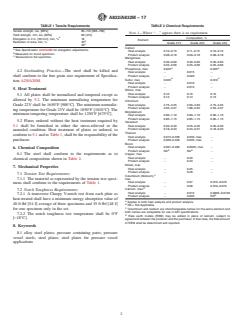
TABLE 1 Tensile Requirements TABLE 2 Chemical Requirements
Tensile strength, ksi, [MPa] 85–110 [585–760]
NOTE 1—Where “.” appears there is no requirement.
Yield strength, min, ksi, [MPa] 60 [415]
A
Composition, %
Elongation in 2 in. [50 mm], min, % 18
Element
B
Reduction of area, min, % 45
Grade 21V Grade 22V Grade 23V
C
Carbon
A
See Specification A20/A20M for elongation adjustments.
Heat analysis 0.10–0.15 0.11–0.15 0.10–0.15
B
Measured on round specimen.
Product analysis 0.08–0.18 0.09–0.18 0.08–0.18
C
Measured on flat specimen.
Manganese
Heat analysis 0.30–0.60 0.30–0.60 0.30–0.60
Product analysis 0.25–0.66 0.25–0.66 0.25–0.66
A A
Phosphorus, max 0.025 0.025
4.2 Steelmaking Practice—The steel shall be killed and
Heat analysis . 0.015 .
shall conform to the fine grain size requirement of Specifica- Product analysis . 0.020 .
A A
Sulfur, max 0.025 0.010
tion A20/A20M.
Heat analysis . 0.010 .
Product analysis . 0.015 .
5. Heat Treatment
Silicon, max
Heat analysis 0.10 0.10 0.10
5.1 All plates shall be normalized and tempered except as
Product analysis 0.13 0.13 0.13
allowed by 5.2. The minimum normalizing temperature for
Chromium
Heat analysis 2.75–3.25 2.00–2.50 2.75–3.25
Grade 22V shall be 1650°F [900°C]. The minimum normaliz-
Product analysis 2.63–3.37 1.88–2.62 2.63–3.37
ing temperature for Grade 23V shall be 1850°F [1010°C]. The
Molybdenum
minimum tempering temperature shall be 1250°F [675°C].
Heat analysis 0.90–1.10 0.90–1.10 0.90–1.10
Product analysis 0.85–1.15 0.85–1.15 0.85–1.15
5.2 Plates ordered without the heat treatment required by
Vanadium
5.1 shall be furnished in either the stress-relieved or the
Heat analysis 0.20–0.30 0.25–0.35 0.20–0.30
Product analysis 0.18–0.33 0.23–0.37 0.18–0.33
annealed condition. Heat treatment of plates so ordered, to
Titanium
conformto5.1andtoTable1,shallbetheresponsibilityofthe
Heat analysis 0.015–0.035 0.030, max .
purchaser.
Product analysis 0.005–0.045 0.035, max .
Boron
Heat analysis 0.001–0.003 0.0020, max .
6. Chemical Composition
B B
Product analysis NA NA .
6.1 The steel shall conform to the requirements as to Copper, max
Heat analysis . 0.20 .
chemical composition shown in Ta
...
This document is not an ASTM standard and is intended only to provide the user of an ASTM standard an indication of what changes have been made to the previous version. Because
it may not be technically possible to adequately depict all changes accurately, ASTM recommends that users consult prior editions as appropriate. In all cases only the current version
of the standard as published by ASTM is to be considered the official document.
´1
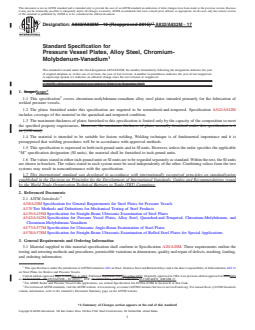
Designation: A832/A832M − 10 (Reapproved 2015) A832/A832M − 17
Standard Specification for
Pressure Vessel Plates, Alloy Steel, Chromium-
Molybdenum-Vanadium
This standard is issued under the fixed designation A832/A832M; the number immediately following the designation indicates the year
of original adoption or, in the case of revision, the year of last revision. A number in parentheses indicates the year of last reapproval.
A superscript epsilon (´) indicates an editorial change since the last revision or reapproval.
ε NOTE—Editorial information was added to Table 2 in September 2015.
1. Scope Scope*
1.1 This specification covers chromium-molybdenum-vanadium alloy steel plates intended primarily for the fabrication of
welded pressure vessels.
1.2 The plates furnished under this specification are required to be normalized-and-tempered. Specification A542/A542M
includes coverage of the material in the quenched-and-tempered condition.
1.3 The maximum thickness of plates furnished to this specification is limited only by the capacity of the composition to meet
the specified property requirements. However, the maximum thickness of plates normally furnished under this specification is 6
in. [150 mm].
1.4 The material is intended to be suitable for fusion welding. Welding technique is of fundamental importance and it is
presupposed that welding procedures will be in accordance with approved methods.
1.5 This specification is expressed in both inch-pound units and in SI units. However, unless the order specifies the applicable
“M” specification designation (SI units), the material shall be furnished to inch-pound units.
1.6 The values stated in either inch-pound units or SI units are to be regarded separately as standard. Within the text, the SI units
are shown in brackets. The values stated in each system must be used independently of the other. Combining values from the two
systems may result in nonconformance with the specification.
1.7 This international standard was developed in accordance with internationally recognized principles on standardization
established in the Decision on Principles for the Development of International Standards, Guides and Recommendations issued
by the World Trade Organization Technical Barriers to Trade (TBT) Committee.
2. Referenced Documents
2.1 ASTM Standards:
A20/A20M Specification for General Requirements for Steel Plates for Pressure Vessels
A370 Test Methods and Definitions for Mechanical Testing of Steel Products
A435/A435M Specification for Straight-Beam Ultrasonic Examination of Steel Plates
A542/A542M Specification for Pressure Vessel Plates, Alloy Steel, Quenched-and-Tempered, Chromium-Molybdenum, and
Chromium-Molybdenum-Vanadium
A577/A577M Specification for Ultrasonic Angle-Beam Examination of Steel Plates
A578/A578M Specification for Straight-Beam Ultrasonic Examination of Rolled Steel Plates for Special Applications
3. General Requirements and Ordering Information
3.1 Material supplied to this material specification shall conform to Specification A20/A20M. These requirements outline the
testing and retesting methods and procedures, permissible variations in dimensions, quality and repair of defects, marking, loading,
and ordering information.
This specification is under the jurisdiction of ASTM Committee A01 on Steel, Stainless Steel and Related Alloys and is the direct responsibility of Subcommittee A01.11
on Steel Plates for Boilers and Pressure Vessels.
Current edition approved Sept. 1, 2015Nov. 1, 2017. Published September 2015November 2017. Originally approved in 1984. Last previous edition approved in 20102015
ɛ1
as A832/A832M – 10.A832/A832M – 10 (2015) . DOI: 10.1520/A0832_A0832M-10R15E01.10.1520/A0832_A0832M-17.
For ASME Boiler and Pressure Vessel Code applications, see related Specification SA-832/SA-832M in Section II of that Code.
For referenced ASTM standards, visit the ASTM website, www.astm.org, or contact ASTM Customer Service at service@astm.org. For Annual Book of ASTM Standards
volume information, refer to the standard’s Document Summary page on the ASTM website.
*A Summary of Changes section appears at the end of this standard
Copyright © ASTM International, 100 Barr Harbor Drive, PO Box C700, West Conshohocken, PA 19428-2959. United States
A832/A832M − 17
3.2 In addition to the basic requirements of this specification, certain supplementary requirements are available when additional
control, testing, or examination is required to meet end use requirements. The purchaser is referred to the listed supplementary
requirements in this specification and to the detailed requirements in Specification A20/A20M.
3.3 If the requirements of this specification are in conflict with the requirements of Specification A20/A20M, the requirements
of this specification shall prevail.
4. Manufacture
4.1 Steelmaking Process—The steel shall be made by one of the processes permitted in Specification A20/A20M.
4.2 Steelmaking Practice—The steel shall be killed and shall conform to the fine grain size requirement of Specification
A20/A20M.
5. Heat Treatment
5.1 All plates shall be normalized and tempered except as allowed by 5.2. The minimum normalizing temperature for Grade
22V shall be 1650°F [900°C]. The minimum normalizing temperature for Grade 23V shall be 1850°F [1010°C]. The minimum
tempering temperature shall be 1250°F [675°C].
5.2 Plates ordered without the heat treatment required by 5.1 shall be furnished in either the stress-relieved or the annealed
condition. Heat treatment of plates so ordered, to conform to 5.1 and to Table 1, shall be the responsibility of the purchaser.
6. Chemical Composition
6.1 The steel shall conform to the requirements as to chemical composition shown in Table 2.
7. Mechanical Properties
7.1 Tension Test Requirements:
7.1.1 The material as represented by the tension test specimens shall conform to the requirements of Table 1.
7.2 Notch Toughness Requirements:
7.2.1 A transverse Charpy V-notch test from each plate as heat-treated shall have a minimum energy absorption value of 40 ft·lbf
[54 J] average of three specimens and 35 ft·lbf [48 J] for one specimen only in the set.
7.2.2 The notch toughness test temperature shall be 0°F [−18°C].
8. Keywords
8.1 alloy steel plates; pressure containing parts; pressure vessel steels; steel plates; steel plates for pressure vessel applications
TABLE 1 Tensile Requirements
Tensile strength, ksi, [MPa] 85–110 [585–760]
Yield strength, min, ksi, [MPa] 60 [415]
A
Elongation in 2 in. [50 mm], min, % 18
B
Reduction of area, min, % 45
C
A
See Specification A20/A20M for elongation adjustments.
B
Measured on round specimen.
C
Measured on flat specimen.
A832/A832M − 17
TABLE 2 Chemical Requirements
NOTE 1—Where “. . .” appears there is no requirement.†requirement.
Composition, %
Element
Grade 21V Grade 22V Grade 23V
Carbon
Heat analysis 0.10–0.15 0.11–0.15 0.10–0.15
Product analysis 0.08–0.18 0.09–0.18 0.08–0.18
Manganese
Heat analysis 0.30–0.60 0.30–0.60 0
...