


ASTM A1066/A1066M-22
(Specification)Standard Specification for High-Strength Low-Alloy Structural Steel Plate Produced by Thermo-Mechanical Controlled Process (TMCP)
Standard Specification for High-Strength Low-Alloy Structural Steel Plate Produced by Thermo-Mechanical Controlled Process (TMCP)
ABSTRACT
This specification covers high-strength low-alloy structural steel plates that were produced by the thermo-mechanical controlled process (TMCP). This method consists of rolling reductions and cooling rate controls, which result in mechanical properties in the finished plate that are equivalent to those attained using conventional rolling and heat treatment processes.
SCOPE
1.1 This specification covers steel plates produced by the thermo-mechanical controlled process (TMCP). Five grades are defined by the yield strength: 50 [345], 60 [415], 65 [450], 70 [485], and 80 [550]. The plates are intended primarily for use in welded steel structures.
1.2 The TMCP method consists of rolling reductions and cooling rate controls that result in mechanical properties in the finished plate that are equivalent to those attained using conventional rolling and heat treatment processes, which entail reheating after rolling. A description of the TMCP method is given in Appendix X1.
1.3 The maximum thicknesses available in the grades covered by this specification are shown in Table 1.
1.4 Due to the special combination of mechanical and thermal treatment inducing lower rolling temperatures than for conventional hot rolling the plates cannot be formed at elevated temperatures without sustaining significant losses in strength and toughness. The plates may be formed and post-weld heat-treated at temperatures not exceeding 1050°F [560°C]. Higher temperatures may be possible if proven that minimum mechanical characteristics are retained after tests with specimens in the post-weld heat treatment (PWHT) condition. For flame straightening higher temperatures can be used in accordance with the steel manufacturer’s recommendations.
1.5 If the steel is to be welded, a welding procedure suitable for the grade of steel and intended use or service is to be utilized. See Appendix X3 of Specification A6/A6M for information on weldability.
1.6 Supplementary requirements are available but shall apply only if specified in the purchase order.
1.7 Units—This specification is expressed in both inch-pound units and SI units; however, unless the purchase order or contract specifies the applicable M specification designation (SI units), the inch-pound units shall apply. The values stated in either inch-pound units or SI units are to be regarded separately as standard. Within the text, the SI units are shown in brackets. The values stated in each system are not exact equivalents; therefore, each system is to be used independently of the other. Combining values from the two systems may result in nonconformances with the standard.
1.8 This international standard was developed in accordance with internationally recognized principles on standardization established in the Decision on Principles for the Development of International Standards, Guides and Recommendations issued by the World Trade Organization Technical Barriers to Trade (TBT) Committee.
General Information
- Status
- Published
- Publication Date
- 14-Mar-2022
- Technical Committee
- A01 - Steel, Stainless Steel and Related Alloys
Relations
- Effective Date
- 01-Mar-2024
- Effective Date
- 01-Nov-2023
- Effective Date
- 15-Nov-2017
- Effective Date
- 01-Nov-2017
- Effective Date
- 15-Nov-2016
- Effective Date
- 01-May-2016
- Effective Date
- 01-May-2014
- Effective Date
- 01-Oct-2013
- Effective Date
- 01-May-2013
- Effective Date
- 01-Nov-2012
- Effective Date
- 01-Mar-2012
- Effective Date
- 01-Mar-2012
- Effective Date
- 01-Mar-2012
- Effective Date
- 01-Apr-2011
- Effective Date
- 01-Oct-2010
Overview
ASTM A1066/A1066M-22 is the standard specification developed by ASTM International for high-strength low-alloy (HSLA) structural steel plates produced by the Thermo-Mechanical Controlled Process (TMCP). This standard defines the requirements for chemical composition, mechanical properties, and manufacturing controls for TMCP steel plates, which are primarily intended for use in welded steel structures. By leveraging controlled rolling and cooling processes, TMCP achieves mechanical properties equivalent to or better than those gained by conventional rolling and heat treatment, supporting both performance and efficiency in structural applications.
Key Topics
High-Strength Low-Alloy Steel Grades:
Five different grades are covered based on minimum yield strength:- 50 [345 MPa]
- 60 [415 MPa]
- 65 [450 MPa]
- 70 [485 MPa]
- 80 [550 MPa]
Thermo-Mechanical Controlled Process (TMCP):
TMCP is a specialized manufacturing approach combining controlled rolling reductions and precisely regulated cooling rates. This results in:- Fine-grain steel
- Improved mechanical properties such as strength and toughness
- Enhanced weldability
Mechanical and Chemical Requirements:
The standard specifies requirements for:- Maximum carbon content and carbon equivalent
- Key alloying elements (e.g., Manganese, Silicon, Nickel, Chromium)
- Tensile properties and Charpy V-notch impact toughness
Forming and Heat Treatment Considerations:
- Plates should not be formed at elevated temperatures without careful evaluation due to potential loss in mechanical properties.
- Post-weld heat treating must not exceed specified limits unless proven by testing.
- Special procedures are required for flame straightening and hot forming.
Testing and Supplementary Requirements:
- Charpy impact testing and other mechanical tests
- Optional supplementary requirements (e.g., through-thickness testing, vacuum treatment)
Applications
HSLA steel plates produced via TMCP per ASTM A1066/A1066M-22 are widely used in the construction and fabrication of welded steel structures where both strength and toughness are critical. Common applications include:
- Bridges – Providing high-strength, weight-efficient solutions for girders and decks
- Buildings – Supporting columns and load-bearing walls in high-rise and industrial projects
- Shipbuilding – Structural plating where toughness and weldability are essential
- Heavy Construction Equipment – Components requiring high strength with good formability
- Rolling Stock – Railway cars and infrastructure subject to impact and fatigue
The use of TMCP steel plates enables designers and engineers to achieve lighter structures without compromising safety, particularly in seismic, fatigue-sensitive, or low-temperature environments.
Related Standards
For comprehensive compliance and integration in steel structure design, ASTM A1066/A1066M-22 should be considered alongside these relevant ASTM standards:
- ASTM A6/A6M: General requirements for rolled structural steel bars, plates, shapes, and sheet piling
- ASTM A673/A673M: Sampling procedure for impact testing of structural steel
- ASTM A770/A770M: Through-thickness tension testing of steel plates for special applications
By adhering to ASTM A1066/A1066M-22 and related material and test standards, manufacturers, fabricators, and designers ensure that welded steel structures meet stringent global requirements for strength, toughness, and durability.
Keywords: ASTM A1066, TMCP steel plate, high-strength low-alloy steel, structural steel, welded steel structures, mechanical properties, steel plate specification, Charpy impact testing, building construction, bridges, heavy equipment.
Buy Documents

ASTM A1066/A1066M-22 - Standard Specification for High-Strength Low-Alloy Structural Steel Plate Produced by Thermo-Mechanical Controlled Process (TMCP)
REDLINE ASTM A1066/A1066M-22 - Standard Specification for High-Strength Low-Alloy Structural Steel Plate Produced by Thermo-Mechanical Controlled Process (TMCP)
Get Certified
Connect with accredited certification bodies for this standard

Element Materials Technology
Materials testing and product certification.

Inštitut za kovinske materiale in tehnologije
Institute of Metals and Technology. Materials testing, metallurgical analysis, NDT.
Sponsored listings
Frequently Asked Questions
ASTM A1066/A1066M-22 is a technical specification published by ASTM International. Its full title is "Standard Specification for High-Strength Low-Alloy Structural Steel Plate Produced by Thermo-Mechanical Controlled Process (TMCP)". This standard covers: ABSTRACT This specification covers high-strength low-alloy structural steel plates that were produced by the thermo-mechanical controlled process (TMCP). This method consists of rolling reductions and cooling rate controls, which result in mechanical properties in the finished plate that are equivalent to those attained using conventional rolling and heat treatment processes. SCOPE 1.1 This specification covers steel plates produced by the thermo-mechanical controlled process (TMCP). Five grades are defined by the yield strength: 50 [345], 60 [415], 65 [450], 70 [485], and 80 [550]. The plates are intended primarily for use in welded steel structures. 1.2 The TMCP method consists of rolling reductions and cooling rate controls that result in mechanical properties in the finished plate that are equivalent to those attained using conventional rolling and heat treatment processes, which entail reheating after rolling. A description of the TMCP method is given in Appendix X1. 1.3 The maximum thicknesses available in the grades covered by this specification are shown in Table 1. 1.4 Due to the special combination of mechanical and thermal treatment inducing lower rolling temperatures than for conventional hot rolling the plates cannot be formed at elevated temperatures without sustaining significant losses in strength and toughness. The plates may be formed and post-weld heat-treated at temperatures not exceeding 1050°F [560°C]. Higher temperatures may be possible if proven that minimum mechanical characteristics are retained after tests with specimens in the post-weld heat treatment (PWHT) condition. For flame straightening higher temperatures can be used in accordance with the steel manufacturer’s recommendations. 1.5 If the steel is to be welded, a welding procedure suitable for the grade of steel and intended use or service is to be utilized. See Appendix X3 of Specification A6/A6M for information on weldability. 1.6 Supplementary requirements are available but shall apply only if specified in the purchase order. 1.7 Units—This specification is expressed in both inch-pound units and SI units; however, unless the purchase order or contract specifies the applicable M specification designation (SI units), the inch-pound units shall apply. The values stated in either inch-pound units or SI units are to be regarded separately as standard. Within the text, the SI units are shown in brackets. The values stated in each system are not exact equivalents; therefore, each system is to be used independently of the other. Combining values from the two systems may result in nonconformances with the standard. 1.8 This international standard was developed in accordance with internationally recognized principles on standardization established in the Decision on Principles for the Development of International Standards, Guides and Recommendations issued by the World Trade Organization Technical Barriers to Trade (TBT) Committee.
ABSTRACT This specification covers high-strength low-alloy structural steel plates that were produced by the thermo-mechanical controlled process (TMCP). This method consists of rolling reductions and cooling rate controls, which result in mechanical properties in the finished plate that are equivalent to those attained using conventional rolling and heat treatment processes. SCOPE 1.1 This specification covers steel plates produced by the thermo-mechanical controlled process (TMCP). Five grades are defined by the yield strength: 50 [345], 60 [415], 65 [450], 70 [485], and 80 [550]. The plates are intended primarily for use in welded steel structures. 1.2 The TMCP method consists of rolling reductions and cooling rate controls that result in mechanical properties in the finished plate that are equivalent to those attained using conventional rolling and heat treatment processes, which entail reheating after rolling. A description of the TMCP method is given in Appendix X1. 1.3 The maximum thicknesses available in the grades covered by this specification are shown in Table 1. 1.4 Due to the special combination of mechanical and thermal treatment inducing lower rolling temperatures than for conventional hot rolling the plates cannot be formed at elevated temperatures without sustaining significant losses in strength and toughness. The plates may be formed and post-weld heat-treated at temperatures not exceeding 1050°F [560°C]. Higher temperatures may be possible if proven that minimum mechanical characteristics are retained after tests with specimens in the post-weld heat treatment (PWHT) condition. For flame straightening higher temperatures can be used in accordance with the steel manufacturer’s recommendations. 1.5 If the steel is to be welded, a welding procedure suitable for the grade of steel and intended use or service is to be utilized. See Appendix X3 of Specification A6/A6M for information on weldability. 1.6 Supplementary requirements are available but shall apply only if specified in the purchase order. 1.7 Units—This specification is expressed in both inch-pound units and SI units; however, unless the purchase order or contract specifies the applicable M specification designation (SI units), the inch-pound units shall apply. The values stated in either inch-pound units or SI units are to be regarded separately as standard. Within the text, the SI units are shown in brackets. The values stated in each system are not exact equivalents; therefore, each system is to be used independently of the other. Combining values from the two systems may result in nonconformances with the standard. 1.8 This international standard was developed in accordance with internationally recognized principles on standardization established in the Decision on Principles for the Development of International Standards, Guides and Recommendations issued by the World Trade Organization Technical Barriers to Trade (TBT) Committee.
ASTM A1066/A1066M-22 is classified under the following ICS (International Classification for Standards) categories: 77.140.50 - Flat steel products and semi-products. The ICS classification helps identify the subject area and facilitates finding related standards.
ASTM A1066/A1066M-22 has the following relationships with other standards: It is inter standard links to ASTM A6/A6M-24, ASTM A6/A6M-23, ASTM A673/A673M-17, ASTM A6/A6M-17a, ASTM A6/A6M-16a, ASTM A6/A6M-16, ASTM A6/A6M-14, ASTM A6/A6M-13a, ASTM A6/A6M-13, ASTM A6/A6M-12a, ASTM A770/A770M-03(2012), ASTM A673/A673M-07(2012), ASTM A6/A6M-12, ASTM A6/A6M-11, ASTM A6/A6M-10a. Understanding these relationships helps ensure you are using the most current and applicable version of the standard.
ASTM A1066/A1066M-22 is available in PDF format for immediate download after purchase. The document can be added to your cart and obtained through the secure checkout process. Digital delivery ensures instant access to the complete standard document.
Standards Content (Sample)
This international standard was developed in accordance with internationally recognized principles on standardization established in the Decision on Principles for the
Development of International Standards, Guides and Recommendations issued by the World Trade Organization Technical Barriers to Trade (TBT) Committee.
Designation:A1066/A1066M −22
Standard Specification for
High-Strength Low-Alloy Structural Steel Plate Produced by
Thermo-Mechanical Controlled Process (TMCP)
This standard is issued under the fixed designation A1066/A1066M; the number immediately following the designation indicates the
year of original adoption or, in the case of revision, the year of last revision. A number in parentheses indicates the year of last
reapproval. A superscript epsilon (´) indicates an editorial change since the last revision or reapproval.
1. Scope* (SIunits),theinch-poundunitsshallapply.Thevaluesstatedin
eitherinch-poundunitsorSIunitsaretoberegardedseparately
1.1 This specification covers steel plates produced by the
as standard.Within the text, the SI units are shown in brackets.
thermo-mechanical controlled process (TMCP). Five grades
The values stated in each system are not exact equivalents;
are defined by the yield strength: 50 [345], 60 [415], 65 [450],
therefore, each system is to be used independently of the other.
70 [485], and 80 [550]. The plates are intended primarily for
Combining values from the two systems may result in noncon-
use in welded steel structures.
formances with the standard.
1.2 The TMCP method consists of rolling reductions and
1.8 This international standard was developed in accor-
cooling rate controls that result in mechanical properties in the
dance with internationally recognized principles on standard-
finished plate that are equivalent to those attained using
ization established in the Decision on Principles for the
conventional rolling and heat treatment processes, which entail
Development of International Standards, Guides and Recom-
reheating after rolling. A description of the TMCP method is
mendations issued by the World Trade Organization Technical
given in Appendix X1.
Barriers to Trade (TBT) Committee.
1.3 The maximum thicknesses available in the grades cov-
ered by this specification are shown in Table 1. 2. Referenced Documents
1.4 Due to the special combination of mechanical and 2.1 ASTM Standards:
thermal treatment inducing lower rolling temperatures than for A6/A6M Specification for General Requirements for Rolled
Structural Steel Bars, Plates, Shapes, and Sheet Piling
conventionalhotrollingtheplatescannotbeformedatelevated
temperatures without sustaining significant losses in strength A673/A673M Specification for Sampling Procedure for Im-
pact Testing of Structural Steel
and toughness. The plates may be formed and post-weld
heat-treated at temperatures not exceeding 1050°F [560°C]. A770/A770M Specification for Through-Thickness Tension
Higher temperatures may be possible if proven that minimum Testing of Steel Plates for Special Applications
mechanical characteristics are retained after tests with speci-
3. General Requirements for Delivery
mens in the post-weld heat treatment (PWHT) condition. For
flame straightening higher temperatures can be used in accor-
3.1 Material furnished under this specification shall con-
dance with the steel manufacturer’s recommendations.
form to the applicable requirements of the current edition of
Specification A6/A6M, including any supplementary require-
1.5 If the steel is to be welded, a welding procedure suitable
ments indicated in the purchase order or contract. Failure to
for the grade of steel and intended use or service is to be
comply with the general requirements of Specification A6/
utilized. See Appendix X3 of Specification A6/A6M for
A6M constitutes nonconformance with this specification. In
information on weldability.
case of conflict between the requirements of this specification
1.6 Supplementary requirements are available but shall
and Specification A6/A6M, this specification shall prevail.
apply only if specified in the purchase order.
4. Materials and Manufacture
1.7 Units—This specification is expressed in both inch-
poundunitsandSIunits;however,unlessthepurchaseorderor
4.1 The steel shall be killed.
contract specifies the applicable M specification designation
4.2 The plates shall be produced by the thermo-mechanical
controlled process.
This specification is under the jurisdiction of ASTM Committee A01 on Steel,
Stainless Steel and Related Alloys and is the direct responsibility of Subcommittee
A01.02 on Structural Steel for Bridges, Buildings, Rolling Stock and Ships. For referenced ASTM standards, visit the ASTM website, www.astm.org, or
Current edition approved March 15, 2022. Published May 2022. Originally contact ASTM Customer Service at service@astm.org. For Annual Book of ASTM
approved in 2011. Last previous edition approved in 2015 as A1066/A1066M – Standards volume information, refer to the standard’s Document Summary page on
ɛ2
11 (2015) . DOI: 10.1520/A1066_A1066M-22. the ASTM website.
*A Summary of Changes section appears at the end of this standard
Copyright © ASTM International, 100 Barr Harbor Drive, PO Box C700, West Conshohocken, PA 19428-2959. United States
A1066/A1066M−22
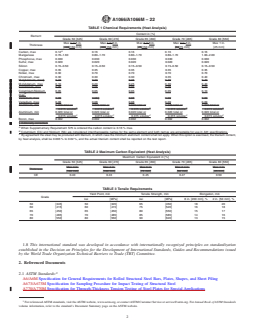
TABLE 1 Chemical Requirements (Heat Analysis)
Content in [%]
Element
Grade 50 [345] Grade 60 [415] Grade 65 [450] Grade 70 [485] Grade 80 [550]
Max 6 in. Max 6 in. Max 6 in. Max 3 in. Max 1 in.
Thickness
[150 mm] [150 mm] [150 mm] [75 mm] [25 mm]
A
Carbon, max 0.14 0.16 0.16 0.16 0.16
Manganese 0.70–1.60 0.80–1.70 0.80–1.70 0.80–1.70 1.00–2.00
Phosphorus, max 0.030 0.030 0.030 0.030 0.030
Sulfur, max 0.020 0.020 0.020 0.020 0.020
Silicon 0.15–0.50 0.15–0.50 0.15–0.50 0.15–0.50 0.15–0.50
Copper, max 0.35 0.35 0.35 0.35 0.35
Nickel, max 0.30 0.70 0.70 0.70 0.70
Chromium, max 0.30 0.30 0.30 0.35 0.40
Molybdenum, max 0.10 0.20 0.25 0.30 0.40
Columbium/Niobium, 0.05 0.05 0.05 0.05 0.10
B
max
Vanadium, max 0.08 0.08 0.08 0.09 0.09
Aluminium, min 0.020 total or 0.020 total or 0.020 total or 0.020 total or 0.020 total or
C C C C C
0.015 soluble 0.015 soluble 0.015 soluble 0.015 soluble 0.015 soluble
Boron, max 0.002 0.002 0.002 0.002 0.002
A
When Supplementary Requirement S75 is ordered the carbon content is 0.16 % max.
B
Columbium (Cb) and Niobium (Nb) are considered interchangeable names for the same element and both names are acceptable for use in A01 specifications.
C
By agreement the steel may be produced with titanium, in which case the minimum aluminum content shall not apply. When this option is exercised, the titanium content,
by heat analysis, shall be 0.006 % to 0.02 %, and the actual titanium content shall be reported on the test report.
TABLE 2 Maximum Carbon Equivalent (Heat Analysis)
Maximum Carbon Equivalent in [%]
Grade 50 [345] Grade 60 [415] Grade 65 [450] Grade 70 [485] Grade 80 [550]
CE 0.40 0.43 0.45 0.47 0.50
TABLE 3 Tensile Requirements
Yield Point, min Tensile Strength, min Elongation, min
Grade
ksi [MPa] ksi [MPa] 8 in. [200 mm], % 2 in. [50 mm], %
50 [345] 50 [345] 65 [450] 18 20
60 [415] 60 [415] 75 [52
...
This document is not an ASTM standard and is intended only to provide the user of an ASTM standard an indication of what changes have been made to the previous version. Because
it may not be technically possible to adequately depict all changes accurately, ASTM recommends that users consult prior editions as appropriate. In all cases only the current version
of the standard as published by ASTM is to be considered the official document.
´2
Designation: A1066/A1066M − 11 (Reapproved 2015) A1066/A1066M − 22
Standard Specification for
High-Strength Low-Alloy Structural Steel Plate Produced by
Thermo-Mechanical Controlled Process (TMCP)
This standard is issued under the fixed designation A1066/A1066M; the number immediately following the designation indicates the
year of original adoption or, in the case of revision, the year of last revision. A number in parentheses indicates the year of last
reapproval. A superscript epsilon (´) indicates an editorial change since the last revision or reapproval.
ε NOTE—Editorial corrections were made to Table 1 in September 2015.
ε NOTE—Editorial corrections were made throughout in November 2017.
1. Scope Scope*
1.1 This specification covers steel plates produced by the thermo-mechanical controlled process (TMCP). Five grades are defined
by the yield strength: 50 [345], 60 [415], 65 [450], 70 [485], and 80 [550]. The plates are intended primarily for use in welded
steel structures.
1.2 The TMCP method consists of rolling reductions and cooling rate controls that result in mechanical properties in the finished
plate that are equivalent to those attained using conventional rolling and heat treatment processes, which entail reheating after
rolling. A description of the TMCP method is given in Appendix X1.
1.3 The maximum thicknesses available in the grades covered by this specification are shown in Table 1.
1.4 Due to the special combination of mechanical and thermal treatment inducing lower rolling temperatures than for conventional
hot rolling the plates can not cannot be formed at elevated temperatures without sustaining significant losses in strength and
toughness. The plates may be formed and post-weld heat-treated at temperatures not exceeding 1050°F [560°C]. Higher
temperatures may be possible if proven that minimum mechanical characteristics are retained after tests with specimens in the
post-weld heat treatment (PWHT) condition. For flame straightening higher temperatures can be used in accordance with the steel
manufacturer’s recommendations.
1.5 If the steel is to be welded, a welding procedure suitable for the grade of steel and intended use or service is to be utilized.
See Appendix X3 of Specification A6/A6M for information on weldability.
1.6 Supplementary requirements are available but shall apply only if specified in the purchase order.
1.7 Units—This specification is expressed in both inch-pound units and SI units; however, unless the purchase order or contract
specifies the applicable M specification designation (SI units), the inch-pound units shall apply. The values stated in either
inch-pound-units inch-pound units or SI units are to be regarded separately as standard. Within the text, the SI units are shown in
brackets. The values stated in each system are not exact equivalents; therefore, each system is to be used independently of the other,
without combining values in any way.other. Combining values from the two systems may result in nonconformances with the
standard.
This specification is under the jurisdiction of ASTM Committee A01 on Steel, Stainless Steel and Related Alloys and is the direct responsibility of Subcommittee A01.02
on Structural Steel for Bridges, Buildings, Rolling Stock and Ships.
Current edition approved Sept. 1, 2015March 15, 2022. Published September 2015May 2022. Originally approved in 2011. Last previous edition approved in 20112015
ɛ2
as A1066/A1066M – 11.11 (2015) . DOI: 10.1520/A1066_A1066M-11R15E02.10.1520/A1066_A1066M-22.
*A Summary of Changes section appears at the end of this standard
Copyright © ASTM International, 100 Barr Harbor Drive, PO Box C700, West Conshohocken, PA 19428-2959. United States
A1066/A1066M − 22
TABLE 1 Chemical Requirements (Heat Analysis)
Content in [%]
Element
Grade 50 [345] Grade 60 [415] Grade 65 [450] Grade 70 [485] Grade 80 [550]
Max 4 in.6 in. Max 4 in.6 in. Max 3 in.6 in. Max 2 in.3 in. Max 1 in.
Thickness
[100[150 mm] [100[150 mm] [75[150 mm] [50[75 mm] [25 mm]
A
Carbon, max 0.14 0.16 0.16 0.16 0.16
Manganese 0.70–1.60 0.80–1.70 0.80–1.70 0.80–1.70 1.00–2.00
Phosphorus, max 0.030 0.030 0.030 0.030 0.030
Sulfur, max 0.020 0.020 0.020 0.020 0.020
Silicon 0.15–0.50 0.15–0.50 0.15–0.50 0.15–0.50 0.15–0.50
Copper, max 0.35 0.35 0.35 0.35 0.35
Nickel, max 0.30 0.70 0.70 0.70 0.70
Chromium, max 0.30 0.30 0.30 0.35 0.40
Molybdenum, max† 0.10 0.20 0.25 0.30 0.40
Molybdenum, max 0.10 0.20 0.25 0.30 0.40
Columbium, max 0.05 0.05 0.05 0.05 0.10
Columbium/Niobium, 0.05 0.05 0.05 0.05 0.10
B
max
Vanadium, max 0.08 0.08† 0.08 0.09 0.09
Vanadium, max 0.08 0.08 0.08 0.09 0.09
Aluminium, min 0.020 total or 0.020 total or 0.020 total or 0.020 total or 0.020 total or
B B B B B
0.015 soluble 0.015 soluble 0.015 soluble 0.015 soluble 0.015 soluble
Aluminium, min 0.020 total or 0.020 total or 0.020 total or 0.020 total or 0.020 total or
C C C C C
0.015 soluble 0.015 soluble 0.015 soluble 0.015 soluble 0.015 soluble
Boron, max 0.002 0.002 0.002 0.002 0.002
† Editorially corrected.
A
When Supplementary Requirement S75 is ordered the carbon content is 0.16 % max.
B
Columbium (Cb) and Niobium (Nb) are considered interchangeable names for the same element and both names are acceptable for use in A01 specifications.
C
By agreement the steel may be produced with titanium, in which case the minimum aluminum content shall not apply. When this option is exercised, the titanium content,
by heat analysis, shall be 0.006 % to 0.02 %, and the actual titanium content shall be reported on the test report.
TABLE 2 Maximum Carbon Equivalent (Heat Analysis)
Maximum Carbon Equivalent in [%]
Grade 50 [345] Grade 60 [415] Grade 65 [450] Grade 70 [485] Grade 80 [550]
Max 4 in. Max 4 in. Max 3 in. Max 2 4 in. Max 1 in.
Thickness
[100 mm] [100 mm] [75 mm] [50 mm] [25 mm]
CE 0.40 0.43 0.45 0.47 0.50
TABLE 3 Tensile Requirements
Yield Point, min Tensile Strength, min Elongation, min
Grade
ksi [MPa] ksi [MPa] 8 in. [200 mm], % 2 in. [50 mm], %
50 [345] 50 [345] 65 [450] 18 20
60 [415] 60 [415] 75 [520] 16 18
65 [450] 65 [450] 80 [550] 15 17
70 [485] 70 [485] 85 [585] 14 16
80 [550] 80 [550] 90 [620] 13 15
1.8 This international standard was developed in accordance with internationally recognized principles on standardization
established in the Decision on Principles for the Development of International Standards, Guides and Recommendations issued
by the World Trade Organization Technical Barriers to Trade (TBT) Committee.
2. Referenced Documents
2.1 ASTM Standards:
A6/A6M Specification for General Requirements for Rolled Structural Steel Bars, Plates, Shapes, and Sheet Piling
A673/A673M Specification for Sampling Procedure for Impact Testing of Structural Steel
A770/A770M Specification for Through-Thickness Tension Testing of Steel Plates for Special Applications
For referenced ASTM standards, visit the ASTM website, www.astm.org, or contact ASTM Customer Service at service@astm.org. For Annual Book of ASTM Standards
volume information, refer to the standard’s Document Summary page on the ASTM website.
A1066/A1066M − 22
3. General Requirements for Delivery
3.1 Material furnished under this specification shall
...
Questions, Comments and Discussion
Ask us and Technical Secretary will try to provide an answer. You can facilitate discussion about the standard in here.
Loading comments...