


ASTM D2739-97(2017)
(Test Method)Standard Test Method for Volume Resistivity of Conductive Adhesives
Standard Test Method for Volume Resistivity of Conductive Adhesives
SIGNIFICANCE AND USE
5.1 Accurate measurement of the volume resistivity of conductive adhesives is important, particularly with respect to applications in electronic packaging techniques. This method measures the resistance of conductive adhesives used in thin films as part of a bonded assembly. This does not imply that the measured results are applicable to different configurations with different metals. This method may be used for acceptance testing and for screening materials.
SCOPE
1.1 This test method covers the determination of the volume resistivity of resin-based conductive adhesives in the cured condition. The test is made on a thin adhesive layer as prepared in a bonded specimen. This test method is used for conductive adhesives that are cured either at room temperature or at elevated temperatures.
1.2 The values stated in either SI or other units shall be regarded separately as standard. SI equivalents to screw threads are shown in the figures.
1.3 This standard does not purport to address the safety concerns, if any, associated with its use. It is the responsibility of the user of this standard to establish appropriate safety, health, and environmental practices and determine the applicability of regulatory limitations prior to use.
1.4 This international standard was developed in accordance with internationally recognized principles on standardization established in the Decision on Principles for the Development of International Standards, Guides and Recommendations issued by the World Trade Organization Technical Barriers to Trade (TBT) Committee.
General Information
- Status
- Published
- Publication Date
- 31-Oct-2017
- Technical Committee
- D14 - Adhesives
- Drafting Committee
- D14.80 - Metal Bonding Adhesives
Relations
- Effective Date
- 01-Nov-2017
- Effective Date
- 01-Jul-2012
- Effective Date
- 01-May-2012
- Effective Date
- 01-Dec-2011
- Effective Date
- 01-Jan-2011
- Effective Date
- 01-Nov-2008
- Effective Date
- 01-Oct-2008
- Effective Date
- 15-Aug-2008
- Effective Date
- 01-Mar-2008
- Effective Date
- 01-Dec-2006
- Effective Date
- 01-Nov-2005
- Effective Date
- 01-Apr-2005
- Effective Date
- 01-Apr-2005
- Effective Date
- 01-Dec-2004
- Effective Date
- 01-Apr-2004
Overview
ASTM D2739-97(2017): Standard Test Method for Volume Resistivity of Conductive Adhesives is a widely recognized method developed by ASTM International. This standard outlines the procedure to accurately determine the volume resistivity of resin-based conductive adhesives in their cured condition, specifically when applied as thin adhesive layers within bonded assemblies. Accurate volume resistivity measurements are critical for electronic packaging, material screening, and acceptance testing in various industrial and research applications. The method applies to adhesives cured at both room and elevated temperatures, ensuring broad applicability.
Key Topics
- Volume Resistivity Measurement: This standard specifies the process for measuring the electrical resistance of a cured conductive adhesive between metal adherends using a resistance bridge-primarily the Kelvin (Resistance) Bridge method.
- Test Specimens: The methodology details the preparation of test assemblies using thin film adhesives cured between metal plugs, with strict control over adhesive layer thickness and surface preparation to ensure consistent results.
- Material Types: Focus is on resin-based conductive adhesives, supporting formulations designed for use in thin layers as part of bonded assemblies in electronics and related fields.
- Environmental Conditioning: The standard prescribes conditions for test specimen preparation, including temperature, humidity, and curing environments, ensuring the results are relevant and repeatable.
- Reporting Requirements: Comprehensive documentation of testing conditions, adhesive types, curing procedures, and measurement results is required to support quality control and traceability.
- Safety and Compliance: Users are responsible for addressing safety and regulatory considerations in line with local and organizational practices.
Applications
ASTM D2739 is essential wherever conductive adhesives are evaluated for use in electronics, assembly, and manufacturing. Practical applications include:
- Electronic Packaging: Ensuring adhesives meet conductivity requirements for bonding or encapsulation in circuit boards and electronic devices.
- Material Acceptance Testing: Screening incoming raw materials or verifying production batches for quality compliance before use in manufacturing.
- Research and Development: Comparing new formulations and process variations for optimal conductivity performance.
- Quality Control: Conducting routine checks during or after manufacturing to confirm adhesives maintain specified volume resistivity values in service.
- Screening for Suitability: Rapid assessment of adhesives for suitability in specific bonded configurations, especially those involving thin film assemblies.
By supporting consistent, accurate measurement of volume resistivity, this standard underpins product reliability, safety, and quality in critical electronic applications.
Related Standards
To further support comprehensive testing and quality assurance, several related ASTM standards are commonly referenced alongside ASTM D2739:
- ASTM D618: Practice for Conditioning Plastics for Testing - Relevant for specimen preparation and conditioning protocols.
- ASTM D907: Terminology of Adhesives - Provides standardized definitions for adhesive terms used in testing and reporting.
- Federal Specification QQ-B-626: Material specification for metals used in test assemblies.
- ISO and IEC Standards: For organizations operating internationally or complying with additional technical barriers to trade, refer to related ISO or IEC standards on electrical conductivity and adhesive testing.
- Other ASTM Adjuncts: Assembly jigs and additional apparatus for preparing test specimens as outlined in the standard.
Keywords
Volume resistivity, conductive adhesives, ASTM D2739, electronic packaging, resin-based adhesives, quality control, acceptance testing, conductivity testing, bonded assemblies, material screening, resistance measurement.


Get Certified
Connect with accredited certification bodies for this standard

DIN CERTCO
DIN Group product certification.

Smithers Quality Assessments
US management systems and product certification.
Sponsored listings
Frequently Asked Questions
ASTM D2739-97(2017) is a standard published by ASTM International. Its full title is "Standard Test Method for Volume Resistivity of Conductive Adhesives". This standard covers: SIGNIFICANCE AND USE 5.1 Accurate measurement of the volume resistivity of conductive adhesives is important, particularly with respect to applications in electronic packaging techniques. This method measures the resistance of conductive adhesives used in thin films as part of a bonded assembly. This does not imply that the measured results are applicable to different configurations with different metals. This method may be used for acceptance testing and for screening materials. SCOPE 1.1 This test method covers the determination of the volume resistivity of resin-based conductive adhesives in the cured condition. The test is made on a thin adhesive layer as prepared in a bonded specimen. This test method is used for conductive adhesives that are cured either at room temperature or at elevated temperatures. 1.2 The values stated in either SI or other units shall be regarded separately as standard. SI equivalents to screw threads are shown in the figures. 1.3 This standard does not purport to address the safety concerns, if any, associated with its use. It is the responsibility of the user of this standard to establish appropriate safety, health, and environmental practices and determine the applicability of regulatory limitations prior to use. 1.4 This international standard was developed in accordance with internationally recognized principles on standardization established in the Decision on Principles for the Development of International Standards, Guides and Recommendations issued by the World Trade Organization Technical Barriers to Trade (TBT) Committee.
SIGNIFICANCE AND USE 5.1 Accurate measurement of the volume resistivity of conductive adhesives is important, particularly with respect to applications in electronic packaging techniques. This method measures the resistance of conductive adhesives used in thin films as part of a bonded assembly. This does not imply that the measured results are applicable to different configurations with different metals. This method may be used for acceptance testing and for screening materials. SCOPE 1.1 This test method covers the determination of the volume resistivity of resin-based conductive adhesives in the cured condition. The test is made on a thin adhesive layer as prepared in a bonded specimen. This test method is used for conductive adhesives that are cured either at room temperature or at elevated temperatures. 1.2 The values stated in either SI or other units shall be regarded separately as standard. SI equivalents to screw threads are shown in the figures. 1.3 This standard does not purport to address the safety concerns, if any, associated with its use. It is the responsibility of the user of this standard to establish appropriate safety, health, and environmental practices and determine the applicability of regulatory limitations prior to use. 1.4 This international standard was developed in accordance with internationally recognized principles on standardization established in the Decision on Principles for the Development of International Standards, Guides and Recommendations issued by the World Trade Organization Technical Barriers to Trade (TBT) Committee.
ASTM D2739-97(2017) is classified under the following ICS (International Classification for Standards) categories: 83.180 - Adhesives. The ICS classification helps identify the subject area and facilitates finding related standards.
ASTM D2739-97(2017) has the following relationships with other standards: It is inter standard links to ASTM D2739-97(2010), ASTM D907-12a, ASTM D907-12, ASTM D907-11a, ASTM D907-11, ASTM D618-08, ASTM D907-08b, ASTM D907-08a, ASTM D907-08, ASTM D907-06, ASTM D618-05, ASTM D907-05e1, ASTM D907-05, ASTM D907-04a, ASTM D907-04. Understanding these relationships helps ensure you are using the most current and applicable version of the standard.
ASTM D2739-97(2017) is available in PDF format for immediate download after purchase. The document can be added to your cart and obtained through the secure checkout process. Digital delivery ensures instant access to the complete standard document.
Standards Content (Sample)
This international standard was developed in accordance with internationally recognized principles on standardization established in the Decision on Principles for the
Development of International Standards, Guides and Recommendations issued by the World Trade Organization Technical Barriers to Trade (TBT) Committee.
Designation: D2739 − 97 (Reapproved 2017)
Standard Test Method for
Volume Resistivity of Conductive Adhesives
This standard is issued under the fixed designation D2739; the number immediately following the designation indicates the year of
original adoption or, in the case of revision, the year of last revision.Anumber in parentheses indicates the year of last reapproval.A
superscript epsilon (´) indicates an editorial change since the last revision or reapproval.
1. Scope 3. Terminology
1.1 Thistestmethodcoversthedeterminationofthevolume 3.1 Definitions:
resistivity of resin-based conductive adhesives in the cured 3.1.1 Many terms in this test method are defined in Termi-
condition.Thetestismadeonathinadhesivelayerasprepared nology D907.
in a bonded specimen. This test method is used for conductive 3.1.2 conductivity, n—theratioofthecurrentdensitycarried
adhesives that are cured either at room temperature or at through a specimen to the potential gradient paralleling the
elevated temperatures. current. This is numerically equal to the conductance between
opposite faces of a unit cube of liquid. It is the reciprocal of
1.2 The values stated in either SI or other units shall be
resistivity. D2864, D27
regarded separately as standard. SI equivalents to screw
3.1.3 resistivity, volume, n—theratiooftheelectricpotential
threads are shown in the figures.
gradient to the current density when the gradient is parallel to
1.3 This standard does not purport to address the safety
the current in the material. D1566, D11
concerns, if any, associated with its use. It is the responsibility
of the user of this standard to establish appropriate safety,
4. Summary of Test Method
health, and environmental practices and determine the appli-
4.1 Thevolumeresistivityofadhesivelayerscuredbetween
cability of regulatory limitations prior to use.
metal adherends is measured on a resistance bridge. Tensile
1.4 This international standard was developed in accor-
adhesion plugs (Fig. 1) are described in this test method.Any
dance with internationally recognized principles on standard-
other test specimens and materials can be used as long as
ization established in the Decision on Principles for the
similar precautions (see Section 7) are observed regarding
Development of International Standards, Guides and Recom-
preparation and tolerances.
mendations issued by the World Trade Organization Technical
Barriers to Trade (TBT) Committee.
5. Significance and Use
2. Referenced Documents
5.1 Accurate measurement of the volume resistivity of
2 conductive adhesives is important, particularly with respect to
2.1 ASTM Standards:
applications in electronic packaging techniques. This method
D618Practice for Conditioning Plastics for Testing
measures the resistance of conductive adhesives used in thin
D907Terminology of Adhesives
filmsaspartofabondedassembly.Thisdoesnotimplythatthe
2.2 Federal Specification:
measuredresultsareapplicabletodifferentconfigurationswith
QQ-B-626 Composition 22
different metals. This method may be used for acceptance
2.3 ASTM Adjuncts:
testing and for screening materials.
Assembly Jig
6. Apparatus
1 6.1 Kelvin (Resistance) Bridge,calibratedto1%accuracy.
This test method is under the jurisdiction of ASTM Committee D14 on
Adhesives and is the direct responsibility of Subcommittee D14.80 on Metal
6.2 With the agreement of the interested parties, any metal
Bonding Adhesives.
tensile adhesion plugs (Fig. 1) can be used to prepare the
Current edition approved Nov. 1, 2017. Published November 2017. Originally
approved in 1968. Last previous edition approved in 2010 as D2739–97(2010). tensile adhesion specimens.
DOI: 10.1520/D2739-97R17.
2 NOTE 1—Different metals will inherently provide different resistance
For referenced ASTM standards, visit the ASTM website, www.astm.org, or
contact ASTM Customer Service at service@astm.org. For Annual Book of ASTM
Standards volume information, refer to the standard’s Document Summary page on
the ASTM website. Plugs to accommodate banana plug—No. 192, Herman H. Smith, Inc., or
Available from DLA Document Services, Building 4/D, 700 Robbins Ave., equivalent.
Philadelphia, PA 19111-5094, http://quicksearch.dla.mil. Satisfactory resistance bridges are made by: Leads and Northup Co. Bridge
Detailed drawings of the assembly jig are available from ASTM International Catalog No. 4306, Minneapolis Honeywell Division Catalog No. 1622, and Biddle
Headquarters. Order Adjunct No. ADJD2739. Original adjunct produced in 1987. Instruments Catalog No. 603282.
Copyright © ASTM International, 100 Barr Harbor Drive, PO Box C700, West Conshohocken, PA 19428-2959. United States
D2739 − 97 (2017)
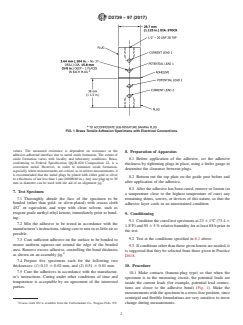
FIG. 1 Brass Tensile Adhesion Specimens with Electrical Connections
values. The measured resistance is dependent on resistance at the
8. Preparation of Apparatus
adhesive-adherend interface due to metal oxide formation. The extent of
oxide formation varies with locality and laboratory conditions. Brass, 8.1 Before application of the adhesive, set the adhesive
conforming to Federal Specification QQ-B-626 Composition 22, is a
thickness by tightening plugs in place, using a feeler gauge to
convenient metal. However, in order to minimize oxide formation,
determine the clearance between plugs.
especiallywheremeasurementsarecritical,asinrefereemeasurements,it
is recommended that the metal plugs be plated with either gold or silver
8.2 Botto
...
Questions, Comments and Discussion
Ask us and Technical Secretary will try to provide an answer. You can facilitate discussion about the standard in here.
Loading comments...