

ASTM B265-20a
(Specification)Standard Specification for Titanium and Titanium Alloy Strip, Sheet, and Plate
General Information
- Abstract
ABSTRACT
This specification covers annealed titanium and titanium alloy strip, sheet, and plate. The grades of titanium and titanium alloy metal covered by this specification shall have the chemical composition requirements of: nitrogen, carbon, hydrogen, iron, oxygen, aluminum, vanadium, tin, ruthenium, palladium, cobalt, molybdenum, chromium, nickel, niobium, zirconium, silicon, and titanium. For sheet and strip, the bend test specimen shall stand being bent cold through without fracture in the outside of the bent portion. Product analysis tolerances cover variations between laboratories in the measurement of chemical content of the specimen. In cutting samples for analysis, the operation should be carried out insofar as possible in a dust-free atmosphere because utmost care must be used in sampling titanium for chemical analysis due to its great affinity for elements such as oxygen, nitrogen, and hydrogen. The chemical analysis shall be conducted by the standard techniques normally utilized by the manufacturer and purchaser.
SCOPE
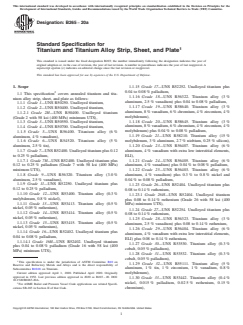
1.1 This specification2 covers annealed titanium and titanium alloy strip, sheet, and plate as follows:
1.1.1 Grade 1—UNS R50250. Unalloyed titanium,
1.1.2 Grade 2—UNS R50400. Unalloyed titanium,
1.1.2.1 Grade 2H—UNS R50400. Unalloyed titanium (Grade 2 with 58 ksi (400 MPa) minimum UTS),
1.1.3 Grade 3—UNS R50550. Unalloyed titanium,
1.1.4 Grade 4—UNS R50700. Unalloyed titanium,
1.1.5 Grade 5—UNS R56400. Titanium alloy (6 % aluminum, 4 % vanadium),
1.1.6 Grade 6—UNS R54520. Titanium alloy (5 % aluminum, 2.5 % tin),
1.1.7 Grade 7—UNS R52400. Unalloyed titanium plus 0.12 to 0.25 % palladium,
1.1.7.1 Grade 7H—UNS R52400. Unalloyed titanium plus 0.12 to 0.25 % palladium (Grade 7 with 58 ksi (400 MPa) minimum UTS),
1.1.8 Grade 9—UNS R56320. Titanium alloy (3.0 % aluminum, 2.5 % vanadium),
1.1.9 Grade 11—UNS R52250. Unalloyed titanium plus 0.12 to 0.25 % palladium,
1.1.10 Grade 12—UNS R53400. Titanium alloy (0.3 % molybdenum, 0.8 % nickel),
1.1.11 Grade 13—UNS R53413. Titanium alloy (0.5 % nickel, 0.05 % ruthenium),
1.1.12 Grade 14—UNS R53414. Titanium alloy (0.5 % nickel, 0.05 % ruthenium),
1.1.13 Grade 15—UNS R53415. Titanium alloy (0.5 % nickel, 0.05 % ruthenium),
1.1.14 Grade 16—UNS R52402. Unalloyed titanium plus 0.04 to 0.08 % palladium,
1.1.14.1 Grade 16H—UNS R52402. Unalloyed titanium plus 0.04 to 0.08 % palladium (Grade 16 with 58 ksi (400 MPa) minimum UTS),
1.1.15 Grade 17—UNS R52252. Unalloyed titanium plus 0.04 to 0.08 % palladium,
1.1.16 Grade 18—UNS R56322. Titanium alloy (3 % aluminum, 2.5 % vanadium) plus 0.04 to 0.08 % palladium,
1.1.17 Grade 19—UNS R58640. Titanium alloy (3 % aluminum, 8 % vanadium, 6 % chromium, 4 % zirconium, 4 % molybdenum),
1.1.18 Grade 20—UNS R58645. Titanium alloy (3 % aluminum, 8 % vanadium, 6 % chromium, 4 % zirconium, 4 % molybdenum) plus 0.04 % to 0.08 % palladium,
1.1.19 Grade 21—UNS R58210. Titanium alloy (15 % molybdenum, 3 % aluminum, 2.7 % niobium, 0.25 % silicon),
1.1.20 Grade 23—UNS R56407. Titanium alloy (6 % aluminum, 4 % vanadium with extra low interstitial elements, ELI),
1.1.21 Grade 24—UNS R56405. Titanium alloy (6 % aluminum, 4 % vanadium) plus 0.04 % to 0.08 % palladium,
1.1.22 Grade 25—UNS R56403. Titanium alloy (6 % aluminum, 4 % vanadium) plus 0.3 % to 0.8 % nickel and 0.04 % to 0.08 % palladium,
1.1.23 Grade 26—UNS R52404. Unalloyed titanium plus 0.08 to 0.14 % ruthenium,
1.1.23.1 Grade 26H—UNS R52404. Unalloyed titanium plus 0.08 to 0.14 % ruthenium (Grade 26 with 58 ksi (400 MPa) minimum UTS),
1.1.24 Grade 27—UNS R52254. Unalloyed titanium plus 0.08 to 0.14 % ruthenium,
1.1.25 Grade 28—UNS R56323. Titanium alloy (3 % aluminum, 2.5 % vanadium) plus 0.08 to 0.14 % ruthenium,
1.1.26 Grade 29—UNS R56404. Titanium alloy (6 % aluminum, 4 % vanadium with extra low interstitial elements, ELI) plus 0.08 to 0.14 % ruthenium,
1.1.27 Grade 30—UNS R5...
- Status
- Published
- Publication Date
- 31-Mar-2020
- Technical Committee
- B10 - Reactive and Refractory Metals and Alloys
- Drafting Committee
- B10.01 - Titanium
Buy Documents
ASTM B265-20a - Standard Specification for Titanium and Titanium Alloy Strip, Sheet, and Plate
REDLINE ASTM B265-20a - Standard Specification for Titanium and Titanium Alloy Strip, Sheet, and Plate
Overview
ASTM B265-20a: Standard Specification for Titanium and Titanium Alloy Strip, Sheet, and Plate sets comprehensive quality and material requirements for annealed titanium and titanium alloy products. Issued by ASTM International, this standard ensures consistent properties in titanium and its alloys for use as strip, sheet, and plate. Covering a wide range of grades, including commercially pure titanium and multiple titanium alloys with additions such as aluminum, vanadium, palladium, nickel, and ruthenium, ASTM B265-20a is essential for suppliers, manufacturers, and end-users who require reliable and certified titanium materials for critical applications.
Key Topics
- Material Grades: Specifies a large range of titanium and titanium alloy grades (e.g., Grades 1-40), each with defined chemical compositions for elements such as nitrogen, carbon, hydrogen, iron, oxygen, aluminum, vanadium, palladium, nickel, and others.
- Product Forms: Applies to titanium strip (≤0.187 in. thick, <24 in. wide), sheet (≤0.187 in. thick, ≥24 in. wide), and plate (>0.187 in. thick, >10 in. wide).
- Mechanical Properties: Sets standards for minimum tensile strength, yield strength, and elongation, as well as bend test requirements, which ensure the ductility and structural integrity of the materials.
- Chemical Analysis: Establishes strict procedures and tolerances for sampling and analysis, reflecting titanium’s affinity for elements like oxygen, nitrogen, and hydrogen.
- Tolerance and Finish: Includes detailed tables listing permissible tolerances for thickness, width, length, weight variation, and flatness for strip, sheet, and plate products.
- Marking and Traceability: Requires clear product marking for identification of grade, specification, heat number, and manufacturer, facilitating traceability throughout the supply chain.
- Testing Protocols: References standard test methods for tension testing, bend testing, and chemical analysis to ensure consistency between manufacturers and purchasers.
Applications
ASTM B265-20a is widely referenced by industries that require high-performance titanium and titanium alloy materials. Primary applications include:
- Aerospace: Employed in airframes, jet engines, and other aerospace structures due to the high strength-to-weight ratio and corrosion resistance of titanium alloys.
- Chemical Processing: Used in equipment and heat exchangers where resistance to corrosion from aggressive chemicals is critical.
- Medical Devices: Selected for surgical implants, orthopedic devices, and equipment, leveraging titanium’s biocompatibility and mechanical strength.
- Marine Engineering: Suited for seawater handling, desalination plants, and ship components due to excellent seawater corrosion resistance.
- Power Generation: Integral to equipment in nuclear, fossil, and renewable energy sectors where high temperature and corrosion resistance are necessary.
- Pressure Vessels: H grades (e.g., 2H, 7H, 16H, 26H) are specifically intended for use in pressure vessel applications.
Related Standards
- ASME SB-265: The ASME Boiler and Pressure Vessel Code includes SB-265, the equivalent specification for boiler and pressure vessel applications.
- ASTM E8/E8M: Methods for tension testing of metallic materials referenced for mechanical property verification.
- ASTM E290: Methods for bend testing of material for ductility.
- ASTM E539, E2371, E1409, E1447, E1941: Test methods for chemical analysis of titanium and titanium alloys.
- ASTM E29: Guidance for significant digits and data conformance.
- Other ASTM titanium standards: Related documents for titanium forgings, bars, and wires.
Keywords: ASTM B265, titanium sheet, titanium plate, titanium alloy strip, titanium alloy standards, mechanical properties, chemical analysis, material tolerance, aerospace titanium, medical-grade titanium, pressure vessel titanium.
Relations
- Replaces
ASTM B265-20 - Standard Specification for Titanium and Titanium Alloy Strip, Sheet, and Plate - Effective Date
- 01-Apr-2020
- Effective Date
- 01-Mar-2019
- Effective Date
- 01-Apr-2013
- Effective Date
- 01-May-2011
- Effective Date
- 01-Dec-2010
- Effective Date
- 01-Mar-2009
- Effective Date
- 01-Oct-2008
- Effective Date
- 15-Jun-2008
- Effective Date
- 15-Jun-2008
- Effective Date
- 15-Jun-2008
- Effective Date
- 01-Jun-2007
- Effective Date
- 01-Dec-2006
- Effective Date
- 15-Nov-2006
- Effective Date
- 15-Sep-2006
- Effective Date
- 01-May-2006
Buy Documents
ASTM B265-20a - Standard Specification for Titanium and Titanium Alloy Strip, Sheet, and Plate
REDLINE ASTM B265-20a - Standard Specification for Titanium and Titanium Alloy Strip, Sheet, and Plate
Get Certified
Connect with accredited certification bodies for this standard

Element Materials Technology
Materials testing and product certification.

Inštitut za kovinske materiale in tehnologije
Institute of Metals and Technology. Materials testing, metallurgical analysis, NDT.
Sponsored listings
Frequently Asked Questions
ASTM B265-20a is a technical specification published by ASTM International. Its full title is "Standard Specification for Titanium and Titanium Alloy Strip, Sheet, and Plate". This standard covers: ABSTRACT This specification covers annealed titanium and titanium alloy strip, sheet, and plate. The grades of titanium and titanium alloy metal covered by this specification shall have the chemical composition requirements of: nitrogen, carbon, hydrogen, iron, oxygen, aluminum, vanadium, tin, ruthenium, palladium, cobalt, molybdenum, chromium, nickel, niobium, zirconium, silicon, and titanium. For sheet and strip, the bend test specimen shall stand being bent cold through without fracture in the outside of the bent portion. Product analysis tolerances cover variations between laboratories in the measurement of chemical content of the specimen. In cutting samples for analysis, the operation should be carried out insofar as possible in a dust-free atmosphere because utmost care must be used in sampling titanium for chemical analysis due to its great affinity for elements such as oxygen, nitrogen, and hydrogen. The chemical analysis shall be conducted by the standard techniques normally utilized by the manufacturer and purchaser. SCOPE 1.1 This specification2 covers annealed titanium and titanium alloy strip, sheet, and plate as follows: 1.1.1 Grade 1—UNS R50250. Unalloyed titanium, 1.1.2 Grade 2—UNS R50400. Unalloyed titanium, 1.1.2.1 Grade 2H—UNS R50400. Unalloyed titanium (Grade 2 with 58 ksi (400 MPa) minimum UTS), 1.1.3 Grade 3—UNS R50550. Unalloyed titanium, 1.1.4 Grade 4—UNS R50700. Unalloyed titanium, 1.1.5 Grade 5—UNS R56400. Titanium alloy (6 % aluminum, 4 % vanadium), 1.1.6 Grade 6—UNS R54520. Titanium alloy (5 % aluminum, 2.5 % tin), 1.1.7 Grade 7—UNS R52400. Unalloyed titanium plus 0.12 to 0.25 % palladium, 1.1.7.1 Grade 7H—UNS R52400. Unalloyed titanium plus 0.12 to 0.25 % palladium (Grade 7 with 58 ksi (400 MPa) minimum UTS), 1.1.8 Grade 9—UNS R56320. Titanium alloy (3.0 % aluminum, 2.5 % vanadium), 1.1.9 Grade 11—UNS R52250. Unalloyed titanium plus 0.12 to 0.25 % palladium, 1.1.10 Grade 12—UNS R53400. Titanium alloy (0.3 % molybdenum, 0.8 % nickel), 1.1.11 Grade 13—UNS R53413. Titanium alloy (0.5 % nickel, 0.05 % ruthenium), 1.1.12 Grade 14—UNS R53414. Titanium alloy (0.5 % nickel, 0.05 % ruthenium), 1.1.13 Grade 15—UNS R53415. Titanium alloy (0.5 % nickel, 0.05 % ruthenium), 1.1.14 Grade 16—UNS R52402. Unalloyed titanium plus 0.04 to 0.08 % palladium, 1.1.14.1 Grade 16H—UNS R52402. Unalloyed titanium plus 0.04 to 0.08 % palladium (Grade 16 with 58 ksi (400 MPa) minimum UTS), 1.1.15 Grade 17—UNS R52252. Unalloyed titanium plus 0.04 to 0.08 % palladium, 1.1.16 Grade 18—UNS R56322. Titanium alloy (3 % aluminum, 2.5 % vanadium) plus 0.04 to 0.08 % palladium, 1.1.17 Grade 19—UNS R58640. Titanium alloy (3 % aluminum, 8 % vanadium, 6 % chromium, 4 % zirconium, 4 % molybdenum), 1.1.18 Grade 20—UNS R58645. Titanium alloy (3 % aluminum, 8 % vanadium, 6 % chromium, 4 % zirconium, 4 % molybdenum) plus 0.04 % to 0.08 % palladium, 1.1.19 Grade 21—UNS R58210. Titanium alloy (15 % molybdenum, 3 % aluminum, 2.7 % niobium, 0.25 % silicon), 1.1.20 Grade 23—UNS R56407. Titanium alloy (6 % aluminum, 4 % vanadium with extra low interstitial elements, ELI), 1.1.21 Grade 24—UNS R56405. Titanium alloy (6 % aluminum, 4 % vanadium) plus 0.04 % to 0.08 % palladium, 1.1.22 Grade 25—UNS R56403. Titanium alloy (6 % aluminum, 4 % vanadium) plus 0.3 % to 0.8 % nickel and 0.04 % to 0.08 % palladium, 1.1.23 Grade 26—UNS R52404. Unalloyed titanium plus 0.08 to 0.14 % ruthenium, 1.1.23.1 Grade 26H—UNS R52404. Unalloyed titanium plus 0.08 to 0.14 % ruthenium (Grade 26 with 58 ksi (400 MPa) minimum UTS), 1.1.24 Grade 27—UNS R52254. Unalloyed titanium plus 0.08 to 0.14 % ruthenium, 1.1.25 Grade 28—UNS R56323. Titanium alloy (3 % aluminum, 2.5 % vanadium) plus 0.08 to 0.14 % ruthenium, 1.1.26 Grade 29—UNS R56404. Titanium alloy (6 % aluminum, 4 % vanadium with extra low interstitial elements, ELI) plus 0.08 to 0.14 % ruthenium, 1.1.27 Grade 30—UNS R5...
ABSTRACT This specification covers annealed titanium and titanium alloy strip, sheet, and plate. The grades of titanium and titanium alloy metal covered by this specification shall have the chemical composition requirements of: nitrogen, carbon, hydrogen, iron, oxygen, aluminum, vanadium, tin, ruthenium, palladium, cobalt, molybdenum, chromium, nickel, niobium, zirconium, silicon, and titanium. For sheet and strip, the bend test specimen shall stand being bent cold through without fracture in the outside of the bent portion. Product analysis tolerances cover variations between laboratories in the measurement of chemical content of the specimen. In cutting samples for analysis, the operation should be carried out insofar as possible in a dust-free atmosphere because utmost care must be used in sampling titanium for chemical analysis due to its great affinity for elements such as oxygen, nitrogen, and hydrogen. The chemical analysis shall be conducted by the standard techniques normally utilized by the manufacturer and purchaser. SCOPE 1.1 This specification2 covers annealed titanium and titanium alloy strip, sheet, and plate as follows: 1.1.1 Grade 1—UNS R50250. Unalloyed titanium, 1.1.2 Grade 2—UNS R50400. Unalloyed titanium, 1.1.2.1 Grade 2H—UNS R50400. Unalloyed titanium (Grade 2 with 58 ksi (400 MPa) minimum UTS), 1.1.3 Grade 3—UNS R50550. Unalloyed titanium, 1.1.4 Grade 4—UNS R50700. Unalloyed titanium, 1.1.5 Grade 5—UNS R56400. Titanium alloy (6 % aluminum, 4 % vanadium), 1.1.6 Grade 6—UNS R54520. Titanium alloy (5 % aluminum, 2.5 % tin), 1.1.7 Grade 7—UNS R52400. Unalloyed titanium plus 0.12 to 0.25 % palladium, 1.1.7.1 Grade 7H—UNS R52400. Unalloyed titanium plus 0.12 to 0.25 % palladium (Grade 7 with 58 ksi (400 MPa) minimum UTS), 1.1.8 Grade 9—UNS R56320. Titanium alloy (3.0 % aluminum, 2.5 % vanadium), 1.1.9 Grade 11—UNS R52250. Unalloyed titanium plus 0.12 to 0.25 % palladium, 1.1.10 Grade 12—UNS R53400. Titanium alloy (0.3 % molybdenum, 0.8 % nickel), 1.1.11 Grade 13—UNS R53413. Titanium alloy (0.5 % nickel, 0.05 % ruthenium), 1.1.12 Grade 14—UNS R53414. Titanium alloy (0.5 % nickel, 0.05 % ruthenium), 1.1.13 Grade 15—UNS R53415. Titanium alloy (0.5 % nickel, 0.05 % ruthenium), 1.1.14 Grade 16—UNS R52402. Unalloyed titanium plus 0.04 to 0.08 % palladium, 1.1.14.1 Grade 16H—UNS R52402. Unalloyed titanium plus 0.04 to 0.08 % palladium (Grade 16 with 58 ksi (400 MPa) minimum UTS), 1.1.15 Grade 17—UNS R52252. Unalloyed titanium plus 0.04 to 0.08 % palladium, 1.1.16 Grade 18—UNS R56322. Titanium alloy (3 % aluminum, 2.5 % vanadium) plus 0.04 to 0.08 % palladium, 1.1.17 Grade 19—UNS R58640. Titanium alloy (3 % aluminum, 8 % vanadium, 6 % chromium, 4 % zirconium, 4 % molybdenum), 1.1.18 Grade 20—UNS R58645. Titanium alloy (3 % aluminum, 8 % vanadium, 6 % chromium, 4 % zirconium, 4 % molybdenum) plus 0.04 % to 0.08 % palladium, 1.1.19 Grade 21—UNS R58210. Titanium alloy (15 % molybdenum, 3 % aluminum, 2.7 % niobium, 0.25 % silicon), 1.1.20 Grade 23—UNS R56407. Titanium alloy (6 % aluminum, 4 % vanadium with extra low interstitial elements, ELI), 1.1.21 Grade 24—UNS R56405. Titanium alloy (6 % aluminum, 4 % vanadium) plus 0.04 % to 0.08 % palladium, 1.1.22 Grade 25—UNS R56403. Titanium alloy (6 % aluminum, 4 % vanadium) plus 0.3 % to 0.8 % nickel and 0.04 % to 0.08 % palladium, 1.1.23 Grade 26—UNS R52404. Unalloyed titanium plus 0.08 to 0.14 % ruthenium, 1.1.23.1 Grade 26H—UNS R52404. Unalloyed titanium plus 0.08 to 0.14 % ruthenium (Grade 26 with 58 ksi (400 MPa) minimum UTS), 1.1.24 Grade 27—UNS R52254. Unalloyed titanium plus 0.08 to 0.14 % ruthenium, 1.1.25 Grade 28—UNS R56323. Titanium alloy (3 % aluminum, 2.5 % vanadium) plus 0.08 to 0.14 % ruthenium, 1.1.26 Grade 29—UNS R56404. Titanium alloy (6 % aluminum, 4 % vanadium with extra low interstitial elements, ELI) plus 0.08 to 0.14 % ruthenium, 1.1.27 Grade 30—UNS R5...
ASTM B265-20a is classified under the following ICS (International Classification for Standards) categories: 77.150.50 - Titanium products. The ICS classification helps identify the subject area and facilitates finding related standards.
ASTM B265-20a has the following relationships with other standards: It is inter standard links to ASTM B265-20, ASTM E539-19, ASTM E290-13, ASTM E539-11, ASTM E1941-10, ASTM E1447-09, ASTM E29-08, ASTM E2626-08, ASTM E1409-08, ASTM E2626-08e1, ASTM E539-07, ASTM E539-06, ASTM E29-06b, ASTM E29-06a, ASTM E29-06. Understanding these relationships helps ensure you are using the most current and applicable version of the standard.
ASTM B265-20a is available in PDF format for immediate download after purchase. The document can be added to your cart and obtained through the secure checkout process. Digital delivery ensures instant access to the complete standard document.
Standards Content (Sample)
This international standard was developed in accordance with internationally recognized principles on standardization established in the Decision on Principles for the
Development of International Standards, Guides and Recommendations issued by the World Trade Organization Technical Barriers to Trade (TBT) Committee.
Designation:B265 −20a
Standard Specification for
Titanium and Titanium Alloy Strip, Sheet, and Plate
This standard is issued under the fixed designation B265; the number immediately following the designation indicates the year of
original adoption or, in the case of revision, the year of last revision. A number in parentheses indicates the year of last reapproval. A
superscript epsilon (´) indicates an editorial change since the last revision or reapproval.
This standard has been approved for use by agencies of the U.S. Department of Defense.
1. Scope 1.1.15 Grade 17—UNS R52252. Unalloyed titanium plus
2 0.04 to 0.08 % palladium,
1.1 This specification covers annealed titanium and tita-
1.1.16 Grade 18—UNS R56322. Titanium alloy (3 %
nium alloy strip, sheet, and plate as follows:
aluminum, 2.5 % vanadium) plus 0.04 to 0.08 % palladium,
1.1.1 Grade 1—UNS R50250. Unalloyed titanium,
1.1.17 Grade 19—UNS R58640. Titanium alloy (3 %
1.1.2 Grade 2—UNS R50400. Unalloyed titanium,
aluminum, 8 % vanadium, 6 % chromium, 4 % zirconium, 4 %
1.1.2.1 Grade 2H—UNS R50400. Unalloyed titanium
molybdenum),
(Grade 2 with 58 ksi (400 MPa) minimum UTS),
1.1.18 Grade 20—UNS R58645. Titanium alloy (3 %
1.1.3 Grade 3—UNS R50550. Unalloyed titanium,
aluminum, 8 % vanadium, 6 % chromium, 4 % zirconium, 4 %
1.1.4 Grade 4—UNS R50700. Unalloyed titanium,
molybdenum) plus 0.04 % to 0.08 % palladium,
1.1.5 Grade 5—UNS R56400. Titanium alloy (6 %
1.1.19 Grade 21—UNS R58210. Titanium alloy (15 %
aluminum, 4 % vanadium),
molybdenum, 3 % aluminum, 2.7 % niobium, 0.25 % silicon),
1.1.6 Grade 6—UNS R54520. Titanium alloy (5 %
1.1.20 Grade 23—UNS R56407. Titanium alloy (6 %
aluminum, 2.5 % tin),
1.1.7 Grade 7—UNS R52400. Unalloyed titanium plus 0.12 aluminum, 4 % vanadium with extra low interstitial elements,
ELI),
to 0.25 % palladium,
1.1.7.1 Grade 7H—UNS R52400. Unalloyed titanium plus 1.1.21 Grade 24—UNS R56405. Titanium alloy (6 %
0.12 to 0.25 % palladium (Grade 7 with 58 ksi (400 MPa) aluminum, 4 % vanadium) plus 0.04 % to 0.08 % palladium,
minimum UTS),
1.1.22 Grade 25—UNS R56403. Titanium alloy (6 %
1.1.8 Grade 9—UNS R56320. Titanium alloy (3.0 % aluminum, 4 % vanadium) plus 0.3 % to 0.8 % nickel and
aluminum, 2.5 % vanadium),
0.04 % to 0.08 % palladium,
1.1.9 Grade 11—UNS R52250. Unalloyed titanium plus
1.1.23 Grade 26—UNS R52404. Unalloyed titanium plus
0.12 to 0.25 % palladium,
0.08 to 0.14 % ruthenium,
1.1.10 Grade 12—UNS R53400. Titanium alloy (0.3 %
1.1.23.1 Grade 26H—UNS R52404. Unalloyed titanium
molybdenum, 0.8 % nickel),
plus 0.08 to 0.14 % ruthenium (Grade 26 with 58 ksi (400
1.1.11 Grade 13—UNS R53413. Titanium alloy (0.5 %
MPa) minimum UTS),
nickel, 0.05 % ruthenium),
1.1.24 Grade 27—UNS R52254. Unalloyed titanium plus
1.1.12 Grade 14—UNS R53414. Titanium alloy (0.5 %
0.08 to 0.14 % ruthenium,
nickel, 0.05 % ruthenium),
1.1.25 Grade 28—UNS R56323. Titanium alloy (3 %
1.1.13 Grade 15—UNS R53415. Titanium alloy (0.5 %
aluminum, 2.5 % vanadium) plus 0.08 to 0.14 % ruthenium,
nickel, 0.05 % ruthenium),
1.1.26 Grade 29—UNS R56404. Titanium alloy (6 %
1.1.14 Grade 16—UNS R52402. Unalloyed titanium plus
aluminum, 4 % vanadium with extra low interstitial elements,
0.04 to 0.08 % palladium,
ELI) plus 0.08 to 0.14 % ruthenium,
1.1.14.1 Grade 16H—UNS R52402. Unalloyed titanium
1.1.27 Grade 30—UNS R53530. Titanium alloy (0.3 %
plus 0.04 to 0.08 % palladium (Grade 16 with 58 ksi (400
cobalt, 0.05 % palladium),
MPa) minimum UTS),
1.1.28 Grade 31—UNS R53532. Titanium alloy (0.3 %
cobalt, 0.05 % palladium),
This specification is under the jurisdiction of ASTM Committee B10 on
1.1.29 Grade 32—UNS R55111. Titanium alloy (5 %
Reactive and Refractory Metals and Alloys and is the direct responsibility of
aluminum, 1 % tin, 1 % zirconium, 1 % vanadium, 0.8 %
Subcommittee B10.01 on Titanium.
Current edition approved April 1, 2020. Published April 2020. Originally
molybdenum),
approved in 1952. Last previous edition approved in 2020 as B265 – 20. DOI:
1.1.30 Grade 33—UNS R53442. Titanium alloy (0.4 %
10.1520/B0265-20A.
2 nickel, 0.015 % palladium, 0.02 5 % ruthenium, 0.15 %
For ASME Boiler and Pressure Vessel Code applications see related Specifi-
cations SB-265 in Section II of that Code. chromium),
Copyright © ASTM International, 100 Barr Harbor Drive, PO Box C700, West Conshohocken, PA 19428-2959. United States
B265−20a
1.1.31 Grade 34—UNS R53445. Titanium alloy (0.4 % E539 Test Method for Analysis of Titanium Alloys by
nickel, 0.015 % palladium, 0.025 % ruthenium, 0.15 % WavelengthDispersiveX-RayFluorescenceSpectrometry
chromium), E1409 Test Method for Determination of Oxygen and Nitro-
1.1.32 Grade 35—UNS R56340. Titanium alloy (4.5 % gen in Titanium and Titanium Alloys by Inert Gas Fusion
aluminum, 2 % molybdenum, 1.6 % vanadium, 0.5 % iron, E1447 Test Method for Determination of Hydrogen in Tita-
0.3 % silicon), nium and Titanium Alloys by Inert Gas Fusion Thermal
1.1.33 Grade 36—UNS R58450. Titanium alloy (45 % Conductivity/Infrared Detection Method
niobium), E1941 Test Method for Determination of Carbon in Refrac-
1.1.34 Grade 37—UNS R52815. Titanium alloy (1.5 % tory and Reactive Metals andTheirAlloys by Combustion
aluminum), Analysis
1.1.35 Grade 38—UNS R54250. Titanium alloy (4 % E2371 Test Method for Analysis of Titanium and Titanium
aluminum, 2.5 % vanadium, 1.5 % iron), Alloys by Direct Current Plasma and Inductively Coupled
1.1.36 Grade 39—UNS R53390. Titanium alloy (0.25 % Plasma Atomic Emission Spectrometry (Performance-
iron, 0.4 % silicon), and Based Test Methodology)
1.1.37 Grade 40—UNS R54407. Titanium alloy (3.9 % E2626 Guide for Spectrometric Analysis of Reactive and
vanadium, 0.85 % aluminum, 0.25 % iron, 0.25 % silicon). Refractory Metals (Withdrawn 2017)
NOTE 1—H grade material is identical to the corresponding numeric
3. Terminology
grade (that is, Grade 2H = Grade 2) except for the higher guaranteed
minimum UTS, and may always be certified as meeting the requirements 3.1 Definitions of Terms Specific to This Standard:
of its corresponding numeric grade. Grades 2H, 7H, 16H, and 26H are
3.1.1 Any product 0.187 in. (4.75 mm) and under in
intended primarily for pressure vessel use.
thickness and less than 24 in. (610 mm) in width is classified
1.2 The values stated in inch-pound units are to be regarded
as strip; products 0.187 in. (4.75 mm) and under in thickness
as standard. The values given in parentheses are mathematical
and 24 in. (610 mm) or more in width are classified as sheet;
conversions to SI units that are provided for information only
any product over 0.187 in. (4.75 mm) in thickness and over 10
and are not considered standard.
in. (254 mm) in width is classified as plate.
1.3 This international standard was developed in accor-
4. Ordering Information
dance with internationally recognized principles on standard-
4.1 Orders for materials under this specification shall in-
ization established in the Decision on Principles for the
clude the following information as applicable:
Development of International Standards, Guides and Recom-
4.1.1 Grade number (Section 1),
mendations issued by the World Trade Organization Technical
4.1.2 Product limitations (Section 3),
Barriers to Trade (TBT) Committee.
4.1.2.1 For sheet specify cold or hot rolled. If not specified
cold tolerances are the default.
2. Referenced Documents
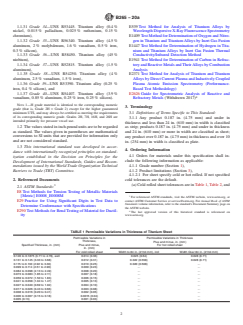
3 (a) Cold rolled sheet tolerances are in Table 1, Table 2, and
2.1 ASTM Standards:
E8 Test Methods for Tension Testing of Metallic Materials
[Metric] E0008_E0008M
For referenced ASTM standards, visit the ASTM website, www.astm.org, or
contact ASTM Customer Service at service@astm.org. For Annual Book of ASTM
E29 Practice for Using Significant Digits in Test Data to
Standards volume information, refer to the standard’s Document Summary page on
Determine Conformance with Specifications
the ASTM website.
E290 Test Methods for Bend Testing of Material for Ductil-
The last approved version of this historical standard is referenced on
ity www.astm.org.
TABLE 1 Permissible Variations in Thickness of Titanium Sheet
Permissible Variations in
Permissible Variations in Thickness
Thickness,
Plus and minus, in. (mm)
Specified Thickness, in. (mm) Plus and minus,
For hot rolled sheet
in. (mm)
For cold rolled sheet Width to 84 in. (2134 mm), incl Width Over 84 in. (2134 mm)
0.146 to 0.1875 (3.71 to 4.76), excl 0.014 (0.36) 0.025 (0.64) 0.028 (0.71)
0.131 to 0.145 (3.33 to 3.68) 0.012 (0.31) 0.022 (0.558) 0.028 (0.71)
0.115 to 0.130 (2.92 to 3.30) 0.010 (0.25) 0.020 (0.508) .
0.099 to 0.114 (2.51 to 2.90) 0.009 (0.23) . .
0.084 to 0.098 (2.13 to 2.49) 0.008 (0.20) . .
0.073 to 0.083 (1.85 to 2.11) 0.007 (0.18) . .
0.059 to 0.072 (1.50 to 1.83) 0.006 (0.15) . .
0.041 to 0.058 (1.04 to 1.47) 0.005 (0.13) . .
0.027 to 0.040 (0.69 to 1.02) 0.004 (0.10) . .
0.017 to 0.026 (0.43 to 0.66) 0.003 (0.08) . .
0.008 to 0.016 (0.20 to 0.41) 0.002 (0.05) . .
0.006 to 0.007 (0.15 to 0.18) 0.0015 (0.04) . .
0.005 (0.13) 0.001 (0.03) . .
B265−20a
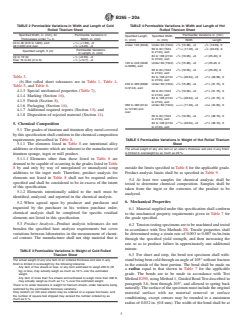
TABLE 2 Permissible Variations in Width and Length of Cold TABLE 4 Permissible Variations in Width and Length of Hot
Rolled Titanium Sheet Rolled Titanium Sheet
Specified Width, in. (mm), for Permissible Variations in Permissible Variations in. (mm)
Specified Length, Specified Width,
Thicknesses Under ⁄16 in. Width, in. (mm)
in. (mm) in. (mm)
Width Length
24 to 48 (610 to 1220), excl + ⁄16 (+1.60), −0
5 3
Under 120 (3048) Under 60 (1524) + ⁄8 (15.88), +0 + ⁄4 (19.05), 0
48 (1220) and over + ⁄8 (+3.20), −0
11 7
60 to 84 (1524 + ⁄16 (17.46), +0 + ⁄8 (22.23), 0
Permissible Variations
Specified Length, ft (m)
to 2134), excl
in Length, in. (mm)
84 to 108 (2134 + ⁄4 (19.05), +0 +1 (25.40), 0
Up to 10 (3) + ⁄4 (+6.35), −0
to 2743), excl
Over 10 to 20 (3 to 6) + ⁄2 (+12.7), −0
120 to 240 (3048 Under 60 (1524) + ⁄8 (15.88), +0 +1 (25.40, 0
to 6096), excl
60 to 84 (1524 + ⁄4 (19.05), +0 +1 (25.40), 0
to 2134), excl
13 1
Table 3. 84 to 108 (2134 + ⁄16 (20.64), +0 +1 ⁄8 (28.58), 0
to 2743), excl
(b) Hot rolled sheet tolerances are in Table 1, Table 4,
5 1
240 to 360 (6098 Under 60 (1524) + ⁄8 (15.88), +0 +1 ⁄4 (31.75), 0
Table 5, and Table 6.
to 9144), excl
3 1
4.1.3 Special mechanical properties (Table 7), 60 to 84 (1524 + ⁄4 (19.05), +0 +1 ⁄4 (31.75), 0
to 2134), excl
4.1.4 Marking (Section 16),
13 1
84 to 108 (2134 + ⁄16 (20.64), +0 +1 ⁄4 (31.75), 0
4.1.5 Finish (Section 8),
to 2743), excl
11 3
360 to 480 (9144 Under 60 (1524) + ⁄16 (17.46), +0 +1 ⁄8 (34.93), 0
4.1.6 Packaging (Section 16),
to 12192) and
4.1.7 Additional required reports (Section 15), and
over
4.1.8 Disposition of rejected material (Section 14). 3 1
60 to 84 (1524 + ⁄4 (19.05), +0 +1 ⁄2 (38.10), 0
to 2134), excl
13 1
84 to 108 (2134 + ⁄16 (20.64), +0 +1 ⁄2 (38.10), 0
5. Chemical Composition
to 2743), excl
5.1 The grades of titanium and titanium alloy metal covered
bythisspecificationshallconformtothechemicalcomposition
requirements prescribed in Table 8. TABLE 5 Permissible Variations in Weight of Hot Rolled Titanium
Sheet
5.1.1 The elements listed in Table 8 are intentional alloy
additions or elements which are inherent to the manufacture of The actual weight of any one item or an order’s thickness and size in any finish
is limited in overweight by as much as 20 %.
titanium sponge, ingot or mill product.
5.1.1.1 Elements other than those listed in Table 8 are
deemed to be capable of occurring in the grades listed in Table
8 by and only by way of unregulated or unanalyzed scrap outside the limits specified in Table 8 for the applicable grade.
additions to the ingot melt. Therefore, product analysis for
Product analysis limits shall be as specified in Table 9.
elements not listed in Table 8 shall not be required unless
5.4 At least two samples for chemical analysis shall be
specified and shall be considered to be in excess of the intent
tested to determine chemical composition. Samples shall be
of this specification.
taken from the ingot or the extremes of the product to be
5.1.2 Elements intentionally added to the melt must be
analyzed.
identified, analyzed, and reported in the chemical analysis.
6. Mechanical Properties
5.2 When agreed upon by producer and purchaser and
requested by the purchaser in his written purchase order,
6.1 Material supplied under this specification shall conform
chemical analysis shall be completed for specific residual
to the mechanical property requirements given in Table 7 for
elements not listed in this specification.
the grade specified.
5.3 Product Analysis—Product analysis tolerances do not
6.2 Tension testing specimens are to be machined and tested
broaden the specified heat analysis requirements but cover
in accordance with Test Methods E8. Tensile properties shall
variations between laboratories in the measurement of chemi-
be determined using a strain rate of 0.003 to 0.007 in./in./min
cal content. The manufacturer shall not ship material that is
through the specified yield strength, and then increasing the
rate so as to produce failure in approximately one additional
minute.
TABLE 3 Permissible Variations in Weight of Cold Rolled
Titanium Sheet 6.3 For sheet and strip, the bend test specimen shall with-
standbeingbentcoldthroughanangleof105°withoutfracture
The actual weight of any one item of an ordered thickness and size in any
finish is limited in overweight by the following tolerance:
in the outside of the bent portion. The bend shall be made on
Any item of five sheets or less, or any item estimated to weigh 200 lb (91
a radius equal to that shown in Table 7 for the applicable
kg) or less, may actually weigh as much as 10 % over the estimated
grade. The bends are to be made in accordance with Test
weight.
Any item of more than five sheets and estimated to weigh more than 200 lb
Method E290, using Method 1, Guided Bend Test described in
may actually weigh as much as 7 ⁄2 % over the estimated weight.
paragraph 3.6, bent through 105°, and allowed to spring back
There is no under tolerance in weight for titanium sheets, under tolerance being
restricted by the permissible thickness variations. naturally.Thesurfaceofthespecimenmustincludetheoriginal
Only random (or mill size) sheets may be ordered on a square foot basis, and
material surface with no material removal or surface
the number of square feet shipped may exceed the number ordered by as
conditioning, except corners may be rounded to a maximum
much as 5 %.
radius of 0.032 in. (0.8 mm). The width of the bend shall be at
B265−20a
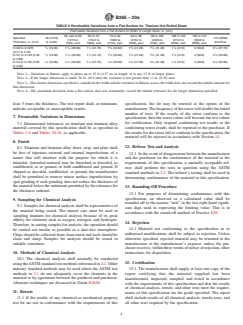
TABLE 6 Permissible Variations from a Flat Surface for Titanium Hot Rolled Sheet
Permissible Variations from a Flat Surface for Width or Length Given, in. (mm)
48, excl to 60 60 to 72, 72 to 84 84 to 96 96 to 108 108 to 120 120 to 144
Specified 48 (1219) 144 (3658)
(1219 to (1524 to (1829 to (2134 to (2438 to (2743 to (3048 to
Thickness, in. (mm) or Under and Over
1524), excl 1829), excl 2134), excl 2438), excl 2743), excl 3048), excl 3658), excl
3 1 1 3 5 5 7 1
0.146 to 0.1875 ⁄4 (19.05) 1 ⁄16 (26.99) 1 ⁄4 (31.75) 1 ⁄8 (34.92) 1 ⁄8 (41.28) 1 ⁄8 (41.28) 1 ⁄8 (47.6) 2 (50.8) 2 ⁄4 (57.15)
(3.71 to 4.76)
3 1 1 3 5 5 7 1
0.131 to 0.145 (3.33 ⁄4 (19.05) 1 ⁄16 (26.99) 1 ⁄4 (31.75) 1 ⁄8 (34.92) 1 ⁄8 (41.28) 1 ⁄8 (41.28) 1 ⁄8 (47.6) 2 (50.8) 2 ⁄8 (53.98)
to 3.68)
3 1 1 3 5 5 7 1
0.115 to 0.130 (2.92 ⁄4 (19.05) 1 ⁄16 (26.99) 1 ⁄4 (31.75) 1 ⁄8 (34.92) 1 ⁄8 (41.28) 1 ⁄8 (41.28) 1 ⁄8 (47.6) 2 (50.8) 2 ⁄8 (53.98)
to 3.30)
NOTE 1—Variations in flatness apply to plates up to 15 ft (4.57 m) in length, or to any 15 ft of longer plates.
NOTE 2—If the longer dimension is under 36 in. (914 mm) the variation is not greater than ⁄4 in. (6.35) mm.
NOTE 3—The shorter dimension specified is considered the width and the variation in flatness across the width does not exceed the tabular amount for
that dimension.
NOTE 4—The maximum deviation from a flat surface does not customarily exceed the tabular tolerance for the longer dimension specified.
least 5 times the thickness. The test report shall, at minimum, specification, the lot may be retested at the option of the
indicate acceptable or unacceptable results. manufacturer.Thefrequencyoftheretestwilldoubletheinitial
number of tests. If the results of the retest conform to the
7. Permissible Variations in Dimensions
specification, then the retest values will become the test values
for certification. Only original conforming test results or the
7.1 Dimensional tolerances on titanium and titanium alloy
conforming retest results shall be reported to the purchaser. If
material covered by this specification shall be as specified in
the results for the retest fail to conform to the specification, the
Tables 1-6 and Tables 10-16, as applicable.
material will be rejected in accordance with Section 14.
8. Finish
12. Referee Test and Analysis
8.1 Titanium and titanium alloy sheet, strip, and plate shall
be free of injurious external and internal imperfections of a
12.1 In the event of disagreement between the manufacturer
nature that will interfere with the purpose for which it is
and the purchaser on the conformance of the material to the
intended. Annealed material may be furnished as descaled, as
requirements of this specification, a mutually acceptable ref-
sandblasted, or as ground, or both sandblasted and ground. If
eree shall perform the tests in question using the ASTM
shipped as descaled, sandblasted, or ground, the manufacturer
standard methods in 2.1. The referee’s testing shall be used in
shall be permitted to remove minor surface imperfections by
determining conformance of the material to this specification.
spot grinding if such grinding does not reduce the thickness of
the material below the minimum permitted by the tolerance for
13. Rounding-Off Procedure
the thickness ordered.
13.1 For purposes of determining conformance with this
specification, an observed or a calculated value shall be
9. Sampling for Chemical Analysis
rounded off to the nearest “unit” in the last right-hand signifi-
9.1 Samples for chemical analysis shall be representative of
cant digit used in expressing the limiting value. This is in
the material being tested. The utmost care must be used in
accordance with the round-off method of Practice E29.
sampling titanium for chemical analysis because of its great
affinity for elements such as oxygen, nitrogen, and hydrogen.
14. Rejection
Therefore, in cutting samples for analysis, the operation should
14.1 Material not conforming to the specification or to
be carried out insofar as possible in a dust-free atmosphere.
authorized modifications shall be subject to rejection. Unless
Chips should be collected from clean metal and tools should be
otherwise specified, rejected material may be returned to the
clean and sharp. Samples for analysis should be stored in
manufacturer at the manufacturer’s expense, unless the pur-
suitable containers.
chaser receives, within three weeks of notice of rejection, other
10. Methods of Chemical Analysis
instructions for disposition.
10.1 The chemical analysis shall normally be conducted
15. Certification
using theASTM standard test methods referenced in 2.1. Other
industry standard methods may be used where the ASTM test
15.1 The manufacturer shall supply at least one copy of the
methods in 2.1 do not adequately cover the elements in the
report certifying that the material supplied has been
material or by agreement between the producer and purchaser.
manufactured, inspected, sampled, and tested in accordance
Alternate techniques are discussed in Guide E2626.
with the requirements of this specification and that the results
of chemical analysis, tensile, and other tests meet the require-
11. Retests
ments of this specification for the grade specified. The report
11.1 If the results of any chemical or mechanical property shall include results of all chemical analysis, tensile tests, and
test lot are not in conformance with the requirements of this all other tests required by the specification.
B265−20a
A
TABLE 7 Tensile Requirements
B
Tensile Strength, min Yield Strength, 0.2 % Offset Bend Test (Radius of Mandrel)
Elongation in
min max Under 0.070 in. 0.070 to 0.187 in.
Grade 2 in. or 50 mm,
ksi MPa (1.8 mm) in (1.8–4.75 mm) in
ksi MPa ksi MPa min, %
Thickness Thickness
1 35 240 20 138 45 310 24 1.5T 2T
2 50 345 40 275 65 450 20 2T 2.5T
C,D
2H 58 400 40 275 65 450 20 2T 2.5T
3 65 450 55 380 80 550 18 2T 2.5T
4 80 550 70 483 95 655 15 2.5T 3T
E
5 130 895 120 828 . . 10 4.5T 5T
E
6 120 828 115 793 . . 10 4T 4.5T
7 50 345 40 275 65 450 20 2T 2.5T
C,D
7H 58 400 40 275 65 450 20 2T 2.5T
F
9 90 620 70 483 . . 15 2.5T 3T
11 35 240 20 138 45 310 24 1.5T 2T
12 70 483 50 345 . . 18 2T 2.5T
13 40 275 25 170 . . 24 1.5T 2T
14 60 410 40 275 . . 20 2T 2.5T
15 70 483 55 380 . . 18 2T 2.5T
16 50 345 40 275 65 450 20 2T 2.5T
C,D
16H 58 400 40 275 65 450 20 2T 2.5T
17 35 240 20 138 45 310 24 1.5T 2T
F
18 90 620 70 483 . . 15 2.5T 3T
G,H
19 115 793 110 759 . . 15 3T 3T
G,H
20 115 793 110 759 . . 15 3T 3T
G,H
21 115 793 110 759 . . 15 3T 3T
23 120 828 110 759 . . 10 4.5T 5T
24 130 895 120 828 . . 10 4.5T 5T
25 130 895 120 828 . . 10 4.5T 5T
26 50 345 40 275 65 450 20 2T 2.5T
C,D
26H 58 400 40 275 65 450 20 2T 2.5T
27 35 240 20 138 45 310 24 1.5T 2T
28 90 620 70 483 . . 15 2.5T 3T
29 120 828 110 759 . . 10 4.5T 5T
30 50 345 40 275 65 450 20 2T 2.5T
31 65 450 55 380 80 550 18 2T 2.5T
E
32 100 689 85 586 . . 10 3.5T 4.5T
33 50 345 40 275 65 450 20 2T 2.5T
34 65 450 55 380 80 550 18 2T 2.5T
35 130 895 120 828 . . 5 8T 8T
36 65 450 60 410 95 655 10 4.5T 5T
37 50 345 31 215 65 450 20 2T 2.5T
38 130 895 115 794 . . 10 4T 4.5T
39 75 515 60 410 90 620 20 2T 2.5T
40 95 655 75 517 . . 15 2.5T 3T
A
Minimum and maximum limits apply to tests taken both longitudinal and transverse to the direction of rolling. Mechanical properties for conditions other than annealed
or plate thickness over 1 in. (25 mm) may be established by agreement between the manufacturer and the purchaser.
B
Bend to Radius of Mandrel, T equals the thickness of the bend test specimen. Bend tests are not applicable to material over 0.187 in. (4.75 mm) in thickness.
C
Material is identical to the corresponding numeric grade (that is, Grade 2H = Grade 2) except for the higher guaranteed minimum UTS, and may always be certified as
meeting the requirements of its corresponding numeric grade. Grade 2H, 7H, 16H, and 26H are intended primarily for pressure vessel use.
D
The H grades were added in response to a user association request based on its study of over 5200 commercial Grade 2, 7, 16, and 26 test reports, where over 99 %
met the 58 ksi minimum UTS.
E
For Grades 5, 6 and 32 the elongation on materials under 0.025 in. (0.635 mm) in thickness may be obtained only by negotiation.
F
Elongation for continuous rolled and annealed (strip product from coil) for Grade 9 and Grade 18 shall be 12 % minimum in the longitudinal direction and 8 % minimum
in the transverse direction.
G
Properties for material in the solution treated condition.
H
Material is normally purchased in the solution treated condition. Therefore, properties for aged material shall be negotiated between manufacturer and purchaser.
16. Marking and Packaging performance. The characters shall be sufficiently stable to
withstand ordinary handling.
16.1 Marking:
16.1.2 Plate, flat sheet, and flat strip over 6 in. (152 mm) in
16.1.1 Identification—Unless otherwise specified in the pur-
width shall be marked in lengthwise rows of characters
chase order, each plate, sheet, and strip shall be marked in the
recurring at i
...
This document is not an ASTM standard and is intended only to provide the user of an ASTM standard an indication of what changes have been made to the previous version. Because
it may not be technically possible to adequately depict all changes accurately, ASTM recommends that users consult prior editions as appropriate. In all cases only the current version
of the standard as published by ASTM is to be considered the official document.
Designation: B265 − 20 B265 − 20a
Standard Specification for
Titanium and Titanium Alloy Strip, Sheet, and Plate
This standard is issued under the fixed designation B265; the number immediately following the designation indicates the year of
original adoption or, in the case of revision, the year of last revision. A number in parentheses indicates the year of last reapproval. A
superscript epsilon (´) indicates an editorial change since the last revision or reapproval.
This standard has been approved for use by agencies of the U.S. Department of Defense.
1. Scope
1.1 This specification covers annealed titanium and titanium alloy strip, sheet, and plate as follows:
1.1.1 Grade 1—UNS R50250. Unalloyed titanium,
1.1.2 Grade 2—UNS R50400. Unalloyed titanium,
1.1.2.1 Grade 2H—UNS R50400. Unalloyed titanium (Grade 2 with 58 ksi (400 MPa) minimum UTS),
1.1.3 Grade 3—UNS R50550. Unalloyed titanium,
1.1.4 Grade 4—UNS R50700. Unalloyed titanium,
1.1.5 Grade 5—UNS R56400. Titanium alloy (6 % aluminum, 4 % vanadium),
1.1.6 Grade 6—UNS R54520. Titanium alloy (5 % aluminum, 2.5 % tin),
1.1.7 Grade 7—UNS R52400. Unalloyed titanium plus 0.12 to 0.25 % palladium,
1.1.7.1 Grade 7H—UNS R52400. Unalloyed titanium plus 0.12 to 0.25 % palladium (Grade 7 with 58 ksi (400 MPa) minimum
UTS),
1.1.8 Grade 9—UNS R56320. Titanium alloy (3.0 % aluminum, 2.5 % vanadium),
1.1.9 Grade 11—UNS R52250. Unalloyed titanium plus 0.12 to 0.25 % palladium,
1.1.10 Grade 12—UNS R53400. Titanium alloy (0.3 % molybdenum, 0.8 % nickel),
1.1.11 Grade 13—UNS R53413. Titanium alloy (0.5 % nickel, 0.05 % ruthenium),
1.1.12 Grade 14—UNS R53414. Titanium alloy (0.5 % nickel, 0.05 % ruthenium),
1.1.13 Grade 15—UNS R53415. Titanium alloy (0.5 % nickel, 0.05 % ruthenium),
1.1.14 Grade 16—UNS R52402. Unalloyed titanium plus 0.04 to 0.08 % palladium,
1.1.14.1 Grade 16H—UNS R52402. Unalloyed titanium plus 0.04 to 0.08 % palladium (Grade 16 with 58 ksi (400 MPa)
minimum UTS),
1.1.15 Grade 17—UNS R52252. Unalloyed titanium plus 0.04 to 0.08 % palladium,
1.1.16 Grade 18—UNS R56322. Titanium alloy (3 % aluminum, 2.5 % vanadium) plus 0.04 to 0.08 % palladium,
1.1.17 Grade 19—UNS R58640. Titanium alloy (3 % aluminum, 8 % vanadium, 6 % chromium, 4 % zirconium, 4 %
molybdenum),
1.1.18 Grade 20—UNS R58645. Titanium alloy (3 % aluminum, 8 % vanadium, 6 % chromium, 4 % zirconium, 4 %
molybdenum) plus 0.04 % to 0.08 % palladium,
1.1.19 Grade 21—UNS R58210. Titanium alloy (15 % molybdenum, 3 % aluminum, 2.7 % niobium, 0.25 % silicon),
1.1.20 Grade 23—UNS R56407. Titanium alloy (6 % aluminum, 4 % vanadium with extra low interstitial elements, ELI),
1.1.21 Grade 24—UNS R56405. Titanium alloy (6 % aluminum, 4 % vanadium) plus 0.04 % to 0.08 % palladium,
1.1.22 Grade 25—UNS R56403. Titanium alloy (6 % aluminum, 4 % vanadium) plus 0.3 % to 0.8 % nickel and 0.04 % to
0.08 % palladium,
1.1.23 Grade 26—UNS R52404. Unalloyed titanium plus 0.08 to 0.14 % ruthenium,
1.1.23.1 Grade 26H—UNS R52404. Unalloyed titanium plus 0.08 to 0.14 % ruthenium (Grade 26 with 58 ksi (400 MPa)
minimum UTS),
1.1.24 Grade 27—UNS R52254. Unalloyed titanium plus 0.08 to 0.14 % ruthenium,
1.1.25 Grade 28—UNS R56323. Titanium alloy (3 % aluminum, 2.5 % vanadium) plus 0.08 to 0.14 % ruthenium,
This specification is under the jurisdiction of ASTM Committee B10 on Reactive and Refractory Metals and Alloys and is the direct responsibility of Subcommittee
B10.01 on Titanium.
Current edition approved Jan. 1, 2020April 1, 2020. Published January 2020April 2020. Originally approved in 1952. Last previous edition approved in 20152020 as
B265 – 15.B265 – 20. DOI: 10.1520/B0265-20.10.1520/B0265-20A.
For ASME Boiler and Pressure Vessel Code applications see related Specifications SB-265 in Section II of that Code.
Copyright © ASTM International, 100 Barr Harbor Drive, PO Box C700, West Conshohocken, PA 19428-2959. United States
B265 − 20a
1.1.26 Grade 29—UNS R56404. Titanium alloy (6 % aluminum, 4 % vanadium with extra low interstitial elements, ELI) plus
0.08 to 0.14 % ruthenium,
1.1.27 Grade 30—UNS R53530. Titanium alloy (0.3 % cobalt, 0.05 % palladium),
1.1.28 Grade 31—UNS R53532. Titanium alloy (0.3 % cobalt, 0.05 % palladium),
1.1.29 Grade 32—UNS R55111. Titanium alloy (5 % aluminum, 1 % tin, 1 % zirconium, 1 % vanadium, 0.8 % molybdenum),
1.1.30 Grade 33—UNS R53442. Titanium alloy (0.4 % nickel, 0.015 % palladium, 0.02 5 % ruthenium, 0.15 % chromium),
1.1.31 Grade 34—UNS R53445. Titanium alloy (0.4 % nickel, 0.015 % palladium, 0.025 % ruthenium, 0.15 % chromium),
1.1.32 Grade 35—UNS R56340. Titanium alloy (4.5 % aluminum, 2 % molybdenum, 1.6 % vanadium, 0.5 % iron, 0.3 %
silicon),
1.1.33 Grade 36—UNS R58450. Titanium alloy (45 % niobium),
1.1.34 Grade 37—UNS R52815. Titanium alloy (1.5 % aluminum),
1.1.35 Grade 38—UNS R54250. Titanium alloy (4 % aluminum, 2.5 % vanadium, 1.5 % iron), and
1.1.36 Grade 39—UNS R53390. Titanium alloy (0.25 % iron, 0.4 % silicon).silicon), and
1.1.37 Grade 40—UNS R54407. Titanium alloy (3.9 % vanadium, 0.85 % aluminum, 0.25 % iron, 0.25 % silicon).
NOTE 1—H grade material is identical to the corresponding numeric grade (that is, Grade 2H = Grade 2) except for the higher guaranteed minimum
UTS, and may always be certified as meeting the requirements of its corresponding numeric grade. Grades 2H, 7H, 16H, and 26H are intended primarily
for pressure vessel use.
1.2 The values stated in inch-pound units are to be regarded as standard. The values given in parentheses are mathematical
conversions to SI units that are provided for information only and are not considered standard.
1.3 This international standard was developed in accordance with internationally recognized principles on standardization
established in the Decision on Principles for the Development of International Standards, Guides and Recommendations issued
by the World Trade Organization Technical Barriers to Trade (TBT) Committee.
2. Referenced Documents
2.1 ASTM Standards:
E8 Test Methods for Tension Testing of Metallic Materials [Metric] E0008_E0008M
E29 Practice for Using Significant Digits in Test Data to Determine Conformance with Specifications
E290 Test Methods for Bend Testing of Material for Ductility
E539 Test Method for Analysis of Titanium Alloys by Wavelength Dispersive X-Ray Fluorescence Spectrometry
E1409 Test Method for Determination of Oxygen and Nitrogen in Titanium and Titanium Alloys by Inert Gas Fusion
E1447 Test Method for Determination of Hydrogen in Titanium and Titanium Alloys by Inert Gas Fusion Thermal
Conductivity/Infrared Detection Method
E1941 Test Method for Determination of Carbon in Refractory and Reactive Metals and Their Alloys by Combustion Analysis
E2371 Test Method for Analysis of Titanium and Titanium Alloys by Direct Current Plasma and Inductively Coupled Plasma
Atomic Emission Spectrometry (Performance-Based Test Methodology)
E2626 Guide for Spectrometric Analysis of Reactive and Refractory Metals (Withdrawn 2017)
3. Terminology
3.1 Definitions of Terms Specific to This Standard:
3.1.1 Any product 0.187 in. (4.75 mm) and under in thickness and less than 24 in. (610 mm) in width is classified as strip;
products 0.187 in. (4.75 mm) and under in thickness and 24 in. (610 mm) or more in width are classified as sheet; any product
over 0.187 in. (4.75 mm) in thickness and over 10 in. (254 mm) in width is classified as plate.
4. Ordering Information
4.1 Orders for materials under this specification shall include the following information as applicable:
4.1.1 Grade number (Section 1),
4.1.2 Product limitations (Section 3),
4.1.2.1 For sheet specify cold or hot rolled. If not specified cold tolerances are the default.
(a) Cold rolled sheet tolerances are in Table 1, Table 2, and Table 3.
(b) Hot rolled sheet tolerances are in Table 1, Table 4, Table 5, and Table 6.
4.1.3 Special mechanical properties (Table 7),
4.1.4 Marking (Section 16),
4.1.5 Finish (Section 8),
4.1.6 Packaging (Section 16),
For referenced ASTM standards, visit the ASTM website, www.astm.org, or contact ASTM Customer Service at service@astm.org. For Annual Book of ASTM Standards
volume information, refer to the standard’s Document Summary page on the ASTM website.
The last approved version of this historical standard is referenced on www.astm.org.
B265 − 20a
TABLE 1 Permissible Variations in Thickness of Titanium Sheet
Permissible Variations in
Permissible Variations in Thickness
Thickness,
Plus and minus, in. (mm)
Specified Thickness, in. (mm) Plus and minus,
For hot rolled sheet
in. (mm)
For cold rolled sheet Width to 84 in. (2134 mm), incl Width Over 84 in. (2134 mm)
0.146 to 0.1875 (3.71 to 4.76), excl 0.014 (0.36) 0.025 (0.64) 0.028 (0.71)
0.131 to 0.145 (3.33 to 3.68) 0.012 (0.31) 0.022 (0.558) 0.028 (0.71)
0.115 to 0.130 (2.92 to 3.30) 0.010 (0.25) 0.020 (0.508) .
0.099 to 0.114 (2.51 to 2.90) 0.009 (0.23) . .
0.084 to 0.098 (2.13 to 2.49) 0.008 (0.20) . .
0.073 to 0.083 (1.85 to 2.11) 0.007 (0.18) . .
0.059 to 0.072 (1.50 to 1.83) 0.006 (0.15) . .
0.041 to 0.058 (1.04 to 1.47) 0.005 (0.13) . .
0.027 to 0.040 (0.69 to 1.02) 0.004 (0.10) . .
0.017 to 0.026 (0.43 to 0.66) 0.003 (0.08) . .
0.008 to 0.016 (0.20 to 0.41) 0.002 (0.05) . .
0.006 to 0.007 (0.15 to 0.18) 0.0015 (0.04) . .
0.005 (0.13) 0.001 (0.03) . .
TABLE 2 Permissible Variations in Width and Length of Cold
Rolled Titanium Sheet
Specified Width, in. (mm), for Permissible Variations in
Thicknesses Under ⁄16 in. Width, in. (mm)
24 to 48 (610 to 1220), excl + ⁄16 (+1.60), −0
48 (1220) and over + ⁄8 (+3.20), −0
Permissible Variations
Specified Length, ft (m)
in Length, in. (mm)
Up to 10 (3) + ⁄4 (+6.35), −0
Over 10 to 20 (3 to 6) + ⁄2 (+12.7), −0
TABLE 3 Permissible Variations in Weight of Cold Rolled
Titanium Sheet
The actual weight of any one item of an ordered thickness and size in any
finish is limited in overweight by the following tolerance:
Any item of five sheets or less, or any item estimated to weigh 200 lb (91
kg) or less, may actually weigh as much as 10 % over the estimated
weight.
Any item of more than five sheets and estimated to weigh more than 200 lb
may actually weigh as much as 7 ⁄2 % over the estimated weight.
There is no under tolerance in weight for titanium sheets, under tolerance being
restricted by the permissible thickness variations.
Only random (or mill size) sheets may be ordered on a square foot basis, and
the number of square feet shipped may exceed the number ordered by as
much as 5 %.
4.1.7 Additional required reports (Section 15), and
4.1.8 Disposition of rejected material (Section 14).
5. Chemical Composition
5.1 The grades of titanium and titanium alloy metal covered by this specification shall conform to the chemical composition
requirements prescribed in Table 8.
5.1.1 The elements listed in Table 8 are intentional alloy additions or elements which are inherent to the manufacture of titanium
sponge, ingot or mill product.
5.1.1.1 Elements other than those listed in Table 8 are deemed to be capable of occurring in the grades listed in Table 8 by and
only by way of unregulated or unanalyzed scrap additions to the ingot melt. Therefore, product analysis for elements not listed in
Table 8 shall not be required unless specified and shall be considered to be in excess of the intent of this specification.
5.1.2 Elements intentionally added to the melt must be identified, analyzed, and reported in the chemical analysis.
5.2 When agreed upon by producer and purchaser and requested by the purchaser in his written purchase order, chemical
analysis shall be completed for specific residual elements not listed in this specification.
5.3 Product Analysis—Product analysis tolerances do not broaden the specified heat analysis requirements but cover variations
between laboratories in the measurement of chemical content. The manufacturer shall not ship material that is outside the limits
specified in Table 8 for the applicable grade. Product analysis limits shall be as specified in Table 9.
B265 − 20a
TABLE 4 Permissible Variations in Width and Length of Hot
Rolled Titanium Sheet
Permissible Variations in. (mm)
Specified Length, Specified Width,
in. (mm) in. (mm)
Width Length
5 3
Under 120 (3048) Under 60 (1524) + ⁄8 (15.88), +0 + ⁄4 (19.05), 0
11 7
60 to 84 (1524 + ⁄16 (17.46), +0 + ⁄8 (22.23), 0
to 2134), excl
84 to 108 (2134 + ⁄4 (19.05), +0 +1 (25.40), 0
to 2743), excl
120 to 240 (3048 Under 60 (1524) + ⁄8 (15.88), +0 +1 (25.40, 0
to 6096), excl
60 to 84 (1524 + ⁄4 (19.05), +0 +1 (25.40), 0
to 2134), excl
13 1
84 to 108 (2134 + ⁄16 (20.64), +0 +1 ⁄8 (28.58), 0
to 2743), excl
5 1
240 to 360 (6098 Under 60 (1524) + ⁄8 (15.88), +0 +1 ⁄4 (31.75), 0
to 9144), excl
3 1
60 to 84 (1524 + ⁄4 (19.05), +0 +1 ⁄4 (31.75), 0
to 2134), excl
13 1
84 to 108 (2134 + ⁄16 (20.64), +0 +1 ⁄4 (31.75), 0
to 2743), excl
11 3
360 to 480 (9144 Under 60 (1524) + ⁄16 (17.46), +0 +1 ⁄8 (34.93), 0
to 12192) and
over
3 1
60 to 84 (1524 + ⁄4 (19.05), +0 +1 ⁄2 (38.10), 0
to 2134), excl
13 1
84 to 108 (2134 + ⁄16 (20.64), +0 +1 ⁄2 (38.10), 0
to 2743), excl
TABLE 5 Permissible Variations in Weight of Hot Rolled Titanium
Sheet
The actual weight of any one item or an order’s thickness and size in any finish
is limited in overweight by as much as 20 %.
5.4 At least two samples for chemical analysis shall be tested to determine chemical composition. Samples shall be taken from
the ingot or the extremes of the product to be analyzed.
6. Mechanical Properties
6.1 Material supplied under this specification shall conform to the mechanical property requirements given in Table 7 for the
grade specified.
6.2 Tension testing specimens are to be machined and tested in accordance with Test Methods E8. Tensile properties shall be
determined using a strain rate of 0.003 to 0.007 in./in./min through the specified yield strength, and then increasing the rate so as
to produce failure in approximately one additional minute.
6.3 For sheet and strip, the bend test specimen shall withstand being bent cold through an angle of 105° without fracture in the
outside of the bent portion. The bend shall be made on a radius equal to that shown in Table 7 for the applicable grade. The bends
are to be made in accordance with Test Method E290, using Method 1, Guided Bend Test described in paragraph 3.6, bent through
105°, and allowed to spring back naturally. The surface of the specimen must include the original material surface with no material
removal or surface conditioning, except corners may be rounded to a maximum radius of 0.032 in. (0.8 mm). The width of the
bend shall be at least 5 times the thickness. The test report shall, at minimum, indicate acceptable or unacceptable results.
7. Permissible Variations in Dimensions
7.1 Dimensional tolerances on titanium and titanium alloy material covered by this specification shall be as specified in Tables
1-6 and Tables 10-16, as applicable.
8. Finish
8.1 Titanium and titanium alloy sheet, strip, and plate shall be free of injurious external and internal imperfections of a nature
that will interfere with the purpose for which it is intended. Annealed material may be furnished as descaled, as sandblasted, or
as ground, or both sandblasted and ground. If shipped as descaled, sandblasted, or ground, the manufacturer shall be permitted to
remove minor surface imperfections by spot grinding if such grinding does not reduce the thickness of the material below the
minimum permitted by the tolerance for the thickness ordered.
B265 − 20a
TABLE 6 Permissible Variations from a Flat Surface for Titanium Hot Rolled Sheet
Permissible Variations from a Flat Surface for Width or Length Given, in. (mm)
48, excl to 60 60 to 72, 72 to 84 84 to 96 96 to 108 108 to 120 120 to 144
Specified 48 (1219) 144 (3658)
(1219 to (1524 to (1829 to (2134 to (2438 to (2743 to (3048 to
Thickness, in. (mm) or Under and Over
1524), excl 1829), excl 2134), excl 2438), excl 2743), excl 3048), excl 3658), excl
3 1 1 3 5 5 7 1
0.146 to 0.1875 ⁄4 (19.05) 1 ⁄16 (26.99) 1 ⁄4 (31.75) 1 ⁄8 (34.92) 1 ⁄8 (41.28) 1 ⁄8 (41.28) 1 ⁄8 (47.6) 2 (50.8) 2 ⁄4 (57.15)
(3.71 to 4.76)
3 1 1 3 5 5 7 1
0.131 to 0.145 (3.33 ⁄4 (19.05) 1 ⁄16 (26.99) 1 ⁄4 (31.75) 1 ⁄8 (34.92) 1 ⁄8 (41.28) 1 ⁄8 (41.28) 1 ⁄8 (47.6) 2 (50.8) 2 ⁄8 (53.98)
to 3.68)
3 1 1 3 5 5 7 1
0.115 to 0.130 (2.92 ⁄4 (19.05) 1 ⁄16 (26.99) 1 ⁄4 (31.75) 1 ⁄8 (34.92) 1 ⁄8 (41.28) 1 ⁄8 (41.28) 1 ⁄8 (47.6) 2 (50.8) 2 ⁄8 (53.98)
to 3.30)
9. Sampling for Chemical Analysis
9.1 Samples for chemical analysis shall be representative of the material being tested. The utmost care must be used in sampling
titanium for chemical analysis because of its great affinity for elements such as oxygen, nitrogen, and hydrogen. Therefore, in
cutting samples for analysis, the operation should be carried out insofar as possible in a dust-free atmosphere. Chips should be
collected from clean metal and tools should be clean and sharp. Samples for analysis should be stored in suitable containers.
10. Methods of Chemical Analysis
10.1 The chemical analysis shall normally be conducted using the ASTM standard test methods referenced in 2.1. Other industry
standard methods may be used where the ASTM test methods in 2.1 do not adequately cover the elements in the material or by
agreement between the producer and purchaser. Alternate techniques are discussed in Guide E2626.
11. Retests
11.1 If the results of any chemical or mechanical property test lot are not in conformance with the requirements of this
specification, the lot may be retested at the option of the manufacturer. The frequency of the retest will double the initial number
of tests. If the results of the retest conform to the specification, then the retest values will become the test values for certification.
Only original conforming test results or the conforming retest results shall be reported to the purchaser. If the results for the retest
fail to conform to the specification, the material will be rejected in accordance with Section 14.
12. Referee Test and Analysis
12.1 In the event of disagreement between the manufacturer and the purchaser on the conformance of the material to the
requirements of this specification, a mutually acceptable referee shall perform the tests in question using the ASTM standard
methods in 2.1. The referee’s testing shall be used in determining conformance of the material to this specification.
13. Rounding-Off Procedure
13.1 For purposes of determining conformance with this specification, an observed or a calculated value shall be rounded off
to the nearest “unit” in the last right-hand significant digit used in expressing the limiting value. This is in accordance with the
round-off method of Practice E29.
14. Rejection
14.1 Material not conforming to the specification or to authorized modifications shall be subject to rejection. Unless otherwise
specified, rejected material may be returned to the manufacturer at the manufacturer’s expense, unless the purchaser receives,
within three weeks of notice of rejection, other instructions for disposition.
15. Certification
15.1 The manufacturer shall supply at least one copy of the report certifying that the material supplied has been manufactured,
inspected, sampled, and tested in accordance with the requirements of this specification and that the results of chemical analysis,
tensile, and other tests meet the requirements of this specification for the grade specified. The report shall include results of all
chemical analysis, tensile tests, and all other tests required by the specification.
16. Marking and Packaging
16.1 Marking:
16.1.1 Identification—Unless otherwise specified in the purchase order, each plate, sheet, and strip shall be marked in the
respective location indicated below, with the number of this specification, heat number, manufacturer’s identification, and the
nominal thickness in inches. The characters shall be not less than ⁄4 in. (6.35 mm) in height, shall be applied using a suitable
B265 − 20a
NOTE 1—Variations in flatness apply to plates up to 15 ft (4.57 m) in length, or to any 15 ft of longer plates.
marking fluid, and shall be capable of being removed with a hot alkaline cleaning solution without rubbing. The markings shall
have no deleterious effect on the material or its performance. The characters shall be sufficiently stable to withstand ordinary
handling.
16.1.2 Plate, flat sheet, and flat strip over 6 in. (152 mm) in width shall be marked in lengthwise rows of characters recurring
at intervals not greater than 3 in. (76 mm), the rows being spaced not more than 2 in. (51 mm) apart and alternately staggered.
Heat numbers shall occur at least 3 times across the width of the sheet and at intervals not greater than 2 ft (0.610 m) along the
length. As an option, when specified in the purchase order, each plate, sheet, or cut length strip may be marked in at least one
location with the number of this specification, heat number, manufacturer’s identification, and the nominal thickness in inches or
millimetres as required.
16.1.3 Flat strip 6 in. (152 mm) and under in width shall be marked near one end.
16.1.4 Coiled sheet and strip shall be marked near the outside end of the coil.
16.2 Packaging—Unless otherwise specified, material purchased under this specification may be packaged for shipment either
by boxing, crating, single boarding, burlapping, or with no protection in accordance with the manufacturer’s standard practice.
17. Keywords
17.1 plate; sheet; strip; titanium; titanium alloys
B265 − 20a
NOTE 2—If the longer dimension is under 36 in. (914 mm) the variation is not greater than ⁄4 in. (6.35) mm.
B265 − 20a
NOTE 3—The shorter dimension specified is considered the width and the variation in flatness across the width does not exceed the tabular amount for
that dimension.
B265 − 20a
NOTE 4—The maximum deviation from a flat surface does not customarily exceed the tabular tolerance for the longer dimension specified.
A
TABLE 7 Tensile Requirements
B
Tensile Strength, min Yield Strength, 0.2 % Offset Bend Test (Radius of Mandrel)
Elongation in
min max Under 0.070 in. 0.070 to 0.187 in.
Grade 2 in. or 50 mm,
ksi MPa (1.8 mm) in (1.8–4.75 mm) in
ksi MPa ksi MPa min, %
Thickness Thickness
1 35 240 20 138 45 310 24 1.5T 2T
2 50 345 40 275 65 450 20 2T 2.5T
C,D
2H 58 400 40 275 65 450 20 2T 2.5T
3 65 450 55 380 80 550 18 2T 2.5T
4 80 550 70 483 95 655 15 2.5T 3T
E
5 130 895 120 828 . . 10 4.5T 5T
E
6 120 828 115 793 . . 10 4T 4.5T
7 50 345 40 275 65 450 20 2T 2.5T
C,D
7H 58 400 40 275 65 450 20 2T 2.5T
F
9 90 620 70 483 . . 15 2.5T 3T
11 35 240 20 138 45 310 24 1.5T 2T
12 70 483 50 345 . . 18 2T 2.5T
13 40 275 25 170 . . 24 1.5T 2T
14 60 410 40 275 . . 20 2T 2.5T
15 70 483 55 380 . . 18 2T 2.5T
16 50 345 40 275 65 450 20 2T 2.5T
C,D
16H 58 400 40 275 65 450 20 2T 2.5T
17 35 240 20 138 45 310 24 1.5T 2T
F
18 90 620 70 483 . . 15 2.5T 3T
G,H
19 115 793 110 759 . . 15 3T 3T
G,H
20 115 793 110 759 . . 15 3T 3T
G,H
21 115 793 110 759 . . 15 3T 3T
23 120 828 110 759 . . 10 4.5T 5T
24 130 895 120 828 . . 10 4.5T 5T
25 130 895 120 828 . . 10 4.5T 5T
26 50 345 40 275 65 450 20 2T 2.5T
C,D
26H 58 400 40 275 65 450 20 2T 2.5T
27 35 240 20 138 45 310 24 1.5T 2T
28 90 620 70 483 . . 15 2.5T 3T
29 120 828 110 759 . . 10 4.5T 5T
30 50 345 40 275 65 450 20 2T 2.5T
31 65 450 55 380 80 550 18 2T 2.5T
E
32 100 689 85 586 . . 10 3.5T 4.5T
33 50 345 40 275 65 450 20 2T 2.5T
34 65 450 55 380 80 550 18 2T 2.5T
35 130 895 120 828 . . 5 8T 8T
36 65 450 60 410 95 655 10 4.5T 5T
37 50 345 31 215 65 450 20 2T 2.5T
38 130 895 115 794 . . 10 4T 4.5T
39 75 515 60 410 90 620 20 2T 2.5T
40 95 655 75 517 . . 15 2.5T 3T
A
Minimum and maximum limits apply to tests taken both
...