

ASTM D1683/D1683M-22
(Test Method)Standard Test Method for Failure in Sewn Seams of Woven Fabrics
General Information
- Abstract
SIGNIFICANCE AND USE
5.1 The manufacturing of textile products uses seam engineering to determine the best combination of sewing thread, stitch type, seam type, and stitch density to construct the end use structure. These four seam engineering variables contribute to a textile product being able to achieve the maximum sewn seam strength performance and structural integrity when cut pieces of fabric are joined together.
5.1.1 It is known that for some textile structures the seam engineering variables are selected to meet a “one time performance requirement.” This means that following the “single incident” during which the maximum performance potential or capability of the textile structure has been met, it is expected to be discarded and replaced with another “new” unit. For example: an inflatable restraint in an automobile. Once deployed, it must be replaced; it cannot be re-used. Likewise, there are other textile structures, intended to be used multiple times, while also being subjected to various care and maintenance regimens.
5.1.2 This test method enables the fabric producer of woven fabrics, the textile producer, and other users of the test method to determine which seam engineering choices can be made relative to: sewing thread tex size; seam type; stitch type; and stitch density to determine the potential outcomes that can occur when a particular woven fabric is used:
(a) What is the maximum force at which sewn seam strength failure will enable products made with this fabric to be repaired?
(b) What is the highest seam efficiency percentage attained?
(c) What is the maximum force at which the sewn seam strength results in seam slippage that can cause yarn slippage, yarn displacement and fabric failure?
5.1.2.1 The maximum force at which sewn seam strength or the highest seam efficiency retained demonstrate failure of the stitching without causing the displacement of one or more fabric yarns from their original position mean that the product can be repaired. When the...
SCOPE
1.1 This test method measures the sewn seam strength in woven fabrics by applying a force perpendicular to the sewn seams.
1.1.1 The axis perpendicular to the sewn seam can represent either the warp yarn axis or filling yarn axis, the same axis tested when using grab Test Method D5034.
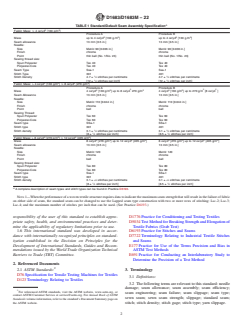
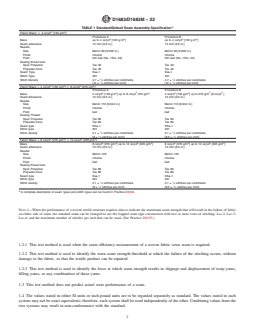
1.1.1.1 This test method is applicable to sewn seams obtained from a previously sewn article or seams sewn with fabric samples using one of two specific seam assemblies as shown in Table 1.
Note 1: When the performance of a woven textile structure requires data to indicate the maximum seam strength that will result in the failure of fabric on either side of seam, the standard seam can be changed to use the Lapped seam type construction with two or more rows of stitching: Lsc-2; Lsc-3; Lsc-4; and the maximum number of stitches per inch that can be used. (See Practice D6193.)
1.2 This test method is used when the maximum breaking force measurement to rupture of a woven fabric sewn seam is required.
1.2.1 This test method is used when the seam efficiency measurement of a woven fabric sewn seam is required.
1.2.2 This test method is used to identify the sewn seam strength threshold at which the failure of the stitching occurs, without damage to the fabric, so that the textile product can be repaired.
1.2.3 This test method is used to identify the force at which seam strength results in slippage and displacement of warp yarns, filling yarns, or any combination of these yarns.
1.3 This test method does not predict actual wear performance of a seam.
1.4 The values stated in either SI units or inch-pound units are to be regarded separately as standard. The values stated in each system may not be exact equivalents; therefore, each system shall be used independently of the other. Combining values from the two systems may result in non-conformance with the standard.
1.5 This standard does not purport to address all of the...
- Status
- Published
- Publication Date
- 31-Mar-2022
- Technical Committee
- D13 - Textiles
- Drafting Committee
- D13.54 - Subassemblies
Overview
ASTM D1683/D1683M-22 is the internationally recognized standard for evaluating the failure in sewn seams of woven fabrics. Developed by ASTM International, this test method provides a systematic approach to determine the sewn seam strength, seam efficiency, and the conditions that lead to fabric or stitching failure. The test applies a force perpendicular to the seam, representing real-world stresses experienced by textile products during use. This standard is widely used by textile manufacturers, fabric producers, and quality assurance professionals to ensure durability and performance in sewn textile products.
Key Topics
- Seam Engineering Variables: The test highlights the importance of sewing thread size, seam type, stitch type, and stitch density. Adjusting these variables helps achieve optimal sewn seam strength and fabric integrity.
- Modes of Seam Failure: The standard differentiates between seam failures that allow for product repair (stitch rupture only) and more severe failures involving fabric yarn displacement or rupture, typically requiring product replacement.
- Measurement Procedures: Seam strength is determined using a tensile testing machine, with fabric samples tested in directions perpendicular to the seam (both warp and filling axes).
- Seam Efficiency: This metric compares the breaking force of the sewn seam to the breaking strength of the fabric itself, providing insight into the effectiveness of seam construction.
- Seam Slippage: The test identifies at what force slippage or displacement of yarns occurs, which can compromise the function and appearance of textile products.
Applications
ASTM D1683/D1683M-22 is essential across a range of industries where fabric durability and seam reliability are critical, including:
- Automotive (e.g., airbags, seat covers): Single-use textile structures, such as inflatable restraints, rely on the highest seam performance to prevent catastrophic failure.
- Apparel and Home Textiles: Everyday clothing, uniforms, bedding, and upholstery are subjected to repeated stress and require seams that maintain strength after laundering and use.
- Industrial and Safety Products: Tents, protective gear, and filters must meet specific seam strength requirements to ensure safety and functionality.
- Quality Control and Product Development: Fabric and apparel manufacturers use this standard to compare seam assembly methods, optimize production processes, and document compliance with customer or regulatory requirements.
Related Standards
For a comprehensive approach to textile seam and fabric testing, consider these closely associated ASTM standards:
- ASTM D5034: Test Method for Breaking Strength and Elongation of Textile Fabrics (Grab Test) - Used in conjunction with D1683 to evaluate base fabric strength.
- ASTM D6193: Practice for Stitches and Seams - Provides detailed guidance on seam and stitch types referenced in D1683.
- ASTM D1776: Practice for Conditioning and Testing Textiles - Ensures appropriate sample pre-conditioning before testing.
- ASTM D123 and D7722: Establish essential terminology for textiles and seam/stitch analysis.
By adhering to ASTM D1683/D1683M-22, manufacturers and quality professionals can achieve greater confidence in product reliability, optimize seam engineering, and maintain compliance with industry and regulatory expectations for woven fabric seam performance. This test method not only helps in product development but also serves as an essential tool in ongoing quality assurance programs for sewn textile products.
Relations
- Effective Date
- 01-Jul-2020
- Effective Date
- 01-Mar-2017
- Effective Date
- 01-Jan-2016
- Effective Date
- 15-Sep-2015
- Effective Date
- 01-Sep-2015
- Effective Date
- 01-Apr-2015
- Effective Date
- 01-May-2014
- Effective Date
- 01-Jul-2013
- Effective Date
- 15-Jun-2013
- Effective Date
- 15-Jun-2013
- Effective Date
- 15-May-2013
- Effective Date
- 01-May-2013
- Effective Date
- 01-May-2013
- Effective Date
- 01-Feb-2012
- Effective Date
- 01-Feb-2012
Get Certified
Connect with accredited certification bodies for this standard

Control Union Certifications
Global certification for agriculture and sustainability.

Hohenstein Institut
Textile testing and certification.

Bureau Veritas Bangladesh
Bureau Veritas certification services in Bangladesh.
Sponsored listings
Frequently Asked Questions
ASTM D1683/D1683M-22 is a standard published by ASTM International. Its full title is "Standard Test Method for Failure in Sewn Seams of Woven Fabrics". This standard covers: SIGNIFICANCE AND USE 5.1 The manufacturing of textile products uses seam engineering to determine the best combination of sewing thread, stitch type, seam type, and stitch density to construct the end use structure. These four seam engineering variables contribute to a textile product being able to achieve the maximum sewn seam strength performance and structural integrity when cut pieces of fabric are joined together. 5.1.1 It is known that for some textile structures the seam engineering variables are selected to meet a “one time performance requirement.” This means that following the “single incident” during which the maximum performance potential or capability of the textile structure has been met, it is expected to be discarded and replaced with another “new” unit. For example: an inflatable restraint in an automobile. Once deployed, it must be replaced; it cannot be re-used. Likewise, there are other textile structures, intended to be used multiple times, while also being subjected to various care and maintenance regimens. 5.1.2 This test method enables the fabric producer of woven fabrics, the textile producer, and other users of the test method to determine which seam engineering choices can be made relative to: sewing thread tex size; seam type; stitch type; and stitch density to determine the potential outcomes that can occur when a particular woven fabric is used: (a) What is the maximum force at which sewn seam strength failure will enable products made with this fabric to be repaired? (b) What is the highest seam efficiency percentage attained? (c) What is the maximum force at which the sewn seam strength results in seam slippage that can cause yarn slippage, yarn displacement and fabric failure? 5.1.2.1 The maximum force at which sewn seam strength or the highest seam efficiency retained demonstrate failure of the stitching without causing the displacement of one or more fabric yarns from their original position mean that the product can be repaired. When the... SCOPE 1.1 This test method measures the sewn seam strength in woven fabrics by applying a force perpendicular to the sewn seams. 1.1.1 The axis perpendicular to the sewn seam can represent either the warp yarn axis or filling yarn axis, the same axis tested when using grab Test Method D5034. 1.1.1.1 This test method is applicable to sewn seams obtained from a previously sewn article or seams sewn with fabric samples using one of two specific seam assemblies as shown in Table 1. Note 1: When the performance of a woven textile structure requires data to indicate the maximum seam strength that will result in the failure of fabric on either side of seam, the standard seam can be changed to use the Lapped seam type construction with two or more rows of stitching: Lsc-2; Lsc-3; Lsc-4; and the maximum number of stitches per inch that can be used. (See Practice D6193.) 1.2 This test method is used when the maximum breaking force measurement to rupture of a woven fabric sewn seam is required. 1.2.1 This test method is used when the seam efficiency measurement of a woven fabric sewn seam is required. 1.2.2 This test method is used to identify the sewn seam strength threshold at which the failure of the stitching occurs, without damage to the fabric, so that the textile product can be repaired. 1.2.3 This test method is used to identify the force at which seam strength results in slippage and displacement of warp yarns, filling yarns, or any combination of these yarns. 1.3 This test method does not predict actual wear performance of a seam. 1.4 The values stated in either SI units or inch-pound units are to be regarded separately as standard. The values stated in each system may not be exact equivalents; therefore, each system shall be used independently of the other. Combining values from the two systems may result in non-conformance with the standard. 1.5 This standard does not purport to address all of the...
SIGNIFICANCE AND USE 5.1 The manufacturing of textile products uses seam engineering to determine the best combination of sewing thread, stitch type, seam type, and stitch density to construct the end use structure. These four seam engineering variables contribute to a textile product being able to achieve the maximum sewn seam strength performance and structural integrity when cut pieces of fabric are joined together. 5.1.1 It is known that for some textile structures the seam engineering variables are selected to meet a “one time performance requirement.” This means that following the “single incident” during which the maximum performance potential or capability of the textile structure has been met, it is expected to be discarded and replaced with another “new” unit. For example: an inflatable restraint in an automobile. Once deployed, it must be replaced; it cannot be re-used. Likewise, there are other textile structures, intended to be used multiple times, while also being subjected to various care and maintenance regimens. 5.1.2 This test method enables the fabric producer of woven fabrics, the textile producer, and other users of the test method to determine which seam engineering choices can be made relative to: sewing thread tex size; seam type; stitch type; and stitch density to determine the potential outcomes that can occur when a particular woven fabric is used: (a) What is the maximum force at which sewn seam strength failure will enable products made with this fabric to be repaired? (b) What is the highest seam efficiency percentage attained? (c) What is the maximum force at which the sewn seam strength results in seam slippage that can cause yarn slippage, yarn displacement and fabric failure? 5.1.2.1 The maximum force at which sewn seam strength or the highest seam efficiency retained demonstrate failure of the stitching without causing the displacement of one or more fabric yarns from their original position mean that the product can be repaired. When the... SCOPE 1.1 This test method measures the sewn seam strength in woven fabrics by applying a force perpendicular to the sewn seams. 1.1.1 The axis perpendicular to the sewn seam can represent either the warp yarn axis or filling yarn axis, the same axis tested when using grab Test Method D5034. 1.1.1.1 This test method is applicable to sewn seams obtained from a previously sewn article or seams sewn with fabric samples using one of two specific seam assemblies as shown in Table 1. Note 1: When the performance of a woven textile structure requires data to indicate the maximum seam strength that will result in the failure of fabric on either side of seam, the standard seam can be changed to use the Lapped seam type construction with two or more rows of stitching: Lsc-2; Lsc-3; Lsc-4; and the maximum number of stitches per inch that can be used. (See Practice D6193.) 1.2 This test method is used when the maximum breaking force measurement to rupture of a woven fabric sewn seam is required. 1.2.1 This test method is used when the seam efficiency measurement of a woven fabric sewn seam is required. 1.2.2 This test method is used to identify the sewn seam strength threshold at which the failure of the stitching occurs, without damage to the fabric, so that the textile product can be repaired. 1.2.3 This test method is used to identify the force at which seam strength results in slippage and displacement of warp yarns, filling yarns, or any combination of these yarns. 1.3 This test method does not predict actual wear performance of a seam. 1.4 The values stated in either SI units or inch-pound units are to be regarded separately as standard. The values stated in each system may not be exact equivalents; therefore, each system shall be used independently of the other. Combining values from the two systems may result in non-conformance with the standard. 1.5 This standard does not purport to address all of the...
ASTM D1683/D1683M-22 is classified under the following ICS (International Classification for Standards) categories: 59.080.30 - Textile fabrics. The ICS classification helps identify the subject area and facilitates finding related standards.
ASTM D1683/D1683M-22 has the following relationships with other standards: It is inter standard links to ASTM D6193-16(2020), ASTM D123-17, ASTM D6193-16, ASTM D123-15b, ASTM D123-15a, ASTM D123-15, ASTM E177-14, ASTM D7722-13, ASTM D123-13ae1, ASTM D123-13a, ASTM D123-13, ASTM E177-13, ASTM E691-13, ASTM D123-12e1, ASTM D123-12. Understanding these relationships helps ensure you are using the most current and applicable version of the standard.
ASTM D1683/D1683M-22 is available in PDF format for immediate download after purchase. The document can be added to your cart and obtained through the secure checkout process. Digital delivery ensures instant access to the complete standard document.
Standards Content (Sample)
This international standard was developed in accordance with internationally recognized principles on standardization established in the Decision on Principles for the
Development of International Standards, Guides and Recommendations issued by the World Trade Organization Technical Barriers to Trade (TBT) Committee.
Designation:D1683/D1683M −22
Standard Test Method for
Failure in Sewn Seams of Woven Fabrics
This standard is issued under the fixed designation D1683/D1683M; the number immediately following the designation indicates the
year of original adoption or, in the case of revision, the year of last revision. A number in parentheses indicates the year of last
reapproval. A superscript epsilon (´) indicates an editorial change since the last revision or reapproval.
This standard has been approved for use by agencies of the U.S. Department of Defense.
INTRODUCTION
The structural integrity of textile products made of woven fabrics is dependent on how well the
pieces that are cut from rolls of fabric have been joined together. To measure this integrity requires
understanding the inter-relationship between two distinct test methods.
(a) The first evaluation is done by testing fabric using Test Method D5034. This standard is used to measure the resistance of
awovenfabrictoruptureinthewarpdirectionand,thefillingyarndirection.Thetestmethodmeasurestheforceneededtorupture
the fabric causing the destruction of the fabric and the loss of its structural integrity. This loss of structural integrity causes yarn
slippage, that is, the displacement and change of yarn spacing causing an irreversible fabric failure.
(b) Before completing the second evaluation, an analysis and determination of the anticipated failure mode needs to be
completed by the fabric weaver or textile product manufacturer. While the failure mode for a woven fabric textile product sewn
seam can demonstrate various and distinct levels, it is imperative to have agreement and understanding about the expected
performance or service life of the end use product. Is the seam engineering used to build the textile product intended to perform
for a “single incident” discarded and replaced, or is the end use product designed and engineered to be subjected to regular care
and maintenance to include repairs?
(c) Thesecondevaluationisdonebyusingthistestmethod,D1683/D1683M,totestfabricsectionsthathavebeencutandthen
sewntogetherusingproceduresthatselectaspecificcombinationofsewingthread,stitchtype,seamtype,andstitchdensity.These
are the seam engineering variables that determine which of the following outcomes can occur: (1) the fabric, at a force similar to
that when tested using Test Method D5034, will rupture adjacent to the stitch line causing the destruction and loss of fabric
integrity,andthefailureofthetextilestructure; (2)thesewingthreadusedinthespecificstitchconfigurationwillrupture,ataforce
less than 85 % of the fabric break strength, such that the fabric integrity will be sufficient to enable repair of the textile structure
along the same axis.
1. Scope 1.2.1 This test method is used when the seam efficiency
measurement of a woven fabric sewn seam is required.
1.1 This test method measures the sewn seam strength in
1.2.2 This test method is used to identify the sewn seam
woven fabrics by applying a force perpendicular to the sewn
strength threshold at which the failure of the stitching occurs,
seams.
without damage to the fabric, so that the textile product can be
1.1.1 The axis perpendicular to the sewn seam can represent
repaired.
either the warp yarn axis or filling yarn axis, the same axis
1.2.3 This test method is used to identify the force at which
tested when using grab Test Method D5034.
seam strength results in slippage and displacement of warp
1.1.1.1 This test method is applicable to sewn seams ob-
yarns, filling yarns, or any combination of these yarns.
tained from a previously sewn article or seams sewn with
fabric samples using one of two specific seam assemblies as
1.3 This test method does not predict actual wear perfor-
shown in Table 1.
mance of a seam.
1.2 This test method is used when the maximum breaking
1.4 The values stated in either SI units or inch-pound units
force measurement to rupture of a woven fabric sewn seam is
are to be regarded separately as standard. The values stated in
required.
each system may not be exact equivalents; therefore, each
system shall be used independently of the other. Combining
1 values from the two systems may result in non-conformance
This test method is under the jurisdiction ofASTM Committee D13 on Textiles
and is the direct responsibility of Subcommittee D13.54 on Subassemblies.
with the standard.
Current edition approved April 1, 2022. Published April 2022. Originally
1.5 This standard does not purport to address all of the
approved in 1990. Last previous edition approved in 2017 as D1683–17 (2018).
DOI: 10.1520/D1683_D1683M-22. safety concerns, if any, associated with its use. It is the
Copyright © ASTM International, 100 Barr Harbor Drive, PO Box C700, West Conshohocken, PA 19428-2959. United States
D1683/D1683M−22
A
TABLE 1 Standard/Default Seam Assembly Specification
2 2
Fabric Mass:# 4 oz/yd [130 g/m ]
Procedure A Procedure B
2 2 2 2
Mass up to 4 oz/yd [130 g ⁄m ] up to 4 oz/yd [130 g ⁄m ]
Seam allowance 13 mm [0.5 in.] 13 mm [0.5 in.]
Needle:
Size Metric 90 [0.036 in.] Metric 90 [0.036 in.]
Finish chrome chrome
Point thin ball (No. 1/No. 23) thin ball (No. 1/No. 23)
Sewing thread size:
Spun Polyester Tex 40 Tex 40
Polyester-Core Tex 40 Tex 40
Seam Type Ssa-1 Ssa-1
Stitch Type 301 401
1 1
Stitch Density 4.7 ± ⁄2 stitches per centimetre 4.7 ± ⁄2 stitches per centimetre
1 1
[12 ± ⁄2 stitches per inch] [12 ± ⁄2 stitches per inch]
2 2 2 2
Fabric Mass: > 4 oz/yd [130 g/m ]# 8 oz/yd [270 g/m ]
Procedure A Procedure B
2 2 2
2 2 2 2 2
Mass 4 oz/yd [130 g/m ] up to 8 oz/yd 270 g/m 4 oz/yd [130 g/m ]upto270g/m [8 oz/yd ]
Seam Allowance 13 mm [0.5 in.] 13 mm [0.5 in.]
Needle:
Size Metric 110 [0.044 in.] Metric 110 [0.044 in.]
Finish chrome chrome
Point ball ball
Sewing Thread:
Spun Polyester Tex 60 Tex 60
Polyester-Core Tex 60 Tex 60
Seam type SSa-1 SSa-1
Stitch type 301 401
1 1
Stitch density 3.1 ± ⁄2 stitches per centimetre 3.1 ± ⁄2 stitches per centimetre
1 1
[8 ± ⁄2 stitches per inch] [8.5 ± ⁄2 stitches per inch]
2 2 2 2
Fabric Mass: > 8 oz/yd [270 g/m ]# 12 oz/yd [405 g/m ]
2 2 2 2 2 2 2 2
Mass 8 oz/yd [270 g/m ]upto12oz/yd [405 g/m ] 8 oz/yd [270 g/m ]upto12oz/yd [405 g/m ]
Seam allowance 13 mm [0.5 in.] 13 mm [0.5 in.]
Needle:
Size Metric 120 Metric 120
Finish chrome chrome
Point ball ball
Sewing thread size:
Spun Polyester Tex 80 Tex 80
Polyester-Core Tex 80 Tex 80
Seam type Ssa-1 SSa-1
Stitch type 301 401
1 1
Stitch density 3.1 ± ⁄2 stitches per centimetre 3.1 ± ⁄2 stitches per centimetre
1 1
[8 ± ⁄2 stitches per inch] [8.5 ± ⁄2 stitches per inch]
A
A complete description of seam types and stitch types can be found in Practice D6193.
NOTE 1—When the performance of a woven textile structure requires data to indicate the maximum seam strength that will result in the failure of fabric
on either side of seam, the standard seam can be changed to use the Lapped seam type construction with two or more rows of stitching: Lsc-2; Lsc-3;
Lsc-4; and the maximum number of stitches per inch that can be used. (See Practice D6193.)
responsibility of the user of this standard to establish appro- D1776 Practice for Conditioning and Testing Textiles
priate safety, health, and environmental practices and deter- D5034 TestMethodforBreakingStrengthandElongationof
mine the applicability of regulatory limitations prior to use. Textile Fabrics (Grab Test)
1.6 This international standard was developed in accor- D6193 Practice for Stitches and Seams
dance with internationally recognized principles on standard- D7722 Terminology Relating to Industrial Textile Stitches
ization established in the Decision on Principles for the and Seams
Development of International Standards, Guides and Recom- E177 Practice for Use of the Terms Precision and Bias in
mendations issued by the World Trade Organization Technical ASTM Test Methods
Barriers to Trade (TBT) Committee. E691 Practice for Conducting an Interlaboratory Study to
Determine the Precision of a Test Method
2. Referenced Documents
2.1 ASTM Standards: 3. Terminology
D76 Specification for Tensile Testing Machines for Textiles
3.1 Definitions:
D123 Terminology Relating to Textiles
3.2 Thefollowingtermsarerelevanttothisstandard:needle
damage; seam allowance; seam assembly; seam efficiency;
For referenced ASTM standards, visit the ASTM website, www.astm.org, or
seam engineering; seam failure; seam slippage; seam type;
contact ASTM Customer Service at service@astm.org. For Annual Book of ASTM
sewn seam; sewn seam strength; slippage; standard seam;
Standards volume information, refer to the standard’s Document Summary page on
the ASTM website. stitch; stitch density; stitch gage; stitch type; yarn slippage.
D1683/D1683M−22
3.3 For terminology related to seams and stitched, see 5.1.4 In case of dispute arising from differences in reported
Terminology D7722. test results when using this test method for acceptance testing
of commercial shipments, the purchaser and the supplier
3.4 For definitions of other textile terms used in this test
should perform comparative tests to determine if there is a
method, refer to Terminology D123.
statistical bias between their laboratories. Competent statistical
4. Summary of Test Method
assistance is recommended for the investigation of bias. As a
4.1 Sewn fabric sections are placed in a test machine so that minimum, the two parties should take a group of test speci-
an applied force, perpendicular to the stitching, can be exerted
mens from the same lot of fabric to be evaluated, which utilize
until one of the following phenomena occur: a like seam assembly (or standard seam assembly). The test
4.1.1 Failure of sewing thread stitchline without damage to
specimens should then be randomly assigned in equal numbers
fabric (sewn seam strength) (seam efficiency).
to each laboratory for testing. If a bias is found, either its cause
4.1.2 Failure caused by a force sufficient to stress the sewn
must be determined and corrected, or the purchaser and
seam and displace one or more fabric yarns from their original
supplier must agree to interpret future test results in light of the
position so as to cause fabric failure due to difference in
known bias.
alignment, spacing, or both.
5.2 This test method can be used to determine the sewn
5. Significance and Use
seam strength and sewn seam efficiency of critical sewn seam
assemblies with each fabric. Because sewn seam strength and
5.1 The manufacturing of textile products uses seam engi-
sewn seam efficiency varies with each fabric, both of the
neering to determine the best combination of sewing thread,
standard seam assemblies, noted in Table 1, should be used
stitch type, seam type, and stitch density to construct the end
when comparing the seam strength of different fabrics. Table 1
usestructure.Thesefourseamengineeringvariablescontribute
lists the default seam assembly specifications to be used for
to a textile product being able to achieve the maximum sewn
fabrics made with low, medium and high density yarn counts.
seam strength performance and structural integrity when cut
If a determination cannot be made as to which seam is the best
pieces of fabric are joined together.
suited for a particular fabric, all should be evaluated.
5.1.1 It is known that for some textile structures the seam
engineering variables are selected to meet a “one time perfor-
5.3 Seams prepared for this test method should be made by
mance requirement.” This means that following the “single
competent factory sewing operators familiar with the potential
incident” during which the maximum performance potential or
for damage to the integrity of the sewn seam when stitching is
capability of the textile structure has been met, it is expected to
improperly done.
be discarded and replaced with another “new” unit. For
5.3.1 If competent factory sewing operators are not
example: an inflatable restraint in an automobile. Once
accessible, a laboratory technician familiar with the potential
deployed, it must be replaced; it cannot be re-used. Likewise,
for damage of an improperly sewn seam may prepare the
there are other textile structures, intended to be used multiple
seamed test specimens. It is imperative for purchaser/supplier
times, while also being subjected to various care and mainte-
to understand the impact an improperly sewn seam will have
nance regimens.
on test results.
5.1.2 This test method enables the fabric producer of woven
fabrics, the textile producer, and other users of the test method
5.4 This test method is applicable whenever a determination
to determine which seam engineering choices can be made
of sewn seam strength is required. The breaking force of the
relative to: sewing thread tex size; seam type; stitch type; and
seam and fabric will permit estimation of seam efficiency. This
stitch density to determine the potential outcomes that can
test method can be used as an aid for estimating seam strength
occur when a particular woven fabric is used:
for any given fabric.
(a) What is the maximum force at which sewn seam
5.5 Seam engineering techniques for specific fabric types
strengthfailurewillenableproductsmadewiththisfabrictobe
can also be determined by utilizing this test method.
repaired?
(b) What is the highest seam efficiency percentage at-
5.6 This test method can be used to determine when the
tained?
sewn seam is affected by seam slippage. While the ultimate
(c) What is the maximum force at which the sewn seam
consequence of this phenomenon is rupture, seam slippage
strength results in seam slippage that can cause yarn slippage,
greater than either the values stated in customer specifications,
yarn displacement and fabric failure?
or as agreed upon by purchaser/supplier may severely reduce
5.1.2.1 The maximum force at which sewn seam strength or
the integrity such that the product cannot be used for its
the highest seam efficiency retained demonstrate failure of the
intended purpose.
stitching without causing the displacement of one or more
fabric yarns from their original position mean that the product
6. Apparatus
can be repaired. When the failure results in displacement of
yarns, the textile product will need to be replaced. 6.1 Tensile Testing Machine, as used in Test Method D5034
conforming to Specification D76, and preferably a constant-
5.1.3 The procedures used in this test method represent two
primary seam engineering techniques identified in Practice rate-of-extension (CRE) type of machine capable of jaw
separation rate of 305 mm/min 6 10 mm/min [12.0 in./min 6
D6193 and used to manufacture products made of woven
textile fabrics. 0.5 in./min] and an interfaced computer response to record the
D1683/D1683M−22
force-extension curve. When a CRE type of machine is not 7.3 Laboratory Sample for Manufactured Items—Take suf-
used,aconstant-rate-oftraverse(CRT)typeofmachinemaybe ficient manufactured items from each carton of a lot sample as
used. (See Note 1.) to provide adequate laboratory samples and adequate speci-
mens for each assembly being evaluated. If more than one type
NOTE 1—In cases of dispute a constant-rate-of-extension (CRE) type
of seam assembly exists in the laboratory samples, the choice
machine should be used to referee testing. Because of the biases between
of seam assembly to be evaluated must be agreed upon by the
testresultsforthesetypesoftensiletestingmachine,reportthename,type
purchaser and supplier.
and date of calibration of the machine used.
6.1.1 At least one clamp should be supported by a free 7.4 Test Specimens from Manufactured Items—Cut five test
specimens for each specified seam assembly in each of the
swivel or universal joint to allow the clamp to rotate in the
plane of the fabric. warp and fill directions (where applicable) from the specified
manufactured item(s) in the laboratory sample. Cut each
6.1.2 Back Jaw, faces measuring 25 mm 61mm[1in. 6
specimentoatotallengthof350mm 63mm[14in. 60.1in.]
0.04 in.], parallel to direction of force application by not less
perpendicular to the proposed seam, with 250 mm 6 3 mm [10
than 50 mm 6 1mm[2in. 6 0.04 in.] perpendicular to
in. 6 0.1 in.] on one side of the seam and 100 mm 63mm[4
direction of force application.
in. 6 0.1 in.] on the opposite site of the seam, and a width of
6.1.2.1 Front (or top) faces measuring 25 mm 61mmby
100 mm 63mm[4in. 6 0.1 in.] parallel to the stitch line(s)
50 6 1 mm [1.0 in. 6 0.04 in. by 2.0 in. 6 0.04 in.] will not
of the seam. (See Fig. 1.) If the required number of specimens
necessarily give the same value as 25 mm 61mmby25 6 1
cannot be cut from each laboratory sampling unit or if there is
mm [1.0 in. 6 0.04 in. by 1.0 in. 6 0.04 in.] faces. For many
more than one seam in the laboratory sampling units, modify
materials, the former are preferable because of the larger
the sampling plan as agreed between the supplier and pur-
gripping area which tends to reduce slippage. While both sizes
chaser.
of gripping surface are permitted, the face sizes used must be
7.4.1 When the specimen length of 350 mm 6 3 mm [14 in.
the same for all samples in the test and must be recorded in the
6 0.1 in.] is not attainable so as to provide sufficient length of
report.
fabric perpendicular to the seam, to allow adequate seam
6.1.3 Front Jaw, faces measuring 25 mm 61mmby25v 6
strength testing and fabric strength testing, a modification must
1mm[1in. 6 0.04 in. by 1 in. 6 0.04 in.].
be agreed to between purchaser and supplier.Acomparison of
6.2 Sewing Machine, with any necessary accessories ca-
the fabric break strength as determined byTest Method D5034,
pable of handling the test fabric and forming the required
of the two fabric swatches used in the seaming to the sewn
seam(s) and stitch types.
strength of the seam assembly is required to produce a value
indicative of the seam efficiency.
6.3 Sewing Threads, to be either of required type, materials,
and tex size as determined by purchaser and supplier, or of the
8. Sampling of Seams Prepared from Fabric
type, materials, and tex size specified for standard seams in
8.1 Lot Sample for Fabric—As a lot sample for acceptance
Table 1.
testing, take at random the number of rolls of fabric directed in
6.4 Dividers, one pair.
6.5 Metal Rule, graduated in 1 mm [0.03125 in.] subdivi-
sions.
7. Sampling Manufactured Items
7.1 Specimens can be taken from either previously sewn
seam or from structures made with sewn seams as noted in
Table 1, or using a seam assembly as agreed to between
purchaser and supplier.
7.2 LotSampleforManufacturedItems—Asalotsamplefor
acceptance testing, take at random, the number of shipping
units of manufactured items containing sewn seams as directed
in a material specification or other agreement between the
purchaser and the supplier.
7.2.1 An adequate specification or other agreement between
the purchaser and supplier requires taking into account the
variability between cartons of previously manufactured items
or rolls of fabric from which sewn seam will be prepared; and
between specimens from a carton of manufactured items or
prepared constructions to produce a sampling plan with a
meaningful producer’s risk and consumer’s risk, while at the
same time providing acceptable quality and limited quality
levels. FIG. 1Seamed Specimen Removed from Manufactured Item
D1683/D1683M−22
an applicable material specification or other agreement be- one tenth of the width of the fabric. Depending on the direction
tween the purchaser and supplier. in which seam strength is to be tested, sew swatch as follows:
8.2.2 Fold the specimen 100 mm 63mm[4in. 6 0.1 in.]
8.2 Laboratory Sample for Fabric—After discarding 1 m 6
from one end with the fold parallel to the short direction of the
0.1m[1yd 6 0.1 yd] from the outside roll, take a swatch 3 m
fabric. Sew a seam as agreed upon by purchaser and supplier.
60.1m[3yd 6 0.1 yd] in length and the full width of the
(See Fig. 3.)
fabric to construct an adequate quantity of the seam assembly,
8.2.2.1 In the absence of an agreement on the construction
which is to be evaluated.
of a seam assembly, prepare a standard seam using the
8.2.1 Specimen Preparation—Asasourceoftestspecimens,
specifications from Table 1. These seam assembly specifica-
cut five specimens 350 mm 6 3 mm [14 in. 6 0.1 in.] by 100
tions are categorized by fabric weight, as shown in Table 1.
mm 63mm[4in. 6 0.1 in.] with their long dimensions
These default seam assemblies are to be used when production
parallel either to the warp (machine) direction or to the filling
seams are not available, or specified.
(cross) direction, or cut specimens for testing from both
8.2.3 After seaming, cut the fold open. The test specimen
directions if required. (See Fig. 2.) Preferably specimens for a
should contain a seam approximately 100 mm 63mm[4in.
given fabric direction should be spaced along a diagonal of the
6 0.1 in.] from one end. Each test specimen will contain
fabric to allow for representation of different warp and filling
sufficient material for one seamed and one fabric test. (See Fig.
yarns, or machine and cross direction areas, in each specimen.
1.)
When possible, filling specimens should contain yarn from
8.2.3.1 Yarns parallel to direction of force, and perpendicu-
widely separated filling areas. Unless otherwise specified, take
lar to the seam, when tested, indicate seam strength test
specimens no nearer to the selvage, or edge of the fabric, than
direction.
8.2.3.2 When preparing sewn seams to be evaluated for
failure, it is suggested that distinct colors of sewing thread be
used to easily identify warp direction ruptures and filling
direction ruptures.
8.3 Modificationstoseamsamplepreparationaredetailedin
Annex A1 and Annex A2. These modifications can be used
when a determination is made about the acceptable failure
mode for the textile structure. Will the failure mode be
measured as a single incident or is the structure expected to be
repaired?
8.3.1 Changes to be made in tex size of sewing thread, seam
type, and stitch density are explained and calculations shown.
FIG. 2Cut Specimen Dimension from Fabric FIG. 3Seamed Specimen Dimensions Prepared from Fabric
D1683/D1683M−22
8.3.2 The determination of an acceptable failure mode – 10.2.2 Using the reported grab break strength results when
either a single incident or a textile structure able to be repaired, fabric is tested using Test Method D5034, calculate the 85 %
is a determination that can be made by either fabric weaver or seam efficiency in both the warp yarn direction and filling yarn
textile structure producer. direction.
10.2.2.1 Multiply the reported grab break strength results,
9. Conditioning
starting at 85 % and continue to 70 % by increments of 5 %.
These results can be used to estimate sewn strength and sewn
9.1 Condition the specimens by bringing them from the dry
seam efficiency percentages using default seam engineering
side to approximate moisture equilibrium for testing in the
combination of sewing thread, stitch type, seam type and stitch
standard atmosphere for testing textiles as directed in Practice
density detailed in Table 1, Procedure B or the modifications
D1776. Equilibrium is considered to have been reached when
detailed in Annex A1 and Annex A2.
the increase in mass of the specimen in successive weighings
10.2.3 Test five specimens in both directions, perpendicular
made at intervals of not less than 2 6 0.1 h does not exceed
to warp yarns and perpendicular to filling yarns, to determine
0.1 % of the mass of the specimen.
if the standard seam used in this procedure will result in the
displacement of one or more fabric yarns from their original
10. Procedure
position and cause a difference in alignment, spacing, or both.
10.1 Seam Strength Procedure A:
When this failure mode occurs, continue testing after modify-
10.1.1 This procedure is used to measure when the stress
ing one of the following:
created by a specific sewn seam can result in the displacement
10.2.3.1 Change either the sewing thread tex size or stitch
of one or more fabric yarns from their original position so as to
density, complete the calculation in either AnnexA1 or Annex
cause differences in alignment, spacing, or both.
A2 to include using either a single row or multiple rows of
10.1.2 Using the reported grab break strength results when
stitching, and test five specimens in both directions perpen-
fabric is tested using Test Method D5034, calculate the 85 %
dicular to warp yarns and perpendicular to filling yarns to
seam efficiency in both the warp yarn direction and filling yarn
determine if failure results in the displacement of one or more
direction.
fabric yarns. Report these changes.
10.1.2.1 Multiply the reported grab break strength results,
10.2.4 Report when the failure mode is a rupture of the
starting at 85 % and continue to 70 % by increments of 5 %.
stitching without causing any displacement of fabric yarns or
These results can be used to estimate sewn seam strength and
difference in alignment.
sewn seam efficiency percentages using a default seam engi-
10.2.4.1 Compare the results to the estimated seam strength
neering combination of sewing thread, stitch type, seam type
calculated in 10.2.2.
and stitch density detailed in Table 1, Procedure A or the
10.2.5 Report the seam efficiency percentage at which the
modifications detailed in Annex A1 and Annex A2.
sewn seam rupture occurs without causing yarn displacement
10.1.3 Test five specimens in both directions, perpendicular
of one or more fabric yarns.
to warp yarns and perpendicular to filling yarns, to determine
10.3 All Sewn Seam Samples—Specimens are cut from
if the standard seam used in this procedure will result in the
samples to achieve specimen size shown in Fig. 4.
displacement of one or more fabric yarns from their original
position and cause a difference in alignment, spacing, or both.
When this failure mode occurs, continue testing after modify-
ing one of the following:
10.1.3.1 Change either the sewing thread tex size or stitch
density and complete calculation in either AnnexA1 or Annex
A2 to include using either a single row or multiple rows of
stitching, and test five specimens in both directions perpen-
dicular to warp yarns and perpendicular to filling yarns to
determine if failure results in the displacement of one or more
fabric yarns. Report these changes.
10.1.4 Report when the failure mode is a rupture of the
stitching without causing any displacement of fabric yarns or
difference in alignment.
10.1.4.1 Compare the results to the estimated seam strength
calculated in 10.1.2.
10.1.5 Report the seam eff
...
This document is not an ASTM standard and is intended only to provide the user of an ASTM standard an indication of what changes have been made to the previous version. Because
it may not be technically possible to adequately depict all changes accurately, ASTM recommends that users consult prior editions as appropriate. In all cases only the current version
of the standard as published by ASTM is to be considered the official document.
Designation: D1683/D1683M − 17 (Reapproved 2018) D1683/D1683M − 22
Standard Test Method for
Failure in Sewn Seams of Woven Fabrics
This standard is issued under the fixed designation D1683/D1683M; the number immediately following the designation indicates the
year of original adoption or, in the case of revision, the year of last revision. A number in parentheses indicates the year of last
reapproval. A superscript epsilon (´) indicates an editorial change since the last revision or reapproval.
This standard has been approved for use by agencies of the U.S. Department of Defense.
INTRODUCTION
The structural integrity of textile products made of woven fabrics is dependent on how well the
pieces that are cut from rolls of fabric have been joined together. To measure this integrity requires
understanding the inter-relationship between two distinct test methods.
(a) The first evaluation is done by testing fabric using Test Method D5034. This standard is used to measure the resistance of
a woven fabric to rupture in the warp direction and, the filling yarn direction. The test method measures the force needed to rupture
the fabric causing the destruction of the fabric and the loss of its structural integrity. This loss of structural integrity causes yarn
slippage, that is, the displacement and change of yarn spacing causing an irreversible fabric failure.
(b) Before completing the second evaluation, an analysis and determination of the anticipated failure mode needs to be
completed by the fabric weaver or textile product manufacturer. While the failure mode for a woven fabric textile product sewn
seam can demonstrate various and distinct levels, it is imperative to have agreement and understanding about the expected
performance or service life of the end use product. Is the seam engineering used to build the textile product intended to perform
for a “single incident” discarded and replaced, or is the end use product designed and engineered to be subjected to regular care
and maintenance to include repairs?
(c) The second evaluation is done by using this test method, D1683/D1683M, to test fabric sections that have been cut and then
sewn together using procedures that select a specific combination of sewing thread, stitch type, seam type, and stitch density. These
are the seam engineering variables that determine which of the following outcomes can occur: (1) the fabric, at a force similar to
that when tested using Test Method D5034, will rupture adjacent to the stitch line causing the destruction and loss of fabric
integrity, and the failure of the textile structure; (2) the sewing thread used in the specific stitch configuration will rupture, at a force
less than 85 % of the fabric break strength, such that the fabric integrity will be sufficient to enable repair of the textile structure
along the same axis.
1. Scope
1.1 This test method measures the sewn seam strength in woven fabrics by applying a force perpendicular to the sewn seams.
1.1.1 The axis perpendicular to the sewn seam can represent either the warp yarn axis or filling yarn axis, the same axis tested
when using grab Test Method D5034.
1.1.1.1 This test method is applicable to sewn seams obtained from a previously sewn article or seams sewn with fabric samples
using one of two specific seam assemblies as shown in Table 1.
1.2 This test method is used when the maximum breaking force measurement to rupture of a woven fabric sewn seam is required.
This test method is under the jurisdiction of ASTM Committee D13 on Textiles and is the direct responsibility of Subcommittee D13.54 on Subassemblies.
Current edition approved March 15, 2018April 1, 2022. Published April 2017April 2022. Originally approved in 1990. Last previous edition approved in 2017 as
ɛ1
D1683–17 . (2018). DOI: 10.1520/D1683_D1683M-17R18.10.1520/D1683_D1683M-22.
Copyright © ASTM International, 100 Barr Harbor Drive, PO Box C700, West Conshohocken, PA 19428-2959. United States
D1683/D1683M − 22
A
TABLE 1 Standard/Default Seam Assembly Specification
2 2
Fabric Mass: # 4 oz/yd [130 g/m ]
Procedure A Procedure B
2 2 2 2
Mass up to 4 oz/yd [130 g ⁄m ] up to 4 oz/yd [130 g ⁄m ]
Seam allowance 13 mm [0.5 in.] 13 mm [0.5 in.]
Needle:
Size Metric 90 [0.036 in.] Metric 90 [0.036 in.]
Finish chrome chrome
Point thin ball (No. 1/No. 23) thin ball (No. 1/No. 23)
Sewing thread size:
Spun Polyester Tex 40 Tex 40
Polyester-Core Tex 40 Tex 40
Seam Type Ssa-1 Ssa-1
Stitch Type 301 401
1 1
Stitch Density 4.7 ± ⁄2 stitches per centimetre 4.7 ± ⁄2 stitches per centimetre
1 1
[12 ± ⁄2 stitches per inch] [12 ± ⁄2 stitches per inch]
2 2 2 2
Fabric Mass: > 4 oz/yd [130 g/m ] # 8 oz/yd [270 g/m ]
Procedure A Procedure B
2 2 2
2 2 2 2 2
Mass 4 oz/yd [130 g/m ] up to 8 oz/yd 270 g/m 4 oz/yd [130 g/m ] up to 270 g/m [8 oz/yd ]
Seam Allowance 13 mm [0.5 in.] 13 mm [0.5 in.]
Needle:
Size Metric 110 [0.044 in.] Metric 110 [0.044 in.]
Finish chrome chrome
Point ball ball
Sewing Thread:
Spun Polyester Tex 60 Tex 60
Polyester-Core Tex 60 Tex 60
Seam type SSa-1 SSa-1
Stitch type 301 401
1 1
Stitch density 3.1 ± ⁄2 stitches per centimetre 3.1 ± ⁄2 stitches per centimetre
1 1
[8 ± ⁄2 stitches per inch] [8.5 ± ⁄2 stitches per inch]
2 2 2 2
Fabric Mass: > 8 oz/yd [270 g/m ] # 12 oz/yd [405 g/m ]
2 2 2 2 2 2 2 2
Mass 8 oz/yd [270 g/m ] up to 12 oz/yd [405 g/m ] 8 oz/yd [270 g/m ] up to 12 oz/yd [405 g/m ]
Seam allowance 13 mm [0.5 in.] 13 mm [0.5 in.]
Needle:
Size Metric 120 Metric 120
Finish chrome chrome
Point ball ball
Sewing thread size:
Spun Polyester Tex 80 Tex 80
Polyester-Core Tex 80 Tex 80
Seam type Ssa-1 SSa-1
Stitch type 301 401
1 1
Stitch density 3.1 ± ⁄2 stitches per centimetre 3.1 ± ⁄2 stitches per centimetre
1 1
[8 ± ⁄2 stitches per inch] [8.5 ± ⁄2 stitches per inch]
A
A complete description of seam types and stitch types can be found in Practice D6193.
NOTE 1—When the performance of a woven textile structure requires data to indicate the maximum seam strength that will result in the failure of fabric
on either side of seam, the standard seam can be changed to use the Lapped seam type construction with two or more rows of stitching: Lsc-2; Lsc-3;
Lsc-4; and the maximum number of stitches per inch that can be used. (See Practice D6193.)
1.2.1 This test method is used when the seam efficiency measurement of a woven fabric sewn seam is required.
1.2.2 This test method is used to identify the sewn seam strength threshold at which the failure of the stitching occurs, without
damage to the fabric, so that the textile product can be repaired.
1.2.3 This test method is used to identify the force at which seam strength results in slippage and displacement of warp yarns,
filling yarns, or any combination of these yarns.
1.3 This test method does not predict actual wear performance of a seam.
1.4 The values stated in either SI units or inch-pound units are to be regarded separately as standard. The values stated in each
system may not be exact equivalents; therefore, each system shall be used independently of the other. Combining values from the
two systems may result in non-conformance with the standard.
D1683/D1683M − 22
1.5 This standard does not purport to address all of the safety concerns, if any, associated with its use. It is the responsibility
of the user of this standard to establish appropriate safety, health, and environmental practices and determine the applicability of
regulatory limitations prior to use.
1.6 This international standard was developed in accordance with internationally recognized principles on standardization
established in the Decision on Principles for the Development of International Standards, Guides and Recommendations issued
by the World Trade Organization Technical Barriers to Trade (TBT) Committee.
2. Referenced Documents
2.1 ASTM Standards:
D76 Specification for Tensile Testing Machines for Textiles
D123 Terminology Relating to Textiles
D1776 Practice for Conditioning and Testing Textiles
D5034 Test Method for Breaking Strength and Elongation of Textile Fabrics (Grab Test)
D6193 Practice for Stitches and Seams
D7722 Terminology Relating to Industrial Textile Stitches and Seams
E177 Practice for Use of the Terms Precision and Bias in ASTM Test Methods
E691 Practice for Conducting an Interlaboratory Study to Determine the Precision of a Test Method
3. Terminology
3.1 Definitions:
3.2 The following terms are relevant to this standard: needle damage; seam allowance; seam assembly; seam efficiency; seam
engineering; seam failure; seam slippage; seam type; sewn seam; sewn seam strength; slippage; standard seam; stitch; stitch
density; stitch gage; stitch type; yarn slippage.
3.3 For terminology related to seams and stitched, see Terminology D7722.
3.4 For definitions of other textile terms used in this test method, refer to Terminology D123.
4. Summary of Test Method
4.1 Sewn fabric sections are placed in a test machine so that an applied force, perpendicular to the stitching, can be exerted until
one of the following phenomena occur:
4.1.1 Failure of sewing thread stitchline without damage to fabric (sewn seam strength) (seam efficiency).
4.1.2 Failure caused by a force sufficient to stress the sewn seam and displace one or more fabric yarns from their original position
so as to cause fabric failure due to difference in alignment, spacing, or both.
5. Significance and Use
5.1 The manufacturing of textile products uses seam engineering to determine the best combination of sewing thread, stitch type,
seam type, and stitch density to construct the end use structure. These four seam engineering variables contribute to a textile
product being able to achieve the maximum sewn seam strength performance and structural integrity when cut pieces of fabric are
joined together.
5.1.1 It is known that for some textile structures the seam engineering variables are selected to meet a “one time performance
requirement.” This means that following the “single incident” during which the maximum performance potential or capability of
the textile structure has been met, it is expected to be discarded and replaced with another “new” unit. For example: an inflatable
restraint in an automobile. Once deployed, it must be replaced; it cannot be re-used. Likewise, there are other textile structures,
intended to be used multiple times, while also being subjected to various care and maintenance regimens.
For referenced ASTM standards, visit the ASTM website, www.astm.org, or contact ASTM Customer Service at service@astm.org. For Annual Book of ASTM Standards
volume information, refer to the standard’s Document Summary page on the ASTM website.
D1683/D1683M − 22
5.1.2 This test method enables the fabric producer of woven fabrics, the textile producer, and other users of the test method to
determine which seam engineering choices can be made relative to: sewing thread tex size; seam type; stitch type; and stitch
density to determine the potential outcomes that can occur when a particular woven fabric is used:
(a) What is the maximum force at which sewn seam strength failure will enable products made with this fabric to be repaired?
(b) What is the highest seam efficiency percentage attained?
(c) What is the maximum force at which the sewn seam strength results in seam slippage that can cause yarn slippage, yarn
displacement and fabric failure?
5.1.2.1 The maximum force at which sewn seam strength or the highest seam efficiency retained demonstrate failure of the
stitching without causing the displacement of one or more fabric yarns from their original position mean that the product can be
repaired. When the failure results in displacement of yarns, the textile product will need to be replaced.
5.1.3 The procedures used in this test method represent two primary seam engineering techniques identified in Practice D6193 and
used to manufacture products made of woven textile fabrics.
5.1.4 In case of dispute arising from differences in reported test results when using this test method for acceptance testing of
commercial shipments, the purchaser and the supplier should perform comparative tests to determine if there is a statistical bias
between their laboratories. Competent statistical assistance is recommended for the investigation of bias. As a minimum, the two
parties should take a group of test specimens from the same lot of fabric to be evaluated, which utilize a like seam assembly (or
standard seam assembly). The test specimens should then be randomly assigned in equal numbers to each laboratory for testing.
If a bias is found, either its cause must be determined and corrected, or the purchaser and supplier must agree to interpret future
test results in light of the known bias.
5.2 This test method can be used to determine the sewn seam strength and sewn seam efficiency of a specifiedcritical sewn seam
assemblyassemblies with each fabric. Because sewn seam strength and sewn seam efficiency varies with each fabric, both of the
standard seam assemblies, noted in Table 1, should be used when comparing the seam strength of different fabrics. Table 1 lists
the default seam assembly specifications to be used for fabrics made with fine,low, medium and heavy count yarns. high density
yarn counts. If a determination cannot be made as to which seam is the best suited for a particular fabric, all should be evaluated.
5.3 Seams prepared for this test method should be made by competent factory sewing operators familiar with the potential for
damage to the integrity of the sewn seam when stitching is improperly done.
5.3.1 If competent factory sewing operators are not accessible, a laboratory technician familiar with the potential for damage of
an improperly sewn seam may prepare the seamed test specimens. It is imperative for purchaser/supplier to understand the impact
an improperly sewn seam will have on test results.
5.4 This test method is applicable whenever a determination of sewn seam strength is required. The breaking force of the seam
and fabric will permit estimation of seam efficiency. This test method can be used as an aid for estimating seam strength for any
given fabric.
5.5 Seam engineering techniques for specific fabric types can also be determined by utilizing this test method.
5.6 This test method can be used to determine when the sewn seam is affected by seam slippage. While the ultimate consequence
of this phenomenon is rupture, seam slippage greater than either the values stated in customer specifications, or as agreed upon
by purchaser/supplier may severely reduce the integrity such that the product cannot be used for its intended purpose.
6. Apparatus
6.1 Tensile Testing Machine, as used in Test Method D5034 conforming to Specification D76, and preferably a constant-rate-of-
extension (CRE) type of machine capable of jaw separation rate of 305 mm/min 6 10 mm/min [12.0 in./min 6 0.5 in./min] and
an interfaced computer response to record the force-extension curve. When a CRE type of machine is not used, a constant-rate-of
traverse (CRT) type of machine may be used. (See Note 1.)
NOTE 1—In cases of dispute a constant-rate-of-extension (CRE) type machine should be used to referee testing. Because of the biases between test results
for these types of tensile testing machine, report the name, type and date of calibration of the machine used.
D1683/D1683M − 22
6.1.1 At least one clamp should be supported by a free swivel or universal joint to allow the clamp to rotate in the plane of the
fabric.
6.1.2 Back Jaw, faces measuring 25 mm 6 1 mm [1 in. 6 0.04 in.], parallel to direction of force application by not less than 50
mm 6 1 mm [2 in. 6 0.04 in.] perpendicular to direction of force application.
6.1.2.1 Front (or top) faces measuring 25 mm 6 1 mm by 50 6 1 mm [1.0 in. 6 0.04 in. by 2.0 in. 6 0.04 in.] will not necessarily
give the same value as 25 mm 6 1 mm by 25 6 1 mm [1.0 in. 6 0.04 in. by 1.0 in. 6 0.04 in.] faces. For many materials, the
former are preferable because of the larger gripping area which tends to reduce slippage. While both sizes of gripping surface are
permitted, the face sizes used must be the same for all samples in the test and must be recorded in the report.
6.1.3 Front Jaw, faces measuring 25 mm 6 1 mm by 2525v 6 1 mm [1 in. 6 0.04 in. by 1 in. 6 0.04 in.].
6.2 Sewing Machine, with any necessary accessories capable of handling the test fabric and forming the required seam(s) and
stitch types.
6.3 Sewing Threads, to be either of required type, materials, and tex size as determined by purchaser and supplier, or of the type,
materials, and tex size specified for standard seams in Table 1.
6.4 Dividers, one pair.
6.5 Metal Rule, graduated in 1-mm [0.03125-in.] 1 mm [0.03125 in.] subdivisions.
7. Sampling Manufactured Items
7.1 Specimens can be taken from either previously sewn seam or from structures made with sewn seams as noted in Table 1, or
using a seam assembly as agreed to between purchaser and supplier.
7.2 Lot Sample for Manufactured Items—As a lot sample for acceptance testing, take at random, the number of shipping units of
manufactured items containing sewn seams as directed in a material specification or other agreement between the purchaser and
the supplier.
7.2.1 An adequate specification or other agreement between the purchaser and supplier requires taking into account the variability
between cartons of previously manufactured items or rolls of fabric from which sewn seam will be prepared; and between
specimens from a carton of manufactured items or prepared constructions to produce a sampling plan with a meaningful producer’s
risk and consumer’s risk, while at the same time providing acceptable quality and limited quality levels.
7.3 Laboratory Sample for Manufactured Items—Take sufficient manufactured items from each carton of a lot sample as to provide
adequate laboratory samples and adequate specimens for each assembly being evaluated. If more than one type of seam assembly
exists in the laboratory samples, the choice of seam assembly to be evaluated must be agreed upon by the purchaser and supplier.
7.4 Test Specimens from Manufactured Items—Cut five test specimens for each specified seam assembly in each of the warp and
fill directions (where applicable) from the specified manufactured item(s) in the laboratory sample. Cut each specimen to a total
length of 350 mm 6 3 mm [14 in. 6 0.1 in.] perpendicular to the proposed seam, with 250 mm 6 3 mm [10 in. 6 0.1 in.] on
one side of the seam and 100 mm 6 3 mm [4 in. 6 0.1 in.] on the opposite site of the seam, and a width of 100 mm 6 3 mm
[4 in. 6 0.1 in.] parallel to the stitch line(s) of the seam. (See Fig. 1.) If the required number of specimens cannot be cut from each
laboratory sampling unit or if there is more than one seam in the laboratory sampling units, modify the sampling plan as agreed
between the supplier and purchaser.
7.4.1 When the specimen length of 350 mm 6 3 mm [14 in. 6 0.1 in.] is not attainable so as to provide sufficient length of fabric
perpendicular to the seam, to allow adequate seam strength testing and fabric strength testing, a modification must be agreed to
between purchaser and supplier. A comparison of the fabric break strength as determined by Test Method D5034, of the two fabric
swatches used in the seaming to the sewn strength of the seam assembly is required to produce a value indicative of the seam
efficiency.
D1683/D1683M − 22
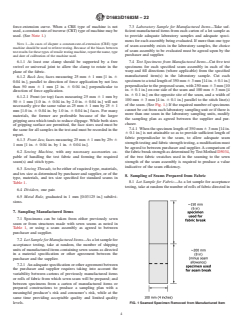
FIG. 1 Seamed Specimen Removed from Manufactured Item
8. Sampling of Seams Prepared from Fabric
8.1 Lot Sample for Fabric—As a lot sample for acceptance testing, take at random the number of rolls of fabric directed in an
applicable material specification or other agreement between the purchaser and supplier.
8.2 Laboratory Sample for Fabric—After discarding 1 m 6 0.1 m [1 yd 6 0.1 yd] from the outside roll, take a swatch 3 m 6
0.1 m [3 yd 6 0.1 yd] in length and the full width of the fabric to construct an adequate quantity of the seam assembly, which
is to be evaluated.
8.2.1 Specimen Preparation—As a source of test specimens, cut five specimens 350 mm 6 3 mm [14 in. 6 0.1 in.] by 100 mm
6 3 mm [4 in. 6 0.1 in.] with their long dimensions parallel either to the warp (machine) direction or to the filling (cross) direction,
or cut specimens for testing from both directions if required. (See Fig. 2.) Preferably specimens for a given fabric direction should
be spaced along a diagonal of the fabric to allow for representation of different warp and filling yarns, or machine and cross
direction areas, in each specimen. When possible, filling specimens should contain yarn from widely separated filling areas. Unless
otherwise specified, take specimens no nearer to the selvage, or edge of the fabric, than one tenth of the width of the fabric.
Depending on the direction in which seam strength is to be tested, sew swatch as follows:
8.2.2 Fold the specimen 100 mm 6 3 mm [4 in. 6 0.1 in.] from one end with the fold parallel to the short direction of the fabric.
Sew a seam as agreed upon by purchaser and supplier. (See Fig. 3.)
8.2.2.1 In the absence of an agreement on the construction of a seam assembly, prepare a standard seam using the specifications
from Table 1. These seam assembly specifications are categorized by fabric weight, as shown in Table 1. These default seam
assemblies are to be used when production seams are not available, or specified.
8.2.3 After seaming, cut the fold open. The test specimen should contain a seam approximately 100 mm 6 3 mm [4 in. 6 0.1
in.] from one end. Each test specimen will contain sufficient material for one seamed and one fabric test. (See Fig. 1.)
8.2.3.1 Yarns parallel to direction of force, and perpendicular to the seam, when tested, indicate seam strength test direction.
8.2.3.2 When preparing sewn seams to be evaluated for failure, it is suggested that distinct colors of sewing thread be used to
easily identify warp direction ruptures and filling direction ruptures.
8.3 Modifications to seam sample preparation are detailed in Annex A1 and Annex A2. These modifications can be used when a
D1683/D1683M − 22
FIG. 2 Cut Specimen Dimension from Fabric
determination is made about the acceptable failure mode for the textile structure. Will the failure mode be measured as a single
incident or is the structure expected to be repaired?
8.3.1 Changes to be made in tex size of sewing thread, seam type, and stitch density are explained and calculations shown.
8.3.2 The determination of an acceptable failure mode – either a single incident or a textile structure able to be repaired, is a
determination that can be made by either fabric weaver or textile structure producer.
9. Conditioning
9.1 Condition the specimens by bringing them from the dry side to approximate moisture equilibrium for testing in the standard
atmosphere for testing textiles as directed in Practice D1776. Equilibrium is considered to have been reached when the increase
in mass of the specimen in successive weighings made at intervals of not less than 2 6 0.1 h does not exceed 0.1 % of the mass
of the specimen.
10. Procedure
10.1 Seam Strength Procedure A:
D1683/D1683M − 22
FIG. 3 Seamed Specimen Dimensions Prepared from Fabric
10.1.1 This procedure is used to measure when the stress created by a specific sewn seam can result in the displacement of one
or more fabric yarns from their original position so as to cause differences in alignment, spacing, or both.
10.1.2 Using the reported grab break strength results when fabric is tested using Test Method D5034, calculate the 85 % seam
efficiency in both the warp yarn direction and filling yarn direction.
10.1.2.1 Multiply the reported grab break strength results, starting at 85 % and continue to 70 % by increments of 5 %. These
results can be used to estimate sewn seam strength and sewn seam efficiency percentages using a default seam engineering
combination of sewing thread, stitch type, seam type and stitch density detailed in Table 1, Procedure A or the modifications
detailed in Annex A1 and Annex A2.
10.1.3 Test five specimens in both directions, perpendicular to warp yarns and perpendicular to filling yarns, to determine if the
standard seam used in this procedure will result in the displacement of one or more fabric yarns from their original position and
cause a difference in alignment, spacing, or both. When this failure mode occurs, continue testing after modifying one of the
following:
10.1.3.1 Change either the sewing thread tex size or stitch density and complete calculation in either Annex A1 or Annex A2 to
include using either a single row or multiple rows of stitching, and test five specimens in both directions perpendicular to warp
yarns and perpendicular to filling yarns to determine if failure results in the displacement of one or more fabric yarns. Report these
changes.
10.1.4 Report when the failure mode is a rupture of the stitching without causing any displacement of fabric yarns or difference
in alignment.
10.1.4.1 Compare the results to the estimated seam strength calculated in 10.1.2.
10.1.5 Report the seam efficiency percentage at which the sewn seam rupture occurs without causing yarn displacement of one
or more fabric yarns.
10.2 Seam Strength Test Procedure B:
10.2.1 This procedure is used to measure when the stress created by a specific sewn seam can result in the displacement of one
or more fabric yarns from their original position so as to cause differences in alignment, spacing, or both.
D1683/D1683M − 22
10.2.2 Using the reported grab break strength results when fabric is tested using Test Method D5034, calculate the 85 % seam
efficiency in both the warp yarn direction and filling yarn direction.
10.2.2.1 Multiply the reported grab break strength results, starting at 85 % and continue to 70 % by increments of 5 %. These
results can be used to estimate sewn strength and sewn seam efficiency percentages using default seam engineering combination
of sewing thread, stitch type, seam type and stitch density detailed in Table 1, Procedure B or the modifications detailed in Annex
A1 and Annex A2.
10.2.3 Test five specimens in both directions, perpendicular to warp yarns and perpendicular to filling yarns, to determine if the
standard seam used in this procedure will result in the displacement of one or more fabric yarns from their original position and
cause a difference in alignment, spacing, or both. When this failure mode occurs, continue testing after modifying one of the
following:
10.2.3.1 Change either the sewing thread tex size or stitch density, complete the calculation in either Annex A1 or Annex A2 to
include using either a single row or multiple rows of stitching, and test five specimens in both directions perpendicular to warp
yarns and perpendicular to filling yarns to determine if failure results in the displacement of one or more
...