


ASTM D3806-19a
(Test Method)Standard Test Method of Small-Scale Evaluation of Fire-Retardant Paints (2-Foot Tunnel Method)
Standard Test Method of Small-Scale Evaluation of Fire-Retardant Paints (2-Foot Tunnel Method)
SIGNIFICANCE AND USE
3.1 A number of laboratory procedures are used to evaluate the effectiveness of fire-retardant and fire-resistant treatments and coatings. In general, these methods measure the three stages of fire development: (1) ignition; (2) flame spread (rate of growth of the fire); and (3) conflagration extent. While all three are of extreme importance, flame spread has been recognized as the main factor associated with testing fire-retardant coatings.
3.2 Flame spread ratings based upon Test Method E84 have acquired common acceptance by regulatory agencies, but such large-scale tests are seldom practical during the development or modification of a fire-retardant coating.
3.3 This test method provides the relative flame spread of experimental coatings using small test specimens under the conditions established in the 2-foot tunnel. By experimentally calibrating the 2-foot tunnel with similar Test Method E84-rated fire-retardant paint, results obtained by this test method can be used to screen coatings for suitability for testing in the Test Method E84 tunnel.
3.3.1 This test method is intended as an experimental tool in evaluating experimental coatings for further development. No direct correlation of results from this test method and the Test Method E84 tunnel have been made or are implied.
3.3.2 The results obtained by this test method do not in themselves act as an accurate predictor of performance in Test Method E84 and shall not be used for the purpose of certification to any class of flame spread performance.
SCOPE
1.1 This test method determines the protection a coating affords its substrate, and the comparative burning characteristics of coatings by evaluating the flame spread over the surface when ignited under controlled conditions in a small tunnel. This establishes a basis for comparing surface-burning characteristics of different coatings without specific consideration of all the end-use parameters that might affect surface-burning characteristics under actual fire conditions.
1.2 In addition to the experimental flame spread rate, the weight of panel consumed, time of afterflaming and afterglow, char dimensions and index, and height of intumescence can be measured in this test. However, a relationship should not be presumed among these measurements.
1.3 This standard is used to determine certain fire-test responses of materials, products, or assemblies to heat and flame under controlled conditions by using results obtained from fire-test response standards. The results obtained from using this standard do not by themselves constitute measures of fire hazard or fire risk.
1.4 The values stated in SI units are to be regarded as the standard. The values given in parentheses are for information only.
1.5 This standard is used to measure and describe the response of materials, products, or assemblies to heat and flame under controlled conditions, but does not by itself incorporate all factors required for fire hazard or fire risk assessment of the materials, products, or assemblies under actual fire conditions.
1.6 Fire testing is inherently hazardous. Adequate safeguards for personnel and property shall be employed in conducting these tests.
1.7 This standard does not purport to address all of the safety concerns, if any, associated with its use. It is the responsibility of the user of this standard to establish appropriate safety, health, and environmental practices and determine the applicability of regulatory limitations prior to use.
1.8 This international standard was developed in accordance with internationally recognized principles on standardization established in the Decision on Principles for the Development of International Standards, Guides and Recommendations issued by the World Trade Organization Technical Barriers to Trade (TBT) Committee.
General Information
- Status
- Published
- Publication Date
- 30-Nov-2019
- Technical Committee
- D01 - Paint and Related Coatings, Materials, and Applications
- Drafting Committee
- D01.21 - Chemical Analysis of Paints and Paint Materials
Relations
- Effective Date
- 01-Dec-2019
- Effective Date
- 01-Dec-2023
- Effective Date
- 01-Sep-2023
- Effective Date
- 01-Jul-2019
- Effective Date
- 15-Apr-2019
- Effective Date
- 01-Mar-2019
- Effective Date
- 01-Oct-2018
- Effective Date
- 01-Jul-2018
- Effective Date
- 01-Jun-2018
- Effective Date
- 01-Mar-2018
- Effective Date
- 01-Nov-2017
- Effective Date
- 01-Aug-2017
- Effective Date
- 01-Dec-2016
- Effective Date
- 01-Jul-2016
- Effective Date
- 15-Dec-2015
Overview
ASTM D3806-19a, Standard Test Method of Small-Scale Evaluation of Fire-Retardant Paints (2-Foot Tunnel Method), defines a laboratory procedure for assessing the comparative burning characteristics and flame spread of fire-retardant coatings. Developed by ASTM International, this standard utilizes a small-scale 2-foot tunnel apparatus to provide a relative indication of flame spread, enabling effective screening of experimental fire-retardant paints before considering more extensive and resource-intensive large-scale tests, such as ASTM E84.
By focusing on the rate of flame spread under controlled laboratory conditions, ASTM D3806-19a offers a practical method for early-stage product development and research for manufacturers and developers of fire-resistant coatings.
Key Topics
- Flame Spread Measurement: This standard emphasizes evaluating the flame spread rate of fire-retardant coatings, which is a crucial factor in the development and selection of fire-safe materials.
- Small-Scale Testing Environment: The method describes the use of a 610-mm (2-foot) test tunnel, simulating controlled ignition and burning conditions for small test specimens.
- Comparative Evaluation: Results from this method are used to compare different fire-retardant coatings and to determine their suitability for further testing, such as the ASTM E84 tunnel test, but not for final product certification.
- Additional Observations: The procedure also provides for optional measurements, including:
- Weight loss of the substrate panel (panel consumption)
- Afterflaming and afterglow times
- Char dimensions and char index
- Height of intumescence (expansion of intumescent paints)
- Insulation value (temperature difference across panel)
- Controlled Laboratory Conditions: Specimen preparation, conditioning, and testing are done under specified humidity and temperature levels to ensure repeatability and reliability.
- Safety Considerations: As fire testing involves inherent risks, the standard details the need for appropriate safety, health, and environmental precautions.
Applications
ASTM D3806-19a is widely used in several practical scenarios:
- Research and Development: For manufacturers of fire-retardant and intumescent paints, this standard streamlines the experimental evaluation process during formulation adjustments or innovation in fire-resistant coatings.
- Product Screening: Helps in identifying which coatings merit investment in further, more demanding tests such as those simulating large-scale fire scenarios.
- Comparative Performance Analysis: Provides a standardized basis to compare new or existing fire protection solutions on the market.
- Performance Benchmarking: While results from this method are not suitable for regulatory compliance or certification, they are valuable for internal benchmarking and material selection during product development.
- Educational and Laboratory Use: The method is suitable for academic, training, or quality control purposes, offering insight into fire test response characteristics.
Related Standards
ASTM D3806-19a incorporates and references several important industry standards:
- ASTM E84 - Test Method for Surface Burning Characteristics of Building Materials, serving as the accepted large-scale test for regulatory certification.
- ASTM D2196 - Test Methods for Rheological Properties of Non-Newtonian Materials by Rotational Viscometer, referenced for coating preparation.
- ASTM D1475 - Test Method for Density of Liquid Coatings, integral to the calculation of coating application rates.
- ASTM D344 (Withdrawn) - Test Method for Relative Hiding Power of Paints by Brushouts, describes specimen preparation procedure.
- Federal Specification TT-V-119 - Used for varnish application and substrate preparation.
Summary
ASTM D3806-19a provides an essential, cost-effective laboratory method for small-scale flame spread evaluation of fire-retardant paints. It supports development and screening of safer, more effective protective coatings, contributing to fire safety innovation in building materials and industrial applications. For official certification or regulatory compliance, further testing using large-scale methods such as ASTM E84 is required.
Keywords: ASTM D3806, fire-retardant paint, flame spread test, 2-foot tunnel method, fire-resistant coatings, material testing, small-scale fire test, surface-burning characteristics.
Buy Documents
ASTM D3806-19a - Standard Test Method of Small-Scale Evaluation of Fire-Retardant Paints (2-Foot Tunnel Method)
REDLINE ASTM D3806-19a - Standard Test Method of Small-Scale Evaluation of Fire-Retardant Paints (2-Foot Tunnel Method)
Get Certified
Connect with accredited certification bodies for this standard
NSF International
Global independent organization facilitating standards development and certification.

CIS Institut d.o.o.
Personal Protective Equipment (PPE) certification body. Notified Body NB-2890 for EU Regulation 2016/425 PPE.

Kiwa BDA Testing
Building and construction product certification.
Sponsored listings
Frequently Asked Questions
ASTM D3806-19a is a standard published by ASTM International. Its full title is "Standard Test Method of Small-Scale Evaluation of Fire-Retardant Paints (2-Foot Tunnel Method)". This standard covers: SIGNIFICANCE AND USE 3.1 A number of laboratory procedures are used to evaluate the effectiveness of fire-retardant and fire-resistant treatments and coatings. In general, these methods measure the three stages of fire development: (1) ignition; (2) flame spread (rate of growth of the fire); and (3) conflagration extent. While all three are of extreme importance, flame spread has been recognized as the main factor associated with testing fire-retardant coatings. 3.2 Flame spread ratings based upon Test Method E84 have acquired common acceptance by regulatory agencies, but such large-scale tests are seldom practical during the development or modification of a fire-retardant coating. 3.3 This test method provides the relative flame spread of experimental coatings using small test specimens under the conditions established in the 2-foot tunnel. By experimentally calibrating the 2-foot tunnel with similar Test Method E84-rated fire-retardant paint, results obtained by this test method can be used to screen coatings for suitability for testing in the Test Method E84 tunnel. 3.3.1 This test method is intended as an experimental tool in evaluating experimental coatings for further development. No direct correlation of results from this test method and the Test Method E84 tunnel have been made or are implied. 3.3.2 The results obtained by this test method do not in themselves act as an accurate predictor of performance in Test Method E84 and shall not be used for the purpose of certification to any class of flame spread performance. SCOPE 1.1 This test method determines the protection a coating affords its substrate, and the comparative burning characteristics of coatings by evaluating the flame spread over the surface when ignited under controlled conditions in a small tunnel. This establishes a basis for comparing surface-burning characteristics of different coatings without specific consideration of all the end-use parameters that might affect surface-burning characteristics under actual fire conditions. 1.2 In addition to the experimental flame spread rate, the weight of panel consumed, time of afterflaming and afterglow, char dimensions and index, and height of intumescence can be measured in this test. However, a relationship should not be presumed among these measurements. 1.3 This standard is used to determine certain fire-test responses of materials, products, or assemblies to heat and flame under controlled conditions by using results obtained from fire-test response standards. The results obtained from using this standard do not by themselves constitute measures of fire hazard or fire risk. 1.4 The values stated in SI units are to be regarded as the standard. The values given in parentheses are for information only. 1.5 This standard is used to measure and describe the response of materials, products, or assemblies to heat and flame under controlled conditions, but does not by itself incorporate all factors required for fire hazard or fire risk assessment of the materials, products, or assemblies under actual fire conditions. 1.6 Fire testing is inherently hazardous. Adequate safeguards for personnel and property shall be employed in conducting these tests. 1.7 This standard does not purport to address all of the safety concerns, if any, associated with its use. It is the responsibility of the user of this standard to establish appropriate safety, health, and environmental practices and determine the applicability of regulatory limitations prior to use. 1.8 This international standard was developed in accordance with internationally recognized principles on standardization established in the Decision on Principles for the Development of International Standards, Guides and Recommendations issued by the World Trade Organization Technical Barriers to Trade (TBT) Committee.
SIGNIFICANCE AND USE 3.1 A number of laboratory procedures are used to evaluate the effectiveness of fire-retardant and fire-resistant treatments and coatings. In general, these methods measure the three stages of fire development: (1) ignition; (2) flame spread (rate of growth of the fire); and (3) conflagration extent. While all three are of extreme importance, flame spread has been recognized as the main factor associated with testing fire-retardant coatings. 3.2 Flame spread ratings based upon Test Method E84 have acquired common acceptance by regulatory agencies, but such large-scale tests are seldom practical during the development or modification of a fire-retardant coating. 3.3 This test method provides the relative flame spread of experimental coatings using small test specimens under the conditions established in the 2-foot tunnel. By experimentally calibrating the 2-foot tunnel with similar Test Method E84-rated fire-retardant paint, results obtained by this test method can be used to screen coatings for suitability for testing in the Test Method E84 tunnel. 3.3.1 This test method is intended as an experimental tool in evaluating experimental coatings for further development. No direct correlation of results from this test method and the Test Method E84 tunnel have been made or are implied. 3.3.2 The results obtained by this test method do not in themselves act as an accurate predictor of performance in Test Method E84 and shall not be used for the purpose of certification to any class of flame spread performance. SCOPE 1.1 This test method determines the protection a coating affords its substrate, and the comparative burning characteristics of coatings by evaluating the flame spread over the surface when ignited under controlled conditions in a small tunnel. This establishes a basis for comparing surface-burning characteristics of different coatings without specific consideration of all the end-use parameters that might affect surface-burning characteristics under actual fire conditions. 1.2 In addition to the experimental flame spread rate, the weight of panel consumed, time of afterflaming and afterglow, char dimensions and index, and height of intumescence can be measured in this test. However, a relationship should not be presumed among these measurements. 1.3 This standard is used to determine certain fire-test responses of materials, products, or assemblies to heat and flame under controlled conditions by using results obtained from fire-test response standards. The results obtained from using this standard do not by themselves constitute measures of fire hazard or fire risk. 1.4 The values stated in SI units are to be regarded as the standard. The values given in parentheses are for information only. 1.5 This standard is used to measure and describe the response of materials, products, or assemblies to heat and flame under controlled conditions, but does not by itself incorporate all factors required for fire hazard or fire risk assessment of the materials, products, or assemblies under actual fire conditions. 1.6 Fire testing is inherently hazardous. Adequate safeguards for personnel and property shall be employed in conducting these tests. 1.7 This standard does not purport to address all of the safety concerns, if any, associated with its use. It is the responsibility of the user of this standard to establish appropriate safety, health, and environmental practices and determine the applicability of regulatory limitations prior to use. 1.8 This international standard was developed in accordance with internationally recognized principles on standardization established in the Decision on Principles for the Development of International Standards, Guides and Recommendations issued by the World Trade Organization Technical Barriers to Trade (TBT) Committee.
ASTM D3806-19a is classified under the following ICS (International Classification for Standards) categories: 13.220.40 - Ignitability and burning behaviour of materials and products; 87.040 - Paints and varnishes. The ICS classification helps identify the subject area and facilitates finding related standards.
ASTM D3806-19a has the following relationships with other standards: It is inter standard links to ASTM D3806-19, ASTM E84-23d, ASTM E84-23c, ASTM E84-19b, ASTM E84-19a, ASTM E84-19, ASTM E84-18b, ASTM E84-18a, ASTM D2196-18, ASTM E84-18, ASTM E84-17a, ASTM E84-17, ASTM D344-11(2016), ASTM E84-16, ASTM E84-15b. Understanding these relationships helps ensure you are using the most current and applicable version of the standard.
ASTM D3806-19a is available in PDF format for immediate download after purchase. The document can be added to your cart and obtained through the secure checkout process. Digital delivery ensures instant access to the complete standard document.
Standards Content (Sample)
This international standard was developed in accordance with internationally recognized principles on standardization established in the Decision on Principles for the
Development of International Standards, Guides and Recommendations issued by the World Trade Organization Technical Barriers to Trade (TBT) Committee.
Designation: D3806 − 19a
Standard Test Method of
Small-Scale Evaluation of Fire-Retardant Paints (2-Foot
Tunnel Method)
This standard is issued under the fixed designation D3806; the number immediately following the designation indicates the year of
original adoption or, in the case of revision, the year of last revision.Anumber in parentheses indicates the year of last reapproval.A
superscript epsilon (´) indicates an editorial change since the last revision or reapproval.
1. Scope priate safety, health, and environmental practices and deter-
mine the applicability of regulatory limitations prior to use.
1.1 This test method determines the protection a coating
1.8 This international standard was developed in accor-
affords its substrate, and the comparative burning characteris-
dance with internationally recognized principles on standard-
ticsofcoatingsbyevaluatingtheflamespreadoverthesurface
ization established in the Decision on Principles for the
when ignited under controlled conditions in a small tunnel.
Development of International Standards, Guides and Recom-
This establishes a basis for comparing surface-burning charac-
mendations issued by the World Trade Organization Technical
teristics of different coatings without specific consideration of
Barriers to Trade (TBT) Committee.
all the end-use parameters that might affect surface-burning
characteristics under actual fire conditions.
2. Referenced Documents
1.2 In addition to the experimental flame spread rate, the
2.1 ASTM Standards:
weight of panel consumed, time of afterflaming and afterglow,
D344Test Method for Relative Hiding Power of Paints by
char dimensions and index, and height of intumescence can be
the Visual Evaluation of Brushouts (Withdrawn 2018)
measured in this test. However, a relationship should not be
D1475Test Method for Density of Liquid Coatings, Inks,
presumed among these measurements.
and Related Products
1.3 This standard is used to determine certain fire-test
D2196Test Methods for Rheological Properties of Non-
responses of materials, products, or assemblies to heat and
Newtonian Materials by Rotational Viscometer
flame under controlled conditions by using results obtained
E84Test Method for Surface Burning Characteristics of
from fire-test response standards. The results obtained from
Building Materials
usingthisstandarddonotbythemselvesconstitutemeasuresof
2.2 Federal Standard:
fire hazard or fire risk.
Fed. Spec. TT-V-119Varnish, Spar, Phenolic Resin
1.4 The values stated in SI units are to be regarded as the
standard. The values given in parentheses are for information
3. Significance and Use
only.
3.1 Anumber of laboratory procedures are used to evaluate
1.5 This standard is used to measure and describe the
the effectiveness of fire-retardant and fire-resistant treatments
response of materials, products, or assemblies to heat and
and coatings. In general, these methods measure the three
flame under controlled conditions, but does not by itself
stages of fire development: (1) ignition; (2) flame spread (rate
incorporate all factors required for fire hazard or fire risk
of growth of the fire); and (3) conflagration extent. While all
assessment of the materials, products, or assemblies under
three are of extreme importance, flame spread has been
actual fire conditions.
recognized as the main factor associated with testing fire-
1.6 Fire testing is inherently hazardous. Adequate safe-
retardant coatings.
guards for personnel and property shall be employed in
3.2 Flame spread ratings based uponTest Method E84 have
conducting these tests.
acquired common acceptance by regulatory agencies, but such
1.7 This standard does not purport to address all of the
safety concerns, if any, associated with its use. It is the
responsibility of the user of this standard to establish appro-
For referenced ASTM standards, visit the ASTM website, www.astm.org, or
contact ASTM Customer Service at service@astm.org. For Annual Book of ASTM
This test method is under the jurisdiction of ASTM Committee D01 on Paint Standards volume information, refer to the standard’s Document Summary page on
and Related Coatings, Materials, andApplications and is the direct responsibility of the ASTM website.
Subcommittee D01.21 on Chemical Analysis of Paints and Paint Materials. The last approved version of this historical standard is referenced on
Current edition approved Dec. 1, 2019. Published December 2019. Originally www.astm.org.
approved in 1979. Last previous edition approved in 2019 as D3806–19. DOI: Available from DLA Document Services, Building 4/D, 700 Robbins Ave.,
10.1520/D3806-19A. Philadelphia, PA 19111-5094, http://quicksearch.dla.mil.
Copyright © ASTM International, 100 Barr Harbor Drive, PO Box C700, West Conshohocken, PA 19428-2959. United States
D3806 − 19a
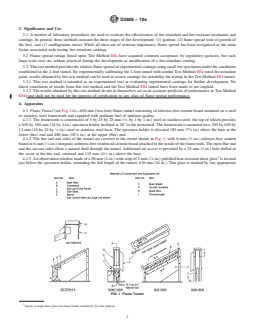
large-scale tests are seldom practical during the development 4.1.2 The fire end and sides of the tunnel are covered to the
or modification of a fire-retardant coating. extent shown in Fig. 1, with 6-mm ( ⁄4-in.) asbestos-free
cement board or 6-mm ( ⁄4-in.) inorganic asbestos-free
3.3 This test method provides the relative flame spread of
reinforced-cement board attached to the inside of the frame-
experimental coatings using small test specimens under the
work. The open flue end and the cut-out sides allow a natural
conditions established in the 2-foot tunnel. By experimentally
draft through the tunnel.Additional air access is provided by a
calibrating the 2-foot tunnel with similar Test Method E84-
25-mm(1-in.) hole drilled in the cover at the fire end, centered
rated fire-retardant paint, results obtained by this test method
and115mm(4 ⁄2 in.) above the base.
can be used to screen coatings for suitability for testing in the
4.1.3 Anobservationwindowmadeofa50-mm(2-in.)wide
Test Method E84 tunnel.
strip of 3-mm ( ⁄8-in.) polished heat-resistant sheet glass is
3.3.1 Thistestmethodisintendedasanexperimentaltoolin
located just below the specimen holder, extending the full
evaluating experimental coatings for further development. No
length of the tunnel, 610 mm (24 in.). This glass is marked by
direct correlation of results from this test method and the Test
anyappropriatemethodat1-in.intervalsfrom4to22in.A560
Method E84 tunnel have been made or are implied.
1 1
by 55 by 2-mm (22 by 2 ⁄4 by ⁄16-in.) sheet metal shield is
3.3.2 The results obtained by this test method do not in
attached above the window, slanting downwards at an angle of
themselves act as an accurate predictor of performance in Test
60° to shield the observation window. The steel or stainless
Method E84 and shall not be used for the purpose of certifi-
steelpanelholderisnotchedalongthebottomorsupportinglip
cation to any class of flame spread performance.
of the angle at 25-mm (1-in.) intervals to assist in the
measurements of the flame advance.
4. Apparatus
4.1 Flame Tunnel (see Fig. 1A)—610-mm (two-foot) flame NOTE1—Arulecanalsobemountedoutsidetheobservationwindowto
help measure the flame advancement.
tunnel consisting of asbestos-free cement board mounted on a
steel or stainless steel framework and supplied with methane
4.1.4 A hole is drilled in the side of the specimen holder
fuel of uniform quality.
immediately above the center of the burner to allow insertion
4.1.1 The framework is constructed of 3 by 25 by 25-mm
of a thermocouple.
( ⁄8 by 1 by 1-in.) steel or stainless steel, the top of which
4.1.5 The tunnel shall be placed in an area as free from
provides a 610 by 100-mm (24 by 4-in.) specimen holder
drafts as possible with facilities for removal or escape of
inclinedat28°tothehorizontal.Theframeworkismountedon
combustion products. (Standard laboratory hood with forced
a 250 by 610 by 13-mm (10 by 24 by ⁄2-in.) steel or stainless
draft off during test.)
steel base. The specimen holder is elevated 185 mm (7 ⁄8 in.)
abovethebaseatthelower(fire)endand480mm(18 ⁄8in.)at
the upper (flue) end. Quartz or high-silica glass has been found satisfactory for this purpose.
FIG. 1 Flame Tunnel
D3806 − 19a
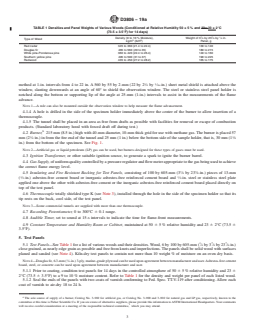
TABLE 1 Densities and Panel Weights of Various Woods (Conditioned at Relative Humidity 50 ± 5 % and 23 ± 2°C
(73.5 ± 3.5°F) for 14 days)
7 7 1
Density (9 to 10 % Moisture), Weight of 3 ⁄8 by 23 ⁄8 by ⁄4 in.
Type of Wood
3 3
kg/m (lb/ft ) Panel, g
Red cedar 345 to 360 (21.4 to 22.4) 130 to 140
Douglas fir 465 to 560 (29 to 35) 180 to 215
White pine-Ponderosa pine 360 to 420 (22.4 to 26.4) 140 to 160
Southern yellow pine 495 to 590 (31 to 37) 190 to 225
Redwood 435 to 450 (27.2 to 28.2) 165 to 175
NOTE4—Douglasfir,6.3-mm( ⁄4-in.)3-ply,marine–gradeplywoodcan
4.2 Burner, 215 mm (8.5 in.) high with 40-mm diameter,
be used upon agreement between manufacturer and user. Asbestos-free
10-mm thick grid for use with methane gas. The burner is
cement board, steel, or concrete can be used upon agreement between
placed 57 mm (2 ⁄4 in.) in from the fire end of the tunnel and
manufacturer and user.
25 mm (1 in.) below the bottom side of the sample holder, that
1 5.1.1 Prior to coating, condition test panels for 14 days in
is, 30 mm (1 ⁄8 in.) from the bottom of the specimen. See Fig.
the controlled atmosphere of 50 6 5% relative humidity and
1.
23 6 2°C (73.5 6 3.5°F) toa9to10% moisture content.
NOTE 2—Artificial gas or liquid petroleum (LP) gas can be used, but
Refer to Table 1 for the density and weight per panel of each
burners designed for these types of gases must be used.
listed wood.
4.3 Ignition Transformer, or other suitable ignition source,
5.1.2 Seal the ends of the panels with two coats of varnish
to generate a spark to ignite the burner barrel.
conforming to Fed. Spec. TT-V-119 after conditioning. Allow
each coat of varnish to air-dry 18 to 24 h.
4.4 Gas Supply, of uniform quality controlled by a pressure
regulator and flow meter appropriate to the gas being used to
6. Calibration Standards
achieve the correct flame energy level.
4.5 Insulating and Fire Resistant Backing for Test Panels,
6.1 Zero-Flame Spread—Asbestos-freecementboard,13by
7 7
1 7 7
consisting of 100 by 605-mm (3 ⁄8 by 23 ⁄8-in.) pieces of 100by605mm( ⁄2by3 ⁄8by23 ⁄8in.),conditionedasin5.1.1.
13-mm ( ⁄2-in.) asbestos-free cement board or inorganic
6.2 Fire-Rated Standard—A test panel, similar to that used
asbestos-free reinforced cement board and ⁄2-in. steel or
with test coatings, coated with Test Method E84 rated paint at
stainless steel plate applied one above the other with asbestos-
the manufacturer’s recommended spreading rate and condi-
free cement or the inorganic asbestos-free reinforced cement
tioned as in Section 7.
board placed directly on top of the test panel.
NOTE 5—Do not use paint beyond manufacturer’s stated shelf life.
4.6 Thermocouple totally shielded type K (see Note 3),
installed through the hole in the side of the specimen holder so
7. Preparation of Test Panels
that its tip rests on the back, cool side, of the test panel.
7.1 Thoroughly mix
...
This document is not an ASTM standard and is intended only to provide the user of an ASTM standard an indication of what changes have been made to the previous version. Because
it may not be technically possible to adequately depict all changes accurately, ASTM recommends that users consult prior editions as appropriate. In all cases only the current version
of the standard as published by ASTM is to be considered the official document.
Designation: D3806 − 19 D3806 − 19a
Standard Test Method of
Small-Scale Evaluation of Fire-Retardant Paints (2-Foot
Tunnel Method)
This standard is issued under the fixed designation D3806; the number immediately following the designation indicates the year of
original adoption or, in the case of revision, the year of last revision. A number in parentheses indicates the year of last reapproval. A
superscript epsilon (´) indicates an editorial change since the last revision or reapproval.
1. Scope
1.1 This test method determines the protection a coating affords its substrate, and the comparative burning characteristics of
coatings by evaluating the flame spread over the surface when ignited under controlled conditions in a small tunnel. This
establishes a basis for comparing surface-burning characteristics of different coatings without specific consideration of all the
end-use parameters that might affect surface-burning characteristics under actual fire conditions.
1.2 In addition to the experimental flame spread rate, the weight of panel consumed, time of afterflaming and afterglow, char
dimensions and index, and height of intumescence can be measured in this test. However, a relationship should not be presumed
among these measurements.
1.3 This standard is used to determine certain fire-test responses of materials, products, or assemblies to heat and flame under
controlled conditions by using results obtained from fire-test response standards. The results obtained from using this standard do
not by themselves constitute measures of fire hazard or fire risk.
1.4 The values stated in SI units are to be regarded as the standard. The values given in parentheses are for information only.
1.5 This standard is used to measure and describe the response of materials, products, or assemblies to heat and flame under
controlled conditions, but does not by itself incorporate all factors required for fire hazard or fire risk assessment of the materials,
products, or assemblies under actual fire conditions.
1.6 Fire testing is inherently hazardous. Adequate safeguards for personnel and property shall be employed in conducting these
tests.
1.7 This standard does not purport to address all of the safety concerns, if any, associated with its use. It is the responsibility
of the user of this standard to establish appropriate safety, health, and environmental practices and determine the applicability of
regulatory limitations prior to use.
1.8 This international standard was developed in accordance with internationally recognized principles on standardization
established in the Decision on Principles for the Development of International Standards, Guides and Recommendations issued
by the World Trade Organization Technical Barriers to Trade (TBT) Committee.
2. Referenced Documents
2.1 ASTM Standards:
D344 Test Method for Relative Hiding Power of Paints by the Visual Evaluation of Brushouts (Withdrawn 2018)
D1475 Test Method for Density of Liquid Coatings, Inks, and Related Products
D2196 Test Methods for Rheological Properties of Non-Newtonian Materials by Rotational Viscometer
E84 Test Method for Surface Burning Characteristics of Building Materials
2.2 Federal Standard:
Fed. Spec. TT-V-119 Varnish, Spar, Phenolic Resin
This test method is under the jurisdiction of ASTM Committee D01 on Paint and Related Coatings, Materials, and Applications and is the direct responsibility of
Subcommittee D01.21 on Chemical Analysis of Paints and Paint Materials.
Current edition approved Oct. 1, 2019Dec. 1, 2019. Published October 2019December 2019. Originally approved in 1979. Last previous edition approved in 20162019
as D3806 – 98 (2016).D3806 – 19. DOI: 10.1520/D3806-19.10.1520/D3806-19A.
For referenced ASTM standards, visit the ASTM website, www.astm.org, or contact ASTM Customer Service at service@astm.org. For Annual Book of ASTM Standards
volume information, refer to the standard’s Document Summary page on the ASTM website.
The last approved version of this historical standard is referenced on www.astm.org.
Available from DLA Document Services, Building 4/D, 700 Robbins Ave., Philadelphia, PA 19111-5094, http://quicksearch.dla.mil.
Copyright © ASTM International, 100 Barr Harbor Drive, PO Box C700, West Conshohocken, PA 19428-2959. United States
D3806 − 19a
3. Significance and Use
3.1 A number of laboratory procedures are used to evaluate the effectiveness of fire-retardant and fire-resistant treatments and
coatings. In general, these methods measure the three stages of fire development: (1) ignition; (2) flame spread (rate of growth of
the fire); and (3) conflagration extent. While all three are of extreme importance, flame spread has been recognized as the main
factor associated with testing fire-retardant coatings.
3.2 Flame spread ratings based upon Test Method E84 have acquired common acceptance by regulatory agencies, but such
large-scale tests are seldom practical during the development or modification of a fire-retardant coating.
3.3 This test method provides the relative flame spread of experimental coatings using small test specimens under the conditions
established in the 2-foot tunnel. By experimentally calibrating the 2-foot tunnel with similar Test Method E84-rated fire-retardant
paint, results obtained by this test method can be used to screen coatings for suitability for testing in the Test Method E84 tunnel.
3.3.1 This test method is intended as an experimental tool in evaluating experimental coatings for further development. No
direct correlation of results from this test method and the Test Method E84 tunnel have been made or are implied.
3.3.2 The results obtained by this test method do not in themselves act as an accurate predictor of performance in Test Method
E84. and shall not be used for the purpose of certification to any class of flame spread performance.
4. Apparatus
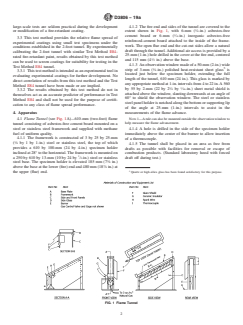
4.1 Flame Tunnel (see Fig. 1A)—610-mm (two-foot) flame tunnel consisting of asbestos-free cement board mounted on a steel
or stainless steel framework and supplied with methane fuel of uniform quality.
4.1.1 The framework is constructed of 3 by 25 by 25-mm ( ⁄8 by 1 by 1-in.) steel or stainless steel, the top of which provides
a 610 by 100-mm (24 by 4-in.) specimen holder inclined at 28° to the horizontal. The framework is mounted on a 250 by 610 by
1 3
13-mm (10 by 24 by ⁄2-in.) steel or stainless steel base. The specimen holder is elevated 185 mm (7 ⁄8 in.) above the base at the
lower (fire) end and 480 mm (18 ⁄8 in.) at the upper (flue) end.
4.1.2 The fire end and sides of the tunnel are covered to the extent shown in Fig. 1, with 6-mm ( ⁄4-in.) asbestos-free cement
board or 6-mm ( ⁄4-in.) inorganic asbestos-free reinforced-cement board attached to the inside of the framework. The open flue end
and the cut-out sides allow a natural draft through the tunnel. Additional air access is provided by a 25-mm (1-in.) hole drilled in
the cover at the fire end, centered and 115 mm (4 ⁄2 in.) above the base.
4.1.3 An observation window made of a 50-mm (2-in.) wide strip of 3-mm ( ⁄8-in.) polished heat-resistant sheet glass is located
just below the specimen holder, extending the full length of the tunnel, 610 mm (24 in.). This glass is marked by any appropriate
FIG. 1 Flame Tunnel
Quartz or high-silica glass has been found satisfactory for this purpose.
D3806 − 19a
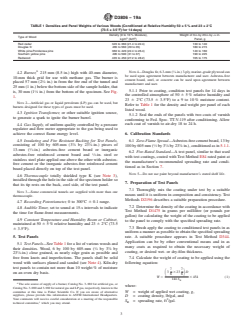
TABLE 1 Densities and Panel Weights of Various Woods (Conditioned at Relative Humidity 50 ± 5 % and 23± 23 ± 2°C
(73.5 ± 3.5°F) for 14 days)
7 7 1
Density (9 to 10 % Moisture), Weight of 3 ⁄8 by 23 ⁄8 by ⁄4 in.
Type of Wood
3 3
kg/m (lb/ft ) Panel, g
Red cedar 345 to 360 (21.4 to 22.4) 130 to 140
Douglas fir 465 to 560 (29 to 35) 180 to 215
White pine-Ponderosa pine 360 to 420 (22.4 to 26.4) 140 to 160
Southern yellow pine 495 to 590 (31 to 37) 190 to 225
Redwood 435 to 450 (27.2 to 28.2) 165 to 175
1 1
method at 1-in. intervals from 4 to 22 in. A 560 by 55 by 2-mm (22 by 2 ⁄4 by ⁄16-in.) sheet metal shield is attached above the
window, slanting downwards at an angle of 60° to shield the observation window. The steel or stainless steel panel holder is
notched along the bottom or supporting lip of the angle at 25-mm (1-in.) intervals to assist in the measurements of the flame
advance.
NOTE 1—A rule can also be mounted outside the observation window to help measure the flame advancement.
4.1.4 A hole is drilled in the side of the specimen holder immediately above the center of the burner to allow insertion of a
thermocouple.
4.1.5 The tunnel shall be placed in an area as free from drafts as possible with facilities for removal or escape of combustion
products. (Standard laboratory hood with forced draft off during test.)
4.2 Burner, 215 mm (8.5 in.) high with 40-mm diameter, 10-mm thick grid for use with methane gas. The burner is placed 57
1 1
mm (2 ⁄4 in.) in from the fire end of the tunnel and 25 mm (1 in.) below the bottom side of the sample holder, that is, 30 mm (1 ⁄8
in.) from the bottom of the specimen. See Fig. 1.
NOTE 2—Artificial gas or liquid petroleum (LP) gas can be used, but burners designed for these types of gases must be used.
4.3 Ignition Transformer, or other suitable ignition source, to generate a spark to ignite the burner barrel.
4.4 Gas Supply, of uniform quality controlled by a pressure regulator and flow meter appropriate to the gas being used to achieve
the correct flame energy level.
7 7
4.5 Insulating and Fire Resistant Backing for Test Panels, consisting of 100 by 605-mm (3 ⁄8 by 23 ⁄8-in.) pieces of 13-mm
1 1
( ⁄2-in.) asbestos-free cement board or inorganic asbestos-free reinforced cement board and ⁄2-in. steel or stainless steel plate
applied one above the other with asbestos-free cement or the inorganic asbestos-free reinforced cement board placed directly on
top of the test panel.
4.6 Thermocouple totally shielded type K (see Note 3), installed through the hole in the side of the specimen holder so that its
tip rests on the back, cool side, of the test panel.
NOTE 3—Some commercial tunnels are supplied with more than one thermocouple.
4.7 Recording Potentiometer, 0 to 300°C 6 0.1 range.
4.8 Audible Timer, set to sound at 15-s intervals to indicate the time for flame-front measurements.
4.9 Constant Temperature and Humidity Room or Cabinet, maintained at 50 6 5 % relative humidity and 23 6 2°C (73.5 6
3.5°F).
5. Test Panels
1 7 7
5.1 Test Panels—See Table 1 for a list of various woods and their densities. Wood, 6 by 100 by 605-mm ( ⁄4 by 3 ⁄8 by 23 ⁄8-in.)
close grained, as nearly edge grain as possible and free from knots and imperfections. The panels shall be solid wood with surfaces
planed and sanded (see Note 4). Kiln-dry test panels to contain not more than 10 weight % of moisture on an oven dry basis.
NOTE 4—Douglas fir, 6.3-mm ( ⁄4-in.) 3-ply, marine–grade plywood can be used upon agreement between manufacturer and user. Asbestos-free cement
board, steel, or concrete can be used upon agreement between manufacturer and user.
5.1.1 Prior to coating, condition test panels for 14 days in the controlled atmosphere
...
Questions, Comments and Discussion
Ask us and Technical Secretary will try to provide an answer. You can facilitate discussion about the standard in here.
Loading comments...