

ASTM F1891-19
(Specification)Standard Specification for Arc and Flame Resistant Rainwear
General Information
- Abstract
ABSTRACT
This specification establishes applicable test methods, minimum physical and thermal performance criteria, a suggested sizing guide, and suggested purchasing information for rainwear for use by workers who may be exposed to thermal hazards of momentary electric arcs and open flames. It does not however apply to electrical contact hazards or electric shock hazards involved with electric arcs nor to flash fire hazards such as industrial hydrocarbon flash fires or other petrochemical flash fire hazards. The rainwear shall be manufactured of materials and constructed using seams that meet the requirements for leak resistance and shall meet the physical requirements of this specification initially as manufactured and after five cleanings. The specimen shall be subjected to tests to determine conformance to the following requirements: flame resistance, tear strength resistance, waterproofness, electric arc resistance, material average weight, arc rating, arc thermal performance value, breakopen threshold energy, heat attenuation factor, and melting and dripping. The material response characteristics for rainwear material, including afterflame time, breakopen, charring, dripping, electric arc ignition, embrittlement, melting, and shrinkage, shall be reported for two typical exposures at least equal to the arc rating and also for two typical exposures at least two times the arc rating.
SCOPE
1.1 This specification establishes applicable test methods, minimum physical and thermal performance criteria, a suggested sizing guide, and suggested purchasing information for rainwear for use by workers who may be exposed to thermal hazards of momentary electric arcs and open flames.
1.1.1 This specification does not apply to the electrical contact hazards or electric shock hazards involved with electric arcs.
1.1.2 This specification does not apply to flash fire hazards such as industrial hydrocarbon flash fires or other petrochemical flash fire hazards.
1.2 The objective of this specification is to prescribe fit, function and performance criteria for rainwear that meets a minimum level of thermal and physical performance when exposed to a laboratory–simulated electric arc or flame exposure.
1.3 This specification is not intended to serve as a detailed manufacturing or purchasing specification, but can be referenced in purchase contracts to ensure that minimum performance requirements are met.
1.4 Controlled laboratory tests used to determine compliance with the performance requirements of this specification shall not be deemed as establishing performance levels for all situations to which wearers of this protective clothing may be exposed.
1.5 The in-service care and use of this rainwear is beyond the scope of this specification.
1.6 The values stated in inch-pound units are to be regarded as the standard. The SI units shown in parentheses are for information only.
1.7 The following safety hazards caveat pertains only to Sections 7 and 9, of this specification: This standard does not purport to address all of the safety concerns, if any, associated with its use. It is the responsibility of the user of this standard to establish appropriate safety and health practices and determine the applicability of regulatory limitations prior to use.
- Status
- Published
- Publication Date
- 31-Dec-2018
- Technical Committee
- F18 - Electrical Protective Equipment for Workers
- Drafting Committee
- F18.65 - Wearing Apparel
Overview
ASTM F1891-19: Standard Specification for Arc and Flame Resistant Rainwear is published by ASTM International. This standard specifies test methods and minimum physical and thermal performance criteria for rainwear designed to protect workers from the thermal hazards of momentary electric arcs and open flames. Key focus areas include durability, flame resistance, arc resistance, waterproofness, and performance after repeated cleanings. ASTM F1891-19 provides a comprehensive framework for ensuring that protective rainwear for high-risk occupational environments meets defined safety expectations.
Key Topics
Scope of Protection: The standard targets rainwear for workers exposed to electric arc and flame hazards, but explicitly excludes protection against electrical contact, electric shock from arcs, and flash fire hazards (such as petrochemical flash fires).
Performance Criteria:
- Flame resistance: Material must resist ignition and melting, with limits on afterflame time and char length after exposure.
- Arc resistance: Rainwear is evaluated for its ability to withstand electric arc exposures, with specific requirements for arc thermal performance value (ATPV) and breakopen threshold energy.
- Waterproofness: Fabrics and seams must demonstrate defined levels of leak resistance under pressure.
- Tear strength: Minimum standards are set for the mechanical durability of rainwear materials.
- Retention of properties: All critical performance metrics must be met both as manufactured and after at least five cleaning cycles.
Test Methods and Reporting: ASTM F1891-19 references other ASTM, federal, and AATCC test methods for property evaluation and mandates transparent reporting of material response characteristics such as charring, melting, dripping, and embrittlement.
Manufacturing and Sizing Guidance: While not a manufacturing blueprint, the standard offers guidance for rainwear sizing, labeling, closures, and the use of covered fasteners for enhanced protection.
Applications
ASTM F1891-19 compliant rainwear is essential in industrial and utility environments where employees may encounter arc flash or momentary open flame hazards alongside wet weather conditions. Typical industries and roles that benefit from this standard include:
- Electrical utility workers: Exposure to electric arc during line maintenance and storm restoration.
- Industrial contractors: Tasks in environments where both rain protection and flame resistance are critical.
- Railway and transportation personnel: Worker safety during outdoor operations involving electric systems and potential fire sources.
- Construction and maintenance crews: Especially in sectors dealing with energized equipment in adverse weather.
By incorporating ASTM F1891-19 into procurement specifications or safety programs, organizations ensure that their workers’ rainwear provides validated protection against thermal hazards without compromising waterproofness or mechanical durability.
Related Standards
ASTM F1891-19 references and aligns its testing and terminology with several related standards, which users may consult for broader application or specific testing methodologies:
- ASTM D123: Terminology Relating to Textiles
- ASTM D6413: Flame Resistance of Textiles (Vertical Test)
- ASTM F1959/F1959M: Determining the Arc Rating of Materials for Clothing
- AATCC 127: Water Resistance: Hydrostatic Pressure Test
- ASTM D3393: Waterproofness of Coated Fabrics
- ASTM F1494: Terminology Relating to Protective Clothing
- AATCC 135: Dimensional Changes of Fabrics (Laundering)
Adherence to ASTM F1891-19 and its related standards supports worker safety, regulatory compliance, and operational reliability in hazardous, rain-exposed work environments.
Keywords: ASTM F1891-19, arc resistant rainwear, flame resistant rain gear, electric arc protection, waterproof PPE, industrial safety rainwear, arc thermal performance, tear strength resistance, flame resistance testing, occupational rainwear standards.
Relations
- Effective Date
- 01-Jan-2019
- Effective Date
- 01-Mar-2024
- Refers
ASTM F1959/F1959M-24 - Standard Test Method for Determining the Arc Rating of Materials for Clothing - Effective Date
- 01-Jan-2024
- Effective Date
- 01-Dec-2023
- Refers
ASTM F1959/F1959M-23 - Standard Test Method for Determining the Arc Rating of Materials for Clothing - Effective Date
- 01-Oct-2023
- Effective Date
- 01-May-2018
- Effective Date
- 01-Mar-2017
- Effective Date
- 15-Feb-2016
- Effective Date
- 15-Feb-2016
- Effective Date
- 15-Sep-2015
- Effective Date
- 01-Sep-2015
- Effective Date
- 01-Apr-2015
- Effective Date
- 01-Jul-2014
- Refers
ASTM F1959/F1959M-14 - Standard Test Method for Determining the Arc Rating of Materials for Clothing - Effective Date
- 01-Apr-2014
- Refers
ASTM F1959/F1959M-13 - Standard Test Method for Determining the Arc Rating of Materials for Clothing - Effective Date
- 01-Oct-2013
Get Certified
Connect with accredited certification bodies for this standard

CIS Institut d.o.o.
Personal Protective Equipment (PPE) certification body. Notified Body NB-2890 for EU Regulation 2016/425 PPE.

Kiwa BDA Testing
Building and construction product certification.
Kmetijski inštitut Slovenije
Agricultural Institute of Slovenia. Soil testing, plant health, agricultural product analysis.
Sponsored listings
Frequently Asked Questions
ASTM F1891-19 is a technical specification published by ASTM International. Its full title is "Standard Specification for Arc and Flame Resistant Rainwear". This standard covers: ABSTRACT This specification establishes applicable test methods, minimum physical and thermal performance criteria, a suggested sizing guide, and suggested purchasing information for rainwear for use by workers who may be exposed to thermal hazards of momentary electric arcs and open flames. It does not however apply to electrical contact hazards or electric shock hazards involved with electric arcs nor to flash fire hazards such as industrial hydrocarbon flash fires or other petrochemical flash fire hazards. The rainwear shall be manufactured of materials and constructed using seams that meet the requirements for leak resistance and shall meet the physical requirements of this specification initially as manufactured and after five cleanings. The specimen shall be subjected to tests to determine conformance to the following requirements: flame resistance, tear strength resistance, waterproofness, electric arc resistance, material average weight, arc rating, arc thermal performance value, breakopen threshold energy, heat attenuation factor, and melting and dripping. The material response characteristics for rainwear material, including afterflame time, breakopen, charring, dripping, electric arc ignition, embrittlement, melting, and shrinkage, shall be reported for two typical exposures at least equal to the arc rating and also for two typical exposures at least two times the arc rating. SCOPE 1.1 This specification establishes applicable test methods, minimum physical and thermal performance criteria, a suggested sizing guide, and suggested purchasing information for rainwear for use by workers who may be exposed to thermal hazards of momentary electric arcs and open flames. 1.1.1 This specification does not apply to the electrical contact hazards or electric shock hazards involved with electric arcs. 1.1.2 This specification does not apply to flash fire hazards such as industrial hydrocarbon flash fires or other petrochemical flash fire hazards. 1.2 The objective of this specification is to prescribe fit, function and performance criteria for rainwear that meets a minimum level of thermal and physical performance when exposed to a laboratory–simulated electric arc or flame exposure. 1.3 This specification is not intended to serve as a detailed manufacturing or purchasing specification, but can be referenced in purchase contracts to ensure that minimum performance requirements are met. 1.4 Controlled laboratory tests used to determine compliance with the performance requirements of this specification shall not be deemed as establishing performance levels for all situations to which wearers of this protective clothing may be exposed. 1.5 The in-service care and use of this rainwear is beyond the scope of this specification. 1.6 The values stated in inch-pound units are to be regarded as the standard. The SI units shown in parentheses are for information only. 1.7 The following safety hazards caveat pertains only to Sections 7 and 9, of this specification: This standard does not purport to address all of the safety concerns, if any, associated with its use. It is the responsibility of the user of this standard to establish appropriate safety and health practices and determine the applicability of regulatory limitations prior to use.
ABSTRACT This specification establishes applicable test methods, minimum physical and thermal performance criteria, a suggested sizing guide, and suggested purchasing information for rainwear for use by workers who may be exposed to thermal hazards of momentary electric arcs and open flames. It does not however apply to electrical contact hazards or electric shock hazards involved with electric arcs nor to flash fire hazards such as industrial hydrocarbon flash fires or other petrochemical flash fire hazards. The rainwear shall be manufactured of materials and constructed using seams that meet the requirements for leak resistance and shall meet the physical requirements of this specification initially as manufactured and after five cleanings. The specimen shall be subjected to tests to determine conformance to the following requirements: flame resistance, tear strength resistance, waterproofness, electric arc resistance, material average weight, arc rating, arc thermal performance value, breakopen threshold energy, heat attenuation factor, and melting and dripping. The material response characteristics for rainwear material, including afterflame time, breakopen, charring, dripping, electric arc ignition, embrittlement, melting, and shrinkage, shall be reported for two typical exposures at least equal to the arc rating and also for two typical exposures at least two times the arc rating. SCOPE 1.1 This specification establishes applicable test methods, minimum physical and thermal performance criteria, a suggested sizing guide, and suggested purchasing information for rainwear for use by workers who may be exposed to thermal hazards of momentary electric arcs and open flames. 1.1.1 This specification does not apply to the electrical contact hazards or electric shock hazards involved with electric arcs. 1.1.2 This specification does not apply to flash fire hazards such as industrial hydrocarbon flash fires or other petrochemical flash fire hazards. 1.2 The objective of this specification is to prescribe fit, function and performance criteria for rainwear that meets a minimum level of thermal and physical performance when exposed to a laboratory–simulated electric arc or flame exposure. 1.3 This specification is not intended to serve as a detailed manufacturing or purchasing specification, but can be referenced in purchase contracts to ensure that minimum performance requirements are met. 1.4 Controlled laboratory tests used to determine compliance with the performance requirements of this specification shall not be deemed as establishing performance levels for all situations to which wearers of this protective clothing may be exposed. 1.5 The in-service care and use of this rainwear is beyond the scope of this specification. 1.6 The values stated in inch-pound units are to be regarded as the standard. The SI units shown in parentheses are for information only. 1.7 The following safety hazards caveat pertains only to Sections 7 and 9, of this specification: This standard does not purport to address all of the safety concerns, if any, associated with its use. It is the responsibility of the user of this standard to establish appropriate safety and health practices and determine the applicability of regulatory limitations prior to use.
ASTM F1891-19 is classified under the following ICS (International Classification for Standards) categories: 13.340.10 - Protective clothing; 61.020 - Clothes. The ICS classification helps identify the subject area and facilitates finding related standards.
ASTM F1891-19 has the following relationships with other standards: It is inter standard links to ASTM F1891-12, ASTM F1959/F1959M-24a, ASTM F1959/F1959M-24, ASTM F1959/F1959M-23a, ASTM F1959/F1959M-23, ASTM D4391-18, ASTM D123-17, ASTM D4391-16e1, ASTM D4391-16, ASTM D123-15b, ASTM D123-15a, ASTM D123-15, ASTM D1388-14, ASTM F1959/F1959M-14, ASTM F1959/F1959M-13. Understanding these relationships helps ensure you are using the most current and applicable version of the standard.
ASTM F1891-19 is available in PDF format for immediate download after purchase. The document can be added to your cart and obtained through the secure checkout process. Digital delivery ensures instant access to the complete standard document.
Standards Content (Sample)
This international standard was developed in accordance with internationally recognized principles on standardization established in the Decision on Principles for the
Development of International Standards, Guides and Recommendations issued by the World Trade Organization Technical Barriers to Trade (TBT) Committee.
Designation:F1891 −19
Standard Specification for
Arc and Flame Resistant Rainwear
This standard is issued under the fixed designation F1891; the number immediately following the designation indicates the year of
original adoption or, in the case of revision, the year of last revision.Anumber in parentheses indicates the year of last reapproval.A
superscript epsilon (´) indicates an editorial change since the last revision or reapproval.
1. Scope to establish appropriate safety and health practices and
determine the applicability of regulatory limitations prior to
1.1 This specification establishes applicable test methods,
use.
minimum physical and thermal performance criteria, a sug-
gested sizing guide, and suggested purchasing information for
2. Referenced Documents
rainwear for use by workers who may be exposed to thermal
2.1 ASTM Standards:
hazards of momentary electric arcs and open flames.
D123Terminology Relating to Textiles
1.1.1 This specification does not apply to the electrical
D751Test Methods for Coated Fabrics
contacthazardsorelectricshockhazardsinvolvedwithelectric
D1117GuideforEvaluatingNonwovenFabrics(Withdrawn
arcs.
2009)
1.1.2 This specification does not apply to flash fire hazards
D1388Test Method for Stiffness of Fabrics
such as industrial hydrocarbon flash fires or other petrochemi-
D3393Specification for Coated Fabrics—Waterproofness
cal flash fire hazards.
D3776Test Methods for Mass Per Unit Area (Weight) of
1.2 The objective of this specification is to prescribe fit,
Fabric
function and performance criteria for rainwear that meets a
D4391Terminology Relating to The Burning Behavior of
minimum level of thermal and physical performance when
Textiles
exposed to a laboratory–simulated electric arc or flame expo-
D6413Test Method for Flame Resistance of Textiles (Ver-
sure.
tical Test)
1.3 This specification is not intended to serve as a detailed F1494Terminology Relating to Protective Clothing
manufacturing or purchasing specification, but can be refer- F1958/F1958MTest Method for Determining the Ignitabil-
enced in purchase contracts to ensure that minimum perfor- ity of Non-flame-Resistant Materials for Clothing by
mance requirements are met. Electric Arc Exposure Method Using Mannequins
F1959/F1959MTestMethodforDeterminingtheArcRating
1.4 Controlled laboratory tests used to determine compli-
of Materials for Clothing
ance with the performance requirements of this specification
2.2 Federal Specifications:
shall not be deemed as establishing performance levels for all
Federal Test Method Standard (FTMS) No. 191A Method
situations to which wearers of this protective clothing may be
exposed.
Federal Test Method Standard (FTMS) No. CCC-T-191b
1.5 The in-service care and use of this rainwear is beyond
Method 5204
the scope of this specification. 5
2.3 AATCC Standards:
1.6 Thevaluesstatedininch-poundunitsaretoberegarded AATCC Test Method 127Water Resistance: Hydrostatic
as the standard. The SI units shown in parentheses are for Pressure Test
information only. AATCC Test Method 135Dimensional Changes Automatic
Home Laundering of Woven and Knitted Fabrics
1.7 The following safety hazards caveat pertains only to
Sections 7 and 9, of this specification: This standard does not
purport to address all of the safety concerns, if any, associated
For referenced ASTM standards, visit the ASTM website, www.astm.org, or
contact ASTM Customer Service at service@astm.org. For Annual Book of ASTM
with its use. It is the responsibility of the user of this standard
Standardsvolume information, refer to the standard’s Document Summary page on
the ASTM website.
The last approved version of this historical standard is referenced on
This specification is under the jurisdiction of ASTM Committee F18 on www.astm.org.
Electrical Protective Equipment for Workers and is the direct responsibility of Available from Standardization Documents Order Desk, Bldg. 4, Section D,
Subcommittee F18.65 on Wearing Apparel. 700 Robbins Ave., Philadelphia, PA 19111-5094, Attn: NPODS.
Current edition approved Jan. 1, 2019. Published January 2019. Originally AATCC Technical Manual, available from American Association of Textile
approved in 1998. Last previous edition approved in 2012 as F1891–12. DOI: ChemistsandColorists,OneDavisDr.,POBox12215,ResearchTrianglePark,NC
10.1520/F1891-19. 27709–2215.
Copyright © ASTM International, 100 Barr Harbor Drive, PO Box C700, West Conshohocken, PA 19428-2959. United States
F1891−19
3. Terminology 3.1.10 design test, n— for arc and flame resistant rainwear,
onemadeonasampletreatedasrepresentativeofanindustrial
3.1 Definitions:
product; these tests will not generally be repeated in quantity
3.1.1 afterflame,n—persistentflamingofamaterialafterthe
production.
ignition source has been removed.
3.1.10.1 Discussion—Perform the design test only when a
3.1.1.1 Discussion—In arc testing, a visible flaming on or
new or modified rainwear material, substrate, coating or
near a test specimen which persists after the arc exposure has
adhesiveisusedtomanufacturerainwear.Achangeinrainwear
ended.Theafterflameceaseswhenflamingisnolongervisible.
material could be, but is not limited to, any of the following:
3.1.2 afterflame time, n—the length of time for which a
The composition, weight or supplier of the substrate, or both,
material continues to flame after the ignition source has been
coating, laminate, or adhesive.
removed.
3.1.11 dripping, n—in testing thermal protective fabrics,
3.1.2.1 Discussion—In arc testing, the length of time for
coated fabrics or laminates, a material response evidenced by
which a specimen continues to exhibit a visible flaming as
flowing of the fiber polymer, the fabric, or the fabric coating,
determined by a time display video recording of the specimen
and the evidence of droplets from the material.
during arc testing.
3.1.12 electric arc ignition, n— as related to electric arc
3.1.3 arc rating, n—value attributed to materials that de-
exposure, a response that causes the ignition of textile material
scribes their performances to an exposure to an electric arc
which is accompanied by heat and light, and then subsequent
discharge.
burning for at least 5 s, or consumption of at least 25% of the
3.1.3.1 Discussion—The arc rating is expressed in cal/cm
test specimen area.
and is derived from the determined value of ATPV or E
BT
3.1.13 embrittlement, n—the formation of a brittle residue
(should a material system exhibit a breakopen response below
as the result of pyrolysis or incomplete combustion.
the ATPV value).
3.1.14 flame resistance, n—the property of a material
3.1.4 arc resistant, adj—the property of a material or
whereby flaming combustion is prevented, terminated, or
clothing system that provides thermal protection from an arc
inhibited following application of a flaming or nonflaming
exposure.
source of ignition, with or without subsequent removal of the
3.1.5 arc thermal performance value (ATPV), n—in arc
ignition source.
testing, the incident energy on a material or multilayer system
3.1.15 heat attenuation factor (HAF), n—in electric arc
of materials that results in a 50% probability that sufficient
testing, the percent of the incident energy which is blocked by
heat transfer through the tested specimen is predicted to cause
a material at an incident energy level equal to ATPV.
theonsetofasecond-degreeskinburninjurybasedontheStoll
2 2
curve, cal/cm (j/cm ).
3.1.16 human tissue heat tolerance, n—in testing of thermal
protective materials, the amount of thermal energy transferred
3.1.6 breakopen, n—in testing thermal protective materials,
to human tissue, which is predicted to cause a second degree
amaterialresponseevidencedbytheformationofoneormore
burn; the Stoll curve.
holes in the material which may allow thermal energy to pass
through the material.
3.1.17 incident energy (E) , n—in electric arc testing, the
i
3.1.6.1 Discussion—The specimen shall be considered to
total heat energy received at a surface as a direct result of an
2 2
exhibit breakopen when any hole is at least 3.2 cm (0.5 in. )
electric arc.
in area or at least 2.5 cm (1.0 in.) in any dimension. Single
3.1.17.1 Discussion—In an arc test, incident energy for a
threadsacrosstheopeningorholedonotreducethesizeofthe
specimen is determined from the average temperature rise
hole for the purposes of this practice. In multiple layer
response of the two monitor sensors adjacent to the test
specimens of flame resistant materials all the layers must
specimen.
breakopen to meet the definition. In multiple layer specimens,
3.1.18 melting, n—the liquefaction of material under the
if any of the specimen layers are ignitable, these hole dimen-
influence of heat.
sioncriteriaforbreakopenareappliedtotheFRlayercovering
ignitable layer that is closest to the heat exposure surface.
3.1.19 shrinkage, n—a decrease in one or more dimensions
of an object or material.
3.1.7 breakopen threshold energy(E ),n—the incident
BT
3.1.19.1 Discussion—Shrinkage shall be determined as fol-
energy on a material or system of materials that results in a 50
lows: before mounting the material specimen for arc exposure,
% probability of breakopen.
measure the specimen width in inches (cm) at the mid point
3.1.7.1 Discussion—Both E and ATPV are determined
BT
along the long dimension of the specimen.After arc exposure,
and reported for the purposes of this specification.
measure the specimen width in inches (cm) at the point of
3.1.8 char length, n— in measuring flame resistance of
greatestspecimenshrinkage.The“shrinkage”ininches(cm)of
textiles, the distance from the fabric edge which was directly
the specimen is determined by subtracting the specimen width
exposed to the flame to the furthest point of visible fabric
after arc exposure from the specimen width before arc expo-
damage after a specified tearing force has been applied.
sure. The percent shrinkage is determined by dividing the
3.1.9 charring, n—theformationofcarbonaceousresidueas “shrinkage”bythe“specimenwidth”(beforearcexposure)and
the result of pyrolysis or incomplete combustion. multiplying by 100.
F1891−19
NOTE 1—When rainwear is worn over conventional clothing or flame
3.1.20 stoll curve, n—curve used to predict the onset of
resistant garments, the rainwear material in combination with fabric(s)
second degree burn injury.
wornundertherainwearmayalsobesubjectedtotheelectricarcexposure
3.1.20.1 Discussion—The values which make up the Stoll
test, Provisional Test Methods PS57, F1958/F1958M or F1959/F1959M
curve are listed in Table X5.1.
and the results reported.
3.1.21 thermal exposure, n—the intensity of heat energy to
4.4 The purchaser has the option to perform or have
which a fabric is exposed.
performedanyofthesetestsinordertoverifytheperformance
3.1.21.1 Discussion—As related to electric arc testing, the
of the rainwear. Claims for failure to meet the specification are
level of incident energy, in calories per centimetre squared
subject to verification by the manufacturer.
(cal/cm ), that is transferred to the material surface as deter-
4.5 This specification for rainwear shall not be construed as
mined by measuring the rise in temperature on monitor copper
a requirement for the use of any particular rainwear material.
calorimeters, positioned adjacent to the material.
3.1.22 thermal protection, n— of a material, the property
5. Ordering Information
that characterizes overall performance relative to reducing the
5.1 The following items should be considered by the pur-
transferofheatthatissufficienttocauseasecond-degreeburn.
chaser when buying rainwear under this specification and
3.1.22.1 Discussion—Thermal protection of a material and
included, as necessary, in purchasing documents:
the predicted second-degree burn injury can be quantified by
5.1.1 Type of material,
the measured sensor response and the observed breakopen
5.1.2 Fabric weight (oz/yd ),
material response which indicate how well the material blocks
5.1.3 Typeandmaterialoffasteners(buttons,snaps,zippers
heat from the sensor surface and how well the material resists
or hook and loop fasteners),
breakopen.
5.1.4 Reflective material sections (optional),
3.1.23 thermal resistance, n—the reciprocal of thermal
5.1.5 Style and design or catalog number,
transmittance.
5.1.6 Hood design (attached or detachable),
3.1.24 thermal material response, n—in the testing of ther- 5.1.7 Sizes,
mal protective materials, the effects that are observed concur- 5.1.8 Color,
rent and subsequent to thermal exposure, which can include 5.1.9 Special identification markings (optional),
phenomena such as breakopen, charring, embrittlement, 5.1.10 Jacket length, and
melting, shrinkage, etc. 5.1.11 Notation of conformance to this specification.
3.1.24.1 Discussion—In electric arc testing, the thermal
6. Materials and Manufacture
material response can be a result of intense radiant energy,
convective energy, molten metal splatter from electrodes or
6.1 The rainwear shall be manufactured of materials and
shock wave from rapidly expanding heated, ionized air, or any
constructed using seams that meet the requirements for leak
combination of these.
resistance.
3.1.25 thermal transmittance, n—time rate of unidirectional
6.2 Positive closures, such as buttons or snaps, shall be
heat transfer per unit area, in the steady-state, between parallel
constructedsothattheyarecoveredbytherainwearouterlayer
planes separated by unit difference of temperature of the
material.Thiswillresultinthegarmenthavingamultiplelayer
planes.
construction in the area of the closure. This will also prevent
3.2 Definitions—For definitions of other textile terms used the positive closure from being directly exposed to the hazard.
in this specification refer to Terminology D123, D4391 and
NOTE 2—In limited testing, some uncovered closures may melt and
F1494.
fuse.Constructingtheclosuressothattheyarecoveredasdescribedabove
reduces the risk of the melting and fusing observed with uncovered
closures.
4. Significance and Use
4.1 This specification covers the minimum performance
7. Physical Requirements
criteria for arc resistance, flame resistance and other require-
7.1 Rainwear material shall meet the physical requirements
ments for rainwear used by workers who may be exposed to
of this specification initially as manufactured and shall meet
thermal hazards of momentary electric arcs or flame.
thisspecificationafterfivecleanings,whencleanedasdirected
4.1.1 Material response characteristics, resulting from the
by the care instructions from the manufacturer.
arc exposure shall be reported as a part of the thermal
7.1.1 If no cleaning instructions are provided by the
performance characteristics (see 9.3.4).
manufacturer, the garments shall be laundered five times in
4.2 This specification establishes minimum performance
accordance with AATCC Method 135 (3, IVA iii).
criteria for rainwear material and rainwear seams that will
7.1.2 The average weight of the rainwear material shall be
provide workers with protection from rain under conditions of
determined in accordance with Test Method D3776, Option C,
possibleexposuretothethermalhazardsofmomentaryelectric
using the following instructions: Five weight determination
arcs and open flames.
specimens, each consisting of a circle of material 3.5 in. (8.9
4.3 Rainwear material that meets the thermal and physical cm) in diameter, shall be taken from the sample of rainwear
performance criteria of this specification has been subjected to material which will be submitted for the material testing
an electric arc exposure test, Test Method F1959/F1959M. required in 7.2.1, 7.4.1, 9.2, and 9.3. If a single, continuous
F1891−19
sample of rainwear material is used for all of the designated 7.3 Markings and reflective materials attached to the rain-
tests, one weight determination shall be done. If a different wear shall be of the permanent type and electrically non-
sample of rainwear material is used for one or more of the conductive, and shall not degrade the performance of the
designated tests, a separate weight determination shall be done rainwear.
for each rainwear material sample. The five weight determina-
7.4 Trapezoidal Tearing Resistance—Fabric :
tion specimens shall be selected at approximately equally
7.4.1 The rainwear material shall be tested for trapezoidal
spaced intervals diagonally along the length of the rainwear
tearingresistanceaccordingtoTestMethodsD1117exceptthat
material sample. For each weight determination that is done,
themeasuredvalueshallbetheaverageofthefivehighestpeak
the average weight for the five specimens and the weights of
loads. Rainwear material shall have a trapezoidal tearing
the individual specimens with the highest and lowest weights
resistance of not less than 6 lb (2.7 kg) in the warp direction
shall be reported on Table 1 and to the testing laboratory. The
and 6 lb (2.7 kg) in the fill direction. Appendix X3 provides
supplier’s nominal weight for the rainwear material shall also
detailed information for the trapezoidal tearing resistance of
be reported on Table 1 and to the testing laboratory.
rainwear material according to Test Methods D1117.
7.2 Leak Resistance—Fabric and Seams:
7.2.1 The fabric of the sample rainwear shall withstand
8. Performance Requirements
water pressure without leaking at 30 psig (207 kPa), when
8.1 Rainwear material shall conform to the requirements of
tested by Specification D3393.
7.2.1 for leak resistance.
7.2.2 Test the seams of the rainwear material in accordance
with AATCC 127 test method at a water pressure of 20.7 kPa 8.2 Rainwear shall be manufactured with seams that meet
(3 psig) for 2 min. the criteria of 7.2.2 for leak resistance.
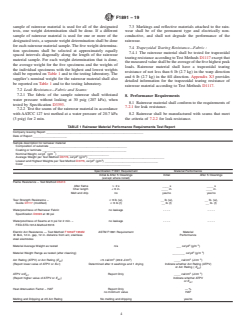
TABLE 1 Rainwear Material Performance Requirements Test Report
Company Issuing Report ____________________________________________________________
Date of Report _____________________
Sample description for rainwear material
Composition of substrate ________________________________________________
Coating or laminate ____________________________________________________
2 2
Nominal Weight, oz/yd (g/m ) ________________________________
2 2
Average Weight per Test Method D3776, oz/yd (g/m ) _______________________________________________
2 2
Lowest and Highest Weights per Test Method D3776, oz/yd (g/m ) _________________________________
Color __________________________________________________________________
Specification F1891 Requirement Material Performance
Initial & After 5 Cleanings Initial After 5 Cleanings
(except where noted)
Flame Resistance – Test Method D6413
After flame # 2 s ____ s ____ s
Char length < 6 in. ____ in. ____ in.
Melt and drip no yes/no yes/no
Tear Strength Resistance – $6lb(w), __ lb (w), __ lb. (w),
Guide D1117 (modified) $6lb(f) __ lb (f) __ lb. (f)
Waterproofness of Rainwear Fabric no leakage ---- ----
Specification D3393 at 30 psi
Waterproofness of Seams at 3 psi for 2 min. – no leakage ---- ----
FED-STD-191A Method 5516
Electric Arc Resistance — Test Method F1959/F1959M ASTM F1891 Requirement Material
@ 8kA, 12 in. gap, 12 in. distance from arc, stainless Performance
steel electrodes
2 2
Material Average Weight as tested n/a ___ oz/yd (g/m )
2 2
Material Weight Range as tested (after cleaning) ________ oz/yd (g/m )
2 2 2 2
Arc Rating (ATPV) or Arc Rating (E ) $5 cal/cm (20.9 J/cm ) ____ cal/cm (J/cm )
BT
(Report lower value of ATPV or E ) Determined after 3 washings and 1 drying Indicate whether Arc Rating (ATPV)
BT
or Arc Rating ( E )
BT
2 2
ATPV orE Report Only ____ cal/cm (J/cm )
BT
(Report higher value of ATPV or E ) Indicate whether ATPV
BT
or E
BT
Heat Attenuation Factor – HAF Report Only —%
no minimum value HAF
Melting and Dripping at 2X Arc Rating No melting and dripping yes/no
F1891−19
NOTE 3—Both melting and dripping must occur for a specimen to fail.
8.3 Markings and reflective materials shall conform to the
An indication of melting by itself shall not be interpreted as melting and
requirements of 7.3.
dripping.
8.4 Rainwear material shall conform to the requirements of
9.2.1 Rainwear material shall meet the requirements of 9.2
7.4 for trapezoidal tearing resistance.
initiallyasmanufacturedandafterfivecleaningswhencleaned
8.5 The fabrics, stitchings, tapes, coatings, fasteners, and
as directed by care instructions from the manufacturer.
closures used to manufacture the rainwear should be made
9.2.1.1 If no cleaning instructions are provided by the
from electrically non-conductive materials. If conductive fas-
manufacturer, the garments shall be laundered three times in
teners or closures, for example, zippers, snaps, or buttons, or
accordance with AATCC Method 135 (3, IVA iii).
combination thereof, are used, they shall be covered with a
9.3 Rainwear material shall be tested for thermal resistance
layerofrainwearmaterialontheinsideofthegarmentbetween
to an electric arc exposure by the use of Test Method
the closure and the undergarment or skin.
F1959/F1959M. Test parameters for Test Method F1959/
8.5.1 Discussion—If fasteners or closures, for example,
F1959Mshallbe8 61kAarccurrent,30cm(12in.)electrode
zippers, snaps, or buttons, or combination thereof, are used in
gap, stainless steel electrodes, 30 cm (12 in.) distance between
a manner in which they are in contact with the skin, they can
the arc center line and the rainwear material specimen surface.
increaseheattransferandburninjuryduetoheatconductionto
Additional test parameters may also be used and the results
the skin. Using a layer of material between the conductive
reported on an optional basis.
fastener or closure and the undergarment or skin can reduce
heattransfertotheskin.Thereisnointentthatthisaddedlayer
NOTE 4— Test Method F1959/F1959M is a design test.
of material can provide a reliable electrical insulation barrier.
9.3.1 Rainwear material shall be tested in accordance with
8.6 The stitchings, thread, findings, zipper tapes, or
9.3 after three washings followed by one drying. The washing
fasteners, or combination thereof, used to manufacture the
shall be done as directed by care instructions from the
rainwear shall not degrade the flame resistance or thermal
manufacturer.
performance of the rainwear.
9.3.1.1 If no cleaning instructions are provided by the
manufacturer, the garments shall be washed three times in
8.7 Rainwear material shall conform to the requirements of
accordancewiththeAATCCMethod135(3,IVAiii)followed
9.2 for flame resistance.
by one drying.
8.8 Rainwear material shall conform to the requirements of
9.3.1.2 For the rainwear material sample submitted for arc
9.3 for thermal resistance to an electric arc exposure.
testing the material weight after cleaning shall be determined
8.9 The format shown in Tables 1 and 2 shall be used to
according to Test Method D3776, Option C per the following
report the results for all performance requirements and test
instructions. One weight determination specimen consisting of
observations. This report shall be made available to the
a circle of material 3.5 in. (8.9 cm) in diameter shall be taken
purchaser of rainwear meeting this specification by the rain-
fromeachoffiverainwearmaterialarctestspecimensselected
wear manufacturer.
at random. The average material weight and the total range of
material weight for the five specimens shall be reported with
9. Thermal Performance Requirements
the arc test results.
9.1 If the rainwear is constructed of a single-layer material
NOTE 5—In arc testing of FR rainwear material, large material weight
or a multi-layer system of materials, then a single-or multi-
variations have on occasion been observed.The intent of this provision is
layer sample of the rainw
...
This document is not an ASTM standard and is intended only to provide the user of an ASTM standard an indication of what changes have been made to the previous version. Because
it may not be technically possible to adequately depict all changes accurately, ASTM recommends that users consult prior editions as appropriate. In all cases only the current version
of the standard as published by ASTM is to be considered the official document.
Designation: F1891 − 12 F1891 − 19
Standard Specification for
Arc and Flame Resistant Rainwear
This standard is issued under the fixed designation F1891; the number immediately following the designation indicates the year of
original adoption or, in the case of revision, the year of last revision. A number in parentheses indicates the year of last reapproval. A
superscript epsilon (´) indicates an editorial change since the last revision or reapproval.
1. Scope
1.1 This specification establishes applicable test methods, minimum physical and thermal performance criteria, a suggested
sizing guide, and suggested purchasing information for rainwear for use by workers who may be exposed to thermal hazards of
momentary electric arcs and open flames.
1.1.1 This specification does not apply to the electrical contact hazards or electric shock hazards involved with electric arcs.
1.1.2 This specification does not apply to flash fire hazards such as industrial hydrocarbon flash fires or other petrochemical flash
fire hazards.
1.2 The objective of this specification is to prescribe fit, function and performance criteria for rainwear that meets a minimum
level of thermal and physical performance when exposed to a laboratory–simulated electric arc or flame exposure.
1.3 This specification is not intended to serve as a detailed manufacturing or purchasing specification, but can be referenced in
purchase contracts to ensure that minimum performance requirements are met.
1.4 Controlled laboratory tests used to determine compliance with the performance requirements of this specification shall not
be deemed as establishing performance levels for all situations to which wearers of this protective clothing may be exposed.
1.5 The in-service care and use of this rainwear is beyond the scope of this specification.
1.6 The values stated in inch-pound units are to be regarded as the standard. The SI units shown in parentheses are for
information only.
1.7 The following safety hazards caveat pertains only to Sections 7 and 9, of this specification: This standard does not purport
to address all of the safety concerns, if any, associated with its use. It is the responsibility of the user of this standard to establish
appropriate safety and health practices and determine the applicability of regulatory limitations prior to use.
2. Referenced Documents
2.1 ASTM Standards:
D123 Terminology Relating to Textiles
D751 Test Methods for Coated Fabrics
D1117 Guide for Evaluating Nonwoven Fabrics (Withdrawn 2009)
D1388 Test Method for Stiffness of Fabrics
D3393 Specification for Coated Fabrics—Waterproofness
D3776 Test Methods for Mass Per Unit Area (Weight) of Fabric
D4391 Terminology Relating to The Burning Behavior of Textiles
D6413 Test Method for Flame Resistance of Textiles (Vertical Test)
F1494 Terminology Relating to Protective Clothing
F1958/F1958M Test Method for Determining the Ignitability of Non-flame-Resistant Materials for Clothing by Electric Arc
Exposure Method Using Mannequins
F1959/F1959M Test Method for Determining the Arc Rating of Materials for Clothing
This specification is under the jurisdiction of ASTM Committee F18 on Electrical Protective Equipment for Workers and is the direct responsibility of Subcommittee
F18.65 on Wearing Apparel.
Current edition approved May 1, 2012Jan. 1, 2019. Published May 2012January 2019. Originally approved in 1998. Last previous edition approved in 20062012 as
F1891–06.–12. DOI: 10.1520/F1891-12.10.1520/F1891-19.
For referenced ASTM standards, visit the ASTM website, www.astm.org, or contact ASTM Customer Service at service@astm.org. For Annual Book of ASTM
Standardsvolume information, refer to the standard’s Document Summary page on the ASTM website.
The last approved version of this historical standard is referenced on www.astm.org.
Copyright © ASTM International, 100 Barr Harbor Drive, PO Box C700, West Conshohocken, PA 19428-2959. United States
F1891 − 19
2.2 Federal Specifications:
Federal Test Method Standard (FTMS) No. 191A Method 5516
Federal Test Method Standard (FTMS) No. CCC-T-191b Method 5204
2.3 AATCC Standards:
AATCC Test Method 127 Water Resistance: Hydrostatic Pressure Test
AATCC Test Method 135 Dimensional Changes Automatic Home Laundering of Woven and Knitted Fabrics
3. Terminology
3.1 Definitions:
3.1.1 afterflame, n—persistent flaming of a material after the ignition source has been removed.
3.1.1.1 Discussion—
In arc testing, a visible flaming on or near a test specimen which persists after the arc exposure has ended. The afterflame ceases
when flaming is no longer visible.
3.1.2 afterflame time, n—the length of time for which a material continues to flame after the ignition source has been removed.
3.1.2.1 Discussion—
In arc testing, the length of time for which a specimen continues to exhibit a visible flaming as determined by a time display video
recording of the specimen during arc testing.
3.1.3 arc rating, n—value attributed to materials that describes their performances to an exposure to an electric arc discharge.
3.1.3.1 Discussion—
The arc rating is expressed in cal/cm and is derived from the determined value of ATPV or E (should a material system exhibit
BT
a breakopen response below the ATPV value).
3.1.4 arc resistant, adj—the property of a material or clothing system that provides thermal protection from an arc exposure.
3.1.5 arc thermal performance value (ATPV), n—in arc testing, the incident energy on a material or multilayer system of
materials that results in a 50 % probability that sufficient heat transfer through the tested specimen is predicted to cause the onset
2 2
of a second-degree skin burn injury based on the Stoll curve, cal/cm (j/cm ).
3.1.6 breakopen, n—in testing thermal protective materials, a material response evidenced by the formation of one or more
holes in the material which may allow thermal energy to pass through the material.
3.1.6.1 Discussion—
2 2
The specimen shall be considered to exhibit breakopen when any hole is at least 3.2 cm (0.5 in. ) in area or at least 2.5 cm (1.0
in.) in any dimension. Single threads across the opening or hole do not reduce the size of the hole for the purposes of this practice.
In multiple layer specimens of flame resistant materials all the layers must breakopen to meet the definition. In multiple layer
specimens, if any of the specimen layers are ignitable, these hole dimension criteria for breakopen are applied to the FR layer
covering ignitable layer that is closest to the heat exposure surface.
3.1.7 breakopen threshold energy(E ) , n—the incident energy on a material or system of materials that results in a 50 %
BT
probability of breakopen.
3.1.7.1 Discussion—
Both E and ATPV are determined and reported for the purposes of this specification.
BT
3.1.8 char length, n— in measuring flame resistance of textiles, the distance from the fabric edge which was directly exposed
to the flame to the furthest point of visible fabric damage after a specified tearing force has been applied.
3.1.9 charring, n—the formation of carbonaceous residue as the result of pyrolysis or incomplete combustion.
Available from Standardization Documents Order Desk, Bldg. 4, Section D, 700 Robbins Ave., Philadelphia, PA 19111-5094, Attn: NPODS.
AATCC Technical Manual, available from American Association of Textile Chemists and Colorists, One Davis Dr., PO Box 12215, Research Triangle Park, NC
27709–2215.
F1891 − 19
3.1.10 design test, n— for arc and flame resistant rainwear, one made on a sample treated as representative of an industrial
product; these tests will not generally be repeated in quantity production.
3.1.10.1 Discussion—
Perform the design test only when a new or modified rainwear material, substrate, coating or adhesive is used to manufacture
rainwear. A change in rainwear material could be, but is not limited to, any of the following: The composition, weight or supplier
of the substrate, or both, coating, laminate, or adhesive.
3.1.11 dripping, n—in testing thermal protective fabrics, coated fabrics or laminates, a material response evidenced by flowing
of the fiber polymer, the fabric, or the fabric coating, and the evidence of droplets from the material.
3.1.12 electric arc ignition, n— as related to electric arc exposure, a response that causes the ignition of textile material which
is accompanied by heat and light, and then subsequent burning for at least 5 s, or consumption of at least 25 % of the test specimen
area.
3.1.13 embrittlement, n—the formation of a brittle residue as the result of pyrolysis or incomplete combustion.
3.1.14 flame resistance, n—the property of a material whereby flaming combustion is prevented, terminated, or inhibited
following application of a flaming or nonflaming source of ignition, with or without subsequent removal of the ignition source.
3.1.15 heat attenuation factor (HAF), n—in electric arc testing, the percent of the incident energy which is blocked by a material
at an incident energy level equal to ATPV.
3.1.16 human tissue heat tolerance, n—in testing of thermal protective materials, the amount of thermal energy transferred to
human tissue, which is predicted to cause a second degree burn; the Stoll curve.
3.1.17 incident energy (E ) , n—in electric arc testing, the total heat energy received at a surface as a direct result of an electric
i
arc.
3.1.17.1 Discussion—
In an arc test, incident energy for a specimen is determined from the average temperature rise response of the two monitor sensors
adjacent to the test specimen.
3.1.18 melting, n—the liquefaction of material under the influence of heat.
3.1.19 shrinkage, n—a decrease in one or more dimensions of an object or material.
3.1.19.1 Discussion—
Shrinkage shall be determined as follows: before mounting the material specimen for arc exposure, measure the specimen width
in inches (cm) at the mid point along the long dimension of the specimen. After arc exposure, measure the specimen width in inches
(cm) at the point of greatest specimen shrinkage. The “shrinkage” in inches (cm) of the specimen is determined by subtracting the
specimen width after arc exposure from the specimen width before arc exposure. The percent shrinkage is determined by dividing
the “shrinkage” by the “specimen width” (before arc exposure) and multiplying by 100.
3.1.20 stoll curve, n—curve used to predict the onset of second degree burn injury.
3.1.20.1 Discussion—
The values which make up the Stoll curve are listed in Table X5.1.
3.1.21 thermal exposure, n—the intensity of heat energy to which a fabric is exposed.
3.1.21.1 Discussion—
As related to electric arc testing, the level of incident energy, in calories per centimetre squared (cal/cm ), that is transferred to
the material surface as determined by measuring the rise in temperature on monitor copper calorimeters, positioned adjacent to the
material.
3.1.22 thermal protection, n— of a material, the property that characterizes overall performance relative to reducing the transfer
of heat that is sufficient to cause a second-degree burn.
3.1.22.1 Discussion—
F1891 − 19
Thermal protection of a material and the predicted second-degree burn injury can be quantified by the measured sensor response
and the observed breakopen material response which indicate how well the material blocks heat from the sensor surface and how
well the material resists breakopen.
3.1.23 thermal resistance, n—the reciprocal of thermal transmittance.
3.1.24 thermal material response, n—in the testing of thermal protective materials, the effects that are observed concurrent and
subsequent to thermal exposure, which can include phenomena such as breakopen, charring, embrittlement, melting, shrinkage, etc.
3.1.24.1 Discussion—
In electric arc testing, the thermal material response can be a result of intense radiant energy, convective energy, molten metal
splatter from electrodes or shock wave from rapidly expanding heated, ionized air, or any combination of these.
3.1.25 thermal transmittance, n—time rate of unidirectional heat transfer per unit area, in the steady-state, between parallel
planes separated by unit difference of temperature of the planes.
3.2 Definitions—For definitions of other textile terms used in this specification refer to Terminology D123, D4391 and F1494.
4. Significance and Use
4.1 This specification covers the minimum performance criteria for arc resistance, flame resistance and other requirements for
rainwear used by workers who may be exposed to thermal hazards of momentary electric arcs or flame.
4.1.1 Material response characteristics, resulting from the arc exposure shall be reported as a part of the thermal performance
characteristics (see 9.3.4).
4.2 This specification establishes minimum performance criteria for rainwear material and rainwear seams that will provide
workers with protection from rain under conditions of possible exposure to the thermal hazards of momentary electric arcs and
open flames.
4.3 Rainwear material that meets the thermal and physical performance criteria of this specification has been subjected to an
electric arc exposure test, Test Method F1959/F1959M.
NOTE 1—When rainwear is worn over conventional clothing or flame resistant garments, the rainwear material in combination with fabric(s) worn
under the rainwear may also be subjected to the electric arc exposure test, Provisional Test Methods PS 57PS 57, F1958/F1958M or F1959/F1959M and
the results reported.
4.4 The purchaser has the option to perform or have performed any of these tests in order to verify the performance of the
rainwear. Claims for failure to meet the specification are subject to verification by the manufacturer.
4.5 This specification for rainwear shall not be construed as a requirement for the use of any particular rainwear material.
5. Ordering Information
5.1 The following items should be considered by the purchaser when buying rainwear under this specification and included, as
necessary, in purchasing documents:
5.1.1 Type of material,
5.1.2 Fabric weight (oz/yd ),
5.1.3 Type and material of fasteners (buttons, snaps, zippers or hook and loop fasteners),
5.1.4 Reflective material sections (optional),
5.1.5 Style and design or catalog number,
5.1.6 Hood design (attached or detachable),
5.1.7 Sizes,
5.1.8 Color,
5.1.9 Special identification markings (optional),
5.1.10 Jacket length, and
5.1.11 Notation of conformance to this specification.
6. Materials and Manufacture
6.1 The rainwear shall be manufactured of materials and constructed using seams that meet the requirements for leak resistance.
6.2 Positive closures, such as buttons or snaps, shall be constructed so that they are covered by the rainwear outer layer material.
This will result in the garment having a multiple layer construction in the area of the closure. This will also prevent the positive
closure from being directly exposed to the hazard.
NOTE 2—In limited testing, some uncovered closures may melt and fuse. Constructing the closures so that they are covered as described above reduces
the risk of the melting and fusing observed with uncovered closures.
F1891 − 19
7. Physical Requirements
7.1 Rainwear material shall meet the physical requirements of this specification initially as manufactured and shall meet this
specification after five cleanings, when cleaned as directed by the care instructions from the manufacturer.
7.1.1 If no cleaning instructions are provided by the manufacturer, the garments shall be laundered five times in accordance with
AATCC Method 135 (3, IV A iii).
7.1.2 The average weight of the rainwear material shall be determined in accordance with Test Method D3776, Option C, using
the following instructions: Five weight determination specimens, each consisting of a circle of material 3.5 in. (8.9 cm) in diameter,
shall be taken from the sample of rainwear material which will be submitted for the material testing required in 7.2.1, 7.4.1, 9.2,
and 9.3. If a single, continuous sample of rainwear material is used for all of the designated tests, one weight determination shall
be done. If a different sample of rainwear material is used for one or more of the designated tests, a separate weight determination
shall be done for each rainwear material sample. The five weight determination specimens shall be selected at approximately
equally spaced intervals diagonally along the length of the rainwear material sample. For each weight determination that is done,
the average weight for the five specimens and the weights of the individual specimens with the highest and lowest weights shall
be reported on Table 1 and to the testing laboratory. The supplier’s nominal weight for the rainwear material shall also be reported
on Table 1 and to the testing laboratory.
7.2 Leak Resistance—Fabric and Seams:
7.2.1 The fabric of the sample rainwear shall withstand water pressure without leaking at 30 psig (207 kPa), when tested by
Specification D3393.
TABLE 1 Rainwear Material Performance Requirements Test Report
Company Issuing Report ____________________________________________________________
Date of Report _____________________
Sample description for rainwear material
Composition of substrate ________________________________________________
Coating or laminate ____________________________________________________
2 2
Nominal Weight, oz/yd (g/m ) ________________________________
2 2
Average Weight per Test Method D3776, oz/yd (g/m ) _______________________________________________
2 2
Lowest and Highest Weights per Test Method D3776, oz/yd (g/m ) _________________________________
Color __________________________________________________________________
Specification F1891 Requirement Material Performance
Initial & After 5 Cleanings Initial After 5 Cleanings
(except where noted)
Flame Resistance – Test Method D6413
After flame # 2 s ____ s ____ s
Char length < 6 in. ____ in. ____ in.
Melt and drip no yes/no yes/no
Tear Strength Resistance – $ 6 lb (w), __ lb (w), __ lb. (w),
Guide D1117 (modified) $ 6 lb (f) __ lb (f) __ lb. (f)
Waterproofness of Rainwear Fabric no leakage - - - - - - - -
Specification D3393 at 30 psi
Waterproofness of Seams at 3 psi for 2 min. – no leakage - - - - - - - -
FED-STD-191A Method 5516
Electric Arc Resistance — Test Method F1959/F1959M ASTM F1891 Requirement Material
@ 8kA, 12 in. gap, 12 in. distance from arc, stainless Performance
steel electrodes
2 2
Material Average Weight as tested n/a ___ oz/yd (g/m )
2 2
Material Weight Range as tested (after cleaning) ________ oz/yd (g/m )
2 2 2 2
Arc Rating (ATPV) or Arc Rating (E ) $5 cal/cm (20.9 J/cm ) ____ cal/cm (J/cm )
BT
(Report lower value of ATPV or E ) Determined after 3 washings and 1 drying Indicate whether Arc Rating (ATPV)
BT
or Arc Rating ( E )
BT
2 2
ATPV orE Report Only ____ cal/cm (J/cm )
BT
(Report higher value of ATPV or E ) Indicate whether ATPV
BT
or E
BT
Heat Attenuation Factor – HAF Report Only — %
no minimum value HAF
Melting and Dripping at 2X Arc Rating No melting and dripping yes/no
F1891 − 19
7.2.2 The Test the seams of the sample rainwear material shall withstand water pressure with no evidence of water leakage at
3 psig (20.7 kPa) for 2 min, when tested by Federal Test Method Standard (FTMS) No. 191A Method 5516 as modified. (Note
that this requirement is modified versus the parameters listed in the referenced test method.) rainwear material in accordance with
AATCC 127 test method at a water pressure of 20.7 kPa (3 psig) for 2 min.
7.2.2.1 A pump device may be used to achieve 3 psig (20.7 kPa) if extension of the water column is not practical.
7.3 Markings and reflective materials attached to the rainwear shall be of the permanent type and electrically non-conductive,
and shall not degrade the performance of the rainwear.
7.4 Trapezoidal Tearing Resistance—Fabric :
7.4.1 The rainwear material shall be tested for trapezoidal tearing resistance according to Test Methods D1117 except that the
measured value shall be the average of the five highest peak loads. Rainwear material shall have a trapezoidal tearing resistance
of not less than 6 lb (2.7 kg) in the warp direction and 6 lb (2.7 kg) in the fill direction. Appendix X3 provides detailed information
for the trapezoidal tearing resistance of rainwear material according to Test Methods D1117.
8. Performance Requirements
8.1 Rainwear material shall conform to the requirements of 7.2.1 for leak resistance.
8.2 Rainwear shall be manufactured with seams that meet the criteria of 7.2.2 for leak resistance.
8.3 Markings and reflective materials shall conform to the requirements of 7.3.
8.4 Rainwear material shall conform to the requirements of 7.4 for trapezoidal tearing resistance.
8.5 The fabrics, stitchings, tapes, coatings, fasteners, and closures used to manufacture the rainwear should be made from
electrically non-conductive materials. If conductive fasteners or closures, for example, zippers, snaps, or buttons, or combination
thereof, are used, they shall be covered with a layer of rainwear material on the inside of the garment between the closure and the
undergarment or skin.
8.5.1 Discussion—
If fasteners or closures, for example, zippers, snaps, or buttons, or combination thereof, are used in a manner in which they are
in contact with the skin, they can increase heat transfer and burn injury due to heat conduction to the skin. Using a layer of material
between the conductive fastener or closure and the undergarment or skin can reduce heat transfer to the skin. There is no intent
that this added layer of material can provide a reliable electrical insulation barrier.
8.6 The stitchings, thread, findings, zipper tapes, or fasteners, or combination thereof, used to manufacture the rainwear shall
not degrade the flame resistance or thermal performance of the rainwear.
8.7 Rainwear material shall conform to the requirements of 9.2 for flame resistance.
8.8 Rainwear material shall conform to the requirements of 9.3 for thermal resistance to an electric arc exposure.
8.9 The format shown in Tables 1 and 2 shall be used to report the results for all performance requirements and test observations.
This report shall be made available to the purchaser of rainwear meeting this specification by the rainwear manufacturer.
9. Thermal Performance Requirements
9.1 If the rainwear is constructed of a single-layer material or a multi-layer system of materials, then a single-or multi-layer
sample of the rainwear as constructed shall be subjected to all thermal tests.
9.2 The rainwear material shall be tested for flame resistance by use of Test Method D6413. Specimens shall not melt and drip
when subjected to the flame or continue to burn for more than 2 s after removal of the ignition source. The char length shall be
equal to or less than 15 cm (6 in.) for each specimen.
TABLE 2 Subjective Material Response Characteristics
Within 1.0cal/cm of At Two Times
Arc Rating Arc Rating
Observation # 1 Observation # 2 Observation # 1 Observation # 2
Incident Energy, cal/cm
After flame time, s
Breakopen (yes/no), in. (cm)
Charring (yes/no)
Melting (yes/no)
Dripping (yes/no)
Electric Arc Ignition (yes/no)
Embrittlement (yes/no)
Shrinkage, %
F1891 − 19
NOTE 3—Both melting and dripping must occur for a specimen to fail. An indication of melting by itself shall not be interpreted as melting and dripping.
9.2.1 Rainwear material shall meet the requirements of 9.2 initially as manufactured and after five cleanings when cleaned as
directed by care instructions from the manufacturer.
9.2.1.1 If no cleaning instructions are provided by the manufacturer, the garments shall be laundered three times in accordance
with AATCC Method 135 (3, IV A iii).
9.3 Rainwear material shall be tested for thermal resistance to an electric arc exposure by the use of Test Method
F1959/F1959M. Test parameters for Test Method F1959/F1959M shall be 8 6 1 kA arc current, 30 cm (12 in.) electrode gap,
stainless steel electrodes, 30 cm (12 in.) distance between the arc center line and the rainwear material specimen surface. Additional
test parameters may also be used and the results reported on an optional basis.
NOTE 4— Test Method F1959/F1959M is a design test.
9.3.1 Rainwear material shall be tested in ac
...