

ASTM D8194-24
(Practice)Standard Practice for Evaluation of Suitability of 37 mm Filter Monitors and 47 mm Filters Used to Determine Particulate Contaminant in Aviation Turbine Fuels
General Information
- Abstract
SIGNIFICANCE AND USE
5.1 This practice provides criteria for products used to measure particulate matter present in a sample of aviation turbine fuel. The objective is to verify that filters, support pads, and field monitors fall within the acceptable ranges that are established by this practice.
SCOPE
1.1 This practice determines suitability of products used for measuring particulate contamination in aviation turbine fuel when using Test Methods D5452 and D2276.
1.2 There are two major parts of this practice. The first is for evaluation of the cellulose acetate butyrate field monitors that are used in combination with the filters and the filter support pads. The second part is for evaluation of the filter when used with an appropriate cellulose acetate butyrate field monitor.
1.3 Units—The values stated in SI units are to be regarded as the standard. No other units of measurement are included in this standard.
1.4 This standard does not purport to address all of the safety concerns, if any, associated with its use. It is the responsibility of the user of this standard to establish appropriate safety, health, and environmental practices and determine the applicability of regulatory limitations prior to use.
1.5 This international standard was developed in accordance with internationally recognized principles on standardization established in the Decision on Principles for the Development of International Standards, Guides and Recommendations issued by the World Trade Organization Technical Barriers to Trade (TBT) Committee.
- Status
- Published
- Publication Date
- 29-Feb-2024
- Technical Committee
- D02 - Petroleum Products, Liquid Fuels, and Lubricants
- Drafting Committee
- D02.J0.05 - Fuel Cleanliness
Buy Documents
ASTM D8194-24 - Standard Practice for Evaluation of Suitability of 37 mm Filter Monitors and 47 mm Filters Used to Determine Particulate Contaminant in Aviation Turbine Fuels
REDLINE ASTM D8194-24 - Standard Practice for Evaluation of Suitability of 37 mm Filter Monitors and 47 mm Filters Used to Determine Particulate Contaminant in Aviation Turbine Fuels
Overview
ASTM D8194-24 is the international standard practice for evaluating the suitability of 37 mm filter monitors and 47 mm filters for determining particulate contaminants in aviation turbine fuels. Developed by ASTM International, this standard establishes criteria to ensure that filters, support pads, and field monitors used in testing meet rigorous quality and performance requirements, supporting reliable assessment of fuel cleanliness.
The practice is directly applicable when using filters and monitors in conjunction with established ASTM test methods such as ASTM D5452 and ASTM D2276. By defining specifications for product performance, ASTM D8194-24 helps maintain fuel system cleanliness and safety, critical in aviation operations.
Key Topics
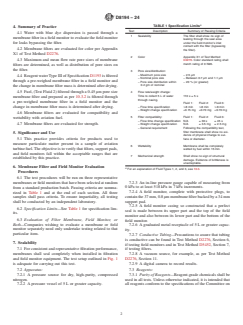
Product Suitability: The standard outlines clear criteria for evaluating cellulose acetate butyrate field monitors, membrane filters, and support pads. It includes tests for sealability, filter color, membrane pore size and distribution, flow rate and weight change, compatibility, wettability, and mechanical strength.
Testing Procedures: ASTM D8194-24 requires independent laboratory testing on representative membrane and monitor samples, ensuring all tested items meet or exceed specified limits for acceptance.
Measurement Units: All measurements and limits are stated in SI units, providing global application and relevance.
Health, Safety, and Environmental Considerations: The standard advises users to establish appropriate safety, health, and environmental practices tailored to their specific application and regulatory context.
International Standardization: Developed under recognized principles set by the World Trade Organization's Technical Barriers to Trade (TBT) Committee, ensuring harmonization and global applicability.
Applications
ASTM D8194-24 provides essential guidelines for parties involved in aviation fuel supply, storage, and handling, specifically those who require assurance that fuel remains free from particulate contamination. Practical applications include:
- Fuel Quality Assurance: Routine inspection of aviation turbine fuels for solid contaminants at points of manufacture, storage, and prior to aircraft fueling.
- Product Development: Manufacturers of 37 mm and 47 mm filters and monitors use this standard to design and qualify products for use in aviation fuel testing.
- Maintenance Operations: Aircraft operators, maintenance personnel, and quality inspectors apply these criteria to select, use, and verify filtration products in routine and investigative testing.
- Regulatory Compliance: Supports compliance with both national and international aviation fuel cleanliness requirements, providing documentation and assurance of proper filtration equipment performance.
By adhering to ASTM D8194-24, organizations help safeguard against engine wear, filter clogging, and potential operational disruptions caused by particulate contamination.
Related Standards
ASTM D8194-24 references and complements several other key ASTM and federal standards related to aviation fuel testing and quality:
- ASTM D5452: Test Method for Particulate Contamination in Aviation Fuels by Laboratory Filtration
- ASTM D2276: Test Method for Particulate Contaminant in Aviation Fuel by Line Sampling
- ASTM D1655: Specification for Aviation Turbine Fuels
- ASTM D2624: Test Methods for Electrical Conductivity of Aviation and Distillate Fuels
- ASTM D3948: Test Method for Determining Water Separation Characteristics of Aviation Turbine Fuels by Portable Separometer
- ASTM F316: Test Methods for Pore Size Characteristics of Membrane Filters
- MIL-DTL-85470: Federal specification for inhibitor, icing, fuel system, high flash
- ASTM D4175: Terminology Relating to Petroleum Products, Liquid Fuels, and Lubricants
Together, these standards form a comprehensive framework to ensure the cleanliness and safe handling of aviation turbine fuels using validated filtration equipment.
Keywords: ASTM D8194-24, filter monitors, membrane filters, aviation turbine fuel, particulate contamination, fuel cleanliness, filter evaluation, aviation fuel standards, ASTM International.
Relations
- Effective Date
- 01-Mar-2024
- Effective Date
- 15-Mar-2024
- Effective Date
- 01-Oct-2023
- Effective Date
- 01-Mar-2024
Buy Documents
ASTM D8194-24 - Standard Practice for Evaluation of Suitability of 37 mm Filter Monitors and 47 mm Filters Used to Determine Particulate Contaminant in Aviation Turbine Fuels
REDLINE ASTM D8194-24 - Standard Practice for Evaluation of Suitability of 37 mm Filter Monitors and 47 mm Filters Used to Determine Particulate Contaminant in Aviation Turbine Fuels
Get Certified
Connect with accredited certification bodies for this standard

Element Materials Technology
Materials testing and product certification.

ABS Group Brazil
ABS Group certification services in Brazil.

ABS Quality Evaluations Inc.
American Bureau of Shipping quality certification.
Sponsored listings
Frequently Asked Questions
ASTM D8194-24 is a standard published by ASTM International. Its full title is "Standard Practice for Evaluation of Suitability of 37 mm Filter Monitors and 47 mm Filters Used to Determine Particulate Contaminant in Aviation Turbine Fuels". This standard covers: SIGNIFICANCE AND USE 5.1 This practice provides criteria for products used to measure particulate matter present in a sample of aviation turbine fuel. The objective is to verify that filters, support pads, and field monitors fall within the acceptable ranges that are established by this practice. SCOPE 1.1 This practice determines suitability of products used for measuring particulate contamination in aviation turbine fuel when using Test Methods D5452 and D2276. 1.2 There are two major parts of this practice. The first is for evaluation of the cellulose acetate butyrate field monitors that are used in combination with the filters and the filter support pads. The second part is for evaluation of the filter when used with an appropriate cellulose acetate butyrate field monitor. 1.3 Units—The values stated in SI units are to be regarded as the standard. No other units of measurement are included in this standard. 1.4 This standard does not purport to address all of the safety concerns, if any, associated with its use. It is the responsibility of the user of this standard to establish appropriate safety, health, and environmental practices and determine the applicability of regulatory limitations prior to use. 1.5 This international standard was developed in accordance with internationally recognized principles on standardization established in the Decision on Principles for the Development of International Standards, Guides and Recommendations issued by the World Trade Organization Technical Barriers to Trade (TBT) Committee.
SIGNIFICANCE AND USE 5.1 This practice provides criteria for products used to measure particulate matter present in a sample of aviation turbine fuel. The objective is to verify that filters, support pads, and field monitors fall within the acceptable ranges that are established by this practice. SCOPE 1.1 This practice determines suitability of products used for measuring particulate contamination in aviation turbine fuel when using Test Methods D5452 and D2276. 1.2 There are two major parts of this practice. The first is for evaluation of the cellulose acetate butyrate field monitors that are used in combination with the filters and the filter support pads. The second part is for evaluation of the filter when used with an appropriate cellulose acetate butyrate field monitor. 1.3 Units—The values stated in SI units are to be regarded as the standard. No other units of measurement are included in this standard. 1.4 This standard does not purport to address all of the safety concerns, if any, associated with its use. It is the responsibility of the user of this standard to establish appropriate safety, health, and environmental practices and determine the applicability of regulatory limitations prior to use. 1.5 This international standard was developed in accordance with internationally recognized principles on standardization established in the Decision on Principles for the Development of International Standards, Guides and Recommendations issued by the World Trade Organization Technical Barriers to Trade (TBT) Committee.
ASTM D8194-24 is classified under the following ICS (International Classification for Standards) categories: 75.160.20 - Liquid fuels. The ICS classification helps identify the subject area and facilitates finding related standards.
ASTM D8194-24 has the following relationships with other standards: It is inter standard links to ASTM D8194-18e1, ASTM D1655-24, ASTM D1655-23a, ASTM D5452-23. Understanding these relationships helps ensure you are using the most current and applicable version of the standard.
ASTM D8194-24 is available in PDF format for immediate download after purchase. The document can be added to your cart and obtained through the secure checkout process. Digital delivery ensures instant access to the complete standard document.
Standards Content (Sample)
This international standard was developed in accordance with internationally recognized principles on standardization established in the Decision on Principles for the
Development of International Standards, Guides and Recommendations issued by the World Trade Organization Technical Barriers to Trade (TBT) Committee.
Designation: D8194 − 24
Standard Practice for
Evaluation of Suitability of 37 mm Filter Monitors and
47 mm Filters Used to Determine Particulate Contaminant in
Aviation Turbine Fuels
This standard is issued under the fixed designation D8194; the number immediately following the designation indicates the year of
original adoption or, in the case of revision, the year of last revision. A number in parentheses indicates the year of last reapproval. A
superscript epsilon (´) indicates an editorial change since the last revision or reapproval.
1. Scope* D1319 Test Method for Hydrocarbon Types in Liquid Petro-
leum Products by Fluorescent Indicator Adsorption
1.1 This practice determines suitability of products used for
D1655 Specification for Aviation Turbine Fuels
measuring particulate contamination in aviation turbine fuel
D2276 Test Method for Particulate Contaminant in Aviation
when using Test Methods D5452 and D2276.
Fuel by Line Sampling
1.2 There are two major parts of this practice. The first is for
D2624 Test Methods for Electrical Conductivity of Aviation
evaluation of the cellulose acetate butyrate field monitors that
and Distillate Fuels
are used in combination with the filters and the filter support
D3948 Test Method for Determining Water Separation Char-
pads. The second part is for evaluation of the filter when used
acteristics of Aviation Turbine Fuels by Portable Separom-
with an appropriate cellulose acetate butyrate field monitor.
eter
1.3 Units—The values stated in SI units are to be regarded D4171 Specification for Fuel System Icing Inhibitors
D4175 Terminology Relating to Petroleum Products, Liquid
as the standard. No other units of measurement are included in
this standard. Fuels, and Lubricants
D5452 Test Method for Particulate Contamination in Avia-
1.4 This standard does not purport to address all of the
tion Fuels by Laboratory Filtration
safety concerns, if any, associated with its use. It is the
F316 Test Methods for Pore Size Characteristics of Mem-
responsibility of the user of this standard to establish appro-
brane Filters by Bubble Point and Mean Flow Pore Test
priate safety, health, and environmental practices and deter-
2.2 Federal Standard:
mine the applicability of regulatory limitations prior to use.
MIL-DTL-85470 Inhibitor, Icing, Fuel System, High Flash
1.5 This international standard was developed in accor-
NATO Code Number S-1745
dance with internationally recognized principles on standard-
ization established in the Decision on Principles for the
3. Terminology
Development of International Standards, Guides and Recom-
3.1 Definitions:
mendations issued by the World Trade Organization Technical
Barriers to Trade (TBT) Committee. 3.1.1 For definitions of terms used in this practice, refer to
Terminology D4175.
2. Referenced Documents
3.2 Definitions of Terms Specific to This Standard:
3.2.1 cellulose acetate butyrate, n—thermoplastic that is
2.1 ASTM Standards:
known to be adequate for manufacture of field monitors and
D362 Specification for Industrial Grade Toluene (Withdrawn
chemically compatible for use with aviation fuel.
1989)
D1193 Specification for Reagent Water
3.2.2 field monitor, n—two-part device (inlet plus outlet)
used to hold a filter securely.
3.2.2.1 Discussion—In this practice, all field monitors are
This practice is under the jurisdiction of ASTM Committee D02 on Petroleum
manufactured from cellulose acetate butyrate polymer.
Products, Liquid Fuels, and Lubricants and is the direct responsibility of Subcom-
mittee D02.J0.05 on Fuel Cleanliness.
3.2.3 filter, n—thin, porous membrane used to separate
Current edition approved March 1, 2024. Published March 2024. Originally
ɛ1 particulate contamination from a liquid.
approved in 2018. Last previous edition approved in 2018 as D8194 – 18 . DOI:
10.1520/D8194-24.
3.2.4 plugs, n—small plastic parts designed to block inlets
For referenced ASTM standards, visit the ASTM website, www.astm.org, or
and outlets of field monitors.
contact ASTM Customer Service at service@astm.org. For Annual Book of ASTM
Standards volume information, refer to the standard’s Document Summary page on
the ASTM website.
3 4
The last approved version of this historical standard is referenced on Available from DLA Document Services, Bldg. 4/D, 700 Robbins Ave.,
www.astm.org. Philadelphia, PA 19111-5094, http://quicksearch.dla.miL.
*A Summary of Changes section appears at the end of this standard
Copyright © ASTM International, 100 Barr Harbor Drive, PO Box C700, West Conshohocken, PA 19428-2959. United States
D8194 − 24
A
TABLE 1 Specification Limits
4. Summary of Practice
Test Description Summary of Passing Criteria
4.1 Water with blue dye dispersion is passed through a
1 Sealability The filter shall show no sign of
membrane filter in a field monitor to evaluate the field monitor
leaking through the seal area
for leaks bypassing the filter. under the field monitor’s inlet
contact with the filter (bypassing
4.2 Membrane filters are evaluated for color per Appendix
the filter).
X1 of Test Method D2276.
2 Color Appendix X1 of Test Method
4.3 Maximum and mean flow rate pore sizes of membrane D2276. Color standard rating shall
match rating of 0 N96.
filters are determined, as well as distribution of pore sizes on
the filter.
3 Pore size/distribution:
– Maximum pore size – 2.5 μm
4.4 Reagent water Type III of Specification D1193 is filtered
– Nominal pore size – Between 0.7 μm and 1.1 μm
through a pre-weighed membrane filter in a field monitor and
– Pore size distribution within – 20 % (or greater)
0.2 gm of nominal
the change in membrane filter mass is determined after drying.
4.5 Fuel, (Test Fluid 2) filtered through a 0.45 μm pore size 4 Flow rate/weight change:
Time to collect 5 L of water 110 s ± 5 s
membrane filter and prepared as per 10.3.2 is filtered through
through casing.
a pre-weighed membrane filter in a field monitor and the
Fluid 1: Fluid 2: Fluid 3:
change in membrane filter mass is determined after drying.
– Flow time specification #8 min #8 min #8 min
– Weight change specification +0.15 mg +0.70 mg +0.70 mg
4.6 Membrane filters are evaluated for compatibility and
5 Filter compatibility: Fluid 1: Fluid 2: Fluid 3:
wettability with aviation fuel.
– Flow time change specification N/A ± 30 s ± 45 s
4.7 Membrane filters are evaluated for strength. – Weight change specification N/A ± 3.5 mg ± 2.5 mg
– General requirement Following the compatibility test,
filter membrane shall show no evi-
5. Significance and Use
dence of physical change to sur-
face or diameter.
5.1 This practice provides criteria for products used to
measure particulate matter present in a sample of aviation
6 Wettability Membrane shall be completely
turbine fuel. The objective is to verify that filters, support pads,
wetted by fuel within 15 min.
and field monitors fall within the acceptable ranges that are
7 Mechanical strength Shall show no sign of structural
established by this practice.
damage. Evidence of brittleness is
unacceptable.
6. Membrane Filter and Field Monitor Evaluation
A
For an explanation of Fluid Types 1, 2, and 3, see 10.3.
Procedures
6.1 The test procedures will be run on three representative
7.2.3 An in-line pressure gauge capable of measuring from
membranes or field monitors that have been selected at random
0 kPa to at least 518 kPa in 7 kPa increments.
from a standard production batch. Passing criteria are summa-
7.2.4 A field monitor, complete with protective plugs, to
rized in Table 1 and at the end of each section. All three
contain the 37 mm, 0.8 μm membrane filter backed by a 34 mm
samples shall pass criteria. To ensure impartiality, all testing
support pad.
shall be conducted by an independent laboratory.
7.2.5 A field monitor casing so constructed that a perfect
6.2 Specification Limits—See Table 1 for specification lim-
seal is made between its upper part and the top of the field
its.
monitor and also between its lower part and the bottom of the
6.3 Evaluation of Filter Membrane, Field Monitor, or
field monitor.
Both—Companies wishing to evaluate a membrane or field
7.2.6 A graduated metal receptacle of 5 L or greater capac-
monitor separately need only undertake testing related to that
ity.
particular item.
7.2.7 Conductive Tubing—Precautions to assure that tubing
is conductive can be found in Test Method D2276, Section 6,
7. Sealability
if testing field monitors and in Test Method D5452, Section 7,
7.1 For consistent and representative filtration performance, if testing filters.
membranes shall seal completely when installed in filtration 7.2.8 A vacuum source, for example, as per Test Method
and field monitor equipment. The test setup outlined in Fig. 1
D2276, Section 11.
is adequate for carrying out this test. 7.2.9 A digital camera to record results.
7.2 Apparatus: 7.3 Reagents:
7.2.1 A pressure source for dry, high-purity, compressed 7.3.1 Purity of Reagents—Reagent-grade chemicals shall be
nitrogen. used in all tests. Unless otherwise indicated, it is intended that
7.2.2 A pressure vessel of 5 L or greater capacity. all reagents conform to the specifications of the Committee on
D8194 − 24
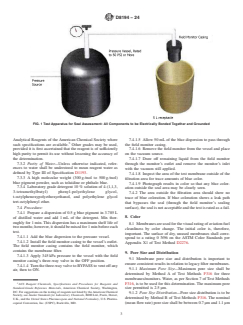
FIG. 1 Test Apparatus for Seal Assessment: All Components to be Electrically Bonded Together and Grounded
Analytical Reagents of the American Chemical Society where 7.4.1.5 Allow 50 mL of the blue dispersion to pass through
such specifications are available. Other grades may be used, the field monitor casing.
provided it is first ascertained that the reagent is of sufficiently 7.4.1.6 Remove the field monitor from the vessel and place
high purity to permit its use without lessening the accuracy of on the vacuum source.
the determination.
7.4.1.7 Draw off remaining liquid from the field monitor
7.3.2 Purity of Water—Unless otherwise indicated, refer-
through the monitor’s outlet and remove the monitor’s inlet
ences to water shall be understood to mean reagent water as
with the vacuum still applied.
defined by Type III of Specification D1193.
7.4.1.8 Inspect the area of the test membrane outside of the
7.3.3 A high molecular weight (300 g ⁄mol to 500 g ⁄mol)
filtration area for trace amounts of blue color.
blue pigment powder, such as toluidine or phthalo blue.
7.4.1.9 Photograph results in color so that any blue color-
7.3.4 Laboratory grade detergent 10 % solution of 4-(1,1,3,
ation outside the seal area may be clearly seen.
3-tetramethylbutyl) phenyl-polyethylene glycol,
7.4.2 The area outside the filtration area should show no
t-octylphenoxypolyethoxyethanol, and polyethylene glycol
trace of blue coloration. If blue coloration shows a leak path
tert-octylphenyl ether.
that bypasses the seal (through the field monitor’s sealing
surface), the seal is not acceptable and the test is rated as a fail.
7.4 Procedure:
7.4.1 Prepare a dispersion of 0.5 g blue pigment in 3.785 L
8. Color
of distilled water and add 1 mL of the detergent. Mix thor-
oughly for 1 min. This dispersion has a maximum shelf life of
8.1 Membranes are used for the visual rating of aviation fuel
two months; however, it should be mixed for 1 min before each
cleanliness by color change. The initial color is, therefore,
test.
important. The surface of dry, unused membranes shall corre-
7.4.1.1 Add the blue dispersion to the pressure vessel.
spond to a rating 0 N96 on the ASTM Color Standards per
7.4.1.2 Install the field monitor casing to the vessel’s outlet.
Appendix X1 of Test Method D2276.
The field monitor casing contains the field monitor, which
contains the membrane filter.
9. Pore Size and Distribution
7.4.1.3 Apply 345 kPa pressure to the vessel with the field
9.1 Membrane pore size and distribution is important to
monitor casing’s three-way valve in the OFF position.
ensure consistent results in relation to legacy filter membranes.
7.4.1.4 Turn the three-way valve to BYPASS to vent off any
9.1.1 Maximum Pore Size—Maximum pore size shall be
air, then to ON.
determined by Method A of Test Methods F316 for three
membranes/monitors. Water, as per Section 7 of Test Methods
F316, is to be used for this determination. The maximum pore
ACS Reagent Chemicals, Specifications and Procedures for Reagents and
Standard-Grade Reference Materials, American Chemical Society, Washington,
size permitted is 2.5 μm.
DC. For suggestions on the testing of reagents not listed by the American Chemical
9.1.2 Pore Size Distribution—Pore size distribution is to be
Society, see Analar Standards for Laboratory Chemicals, BDH Ltd., Poole, Dorset,
determined by Method B of Test Methods F316. The nominal
U.K., and the United States Pharmacopeia and National Formulary, U.S. Pharma-
c
...
This document is not an ASTM standard and is intended only to provide the user of an ASTM standard an indication of what changes have been made to the previous version. Because
it may not be technically possible to adequately depict all changes accurately, ASTM recommends that users consult prior editions as appropriate. In all cases only the current version
of the standard as published by ASTM is to be considered the official document.
´1
Designation: D8194 − 18 D8194 − 24
Standard Practice for
Evaluation of Suitability of 37 mm Filter Monitors and
47 mm Filters Used to Determine Particulate Contaminant in
Aviation Turbine Fuels
This standard is issued under the fixed designation D8194; the number immediately following the designation indicates the year of
original adoption or, in the case of revision, the year of last revision. A number in parentheses indicates the year of last reapproval. A
superscript epsilon (´) indicates an editorial change since the last revision or reapproval.
ε NOTE—Subsection 9.1.2 was corrected editorially in August 2020.
1. Scope Scope*
1.1 This practice determines suitability of products used for measuring particulate contamination in aviation turbine fuel when
using Test Methods D5452 and D2276.
1.2 There are two major parts of this practice. The first is for evaluation of the cellulose acetate butyrate field monitors that are
used in combination with the filters and the filter support pads. The second part is for evaluation of the filter when used with an
appropriate cellulose acetate butyrate field monitor.
1.3 Units—The values stated in SI units are to be regarded as the standard. No other units of measurement are included in this
standard.
1.4 This standard does not purport to address all of the safety concerns, if any, associated with its use. It is the responsibility
of the user of this standard to establish appropriate safety, health, and environmental practices and determine the applicability of
regulatory limitations prior to use.
1.5 This international standard was developed in accordance with internationally recognized principles on standardization
established in the Decision on Principles for the Development of International Standards, Guides and Recommendations issued
by the World Trade Organization Technical Barriers to Trade (TBT) Committee.
2. Referenced Documents
2.1 ASTM Standards:
D362 Specification for Industrial Grade Toluene (Withdrawn 1989)
D1193 Specification for Reagent Water
D1319 Test Method for Hydrocarbon Types in Liquid Petroleum Products by Fluorescent Indicator Adsorption
D1655 Specification for Aviation Turbine Fuels
D2276 Test Method for Particulate Contaminant in Aviation Fuel by Line Sampling
D2624 Test Methods for Electrical Conductivity of Aviation and Distillate Fuels
D3948 Test Method for Determining Water Separation Characteristics of Aviation Turbine Fuels by Portable Separometer
This practice is under the jurisdiction of ASTM Committee D02 on Petroleum Products, Liquid Fuels, and Lubricants and is the direct responsibility of Subcommittee
D02.J0.05 on Fuel Cleanliness.
Current edition approved Dec. 1, 2018March 1, 2024. Published February 2019March 2024. Originally approved in 2018. Last previous edition approved in 2018 as
ɛ1
D8194 – 18 . DOI: 10.1520/D8194-18E01.10.1520/D8194-24.
For referenced ASTM standards, visit the ASTM website, www.astm.org, or contact ASTM Customer Service at service@astm.org. For Annual Book of ASTM Standards
volume information, refer to the standard’s Document Summary page on the ASTM website.
The last approved version of this historical standard is referenced on www.astm.org.
*A Summary of Changes section appears at the end of this standard
Copyright © ASTM International, 100 Barr Harbor Drive, PO Box C700, West Conshohocken, PA 19428-2959. United States
D8194 − 24
D4171 Specification for Fuel System Icing Inhibitors
D4175 Terminology Relating to Petroleum Products, Liquid Fuels, and Lubricants
D5452 Test Method for Particulate Contamination in Aviation Fuels by Laboratory Filtration
F316 Test Methods for Pore Size Characteristics of Membrane Filters by Bubble Point and Mean Flow Pore Test
2.2 Federal Standard:
MIL-DTL-85470 Inhibitor, Icing, Fuel System, High Flash NATO Code Number S-1745
3. Terminology
3.1 Definitions:
3.1.1 For definitions of terms used in this practice, refer to Terminology D4175.
3.2 Definitions:Definitions of Terms Specific to This Standard:
3.2.1 cellulose acetate butyrate, n—thermoplastic that is known to be adequate for manufacture of field monitors and chemically
compatible for use with aviation fuel.
3.2.2 field monitor, n—two-part device (inlet plus outlet) used to hold a filter securely.
3.2.2.1 Discussion—
In this practice, all field monitors are manufactured from cellulose acetate butyrate polymer.
3.2.3 filter, n—thin, porous membrane used to separate particulate contamination from a liquid.
3.2.4 plugs, n—small plastic parts designed to block inlets and outlets of field monitors.
4. Summary of Practice
4.1 Water with blue dye dispersion is passed through a membrane filter in a field monitor to evaluate the field monitor for leaks
bypassing the filter.
4.2 Membrane filters are evaluated for color per Appendix X1 of Test Method D2276.
4.3 Maximum and mean flow rate pore sizes of membrane filters are determined, as well as distribution of pore sizes on the filter.
4.4 Reagent water Type III of Specification D1193 is filtered through a pre-weighed membrane filter in a field monitor and the
change in membrane filter mass is determined after drying.
4.5 Fuel, (Test Fluid 2) filtered through a 0.45 μm pore size membrane filter and prepared as per 10.3.2 is filtered through a
pre-weighed membrane filter in a field monitor and the change in membrane filter mass is determined after drying.
4.6 Membrane filters are evaluated for compatibility and wettability with aviation fuel.
4.7 Membrane filters are evaluated for strength.
5. Significance and Use
5.1 This practice provides criteria for products used to measure particulate matter present in a sample of aviation turbine fuel. The
objective is to verify that filters, support pads, and field monitors fall within the acceptable ranges that are established by this
practice.
6. Membrane Filter and Field Monitor Evaluation Procedures
6.1 The test procedures will be run on three representative membranes or field monitors that have been selected at random from
Available from DLA Document Services, Bldg. 4/D, 700 Robbins Ave., Philadelphia, PA 19111-5094, http://quicksearch.dla.miL.
D8194 − 24
a standard production batch. Passing criteria are summarized in Table 1 and at the end of each section. All three samples shall pass
criteria. To ensure impartiality, all testing shall be conducted by an independent laboratory.
6.2 Specification Limits—See Table 1 for specification limits.
6.3 Evaluation of Filter Membrane, Field Monitor, or Both—Companies wishing to evaluate a membrane or field monitor
separately need only undertake testing related to that particular item.
7. Sealability
7.1 For consistent and representative filtration performance, membranes shall seal completely when installed in filtration and field
monitor equipment. The test setup outlined in Fig. 1 is adequate for carrying out this test.
7.2 Apparatus:
7.2.1 A pressure source for dry, high-purity, compressed nitrogen.
7.2.2 A pressure vessel of 5 L or greater capacity.
7.2.3 An in-line pressure gauge capable of measuring from 0 kPa to at least 518 kPa in 7 kPa increments.
7.2.4 A field monitor, complete with protective plugs, to contain the 37 mm, 0.8 μm membrane filter backed by a 34 mm support
pad.
A
TABLE 1 Specification Limits
Test Description Summary of Passing Criteria
1 Sealability The filter shall show no sign of
leaking through the seal area
under the field monitor’s inlet
contact with the filter (bypassing
the filter).
2 Color Appendix X1 of Test Method
D2276. Color standard rating shall
match rating of 0 N96.
3 Pore size/distribution:
– Maximum pore size – 2.5 μm
– Nominal pore size – Between 0.7 μm and 1.1 μm
– Pore size distribution within – 20 % (or greater)
0.2 gm of nominal
4 Flow rate/weight change:
Time to collect 5 L of water 110 s ± 5 s
through casing.
Fluid 1: Fluid 2: Fluid 3:
– Flow time specification #8 min #8 min #8 min
– Weight change specification +0.15 mg +0.70 mg +0.70 mg
5 Filter compatibility: Fluid 1: Fluid 2: Fluid 3:
– Flow time change specification N/A ± 30 s ± 45 s
– Weight change specification N/A ± 3.5 mg ± 2.5 mg
– General requirement Following the compatibility test,
filter membrane shall show no evi-
dence of physical change to sur-
face or diameter.
6 Wettability Membrane shall be completely
wetted by fuel within 15 min.
7 Mechanical strength Shall show no sign of structural
damage. Evidence of brittleness is
unacceptable.
A
For an explanation of Fluid Types 1, 2, and 3, see 10.3.
D8194 − 24
FIG. 1 Test Apparatus for Seal Assessment: All Components to be Electrically Bonded Together and Grounded
7.2.5 A field monitor casing so constructed that a perfect seal is made between its upper part and the top of the field monitor and
also between its lower part and the bottom of the field monitor.
7.2.6 A graduated metal receptacle of 5 L or greater capacity.
7.2.7 Conductive Tubing—Precautions to assure that tubing is conductive can be found in Test Method D2276, Section 6, if testing
field monitors and in Test Method D5452, Section 7, if testing filters.
7.2.8 A vacuum source, for example, as per Test Method D2276, Section 11.
7.2.9 A digital camera to record results.
7.3 Reagents:
7.3.1 Purity of Reagents—Reagent-grade chemicals shall be used in all tests. Unless otherwise indicated, it is intended that all
reagents conform to the specifications of the Committee on Analytical Reagents of the American Chemical Society where such
specifications are available. Other grades may be used, provided it is first ascertained that the reagent is of sufficiently high purity
to permit its use without lessening the accuracy of the determination.
7.3.2 Purity of Water—Unless otherwise indicated, references to water shall be understood to mean reagent water as defined by
Type III of Specification D1193.
7.3.3 A high molecular weight (300 g ⁄mol to 500 g ⁄mol) blue pigment powder, such as toluidine or phthalo blue.
7.3.4 Laboratory grade detergent 10 % solution of 4-(1,1,3,3-tetramethylbutyl) phenyl-polyethylene glycol,
t-octylphenoxypolyethoxyethanol, and polyethylene glycol tert-octylphenyl ether.
7.4 Procedure:
Reagent Chemicals, American Chemical Society Specifications,ACS Reagent Chemicals, Specifications and Procedures for Reagents and Standard-Grade Reference
Materials, American Chemical Society, Washington, DC. For suggestions on the testing of reagents not listed by the American Chemical Society, see Analar Standards for
Laboratory Chemicals, BDH Ltd., Poole, Dorset, U.K., and the United States Pharmacopeia and National Formulary, U.S. Pharmacopeial Convention, Inc. (USPC),
Rockville, MD.
D8194 − 24
7.4.1 Prepare a dispersion of 0.5 g blue pigment in 3.785 L of distilled water and add 1 mL of the detergent. Mix thoroughly for
1 min. This dispersion has a maximum shelf life of two months; however, it should be mixed for 1 min before each test.
7.4.1.1 Add the blue dispersion to the pressure vessel.
7.4.1.2 Install the field monitor casing to the vessel’s outlet. The field monitor casing contains the field monitor, which contains
the membrane filter.
7.4.1.3 Apply 345 kPa pressure to the vessel with the field monitor casing’s three-way valve in the OFF position.
7.4.1.4 Turn the three-way valve to BYPASS to vent off any air, then to ON.
7.4.1.5 Allow 50 mL of the blue dispersion to pass through the field monitor casing.
7.4.1.6 Remove the field monitor from the vessel and place on the vacuum source.
7.4.1.7 Draw off remaining liquid from the field monitor through the monitor’s outlet and remove the monitor’s inlet with the
vacuum still applied.
7.4.1.8 Inspect the area of the test membrane outside of the filtration area for trace amounts of blue color.
7.4.1.9 Photograph results in color so that any blue coloration outside the seal area may be clearly seen.
7.4.2 The area outside the filtration area should show no trace of blue coloration. If blue coloration shows a leak path that bypasses
the seal (through the field monitor’s sealing surface), the seal is not acceptable and the test is rated as a fail.
8. Color
8.1 Membranes are used for the visual rating of aviation fuel cleanliness by color change. The initial color is, therefore, important.
The surface of dry, unused membranes shall correspond to a rating 0 N96 on the ASTM Color Standards per Appendix X1 of Test
Method D2276.
9. Pore Size and Distribution
9.1 Membrane pore size and distribution is important to ensure consistent results in relation to legacy filter membranes.
9.1.1 Maximum Pore Size—Maximum pore size shall be determined by Method A of Test Methods F316 for three
membranes/monitors. Water, as per
...