

ASTM E1730-19
(Specification)Standard Specification for Rigid Foam for Use in Structural Sandwich Panel Cores
General Information
- Abstract
ABSTRACT
This specification covers rigid closed-cell polyurethane and polyisocyanurate thermal insulation foams for application in sandwich structural panel cores used in shelter construction for exposure to specified ambient temperatures. The unfaced foam thermal insulation boards are classified into three types (Types 1, 2, 3, and 4) according to increasing nominal density. The morphology of the insulation shall consist of a multitude of individual cells of uniform size and dimension, essentially closed off from each other, homogeneous throughout, free of voids, accumulations of unexpanded material, foreign inclusions, or seams. Upon undergoing appropriate acceptance tests, sampled specimens should adhere accordingly to the limiting values set for the following physical and mechanical properties: density; thermal conductivity; compressive strength; shear strength; percent closed cell; linear and volumetric dimensional stability; flame resistance (extinguish time and burn distance); and impact resistance.
SCOPE
1.1 This specification covers rigid, closed cell, polyurethane and polyisocyanurate thermal insulation for sandwich panels used in shelter construction for exposure to ambient temperatures of −25 to 160 °F (−32 to 71 °C). Painted surfaces of shelters in actual field use reach temperatures of 200 °F (93 °C). The materials in this specification must be capable of withstanding processing, (laminating) temperatures of 230 °F (110 °C).
1.2 The values stated in inch-pound units are to be regarded as standard. The values given in parentheses are mathematical conversions to SI units that are provided for information only and are not considered standard.
1.3 The following precautionary caveat pertains only to the test method portion, Section 12, of this specification: This standard does not purport to address all of the safety concerns, if any, associated with its use. It is the responsibility of the user of this standard to establish appropriate safety, health, and environmental practices and determine the applicability of regulatory limitations prior to use.
1.4 This international standard was developed in accordance with internationally recognized principles on standardization established in the Decision on Principles for the Development of International Standards, Guides and Recommendations issued by the World Trade Organization Technical Barriers to Trade (TBT) Committee.
- Status
- Published
- Publication Date
- 30-Jun-2019
- Technical Committee
- E06 - Performance of Buildings
Buy Documents
ASTM E1730-19 - Standard Specification for Rigid Foam for Use in Structural Sandwich Panel Cores
REDLINE ASTM E1730-19 - Standard Specification for Rigid Foam for Use in Structural Sandwich Panel Cores
Overview
ASTM E1730-19 is the internationally recognized standard specification for rigid foam materials used as structural sandwich panel cores, particularly for shelter construction. Developed by ASTM International, this specification addresses the requirements for closed-cell polyurethane and polyisocyanurate thermal insulation foams, ensuring their suitability for use in core applications within sandwich panels. The standard outlines classifications by density, physical and mechanical property benchmarks, dimensional tolerances, and essential acceptance criteria. ASTM E1730-19 supports high performance and reliability in rigid foam core applications exposed to a broad range of ambient and processing temperatures.
Key Topics
Material Types and Classifications
- Rigid, closed-cell polyurethane and polyisocyanurate foams
- Classified into four types based on increasing nominal density
Physical and Mechanical Properties
- Requirements cover density, thermal conductivity, compressive strength, tensile strength, shear strength, closed-cell content, dimensional stability, flame resistance, and impact resistance
- Rigorous testing methods ensure materials meet demanding performance expectations
Testing and Acceptance Criteria
- Prescribed test methods for property verification, such as ASTM D1622/D1622M for density and ASTM D1621 for compressive strength
- Acceptance testing of each production lot to ensure ongoing compliance
Dimensional and Visual Quality
- Specifications for board dimensions, edge squareness, and absence of defects such as voids, seams, or unexpanded material
Safety and Regulatory Compliance
- Includes requirements for flame resistance aligned with Federal Aviation Regulations (FAR 25.853)
- Addresses user responsibility for safety, health, and regulatory practices
Applications
Shelter Construction
- Core material for sandwich panels used in relocatable or permanent shelters, capable of withstanding ambient temperatures from −25 to 160 °F (−32 to 71 °C)
- Performs under field exposure with painted surfaces reaching up to 200 °F (93 °C) and during lamination processes up to 230 °F (110 °C)
Thermal Insulation Panels
- Superior thermal insulation performance for structures requiring lightweight yet structurally sound solutions
Aerospace and Defense
- Used in panels for aircraft interiors and military shelters due to compliance with flame spread and impact resistance criteria
Industrial Enclosures and Mobile Units
- Provides durable thermal cores in panels for modular buildings, containers, and specialty industrial assemblies
Related Standards
- ASTM C165: Test Method for Measuring Compressive Properties of Thermal Insulations
- ASTM C273/C273M: Test Method for Shear Properties of Sandwich Core Materials
- ASTM D883: Terminology Relating to Plastics
- ASTM D1622/D1622M: Test Method for Apparent Density of Rigid Cellular Plastics
- ASTM D2126: Test Method for Response of Rigid Cellular Plastics to Thermal and Humid Aging
- Federal Aviation Regulation (FAR) 25.853: Compartment Interior flammability requirements
For further reference or to purchase the official standard, visit the ASTM International website.
Keywords: rigid foam, sandwich panel core, thermal insulation, polyurethane foam, polyisocyanurate foam, structural panels, shelter construction, impact resistance, ASTM E1730-19
Relations
- Replaces
ASTM E1730-15 - Standard Specification for Rigid Foam for Use in Structural Sandwich Panel Cores - Effective Date
- 01-Jul-2019
- Effective Date
- 15-Apr-2024
- Effective Date
- 01-Mar-2024
- Effective Date
- 01-Feb-2024
- Effective Date
- 01-Nov-2023
- Effective Date
- 15-Feb-2020
- Effective Date
- 01-Jan-2020
- Effective Date
- 01-Sep-2019
- Effective Date
- 01-Sep-2019
- Effective Date
- 01-Aug-2019
- Effective Date
- 15-Apr-2019
- Effective Date
- 01-Feb-2019
- Effective Date
- 01-Dec-2018
- Effective Date
- 01-Nov-2018
- Effective Date
- 01-Nov-2018
Buy Documents
ASTM E1730-19 - Standard Specification for Rigid Foam for Use in Structural Sandwich Panel Cores
REDLINE ASTM E1730-19 - Standard Specification for Rigid Foam for Use in Structural Sandwich Panel Cores
Get Certified
Connect with accredited certification bodies for this standard

DIBt (Deutsches Institut für Bautechnik)
German Institute for Building Technology.
DIN CERTCO
DIN Group product certification.

Aboma Certification B.V.
Specialized in construction, metal, and transport sectors.
Sponsored listings
Frequently Asked Questions
ASTM E1730-19 is a technical specification published by ASTM International. Its full title is "Standard Specification for Rigid Foam for Use in Structural Sandwich Panel Cores". This standard covers: ABSTRACT This specification covers rigid closed-cell polyurethane and polyisocyanurate thermal insulation foams for application in sandwich structural panel cores used in shelter construction for exposure to specified ambient temperatures. The unfaced foam thermal insulation boards are classified into three types (Types 1, 2, 3, and 4) according to increasing nominal density. The morphology of the insulation shall consist of a multitude of individual cells of uniform size and dimension, essentially closed off from each other, homogeneous throughout, free of voids, accumulations of unexpanded material, foreign inclusions, or seams. Upon undergoing appropriate acceptance tests, sampled specimens should adhere accordingly to the limiting values set for the following physical and mechanical properties: density; thermal conductivity; compressive strength; shear strength; percent closed cell; linear and volumetric dimensional stability; flame resistance (extinguish time and burn distance); and impact resistance. SCOPE 1.1 This specification covers rigid, closed cell, polyurethane and polyisocyanurate thermal insulation for sandwich panels used in shelter construction for exposure to ambient temperatures of −25 to 160 °F (−32 to 71 °C). Painted surfaces of shelters in actual field use reach temperatures of 200 °F (93 °C). The materials in this specification must be capable of withstanding processing, (laminating) temperatures of 230 °F (110 °C). 1.2 The values stated in inch-pound units are to be regarded as standard. The values given in parentheses are mathematical conversions to SI units that are provided for information only and are not considered standard. 1.3 The following precautionary caveat pertains only to the test method portion, Section 12, of this specification: This standard does not purport to address all of the safety concerns, if any, associated with its use. It is the responsibility of the user of this standard to establish appropriate safety, health, and environmental practices and determine the applicability of regulatory limitations prior to use. 1.4 This international standard was developed in accordance with internationally recognized principles on standardization established in the Decision on Principles for the Development of International Standards, Guides and Recommendations issued by the World Trade Organization Technical Barriers to Trade (TBT) Committee.
ABSTRACT This specification covers rigid closed-cell polyurethane and polyisocyanurate thermal insulation foams for application in sandwich structural panel cores used in shelter construction for exposure to specified ambient temperatures. The unfaced foam thermal insulation boards are classified into three types (Types 1, 2, 3, and 4) according to increasing nominal density. The morphology of the insulation shall consist of a multitude of individual cells of uniform size and dimension, essentially closed off from each other, homogeneous throughout, free of voids, accumulations of unexpanded material, foreign inclusions, or seams. Upon undergoing appropriate acceptance tests, sampled specimens should adhere accordingly to the limiting values set for the following physical and mechanical properties: density; thermal conductivity; compressive strength; shear strength; percent closed cell; linear and volumetric dimensional stability; flame resistance (extinguish time and burn distance); and impact resistance. SCOPE 1.1 This specification covers rigid, closed cell, polyurethane and polyisocyanurate thermal insulation for sandwich panels used in shelter construction for exposure to ambient temperatures of −25 to 160 °F (−32 to 71 °C). Painted surfaces of shelters in actual field use reach temperatures of 200 °F (93 °C). The materials in this specification must be capable of withstanding processing, (laminating) temperatures of 230 °F (110 °C). 1.2 The values stated in inch-pound units are to be regarded as standard. The values given in parentheses are mathematical conversions to SI units that are provided for information only and are not considered standard. 1.3 The following precautionary caveat pertains only to the test method portion, Section 12, of this specification: This standard does not purport to address all of the safety concerns, if any, associated with its use. It is the responsibility of the user of this standard to establish appropriate safety, health, and environmental practices and determine the applicability of regulatory limitations prior to use. 1.4 This international standard was developed in accordance with internationally recognized principles on standardization established in the Decision on Principles for the Development of International Standards, Guides and Recommendations issued by the World Trade Organization Technical Barriers to Trade (TBT) Committee.
ASTM E1730-19 is classified under the following ICS (International Classification for Standards) categories: 91.100.99 - Other construction materials. The ICS classification helps identify the subject area and facilitates finding related standards.
ASTM E1730-19 has the following relationships with other standards: It is inter standard links to ASTM E1730-15, ASTM C168-24, ASTM C390-08(2024), ASTM D883-24, ASTM D883-23, ASTM C273/C273M-20, ASTM D883-20, ASTM C390-08(2019), ASTM C273/C273M-19, ASTM D883-19c, ASTM D883-19a, ASTM D883-19, ASTM D883-18a, ASTM C273/C273M-18, ASTM D883-18. Understanding these relationships helps ensure you are using the most current and applicable version of the standard.
ASTM E1730-19 is available in PDF format for immediate download after purchase. The document can be added to your cart and obtained through the secure checkout process. Digital delivery ensures instant access to the complete standard document.
Standards Content (Sample)
This international standard was developed in accordance with internationally recognized principles on standardization established in the Decision on Principles for the
Development of International Standards, Guides and Recommendations issued by the World Trade Organization Technical Barriers to Trade (TBT) Committee.
Designation:E1730 −19
Standard Specification for
Rigid Foam for Use in Structural Sandwich Panel Cores
This standard is issued under the fixed designation E1730; the number immediately following the designation indicates the year of
original adoption or, in the case of revision, the year of last revision.Anumber in parentheses indicates the year of last reapproval.A
superscript epsilon (´) indicates an editorial change since the last revision or reapproval.
This standard has been approved for use by agencies of the U.S. Department of Defense.
1. Scope C177Test Method for Steady-State Heat Flux Measure-
ments and Thermal Transmission Properties by Means of
1.1 Thisspecificationcoversrigid,closedcell,polyurethane
the Guarded-Hot-Plate Apparatus
and polyisocyanurate thermal insulation for sandwich panels
C273/C273MTestMethodforShearPropertiesofSandwich
used in shelter construction for exposure to ambient tempera-
Core Materials
tures of−25 to 160°F (−32 to 71°C). Painted surfaces of
C366/C366MTest Methods for Measurement of Thickness
shelters in actual field use reach temperatures of 200°F
of Sandwich Cores
(93°C). The materials in this specification must be capable of
C390Practice for Sampling and Acceptance of Thermal
withstanding processing, (laminating) temperatures of 230°F
Insulation Lots
(110°C).
C518Test Method for Steady-State Thermal Transmission
1.2 The values stated in inch-pound units are to be regarded
Properties by Means of the Heat Flow Meter Apparatus
as standard. The values given in parentheses are mathematical
C550Test Method for Measuring Trueness and Squareness
conversions to SI units that are provided for information only
of Rigid Block and Board Thermal Insulation
and are not considered standard.
D883Terminology Relating to Plastics
1.3 The following precautionary caveat pertains only to the
D1621Test Method for Compressive Properties of Rigid
test method portion, Section 12, of this specification: This Cellular Plastics
standard does not purport to address all of the safety concerns,
D1622/D1622MTest Method forApparent Density of Rigid
if any, associated with its use. It is the responsibility of the user Cellular Plastics
of this standard to establish appropriate safety, health, and
D1623Test Method for Tensile and Tensile Adhesion Prop-
environmental practices and determine the applicability of erties of Rigid Cellular Plastics
regulatory limitations prior to use.
D2126Test Method for Response of Rigid Cellular Plastics
1.4 This international standard was developed in accor-
to Thermal and Humid Aging
dance with internationally recognized principles on standard- D2856TestMethodforOpen-CellContentofRigidCellular
ization established in the Decision on Principles for the
Plastics by the Air Pycnometer (Withdrawn 2006)
Development of International Standards, Guides and Recom- E631Terminology of Building Constructions
mendations issued by the World Trade Organization Technical
E1749Terminology Relating to Rigid Wall Relocatable
Barriers to Trade (TBT) Committee. Shelters
2.2 Code of Federal Regulations Aeronautics and Space:
2. Referenced Documents
14 CFR25.853(Federal Air Regulation 25.853) Compart-
2.1 ASTM Standards:
ment Interior (Amend. 25-72)
C165TestMethodforMeasuringCompressivePropertiesof
2.3 Federal Standard:
Thermal Insulations
QQ-A-250/11 Aluminum Alloy 6061-T6 Plate and Sheet
C168Terminology Relating to Thermal Insulation
2.4 Military Standard:
MIL-STD-105Sampling Procedures and Tables for Inspec-
tion by Attributes
This specification is under the jurisdiction of ASTM Committee E06 on
Performance of Buildings and is under the direct responsibility of Subcommittee
E06.53 on Materials and Processes for Durable Rigidwall Relocatable Structures.
Current edition approved July 1, 2019. Published August 2019. Originally
approved in 1995. Last previous edition approved in 2015 as E1730–15. DOI: The last approved version of this historical standard is referenced on
10.1520/E1730–19. www.astm.org.
2 4
For referenced ASTM standards, visit the ASTM website, www.astm.org, or Available from U.S. Government Publishing Office, 732 N. Capitol St., NW,
contact ASTM Customer Service at service@astm.org. For Annual Book of ASTM Washington, DC 20401-0001, http://www.gpo.gov.
Standards volume information, refer to the standard’s Document Summary page on Available from DLA Document Services, Building 4/D, 700 Robbins Ave.,
the ASTM website. Philadelphia, PA 19111-5094, http://quicksearch.dla.mil.
Copyright © ASTM International, 100 Barr Harbor Drive, PO Box C700, West Conshohocken, PA 19428-2959. United States
E1730−19
2.5 Other Documents: obviate the supplier from continued, ongoing product compli-
Aircraft Materials Fire Test HandbookDOT/FAA/AR-00/12 ance with all requirements to this specification.
Federal Aviation Regulation (FAR)25.853
8.2 In addition to meeting the requirements of the tests
stipulatedinTable2asmanufactured,thecompressive,tensile,
3. Terminology
and shear properties must also meet these requirements after
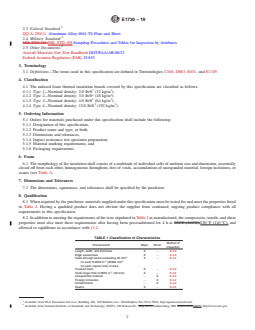
3.1 Definitions—The terms used in this specification are
having been preconditioned for4hat230°F(110°C), and
defined in Terminologies C168, D883, E631, and E1749.
allowed to equilibrate in accordance with 11.2.
4. Classification
8.3 Unless otherwise specified by the purchaser, qualified
materials remain qualified as long as there are no changes in
4.1 The unfaced foam thermal insulation boards covered by
product formulation, critical raw materials, that is, isocyanates
this specification are classified as follows:
3 3
and polyols, basic methods of manufacture, or plant location.
4.1.1 Type 1—Nominal density: 2.0 lb/ft (32 kg/m ).
3 3
4.1.2 Type 2—Nominal density: 3.0 lb/ft (48 kg/m ).
3 3
9. Acceptance
4.1.3 Type 3—Nominal density: 4.0 lb/ft (64 kg/m ).
3 3
4.1.4 Type 4—Nominal density: 12.0 lb/ft (192 kg/m ).
9.1 Lot Size for Acceptance Testing—For the purpose of
acceptance testing a lot is defined as a single, identifiable,
5. Ordering Information
production run using raw materials from a single batch.
5.1 Orders for materials purchased under this specification
9.2 Acceptance Testing (Physical Properties)—A represen-
shall include the following:
tative sample shall be selected from each foam lot and tested
5.1.1 Designation of this specification,
for the following physical properties:
5.1.2 Product name and type, or both,
Property Requirement Method
5.1.3 Dimensions and tolerances,
5.1.4 Impact resistance test specimen preparation,
Density Table 2 12.1
5.1.5 Material marking requirements, and Compressive strength Table 2 12.3
Shear strength Table 2 12.5
5.1.6 Packaging requirements.
Flame resistance Table 2 12.8
6. Foam
9.3 Sampling for Acceptance (Examination):
9.3.1 Samplesforqualityconformanceexaminationshallbe
6.1 The morphology of the insulation shall consist of a
selected in accordance with Inspection Level II of MIL-STD-
multitude of individual cells of uniform size and dimension,
105.
essentially closed off from each other, homogeneous
throughout, free of voids, accumulations of unexpanded 9.3.2 When the conditions for reduced inspection specified
material, foreign inclusions, or seams (see Table 1). in MIL-STD-105 have been complied with, a reduced sam-
pling in lieu of full sampling shall be instituted. Sampling for
7. Dimensions and Tolerances
reduced inspection shall be in accordance with Practice C390
(Inspection Level S-2 of MIL-STD-105).
7.1 The dimensions, squareness, and tolerances shall be
specified by the purchaser.
9.4 Examination:
9.4.1 Samples selected in accordance with 9.3 shall be
8. Qualification
examined for characteristics listed in Table 1.
8.1 When required by the purchaser, materials supplied
9.4.2 Visual examination shall consist of scanning for sur-
under this specification must be tested for and meet the
face characteristics.
propertieslistedinTable2.Havingaqualifiedproductdoesnot
9.4.3 Dimensional measurements shall be made with
calipers, rules, and tape rules as appropriate to the specified
tolerances. In cases of dispute or when specifically invoked by
Available from National Institute of Standards and Technology (NIST), 100
the purchaser, the methodology and procedures of Test Meth-
Bureau Dr., Gaithersburg, MD 20899, http://www.nist.gov.
ods C366/C366M or Test Method C550 shall be utilized.
9.4.4 The Acceptable Quality Level (AQL) for major char-
TABLE 1 Classification of Characteristics
acteristics shall be 1.0% and for minor characteristics shall be
Method of
Characteristic Major Minor
Inspection
2.5%.
Length, width, and thickness X . 9.4.3
9.4.5 Seams (see Table 1) are defined as: a pl
...
This document is not an ASTM standard and is intended only to provide the user of an ASTM standard an indication of what changes have been made to the previous version. Because
it may not be technically possible to adequately depict all changes accurately, ASTM recommends that users consult prior editions as appropriate. In all cases only the current version
of the standard as published by ASTM is to be considered the official document.
Designation: E1730 − 15 E1730 − 19
Standard Specification for
Rigid Foam for Use in Structural Sandwich Panel Cores
This standard is issued under the fixed designation E1730; the number immediately following the designation indicates the year of
original adoption or, in the case of revision, the year of last revision. A number in parentheses indicates the year of last reapproval. A
superscript epsilon (´) indicates an editorial change since the last revision or reapproval.
This standard has been approved for use by agencies of the U.S. Department of Defense.
1. Scope
1.1 This specification covers rigid, closed cell, polyurethane and polyisocyanurate thermal insulation for sandwich panels used
in shelter construction for exposure to ambient temperatures of −25°of −25 to 160°F (−32°160 °F (−32 to 71°C).71 °C). Painted
surfaces of shelters in actual field use reach temperatures of 200°F (93°C).200 °F (93 °C). The materials in this specification must
be capable of withstanding processing, (laminating) temperatures of 230°F (110°C).230 °F (110 °C).
1.2 The values stated in inch-pound units are to be regarded as standard. The values given in parentheses are mathematical
conversions to SI units that are provided for information only and are not considered standard.
1.3 The following precautionary caveat pertains only to the test method portion, Section 12, of this specification:This standard
does not purport to address all of the safety concerns, if any, associated with its use. It is the responsibility of the user of this
standard to establish appropriate safety safety, health, and healthenvironmental practices and determine the applicability of
regulatory limitations prior to use.
1.4 This international standard was developed in accordance with internationally recognized principles on standardization
established in the Decision on Principles for the Development of International Standards, Guides and Recommendations issued
by the World Trade Organization Technical Barriers to Trade (TBT) Committee.
2. Referenced Documents
2.1 ASTM Standards:
C165 Test Method for Measuring Compressive Properties of Thermal Insulations
C168 Terminology Relating to Thermal Insulation
C177 Test Method for Steady-State Heat Flux Measurements and Thermal Transmission Properties by Means of the
Guarded-Hot-Plate Apparatus
C273/C273M Test Method for Shear Properties of Sandwich Core Materials
C366/C366M Test Methods for Measurement of Thickness of Sandwich Cores
C390 Practice for Sampling and Acceptance of Thermal Insulation Lots
C518 Test Method for Steady-State Thermal Transmission Properties by Means of the Heat Flow Meter Apparatus
C550 Test Method for Measuring Trueness and Squareness of Rigid Block and Board Thermal Insulation
D883 Terminology Relating to Plastics
D1621 Test Method for Compressive Properties of Rigid Cellular Plastics
D1622/D1622M Test Method for Apparent Density of Rigid Cellular Plastics
D1623 Test Method for Tensile and Tensile Adhesion Properties of Rigid Cellular Plastics
D2126 Test Method for Response of Rigid Cellular Plastics to Thermal and Humid Aging
D2856 Test Method for Open-Cell Content of Rigid Cellular Plastics by the Air Pycnometer (Withdrawn 2006)
E631 Terminology of Building Constructions
E1749 Terminology Relating to Rigid Wall Relocatable Shelters
2.2 Code of Federal Regulations Aeronautics and Space:
14 CFR 25.853 CFR 25.853 (Federal Air Regulation 25.853) Compartment Interior (Amend. 25-72)
This specification is under the jurisdiction of ASTM Committee E06 on Performance of Buildings and is under the direct responsibility of Subcommittee E06.53 on
Materials and Processes for Durable Rigidwall Relocatable Structures.
Current edition approved May 1, 2015July 1, 2019. Published August 2015August 2019. Originally approved in 1995. Last previous edition approved in 20092015 as
E1730 – 09.E1730–15. DOI: 10.1520/E1730-15.10.1520/E1730–19.
For referenced ASTM standards, visit the ASTM website, www.astm.org, or contact ASTM Customer Service at service@astm.org. For Annual Book of ASTM Standards
volume information, refer to the standard’sstandard’s Document Summary page on the ASTM website.
The last approved version of this historical standard is referenced on www.astm.org.
Available from U.S. Government Publishing Office, 732 N. Capitol St., NW, Washington, DC 20401-0001, http://www.gpo.gov.
Copyright © ASTM International, 100 Barr Harbor Drive, PO Box C700, West Conshohocken, PA 19428-2959. United States
E1730 − 19
2.3 Federal Standard:
QQ-A-250/11 Aluminum Alloy 6061-T6 Plate and Sheet
2.4 Military Standard:
MIL STD 105 MIL-STD-105 Sampling Procedures and Tables for Inspection by Attributes
2.5 Other Documents:
Aircraft Materials Fire Test Handbook DOT/FAA/AR-00/12
Federal Aviation Regulation (FAR) 25.853
3. Terminology
3.1 Definitions—The terms used in this specification are defined in Terminologies C168, D883, E631, and E1749.
4. Classification
4.1 The unfaced foam thermal insulation boards covered by this specification are classified as follows:
3 3
4.1.1 Type 1—Nominal density: 2.0 lb/ft (32 kg/m ).
3 3
4.1.2 Type 2—Nominal density: 3.0 lb/ft (48 kg/m ).
3 3
4.1.3 Type 3—Nominal density: 4.0 lb/ft (64 kg/m ).
3 3
4.1.4 Type 4—Nominal density: 12.0 lb/ft (192 kg/m ).
5. Ordering Information
5.1 Orders for materials purchased under this specification shall include the following:
5.1.1 Designation of this specification,
5.1.2 Product name and type, or both,
5.1.3 Dimensions and tolerances,
5.1.4 Impact resistance test specimen preparation,
5.1.5 Material marking requirements, and
5.1.6 Packaging requirements.
6. Foam
6.1 The morphology of the insulation shall consist of a multitude of individual cells of uniform size and dimension, essentially
closed off from each other, homogeneous throughout, free of voids, accumulations of unexpanded material, foreign inclusions, or
seams (see Table 1).
7. Dimensions and Tolerances
7.1 The dimensions, squareness, and tolerances shall be specified by the purchaser.
8. Qualification
8.1 When required by the purchaser, materials supplied under this specification must be tested for and meet the properties listed
in Table 2. Having a qualified product does not obviate the supplier from continued, ongoing product compliance with all
requirements to this specification.
8.2 In addition to meeting the requirements of the tests stipulated in Table 2 as manufactured, the compressive, tensile, and shear
properties must also meet these requirements after having been preconditioned for 4 h at 230°F (110°C),230 °F (110 °C), and
allowed to equilibrate in accordance with 11.2.
TABLE 1 Classification of Characteristics
Method of
Characteristic Major Minor
Inspection
Length, width, and thickness X . 9.4.3
Edge squareness X . 9.4.3
Holes through board exceeding 40 mm X . 9.4.2
2 2
for each 0.0625 in. (92900 mm
for each square foot) of area
Crushed foam X . 9.4.2
Voids larger than 0.0625 in. (40 mm) X . 9.4.2
Unexpanded material . X 9.4.2
Foreign inclusions . X 9.4.2
Contaminants . X 9.4.2
Seams X . 9.4.5
Available from DLA Document Services, Building 4/D, 700 Robbins Ave., Philadelphia, PA 19111-5094, http://quicksearch.dla.mil.
Available from National Institute of Standards and Technology (NIST), 100 Bureau Dr., Stop 1070, Gaithersburg, MD 20899-1070,20899, http://www.nist.gov.
E1730 − 19
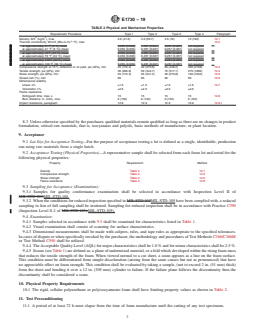
TABLE 2 Physical and Mechanical Properties
Requirement Procedure Type 1 Type 2 Type 3 Type 4 Paragraph
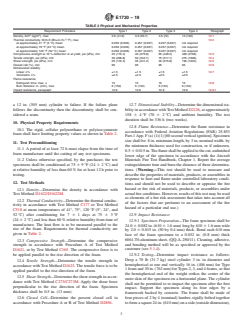
3 3
Density, lb/ft (kg/m ), max 2.6 (41.6) 3.6 (55.7) 4.5 (72) 13 (192) 12.1
Thermal conductivity, W/m·K (Btu-in./hr- ·°F), max 12.2
at approximately 41°F (5°C) mean 0.250 (0.036) 0.257 (0.037) 0.257 (0.037) not required
at approximately 41 °F (5 °C) mean 0.250 (0.036) 0.257 (0.037) 0.257 (0.037) not required
at approximately 79°F (24°C) mean 0.250 (0.036) 0.257 (0.037) 0.257 (0.037) not required
at approximately 79 °F (24 °C) mean 0.250 (0.036) 0.257 (0.037) 0.257 (0.037) not required
at approximately 120°F (52°C) mean 0.250 (0.036) 0.257 (0.037) 0.257 (0.037) not required
at approximately 120 °F (52 °C) mean 0.250 (0.036) 0.257 (0.037) 0.257 (0.037) not required
Compressive strength at 10 % deflection or at yield, psi (kPa), min 25 (172.4) 40 (275.8) 65 (448.2) 400 (2758) 12.3
Tensile strength, psi (kPa), min 30 (206.8) 50 (344.7) 75 (517.1) 275 (1896) 12.4
Shear strength, psi (kPa), min 25 (172.4) 35 (241.2) 40 (275.8) 150 (1034) 12.5
Closed cell (%), min 95 95 95 95 12.6
Dimensional stability
Linear Δ% ±1.5 ±1.5 ±1.5 ±1.5 12.7
Volumetric Δ% ±2.5 ±2.5 ±2.5 ±2.5
Flame resistance
Extinguish time: max, s 15 15 15 15 12.8
Burn distance: in. (mm), max 6 (152) 6 (152) 6 (152) 6 (152)
Impact resistance, paragraph 12.9 12.9 12.9 12.9 12.9.1
8.3 Unless otherwise specified by the purchaser, qualified materials remain qualified as long as there are no changes in product
formulat
...