

ASTM B963-24
(Test Method)Standard Test Methods for Oil Content, Oil-Impregnation Efficiency, and Surface-Connected Porosity of Sintered Powder Metallurgy (PM) Products Using Archimedes’ Principle
General Information
- Abstract
SIGNIFICANCE AND USE
5.1 Oil content values are generally contained in specifications for oil-impregnated PM bearings.
5.2 The oil-impregnation efficiency provides an indication of how well the as-received parts had been impregnated.
5.3 The desired self-lubricating performance of PM bearings requires a minimum amount of surface-connected porosity and satisfactory oil impregnation of the surface-connected porosity. A minimum oil content is specified.
5.4 The results from these test methods may be used for quality control or compliance purposes.
SCOPE
1.1 This standard describes three related test methods that cover the measurement of physical properties of oil-impregnated powder metallurgy products.
1.1.1 Determination of the volume percent of oil contained in the material.
1.1.2 Determination of the efficiency of the oil-impregnation process.
1.1.3 Determination of the percent surface-connected porosity by oil impregnation.
1.2 Units—With the exception of the values for density and the mass used to determine density, for which the use of the gram per cubic centimetre (g/cm3) and gram (g) units is the long-standing industry practice, the values in SI units are to be regarded as standard. The values given in parentheses after SI units are provided for information only and are not considered standard.
1.3 This standard does not purport to address all of the safety concerns, if any, associated with its use. It is the responsibility of the user of this standard to establish appropriate safety, health, and environmental practices and determine the applicability of regulatory limitations prior to use.
1.4 This international standard was developed in accordance with internationally recognized principles on standardization established in the Decision on Principles for the Development of International Standards, Guides and Recommendations issued by the World Trade Organization Technical Barriers to Trade (TBT) Committee.
- Status
- Published
- Publication Date
- 31-Jan-2024
- Technical Committee
- B09 - Metal Powders and Metal Powder Products
- Drafting Committee
- B09.04 - Bearings
Buy Documents
ASTM B963-24 - Standard Test Methods for Oil Content, Oil-Impregnation Efficiency, and Surface-Connected Porosity of Sintered Powder Metallurgy (PM) Products Using Archimedes’ Principle
REDLINE ASTM B963-24 - Standard Test Methods for Oil Content, Oil-Impregnation Efficiency, and Surface-Connected Porosity of Sintered Powder Metallurgy (PM) Products Using Archimedes’ Principle
Overview
ASTM B963-24, titled Standard Test Methods for Oil Content, Oil-Impregnation Efficiency, and Surface-Connected Porosity of Sintered Powder Metallurgy (PM) Products Using Archimedes’ Principle, specifies procedures for evaluating key physical properties of oil-impregnated powder metallurgy parts, especially bearings. Developed by ASTM International, this standard is widely used to assess oil content, oil-impregnation efficiency, and the degree of surface-connected porosity in sintered PM products. Reliable measurement of these characteristics is critical for ensuring optimal self-lubricating performance and for meeting quality and compliance requirements.
Key Topics
- Oil Content Measurement: The standard describes methods for determining the volume percent of oil present in sintered PM products. Accurate oil content is essential for optimal lubrication and performance in applications such as self-lubricating bearings.
- Oil-Impregnation Efficiency: B963-24 outlines how to assess how effectively oil has penetrated the porosity of PM parts. Efficiency metrics support process optimization and quality assurance.
- Surface-Connected Porosity: The amount of porosity accessible from the surface, measured via oil impregnation, is a key indicator of the part’s ability to retain and distribute lubricant.
- Archimedes’ Principle Application: The test methods utilize classic buoyancy principles to determine part volume and infer properties related to oil and porosity.
- Quality Control and Compliance: Results from these methods are instrumental for manufacturers and suppliers in verifying that products meet performance and specification requirements.
Applications
ASTM B963-24 is particularly relevant for:
- Self-Lubricating Bearings: Most sintered PM bearings rely on precise oil content and distribution for effective, maintenance-free operation. This standard helps ensure minimum oil content specifications are met to achieve required self-lubricating properties.
- Powder Metallurgy Components: Beyond bearings, any oil-impregnated PM part (such as bushings, gears, or filters) can benefit from these standardized test methods to verify and optimize oil impregnation processes.
- Manufacturing and Quality Assurance: Production facilities use ASTM B963-24 to monitor batch consistency, comply with contractual obligations, and support certifications related to material or product quality.
- Compliance Testing: The standard is also used in third-party test labs and by regulatory bodies to confirm that PM parts meet industry benchmarks for oil impregnation.
Related Standards
Several other ASTM standards and reference documents are closely associated with B963-24:
- ASTM B243: Provides terminology commonly used in powder metallurgy, ensuring clarity and consistency.
- ASTM E456: Covers terminology related to quality and statistics, important for interpreting repeatability and reproducibility of test results.
- ASTM E691: Details best practices for interlaboratory studies, supporting reliable precision and bias data for testing methods.
- ASTM D88, D1217, D1298: Describe various test methods for determining viscosity and density of oils, which are inputs for calculations in B963-24.
- Industry Applications: The standard is applicable in conjunction with company-specific process controls and industry-specific requirements, such as those from the automotive or aerospace sectors.
Practical Value
ASTM B963-24 provides a consistent, industry-accepted framework for:
- Improving product reliability through validated lubrication properties.
- Supporting material and process development for powder metallurgy.
- Enabling meaningful supplier-customer communication regarding oil content and porosity.
- Enhancing traceability and repeatability in quality assurance programs.
Adoption of this standard improves trust in oil-impregnated PM products by ensuring that critical performance factors are systematically verified and reported.
Relations
- Effective Date
- 01-Feb-2024
- Effective Date
- 01-Apr-2022
- Effective Date
- 01-Apr-2022
- Effective Date
- 01-Feb-2024
- Effective Date
- 01-Feb-2024
- Effective Date
- 01-Feb-2024
- Effective Date
- 01-Feb-2024
- Effective Date
- 01-Feb-2024
- Effective Date
- 01-Feb-2024
Buy Documents
ASTM B963-24 - Standard Test Methods for Oil Content, Oil-Impregnation Efficiency, and Surface-Connected Porosity of Sintered Powder Metallurgy (PM) Products Using Archimedes’ Principle
REDLINE ASTM B963-24 - Standard Test Methods for Oil Content, Oil-Impregnation Efficiency, and Surface-Connected Porosity of Sintered Powder Metallurgy (PM) Products Using Archimedes’ Principle
Get Certified
Connect with accredited certification bodies for this standard

Element Materials Technology
Materials testing and product certification.

Inštitut za kovinske materiale in tehnologije
Institute of Metals and Technology. Materials testing, metallurgical analysis, NDT.
Sponsored listings
Frequently Asked Questions
ASTM B963-24 is a standard published by ASTM International. Its full title is "Standard Test Methods for Oil Content, Oil-Impregnation Efficiency, and Surface-Connected Porosity of Sintered Powder Metallurgy (PM) Products Using Archimedes’ Principle". This standard covers: SIGNIFICANCE AND USE 5.1 Oil content values are generally contained in specifications for oil-impregnated PM bearings. 5.2 The oil-impregnation efficiency provides an indication of how well the as-received parts had been impregnated. 5.3 The desired self-lubricating performance of PM bearings requires a minimum amount of surface-connected porosity and satisfactory oil impregnation of the surface-connected porosity. A minimum oil content is specified. 5.4 The results from these test methods may be used for quality control or compliance purposes. SCOPE 1.1 This standard describes three related test methods that cover the measurement of physical properties of oil-impregnated powder metallurgy products. 1.1.1 Determination of the volume percent of oil contained in the material. 1.1.2 Determination of the efficiency of the oil-impregnation process. 1.1.3 Determination of the percent surface-connected porosity by oil impregnation. 1.2 Units—With the exception of the values for density and the mass used to determine density, for which the use of the gram per cubic centimetre (g/cm3) and gram (g) units is the long-standing industry practice, the values in SI units are to be regarded as standard. The values given in parentheses after SI units are provided for information only and are not considered standard. 1.3 This standard does not purport to address all of the safety concerns, if any, associated with its use. It is the responsibility of the user of this standard to establish appropriate safety, health, and environmental practices and determine the applicability of regulatory limitations prior to use. 1.4 This international standard was developed in accordance with internationally recognized principles on standardization established in the Decision on Principles for the Development of International Standards, Guides and Recommendations issued by the World Trade Organization Technical Barriers to Trade (TBT) Committee.
SIGNIFICANCE AND USE 5.1 Oil content values are generally contained in specifications for oil-impregnated PM bearings. 5.2 The oil-impregnation efficiency provides an indication of how well the as-received parts had been impregnated. 5.3 The desired self-lubricating performance of PM bearings requires a minimum amount of surface-connected porosity and satisfactory oil impregnation of the surface-connected porosity. A minimum oil content is specified. 5.4 The results from these test methods may be used for quality control or compliance purposes. SCOPE 1.1 This standard describes three related test methods that cover the measurement of physical properties of oil-impregnated powder metallurgy products. 1.1.1 Determination of the volume percent of oil contained in the material. 1.1.2 Determination of the efficiency of the oil-impregnation process. 1.1.3 Determination of the percent surface-connected porosity by oil impregnation. 1.2 Units—With the exception of the values for density and the mass used to determine density, for which the use of the gram per cubic centimetre (g/cm3) and gram (g) units is the long-standing industry practice, the values in SI units are to be regarded as standard. The values given in parentheses after SI units are provided for information only and are not considered standard. 1.3 This standard does not purport to address all of the safety concerns, if any, associated with its use. It is the responsibility of the user of this standard to establish appropriate safety, health, and environmental practices and determine the applicability of regulatory limitations prior to use. 1.4 This international standard was developed in accordance with internationally recognized principles on standardization established in the Decision on Principles for the Development of International Standards, Guides and Recommendations issued by the World Trade Organization Technical Barriers to Trade (TBT) Committee.
ASTM B963-24 is classified under the following ICS (International Classification for Standards) categories: 77.160 - Powder metallurgy. The ICS classification helps identify the subject area and facilitates finding related standards.
ASTM B963-24 has the following relationships with other standards: It is inter standard links to ASTM B963-22, ASTM E456-13a(2022), ASTM E456-13a(2022)e1, ASTM B595-21, ASTM B823-20, ASTM B438-21, ASTM B783-19, ASTM B925-15(2022), ASTM B439-21. Understanding these relationships helps ensure you are using the most current and applicable version of the standard.
ASTM B963-24 is available in PDF format for immediate download after purchase. The document can be added to your cart and obtained through the secure checkout process. Digital delivery ensures instant access to the complete standard document.
Standards Content (Sample)
This international standard was developed in accordance with internationally recognized principles on standardization established in the Decision on Principles for the
Development of International Standards, Guides and Recommendations issued by the World Trade Organization Technical Barriers to Trade (TBT) Committee.
Designation: B963 − 24
Standard Test Methods for
Oil Content, Oil-Impregnation Efficiency, and Surface-
Connected Porosity of Sintered Powder Metallurgy (PM)
Products Using Archimedes’ Principle
This standard is issued under the fixed designation B963; the number immediately following the designation indicates the year of
original adoption or, in the case of revision, the year of last revision. A number in parentheses indicates the year of last reapproval. A
superscript epsilon (´) indicates an editorial change since the last revision or reapproval.
This standard has been approved for use by agencies of the U.S. Department of Defense.
1. Scope* 2. Referenced Documents
1.1 This standard describes three related test methods that 2.1 ASTM Standards:
cover the measurement of physical properties of oil- B243 Terminology of Powder Metallurgy
impregnated powder metallurgy products. D1217 Test Method for Density and Relative Density (Spe-
1.1.1 Determination of the volume percent of oil contained cific Gravity) of Liquids by Bingham Pycnometer
in the material. D1298 Test Method for Density, Relative Density, or API
1.1.2 Determination of the efficiency of the oil- Gravity of Crude Petroleum and Liquid Petroleum Prod-
impregnation process. ucts by Hydrometer Method
1.1.3 Determination of the percent surface-connected poros- E456 Terminology Relating to Quality and Statistics
ity by oil impregnation. E691 Practice for Conducting an Interlaboratory Study to
Determine the Precision of a Test Method
1.2 Units—With the exception of the values for density and
the mass used to determine density, for which the use of the
3. Terminology
gram per cubic centimetre (g/cm ) and gram (g) units is the
3.1 Definitions of powder metallurgy (PM) terms can be
long-standing industry practice, the values in SI units are to be
found in Terminology B243. Additional descriptive material is
regarded as standard. The values given in parentheses after SI
available under “General Information on PM” on the ASTM
units are provided for information only and are not considered
B09 web page.
standard.
1.3 This standard does not purport to address all of the
4. Summary of Test Method
safety concerns, if any, associated with its use. It is the
4.1 The part or test specimen is first weighed in air. It is then
responsibility of the user of this standard to establish appro-
oil impregnated to fill the surface-connected porosity and the
priate safety, health, and environmental practices and deter-
specimen is reweighed. The test specimen is then weighed
mine the applicability of regulatory limitations prior to use.
when immersed in water and its volume calculated based on
1.4 This international standard was developed in accor-
Archimedes’ principle. The oil is then removed and the
dance with internationally recognized principles on standard-
specimen is reweighed.
ization established in the Decision on Principles for the
Development of International Standards, Guides and Recom-
4.2 The oil content of an oil-impregnated part or test
mendations issued by the World Trade Organization Technical
specimen is then calculated as a percentage of the volume of
Barriers to Trade (TBT) Committee.
the specimen. This may be done for the as-received and the
fully oil-impregnated specimen.
These test methods are under the jurisdiction of ASTM Committee B09 on
Metal Powders and Metal Powder Products and are the direct responsibility of
Subcommittee B09.04 on Bearings. For referenced ASTM standards, visit the ASTM website, www.astm.org, or
Current edition approved Feb. 1, 2024. Published March 2024. Originally contact ASTM Customer Service at service@astm.org. For Annual Book of ASTM
approved in 2008. Last previous edition approved in 2022 as B963 – 22. DOI: Standards volume information, refer to the standard’s Document Summary page on
10.1520/B0963-24. the ASTM website.
*A Summary of Changes section appears at the end of this standard
Copyright © ASTM International, 100 Barr Harbor Drive, PO Box C700, West Conshohocken, PA 19428-2959. United States
B963 − 24
A
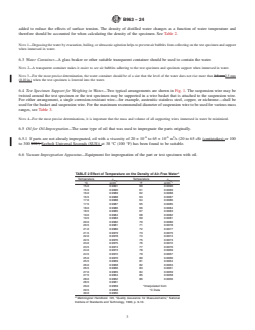
TABLE 2 Effect of Temperature on the Density of Air-Free Water
4.3 The oil-impregnation effıciency is calculated by dividing
Temperature ρ Temperature ρ
the as-received oil content by the fully impregnated oil content w w
3 3
°C g/cm °F g/cm *
and expressing the result as a percentage.
15.0 0.9991 60 0.9990
15.5 0.9990 61 0.9989
4.4 The volume percentage of surface-connected porosity
16.0 0.9989 62 0.9988
(as measured by oil impregnation) is then calculated based on
16.5 0.9988 63 0.9987
the amount of oil in the fully oil-impregnated specimen. 17.0 0.9988 64 0.9986
17.5 0.9987 65 0.9985
18.0 0.9986 66 0.9984
5. Significance and Use
18.5 0.9985 67 0.9983
19.0 0.9984 68 0.9982
5.1 Oil content values are generally contained in specifica-
19.5 0.9983 69 0.9981
tions for oil-impregnated PM bearings.
20.0 0.9982 70 0.9980
20.5 0.9981 71 0.9978
5.2 The oil-impregnation efficiency provides an indication
21.0 0.9980 72 0.9977
of how well the as-received parts had been impregnated.
21.5 0.9979 73 0.9975
22.0 0.9978 74 0.9974
5.3 The desired self-lubricating performance of PM bear-
22.5 0.9976 75 0.9973
ings requires a minimum amount of surface-connected porosity
23.0 0.9975 76 0.9972
23.5 0.9974 77 0.9970
and satisfactory oil impregnation of the surface-connected
24.0 0.9973 78 0.9969
porosity. A minimum oil content is specified.
24.5 0.9972 79 0.9967
25.0 0.9970 80 0.9966
5.4 The results from these test methods may be used for
25.5 0.9969 81 0.9964
quality control or compliance purposes.
26.0 0.9968 82 0.9963
26.5 0.9966 83 0.9961
6. Apparatus 27.0 0.9965 84 0.9959
27.5 0.9964 85 0.9958
6.1 Analytical Balance—Precision single-pan balance that
28.0 0.9962 86 0.9956
will permit readings within 0.01 % of the test specimen mass. 28.5 0.9961
29.0 0.9959 *Interpolated from
See Table 1. The analytical balance shall be supported in a
29.5 0.9958 °C Data
manner to eliminate mechanical vibrations and be shielded
30.0 0.9956
from air drafts. A
Metrological Handbook 145, “Quality Assurance for Measurements,” National
Institute of Standards and Technology, 1990, p. 9-10.
6.2 Water—Distilled or deionized and preferably degassed
water to which 0.05 to 0.1 volume percent of a wetting agent
has been added to reduce the effects of surface tension. The
density of distilled water changes as a function of water
For the maximum recommended diameter of suspension wire
temperature and therefore should be accounted for when
to be used for various mass ranges, see Table 3.
calculating the density of the specimen. See Table 2.
NOTE 4—For the most precise determinations, it is important that the
mass and volume of all supporting wires immersed in water be minimized.
NOTE 1—Degassing the water by evacuation, boiling, or ultrasonic
agitation helps to prevent air bubbles from collecting on the test specimen
6.5 Oil for Oil-Impregnation—The same type of oil that was
and support when immersed in water.
used to impregnate the parts originally.
6.3 Water Container—A glass beaker or other suitable 6.5.1 If parts are not already impregnated, oil with a
-6 -6 2
transparent container should be used to contain the water. viscosity of 20 × 10 to 65 × 10 m /s (20 to 65 cSt
NOTE 2—A transparent container makes it easier to see air bubbles
(centistokes) or 100 to 300 Saybolt Universal Seconds (SUS))
adhering to the test specimen and specimen support when immersed in
at 38 °C (100 °F) has been found to be suitable.
water.
NOTE 3—For the most precise determination, the water container 6.6 Vacuum Impregnation Apparatus—Equipment for im-
should be of a size that the level of the water does not rise more than
pregnation of the part or test specimen with oil.
2.5 mm (0.10 in.) when the test specimen is lowered into the water.
6.7 Thermometer—A thermometer to measure the tempera-
6.4 Test Specimen Support for Weighing in Water—Two
ture of the water to the nearest 0.5 °C (1 °F).
typical arrangements are shown in Fig. 1. The suspension wire
6.8 Soxhlet Apparatus—Glass laboratory unit consisting of
may be twisted around the test specimen or the test specimen
a condenser, extractor, filter, flask with a suitable solvent for
may be supported in a wire basket that is attached to the
the oil such as petroleum ether, and a heating mantle.
suspension wire. For either arrangement, a single corrosion-
resistant wire—for example, austenitic stainless steel, copper,
7. Preparation of Test Specimens
or nichrome—shall be used for the basket and suspension wire.
7.1 The mass of the test specimen shall be a minimum of 1.0
g. For small parts, several parts may be combined to reach the
TABLE 1 Balance Readability
minimum mass.
Mass, Balance Readable to,
g g 7.2 Thoroughly clean all surfaces of the test specimen to
less than 10 0.0001 remove any adhering foreign materials such as dirt or oxide
10 to less than 100 0.001
scale. Take care with cut specimens to avoid rough surfaces to
100 to less than 1000 0.01
which an air bubble may adhere. A 100-grit sanding or abrasive
1000 to less than 10 000 0.1
grinding is recommended to remove all rough surfaces.
B963 − 24
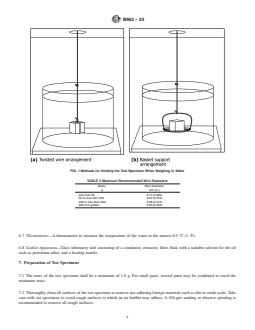
FIG. 1 Methods for Holding the Test Specimen When Weighing in Water
TABLE 3 Maximum Recommended Wire Diameters
8.4.2 Oil impregnate the as-received part or test specimen as
Mass, Wire Diameter, follows:
g mm (in.)
Vacuum Oil Impregnation—Preferred Procedure
less than 50 0.12 (0.005)
50 to less than 200 0.25 (0.010)
8.4.3 Immerse the part or test specimen in oil at room
200 to less than 600 0.38 (0.015)
temperature.
600 and greater 0.50 (0.020)
8.4.4 Reduce the pressure over the sample to 7 kPa (1 psi)
or less for 30 min, then increase the pressure back to atmo-
8. Procedure
spheric pressure and keep the sample immersed for at least
8.1 It is important that the part or test specimen, the
30 min.
analytical balance and surrounding air be at a uniform tem-
8.4.5 Remove excess oil by blotting gently with an
perature when weighing is performed.
absorbent, lint-free material. Take care not to extract oil
8.2 For the most precise volume determinations, duplicate absorbed within the part or test specimen.
weighings should be made for all mass measurements. The
NOTE 5—If the oil that had been used originally to impregnate the part
analytical balance should be adjusted to zero prior to each
-6 2
had a viscosity greater than 65 x 10 m /s (65 cSt (centistokes) or 300
weighing. Duplicate mass determinations should be averaged
SUS (Saybolt Universal Seconds)), then the oil shall be heated to a
before performing any calculations. temperature of 82 6 5 °C (180 6 10 °F).
8.3 For improved repeatability and reproducibility, the ana-
8.4.6 Do not place or store parts on porous surfaces such as
lytical balance should be verified periodically with a standard
paper, cloth, or cardboard as these will absorb oil.
mass that is approximately equal to the part or test specimen
8.4.7 Proceed to 8.4.13.
mass.
Immer
...
This document is not an ASTM standard and is intended only to provide the user of an ASTM standard an indication of what changes have been made to the previous version. Because
it may not be technically possible to adequately depict all changes accurately, ASTM recommends that users consult prior editions as appropriate. In all cases only the current version
of the standard as published by ASTM is to be considered the official document.
Designation: B963 − 22 B963 − 24
Standard Test Methods for
Oil Content, Oil-Impregnation Efficiency, and Surface-
Connected Porosity of Sintered Powder Metallurgy (PM)
Products Using Archimedes’ Principle
This standard is issued under the fixed designation B963; the number immediately following the designation indicates the year of
original adoption or, in the case of revision, the year of last revision. A number in parentheses indicates the year of last reapproval. A
superscript epsilon (´) indicates an editorial change since the last revision or reapproval.
This standard has been approved for use by agencies of the U.S. Department of Defense.
1. Scope*
1.1 This standard describes three related test methods that cover the measurement of physical properties of oil-impregnated
powder metallurgy products.
1.1.1 Determination of the volume percent of oil contained in the material.
1.1.2 Determination of the efficiency of the oil-impregnation process.
1.1.3 Determination of the percent surface-connected porosity by oil impregnation.
1.2 Units—With the exception of the values for density and the mass used to determine density, for which the use of the gram per
cubic centimetre (g/cm ) and gram (g) units is the long-standing industry practice, the values in SI units are to be regarded as
standard. The values given in parentheses after SI units are provided for information only and are not considered standard.
1.3 This standard does not purport to address all of the safety concerns, if any, associated with its use. It is the responsibility
of the user of this standard to establish appropriate safety, health, and environmental practices and determine the applicability of
regulatory limitations prior to use.
1.4 This international standard was developed in accordance with internationally recognized principles on standardization
established in the Decision on Principles for the Development of International Standards, Guides and Recommendations issued
by the World Trade Organization Technical Barriers to Trade (TBT) Committee.
2. Referenced Documents
2.1 ASTM Standards:
B243 Terminology of Powder Metallurgy
D88 Test Method for Saybolt Viscosity
D1217 Test Method for Density and Relative Density (Specific Gravity) of Liquids by Bingham Pycnometer
D1298 Test Method for Density, Relative Density, or API Gravity of Crude Petroleum and Liquid Petroleum Products by
Hydrometer Method
These test methods are under the jurisdiction of ASTM Committee B09 on Metal Powders and Metal Powder Products and are the direct responsibility of Subcommittee
B09.04 on Bearings.
Current edition approved Sept. 1, 2022Feb. 1, 2024. Published September 2022March 2024. Originally approved in 2008. Last previous edition approved in 20172022
as B963 – 17. DOI: 10.1520/B0963-22.22. DOI: 10.1520/B0963-24.
For referenced ASTM standards, visit the ASTM website, www.astm.org, or contact ASTM Customer Service at service@astm.org. For Annual Book of ASTM Standards
volume information, refer to the standard’s Document Summary page on the ASTM website.
*A Summary of Changes section appears at the end of this standard
Copyright © ASTM International, 100 Barr Harbor Drive, PO Box C700, West Conshohocken, PA 19428-2959. United States
B963 − 24
E456 Terminology Relating to Quality and Statistics
E691 Practice for Conducting an Interlaboratory Study to Determine the Precision of a Test Method
3. Terminology
3.1 Definitions of powder metallurgy (PM) terms can be found in Terminology B243. Additional descriptive material is available
under “General Information on PM” on the ASTM B09 web page.
3.2 Definitions of Terms Specific to This Standard:
3.2.1 centistoke (cSt), n—fluid viscosity in units of cm /s.
3.2.2 Seybolt Seconds Universal (SSU), n—fluid viscosity as measured by time for 60 mL to flow through the calibrated universal
viscometer at a specified temperature as prescribed by Test Method D88.
4. Summary of Test Method
4.1 The part or test specimen is first weighed in air. It is then oil impregnated to fill the surface-connected porosity and the
specimen is reweighed. The test specimen is then weighed when immersed in water and its volume calculated based on
Archimedes’ principle. The oil is then removed and the specimen is reweighed.
4.2 The oil content of an oil-impregnated part or test specimen is then calculated as a percentage of the volume of the specimen.
This may be done for the as-received and the fully oil-impregnated specimen.
4.3 The oil-impregnation effıciency is calculated by dividing the as-received oil content by the fully impregnated oil content and
expressing the result as a percentage.
4.4 The volume percentage of surface-connected porosity (as measured by oil impregnation) is then calculated based on the
amount of oil in the fully oil-impregnated specimen.
5. Significance and Use
5.1 Oil content values are generally contained in specifications for oil-impregnated PM bearings.
5.2 The oil-impregnation efficiency provides an indication of how well the as-received parts had been impregnated.
5.3 The desired self-lubricating performance of PM bearings requires a minimum amount of surface-connected porosity and
satisfactory oil impregnation of the surface-connected porosity. A minimum oil content is specified.
5.4 The results from these test methods may be used for quality control or compliance purposes.
6. Apparatus
6.1 Analytical Balance—Precision single-pan balance that will permit readings within 0.01 % of the test specimen mass. See Table
1. The analytical balance shall be supported in a manner to eliminate mechanical vibrations and be shielded from air drafts.
6.2 Water—Distilled or deionized and preferably degassed water to which 0.05 to 0.1 volume percent of a wetting agent has been
TABLE 1 Balance Readability
Mass, Balance Readable to,
g g
less than 10 0.0001
10 to less than 100 0.001
100 to less than 1000 0.01
1000 to less than 10 000 0.1
B963 − 24
added to reduce the effects of surface tension. The density of distilled water changes as a function of water temperature and
therefore should be accounted for when calculating the density of the specimen. See Table 2.
NOTE 1—Degassing the water by evacuation, boiling, or ultrasonic agitation helps to prevent air bubbles from collecting on the test specimen and support
when immersed in water.
6.3 Water Container—A glass beaker or other suitable transparent container should be used to contain the water.
NOTE 2—A transparent container makes it easier to see air bubbles adhering to the test specimen and specimen support when immersed in water.
NOTE 3—For the most precise determination, the water container should be of a size that the level of the water does not rise more than 2.5 mm2.5 mm
(0.10 in.) when the test specimen is lowered into the water.
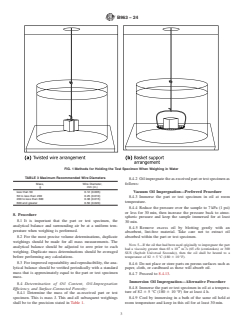
6.4 Test Specimen Support for Weighing in Water—Two typical arrangements are shown in Fig. 1. The suspension wire may be
twisted around the test specimen or the test specimen may be supported in a wire basket that is attached to the suspension wire.
For either arrangement, a single corrosion-resistant wire—for example, austenitic stainless steel, copper, or nichrome—shall be
used for the basket and suspension wire. For the maximum recommended diameter of suspension wire to be used for various mass
ranges, see Table 3.
NOTE 4—For the most precise determinations, it is important that the mass and volume of all supporting wires immersed in water be minimized.
6.5 Oil for Oil-Impregnation—The same type of oil that was used to impregnate the parts originally.
-6 -6 2
6.5.1 If parts are not already impregnated, oil with a viscosity of 20 × 10 to 65 × 10 m /s (20 to 65 cSt (centistokes) or 100
to 300 SSU) Saybolt Universal Seconds (SUS)) at 38 °C (100 °F) has been found to be suitable.
6.6 Vacuum Impregnation Apparatus—Equipment for impregnation of the part or test specimen with oil.
A
TABLE 2 Effect of Temperature on the Density of Air-Free Water
Temperature ρ Temperature ρ
w w
3 3
°C g/cm °F g/cm *
15.0 0.9991 60 0.9990
15.5 0.9990 61 0.9989
16.0 0.9989 62 0.9988
16.5 0.9988 63 0.9987
17.0 0.9988 64 0.9986
17.5 0.9987 65 0.9985
18.0 0.9986 66 0.9984
18.5 0.9985 67 0.9983
19.0 0.9984 68 0.9982
19.5 0.9983 69 0.9981
20.0 0.9982 70 0.9980
20.5 0.9981 71 0.9978
21.0 0.9980 72 0.9977
21.5 0.9979 73 0.9975
22.0 0.9978 74 0.9974
22.5 0.9976 75 0.9973
23.0 0.9975 76 0.9972
23.5 0.9974 77 0.9970
24.0 0.9973 78 0.9969
24.5 0.9972 79 0.9967
25.0 0.9970 80 0.9966
25.5 0.9969 81 0.9964
26.0 0.9968 82 0.9963
26.5 0.9966 83 0.9961
27.0 0.9965 84 0.9959
27.5 0.9964 85 0.9958
28.0 0.9962 86 0.9956
28.5 0.9961
29.0 0.9959 *Interpolated from
29.5 0.9958 °C Data
30.0 0.9956
A
Metrological Handbook 145, “Quality Assurance for Measurements,” National
Institute of Standards and Technology, 1990, p. 9-10.
B963 − 24
FIG. 1 Methods for Holding the Test Specimen When Weighing in Water
TABLE 3 Maximum Recommended Wire Diameters
Mass, Wire Diameter,
g mm (in.)
less than 50 0.12 (0.005)
50 to less than 200 0.25 (0.010)
200 to less than 600 0.38 (0.015)
600 and greater 0.50 (0.020)
6.7 Thermometer—A thermometer to measure the temperature of the water to the nearest 0.5 °C (1 °F).
6.8 Soxhlet Apparatus—Glass laboratory unit consisting of a condenser, extractor, filter, flask with a suitable solvent for the oil
such as petroleum ether, and a heating mantle.
7. Preparation of Test Specimens
7.1 The mass of the test specimen shall be a minimum of 1.0 g. For small parts, several parts may be combined to reach the
minimum mass.
7.2 Thoroughly clean all surfaces of the test specimen to remove any adhering foreign materials such as dirt or oxide scale. Take
care with cut specimens to avoid rough surfaces to which an air bubble may adhere. A 100-grit sanding or abrasive grinding is
recommended to remove all rough surfaces.
B963 − 24
8. Procedure
8.1 It is important that the part or test specimen, the analytical balance and surrounding air be at a uniform temperature when
weighing is performed.
8.2 For the most precise volume determinations, duplicate weighings should be made for all mass measurements. The analytical
balance should be adjusted to zero prior to each weighing. Duplicate mass determinations should be averaged before performing
any calculations.
8.3 For improved repeatability and reproducibility, the analytical balance should be verified periodically with a standard mass that
is approximately equal to the part or test specimen mass.
8.4 Determination of Oil Content, Oil-Impregnation Effıciency, and Surface-Connected Porosity:
8.4.1 Determine the mass of the as-received part or test specimen. This is mass J. This and all subsequent weighings shall be to
the precision stated in Table 1.
8.4.2 Oil impregnate the as-received part or test specimen as follows:
Vacuum Oil Impregnation—Preferred Procedure
8.4.3 Immerse the part or test specimen in oil at room temperature.
8.4.4 Reduce the pressure over the sample to 7 kPa (1 psi) or less for 30 min, then increase the pressure back to atmospheric
pressure and keep the sample immersed for at least 30 min.
8.4.5 Remove excess oil by blotting gently with an absorbent, lint-free material. Take care not to extract oil absorbed within the
part or test specimen.
-6 2
...