

ASTM F3219-19
(Specification)Standard Specification for 3 to 30 in. (75 To 750 mm) Polypropylene (PP) Corrugated Single Wall Pipe and Fittings
General Information
- Abstract
ABSTRACT
This specification covers the general requirements and test methods for materials, dimensions, workmanship, elongation, brittleness, pipe stiffness, and markings for single wall corrugated polypropylene (PP) pipe and fittings used in non-pressure gravity applications, including leach field effluent disposal, and drainage applications such as land, roads, foundations, agricultural, and landfill. It applies to PP corrugated single wall pipe and fittings with nominal sizes 3 in. through 30 in. (75 mm through 750 mm). This specification includes minimum properties for PP compounds used in the manufacture of corrugated single wall pipes, as well as nominal pipe sizes, inside diameters and tolerances for single wall corrugated PP pipes. It also covers fittings and joining system requirements, installation requirements, sampling and retest, certification, reporting, packaging, and quality assurance.
SCOPE
1.1 This specification covers requirements and test methods for materials, dimensions, workmanship, elongation, brittleness, pipe stiffness, and markings for single wall corrugated polypropylene (PP) pipe and fittings. It covers nominal sizes 3 in. through 30 in. (75 mm through 750 mm)
1.2 The corrugated polypropylene pipe and fittings are for use in non-pressure applications where soil-tight joints are acceptable, such as leach field effluent disposal, and drainage applications such as land, roads, foundations, agricultural, and landfill. Products meeting this specification are not suitable for applications requiring water-tight joints unless the manufacturer offers such joints as an option.
Note 1: Watertight joints, when requested or specified, should meet a 10.8 psi (74 kPa) laboratory internal and external pressure in accordance with Specification D3212 and should utilize a bell and spigot design with a gasket that complies with Specification F477.
1.3 The values stated in inch-pound units are to be regarded as standard. The values given in parentheses are mathematical conversions to SI units that are provided for information only and are not considered standard.
1.4 This standard does not purport to address all of the safety concerns, if any, associated with its use. It is the responsibility of the user of this standard to establish appropriate safety, health, and environmental practices and determine the applicability of regulatory limitations prior to use.
1.5 This international standard was developed in accordance with internationally recognized principles on standardization established in the Decision on Principles for the Development of International Standards, Guides and Recommendations issued by the World Trade Organization Technical Barriers to Trade (TBT) Committee.
- Status
- Published
- Publication Date
- 31-Mar-2019
- Technical Committee
- F17 - Plastic Piping Systems
- Drafting Committee
- F17.65 - Land Drainage
Buy Documents
ASTM F3219-19 - Standard Specification for 3 to 30 in. (75 To 750 mm) Polypropylene (PP) Corrugated Single Wall Pipe and Fittings
REDLINE ASTM F3219-19 - Standard Specification for 3 to 30 in. (75 To 750 mm) Polypropylene (PP) Corrugated Single Wall Pipe and Fittings
Overview
ASTM F3219-19 is the international standard specification for 3 to 30 in. (75 to 750 mm) polypropylene (PP) corrugated single wall pipe and fittings. Developed by ASTM International, this standard establishes requirements for materials, manufacturing, testing, and marking of single wall corrugated PP pipes and fittings designed for underground, non-pressure gravity applications. These include drainage for land, roads, foundations, agricultural sites, and landfills, as well as leach field effluent disposal systems.
This standard covers nominal pipe sizes from 3 in. to 30 in. (75 mm to 750 mm) and specifies physical properties, dimensions, tolerances, and performance criteria to ensure product reliability and compatibility in the field. It also outlines essential requirements for installation, sampling, certification, and reporting.
Key Topics
Materials: Polypropylene compounds used must meet minimum requirements for density, tensile strength, elongation, flexibility, impact resistance, and oxidative induction time. Additives such as colorants or UV stabilizers are required for durability and long-term performance.
Manufacturing & Workmanship: Pipes and fittings are required to be homogeneous, uniform, and free from defects such as cracks, voids, or foreign inclusions. Ends must be cut cleanly and squarely.
Dimensions & Tolerances: The standard provides detailed tables listing nominal internal diameters and tolerances for each pipe size to ensure hydraulic performance and facilitate compatibility with fittings.
Performance Testing: Includes requirements and methods for testing pipe stiffness, impact strength, flattening resistance, and joint integrity:
- Pipe stiffness: Minimum 46 psi (320 kPa) at 5% deflection
- Impact strength: Minimum 140 ft-lbf (189 J)
- Elongation and brittleness are also tested for reliability
Joining Systems: Specifies soil-tight joints as standard, while watertight joints must meet additional criteria (such as those in ASTM D3212 and F477) if required. Acceptable joint systems include bell and spigot, snap couplers, and other manufacturer-recommended methods.
Pipe Perforations: When required for drainage, perforations must be cleanly cut, uniformly spaced, and located to minimize structural impact.
Marking and Certification: Pipes must be clearly marked at intervals with designation, size, manufacturer, and production code to ensure traceability and compliance. Certification of conformance is provided upon request.
Applications
Single wall corrugated polypropylene pipes and their fittings manufactured to ASTM F3219-19 are primarily used in:
- Land drainage: Effective for agricultural fields, golf courses, parks, and landscaped areas.
- Road and highway drainage: Suitable for subsurface drainage to prevent roadbed weakening.
- Foundation drainage: Used around building foundations to manage groundwater and prevent structural damage.
- Leach fields: Efficient for septic effluent dispersal in wastewater systems, where soil-tight joints are satisfactory.
- Landfills and other non-pressurized systems: Manage subsurface water without the need for water-tightness.
Notably, products to this specification are not suited for storm or sanitary sewers, or pressurized systems, unless the manufacturer provides products tested and marked for such use.
Related Standards
Products and installations covered by ASTM F3219-19 often reference or require compliance with the following standards:
- ASTM D3212 - Specification for Joints for Drain and Sewer Plastic Pipes Using Flexible Elastomeric Seals
- ASTM F477 - Specification for Elastomeric Seals (Gaskets) for Joining Plastic Pipe
- ASTM D2321 - Practice for Underground Installation of Thermoplastic Pipe for Gravity-Flow Applications
- ASTM F449 - Practice for Subsurface Installation of Corrugated Polyethylene Pipe for Agricultural Drainage
- ASTM D638, D790, D792, D1238, D2412 - Test methods for physical and mechanical properties of plastics and pipe
- AASHTO LRFD Bridge Design Specifications - For structural design considerations
By adhering to ASTM F3219-19, manufacturers, designers, contractors, and specifiers ensure the reliability, consistency, and long-term performance of corrugated polypropylene drainage piping in a range of civil, agricultural, and environmental applications.
Relations
- Effective Date
- 01-Apr-2019
- Effective Date
- 08-Feb-2018
- Effective Date
- 01-Feb-2024
- Refers
ASTM D1238-23a - Standard Test Method for Melt Flow Rates of Thermoplastics by Extrusion Plastometer - Effective Date
- 15-Nov-2023
- Effective Date
- 01-Apr-2020
- Effective Date
- 15-Mar-2020
- Effective Date
- 01-Feb-2020
- Effective Date
- 01-Jan-2019
- Effective Date
- 01-Mar-2018
- Refers
ASTM D1600-18 - Standard Terminology for Abbreviated Terms Relating to Plastics (Withdrawn 2024) - Effective Date
- 01-Jan-2018
- Effective Date
- 15-Nov-2017
- Effective Date
- 01-Aug-2017
- Effective Date
- 01-Jul-2017
- Effective Date
- 01-Feb-2017
- Effective Date
- 15-Nov-2016
Buy Documents
ASTM F3219-19 - Standard Specification for 3 to 30 in. (75 To 750 mm) Polypropylene (PP) Corrugated Single Wall Pipe and Fittings
REDLINE ASTM F3219-19 - Standard Specification for 3 to 30 in. (75 To 750 mm) Polypropylene (PP) Corrugated Single Wall Pipe and Fittings
Get Certified
Connect with accredited certification bodies for this standard

Institut za varilstvo d.o.o. (Welding Institute)
Slovenia's leading welding institute since 1952. ISO 3834, EN 1090, pressure equipment certification, NDT personnel, welder qualification. Only IIW Au
Sponsored listings
Frequently Asked Questions
ASTM F3219-19 is a technical specification published by ASTM International. Its full title is "Standard Specification for 3 to 30 in. (75 To 750 mm) Polypropylene (PP) Corrugated Single Wall Pipe and Fittings". This standard covers: ABSTRACT This specification covers the general requirements and test methods for materials, dimensions, workmanship, elongation, brittleness, pipe stiffness, and markings for single wall corrugated polypropylene (PP) pipe and fittings used in non-pressure gravity applications, including leach field effluent disposal, and drainage applications such as land, roads, foundations, agricultural, and landfill. It applies to PP corrugated single wall pipe and fittings with nominal sizes 3 in. through 30 in. (75 mm through 750 mm). This specification includes minimum properties for PP compounds used in the manufacture of corrugated single wall pipes, as well as nominal pipe sizes, inside diameters and tolerances for single wall corrugated PP pipes. It also covers fittings and joining system requirements, installation requirements, sampling and retest, certification, reporting, packaging, and quality assurance. SCOPE 1.1 This specification covers requirements and test methods for materials, dimensions, workmanship, elongation, brittleness, pipe stiffness, and markings for single wall corrugated polypropylene (PP) pipe and fittings. It covers nominal sizes 3 in. through 30 in. (75 mm through 750 mm) 1.2 The corrugated polypropylene pipe and fittings are for use in non-pressure applications where soil-tight joints are acceptable, such as leach field effluent disposal, and drainage applications such as land, roads, foundations, agricultural, and landfill. Products meeting this specification are not suitable for applications requiring water-tight joints unless the manufacturer offers such joints as an option. Note 1: Watertight joints, when requested or specified, should meet a 10.8 psi (74 kPa) laboratory internal and external pressure in accordance with Specification D3212 and should utilize a bell and spigot design with a gasket that complies with Specification F477. 1.3 The values stated in inch-pound units are to be regarded as standard. The values given in parentheses are mathematical conversions to SI units that are provided for information only and are not considered standard. 1.4 This standard does not purport to address all of the safety concerns, if any, associated with its use. It is the responsibility of the user of this standard to establish appropriate safety, health, and environmental practices and determine the applicability of regulatory limitations prior to use. 1.5 This international standard was developed in accordance with internationally recognized principles on standardization established in the Decision on Principles for the Development of International Standards, Guides and Recommendations issued by the World Trade Organization Technical Barriers to Trade (TBT) Committee.
ABSTRACT This specification covers the general requirements and test methods for materials, dimensions, workmanship, elongation, brittleness, pipe stiffness, and markings for single wall corrugated polypropylene (PP) pipe and fittings used in non-pressure gravity applications, including leach field effluent disposal, and drainage applications such as land, roads, foundations, agricultural, and landfill. It applies to PP corrugated single wall pipe and fittings with nominal sizes 3 in. through 30 in. (75 mm through 750 mm). This specification includes minimum properties for PP compounds used in the manufacture of corrugated single wall pipes, as well as nominal pipe sizes, inside diameters and tolerances for single wall corrugated PP pipes. It also covers fittings and joining system requirements, installation requirements, sampling and retest, certification, reporting, packaging, and quality assurance. SCOPE 1.1 This specification covers requirements and test methods for materials, dimensions, workmanship, elongation, brittleness, pipe stiffness, and markings for single wall corrugated polypropylene (PP) pipe and fittings. It covers nominal sizes 3 in. through 30 in. (75 mm through 750 mm) 1.2 The corrugated polypropylene pipe and fittings are for use in non-pressure applications where soil-tight joints are acceptable, such as leach field effluent disposal, and drainage applications such as land, roads, foundations, agricultural, and landfill. Products meeting this specification are not suitable for applications requiring water-tight joints unless the manufacturer offers such joints as an option. Note 1: Watertight joints, when requested or specified, should meet a 10.8 psi (74 kPa) laboratory internal and external pressure in accordance with Specification D3212 and should utilize a bell and spigot design with a gasket that complies with Specification F477. 1.3 The values stated in inch-pound units are to be regarded as standard. The values given in parentheses are mathematical conversions to SI units that are provided for information only and are not considered standard. 1.4 This standard does not purport to address all of the safety concerns, if any, associated with its use. It is the responsibility of the user of this standard to establish appropriate safety, health, and environmental practices and determine the applicability of regulatory limitations prior to use. 1.5 This international standard was developed in accordance with internationally recognized principles on standardization established in the Decision on Principles for the Development of International Standards, Guides and Recommendations issued by the World Trade Organization Technical Barriers to Trade (TBT) Committee.
ASTM F3219-19 is classified under the following ICS (International Classification for Standards) categories: 23.040.20 - Plastics pipes. The ICS classification helps identify the subject area and facilitates finding related standards.
ASTM F3219-19 has the following relationships with other standards: It is inter standard links to ASTM F3219-18, ASTM F2736-13e1, ASTM D4101-24, ASTM D1238-23a, ASTM F412-20, ASTM D2321-20, ASTM F449-20, ASTM F412-19, ASTM D2321-18, ASTM D1600-18, ASTM D2444-17, ASTM F412-17a, ASTM D790-17, ASTM F412-17, ASTM F412-16a. Understanding these relationships helps ensure you are using the most current and applicable version of the standard.
ASTM F3219-19 is available in PDF format for immediate download after purchase. The document can be added to your cart and obtained through the secure checkout process. Digital delivery ensures instant access to the complete standard document.
Standards Content (Sample)
This international standard was developed in accordance with internationally recognized principles on standardization established in the Decision on Principles for the
Development of International Standards, Guides and Recommendations issued by the World Trade Organization Technical Barriers to Trade (TBT) Committee.
Designation: F3219 −19
Standard Specification for
3 to 30 in. (75 To 750 mm) Polypropylene (PP) Corrugated
Single Wall Pipe and Fittings
This standard is issued under the fixed designation F3219; the number immediately following the designation indicates the year of
original adoption or, in the case of revision, the year of last revision. A number in parentheses indicates the year of last reapproval. A
superscript epsilon (´) indicates an editorial change since the last revision or reapproval.
1. Scope* 2. Referenced Documents
2.1 ASTM Standards:
1.1 This specification covers requirements and test methods
D256 Test Methods for Determining the Izod Pendulum
for materials, dimensions, workmanship, elongation,
Impact Resistance of Plastics
brittleness, pipe stiffness, and markings for single wall corru-
D618 Practice for Conditioning Plastics for Testing
gated polypropylene (PP) pipe and fittings. It covers nominal
D638 Test Method for Tensile Properties of Plastics
sizes 3 in. through 30 in. (75 mm through 750 mm)
D790 Test Methods for Flexural Properties of Unreinforced
1.2 The corrugated polypropylene pipe and fittings are for and Reinforced Plastics and Electrical Insulating Materi-
use in non-pressure applications where soil-tight joints are als
D792 Test Methods for Density and Specific Gravity (Rela-
acceptable, such as leach field effluent disposal, and drainage
tive Density) of Plastics by Displacement
applications such as land, roads, foundations, agricultural, and
D1238 Test Method for Melt Flow Rates of Thermoplastics
landfill. Products meeting this specification are not suitable for
by Extrusion Plastometer
applications requiring water-tight joints unless the manufac-
D1505 Test Method for Density of Plastics by the Density-
turer offers such joints as an option.
Gradient Technique
NOTE 1—Watertight joints, when requested or specified, should meet a D1600 Terminology forAbbreviatedTerms Relating to Plas-
10.8 psi (74 kPa) laboratory internal and external pressure in accordance
tics
with Specification D3212 and should utilize a bell and spigot design with
D2122 Test Method for Determining Dimensions of Ther-
a gasket that complies with Specification F477.
moplastic Pipe and Fittings
D2321 PracticeforUndergroundInstallationofThermoplas-
1.3 The values stated in inch-pound units are to be regarded
tic Pipe for Sewers and Other Gravity-Flow Applications
as standard. The values given in parentheses are mathematical
D2412 Test Method for Determination of External Loading
conversions to SI units that are provided for information only
Characteristics of Plastic Pipe by Parallel-Plate Loading
and are not considered standard.
D2444 Practice for Determination of the Impact Resistance
1.4 This standard does not purport to address all of the
of Thermoplastic Pipe and Fittings by Means of a Tup
safety concerns, if any, associated with its use. It is the
(Falling Weight)
responsibility of the user of this standard to establish appro-
D3212 Specification for Joints for Drain and Sewer Plastic
priate safety, health, and environmental practices and deter-
Pipes Using Flexible Elastomeric Seals
mine the applicability of regulatory limitations prior to use.
D3895 Test Method for Oxidative-Induction Time of Poly-
olefins by Differential Scanning Calorimetry
1.5 This international standard was developed in accor-
D4101 Classification System and Basis for Specification for
dance with internationally recognized principles on standard-
Polypropylene Injection and Extrusion Materials
ization established in the Decision on Principles for the
F412 Terminology Relating to Plastic Piping Systems
Development of International Standards, Guides and Recom-
F449 Practice for Subsurface Installation of Corrugated
mendations issued by the World Trade Organization Technical
Polyethylene Pipe for Agricultural Drainage or Water
Barriers to Trade (TBT) Committee.
Table Control
F477 Specification for Elastomeric Seals (Gaskets) for Join-
ing Plastic Pipe
This specification is under the jurisdiction ofASTM Committee F17 on Plastic
Piping Systems and is the direct responsibility of Subcommittee F17.65 on Land
Drainage. For referenced ASTM standards, visit the ASTM website, www.astm.org, or
Current edition approved April 1, 2019. Published April 2019. Originally contact ASTM Customer Service at service@astm.org. For Annual Book of ASTM
approved in 2017. Last previous edition approved in 2018 as F3219–18. DOI: Standards volume information, refer to the standard’s Document Summary page on
10.1520/F3219–19 the ASTM website.
*A Summary of Changes section appears at the end of this standard
Copyright © ASTM International, 100 Barr Harbor Drive, PO Box C700, West Conshohocken, PA 19428-2959. United States
F3219 − 19
TABLE 1 Polypropylene Compound Properties
2.2 AASHTO Standard:
AASHTO LRFD Bridge Design Specifications Property ASTM Test Units (SI Units) Minimum Value
Method
3. Terminology Melt Flow Rate D1238 g/10 min 0.15
(at 446°F
3.1 Definitions are in accordance with Terminology F412
(230°C))
3 3
Density D792, D1505 lb/in (g/cm ) 0.0325 (0.900)
and abbreviations are accordance with Terminology D1600,
Tensile Strength D638 psi (N/mm ) 3500 (24.1)
unless otherwise specified.
at Yield
Elongation at D638 %(%) 5(5)
3.2 Definitions of Terms Specific to This Standard:
Yield
3.2.1 single wall pipe, n—corrugated pipe without an inte- 2
Flexural Modulus D790 psi (N/mm ) 175,000 (1200)
(1% secant)
rior or exterior liner.
IZOD Impact D256 ft-lb/in (J/m) 8 (427)
3.2.2 lot size, n—the total number of completely finished
Strength
(73°F(23°C))
fittings or appurtenances that are manufactured under condi-
Oxidative- D3895 min 25
tions of production that are considered uniform.
Induction Time
(392°F (200°C))
4. Significance and Use
4.1 Single wall corrugated PP pipe and fittings are intended
for underground applications where soil provides support to
polypropylene compounds shall be protected from Ultraviolet
their flexible walls. Their major use is to collect or convey
(UV) degradation with UV stabilizers. Colored polypropylene
drainage water, or both.
compoundsshallcontainsufficientUVprotectiontoallowpipe
4.2 Single wall corrugated PP pipe shall have perforations
made according to this standard to be stored outdoors for at
where groundwater control or replenishing is specified.
least two years from the date of manufacture without degrada-
4.3 Single wall corrugated PP pipe shall not be used for tion of the stated properties.
storm sewer or sanitary sewer applications.
5.3 Rework Material—Clean polypropylene rework
material, generated from the manufacturer’s own production of
5. Materials
the product and having the same minimum physical properties,
5.1 Polypropylene—Polypropylene compounds used in the
may be used by the manufacturer, provided that the pipe
manufacture of corrugated single wall pipe shall have the
produced meets all the requirements of this specification.
minimum properties as shown in Table 1. Polypropylene
5.4 Rubber Materials—Rubber compounds used in the
compounds shall be comprised of the base polypropylene
manufacture of sealing rings or gaskets shall meet the require-
virgin material and all additives, colorants, UV inhibitors, and
ments of Specification F477.
stabilizers. Polypropylene compounds can be pre-compounded
or made in-situ during pipe extrusion by combining natural 5.5 Lubricant—The lubricant used for assembly of gasketed
polypropylene material with a color masterbatch or other joints shall have no detrimental effect on the gasket or on the
pipe
additives, or both. Conditioning, sampling, preparation and
testing of molded specimens shall be in accordance with the
6. Joining and Joint Systems
requirements in Specification D4101. Material for preparation
of molded specimens shall be taken from the pipe. Compounds
6.1 Bell and Spigot Joint:
that have a higher cell classification in one or more perfor-
6.1.1 The pipe ends shall consist of integrally formed bell
mance properties shall be permitted provided the density of the
and spigot designed to accommodate a gasket, which when
3 3
base resin shall not exceed 0.0343 lb/in. (0.950 g/cm ) and all
assembled forms a soiltight seal by the radial compression of
other product requirements are met.
the gasket between the spigot and the bell ends.
6.1.2 The joint shall be designed to avoid displacement of
5.2 Color and Ultraviolet (UV) Stabilization—The pipe
the gasket when it is assembled in accordance with the
shall be colored or black. Black polypropylene compounds
manufacturer’s recommendations.
shall have between 2.0 and 3.0 percent carbon black. Colored
6.1.3 The assembly of the joint shall be in accordance with
the manufacturer’s recommendations.
Available from American Association of State Highway and Transportation
6.2 Other Joining Systems—Joining methods such as exter-
Officials (AASHTO), 444 N. Capitol St., NW, Suite 249, Washington, DC 20001,
nalsnapcouplers,splitcouplers,orotherjoiningprocessesthat
http://www.transportation.org.
FIG. 1 Typical Annular Corrugated Profile Wall Polypropylene
F3219 − 19
are equally effective are to be used in accordance with the 7.2.7 Flattening—There shall be no evidence of splitting,
manufacturer’s recommendations. cracking or breaking when pipe is tested in accordance with
9.5.
7. Requirements
7.3 Fittings and Joining System Requirements:
7.1 Workmanship—The pipe and fittings shall be homoge-
7.3.1 The fittings shall not reduce or impair the overall
neous throughout and be as uniform as commercially practical
integrity or function of the pipeline. Only fittings made to this
in color, opacity, and density. The pipe wall shall be free of
specification and couplers supplied or recommended by the
cracks,holes,blisters,voids,foreigninclusionsorotherdefects
pipe manufacturer shall be used. Fittings fabricated from pipe
that are visible to the naked eye and that may affect the wall
manufactured according to this standard shall meet the same
integrity. The ends shall be cut cleanly and squarely.
material requirements as the pipe. The outside diameters and
7.2 Pipe Dimensions:
the corrugation pitch of products manufactured to this specifi-
7.2.1 Nominal Size—The nominal size for pipe and fittings
cation are not specified; thus, compatibility between pipe and
shall be as shown in Table 2 and are based on the inside
fittings made to this specification by different manufacturers
diameter of the pipe.
shall be verified to meet the requirements of 7.2.1 and 7.2.
7.2.2 Inside Diameter—Measure the inside diameter in
NOTE 2—Fittings may be fabricated from the pipe by a variety of
accordancewithTestMethodD2122.Thetolerancesareshown
processes including hot plate welding, spin welding or other processes.
in Table 2, when measured in accordance with 9.3, and shall be
7.3.2 Fittings:
applied to the stated manufacturer’s supplied diameter. In no
7.3.2.1 The maximum allowable gap between pipe and
case shall the manufacturer’s stated inside diameter minus the
fitting shall not exceed ⁄8 in. (3 mm) unless otherwise
tolerance be less than the required minimum pipe inside
specified.
diameter listed in Table 2.
7.2.3 Pipe Dimensions shall comply with Table 2, when
7.4 Perforations:
measured in accordance with Test Method D2122.
7.4.1 Drainage Pipe—When perforations are necessary,
7.2.4 Laying Length—The pipe may be sold in any laying
they shall be cleanly cut and uniformly spaced along the length
length agreeable to the user. Laying length shall not be less
and circumference of the pipe in a size, shape, and pattern
than 99% of the stated quantity
...
This document is not an ASTM standard and is intended only to provide the user of an ASTM standard an indication of what changes have been made to the previous version. Because
it may not be technically possible to adequately depict all changes accurately, ASTM recommends that users consult prior editions as appropriate. In all cases only the current version
of the standard as published by ASTM is to be considered the official document.
Designation: F3219 − 18 F3219 − 19
Standard Specification for
3 to 30 in. (75 To 750 mm) Polypropylene (PP) Corrugated
Single Wall Pipe and Fittings
This standard is issued under the fixed designation F3219; the number immediately following the designation indicates the year of
original adoption or, in the case of revision, the year of last revision. A number in parentheses indicates the year of last reapproval. A
superscript epsilon (´) indicates an editorial change since the last revision or reapproval.
1. Scope*
1.1 This specification covers requirements and test methods for materials, dimensions, workmanship, elongation, brittleness,
pipe stiffness, and markings for single wall corrugated polypropylene (PP) pipe and fittings. It covers nominal sizes 3 in. through
30 in. (75 mm through 750 mm)
1.2 The corrugated polypropylene pipe and fittings are for use in non-pressure gravity applications, including applications where
soil-tight joints are acceptable, such as leach field effluent disposal, and drainage applications such as land, roads, foundations,
agricultural, and landfill. Products meeting this specification are not suitable for applications requiring water-tight joints unless the
manufacturer offers such joints as an option.
NOTE 1—Watertight joints, when requested or specified, should meet a 10.8 psi (74 kPa) laboratory internal and external pressure in accordance with
Specification D3212 and should utilize a bell and spigot design with a gasket that complies with Specification F477.
1.3 The values stated in inch-pound units are to be regarded as standard. The values given in parentheses are mathematical
conversions to SI units that are provided for information only and are not considered standard.
1.4 This standard does not purport to address all of the safety concerns, if any, associated with its use. It is the responsibility
of the user of this standard to establish appropriate safety, health, and environmental practices and determine the applicability of
regulatory limitations prior to use.
1.5 This international standard was developed in accordance with internationally recognized principles on standardization
established in the Decision on Principles for the Development of International Standards, Guides and Recommendations issued
by the World Trade Organization Technical Barriers to Trade (TBT) Committee.
2. Referenced Documents
2.1 ASTM Standards:
D256 Test Methods for Determining the Izod Pendulum Impact Resistance of Plastics
D618 Practice for Conditioning Plastics for Testing
D638 Test Method for Tensile Properties of Plastics
D790 Test Methods for Flexural Properties of Unreinforced and Reinforced Plastics and Electrical Insulating Materials
D792 Test Methods for Density and Specific Gravity (Relative Density) of Plastics by Displacement
D1238 Test Method for Melt Flow Rates of Thermoplastics by Extrusion Plastometer
D1505 Test Method for Density of Plastics by the Density-Gradient Technique
D1600 Terminology for Abbreviated Terms Relating to Plastics
D2122 Test Method for Determining Dimensions of Thermoplastic Pipe and Fittings
D2321 Practice for Underground Installation of Thermoplastic Pipe for Sewers and Other Gravity-Flow Applications
D2412 Test Method for Determination of External Loading Characteristics of Plastic Pipe by Parallel-Plate Loading
D2444 Practice for Determination of the Impact Resistance of Thermoplastic Pipe and Fittings by Means of a Tup (Falling
Weight)
D3212 Specification for Joints for Drain and Sewer Plastic Pipes Using Flexible Elastomeric Seals
D3895 Test Method for Oxidative-Induction Time of Polyolefins by Differential Scanning Calorimetry
This specification is under the jurisdiction of ASTM Committee F17 on Plastic Piping Systems and is the direct responsibility of Subcommittee F17.65 on Land Drainage.
Current edition approved Nov. 1, 2018April 1, 2019. Published January 2019April 2019. Originally approved in 2017. Last previous edition approved in 20172018 as
F3219–17.–18. DOI: 10.1520/F3219–1810.1520/F3219–19
For referenced ASTM standards, visit the ASTM website, www.astm.org, or contact ASTM Customer Service at service@astm.org. For Annual Book of ASTM Standards
volume information, refer to the standard’s Document Summary page on the ASTM website.
*A Summary of Changes section appears at the end of this standard
Copyright © ASTM International, 100 Barr Harbor Drive, PO Box C700, West Conshohocken, PA 19428-2959. United States
F3219 − 19
D4101 Classification System and Basis for Specification for Polypropylene Injection and Extrusion Materials
F412 Terminology Relating to Plastic Piping Systems
F449 Practice for Subsurface Installation of Corrugated Polyethylene Pipe for Agricultural Drainage or Water Table Control
F477 Specification for Elastomeric Seals (Gaskets) for Joining Plastic Pipe
2.2 AASHTO Standard:
AASHTO LRFD Bridge Design Specifications
3. Terminology
3.1 Definitions are in accordance with Terminology F412 and abbreviations are accordance with Terminology D1600, unless
otherwise specified.
3.2 Definitions of Terms Specific to This Standard:
3.2.1 single wall pipe, n—corrugated pipe without an interior or exterior liner.
3.2.2 lot size, n—the total number of completely finished fittings or appurtenances that are manufactured under conditions of
production that are considered uniform.
4. Significance and Use
4.1 Single wall corrugated PP pipe and fittings are intended for underground applications where soil provides support to their
flexible walls. Their major use is to collect or convey drainage water, or both.
4.2 Single wall corrugated PP pipe shall have perforations where groundwater control or replenishing is specified.
4.3 Single wall corrugated PP pipe shall not be used for storm sewer or sanitary sewer applications.
5. Materials
5.1 Polypropylene—Polypropylene compounds used in the manufacture of corrugated single wall pipe shall have the minimum
properties as shown in Table 1. Polypropylene compounds shall be comprised of the base polypropylene virgin material and all
additives, colorants, UV inhibitors, and stabilizers. Polypropylene compounds can be pre-compounded or made in-situ during pipe
extrusion by combining natural polypropylene material with a color masterbatch or other additives, or both. Conditioning,
sampling, preparation and testing of molded specimens shall be in accordance with the requirements in Specification D4101.
Material for preparation of molded specimens shall be taken from the pipe. Compounds that have a higher cell classification in
one or more performance properties shall be permitted provided the density of the base resin shall not exceed 0.0343 lb/in. (0.950
g/cm ) and all other product requirements are met.
5.2 Color and Ultraviolet (UV) Stabilization—The pipe shall be colored or black. Black polypropylene compounds shall have
between 2.0 and 3.0 percent carbon black. Colored polypropylene compounds shall be protected from Ultraviolet (UV) degradation
with UV stabilizers. Colored polypropylene compounds shall contain sufficient UV protection to allow pipe made according to this
standard to be stored outdoors for at least two years from the date of manufacture without degradation of the stated properties.
5.3 Rework Material—Clean polypropylene rework material, generated from the manufacturer’s own production of the product
and having the same minimum physical properties, may be used by the manufacturer, provided that the pipe produced meets all
the requirements of this specification.
5.4 Rubber Materials—Rubber compounds used in the manufacture of sealing rings or gaskets shall meet the requirements of
Specification F477.
5.5 Lubricant—The lubricant used for assembly of gasketed joints shall have no detrimental effect on the gasket or on the pipe
6. Joining and Joint Systems
6.1 Bell and Spigot Joint:
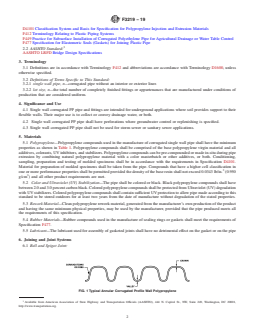
FIG. 1 Typical Annular Corrugated Profile Wall Polypropylene
Available from American Association of State Highway and Transportation Officials (AASHTO), 444 N. Capitol St., NW, Suite 249, Washington, DC 20001,
http://www.transportation.org.
F3219 − 19
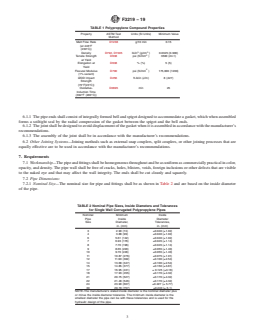
TABLE 1 Polypropylene Compound Properties
Property ASTM Test Units (SI Units) Minimum Value
Method
Melt Flow Rate D1238 g/10 min 0.15
(at 446°F
(230°C))
3 3
Density D792, D1505 lb/in (g/cm ) 0.0325 (0.900)
Tensile Strength D638 psi (N/mm ) 3500 (24.1)
at Yield
Elongation at D638 % (%) 5 (5)
Yield
Flexural Modulus D790 psi (N/mm ) 175,000 (1200)
(1% secant)
IZOD Impact D256 ft-lb/in (J/m) 8 (427)
Strength
(73°F(23°C))
Oxidative- D3895 min 25
Induction Time
(392°F (200°C))
6.1.1 The pipe ends shall consist of integrally formed bell and spigot designed to accommodate a gasket, which when assembled
forms a soiltight seal by the radial compression of the gasket between the spigot and the bell ends.
6.1.2 The joint shall be designed to avoid displacement of the gasket when it is assembled in accordance with the manufacturer’s
recommendations.
6.1.3 The assembly of the joint shall be in accordance with the manufacturer’s recommendations.
6.2 Other Joining Systems—Joining methods such as external snap couplers, split couplers, or other joining processes that are
equally effective are to be used in accordance with the manufacturer’s recommendations.
7. Requirements
7.1 Workmanship—The pipe and fittings shall be homogeneous throughout and be as uniform as commercially practical in color,
opacity, and density. The pipe wall shall be free of cracks, holes, blisters, voids, foreign inclusions or other defects that are visible
to the naked eye and that may affect the wall integrity. The ends shall be cut cleanly and squarely.
7.2 Pipe Dimensions:
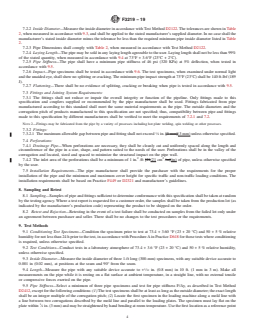
7.2.1 Nominal Size—The nominal size for pipe and fittings shall be as shown in Table 2 and are based on the inside diameter
of the pipe.
TABLE 2 Nominal Pipe Sizes, Inside Diameters and Tolerances
for Single Wall Corrugated Polypropylene Pipes
Nominal Minimum Inside
Pipe Inside Diameter
Size Diameter, Tolerances,
in. (mm) in. (mm)
3 2.90 (74) ±0.040 (±1.02)
4 3.88 (99) ±0.040 (±1.02)
6 5.61 (142) ±0.040 (±1.02)
7 6.93 (176) ±0.045 (±1.14)
8 7.70 (196) ±0.045 (±1.14)
9 8.65 (220) ±0.055 (±1.40)
10 9.70 (246) ±0.055 (±1.40)
11 10.87 (276) ±0.075 (±1.91)
12 11.90 (302) ±0.100 (±2.54)
14 13.68 (347) ±0.100 (±2.54)
15 14.85 (377) ±0.150 (±3.81)
17 16.95 (431) ± 0.125 (±3.18)
18 17.93 (455) ±0.170 (±4.32)
21 20.75 (527) ±0.170 (±4.32)
22 21.48 (546) ±0.170 (±4.32)
24 23.90 (607) ±0.227 (± 5.77)
30 29.79 (757) ±0.240 (± 6.1)
NOTE-The manufacturer’s stated inside diameter is the nominal diameter plus
or minus the inside diameter tolerance. The minimum inside diameter is the
smallest diameter the pipe can be with these tolerances and is used for the
hydraulic design of the pipe.
F3219 − 19
7.2.2 Inside Diameter—Measure the inside diameter in accordance with Test Method D2122. The tolerances are shown in Table
2, when measured in accordance with 9.3, and shall be applied to the stated manufacturer’s supplied diameter. In no case shall the
manufacturer’s stated inside diameter minus the tolerance be less than the required minimum pipe inside diameter listed in Table
2.
7.2.3 Pipe Dimensions shall comply with Table 2, when measured in accordance with Test Method D2122.
7.2.4 Laying Length—The pipe may be sold in any laying length agreeable to the user. Laying length shall not be less than 99%
of the stated quantity, when measured in accordance with 9.4 at 73°F + 3.6°F (23°C + 2°C).
7.2.5 Pipe Stiffness—The pipe shall have a minimum pipe stiffness of 46 psi (320 KPa) at 5% deflection, when tested in
accordance w
...