

ASTM E3256-20
(Practice)Standard Practice for Reference Scenarios When Evaluating the Relative Sustainability of Bioproducts
General Information
- Abstract
SCOPE
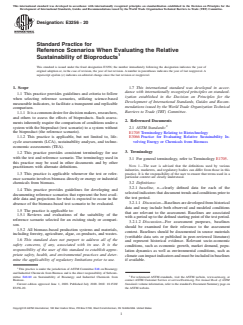
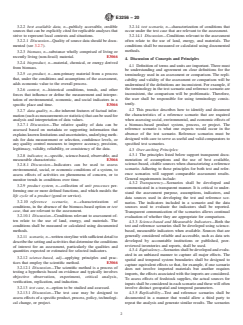
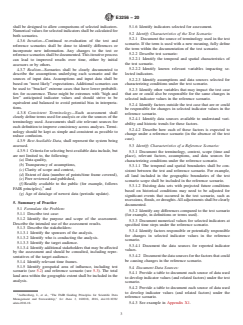
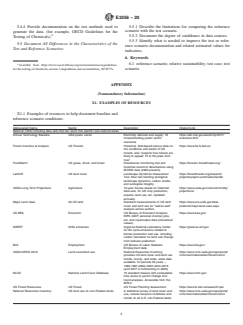
1.1 This practice provides guidelines and criteria to follow when selecting reference scenarios, utilizing science-based measurable indicators, to facilitate a transparent and replicable comparison.
1.1.1 It is a common desire for decision makers, researchers, and others to assess the effects of bioproducts. Such assessments inherently require the comparison of conditions under a system with the bioproduct (test scenario) to a system without the bioproduct (the reference scenario).
1.1.2 This practice is applicable, but not limited to, life-cycle assessments (LCA), sustainability analyses, and techno-economic assessments (TEA).
1.2 This practice provides consistent terminology for use with the test and reference scenario. The terminology used in this practice may be used in other documents and by other practitioners with alternate definitions.
1.3 This practice is applicable whenever the test or reference scenario involves biomass directly or energy or industrial chemicals from biomass.
1.4 This practice provides guidelines for developing and documenting reference scenarios that represent the best available data and projections for what is expected to occur in the absence of the biomass-based test scenario to be evaluated.
1.5 The practice is applicable to:
1.5.1 Reviews and evaluations of the suitability of the reference scenario selected for an existing study or comparison.
1.5.2 All biomass-based production systems and materials, including forestry, agriculture, algae, co-products, and wastes.
1.6 This standard does not purport to address all of the safety concerns, if any, associated with its use. It is the responsibility of the user of this standard to establish appropriate safety, health, and environmental practices and determine the applicability of regulatory limitations prior to use.
1.7 This international standard was developed in accordance with internationally recognized principles on standardization established in the Decision on Principles for the Development of International Standards, Guides and Recommendations issued by the World Trade Organization Technical Barriers to Trade (TBT) Committee.
- Status
- Published
- Publication Date
- 31-May-2020
- Technical Committee
- E48 - Bioenergy and Industrial Chemicals from Biomass
Overview
ASTM E3256-20: Standard Practice for Reference Scenarios When Evaluating the Relative Sustainability of Bioproducts provides a framework for selecting and documenting reference scenarios to assess and compare the sustainability impacts of bioproducts. Developed by ASTM, this standard aims to ensure transparent, science-based, and repeatable analyses, supporting practitioners in making consistent and reliable sustainability assessments. Reference scenarios are crucial for benchmarking the effects of bioproducts against conventional systems, enabling comprehensive evaluations in life-cycle assessments (LCA), sustainability analyses, and techno-economic assessments (TEA).
Key Topics
Reference Scenario Definition
Defines a reference scenario as the set of conditions expected to occur without the introduction of a biomass-based test scenario. This is essential for objective comparison in sustainability evaluations.Consistent Terminology
The standard emphasizes the use of consistent, clearly defined terminology throughout the assessment process to avoid misinterpretation and support replicability.Science-Based, Measurable Indicators
All scenarios, both reference and test, must utilize science-based, quantitative indicators to ensure objectivity.Best Available Data
Selects and documents data sources that are credible, up-to-date, and publicly accessible, following principles such as data quality, transparency, and relevance.Transparency and Replicability
Requires thorough documentation of methods, data sources, assumptions, and boundaries, increasing confidence in sustainability claims.Scenario Development Guidelines
The standard outlines guidance on formulating scenarios, determining relevant timeframes and geospatial boundaries, and identifying variables and assumptions.Iterative Improvement
Emphasizes the need for regular re-evaluation of scenarios, incorporating new data or insights as they become available.
Applications
ASTM E3256-20 is relevant to a broad array of biomass-based production systems, including:
Forestry and Agriculture
Evaluating the sustainability of wood-based products, bioenergy, and crop-based bioproducts.Algae and Co-products
Assessing innovations in algae-derived materials or secondary products from bioprocessing.Waste Utilization
Comparing scenarios for using agricultural or industrial wastes as feedstocks.Life-Cycle Assessment (LCA)
Establishing baseline and project scenarios for LCAs of bioproduct supply chains.Techno-Economic Analysis (TEA)
Benchmarking economic outcomes and market effects in the absence of the bioproduct system.
This standard benefits decision-makers, researchers, environmental analysts, and industries working to quantify and communicate the sustainability of bioproducts. It provides a repeatable approach for both new studies and the review of existing analyses, supporting compliance with international best practices.
Related Standards
ASTM E1705 – Terminology Relating to Biotechnology
Provides foundational terms for biotechnology and sustainability studies.ASTM E3066 – Practice for Evaluating Relative Sustainability Involving Energy or Chemicals from Biomass
Addresses broader assessment practices for biomass-based energy and chemicals.OECD Guidelines for the Testing of Chemicals
Referenced for data quality and reproducibility in environmental data.FAIR Data Principles
Emphasized for promoting findable, accessible, interoperable, and reusable scientific data.
Practical Value
By supporting clear, transparent, and consistent comparison in sustainability assessments, ASTM E3256-20 is essential for credible environmental reporting, regulatory review, and investment decision-making in the growing bioproducts sector. The standard enables organizations to document assumptions, data sources, and analysis boundaries, improving trust in sustainability claims and facilitating international trade and compliance.
Keywords: ASTM E3256-20, reference scenario, sustainability assessment, bioproducts, life-cycle assessment, best available data, biomass, transparent analysis, reproducible methodology.
Relations
- Effective Date
- 01-May-2020
- Effective Date
- 01-Dec-2016
- Effective Date
- 01-Jul-2016
- Effective Date
- 01-Nov-2013
- Effective Date
- 01-May-2011
- Effective Date
- 15-Apr-1995
- Effective Date
- 01-Jan-1995
Get Certified
Connect with accredited certification bodies for this standard

BSI Group
BSI (British Standards Institution) is the business standards company that helps organizations make excellence a habit.

Bureau Veritas
Bureau Veritas is a world leader in laboratory testing, inspection and certification services.

DNV
DNV is an independent assurance and risk management provider.
Sponsored listings
Frequently Asked Questions
ASTM E3256-20 is a standard published by ASTM International. Its full title is "Standard Practice for Reference Scenarios When Evaluating the Relative Sustainability of Bioproducts". This standard covers: SCOPE 1.1 This practice provides guidelines and criteria to follow when selecting reference scenarios, utilizing science-based measurable indicators, to facilitate a transparent and replicable comparison. 1.1.1 It is a common desire for decision makers, researchers, and others to assess the effects of bioproducts. Such assessments inherently require the comparison of conditions under a system with the bioproduct (test scenario) to a system without the bioproduct (the reference scenario). 1.1.2 This practice is applicable, but not limited to, life-cycle assessments (LCA), sustainability analyses, and techno-economic assessments (TEA). 1.2 This practice provides consistent terminology for use with the test and reference scenario. The terminology used in this practice may be used in other documents and by other practitioners with alternate definitions. 1.3 This practice is applicable whenever the test or reference scenario involves biomass directly or energy or industrial chemicals from biomass. 1.4 This practice provides guidelines for developing and documenting reference scenarios that represent the best available data and projections for what is expected to occur in the absence of the biomass-based test scenario to be evaluated. 1.5 The practice is applicable to: 1.5.1 Reviews and evaluations of the suitability of the reference scenario selected for an existing study or comparison. 1.5.2 All biomass-based production systems and materials, including forestry, agriculture, algae, co-products, and wastes. 1.6 This standard does not purport to address all of the safety concerns, if any, associated with its use. It is the responsibility of the user of this standard to establish appropriate safety, health, and environmental practices and determine the applicability of regulatory limitations prior to use. 1.7 This international standard was developed in accordance with internationally recognized principles on standardization established in the Decision on Principles for the Development of International Standards, Guides and Recommendations issued by the World Trade Organization Technical Barriers to Trade (TBT) Committee.
SCOPE 1.1 This practice provides guidelines and criteria to follow when selecting reference scenarios, utilizing science-based measurable indicators, to facilitate a transparent and replicable comparison. 1.1.1 It is a common desire for decision makers, researchers, and others to assess the effects of bioproducts. Such assessments inherently require the comparison of conditions under a system with the bioproduct (test scenario) to a system without the bioproduct (the reference scenario). 1.1.2 This practice is applicable, but not limited to, life-cycle assessments (LCA), sustainability analyses, and techno-economic assessments (TEA). 1.2 This practice provides consistent terminology for use with the test and reference scenario. The terminology used in this practice may be used in other documents and by other practitioners with alternate definitions. 1.3 This practice is applicable whenever the test or reference scenario involves biomass directly or energy or industrial chemicals from biomass. 1.4 This practice provides guidelines for developing and documenting reference scenarios that represent the best available data and projections for what is expected to occur in the absence of the biomass-based test scenario to be evaluated. 1.5 The practice is applicable to: 1.5.1 Reviews and evaluations of the suitability of the reference scenario selected for an existing study or comparison. 1.5.2 All biomass-based production systems and materials, including forestry, agriculture, algae, co-products, and wastes. 1.6 This standard does not purport to address all of the safety concerns, if any, associated with its use. It is the responsibility of the user of this standard to establish appropriate safety, health, and environmental practices and determine the applicability of regulatory limitations prior to use. 1.7 This international standard was developed in accordance with internationally recognized principles on standardization established in the Decision on Principles for the Development of International Standards, Guides and Recommendations issued by the World Trade Organization Technical Barriers to Trade (TBT) Committee.
ASTM E3256-20 is classified under the following ICS (International Classification for Standards) categories: 13.020.55 - Biobased products. The ICS classification helps identify the subject area and facilitates finding related standards.
ASTM E3256-20 has the following relationships with other standards: It is inter standard links to ASTM E3066-20, ASTM E3066-16a, ASTM E3066-16, ASTM E1705-13, ASTM E1705-11, ASTM E1705-95(2002), ASTM E1705-95. Understanding these relationships helps ensure you are using the most current and applicable version of the standard.
ASTM E3256-20 is available in PDF format for immediate download after purchase. The document can be added to your cart and obtained through the secure checkout process. Digital delivery ensures instant access to the complete standard document.
Standards Content (Sample)
This international standard was developed in accordance with internationally recognized principles on standardization established in the Decision on Principles for the
Development of International Standards, Guides and Recommendations issued by the World Trade Organization Technical Barriers to Trade (TBT) Committee.
Designation: E3256 − 20
Standard Practice for
Reference Scenarios When Evaluating the Relative
Sustainability of Bioproducts
This standard is issued under the fixed designation E3256; the number immediately following the designation indicates the year of
original adoption or, in the case of revision, the year of last revision. A number in parentheses indicates the year of last reapproval. A
superscript epsilon (´) indicates an editorial change since the last revision or reapproval.
1. Scope 1.7 This international standard was developed in accor-
dance with internationally recognized principles on standard-
1.1 This practice provides guidelines and criteria to follow
ization established in the Decision on Principles for the
when selecting reference scenarios, utilizing science-based
Development of International Standards, Guides and Recom-
measurable indicators, to facilitate a transparent and replicable
mendations issued by the World Trade Organization Technical
comparison.
Barriers to Trade (TBT) Committee.
1.1.1 Itisacommondesirefordecisionmakers,researchers,
and others to assess the effects of bioproducts. Such assess-
2. Referenced Documents
ments inherently require the comparison of conditions under a
system with the bioproduct (test scenario) to a system without
2.1 ASTM Standards:
the bioproduct (the reference scenario).
E1705 Terminology Relating to Biotechnology
1.1.2 This practice is applicable, but not limited to, life-
E3066 Practice for Evaluating Relative Sustainability In-
cycle assessments (LCA), sustainability analyses, and techno-
volving Energy or Chemicals from Biomass
economic assessments (TEA).
3. Terminology
1.2 This practice provides consistent terminology for use
with the test and reference scenario. The terminology used in
3.1 For general terminology, refer to Terminology E1705.
this practice may be used in other documents and by other
NOTE 1—The user is advised that the definitions used by various
practitioners with alternate definitions.
industries, marketers, and regulatory bodies can differ from those in this
practice. It is the responsibility of the user to ensure that terms used in a
1.3 This practice is applicable whenever the test or refer-
particular context are clearly understood.
ence scenario involves biomass directly or energy or industrial
chemicals from biomass. 3.2 Definitions:
3.2.1 baseline, n—clearly defined data for each of the
1.4 This practice provides guidelines for developing and
selectedindicatorsthatdocumenttrendsandconditionspriorto
documenting reference scenarios that represent the best avail-
the test period.
able data and projections for what is expected to occur in the
3.2.1.1 Discussion—Baselinesaredevelopedfromhistorical
absence of the biomass-based test scenario to be evaluated.
data and may include both observed and modeled conditions
1.5 The practice is applicable to:
that are relevant to the assessment. Baselines are associated
1.5.1 Reviews and evaluations of the suitability of the
with a period up to the defined starting point of the test period.
reference scenario selected for an existing study or compari-
3.2.1.2 Discussion—For assessment purposes, baselines
son.
should be examined for their relevance to the assessment
1.5.2 All biomass-based production systems and materials,
context. Baselines should be documented in source materials
including forestry, agriculture, algae, co-products, and wastes.
(verifiable data sets or published in peer-reviewed literature)
1.6 This standard does not purport to address all of the
and represent historical evidence. Relevant socio-economic
safety concerns, if any, associated with its use. It is the
conditions, such as economic growth, market demand, popu-
responsibility of the user of this standard to establish appro-
lation dynamics as well as environmental conditions, such as
priate safety, health, and environmental practices and deter-
climatecanimpactindicatorsandmustbeincludedinbaselines
mine the applicability of regulatory limitations prior to use.
if available.
This practice is under the jurisdiction of ASTM Committee E48 on Bioenergy
and Industrial Chemicals from Biomass and is the direct responsibility of Subcom-
mittee E48.80 on Sustainability of Bioenergy and Industrial Chemicals from For referenced ASTM standards, visit the ASTM website, www.astm.org, or
Biomass. contact ASTM Customer Service at service@astm.org. For Annual Book of ASTM
Current edition approved June 1, 2020. Published July 2020. DOI: 10.1520/ Standards volume information, refer to the standard’s Document Summary page on
E3256-20. the ASTM website.
Copyright © ASTM International, 100 Barr Harbor Drive, PO Box C700, West Conshohocken, PA 19428-2959. United States
E3256 − 20
3.2.2 best available data, n—publicly accessible, credible 3.2.14 test scenario, n—characterization of conditions that
sources that can be explicitly cited for replicable analyses that occur under the test case that are relevant to the assessment.
strive to represent local contexts and situations. 3.2.14.1 Discussion—Conditions relevant to the assessment
3.2.2.1 Discussion—Quality of source data should be docu- often relate to the use of land, energy, and materials. The
conditions shall be measured or calculated using documented
mented (see 3.2.7).
methods.
3.2.3 biomass, n—substance wholly comprised of living or
recently living (non-fossil) material. E3066
4. Discussion of Concepts and Principles
3.2.4 bioproduct, n—material, chemical, or energy derived
4.1 Definition of terms and units are important. There must
from biomass.
be understanding and agreement on clear definitions for the
3.2.5 co-product, n—non-primary material from a process
terminology used in an assessment or comparison. The repli-
that, under the conditions and assumptions of the assessment,
cability and validity of the assessment or comparison will be
adds economic value to the overall process.
undermined if the definitions are inconsistent. For example, if
the terminology in the test scenario and reference scenario are
3.2.6 context, n—historical conditions, trends, and other
inconsistent, the comparison will be problematic. Therefore,
forces that influence or define the measurement and interpre-
the user shall be responsible for using terminology consis-
tation of environmental, economic, and social indicators in a
tently.
specific place and time. E3066
4.2 This practice describes how to identify and document
3.2.7 data quality, n—the inherent features of factual infor-
the characteristics of a reference scenario that are required
mation(suchasmeasurementsorstatistics)thatcanbeusedfor
when assessing social, environmental, and economic effects of
analysis and interpretation of data values.
a biomass-based product system, process, or project. The
3.2.7.1 Discussion—The relative quality of data can be
reference scenario is what one expects would occur in the
assessed based on metadata or supporting information that
absence of the test scenario. Reference scenarios must be
explains known limitations and uncertainties, underlying meth-
designed with care to serve as useful and valid comparators to
ods for data measurement or selection, confidence levels, or
specified test scenarios.
any quality control measures to improve accuracy, precision,
legitimacy, validity, reliability, or consistency of the data.
4.3 Over-arching Principles:
4.3.1 The principles listed below support transparent docu-
3.2.8 indicator, n—specific, science-based, observable, and
mentation of assumptions and the use of best available,
measurable characteristic. E3066
science-based, citable sources when characterizing a reference
3.2.8.1 Discussion—Indicators can be used to assess
scenario. Adhering to these principles for both test and refer-
environmental, social, or economic conditions of a system, to
ence scenarios will support comparable assessment results.
assess effects of activities on phenomena of concern, or to
General requirements include:
monitor trends in conditions over time.
4.3.2 Transparency—Scenarios shall be developed and
3.2.9 product system, n—collection of unit processes per-
communicated in a transparent manner. It is critical to under-
forming one or more defined functions, and which models the
stand the assessment purpose, assumptions, indicators, and
life cycle of a product (good or service).
data sources used in developing the test and reference sce-
3.2.10 reference scenario, n—characterization of
narios. The indicators included in a scenario and the data
conditions, in the absence of the biomass-based option or test
sources used to evaluate the indicators shall be reported.
case, that are relevant to the assessment.
Transparent communication of the scenarios allows continual
3.2.10.1 Discussion—Conditions relevant to assessment of-
evaluation of whether they are appropriate for comparison.
ten relate to the use of land, energy, and materials. The
4.3.3 Science-based and Measurable Indicators—Both the
conditions shall be measured or calculated using documented test and reference scenarios shall be developed using science-
methods.
based, measurable indicators when available. Sources that are
generally considered reliable and accessible, such as data sets
3.2.11 scenario, n—written storyline with sufficient detail to
developed by accountable institutions or published, peer-
describe the setting and activities that determine the conditions
reviewed inventories and reports, shall be used.
of interest for an assessment, particularly the qualities and
4.3.4 Equivalency—Scenariosshallbedevelopedandevalu-
quantities expected or estimated for selected indicators.
ated in an unbiased manner to capture all major effects. The
3.2.12 science-based, adj—applying principles and prac-
spatial and temporal system boundaries shall be designed to
tices that employ the scientific method. E3066
capture equivalent effects so that, for example, if one scenario
3.2.12.1 Discussion—The scientific method is a process of
does not involve imported materials but another requires
testing a hypothesis based on evidence and typically involves
imports, the effects associated with the imports are considered.
objective observation, experiment, critical analysis,
To assess effects of feedstock supplies, the actual sources for
verification, replication, and induction.
inputs shall be considered in each scenario and these will often
3.2.13 test case, n—option to be studied and assessed.
involve distinct geospatial and temporal parameters.
3.2.13.1 Discussion—The test case may be designed to 4.3.5 Replicability—Test and reference scenarios shall be
assess effects of a specific product, process, policy, technologi- documented in a manner that would allow a third party to
cal change, or project. repeat the analysis and generate similar results. The scenarios
E3256 − 20
shall be desi
...