

ASTM E3237-19
(Specification)Standard Specification for Undenatured Ethanol from Biomass for Use in Industrial Applications
General Information
- Abstract
SCOPE
1.1 This specification covers biomass derived, undenatured ethanol intended for use in industrial applications such as adhesives, detergents, inks, chemicals, plastics, paints, thinners, etc.
1.2 Nothing in this specification shall preclude observance of federal, state, or local regulations.
1.3 Undenatured ethanol has many regulatory limitations that cover the production, trading, transporting, distributing, wholesale and retail sale, and use of undenatured ethanol; this specification does not purport to address the regulatory compliance aspects of these activities.
1.4 This standard does not purport to address all of the safety concerns, if any, associated with its use. It is the responsibility of the user of this standard to establish appropriate safety, health, and environmental practices and determine the applicability of regulatory limitations prior to use.
1.5 This international standard was developed in accordance with internationally recognized principles on standardization established in the Decision on Principles for the Development of International Standards, Guides and Recommendations issued by the World Trade Organization Technical Barriers to Trade (TBT) Committee.
- Status
- Published
- Publication Date
- 30-Nov-2019
- Technical Committee
- E48 - Bioenergy and Industrial Chemicals from Biomass
- Drafting Committee
- E48.A0 - Product Specifications


Overview
ASTM E3237-19: Standard Specification for Undenatured Ethanol from Biomass for Use in Industrial Applications establishes requirements for biomass-derived, undenatured ethanol intended for industrial use. This standard focuses on ethanol used as a raw material in industries such as adhesives, detergents, inks, chemicals, plastics, paints, and thinners. The specification outlines key properties of undenatured ethanol-including its composition, contaminant limits, and physical characteristics-to support quality and suitability for a wide range of applications. It also emphasizes adherence to applicable federal, state, and local regulations and highlights the importance of appropriate safety, health, and environmental practices.
Key Topics
- Industrial Grade Undenatured Ethanol: Defines ethanol derived from renewable biomass (excluding fossil fuels), produced without denaturants, for use in industrial applications.
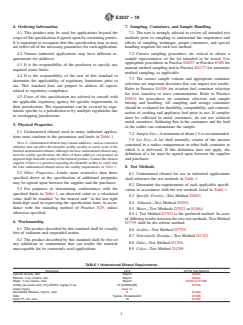
- Physical and Chemical Properties: Specifies limits for crucial parameters such as specific gravity, ethanol purity, water content, acidity (as acetic acid), nonvolatile residue, odor, and color.
- Sampling and Testing: Details procedures and referenced ASTM test methods to ensure representative sampling and reliable test results, including:
- D4052 (Density, Specific Gravity)
- D5501 (Ethanol Content)
- D7923 / E1064 (Water Content)
- D7795 (Acidity)
- D1353 (Nonvolatile Residue)
- D1296 (Odor)
- D1209 (Color)
- Contaminant Control: Requires the ethanol to be visually free of sediment or suspended matter and devoid of adulterants or contaminants that might hinder its intended use.
- Additives and Custom Specifications: Allows for the inclusion of additives, such as corrosion inhibitors, if agreed upon by supplier and purchaser, and supports additional requirements as necessary for specific applications.
- Regulatory Considerations: Advises users to be aware of and comply with all jurisdictional regulations covering production, distribution, and use of undenatured ethanol.
Applications
Undenatured ethanol specified by ASTM E3237-19 serves as a critical raw material in various industrial sectors:
- Adhesives and Sealants: Used as a solvent or chemical component.
- Detergents and Cleaners: Provides solvency and assists in formulating cleaning agents.
- Inks and Printing: Acts as a carrier and solvent in ink formulations.
- Paints, Coatings, and Thinners: Essential for dissolution and viscosity control.
- Plastics and Industrial Chemicals: Functions as an intermediate or solvent in chemical manufacturing processes.
- Other Industrial Uses: Supports a broader range of industrial processes requiring high purity ethanol.
The specification also accommodates unique requirements for water limits, specific additives, or additional properties, allowing customization for specialized applications while maintaining baseline quality and consistency.
Related Standards
For effective implementation of ASTM E3237-19 and accurate testing, several referenced ASTM standards and practices should be considered:
- ASTM D4052 - Density, Relative Density & API Gravity by Digital Density Meter
- ASTM D4057 & D4177 - Manual and Automatic Sampling of Petroleum Products
- ASTM D5501 - Determination of Ethanol and Methanol Content
- ASTM D7923 & E1064 - Water Content by Karl Fischer Titration
- ASTM D7795 - Acidity Determination in Ethanol Blends
- ASTM D1353, D1209, D1296 - Tests for Nonvolatile Residue, Color, and Odor
- ASTM E29 & E300 - Significant Digits Practice and Sampling of Industrial Chemicals
- ASTM E1705 - Terminology Relating to Biotechnology
These related standards enhance reliability and traceability in ethanol testing and handling, supporting quality assurance in industrial applications.
Keywords: undenatured ethanol, biomass ethanol, ASTM E3237-19, industrial ethanol, ethanol standard, ethanol testing, ethanol purity, chemical industry standards, ASTM standards for ethanol
Relations
- Effective Date
- 01-Jan-2024
- Effective Date
- 01-Jun-2019
- Effective Date
- 01-Jul-2017
- Effective Date
- 01-Jul-2017
- Effective Date
- 01-May-2017
- Effective Date
- 01-Jul-2016
- Effective Date
- 01-Oct-2015
- Effective Date
- 01-Nov-2013
- Effective Date
- 01-Dec-2012
- Effective Date
- 01-Dec-2012
- Effective Date
- 01-Nov-2012
- Effective Date
- 01-Nov-2012
- Effective Date
- 01-Jun-2012
- Effective Date
- 15-Apr-2012
- Effective Date
- 01-Feb-2012
Get Certified
Connect with accredited certification bodies for this standard

BSI Group
BSI (British Standards Institution) is the business standards company that helps organizations make excellence a habit.

Bureau Veritas
Bureau Veritas is a world leader in laboratory testing, inspection and certification services.

DNV
DNV is an independent assurance and risk management provider.
Sponsored listings
Frequently Asked Questions
ASTM E3237-19 is a technical specification published by ASTM International. Its full title is "Standard Specification for Undenatured Ethanol from Biomass for Use in Industrial Applications". This standard covers: SCOPE 1.1 This specification covers biomass derived, undenatured ethanol intended for use in industrial applications such as adhesives, detergents, inks, chemicals, plastics, paints, thinners, etc. 1.2 Nothing in this specification shall preclude observance of federal, state, or local regulations. 1.3 Undenatured ethanol has many regulatory limitations that cover the production, trading, transporting, distributing, wholesale and retail sale, and use of undenatured ethanol; this specification does not purport to address the regulatory compliance aspects of these activities. 1.4 This standard does not purport to address all of the safety concerns, if any, associated with its use. It is the responsibility of the user of this standard to establish appropriate safety, health, and environmental practices and determine the applicability of regulatory limitations prior to use. 1.5 This international standard was developed in accordance with internationally recognized principles on standardization established in the Decision on Principles for the Development of International Standards, Guides and Recommendations issued by the World Trade Organization Technical Barriers to Trade (TBT) Committee.
SCOPE 1.1 This specification covers biomass derived, undenatured ethanol intended for use in industrial applications such as adhesives, detergents, inks, chemicals, plastics, paints, thinners, etc. 1.2 Nothing in this specification shall preclude observance of federal, state, or local regulations. 1.3 Undenatured ethanol has many regulatory limitations that cover the production, trading, transporting, distributing, wholesale and retail sale, and use of undenatured ethanol; this specification does not purport to address the regulatory compliance aspects of these activities. 1.4 This standard does not purport to address all of the safety concerns, if any, associated with its use. It is the responsibility of the user of this standard to establish appropriate safety, health, and environmental practices and determine the applicability of regulatory limitations prior to use. 1.5 This international standard was developed in accordance with internationally recognized principles on standardization established in the Decision on Principles for the Development of International Standards, Guides and Recommendations issued by the World Trade Organization Technical Barriers to Trade (TBT) Committee.
ASTM E3237-19 is classified under the following ICS (International Classification for Standards) categories: 13.020.55 - Biobased products; 71.100.01 - Products of the chemical industry in general. The ICS classification helps identify the subject area and facilitates finding related standards.
ASTM E3237-19 has the following relationships with other standards: It is inter standard links to ASTM E1064-24, ASTM D7923-19, ASTM D7923-17ae1, ASTM D7923-17a, ASTM D7923-17, ASTM D7923-16, ASTM D4306-15, ASTM E1705-13, ASTM D4306-12c, ASTM D7795-12, ASTM D5501-12e1, ASTM D5501-12, ASTM D4306-12b, ASTM D4306-12a, ASTM D4306-12. Understanding these relationships helps ensure you are using the most current and applicable version of the standard.
ASTM E3237-19 is available in PDF format for immediate download after purchase. The document can be added to your cart and obtained through the secure checkout process. Digital delivery ensures instant access to the complete standard document.
Standards Content (Sample)
This international standard was developed in accordance with internationally recognized principles on standardization established in the Decision on Principles for the
Development of International Standards, Guides and Recommendations issued by the World Trade Organization Technical Barriers to Trade (TBT) Committee.
Designation:E3237 −19
Standard Specification for
Undenatured Ethanol from Biomass for Use in Industrial
Applications
This standard is issued under the fixed designation E3237; the number immediately following the designation indicates the year of
original adoption or, in the case of revision, the year of last revision. A number in parentheses indicates the year of last reapproval. A
superscript epsilon (´) indicates an editorial change since the last revision or reapproval.
1. Scope D4052 Test Method for Density, Relative Density, and API
Gravity of Liquids by Digital Density Meter
1.1 This specification covers biomass derived, undenatured
D4057 Practice for Manual Sampling of Petroleum and
ethanol intended for use in industrial applications such as
Petroleum Products
adhesives, detergents, inks, chemicals, plastics, paints,
D4177 Practice for Automatic Sampling of Petroleum and
thinners, etc.
Petroleum Products
1.2 Nothing in this specification shall preclude observance
D4306 Practice for Aviation Fuel Sample Containers for
of federal, state, or local regulations.
Tests Affected by Trace Contamination
1.3 Undenatured ethanol has many regulatory limitations
D5501 Test Method for Determination of Ethanol and
that cover the production, trading, transporting, distributing,
Methanol Content in Fuels Containing Greater than 20 %
wholesale and retail sale, and use of undenatured ethanol; this
Ethanol by Gas Chromatography
specification does not purport to address the regulatory com-
D5854 Practice for Mixing and Handling of Liquid Samples
pliance aspects of these activities.
of Petroleum and Petroleum Products
1.4 This standard does not purport to address all of the D7795 Test Method for Acidity in Ethanol and Ethanol
safety concerns, if any, associated with its use. It is the
Blends by Titration
responsibility of the user of this standard to establish appro-
D7923 Test Method for Water in Ethanol and Hydrocarbon
priate safety, health, and environmental practices and deter-
Blends by Karl Fischer Titration
mine the applicability of regulatory limitations prior to use.
E29 Practice for Using Significant Digits in Test Data to
1.5 This international standard was developed in accor-
Determine Conformance with Specifications
dance with internationally recognized principles on standard-
E300 Practice for Sampling Industrial Chemicals
ization established in the Decision on Principles for the
E1064 Test Method for Water in Organic Liquids by Coulo-
Development of International Standards, Guides and Recom-
metric Karl Fischer Titration
mendations issued by the World Trade Organization Technical
E1705 Terminology Relating to Biotechnology
Barriers to Trade (TBT) Committee.
3. Terminology
2. Referenced Documents
3.1 For general terminology, refer to Terminology E1705.
2.1 ASTM Standards:
D1209 Test Method for Color of Clear Liquids (Platinum-
NOTE 1—The user is advised that the definitions used by various
Cobalt Scale)
industries, marketers, and regulatory bodies can differ from those specific
D1296 Test Method for Odor of Volatile Solvents and
to this specification. It is the responsibility of the user to ensure that the
Diluents
terms used in a particular context are clearly understood.
D1353 Test Method for Nonvolatile Matter in Volatile Sol-
3.2 Definitions of Terms Specific to This Standard:
vents for Use in Paint, Varnish, Lacquer, and Related
3.2.1 biomass, n—any material, excluding fossil fuels,
Products
which is or was a living organism that can be used as a fuel
directly or after a conversion process.
This specification is under the jurisdiction of ASTM Committee E48 on
Bioenergy and Industrial Chemicals from Biomass and is the direct responsibility of
3.2.1.1 Discussion—Peat is not a biomass.
Subcommittee E48.A0 on Product Specifications.
3.2.2 ethanol (ethyl alcohol, grain alcohol),
Current edition approved Dec. 1, 2019. Published December 2019. DOI:
10.1520/E3237-19.
n—CH CH OH; can be produced chemically from ethylene or
3 2
For referenced ASTM standards, visit the ASTM website, www.astm.org, or
biologically from the fermentation of various sugars from the
contact ASTM Customer Service at service@astm.org. For Annual Book of ASTM
carbohydrates found in agricultural crops and cellulosic resi-
Standards volume information, refer to the standard’s Document Summary page on
the ASTM website. dues from crops or wood.
Copyright © ASTM International, 100 Barr Harbor Drive, PO Box C700, West Conshohocken, PA 19428-2959. United States
E3237−19
4. Ordering Information 7. Sampling, Containers, and Sample Handling
4.1 This product may be used for applications beyond the 7.1 The user is strongly advised to review all intended test
scopeofthisspecificationifagreeduponbyconsentingparties. methods prior to sampling to understand the importance and
It is important to recognize that this specification may or may effects of sampling technique, proper containers, and special
not reflect all of the necessary parameters for each application. handling required for each test method.
4.2 Various industrial applications may have different re- 7.2 Correct sampling procedures are critical to obtain a
quirements for additives. sample representative of the lot intended to be tested. Use
appropriate procedures in Practice D4057 or Practice E300 for
4.3 It is the responsibility of the purchaser to specify any
manual method sampling and in Practice D4177 for automatic
required water limits.
method sampling, as applicable.
4.4 It is the responsibility of the user of this standard to
7.3 The correct sample volume and appropriate container
determine the applicability of regulatory limitations prior to
selection are important decisions that can impact test results.
use. This standard does not purport to address all aspects
Refer to Practice D4306 for aviation fuel container selection
related to regulatory compliance.
for tests sensitive to trace contamination. Refer to Practice
4.5 Users of this specification are advised to consult with
D5854 for procedures on container selection and sample
the applicable regulatory agency for specific requirements in
mixing and handling. All sampling and storage containe
...