

ASTM D6905-20
(Practice)Standard Practice for Impact Flexibility of Organic Coatings
General Information
- Abstract
SIGNIFICANCE AND USE
5.1 Coatings attached to substrates are subjected to damaging impacts during the manufacture of articles and their use in service. This impact resistance practice has been found to be useful in predicting the performance of organic coatings for their ability to resist cracking caused by impacts.
SCOPE
1.1 This practice covers a procedure for determining the ability of a coating film and its substrate to resist shattering, cracking, or chipping when the film and substrate are distended beyond their original form by impact.
1.2 This practice does not measure impact resistance but uses rapid impact to improve Test Methods D522, a test method for flexibility. Since the impact of the coating is almost instantaneous, all of the problems associated with time variables in the mandrel tests are eliminated.
1.3 This practice is similar in content but not technically equivalent to Test Method D2794.
1.4 The values stated in SI units are to be regarded as the standard. The values given in parentheses are for information only.
1.5 This standard does not purport to address all of the safety concerns, if any, associated with its use. It is the responsibility of the user of this standard to establish appropriate safety, health, and environmental practices and determine the applicability of regulatory limitations prior to use.
1.6 This international standard was developed in accordance with internationally recognized principles on standardization established in the Decision on Principles for the Development of International Standards, Guides and Recommendations issued by the World Trade Organization Technical Barriers to Trade (TBT) Committee.
- Status
- Published
- Publication Date
- 30-Nov-2020
- Technical Committee
- D01 - Paint and Related Coatings, Materials, and Applications
- Drafting Committee
- D01.23 - Physical Properties of Applied Paint Films

Overview
ASTM D6905-20: Standard Practice for Impact Flexibility of Organic Coatings provides a standardized procedure to determine the ability of organic coatings and their substrate to withstand shattering, cracking, or chipping after being subjected to rapid impact. Developed by ASTM International, this practice is instrumental in predicting the performance and durability of coatings on metal substrates under real-world manufacturing and service conditions. Unlike traditional mandrel bend tests, this method utilizes instantaneous impact, eliminating variability associated with extended time under deformation.
Key Topics
Purpose and Importance:
- Addresses the evaluation of impact flexibility, focusing on how coatings respond to sudden deformation beyond their original form.
- Provides insight into a coating's resistance to cracking and other failures due to impact during manufacturing or in-service use.
Method Overview:
- Coating is applied and cured on metal panels.
- A standard impact flexibility tester drops a specified weight/indenter onto the panel, deforming the coating and substrate.
- Visual inspection determines the maximum area increase the coating can accommodate without failure.
Distinct Advantages:
- Eliminates issues tied to time variables that are common with mandrel bend flexibility tests.
- Results aid in quality control, materials selection, and product validation for coatings exposed to mechanical impacts.
Terminology:
- Impact Flexibility: The percentage increase in area required to produce cracking in a deformed coating.
Applications
Organizations and industries use ASTM D6905-20 to assess the practical durability of organic coatings applied to metal surfaces. Its common applications include:
Manufacturing Quality Assurance:
Ensuring coatings can endure handling, forming, and assembly impacts without failure.Product Design and Validation:
- Automotive, appliances, and industrial equipment manufacturers employ this practice to verify the impact flexibility of powder coatings, paints, and varnishes.
- Assesses suitability of coating systems for parts that endure mechanical abuse or deformation.
Regulatory and Performance Testing:
- Laboratories and coating producers utilize this standard as part of broader qualification and compliance programs.
- Assists in benchmarking new coatings or comparing alternative formulations for impact performance.
Failure Analysis:
When cracking or chipping is observed in service, ASTM D6905-20 helps identify root causes and validate corrective actions.
Related Standards
ASTM D6905-20 references and complements several other important coating standards:
- ASTM D522 - Test Methods for Mandrel Bend Test of Attached Organic Coatings: Focuses on longer-term flexibility under gradual deformation.
- ASTM D2794 - Test Method for Resistance of Organic Coatings to the Effects of Rapid Deformation (Impact): Similar in content but not technically equivalent.
- ASTM D609 - Practice for Preparation of Cold-Rolled Steel Panels for Testing Paint, Varnish, Conversion Coatings, and Related Coating Products.
- ASTM D823 - Practices for Producing Films of Uniform Thickness of Paint, Coatings and Related Products on Test Panels.
- ASTM D2240 - Test Method for Rubber Property-Durometer Hardness: Used for checking the hardness of the equipment's anvil pad.
- ASTM D7091 - Practice for Nondestructive Measurement of Dry Film Thickness of Nonmagnetic Coatings Applied to Ferrous Metals and other substrates.
Practical Value
Adopting ASTM D6905-20 ensures reliable, reproducible testing of organic coatings’ impact flexibility and helps manufacturers meet quality, safety, and regulatory requirements. This practice underpins the durability assessment of coated parts in automotive, industrial, appliance, and construction sectors. By following this international standard, organizations can minimize coating failures, improve product longevity, and deliver higher customer satisfaction.
Keywords: impact flexibility, organic coatings, ASTM D6905, cracking failure, impact resistance, coating durability, quality assurance, industrial coatings, paint testing, deformation, substrate testing.
Relations
- Effective Date
- 15-Jan-2024
- Effective Date
- 01-Dec-2017
- Effective Date
- 01-Nov-2012
- Effective Date
- 01-Jun-2012
- Effective Date
- 01-Apr-2012
- Effective Date
- 01-Dec-2010
- Refers
ASTM D522-93a(2008) - Standard Test Methods for Mandrel Bend Test of Attached Organic Coatings - Effective Date
- 15-Feb-2008
- Effective Date
- 01-Jun-2007
- Effective Date
- 01-Nov-2006
- Effective Date
- 01-Aug-2005
- Effective Date
- 01-Jun-2004
- Effective Date
- 01-Jan-2001
- Refers
ASTM D522-93a(2001) - Standard Test Methods for Mandrel Bend Test of Attached Organic Coatings - Effective Date
- 01-Jan-2001
- Effective Date
- 01-Jan-2001
- Effective Date
- 01-Jan-2001
Get Certified
Connect with accredited certification bodies for this standard

DVS-ZERT GmbH
German welding certification society.
CARES (UK Certification Authority for Reinforcing Steels)
UK certification for reinforcing steels and construction.
EWF/IIW (European/International Welding Federation)
International welding personnel certification.
Sponsored listings
Frequently Asked Questions
ASTM D6905-20 is a standard published by ASTM International. Its full title is "Standard Practice for Impact Flexibility of Organic Coatings". This standard covers: SIGNIFICANCE AND USE 5.1 Coatings attached to substrates are subjected to damaging impacts during the manufacture of articles and their use in service. This impact resistance practice has been found to be useful in predicting the performance of organic coatings for their ability to resist cracking caused by impacts. SCOPE 1.1 This practice covers a procedure for determining the ability of a coating film and its substrate to resist shattering, cracking, or chipping when the film and substrate are distended beyond their original form by impact. 1.2 This practice does not measure impact resistance but uses rapid impact to improve Test Methods D522, a test method for flexibility. Since the impact of the coating is almost instantaneous, all of the problems associated with time variables in the mandrel tests are eliminated. 1.3 This practice is similar in content but not technically equivalent to Test Method D2794. 1.4 The values stated in SI units are to be regarded as the standard. The values given in parentheses are for information only. 1.5 This standard does not purport to address all of the safety concerns, if any, associated with its use. It is the responsibility of the user of this standard to establish appropriate safety, health, and environmental practices and determine the applicability of regulatory limitations prior to use. 1.6 This international standard was developed in accordance with internationally recognized principles on standardization established in the Decision on Principles for the Development of International Standards, Guides and Recommendations issued by the World Trade Organization Technical Barriers to Trade (TBT) Committee.
SIGNIFICANCE AND USE 5.1 Coatings attached to substrates are subjected to damaging impacts during the manufacture of articles and their use in service. This impact resistance practice has been found to be useful in predicting the performance of organic coatings for their ability to resist cracking caused by impacts. SCOPE 1.1 This practice covers a procedure for determining the ability of a coating film and its substrate to resist shattering, cracking, or chipping when the film and substrate are distended beyond their original form by impact. 1.2 This practice does not measure impact resistance but uses rapid impact to improve Test Methods D522, a test method for flexibility. Since the impact of the coating is almost instantaneous, all of the problems associated with time variables in the mandrel tests are eliminated. 1.3 This practice is similar in content but not technically equivalent to Test Method D2794. 1.4 The values stated in SI units are to be regarded as the standard. The values given in parentheses are for information only. 1.5 This standard does not purport to address all of the safety concerns, if any, associated with its use. It is the responsibility of the user of this standard to establish appropriate safety, health, and environmental practices and determine the applicability of regulatory limitations prior to use. 1.6 This international standard was developed in accordance with internationally recognized principles on standardization established in the Decision on Principles for the Development of International Standards, Guides and Recommendations issued by the World Trade Organization Technical Barriers to Trade (TBT) Committee.
ASTM D6905-20 is classified under the following ICS (International Classification for Standards) categories: 25.220.60 - Organic coatings. The ICS classification helps identify the subject area and facilitates finding related standards.
ASTM D6905-20 has the following relationships with other standards: It is inter standard links to ASTM D2794-93(2024), ASTM D823-17, ASTM D823-95(2012), ASTM D609-00(2012), ASTM D7091-12, ASTM D2794-93(2010), ASTM D522-93a(2008), ASTM D823-95(2007), ASTM D609-00(2006), ASTM D7091-05, ASTM D2794-93(2004), ASTM D823-95(2001), ASTM D522-93a(2001), ASTM D823-95, ASTM D522-93a. Understanding these relationships helps ensure you are using the most current and applicable version of the standard.
ASTM D6905-20 is available in PDF format for immediate download after purchase. The document can be added to your cart and obtained through the secure checkout process. Digital delivery ensures instant access to the complete standard document.
Standards Content (Sample)
This international standard was developed in accordance with internationally recognized principles on standardization established in the Decision on Principles for the
Development of International Standards, Guides and Recommendations issued by the World Trade Organization Technical Barriers to Trade (TBT) Committee.
Designation: D6905 − 20
Standard Practice for
Impact Flexibility of Organic Coatings
This standard is issued under the fixed designation D6905; the number immediately following the designation indicates the year of
original adoption or, in the case of revision, the year of last revision. A number in parentheses indicates the year of last reapproval. A
superscript epsilon (´) indicates an editorial change since the last revision or reapproval.
1. Scope* Related Coating Products
D823 Practices for Producing Films of Uniform Thickness
1.1 This practice covers a procedure for determining the
of Paint, Coatings and Related Products on Test Panels
ability of a coating film and its substrate to resist shattering,
D2240 Test Method for Rubber Property—Durometer Hard-
cracking,orchippingwhenthefilmandsubstratearedistended
ness
beyond their original form by impact.
D2794 Test Method for Resistance of Organic Coatings to
1.2 This practice does not measure impact resistance but
the Effects of Rapid Deformation (Impact)
uses rapid impact to improve Test Methods D522, a test
D7091 Practice for Nondestructive Measurement of Dry
method for flexibility. Since the impact of the coating is almost
Film Thickness of Nonmagnetic Coatings Applied to
instantaneous, all of the problems associated with time vari-
Ferrous Metals and Nonmagnetic, Nonconductive Coat-
ables in the mandrel tests are eliminated.
ings Applied to Non-Ferrous Metals
1.3 This practice is similar in content but not technically
3. Terminology
equivalent to Test Method D2794.
3.1 Definitions of Terms Specific to This Standard:
1.4 The values stated in SI units are to be regarded as the
3.1.1 impact flexibility, n—of a coating, the percent area
standard. The values given in parentheses are for information
increase required to produce cracking in the deformed coating.
only.
1.5 This standard does not purport to address all of the
4. Summary of Practice
safety concerns, if any, associated with its use. It is the
4.1 The organic coating under test is applied to suitable thin
responsibility of the user of this standard to establish appro-
metal panels (see Practice D609). After the coating has cured,
priate safety, health, and environmental practices and deter-
a standard weight/indenter is dropped from a measured dis-
mine the applicability of regulatory limitations prior to use.
tance so as to strike the substrate which deforms the coating
1.6 This international standard was developed in accor-
and the substrate. The percent elongation is the highest area of
dance with internationally recognized principles on standard-
distensibility in which there is no film breaks that the film can
ization established in the Decision on Principles for the
stand.
Development of International Standards, Guides and Recom-
mendations issued by the World Trade Organization Technical
5. Significance and Use
Barriers to Trade (TBT) Committee.
5.1 Coatings attached to substrates are subjected to damag-
2. Referenced Documents
ing impacts during the manufacture of articles and their use in
service. This impact resistance practice has been found to be
2.1 ASTM Standards:
useful in predicting the performance of organic coatings for
D522 Test Methods for Mandrel Bend Test of Attached
their ability to resist cracking caused by impacts.
Organic Coatings
D609 Practice for Preparation of Cold-Rolled Steel Panels
6. Apparatus
for Testing Paint, Varnish, Conversion Coatings, and
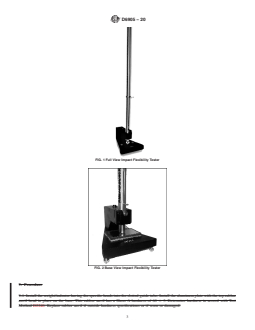
6.1 Impact Flexibility Tester ,assemblyillustratedinFigs.1
and 2. The instrument contains a 1.63 kg (3.6 lb) weight/
This practice is under the jurisdiction of ASTM Committee D01 on Paint and
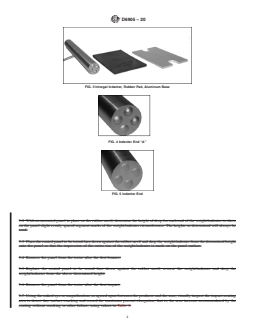
indenter, a rubber pad and an aluminum pad, Fig. 3. The round
Related Coatings, Materials, and Applications and is the direct responsibility of
Subcommittee D01.23 on Physical Properties of Applied Paint Films.
Current edition approved Dec. 1, 2020. Published December 2020. Originally
approved in 2003. Last previous edition approved in 2012 as D6905 – 03 (2012). The sole source of supply of the apparatus known to the committee at this time
DOI: 10.1520/D6905-20. is the IM-172-GE ImpactTester, available from the Paul N. Gardner Company, Inc.,
For referenced ASTM standards, visit the ASTM website, www.astm.org, or 316 N.E. First Street, Pompano Beach, FL 33060. If you are aware of alternative
contact ASTM Customer Service at service@astm.org. For Annual Book of ASTM suppliers, please provide this information to ASTM International Headquarters.
Standards volume information, refer to the standard’s Document Summary page on Your comments will receive careful consideration at a meeting of the responsible
the ASTM website. technical committee, which you may attend.
*A Summary of Changes section appears at the end of this standard
Copyright © ASTM International, 100 Barr Harbor Drive, PO Box C700, West Conshohocken, PA 19428-2959. United States
D6905 − 20
TABLE 1 Table of Percent Area Increase
Base Segment Segment
Spherical %Area
End Diameter, Radius, Elevation,
Segment Increase
mm (in.) mm (in.) mm (in.)
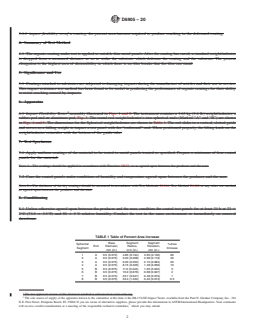
1 A 9.5 (0.375) 4.85 (0.194) 3.65 (0.146) 60
2 A 9.5 (0.375) 5.20 (0.208) 2.98 (0.119) 40
3 A 9.5 (0.375) 6.30 (0.252) 2.10 (0.084) 20
4 A 9.5 (0.375) 8.15 (0.326) 1.48 (0.059) 10
5 B 9.5 (0.375) 11.0 (0.440) 1.05 (0.042) 5
6 B
...
This document is not an ASTM standard and is intended only to provide the user of an ASTM standard an indication of what changes have been made to the previous version. Because
it may not be technically possible to adequately depict all changes accurately, ASTM recommends that users consult prior editions as appropriate. In all cases only the current version
of the standard as published by ASTM is to be considered the official document.
Designation: D6905 − 03 (Reapproved 2012) D6905 − 20
Standard Test Method Practice for
Impact Flexibility of Organic Coatings
This standard is issued under the fixed designation D6905; the number immediately following the designation indicates the year of
original adoption or, in the case of revision, the year of last revision. A number in parentheses indicates the year of last reapproval. A
superscript epsilon (´) indicates an editorial change since the last revision or reapproval.
1. Scope
1.1 This test method covers a procedure for determining the ability of a coating film and its substrate to resist shattering, cracking,
or chipping when the film and substrate are distended beyond their original form by impact.
1.2 This test method does not measure impact resistance but uses rapid impact to improve Test Methods D522, another test method
for flexibility. Since the impact of the coating is almost instantaneous, all of the problems associated with time variables in the
mandrel tests are eliminated.
1.3 This test method is similar in content but not technically equivalent to Test Method D2794.
1.4 The values stated in SI units are to be regarded as the standard. The values given in parentheses are for information only.
1.5 This standard does not purport to address all of the safety concerns, if any, associated with its use. It is the responsibility
of the user of this standard to establish appropriate safety and health practices and determine the applicability of regulatory
limitations prior to use.
2. Referenced Documents
2.1 ASTM Standards:
D522 Test Methods for Mandrel Bend Test of Attached Organic Coatings
D609 Practice for Preparation of Cold-Rolled Steel Panels for Testing Paint, Varnish, Conversion Coatings, and Related Coating
Products
D823 Practices for Producing Films of Uniform Thickness of Paint, Coatings and Related Products on Test Panels
D1186 Test Methods for Nondestructive Measurement of Dry Film Thickness of Nonmagnetic Coatings Applied to a Ferrous
Base (Withdrawn 2006)
D1400 Test Method for Nondestructive Measurement of Dry Film Thickness of Nonconductive Coatings Applied to a
Nonferrous Metal Base (Withdrawn 2006)
D2240 Test Method for Rubber Property—Durometer Hardness
D2794 Test Method for Resistance of Organic Coatings to the Effects of Rapid Deformation (Impact)
3. Terminology
3.1 Definitions of Terms Specific to This Standard:
This test method practice is under the jurisdiction of ASTM Committee D01 on Paint and Related Coatings, Materials, and Applications and is the direct responsibility
of Subcommittee D01.23 on Physical Properties of Applied Paint Films.
Current edition approved Nov. 1, 2012Dec. 1, 2020. Published November 2012December 2020. Originally approved in 2003. Last previous edition approved in 20082012
as D6905 – 03 (2008).(2012). DOI: 10.1520/D6905-03R12.10.1520/D6905-20.
For referenced ASTM standards, visit the ASTM website, www.astm.org, or contact ASTM Customer Service at service@astm.org. For Annual Book of ASTM Standards
volume information, refer to the standard’s Document Summary page on the ASTM website.
Copyright © ASTM International, 100 Barr Harbor Drive, PO Box C700, West Conshohocken, PA 19428-2959. United States
D6905 − 20
3.1.1 impact flexibility, n—of a coating, the percent area increase required to produce cracking in the deformed coating.
4. Summary of Test Method
4.1 The organic coating under test is applied to suitable thin metal panels. After the coating has cured, a standard weight/indenter
is dropped from a measured distance so as to strike the substrate which deforms the coating and the substrate. The percent
elongation is the highest area of distensibility in which there is no film breaks that the film can stand.
5. Significance and Use
5.1 Coatings attached to substrates are subjected to damaging impacts during the manufacture of articles and their use in service.
This impact resistance test method has been found to be useful in predicting the performance of organic coatings for their ability
to resist cracking caused by impacts.
6. Apparatus
6.1 Impact Flexibility Tester ,assembly illustrated in Figs. 1 and 2. The instrument contains a 1.63 kg (3.6 lb) weight/indenter, a
rubber pad and an aluminum pad, Fig. 3. The round rod weight/indenter’s two spherical ends (Marked “A” and “B”) are shown
in Figs. 4 and 5. The dimensions for the Spherical weight/indenter are shown in Table 1. The rod slides in a vertical, slotted guide
and serves as a falling weight to impact a test panel with the “embossed” end. When positioned properly, the lifting knob on the
weight/indenter coincides with the bottom of the guide tube.
7. Test Specimens
7.1 Apply uniform coatings of the material to be tested to metal panels treated as specified. Prepare a minimum of four coated
panels for the material.
NOTE 1—The coatings should be applied in accordance with Practices D823, or as agreed upon between the producer and the user.
7.2 Cure the coated panels under conditions of humidity and temperature agreed upon between the producer and the user.
NOTE 2—The thickness of the dry coatings should be measured in accordance with Test Methods D1186, Test Method D1400 or any other test method
as agreed upon between the producer and the user.
8. Conditioning
8.1 Unless otherwise agreed upon between the producer and the user, condition the coated test panels for at least 24 h at 23 6
2°C (73.5 6 3.5°F) and 50 6 5 % relative humidity. Conduct the test in the same environment or immediately on removal
therefrom.
TABLE 1 Table of Percent Area Increase
Base Segment Segment
Spherical %Area
End Diameter, Radius, Elevation,
Segment Increase
mm (in.) mm (in.) mm (in.)
1 A 9.5 (0.375) 4.85 (0.194) 3.65 (0.146) 60
2 A 9.5 (0.375) 5.20 (0.208) 2.98 (0.119) 40
3 A 9.5 (0.375) 6.30 (0.252) 2.10 (0.084) 20
4 A 9.5 (0.375) 8.15 (0.326) 1.48 (0.059) 10
5 B 9.5 (0.375) 11.0 (0.440) 1.05 (0.042) 5
6 B 9.5 (0.375) 16.9 (0.676) 0.68 (0.027) 2
7 B 9.5 (0.375) 23.7 (0.947) 0.48 (0.019) 1
8 B 9.5 (0.375) 33.3 (1.332) 0.32 (0.013) 0.5
The last approved version of this historical standard is referenced on www.astm.org.
The sole source of supply of the apparatus known to the committee at this time is the IM-172-GE Impact Tester, available from the Paul N. Gardner Company, Inc., 316
N.E. First Street, Pompano Beach, FL 33060. If you are aware of alternative suppliers, please provide this information to ASTM International Headquarters. Your comments
will receive careful consideration at a meeting of the responsible technical committee, which you may attend.
D6905 − 20
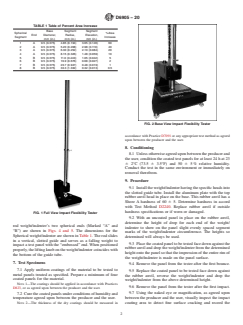
FIG. 1 Full View Impact Flexibility Tester
FIG. 2 Base View Impact Flexibility Tester
9. Procedure
9.1 Install the weight/indenter having the specific heads into the slotted guide tube. Install the aluminum plate with the top rubber
anvil head in place on the base. This rubber anvil has a Shore A hardness of 60 6 5. Determine hardness in accord with Test
Method D2240. Replace rubber anvil if outside hardness specifications or if worn or damaged.
D6905 − 20
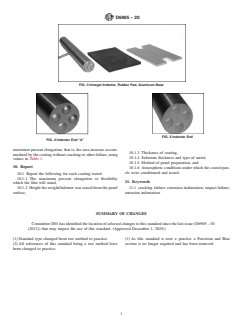
FIG. 3 Intregal Indenter, Rubber Pad, Aluminum Base
FIG. 4 Indenter End “A”
FIG. 5 Indenter End
9.2 With an uncoated panel in place on the rubber anvil, determine the height of drop for each end of the weight/indenter to show
on the panel slight evenly spaced segment marks of the weight/indenter circumference. The heights so determined will always be
used.
9.3 Place the coated panel to be tested face down against the rubber anvil and drop the weight/indenter from the determined height
onto the panel so that the impression of the entire rim of the weight/indenter is made on the panel surface.
9.4 Remove the panel from the tester after the first bounce.
9.5 Replace the coated panel to be tested face down against the rubber anvil, reverse the weight/indenter and drop the
weight/indenter from the above determined height.
9.6 Remove the panel from the tester after the first impact.
9.7 Using the naked eye or magnification, as agreed upon between the producer and the user, visually inspect the impact coating
area to detect fine surface cracking and record the maximum percent elongation, that is, the area increase accommodated by the
coating without cracking or other failure, using values in Table 1.
D6905 − 20
10. Report
10.1 Report the following for each coating tested:
10.1.1 The maximum percent elongation or flexibility which the film will stand,
10.1.2 Height the weight/indenter was raised from the panel surface,
10.1.3 Thickness of coating,
10.1.4 Substrate thickness and type of metal,
10.1.5 Method of panel preparation, and
10.1.6 Atmospheric conditions under which the coated panels were conditioned and tested.
11. Precision and Bias
11.1 Precision—The precision of the procedure in Test Method D6905 for measuring flexibility is being determined.
11.2 Bias—Since there is no accepted reference material suitable for determining the bias for the procedure in this test method,
bias cannot be determined.
12. Keywords
12.1 cracking failure; extrusion indentation; impact failure; intrusion indentation
ASTM International takes no position respecting the validity of any patent rights asserted in connection with any item mentioned
in this standard. Users of this standard are expressly advised that determination
...