


ASTM D523-14(2018)
(Test Method)Standard Test Method for Specular Gloss
Standard Test Method for Specular Gloss
SIGNIFICANCE AND USE
5.1 Gloss is associated with the capacity of a surface to reflect more light in directions close to the specular than in others. Measurements by this test method correlate with visual observations of surface shininess made at roughly the corresponding angles.
5.1.1 Measured gloss ratings by this test method are obtained by comparing the specular reflectance from the specimen to that from a black glass standard. Since specular reflectance depends also on the surface refractive index of the specimen, the measured gloss ratings change as the surface refractive index changes. In obtaining the visual gloss ratings, however, it is customary to compare the specular reflectances of two specimens having similar surface refractive indices.
5.2 Other visual aspects of surface appearance, such as distinctness of reflected images, reflection haze, and texture, are frequently involved in the assessment of gloss (1), (6), (7). Test Method E430 includes techniques for the measurement of both distinctness-of-image gloss and reflection haze. Test Method D4039 provides an alternative procedure for measuring reflection haze.
5.3 Little information about the relation of numerical-to-perceptual intervals of specular gloss has been published. However, in many applications the gloss scales of this test method have provided instrumental scaling of coated specimens that have agreed well with visual scaling (10).
5.4 When specimens differing widely in perceived gloss or color, or both, are compared, nonlinearity may be encountered in the relationship between visual gloss difference ratings and instrumental gloss reading differences.
SCOPE
1.1 This test method covers the measurement of the specular gloss of nonmetallic specimens for glossmeter geometries of 60, 20, and 85° (1-7).2
1.2 The values stated in inch-pound units are to be regarded as standard. The values given in parentheses are mathematical conversions to SI units that are provided for information only and are not considered standard.
1.3 This standard does not purport to address all of the safety concerns, if any, associated with its use. It is the responsibility of the user of this standard to establish appropriate safety, health, and environmental practices and determine the applicability of regulatory limitations prior to use.
1.4 This international standard was developed in accordance with internationally recognized principles on standardization established in the Decision on Principles for the Development of International Standards, Guides and Recommendations issued by the World Trade Organization Technical Barriers to Trade (TBT) Committee.
General Information
- Status
- Published
- Publication Date
- 30-Apr-2018
- Technical Committee
- E12 - Color and Appearance
- Drafting Committee
- E12.03 - Geometry
Relations
- Effective Date
- 01-Jun-2020
- Effective Date
- 01-Dec-2017
- Effective Date
- 01-Nov-2012
- Effective Date
- 01-Jun-2011
- Refers
ASTM D3964-10 - Standard Practice for Selection of Coating Specimens for Appearance Measurements - Effective Date
- 01-Jun-2010
- Effective Date
- 01-Jun-2009
- Effective Date
- 01-Jun-2007
- Effective Date
- 01-Jun-2005
- Effective Date
- 01-Nov-2004
- Refers
ASTM D3964-04 - Standard Practice for Selection of Coating Specimens for Appearance Measurements - Effective Date
- 01-Jul-2004
- Effective Date
- 10-Jan-2003
- Effective Date
- 01-Jan-2001
- Effective Date
- 01-Jan-2001
- Effective Date
- 10-May-1999
- Effective Date
- 10-May-1998
Overview
ASTM D523-14(2018) Standard Test Method for Specular Gloss is an internationally recognized ASTM standard that defines methods for the measurement of the specular gloss of nonmetallic surfaces at defined geometries of 60°, 20°, and 85°. Specular gloss refers to how well a surface reflects light in a mirror-like (specular) direction and is a critical property for assessing product appearance and quality across a range of industries, including coatings, plastics, ceramics, and finishing materials.
Gloss measurement is essential for manufacturers aiming to provide consistent finishes and meet visual quality expectations. This standard ensures results that correlate well with visual observations of surface shininess, providing a clear, instrumental approach to gloss determination.
Key Topics
Test Method Scope: ASTM D523 covers the determination of surface specular gloss using glossmeters set at 60°, 20°, or 85° angles. These configurations allow flexible assessment for a wide spectrum of gloss levels.
- 60° geometry: General-purpose, suited for most gloss measurements.
- 20° geometry: Applied to high-gloss surfaces (where 60° value is higher than 70).
- 85° geometry: Used for low-gloss or matte specimens (when 60° value is lower than 10).
Specular Gloss Definition: The ratio of luminous flux reflected from the test specimen to that reflected from a highly polished black glass standard under the same geometric conditions. Gloss values depend not only on surface finish but also surface refractive index.
Instrument Calibration and Standards: Calibration against a black glass standard-assigned a gloss value of 100 for each geometry-is essential. Routine calibration ensures measurement reliability.
Visual Appearance Correlation: Measured gloss ratings are designed to closely match visual perceptions of shininess at equivalent angles but may diverge for surfaces of widely different gloss or color.
Related Visual Aspects: The test method references associated surface parameters such as reflection haze, distinctness-of-image gloss, and texture, which can also influence perceived surface quality. ASTM E430 and ASTM D4039 provide methods for measuring these characteristics.
Reporting and Precision: The standard stipulates reporting of instrument type, test geometry, gloss values, and any deviations or surface uniformity issues. Repeatability and reproducibility criteria are included to support quality control.
Applications
Organizations and professionals utilize ASTM D523-14(2018) for:
- Quality Control: Ensuring consistency of product appearance in manufacturing, especially for paints, coatings, plastics, and ceramic tiles.
- Specification Compliance: Demonstrating that materials meet industry or customer gloss specifications.
- Product Development: Evaluating and optimizing formulations of paints, varnishes, and coatings for desired gloss levels.
- Comparative Analysis: Assessing gloss differences between batches, suppliers, or competing products.
- R&D Testing: Supporting research efforts where gloss is a critical variable in surface finish or end-use application.
This standardized gloss measurement is instrumental in industries where visual appeal is closely linked with perceived product quality and value, making ASTM D523 a vital tool for product finishing processes worldwide.
Related Standards
Stakeholders may also consider the following ASTM standards and related documents for comprehensive surface appearance evaluation:
- ASTM E430: Test Methods for Measurement of Gloss of High-Gloss Surfaces by Abridged Goniophotometry, including distinctness-of-image and reflection haze.
- ASTM D4039: Standard Test Method for Reflection Haze of High-Gloss Surfaces.
- ASTM D823: Practices for Producing Films of Uniform Thickness of Paint, Coatings, and Related Products on Test Panels.
- ASTM D3964: Practice for Selection of Coating Specimens for Appearance Measurements.
Keywords: ASTM D523, specular gloss, gloss measurement, glossmeter, surface appearance, gloss standard, coatings, paint gloss, quality control, finish standardization.
Get Certified
Connect with accredited certification bodies for this standard

DIN CERTCO
DIN Group product certification.

Smithers Quality Assessments
US management systems and product certification.
Sponsored listings
Frequently Asked Questions
ASTM D523-14(2018) is a standard published by ASTM International. Its full title is "Standard Test Method for Specular Gloss". This standard covers: SIGNIFICANCE AND USE 5.1 Gloss is associated with the capacity of a surface to reflect more light in directions close to the specular than in others. Measurements by this test method correlate with visual observations of surface shininess made at roughly the corresponding angles. 5.1.1 Measured gloss ratings by this test method are obtained by comparing the specular reflectance from the specimen to that from a black glass standard. Since specular reflectance depends also on the surface refractive index of the specimen, the measured gloss ratings change as the surface refractive index changes. In obtaining the visual gloss ratings, however, it is customary to compare the specular reflectances of two specimens having similar surface refractive indices. 5.2 Other visual aspects of surface appearance, such as distinctness of reflected images, reflection haze, and texture, are frequently involved in the assessment of gloss (1), (6), (7). Test Method E430 includes techniques for the measurement of both distinctness-of-image gloss and reflection haze. Test Method D4039 provides an alternative procedure for measuring reflection haze. 5.3 Little information about the relation of numerical-to-perceptual intervals of specular gloss has been published. However, in many applications the gloss scales of this test method have provided instrumental scaling of coated specimens that have agreed well with visual scaling (10). 5.4 When specimens differing widely in perceived gloss or color, or both, are compared, nonlinearity may be encountered in the relationship between visual gloss difference ratings and instrumental gloss reading differences. SCOPE 1.1 This test method covers the measurement of the specular gloss of nonmetallic specimens for glossmeter geometries of 60, 20, and 85° (1-7).2 1.2 The values stated in inch-pound units are to be regarded as standard. The values given in parentheses are mathematical conversions to SI units that are provided for information only and are not considered standard. 1.3 This standard does not purport to address all of the safety concerns, if any, associated with its use. It is the responsibility of the user of this standard to establish appropriate safety, health, and environmental practices and determine the applicability of regulatory limitations prior to use. 1.4 This international standard was developed in accordance with internationally recognized principles on standardization established in the Decision on Principles for the Development of International Standards, Guides and Recommendations issued by the World Trade Organization Technical Barriers to Trade (TBT) Committee.
SIGNIFICANCE AND USE 5.1 Gloss is associated with the capacity of a surface to reflect more light in directions close to the specular than in others. Measurements by this test method correlate with visual observations of surface shininess made at roughly the corresponding angles. 5.1.1 Measured gloss ratings by this test method are obtained by comparing the specular reflectance from the specimen to that from a black glass standard. Since specular reflectance depends also on the surface refractive index of the specimen, the measured gloss ratings change as the surface refractive index changes. In obtaining the visual gloss ratings, however, it is customary to compare the specular reflectances of two specimens having similar surface refractive indices. 5.2 Other visual aspects of surface appearance, such as distinctness of reflected images, reflection haze, and texture, are frequently involved in the assessment of gloss (1), (6), (7). Test Method E430 includes techniques for the measurement of both distinctness-of-image gloss and reflection haze. Test Method D4039 provides an alternative procedure for measuring reflection haze. 5.3 Little information about the relation of numerical-to-perceptual intervals of specular gloss has been published. However, in many applications the gloss scales of this test method have provided instrumental scaling of coated specimens that have agreed well with visual scaling (10). 5.4 When specimens differing widely in perceived gloss or color, or both, are compared, nonlinearity may be encountered in the relationship between visual gloss difference ratings and instrumental gloss reading differences. SCOPE 1.1 This test method covers the measurement of the specular gloss of nonmetallic specimens for glossmeter geometries of 60, 20, and 85° (1-7).2 1.2 The values stated in inch-pound units are to be regarded as standard. The values given in parentheses are mathematical conversions to SI units that are provided for information only and are not considered standard. 1.3 This standard does not purport to address all of the safety concerns, if any, associated with its use. It is the responsibility of the user of this standard to establish appropriate safety, health, and environmental practices and determine the applicability of regulatory limitations prior to use. 1.4 This international standard was developed in accordance with internationally recognized principles on standardization established in the Decision on Principles for the Development of International Standards, Guides and Recommendations issued by the World Trade Organization Technical Barriers to Trade (TBT) Committee.
ASTM D523-14(2018) is classified under the following ICS (International Classification for Standards) categories: 83.140.01 - Rubber and plastics products in general. The ICS classification helps identify the subject area and facilitates finding related standards.
ASTM D523-14(2018) has the following relationships with other standards: It is inter standard links to ASTM D3964-10(2020), ASTM D823-17, ASTM D823-95(2012), ASTM E430-11, ASTM D3964-10, ASTM D4039-09, ASTM D823-95(2007), ASTM E430-05, ASTM D4039-93(2004), ASTM D3964-04, ASTM E430-97(2003), ASTM D823-95(2001), ASTM D823-95, ASTM D4039-93(1999), ASTM D3964-80(1998). Understanding these relationships helps ensure you are using the most current and applicable version of the standard.
ASTM D523-14(2018) is available in PDF format for immediate download after purchase. The document can be added to your cart and obtained through the secure checkout process. Digital delivery ensures instant access to the complete standard document.
Standards Content (Sample)
This international standard was developed in accordance with internationally recognized principles on standardization established in the Decision on Principles for the
Development of International Standards, Guides and Recommendations issued by the World Trade Organization Technical Barriers to Trade (TBT) Committee.
Designation: D523 − 14 (Reapproved 2018)
Standard Test Method for
Specular Gloss
This standard is issued under the fixed designation D523; the number immediately following the designation indicates the year of
original adoption or, in the case of revision, the year of last revision. A number in parentheses indicates the year of last reapproval. A
superscript epsilon (´) indicates an editorial change since the last revision or reapproval.
This standard has been approved for use by agencies of the U.S. Department of Defense.
1. Scope E97 Method of Test for Directional Reflectance Factor,
45-Deg 0-Deg, of Opaque Specimens by Broad-Band
1.1 Thistestmethodcoversthemeasurementofthespecular
Filter Reflectometry (Withdrawn 1991)
gloss of nonmetallic specimens for glossmeter geometries of
2 E430 TestMethodsforMeasurementofGlossofHigh-Gloss
60, 20, and 85° (1-7).
Surfaces by Abridged Goniophotometry
1.2 The values stated in inch-pound units are to be regarded
3. Terminology
as standard. The values given in parentheses are mathematical
conversions to SI units that are provided for information only
3.1 Definitions:
and are not considered standard.
3.1.1 relative luminous reflectance factor, n—the ratio of the
luminous flux reflected from a specimen to the luminous flux
1.3 This standard does not purport to address all of the
safety concerns, if any, associated with its use. It is the reflected from a standard surface under the same geometric
conditions. For the purpose of measuring specular gloss, the
responsibility of the user of this standard to establish appro-
priate safety, health, and environmental practices and deter- standard surface is polished glass.
mine the applicability of regulatory limitations prior to use.
3.1.2 specular gloss, n—the relative luminous reflectance
1.4 This international standard was developed in accor-
factor of a specimen in the mirror direction.
dance with internationally recognized principles on standard-
4. Summary of Test Method
ization established in the Decision on Principles for the
Development of International Standards, Guides and Recom-
4.1 Measurements are made with 60, 20, or 85° geometry
mendations issued by the World Trade Organization Technical
(8, 9). The geometry of angles and apertures is chosen so that
Barriers to Trade (TBT) Committee.
these procedures may be used as follows:
4.1.1 The 60° geometry is used for intercomparing most
2. Referenced Documents
specimens and for determining when the 20° geometry may be
2.1 ASTM Standards:
more applicable.
D823 Practices for Producing Films of Uniform Thickness
4.1.2 The 20° geometry is advantageous for comparing
of Paint, Coatings and Related Products on Test Panels
specimens having 60° gloss values higher than 70.
D3964 Practice for Selection of Coating Specimens for
4.1.3 The 85° geometry is used for comparing specimens
Appearance Measurements
for sheen or near-grazing shininess. It is most frequently
D3980 Practice for Interlaboratory Testing of Paint and
applied when specimens have 60° gloss values lower than 10.
Related Materials (Withdrawn 1998)
5. Significance and Use
D4039 Test Method for Reflection Haze of High-Gloss
Surfaces
5.1 Gloss is associated with the capacity of a surface to
reflect more light in directions close to the specular than in
This test method is under the jurisdiction of ASTM Committee E12 on Color
others. Measurements by this test method correlate with visual
and Appearance and is the direct responsibility of Subcommittee E12.03 on
observations of surface shininess made at roughly the corre-
Geometry.
sponding angles.
Current edition approved May 1, 2018. Published May 2018. Originally
approved in 1939. Last previous edition approved in 2014 as D523 – 14. DOI:
5.1.1 Measured gloss ratings by this test method are ob-
10.1520/D0523-14R18.
tained by comparing the specular reflectance from the speci-
The boldface numbers in parentheses refer to the list of references at the end of
men to that from a black glass standard. Since specular
this test method.
reflectance depends also on the surface refractive index of the
For referenced ASTM standards, visit the ASTM website, www.astm.org, or
contact ASTM Customer Service at service@astm.org. For Annual Book of ASTM
specimen, the measured gloss ratings change as the surface
Standards volume information, refer to the standard’s Document Summary page on
refractive index changes. In obtaining the visual gloss ratings,
the ASTM website.
4 however, it is customary to compare the specular reflectances
The last approved version of this historical standard is referenced on
www.astm.org. of two specimens having similar surface refractive indices.
Copyright © ASTM International, 100 Barr Harbor Drive, PO Box C700, West Conshohocken, PA 19428-2959. United States
D523 − 14 (2018)
5.2 Other visual aspects of surface appearance, such as tolerances are chosen so that errors in the source and receptor
distinctness of reflected images, reflection haze, and texture, apertures do not produce an error of more than one gloss unit
are frequently involved in the assessment of gloss (1), (6), (7). at any point on the scale (5). The relative dimension is the
Test Method E430 includes techniques for the measurement of calculated dimension related to the 60° receptor (=1.0000).
both distinctness-of-image gloss and reflection haze. Test 6.2.1 The important geometric dimensions of any specular-
Method D4039 provides an alternative procedure for measur- gloss measurement are:
ing reflection haze. 6.2.1.1 Beam axis angle(s), usually 60, 20, or 85°.
6.2.1.2 Accepted angular divergences from principal rays
5.3 Little information about the relation of numerical-to-
(degree of spreading or diffusion of the reflected beam).
perceptual intervals of specular gloss has been published.
However, in many applications the gloss scales of this test
NOTE 1—The parallel-beam glossmeters possess the better uniformity
of principle-ray angle of reflection, but the converging-beam glossmeters
method have provided instrumental scaling of coated speci-
possess the better uniformity in extent of angular divergence accepted for
mens that have agreed well with visual scaling (10).
measurement.
5.4 When specimens differing widely in perceived gloss or
NOTE 2—Polarization—An evaluation of the impact of polarization on
gloss measurement has been reported (11). The magnitude of the polar-
color, or both, are compared, nonlinearity may be encountered
ization error depends on the difference between the refractive indices of
in the relationship between visual gloss difference ratings and
specimen and standard, the angle of incidence, and the degree of
instrumental gloss reading differences.
polarization. Because the specimen and standard are generally quite
similar optically, measured gloss values are little affected by polarization.
6. Apparatus
6.3 Vignetting—There shall be no vignetting of rays that lie
6.1 Instrumental Components—The apparatus shall consist
within the field angles specified in Table 1.
of a light source furnishing an incident beam, means for
6.4 Spectral Conditions—Results should not differ signifi-
locating the surface of the specimen, and a receptor located to
cantly from those obtained with a source-filter photocell
receive the required pyramid of rays reflected by the specimen.
combination that is spectrally corrected to yield CIE luminous
The receptor shall be a photosensitive device responding to
efficiency with CIE source C. Since specular reflection is, in
visible radiation.
general, spectrally nonselective, spectral corrections need to be
6.2 Geometric Conditions—The axis of the incident beam
applied only to highly chromatic, low-gloss specimens upon
shallbeatoneofthespecifiedanglesfromtheperpendicularto
agreement of users of this test method.
the specimen surface. The axis of the receptor shall be at the
6.5 Measurement Mechanism—The receptor-measurement
mirror reflection of the axis of the incident beam. The axis of
mechanism shall give a numerical indication that is propor-
the incident beam and the axis of the receptor shall be within
tional to the light flux passing the receptor field stop with
0.1°ofthenominalvalueindicatedbythegeometry.Withaflat
61 % of full-scale reading.
piece of polished black glass or other front-surface mirror in
the specimen position, an image of the source shall be formed
7. Reference Standards
at the center of the receptor field stop (receptor window). The
lengthoftheilluminatedareaofthespecimenshallbenotmore 7.1 Primary Standards—Highly polished, plane, black glass
than one third of the distance from the center of this area to the
with a refractive index of 1.567 for the sodium D line shall be
receptor field stop. The dimensions and tolerance of the source assigned a specular gloss value of 100 for each geometry. The
and receptor shall be as indicated in Table 1. The angular
gloss value for glass of any other refractive index can be
dimensions of the receptor field stop are measured from the
computed from the Fresnel equation (5). For small differences
receptor lens in a collimated-beam-type instrument, as illus-
inrefractiveindex,however,theglossvalueisalinearfunction
trated in Fig. 1, and from the test surface in a converging-
of index, but the rate of change of gloss with index is different
beam-type instrument, as illustrated in Fig. 2. See Fig. 1 and for each geometry. Each 0.001 increment in refractive index
Fig. 2 for a generalized illustration of the dimensions. The
produces a change of 0.27, 0.16, and 0.016 in the gloss value
assigned to a polished standard for the 20, 60, and 85°
TABLE 1 Angles and Relative Dimensions of Source Image and geometries, respectively. For example, glass of index 1.527
Receptors
would be assigned values of 89.2, 93.6, and 99.4, in order of
In Plane of Perpendicular to increasing geometry.
Measurement Plane of Measurement
7.2 Working Standards—Ceramic tile, depolished ground
Relative Relative
θ,° 2 tan θ/2 θ,° 2 tan θ/2
opaque glass, emery paper, and other semigloss materials
Dimension Dimension
having hard and uniform surfaces are suitable when calibrated
Source image 0.75 0.0131 0.171 2.5 0.0436 0.568
Tolerance ± 0.25 0.0044 0.057 0.5 0.0087 0.114
against a primary standard on a glossmeter known to meet the
requirements of this test method. Such standards should be
60° receptor 4.4 0.0768 1.000 11.7 0.2049 2.668
checked periodically for constancy by comparing with primary
Tolerance ± 0.1 0.0018 0.023 0.2 0.0035 0.046
standards.
20° receptor 1.8 0.0314 0.409 3.6 0.0629 0.819
Tolerance ± 0.05 0.0009 0.012 0.1 0.0018 0.023 7.3 Store standards in a closed container when not in use.
Keep them clean and away from any dirt that might scratch or
85° receptor 4.0 0.0698 0.909 6.0 0.1048 1.365
mar their surfaces. Never place standards face down on a
Tolerance ± 0.3 0.0052 0.068 0.3 0.0052 0.068
surface that may be dirty or abrasive.Always hold standards at
D523 − 14 (2018)
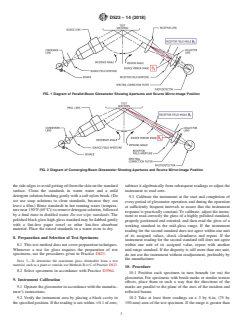
FIG. 1 Diagram of Parallel-Beam Glossmeter Showing Apertures and Source Mirror-Image Position
FIG. 2 Diagram of Converging-Beam Glossmeter Showing Apertures and Source Mirror-Image Position
thesideedgestoavoidgettingoilfromtheskinonthesta
...
Questions, Comments and Discussion
Ask us and Technical Secretary will try to provide an answer. You can facilitate discussion about the standard in here.
Loading comments...