

ASTM C1576-05(2017)
(Test Method)Standard Test Method for Determination of Slow Crack Growth Parameters of Advanced Ceramics by Constant Stress Flexural Testing (Stress Rupture) at Ambient Temperature
General Information
- Abstract
SIGNIFICANCE AND USE
4.1 The service life of many structural ceramic components is often limited by the subcritical growth of cracks. This test method provides an approach for appraising the relative slow crack growth susceptibility of ceramic materials under specified environments at ambient temperature. Furthermore, this test method may establish the influences of processing variables and composition on slow crack growth as well as on strength behavior of newly developed or existing materials, thus allowing tailoring and optimizing material processing for further modification. In summary, this test method may be used for material development, quality control, characterization, design code or model verification, and limited design data generation purposes.
Note 4: Data generated by this test method do not necessarily correspond to crack velocities that may be encountered in service conditions. The use of data generated by this test method for design purposes, depending on the range and magnitude of applied stresses used, may entail extrapolation and uncertainty.
4.2 This test method is related to Test Method C1368 (“constant stress-rate flexural testing”), however, C1368 uses constant stress rates to determine corresponding flexural strengths whereas this test method employs constant stress to determine corresponding times to failure. In general, the data generated by this test method may be more representative of actual service conditions as compared with those by constant stress-rate testing. However, in terms of test time, constant stress testing is inherently and significantly more time consuming than constant stress rate testing.
4.3 The flexural stress computation in this test method is based on simple elastic beam theory, with the assumptions that the material is isotropic and homogeneous, the moduli of elasticity in tension and compression are identical, and the material is linearly elastic. The grain size should be no greater than one-fiftieth (1/50 ) of the beam depth...
SCOPE
1.1 This standard test method covers the determination of slow crack growth (SCG) parameters of advanced ceramics by using constant stress flexural testing in which time to failure of flexure test specimens is determined in four-point flexure as a function of constant applied stress in a given environment at ambient temperature. In addition, test specimen fabrication methods, test stress levels, data collection and analysis, and reporting procedures are addressed. The decrease in time to failure with increasing applied stress in a specified environment is the basis of this test method that enables the evaluation of slow crack growth parameters of a material. The preferred analysis in the present method is based on a power law relationship between crack velocity and applied stress intensity; alternative analysis approaches are also discussed for situations where the power law relationship is not applicable.
Note 1: The test method in this standard is frequently referred to as “static fatigue” or stress-rupture testing (1-3)2 in which the term “fatigue” is used interchangeably with the term “slow crack growth.” To avoid possible confusion with the “fatigue” phenomenon of a material that occurs exclusively under cyclic loading, as defined in Terminology E1823, this test method uses the term “constant stress testing” rather than “static fatigue” testing.
1.2 This test method applies primarily to monolithic advanced ceramics that are macroscopically homogeneous and isotropic. This test method may also be applied to certain whisker- or particle-reinforced ceramics as well as certain discontinuous fiber-reinforced composite ceramics that exhibit macroscopically homogeneous behavior. Generally, continuous fiber ceramic composites do not exhibit macroscopically isotropic, homogeneous, continuous behavior, and the application of this test method to these materials is not recommended.
1.3 This test method is intended for us...
- Status
- Published
- Publication Date
- 31-Jan-2017
- Technical Committee
- C28 - Advanced Ceramics
- Drafting Committee
- C28.01 - Mechanical Properties and Performance
Overview
ASTM C1576-05(2017), titled "Standard Test Method for Determination of Slow Crack Growth Parameters of Advanced Ceramics by Constant Stress Flexural Testing (Stress Rupture) at Ambient Temperature," outlines a standardized method for assessing the slow crack growth (SCG) behavior of advanced ceramics. Developed by ASTM International, this standard is crucial for evaluating the service life and reliability of structural ceramic components, particularly where performance is limited by subcritical crack growth. The test involves constant stress flexural (four-point bend) testing at ambient temperature, measuring the time to failure as a function of applied stress. The standard also addresses specimen preparation, data analysis, and reporting procedures to ensure consistency and repeatability in results.
Key Topics
- Slow Crack Growth (SCG) Parameters: Evaluates the susceptibility of ceramic materials to subcritical crack extension under constant stress.
- Constant Stress Flexural Testing: Utilizes four-point bend testing at ambient temperature, differing from constant stress-rate tests by maintaining constant load until failure.
- Service Life Prediction: Provides insight into the long-term behavior and reliability of ceramic materials in structural applications.
- Material Development and Quality Control: Enables assessment of the effects of environmental exposure, processing variables, and composition changes on crack growth and strength.
- Statistical Data Collection: Emphasizes the probabilistic nature of time-to-failure data, necessitating appropriate sample sizes and statistical analysis for reliable results.
- Test Environment: Focuses on testing in controlled environments such as air, other gases, or liquids at ambient temperature to replicate service conditions where slow crack growth is a concern.
Applications
ASTM C1576-05(2017) is primarily applicable to:
- Monolithic Advanced Ceramics: Materials that are macroscopically homogeneous and isotropic, such as alumina, silicon carbide, and zirconia.
- Reinforced Ceramics: Some whisker- or particle-reinforced ceramics and certain discontinuous fiber-reinforced composites exhibiting homogeneous behavior.
- Material Characterization: Generating data for material development, performance modeling, and comparative studies among ceramic compositions and processing methods.
- Design Verification: Supporting the verification of design codes, failure models, and generating limited design data for engineering applications.
- Quality Assurance & Control: Standardizing test methods for assessing batch quality and consistency during manufacturing of ceramic components.
- Environmental Performance Testing: Evaluating the impact of different environmental exposures, including various gases and liquids, on slow crack growth and material integrity.
Related Standards
Several other ASTM standards are closely related to ASTM C1576-05(2017), offering complementary or alternative approaches for mechanical testing of ceramics:
- ASTM C1161: Standard Test Method for Flexural Strength of Advanced Ceramics at Ambient Temperature.
- ASTM C1368: Standard Test Method for Determination of Slow Crack Growth Parameters of Advanced Ceramics by Constant Stress-Rate Strength Testing at Ambient Temperature.
- ASTM C1465: Standard Test Method for Determination of Slow Crack Growth Parameters of Advanced Ceramics by Constant Stress-Rate Flexural Testing at Elevated Temperatures.
- ASTM C1322: Practice for Fractography and Characterization of Fracture Origins in Advanced Ceramics.
- ASTM C1145: Terminology of Advanced Ceramics.
- ASTM E1823: Terminology Relating to Fatigue and Fracture Testing.
- ASTM E399: Test Method for Linear-Elastic Plane-Strain Fracture Toughness K_IC of Metallic Materials.
- ASTM E337: Test Method for Measuring Humidity with a Psychrometer.
Practical Value
ASTM C1576-05(2017) provides a consistent, repeatable framework for evaluating the slow crack growth characteristics essential for reliable application of advanced ceramics in demanding environments. The methodology supports material optimization, helps manufacturers define quality standards, and assists designers in predicting the long-term performance of ceramic components. For industries such as electronics, energy, defense, and aerospace, adherence to this standard ensures material suitability and integrity for high-value or safety-critical applications.
Keywords: ASTM C1576, slow crack growth, advanced ceramics, constant stress flexural testing, stress rupture, ceramic reliability, material characterization, ceramic test methods, service life, quality control, fracture mechanics.
Relations
- Effective Date
- 01-Feb-2017
- Effective Date
- 15-Feb-2024
- Effective Date
- 01-Feb-2024
- Effective Date
- 01-Feb-2020
- Effective Date
- 01-Jul-2019
- Effective Date
- 01-Jul-2019
- Effective Date
- 01-Jul-2019
- Effective Date
- 01-Jan-2018
- Effective Date
- 01-Feb-2017
- Effective Date
- 01-Jul-2015
- Effective Date
- 01-Jun-2014
- Effective Date
- 01-Aug-2013
- Effective Date
- 01-Aug-2013
- Effective Date
- 01-Aug-2013
- Effective Date
- 01-Feb-2013
Frequently Asked Questions
ASTM C1576-05(2017) is a standard published by ASTM International. Its full title is "Standard Test Method for Determination of Slow Crack Growth Parameters of Advanced Ceramics by Constant Stress Flexural Testing (Stress Rupture) at Ambient Temperature". This standard covers: SIGNIFICANCE AND USE 4.1 The service life of many structural ceramic components is often limited by the subcritical growth of cracks. This test method provides an approach for appraising the relative slow crack growth susceptibility of ceramic materials under specified environments at ambient temperature. Furthermore, this test method may establish the influences of processing variables and composition on slow crack growth as well as on strength behavior of newly developed or existing materials, thus allowing tailoring and optimizing material processing for further modification. In summary, this test method may be used for material development, quality control, characterization, design code or model verification, and limited design data generation purposes. Note 4: Data generated by this test method do not necessarily correspond to crack velocities that may be encountered in service conditions. The use of data generated by this test method for design purposes, depending on the range and magnitude of applied stresses used, may entail extrapolation and uncertainty. 4.2 This test method is related to Test Method C1368 (“constant stress-rate flexural testing”), however, C1368 uses constant stress rates to determine corresponding flexural strengths whereas this test method employs constant stress to determine corresponding times to failure. In general, the data generated by this test method may be more representative of actual service conditions as compared with those by constant stress-rate testing. However, in terms of test time, constant stress testing is inherently and significantly more time consuming than constant stress rate testing. 4.3 The flexural stress computation in this test method is based on simple elastic beam theory, with the assumptions that the material is isotropic and homogeneous, the moduli of elasticity in tension and compression are identical, and the material is linearly elastic. The grain size should be no greater than one-fiftieth (1/50 ) of the beam depth... SCOPE 1.1 This standard test method covers the determination of slow crack growth (SCG) parameters of advanced ceramics by using constant stress flexural testing in which time to failure of flexure test specimens is determined in four-point flexure as a function of constant applied stress in a given environment at ambient temperature. In addition, test specimen fabrication methods, test stress levels, data collection and analysis, and reporting procedures are addressed. The decrease in time to failure with increasing applied stress in a specified environment is the basis of this test method that enables the evaluation of slow crack growth parameters of a material. The preferred analysis in the present method is based on a power law relationship between crack velocity and applied stress intensity; alternative analysis approaches are also discussed for situations where the power law relationship is not applicable. Note 1: The test method in this standard is frequently referred to as “static fatigue” or stress-rupture testing (1-3)2 in which the term “fatigue” is used interchangeably with the term “slow crack growth.” To avoid possible confusion with the “fatigue” phenomenon of a material that occurs exclusively under cyclic loading, as defined in Terminology E1823, this test method uses the term “constant stress testing” rather than “static fatigue” testing. 1.2 This test method applies primarily to monolithic advanced ceramics that are macroscopically homogeneous and isotropic. This test method may also be applied to certain whisker- or particle-reinforced ceramics as well as certain discontinuous fiber-reinforced composite ceramics that exhibit macroscopically homogeneous behavior. Generally, continuous fiber ceramic composites do not exhibit macroscopically isotropic, homogeneous, continuous behavior, and the application of this test method to these materials is not recommended. 1.3 This test method is intended for us...
SIGNIFICANCE AND USE 4.1 The service life of many structural ceramic components is often limited by the subcritical growth of cracks. This test method provides an approach for appraising the relative slow crack growth susceptibility of ceramic materials under specified environments at ambient temperature. Furthermore, this test method may establish the influences of processing variables and composition on slow crack growth as well as on strength behavior of newly developed or existing materials, thus allowing tailoring and optimizing material processing for further modification. In summary, this test method may be used for material development, quality control, characterization, design code or model verification, and limited design data generation purposes. Note 4: Data generated by this test method do not necessarily correspond to crack velocities that may be encountered in service conditions. The use of data generated by this test method for design purposes, depending on the range and magnitude of applied stresses used, may entail extrapolation and uncertainty. 4.2 This test method is related to Test Method C1368 (“constant stress-rate flexural testing”), however, C1368 uses constant stress rates to determine corresponding flexural strengths whereas this test method employs constant stress to determine corresponding times to failure. In general, the data generated by this test method may be more representative of actual service conditions as compared with those by constant stress-rate testing. However, in terms of test time, constant stress testing is inherently and significantly more time consuming than constant stress rate testing. 4.3 The flexural stress computation in this test method is based on simple elastic beam theory, with the assumptions that the material is isotropic and homogeneous, the moduli of elasticity in tension and compression are identical, and the material is linearly elastic. The grain size should be no greater than one-fiftieth (1/50 ) of the beam depth... SCOPE 1.1 This standard test method covers the determination of slow crack growth (SCG) parameters of advanced ceramics by using constant stress flexural testing in which time to failure of flexure test specimens is determined in four-point flexure as a function of constant applied stress in a given environment at ambient temperature. In addition, test specimen fabrication methods, test stress levels, data collection and analysis, and reporting procedures are addressed. The decrease in time to failure with increasing applied stress in a specified environment is the basis of this test method that enables the evaluation of slow crack growth parameters of a material. The preferred analysis in the present method is based on a power law relationship between crack velocity and applied stress intensity; alternative analysis approaches are also discussed for situations where the power law relationship is not applicable. Note 1: The test method in this standard is frequently referred to as “static fatigue” or stress-rupture testing (1-3)2 in which the term “fatigue” is used interchangeably with the term “slow crack growth.” To avoid possible confusion with the “fatigue” phenomenon of a material that occurs exclusively under cyclic loading, as defined in Terminology E1823, this test method uses the term “constant stress testing” rather than “static fatigue” testing. 1.2 This test method applies primarily to monolithic advanced ceramics that are macroscopically homogeneous and isotropic. This test method may also be applied to certain whisker- or particle-reinforced ceramics as well as certain discontinuous fiber-reinforced composite ceramics that exhibit macroscopically homogeneous behavior. Generally, continuous fiber ceramic composites do not exhibit macroscopically isotropic, homogeneous, continuous behavior, and the application of this test method to these materials is not recommended. 1.3 This test method is intended for us...
ASTM C1576-05(2017) is classified under the following ICS (International Classification for Standards) categories: 81.060.30 - Advanced ceramics. The ICS classification helps identify the subject area and facilitates finding related standards.
ASTM C1576-05(2017) has the following relationships with other standards: It is inter standard links to ASTM C1576-05(2010), ASTM E1823-24a, ASTM E1823-24, ASTM E1823-20, ASTM C1145-19, ASTM C1465-08(2019), ASTM C1322-15(2019), ASTM C1368-18, ASTM C1368-10(2017), ASTM C1322-15, ASTM E4-14, ASTM C1161-13, ASTM C1465-08(2013), ASTM C1465-08(2013)e1, ASTM C1145-06(2013)e1. Understanding these relationships helps ensure you are using the most current and applicable version of the standard.
ASTM C1576-05(2017) is available in PDF format for immediate download after purchase. The document can be added to your cart and obtained through the secure checkout process. Digital delivery ensures instant access to the complete standard document.
Standards Content (Sample)
This international standard was developed in accordance with internationally recognized principles on standardization established in the Decision on Principles for the
Development of International Standards, Guides and Recommendations issued by the World Trade Organization Technical Barriers to Trade (TBT) Committee.
Designation: C1576 − 05 (Reapproved 2017)
Standard Test Method for
Determination of Slow Crack Growth Parameters of
Advanced Ceramics by Constant Stress Flexural Testing
(Stress Rupture) at Ambient Temperature
This standard is issued under the fixed designation C1576; the number immediately following the designation indicates the year of
original adoption or, in the case of revision, the year of last revision. A number in parentheses indicates the year of last reapproval. A
superscript epsilon (´) indicates an editorial change since the last revision or reapproval.
1. Scope 1.3 This test method is intended for use with various test
environments such as air, other gaseous environments, and
1.1 This standard test method covers the determination of
liquids.
slow crack growth (SCG) parameters of advanced ceramics by
1.4 The values stated in SI units are to be regarded as the
using constant stress flexural testing in which time to failure of
standard and in accordance with IEEE/ASTM SI 10 Standard.
flexure test specimens is determined in four-point flexure as a
1.5 This test method may involve hazardous materials,
function of constant applied stress in a given environment at
ambient temperature. In addition, test specimen fabrication operations, and equipment. This standard does not purport to
address all of the safety concerns associated with its use. It is
methods, test stress levels, data collection and analysis, and
the responsibility of the user of this standard to establish
reporting procedures are addressed. The decrease in time to
appropriate safety and health practices and determine the
failure with increasing applied stress in a specified environ-
applicability of regulatory limitations prior to use.
ment is the basis of this test method that enables the evaluation
of slow crack growth parameters of a material. The preferred
2. Referenced Documents
analysis in the present method is based on a power law
2.1 ASTM Standards:
relationship between crack velocity and applied stress inten-
C1145 Terminology of Advanced Ceramics
sity; alternative analysis approaches are also discussed for
C1161 Test Method for Flexural Strength of Advanced
situations where the power law relationship is not applicable.
Ceramics at Ambient Temperature
NOTE 1—The test method in this standard is frequently referred to as
C1322 Practice for Fractography and Characterization of
“static fatigue” or stress-rupture testing (1-3) in which the term “fatigue”
Fracture Origins in Advanced Ceramics
is used interchangeably with the term “slow crack growth.” To avoid
C1368 Test Method for Determination of Slow Crack
possible confusion with the “fatigue” phenomenon of a material that
Growth Parameters of Advanced Ceramics by Constant
occursexclusivelyundercyclicloading,asdefinedinTerminologyE1823,
Stress-Rate Strength Testing at Ambient Temperature
this test method uses the term “constant stress testing” rather than “static
fatigue” testing.
C1465 Test Method for Determination of Slow Crack
Growth Parameters of Advanced Ceramics by Constant
1.2 This test method applies primarily to monolithic ad-
Stress-Rate Flexural Testing at Elevated Temperatures
vanced ceramics that are macroscopically homogeneous and
E4 Practices for Force Verification of Testing Machines
isotropic. This test method may also be applied to certain
E6 Terminology Relating to Methods of Mechanical Testing
whisker- or particle-reinforced ceramics as well as certain
E112 Test Methods for Determining Average Grain Size
discontinuous fiber-reinforced composite ceramics that exhibit
E337 Test Method for Measuring Humidity with a Psy-
macroscopicallyhomogeneousbehavior.Generally,continuous
chrometer (the Measurement of Wet- and Dry-Bulb Tem-
fiber ceramic composites do not exhibit macroscopically
peratures)
isotropic, homogeneous, continuous behavior, and the applica-
E399 Test Method for Linear-Elastic Plane-Strain Fracture
tion of this test method to these materials is not recommended.
Toughness K of Metallic Materials
Ic
E1823 TerminologyRelatingtoFatigueandFractureTesting
1 3. Terminology
This practice is under the jurisdiction of ASTM Committee C28 on Advanced
Ceramics and is the direct responsibility of Subcommittee C28.01 on Mechanical
3.1 Definitions:
Properties and Performance.
Current edition approved Feb. 1, 2017. Published February 2017. Originally
approved in 2005. Last previous edition approved in 2010 as C1576 – 05 (2010). For referenced ASTM standards, visit the ASTM website, www.astm.org, or
DOI: 10.1520/C1576-05R17. contact ASTM Customer Service at service@astm.org. For Annual Book of ASTM
The boldface numbers in parentheses refer to a list of references at the end of Standards volume information, refer to the standard’s Document Summary page on
this standard. the ASTM website.
Copyright © ASTM International, 100 Barr Harbor Drive, PO Box C700, West Conshohocken, PA 19428-2959. United States
C1576 − 05 (2017)
3.1.1 ThetermsdescribedinTerminologyC1145,Terminol- 3.1.16 time to failure, t [t], n—total elapsed time from test
f
ogy E6, and Terminology E1823 are applicable to this test initiation to test specimen failure.
standard. Specific terms relevant to this test method are as
follows: 4. Significance and Use
3.1.2 advanced ceramic, n—a highly engineered, high
4.1 The service life of many structural ceramic components
performance, predominately non-metallic, inorganic, ceramic
is often limited by the subcritical growth of cracks. This test
material having specific functional attributes. C1145
method provides an approach for appraising the relative slow
-2
3.1.3 constant applied stress, σ[FL ], n—a constant maxi- crack growth susceptibility of ceramic materials under speci-
mum flexural stress applied to a specified beam test specimen fied environments at ambient temperature. Furthermore, this
by using a constant static force with a test machine or a test test method may establish the influences of processing vari-
fixture. ables and composition on slow crack growth as well as on
strength behavior of newly developed or existing materials,
3.1.4 ‘constant applied stress-time to failure’ diagram—a
thus allowing tailoring and optimizing material processing for
plot of constant applied stress against time to failure. Constant
furthermodification.Insummary,thistestmethodmaybeused
applied stress and time to failure are both plotted on logarith-
for material development, quality control, characterization,
mic scales.
design code or model verification, and limited design data
3.1.5 ‘constantappliedstress-timetofailure’curve—acurve
generation purposes.
fitted to the values of time to failure at each of several applied
NOTE 4—Data generated by this test method do not necessarily
stresses.
correspond to crack velocities that may be encountered in service
conditions. The use of data generated by this test method for design
NOTE 2—In the ceramics literature, this is often called a “static fatigue”
purposes, depending on the range and magnitude of applied stresses used,
curve.
may entail extrapolation and uncertainty.
3.1.6 testenvironment,n—theaggregateofchemicalspecies
4.2 This test method is related to Test Method C1368
and energy that surrounds a test specimen. E1823
(“constant stress-rate flexural testing”), however, C1368 uses
3.1.7 test environmental chamber, n—a container surround-
constant stress rates to determine corresponding flexural
ing the test specimen that is capable of providing controlled
strengths whereas this test method employs constant stress to
local environmental condition. C1368, C1465
determine corresponding times to failure. In general, the data
-2
3.1.8 flexural strength, σ [FL ], n—a measure of the
generated by this test method may be more representative of
f
ultimate strength of a specified beam test specimen in flexure actual service conditions as compared with those by constant
determined at a given stress rate in a particular environment.
stress-rate testing. However, in terms of test time, constant
stresstestingisinherentlyandsignificantlymoretimeconsum-
3.1.9 fracturetoughness,(criticalstressintensityfactor)K
IC
-3/2
ing than constant stress rate testing.
[FL ], n—a generic term for measures of resistance to
extension of a crack. E1823, E399 4.3 The flexural stress computation in this test method is
-2 based on simple elastic beam theory, with the assumptions that
3.1.10 inert flexural strength [FL ], n—theflexuralstrength
the material is isotropic and homogeneous, the moduli of
of a specified beam as determined in an inert condition
elasticity in tension and compression are identical, and the
whereby no slow crack growth occurs.
material is linearly elastic. The grain size should be no greater
NOTE 3—An inert condition may be obtained by using vacuum, low 1
than one-fiftieth ( ⁄50) of the beam depth as measured by the
temperature,veryfasttestrate,oraninertenvironmentsuchassiliconeoil
mean linear intercept method (Test Methods E112). In cases
or high purity dry N .
where the material grain size is bimodal or the grain size
3.1.11 R-curve, n—a plot of crack-extension resistance as a
distribution is wide, the limit should apply to the larger grains.
function of stable crack extension. C1145
4.4 The test specimen sizes and test fixtures have been
3.1.12 run-out, n—a test specimen that does not fail before
selected in accordance with Test Methods C1161 and C1368,
a prescribed test time.
which provides a balance between practical configurations and
3.1.13 slow crack growth (SCG), n—subcritical crack resulting errors, as discussed in Ref (4, 5).
growth (extension) which may result from, but is not restricted
4.5 The data are evaluated by regression of log applied
to, such mechanisms as environmentally assisted stress corro-
stress versus log time to failure to the experimental data. The
sion or diffusive crack growth. C1368, C1465
recommendation is to determine the slow crack growth param-
3.1.14 slow crack growth (SCG) parameters—the param- eters by applying the power law crack velocity function. For
derivation of this, and for alternative crack velocity functions,
eters estimated as constants in the log (time to failure) versus
log (constant applied stress), which represent a measure of see Appendix X1.
susceptibilitytoslowcrackgrowthofamaterial(seeAppendix
NOTE 5—Avariety of crack velocity functions exist in the literature.A
X1).
comparison of the functions for the prediction of long-term static fatigue
-3/2
data from short-term dynamic fatigue data (6) indicates that the exponen-
3.1.15 stress intensity factor, K [FL ,n—the magnitude
I
tial forms better predict the data than the power-law form. Further, the
of the ideal-crack-tip stress field stress field singularity) sub-
exponential form has a theoretical basis (7-10), however, the power law
jected to mode I loading in a homogeneous, linear elastic body.
form is simpler mathematically. Both have been shown to fit short-term
E1823 test data well.
C1576 − 05 (2017)
4.6 The approach used in this method assumes that the
material displays no rising R-curve behavior, that is, no
increasing fracture resistance (or crack-extension resistance)
with increasing crack length. The existence of such behavior
cannot be determined from this test method. The analysis
further assumes that the same flaw type controls all times-to-
failure.
4.7 Slow crack growth behavior of ceramic materials can
vary as a function of mechanical, material, thermal, and
environmental variables. Therefore, it is essential that test
results accurately reflect the effects of specific variables under
study. Only then can data be compared from one investigation
to another on a valid basis, or serve as a valid basis for
characterizing materials and assessing structural behavior.
4.8 Like strength, time to failure of advanced ceramics
subjected to slow crack growth is probabilistic in nature.
Therefore, slow crack growth that is determined from times to
failure under given constant applied stresses is also a probabi-
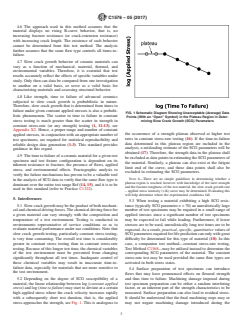
FIG. 1 Schematic Diagram Showing Unacceptable (Average) Data
listic phenomenon. The scatter in time to failure in constant
Points (With an “Open” Symbol) in the Plateau Region in Deter-
stress testing is much greater than the scatter in strength in mining Slow Crack Growth (SCG) Parameters
constant stress-rate (or any strength) testing (1, 11-13), see
Appendix X2. Hence, a proper range and number of constant
the occurrence of a strength plateau observed at higher test
applied stresses, in conjunction with an appropriate number of
rates in constant stress-rate testing (16). If the time-to-failure
test specimens, are required for statistical reproducibility and
data determined in this plateau region are included in the
reliable design data generation (1-3). This standard provides
analysis, a misleading estimate of the SCG parameters will be
guidance in this regard.
obtained (17). Therefore, the strength data in the plateau shall
4.9 The time to failure of a ceramic material for a given test
beexcludedasdatapointsinestimatingtheSCGparametersof
specimen and test fixture configuration is dependent on its
the material. Similarly, a plateau can also exist at the fatigue
inherent resistance to fracture, the presence of flaws, applied
limit end of the curve, and these data points shall also be
stress, and environmental effects. Fractographic analysis to
excluded in estimating the SCG parameters.
verify the failure mechanisms has proven to be a valuable tool
NOTE 6—There are no simple guidelines in determining whether a
in the analysis of SCG data to verify that the same flaw type is
plateau region is reached, however with knowledge of the inert strength
dominant over the entire test range Ref (14, 15), and it is to be
and the fracture toughness of the test material, the slow crack growth rate
used in this standard (refer to Practice C1322).
– applied stress intensity (v-K) curve may be determined. Evaluating this
will help determine where the experimental conditions fall.
5. Interferences
5.3 When testing a material exhibiting a high SCG resis-
5.1 Slow crack growth may be the product of both mechani-
tance (typically SCG parameter n > 70) an unrealistically large
calandchemicaldrivingforces.Thechemicaldrivingforcefor number of test specimens may be required in a small range of
a given material can vary strongly with the composition and
applied stresses since a significant number of test specimens
temperature of a test environment. Testing is conducted in may be expected to fail while loading. Furthermore, if lower
environments representative of service conditions so as to
stresses are to be used, unrealistically long test times are to be
evaluate material performance under use conditions. Note that expected.As a result, practical, specific, quantitative values of
slow crack growth testing, particularly constant stress testing, SCGparametersrequiredforlifepredictioncanonlywithgreat
is very time consuming. The overall test time is considerably difficulty be determined for this type of material (18). In this
greater in constant stress testing than in constant stress-rate case, a companion test method—constant stress-rate testing,
testing. Because of this longer test time, the chemical variables Test Method C1368—may be utilized instead to determine the
of the test environment must be prevented from changing corresponding SCG parameters of the material. The constant
significantly throughout all test times. Inadequate control of stress-rate test may be used provided the same flaw types are
these chemical variables may result in inaccurate time-to- activated in both stress states.
failure data, especially for materials that are more sensitive to
5.4 Surface preparation of test specimens can introduce
the test environment.
flaws that may have pronounced effects on flexural strength
5.2 Depending on the degree of SCG susceptibility of a and thus time to failure. Machining damage imposed during
material, the linear relationship between log (constant applied test specimen preparation can be either a random interfering
stress) and log (time to failure) may start to deviate at a certain factor, or an inherent part of the strength characteristics to be
high applied stress where the crack velocity increases rapidly measured. Surface preparation can also lead to residual stress.
with a subsequently short test duration, that is, the applied It should be understood that the final machining steps may or
stress approaches the strength, see Fig. 1. This is analogous to may not negate machining damage introduced during the
C1576 − 05 (2017)
earlier coarse or intermediate machining steps. In some cases, 6.2.1 Four-Point Flexure—The four-point- ⁄4-point fixture
test specimens need to be tested in the as-processed condition configuration as described in Test Method C1161 shall be used
to simulate a specific service condition. Test specimen fabri- in this test method. Three-point flexure shall not be used.
cation history may play an important role in strength as well as
6.2.2 Bearing Cylinders—The requirements of dimensions
time-to-failure behavior, which consequently may affect the
and mechanical properties of bearing cylinders as described in
values of the SCG parameters to be determined. Therefore, the
Test Method C1161 shall be used in this test method. The
test specimen fabrication history shall be reported. In addition
bearing cylinders shall be free to roll in order to relieve
the nature of fabrication used for certain advanced ceramic
frictional constraints, as described in Test Method C1161.
components may require testing of specimens with surfaces in
6.2.3 Semiarticulating Four-Point Fixture—The semiarticu-
the as-fabricated condition (that is, it may not be possible,
lating four-point fixture as described in Test Method C1161
desired, or required to machine some test specimens directly in
maybeusedinthistestmethod.Thisfixtureshallbeusedwhen
contact with test fixture components). In such cases, a fully
the parallelism requirements of test specimens are met accord-
articulated test fixture is required. However, for very rough or
ing to Test Method C1161.
wavy as-fabricated surfaces, eccentricities in the stress state
6.2.4 Fully Articulating Four-Point Fixture—The fully ar-
duetonon-symmetriccrosssectionsaswellasvariationsinthe
ticulating four-point fixture as described inTest Method C1161
cross-sectional dimensions may also interfere with the strength
may be used in this test method. Specimens that do not meet
measurement.
the parallelism requirements in Test Method C1161, due to the
nature of fabrication process (as-fired, heat treated, or
5.5 Premature fracture may be initiated at surface flaws (for
oxidized), shall be tested in this fully articulating fixture.
example, scratches, edge chips) introduced while handling the
specimens.
6.3 Environmental Facility—For testing in an environment
other than ambient air, use a chamber that is inert to the test
5.6 Fractures that consistently initiate near or just outside
environment,capableofsafelycontainingtheenvironmentand
the load pins may be due to factors such as friction or contact
allowing monitoring of environments to ensure consistency.
stresses introduced by the load fixtures, or via misalignment of
The chamber shall be sufficiently large to immerse the test
the test specimen load pins. Failure of test specimens initiated
specimen in the test medium. A circulation or mixing system
consistently from their edges may be due to poor specimen
may be desirable depending on the conditions to be simulated.
preparation (for example, severe grinding or very poor edge
Additionally, the facility shall be able to safely contain the test
preparation) or excessive twisting stresses at the specimen
environment. If it is necessary to direct force through bellows,
edges Ref (4, 5, 19).
fittings, or seals, it shall be verified that force losses or errors
5.7 Fractures may initiate from different flaw types (for
do not exceed 1 % of the prospective applied force. If ambient
example, surface flaws like scratches and machining flaws, or
temperature tests are conducted under constant environmental
poresandagglomeratesthatmaybelocatedinthevolumeorat
conditions, then control the temperature and relative humidity
the surface of the specimens). The analysis performed in this
to within 6 3°Cand 6 10 % of the set humidity level,
standard assumes that all failures initiate from similar types of respectively.
flaws as confirmed by fractography according to Practice
6.4 Data Acquisition—Accurate determination of time to
C1322.
failure (or test time in case of run-out) is important since time
to failure is the only dependent variable in this test method.
6. Apparatus
This is particularly important when time to failure is relatively
short (<10 s) when a higher applied stress is used. Devices to
6.1 Test Machine—Dead weight or universal test machines
measure time to failure may be either digital or analog and
capable of maintaining a constant force may be used for
incorporate a switching mechanism to stop the device at test
constantstresstesting.Thevariationsintheselectedforceshall
specimen failure. The recording device shall be accurate to
not exceed 61.0 % of the nominal value at any given time
during the test.The force must be monitored and the variations within 61 % of the selected range. If universal test machines
are used, at the minimum, an autographic record of applied
in the selected force shall not exceed the 61.0 % limit at any
given time during the test. Test machines used for this test force versus time shall be determined during testing. Either
analog chart recorders or digital data acquisition systems can
method shall conform to the requirements of Practices E4.
beusedforthispurpose.Recordingdevicesshallbeaccurateto
6.2 Test Fixtures—The configurations and mechanical prop-
1.0 % of the recording range and shall have a minimum data
erties of test fixtures shall be in accordance with Test Method
acquisition rate sufficient to adequately describe the whole test
C1161. The materials from which the test fixtures, including
series. The appropriate data acquisition rate depends on the
bearing cylinders, are fabricated shall be effectively inert to the
actual time to failure (that is, magnitude of applied stress), but
test environment so that they do not significantly react with or
should preferably be in the 0.2 to 50 Hz range (50 Hz for times
contaminate either the test specimen or the test environment.
less than 5 s, 10 Hz for times between 5 s and 10 min, 1 Hz for
times between 10 min and 5 h, and 0.2 Hz for times over 5 h).
NOTE 7—For testing in distilled water, for example, it is recommended
that the test fixture be fabricated from stainless steel. The bearing
6.5 Dimension-Measuring Devices—Micrometers and other
cylinders may be machined from hardenable stainless steel (for example,
devices used for measuring test specimen dimensions shall
316 SS) or a ceramic material such as silicon nitride, silicon carbide or
alumina. have a resolution of 0.002 mm or smaller. To avoid damage in
C1576 − 05 (2017)
the gage section area, depth measurements should be made 8. Procedure
using a flat, anvil-type micrometer. Ball-tipped or sharp anvil
8.1 Test Specimen and Load Fixture Dimensions—Choose
micrometers should not be used because localized damage (for
the appropriate fixture in the specific test configurations. A
example, cracking) can be induced.
fully articulating fixture is required if the specimen parallelism
requirements cannot be met. Conduct 100 % inspection/
7. Test Specimen
measurements of the test specimens and test specimen dimen-
sions to assure compliance with the specifications in this test
7.1 Specimen Size—The types and dimensions of rectangu-
method. Measure the test specimen width, b, and depth, d.
lar beam specimens as described in Test Method C1161 shall
Exercise extreme caution to prevent damage to the test
be used in this test method.
specimen.
7.2 Specimen Preparation—Specimen fabrication and
8.2 Measurement of surface finish is not required, however,
preparation methods as described in Test Method C1161 shall
such information would be helpful. Methods such as contact
be used in this test method.
profilometry can be used to determine the surface roughness of
the test specimen faces. When quantified, report surface
7.3 Specimen Dimensions—Determine the width and depth
roughness, test conditions, and the direction of the measure-
of each test specimen as described in Test Method C1161,
ment with respect to the test specimen long axis.
either optically or mechanically using a flat, anvil-type mi-
crometer. Exercise extreme caution to prevent damage to the 8.3 Applied Stresses:
8.3.1 Range and Number of Applied Stress Levels—The
critical area of the test specimen. Record and report the
choice of range and number of applied stress levels (or applied
measured dimensions and locations of the measurements. Use
force levels) not only depends on test material but also affects
the average of the multiple measurements in the stress calcu-
the statistical reproducibility of SCG parameters. Time to
lation.
failure of advanced monolithic ceramics in constant stress
7.4 Handling and Cleaning—Exercise care in handling and
testing is probabilistic. Furthermore, the scatter in time to
storing specimens in order to avoid introducing random and
failure is significantly greater than that in strength (11-13),
severe flaws, which might occur if the specimens were allowed
typically (n+1) times the Weibull modulus of strength
to impact or scratch each other. Clean the test specimens with
distribution, see Appendix X2. Hence, unlike metallic or
an appropriate medium such as methanol or high-purity
polymeric materials, a considerable increase in the scatter of
(>99 %) isopropyl alcohol to avoid contamination of the test
time to failure is expected for advanced monolithic ceramics,
environment by residual machining or processing fluids. After
attributed to both a large strength scatter (Weibull modulus of
cleaning and drying, store the test specimens in a controlled
about 10 to 15) and a typically high SCG parameter n ≥ 20.As
environment such as a vacuum or a dessicator in order to avoid
a consequence, testing a few test specimens at each applied
exposure to moisture. This is necessary if testing is to be stress using a few stress levels may not be sufficient to produce
carried out in an environment other than ambient air or water.
statistically reliable design data. On the contrary, the use of
Adsorbed moisture on the test specimen surfaces can change many test specimens with many applied stresses is quite time
consuming or even unrealistic in some cases. In general,
crack growth rates.
choose the upper limit of applied stresses that would result in
7.5 Number of Test Specimens—At least ten specimens per
corresponding time to failure ≥10 s. The choice of the lower
appliedstressshallbeused.Thetotalnumberoftestspecimens
limit of applied stresses depends on run-out times, where some
shall be at least 40, with at least four different applied stresses
of test specimens would not fail within a prescribed length of
(see 8.3.1).The numbers of test specimens and applied stresses
test time. The run-out time needs to be determined in the
in this test method have been established with the intent of
particular test program; however experience has shown that
determining reasonable confidence limits on both time-to-
run-out times up to 10 days are reasonable in laboratory test
failure distribution and SCG parameters.
conditions. Choose at least four applied stresses covering at
least four orders of magnitude in time. See also Appendix X3.
NOTE 8—Refer to Ref (11) when a specific purpose is sought for the
statistical reproducibility of SCG parameters in terms of several variables.
NOTE 9—If SCG parameters are available from constant stress-rate
testing (Test Method C1368), time to failure in constant stress testing can
7.6 Randomization of Test Specimens—Since a somewhat
be estimated as a function of applied stress from a prediction shown in
largenumberoftestspecimens(aminimumof40)withatleast
Appendix X3. This approach, although theoretical, allows one to quickly
four different applied stresses is used in this test method, it is
find the range and magnitude of stresses and the run-out time to be
applied. There might be some discrepancies in the prediction; however,
highly recommended that all the test specimens be randomized
use of this prediction can significantly reduce many uncertainties and
prior to testing in order to reduce any systematic error
trial-and-errors associated with selecting stresses and run-out time. If no
associated with material fabrication and/or specimen prepara-
SCG data for the test material is available, run simplified constant
tion. Randomize the test specimens (using, for example, a
stress-rate testing using both high (around 10 MPa/s) and low (around
random number generator) in groups equal to the number of 0.01 MPa/s) stress rates with at least five test specimens at each stress rate
to determine fracture strengths. Then determine the corresponding SCG
applied stresses to be employed. Complete randomization may
parameters (n and D ) based on the procedure inTest Method C1368. Use
d
not be appropriate if the specimens stem from different billets.
these simplified SCG data to select applied stresses and run-out time to be
Trace the origin of the test specimens and use an appropriate
used in constant stress testing by following the prediction described in
statistical blocking scheme for distributing the specimens. Appendix X3.
C1576 − 05 (2017)
8.4 Assembling Test Fixture/Specimen: larly when used with dead-weight test machines, should be
synchronized upon the application of a test force to the test
8.4.1 Examine the bearing cylinders to make sure that they
specimen. Time shall be measured at an accuracy of 61%of
are undamaged, and that there are no reaction products
the actual value. Record time to failure. If failure does not
(corrosion products or oxidation) that could result in uneven
occur within the specific time agreed upon in the test program,
line loading of the test specimen or prevent the bearing
record this as run-out.
cylinders from rolling. Remove and clean, or replace, the
8.7.1 Recording—Recordaforce-versus-timecurveforeach
bearing cylinders, if necessary. Avoid any undesirable dimen-
test in order to check the requirement of force variation of
sional changes in the bearing cylinders, for example, by
testing machines. Care should be taken in recording adequate
inadvertently forming a small flat on the cylinder surface when
response-rate capacity of the recorder, as described in 6.4.
abrasion (for example, abrasive paper) is used to remove the
reaction products from the cylinders. The same care should be
8.8 Post-Test Treatments:
directed toward the contact surfaces in the loading and support
8.8.1 Carefullycollectasmanyfragmentsaspossible.Clean
members of the test fixture that are in contact with the bearing
the fragments if necessary and store in a protective container
cylinders.
for further analysis, including fractography.
8.4.2 Carefully place each test specimen into the test fixture 8.8.2 Fractography—Fractographic analysis of fractured
to avoid possible damage and contamination and to ensure test specimens shall be employed to ensure that all the fracture
alignment of the test specimen relative to the test fixture.There origins are from the same population. Additional fractography
should be an equal amount of overhang of the test specimen may be performed to characterize the types, locations and sizes
beyond the outer bearing cylinders and the test specimen shall
of fracture origins as well as the flaw extensions due to slow
be directly centered below the axis of the applied force. crack growth. Follow the guidance established in Practice
Provide a way (for example, pencil marking in the test
C1322. See also 5.7.
specimen or known positioning of the test specimen relative to
a reference point or surface of the test fixture) to determine the
9. Calculation
fracture location of the test specimen upon fracture.
9.1 Applied Stress:
9.1.1 Calculate the flexural strength according to the for-
8.5 Loading the Test Fixture/Specimen Assembly into Test
mula for the st
...