

ASTM E1688-19
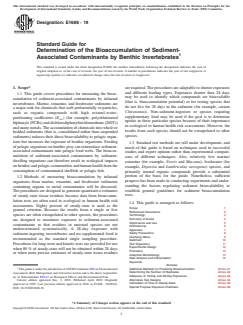
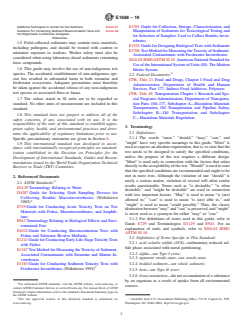
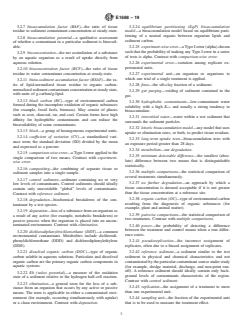
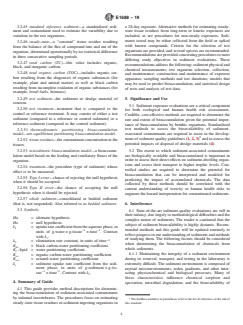
(Guide)Standard Guide for Determination of the Bioaccumulation of Sediment-Associated Contaminants by Benthic Invertebrates
General Information
- Abstract
SIGNIFICANCE AND USE
5.1 Sediment exposure evaluations are a critical component for both ecological and human health risk assessments. Credible, cost-effective methods are required to determine the rate and extent of bioaccumulation given the potential importance of bioaccumulation by benthic organisms. Standardized test methods to assess the bioavailability of sediment-associated contaminants are required to assist in the development of sediment quality guidelines (1, 2, 3)5 and to assess the potential impacts of disposal of dredge materials (4).
5.2 The extent to which sediment-associated contaminants are biologically available and bioaccumulated is important in order to assess their direct effects on sediment-dwelling organisms and assess their transport to higher trophic levels. Controlled studies are required to determine the potential for bioaccumulation that can be interpreted and modeled for predicting the impact of accumulated chemicals. The data collected by these methods should be correlated with the current understanding of toxicity or human health risks to augment the hazard interpretation for contaminated sediments.
SCOPE
1.1 This guide covers procedures for measuring the bioaccumulation of sediment-associated contaminants by infaunal invertebrates. Marine, estuarine, and freshwater sediments are a major sink for chemicals that sorb preferentially to particles, such as organic compounds with high octanol-water-partitioning coefficients (Kow) (for example, polychlorinated biphenyls (PCBs) and dichlorodiphenyltrichloroethane (DDT)) and many metals. The accumulation of chemicals into whole or bedded sediments (that is, consolidated rather than suspended sediments) reduces their direct bioavailability to pelagic organisms but increases the exposure of benthic organisms. Feeding of pelagic organisms on benthic prey can reintroduce sediment-associated contaminants into pelagic food webs. The bioaccumulation of sediment-associated contaminants by sediment-dwelling organisms can therefore result in ecological impacts on benthic and pelagic communities and human health from the consumption of contaminated shellfish or pelagic fish.
1.2 Methods of measuring bioaccumulation by infaunal organisms from marine, estuarine, and freshwater sediments containing organic or metal contaminates will be discussed. The procedures are designed to generate quantitative estimates of steady-state tissue residues because data from bioaccumulation tests are often used in ecological or human health risk assessments. Eighty percent of steady-state is used as the general criterion. Because the results from a single or few species are often extrapolated to other species, the procedures are designed to maximize exposure to sediment-associated contaminants so that residues in untested species are not underestimated systematically. A 28-day exposure with sediment-ingesting invertebrates and no supplemental food is recommended as the standard single sampling procedure. Procedures for long-term and kinetic tests are provided for use when 80 % of steady-state will not be obtained within 28 days or when more precise estimates of steady-state tissue residues are required. The procedures are adaptable to shorter exposures and different feeding types. Exposures shorter than 28 days may be used to identify which compounds are bioavailable (that is, bioaccumulation potential) or for testing species that do not live for 28 days in the sediment (for example, certain Chironomus). Non-sediment-ingestors or species requiring supplementary food may be used if the goal is to determine uptake in these particular species because of their importance in ecological or human health risk assessments. However, the results from such species should not be extrapolated to other species.
1.3 Standard test methods are still under development, and much of this guide is based on techniques used in successful studies and expert opinion rather than experimen...
- Status
- Published
- Publication Date
- 30-Nov-2019
- Technical Committee
- E50 - Environmental Assessment, Risk Management and Corrective Action
- Drafting Committee
- E50.47 - Biological Effects and Environmental Fate
Buy Documents
ASTM E1688-19 - Standard Guide for Determination of the Bioaccumulation of Sediment-Associated Contaminants by Benthic Invertebrates
REDLINE ASTM E1688-19 - Standard Guide for Determination of the Bioaccumulation of Sediment-Associated Contaminants by Benthic Invertebrates
Overview
ASTM E1688-19: Standard Guide for Determination of the Bioaccumulation of Sediment-Associated Contaminants by Benthic Invertebrates provides comprehensive procedures for assessing the bioaccumulation of sediment-bound contaminants in infaunal organisms. This guide is instrumental for ecological and human health risk assessments, especially where bioaccumulation from sediments is a key concern. It addresses marine, estuarine, and freshwater environments, focusing on how organic compounds with high partitioning coefficients (such as PCBs and DDT) and metals accumulate within sediment-dwelling organisms. Standardized and credible test methods are essential to support the development of sediment quality guidelines and to evaluate the potential ecological impacts of contaminated sediments or dredged material disposal.
Key Topics
- Test Methods: The guide details procedures for conducting bioaccumulation tests with sediment-ingesting invertebrates under controlled laboratory conditions, often focusing on a standard 28-day exposure period.
- Bioavailability and Exposure: Emphasis is placed on maximizing exposure to sediment-associated contaminants to ensure accurate measurement of direct and potential trophic transfer risks.
- Test Organism Selection: Provides criteria and recommendations for selecting appropriate benthic invertebrates, considering species sensitivity and ecological relevance.
- Measurement and Analysis: Includes instructions on measuring steady-state tissue residues, with 80% of steady-state considered a general benchmark for completing exposure.
- Flexibility of Methods: Alternative procedures are described for different exposure durations and organism feeding types, making the standard adaptable to various scientific and regulatory needs.
- Data Use in Risk Assessment: Results are intended to support both ecological and human health risk assessments by providing quantitative data on the extent of contaminant accumulation.
- Quality Control and Safety: Guidance is included on maintaining sediment and water quality throughout testing, as well as precautions related to worker safety, contaminant handling, and use of non-indigenous test species.
Applications
- Development of Sediment Quality Guidelines: Data derived from standard tests inform the creation and refinement of national and regional sediment quality criteria and risk-based thresholds.
- Ecological Risk Assessment: Integral to evaluating direct effects of contaminants on sediment-dwelling (benthic) organisms and potential impacts on higher trophic levels via food web transfer.
- Dredged Material Disposal: Supports assessment of potential risks related to the disposal or relocation of contaminated sediments in aquatic environments.
- Human Health Assessment: Relevant in evaluating risks associated with biomagnification, particularly the consumption of contaminated aquatic species such as shellfish and fish.
- Regulatory Compliance: Assists environmental agencies and industry in demonstrating compliance with federal, state, and international environmental protection requirements.
Related Standards
- ASTM E729 - Guide for Conducting Acute Toxicity Tests on Test Materials with Fishes, Macroinvertebrates, and Amphibians
- ASTM E943 - Terminology Relating to Biological Effects and Environmental Fate
- ASTM E1022 - Guide for Conducting Bioconcentration Tests with Fishes and Saltwater Bivalve Mollusks
- ASTM E1525 - Guide for Designing Biological Tests with Sediments
- ASTM E1367 / E1706 - Test Methods for Measuring the Toxicity of Sediment-Associated Contaminants
- Federal Regulations - CFR Title 21 (Food and Drug Administration), CFR Title 49 (Transportation and Hazardous Materials)
Practical Value
Utilizing ASTM E1688-19 ensures that environmental professionals, researchers, and regulatory agencies follow a standardized, scientifically robust approach to evaluating the bioaccumulation potential of sediment-associated contaminants. The procedures support reliable ecological hazard assessment, inform risk management decisions, and contribute to maintaining the safety of aquatic environments for both wildlife and human populations. Regular application of this standard helps maintain compliance, improve environmental stewardship, and foster data consistency across studies and regulatory jurisdictions.
Keywords: ASTM E1688-19, sediment bioaccumulation, benthic invertebrates, environmental risk assessment, sediment quality guidelines, ecological toxicology, contaminant bioavailability, aquatic sediment testing, dredged material assessment, human health risk.
Relations
- Effective Date
- 01-Dec-2019
- Effective Date
- 01-May-2020
- Effective Date
- 01-Apr-2019
- Effective Date
- 01-Sep-2010
- Effective Date
- 01-Mar-2010
- Effective Date
- 01-Mar-2008
- Effective Date
- 01-Feb-2008
- Effective Date
- 01-Feb-2008
- Effective Date
- 01-Feb-2008
- Effective Date
- 01-Oct-2007
- Effective Date
- 01-Sep-2006
- Effective Date
- 01-Sep-2006
- Effective Date
- 15-Feb-2006
- Effective Date
- 01-Mar-2004
- Effective Date
- 01-Mar-2004
Buy Documents
ASTM E1688-19 - Standard Guide for Determination of the Bioaccumulation of Sediment-Associated Contaminants by Benthic Invertebrates
REDLINE ASTM E1688-19 - Standard Guide for Determination of the Bioaccumulation of Sediment-Associated Contaminants by Benthic Invertebrates
Get Certified
Connect with accredited certification bodies for this standard

CIS Institut d.o.o.
Personal Protective Equipment (PPE) certification body. Notified Body NB-2890 for EU Regulation 2016/425 PPE.

Kiwa BDA Testing
Building and construction product certification.
Kmetijski inštitut Slovenije
Agricultural Institute of Slovenia. Soil testing, plant health, agricultural product analysis.
Sponsored listings
Frequently Asked Questions
ASTM E1688-19 is a guide published by ASTM International. Its full title is "Standard Guide for Determination of the Bioaccumulation of Sediment-Associated Contaminants by Benthic Invertebrates". This standard covers: SIGNIFICANCE AND USE 5.1 Sediment exposure evaluations are a critical component for both ecological and human health risk assessments. Credible, cost-effective methods are required to determine the rate and extent of bioaccumulation given the potential importance of bioaccumulation by benthic organisms. Standardized test methods to assess the bioavailability of sediment-associated contaminants are required to assist in the development of sediment quality guidelines (1, 2, 3)5 and to assess the potential impacts of disposal of dredge materials (4). 5.2 The extent to which sediment-associated contaminants are biologically available and bioaccumulated is important in order to assess their direct effects on sediment-dwelling organisms and assess their transport to higher trophic levels. Controlled studies are required to determine the potential for bioaccumulation that can be interpreted and modeled for predicting the impact of accumulated chemicals. The data collected by these methods should be correlated with the current understanding of toxicity or human health risks to augment the hazard interpretation for contaminated sediments. SCOPE 1.1 This guide covers procedures for measuring the bioaccumulation of sediment-associated contaminants by infaunal invertebrates. Marine, estuarine, and freshwater sediments are a major sink for chemicals that sorb preferentially to particles, such as organic compounds with high octanol-water-partitioning coefficients (Kow) (for example, polychlorinated biphenyls (PCBs) and dichlorodiphenyltrichloroethane (DDT)) and many metals. The accumulation of chemicals into whole or bedded sediments (that is, consolidated rather than suspended sediments) reduces their direct bioavailability to pelagic organisms but increases the exposure of benthic organisms. Feeding of pelagic organisms on benthic prey can reintroduce sediment-associated contaminants into pelagic food webs. The bioaccumulation of sediment-associated contaminants by sediment-dwelling organisms can therefore result in ecological impacts on benthic and pelagic communities and human health from the consumption of contaminated shellfish or pelagic fish. 1.2 Methods of measuring bioaccumulation by infaunal organisms from marine, estuarine, and freshwater sediments containing organic or metal contaminates will be discussed. The procedures are designed to generate quantitative estimates of steady-state tissue residues because data from bioaccumulation tests are often used in ecological or human health risk assessments. Eighty percent of steady-state is used as the general criterion. Because the results from a single or few species are often extrapolated to other species, the procedures are designed to maximize exposure to sediment-associated contaminants so that residues in untested species are not underestimated systematically. A 28-day exposure with sediment-ingesting invertebrates and no supplemental food is recommended as the standard single sampling procedure. Procedures for long-term and kinetic tests are provided for use when 80 % of steady-state will not be obtained within 28 days or when more precise estimates of steady-state tissue residues are required. The procedures are adaptable to shorter exposures and different feeding types. Exposures shorter than 28 days may be used to identify which compounds are bioavailable (that is, bioaccumulation potential) or for testing species that do not live for 28 days in the sediment (for example, certain Chironomus). Non-sediment-ingestors or species requiring supplementary food may be used if the goal is to determine uptake in these particular species because of their importance in ecological or human health risk assessments. However, the results from such species should not be extrapolated to other species. 1.3 Standard test methods are still under development, and much of this guide is based on techniques used in successful studies and expert opinion rather than experimen...
SIGNIFICANCE AND USE 5.1 Sediment exposure evaluations are a critical component for both ecological and human health risk assessments. Credible, cost-effective methods are required to determine the rate and extent of bioaccumulation given the potential importance of bioaccumulation by benthic organisms. Standardized test methods to assess the bioavailability of sediment-associated contaminants are required to assist in the development of sediment quality guidelines (1, 2, 3)5 and to assess the potential impacts of disposal of dredge materials (4). 5.2 The extent to which sediment-associated contaminants are biologically available and bioaccumulated is important in order to assess their direct effects on sediment-dwelling organisms and assess their transport to higher trophic levels. Controlled studies are required to determine the potential for bioaccumulation that can be interpreted and modeled for predicting the impact of accumulated chemicals. The data collected by these methods should be correlated with the current understanding of toxicity or human health risks to augment the hazard interpretation for contaminated sediments. SCOPE 1.1 This guide covers procedures for measuring the bioaccumulation of sediment-associated contaminants by infaunal invertebrates. Marine, estuarine, and freshwater sediments are a major sink for chemicals that sorb preferentially to particles, such as organic compounds with high octanol-water-partitioning coefficients (Kow) (for example, polychlorinated biphenyls (PCBs) and dichlorodiphenyltrichloroethane (DDT)) and many metals. The accumulation of chemicals into whole or bedded sediments (that is, consolidated rather than suspended sediments) reduces their direct bioavailability to pelagic organisms but increases the exposure of benthic organisms. Feeding of pelagic organisms on benthic prey can reintroduce sediment-associated contaminants into pelagic food webs. The bioaccumulation of sediment-associated contaminants by sediment-dwelling organisms can therefore result in ecological impacts on benthic and pelagic communities and human health from the consumption of contaminated shellfish or pelagic fish. 1.2 Methods of measuring bioaccumulation by infaunal organisms from marine, estuarine, and freshwater sediments containing organic or metal contaminates will be discussed. The procedures are designed to generate quantitative estimates of steady-state tissue residues because data from bioaccumulation tests are often used in ecological or human health risk assessments. Eighty percent of steady-state is used as the general criterion. Because the results from a single or few species are often extrapolated to other species, the procedures are designed to maximize exposure to sediment-associated contaminants so that residues in untested species are not underestimated systematically. A 28-day exposure with sediment-ingesting invertebrates and no supplemental food is recommended as the standard single sampling procedure. Procedures for long-term and kinetic tests are provided for use when 80 % of steady-state will not be obtained within 28 days or when more precise estimates of steady-state tissue residues are required. The procedures are adaptable to shorter exposures and different feeding types. Exposures shorter than 28 days may be used to identify which compounds are bioavailable (that is, bioaccumulation potential) or for testing species that do not live for 28 days in the sediment (for example, certain Chironomus). Non-sediment-ingestors or species requiring supplementary food may be used if the goal is to determine uptake in these particular species because of their importance in ecological or human health risk assessments. However, the results from such species should not be extrapolated to other species. 1.3 Standard test methods are still under development, and much of this guide is based on techniques used in successful studies and expert opinion rather than experimen...
ASTM E1688-19 is classified under the following ICS (International Classification for Standards) categories: 13.080.30 - Biological properties of soils. The ICS classification helps identify the subject area and facilitates finding related standards.
ASTM E1688-19 has the following relationships with other standards: It is inter standard links to ASTM E1688-10(2016), ASTM D1129-13(2020)e2, ASTM E1706-19, ASTM E1706-05(2010), ASTM D1129-10, ASTM E943-08, ASTM E1391-03(2008), ASTM E1367-03(2008), ASTM E1525-02(2008), ASTM E729-96(2007), ASTM D1129-06ae1, ASTM D1129-06a, ASTM D1129-06, ASTM D1129-04e1, ASTM D1129-04. Understanding these relationships helps ensure you are using the most current and applicable version of the standard.
ASTM E1688-19 is available in PDF format for immediate download after purchase. The document can be added to your cart and obtained through the secure checkout process. Digital delivery ensures instant access to the complete standard document.
Standards Content (Sample)
This international standard was developed in accordance with internationally recognized principles on standardization established in the Decision on Principles for the
Development of International Standards, Guides and Recommendations issued by the World Trade Organization Technical Barriers to Trade (TBT) Committee.
Designation: E1688 − 19
Standard Guide for
Determination of the Bioaccumulation of Sediment-
Associated Contaminants by Benthic Invertebrates
This standard is issued under the fixed designation E1688; the number immediately following the designation indicates the year of
original adoption or, in the case of revision, the year of last revision. A number in parentheses indicates the year of last reapproval. A
superscript epsilon (´) indicates an editorial change since the last revision or reapproval.
1. Scope* are required. The procedures are adaptable to shorter exposures
and different feeding types. Exposures shorter than 28 days
1.1 This guide covers procedures for measuring the bioac-
may be used to identify which compounds are bioavailable
cumulation of sediment-associated contaminants by infaunal
(that is, bioaccumulation potential) or for testing species that
invertebrates. Marine, estuarine, and freshwater sediments are
do not live for 28 days in the sediment (for example, certain
a major sink for chemicals that sorb preferentially to particles,
Chironomus). Non-sediment-ingestors or species requiring
such as organic compounds with high octanol-water-
supplementary food may be used if the goal is to determine
partitioning coefficients (K ) (for example, polychlorinated
ow
uptake in these particular species because of their importance
biphenyls (PCBs) and dichlorodiphenyltrichloroethane (DDT))
in ecological or human health risk assessments. However, the
and many metals. The accumulation of chemicals into whole or
results from such species should not be extrapolated to other
bedded sediments (that is, consolidated rather than suspended
species.
sediments) reduces their direct bioavailability to pelagic organ-
isms but increases the exposure of benthic organisms. Feeding
1.3 Standard test methods are still under development, and
of pelagic organisms on benthic prey can reintroduce sediment-
much of this guide is based on techniques used in successful
associated contaminants into pelagic food webs. The bioaccu-
studies and expert opinion rather than experimental compari-
mulation of sediment-associated contaminants by sediment-
sons of different techniques. Also, relatively few marine/
dwelling organisms can therefore result in ecological impacts
estuarine (for example, Nereis and Macoma), freshwater (for
on benthic and pelagic communities and human health from the
example, Diporeia and Lumbriculus variegatus) species, and
consumption of contaminated shellfish or pelagic fish.
primarily neutral organic compounds provide a substantial
portion of the basis for the guide. Nonetheless, sufficient
1.2 Methods of measuring bioaccumulation by infaunal
progress has been made in conducting experiments and under-
organisms from marine, estuarine, and freshwater sediments
standing the factors regulating sediment bioavailability to
containing organic or metal contaminates will be discussed.
establish general guidelines for sediment bioaccumulation
The procedures are designed to generate quantitative estimates
tests.
of steady-state tissue residues because data from bioaccumu-
lation tests are often used in ecological or human health risk
1.4 This guide is arranged as follows:
assessments. Eighty percent of steady-state is used as the
Scope 1
general criterion. Because the results from a single or few
Referenced Documents 2
species are often extrapolated to other species, the procedures
Terminology 3
Summary of Guide 4
are designed to maximize exposure to sediment-associated
Significance and Use 5
contaminants so that residues in untested species are not
Interferences 6
underestimated systematically. A 28-day exposure with Apparatus 7
Safety Precautions 8
sediment-ingesting invertebrates and no supplemental food is
Overlying Water 9
recommended as the standard single sampling procedure.
Sediment 10
Procedures for long-term and kinetic tests are provided for use Test Organisms 11
Experimental Design 12
when 80 % of steady-state will not be obtained within 28 days
Procedure 13
or when more precise estimates of steady-state tissue residues
Analytical Methodology 14
Data Analysis and Interpretation 15
Keywords
Annexes
Additional Methods for Predicting Bioaccumulation Annex A1
This guide is under the jurisdiction of ASTM Committee E50 on Environmental
Determining the Number of Replicates Annex A2
Assessment, Risk Management and Corrective Action and is the direct responsibil-
Adequacy of 10-Day and 28-Day Exposures Annex A3
ity of Subcommittee E50.47 on Biological Effects and Environmental Fate.
Alternative Test Designs Annex A4
Current edition approved Dec. 1, 2019. Published April 2020. Originally
Calculation of Time to Steady-State Annex A5
approved in 1995. Last previous edition approved in 2016 as E1688 – 10(2016).
Special Purpose Exposure Chambers Annex A6
DOI: 10.1520/E1688-19.
*A Summary of Changes section appears at the end of this standard
Copyright © ASTM International, 100 Barr Harbor Drive, PO Box C700, West Conshohocken, PA 19428-2959. United States
E1688 − 19
E1391 Guide for Collection, Storage, Characterization, and
Additional Techniques to Correct for Gut Sediment Annex A7
Guidance For Conducting Sediment Bioaccumulation Tests with Annex A8
Manipulation of Sediments for Toxicological Testing and
the Oligochaete Lumbriculus Variegatus
for Selection of Samplers Used to Collect Benthic Inver-
References
tebrates
1.5 Field-collected sediments may contain toxic materials,
E1525 Guide for Designing Biological Tests with Sediments
including pathogens, and should be treated with caution to
E1706 Test Method for Measuring the Toxicity of Sediment-
minimize exposure to workers. Worker safety must also be
Associated Contaminants with Freshwater Invertebrates
considered when using laboratory-dosed sediments containing
SI10-02 IEEE/ASTM SI 10 American National Standard for
toxic compounds.
Use of the International System of Units (SI): The Modern
1.6 This guide may involve the use of non-indigenous test
Metric System
species. The accidental establishment of non-indigenous spe-
2.2 Federal Documents:
cies has resulted in substantial harm to both estuarine and
CFR, Title 21, Food and Drugs, Chapter I Food and Drug
freshwater ecosystems. Adequate precautions must therefore
Administration, Department of Health and Human
be taken against the accidental release of any non-indigenous
Services, Part 177, Indirect Food Additives: Polymers
test species or associated flora or fauna.
CFR, Title 49, Transportation Chapter 1 Research and Spe-
cial Programs Administration, Department of Transporta-
1.7 The values stated in SI units are to be regarded as
tion Parts 100–177, Subchapter A—Hazardous Materials
standard. No other units of measurement are included in this
Transportation, Oil Transportation and Pipeline Safety,
standard.
Subchapter B—Oil Transportation and Subchapter
1.8 This standard does not purport to address all of the
C—Hazardous Materials Regulation
safety concerns, if any, associated with its use. It is the
responsibility of the user of this standard to establish appro-
3. Terminology
priate safety, health, and environmental practices and deter-
3.1 Definitions:
mine the applicability of regulatory limitations prior to use.
3.1.1 The words “must,” “should,” “may,” “can,” and
Specific precautionary statements are given in Section 8.
“might” have very specific meanings in this guide. “Must” is
1.9 This international standard was developed in accor-
used to express an absolute requirement, that is, to state that the
dance with internationally recognized principles on standard-
test needs to be designed to satisfy the specified conditions,
ization established in the Decision on Principles for the
unless the purpose of the test requires a different design.
Development of International Standards, Guides and Recom-
“Must” is used only in connection with the factors that relate
mendations issued by the World Trade Organization Technical
directly to the acceptability of the test. “Should” is used to state
Barriers to Trade (TBT) Committee.
that the specified conditions are recommended and ought to be
met in most tests. Although the violation of one “should” is
2. Referenced Documents
rarely a serious matter, violation of several will often render
2.1 ASTM Standards:
results questionable. Terms such as “is desirable,” “is often
D1129 Terminology Relating to Water
desirable,” and “might be desirable” are used in connection
D4387 Guide for Selecting Grab Sampling Devices for
with less important factors. “May” is used to mean “is (are)
Collecting Benthic Macroinvertebrates (Withdrawn
allowed to,” “can” is used to mean “is (are) able to,” and
2003)
“might” is used to mean “could possibly.” Thus, the classic
E729 Guide for Conducting Acute Toxicity Tests on Test
distinction between “may” and “can” is preserved, and “might”
Materials with Fishes, Macroinvertebrates, and Amphib-
is never used as a synonym for either “may” or “can.”
ians
3.1.2 For definitions of terms used in this guide, refer to
E943 Terminology Relating to Biological Effects and Envi-
Guide E729 and Terminologies D1129 and E943. For an
ronmental Fate
explanation of units and symbols, refer to SI10-02 IEEE/
E1022 Guide for Conducting Bioconcentration Tests with
ASTM SI 10 .
Fishes and Saltwater Bivalve Mollusks
3.2 Definitions of Terms Specific to This Standard:
E1241 Guide for Conducting Early Life-Stage Toxicity Tests
3.2.1 acid volatile sulfide (AVS)—sedimentary reduced sul-
with Fishes
fide phase associated with metal partitioning.
E1367 Test Method for Measuring the Toxicity of Sediment-
3.2.2 alpha—see Type I error.
Associated Contaminants with Estuarine and Marine In-
3.2.3 apparent steady-state—see steady-state.
vertebrates
E1383 Guide for Conducting Sediment Toxicity Tests with 3.2.4 bedded sediment—see whole sediment.
Freshwater Invertebrates (Withdrawn 1995)
3.2.5 beta—see Type II error.
3.2.6 bioaccumulation—the net accumulation of a substance
by an organism as a result of uptake from all environmental
For referenced ASTM standards, visit the ASTM website, www.astm.org, or
sources.
contact ASTM Customer Service at service@astm.org. For Annual Book of ASTM
Standards volume information, refer to the standard’s Document Summary page on
the ASTM website.
3 4
The last approved version of this historical standard is referenced on Available from U.S. Government Publishing Office, 732 N. Capitol St., NW,
www.astm.org. Washington, DC 20401-0001, http://www.gpo.gov.
E1688 − 19
3.2.7 bioaccumulation factor (BAF)—the ratio of tissue 3.2.24 equilibrium partitioning (EqP) bioaccumulation
residue to sediment contaminant concentration at steady-state. model—a bioaccumulation model based on equilibrium parti-
tioning of a neutral organic between organism lipids and
3.2.8 bioaccumulation potential—a qualitative assessment
sediment carbon.
of whether a contaminant in a particular sediment is bioavail-
able. 3.2.25 experiment-wiseerror—a Type I error (alpha) chosen
such that the probability of making any Type I error in a series
3.2.9 bioconcentration—the net assimilation of a substance
of tests is alpha. Contrast with comparison-wise error.
by an aquatic organism as a result of uptake directly from
aqueous solution. 3.2.26 experimental error—variation among replicate ex-
perimental units.
3.2.10 bioconcentration factor (BCF)—the ratio of tissue
3.2.27 experimental unit—an organism or organisms to
residue to water contaminant concentration at steady-state.
which one trial of a single treatment is applied.
3.2.11 biota-sediment accumulation factor (BSAF)—the ra-
tio of lipid-normalized tissue residue to organic carbon- 3.2.28 fines—the silt-clay fraction of a sediment.
normalized sediment contaminant concentration at steady state,
3.2.29 gut purging—voiding of sediment contained in the
with units of g-carbon/g-lipid.
gut.
3.2.12 black carbon (BC)—type of environmental carbon
3.2.30 hydrophobic contaminants—low-contaminant water
formed during the incomplete oxidation of organic substances
solubility with a high K and usually a strong tendency to
ow
(for example, fossil fuels, biomass). May consist of phases
bioaccumulate.
such as soot, charcoal, tar, and coal. Certain forms have high
3.2.31 interstitial water—water within a wet sediment that
affinity for hydrophibic contaminants and can reduce the
surrounds the sediment particles.
bioavailability of some contaminants.
3.2.32 kinetic bioaccumulation model—any model that uses
3.2.13 block—a group of homogeneous experimental units.
uptake or elimination rates, or both, to predict tissue residues.
3.2.14 coeffıcient of variation (CV)—a standardized vari-
3.2.33 long-term uptake tests—bioaccumulation tests with
ance term; the standard deviation (SD) divided by the mean
an exposure period greater than 28 days.
and expressed as a percent.
3.2.34 metabolism—see degradation.
3.2.15 comparison-wise error—a Type I error applied to the
3.2.35 minimum detectable difference—the smallest (abso-
single comparison of two means. Contrast with experiment-
lute) difference between two means that is distinguishable
wise error.
statistically.
3.2.16 compositing—the combining of separate tissue or
3.2.36 multiple comparisons—the statistical comparison of
sediment samples into a single sample.
several treatments simultaneously.
3.2.17 control sediment—sediment containing no or very
3.2.37 no further degradation—an approach by which a
low levels of contaminants. Control sediments should ideally
tissue concentration is deemed acceptable if it is not greater
contain only unavoidable “global” levels of contaminants.
than the tissue concentration at a reference site.
Contrast with reference sediment.
3.2.38 organic carbon (OC)—type of environmental carbon
3.2.18 degradation—biochemical breakdown of the con-
resulting from the diagenesis of organic substances (for
taminant by a test species.
example, plant and animal matter).
3.2.19 depuration—loss of a substance from an organism as
3.2.39 pairwise comparisons—the statistical comparison of
a result of any active (for example, metabolic breakdown) or
two treatments. Contrast with multiple comparisons.
passive process when the organism is placed into an uncon-
taminated environment. Contrast with elimination. 3.2.40 power—the probability of detecting a difference
between the treatment and control means when a true differ-
3.2.20 dichlorodiphenyltrichloroethane (DDT)—a common
ence exists.
environmental contaminant. Metabolites include dichlorodi-
phenyldichloroethane (DDD) and dichlorodiphenylethylene 3.2.41 pseudoreplication—the incorrect assignment of
(DDE).
replicates, often due to a biased assignment of replicates.
3.2.21 dissolved organic carbon (DOC)—type of organic
3.2.42 reference sediment—a sediment similar to the test
carbon soluble in aqueous solutions. Particulate and dissolved sediment in physical and chemical characteristics and not
organic carbon are the primary organic carbon components in contaminated by the particular contaminant source under study
aquatic systems. (for example, dredge material, discharge, and non-point run-
off). A reference sediment should ideally contain only back-
3.2.22 Eh (redox potential)—a measure of the oxidation
ground levels of contaminants characteristic of the region.
state of a sediment relative to the hydrogen half-cell reaction.
Contrast with control sediment.
3.2.23 elimination—a general term for the loss of a sub-
3.2.43 replication—the assignment of a treatment to more
stance from an organism that occurs by any active or passive
than one experimental unit.
means. The term is applicable in either a contaminated envi-
ronment (for example, occurring simultaneously with uptake) 3.2.44 sampling unit—the fraction of the experimental unit
or a clean environment. Contrast with depuration. that is to be used to measure the treatment effect.
E1688 − 19
3.2.45 standard reference sediment—a standardized sedi- a 28-day exposure. Alternative methods for estimating steady-
ment and contaminant used to estimate the variability due to state tissue residues from long-term or kinetic exposures are
variation in the test organisms. included, as are procedures for non-steady exposures. Sedi-
ments tested may be either collected from the field or spiked
3.2.46 steady-state—a “constant” tissue residue resulting
with known compounds. Criteria for the selection of test
from the balance of the flux of compound into and out of the
organisms are provided, and several species are recommended.
organism, determined operationally by no statistical difference
Recommendations are provided concerning procedures to meet
in three consecutive sampling periods.
differing study objectives in sediment evaluations. These
3.2.47 total carbon (TC)—this value includes organic,
recommendations address the following: sediment physical and
black, and inorganic carbon.
chemical measurements; test organism selection, collection,
3.2.48 total organic carbon (TOC)—includes organic car-
and maintenance; construction and maintenance of exposure
bon resulting from the diagenesis of organic substances (for
apparatus; sampling methods and test durations; models that
example, plant and animal matter) as well as black carbon
may be used to predict bioaccumulation; and statistical design
resulting from incomplete oxidation of organic substances (for
of tests and analysis of test data.
example, fossil fuels, biomass).
3.2.49 test sediment—the sediment or dredge material of 5. Significance and Use
concern.
5.1 Sediment exposure evaluations are a critical component
3.2.50 test treatment—treatment that is compared to the
for both ecological and human health risk assessments.
control or reference treatment. It may consist of either a test
Credible, cost-effective methods are required to determine the
sediment (compared to a reference or control sediment) or a
rate and extent of bioaccumulation given the potential impor-
reference sediment (compared to the control sediment).
tance of bioaccumulation by benthic organisms. Standardized
test methods to assess the bioavailability of sediment-
3.2.51 thermodynamic partitioning bioaccumulation
model—see equilibrium partitioning bioaccumulation model. associated contaminants are required to assist in the develop-
ment of sediment quality guidelines (1, 2, 3) and to assess the
3.2.52 tissueresidues—the contaminant concentration in the
potential impacts of disposal of dredge materials (4).
tissues.
5.2 The extent to which sediment-associated contaminants
3.2.53 toxicokinetic bioaccumulation model—a bioaccumu-
are biologically available and bioaccumulated is important in
lation model based on the feeding and ventilatory fluxes of the
order to assess their direct effects on sediment-dwelling organ-
organism.
isms and assess their transport to higher trophic levels. Con-
3.2.54 treatment—the procedure (type of sediment) whose
trolled studies are required to determine the potential for
effect is to be measured.
bioaccumulation that can be interpreted and modeled for
3.2.55 Type I error—chance of rejecting the null hypothesis
predicting the impact of accumulated chemicals. The data
when it should be accepted.
collected by these methods should be correlated with the
3.2.56 Type II error—the chance of accepting the null
current understanding of toxicity or human health risks to
hypothesis when it should be rejected.
augment the hazard interpretation for contaminated sediments.
3.2.57 whole sediment—consolidated or bedded sediment
(that is, not suspended). Also referred to as bedded sediment. 6. Interference
3.3 Symbols:
6.1 State-of-the-art sediment quality evaluations are still in
their infancy, due largely to methodological difficulties and the
Ha = alternate hypothesis.
complex nature of sediments. The reader is cautioned that the
Ho = null hypothesis.
subject of sediment bioavailability is highly dynamic. Recom-
k = uptake rate coefficient from the aqueous phase, in
mended methods and this guide will be updated routinely to
−1 −1
units of g-water × g-tissue × time . Contrast
reflect progress in our understanding of sediments and methods
with k .
s
of studying them. The following factors should be considered
−1
k = elimination rate constant, in units of time .
when determining the bioaccumulation of chemicals from
K = black carbon-water partitioning coefficient.
bc
whole sediments.
K –lipid = water partitioning coefficient.
l
6.1.1 Maintaining the integrity of a sediment environment
K = organic carbon-water partitioning coefficient.
oc
K = octanol-water partitioning coefficient. during its removal, transport, and testing in the laboratory is
ow
k = sediment uptake rate coefficient from the sedi- extremely difficult. The sediment environment is composed of
s
ment phase, in units of g-sediment × g-tis- myriad microenvironments, redox gradients, and other inter-
−1 −1
sue × time . Contrast with k . acting physicochemical and biological processes. Many of
these characteristics influence chemical sorption and
4. Summary of Guide
speciation, microbial degradation, and the bioavailability of
4.1 This guide provides method descriptions for determin-
ing the bioaccumulation of sediment-associated contaminants
by infaunal invertebrates. The procedures focus on estimating
The boldface numbers in parentheses refer to the list of references at the end of
steady-state tissue residues in sediment-ingesting organisms in this standard.
E1688 − 19
sediment-associated contaminants. Any disruption of this en- 6.2 Static Tests—Static tests (without the renewal of over-
vironment complicates interpretations of treatment effects, lying water) might not be applicable to materials that are highly
causative factors, and in situ comparisons.
volatile or are rapidly transformed biologically or chemically.
6.1.1.1 Chemical solubility, partitioning coefficients, and Furthermore, the overlying water quality may change consid-
other physical and chemical characteristics will differ for erably. The procedures can usually be applied to materials that
sediments tested at temperatures other than those of their
have a high oxygen demand because the experimental cham-
collection.
bers are usually aerated. Materials dissolved in interstitial
6.1.2 Changes in the ratios between sediment and overlying waters might be removed from solution in substantial quanti-
water may influence the partitioning and accumulation behav-
ties by absorption to sediment particles and to the test chamber
ior of compounds.
during the test. The dynamics of chemical partitioning between
6.1.3 Interactions may occur among chemicals that may be solid and dissolved phases at the start of the test should be
present in the sediment.
considered, especially in relation to assumptions of chemical
6.1.4 The use of laboratory-spiked sediment may not be equilibrium.
representative of contaminants associated with sediments in the
6.3 Flow-Through Tests—The equipment and facilities re-
field. Geochemical phases in the sediment, such as total
quired to conduct flow-though tests (with the renewal of
organic carbon (TOC), black carbon (BC), acid volatile sul-
overlying water) make them inherently more expensive than
fides (AVS), and grain size influence contaminant bioavailabil-
static tests. Water quality, temperature, or salinity are more
ity and bioaccumulation.
difficult to control and may require continuous monitoring
6.1.5 An acceptable quality of overlying water should be
equipment. Large volumes of waste water can be produced by
maintained.
flow-though tests. This waste may need to be monitored and
6.1.6 Addition of food to the test chambers may obscure the
treated to remove contaminants or to ensure that nonindigenous
accumulation of contaminants associated with sediment and
species are not released.
may affect water quality.
6.1.7 Resuspension of sediment during the test may alter
7. Apparatus
chemical partitioning and bioavailability.
6.1.8 The natural geochemical properties of test sediment
7.1 Facilities—The facility should include separate constant
collected from the field may not be within the tolerance limits
temperature areas for culturing and testing organisms. The
of the test organisms.
exposure system consists of replicate test chambers, any
6.1.9 Field-collected sediments may contain endemic organ- aquaria or tanks that hold the test chambers, the water delivery
isms including (1) predators, (2) the same species or a species
system, and any pollution abatement system. The test facility
that is related closely to the species being tested, or (3)
should be well ventilated and free of fumes.
microorganisms (for example, bacteria and molds) and algae
7.1.1 Enclosures may be needed to ventilate the test cham-
that may grow in or on the sediment and test chamber surfaces.
bers. To reduce the possible contamination by test materials
6.1.9.1 Field-collected sediments may contain concentra-
and other substances, acclimation and culture tanks should be
tions of chemicals that can elicit toxicity responses or can be
in a separate area from that where the tests are conducted, stock
detected by the organisms. These concentrations may be
solutions or test solutions are prepared, or equipment is
sufficient to cause the organism to escape from the sediment.
cleaned.
This will result in reduced exposure and accumulation.
7.1.2 Lighting—Lighting conditions should meet the re-
6.1.10 The longer the study, the more likely the data will
quirements of the study and test organisms. This may generally
approach steady-state for slowly bioaccumulating compounds.
be accomplished by means of cool-white fluorescent lights at
However, long-term tests require greater resources and in-
an intensity of about 100 to 1000 lx. Other sources
crease the analytical requirements and likelihood of problems
(incandescent, fluorescent/incandescent, and augmented pho-
involving the maintenance of the organisms and temporal
tosynthetically active radiation) may be required for special
changes in sediment contaminant concentrations.
purposes. Ultraviolet (UV) radiation, especially UV-B, is
6.1.10.1 With longer exposures, there is a greater probabil-
generally missing from artificially supplied spectra. Although
ity of the test organism reproducing. Spawning can affect lipid
UV-B radiation can enhance the toxicity of certain chemicals
content drastically and possibly chemical concentrations (5).
(phototoxicity), this should not be a major limitation with
Additionally, it is prudent to add extra test organisms for
bioaccumulation tests with infaunal species.
studies of extended duration because many species die after
spawning. 7.1.2.1 A timing device should be used to provide a light-
:darkness cycle if a photoperiod other than continuous light is
6.1.10.2 In addition to spawning, the difficulty of maintain-
ing organism health increases with prolonged exposure, includ- used. Guide E1022 recommends 16 h day, 8 h night as a
ing the possibilities of weight loss due to nutritional insuffi- convenient light/dark cycle. Schedules of 12/12 or 14/10 h
ciency and disease. day/night are also acceptable and may be useful for delaying
the maturation and spawning of some species. The experimen-
6.1.11 Chemical concentrations may be reduced in the
tal design should consider the specific requirements of the
overlying water in flow-through testing. Toxic compounds that
occur naturally, such as ammonia may increase during testing. organisms.
E1688 − 19
7.1.2.2 A15 to 30-min transition period (6, 7) when the 7.3.1 The metering system should be calibrated before the
lights go on may be desirable to reduce the potential stress test by determining the water flow rate through each test
from instantaneous illumination; a transition period when the chamber. The metering system operation should be checked
lights go off may also be desirable. daily during the test. Flow rates through any two test chambers
should not differ by more than 10 % at any particular time
7.1.3 Temperature—Test chambers may be placed in a
during the test.
temperature-controlled recirculating water bath or a constant-
temperature area to control the temperature. A temperature
7.4 Test Chambers—Test chamber designs should consider
corresponding to the average spring-summer temperature of
the conditions required to maintain an adequate environment
the study site should simulate the biologically most active
for the test organisms. The designs should also consider the
season.
contaminant behavior, construction cost, maintenance, and
ease of operation. The following recommendations are based
7.2 ConstructionMaterials—Materials used to construct the
on the standard 28-day exposure duration (see 12.2). Special-
exposure system should not induce any reaction by the
ized exposure chambers are described in Annex A6.
organisms or affect the contaminant concentration or bioavail-
7.4.1 The test chamber can consist of glass boxes, beakers,
ability. Borosilicate glass and soft glass (soda-lime and win-
aquaria, or other containers of appropriate material. Beakers
dow) have proved generally nonreactive to metals and organics
are an inexpensive exposure chamber for single or a few
and are the preferred materials where their fragility is not a
individuals for many species. However, an aquarium filled with
major limitation. Most rigid plastics (polyolefins, engineering
sufficient sediment may be a more practical exposure chamber
resins, and fluoropolymers) are acceptable after conditioning,
if large tissue masses composed of a composite of many
such as soaking in deionized water for several days. Some
individuals are required for analysis. The diameter of the
plastics, generally flexible types that contain mobile plasticiz-
exposure chamber and the sediment depth should be sufficient
ers (phthalate esters), need to be tested for toxicity and should
to allow the organism to bury and construct normal tubes and
not be used if phthalate ester accumulation is studied. Concrete
burrows. The opening of the exposure chamber should be large
and rigid plastics may be used for holding, acclimation, and
enough to allow the periodic addition of feeding sediment, if
culture tanks and in the water-supply system, but they should
required (see 10.1).
be soaked, preferably in flowing water, for several days before
7.5 Exposure Systems:
use (8). Stainless steel should not be used in direct contact with
7.5.1 Static Exposure—In static exposure systems, test or-
seawater because the alloy components of many stainless steels
ganisms are exposed to sediment without flow-through over-
may react with saltwater. Cast-iron pipe should probably not be
lying water, although the overlying water many be exchanged
used in freshwater supply systems because colloidal iron will
on a periodic basis. The test chambers may be individual
be added to the overlying water and strainers will be needed to
aquaria or beakers (for example, Ref (12)). A common design
remove rust particles. Choose another material if contaminant
for bioaccumulation tests is sets of beakers submerged in
sorption to the internal surfaces of containers is a problem.
aquaria in which overlying water is aerated and replaced with
7.2.1 Any sealant used to construct the chambers must be
newly prepared water on a regular schedule (for example, Ref
nontoxic, such as a clear, nontoxic silicone-rubber that meets
(13)). A more recent design places the experimental beakers in
FDA Regulation 21 CFR 177.2600, Office of Federal Register.
a water bath for temperature control and permits water renewal
Such materials are usually specified for aquarium use and do
to each beaker independently (11). This improves the indepen-
not contain fungicides (for example, arsenic compounds).
dence of each beaker as an experimental unit while maintaining
Exposed sealant at joints should be minimized to minimize
the water quality.
contaminant sorption. Place the sealant used for mechanical
7.5.1.1 The beakers or aquaria in a static system should be
reinforcement on the outside of the joint. Product literature on
covered to reduce evaporation and aerated gently to maintain
the material is helpful for determining the compatibility of a
dissolved oxygen levels at 40 to 100 % of oxygen saturation
particular sealant to a contaminant. All new test chambers
(Guide E729).
constructed should be soaked for at least 48 h in the overlying
7.5.2 Flow-Through Exposure Systems—Chambers may be
water used in the sediment bioaccumulation tests to leach
sets of beakers maintained in aquaria or entire aquaria for
potentially toxic compounds.
flow-through systems. Flow-through systems have the advan-
7.3 WaterDeliverySystem—Adequate amounts of overlying tages of removing waste products and maintaining oxygen.
water are required to ensure that the oxygen concentration is 7.5.2.1 Water flowing through one container must not flow
not depressed, metabolites do not accumulate, and the organ- into another container to prevent cross contamination. Water
ism’s behavior is not impaired. The system should deliver exiting the system should be passed through a charcoal filter or
water independently to each replicate treatment. Flow-through other appropriate sorptive material. Resuspended sediment
delivery systems that meet these criteria can be one of several should be trapped and retained as waste. Examples of flow-
through tests can be found in Guide E1383 and Refs (14-16).
designs (See Test Method E1706 for examples). Various
metering systems using different combinations of siphons, 7.5.3 Multiple Species Exposures—If several species are
pumps, solenoids, valves, etc. have been used successfully to being tested, it is possible to place multiple species within each
control the water flow rates. If a contaminant is added to the exposure chamber, which may reduce space requirements.
water supply, several dilution systems designs are currently However, mixing multiple species tests has the potential for
available (9-11). both negative and positive interactions among species that can
E1688 − 19
alter behavior and could have unknown and varying effects on
Particulate matter <5 mg/L
Total organic carbon (TOC) <5 mg/L
contaminant accumulation. Multiple species tested in the same
Chemical oxygen demand (COD) <5 mg/L
exposure chamber can be partitioned with screens to minimize
Residual chlorine <11 µg/L
species interactions (for example, Ref (16)).
9.3 Seawater:
7.5.3.1 Regardless of the specific design, the same numeri-
9.3.1 Source—Seawater should be uncontaminated and of
cal ratio of one species to another should be placed in replicate
constant quality (See Test Method E1367 for additional de-
chambers at test initiation. A paired-comparison approach
tails). If a constant source of seawater is unavailable, collected
(15.4) should be used when comparing the tissue residues of
seawater should be stored in covered containers in the dark at
species kept in the same chambers because the two species are
4 °C. Artificial sea water may be used if natural water is not
not independent.
readily available, although it should be demonstrated that the
7.6 Cleaning—To remove organics and metal
growth and behavior of the test species is not altered by using
contamination, the equipment and test chambers are washed
artificial salts. Prepare artificial water with deionized water or
initially with a non-phosphate detergent and then rinsed con-
distilled and charcoal-filtered water.
secutively with distilled water, a water-miscible organic
9.3.2 Salinity—Guide E1022 recommends that the overly-
solvent, 5 to 10 % hydrochloric or nitric acid, and finally
ing water salinity for marine systems should vary less than 2
deionized-distilled water (17-19). Glassware for metal analyses
g/kg or 20 % of the average, whichever is higher. Where the
should be stored wrapped in polytetrafluoroethylene (PTFE)
salinity varies (as in water drawn from estuaries with season-
sheets or plastic wrap, whereas glassware for organic analyses
ally high river contributions), high-salinity water should be
should be stored wrapped in PTFE or aluminum foil.
stored in sufficient quantity to supply the test system during the
expected period of low salinity.
8. Safety Precautions
9.3.3 pH—Seawater is well buffered, but metabolites and
waste materials (that is, ammonia) can build up in static
8.1 Personnel involved in bioaccumulation testing need to
systems, raising the pH value. Maintain the pH between 6.5
be protected from exposure to toxic chemicals. Exposure to
and 8.0 (Guide E1022). Aeration will help maintain the pH, as
pathogens must also be considered, especially when working
will the periodic replacement of water.
with sediment collected near sewage discharges. The manner
of personnel protection must be determined before the start of
9.4 Filtration—Because phytoplankton and suspended ma-
work, keeping in mind that exposure can occur from breathing
terial are a sink for contaminants and a food for facultative
vapors, physical contact with the skin, or ingestion. The
filter-feeders, it is important to filter the water to remove
particular type of protection required depends on the materials
suspended particles (>5 µm) for testing.
involved and is beyond the scope of this guide. Consult Refs
9.5 Dissolved Gases—Constant water quality should be
(20-24) to determine safety approaches. The Integrated Risk
maintained in the overlying water of the holding aquaria,
Information System (IRIS) is available to local, state, and
keeping the dissolved oxygen above 2.5 mg/L (Guide E729)
federal public health officials through the Public Health Net-
and unionized ammonia concentrations <20 µg/L (Guide
work (PHN) of the Public Health Foundation at (202) 898-
E1022). The flow rate of water into the holding aquaria or the
5600 or through Dialcom, Inc. at (202) 488-0550.
aeration rate, or both, should be increased to maintain suitable
8.2 The Federal government has published regulations for
water quality. Alternatively, the biomass in each holding
the management of hazardous waste and has given the states
aquarium can be reduced. Flowing water with a minimum flow
the option of either adopting those regulations or developing
rate of 1 L/h/g wet tissue is recommended as a means of
their own, which must be at least as stringent as the Federal
maintaining water quality. However, additional flow may be
regulations. As a handler of hazardous materials, it is your
necessary to account for the biological oxygen demand of the
responsibility to know and comply with the pertinent regula-
sediment.
tions for the state in which you are operating. Refer to Ref (25)
9.6 Aeration—Aeration is usually required in static systems
for citations of the Federal requirements.
to maintain the oxygen concentration. The air should be filtered
(0.22-µm bacterial filter or other suitable system) and free of
9. Overlying Water
fumes, oil, and water. The volume should be sufficient to turn
9.1 Requirements—Used both for holding organisms and in
the water over but not enough to resuspend sediment. Position
bioaccumulation tests, overlying water should be available in
the air stone or pipette sufficiently far above the surface to
adequate supply and uniform quality. The acceptability of the
avoid resuspension. Check the bubbler frequently, and remove
water for test organisms is determined by satisfactory survival
any salt crystals or encrustations forming at the orifices. If air
and growth without signs of disease or apparent stress.
is provided from a compressed air tank, specify that the
composition includes about 0.3 to 1.0 % CO to help control
9.2 Freshwater:
the pH.
9.2.1 Source—Natural overlying water should be uncon-
taminated and of constant quality to ensure that test organisms 9.7 Tissue Load—For a flow-through system, Guide E1022
are not stressed during holding, acclimation, and testing (see recommends not more than one filter-feeding bivalve (40 to 60
Guide E1383 for additional details). Water quality should meet mm from umbo to edge of distal valve) per liter per hour. This
the following specifications as established in Guide E729: would be equivalent to a minimum flow of 1 L/h/g wet tissue
E1688 − 19
TABLE 1 Representative Control Organism Tissue Residues
for an oyster. However, this requirement is based on feeding
A
and does not account for the sediment oxygen demand. In Various Puget Yaquina Bay,
Organics
B C D
(ppb wet weight) East Coast Sites Sound OR
addition to the flow rate per gram tissue, flow-through systems
CB <1.0–70
should be designed to achieve five turnovers per day (Guide
B(ibk)F <10
E1022). E E
BaP 0.3–6.0 2.3–<10 1.9
9.7.1 In static systems, the water volume to loading ratio DDT <0.08–3.8 <1.0–<5.0 3.9
HCB 0.02–0.17 <130
should be sufficient to maintain the oxygen levels at ≥
Naph <1.0–9.1 <0.05
E
2.5 mg ⁄L of saturation. A gentle aeration helps maintain the
PAH 0.02–7.2 <2–17
oxygen level as does changing the water two or three times per PCB 10–70 <2.0–10
Pesticides <0.03–0.6
week.
A
Various Puget Yaquina Bay,
Metals
9.7.2 It is important to take into account the total sediment B C D
(ppm wet weight) East Coast Sites Sound OR
Ag 0.2–2.6
oxygen demand when determining the oxygen demand for the
As 1.5–3.9
system. In most cases, the sediment microbial demand will be
Cd <0.06–4.0 <0.005
several fold greater than the oxygen used by the test species.
Cr 0.26–2.5
Cu 0.1–7.2 <1.5
The total oxygen demand of sediments ranges from <1 to over
Hg <0.05–1.2 1.0
100 mL O /m /h (for example, Refs (26-28)). In general, the
Ni <0.4–7.0
total oxygen demand will increase with temperature and
Pb <0.6–2.6
Zn 2.4–30 <2.0
organically rich sediments. To maintain appropriate water
A
quality, either increased flow or aeration can account for this CB = chlorinated benzenes, B(ibk)F = benzo(i,b,k)fluoranthene, BaP =
benzo(a)pyrene, HCB = hexachlorobenzene, Naph = naphthalene, PAH = polycy-
increased demand and flow, and aeration should be the same
clicaromatic hydrocarbons, and PCB = polychlorinated biphenyls.
among treatments. B
See Ref. (30).
C
See Ref. (31).
9.8 Temperature—The temperature should not vary by more
D
Unpublished data.
E
than 1 °C in a 12-h period (Guide E1022) and 3 °C over a short
See Refs (30, 31).
period. A storage tank within the laboratory will help amelio-
rate natural fluctuations in temperature in flow-through sys-
tems.
the exposure period. As selective deposit-feeders ingest the fine
grain fraction of a sediment selectively, it is important to obtain
9.9 Background Contamination—Regardless of whether
an accurate estimate of the sediment processing rates of the
flow-through or static systems are used, the water should be
size fraction ingested by that species. Compilations of sedi-
analyzed for background levels of contaminants, especially if it
ment processing rates (for example, Ref (32)) can be used to
is collected from an urbanized area. If a contaminant is
estimate these requirements.
detected in the water, its potential uptake can be estimated by
10.1.1.1 Assuming periodic sediment additions to the expo-
multiplying the water concentration by the bioconcentration
sure chambers (see Section 13), at least 50 g of wet sediment
factor (BCF) for that compound. A different water supply
for each1gofwet flesh tissue (excluding shell) should be
should be used if the calculated tissue residue is greater than
added initially for surface deposit-feeding bivalves and many
that acceptable for a control organism (see Table 1). BCF
larger marine deposit-feeders. For funnel-feeders such as
values and methods for estimating BCFs can be found in Ref
arenicolid worms, at least 200 g of wet sediment to each1gof
(29).
wet flesh tissue may be required for construction of a normal
10. Sediment feeding burrow. The initial depth for the deposit-feeding clam
Macoma should be at least 2 cm and preferably 3 to 5 cm,
10.1 SedimentAmounts—Sediment serves as the habitat and
whereas a large lugworm may require 5 to 10 cm of sediment.
source of food and contaminants for the test organisms.
10.1.1.2 For Lumbriculus variegatus, the tissue loading rate
Adequate amounts of sediment are required to ensure that
has been demonstrated to influence the bioaccumulation of
supplies of food and contaminants are not depleted substan-
cont
...
This document is not an ASTM standard and is intended only to provide the user of an ASTM standard an indication of what changes have been made to the previous version. Because
it may not be technically possible to adequately depict all changes accurately, ASTM recommends that users consult prior editions as appropriate. In all cases only the current version
of the standard as published by ASTM is to be considered the official document.
Designation: E1688 − 10 (Reapproved 2016) E1688 − 19
Standard Guide for
Determination of the Bioaccumulation of Sediment-
Associated Contaminants by Benthic Invertebrates
This standard is issued under the fixed designation E1688; the number immediately following the designation indicates the year of
original adoption or, in the case of revision, the year of last revision. A number in parentheses indicates the year of last reapproval. A
superscript epsilon (´) indicates an editorial change since the last revision or reapproval.
1. Scope*
1.1 This guide covers procedures for measuring the bioaccumulation of sediment-associated contaminants by infaunal
invertebrates. Marine, estuarine, and freshwater sediments are a major sink for chemicals that sorb preferentially to particles, such
as organic compounds with high octanol-water-partitioning coefficients (K ) (for example, polychlorinated biphenyls (PCBs) and
ow
dichlorodiphenyltrichloroethane (DDT)) and many metals. The accumulation of chemicals into whole or bedded sediments (that
is, consolidated rather than suspended sediments) reduces their direct bioavailability to pelagic organisms but increases the
exposure of benthic organisms. Feeding of pelagic organisms on benthic prey can reintroduce sediment-associated contaminants
into pelagic food webs. The bioaccumulation of sediment-associated contaminants by sediment-dwelling organisms can therefore
result in ecological impacts on benthic and pelagic communities and human health from the consumption of contaminated shellfish
or pelagic fish.
1.2 Methods of measuring bioaccumulation by infaunal organisms from marine, estuarine, and freshwater sediments containing
organic or metal contaminates will be discussed. The procedures are designed to generate quantitative estimates of steady-state
tissue residues because data from bioaccumulation tests are often used in ecological or human health risk assessments. Eighty
percent of steady-state is used as the general criterion. Because the results from a single or few species are often extrapolated to
other species, the procedures are designed to maximize exposure to sediment-associated contaminants so that residues in untested
species are not underestimated systematically. A 28-day exposure with sediment-ingesting invertebrates and no supplemental food
is recommended as the standard single sampling procedure. Procedures for long-term and kinetic tests are provided for use when
80 % of steady-state will not be obtained within 28 days or when more precise estimates of steady-state tissue residues are required.
The procedures are adaptable to shorter exposures and different feeding types. Exposures shorter than 28 days may be used to
identify which compounds are bioavailable (that is, bioaccumulation potential) or for testing species that do not live for 28 days
in the sediment (for example, certain Chironomus). Non-sediment-ingestors or species requiring supplementary food may be used
if the goal is to determine uptake in these particular species because of their importance in ecological or human health risk
assessments. However, the results from such species should not be extrapolated to other species.
1.3 Standard test methods are still under development, and much of this guide is based on techniques used in successful studies
and expert opinion rather than experimental comparisons of different techniques. Also, relatively few marine/estuarine (for
example, Nereis and Macoma), freshwater (for example, Diporeia and Lumbriculus variegatus) species, and primarily neutral
organic compounds provide a substantial portion of the basis for the guide. Nonetheless, sufficient progress has been made in
conducting experiments and understanding the factors regulating sediment bioavailability to establish general guidelines for
sediment bioaccumulation tests.
1.4 This guide is arranged as follows:
Scope 1
Referenced Documents 2
Terminology 3
Summary of Guide 4
Significance and Use 5
Interferences 6
Apparatus 7
Safety Precautions 8
Overlying Water 9
This guide is under the jurisdiction of ASTM Committee E50 on Environmental Assessment, Risk Management and Corrective Action and is the direct responsibility
of Subcommittee E50.47 on Biological Effects and Environmental Fate.
Current edition approved Feb. 1, 2016Dec. 1, 2019. Published May 2016April 2020. Originally approved in 1995. Last previous edition approved in 20002016 as
E1688 – 10.E1688 – 10(2016). DOI: 10.1520/E1688-10R16.10.1520/E1688-19.
*A Summary of Changes section appears at the end of this standard
Copyright © ASTM International, 100 Barr Harbor Drive, PO Box C700, West Conshohocken, PA 19428-2959. United States
E1688 − 19
Sediment 10
Test Organisms 11
Experimental Design 12
Procedure 13
Analytical Methodology 14
Data Analysis and Interpretation 15
Keywords
Annexes
Additional Methods for Predicting Bioaccumulation Annex A1
Determining the Number of Replicates Annex A2
Adequacy of 10-Day and 28-Day Exposures Annex A3
Alternative Test Designs Annex A4
Calculation of Time to Steady-State Annex A5
Special Purpose Exposure Chambers Annex A6
Additional Techniques to Correct for Gut Sediment Annex A7
Bioaccumulation Testing with Lumbriculus variegatus Annex A8
Guidance For Conducting Sediment Bioaccumulation Tests with Annex A8
the Oligochaete Lumbriculus Variegatus
References
1.5 Field-collected sediments may contain toxic materials, including pathogens, and should be treated with caution to minimize
exposure to workers. Worker safety must also be considered when using laboratory-dosed sediments containing toxic compounds.
1.6 This guide may involve the use of non-indigenous test species. The accidental establishment of non-indigenous species has
resulted in substantial harm to both estuarine and freshwater ecosystems. Adequate precautions must therefore be taken against the
accidental release of any non-indigenous test species or associated flora or fauna.
1.7 The values stated in SI units are to be regarded as standard. No other units of measurement are included in this standard.
1.8 This standard does not purport to address all of the safety concerns, if any, associated with its use. It is the responsibility
of the user of this standard to establish appropriate safety safety, health, and healthenvironmental practices and determine the
applicability of regulatory limitations prior to use. Specific precautionary statements are given in Section 8.
1.9 This international standard was developed in accordance with internationally recognized principles on standardization
established in the Decision on Principles for the Development of International Standards, Guides and Recommendations issued
by the World Trade Organization Technical Barriers to Trade (TBT) Committee.
2. Referenced Documents
2.1 ASTM Standards:
D1129 Terminology Relating to Water
D4387 Guide for Selecting Grab Sampling Devices for Collecting Benthic Macroinvertebrates (Withdrawn 2003)
E729 Guide for Conducting Acute Toxicity Tests on Test Materials with Fishes, Macroinvertebrates, and Amphibians
E943 Terminology Relating to Biological Effects and Environmental Fate
E1022 Guide for Conducting Bioconcentration Tests with Fishes and Saltwater Bivalve Mollusks
E1241 Guide for Conducting Early Life-Stage Toxicity Tests with Fishes
E1367 Test Method for Measuring the Toxicity of Sediment-Associated Contaminants with Estuarine and Marine Invertebrates
E1383 Guide for Conducting Sediment Toxicity Tests with Freshwater Invertebrates (Withdrawn 1995)
E1391 Guide for Collection, Storage, Characterization, and Manipulation of Sediments for Toxicological Testing and for
Selection of Samplers Used to Collect Benthic Invertebrates
E1525 Guide for Designing Biological Tests with Sediments
E1706 Test Method for Measuring the Toxicity of Sediment-Associated Contaminants with Freshwater Invertebrates
SI10-02 IEEE/ASTM SI 10 American National Standard for Use of the International System of Units (SI): The Modern Metric
System
2.2 Federal Documents:
CFR, Title 21, Food and Drugs, Chapter I Food and Drug Administration, Department of Health and Human Services, Part 177,
Indirect Food Additives: Polymers
CFR, Title 49, Transportation Chapter 1 Research and Special Programs Administration, Department of Transportation Parts
100–177, Subchapter A—Hazardous Materials Transportation, Oil Transportation and Pipeline Safety, Subchapter B—Oil
Transportation and Subchapter C—Hazardous Materials Regulation
3. Terminology
3.1 Definitions:
For referenced ASTM standards, visit the ASTM website, www.astm.org, or contact ASTM Customer Service at service@astm.org. For Annual Book of ASTM Standards
volume information, refer to the standard’s Document Summary page on the ASTM website.
The last approved version of this historical standard is referenced on www.astm.org.
Available from U.S. Government Publishing Office, 732 N. Capitol St., NW, Washington, DC 20401-0001, http://www.gpo.gov.
E1688 − 19
3.1.1 The words “must,” “should,” “may,” “can,” and “might” have very specific meanings in this guide. “Must” is used to
express an absolute requirement, that is, to state that the test needs to be designed to satisfy the specified conditions, unless the
purpose of the test requires a different design. “Must” is used only in connection with the factors that relate directly to the
acceptability of the test. “Should” is used to state that the specified conditions are recommended and ought to be met in most tests.
Although the violation of one “should” is rarely a serious matter, violation of several will often render results questionable. Terms
such as “is desirable,” “is often desirable,” and “might be desirable” are used in connection with less important factors. “May” is
used to mean “is (are) allowed to,” “can” is used to mean “is (are) able to,” and “might” is used to mean “could possibly.” Thus,
the classic distinction between “may” and “can” is preserved, and “might” is never used as a synonym for either “may” or “can.”
3.1.2 For definitions of terms used in this guide, refer to Guide E729 and Terminologies D1129 and E943. For an explanation
of units and symbols, refer to SI10-02 IEEE/ASTM SI 10 .
3.2 Definitions of Terms Specific to This Standard:
3.2.1 acid volatile sulfide (AVS)—sedimentary reduced sulfide phase associated with metal partitioning.
3.2.2 alpha—see Type I error.
3.2.3 apparent steady-state—see steady-state.
3.2.4 bedded sediment—see whole sediment.
3.2.5 beta—see Type II error.
3.2.6 bioaccumulation—the net accumulation of a substance by an organism as a result of uptake from all environmental
sources.
3.2.7 bioaccumulation factor (BAF)—the ratio of tissue residue to sediment contaminant concentration at steady-state.
3.2.8 bioaccumulation potential—a qualitative assessment of whether a contaminant in a particular sediment is bioavailable.
3.2.9 bioconcentration—the net assimilation of a substance by an aquatic organism as a result of uptake directly from aqueous
solution.
3.2.10 bioconcentration factor (BCF)—the ratio of tissue residue to water contaminant concentration at steady-state.
3.2.11 biota-sediment accumulation factor (BSAF)—the ratio of lipid-normalized tissue residue to organic carbon-normalized
sediment contaminant concentration at steady state, with units of g-carbon/g-lipid.
3.2.12 black carbon (BC)—type of environmental carbon formed during the incomplete oxidation of organic substances (for
example, fossil fuels, biomass). May consist of phases such as soot, charcoal, tar, and coal. Certain forms have high affinity for
hydrophibic contaminants and can reduce the bioavailability of some contaminants.
3.2.13 block—a group of homogeneous experimental units.
3.2.14 coeffıcient of variation (CV)—a standardized variance term; the standard deviation (SD) divided by the mean and
expressed as a percent.
3.2.15 comparison-wise error—a Type I error applied to the single comparison of two means. Contrast with experiment-wise
error.
3.2.16 compositing—the combining of separate tissue or sediment samples into a single sample.
3.2.17 control sediment—sediment containing no or very low levels of contaminants. Control sediments should ideally contain
only unavoidable “global” levels of contaminants. Contrast with reference sediment.
3.2.18 degradation—biochemical breakdown of the contaminant by a test species.
3.2.19 depuration—loss of a substance from an organism as a result of any active (for example, metabolic breakdown) or
passive process when the organism is placed into an uncontaminated environment. Contrast with elimination.
3.2.20 dichlorodiphenyltrichloroethane (DDT)—a common environmental contaminant. Metabolites include dichlorodiphenyl-
dichloroethane (DDD) and dichlorodiphenylethylene (DDE).
3.2.21 dissolved organic carbon (DOC)—type of organic carbon soluble in aqueous solutions. Particulate and dissolved organic
carbon are the primary organic carbon components in aquatic systems.
3.2.22 Eh (redox potential)—a measure of the oxidation state of a sediment relative to the hydrogen half-cell reaction.
3.2.23 elimination—a general term for the loss of a substance from an organism that occurs by any active or passive means. The
term is applicable in either a contaminated environment (for example, occurring simultaneously with uptake) or a clean
environment. Contrast with depuration.
3.2.24 equilibrium partitioning (EqP) bioaccumulation model—a bioaccumulation model based on equilibrium partitioning of
a neutral organic between organism lipids and sediment carbon.
3.2.25 experiment-wise error—a Type I error (alpha) chosen such that the probability of making any Type I error in a series of
tests is alpha. Contrast with comparison-wise error.
3.2.26 experimental error—variation among replicate experimental units.
E1688 − 19
3.2.27 experimental unit—an organism or organisms to which one trial of a single treatment is applied.
3.2.28 fines—the silt-clay fraction of a sediment.
3.2.29 gut purging—voiding of sediment contained in the gut.
3.2.30 hydrophobic contaminants—low-contaminant water solubility with a high K and usually a strong tendency to
ow
bioaccumulate.
3.2.31 interstitial water—water within a wet sediment that surrounds the sediment particles.
3.2.32 kinetic bioaccumulation model—any model that uses uptake or elimination rates, or both, to predict tissue residues.
3.2.33 long-term uptake tests—bioaccumulation tests with an exposure period greater than 28 days.
3.2.34 metabolism—see degradation.
3.2.35 minimum detectable difference—the smallest (absolute) difference between two means that is distinguishable statistically.
3.2.36 multiple comparisons—the statistical comparison of several treatments simultaneously.
3.2.37 no further degradation—an approach by which a tissue concentration is deemed acceptable if it is not greater than the
tissue concentration at a reference site.
3.2.38 organic carbon (OC)—type of environmental carbon resulting from the diagenesis of organic substances (for example,
plant and animal matter).
3.2.39 pairwise comparisons—the statistical comparison of two treatments. Contrast with multiple comparisons.
3.2.40 power—the probability of detecting a difference between the treatment and control means when a true difference exists.
3.2.41 pseudoreplication—the incorrect assignment of replicates, often due to a biased assignment of replicates.
3.2.42 reference sediment—a sediment similar to the test sediment in physical and chemical characteristics and not
contaminated by the particular contaminant source under study (for example, dredge material, discharge, and non-point runoff).
A reference sediment should ideally contain only background levels of contaminants characteristic of the region. Contrast with
control sediment.
3.2.43 replication—the assignment of a treatment to more than one experimental unit.
3.2.44 sampling unit—the fraction of the experimental unit that is to be used to measure the treatment effect.
3.2.45 standard reference sediment—a standardized sediment and contaminant used to estimate the variability due to variation
in the test organisms.
3.2.46 steady-state—a “constant” tissue residue resulting from the balance of the flux of compound into and out of the organism,
determined operationally by no statistical difference in three consecutive sampling periods.
3.2.47 total carbon (TC)—this value includes organic, black, and inorganic carbon.
3.2.48 total organic carbon (TOC)—includes organic carbon resulting from the diagenesis of organic substances (for example,
plant and animal matter) as well as black carbon resulting from incomplete oxidation of organic substances (for example, fossil
fuels, biomass).
3.2.49 test sediment—the sediment or dredge material of concern.
3.2.50 test treatment—treatment that is compared to the control or reference treatment. It may consist of either a test sediment
(compared to a reference or control sediment) or a reference sediment (compared to the control sediment).
3.2.51 thermodynamic partitioning bioaccumulation model—see equilibrium partitioning bioaccumulation model.
3.2.52 tissue residues—the contaminant concentration in the tissues.
3.2.53 toxicokinetic bioaccumulation model—a bioaccumulation model based on the feeding and ventilatory fluxes of the
organism.
3.2.54 treatment—the procedure (type of sediment) whose effect is to be measured.
3.2.55 Type I error—chance of rejecting the null hypothesis when it should be accepted.
3.2.56 Type II error—the chance of accepting the null hypothesis when it should be rejected.
3.2.57 whole sediment—consolidated or bedded sediment (that is, not suspended). Also referred to as bedded sediment.
3.3 Symbols:
Ha = alternate hypothesis.
Ho = null hypothesis.
−1 −1
k = uptake rate coefficient from the aqueous phase, in units of g-water × g-tissue × time . Contrast with k .
1 s
−1
k = elimination rate constant, in units of time .
K = black carbon-water partitioning coefficient.
bc
E1688 − 19
K –lipid = water partitioning coefficient.
l
K = organic carbon-water partitioning coefficient.
oc
K = octanol-water partitioning coefficient.
ow
−1 −1
k = sediment uptake rate coefficient from the sediment phase, in units of g-sediment × g-tissue × time . Contrast with
s
k .
4. Summary of Guide
4.1 This guide provides method descriptions for determining the bioaccumulation of sediment-associated contaminants by
infaunal invertebrates. The procedures focus on estimating steady-state tissue residues in sediment-ingesting organisms in a 28-day
exposure. Alternative methods for estimating steady-state tissue residues from long-term or kinetic exposures are included, as are
procedures for non-steady exposures. Sediments tested may be either collected from the field or spiked with known compounds.
Criteria for the selection of test organisms are provided, and several species are recommended. Recommendations are provided
concerning procedures to meet differing study objectives in sediment evaluations. These recommendations address the following:
sediment physical and chemical measurements; test organism selection, collection, and maintenance; construction and maintenance
of exposure apparatus; sampling methods and test durations; models that may be used to predict bioaccumulation; and statistical
design of tests and analysis of test data.
5. Significance and Use
5.1 Sediment exposure evaluations are a critical component for both ecological and human health risk assessments. Credible,
cost-effective methods are required to determine the rate and extent of bioaccumulation given the potential importance of
bioaccumulation by benthic organisms. Standardized test methods to assess the bioavailability of sediment-associated contami-
nants are required to assist in the development of sediment quality guidelines (1, 2, 3) and to assess the potential impacts of
disposal of dredge materials (4).
5.2 The extent to which sediment-associated contaminants are biologically available and bioaccumulated is important in order
to assess their direct effects on sediment-dwelling organisms and assess their transport to higher trophic levels. Controlled studies
are required to determine the potential for bioaccumulation that can be interpreted and modeled for predicting the impact of
accumulated chemicals. The data collected by these methods should be correlated with the current understanding of toxicity or
human health risks to augment the hazard interpretation for contaminated sediments.
6. Interference
6.1 State-of-the-art sediment quality evaluations are still in their infancy, due largely to methodological difficulties and the
complex nature of sediments. The reader is cautioned that the subject of sediment bioavailability is highly dynamic. Recommended
methods and this guide will be updated routinely to reflect progress in our understanding of sediments and methods of studying
them. The following factors should be considered when determining the bioaccumulation of chemicals from whole sediments.
6.1.1 Maintaining the integrity of a sediment environment during its removal, transport, and testing in the laboratory is
extremely difficult. The sediment environment is composed of myriad microenvironments, redox gradients, and other interacting
physicochemical and biological processes. Many of these characteristics influence chemical sorption and speciation, microbial
degradation, and the bioavailability of sediment-associated contaminants. Any disruption of this environment complicates
interpretations of treatment effects, causative factors, and in situ comparisons.
6.1.1.1 Chemical solubility, partitioning coefficients, and other physical and chemical characteristics will differ for sediments
tested at temperatures other than those of their collection.
6.1.2 Changes in the ratios between sediment and overlying water may influence the partitioning and accumulation behavior of
compounds.
6.1.3 Interactions may occur among chemicals that may be present in the sediment.
6.1.4 The use of laboratory-spiked sediment may not be representative of contaminants associated with sediments in the field.
Geochemical phases in the sediment, such as total organic carbon (TOC), black carbon (BC), acid volatile sulfides (AVS), and grain
size influence contaminant bioavailability and bioaccumulation.
6.1.5 An acceptable quality of overlying water should be maintained.
6.1.6 Addition of food to the test chambers may obscure the accumulation of contaminants associated with sediment and may
affect water quality.
6.1.7 Resuspension of sediment during the test may alter chemical partitioning and bioavailability.
6.1.8 The natural geochemical properties of test sediment collected from the field may not be within the tolerance limits of the
test organisms.
6.1.9 Field-collected sediments may contain endemic organisms including (1) predators, (2) the same species or a species that
is related closely to the species being tested, or (3) microorganisms (for example, bacteria and molds) and algae that may grow
in or on the sediment and test chamber surfaces.
The boldface numbers in parentheses refer to the list of references at the end of this standard.
E1688 − 19
6.1.9.1 Field-collected sediments may contain concentrations of chemicals that can elicit toxicity responses or can be detected
by the organisms. These concentrations may be sufficient to cause the organism to escape from the sediment. This will result in
reduced exposure and accumulation.
6.1.10 The longer the study, the more likely the data will approach steady-state for slowly bioaccumulating compounds.
However, long-term tests require greater resources and increase the analytical requirements and likelihood of problems involving
the maintenance of the organisms and temporal changes in sediment contaminant concentrations.
6.1.10.1 With longer exposures, there is a greater probability of the test organism reproducing. Spawning can affect lipid content
drastically and possibly chemical concentrations (5). Additionally, it is prudent to add extra test organisms for studies of extended
duration because many species die after spawning.
6.1.10.2 In addition to spawning, the difficulty of maintaining organism health increases with prolonged exposure, including the
possibilities of weight loss due to nutritional insufficiency and disease.
6.1.11 Chemical concentrations may be reduced in the overlying water in flow-through testing. Toxic compounds that occur
naturally, such as ammonia may increase during testing.
6.2 Static Tests—Static tests (without the renewal of overlying water) might not be applicable to materials that are highly
volatile or are rapidly transformed biologically or chemically. Furthermore, the overlying water quality may change considerably.
The procedures can usually be applied to materials that have a high oxygen demand because the experimental chambers are usually
aerated. Materials dissolved in interstitial waters might be removed from solution in substantial quantities by absorption to
sediment particles and to the test chamber during the test. The dynamics of chemical partitioning between solid and dissolved
phases at the start of the test should be considered, especially in relation to assumptions of chemical equilibrium.
6.3 Flow-Through Tests—The equipment and facilities required to conduct flow-though tests (with the renewal of overlying
water) make them inherently more expensive than static tests. Water quality, temperature, or salinity are more difficult to control
and may require continuous monitoring equipment. Large volumes of waste water can be produced by flow-though tests. This
waste may need to be monitored and treated to remove contaminants or to ensure that nonindigenous species are not released.
7. Apparatus
7.1 Facilities—The facility should include separate constant temperature areas for culturing and testing organisms. The
exposure system consists of replicate test chambers, any aquaria or tanks that hold the test chambers, the water delivery system,
and any pollution abatement system. The test facility should be well ventilated and free of fumes.
7.1.1 Enclosures may be needed to ventilate the test chambers. To reduce the possible contamination by test materials and other
substances, acclimation and culture tanks should be in a separate area from that where the tests are conducted, stock solutions or
test solutions are prepared, or equipment is cleaned.
7.1.2 Lighting—Lighting conditions should meet the requirements of the study and test organisms. This may generally be
accomplished by means of cool-white fluorescent lights at an intensity of about 100 to 1000 lx. Other sources (incandescent,
fluorescent/incandescent, and augmented photosynthetically active radiation) may be required for special purposes. Ultraviolet
(UV) radiation, especially UV-B, is generally missing from artificially supplied spectra. Although UV-B radiation can enhance the
toxicity of certain chemicals (phototoxicity), this should not be a major limitation with bioaccumulation tests with infaunal species.
7.1.2.1 A timing device should be used to provide a light:darkness cycle if a photoperiod other than continuous light is used.
Guide E1022 recommends 16 h day, 8 h night as a convenient light/dark cycle. Schedules of 12/12 or 14/10 h day/night are also
acceptable and may be useful for delaying the maturation and spawning of some species. The experimental design should consider
the specific requirements of the organisms.
7.1.2.2 A15 to 30-min transition period (6, 7) when the lights go on may be desirable to reduce the potential stress from
instantaneous illumination; a transition period when the lights go off may also be desirable.
7.1.3 Temperature—Test chambers may be placed in a temperature-controlled recirculating water bath or a constant-temperature
area to control the temperature. A temperature corresponding to the average spring-summer temperature of the study site should
simulate the biologically most active season.
7.2 Construction Materials—Materials used to construct the exposure system should not induce any reaction by the organisms
or affect the contaminant concentration or bioavailability. Borosilicate glass and soft glass (soda-lime and window) have proved
generally nonreactive to metals and organics and are the preferred materials where their fragility is not a major limitation. Most
rigid plastics (polyolefins, engineering resins, and fluoropolymers) are acceptable after conditioning, such as soaking in deionized
water for several days. Some plastics, generally flexible types that contain mobile plasticizers (phthalate esters), need to be tested
for toxicity and should not be used if phthalate ester accumulation is studied. Concrete and rigid plastics may be used for holding,
acclimation, and culture tanks and in the water-supply system, but they should be soaked, preferably in flowing water, for several
days before use (8). Stainless steel should not be used in direct contact with seawater because the alloy components of many
stainless steels may react with saltwater. Cast-iron pipe should probably not be used in freshwater supply systems because colloidal
iron will be added to the overlying water and strainers will be needed to remove rust particles. Choose another material if
contaminant sorption to the internal surfaces of containers is a problem.
E1688 − 19
7.2.1 Any sealant used to construct the chambers must be nontoxic, such as a clear, nontoxic silicone-rubber that meets FDA
Regulation 21 CFR 177.2600, Office of Federal Register. Such materials are usually specified for aquarium use and do not contain
fungicides (for example, arsenic compounds). Exposed sealant at joints should be minimized to minimize contaminant sorption.
Place the sealant used for mechanical reinforcement on the outside of the joint. Product literature on the material is helpful for
determining the compatibility of a particular sealant to a contaminant. All new test chambers constructed should be soaked for at
least 48 h in the overlying water used in the sediment bioaccumulation tests to leach potentially toxic compounds.
7.3 Water Delivery System—Adequate amounts of overlying water are required to ensure that the oxygen concentration is not
depressed, metabolites do not accumulate, and the organism’s behavior is not impaired. The system should deliver water
independently to each replicate treatment. Flow-through delivery systems that meet these criteria can be one of several designs (See
Test Method E1706 for examples). Various metering systems using different combinations of siphons, pumps, solenoids, valves,
etc. have been used successfully to control the water flow rates. If a contaminant is added to the water supply, several dilution
systems designs are currently available (9-11).
7.3.1 The metering system should be calibrated before the test by determining the water flow rate through each test chamber.
The metering system operation should be checked daily during the test. Flow rates through any two test chambers should not differ
by more than 10 % at any particular time during the test.
7.4 Test Chambers—Test chamber designs should consider the conditions required to maintain an adequate environment for the
test organisms. The designs should also consider the contaminant behavior, construction cost, maintenance, and ease of operation.
The following recommendations are based on the standard 28-day exposure duration (see 12.2). Specialized exposure chambers
are described in Annex A6.
7.4.1 The test chamber can consist of glass boxes, beakers, aquaria, or other containers of appropriate material. Beakers are an
inexpensive exposure chamber for single or a few individuals for many species. However, an aquarium filled with sufficient
sediment may be a more practical exposure chamber if large tissue masses composed of a composite of many individuals are
required for analysis. The diameter of the exposure chamber and the sediment depth should be sufficient to allow the organism to
bury and construct normal tubes and burrows. The opening of the exposure chamber should be large enough to allow the periodic
addition of feeding sediment, if required (see 10.1).
7.5 Exposure Systems:
7.5.1 Static Exposure—In static exposure systems, test organisms are exposed to sediment without flow-through overlying
water, although the overlying water many be exchanged on a periodic basis. The test chambers may be individual aquaria or
beakers (for example, Ref (12)). A common design for bioaccumulation tests is sets of beakers submerged in aquaria in which
overlying water is aerated and replaced with newly prepared water on a regular schedule (for example, Ref (13)). A more recent
design places the experimental beakers in a water bath for temperature control and permits water renewal to each beaker
independently (11). This improves the independence of each beaker as an experimental unit while maintaining the water quality.
7.5.1.1 The beakers or aquaria in a static system should be covered to reduce evaporation and aerated gently to maintain
dissolved oxygen levels at 40 to 100 % of oxygen saturation (Guide E729).
7.5.2 Flow-Through Exposure Systems—Chambers may be sets of beakers maintained in aquaria or entire aquaria for
flow-through systems. Flow-through systems have the advantages of removing waste products and maintaining oxygen.
7.5.2.1 Water flowing through one container must not flow into another container to prevent cross contamination. Water exiting
the system should be passed through a charcoal filter or other appropriate sorptive material. Resuspended sediment should be
trapped and retained as waste. Examples of flow-through tests can be found in Guide E1383 and Refs (14-16).
7.5.3 Multiple Species Exposures—If several species are being tested, it is possible to place multiple species within each
exposure chamber, which may reduce space requirements. However, mixing multiple species tests has the potential for both
negative and positive interactions among species that can alter behavior and could have unknown and varying effects on
contaminant accumulation. Multiple species tested in the same exposure chamber can be partitioned with screens to minimize
species interactions (for example, Ref (16)).
7.5.3.1 Regardless of the specific design, the same numerical ratio of one species to another should be placed in replicate
chambers at test initiation. A paired-comparison approach (15.4) should be used when comparing the tissue residues of species kept
in the same chambers because the two species are not independent.
7.6 Cleaning—To remove organics and metal contamination, the equipment and test chambers are washed initially with a
non-phosphate detergent and then rinsed consecutively with distilled water, a water-miscible organic solvent, 5 to 10 %
hydrochloric or nitric acid, and finally deionized-distilled water (17-19). Glassware for metal analyses should be stored wrapped
in polytetrafluoroethylene (PTFE) sheets or plastic wrap, whereas glassware for organic analyses should be stored wrapped in
PTFE or aluminum foil.
8. Safety Precautions
8.1 Personnel involved in bioaccumulation testing need to be protected from exposure to toxic chemicals. Exposure to
pathogens must also be considered, especially when working with sediment collected near sewage discharges. The manner of
personnel protection must be determined before the start of work, keeping in mind that exposure can occur from breathing vapors,
E1688 − 19
physical contact with the skin, or ingestion. The particular type of protection required depends on the materials involved and is
beyond the scope of this guide. Consult Refs (20-24) to determine safety approaches. The Integrated Risk Information System
(IRIS) is available to local, state, and federal public health officials through the Public Health Network (PHN) of the Public Health
Foundation at (202) 898-5600 or through Dialcom, Inc. at (202) 488-0550.
8.2 The Federal government has published regulations for the management of hazardous waste and has given the states the
option of either adopting those regulations or developing their own, which must be at least as stringent as the Federal regulations.
As a handler of hazardous materials, it is your responsibility to know and comply with the pertinent regulations for the state in
which you are operating. Refer to Ref (25) for citations of the Federal requirements.
9. Overlying Water
9.1 Requirements—Used both for holding organisms and in bioaccumulation tests, overlying water should be available in
adequate supply and uniform quality. The acceptability of the water for test organisms is determined by satisfactory survival and
growth without signs of disease or apparent stress.
9.2 Freshwater:
9.2.1 Source—Natural overlying water should be uncontaminated and of constant quality to ensure that test organisms are not
stressed during holding, acclimation, and testing (see Guide E1383 for additional details). Water quality should meet the following
specifications as established in Guide E729:
Particulate matter <5 mg/L
Total organic carbon (TOC) <5 mg/L
Chemical oxygen demand (COD) <5 mg/L
Residual chlorine <11 μg/L
9.3 Seawater:
9.3.1 Source—Seawater should be uncontaminated and of constant quality (See Test Method E1367 for additional details). If
a constant source of seawater is unavailable, collected seawater should be stored in covered containers in the dark at 4°C.4 °C.
Artificial sea water may be used if natural water is not readily available, although it should be demonstrated that the growth and
behavior of the test species is not altered by using artificial salts. Prepare artificial water with deionized water or distilled and
charcoal-filtered water.
9.3.2 Salinity—Guide E1022 recommends that the overlying water salinity for marine systems should vary less than 2 g/kg or
20 % of the average, whichever is higher. Where the salinity varies (as in water drawn from estuaries with seasonally high river
contributions), high-salinity water should be stored in sufficient quantity to supply the test system during the expected period of
low salinity.
9.3.3 pH—Seawater is well buffered, but metabolites and waste materials (that is, ammonia) can build up in static systems,
raising the pH value. Maintain the pH between 6.5 and 8.0 (Guide E1022). Aeration will help maintain the pH, as will the periodic
replacement of water.
9.4 Filtration—Because phytoplankton and suspended material are a sink for contaminants and a food for facultative
filter-feeders, it is important to filter the water to remove suspended particles (>5 μm) for testing.
9.5 Dissolved Gases—Constant water quality should be maintained in the overlying water of the holding aquaria, keeping the
dissolved oxygen above 2.5 mg/L (Guide E729) and unionized ammonia concentrations <20 μg/L (Guide E1022). The flow rate
of water into the holding aquaria or the aeration rate, or both, should be increased to maintain suitable water quality. Alternatively,
the biomass in each holding aquarium can be reduced. Flowing water with a minimum flow rate of 1 L/h/g wet tissue is
recommended as a means of maintaining water quality. However, additional flow may be necessary to account for the biological
oxygen demand of the sediment.
9.6 Aeration—Aeration is usually required in static systems to maintain the oxygen concentration. The air should be filtered
(0.22-μm bacterial filter or other suitable system) and free of fumes, oil, and water. The volume should be sufficient to turn the
water over but not enough to resuspend sediment. Position the air stone or pipette sufficiently far above the surface to avoid
resuspension. Check the bubbler frequently, and remove any salt crystals or encrustations forming at the orifices. If air is provided
from a compressed air tank, specify that the composition includes about 0.3 to 1.0 % CO to help control the pH.
9.7 Tissue Load—For a flow-through system, Guide E1022 recommends not more than one filter-feeding bivalve (40 to 60 mm
from umbo to edge of distal valve) per liter per hour. This would be equivalent to a minimum flow of 1 L/h/g wet tissue for an
oyster. However, this requirement is based on feeding and does not account for the sediment oxygen demand. In addition to the
flow rate per gram tissue, flow-through systems should be designed to achieve five turnovers per day (Guide E1022).
9.7.1 In static systems, the water volume to loading ratio should be sufficient to maintain the oxygen levels at ≥ 2.5 mg ⁄L of
saturation. A gentle aeration helps maintain the oxygen level as does changing the water two or three times per week.
9.7.2 It is important to take into account the total sediment oxygen demand when determining the oxygen demand for the
system. In most cases, the sediment microbial demand will be several fold greater than the oxygen used by the test species. The
total oxygen demand of sediments ranges from <1 to over 100 mL O /m /h (for example, Refs (26-28)). In general, the total oxygen
E1688 − 19
demand will increase with temperature and organically rich sediments. To maintain appropriate water quality, either increased flow
or aeration can account for this increased demand and flow, and aeration should be the same among treatments.
9.8 Temperature—The temperature should not vary by more than 1°C1 °C in a 12-h period (Guide E1022) and 3°C3 °C over
a short period. A storage tank within the laboratory will help ameliorate natural fluctuations in temperature in flow-through
systems.
9.9 Background Contamination—Regardless of whether flow-through or static systems are used, the water should be analyzed
for background levels of contaminants, especially if it is collected from an urbanized area. If a contaminant is detected in the water,
its potential uptake can be estimated by multiplying the water concentration by the bioconcentration factor (BCF) for that
compound. A different water supply should be used if the calculated tissue residue is greater than that acceptable for a control
organism (see Table 1). BCF values and methods for estimating BCFs can be found in Ref (29).
10. Sediment
10.1 Sediment Amounts—Sediment serves as the habitat and source of food and contaminants for the test organisms. Adequate
amounts of sediment are required to ensure that supplies of food and contaminants are not depleted substantially and that the
organism’s feeding behavior is not impaired. Deposit-feeding organisms may reingest the same particles if insufficient sediment
is added. Alternatively, there may be a reduction in the appropriately sized particles if the fecal pellets are resistant to breakdown,
especially for the more selective deposit-feeders. Both of these processes could reduce the mass of bioavailable chemical. Although
both reingestion and pelletization of sediments occurs in the field (see Ref (32)), the rates may be exaggerated in laboratory
systems.
10.1.1 The initial amount of sediment placed in each exposure chamber will depend on test species requirements. If sediment
is added periodically to the test chambers during the bioaccumulation test, the amount of sediment added initially needs to be deep
enough to allow normal burying and feeding and should equal or exceed the consumption requirements for the exposure period.
As selective deposit-feeders ingest the fine grain fraction of a sediment selectively, it is important to obtain an accurate estimate
of the sediment processing rates of the size fraction ingested by that species. Compilations of sediment processing rates (for
example, Ref (32)) can be used to estimate these requirements.
10.1.1.1 Assuming periodic sediment additions to the exposure chambers (see Section 13), at least 50 g of wet sediment for each
1 g of wet flesh tissue (excluding shell) should be added initially for surface deposit-feeding bivalves and many larger marine
deposit-feeders. For funnel-feeders such as arenicolid worms, at least 200 g of wet sediment to each 1 g of wet flesh tissue may
be required for construction of a normal feeding burrow. The initia
...