

ASTM D6751-23a
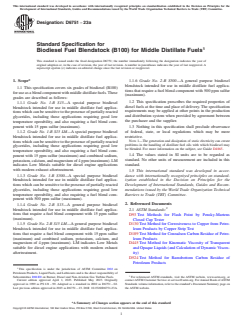
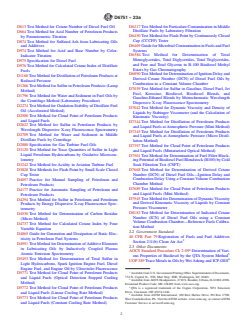
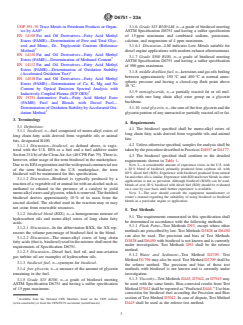
(Specification)Standard Specification for Biodiesel Fuel Blendstock (B100) for Middle Distillate Fuels
General Information
- Abstract
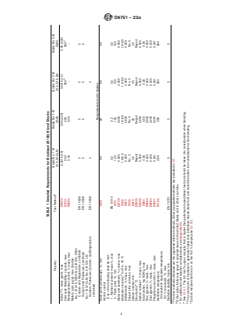
ABSTRACT
This specification covers biodiesel fuel blend stock, B100, in Grades S15 and S500 for use as a blend component with middle distillate fuels. This specification prescribes the required properties of diesel fuels at the time and place of delivery. The requirements stated here may be applied at other points in the production and distribution system when provided by agreement between the purchaser and the supplier. The biodiesel specified shall be mono-alkyl esters of long chain fatty acids derived from vegetable oils and animal fats. The product shall undergo chemical analysis for flash point, methanol, water and sediment, kinematic viscosity, sulfated ash, oxidation stability, sulfur, copper strip corrosion, cetane number, cloud point, acid number, carbon residue, total and free glycerin, phosphorus, reduce pressure distillation temperature, atmospheric equivalent temperature, combined calcium and magnesium, and combined sodium and magnesium.
SCOPE
1.1 This specification covers six grades of biodiesel (B100) for use as a blend component with middle distillate fuels. These grades are described as follows:
1.1.1 Grade No. 1-B S15—A special purpose biodiesel blendstock intended for use in middle distillate fuel applications which can be sensitive to the presence of partially reacted glycerides, including those applications requiring good low temperature operability, and also requiring a fuel blend component with 15 ppm sulfur (maximum).
1.1.2 Grade No. 1-B S15 LM—A special purpose biodiesel blendstock intended for use in middle distillate fuel applications which can be sensitive to the presence of partially reacted glycerides, including those applications requiring good low temperature operability, and also requiring a fuel blend component with 15 ppm sulfur (maximum) and combined sodium, potassium, calcium, and magnesium of 4 ppm (maximum). LM indicates Low Metals suitable for diesel engine applications with modern exhaust aftertreatment.
1.1.3 Grade No. 1-B S500—A special purpose biodiesel blendstock intended for use in middle distillate fuel applications which can be sensitive to the presence of partially reacted glycerides, including those applications requiring good low temperature operability, and also requiring a fuel blend component with 500 ppm sulfur (maximum).
1.1.4 Grade No. 2-B S15—A general purpose biodiesel blendstock intended for use in middle distillate fuel applications that require a fuel blend component with 15 ppm sulfur (maximum).
1.1.5 Grade No. 2-B S15 LM—A general purpose biodiesel blendstock intended for use in middle distillate fuel applications that require a fuel blend component with 15 ppm sulfur (maximum) and combined sodium, potassium, calcium, and magnesium of 4 ppm (maximum). LM indicates Low Metals suitable for diesel engine applications with modern exhaust aftertreatment.
1.1.6 Grade No. 2-B S500—A general purpose biodiesel blendstock intended for use in middle distillate fuel applications that require a fuel blend component with 500 ppm sulfur (maximum).
1.2 This specification prescribes the required properties of diesel fuels at the time and place of delivery. The specification requirements may be applied at other points in the production and distribution system when provided by agreement between the purchaser and the supplier.
1.3 Nothing in this specification shall preclude observance of federal, state, or local regulations which may be more restrictive.
Note 1: The generation and dissipation of static electricity can create problems in the handling of distillate fuel oils with which biodiesel may be blended. For more information on the subject, see Guide D4865.
1.4 The values stated in SI units are to be regarded as standard. No other units of measurement are included in this standard.
1.5 This international standard was developed in accordance with internationally recognized principles on standardization established in the Decision on...
- Status
- Published
- Publication Date
- 31-Mar-2023
- Technical Committee
- D02 - Petroleum Products, Liquid Fuels, and Lubricants
- Drafting Committee
- D02.E0 - Burner, Diesel and Non-Aviation Gas Turbine Fuels
Buy Documents
ASTM D6751-23a - Standard Specification for Biodiesel Fuel Blendstock (B100) for Middle Distillate Fuels
REDLINE ASTM D6751-23a - Standard Specification for Biodiesel Fuel Blendstock (B100) for Middle Distillate Fuels
Overview
ASTM D6751-23a is the standard specification for Biodiesel Fuel Blendstock (B100) to be used as a blend component in middle distillate fuels, such as diesel. Issued by ASTM International, this standard defines the key properties and quality criteria for B100 biodiesel produced from mono-alkyl esters of long chain fatty acids derived from vegetable oils and animal fats. It aims to ensure that the blendstock is suitable for use in various diesel fuel applications and complies with environmental and performance requirements.
This specification is applicable to six grades of biodiesel-special and general-purpose-based on sulfur content (S15, S500) and the allowable amount of combined metals, offering flexibility based on engine technologies and regulatory demands. ASTM D6751-23a is widely referenced for fuel quality assurance, regulatory compliance, and sustainable fuel blending practices.
Key Topics
Grades of B100 Biodiesel:
- No. 1-B S15 and S500: Special-purpose grades for applications sensitive to partially reacted glycerides and requiring good low temperature operability, available with 15 ppm and 500 ppm sulfur limits.
- No. 1-B S15 LM: Low Metals (LM) grade suitable for engines with modern exhaust aftertreatment, with a stricter metals limit (4 ppm for combined sodium, potassium, calcium, and magnesium).
- No. 2-B S15 and S500: General-purpose grades for broader middle distillate applications, with 15 ppm and 500 ppm sulfur content.
- No. 2-B S15 LM: General-purpose LM grade, designed for engines with advanced emissions controls.
Quality Parameters:
Biodiesel under ASTM D6751-23a must meet requirements for:- Flash point and cold soak filterability
- Sulfur content (ultra-low sulfur and standard sulfur grades)
- Metals (Na, K, Ca, Mg) content
- Glycerin (total and free) and monoglycerides
- Oxidation stability
- Kinematic viscosity, cloud point, acid number, and carbon residue
- Phosphorus and water/sediment content
- Cetane number and copper strip corrosion
Testing and Compliance:
- Explicit test methods are specified for each property, many referencing other ASTM procedures.
- All results must conform at the time and place of product delivery.
- Additional or more stringent local, state, or federal regulations may apply.
Definitions and Terminology:
The standard clarifies definitions for terms such as biodiesel, biodiesel blend (BXX), grade classifications, and relevant measurement descriptors for effective communication and compliance.
Applications
ASTM D6751-23a is crucial for stakeholders across the biodiesel and petroleum industries, including:
Fuel Producers and Suppliers:
Provides clear criteria for producing and supplying high-quality biodiesel blendstock for diesel blends, supporting product consistency and marketplace confidence.Blenders and Distributors:
Ensures the blend component (B100) meets purity and performance standards to avoid engine deposit issues, filter plugging, and to facilitate smooth operation especially in engines with modern exhaust aftertreatment systems.Fleet Operators & End Users:
Fleet owners, vehicle operators, and equipment managers rely on B100 conforming to this standard to help prevent operational issues related to fuel quality, promoting reliable performance in both on-road and off-road diesel applications.Regulatory Authorities:
Utilized as a benchmark for fuel quality oversight, enabling compliance with environmental and emissions regulations for alternative and renewable fuels.
Related Standards
The following standards and documents are referenced or relevant alongside ASTM D6751-23a:
- ASTM D975: Specification for Diesel Fuel Oils, which may be used in combination with biodiesel blendstock.
- ASTM D4865: Guide for the Generation and Dissipation of Static Electricity in Petroleum Fuel Systems.
- ASTM D130, D445, D664, D2709, D6584: Test methods for corrosion, viscosity, acid number, water/sediment, and glycerin content, respectively.
- EN 14105, EN 14110, EN 15751: European test methods for FAME (biodiesel), methanol, and oxidation stability.
- U.S. EPA 40 CFR Part 79: Fuel and fuel additive registration requirements.
- ASTM D6469: Guide for Microbial Contamination in Fuels and Fuel Systems.
Keywords: ASTM D6751-23a, biodiesel, B100, blendstock, middle distillate fuels, diesel, sulfur content, fuel standards, renewable fuel, alternative fuel, fuel quality, biofuel standards, ASTM biodiesel specifications.
Relations
- Effective Date
- 01-Apr-2024
- Effective Date
- 01-Feb-2024
- Effective Date
- 15-Dec-2023
- Effective Date
- 01-Dec-2023
- Effective Date
- 01-Nov-2023
- Effective Date
- 01-Nov-2023
- Effective Date
- 01-Nov-2023
- Effective Date
- 01-Nov-2023
- Effective Date
- 01-Oct-2023
- Effective Date
- 01-Aug-2020
- Effective Date
- 01-Jul-2019
- Effective Date
- 01-Feb-2019
- Effective Date
- 01-Dec-2018
- Effective Date
- 01-Oct-2018
- Effective Date
- 01-May-2018
Buy Documents
ASTM D6751-23a - Standard Specification for Biodiesel Fuel Blendstock (B100) for Middle Distillate Fuels
REDLINE ASTM D6751-23a - Standard Specification for Biodiesel Fuel Blendstock (B100) for Middle Distillate Fuels
Get Certified
Connect with accredited certification bodies for this standard

Element Materials Technology
Materials testing and product certification.

ABS Group Brazil
ABS Group certification services in Brazil.

ABS Quality Evaluations Inc.
American Bureau of Shipping quality certification.
Sponsored listings
Frequently Asked Questions
ASTM D6751-23a is a technical specification published by ASTM International. Its full title is "Standard Specification for Biodiesel Fuel Blendstock (B100) for Middle Distillate Fuels". This standard covers: ABSTRACT This specification covers biodiesel fuel blend stock, B100, in Grades S15 and S500 for use as a blend component with middle distillate fuels. This specification prescribes the required properties of diesel fuels at the time and place of delivery. The requirements stated here may be applied at other points in the production and distribution system when provided by agreement between the purchaser and the supplier. The biodiesel specified shall be mono-alkyl esters of long chain fatty acids derived from vegetable oils and animal fats. The product shall undergo chemical analysis for flash point, methanol, water and sediment, kinematic viscosity, sulfated ash, oxidation stability, sulfur, copper strip corrosion, cetane number, cloud point, acid number, carbon residue, total and free glycerin, phosphorus, reduce pressure distillation temperature, atmospheric equivalent temperature, combined calcium and magnesium, and combined sodium and magnesium. SCOPE 1.1 This specification covers six grades of biodiesel (B100) for use as a blend component with middle distillate fuels. These grades are described as follows: 1.1.1 Grade No. 1-B S15—A special purpose biodiesel blendstock intended for use in middle distillate fuel applications which can be sensitive to the presence of partially reacted glycerides, including those applications requiring good low temperature operability, and also requiring a fuel blend component with 15 ppm sulfur (maximum). 1.1.2 Grade No. 1-B S15 LM—A special purpose biodiesel blendstock intended for use in middle distillate fuel applications which can be sensitive to the presence of partially reacted glycerides, including those applications requiring good low temperature operability, and also requiring a fuel blend component with 15 ppm sulfur (maximum) and combined sodium, potassium, calcium, and magnesium of 4 ppm (maximum). LM indicates Low Metals suitable for diesel engine applications with modern exhaust aftertreatment. 1.1.3 Grade No. 1-B S500—A special purpose biodiesel blendstock intended for use in middle distillate fuel applications which can be sensitive to the presence of partially reacted glycerides, including those applications requiring good low temperature operability, and also requiring a fuel blend component with 500 ppm sulfur (maximum). 1.1.4 Grade No. 2-B S15—A general purpose biodiesel blendstock intended for use in middle distillate fuel applications that require a fuel blend component with 15 ppm sulfur (maximum). 1.1.5 Grade No. 2-B S15 LM—A general purpose biodiesel blendstock intended for use in middle distillate fuel applications that require a fuel blend component with 15 ppm sulfur (maximum) and combined sodium, potassium, calcium, and magnesium of 4 ppm (maximum). LM indicates Low Metals suitable for diesel engine applications with modern exhaust aftertreatment. 1.1.6 Grade No. 2-B S500—A general purpose biodiesel blendstock intended for use in middle distillate fuel applications that require a fuel blend component with 500 ppm sulfur (maximum). 1.2 This specification prescribes the required properties of diesel fuels at the time and place of delivery. The specification requirements may be applied at other points in the production and distribution system when provided by agreement between the purchaser and the supplier. 1.3 Nothing in this specification shall preclude observance of federal, state, or local regulations which may be more restrictive. Note 1: The generation and dissipation of static electricity can create problems in the handling of distillate fuel oils with which biodiesel may be blended. For more information on the subject, see Guide D4865. 1.4 The values stated in SI units are to be regarded as standard. No other units of measurement are included in this standard. 1.5 This international standard was developed in accordance with internationally recognized principles on standardization established in the Decision on...
ABSTRACT This specification covers biodiesel fuel blend stock, B100, in Grades S15 and S500 for use as a blend component with middle distillate fuels. This specification prescribes the required properties of diesel fuels at the time and place of delivery. The requirements stated here may be applied at other points in the production and distribution system when provided by agreement between the purchaser and the supplier. The biodiesel specified shall be mono-alkyl esters of long chain fatty acids derived from vegetable oils and animal fats. The product shall undergo chemical analysis for flash point, methanol, water and sediment, kinematic viscosity, sulfated ash, oxidation stability, sulfur, copper strip corrosion, cetane number, cloud point, acid number, carbon residue, total and free glycerin, phosphorus, reduce pressure distillation temperature, atmospheric equivalent temperature, combined calcium and magnesium, and combined sodium and magnesium. SCOPE 1.1 This specification covers six grades of biodiesel (B100) for use as a blend component with middle distillate fuels. These grades are described as follows: 1.1.1 Grade No. 1-B S15—A special purpose biodiesel blendstock intended for use in middle distillate fuel applications which can be sensitive to the presence of partially reacted glycerides, including those applications requiring good low temperature operability, and also requiring a fuel blend component with 15 ppm sulfur (maximum). 1.1.2 Grade No. 1-B S15 LM—A special purpose biodiesel blendstock intended for use in middle distillate fuel applications which can be sensitive to the presence of partially reacted glycerides, including those applications requiring good low temperature operability, and also requiring a fuel blend component with 15 ppm sulfur (maximum) and combined sodium, potassium, calcium, and magnesium of 4 ppm (maximum). LM indicates Low Metals suitable for diesel engine applications with modern exhaust aftertreatment. 1.1.3 Grade No. 1-B S500—A special purpose biodiesel blendstock intended for use in middle distillate fuel applications which can be sensitive to the presence of partially reacted glycerides, including those applications requiring good low temperature operability, and also requiring a fuel blend component with 500 ppm sulfur (maximum). 1.1.4 Grade No. 2-B S15—A general purpose biodiesel blendstock intended for use in middle distillate fuel applications that require a fuel blend component with 15 ppm sulfur (maximum). 1.1.5 Grade No. 2-B S15 LM—A general purpose biodiesel blendstock intended for use in middle distillate fuel applications that require a fuel blend component with 15 ppm sulfur (maximum) and combined sodium, potassium, calcium, and magnesium of 4 ppm (maximum). LM indicates Low Metals suitable for diesel engine applications with modern exhaust aftertreatment. 1.1.6 Grade No. 2-B S500—A general purpose biodiesel blendstock intended for use in middle distillate fuel applications that require a fuel blend component with 500 ppm sulfur (maximum). 1.2 This specification prescribes the required properties of diesel fuels at the time and place of delivery. The specification requirements may be applied at other points in the production and distribution system when provided by agreement between the purchaser and the supplier. 1.3 Nothing in this specification shall preclude observance of federal, state, or local regulations which may be more restrictive. Note 1: The generation and dissipation of static electricity can create problems in the handling of distillate fuel oils with which biodiesel may be blended. For more information on the subject, see Guide D4865. 1.4 The values stated in SI units are to be regarded as standard. No other units of measurement are included in this standard. 1.5 This international standard was developed in accordance with internationally recognized principles on standardization established in the Decision on...
ASTM D6751-23a is classified under the following ICS (International Classification for Standards) categories: 75.160.20 - Liquid fuels. The ICS classification helps identify the subject area and facilitates finding related standards.
ASTM D6751-23a has the following relationships with other standards: It is inter standard links to ASTM D445-24, ASTM D613-24, ASTM D975-23a, ASTM D7345-23, ASTM D3242-23, ASTM D7945-23, ASTM D445-23, ASTM D4865-23, ASTM D7668-23, ASTM D93-20, ASTM D5453-19a, ASTM D975-19, ASTM D975-18a, ASTM D2880-18a, ASTM D2880-18. Understanding these relationships helps ensure you are using the most current and applicable version of the standard.
ASTM D6751-23a is available in PDF format for immediate download after purchase. The document can be added to your cart and obtained through the secure checkout process. Digital delivery ensures instant access to the complete standard document.
Standards Content (Sample)
This international standard was developed in accordance with internationally recognized principles on standardization established in the Decision on Principles for the
Development of International Standards, Guides and Recommendations issued by the World Trade Organization Technical Barriers to Trade (TBT) Committee.
Designation: D6751 − 23a
Standard Specification for
Biodiesel Fuel Blendstock (B100) for Middle Distillate Fuels
This standard is issued under the fixed designation D6751; the number immediately following the designation indicates the year of
original adoption or, in the case of revision, the year of last revision. A number in parentheses indicates the year of last reapproval. A
superscript epsilon (´) indicates an editorial change since the last revision or reapproval.
1. Scope* 1.1.6 Grade No. 2-B S500—A general purpose biodiesel
blendstock intended for use in middle distillate fuel applica-
1.1 This specification covers six grades of biodiesel (B100)
tions that require a fuel blend component with 500 ppm sulfur
for use as a blend component with middle distillate fuels. These
(maximum).
grades are described as follows:
1.2 This specification prescribes the required properties of
1.1.1 Grade No. 1-B S15—A special purpose biodiesel
diesel fuels at the time and place of delivery. The specification
blendstock intended for use in middle distillate fuel applica-
requirements may be applied at other points in the production
tions which can be sensitive to the presence of partially reacted
and distribution system when provided by agreement between
glycerides, including those applications requiring good low
the purchaser and the supplier.
temperature operability, and also requiring a fuel blend com-
ponent with 15 ppm sulfur (maximum).
1.3 Nothing in this specification shall preclude observance
1.1.2 Grade No. 1-B S15 LM—A special purpose biodiesel of federal, state, or local regulations which may be more
blendstock intended for use in middle distillate fuel applica- restrictive.
NOTE 1—The generation and dissipation of static electricity can create
tions which can be sensitive to the presence of partially reacted
problems in the handling of distillate fuel oils with which biodiesel may
glycerides, including those applications requiring good low
be blended. For more information on the subject, see Guide D4865.
temperature operability, and also requiring a fuel blend com-
1.4 The values stated in SI units are to be regarded as
ponent with 15 ppm sulfur (maximum) and combined sodium,
standard. No other units of measurement are included in this
potassium, calcium, and magnesium of 4 ppm (maximum). LM
standard.
indicates Low Metals suitable for diesel engine applications
with modern exhaust aftertreatment.
1.5 This international standard was developed in accor-
1.1.3 Grade No. 1-B S500—A special purpose biodiesel dance with internationally recognized principles on standard-
blendstock intended for use in middle distillate fuel applica- ization established in the Decision on Principles for the
tions which can be sensitive to the presence of partially reacted Development of International Standards, Guides and Recom-
mendations issued by the World Trade Organization Technical
glycerides, including those applications requiring good low
temperature operability, and also requiring a fuel blend com- Barriers to Trade (TBT) Committee.
ponent with 500 ppm sulfur (maximum).
2. Referenced Documents
1.1.4 Grade No. 2-B S15—A general purpose biodiesel
blendstock intended for use in middle distillate fuel applica-
2.1 ASTM Standards:
tions that require a fuel blend component with 15 ppm sulfur
D93 Test Methods for Flash Point by Pensky-Martens
(maximum).
Closed Cup Tester
1.1.5 Grade No. 2-B S15 LM—A general purpose biodiesel D130 Test Method for Corrosiveness to Copper from Petro-
blendstock intended for use in middle distillate fuel applica- leum Products by Copper Strip Test
tions that require a fuel blend component with 15 ppm sulfur
D189 Test Method for Conradson Carbon Residue of Petro-
(maximum) and combined sodium, potassium, calcium, and leum Products
magnesium of 4 ppm (maximum). LM indicates Low Metals D445 Test Method for Kinematic Viscosity of Transparent
suitable for diesel engine applications with modern exhaust and Opaque Liquids (and Calculation of Dynamic Viscos-
aftertreatment. ity)
D524 Test Method for Ramsbottom Carbon Residue of
Petroleum Products
This specification is under the jurisdiction of ASTM Committee D02 on
Petroleum Products, Liquid Fuels, and Lubricants and is the direct responsibility of
Subcommittee D02.E0 on Burner, Diesel and Non-Aviation Gas Turbine Fuels. For referenced ASTM standards, visit the ASTM website, www.astm.org, or
Current edition approved April 1, 2023. Published May 2023. Originally contact ASTM Customer Service at service@astm.org. For Annual Book of ASTM
approved in 1999 as PS 121 – 99. Adopted as a standard in 2002 as D6751 – 02. Standards volume information, refer to the standard’s Document Summary page on
Last previous edition approved in 2023 as D6751 – 23. DOI: 10.1520/D6751-23A. the ASTM website.
*A Summary of Changes section appears at the end of this standard
Copyright © ASTM International, 100 Barr Harbor Drive, PO Box C700, West Conshohocken, PA 19428-2959. United States
D6751 − 23a
D613 Test Method for Cetane Number of Diesel Fuel Oil D6217 Test Method for Particulate Contamination in Middle
D664 Test Method for Acid Number of Petroleum Products Distillate Fuels by Laboratory Filtration
D6450 Test Method for Flash Point by Continuously Closed
by Potentiometric Titration
Cup (CCCFP) Tester
D874 Test Method for Sulfated Ash from Lubricating Oils
D6469 Guide for Microbial Contamination in Fuels and Fuel
and Additives
Systems
D974 Test Method for Acid and Base Number by Color-
D6584 Test Method for Determination of Total
Indicator Titration
Monoglycerides, Total Diglycerides, Total Triglycerides,
D975 Specification for Diesel Fuel
and Free and Total Glycerin in B-100 Biodiesel Methyl
D976 Test Method for Calculated Cetane Index of Distillate
Esters by Gas Chromatography
Fuels
D6890 Test Method for Determination of Ignition Delay and
D1160 Test Method for Distillation of Petroleum Products at
Derived Cetane Number (DCN) of Diesel Fuel Oils by
Reduced Pressure
Combustion in a Constant Volume Chamber
D1266 Test Method for Sulfur in Petroleum Products (Lamp
D7039 Test Method for Sulfur in Gasoline, Diesel Fuel, Jet
Method)
Fuel, Kerosine, Biodiesel, Biodiesel Blends, and
D1796 Test Method for Water and Sediment in Fuel Oils by
Gasoline-Ethanol Blends by Monochromatic Wavelength
the Centrifuge Method (Laboratory Procedure)
Dispersive X-ray Fluorescence Spectrometry
D2274 Test Method for Oxidation Stability of Distillate Fuel
D7042 Test Method for Dynamic Viscosity and Density of
Oil (Accelerated Method)
Liquids by Stabinger Viscometer (and the Calculation of
D2500 Test Method for Cloud Point of Petroleum Products
Kinematic Viscosity)
and Liquid Fuels
D7344 Test Method for Distillation of Petroleum Products
D2622 Test Method for Sulfur in Petroleum Products by
and Liquid Fuels at Atmospheric Pressure (Mini Method)
Wavelength Dispersive X-ray Fluorescence Spectrometry
D7345 Test Method for Distillation of Petroleum Products
D2709 Test Method for Water and Sediment in Middle
and Liquid Fuels at Atmospheric Pressure (Micro Distil-
Distillate Fuels by Centrifuge
lation Method)
D2880 Specification for Gas Turbine Fuel Oils
D7397 Test Method for Cloud Point of Petroleum Products
D3120 Test Method for Trace Quantities of Sulfur in Light
and Liquid Fuels (Miniaturized Optical Method)
Liquid Petroleum Hydrocarbons by Oxidative Microcou-
D7501 Test Method for Determination of Fuel Filter Block-
lometry
ing Potential of Biodiesel Fuel Blendstock (B100) by Cold
D3242 Test Method for Acidity in Aviation Turbine Fuel Soak Filtration Test (CSFT)
D3828 Test Methods for Flash Point by Small Scale Closed D7668 Test Method for Determination of Derived Cetane
Cup Tester Number (DCN) of Diesel Fuel Oils—Ignition Delay and
D4057 Practice for Manual Sampling of Petroleum and Combustion Delay Using a Constant Volume Combustion
Chamber Method
Petroleum Products
D7689 Test Method for Cloud Point of Petroleum Products
D4177 Practice for Automatic Sampling of Petroleum and
and Liquid Fuels (Mini Method)
Petroleum Products
D7945 Test Method for Determination of Dynamic Viscosity
D4294 Test Method for Sulfur in Petroleum and Petroleum
and Derived Kinematic Viscosity of Liquids by Constant
Products by Energy Dispersive X-ray Fluorescence Spec-
Pressure Viscometer
trometry
D8183 Test Method for Determination of Indicated Cetane
D4530 Test Method for Determination of Carbon Residue
Number (ICN) of Diesel Fuel Oils using a Constant
(Micro Method)
Volume Combustion Chamber—Reference Fuels Calibra-
D4737 Test Method for Calculated Cetane Index by Four
tion Method
Variable Equation
2.2 Government Standard:
D4865 Guide for Generation and Dissipation of Static Elec-
40 CFR Part 79 Registration of Fuels and Fuel Additives
tricity in Petroleum Fuel Systems
Section 211(b) Clean Air Act
D4951 Test Method for Determination of Additive Elements
2.3 Other Documents:
in Lubricating Oils by Inductively Coupled Plasma
AOCS Standard Procedure Ck 2-09 Determination of Vari-
Atomic Emission Spectrometry
ous Properties of Biodiesel by the QTA System Method
D5453 Test Method for Determination of Total Sulfur in
UOP 389 Trace Metals in Oils by Wet Ashing and ICP-OES
Light Hydrocarbons, Spark Ignition Engine Fuel, Diesel
Engine Fuel, and Engine Oil by Ultraviolet Fluorescence
Available from U.S. Government Printing Office Superintendent of Documents,
D5771 Test Method for Cloud Point of Petroleum Products
732 N. Capitol St., NW, Mail Stop: SDE, Washington, DC 20401.
and Liquid Fuels (Optical Detection Stepped Cooling
Available from AOCS Headquarters, 2710 S. Boulder, Urbana, IL 61802–6996.
Method)
Download Product Code: MC-CK209 from www.aocs.org.
QTA is a registered trademark of the Cognis Corporation, 5051 Estecreek
D5772 Test Method for Cloud Point of Petroleum Products
Drive, Cincinnati, OH 45232-1446.
and Liquid Fuels (Linear Cooling Rate Method)
Available from ASTM International, 100 Barr Harbor Drive, PO Box C700,
D5773 Test Method for Cloud Point of Petroleum Products
West Conshohocken, PA. Visit the ASTM website, www.astm.org, or contact ASTM
and Liquid Fuels (Constant Cooling Rate Method) Customer Service at service@astm.org.
D6751 − 23a
UOP 391–91 Trace Metals in Petroleum Products or Organ- 3.1.6 Grade S15 B100 LM, n—a grade of biodiesel meeting
ics by AAS ASTM Specification D6751 and having a sulfur specification
EN 14105 Fat and Oil Derivatives—Fatty Acid Methyl of 15 ppm maximum and combined sodium, potassium,
Esters (FAME)—Determination of Free and Total Glyc- calcium, and magnesium of 4 ppm maximum.
erol and Mono-, Di-, Triglyceride Contents (Reference 3.1.6.1 Discussion—LM indicates Low Metals suitable for
Method) diesel engine applications with modern exhaust aftertreatment.
EN 14110 Fat and Oil Derivatives—Fatty Acid Methyl
3.1.7 Grade S500 B100, n—a grade of biodiesel meeting
Esters (FAME)—Determination of Methanol Content
ASTM Specification D6751 and having a sulfur specification
EN 14112 Fat and Oil Derivatives—Fatty Acid Methyl
of 500 ppm maximum.
Esters (FAME)—Determination of Oxidation Stability
3.1.8 middle distillate fuel, n—kerosines and gas oils boiling
(Accelerated Oxidation Test)
between approximately 150 °C and 400 °C at normal atmo-
EN 14538 Fat and Oil Derivatives—Fatty Acid Methyl
spheric pressure and having a closed-cup flash point above
Esters (FAME)—Determination of Ca, K, Mg and Na
38 °C.
Content by Optical Emission Spectral Analysis with
3.1.9 monoglyceride, n—a partially reacted fat or oil mol-
Inductively Coupled Plasma (ICP OES)
ecule with one long chain alkyl ester group on a glycerin
EN 15751 Automotive Fuels—Fatty Acid Methyl Ester
backbone.
(FAME) Fuel and Blends with Diesel Fuel—
Determination of Oxidation Stability by Accelerated Oxi-
3.1.10 total glycerin, n—the sum of the free glycerin and the
dation Method glycerin portion of any unreacted or partially reacted oil or fat.
3. Terminology
4. Requirements
3.1 Definitions:
4.1 The biodiesel specified shall be mono-alkyl esters of
3.1.1 biodiesel, n—fuel comprised of mono-alkyl esters of
long chain fatty acids derived from vegetable oils and animal
long chain fatty acids derived from vegetable oils or animal
fats.
fats, designated B100.
4.2 Unless otherwise specified, samples for analysis shall be
3.1.1.1 Discussion—biodiesel, as defined above, is regis-
taken by the procedure described in Practices D4057 or D4177.
tered with the U.S. EPA as a fuel and a fuel additive under
Section 211(b) of the Clean Air Act (40 CFR Part 79). There is,
4.3 The biodiesel specified shall conform to the detailed
however, other usage of the term biodiesel in the marketplace.
requirements shown in Table 1.
Due to its EPA registration and the widespread commercial use
NOTE 2—A considerable amount of experience exists in the U.S. with
a 20 % blend of biodiesel, primarily produced from soybean oil, with
of the term biodiesel in the U.S. marketplace, the term
80 % diesel fuel (B20). Experience with biodiesel produced from animal
biodiesel will be maintained for this specification.
fat and other oils is similar. Experience with B20 and lower blends in other
3.1.1.2 Discussion—Biodiesel is typically produced by a
applications is not as prevalent. Although biodiesel (B100) can be used,
reaction of a vegetable oil or animal fat with an alcohol such as
blends of over 20 % biodiesel with diesel fuel (B20) should be evaluated
methanol or ethanol in the presence of a catalyst to yield
on a case by case basis until further experience is available.
NOTE 3—The user should consult the equipment manufacturer or
mono-alkyl esters and glycerin, which is removed. The finished
owner’s manual regarding the suitability of using biodiesel or biodiesel
biodiesel derives approximately 10 % of its mass from the
blends in a particular engine or application.
reacted alcohol. The alcohol used in the reaction may or may
not come from renewable resources.
5. Test Methods
3.1.2 biodiesel blend (BXX), n—a homogeneous mixture of
5.1 The requirements enumerated in this specification shall
hydrocarbon oils and mono-alkyl esters of long chain fatty
be determined in accordance with the following methods.
acids.
5.1.1 Flash Point—Test Methods D93, except where other
3.1.2.1 Discussion—In the abbreviation BXX, the XX rep-
methods are prescribed by law. Test Methods D3828 or D6450
resents the volume percentage of biodiesel fuel in the blend.
can also be used. The precision and bias of Test Methods
3.1.2.2 Discussion—The mono-alkyl esters of long chain
D3828 and D6450 with biodiesel is not known and is currently
fatty acids (that is, biodiesel) used in the mixture shall meet the
under investigation. Test Methods D93 shall be the referee
requirements of Specification D6751.
method.
3.1.2.3 Discussion—Diesel fuel, fuel oil, and non-aviation
5.1.2 Water and Sediment—Test Method D2709. Test
gas turbine oil are examples of hydrocarbon oils.
Method D1796 may also be used. Test Method D2709 shall be
3.1.3 biodiesel fuel, n—synonym for biodiesel.
the referee method. The precision and bias of these test
3.1.4 free glycerin, n—a measure of the amount of glycerin
methods with biodiesel is not known and is currently under
remaining in the fuel.
investigation.
5.1.3 Viscosity—Test Methods D445, D7042, or D7945 may
3.1.5 Grade S15 B100, n—a grade of biodiesel meeting
be used with the same limits. Bias-corrected results from Test
ASTM Specification D6751 and having a sulfur specification
Method D7042 shall be reported as “Predicted D445.” Use bias
of 15 ppm maximum.
correction for biodiesel fuel according the Precision and Bias
section of Test Method D7042. In case of dispute, Test Method
Available from the National CEN Members listed on the CEN website
(www.cenorm.be) or from the CEN/TC19 secretariat (astm@nen.nl). D445 shall be used as the referee test method.
D6751 − 23a
TABLE 1 Detailed Requirements for Biodiesel (B100) Blend Stocks
Grade No. 1-B Grade No. 1-B Grade No. 2-B Grade No. 2-B
A
Property Test Method
S15, S15 LM S500 S15, S15 LM S500
B
Sulfur, % mass (ppm), max D5453 0.0015 (15) 0.05 (500) 0.0015 (15) 0.05 (500)
C C
Cold soak filterability, seconds, max D7501 200 200 360 360
Monoglyceride content, % mass, max D6584 0.40 0.40 . .
Metals, ppm (μg/g), max, Grades:
No. 1-B S15, S500; No 2-B S15, S500
Calcium and Magnesium, combined EN 14538 5 5 5 5
Sodium and Potassium, combined EN 14538 5 5 5 5
No. 1-B S15 LM, No. 2-B S15 LM
Sodium, Potassium, Calcium, and Magnesium, EN 14538 4 4
combined
Requirements for All Grades
Flash point (closed cup), °C, min D93 93 93 93 93
Alcohol control
One of the following shall be met:
1. Methanol content, mass %, max EN 14110 0.2 0.2 0.2 0.2
2. Flash point, °C, min D93 130 130 130 130
Water and sediment, % volume, max D2709 0.050 0.050 0.050 0.050
D 2
Kinematic viscosity, mm /s, 40 °C D445 1.9-6.0 1.9-6.0 1.9-6.0 1.9-6.0
Sulfated ash, % mass, max D874 0.020 0.020 0.020 0.020
Copper strip corrosion, max D130 No. 3 No. 3 No. 3 No. 3
Cetane number, min D613 45 45 45 45
E
Cloud point, °C D2500 Report Report Report Report
F
Carbon residue, % mass, max D4530 0.050 0.050 0.050 0.050
Acid number, mg KOH/g, max D664 0.50 0.50 0.50 0.50
Free glycerin, % mass, max D6584 0.020 0.020 0.020 0.020
Total glycerin, % mass, max D6584 0.240 0.240 0.240 0.240
Phosphorus content, % mass, max D4951 0.001 0.001 0.001 0.001
Distillation temperature, D1160 360 360 360 360
Atmospheric equivalent temperature,
90 % recovered, °C, max
Oxidation stability, hours, min EN 15751 3 3 3 3
A
The test methods indicated are the approved referee methods. Other acceptable methods are indicated in 5.1.
B
Other sulfur limits may apply in selected areas in the United States and in other countries.
C
For additional cold weather considerations, see Appendix X3.
D 2
See X1.3.1. The 6.0 mm /s upper viscosity limit is higher than petroleum based diesel fuel and should be taken into consideration when blending.
E
The cloud point of biodiesel is generally higher than petroleum based diesel fuel and should be taken into consideration when blending.
F
Carbon residue shall be run on the 100 % sample (see 5.1.12).
D6751 − 23a
5.1.4 Monoglycerides—Test Method D6584, Test Method 5.1.13 Total Glycerin—Test Method D6584. AOCS Stan-
EN 14105, and AOCS Standard Procedure Ck 2-09 may be dard Procedure Ck 2-09 may also be used. Test Method D6584
used. Test Method D6584 shall be the referee test method. is the referee method.
5.1.5 Sulfated Ash—Test Method D874.
5.1.14 Free Glycerin—Test Method D6584. AOCS Standard
5.1.6 Oxidation Stability—Test Method EN 15751. Test
Procedure Ck 2-09 may also be used. Test Method D6584 is the
Method EN 14112 may also be used. See X1.19.1 for further
referee method.
information. Test Method EN 15751 shall be the referee test
5.1.15 Phosphorus Content—Test Method D4951.
method.
5.1.16 Distillation Temperature—Test Method(s) D1160
5.1.7 Sulfur—Test Method D5453. Test Method D7039 may
(reduced pressure method), or D7344, or D7345 may be used.
also be used. Other test methods may also be suitable for
When using Test Method D7344, correct for observed bias by
determining up to 0.05 % (500 ppm) sulfur in biodiesel fuels
adding 3 °C to the temperature result before comparing the
such as Test Methods D1266, D2622, D3120 and D4294 but
result to the Table 1 requirement and report the Test Method
may provide falsely high results (see X1.5) although their
D7344 value as “bias-corrected.” Test Method D1160 shall be
precision and bias with biodiesel is unknown. Test Method
the referee test method.
D5453 shall be the referee test method.
5.1.17 Calcium and Magnesium, combined—Test Method
5.1.8 Corrosion—Test Method D130, 3 h test at 50 °C.
EN 14538. Test Method UOP 389 may also be used. Test
5.1.9 Cetane Number—Test Method D613. Test Method
Method EN 14538 shall be the referee test method.
D6890, D7668 (see Note 4), or D8183 (Note 5) may also be
5.1.18 Sodium and Potassium, combined—Test Method EN
used. In case of dispute, Test Method D613 shall be the referee
14538. Test Method UOP 391 may also be used. Test Method
method.
EN 14538 shall be the referee test method.
NOTE 4—Precision from Test Method D7668 were obtained from
5.1.19 Cold Soak Filterability—Test Method D7501. B100
results produced by laboratories using externally obtained pre-blended
intended for blending into diesel fuels that is expected to give
calibration reference material.
satisfactory vehicle performance at fuel temperatures at or
NOTE 5—Precision from Test Method D8183 were obtained from
results produced by laboratories using pre-blended calibration reference
below –12 °C shall comply with a cold soak filtration limit of
materials from a single source.
200 s maximum.
5.1.10 Cloud Point—Test Method D2500. Test Method
5.1.20 Methanol Content—Test Method EN 14110. AOCS
D5771, D5772, D5773, D7397, D7689, or AOCS Standard
Standard Procedure Ck 2-09 may also be used. Test Method
Procedure Ck 2-09 may also be used. Test Method D2500 shall
EN 14110 shall be the referee test method.
be the referee test method.
5.1.11 Acid Number—Test Method D664. Test Methods
6. Workmanship
D3242 or D974 may also be used. Test Method D664 shall be
6.1 The biodiesel fuel shall be visually free of undissolved
the referee test method.
water, sediment, and suspended matter.
5.1.12 Carbon Residue—Test Method D4530. A 100 %
sample shall replace the 10 % residual, with percent residue in
7. Keywords
the original sample reported using the 10 % residual calcula-
7.1 alternative fuel; biodiesel fuel; diesel fuel oil; fuel oil;
tion (see X1.9.1). Test Methods D189 or D524 may also be
used. Test Method D4530 shall be the referee method. renewable resource
D6751 − 23a
APPENDIXES
(Nonmandatory Information)
X1. SIGNIFICANCE OF PROPERTIES SPECIFIED FOR BIODIESEL FUEL
X1.1 Introduction depends largely on operating conditions. Fuel sulfur can also
affect emissions control systems performance and various
X1.1.1 The properties of commercial biodiesel fuel depends
limits on sulfur have been imposed for environmental reasons.
upon the refining practices employed and the nature of the
B100 is essentially sulfur-free.
renewable lipids from which it is produced. Biodiesel, for
NOTE X1.1—Test Method D5453 should be used with biodiesel. Use of
example, can be produced from a variety of vegetable oils or
other test methods may provide falsely high results when analyzing B100
animal fats which produce similar volatility characteristics and
with extremely low sulfur levels (less than 5 ppm). Biodiesel sulfur
combustion emissions with varying cold flow properties.
analysis from RR:D02-1480 , Biodiesel Fuel Cetane Number Testing
Program, January-April, 1999, using Test Method D2622 yielded falsely
X1.1.2 The significance of the properties in this appendix
high results due to the presence of the oxygen in the biodiesel. Sulfur
are based primarily on the commercial use of biodiesel in
results using Test Method D2622 were more accurate with B20 than with
on-road and off-road diesel engine applications. Some of the B100 due to the lower oxygen content of B20. Potential improvements to
Test Method D2622 may provide more accurate values in the future.
properties may take on other significance if biodiesel is used as
a fuel or blending component in other applications. See the
X1.6 Copper Strip Corrosion
respective finished product specifications for additional infor-
X1.6.1 This test serves as a measure of possible difficulties
mation on significance of properties of those applications.
with copper and brass or bronze parts of the fuel system. The
X1.2 Flash Point
presence of acids or sulfur-containing compounds can tarnish
the copper strip, thus indicating the possibility for corrosion.
X1.2.1 The flash point, as specified, is not directly related to
engine performance. It is, however, of importance in connec-
X1.7 Cetane Number
tion with legal requirements and safety precautions involved in
X1.7.1 Cetane number is a measure of the ignition quality of
fuel handling and storage that are normally specified to meet
the fuel and influences white smoke and c
...
This document is not an ASTM standard and is intended only to provide the user of an ASTM standard an indication of what changes have been made to the previous version. Because
it may not be technically possible to adequately depict all changes accurately, ASTM recommends that users consult prior editions as appropriate. In all cases only the current version
of the standard as published by ASTM is to be considered the official document.
Designation: D6751 − 23 D6751 − 23a
Standard Specification for
Biodiesel Fuel Blend Stock Blendstock (B100) for Middle
Distillate Fuels
This standard is issued under the fixed designation D6751; the number immediately following the designation indicates the year of
original adoption or, in the case of revision, the year of last revision. A number in parentheses indicates the year of last reapproval. A
superscript epsilon (´) indicates an editorial change since the last revision or reapproval.
1. Scope*
1.1 This specification covers foursix grades of biodiesel (B100) for use as a blend component with middle distillate fuels. These
grades are described as follows:
1.1.1 Grade No. 1-B S15—A special purpose biodiesel blendstock intended for use in middle distillate fuel applications which can
be sensitive to the presence of partially reacted glycerides, including those applications requiring good low temperature operability,
and also requiring a fuel blend component with 15 ppm sulfur (maximum).
1.1.2 Grade No. 1-B S15 LM—A special purpose biodiesel blendstock intended for use in middle distillate fuel applications which
can be sensitive to the presence of partially reacted glycerides, including those applications requiring good low temperature
operability, and also requiring a fuel blend component with 15 ppm sulfur (maximum) and combined sodium, potassium, calcium,
and magnesium of 4 ppm (maximum). LM indicates Low Metals suitable for diesel engine applications with modern exhaust
aftertreatment.
1.1.3 Grade No. 1-B S500—A special purpose biodiesel blendstock intended for use in middle distillate fuel applications which
can be sensitive to the presence of partially reacted glycerides, including those applications requiring good low temperature
operability, and also requiring a fuel blend component with 500 ppm sulfur (maximum).
1.1.4 Grade No. 2-B S15—A general purpose biodiesel blendstock intended for use in middle distillate fuel applications that
require a fuel blend component with 15 ppm sulfur (maximum).
1.1.5 Grade No. 2-B S15 LM—A general purpose biodiesel blendstock intended for use in middle distillate fuel applications that
require a fuel blend component with 15 ppm sulfur (maximum) and combined sodium, potassium, calcium, and magnesium of
4 ppm (maximum). LM indicates Low Metals suitable for diesel engine applications with modern exhaust aftertreatment.
1.1.6 Grade No. 2-B S500—A general purpose biodiesel blendstock intended for use in middle distillate fuel applications that
require a fuel blend component with 500 ppm sulfur (maximum).
1.2 This specification prescribes the required properties of diesel fuels at the time and place of delivery. The specification
requirements may be applied at other points in the production and distribution system when provided by agreement between the
purchaser and the supplier.
1.3 Nothing in this specification shall preclude observance of federal, state, or local regulations which may be more restrictive.
This specification is under the jurisdiction of ASTM Committee D02 on Petroleum Products, Liquid Fuels, and Lubricants and is the direct responsibility of Subcommittee
D02.E0 on Burner, Diesel and Non-Aviation Gas Turbine Fuels.
Current edition approved March 1, 2023April 1, 2023. Published March 2023May 2023. Originally approved in 1999 as PS 121 – 99. Adopted as a standard in 2002 as
D6751 – 02. Last previous edition approved in 20202023 as D6751 – 20a.D6751 – 23. DOI: 10.1520/D6751-23.10.1520/D6751-23A.
*A Summary of Changes section appears at the end of this standard
Copyright © ASTM International, 100 Barr Harbor Drive, PO Box C700, West Conshohocken, PA 19428-2959. United States
D6751 − 23a
NOTE 1—The generation and dissipation of static electricity can create problems in the handling of distillate fuel oils with which biodiesel may be blended.
For more information on the subject, see Guide D4865.
1.4 The values stated in SI units are to be regarded as standard. No other units of measurement are included in this standard.
1.5 This international standard was developed in accordance with internationally recognized principles on standardization
established in the Decision on Principles for the Development of International Standards, Guides and Recommendations issued
by the World Trade Organization Technical Barriers to Trade (TBT) Committee.
2. Referenced Documents
2.1 ASTM Standards:
D93 Test Methods for Flash Point by Pensky-Martens Closed Cup Tester
D130 Test Method for Corrosiveness to Copper from Petroleum Products by Copper Strip Test
D189 Test Method for Conradson Carbon Residue of Petroleum Products
D445 Test Method for Kinematic Viscosity of Transparent and Opaque Liquids (and Calculation of Dynamic Viscosity)
D524 Test Method for Ramsbottom Carbon Residue of Petroleum Products
D613 Test Method for Cetane Number of Diesel Fuel Oil
D664 Test Method for Acid Number of Petroleum Products by Potentiometric Titration
D874 Test Method for Sulfated Ash from Lubricating Oils and Additives
D974 Test Method for Acid and Base Number by Color-Indicator Titration
D975 Specification for Diesel Fuel
D976 Test Method for Calculated Cetane Index of Distillate Fuels
D1160 Test Method for Distillation of Petroleum Products at Reduced Pressure
D1266 Test Method for Sulfur in Petroleum Products (Lamp Method)
D1796 Test Method for Water and Sediment in Fuel Oils by the Centrifuge Method (Laboratory Procedure)
D2274 Test Method for Oxidation Stability of Distillate Fuel Oil (Accelerated Method)
D2500 Test Method for Cloud Point of Petroleum Products and Liquid Fuels
D2622 Test Method for Sulfur in Petroleum Products by Wavelength Dispersive X-ray Fluorescence Spectrometry
D2709 Test Method for Water and Sediment in Middle Distillate Fuels by Centrifuge
D2880 Specification for Gas Turbine Fuel Oils
D3120 Test Method for Trace Quantities of Sulfur in Light Liquid Petroleum Hydrocarbons by Oxidative Microcoulometry
D3242 Test Method for Acidity in Aviation Turbine Fuel
D3828 Test Methods for Flash Point by Small Scale Closed Cup Tester
D4057 Practice for Manual Sampling of Petroleum and Petroleum Products
D4177 Practice for Automatic Sampling of Petroleum and Petroleum Products
D4294 Test Method for Sulfur in Petroleum and Petroleum Products by Energy Dispersive X-ray Fluorescence Spectrometry
D4530 Test Method for Determination of Carbon Residue (Micro Method)
D4737 Test Method for Calculated Cetane Index by Four Variable Equation
D4865 Guide for Generation and Dissipation of Static Electricity in Petroleum Fuel Systems
D4951 Test Method for Determination of Additive Elements in Lubricating Oils by Inductively Coupled Plasma Atomic
Emission Spectrometry
D5453 Test Method for Determination of Total Sulfur in Light Hydrocarbons, Spark Ignition Engine Fuel, Diesel Engine Fuel,
and Engine Oil by Ultraviolet Fluorescence
D5771 Test Method for Cloud Point of Petroleum Products and Liquid Fuels (Optical Detection Stepped Cooling Method)
D5772 Test Method for Cloud Point of Petroleum Products and Liquid Fuels (Linear Cooling Rate Method)
D5773 Test Method for Cloud Point of Petroleum Products and Liquid Fuels (Constant Cooling Rate Method)
D6217 Test Method for Particulate Contamination in Middle Distillate Fuels by Laboratory Filtration
D6450 Test Method for Flash Point by Continuously Closed Cup (CCCFP) Tester
D6469 Guide for Microbial Contamination in Fuels and Fuel Systems
D6584 Test Method for Determination of Total Monoglycerides, Total Diglycerides, Total Triglycerides, and Free and Total
Glycerin in B-100 Biodiesel Methyl Esters by Gas Chromatography
D6890 Test Method for Determination of Ignition Delay and Derived Cetane Number (DCN) of Diesel Fuel Oils by Combustion
in a Constant Volume Chamber
D7039 Test Method for Sulfur in Gasoline, Diesel Fuel, Jet Fuel, Kerosine, Biodiesel, Biodiesel Blends, and Gasoline-Ethanol
For referenced ASTM standards, visit the ASTM website, www.astm.org, or contact ASTM Customer Service at service@astm.org. For Annual Book of ASTM Standards
volume information, refer to the standard’s Document Summary page on the ASTM website.
D6751 − 23a
Blends by Monochromatic Wavelength Dispersive X-ray Fluorescence Spectrometry
D7042 Test Method for Dynamic Viscosity and Density of Liquids by Stabinger Viscometer (and the Calculation of Kinematic
Viscosity)
D7344 Test Method for Distillation of Petroleum Products and Liquid Fuels at Atmospheric Pressure (Mini Method)
D7345 Test Method for Distillation of Petroleum Products and Liquid Fuels at Atmospheric Pressure (Micro Distillation
Method)
D7397 Test Method for Cloud Point of Petroleum Products and Liquid Fuels (Miniaturized Optical Method)
D7501 Test Method for Determination of Fuel Filter Blocking Potential of Biodiesel Fuel Blendstock (B100) by Cold Soak
Filtration Test (CSFT)
D7668 Test Method for Determination of Derived Cetane Number (DCN) of Diesel Fuel Oils—Ignition Delay and Combustion
Delay Using a Constant Volume Combustion Chamber Method
D7689 Test Method for Cloud Point of Petroleum Products and Liquid Fuels (Mini Method)
D7945 Test Method for Determination of Dynamic Viscosity and Derived Kinematic Viscosity of Liquids by Constant Pressure
Viscometer
D8183 Test Method for Determination of Indicated Cetane Number (ICN) of Diesel Fuel Oils using a Constant Volume
Combustion Chamber—Reference Fuels Calibration Method
2.2 Government Standard:
40 CFR Part 79 Registration of Fuels and Fuel Additives Section 211(b) Clean Air Act
2.3 Other Documents:
4 5
AOCS Standard Procedure Ck 2-09 Determination of Various Properties of Biodiesel by the QTA System Method
UOP 389 Trace Metals in Oils by Wet Ashing and ICP-OES
UOP 391–91 Trace Metals in Petroleum Products or Organics by AAS
EN 14105 Fat and Oil Derivatives—Fatty Acid Methyl Esters (FAME)—Determination of Free and Total Glycerol and Mono-,
Di-, Triglyceride Contents (Reference Method)
EN 14110 Fat and Oil Derivatives—Fatty Acid Methyl Esters (FAME)—Determination of Methanol Content
EN 14112 Fat and Oil Derivatives—Fatty Acid Methyl Esters (FAME)—Determination of Oxidation Stability (Accelerated
Oxidation Test)
EN 14538 Fat and Oil Derivatives—Fatty Acid Methyl Esters (FAME)—Determination of Ca, K, Mg and Na Content by Optical
Emission Spectral Analysis with Inductively Coupled Plasma (ICP OES)
EN 15751 Automotive Fuels—Fatty Acid Methyl Ester (FAME) Fuel and Blends with Diesel Fuel—Determination of Oxidation
Stability by Accelerated Oxidation Method
3. Terminology
3.1 Definitions:
3.1.1 biodiesel, n—fuel comprised of mono-alkyl esters of long chain fatty acids derived from vegetable oils or animal fats,
designated B100.
3.1.1.1 Discussion—
biodiesel, as defined above, is registered with the U.S. EPA as a fuel and a fuel additive under Section 211(b) of the Clean Air Act
(40 CFR Part 79). There is, however, other usage of the term biodiesel in the marketplace. Due to its EPA registration and the
widespread commercial use of the term biodiesel in the U.S. marketplace, the term biodiesel will be maintained for this
specification.
3.1.1.2 Discussion—
Biodiesel is typically produced by a reaction of a vegetable oil or animal fat with an alcohol such as methanol or ethanol in the
presence of a catalyst to yield mono-alkyl esters and glycerin, which is removed. The finished biodiesel derives approximately
10 % of its mass from the reacted alcohol. The alcohol used in the reaction may or may not come from renewable resources.
3.1.2 biodiesel blend (BXX), n—a homogeneous mixture of hydrocarbon oils and mono-alkyl esters of long chain fatty acids.
3.1.2.1 Discussion—
In the abbreviation BXX, the XX represents the volume percentage of biodiesel fuel in the blend.
Available from U.S. Government Printing Office Superintendent of Documents, 732 N. Capitol St., NW, Mail Stop: SDE, Washington, DC 20401.
Available from AOCS Headquarters, 2710 S. Boulder, Urbana, IL 61802–6996. Download Product Code: MC-CK209 from www.aocs.org.
QTA is a registered trademark of the Cognis Corporation, 5051 Estecreek Drive, Cincinnati, OH 45232-1446.
Available from ASTM International, 100 Barr Harbor Drive, PO Box C700, West Conshohocken, PA. Visit the ASTM website, www.astm.org, or contact ASTM
Customer Service at service@astm.org.
Available from the National CEN Members listed on the CEN website (www.cenorm.be) or from the CEN/TC19 secretariat (astm@nen.nl).
D6751 − 23a
3.1.2.2 Discussion—
The mono-alkyl esters of long chain fatty acids (that is, biodiesel) used in the mixture shall meet the requirements of Specification
D6751.
3.1.2.3 Discussion—
Diesel fuel, fuel oil, and non-aviation gas turbine oil are examples of hydrocarbon oils.
3.1.3 biodiesel fuel, n—synonym for biodiesel.
3.1.4 free glycerin, n—a measure of the amount of glycerin remaining in the fuel.
3.1.5 Grade S15 B100, n—a grade of biodiesel meeting ASTM Specification D6751 and having a sulfur specification of 15 ppm
maximum.
3.1.6 Grade S15 B100 LM, n—a grade of biodiesel meeting ASTM Specification D6751 and having a sulfur specification of
15 ppm maximum and combined sodium, potassium, calcium, and magnesium of 4 ppm maximum.
3.1.6.1 Discussion—
LM indicates Low Metals suitable for diesel engine applications with modern exhaust aftertreatment.
3.1.7 Grade S500 B100, n—a grade of biodiesel meeting ASTM Specification D6751 and having a sulfur specification of 500 ppm
maximum.
3.1.8 middle distillate fuel, n—kerosines and gas oils boiling between approximately 150 °C and 400 °C at normal atmospheric
pressure and having a closed-cup flash point above 38 °C.
3.1.9 monoglyceride, n—a partially reacted fat or oil molecule with one long chain alkyl ester group on a glycerin backbone.
3.1.10 total glycerin, n—the sum of the free glycerin and the glycerin portion of any unreacted or partially reacted oil or fat.
4. Requirements
4.1 The biodiesel specified shall be mono-alkyl esters of long chain fatty acids derived from vegetable oils and animal fats.
4.2 Unless otherwise specified, samples for analysis shall be taken by the procedure described in Practices D4057 or D4177.
4.3 The biodiesel specified shall conform to the detailed requirements shown in Table 1.
NOTE 2—A considerable amount of experience exists in the U.S. with a 20 % blend of biodiesel, primarily produced from soybean oil, with 80 % diesel
fuel (B20). Experience with biodiesel produced from animal fat and other oils is similar. Experience with B20 and lower blends in other applications is
not as prevalent. Although biodiesel (B100) can be used, blends of over 20 % biodiesel with diesel fuel (B20) should be evaluated on a case by case basis
until further experience is available.
NOTE 3—The user should consult the equipment manufacturer or owner’s manual regarding the suitability of using biodiesel or biodiesel blends in a
particular engine or application.
5. Test Methods
5.1 The requirements enumerated in this specification shall be determined in accordance with the following methods.
5.1.1 Flash Point—Test Methods D93, except where other methods are prescribed by law. Test Methods D3828 or D6450 can also
be used. The precision and bias of Test Methods D3828 and D6450 with biodiesel is not known and is currently under
investigation. Test Methods D93 shall be the referee method.
5.1.2 Water and Sediment—Test Method D2709. Test Method D1796 may also be used. Test Method D2709 shall be the referee
method. The precision and bias of these test methods with biodiesel is not known and is currently under investigation.
5.1.3 Viscosity—Test Methods D445, D7042, or D7945 may be used with the same limits. Bias-corrected results from Test Method
D6751 − 23a
TABLE 1 Detailed Requirements for Biodiesel (B100) Blend Stocks
Grade No. 1-B Grade No. 1-B Grade No. 2-B Grade No. 2-B
A
Property Test Method
S15, S15 LM S500 S15, S15 LM S500
B
Sulfur, % mass (ppm), max D5453 0.0015 (15) 0.05 (500) 0.0015 (15) 0.05 (500)
C C
Cold soak filterability, seconds, max D7501 200 200 360 360
Monoglyceride content, % mass, max D6584 0.40 0.40 . .
Requirements for All
Grades
Metals, ppm (μg/g), max, Grades:
No. 1-B S15, S500; No 2-B S15, S500
Calcium and Magnesium, combined, ppm (μg/g), max EN 14538 5 5 5 5
Calcium and Magnesium, combined EN 14538 5 5 5 5
Sodium and Potassium, combined EN 14538 5 5 5 5
No. 1-B S15 LM, No. 2-B S15 LM
Sodium, Potassium, Calcium, and Magnesium, EN 14538 4 4
combined
Requirements for All Grades
Flash point (closed cup), °C, min D93 93 93 93 93
Alcohol control
One of the following shall be met:
1. Methanol content, mass %, max EN 14110 0.2 0.2 0.2 0.2
2. Flash point, °C, min D93 130 130 130 130
Water and sediment, % volume, max D2709 0.050 0.050 0.050 0.050
D 2
Kinematic viscosity,
mm /s, 40 °C D445 1.9-6.0 1.9-6.0 1.9-6.0 1.9-6.0
Sulfated ash, % mass, max D874 0.020 0.020 0.020 0.020
Copper strip corrosion, max D130 No. 3 No. 3 No. 3 No. 3
Cetane number, min D613 45 45 45 45
E
Cloud point, °C D2500 Report Report Report Report
F
Carbon residue, % mass, max D4530 0.050 0.050 0.050 0.050
Acid number, mg KOH/g, max D664 0.50 0.50 0.50 0.50
Free glycerin, % mass, max D6584 0.020 0.020 0.020 0.020
Total glycerin, % mass, max D6584 0.240 0.240 0.240 0.240
Phosphorus content, % mass, max D4951 0.001 0.001 0.001 0.001
Distillation temperature, D1160 360 360 360 360
Atmospheric equivalent temperature,
90 % recovered, °C, max
Sodium and Potassium, combined, ppm (μg/g), max EN 14538 5 5 5 5
Oxidation stability, hours, min EN 15751 3 3 3 3
A
The test methods indicated are the approved referee methods. Other acceptable methods are indicated in 5.1.
B
Other sulfur limits may apply in selected areas in the United States and in other countries.
C
For additional cold weather considerations, see Appendix X3.
D 2
See X1.3.1. The 6.0 mm /s upper viscosity limit is higher than petroleum based diesel fuel and should be taken into consideration when blending.
E
The cloud point of biodiesel is generally higher than petroleum based diesel fuel and should be taken into consideration when blending.
F
Carbon residue shall be run on the 100 % sample (see 5.1.12).
D6751 − 23a
D7042 shall be reported as “Predicted D445.” Use bias correction for biodiesel fuel according the Precision and Bias section of
Test Method D7042. In case of dispute, Test Method D445 shall be used as the referee test method.
5.1.4 Monoglycerides—Test Method D6584, Test Method EN 14105, and AOCS Standard Procedure Ck 2-09 may be used. Test
Method D6584 shall be the referee test method.
5.1.5 Sulfated Ash—Test Method D874.
5.1.6 Oxidation Stability—Test Method EN 15751. Test Method EN 14112 may also be used. See X1.19.1 for further information.
Test Method EN 15751 shall be the referee test method.
5.1.7 Sulfur—Test Method D5453. Test Method D7039 may also be used. Other test methods may also be suitable for determining
up to 0.05 % (500 ppm) sulfur in biodiesel fuels such as Test Methods D1266, D2622, D3120 and D4294 but may provide falsely
high results (see X1.5) although their precision and bias with biodiesel is unknown. Test Method D5453 shall be the referee test
method.
5.1.8 Corrosion—Test Method D130, 3 h test at 50 °C.
5.1.9 Cetane Number—Test Method D613. Test Method D6890, D7668 (see Note 4), or D8183 (Note 5) may also be used. In case
of dispute, Test Method D613 shall be the referee method.
NOTE 4—Precision from Test Method D7668 were obtained from results produced by laboratories using externally obtained pre-blended calibration
reference material.
NOTE 5—Precision from Test Method D8183 were obtained from results produced by laboratories using pre-blended calibration reference materials from
a single source.
5.1.10 Cloud Point—Test Method D2500. Test Method D5771, D5772, D5773, D7397, D7689, or AOCS Standard Procedure Ck
2-09 may also be used. Test Method D2500 shall be the referee test method.
5.1.11 Acid Number—Test Method D664. Test Methods D3242 or D974 may also be used. Test Method D664 shall be the referee
test method.
5.1.12 Carbon Residue—Test Method D4530. A 100 % sample shall replace the 10 % residual, with percent residue in the original
sample reported using the 10 % residual calculation (see X1.9.1). Test Methods D189 or D524 may also be used. Test Method
D4530 shall be the referee method.
5.1.13 Total Glycerin—Test Method D6584. AOCS Standard Procedure Ck 2-09 may also be used. Test Method D6584 is the
referee method.
5.1.14 Free Glycerin—Test Method D6584. AOCS Standard Procedure Ck 2-09 may also be used. Test Method D6584 is the
referee method.
5.1.15 Phosphorus Content—Test Method D4951.
5.1.16 Distillation Temperature—Test Method(s) D1160 (reduced pressure method), or D7344, or D7345 may be used. When
using Test Method D7344, correct for observed bias by adding 3 °C to the temperature result before comparing the result to the
Table 1 requirement and report the Test Method D7344 value as “bias-corrected.” Test Method D1160 shall be the referee test
method.
5.1.17 Calcium and Magnesium, combined—Test Method EN 14538. Test Method UOP 389 may also be used. Test Method EN
14538 shall be the referee test method.
5.1.18 Sodium and Potassium, combined—Test Method EN 14538. Test Method UOP 391 may also be used. Test Method EN
14538 shall be the referee test method.
D6751 − 23a
5.1.19 Cold Soak Filterability—Test Method D7501. B100 intended for blending into diesel fuels that is expected to give
satisfactory vehicle performance at fuel temperatures at or below –12 °C shall comply with a cold soak filtration limit of 200 s
maximum.
5.1.20 Methanol Content—Test Method EN 14110. AOCS Standard Procedure Ck 2-09 may also be used. Test Method EN 14110
shall be the referee test method.
6. Workmanship
6.1 The biodiesel fuel shall be visually free of undissolved water, sediment, and suspended matter.
7. Keywords
7.1 alternative fuel; biodiesel fuel; diesel fuel oil; fuel oil; renewable resource
D6751 − 23a
APPENDIXES
(Nonmandatory Information)
X1. SIGNIFICANCE OF PROPERTIES SPECIFIED FOR BIODIESEL FUEL
X1.1 Introduction
X1.1.1 The properties of commercial biodiesel fuel depends upon the refining practices employed and the nature of the renewable
lipids from which it is produced. Biodiesel, for example, can be produced from a variety of vegetable oils or animal fats which
produce similar volatility characteristics and combustion emissions with varying cold flow properties.
X1.1.2 The significance of the properties in this appendix are based primarily on the commercial use of biodiesel in on-road and
off-road diesel engine applications. Some of the properties may take on other significance if biodiesel is used as a fuel or blending
component in other applications. See the respective finished product specifications for additional information on significance of
properties of those applications.
X1.2 Flash Point
X1.2.1 The flash point, as specified, is not directly related to engine performance. It is, however, of importance in connection with
legal requirements and safety precautions involved in fuel handling and storage that are normally specified to meet insurance and
fire regulations.
X1.2.2 The flash point for biodiesel has been set at 93 °C (200 °F) minimum, so biodiesel falls under the non-hazardous category
under National Fire Protection Association codes.
X1.3 Viscosity
X1.3.1 For some engines it may be advantageous to specify a minimum viscosity because of power loss due to injection pump
and injector leakage. Maximum allowable viscosity, on the other hand, is limited by considerations involved in engine design and
size, and the characteristics of the injection system. The upper limit for the viscosity of biodiesel (6.0 mm /s at 40 °C) is higher
than the maximum allowable viscosity in Specification D975 Grade 2-D and 2-D low sulfur (4.1 mm /s at 40 °C). Blending
biodiesel with diesel fuel close to its upper limit could result in a biodiesel blend with viscosity above the upper limits contained
in Specification D975.
X1.4 Sulfated Ash
X1.4.1 Ash-forming materials may be present in biodiesel in three forms: (1) abrasive solids, (2) soluble metallic soaps, and (3)
unremoved catalysts. Abrasive solids and unremoved catalysts can contribute to injector, fuel pump, piston and ring wear, and also
to engin
...