

ASTM D6235-18
(Practice)Standard Practice for Expedited Site Characterization of Vadose Zone and Groundwater Contamination at Hazardous Waste Contaminated Sites
General Information
- Abstract
SIGNIFICANCE AND USE
4.1 The ESC Process—This practice describes a process for characterizing hazardous waste contaminated sites8, that provides cost-effective, timely, high-quality information derived primarily from judgement-based sampling and measurements by an integrated, multidisciplinary project team during a limited number of field mobilizations. (See Appendix X1 for additional background on the ESC process, its distinction from traditional site characterization, and its relationship to other approaches to site characterization and Appendix X5 and X6 for illustrative examples of the ESC process.)
4.2 Determining Appropriateness of ESC—The ESC process should be initiated when an ESC client, regulatory authority, and stakeholders determine that contaminants at a site present a potential threat to human health or the environment and the ESC process will identify vadose zone, groundwater, and other contaminant migration pathways in a timely and cost-effective manner, especially when decisions concerning remedial or other action must be made as rapidly as possible. Situations where the process may be applicable are as follows:
4.2.1 ESA—Sites where environmental site assessments (ESAs) conducted by using Practice E1527, Practice E1528, and Guide E1903 identify levels of contamination requiring further, more intensive characterization of the geologic and hydrologic system of contaminant migration pathways. Section X1.5.3 discusses the relationship between ESAs and the ESC process.
4.2.2 Petroleum Release Sites—Large petroleum release sites, such as refineries. The user should review both this practice and Guide E1912 to evaluate whether the ESC or ASC process is more appropriate for such sites.
4.2.3 Subsurface Radioactivity—Sites or facilities with subsurface contamination by radioactivity.
4.2.4 Other Subsurface Contamination—Other sites or facilities where contaminant migration in the vadose zone and groundwater is a matter of concern and heterogeneity of the vadose z...
SCOPE
1.1 Applicability of the ESC Process—This practice covers a process for expedited site characterization (ESC) of hazardous waste contaminated sites2 to identify vadose zone, groundwater and other relevant contaminant migration pathways and determine the distribution, concentration, and fate of contaminants for the purpose of providing an ESC client, regulatory authority, and stakeholders with the necessary information to choose a course of action.3 Generally, the process is applicable to larger-scale projects or contaminated sites where the ESC process can be reasonably expected to reduce the time and cost of site characterization compared to alternative approaches. The ESC process has been applied successfully at a variety of sites (see Table X1.1). It typically achieves significant cost and schedule savings compared to traditional site characterization (see X1.2 and X1.3),4 although it should be recognized that in-depth site characterization of hazardous waste contaminated sites may require a more elaborate process than ESC.
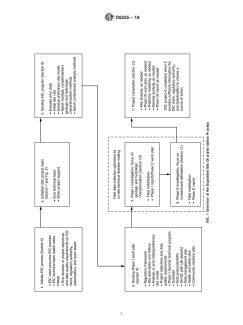
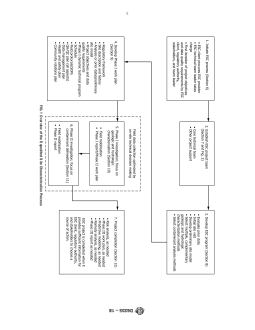
1.2 Features of the ESC Process—The ESC process operates within the framework of existing regulatory programs. It focuses on collecting only the information required to meet characterization objectives and on ensuring that characterization ceases as soon as the objectives are met. Central to the ESC process is the use of judgement-based sampling and measurement to characterize vadose zone and groundwater contamination in a limited number of field mobilizations by an integrated multidisciplinary team, led by a technical leader and operating within the framework of a dynamic work plan that gives him or her the flexibility of responsibility to select the type and location of measurements needed to optimize data collection activities. Table 1 identifies other essential features of the ESC process, and Fig. 1 presents a flow diagram for the entire ESC process.
FIG. 1 Overview of the Expedited Site...
- Status
- Published
- Publication Date
- 14-Dec-2018
- Technical Committee
- D18 - Soil and Rock
- Drafting Committee
- D18.01 - Surface and Subsurface Investigation
Buy Documents
ASTM D6235-18 - Standard Practice for Expedited Site Characterization of Vadose Zone and Groundwater Contamination at Hazardous Waste Contaminated Sites

REDLINE ASTM D6235-18 - Standard Practice for Expedited Site Characterization of Vadose Zone and Groundwater Contamination at Hazardous Waste Contaminated Sites
Overview
ASTM D6235-18 establishes a standard practice for the expedited site characterization (ESC) of vadose zone and groundwater contamination at hazardous waste contaminated sites. This practice promotes a cost-effective, timely, and high-quality approach to site assessment and characterization, utilizing judgement-based sampling and measurements conducted by an integrated, multidisciplinary project team. The ESC process is particularly valuable when rapid decision-making is necessary regarding remedial or other site actions, supporting regulatory compliance and effective risk management. Unlike traditional site characterization, ESC emphasizes efficiency, adaptability, and targeted data collection, often achieving significant reductions in time and cost.
Key Topics
- Expedited Site Characterization (ESC): The ESC approach involves focused data collection tied closely to site-specific objectives, stopping once objectives are met, and favoring noninvasive or minimally invasive investigation methods when feasible.
- Project Team Structure: ESC projects require a technical team leader and a multidisciplinary core team with expertise in geology, hydrology, chemistry, and risk analysis, working collaboratively through all phases.
- Judgement-Based Sampling: Expert judgement, drawing on prior data and real-time onsite analysis, is employed to select sampling types and locations, enhancing adaptability and efficiency.
- Dynamic Work Plans: The ESC process is driven by dynamic work plans approved by the client and regulatory authorities, allowing flexibility in field methods as more site data is gathered.
- Quality Assurance/Control: Rigorous quality control procedures are applied throughout data collection, integration, and analysis to ensure high-quality outcomes.
- Two-Phase Field Work: Characterization is typically completed within one or two field mobilizations, streamlining the investigative process.
- Stakeholder Involvement: ESC emphasizes early and ongoing engagement with clients, regulatory authorities, and stakeholders to ensure objectives align with regulatory and risk management needs.
Applications
The ASTM D6235-18 standard is applicable to a variety of large-scale contamination scenarios, including:
- CERCLA/Superfund Investigations: Used during remedial investigations and feasibility studies to quickly delineate contaminant migration and inform cleanup strategies.
- RCRA Facility Investigations: Supports corrective measures studies by characterizing the subsurface transport of hazardous substances.
- Petroleum Release Sites: Useful for large petroleum storage tank releases or refinery sites needing comprehensive subsurface analysis.
- Subsurface Radioactivity: Applied in cases where radioactive contamination requires expedited assessment.
- Sites Following Environmental Site Assessments (ESAs): When preliminary assessments (Phase I or II) reveal significant contamination, ESC provides the next step for detailed, efficient site investigations.
- Other Contaminated Facilities: Any site where contaminant migration through the vadose zone or groundwater is of concern, and where traditional, slower site investigation processes may be inefficient.
ESC is not generally recommended for small-scale spills, routine real estate transactions with limited environmental concern, or scenarios where contamination is confined to the surface.
Related Standards
A number of other ASTM standards complement or are referenced within ASTM D6235-18, including:
- ASTM E1527/E1528/E1903: Environmental Site Assessment standards (Phase I/II and transaction screens)
- ASTM E1912: Accelerated site characterization for petroleum release sites
- ASTM E1739: Risk-based corrective action applied at petroleum release sites
- ASTM D5745/D5730: Guides for remediation and site characterization
- ASTM D6008: Guidance on conducting environmental baseline surveys
- E1689: Guide for developing conceptual site models for contaminated sites
These related standards provide frameworks for assessments, sampling, risk analysis, and characterization methods, ensuring that ESC projects remain aligned with industry best practices and regulatory requirements.
Keywords: ASTM D6235-18, expedited site characterization, ESC process, vadose zone contamination, groundwater contamination, hazardous waste sites, site assessment, multidisciplinary project team, judgement-based sampling, dynamic work plan, environmental site investigation, regulatory compliance, remediation, risk management.
Relations
- Effective Date
- 15-Dec-2018
- Effective Date
- 01-Feb-2024
- Effective Date
- 01-Nov-2023
- Effective Date
- 01-Sep-2023
- Effective Date
- 15-Nov-2019
- Effective Date
- 01-Aug-2019
- Effective Date
- 01-Dec-2016
- Effective Date
- 01-Sep-2015
- Effective Date
- 01-Apr-2015
- Effective Date
- 01-Aug-2014
- Effective Date
- 15-Apr-2014
- Effective Date
- 15-Jan-2014
- Effective Date
- 01-Sep-2011
- Effective Date
- 01-Dec-2010
- Effective Date
- 01-Sep-2010
Buy Documents
ASTM D6235-18 - Standard Practice for Expedited Site Characterization of Vadose Zone and Groundwater Contamination at Hazardous Waste Contaminated Sites
REDLINE ASTM D6235-18 - Standard Practice for Expedited Site Characterization of Vadose Zone and Groundwater Contamination at Hazardous Waste Contaminated Sites
Get Certified
Connect with accredited certification bodies for this standard

CIS Institut d.o.o.
Personal Protective Equipment (PPE) certification body. Notified Body NB-2890 for EU Regulation 2016/425 PPE.

Kiwa BDA Testing
Building and construction product certification.
Kmetijski inštitut Slovenije
Agricultural Institute of Slovenia. Soil testing, plant health, agricultural product analysis.
Sponsored listings
Frequently Asked Questions
ASTM D6235-18 is a standard published by ASTM International. Its full title is "Standard Practice for Expedited Site Characterization of Vadose Zone and Groundwater Contamination at Hazardous Waste Contaminated Sites". This standard covers: SIGNIFICANCE AND USE 4.1 The ESC Process—This practice describes a process for characterizing hazardous waste contaminated sites8, that provides cost-effective, timely, high-quality information derived primarily from judgement-based sampling and measurements by an integrated, multidisciplinary project team during a limited number of field mobilizations. (See Appendix X1 for additional background on the ESC process, its distinction from traditional site characterization, and its relationship to other approaches to site characterization and Appendix X5 and X6 for illustrative examples of the ESC process.) 4.2 Determining Appropriateness of ESC—The ESC process should be initiated when an ESC client, regulatory authority, and stakeholders determine that contaminants at a site present a potential threat to human health or the environment and the ESC process will identify vadose zone, groundwater, and other contaminant migration pathways in a timely and cost-effective manner, especially when decisions concerning remedial or other action must be made as rapidly as possible. Situations where the process may be applicable are as follows: 4.2.1 ESA—Sites where environmental site assessments (ESAs) conducted by using Practice E1527, Practice E1528, and Guide E1903 identify levels of contamination requiring further, more intensive characterization of the geologic and hydrologic system of contaminant migration pathways. Section X1.5.3 discusses the relationship between ESAs and the ESC process. 4.2.2 Petroleum Release Sites—Large petroleum release sites, such as refineries. The user should review both this practice and Guide E1912 to evaluate whether the ESC or ASC process is more appropriate for such sites. 4.2.3 Subsurface Radioactivity—Sites or facilities with subsurface contamination by radioactivity. 4.2.4 Other Subsurface Contamination—Other sites or facilities where contaminant migration in the vadose zone and groundwater is a matter of concern and heterogeneity of the vadose z... SCOPE 1.1 Applicability of the ESC Process—This practice covers a process for expedited site characterization (ESC) of hazardous waste contaminated sites2 to identify vadose zone, groundwater and other relevant contaminant migration pathways and determine the distribution, concentration, and fate of contaminants for the purpose of providing an ESC client, regulatory authority, and stakeholders with the necessary information to choose a course of action.3 Generally, the process is applicable to larger-scale projects or contaminated sites where the ESC process can be reasonably expected to reduce the time and cost of site characterization compared to alternative approaches. The ESC process has been applied successfully at a variety of sites (see Table X1.1). It typically achieves significant cost and schedule savings compared to traditional site characterization (see X1.2 and X1.3),4 although it should be recognized that in-depth site characterization of hazardous waste contaminated sites may require a more elaborate process than ESC. 1.2 Features of the ESC Process—The ESC process operates within the framework of existing regulatory programs. It focuses on collecting only the information required to meet characterization objectives and on ensuring that characterization ceases as soon as the objectives are met. Central to the ESC process is the use of judgement-based sampling and measurement to characterize vadose zone and groundwater contamination in a limited number of field mobilizations by an integrated multidisciplinary team, led by a technical leader and operating within the framework of a dynamic work plan that gives him or her the flexibility of responsibility to select the type and location of measurements needed to optimize data collection activities. Table 1 identifies other essential features of the ESC process, and Fig. 1 presents a flow diagram for the entire ESC process. FIG. 1 Overview of the Expedited Site...
SIGNIFICANCE AND USE 4.1 The ESC Process—This practice describes a process for characterizing hazardous waste contaminated sites8, that provides cost-effective, timely, high-quality information derived primarily from judgement-based sampling and measurements by an integrated, multidisciplinary project team during a limited number of field mobilizations. (See Appendix X1 for additional background on the ESC process, its distinction from traditional site characterization, and its relationship to other approaches to site characterization and Appendix X5 and X6 for illustrative examples of the ESC process.) 4.2 Determining Appropriateness of ESC—The ESC process should be initiated when an ESC client, regulatory authority, and stakeholders determine that contaminants at a site present a potential threat to human health or the environment and the ESC process will identify vadose zone, groundwater, and other contaminant migration pathways in a timely and cost-effective manner, especially when decisions concerning remedial or other action must be made as rapidly as possible. Situations where the process may be applicable are as follows: 4.2.1 ESA—Sites where environmental site assessments (ESAs) conducted by using Practice E1527, Practice E1528, and Guide E1903 identify levels of contamination requiring further, more intensive characterization of the geologic and hydrologic system of contaminant migration pathways. Section X1.5.3 discusses the relationship between ESAs and the ESC process. 4.2.2 Petroleum Release Sites—Large petroleum release sites, such as refineries. The user should review both this practice and Guide E1912 to evaluate whether the ESC or ASC process is more appropriate for such sites. 4.2.3 Subsurface Radioactivity—Sites or facilities with subsurface contamination by radioactivity. 4.2.4 Other Subsurface Contamination—Other sites or facilities where contaminant migration in the vadose zone and groundwater is a matter of concern and heterogeneity of the vadose z... SCOPE 1.1 Applicability of the ESC Process—This practice covers a process for expedited site characterization (ESC) of hazardous waste contaminated sites2 to identify vadose zone, groundwater and other relevant contaminant migration pathways and determine the distribution, concentration, and fate of contaminants for the purpose of providing an ESC client, regulatory authority, and stakeholders with the necessary information to choose a course of action.3 Generally, the process is applicable to larger-scale projects or contaminated sites where the ESC process can be reasonably expected to reduce the time and cost of site characterization compared to alternative approaches. The ESC process has been applied successfully at a variety of sites (see Table X1.1). It typically achieves significant cost and schedule savings compared to traditional site characterization (see X1.2 and X1.3),4 although it should be recognized that in-depth site characterization of hazardous waste contaminated sites may require a more elaborate process than ESC. 1.2 Features of the ESC Process—The ESC process operates within the framework of existing regulatory programs. It focuses on collecting only the information required to meet characterization objectives and on ensuring that characterization ceases as soon as the objectives are met. Central to the ESC process is the use of judgement-based sampling and measurement to characterize vadose zone and groundwater contamination in a limited number of field mobilizations by an integrated multidisciplinary team, led by a technical leader and operating within the framework of a dynamic work plan that gives him or her the flexibility of responsibility to select the type and location of measurements needed to optimize data collection activities. Table 1 identifies other essential features of the ESC process, and Fig. 1 presents a flow diagram for the entire ESC process. FIG. 1 Overview of the Expedited Site...
ASTM D6235-18 is classified under the following ICS (International Classification for Standards) categories: 13.030.99 - Other standards related to wastes. The ICS classification helps identify the subject area and facilitates finding related standards.
ASTM D6235-18 has the following relationships with other standards: It is inter standard links to ASTM D6235-04(2010), ASTM D5746-24, ASTM D5792-10(2023), ASTM D5746-23, ASTM E1903-19, ASTM D5979-96(2019)e1, ASTM D5746-98(2016), ASTM D5792-10(2015), ASTM E1739-95(2015), ASTM D653-14, ASTM D5979-96(2014), ASTM E1528-14, ASTM D653-11, ASTM D5792-10, ASTM E1739-95(2010)e1. Understanding these relationships helps ensure you are using the most current and applicable version of the standard.
ASTM D6235-18 is available in PDF format for immediate download after purchase. The document can be added to your cart and obtained through the secure checkout process. Digital delivery ensures instant access to the complete standard document.
Standards Content (Sample)
This international standard was developed in accordance with internationally recognized principles on standardization established in the Decision on Principles for the
Development of International Standards, Guides and Recommendations issued by the World Trade Organization Technical Barriers to Trade (TBT) Committee.
Designation: D6235 − 18
Standard Practice for
Expedited Site Characterization of Vadose Zone and
Groundwater Contamination at Hazardous Waste
Contaminated Sites
This standard is issued under the fixed designation D6235; the number immediately following the designation indicates the year of
original adoption or, in the case of revision, the year of last revision. A number in parentheses indicates the year of last reapproval. A
superscript epsilon (´) indicates an editorial change since the last revision or reapproval.
1. Scope measurement to characterize vadose zone and groundwater
contamination in a limited number of field mobilizations by an
1.1 Applicability of the ESC Process—This practice covers
integrated multidisciplinary team, led by a technical leader and
a process for expedited site characterization (ESC) of hazard-
2 operating within the framework of a dynamic work plan that
ous waste contaminated sites to identify vadose zone, ground-
gives him or her the flexibility of responsibility to select the
water and other relevant contaminant migration pathways and
type and location of measurements needed to optimize data
determine the distribution, concentration, and fate of contami-
collection activities. Table 1 identifies other essential features
nants for the purpose of providing an ESC client, regulatory
of the ESC process, and Fig. 1 presents a flow diagram for the
authority, and stakeholders with the necessary information to
3 entire ESC process.
choose a course of action. Generally, the process is applicable
to larger-scale projects or contaminated sites where the ESC 1.3 Investigation Methods—The process described in this
process can be reasonably expected to reduce the time and cost practice is based on good scientific practice but is not tied to
of site characterization compared to alternative approaches. any particular regulatory program, site investigation method or
The ESC process has been applied successfully at a variety of technique, chemical analysis method, statistical analysis
sites (see Table X1.1). It typically achieves significant cost and method, risk analysis method, or computer modeling code.
schedule savings compared to traditional site characterization Appropriate investigation techniques in an ESC project are
(see X1.2 and X1.3), although it should be recognized that highly site specific and are selected and modified based upon
in-depth site characterization of hazardous waste contaminated the professional judgement of the core technical team (in
sites may require a more elaborate process than ESC. particular the technical team leader). Whenever feasible, non-
invasive and minimally invasive methods are used, as dis-
1.2 Features of the ESC Process—The ESC process oper-
cussed in Appendix X2. Appropriate chemical analysis meth-
ates within the framework of existing regulatory programs. It
ods are equally site specific.Analyses may be conducted in the
focuses on collecting only the information required to meet
field or laboratory, depending on data quality requirements,
characterization objectives and on ensuring that characteriza-
required turnaround time, and costs.
tion ceases as soon as the objectives are met. Central to the
ESC process is the use of judgement-based sampling and 1.4 Sites Generally Not Appropriate for the ESC Process—
Generally, the ESC process is not applicable to: small petro-
leum release sites, real estate property transactions that require
This practice is under the jurisdiction of ASTM Committee D18 on Soil and
no more than a Phase I ESA, sites where contamination is
Rock and is the direct responsibility of Subcommittee D18.01 on Surface and
limited to the near surface or there is no basis for suspecting
Subsurface Characterization.
that contaminant movement through the vadose zone and
Current edition approved Dec. 15, 2018. Published January 2019. Originally
approved in 1998. Last previous edition approved in 2010 as D6235 – 04(2010).
groundwater is a matter of concern, sites where the cost of
DOI: 10.1520/D6235-18.
remedial action is likely to be less than the cost of site
The term hazardous waste in the title is used descriptively. The term also has
characterization, or sites where existing statutes or regulations
specific meanings in the context of different regulatory programs. Expedited site
characterization is also appropriate for radiologically contaminated sites and some prohibit the use of essential features of the ESC process.
larger petroleum release sites, such as refineries. Section 4.2 further identifies types
1.5 Other Potentially Applicable ASTM Standards for Site
of contaminated sites where ESC may be appropriate. See Appendix X1 for
additional background on the ESC process. Characterization—Guide E1912 addresses accelerated site
The text of this practice emphasizes vadose zone and groundwater contamina-
tion because these contaminant migration pathways are the most difficult to
characterize. An ESC project should also address all other relevant contaminant
migration pathways, such as air, surface water, submerged sediments, and biota. The ASTM knows of no federal or state statutes or regulations that would
This practice uses the term “traditional” site characterization to refer to the prohibit use of the ESC process. Some elements of the ESC process may not be
approach that has typically been used for characterizing contaminated sites at entirely consistent with existing federal and state guidance documents, and
CERLA and RCRA sites during the 1980s and early 1990s. regulatory authorities are encouraged make appropriate exceptions.
Copyright © ASTM International, 100 Barr Harbor Drive, PO Box C700, West Conshohocken, PA 19428-2959. United States
D6235 − 18
TABLE 1 Minimum Criteria for a Project Using ASTM Expedited Site Characterization Process
NOTE 1—Other site characterization approaches may include many of the below elements, but all must be present for an investigation using theASTM
ESC process.
1. A technical team leader oversees the ESC project and leads the ESC core technical team. See Fig. 2, step 1.a in Fig. 3, 6.2 and 7.1.1.
2. Project objectives, data quality requirements, and performance criteria are defined by some process that includes ESC client, regulatory authority, and stake-
holders. See Step 1b in Fig. 3 and 6.3.
3. The technical team leader and an integrated multidisciplinary core technical team with expertise in geologic, hydrologic, and chemical systems work together,
as areas of expertise are needed, in the field and throughout the process. See Fig. 2,Step2in Fig. 3, and 7.1.
4. Intensive compilation, quality evaluation, and independent analysis and interpretation of prior data are used to develop a preliminary site model. See Step 3a in
Fig. 3 and8.1–8.5
5. Dynamic work plan, approved by ESC client and regulatory authority, provides framework for use of multiple complementary, site-appropriate geologic and hy-
drologic investigation methods, along with rapid site appropriate methods for containment analysis. See Step 4 in Fig. 3, 8.6, 9.2.4, and Appendix X2.
6. ESC project is based primarily on judgement-based sampling and measurements to test and improve the concepts and details of the evolving site model. See
Steps 5 and 6 in Fig. 3, 3.2.16, 6.3.1, and X1.4.4.1.
7. Quality control procedures are applied to all aspects of ESC data collection and handling, including field work for geologic and hydrologic characterization. See
Steps 5 and 6 in Fig. 3, 9.2.6, 10.1.2, and Appendix X3 and Appendix X4.
8. Field data collection is initially focused on geologic and hydrologic characterization of vadose zone, groundwater and other relevant contaminant migration path-
ways (and on identifying contaminants of concern, if they are not already known), followed by delineating the distribution, concentration, and fate of contaminants,
based on knowledge of the relevant contaminant migration pathways. This effort typically requires no more than two field mobilizations. See Steps 5a and 6a in Fig.
3 and Sections 10 and 11.
9. Field data are integrated, analyzed, and interpreted daily to refine the evolving site model and are used to optimize the type and location of subsequent field
data collection until project objectives have been met. See Steps 5b and 6b in Fig. 3 and 10.1.3.
10. Final site model provides ESC client, regulatory authority, and stakeholders with the information required to choose a course of action based on risk analysis
of regulatory standards-based cleanup criteria. See Section 12.
characterization (ASC) for petroleum release sites, and Guide course of action. This document cannot replace education or
E1739 addresses use of the risk-based corrective action experience and should be used in conjunction with professional
(RBCA) process at petroleum release sites. Section X1.5.1
judgment. Not all aspects of this practice may be applicable in
describes the ASC process, and X1.5.2 discusses the relation-
all circumstances. This ASTM standard is not intended to
shipbetweenESCandtheRBCAprocess.PracticesE1527and
represent or replace the standard of care by which the
E1528 and Guide E1903 address real estate property
adequacy of a given professional service must be judged, nor
transactions, and X1.5.3 discusses the relationship between the
should this document be applied without consideration of a
ESC process and investigations for real estate property trans-
project’s many unique aspects. The word “Standard” in the
actions. Classification D5746 addresses environmental condi-
title of this document means only that the document has been
tions of property area types for Department of Defense
approved through the ASTM consensus process.
installations, and Practice D6008 provides guidance on con-
1.9 This standard does not purport to address all of the
ducting environmental baseline surveys to determine certain
safety concerns, if any, associated with its use. It is the
elements of the environmental condition of federal real prop-
responsibility of the user of this standard to establish appro-
erty.
priate safety, health, and environmental practices and deter-
1.6 The values stated in both inch-pound and SI units are to
mine the applicability of regulatory limitations prior to use.
be regarded separately as the standard. The values given in
1.10 This international standard was developed in accor-
parentheses are for information only.
dance with internationally recognized principles on standard-
1.7 All references in this standard to the “engineer” must be
ization established in the Decision on Principles for the
understood as referring to a qualified professional (such as an
Development of International Standards, Guides and Recom-
engineer, soil scientist or geologist) who has the appropriate
mendations issued by the World Trade Organization Technical
experience and, if required by local regulations, certification.
Barriers to Trade (TBT) Committee.
1.8 This practice offers an organized collection of informa-
tion or a series of options and does not recommend a specific
D6235 − 18
FIG. 1 Overview of the Expedited Site Characterization Process
D6235 − 18
2. Referenced Documents ESC project, as appropriate, with approval by the ESC client
6 and regulatory authority. This definition is the same as for
2.1 ASTM Standards:
chemical(s) of concern used in Guide E1912, except that
D653 Terminology Relating to Soil, Rock, and Contained
“contaminants of concern” is the more common usage in
Fluids
hazardous waste site investigations.
D5717 Guide for Design of Ground-Water Monitoring Sys-
3.2.2 dynamic field activity, n—a project that combines
tems in Karst and Fractured-Rock Aquifers (Withdrawn
rapid on-site data generation with on-site decision making and
2005)
is initiated through a process that includes systematic planning
D5730 Guide for Site Characterization for Environmental
and development of a dynamic work plan.
Purposes With Emphasis on Soil, Rock, the Vadose Zone
3.2.2.1 Discussion—This practice focuses on dynamic field
and Groundwater (Withdrawn 2013)
D5745 Guide for Developing and Implementing Short-Term activities as they relate to site characterization
Measures or Early Actions for Site Remediation
3.2.3 dynamic work plan, n—a site characterization work
D5746 Classification of Environmental Condition of Prop-
plan including a technical program that identifies the suite of
erty Area Types for Defense Base Closure and Realign-
field investigation methods and measurements that may be
ment Facilities
necessary to characterize a specific site, with the actual
D5792 Practice for Generation of Environmental Data Re-
methods used and the locations of measurements and sampling
lated to Waste Management Activities: Development of
points based on on-site technical decision making.
Data Quality Objectives
3.2.3.1 Discussion—Thedynamicworkplan,whichmustbe
D5979 Guide for Conceptualization and Characterization of
approved by the ESC client and regulatory authority, provides
Groundwater Systems
a clearly defined framework (including geographic area, maxi-
D6008 PracticeforConductingEnvironmentalBaselineSur-
mumdepth(whereappropriate),standardoperatingprocedures
veys
for specific methods) within which the ESC technical team
D6044 Guide for Representative Sampling for Management
leader, supported by the appropriate technical core team
of Waste and Contaminated Media
members, has flexibility and responsibility to select the types
E1527 Practice for Environmental SiteAssessments: Phase I
and locations of measurements to optimize data collection
Environmental Site Assessment Process
activities. In contrast, a traditional site characterization work
E1528 Practice for Limited Environmental Due Diligence:
plan typically contains prescribed numbers and locations for
Transaction Screen Process
field measurements, samples, and monitoring wells. (See
E1689 Guide for Developing Conceptual Site Models for
Section 9).
Contaminated Sites
3.2.4 environmental receptor, n—humans or other living
E1739 Guide for Risk-Based Corrective Action Applied at
organisms potentially exposed to and adversely affected by
Petroleum Release Sites
contaminants because they are present at the source(s) or along
E1903 Practice for Environmental Site Assessments: Phase
contaminant migration pathways. (E1689)
II Environmental Site Assessment Process
3.2.5 environmental site assessment (ESA), n—the process
E1912 Guide forAccelerated Site Characterization for Con-
by which a person or entity seeks to determine if a particular
firmed or Suspected Petroleum Releases (Withdrawn
parcel of real property (including improvements) is subject to
2013)
Recognized Environmental Conditions.
3. Terminology 3.2.5.1 Discussion—This practice refers to ESC Phase I/II
investigations to differentiate them from Phase I/II ESAs. The
3.1 Definitions:
phases are not comparable. (See X1.5.3.) (E1527)
3.1.1 Fordefinitionsofcommontechnicaltermsusedinthis
3.2.6 ESC client, n—the individual, agency, or organization
standard, refer to Terminology D653.
responsible for a site or sites where ESC is being considered or
3.2 Definitions of Terms Specific to This Standard:
has been initiated. An ESC client contracts with an ESC
3.2.1 contaminants of concern (COCs), n—specific con-
provider for an ESC project that characterizes a specific site.
stituents that are identified for evaluation in the site character-
3.2.7 ESC core technical team, n—the integrated multidis-
ization process.
ciplinary team, assembled by an ESC provider, that is respon-
3.2.1.1 Discussion—Identification of COCs from a larger
sible for an ESC project.
list of suspected contaminants, including possible degradation
3.2.7.1 Discussion—The team consists of a technical team
products,usuallytakesplaceasaseparateeffortbeforeanESC
leader and experienced individuals with expertise in geologic,
projectbegins,butitcanalsobeintegratedintoanESCproject.
hydrologic, and chemical systems; a working understanding of
Deletions or additions to the list of COCs may occur during an
all elements and functions of contaminated site characteriza-
tion; familiarity with risk analysis and remedial technologies;
and capability to integrate and interpret all relevant data
For referenced ASTM standards, visit the ASTM website, www.astm.org, or
contact ASTM Customer Service at service@astm.org. For Annual Book of ASTM
generated by the ESC project.
Standards volume information, refer to the standard’s Document Summary page on
The core technical team members are available for every
the ASTM website.
stage of an ESC project and are involved in each stage as
The last approved version of this historical standard is referenced on
www.astm.org. needed. The technical team leader is normally present in the
D6235 − 18
field at all times. Other core technical team members are for risk analysis and for remedial action as additional steps
present during field data collection related to their area(s) of after characterization of the contaminant source and migration
expertise. See 7.1 for further discussion of the responsibili- pathways is completed. (See Section 12.)
ties of the ESC core technical team.
3.2.12 ESC project team, n—thetechnicalteamleader,other
members of the ESC core technical team, and all other
NOTE 1—The core technical team should not be confused with the core
individuals who provide technical and other support during an
team in the DOE SAFER process, which consists of a broader group of
key decision makers for a DOE site. (See X1.4.5.) Normally, the ESC
ESC project.
technical team leader would be a member of the SAFER core team.
3.2.13 ESC provider, n—organization that supplies the ESC
3.2.8 ESC Phase I investigation, n—phase of ESC project
project team to an ESC client.
focusingongeologicandhydrologiccharacterizationofvadose
3.2.14 ESC technical team leader, n—an individual with
zone and groundwater migration pathways and all other
training and experience in geologic and hydrologic systems
relevant contaminant migration pathways, such as air, surface
(and familiarity with chemical systems and risk analysis
water, submerged sediments, and biota as appropriate.
methods) and the additional necessary skills for project
3.2.8.1 Discussion—Contaminant sources and contaminants
management, who oversees an ESC project and leads the ESC
of concern will also be identified in Phase I, if they are not
core technical team in the field. (See also 7.1.1.)
already known, and sampling to establish contaminant distri-
3.2.14.1 Discussion—During field investigation phases, the
butionwilloccurtotheextentthatitcontributestounderstand-
technical team leader relies heavily on the expertise of the
ing the geologic and hydrologic system and other relevant
other core technical team members and project support
contaminant migration pathways.
personnel, but the leader retains responsibility for all decisions
3.2.9 ESC Phase II investigation, n—phase of ESC project
concerning ESC project activities, subject to quality assurance
focusing on sampling and analysis to determine the spatial
and health and safety oversight. (See 7.3.3 and 7.3.4.)
distribution, concentration, and fate of contaminants, based on
3.2.15 expedited site characterization (ESC), n—a process
knowledge of the relevant contaminant migration pathways
for characterizing vadose zone and groundwater contaminated
identified in Phase I. Additional geologic and hydrologic
sites using primarily judgement-based sampling and measure-
characterization is carried out as needed.
ments by an integrated, multidisciplinary core technical team,
led by a technical team leader and operating within the
NOTE 2—This practice describes the ESC process as involving two
phases with two discrete field mobilizations, because experience has
framework of a dynamic work plan that gives the flexibility
shown that the amount of time required to characterize the geology and
and responsibility to select the type and location of measure-
hydrology and then delineate contaminants in terms of the geologic and
ments to optimize data collection activities during a limited
hydrologic system is generally too long for a single mobilization.
number of field mobilizations.
However, when sufficient data of acceptability qualify are available, it
may be possible to complete both activities in a single mobilization. In
3.2.16 judgement-based sampling and measurement, n—an
contrast, at difficult, complex sites, more than two field mobilizations
approach that uses expert judgement based on knowledge of
might be required. A single mobilization would be designated as Phase
the geologic, hydrologic, and chemical systems, together with
I/II. More than one mobilization of the ESC project team (as distinct from
analysis and interpretation of all prior measurements and
field visits by a few project team members for collection of time-series
data,suchaswaterlevelsinwells)wouldbedesignatedasPhaseIa,Phase sampling results, to select the type and location of subsequent
Ib, and so forth.
measurements and samples needed to further refine the site
model.
3.2.10 ESC Phase III study, n—the final phase of an ESC
project that occurs when the results of the Phase II investiga-
NOTE 3—In the context of the practice this type of sampling is used to
tion indicate that predictive modeling for risk analysis, remedy
determine the spatial distribution of physical and chemical properties at a
analysis and design for remedial action, or both, are required
site that can be used in defining the physical characteristics of the vadose
zone and saturated zone. This definition differs from the definition of
before the ESC client, regulatory authority, and stakeholders
judgement sampling contained in Guide D6044: “taking of sample(s)
can choose a course of action. (See Section 12).
based on judgement that it will more or less represent the average
3.2.10.1 Discussion—At sites where remedial action is
condition of the population.” The heterogeneity of most geologic and
required, a Phase III study would be the equivalent to a
subsurface hydrologic systems means that statistical- and geostatistical-
CERCLA feasibility study and a RCRA corrective measures based sampling approaches will require a much larger number of samples
todelineateaccuratelytheextentandconcentrationofcontamination.(See
study. It is beyond the scope of this practice to address Phase
X6.5.4.) Because the ESC approach depends primarily on expert judge-
III in detail.
ment for characterization of vadose zone and groundwater contamination,
the experience and competence of the core technical team are paramount.
3.2.11 ESC project, n—applicationoftheESCprocessbyan
ESC provider to a specific site to give the ESC client,
3.2.17 migration pathway, n—the course through which a
regulatory authority, and stakeholders the necessary informa-
contaminant(s) in the environment may move away from the
tion to analyze risk or apply regulatory standards-based
source(s) to potential environmental receptors.
cleanup criteria to choose a course of action (no action,
3.2.17.1 Discussion—This definition is essentially the same
ongoing monitoring, or remedial action).
as the term “exposure pathway” used in Guides E1912 and
3.2.11.1 Discussion—This practice focuses on use of the D5746. The ESC process focuses on vadose zone and ground-
ESC process to characterize contaminant migration pathways watermigrationpathwaysbecausetheyarethemostdifficultto
(and sources if they are not already known). An ESC project characterize, but it should address all other relevant contami-
may also be expanded to include fate and transport modeling nant migration pathways. (E1689)
D6235 − 18
3.2.18 on-site technical decision making, n—the use of 3.2.26 site characterization, n—the process by which
judgement-based sampling and measurement and statistically geologic, hydrologic, and chemical system information relat-
based approaches, as appropriate, by the core technical team, ing to contaminant migration pathways; the distribution, con-
ledbythetechnicalteamleader,withinaframeworkdefinedby centration and fate of contaminants; and environmental recep-
a dynamic work plan, to optimize field data collection during tors is gathered, interpreted, and documented.
as ESC Phase I or Phase II field mobilization.
3.2.27 site model, n—a testable interpretation or working
3.2.18.1 Discussion—On-site technical decision making,
description of a site resulting from iterative characterization of
used by the ESC core technical team for field data collection
the geologic, hydrologic, and chemical systems to identify
(see 10.1.3), should not be confused with decision making by
relevant contaminant pathways; determine the distribution,
the ESC client, regulatory authority, and stakeholders to define
concentration, and fate of contaminants; and where
ESC project objectives and data quality requirements and to
appropriate, identify environmental receptors.
choose a course of action when the project is completed. The
3.2.27.1 Discussion—This practice uses the term “prelimi-
use of on-site technical decision making in the context of a
nary” site model to refer to the initial model based on regional
dynamic work plan is the approximate equivalent to the on-site
geology and other prior data, the term “evolving” site model to
iterative process described in Guide E1912.
refer to the site model as it develops during an ESC project,
3.2.19 regulatory authority, n—the agency or organization and the term “final” site model when further refinement is no
longerrequiredtosatisfytheobjectivesoftheESCproject.The
with primary responsibility for ensuring compliance with the
environmental statutes and regulations that prompted initiation initialsitemodelmayincludealternativehypothesestoexplain
significant site features, which are tested, accepted, modified,
of ESC at a site.
or rejected as the evolving site model develops. Depending on
3.2.20 regulatory standards-based cleanup criteria,
the objectives of an ESC project, the final site model may or
n—contaminant cleanup criteria that do not involve a site-
may not be comparable to the definitions of “conceptual site
specific risk analysis.
model” in Guides D5745 and E1689, which include sources,
3.2.21 remedial action, n—a course of action chosen by an
migration pathways, and environmental receptors. Where only
ESC client, regulatory authority, and stakeholders which in-
regulatory standards-based cleanup criteria are to be applied,
cludes an engineered solution to address contamination.
the final site model includes sources and migration pathways
3.2.21.1 Discussion—As discussed in 4.4.2, the ESC pro-
(12.2). Where risk analysis is the objective, environmental
cess avoids a presumption that remedial action is required. In
receptorsareusuallyincorporatedintothefinalsitemodelafter
this practice, no action and ongoing monitoring are considered
source and migration pathways have been fully characterized
to be alternatives to remedial action.
(see 12.3).
3.2.22 risk analysis, n—theprocessbywhichanESCclient,
3.2.28 source, n—the location at which contamination has
the regulatory authority, and stakeholders evaluate the results
entered the natural environment.
ofanESCprojecttochooseacourseofactionbasedontherisk
3.2.28.1 Discussion—This definition has a more restricted
posed by contaminant sources and migration pathways to
meaning than the definition of source in Guide E1689 which
environmental receptors.
includes primary sources, such as leaking drums, and second-
3.2.22.1 Discussion—This practice uses the terms “risk
ary sources, such as contaminated soil.The definition in 3.2.28
analysis” and “analyzing risk” to avoid the more specific
referstoprimarysourcesofcontamination,whicharenormally
connotations associated with the terms “risk assessment” and
delineated before an ESC project begins. (D5745)
“risk evaluation.” An ESC project should be designed to
3.2.29 stakeholder, n—any individual or organization other
accommodate any method(s) of risk analysis specified by the
than the ESC client and regulatory authority that may be
ESC client, regulatory authority, and stakeholders.
affected by the consequences of initiating ESC at a site,
3.2.23 risk-based action level criteria, n—contaminant con-
generally including owners, organizations, and individuals or
centrations above which the potential for risk to environmental
communities that may be affected by contamination at the site.
receptors requires some form of risk analysis.
(See 5.2.1)
3.2.23.1 Discussion—Risk-based action level criteria would
3.3 Acronyms:
normally be defined by the ESC client, regulatory authority,
3.3.1 ASC—accelerated site characterization.
and stakeholders early in the ESC process. Typically such
3.3.2 ASTM—American Society for Testing and Materials.
criteria are based on non-site specific risk analysis procedures,
such as those used to develop drinking water standards and
3.3.3 BHC—hexachlorocyclohexane (sometimes called
maximum contaminant levels (MCLs) for specific chemicals, benzene hexachloride).
but may also be developed based on site-specific consider-
3.3.4 CCC—Commodity Credit Corporation.
ations.
3.3.5 CMS—corrective measures study.
3.2.24 risk-based cleanup criteria, n—target contaminant
3.3.6 COCs—chemicals of concern.
concentrations, defined by site-specific risk analysis, to be
achieved by remedial action. 3.3.7 CPT—cone penetrometer.
3.2.25 site, n—a place or location designated for a specific 3.3.8 CPT/LIF—cone penetrometer/laser-induced fluores-
use, function, or study. (D5730) cence.
D6235 − 18
3.3.9 DNAPLs—dense nonaqueous phase liquids. concerningremedialorotheractionmustbemadeasrapidlyas
possible.Situationswheretheprocessmaybeapplicableareas
3.3.10 DQO—data quality objectives.
follows:
3.3.11 EM—electromagnetic.
4.2.1 ESA—Sites where environmental site assessments
3.3.12 ECPT—electronic cone penetrometer.
(ESAs) conducted by using Practice E1527, Practice E1528,
3.3.13 ESA—environmental site assessment. and Guide E1903 identify levels of contamination requiring
further, more intensive characterization of the geologic and
3.3.14 ESC—expedited site characterization.
hydrologicsystemofcontaminantmigrationpathways.Section
3.3.15 FS—feasibility study (Superfund).
X1.5.3 discusses the relationship between ESAs and the ESC
3.3.16 GPR—ground penetrating radar.
process.
3.3.17 ICP/AES—inductively coupled plasma/atomic emis- 4.2.2 Petroleum Release Sites—Large petroleum release
sion spectrometer. sites, such as refineries. The user should review both this
practiceandGuideE1912toevaluatewhethertheESCorASC
3.3.18 ICP/MS—inductively coupled plasma/mass spec-
process is more appropriate for such sites.
trometer.
4.2.3 Subsurface Radioactivity—Sites or facilities with sub-
3.3.19 IMA—immunoassay.
surface contamination by radioactivity.
3.3.20 MCL—maximum contaminant level.
4.2.4 Other Subsurface Contamination—Other sites or fa-
3.3.21 MDL—minimum detection limit.
cilities where contaminant migration in the vadose zone and
groundwater is a matter of concern and heterogeneity of the
3.3.22 MSL—mean sea level.
vadose zone and groundwater system or potential complex
3.3.23 OSB—oil seepage basin.
behavior of contaminants requires use of the ESC process.
3.3.24 PAHs—polyaromatic hydrocarbons.
4.3 Defining Objectives and Data Quality Requirements—
3.3.25 PCE—perchlorethylene (tetrachloroethylene).
The ESC process requires project objectives and data quality
3.3.26 RBCA—risk-based corrective action.
requirements that will provide the ESC client, regulatory
authority, and stakeholders with the necessary information to
3.3.27 RFP—request for proposal.
analyze risk or apply regulatory standards-based cleanup in
3.3.28 SOPs—standard operating procedures.
order to choose a course of action. Once these have been
3.3.29 SVOCs—semivolatile organic compounds.
defined, the ESC process relies on the expert judgement of the
3.3.30 TCE—trichloroethylene.
core technical team, operating within the framework of an
approved dynamic work plan, as the primary means for
3.3.31 TDEM—time domain electromagnetic.
selecting the type and location of measurements and samples
3.3.32 VOCs—volatile organic compounds.
throughout the ESC process. An ESC project focuses on
collecting only the information required to meet the project
4. Significance and Use
objectivesandceasescharacterizationassoonastheobjectives
4.1 The ESC Process—This practice describes a process for
are met.
characterizing hazardous waste contaminated sites , that pro-
NOTE 4—This practice uses the term “data quality requirements” to
vides cost-effective, timely, high-quality information derived
refer to the level of data accuracy and precision needed to meet the
primarily from judgement-based sampling and measurements
intended use for the data. The U.S. EPA Data Quality Objectives (DQO)
by an integrated, multidisciplinary project team during a
process is one way to accomplish this. The ESC process applies the
limited number of field mobilizations. (See Appendix X1 for
concept of quality control and data quality requirements to geologic and
additional background on the ESC process, its distinction from hydrologic data as well as chemical data, but within a general framework
of judgement-based rather than statistical sampling methods. Section
traditional site characterization, and its relationship to other
X1.4.4 discusses the DQO process in more detail along with the role of
approaches to site characterization and Appendix X5 and X6
judgement-based and statistically based sampling methods in the ESC
for illustrative examples of the ESC process.)
process. Practice D5792 provides guidance on development of DQOs for
generation of environmental data related to waste management.
4.2 Determining Appropriateness of ESC—The ESC pro-
cess should be initiated when an ESC client, regulatory
4.4 Use of ESC Process for Risk Analysis and Remedial
authority, and stakeholders determine that contaminants at a
Action:
site present a potential threat to human health or the environ-
4.4.1 Characterizing Contaminant Migration Pathways—
ment and the ESC process will identify vadose zone,
Normally an ESC project will characterize the contaminant
groundwater, and other contaminant migration pathways in a
migration pathways (and sources if not already known) before
timely and cost-effective manner, especially when decisions
any detailed risk analysis involving exposure to environmental
receptors is performed, because environmental receptors are
not known until the migration pathways are known. Risk
analysis expertise will normally be required as an input into
The term hazardous waste in the title is used descriptively. The term also has
specific meanings in the context of different regulatory programs. Expedited site
defining project objectives and data quality requirements (see
characterization is also appropriate for radiologically contaminated sites and some
4.3); such expertise is involved as appropriate during field data
larger petroleum release sites, such as refineries. Subsection 4.2 further identifies
collection phases of an ESC project. Identification of contami-
types of contaminated sites where ESC may be appropriate. See Appendix X1 for
additional background on the ESC process. nant sources and environmental receptors for risk analysis is
D6235 − 18
straightforward at most sites and does not, per se, require the 5.2 Organization of an ESC Project—The ESC client is
ESC process. The ESC process focuses on characterizing primarily responsible for deciding that the ESC process is the
vadosezoneandgroundwatercontaminantmigrationpathways best way to obtain the information needed to choose a course
and determining the distribution, concentration, and fate of of action to address contamination at a site (see 6.1). Fig. 2
illustrates key relationships in an ESC project.
contaminants along these migration pathways, because these
factors are more difficult to identify than sources and environ- 5.2.1 ESC Client, Regulatory Authority, and Stakeholders—
The ESC client, regulatory authority, and stakeholders provide
mental receptors.
the overall framework for an ESC project by defining project
4.4.2 Considering Remedial Action and Alternatives—The
objectives and data quality requirements. The technical team
ESC process is designed to avoid a presumption that remedial
leader along with other project team members as appropriate,
actionisrequired(thatis,anengineeredsolutionratherthanno
also participate in this process to ensure that the objectives and
further action or ongoing monitoring). In any ESC project,
data quality requirements are reasonable and technically fea-
remediation engineering expertise is incorporated into the
sible.
process at the earliest point at which a need for remedial action
is identified. (See 13.3.) Guide D5745 provides guidance for
NOTE 6—The ESC client is responsible for defining the level of
developing and implementing short-term measures or early involvement of the regulatory authority and stakeholders in an ESC
projectandforsettingprotocolsfortheirinteractionswiththeESCproject
actions for site remediation.
team.ThecredibilityofESCprojectresultswillbeseriouslycompromised
4.5 Flexibility Within ESC—Modification of procedures de- if the ESC client does not provide for meaningful participation of
stakeholdersthroughouttheESCprocess.TheESCclientisencouragedto
scribedinthispracticemaybeappropriateifrequiredtosatisfy
facilitate responsible stakeholder involvement in the ESC process. This
project objectives or regulatory requirements, or for other
practice normally refers to the ESC client, regulatory authority, and
reasons. The ESC process is flexible enough to accommodate
stakeholders as a group, but the extent of stakeholder involvement, in
a variety of different technical approaches to obtaining envi-
particular,willbedeterminedbythewillingnessoftheESCclienttoallow
participation and the extent to which stakeholders insist that they be
ronmental data. However, for an investigation to qualify as an
involved in the process.
ESCproject,asformalizedbyASTM,modificationsshouldnot
eliminateanyoftheessentialfeaturesoftheESCprocesslisted
5.2.2 Core Technical Team—The core technical team,
inTable1.Alternativesitecharacterizationapproachesthatuse
headed by a technical team leader and typically consisting of
some, but not all, of the essential elements described in Table threeorfourindividualswithexpertiseingeologic,hydrologic,
1maybeappropriateforasite,buttheseapproacheswouldnot
and chemical systems appropriate to the site, provides a
qualify as an ESC project as defined in this practice. continuous, integrated, multidisciplinary presence throughout
the process (see 7.1). The technical team leader operates in
NOTE5—Usersmayprefertouseordevelopalternativeterminologyfor
close communications with the ESC client, and with the
different aspects of the ESC process, depending on the regulatory context
regulatory authority and stakeholders, subject to protocols
in which it is applied. However, precise or approximate equivalencies to
established by the ESC client. (See Note 6.)The core technical
steps or functions in the ESC process should be clearly identified.
team members are involved, as needed, in all steps of the ESC
4.6 Use of ESC in Conjunction with Other Methods—This
process; they are present in the field during data collection
practice can be used in conjunction with Guide D5730 for
involving their areas of expertise and participate in the data
identification of potentially applicable ASTM standards and
collection, processing, and interpretation. The optimization of
major non-ASTM guidance. In karst and fractured rock hydro-
field investigation activities and the quality of the final site
geologic settings, this practice can be used in conjunction with
modeldependontheinteractionofthedifferentperspectivesof
Guide D5717.
the core technical team members.
5.2.3 Project Support—The ESC core technical team oper-
5. Summary of ESC Process
ates with the support of a larger project team that includes
5.1 Advantages of ESC—The ESC process, when properly technical personnel and equipment operators involved in data
implemented, should provide higher quality information for collection and sampling, as well as personnel providing other
decision making in a shorter period of time and a lower cost support functions such as logistics, data management, QA/QC,
than traditional site characterization where contaminant migra- health and safety, and community relations (see 7.3). Some
tion in the vadose zone and groundwater are a matter of areas of project support expertise, such as statistics/
concern.AppendixX1discussesthefeaturesofESCthatmake geostatistics, fate and transport analysis (including digital
this possible. Many current problems with remedial action at modeling), risk analysis, and remediation engineering, may
contaminated sites can be attributed to inadequate understand- haveaspecialroleearlyinaprojectindefiningthetypeofdata
ing of the geologic and hydrologic system of contaminant required for the project and data quality requirements and are
migration pathways, which results in failure to delineate the involved throughout the project as needed.
full extent of contamination and the controls on contaminant 5.2.4 Individuals with Multiple Responsibilities—Qualified
migration and suboptimal design of remedial measures. The individuals within the core technical and support team carry
multidisciplinaryandfocusednatureoftheESCprocessresults out several functions to decrease costs and increase integration
inafinalmodelofasitethatminimizesuncertaintyconcerning of the team. The number of individuals required to provide
the geologic and hydrologic conditions and the spatial distri- projectsupportforanESCprojectissitespecific.Althoughthe
bution and concentration of contaminants, providing a sound number of project support functions shown in Fig. 2 is large,
basis for choosing the appropriate course of action. the total amount of time spent for each function varies
D6235 − 18
FIG. 2 ESC Project Team Relationships
considerably. For example, during field operations, project mentsthatmaybenecessarytocharacterizeasite,andthefield
supportpersonnelinvolvedindatamanagementandhealthand
approach where the actual methods used and the location of
safety are present at all times, whereas personnel providing
measurements and sampling points is based on on-site techni-
most other project support functions are present only as
cal decision making. Work plans for subsequent phases are
needed.
generally incorporated into the report for the previous investi-
5.2.5 ESC Work Plans—EachphaseofanESCinvestigation
gationphaseandonlyincludeinformationaboutthenextphase
take place within the framework of a dynamic work plan that
ofinvestigationthatisnotalreadyincludedinthePhaseIwork
is reviewed and approved by the ESC client, regulatory,
plan.
authority,andstakeholders.ThePhaseIworkplanprovidesthe
5.3 Overview of ESC Process—Figs. 3-5 present expanded
overall framework for an ESC investigation (Section 9). The
flow diagrams illustrating important features and decision
word “dynamic” refers to the section of the work plan that
identifies the suite of field investigation methods and measure- points in the ESC process. The steps outlined in this figure
D6235 − 18
FIG. 3 Expedited Site Characterization Flow
generally need to be followed in sequence. However, some 5.3.2 Establish ESC project team (see Section 7).
steps are not strictly sequential. For example, Step 3b is the 5.3.3 DevelopESCproject(seeSection8),includingreview
first iteration of the evolving site model that continues to be andinterpretationofpriordata,initialsitevisit,developmentof
refined throughout the process. Major steps are as follows: preliminary site model, and selection of multiple complemen-
5.3.1 Initiate the ESC process and define project objectives tary investigation methods.
and data quality requirements (see Section 6). 5.3.4 Develop Phase I dynamic work plan (See Section 9).
D6235 − 18
FIG. 3 Expedited Site Characterization Flow (continued)
5.3.5 ESC Ph
...
This document is not an ASTM standard and is intended only to provide the user of an ASTM standard an indication of what changes have been made to the previous version. Because
it may not be technically possible to adequately depict all changes accurately, ASTM recommends that users consult prior editions as appropriate. In all cases only the current version
of the standard as published by ASTM is to be considered the official document.
Designation: D6235 − 04 (Reapproved 2010) D6235 − 18
Standard Practice for
Expedited Site Characterization of Vadose Zone and
Groundwater Contamination at Hazardous Waste
Contaminated Sites
This standard is issued under the fixed designation D6235; the number immediately following the designation indicates the year of
original adoption or, in the case of revision, the year of last revision. A number in parentheses indicates the year of last reapproval. A
superscript epsilon (´) indicates an editorial change since the last revision or reapproval.
1. Scope
1.1 Applicability of the ECSESC Process—This practice covers a process for expedited site characterization (ESC) of hazardous
waste contaminated sites to identify vadose zone, groundwater and other relevant contaminant migration pathways and determine
the distribution, concentration, and fate of contaminants for the purpose of providing an ESC client, regulatory authority, and
stakeholders with the necessary information to choose a course of action. Generally, the process is applicable to larger-scale
projects, such as CERCLA (Superfund) remedial investigations and RCRA facility investigations.projects or When used as part
of the Superfund response process, this Practice should be used in conjunction with U.S. EPA’s guidance document titled Using
Dynamic Field Activities for On-Site Decision Making: A Guide for Project Managers (1). The ESC process is also applicable to
other contaminated sites where the ESC process can be reasonably expected to reduce the time and cost of site characterization
compared to alternative approaches. The ESC process has been applied successfully at a variety of sites in different states and EPA
regions. (See (see Table X1.1). It typically achieves significant cost and schedule savings compared to traditional site
characterization. (Seecharacterization (see X1.2 and X1.3).), although it should be recognized that in-depth site characterization
of hazardous waste contaminated sites may require a more elaborate process than ESC.
1.2 Features of the ESC Process—The ESC process operates within the framework of existing regulatory programs. It focuses
on collecting only the information required to meet characterization objectives and on ensuring that characterization ceases as soon
as the objectives are met. Central to the ESC process is the use of judgement-based sampling and measurement to characterize
vadose zone and groundwater contamination in a limited number of field mobilizations by an integrated multidisciplinary team,
led by a technical leader and operating within the framework of a dynamic work plan that gives him or her the flexibility of
responsibility to select the type and location of measurements needed to optimize data collection activities. Table 1 identifies other
essential features of the ESC process, and Fig. 1 presents a flow diagram for the entire ESC process.
1.3 Investigation Methods—The process described in this practice is based on good scientific practice but is not tied to any
particular regulatory program, site investigation method or technique, chemical analysis method, statistical analysis method, risk
analysis method, or computer modeling code. Appropriate investigation techniques in an ESC project are highly site specific and
are selected and modified based upon the professional judgement of the core technical team (in particular the technical team
leader). Whenever feasible, noninvasive and minimally invasive methods are used, as discussed in Appendix X3X2. Appropriate
chemical analysis methods are equally site specific. Analyses may be conducted in the field or laboratory, depending on data quality
requirements, required turnaround time, and costs.
1.4 Sites Generally Not Appropriate for the ESC Process—Generally, the ESC process is not applicable to: small petroleum
release sites, real estate property transactions that require no more than a Phase I ESA, sites where contamination is limited to the
near surface or there is no basis for suspecting that contaminant movement through the vadose zone and groundwater is a matter
This practice is under the jurisdiction of ASTM Committee D18 on Soil and Rock and is the direct responsibility of Subcommittee D18.01 on Surface and Subsurface
Characterization.
Current edition approved May 1, 2010Dec. 15, 2018. Published September 2010January 2019. Originally approved in 1998. Last previous edition approved in 20042010
as D6235 – 04.04(2010). DOI: 10.1520/D6235-04R10. 10.1520/D6235-18.
The term hazardous waste in the title is used descriptively. The term also has specific meanings in the context of different regulatory programs. Expedited site
characterization is also appropriate for radiologically contaminated sites and some larger petroleum release sites, such as refineries. Section 4.2 further identifies types of
contaminated sites where ESC may be appropriate. See Appendix X1 for additional background on the ESC process.
The text of this practice emphasizes vadose zone and groundwater contamination because these contaminant migration pathways are the most difficult to characterize.
An ESC project should also address all other relevant contaminant migration pathways, such as air, surface water, submerged sediments, and biota.
This practice uses the term “traditional” site characterization to refer to the approach that has typically been used for characterizing contaminated sites at CERLA and
RCRA sites during the 1980s and early 1990s.
Copyright © ASTM International, 100 Barr Harbor Drive, PO Box C700, West Conshohocken, PA 19428-2959. United States
D6235 − 18
TABLE 1 Minimum Criteria for a Project Using ASTM Expedited Site Characterization Process
NOTE 1—Other site characterization approaches may include many of the below elements, but all must be present for an investigation using the ASTM
ESC process.
1. A technical team leader oversees the ESC project and leads the ESC core technical team. See Fig. 2, step 1.a in Fig. 3, 6.2 and 7.1.1.
2. Project objectives, data quality requirements, and performance criteria are defined by some process that includes ESC client, regulatory authority, and stake-
holders. See Step 1b in Fig. 3 and 6.3.
3. The technical team leader and an integrated multidisciplinary core technical team with expertise in geologic, hydrologic, and chemical systems work together,
as areas of expertise are needed, in the field and throughout the process. See Fig. 2, Step 2 in Fig. 3, and 7.1.
4. Intensive compilation, quality evaluation, and independent analysis and interpretation of prior data are used to develop a preliminary site model. See Step 3a in
Fig. 3 and 8.1 – 8.5
5. Dynamic work plan, approved by ESC client and regulatory authority, provides framework for use of multiple complementary, site-appropriate geologic and hy-
drologic investigation methods, along with rapid site appropriate methods for containment analysis. See Step 4 in Fig. 3, 8.6, 9.2.4, and Appendix X3.
5. Dynamic work plan, approved by ESC client and regulatory authority, provides framework for use of multiple complementary, site-appropriate geologic and hy-
drologic investigation methods, along with rapid site appropriate methods for containment analysis. See Step 4 in Fig. 3, 8.6, 9.2.4, and Appendix X2.
6. ESC project is based primarily on judgement-based sampling and measurements to test and improve the concepts and details of the evolving site model. See
Steps 5 and 6 in Fig. 3, 3.1.16, 6.3.1, and X1.4.4.1.
6. ESC project is based primarily on judgement-based sampling and measurements to test and improve the concepts and details of the evolving site model. See
Steps 5 and 6 in Fig. 3, 3.2.16, 6.3.1, and X1.4.4.1.
7. Quality control procedures are applied to all aspects of ESC data collection and handling, including field work for geologic and hydrologic characterization. See
Steps 5 and 6 in Fig. 3, 9.2.6, 10.1.2, and Appendix X4 and Appendix X5.
7. Quality control procedures are applied to all aspects of ESC data collection and handling, including field work for geologic and hydrologic characterization. See
Steps 5 and 6 in Fig. 3, 9.2.6, 10.1.2, and Appendix X3 and Appendix X4.
8. Field data collection is initially focused on geologic and hydrologic characterization of vadose zone, groundwater and other relevant contaminant migration path-
ways (and on identifying contaminants of concern, if they are not already known), followed by delineating the distribution, concentration, and fate of contaminants,
based on knowledge of the relevant contaminant migration pathways. This effort typically requires no more than two field mobilizations. See Steps 5a and 6a in Fig.
3 and Sections 10 and 11.
9. Field data are integrated, analyzed, and interpreted daily to refine the evolving site model and are used to optimize the type and location of subsequent field
data collection until project objectives have been met. See Steps 5b and 6b in Fig. 3 and 10.1.3.
10. Final site model provides ESC client, regulatory authority, and stakeholders with the information required to choose a course of action based on risk analysis
of regulatory standards-based cleanup criteria. See Section 12.
of concern, sites where the cost of remedial action is likely to be less than the cost of site characterization, or sites where existing
statutes or regulations prohibit the use of essential features of the ESC process.
1.5 Other Potentially Applicable ASTM Standards for Site Characterization—Guide E1912 addresses accelerated site
characterization (ASC) for petroleum release sites, and Guide E1739 addresses use of the risk-based corrective action (RBCA)
process at petroleum release sites. Section X1.5.1 describes the ASC process, and X1.5.2 discusses the relationship between ESC
and the RBCA process. Practices E1527 and E1528 and Guide E1903 address real estate property transactions, and X1.5.3
discusses the relationship between the ESC process and investigations for real estate property transactions. Classification D5746
addresses environmental conditions of property area types for Department of Defense installations, and Practice D6008 provides
guidance on conducting environmental baseline surveys to determine certain elements of the environmental condition of federal
real property.
1.6 The values stated in both inch-pound and SI units are to be regarded separately as the standard. The values given in
parentheses are for information only.
1.7 All references in this standard to the “engineer” must be understood as referring to a qualified professional (such as an
engineer, soil scientist or geologist) who has the appropriate experience and, if required by local regulations, certification.
1.8 This practice offers an organized collection of information or a series of options and does not recommend a specific course
of action. This document cannot replace education or experience and should be used in conjunction with professional judgment.
Not all aspects of this practice may be applicable in all circumstances. This ASTM standard is not intended to represent or replace
the standard of care by which the adequacy of a given professional service must be judged, nor should this document be applied
without consideration of a project’s many unique aspects. The word “Standard” in the title of this document means only that the
document has been approved through the ASTM consensus process.
The ASTM knows of no federal or state statutes or regulations that would prohibit use of the ESC process. Some elements of the ESC process may not be entirely
consistent with existing federal and state guidance documents, and regulatory authorities are encouraged make appropriate exceptions.
D6235 − 18
FIG. 1 Overview of the Expedited Site Characterization Process
D6235 − 18
1.9 This standard does not purport to address all of the safety concerns, if any, associated with its use. It is the responsibility
of the user of this standard to establish appropriate safety safety, health, and healthenvironmental practices and determine the
applicability of regulatory limitations prior to use.
1.10 This international standard was developed in accordance with internationally recognized principles on standardization
established in the Decision on Principles for the Development of International Standards, Guides and Recommendations issued
by the World Trade Organization Technical Barriers to Trade (TBT) Committee.
D6235 − 18
2. Referenced Documents
2.1 ASTM Standards:
D653 Terminology Relating to Soil, Rock, and Contained Fluids
D5717 Guide for Design of Ground-Water Monitoring Systems in Karst and Fractured-Rock Aquifers (Withdrawn 2005)
D5730 Guide for Site Characterization for Environmental Purposes With Emphasis on Soil, Rock, the Vadose Zone and
Groundwater (Withdrawn 2013)
D5745 Guide for Developing and Implementing Short-Term Measures or Early Actions for Site Remediation
D5746 Classification of Environmental Condition of Property Area Types for Defense Base Closure and Realignment Facilities
D5792 Practice for Generation of Environmental Data Related to Waste Management Activities: Development of Data Quality
Objectives
D5979 Guide for Conceptualization and Characterization of Groundwater Systems
D6008 Practice for Conducting Environmental Baseline Surveys
D6044 Guide for Representative Sampling for Management of Waste and Contaminated Media
E1527 Practice for Environmental Site Assessments: Phase I Environmental Site Assessment Process
E1528 Practice for Limited Environmental Due Diligence: Transaction Screen Process
E1689 Guide for Developing Conceptual Site Models for Contaminated Sites
E1739 Guide for Risk-Based Corrective Action Applied at Petroleum Release Sites
E1903 Practice for Environmental Site Assessments: Phase II Environmental Site Assessment Process
E1912 Guide for Accelerated Site Characterization for Confirmed or Suspected Petroleum Releases (Withdrawn 2013)
3. Terminology
3.1 Definitions:
3.1.1 For definitions of common technical terms used in this standard, refer to Terminology D653.
3.2 Definitions of Terms Specific to This Standard—Standard:The following terms are specific to this practice, unless otherwise
indicated. Because much of the terminology is specific to this practice, this section should be read carefully. Other terms are in
accordance with other ASTM standards as specified.
3.2.1 contaminants of concern (COCs)—(COCs), n—specific constituents that are identified for evaluation in the site
characterization process.
3.2.1.1 Discussion—
Identification of COCs from a larger list of suspected contaminants, including possible degradation products, usually takes place
as a separate effort before an ESC project begins, but it can also be integrated into an ESC project. Deletions or additions to the
list of COCs may occur during an ESC project, as appropriate, with approval by the ESC client and regulatory authority. This
definition is the same as for chemical(s) of concern used in Guide E1912, except that “contaminants of concern” is the more
common usage in hazardous waste site investigations.
3.2.2 dynamic field activity—activity, n—a project that combines rapid on-site data generation with on-site decision making and
is initiated through a process that includes systematic planning and development of a dynamic work plan (Adapted from U.S. EPA
plan.(1)).
3.2.2.1 Discussion—
This practice focuses on dynamic field activities as they relate to site characterization
3.2.3 dynamic work plan—plan, n—a site characterization work plan including a technical program that identifies the suite of
field investigation methods and measurements that may be necessary to characterize a specific site, with the actual methods used
and the locations of measurements and sampling points based on on-site technical decision making.
3.2.3.1 Discussion—
The dynamic work plan, which must be approved by the ESC client and regulatory authority, provides a clearly defined framework
(including geographic area, maximum depth (where appropriate), standard operating procedures for specific methods) within
which the ESC technical team leader, supported by the appropriate technical core team members, has flexibility and responsibility
For referenced ASTM standards, visit the ASTM website, www.astm.org, or contact ASTM Customer Service at service@astm.org. For Annual Book of ASTM Standards
volume information, refer to the standard’s Document Summary page on the ASTM website.
The last approved version of this historical standard is referenced on www.astm.org.
D6235 − 18
to select the types and locations of measurements to optimize data collection activities. In contrast, a traditional site
characterization work plan typically contains prescribed numbers and locations for field measurements, samples, and monitoring
wells. (See Section 9).
3.2.4 environmental receptor—receptor, n—humans or other living organisms potentially exposed to and adversely affected by
contaminants because they are present at the source(s) or along contaminant migration pathways. (E1689)
3.2.5 environmental site assessment (ESA)—(ESA), n—the process by which a person or entity seeks to determine if a particular
parcel of real property (including improvements) is subject to Recognized Environmental Conditions.
3.2.5.1 Discussion—
This practice refers to ESC Phase I/II investigations to differentiate them from Phase I/II ESAs. The phases are not comparable.
(See X1.5.3.) (E1527)
3.2.6 ESC client—client, n—the individual, agency, or organization responsible for a site or sites where ESC is being considered
or has been initiated. An ESC client contracts with an ESC provider for an ESC project that characterizes a specific site.
3.2.7 ESC core technical team—team, n—the integrated multidisciplinary team, assembled by an ESC provider, that is
responsible for an ESC project, consisting of a technical team leader and experienced individuals with expertise in geologic,
hydrologic, and chemical systems; a working understanding of all elements and functions of contaminated site characterization;
familiarity with risk analysis and remedial technologies; and capability to integrate and interpret all relevant data generated by the
ESC project.
3.2.7.1 Discussion—
The team consists of a technical team leader and experienced individuals with expertise in geologic, hydrologic, and chemical
systems; a working understanding of all elements and functions of contaminated site characterization; familiarity with risk analysis
and remedial technologies; and capability to integrate and interpret all relevant data generated by the ESC project.
The core technical team members are available for every stage of an ESC project and are involved in each stage as needed.
The technical team leader is normally present in the field at all times. Other core technical team members are present during field
data collection related to their area(s) of expertise. See 7.1 for further discussion of the responsibilities of the ESC core technical
team.
NOTE 1—The core technical team should not be confused with the core team in the DOE SAFER process, which consists of a broader group of key
decision makers for a DOE site. (See X1.4.5.) Normally, the ESC technical team leader would be a member of the SAFER core team.
3.2.8 ESC Phase I investigation—investigation, n—phase of ESC project focusing on geologic and hydrologic characterization
of vadose zone and groundwater migration pathways and all other relevant contaminant migration pathways, such as air, surface
water, submerged sediments, and biota as appropriate.
3.2.8.1 Discussion—
Contaminant sources and contaminants of concern will also be identified in Phase I, if they are not already known, and sampling
to establish contaminant distribution will occur to the extent that it contributes to understanding the geologic and hydrologic system
and other relevant contaminant migration pathways.
3.2.9 ESC Phase II investigation—investigation, n—phase of ESC project focusing on sampling and analysis to determine the
spatial distribution, concentration, and fate of contaminants, based on knowledge of the relevant contaminant migration pathways
identified in Phase I. Additional geologic and hydrologic characterization is carried out as needed.
NOTE 2—This practice describes the ESC process as involving two phases with two discrete field mobilizations, because experience has shown that
the amount of time required to characterize the geology and hydrology and then delineate contaminants in terms of the geologic and hydrologic system
is generally too long for a single mobilization. However, when sufficient data of acceptability qualify are available, it may be possible to complete both
activities in a single mobilization. In contrast, at difficult, complex sites, more than two field mobilizations might be required. A single mobilization would
be designated as Phase I/II. More than one mobilization of the ESC project team (as distinct from field visits by a few project team members for collection
of time-series data, such as water levels in wells) would be designated as Phase Ia, Phase Ib, and so forth.
3.2.10 ESC Phase III study—study, n—the final phase of an ESC project that occurs when the results of the Phase II
investigation indicate that predictive modeling for risk analysis, remedy analysis and design for remedial action, or both, are
required before the ESC client, regulatory authority, and stakeholders can choose a course of action. (See Section 12).
3.2.10.1 Discussion—
D6235 − 18
At sites where remedial action is required, a Phase III study would be the equivalent to a CERCLA feasibility study and a RCRA
corrective measures study. It is beyond the scope of this practice to address Phase III in detail.
3.2.11 ESC project—project, n—application of the ESC process by an ESC provider to a specific site to give the ESC client,
regulatory authority, and stakeholders the necessary information to analyze risk or apply regulatory standards-based cleanup
criteria to choose a course of action (no action, ongoing monitoring, or remedial action).
3.2.11.1 Discussion—
This practice focuses on use of the ESC process to characterize contaminant migration pathways (and sources if they are not
already known). An ESC project may also be expanded to include fate and transport modeling for risk analysis and for remedial
action as additional steps after characterization of the contaminant source and migration pathways is completed. (See Section 12.)
3.2.12 ESC project team—team, n—the technical team leader, other members of the ESC core technical team, and all other
individuals who provide technical and other support during an ESC project.
3.2.13 ESC provider—provider, n—organization that supplies the ESC project team to an ESC client.
3.2.14 ESC technical team leader—leader, n—an individual with training and experience in geologic and hydrologic systems
(and familiarity with chemical systems and risk analysis methods) and the additional necessary skills for project management, who
oversees an ESC project and leads the ESC core technical team in the field. (See also 7.1.1.)
3.2.14.1 Discussion—
During field investigation phases, the technical team leader relies heavily on the expertise of the other core technical team members
and project support personnel, but the leader retains responsibility for all decisions concerning ESC project activities, subject to
quality assurance and health and safety oversight. (See 7.3.3 and 7.3.4.)
3.2.15 expedited site characterization (ESC)—(ESC), n—a process for characterizing vadose zone and groundwater contami-
nated sites using primarily judgement-based sampling and measurements by an integrated, multidisciplinary core technical team,
led by a technical team leader and operating within the framework of a dynamic work plan that gives the flexibility and
responsibility to select the type and location of measurements to optimize data collection activities during a limited number of field
mobilizations.
3.2.16 judgement-based sampling and measurement—measurement, n—an approach that uses expert judgement based on
knowledge of the geologic, hydrologic, and chemical systems, together with analysis and interpretation of all prior measurements
and sampling results, to select the type and location of subsequent measurements and samples needed to further refine the site
model.
NOTE 3—In the context of the practice this type of sampling is used to determine the spatial distribution of physical and chemical properties at a site
that can be used in defining the physical characteristics of the vadose zone and saturated zone. This definition differs from the definition of judgement
sampling contained in Guide D6044: “taking of sample(s) based on judgement that it will more or less represent the average condition of the population.”
The heterogeneity of most geologic and subsurface hydrologic systems means that statistical- and geostatistical-based sampling approaches will require
a much larger number of samples to delineate accurately the extent and concentration of contamination. (See X7.5.4X6.5.4.) Because the ESC approach
depends primarily on expert judgement for characterization of vadose zone and groundwater contamination, the experience and competence of the core
technical team are paramount.
3.2.17 migration pathway—pathway, n—the course through which a contaminant(s) in the environment may move away from
the source(s) to potential environmental receptors.
3.2.17.1 Discussion—
This definition is essentially the same as the term “exposure pathway” used in Guides E1912 and D5746. The ESC process focuses
on vadose zone and groundwater migration pathways because they are the most difficult to characterize, but it should address all
other relevant contaminant migration pathways. (E1689)
3.2.18 on-site technical decision making—making, n—the use of judgement-based sampling and measurement and statistically
based approaches, as appropriate, by the core technical team, led by the technical team leader, within a framework defined by a
dynamic work plan, to optimize field data collection during as ESC Phase I or Phase II field mobilization.
3.2.18.1 Discussion—
On-site technical decision making, used by the ESC core technical team for field data collection (see 10.1.3), should not be
confused with decision making by the ESC client, regulatory authority, and stakeholders to define ESC project objectives and data
D6235 − 18
quality requirements and to choose a course of action when the project is completed. The use of on-site technical decision making
in the context of a dynamic work plan is the approximate equivalent to the on-site iterative process described in Guide E1912.
3.1.19 quality assurance (QA)—measures taken to independently check and verify that the quality control procedures specified
in the QA/QC plan for an ESC project are being carried out.
3.1.20 quality control (QC)—the process of ensuring the quality of data during their collection, measurement, integration,
interpretation, and archiving, through the application of defined procedures.
3.2.19 regulatory authority—authority, n—the federal, state, or local agency, or combination thereof, agency or organization
with primary responsibility for ensuring compliance with the environmental statutes and regulations that prompted initiation of
ESC at a site.
3.2.20 regulatory standards-based cleanup criteria—criteria, n—contaminant cleanup criteria that do not involve a site-specific
risk analysis.
3.2.21 remedial action—action, n—a course of action chosen by an ESC client, regulatory authority, and stakeholders which
includes an engineered solution to address contamination.
3.2.21.1 Discussion—
As discussed in 4.4.2, the ESC process avoids a presumption that remedial action is required. In this practice, no action and
ongoing monitoring are considered to be alternatives to remedial action.
3.2.22 risk analysis—analysis, n—the process by which an ESC client, the regulatory authority, and stakeholders evaluate the
results of an ESC project to choose a course of action based on the risk posed by contaminant sources and migration pathways
to environmental receptors.
3.2.22.1 Discussion—
This practice uses the terms “risk analysis” and “analyzing risk” to avoid the more specific connotations associated with the terms
“risk assessment” and “risk evaluation.” An ESC project should be designed to accommodate any method(s) of risk analysis
specified by the ESC client, regulatory authority, and stakeholders.
3.2.23 risk-based action level criteria—criteria, n—contaminant concentrations above which the potential for risk to
environmental receptors requires some form of risk analysis.
3.2.23.1 Discussion—
Risk-based action level criteria would normally be defined by the ESC client, regulatory authority, and stakeholders early in the
ESC process. Typically such criteria are based on non-site specific risk analysis procedures, such as those used to develop drinking
water standards and maximum contaminant levels (MCLs) for specific chemicals, but may also be developed based on site-specific
considerations.
3.2.24 risk-based cleanup criteria—criteria, n—target contaminant concentrations, defined by site-specific risk analysis, to be
achieved by remedial action.
3.2.25 site, n—a place or location designated for a specific use, function, or study. (D5730)
3.2.26 site characterization—characterization, n—the process by which geologic, hydrologic, and chemical system information
relating to contaminant migration pathways; the distribution, concentration and fate of contaminants; and environmental receptors
is gathered, interpreted, and documented.
3.2.27 site model—model, n—a testable interpretation or working description of a site resulting from iterative characterization
of the geologic, hydrologic, and chemical systems to identify relevant contaminant pathways; determine the distribution,
concentration, and fate of contaminants; and where appropriate, identify environmental receptors.
3.2.27.1 Discussion—
This practice uses the term “preliminary” site model to refer to the initial model based on regional geology and other prior data,
the term “evolving” site model to refer to the site model as it develops during an ESC project, and the term “final” site model when
further refinement is no longer required to satisfy the objectives of the ESC project. The initial site model may include alternative
hypotheses to explain significant site features, which are tested, accepted, modified, or rejected as the evolving site model develops.
Depending on the objectives of an ESC project, the final site model may or may not be comparable to the definitions of “conceptual
site model” in Guides D5745 and E1689, which include sources, migration pathways, and environmental receptors. Where only
D6235 − 18
regulatory standards-based cleanup criteria are to be applied, the final site model includes sources and migration pathways (12.2).
Where risk analysis is the objective, environmental receptors are usually incorporated into the final site model after source and
migration pathways have been fully characterized (see 12.3).
3.2.28 source—source, n—the location at which contamination has entered the natural environment.
3.2.28.1 Discussion—
This definition has a more restricted meaning than the definition of source in Guide E1689 which includes primary sources, such
as leaking drums, and secondary sources, such as contaminated soil. The definition in 3.1.303.2.28 refers to primary sources of
contamination, which are normally delineated before an ESC project begins. (D5745)
3.2.29 stakeholder—stakeholder, n—any individual or organization other than the ESC client and regulatory authority that may
be affected by the consequences of initiating ESC at a site, generally including owners, organizations, and individuals or
communities that may be affected by contamination at the site. (See 5.2.1)
3.1.32 vadose zone—the hydrogeological region extending from the soil surface to the top of the principal water table;
commonly referred to as the “unsaturated zone” or “zone of aeration.” The alternate names are inadequate as they do not take into
account locally saturated regions above the principle water table (for example, perched water zones). (D653)
3.3 Acronyms:
3.3.1 ASC—accelerated site characterization.
3.3.2 ASTM—American Society for Testing and Materials.
3.3.3 BHC—hexachlorocyclohexane (sometimes called benzene hexachloride).
3.2.4 BLM—Bureau of Land Management.
3.3.4 CCC—Commodity Credit Corporation.
3.2.6 CERCLA—Comprehensive Environmental Response, Compensation, and Liability Act of 1980, as amended, 42 USC
9620 et seq. (also called Superfund).
3.3.5 CMS—corrective measures study.
3.3.6 COCs—chemicals of concern.
3.3.7 CPT—cone penetrometer.
3.3.8 CPT/LIF—cone penetrometer/laser-induced fluorescence.
3.3.9 DNAPLs—dense nonaqueous phase liquids.
3.3.10 DQO—data quality objectives.
3.2.13 DOD—U.S. Department of Defense.
3.2.14 DOE—U.S. Department of Energy.
3.3.11 EM—electromagnetic.
3.3.12 ECPT—electronic cone penetrometer.
3.2.17 EPA—U.S. Environmental Protection Agency.
3.3.13 ESA—environmental site assessment.
3.3.14 ESC—expedited site characterization.
3.3.15 FS—feasibility study (Superfund).
3.3.16 GPR—ground penetrating radar.
3.2.22 IA—Iowa.
3.3.17 ICP/AES—inductively coupled plasma/atomic emission spectrometer.
3.3.18 ICP/MS—inductively coupled plasma/mass spectrometer.
3.3.19 IMA—immunoassay.
3.2.26 KS—Kansas.
3.2.27 MO—Missouri.
3.2.28 NE—Nebraska.
3.2.29 NM—New Mexico.
3.3.20 MCL—maximum contaminant level.
3.3.21 MDL—minimum detection limit.
D6235 − 18
3.3.22 MSL—mean sea level.
3.2.33 NPL—National Priority List (Superfund).
3.3.23 OSB—oil seepage basin.
3.2.35 PA—preliminary assessment (Superfund).
3.2.36 PA/SI—preliminary assessment/site inspection (Superfund).
3.3.24 PAHs—polyaromatic hydrocarbons.
3.3.25 PCE—perchlorethylene (tetrachloroethylene).
3.2.39 QA—quality assurance.
3.2.40 QA/QC—quality assurance/quality control.
3.2.41 QC—quality control.
3.3.26 RBCA—risk-based corrective action.
3.2.43 RCRA—Resource Conservation and Recovery Act, as amended, 42 USC 6901 et seq.
3.2.44 RI—remedial investigation/feasibility study (Superfund).
3.2.45 RI/FS—remedial investigation/feasibility study (Superfund).
3.2.46 RFA—RCRA facility assessment.
3.2.47 RFI—RCRA facility investigation.
3.2.48 RFI/CMS—RCRA facility investigation/corrective measures study.
3.3.27 RFP—request for proposal.
3.2.50 SACM—superfund accelerated cleanup model (U.S. EPA).
3.2.51 SAFER—streamlined approach for environmental restoration (DOE).
3.2.52 SC—South Carolina.
3.2.53 SI—site inspection (Superfund)
3.3.28 SOPs—standard operating procedures.
3.2.55 SDHEC—South Carolina Department of Health and Environmental Control.
3.2.56 SDWA—Safe Drinking Water Act.
3.2.57 SRS—Savannah River Site.
3.3.29 SVOCs—semivolatile organic compounds.
3.3.30 TCE—trichloroethylene.
3.3.31 TDEM—time domain electromagnetic.
3.2.61 TX—Texas.
3.2.62 UMTRA—Uranium Mill Tailing Remediation Act.
3.2.63 USDA—U.S. Department of Agriculture.
3.2.64 USDI—U.S. Department of the Interior.
3.3.32 VOCs—volatile organic compounds.
4. Significance and Use
4.1 The ESC Process—This practice describes a process for characterizing groundwater contamination at sites,hazardous waste
contaminated sites , that provides cost-effective, timely, high-quality information derived primarily from judgement-based
sampling and measurements by an integrated, multidisciplinary project team during a limited number of field mobilizations. (See
Appendix X1 for additional background on the ESC process, its distinction from traditional site characterization, and its
relationship to other approaches to site characterization and Appendix X6X5 and X7X6 for illustrative examples of the ESC
process.)
4.2 Determining Appropriateness of ESC—The ESC process should be initiated when an ESC client, regulatory authority, and
stakeholders determine that contaminants at a site present a potential threat to human health or the environment and the ESC
The term hazardous waste in the title is used descriptively. The term also has specific meanings in the context of different regulatory programs. Expedited site
characterization is also appropriate for radiologically contaminated sites and some larger petroleum release sites, such as refineries. Subsection 4.2 further identifies types of
contaminated sites where ESC may be appropriate. See Appendix X1 for additional background on the ESC process.
D6235 − 18
process will identify vadose zone, groundwater, and other contaminant migration pathways in a timely and cost-effective manner,
especially when decisions concerning remedial or other action must be made as rapidly as possible. Situations where the process
may be applicable are as follows:
4.2.1 CERCLA—CERCLA remedial investigation/feasibility studies (RI/FS). (See Appendix X2.) This practice should be used
in conjunction with U.S. EPA (1).
4.2.2 RCRA—RCRA facility investigation/corrective measures studies (RFI/CMS). (See Appendix X2.)
NOTE 4—The ESC process can be continued to include CERCLA feasibility studies and RCRA corrective measures studies (see Section 12), but this
practice focuses on its use for site characterization. Section X1.4.5 describes the relationship of the ESC process to the DOE SAFER and EPA SACM
programs for accelerating the cleanup of contaminated sites.
4.2.1 ESA—Sites where environmental site assessments (ESAs) conducted by using Practice E1527, Practice E1528, and Guide
E1903 identify levels of contamination requiring further, more intensive characterization of the geologic and hydrologic system
of contaminant migration pathways. Section X1.5.3 discusses the relationship between ESAs and the ESC process.
4.2.2 Petroleum Release Sites—Large petroleum release sites, such as refineries. The user should review both this practice and
Guide E1912 to evaluate whether the ESC or ASC process is more appropriate for such sites.
4.2.3 Subsurface Radioactivity—Sites or facilities with subsurface contamination by radioactivity not regulated by RCRA or
CERCLA.radioactivity.
4.2.6 Defense Department Base Closure Actions—where vadose zone and groundwater contamination are present.
4.2.4 Other Subsurface Contamination —Contamination—Other sites or facilities where contaminant migration in the vadose
zone and groundwater is a matter of concern and heterogeneity of the vadose zone and groundwater system or potential complex
behavior of contaminants requires use of the ESC process.
4.3 Defining Objectives and Data Quality Requirements—The ESC process requires project objectives and data quality
requirements that will provide the ESC client, regulatory authority, and stakeholders with the necessary information to analyze risk
or apply regulatory standards-based cleanup in order to choose a course of action. Once these have been defined, the ESC process
relies on the expert judgement of the core technical team, operating within the framework of an approved dynamic work plan, as
the primary means for selecting the type and location of measurements and samples throughout the ESC process. An ESC project
focuses on collecting only the information required to meet the project objectives and ceases characterization as soon as the
objectives are met.
NOTE 4—This practice uses the term “data quality requirements” to refer to the level of data accuracy and precision needed to meet the intended use
for the data. The U.S. EPA Data Quality Objectives (DQO) process is one way to accomplish this. The ESC process applies the concept of quality control
and data quality requirements to geologic and hydrologic data as well as chemical data, but within a general framework of judgement-based rather than
statistical sampling methods. Section X1.4.4 discusses the DQO process in more detail along with the role of judgement-based and statistically based
sampling methods in the ESC process. Practice D5792 provides guidance on development of DQOs for generation of environmental data related to waste
management.
4.4 Use of ESC Process for Risk Analysis and Remedial Action:
4.4.1 Characterizing Contaminant Migration Pathways—Normally an ESC project will characterize the contaminant migration
pathways (and sources if not already known) before any detailed risk analysis involving exposure to environmental receptors is
performed, because environmental receptors are not known until the migration pathways are known. Risk analysis expertise will
normally be required as an input into defining project objectives and data quality requirements (see 4.3); such expertise is involved
as appropriate during field data collection phases of an ESC project. Identification of contaminant sources and environmental
receptors for risk analysis is straightforward at most sites and does not, per se, require the ESC process. The ESC process focuses
on characterizing vadose zone and groundwater contaminant migration pathways and determining the distribution, concentration,
and fate of contaminants along these migration pathways, because these factors are more difficult to identify than sources and
environmental receptors.
4.4.2 Considering Remedial Action and Alternatives—The ESC process is designed to avoid a presumption that remedial action
is required (that is, an engineered solution rather than no further action or ongoing monitoring). In any ESC project, remediation
engineering expertise is incorporated into the process at the earliest point at which a need for remedial action is identified. (See
13.3.) Guide D5745 provides guidance for developing and implementing short-term measures or early actions for site remediation.
4.5 Flexibility Within ESC—Modification of procedures described in this practice may be appropriate if required to satisfy
project objectives or regulatory requirements, or for other reasons. The ESC process is flexible enough to accommodate a variety
of different technical approaches to obtaining environmental data. However, for an investigation to qualify as an ESC project, as
formalized by ASTM, modifications should not eliminate any of the essential features of the ESC process listed in Table 1.
Alternative site characterization approaches that use some, but not all, of the essential elements described in Table 1 may be
appropriate for a site, but these approaches would not qualify as an ESC project as defined in this practice. ASTM expects that
as the ESC process becomes more widely used, modifications, enhancements, and refinements of the process will become evident
and will be incorporated into future versions of this practice. ASTM requests that suggestions for revisions to the guide based on
field application of the process be addressed to: Committee D18 Staff Manager at ASTM International.
NOTE 5—Users may prefer to use or develop alternative terminology for different aspects of the ESC process, depending on the regulatory context in
D6235 − 18
which it is applied. However, precise or approximate equivalencies to steps or functions in the ESC process should be clearly identified. See, for example,
RCRA and CERCLA equivalencies in Appendix X2.
4.6 Use of ESC in Conjunction with Other Methods—This practice can be used in conjunction with Guide D5730 for
identification of potentially applicable ASTM standards and major non-ASTM guidance. In karst and fractured rock hydrogeologic
settings, this practice can be used in conjunction with Guide D5717.
5. Summary of ESC Process
5.1 Advantages of ESC—The ESC process, when properly implemented, should provide higher quality information for decision
making in a shorter period of time and a lower cost than traditional site characterization where contaminant migration in the vadose
zone and groundwater are a matter of concern. Appendix X1 discusses the features of ESC that make this possible. Many current
problems with remedial action a
...