

ASTM B880-14(2019)
(Specification)Standard Specification for General Requirements for Chemical Check Analysis Limits for Nickel, Nickel Alloys and Cobalt Alloys
General Information
- Abstract
ABSTRACT
This specification details the limits of variation for determining the chemical check analysis limits of cast or wrought nickel, nickel alloy and cobalt alloy parts and/or supplied material.
SCOPE
1.1 This specification covers limits of variation for determining acceptability of the chemical composition of cast or wrought nickel, nickel alloy, and cobalt alloy parts and/or material supplied by a producer. Check analysis limits for elements or for ranges of elements not currently listed herein shall be as specified in the applicable material specification or as agreed upon by purchaser and supplier.
1.2 In case of any conflicting requirements, the requirements of the purchase order, the individual material specification, and this general specification shall prevail in the sequence named.
1.3 When specifically referenced in the material specification, the buyer may elect to apply check analysis limits to determine acceptability at his final acceptance or verification procedures. Check analysis limits are not permitted or are to be used by the producer for their own ladle or ingot analysis acceptance testing.
1.4 This standard does not purport to address all of the safety concerns, if any, associated with its use. It is the responsibility of the user of this standard to establish appropriate safety, health, and environmental practices and determine the applicability of regulatory limitations prior to use.
1.5 This international standard was developed in accordance with internationally recognized principles on standardization established in the Decision on Principles for the Development of International Standards, Guides and Recommendations issued by the World Trade Organization Technical Barriers to Trade (TBT) Committee.
- Status
- Published
- Publication Date
- 31-Mar-2019
- Technical Committee
- B02 - Nonferrous Metals and Alloys
- Drafting Committee
- B02.07 - Refined Nickel and Cobalt and Their Alloys

Overview
ASTM B880-14(2019) establishes the general requirements for chemical check analysis limits for nickel, nickel alloys, and cobalt alloys. Developed and maintained by ASTM International, this specification outlines permissible variations in chemical composition for both cast and wrought forms of these metals, ensuring material quality and consistency in industrial production and supply chains. The standard is crucial for manufacturers, buyers, and suppliers working with these specialty alloys in critical applications.
Key Topics
Scope and Applicability
- Defines variation limits for chemical composition in nickel, nickel alloys, and cobalt alloy parts and materials.
- Applies to both cast and wrought forms.
- Serves as a reference when included in purchase orders or material specifications and sets precedence when specifications conflict (purchase order, material specification, then this standard).
Chemical Check Analysis Limits
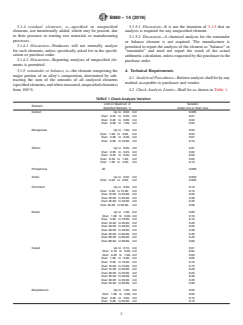
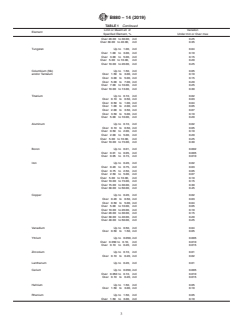
- Specifies permissible over-maximum or under-minimum values for specific elements such as nickel, cobalt, chromium, molybdenum, titanium, iron, copper, and others.
- Establishes check analysis as a verification process by the buyer, not for use by the producer in ladle or ingot analysis acceptance tests.
Sampling and Testing Guidelines
- Outlines methods for sample selection and preparation, referencing ASTM E55 and ASTM E88.
- Stipulates that analysis samples must be free from contamination and represent finished materials.
- Assigns responsibility for choosing analytical procedures mutually acceptable to purchaser and supplier.
Definitions
- Clarifies terminology such as “check analysis,” “variation limit,” “remainder or balance,” and “residual elements.”
International Compliance
- Developed in line with World Trade Organization (WTO) principles to support global trade compatibility.
Applications
ASTM B880-14(2019) is widely used across industries requiring high-performance or corrosion-resistant metal components, such as:
- Aerospace and Defense
- Quality control of nickel and cobalt alloy components in turbine engines, airframes, and other mission-critical assemblies.
- Power Generation
- Verification of chemical composition in materials exposed to high temperatures and corrosive environments.
- Chemical Processing
- Specification checks for alloy equipment exposed to aggressive chemicals and elevated temperatures.
- Medical Devices and Equipment
- Ensuring consistency in the chemical composition of materials used in implants, surgical instruments, and diagnostic equipment.
- Automotive
- Supporting durability and reliability requirements in specialty alloy parts.
Adherence to this standard significantly contributes to reliability, regulatory compliance, and supply chain quality assurance wherever nickel, nickel alloys, and cobalt alloys are utilized.
Related Standards
Users of ASTM B880-14(2019) may also reference:
- ASTM E55 - Practice for Sampling Wrought Nonferrous Metals and Alloys for Determination of Chemical Composition
- ASTM E88 - Practice for Sampling Nonferrous Metals and Alloys in Cast Form for Determination of Chemical Composition
- ASTM E1473 - Test Methods for Chemical Analysis of Nickel, Cobalt, and High-Temperature Alloys
- SAE AMS 2269 - Chemical Check Analysis Limits Nickel, Nickel Alloys, and Cobalt Alloys
Keywords: chemical check analysis, nickel alloys, cobalt alloys, ASTM standards, material analysis, alloy verification, industrial metals, quality control, chemical composition limits, sampling procedures.
ASTM B880-14(2019) offers a robust framework for verifying chemical composition in nickel, nickel alloy, and cobalt alloy materials, supporting quality assurance efforts and enabling confidence in material performance for critical applications worldwide.
Relations
- Effective Date
- 01-Sep-2017
- Effective Date
- 01-May-2011
- Effective Date
- 01-Oct-2005
- Effective Date
- 01-Oct-2005
- Effective Date
- 01-Dec-2003
- Effective Date
- 01-Oct-2003
- Effective Date
- 01-Jan-2001
- Effective Date
- 01-Jan-2001
- Effective Date
- 01-Jan-2001
- Effective Date
- 01-Jan-2001
- Effective Date
- 10-Dec-1998
Get Certified
Connect with accredited certification bodies for this standard

ECOCERT
Organic and sustainability certification.

Element Materials Technology
Materials testing and product certification.

Eurofins Food Testing Global
Global leader in food, environment, and pharmaceutical product testing.
Sponsored listings
Frequently Asked Questions
ASTM B880-14(2019) is a technical specification published by ASTM International. Its full title is "Standard Specification for General Requirements for Chemical Check Analysis Limits for Nickel, Nickel Alloys and Cobalt Alloys". This standard covers: ABSTRACT This specification details the limits of variation for determining the chemical check analysis limits of cast or wrought nickel, nickel alloy and cobalt alloy parts and/or supplied material. SCOPE 1.1 This specification covers limits of variation for determining acceptability of the chemical composition of cast or wrought nickel, nickel alloy, and cobalt alloy parts and/or material supplied by a producer. Check analysis limits for elements or for ranges of elements not currently listed herein shall be as specified in the applicable material specification or as agreed upon by purchaser and supplier. 1.2 In case of any conflicting requirements, the requirements of the purchase order, the individual material specification, and this general specification shall prevail in the sequence named. 1.3 When specifically referenced in the material specification, the buyer may elect to apply check analysis limits to determine acceptability at his final acceptance or verification procedures. Check analysis limits are not permitted or are to be used by the producer for their own ladle or ingot analysis acceptance testing. 1.4 This standard does not purport to address all of the safety concerns, if any, associated with its use. It is the responsibility of the user of this standard to establish appropriate safety, health, and environmental practices and determine the applicability of regulatory limitations prior to use. 1.5 This international standard was developed in accordance with internationally recognized principles on standardization established in the Decision on Principles for the Development of International Standards, Guides and Recommendations issued by the World Trade Organization Technical Barriers to Trade (TBT) Committee.
ABSTRACT This specification details the limits of variation for determining the chemical check analysis limits of cast or wrought nickel, nickel alloy and cobalt alloy parts and/or supplied material. SCOPE 1.1 This specification covers limits of variation for determining acceptability of the chemical composition of cast or wrought nickel, nickel alloy, and cobalt alloy parts and/or material supplied by a producer. Check analysis limits for elements or for ranges of elements not currently listed herein shall be as specified in the applicable material specification or as agreed upon by purchaser and supplier. 1.2 In case of any conflicting requirements, the requirements of the purchase order, the individual material specification, and this general specification shall prevail in the sequence named. 1.3 When specifically referenced in the material specification, the buyer may elect to apply check analysis limits to determine acceptability at his final acceptance or verification procedures. Check analysis limits are not permitted or are to be used by the producer for their own ladle or ingot analysis acceptance testing. 1.4 This standard does not purport to address all of the safety concerns, if any, associated with its use. It is the responsibility of the user of this standard to establish appropriate safety, health, and environmental practices and determine the applicability of regulatory limitations prior to use. 1.5 This international standard was developed in accordance with internationally recognized principles on standardization established in the Decision on Principles for the Development of International Standards, Guides and Recommendations issued by the World Trade Organization Technical Barriers to Trade (TBT) Committee.
ASTM B880-14(2019) is classified under the following ICS (International Classification for Standards) categories: 71.040.40 - Chemical analysis; 77.120.40 - Nickel, chromium and their alloys. The ICS classification helps identify the subject area and facilitates finding related standards.
ASTM B880-14(2019) has the following relationships with other standards: It is inter standard links to ASTM E88-11(2017), ASTM E88-11, ASTM E55-91(2005), ASTM E88-91(2005), ASTM E1473-03, ASTM E1473-94a(2003), ASTM E88-91(2001), ASTM E55-91(2001), ASTM E55-91(1996), ASTM E88-91(1996), ASTM E1473-94a(1998). Understanding these relationships helps ensure you are using the most current and applicable version of the standard.
ASTM B880-14(2019) is available in PDF format for immediate download after purchase. The document can be added to your cart and obtained through the secure checkout process. Digital delivery ensures instant access to the complete standard document.
Standards Content (Sample)
This international standard was developed in accordance with internationally recognized principles on standardization established in the Decision on Principles for the
Development of International Standards, Guides and Recommendations issued by the World Trade Organization Technical Barriers to Trade (TBT) Committee.
Designation:B880 −14 (Reapproved 2019)
Standard Specification for
General Requirements for Chemical Check Analysis Limits
for Nickel, Nickel Alloys and Cobalt Alloys
This standard is issued under the fixed designation B880; the number immediately following the designation indicates the year of
original adoption or, in the case of revision, the year of last revision. A number in parentheses indicates the year of last reapproval. A
superscript epsilon (´) indicates an editorial change since the last revision or reapproval.
1. Scope E55 Practice for Sampling Wrought Nonferrous Metals and
Alloys for Determination of Chemical Composition
1.1 This specification covers limits of variation for deter-
E88 Practice for Sampling Nonferrous Metals and Alloys in
mining acceptability of the chemical composition of cast or
Cast Form for Determination of Chemical Composition
wrought nickel, nickel alloy, and cobalt alloy parts and/or
E1473 Test Methods for Chemical Analysis of Nickel, Co-
material supplied by a producer. Check analysis limits for
balt and High-Temperature Alloys
elements or for ranges of elements not currently listed herein
shall be as specified in the applicable material specification or 2.2 SAE Standards:
as agreed upon by purchaser and supplier. AMS 2269 Chemical Check Analysis Limits Nickel, Nickel
Alloys and Cobalt Alloys
1.2 In case of any conflicting requirements, the require-
ments of the purchase order, the individual material
3. Terminology
specification, and this general specification shall prevail in the
sequence named.
3.1 Definitions:
3.1.1 check (product or verification) analysis, n—analysis
1.3 When specifically referenced in the material
made by buyer of parts and materials to verify conformity to
specification, the buyer may elect to apply check analysis
specification, or to determine variations in compositions within
limits to determine acceptability at his final acceptance or
a heat or lot.
verification procedures. Check analysis limits are not permitted
3.1.1.1 Discussion—Heat or lot acceptance or rejection of
or are to be used by the producer for their own ladle or ingot
parts and materials may be made by applying check limits as
analysis acceptance testing.
described in 3.1.2. Check limits of finished parts or material do
1.4 This standard does not purport to address all of the
not apply to elements whose percentage can be varied by
safety concerns, if any, associated with its use. It is the
fabricating techniques employed unless the sample is taken in
responsibility of the user of this standard to establish appro-
such a manner as to exclude such variations.
priate safety, health, and environmental practices and deter-
mine the applicability of regulatory limitations prior to use. 3.1.2 variation limit, under minimum or over maximum,
n—it is the amount of variation for a specified element, which
1.5 This international standard was developed in accor-
dance with internationally recognized principles on standard- may vary either under or over the specified composition limit
during an individual check analysis.
ization established in the Decision on Principles for the
Development of International Standards, Guides and Recom-
3.1.2.1 Discussion—In no case shall the reported determi-
mendations issued by the World Trade Organization Technical nations of any element in a heat, using the same analytical
Barriers to Trade (TBT) Committee.
procedure, vary both above and below the specified range.
3.1.3 remainder or balance, n—refers to main element,
2. Referenced Documents
which forms the basis of that particular alloy and from which
2.1 ASTM Standards:
the alloy is made.
3.1.3.1 Discussion—It is assumed to be present in an
amount approximately equal to the difference between 100 %
This specification is under the jurisdiction of Committee B02 on Nonferrous
Metals and Alloys and is the direct responsibility of Subcommittee B02.07 on
and the sum percentage of the alloying elements and listed
Refined Nickel and Cobalt and Their Alloys.
impurities or residual elements. It need not be analyzed or need
Current edition approved April 1, 2019. Published May 2019. Originally
an actual percentage figure for reporting purposes.
approved in 1998. Last previous edition approved in 2014 as B880 – 14. DOI:
10.1520/B0880-14R19.
For referenced ASTM standards, visit the ASTM website, www.astm.org, or
contact ASTM Customer Service at service@astm.org. For Annual Book of ASTM
Standards volume information, refer to the standard’s Document Summary page on Available from SAE International (SAE), 400 Commonwealth Dr.,Warrendale,
the ASTM website. PA 15096, http://www.sae.org.
Copyright © ASTM International, 100 Barr Harbor Drive, PO Box C700, West Conshohocken, PA 19428-2959. United States
B880−14 (2019)
3.1.4 residual elements, n—specified or unspecified 3.1.5.1 Discussion—It is not the intention of 3.1.5 that an
elements, not intentionally added, which may be present, due analysis is required for any unspecified element.
to their presence in starting raw materials or manufacturing
3.1.5.2 Discussion—A chemical analysis for the remainder
processes.
or balance element is not required. The manufacturer is
3.1.4.1 Discussion—Producers will not normally analyze
permitted to report the analysis of the element as “balance” or
for such elements, unless specifically asked for in the specifi-
“remainder” and need not report the result of the actual
cation or purchase order.
arithmetic calculation, unless requested by the purchaser in the
3.1.4.2 Discussion—Reporting analyses of unspecified ele-
purchase order.
ments is permitted.
4. Technical Requirements
3.1.5 remainder or balance, n—the element comprising the
major portion of an alloy’s composition, determined by sub-
4.1 Analytical Procedures—Refereeanalysisshallbebyany
tracting the sum of the amounts of all analyzed elements
method acceptable to purchaser and vendor.
(specifiedelements,andwhenmeasured,unspecifiedelements)
4.2 Check Analysis Limits—Shall be as shown in Table 1.
from 100 %.
TABLE 1 Check Analys
...