

ASTM A193/A193M-24
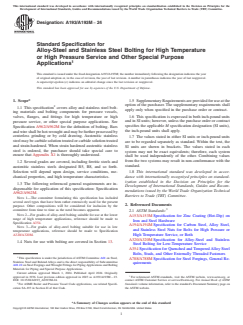
(Specification)Standard Specification for Alloy-Steel and Stainless Steel Bolting for High Temperature or High Pressure Service and Other Special Purpose Applications
General Information
- Abstract
ABSTRACT
This specification covers alloy steel and stainless steel bolting material for pressure vessels, valves, flanges, and fittings for high temperature or high pressure service, or other special purpose applications. Ferritic steels shall be properly heat treated as best suits the high temperature characteristics of each grade. Immediately after rolling or forging, the bolting material shall be allowed to cool to a temperature below the cooling transformation range. The chemical composition requirements for each alloy are presented in details. The steel shall not contain an unspecified element for ordered grade to the extent that the steel conforms to the requirements of another grade for which that element is a specified element. The tensile property and hardness property requirements are discussed, the tensile property requirement is highlighted by a full size fasteners, wedge tensile testing.
SCOPE
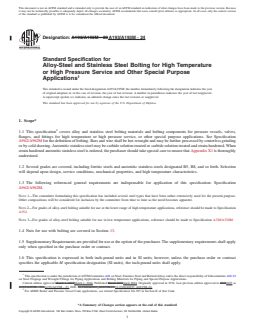
1.1 This specification2 covers alloy and stainless steel bolting materials and bolting components for pressure vessels, valves, flanges, and fittings for high temperature or high pressure service, or other special purpose applications. See Specification A962/A962M for the definition of bolting. Bars and wire shall be hot-wrought and may be further processed by centerless grinding or by cold drawing. Austenitic stainless steel may be carbide solution treated or carbide solution treated and strain-hardened. When strain hardened austenitic stainless steel is ordered, the purchaser should take special care to ensure that Appendix X1 is thoroughly understood.
1.2 Several grades are covered, including ferritic steels and austenitic stainless steels designated B5, B8, and so forth. Selection will depend upon design, service conditions, mechanical properties, and high temperature characteristics.
1.3 The following referenced general requirements are indispensable for application of this specification: Specification A962/A962M.
Note 1: The committee formulating this specification has included several steel types that have been rather extensively used for the present purpose. Other compositions will be considered for inclusion by the committee from time to time as the need becomes apparent.
Note 2: For grades of alloy-steel bolting suitable for use at the lower range of high temperature applications, reference should be made to Specification A354.
Note 3: For grades of alloy-steel bolting suitable for use in low temperature applications, reference should be made to Specification A320/A320M.
1.4 Nuts for use with bolting are covered in Section 13.
1.5 Supplementary Requirements are provided for use at the option of the purchaser. The supplementary requirements shall apply only when specified in the purchase order or contract.
1.6 This specification is expressed in both inch-pound units and in SI units; however, unless the purchase order or contract specifies the applicable M specification designation (SI units), the inch-pound units shall apply.
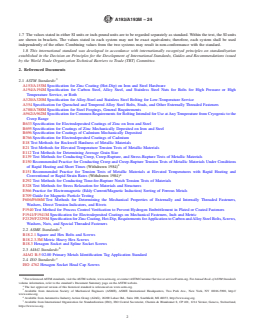
1.7 The values stated in either SI units or inch-pound units are to be regarded separately as standard. Within the text, the SI units are shown in brackets. The values stated in each system may not be exact equivalents; therefore, each system shall be used independently of the other. Combining values from the two systems may result in non-conformance with the standard.
1.8 This international standard was developed in accordance with internationally recognized principles on standardization established in the Decision on Principles for the Development of International Standards, Guides and Recommendations issued by the World Trade Organization Technical Barriers to Trade (TBT) Committee.
- Status
- Published
- Publication Date
- 29-Feb-2024
- Technical Committee
- A01 - Steel, Stainless Steel and Related Alloys
Buy Documents
ASTM A193/A193M-24 - Standard Specification for Alloy-Steel and Stainless Steel Bolting for High Temperature or High Pressure Service and Other Special Purpose Applications
REDLINE ASTM A193/A193M-24 - Standard Specification for Alloy-Steel and Stainless Steel Bolting for High Temperature or High Pressure Service and Other Special Purpose Applications
Overview
ASTM A193/A193M-24 is an international standard specification developed by ASTM for alloy steel and stainless steel bolting materials intended for use in high temperature, high pressure, or special purpose applications. This specification ensures that bolting components, such as bolts, studs, screws, and related fasteners, meet stringent requirements for mechanical properties and chemical composition, making them suitable for critical service in pressure vessels, valves, flanges, and fittings. Both ferritic and austenitic grades are covered, providing versatility in a range of demanding industrial environments.
Key Topics
Scope of Application
- Covers alloy steel and stainless steel bolting material for use in pressure vessels, valves, flanges, and fittings
- Suitable for both high temperature and high pressure environments, or other special applications
Material Grades
- Includes several grades, such as ferritic steels (e.g., B7, B16) and austenitic stainless steels (e.g., B8, B8M)
- Selection depends on the design, mechanical properties, service conditions, and temperature requirements
Manufacturing and Heat Treatment
- Bars and wire must be hot-wrought with optional further processing (e.g., centerless grinding, cold drawing)
- Austenitic stainless steels may undergo carbide solution treatment and, in some cases, strain-hardening
Mechanical Properties
- Mechanical property requirements include tensile strength, yield strength, elongation, and hardness
- Wedge tensile testing and full-size fastener testing are emphasized for property verification
Chemical Composition
- Strict requirements for chemical composition of each alloy to ensure material performance
- The addition of unspecified elements is not allowed to the extent that material conforms to another grade
Standardization and Units
- Applies both inch-pound and SI (metric) units; each system must be used independently to avoid non-conformance
Applications
ASTM A193/A193M-24 is widely used in industries where reliability and performance of bolting materials are paramount, particularly in:
- Power Generation: For bolted connections in boilers, turbines, and pressure vessels experiencing high temperatures and pressures
- Petrochemical & Chemical Processing: Pipelines, reactors, and processing equipment commonly utilize these specified bolts for their critical service environment
- Oil & Gas Industry: Offshore platforms, refineries, and pipeline systems depend on ASTM A193-compliant bolts and studs for structural and pressure-retaining assemblies
- Industrial Valves and Flanges: Ensures the safe functioning of critical shutoff, control systems, and connection integrity in aggressive operating conditions
The standard’s rigorous testing, certification, and marking requirements support operations where failure is not an option, and regulatory compliance is mandatory.
Related Standards
ASTM A193/A193M-24 references and aligns with several other standards to provide comprehensive coverage for bolting applications:
- ASTM A962/A962M – Common requirements for bolting used across varying temperature ranges
- ASTM A194/A194M – Specification for nuts used with high-pressure or high-temperature bolting
- ASTM A320/A320M – Bolting specification for low-temperature service
- ASTM A354 – Steel bolts and studs for lower temperature high-stress applications
- ASME B18.2.1, B18.2.3.3M, B18.3 – Dimension specifications for bolts, screws, and socket head cap screws
- ISO 4762 – International specification for hexagon socket head cap screws
Practical Value
ASTM A193/A193M-24 provides essential guidelines ensuring the safety, reliability, and quality of bolting materials for critical, high-stress environments. Its clear requirements for material selection, processing, mechanical properties, and testing support manufacturers, design engineers, and end-users in achieving regulatory compliance and performance consistency. This standard is vital for projects where secure and durable fastener assemblies directly impact plant safety, environmental protection, and equipment longevity.
Keywords: ASTM A193, A193M-24, alloy steel bolting, stainless steel bolting, high pressure bolts, high temperature service, pressure vessel bolts, bolting standard, mechanical properties, specification, power generation, chemical composition, standardization.
Relations
- Effective Date
- 01-Mar-2024
- Effective Date
- 01-Mar-2024
- Effective Date
- 01-Nov-2022
- Effective Date
- 01-Mar-2024
- Effective Date
- 01-Mar-2024
- Effective Date
- 01-Mar-2024
- Referred By
ASTM C1533-15(2022) - Standard Guide for General Design Considerations for Hot Cell Equipment - Effective Date
- 01-Mar-2024
- Effective Date
- 01-Mar-2024
- Referred By
ASTM F1276-23 - Standard Test Method for Creep Relaxation of Laminated Composite Gasket Materials - Effective Date
- 01-Mar-2024
- Effective Date
- 01-Mar-2024
- Effective Date
- 01-Mar-2024
- Effective Date
- 01-Mar-2024
- Effective Date
- 01-Mar-2024
- Effective Date
- 01-Mar-2024
- Referred By
ASTM F1155-10(2019) - Standard Practice for Selection and Application of Piping System Materials - Effective Date
- 01-Mar-2024
Buy Documents
ASTM A193/A193M-24 - Standard Specification for Alloy-Steel and Stainless Steel Bolting for High Temperature or High Pressure Service and Other Special Purpose Applications
REDLINE ASTM A193/A193M-24 - Standard Specification for Alloy-Steel and Stainless Steel Bolting for High Temperature or High Pressure Service and Other Special Purpose Applications
Get Certified
Connect with accredited certification bodies for this standard

Element Materials Technology
Materials testing and product certification.

Inštitut za kovinske materiale in tehnologije
Institute of Metals and Technology. Materials testing, metallurgical analysis, NDT.
Sponsored listings
Frequently Asked Questions
ASTM A193/A193M-24 is a technical specification published by ASTM International. Its full title is "Standard Specification for Alloy-Steel and Stainless Steel Bolting for High Temperature or High Pressure Service and Other Special Purpose Applications". This standard covers: ABSTRACT This specification covers alloy steel and stainless steel bolting material for pressure vessels, valves, flanges, and fittings for high temperature or high pressure service, or other special purpose applications. Ferritic steels shall be properly heat treated as best suits the high temperature characteristics of each grade. Immediately after rolling or forging, the bolting material shall be allowed to cool to a temperature below the cooling transformation range. The chemical composition requirements for each alloy are presented in details. The steel shall not contain an unspecified element for ordered grade to the extent that the steel conforms to the requirements of another grade for which that element is a specified element. The tensile property and hardness property requirements are discussed, the tensile property requirement is highlighted by a full size fasteners, wedge tensile testing. SCOPE 1.1 This specification2 covers alloy and stainless steel bolting materials and bolting components for pressure vessels, valves, flanges, and fittings for high temperature or high pressure service, or other special purpose applications. See Specification A962/A962M for the definition of bolting. Bars and wire shall be hot-wrought and may be further processed by centerless grinding or by cold drawing. Austenitic stainless steel may be carbide solution treated or carbide solution treated and strain-hardened. When strain hardened austenitic stainless steel is ordered, the purchaser should take special care to ensure that Appendix X1 is thoroughly understood. 1.2 Several grades are covered, including ferritic steels and austenitic stainless steels designated B5, B8, and so forth. Selection will depend upon design, service conditions, mechanical properties, and high temperature characteristics. 1.3 The following referenced general requirements are indispensable for application of this specification: Specification A962/A962M. Note 1: The committee formulating this specification has included several steel types that have been rather extensively used for the present purpose. Other compositions will be considered for inclusion by the committee from time to time as the need becomes apparent. Note 2: For grades of alloy-steel bolting suitable for use at the lower range of high temperature applications, reference should be made to Specification A354. Note 3: For grades of alloy-steel bolting suitable for use in low temperature applications, reference should be made to Specification A320/A320M. 1.4 Nuts for use with bolting are covered in Section 13. 1.5 Supplementary Requirements are provided for use at the option of the purchaser. The supplementary requirements shall apply only when specified in the purchase order or contract. 1.6 This specification is expressed in both inch-pound units and in SI units; however, unless the purchase order or contract specifies the applicable M specification designation (SI units), the inch-pound units shall apply. 1.7 The values stated in either SI units or inch-pound units are to be regarded separately as standard. Within the text, the SI units are shown in brackets. The values stated in each system may not be exact equivalents; therefore, each system shall be used independently of the other. Combining values from the two systems may result in non-conformance with the standard. 1.8 This international standard was developed in accordance with internationally recognized principles on standardization established in the Decision on Principles for the Development of International Standards, Guides and Recommendations issued by the World Trade Organization Technical Barriers to Trade (TBT) Committee.
ABSTRACT This specification covers alloy steel and stainless steel bolting material for pressure vessels, valves, flanges, and fittings for high temperature or high pressure service, or other special purpose applications. Ferritic steels shall be properly heat treated as best suits the high temperature characteristics of each grade. Immediately after rolling or forging, the bolting material shall be allowed to cool to a temperature below the cooling transformation range. The chemical composition requirements for each alloy are presented in details. The steel shall not contain an unspecified element for ordered grade to the extent that the steel conforms to the requirements of another grade for which that element is a specified element. The tensile property and hardness property requirements are discussed, the tensile property requirement is highlighted by a full size fasteners, wedge tensile testing. SCOPE 1.1 This specification2 covers alloy and stainless steel bolting materials and bolting components for pressure vessels, valves, flanges, and fittings for high temperature or high pressure service, or other special purpose applications. See Specification A962/A962M for the definition of bolting. Bars and wire shall be hot-wrought and may be further processed by centerless grinding or by cold drawing. Austenitic stainless steel may be carbide solution treated or carbide solution treated and strain-hardened. When strain hardened austenitic stainless steel is ordered, the purchaser should take special care to ensure that Appendix X1 is thoroughly understood. 1.2 Several grades are covered, including ferritic steels and austenitic stainless steels designated B5, B8, and so forth. Selection will depend upon design, service conditions, mechanical properties, and high temperature characteristics. 1.3 The following referenced general requirements are indispensable for application of this specification: Specification A962/A962M. Note 1: The committee formulating this specification has included several steel types that have been rather extensively used for the present purpose. Other compositions will be considered for inclusion by the committee from time to time as the need becomes apparent. Note 2: For grades of alloy-steel bolting suitable for use at the lower range of high temperature applications, reference should be made to Specification A354. Note 3: For grades of alloy-steel bolting suitable for use in low temperature applications, reference should be made to Specification A320/A320M. 1.4 Nuts for use with bolting are covered in Section 13. 1.5 Supplementary Requirements are provided for use at the option of the purchaser. The supplementary requirements shall apply only when specified in the purchase order or contract. 1.6 This specification is expressed in both inch-pound units and in SI units; however, unless the purchase order or contract specifies the applicable M specification designation (SI units), the inch-pound units shall apply. 1.7 The values stated in either SI units or inch-pound units are to be regarded separately as standard. Within the text, the SI units are shown in brackets. The values stated in each system may not be exact equivalents; therefore, each system shall be used independently of the other. Combining values from the two systems may result in non-conformance with the standard. 1.8 This international standard was developed in accordance with internationally recognized principles on standardization established in the Decision on Principles for the Development of International Standards, Guides and Recommendations issued by the World Trade Organization Technical Barriers to Trade (TBT) Committee.
ASTM A193/A193M-24 is classified under the following ICS (International Classification for Standards) categories: 21.060.01 - Fasteners in general; 77.080.20 - Steels. The ICS classification helps identify the subject area and facilitates finding related standards.
ASTM A193/A193M-24 has the following relationships with other standards: It is inter standard links to ASTM A193/A193M-23, ASTM A320/A320M-24, ASTM A320/A320M-22a, ASTM F1508-96(2021), ASTM F3394/F3394M-23, ASTM F1370-92(2019)e1, ASTM C1533-15(2022), ASTM F38-18, ASTM F1276-23, ASTM F1510-21, ASTM C852/C852M-17(2022), ASTM F2437/F2437M-17(2023), ASTM F2798-09(2023), ASTM A453/A453M-17(2024), ASTM F1155-10(2019). Understanding these relationships helps ensure you are using the most current and applicable version of the standard.
ASTM A193/A193M-24 is available in PDF format for immediate download after purchase. The document can be added to your cart and obtained through the secure checkout process. Digital delivery ensures instant access to the complete standard document.
Standards Content (Sample)
This international standard was developed in accordance with internationally recognized principles on standardization established in the Decision on Principles for the
Development of International Standards, Guides and Recommendations issued by the World Trade Organization Technical Barriers to Trade (TBT) Committee.
Designation: A193/A193M − 24
Standard Specification for
Alloy-Steel and Stainless Steel Bolting for High Temperature
or High Pressure Service and Other Special Purpose
Applications
This standard is issued under the fixed designation A193/A193M; the number immediately following the designation indicates the year
of original adoption or, in the case of revision, the year of last revision. A number in parentheses indicates the year of last reapproval.
A superscript epsilon (´) indicates an editorial change since the last revision or reapproval.
This standard has been approved for use by agencies of the U.S. Department of Defense.
1. Scope* 1.5 Supplementary Requirements are provided for use at the
option of the purchaser. The supplementary requirements shall
1.1 This specification covers alloy and stainless steel bolt-
apply only when specified in the purchase order or contract.
ing materials and bolting components for pressure vessels,
1.6 This specification is expressed in both inch-pound units
valves, flanges, and fittings for high temperature or high
and in SI units; however, unless the purchase order or contract
pressure service, or other special purpose applications. See
specifies the applicable M specification designation (SI units),
Specification A962/A962M for the definition of bolting. Bars
the inch-pound units shall apply.
and wire shall be hot-wrought and may be further processed by
centerless grinding or by cold drawing. Austenitic stainless
1.7 The values stated in either SI units or inch-pound units
steel may be carbide solution treated or carbide solution treated
are to be regarded separately as standard. Within the text, the
and strain-hardened. When strain hardened austenitic stainless
SI units are shown in brackets. The values stated in each
steel is ordered, the purchaser should take special care to
system may not be exact equivalents; therefore, each system
ensure that Appendix X1 is thoroughly understood.
shall be used independently of the other. Combining values
from the two systems may result in non-conformance with the
1.2 Several grades are covered, including ferritic steels and
standard.
austenitic stainless steels designated B5, B8, and so forth.
Selection will depend upon design, service conditions, me- 1.8 This international standard was developed in accor-
chanical properties, and high temperature characteristics. dance with internationally recognized principles on standard-
ization established in the Decision on Principles for the
1.3 The following referenced general requirements are in-
Development of International Standards, Guides and Recom-
dispensable for application of this specification: Specification
mendations issued by the World Trade Organization Technical
A962/A962M.
Barriers to Trade (TBT) Committee.
NOTE 1—The committee formulating this specification has included
several steel types that have been rather extensively used for the present
2. Referenced Documents
purpose. Other compositions will be considered for inclusion by the
committee from time to time as the need becomes apparent.
2.1 ASTM Standards:
NOTE 2—For grades of alloy-steel bolting suitable for use at the lower
A153/A153M Specification for Zinc Coating (Hot-Dip) on
range of high temperature applications, reference should be made to
Iron and Steel Hardware
Specification A354.
A194/A194M Specification for Carbon Steel, Alloy Steel,
NOTE 3—For grades of alloy-steel bolting suitable for use in low
and Stainless Steel Nuts for Bolts for High Pressure or
temperature applications, reference should be made to Specification
A320/A320M. High Temperature Service, or Both
A320/A320M Specification for Alloy-Steel and Stainless
1.4 Nuts for use with bolting are covered in Section 13.
Steel Bolting for Low-Temperature Service
A354 Specification for Quenched and Tempered Alloy Steel
Bolts, Studs, and Other Externally Threaded Fasteners
This specification is under the jurisdiction of ASTM Committee A01 on Steel,
A788/A788M Specification for Steel Forgings, General Re-
Stainless Steel and Related Alloys and is the direct responsibility of Subcommittee
quirements
A01.22 on Steel Forgings and Wrought Fittings for Piping Applications and Bolting
Materials for Piping and Special Purpose Applications.
Current edition approved March 1, 2024. Published April 2024. Originally
approved in 1936. Last previous edition approved in 2023 as A193/A193M – 23. For referenced ASTM standards, visit the ASTM website, www.astm.org, or
DOI: 10.1520/A0193_A0193M-24. contact ASTM Customer Service at service@astm.org. For Annual Book of ASTM
For ASME Boiler and Pressure Vessel Code applications, see related Specifi- Standards volume information, refer to the standard’s Document Summary page on
cation SA-193 in Section II of that Code. the ASTM website.
*A Summary of Changes section appears at the end of this standard
Copyright © ASTM International, 100 Barr Harbor Drive, PO Box C700, West Conshohocken, PA 19428-2959. United States
A193/A193M − 24
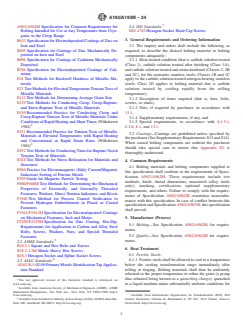
A962/A962M Specification for Common Requirements for 2.4 ISO Standards:
Bolting Intended for Use at Any Temperature from Cryo- ISO 4762 Hexagon Socket Head Cap Screws
genic to the Creep Range
3. General Requirements and Ordering Information
B633 Specification for Electrodeposited Coatings of Zinc on
Iron and Steel
3.1 The inquiry and orders shall include the following, as
B695 Specification for Coatings of Zinc Mechanically De- required, to describe the desired bolting material or bolting
posited on Iron and Steel
components adequately:
B696 Specification for Coatings of Cadmium Mechanically 3.1.1 Heat-treated condition (that is carbide solution treated
Deposited
(Class 1), carbide solution treated after finishing (Class 1A),
B766 Specification for Electrodeposited Coatings of Cad- and carbide solution treated and strain-hardened (Classes 2, 2B
mium
and 2C), for the austenitic stainless steels; Classes 1B and 1C
E18 Test Methods for Rockwell Hardness of Metallic Ma- apply to the carbide solution-treated nitrogen-bearing stainless
terials
steels; Class 1D applies to bolting material that is carbide
E21 Test Methods for Elevated Temperature Tension Tests of solution treated by cooling rapidly from the rolling
Metallic Materials
temperature),
E112 Test Methods for Determining Average Grain Size
3.1.2 Description of items required (that is, bars, bolts,
E139 Test Methods for Conducting Creep, Creep-Rupture,
screws, or studs),
and Stress-Rupture Tests of Metallic Materials
3.1.3 Nuts, if required by purchaser, in accordance with
E150 Recommended Practice for Conducting Creep and 13.1,
Creep-Rupture Tension Tests of Metallic Materials Under
3.1.4 Supplementary requirements, if any, and
Conditions of Rapid Heating and Short Times (Withdrawn 3.1.5 Special requirements, in accordance with 6.1.5.1,
1984)
6.2.6, 8.1, and 13.1.
E151 Recommended Practice for Tension Tests of Metallic
3.2 Coatings—Coatings are prohibited unless specified by
Materials at Elevated Temperatures with Rapid Heating
the purchaser (See Supplementary Requirements S13 and S14).
and Conventional or Rapid Strain Rates (Withdrawn
When coated bolting components are ordered the purchaser
1984)
should take special care to ensure that Appendix X2 is
E292 Test Methods for Conducting Time-for-Rupture Notch
thoroughly understood.
Tension Tests of Materials
E328 Test Methods for Stress Relaxation for Materials and
4. Common Requirements
Structures
4.1 Bolting materials and bolting components supplied to
E566 Practice for Electromagnetic (Eddy Current/Magnetic
this specification shall conform to the requirements of Speci-
Induction) Sorting of Ferrous Metals
fication A962/A962M. These requirements include test
E709 Guide for Magnetic Particle Testing
methods, finish, thread dimensions, macroetch (alloy steels
F606/F606M Test Methods for Determining the Mechanical
only), marking, certification, optional supplementary
Properties of Externally and Internally Threaded
requirements, and others. Failure to comply with the require-
Fasteners, Washers, Direct Tension Indicators, and Rivets
ments of Specification A962/A962M constitutes nonconfor-
F1940 Test Method for Process Control Verification to
mance with this specification. In case of conflict between this
Prevent Hydrogen Embrittlement in Plated or Coated
specification and Specification A962/A962M, this specification
Fasteners
shall prevail.
F1941/F1941M Specification for Electrodeposited Coatings
on Mechanical Fasteners, Inch and Metric
5. Manufacture (Process)
F2329/F2329M Specification for Zinc Coating, Hot-Dip,
5.1 Melting—See Specification A962/A962M for require-
Requirements for Application to Carbon and Alloy Steel
ments.
Bolts, Screws, Washers, Nuts, and Special Threaded
5.2 Quality—See Specification A962/A962M for require-
Fasteners
ments.
2.2 ASME Standards:
B18.2.1 Square and Hex Bolts and Screws
6. Heat Treatment
B18.2.3.3M Metric Heavy Hex Screws
6.1 Ferritic Steels:
B18.3 Hexagon Socket and Spline Socket Screws
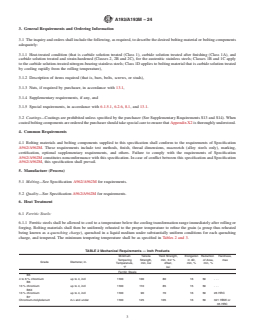
6.1.1 Ferritic steels shall be allowed to cool to a temperature
2.3 AIAG Standards:
below the cooling transformation range immediately after
AIAG B-5 02.00 Primary Metals Identification Tag Applica-
rolling or forging. Bolting materials shall then be uniformly
tion Standard
reheated to the proper temperature to refine the grain (a group
thus reheated being known as a quenching charge), quenched
The last approved version of this historical standard is referenced on
www.astm.org. in a liquid medium under substantially uniform conditions for
Available from American Society of Mechanical Engineers (ASME), ASME
International Headquarters, Two Park Ave., New York, NY 10016-5990, http://
www.asme.org. Available from International Organization for Standardization (ISO), ISO
Available from Automotive Industry Action Group (AIAG), 26200 Lahser Rd., Central Secretariat, Chemin de Blandonnet 8, CP 401, 1214 Vernier, Geneva,
Suite 200, Southfield, MI 48033, http://www.aiag.org. Switzerland, https://www.iso.org.
A193/A193M − 24
A
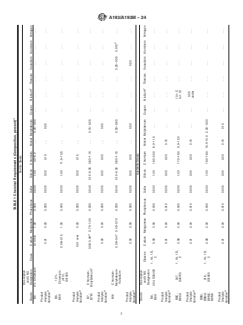
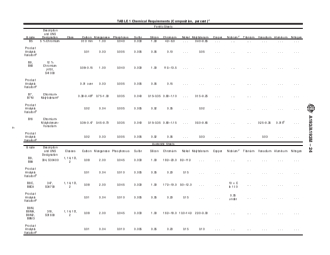
TABLE 1 Chemical Requirements (Composition, percent)
Ferritic Steels
Description
and UNS
F
Grade Designation Class Carbon Manganese Phosphorus Sulfur Silicon Chromium Nickel Molybdenum Cooper Niobium Titanium Vanadium Aluminum Nitrogen
B5 5 % Chromium 0.10 min 1.00 0.040 0.030 1.00 4.0–6.0 . . . 0.40–0.65 . . . . . . . . . . . . . . . . . .
Product
Analysis 0.01 0.03 0.005 0.005 0.05 0.10 . . . 0.05 . . . . . . . . . . . . . . . . . .
B
Variation
B6, 12 %
B6X Chromium
0.08–0.15 1.00 0.040 0.030 1.00 11.5–13.5 . . . . . . . . . . . . . . . . . . . . . . . .
(410),
S41000
Product
Analysis 0.01 over 0.03 0.005 0.005 0.05 0.15 . . . . . . . . . . . . . . . . . . . . . . . .
B
Variation
B7, Chromium-
D
0.38–0.48 0.75–1.00 0.035 0.040 0.15–0.35 0.80–1.10 . . . 0.15–0.25 . . . . . . . . . . . . . . . . . .
C
B7M Molybdenum
Product
Analysis 0.02 0.04 0.005 0.005 0.02 0.05 . . . 0.02 . . . . . . . . . . . . . . . . . .
B
Variation
B16 Chromium-
E
Molybdenum- 0.36–0.47 0.45–0.70 0.035 0.040 0.15–0.35 0.80–1.15 . . . 0.50–0.65 . . . . . . . . . 0.25–0.35 0.015 . . .
Vanadium
Product
Analysis 0.02 0.03 0.005 0.005 0.02 0.05 . . . 0.03 . . . . . . . . . 0.03 . . . . . .
B
Variation
Austenitic Steels
Grade Description
F
and UNS Classes Carbon Manganese Phosphorous Sulfur Silicon Chromium Nickel Molybdenum Copper Niobium Titanium Vanadium Aluminum Nitrogen
Designation
B8, 1, 1A, 1D,
304, S30400 0.08 2.00 0.045 0.030 1.00 18.0–20.0 8.0–11.0 . . . . . . . . . . . . . . . . . . . . .
B8A 2
Product
Analysis 0.01 0.04 0.010 0.005 0.05 0.20 0.15 . . . . . . . . . . . . . . . . . . . . .
B
Variation
B8C, 347, 1, 1A, 1D, 10 × C
0.08 2.00 0.045 0.030 1.00 17.0–19.0 9.0–12.0 . . . . . . . . . . . . . . . . . .
B8CA S34700 2 to 1.10
Product
0.05
Analysis 0.01 0.04 0.010 0.005 0.05 0.20 0.15 . . . . . . . . . . . . . . . . . .
under
B
Variation
B8M,
B8MA, 316, 1, 1A, 1D,
0.08 2.00 0.045 0.030 1.00 16.0–18.0 10.0–14.0 2.00–3.00 . . . . . . . . . . . . . . . . . .
B8M2, S31600 2
B8M3
Product
Analysis 0.01 0.04 0.010 0.005 0.05 0.20 0.15 0.10 . . . . . . . . . . . . . . . . . .
B
Variation
A193/A193M − 24
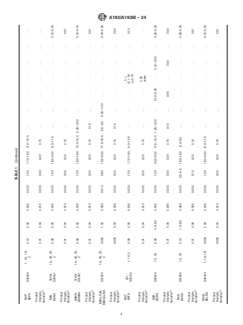
TABLE 1 Continued
B8P, 1, 1A, 1D,
S30500 0.12 2.00 0.045 0.030 1.00 17.0–19.0 11.0–13.0 . . . . . . . . . . . . . . . . . . . . .
B8PA 2
Product
Analysis 0.01 0.04 0.010 0.005 0.05 0.20 0.15 . . . . . . . . . . . . . . . . . . . . .
B
Variation
B8N, 304N, 1A, 1B, 1D,
0.08 2.00 0.045 0.030 1.00 18.0–20.0 8.0–11.0 . . . . . . . . . . . . . . . . . . 0.10–0.16
B8NA S30451 2
Product
Analysis 0.01 0.04 0.010 0.005 0.05 0.20 0.15 . . . . . . . . . . . . . . . . . . 0.01
B
Variation
B8MN, 316N, 1A, 1B, 1D,
0.08 2.00 0.045 0.030 1.00 16.0–18.0 10.0–13.0 2.00–3.00 . . . . . . . . . . . . . . . 0.10–0.16
B8MNA S31651 2
Product
Analysis 0.01 0.04 0.010 0.005 0.05 0.20 0.15 0.10 . . . . . . . . . . . . . . . 0.01
B
Variation
B8MLCuN, 1A, 1B, 1D,
S31254 0.020 1.00 0.030 0.010 0.80 19.5–20.5 17.5–18.5 6.0–6.5 0.50–1.00 . . . . . . . . . . . . 0.18–0.25
B8MLCuNA 2
Product
Analysis 0.005 0.03 0.005 0.002 0.05 0.20 0.15 0.10 . . . . . . . . . . . . . . . 0.02
B
Variation
B8T, 5 ×
321,
B8TA 1, 1A, 2 0.08 2.00 0.045 0.030 1.00 17.0–19.0 9.0–12.0 . . . . . . . . . (C + N) . . . . . . 0.10
S32100
to 0.70
Product
0.05
Analysis 0.01 0.04 0.010 0.005 0.05 0.20 0.15 . . . . . . . . . . . . . . . . . .
under
B
Variation
B8R,
S20910 1C, 1D 0.06 4.0–6.0 0.045 0.030 1.00 20.5–23.5 11.5–13.5 1.50–3.00 . . . 0.10–0.30 . . . 0.10–0.30 . . . 0.20–0.40
B8RA
Product
Analysis 0.01 0.05 0.005 0.005 0.05 0.25 0.15 0.10 . . . 0.05 . . . 0.02 . . . 0.02
B
Variation
B8S,
S21800 1C, 1D 0.10 7.0–9.0 0.060 0.030 3.5–4.5 16.0–18.0 8.0–9.0 . . . . . . . . . . . . . . . . . . 0.08–0.18
B8SA
Product
Analysis 0.01 0.06 0.005 0.005 0.15 0.20 0.10 . . . . . . . . . . . . . . . . . . 0.01
B
Variation
B8LN,
S30453 1, 1A, 1D 0.030 2.00 0.045 0.030 1.00 18.0–20.0 8.0–11.0 . . . . . . . . . . . . . . . . . . 0.10–0.16
B8LNA
Product
Analysis 0.005 0.04 0.010 0.005 0.05 0.20 0.15 . . . . . . . . . . . . . . . . . . 0.01
B
Variation
A193/A193M − 24
TABLE 1 Continued
B8MLN,
S31653 1, 1A, 1D 0.030 2.00 0.045 0.030 1.00 16.0–18.0 10.0–13.0 2.00–3.00 . . . . . . . . . . . . . . . 0.10–0.16
B8MLNA
Product
Analysis 0.005 0.04 0.010 0.005 0.05 0.20 0.15 0.10 . . . . . . . . . . . . . . . 0.01
B
Variation
B8CLN, 0.20–0.50;
B8CLNA 15 ×
347LN, 0.005–
1, 1A, 1D 2.00 0.045 0.030 1.00 17.0–19.0 9.0–13.0 . . . . . . carbon . . . . . . . . . 0.06–0.10
S34751 0.020
content,
min
Product 0.002
Analysis under,
0.04 0.01 0.005 0.05 0.20 0.15 . . . . . . 0.05 . . . . . . . . . 0.01
B
Variation 0.005
over
0.20–0.50;
B8CLNCu
15 ×
B 0.005-
G
S34752 1,1A,1D 2.00 0.035 0.010 0.60 17.0-19.0 10.0-13.0 0.20-1.20 2.50-3.50 carbon . . . . . . . . . 0.06-0.12
B8CLNCu 0.02
content,
BA
min
Product 0.002
Analysis under,
0.04 0.01 0.005 0.05 0.20 0.15 0.15 0.05 . . . . . . . . . 0.01
Variation 0.005
over
B8ML4CuN,
S31730 1, 1A, 1D 0.030 2.00 0.040 0.010 1.00 17.0–19.0 15.0–16.5 3.0–4.0 4.0–5.0 . . . . . . . . . . . . 0.045
B8ML4CuNA
Product
Analysis 0.005 0.04 0.005 0.002 0.05 0.20 0.15 0.10 0.15 . . . . . . . . . . . . 0.01
B
Variation
A
Values are maximums unless a range or a minimum is indicated. Where ellipses appear in this table, there is no requirement and the element need not be determined or reported. The intentional addition of Bi, Se,
Te, and Pb is not permitted.
B
Product Analysis—Individual determinations sometimes vary from the specified limits as shown in the tables. The several determinations of any individual element in a heat may not vary both above and below the
specified range. Product variation limits are over for maximums, over or under for ranges, and under for minimums, unless otherwise indicated.
C
Typical steel compositions used for this grade include 4140, 4142, 4145, 4140H, 4142H, and 4145H.
D 1
For bar sizes over 3 ⁄2 in. [90 mm], inclusive, the carbon content may be 0.50 % max. For the B7M grade, a minimum carbon of 0.28 % is permitted, provided that the required tensile properties are met in the section
sizes involved, the use of AISI 4130 or 4130H is allowed.
E
Total of soluble and insoluble.
F
Columbium and Niobium are alternate names for element 41 in the Periodic Table of the Elements.
G
For S34752 – Boron content shall be 0.001-0.005 for both heat and product analysis.
A193/A193M − 24
each quenching charge, and tempered. The minimum temper-
ing temperature shall be as specified in Tables 2 and 3.
TABLE 2 Mechanical Requirements — Inch Products
Minimum Tensile Yield Strength, Elongation Reduction Hardness,
Tempering Strength, min, 0.2 % in 4D, of Area, max
Grade Diameter, in.
Temperature, min, ksi offset, min, % min, %
°F ksi
Ferritic Steels
B5
4 to 6 % chromium up to 4, incl 1100 100 80 16 50 . . .
B6
13 % chromium up to 4, incl 1100 110 85 15 50 . . .
B6X
13 % chromium up to 4, incl 1100 90 70 16 50 26 HRC
B7
Chromium-molybdenum 2 ⁄2 and under 1100 125 105 16 50 321 HBW or
35 HRC
over 2 ⁄2 to 4 1100 115 95 16 50 321 HBW or
35 HRC
over 4 to 7 1100 100 75 18 50 321 HBW or
35 HRC
A
B7M Chromium-molybdenum 4 and under 1150 100 80 18 50 235 HBW or
99 HRB
over 4 to 7 1150 100 75 18 50 235 HBW or
99 HRB
B16
Chromium-molybdenum-vanadium 2 ⁄2 and under 1200 125 105 18 50 321 HBW or
35 HRC
over 2 ⁄2 to 4 1200 110 95 17 45 321 HBW or
35 HRC
over 4 to 8 1200 100 85 16 45 321 HBW or
35 HRC
Tensile Yield
Strength, Strength, Elongation Reduction
Hardness,
B
Grade, Diameter, in. Heat Treatment min, ksi min, 0.2 in 4 D, of Area,
max
% offset, min % min %
ksi
Austenitic Steels
Classes 1 and 1D; B8, B8M, B8P, carbide solution treated 75 30 30 50 223 HBW or 96
C
B8LN, B8MLN, B8CLN, all HRB
diameters
Classes 1 and 1D; B8, carbide solution treated 75 30 35 50 223 HBW or 96
C
B8CLNCuB, all diameters HRB
Classes 1 and 1D: B8ML4CuN, carbide solution treated 70 25 35 50 90 HRB
all diameters
Class 1: B8C, B8T, all diameters carbide solution treated 75 30 30 50 223 HBW or
C
96HRB
Class 1A: B8A, B8CA, B8CLNA, carbide solution treated in the finished 75 30 30 50 192 HBW or 90
B8MA, B8PA, B8TA, B8LNA, condition HRB
B8MLNA, B8NA, B8MNA,
B8MLCuNA, all diameters
Class 1A: B8ML4CuNA, all carbide solution treated 70 25 35 50 90 HRB
diameters
Classes 1B and 1D: B8N, B8MN, carbide solution treated 80 35 30 40 223 HBW or 96
C
B8MLCuN, all diameters HRB
Classes 1C and 1D: B8R, all carbide solution treated 100 55 35 55 271 HBW or 28
diameters HRC
Class 1C: B8RA, all diameters carbide solution treated in the finished 100 55 35 55 271 HBW or 28
condition HRC
Classes 1C and 1D: B8S, all carbide solution treated 95 50 35 55 271 HBW or 28
diameters HRC
Classes 1C: B8SA, all diameters carbide solution treated in the finished 95 50 35 55 271 HBW or 28
condition HRC
Class 2: B8, B8C, B8P, B8T, carbide solution treated and strain 125 100 12 35 321 HBW or 35
D
B8N, ⁄4 and under hardened HRC
over ⁄4 to 1, incl 115 80 15 35 321 HBW or 35
HRC
over 1 to 1 ⁄4, incl 105 65 20 35 321 HBW or 35
HRC
A193/A193M − 24
TABLE 2 Continued
Tensile Yield
Strength, Strength, Elongation Reduction
Hardness,
B
Grade, Diameter, in. Heat Treatment min, ksi min, 0.2 in 4 D, of Area,
max
% offset, min % min %
ksi
Austenitic Steels
1 1
over 1 ⁄4 to 1 ⁄2, incl 100 50 28 45 321 HBW or 35
HRC
Class 2: B8M, B8MN, carbide solution treated and strain 110 95 15 45 321 HBW or 35
D
B8MLCuN ⁄4 and under hardened HRC
over ⁄4 to 1 incl 100 80 20 45 321 HBW or 35
HRC
Over 1 to 1 ⁄4, incl 95 65 25 45 321 HBW or 35
HRC
1 1
over 1 ⁄4 to 1 ⁄2, incl 90 50 30 45 321 HBW or 35
HRC
D
Class 2B: B8, B8M2 carbide solution treated and strain 95 75 25 40 321 HBW or 35
2 and under
hardened HRC
over 2 to 2 ⁄2 incl 90 65 30 40 321 HBW or 35
HRC
over 2 ⁄2 to 3 incl 80 55 30 40 321 HBW or 35
HRC
D
Class 2C: B8M3 carbide solution treated and strain 85 65 30 60 321 HBW or 35
2 and under
hardened HRC
over 2 85 60 30 60 321 HBW or 35
HRC
A
To meet the tensile requirements, the Brinell hardness shall be over 200 HBW (93 HRB).
B
Class 1 is solution treated. Class 1A is solution treated in the finished condition for corrosion resistance; heat treatment is critical due to physical property requirement.
Class 2 is solution treated and strain hardened. Austenitic steels in the strain-hardened condition may not show uniform properties throughout the section particularly in
sizes over ⁄4 in. in diameter.
C
For sizes ⁄4 in. in diameter and smaller, a maximum hardness of 241 HBW (100 HRB) is permitted.
D
1 1
For diameters 1 ⁄2 and over, center (core) properties may be lower than indicated by test reports which are based on values determined at ⁄2 radius.
TABLE 3 Mechanical Requirements—Metric Products
Minimum Tensile Yield Strength, Elongation Reduction Hardness,
Tempering Strength, min, 0.2 % in 4D, of Area, max
Class Diameter, [mm]
Temperature, min, offset, min, % min, %
°C MPa MPa
Ferritic Steels
B5
4 to 6 % chromium up to M100, incl 593 690 550 16 50 . . .
B6
13 % chromium up to M100, incl 593 760 585 15 50 . . .
B6X
13 % chromium up to M100, incl 593 620 485 16 50 26 HRC
B7
Chromium-molybdenum M64 and under 593 860 720 16 50 321 HBW or
35 HRC
over M64 to M100 593 795 655 16 50 321 HBW or
35 HRC
over M100 to M180 593 690 515 18 50 321 HBW or
35 HRC
A
B7M Chromium-molybdenum M100 and under 620 690 550 18 50 235 HBW or
99 HRB
over M100 to M180 620 690 515 18 50 235 HBW or
99 HRB
B16
Chromium-molybdenum-vanadium M64 and under 650 860 725 18 50 321 HBW or
35 HRC
over M64 to M100 650 760 655 17 45 321 HBW or
35 HRC
over M100 to M200 650 690 585 16 45 321 HBW or
35 HRC
A193/A193M − 24
TABLE 3 Continued
Tensile Yield
Strength, Strength, Elongation Reduction
Hardness,
B
Class Diameter, mm Heat Treatment min, min, 0.2 in 4 D, of Area,
max
MPa % offset, min % min %
MPa
Austenitic Steels
Classes 1 and 1D; B8, B8M, B8P, B8LN, carbide solution treated 515 205 30 50 223 HBW or 96
C
B8MLN, B8CLN, all diameters HRB
Classes 1,1A,1D, B8CLNCuB, all carbide solution treated 515 205 30 50 223 HBW or 96
C
diameters 1 HRB
Classes 1 and 1D: B8ML4CuN, all carbide solution treated 480 175 35 50 90 HRB
diameters
Class 1: B8C, B8T, all diameters carbide solution treated 515 205 30 50 223 HBW or
C
96HRB
Class 1A: B8A, B8CA, B8CLNA, B8MA, carbide solution treated in the finished 515 205 30 50 192 HBW or 90
B8PA, B8TA, B8LNA, B8MLNA, B8NA, condition HRB
B8MNA, B8MLCuNA, all diameters
Class 1A: B8ML4CuNA, all diameters carbide solution treated 480 175 35 50 90 HRB
Classes 1B and 1D: B8N, B8MN, carbide solution treated 550 240 30 40 223 HBW or 96
C
B8MLCuN, all diameters HRB
Classes 1C and 1D: B8R, all diameters carbide solution treated 690 380 35 55 271 HBW or 28
HRC
Class 1C: B8RA, all diameters carbide solution treated in the finished 690 380 35 55 271 HBW or 28
condition HRC
Classes 1C and 1D: B8S, all diameters carbide solution treated 655 345 35 55 271 HBW or 28
HRC
Classes 1C: B8SA, all diameters carbide solution treated in the finished 655 345 35 55 271 HBW or 28
condition HRC
D
Class 2: B8, B8C, B8P, B8T, B8N, carbide solution treated and strain 860 690 12 35 321 HBW or 35
M20 and under
hardened HRC
over M20 to M24, incl 795 550 15 35 321 HBW or 35
HRC
over M24 to M30, incl 725 450 20 35 321 HBW or 35
HRC
over M30 to M36, incl 690 345 28 45 321 HBW or 35
HRC
D
Class 2: B8M, B8MN, B8MLCuN, carbide solution treated and strain 760 655 15 45 321 HBW or 35
M20 and under
hardened HRC
over M20 to M24, incl 690 550 20 45 321 HBW or 35
HRC
over M24 to M30, incl 655 450 25 45 321 HBW or 35
HRC
over M30 to M36, incl 620 345 30 45 321 HBW or 35
HRC
D
Class 2B: B8, B8M2, carbide solution treated and strain 655 515 25 40 321 HBW or 35
M48 and under
hardened HRC
over M48 to M64, incl 620 450 30 40 321 HBW or 35
HRC
over M64 to M72, incl 550 380 30 40 321 HBW or 35
HRC
D
Class 2C: B8M3, carbide solution treated and strain 585 450 30 60 321 HBW or 35
M48 and under
hardened HRC
over M48 585 415 30 60 321 HBW or 35
HRC
A
To meet the tensile requirements, the Brinell hardness shall be over 200 HBW (93 HRB).
B
Class 1 is solution treated. Class 1A is solution treated in the finished condition for corrosion resistanc
...
This document is not an ASTM standard and is intended only to provide the user of an ASTM standard an indication of what changes have been made to the previous version. Because
it may not be technically possible to adequately depict all changes accurately, ASTM recommends that users consult prior editions as appropriate. In all cases only the current version
of the standard as published by ASTM is to be considered the official document.
Designation: A193/A193M − 23 A193/A193M − 24
Standard Specification for
Alloy-Steel and Stainless Steel Bolting for High Temperature
or High Pressure Service and Other Special Purpose
Applications
This standard is issued under the fixed designation A193/A193M; the number immediately following the designation indicates the year
of original adoption or, in the case of revision, the year of last revision. A number in parentheses indicates the year of last reapproval.
A superscript epsilon (´) indicates an editorial change since the last revision or reapproval.
This standard has been approved for use by agencies of the U.S. Department of Defense.
1. Scope*
1.1 This specification covers alloy and stainless steel bolting materials and bolting components for pressure vessels, valves,
flanges, and fittings for high temperature or high pressure service, or other special purpose applications. See Specification
A962/A962M for the definition of bolting. Bars and wire shall be hot-wrought and may be further processed by centerless grinding
or by cold drawing. Austenitic stainless steel may be carbide solution treated or carbide solution treated and strain-hardened. When
strain hardened austenitic stainless steel is ordered, the purchaser should take special care to ensure that Appendix X1 is thoroughly
understood.
1.2 Several grades are covered, including ferritic steels and austenitic stainless steels designated B5, B8, and so forth. Selection
will depend upon design, service conditions, mechanical properties, and high temperature characteristics.
1.3 The following referenced general requirements are indispensable for application of this specification: Specification
A962/A962M.
NOTE 1—The committee formulating this specification has included several steel types that have been rather extensively used for the present purpose.
Other compositions will be considered for inclusion by the committee from time to time as the need becomes apparent.
NOTE 2—For grades of alloy-steel bolting suitable for use at the lower range of high temperature applications, reference should be made to Specification
A354.
NOTE 3—For grades of alloy-steel bolting suitable for use in low temperature applications, reference should be made to Specification A320/A320M.
1.4 Nuts for use with bolting are covered in Section 13.
1.5 Supplementary Requirements are provided for use at the option of the purchaser. The supplementary requirements shall apply
only when specified in the purchase order or contract.
1.6 This specification is expressed in both inch-pound units and in SI units; however, unless the purchase order or contract
specifies the applicable M specification designation (SI units), the inch-pound units shall apply.
This specification is under the jurisdiction of ASTM Committee A01 on Steel, Stainless Steel and Related Alloys and is the direct responsibility of Subcommittee A01.22
on Steel Forgings and Wrought Fittings for Piping Applications and Bolting Materials for Piping and Special Purpose Applications.
Current edition approved March 1, 2023March 1, 2024. Published March 2023April 2024. Originally approved in 1936. Last previous edition approved in 20222023 as
A193/A193M – 22a.A193/A193M – 23. DOI: 10.1520/A0193_A0193M-23.10.1520/A0193_A0193M-24.
For ASME Boiler and Pressure Vessel Code applications, see related Specification SA-193 in Section II of that Code.
*A Summary of Changes section appears at the end of this standard
Copyright © ASTM International, 100 Barr Harbor Drive, PO Box C700, West Conshohocken, PA 19428-2959. United States
A193/A193M − 24
1.7 The values stated in either SI units or inch-pound units are to be regarded separately as standard. Within the text, the SI units
are shown in brackets. The values stated in each system may not be exact equivalents; therefore, each system shall be used
independently of the other. Combining values from the two systems may result in non-conformance with the standard.
1.8 This international standard was developed in accordance with internationally recognized principles on standardization
established in the Decision on Principles for the Development of International Standards, Guides and Recommendations issued
by the World Trade Organization Technical Barriers to Trade (TBT) Committee.
2. Referenced Documents
2.1 ASTM Standards:
A153/A153M Specification for Zinc Coating (Hot-Dip) on Iron and Steel Hardware
A194/A194M Specification for Carbon Steel, Alloy Steel, and Stainless Steel Nuts for Bolts for High Pressure or High
Temperature Service, or Both
A320/A320M Specification for Alloy-Steel and Stainless Steel Bolting for Low-Temperature Service
A354 Specification for Quenched and Tempered Alloy Steel Bolts, Studs, and Other Externally Threaded Fasteners
A788/A788M Specification for Steel Forgings, General Requirements
A962/A962M Specification for Common Requirements for Bolting Intended for Use at Any Temperature from Cryogenic to the
Creep Range
B633 Specification for Electrodeposited Coatings of Zinc on Iron and Steel
B695 Specification for Coatings of Zinc Mechanically Deposited on Iron and Steel
B696 Specification for Coatings of Cadmium Mechanically Deposited
B766 Specification for Electrodeposited Coatings of Cadmium
E18 Test Methods for Rockwell Hardness of Metallic Materials
E21 Test Methods for Elevated Temperature Tension Tests of Metallic Materials
E112 Test Methods for Determining Average Grain Size
E139 Test Methods for Conducting Creep, Creep-Rupture, and Stress-Rupture Tests of Metallic Materials
E150 Recommended Practice for Conducting Creep and Creep-Rupture Tension Tests of Metallic Materials Under Conditions
of Rapid Heating and Short Times (Withdrawn 1984)
E151 Recommended Practice for Tension Tests of Metallic Materials at Elevated Temperatures with Rapid Heating and
Conventional or Rapid Strain Rates (Withdrawn 1984)
E292 Test Methods for Conducting Time-for-Rupture Notch Tension Tests of Materials
E328 Test Methods for Stress Relaxation for Materials and Structures
E566 Practice for Electromagnetic (Eddy Current/Magnetic Induction) Sorting of Ferrous Metals
E709 Guide for Magnetic Particle Testing
F606/F606M Test Methods for Determining the Mechanical Properties of Externally and Internally Threaded Fasteners,
Washers, Direct Tension Indicators, and Rivets
F1940 Test Method for Process Control Verification to Prevent Hydrogen Embrittlement in Plated or Coated Fasteners
F1941/F1941M Specification for Electrodeposited Coatings on Mechanical Fasteners, Inch and Metric
F2329/F2329M Specification for Zinc Coating, Hot-Dip, Requirements for Application to Carbon and Alloy Steel Bolts, Screws,
Washers, Nuts, and Special Threaded Fasteners
2.2 ASME Standards:
B18.2.1 Square and Hex Bolts and Screws
B18.2.3.3M Metric Heavy Hex Screws
B18.3 Hexagon Socket and Spline Socket Screws
2.3 AIAG Standards:
AIAG B-5 02.00 Primary Metals Identification Tag Application Standard
2.4 ISO Standards:
ISO 4762 Hexagon Socket Head Cap Screws
For referenced ASTM standards, visit the ASTM website, www.astm.org, or contact ASTM Customer Service at service@astm.org. For Annual Book of ASTM Standards
volume information, refer to the standard’s Document Summary page on the ASTM website.
The last approved version of this historical standard is referenced on www.astm.org.
Available from American Society of Mechanical Engineers (ASME), ASME International Headquarters, Two Park Ave., New York, NY 10016-5990, http://
www.asme.org.
Available from Automotive Industry Action Group (AIAG), 26200 Lahser Rd., Suite 200, Southfield, MI 48033, http://www.aiag.org.
Available from International Organization for Standardization (ISO), ISO Central Secretariat, Chemin de Blandonnet 8, CP 401, 1214 Vernier, Geneva, Switzerland,
https://www.iso.org.
A193/A193M − 24
3. General Requirements and Ordering Information
3.1 The inquiry and orders shall include the following, as required, to describe the desired bolting material or bolting components
adequately:
3.1.1 Heat-treated condition (that is carbide solution treated (Class 1), carbide solution treated after finishing (Class 1A), and
carbide solution treated and strain-hardened (Classes 2, 2B and 2C), for the austenitic stainless steels; Classes 1B and 1C apply
to the carbide solution-treated nitrogen-bearing stainless steels; Class 1D applies to bolting material that is carbide solution treated
by cooling rapidly from the rolling temperature),
3.1.2 Description of items required (that is, bars, bolts, screws, or studs),
3.1.3 Nuts, if required by purchaser, in accordance with 13.1,
3.1.4 Supplementary requirements, if any, and
3.1.5 Special requirements, in accordance with 6.1.5.1, 6.2.6, 8.1, and 13.1.
3.2 Coatings—Coatings are prohibited unless specified by the purchaser (See Supplementary Requirements S13 and S14). When
coated bolting components are ordered the purchaser should take special care to ensure that Appendix X2 is thoroughly understood.
4. Common Requirements
4.1 Bolting materials and bolting components supplied to this specification shall conform to the requirements of Specification
A962/A962M. These requirements include test methods, finish, thread dimensions, macroetch (alloy steels only), marking,
certification, optional supplementary requirements, and others. Failure to comply with the requirements of Specification
A962/A962M constitutes nonconformance with this specification. In case of conflict between this specification and Specification
A962/A962M, this specification shall prevail.
5. Manufacture (Process)
5.1 Melting—See Specification A962/A962M for requirements.
5.2 Quality—See Specification A962/A962M for requirements.
6. Heat Treatment
6.1 Ferritic Steels:
6.1.1 Ferritic steels shall be allowed to cool to a temperature below the cooling transformation range immediately after rolling or
forging. Bolting materials shall then be uniformly reheated to the proper temperature to refine the grain (a group thus reheated
being known as a quenching charge), quenched in a liquid medium under substantially uniform conditions for each quenching
charge, and tempered. The minimum tempering temperature shall be as specified in Tables 2 and 3.
TABLE 2 Mechanical Requirements — Inch Products
Minimum Tensile Yield Strength, Elongation Reduction Hardness,
Tempering Strength, min, 0.2 % in 4D, of Area, max
Grade Diameter, in.
Temperature, min, ksi offset, min, % min, %
°F ksi
Ferritic Steels
B5
4 to 6 % chromium up to 4, incl 1100 100 80 16 50 . . .
B6
13 % chromium up to 4, incl 1100 110 85 15 50 . . .
B6X
13 % chromium up to 4, incl 1100 90 70 16 50 26 HRC
B7
Chromium-molybdenum 2 ⁄2 and under 1100 125 105 16 50 321 HBW or
35 HRC
A193/A193M − 24
A
TABLE 1 Chemical Requirements (Composition, percent)
Ferritic Steels
Description
and UNS
F
Grade Designation Class Carbon Manganese Phosphorus Sulfur Silicon Chromium Nickel Molybdenum Cooper Niobium Titanium Vanadium Aluminum Nitrogen
B5 5 % Chromium 0.10 min 1.00 0.040 0.030 1.00 4.0–6.0 . . . 0.40–0.65 . . . . . . . . . . . . . . . . . .
Product
Analysis 0.01 0.03 0.005 0.005 0.05 0.10 . . . 0.05 . . . . . . . . . . . . . . . . . .
B
Variation
B6, 12 %
B6X Chromium
0.08–0.15 1.00 0.040 0.030 1.00 11.5–13.5 . . . . . . . . . . . . . . . . . . . . . . . .
(410),
S41000
Product
Analysis 0.01 over 0.03 0.005 0.005 0.05 0.15 . . . . . . . . . . . . . . . . . . . . . . . .
B
Variation
B7, Chromium-
D
0.38–0.48 0.75–1.00 0.035 0.040 0.15–0.35 0.80–1.10 . . . 0.15–0.25 . . . . . . . . . . . . . . . . . .
C
B7M Molybdenum
Product
Analysis 0.02 0.04 0.005 0.005 0.02 0.05 . . . 0.02 . . . . . . . . . . . . . . . . . .
B
Variation
B16 Chromium-
E
Molybdenum- 0.36–0.47 0.45–0.70 0.035 0.040 0.15–0.35 0.80–1.15 . . . 0.50–0.65 . . . . . . . . . 0.25–0.35 0.015 . . .
Vanadium
Product
Analysis 0.02 0.03 0.005 0.005 0.02 0.05 . . . 0.03 . . . . . . . . . 0.03 . . . . . .
B
Variation
Austenitic Steels
Grade Description
F
and UNS Classes Carbon Manganese Phosphorous Sulfur Silicon Chromium Nickel Molybdenum Copper Niobium Titanium Vanadium Aluminum Nitrogen
Designation
B8, 1, 1A, 1D,
304, S30400 0.08 2.00 0.045 0.030 1.00 18.0–20.0 8.0–11.0 . . . . . . . . . . . . . . . . . . . . .
B8A 2
Product
Analysis 0.01 0.04 0.010 0.005 0.05 0.20 0.15 . . . . . . . . . . . . . . . . . . . . .
B
Variation
B8C, 347, 1, 1A, 1D, 10 × C
0.08 2.00 0.045 0.030 1.00 17.0–19.0 9.0–12.0 . . . . . . . . . . . . . . . . . .
B8CA S34700 2 to 1.10
Product
0.05
Analysis 0.01 0.04 0.010 0.005 0.05 0.20 0.15 . . . . . . . . . . . . . . . . . .
under
B
Variation
B8M,
B8MA, 316, 1, 1A, 1D,
0.08 2.00 0.045 0.030 1.00 16.0–18.0 10.0–14.0 2.00–3.00 . . . . . . . . . . . . . . . . . .
B8M2, S31600 2
B8M3
Product
Analysis 0.01 0.04 0.010 0.005 0.05 0.20 0.15 0.10 . . . . . . . . . . . . . . . . . .
B
Variation
A193/A193M − 24
TABLE 1 Continued
B8P, 1, 1A, 1D,
S30500 0.12 2.00 0.045 0.030 1.00 17.0–19.0 11.0–13.0 . . . . . . . . . . . . . . . . . . . . .
B8PA 2
Product
Analysis 0.01 0.04 0.010 0.005 0.05 0.20 0.15 . . . . . . . . . . . . . . . . . . . . .
B
Variation
B8N, 304N, 1A, 1B, 1D,
0.08 2.00 0.045 0.030 1.00 18.0–20.0 8.0–11.0 . . . . . . . . . . . . . . . . . . 0.10–0.16
B8NA S30451 2
Product
Analysis 0.01 0.04 0.010 0.005 0.05 0.20 0.15 . . . . . . . . . . . . . . . . . . 0.01
B
Variation
B8MN, 316N, 1A, 1B, 1D,
0.08 2.00 0.045 0.030 1.00 16.0–18.0 10.0–13.0 2.00–3.00 . . . . . . . . . . . . . . . 0.10–0.16
B8MNA S31651 2
Product
Analysis 0.01 0.04 0.010 0.005 0.05 0.20 0.15 0.10 . . . . . . . . . . . . . . . 0.01
B
Variation
B8MLCuN, 1A, 1B, 1D,
S31254 0.020 1.00 0.030 0.010 0.80 19.5–20.5 17.5–18.5 6.0–6.5 0.50–1.00 . . . . . . . . . . . . 0.18–0.25
B8MLCuNA 2
Product
Analysis 0.005 0.03 0.005 0.002 0.05 0.20 0.15 0.10 . . . . . . . . . . . . . . . 0.02
B
Variation
B8T, 5 ×
321,
B8TA 1, 1A, 2 0.08 2.00 0.045 0.030 1.00 17.0–19.0 9.0–12.0 . . . . . . . . . (C + N) . . . . . . 0.10
S32100
to 0.70
Product
0.05
Analysis 0.01 0.04 0.010 0.005 0.05 0.20 0.15 . . . . . . . . . . . . . . . . . .
under
B
Variation
B8R,
S20910 1C, 1D 0.06 4.0–6.0 0.045 0.030 1.00 20.5–23.5 11.5–13.5 1.50–3.00 . . . 0.10–0.30 . . . 0.10–0.30 . . . 0.20–0.40
B8RA
Product
Analysis 0.01 0.05 0.005 0.005 0.05 0.25 0.15 0.10 . . . 0.05 . . . 0.02 . . . 0.02
B
Variation
B8S,
S21800 1C, 1D 0.10 7.0–9.0 0.060 0.030 3.5–4.5 16.0–18.0 8.0–9.0 . . . . . . . . . . . . . . . . . . 0.08–0.18
B8SA
Product
Analysis 0.01 0.06 0.005 0.005 0.15 0.20 0.10 . . . . . . . . . . . . . . . . . . 0.01
B
Variation
B8LN,
S30453 1, 1A, 1D 0.030 2.00 0.045 0.030 1.00 18.0–20.0 8.0–11.0 . . . . . . . . . . . . . . . . . . 0.10–0.16
B8LNA
Product
Analysis 0.005 0.04 0.010 0.005 0.05 0.20 0.15 . . . . . . . . . . . . . . . . . . 0.01
B
Variation
A193/A193M − 24
TABLE 1 Continued
B8MLN,
S31653 1, 1A, 1D 0.030 2.00 0.045 0.030 1.00 16.0–18.0 10.0–13.0 2.00–3.00 . . . . . . . . . . . . . . . 0.10–0.16
B8MLNA
Product
Analysis 0.005 0.04 0.010 0.005 0.05 0.20 0.15 0.10 . . . . . . . . . . . . . . . 0.01
B
Variation
B8CLN, 0.20–0.50;
B8CLNA 15 ×
347LN, 0.005–
1, 1A, 1D 2.00 0.045 0.030 1.00 17.0–19.0 9.0–13.0 . . . . . . carbon . . . . . . . . . 0.06–0.10
S34751 0.020
content,
min
Product 0.002
Analysis under,
0.04 0.01 0.005 0.05 0.20 0.15 . . . . . . 0.05 . . . . . . . . . 0.01
B
Variation 0.005
over
0.20–0.50;
B8CLNCu
15 ×
B 0.005-
G
S34752 1,1A,1D 2.00 0.035 0.010 0.60 17.0-19.0 10.0-13.0 0.20-1.20 2.50-3.50 carbon . . . . . . . . . 0.06-0.12
B8CLNCu 0.02
content,
BA
min
Product 0.002
Analysis under,
0.04 0.01 0.005 0.05 0.20 0.15 0.15 0.05 . . . . . . . . . 0.01
Variation 0.005
over
B8ML4CuN,
S31730 1, 1A, 1D 0.030 2.00 0.040 0.010 1.00 17.0–19.0 15.0–16.5 3.0–4.0 4.0–5.0 . . . . . . . . . . . . 0.045
B8ML4CuNA
Product
Analysis 0.005 0.04 0.005 0.002 0.05 0.20 0.15 0.10 0.15 . . . . . . . . . . . . 0.01
B
Variation
A
Values are maximums unless a range or a minimum is indicated. Where ellipses appear in this table, there is no requirement and the element need not be determined or reported. The intentional addition of Bi, Se,
Te, and Pb is not permitted.
B
Product Analysis—Individual determinations sometimes vary from the specified limits as shown in the tables. The several determinations of any individual element in a heat may not vary both above and below the
specified range. Product variation limits are over for maximums, over or under for ranges, and under for minimums, unless otherwise indicated.
C
Typical steel compositions used for this grade include 4140, 4142, 4145, 4140H, 4142H, and 4145H.
D
For bar sizes over 3 ⁄2 in. [90 mm], inclusive, the carbon content may be 0.50 % max. For the B7M grade, a minimum carbon of 0.28 % is permitted, provided that the required tensile properties are met in the section
sizes involved, the use of AISI 4130 or 4130H is allowed.
E
Total of soluble and insoluble.
F
Columbium and Niobium are alternate names for element 41 in the Periodic Table of the Elements.
G
For S34752 – Boron content shall be 0.001-0.005 for both heat and product analysis.
A193/A193M − 24
TABLE 2 Continued
Minimum Tensile Yield Strength, Elongation Reduction Hardness,
Tempering Strength, min, 0.2 % in 4D, of Area, max
Grade Diameter, in.
Temperature, min, ksi offset, min, % min, %
°F ksi
over 2 ⁄2 to 4 1100 115 95 16 50 321 HBW or
35 HRC
over 4 to 7 1100 100 75 18 50 321 HBW or
35 HRC
A
B7M Chromium-molybdenum 4 and under 1150 100 80 18 50 235 HBW or
99 HRB
over 4 to 7 1150 100 75 18 50 235 HBW or
99 HRB
B16
Chromium-molybdenum-vanadium 2 ⁄2 and under 1200 125 105 18 50 321 HBW or
35 HRC
over 2 ⁄2 to 4 1200 110 95 17 45 321 HBW or
35 HRC
over 4 to 8 1200 100 85 16 45 321 HBW or
35 HRC
Tensile Yield
Strength, Strength, Elongation Reduction
Hardness,
B
Grade, Diameter, in. Heat Treatment min, ksi min, 0.2 in 4 D, of Area,
max
% offset, min % min %
ksi
Austenitic Steels
Classes 1 and 1D; B8, B8M, B8P, carbide solution treated 75 30 30 50 223 HBW or 96
C
B8LN, B8MLN, B8CLN, all HRB
diameters
Classes 1 and 1D; B8, carbide solution treated 75 30 35 50 223 HBW or 96
C
B8CLNCuB, all diameters HRB
Classes 1 and 1D: B8ML4CuN, carbide solution treated 70 25 35 50 90 HRB
all diameters
Class 1: B8C, B8T, all diameters carbide solution treated 75 30 30 50 223 HBW or
C
96HRB
Class 1A: B8A, B8CA, B8CLNA, carbide solution treated in the finished 75 30 30 50 192 HBW or 90
B8MA, B8PA, B8TA, B8LNA, condition HRB
B8MLNA, B8NA, B8MNA,
B8MLCuNA, all diameters
Class 1A: B8ML4CuNA, all carbide solution treated 70 25 35 50 90 HRB
diameters
Classes 1B and 1D: B8N, B8MN, carbide solution treated 80 35 30 40 223 HBW or 96
C
B8MLCuN, all diameters HRB
Classes 1C and 1D: B8R, all carbide solution treated 100 55 35 55 271 HBW or 28
diameters HRC
Class 1C: B8RA, all diameters carbide solution treated in the finished 100 55 35 55 271 HBW or 28
condition HRC
Classes 1C and 1D: B8S, all carbide solution treated 95 50 35 55 271 HBW or 28
diameters HRC
Classes 1C: B8SA, all diameters carbide solution treated in the finished 95 50 35 55 271 HBW or 28
condition HRC
Class 2: B8, B8C, B8P, B8T, carbide solution treated and strain 125 100 12 35 321 HBW or 35
D
B8N, ⁄4 and under hardened HRC
over ⁄4 to 1, incl 115 80 15 35 321 HBW or 35
HRC
over 1 to 1 ⁄4, incl 105 65 20 35 321 HBW or 35
HRC
1 1
over 1 ⁄4 to 1 ⁄2, incl 100 50 28 45 321 HBW or 35
HRC
Class 2: B8M, B8MN, carbide solution treated and strain 110 95 15 45 321 HBW or 35
D
B8MLCuN ⁄4 and under hardened HRC
over ⁄4 to 1 incl 100 80 20 45 321 HBW or 35
HRC
Over 1 to 1 ⁄4, incl 95 65 25 45 321 HBW or 35
HRC
1 1
over 1 ⁄4 to 1 ⁄2, incl 90 50 30 45 321 HBW or 35
HRC
D
Class 2B: B8, B8M2 carbide solution treated and strain 95 75 25 40 321 HBW or 35
2 and under
hardened HRC
A193/A193M − 24
TABLE 2 Continued
Tensile Yield
Strength, Strength, Elongation Reduction
Hardness,
B
Grade, Diameter, in. Heat Treatment min, ksi min, 0.2 in 4 D, of Area,
max
% offset, min % min %
ksi
Austenitic Steels
over 2 to 2 ⁄2 incl 90 65 30 40 321 HBW or 35
HRC
over 2 ⁄2 to 3 incl 80 55 30 40 321 HBW or 35
HRC
D
Class 2C: B8M3 carbide solution treated and strain 85 65 30 60 321 HBW or 35
2 and under
hardened HRC
over 2 85 60 30 60 321 HBW or 35
HRC
A
To meet the tensile requirements, the Brinell hardness shall be over 200 HBW (93 HRB).
B
Class 1 is solution treated. Class 1A is solution treated in the finished condition for corrosion resistance; heat treatment is critical due to physical property requirement.
Class 2 is solution treated and strain hardened. Austenitic steels in the strain-hardened condition may not show uniform properties throughout the section particularly in
sizes over ⁄4 in. in diameter.
C
For sizes ⁄4 in. in diameter and smaller, a maximum hardness of 241 HBW (100 HRB) is permitted.
D
1 1
For diameters 1 ⁄2 and over, center (core) properties may be lower than indicated by test reports which are based on values determined at ⁄2 radius.
TABLE 3 Mechanical Requirements—Metric Products
Minimum Tensile Yield Strength, Elongation Reduction Hardness,
Tempering Strength, min, 0.2 % in 4D, of Area, max
Class Diameter, [mm]
Temperature, min, offset, min, % min, %
°C MPa MPa
Ferritic Steels
B5
4 to 6 % chromium up to M100, incl 593 690 550 16 50 . . .
B6
13 % chromium up to M100, incl 593 760 585 15 50 . . .
B6X
13 % chromium up to M100, incl 593 620 485 16 50 26 HRC
B7
Chromium-molybdenum M64 and under 593 860 720 16 50 321 HBW or
35 HRC
over M64 to M100 593 795 655 16 50 321 HBW or
35 HRC
over M100 to M180 593 690 515 18 50 321 HBW or
35 HRC
A
B7M Chromium-molybdenum M100 and under 620 690 550 18 50 235 HBW or
99 HRB
over M100 to M180 620 690 515 18 50 235 HBW or
99 HRB
B16
Chromium-molybdenum-vanadium M64 and under 650 860 725 18 50 321 HBW or
35 HRC
over M64 to M100 650 760 655 17 45 321 HBW or
35 HRC
over M100 to M200 650 690 585 16 45 321 HBW or
35 HRC
Tensile Yield
Strength, Strength, Elongation Reduction
Hardness,
B
Class Diameter, mm Heat Treatment min, min, 0.2 in 4 D, of Area,
max
MPa % offset, min % min %
MPa
Austenitic Steels
Classes 1 and 1D; B8, B8M, B8P, B8LN, carbide solution treated 515 205 30 50 223 HBW or 96
C
B8MLN, B8CLN, all diameters HRB
Classes 1,1A,1D, B8CLNCuB, all carbide solution treated 515 205 30 50 223 HBW or 96
C
diameters 1 HRB
Classes 1 and 1D: B8ML4CuN, all carbide solution treated 480 175 35 50 90 HRB
diameters
Class 1: B8C, B8T, all diameters carbide solution treated 515 205 30 50 223 HBW or
C
96HRB
Class 1A: B8A, B8CA, B8CLNA, B8MA, carbide solution treated in the finished 515 205 30 50 192 HBW or 90
B8PA, B8TA, B8LNA, B8MLNA, B8NA, condition HRB
B8MNA, B8MLCuNA, all diameters
Class 1A: B8ML4CuNA, all diameters carbide solution treated 480 175 35 50 90 HRB
A193/A193M − 24
TABLE 3 Continued
Tensile Yield
Strength, Strength, Elongation Reduction
Hardness,
B
Class Diameter, mm Heat Treatment min, min, 0.2 in 4 D, of Area,
max
MPa % offset, min % min %
MPa
Austenitic Steels
Classes 1B and 1D: B8N, B8MN, carbide solution treated 550 240 30 40 223 HBW or 96
C
B8MLCuN, all diameters HRB
Classes 1C and 1D: B8R, all diameters carbide solution treated 690 380 35 55 271 HBW or 28
HRC
Class 1C: B8RA, all diameters carbide solution treated in the finished 690 380 35 55 271 HBW or 28
condition HRC
Classes 1C and 1D: B8S, all diameters carbide solution treated 655 345 35 55 271 HBW or 28
HRC
Classes 1C: B8SA, all diameters carbide solution treated in the finished 655 345 35 55 271 HBW or 28
condition HRC
D
Class 2: B8, B8C, B8P, B8T, B8N, carbide solution treated and strain 860 690 12 35 321 HBW or 35
M20 and under
hardened HRC
over M20 to M24, incl 795 550 15 35 321 HBW or 35
HRC
over M24 to M30, incl 725 450 20 35 321 HBW or 35
HRC
over M30 to M36, incl 690 345 28 45 321 HBW or 35
HRC
D
Class 2: B8M, B8MN, B8MLCuN, carbide solution treated and strain 760 655 15 45 321 HBW or 35
M20 and under
hardened HRC
over M20 to M24, incl 690 550 20 45 321 HBW or 35
HRC
over M24 to M30, incl 655 450 25 45 321 HBW or 35
HRC
over M30 to M36, incl 620 345 30 45 321 HBW or 35
HRC
D
Class 2B: B8, B8M2, carbide solution treated and strain 655 515 25 40 321 HBW or 35
M48 and under
hardened HRC
over M48 to M64, incl 620 450 30 40 321 HBW or 35
HRC
over M64 to M72, incl 550 380 30 40 321 HBW or 35
HRC
D
Class 2C: B8M3, carbide solution treated and strain 585 450 30 60 321 HBW or 35
M48 and under
hardened HRC
over M48 585 415 30 60 321 HBW or 35
HRC
A
To meet the tensile requirements, the Brinell hardness shall be over 200 HBW (93 HRB).
B
Class 1 is solution treated. Class 1A is solution treated in the finished condition for corrosion resistance
...