

ISO 3779:2009
(Main)Road vehicles — Vehicle identification number (VIN) — Content and structure
General Information
- Abstract
ISO 3779:2009 specifies the content and structure of a vehicle identification number (VIN) in order to establish, on a world-wide basis, a uniform identification numbering system for road vehicles. ISO 3779:2009 applies to motor vehicles, towed vehicles, motorcycles and mopeds as defined in ISO 3833.
- Status
- Published
- Publication Date
- 04-Oct-2009
- Technical Committee
- ISO/TC 22 - Road vehicles
- Drafting Committee
- ISO/TC 22 - Road vehicles
- Current Stage
- 9093 - International Standard confirmed
- Start Date
- 14-Sep-2024
- Completion Date
- 29-Aug-2026
Buy Documents


ISO 3779:2009 - Road vehicles — Vehicle identification number (VIN) — Content and structure Released:1/4/2022


ISO 3779:2009 - Road vehicles — Vehicle identification number (VIN) — Content and structure Released:10/5/2009


ISO 3779:2009 - Véhicules routiers — Numéro d'identification des véhicules (VIN) — Contenu et structure Released:10/5/2009
ISO 3779:2009 - Road vehicles — Vehicle identification number (VIN) — Content and structure Released:3/9/2012
Overview
ISO 3779:2009 establishes a uniform, world-wide system for the content and structure of the vehicle identification number (VIN) for road vehicles. The standard applies to motor vehicles, towed vehicles, motorcycles and mopeds as defined in ISO 3833. Its purpose is to ensure consistent identification for registration, manufacturing records, safety management and international data exchange.
The standard defines how a VIN is structured into logical sections and the permitted character set to support clear, interoperable identification across jurisdictions and information systems.
Key Topics
- VIN structure: The VIN is organized into defined fields that convey the manufacturer, vehicle attributes and vehicle-specific information. These fields are commonly referred to as WMI, VDS and VIS in ISO terminology.
- WMI (World Manufacturer Identifier): The WMI identifies the vehicle manufacturer or manufacturing country and is assigned according to ISO 3780. WMI codes enable consistent mapping of manufacturer identity across systems.
- VDS (Vehicle Descriptor Section): The VDS conveys vehicle model, body type, engine and other vehicle attributes as agreed between manufacturer and authority.
- VIS (Vehicle Identifier Section): The VIS contains vehicle-specific data such as production sequence or serial number to uniquely identify each vehicle instance.
- Permitted characters: The standard specifies an alphanumeric character set for VIN composition. Digits 0–9 and selected letters A–Z are used; certain letters typically excluded to avoid visual confusion are not allowed in VIN positions.
- Clarity and permanence: ISO 3779 emphasizes legible marking and durable identification so VINs remain readable across a vehicle’s service life.
Applications
ISO 3779:2009 delivers practical value across the automotive ecosystem:
- Regulatory compliance: Enables consistent vehicle registration and compliance checks across markets.
- Safety and recalls: Facilitates rapid identification of affected vehicles for safety campaigns and recall notifications.
- Supply chain and manufacturing: Supports traceability of parts, build records and production analytics linked to a unique VIN.
- Theft prevention and recovery: A uniform VIN standard simplifies law enforcement and cross-border vehicle tracing.
- Data integration: Improves interoperability for vehicle databases, telematics providers, insurers and maintenance systems.
Related Standards
- ISO 3780 - World manufacturer identifier (WMI) code (referred to by ISO 3779 for WMI assignment).
- ISO 3833 - Vehicle class and definitions used to determine scope of applicability.
For implementers and stakeholders, ISO 3779:2009 provides the foundational framework to create reliable, interoperable VINs that underpin vehicle lifecycle management, safety programs and international data exchange.
Relations
- Effective Date
- 09-Feb-2026
- Effective Date
- 09-Feb-2026
- Effective Date
- 09-Feb-2026
- Effective Date
- 09-Feb-2026
- Effective Date
- 09-Feb-2026
- Effective Date
- 09-Feb-2026
- Effective Date
- 09-Feb-2026
- Effective Date
- 17-Jul-2008
Buy Documents
ISO 3779:2009 - Road vehicles — Vehicle identification number (VIN) — Content and structure Released:1/4/2022
ISO 3779:2009 - Road vehicles — Vehicle identification number (VIN) — Content and structure Released:10/5/2009
ISO 3779:2009 - Véhicules routiers — Numéro d'identification des véhicules (VIN) — Contenu et structure Released:10/5/2009
ISO 3779:2009 - Road vehicles — Vehicle identification number (VIN) — Content and structure Released:3/9/2012
Get Certified
Connect with accredited certification bodies for this standard

TÜV Rheinland
TÜV Rheinland is a leading international provider of technical services.

TÜV SÜD
TÜV SÜD is a trusted partner of choice for safety, security and sustainability solutions.

BSI Group
BSI (British Standards Institution) is the business standards company that helps organizations make excellence a habit.
Sponsored listings
Frequently Asked Questions
ISO 3779:2009 is a standard published by the International Organization for Standardization (ISO). Its full title is "Road vehicles — Vehicle identification number (VIN) — Content and structure". This standard covers: ISO 3779:2009 specifies the content and structure of a vehicle identification number (VIN) in order to establish, on a world-wide basis, a uniform identification numbering system for road vehicles. ISO 3779:2009 applies to motor vehicles, towed vehicles, motorcycles and mopeds as defined in ISO 3833.
ISO 3779:2009 specifies the content and structure of a vehicle identification number (VIN) in order to establish, on a world-wide basis, a uniform identification numbering system for road vehicles. ISO 3779:2009 applies to motor vehicles, towed vehicles, motorcycles and mopeds as defined in ISO 3833.
ISO 3779:2009 is classified under the following ICS (International Classification for Standards) categories: 43.020 - Road vehicles in general. The ICS classification helps identify the subject area and facilitates finding related standards.
ISO 3779:2009 has the following relationships with other standards: It is inter standard links to EN ISO 24534-3:2016, EN 15722:2015, EN ISO 14881:2005, EN ISO 14816:2005, EN ISO 14906:2023, EN ISO 14906:2011, EN ISO 24534-3:2010, ISO 3779:1983. Understanding these relationships helps ensure you are using the most current and applicable version of the standard.
ISO 3779:2009 is available in PDF format for immediate download after purchase. The document can be added to your cart and obtained through the secure checkout process. Digital delivery ensures instant access to the complete standard document.
Standards Content (Sample)
3779وســـٌأ تٍنوذنا تٍسبٍمنا تفصاىًنا
تًٍسرنا تًجرخنا
Official translation
Traductionofficielle
غثاشٌا ساذصلإا
9112-51-51
مكٍهناو ثبٌىخحًنا–)سًًٍنا ىلرنا(VIN تبكرًنا فٌرعح ىلر –كٌرطنا ثببكري
Road vehicles — Vehicle identification number (VIN) — Content andstructure
(E)
Véhiculesroutiers — Numérod'identification des véhicules (VIN) — Contenu et structure
(F)
خّعشزٌا خلد دذّزػا ٟزٌاISO ٟف ءبعػأ دبئ١٘51ٓػ خثبٔلإبث خ١ّعس خ١ثشػ خّعشزو اشغ٠ٛع ،ف١ٕع ٟف ISO خ٠ضوشٌّا خٔبِ٤ا ٟف ذؼجغ
.) ii خؾفص ٟف خّئبمٌا شظٔا (
ىعجرًنا ىلرنا
ISO3779/2009 (A)
تًٍسرنا تًجرخنا
©ISO 2009
)ع( 9112/9772 ٚض٠أ
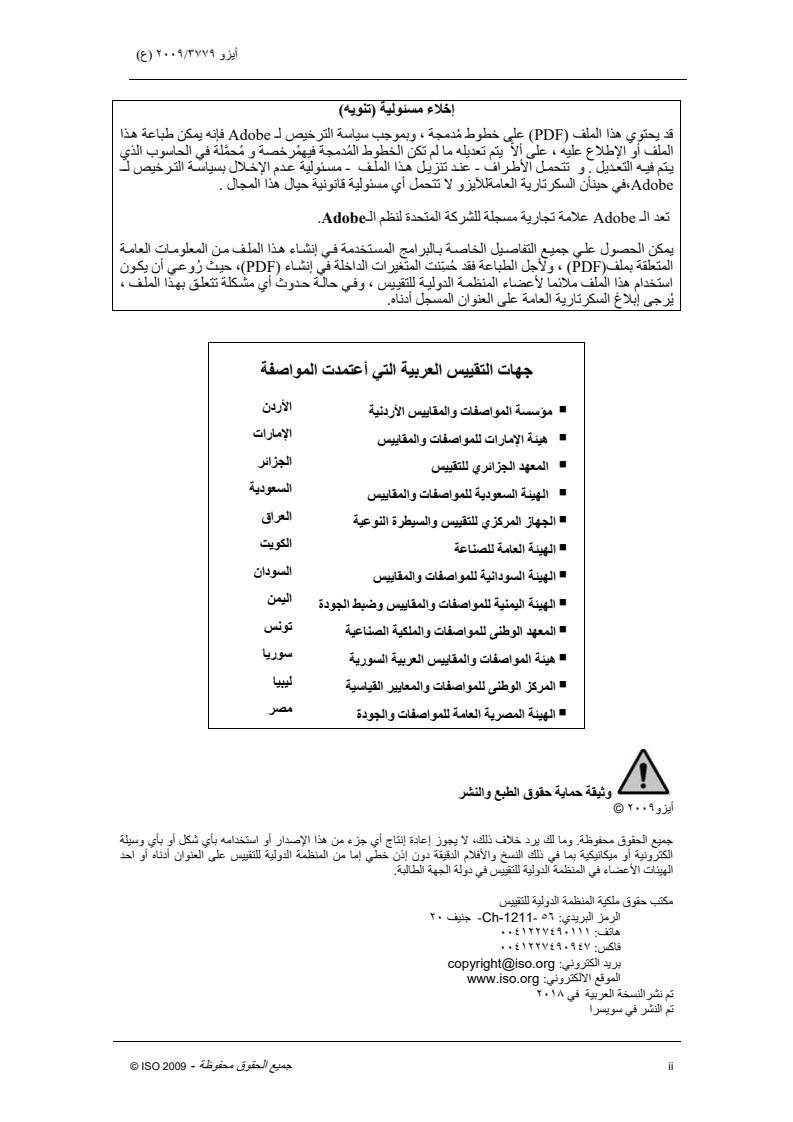
)هٌىُح( تٍنىئسي ءلاخإ
ازذ٘ خػبجغ ٓىّ٠ ٗٔإف Adobe ـٌ ص١خشزٌا خعب١ع تعّٛثٚ ، خغِذُِ غٛطخ ٍٝػ )PDF( فٌٍّا از٘ ٞٛزؾ٠ ذل
ٞزٌا ةٛعبؾٌا ٟف خٍ َّّؾ ُِ ٚ خصخشُّٙ١ف خغِذٌُّا غٛطخٌا ٓىر ٌُ بِ ٍٗ٠ذؼر ُز٠ َّلاأ ٍٝػ ، ٗ١ٍػ علاغلإا ٚأ فٌٍّا
ـذذٌ ص١خشذذزٌا خذذعب١غث يلاذذخلإا َذذذػ خ١ٌٛئذذغِ - فذذٌٍّا ازذذ٘ ًذذ٠ضٕر ذذذٕػ - اشذذغ٤ا ًذذّؾزر ٚ . ً٠ذذذؼزٌا ٗذذ١ف ُزذذ٠
. يبغٌّا از٘ يب١ؽ خ١ٔٛٔبل خ١ٌٛئغِ ٞأ ًّؾزر لا ٚض٠٣ٌخِبؼٌا خ٠سبرشىغٌا ْإٔ١ؽ ٟف،Adobe
.Adobeـٌا ُظٌٕ حذؾزٌّا خوششٌٍ خٍغغِ خ٠سبغر خِلاػ Adobe ـٌا ذؼر
خذِبؼٌا دبذٍِٛؼٌّا ٓذِ فذٌٍّا ازذ٘ ءبذشٔش ٟذف خِذخزذغٌّا ظِاشجٌبذث خذصبخٌا ً١ذصبفزٌا غذ١ّع ٟذٍػ يٛصؾٌا ٓىّ٠
ْٛذى٠ ْأ ٟذػُٚس شذ١ؽ ،)PDF( ءبذشٔش ٟف خٍخاذٌا داش١غزٌّا ذٕ ِّغُؽ ذمف خػبجطٌا ًع٤ٚ ، )PDF(فٍّث خمٍؼزٌّا
، فذٌٍّا ازذٙث كذٍؼزر خٍىذشِ ٞأ سٚذذؽ خذٌبؽ ٟذفٚ ، ظ١ذ١مزٌٍ خذ١ٌٚذٌا خذّظٌّٕا ءبعػ٤ بّئلاِ فٌٍّا از٘ َاذخزعا
.ٖبٔدأ ًغغٌّا ْإٛؼٌا ٍٝػ خِبؼٌا خ٠سبرشىغٌا ؽلاثش ٝعشُ٠
تفصاىًنا ثذًخعأ ًخنا تٍبرعنا سٍٍمخنا ثبهج
ٌدرلأا
تٍَدرلأا سٌٍبمًناو ثبفصاىًنا تسسؤي
ثاربيلإا
سٌٍبمًناو ثبفصاىًهن ثاربيلإا تئٍه
رئاسجنا
سٍٍمخهن يرئاسجنا ذهعًنا
تٌدىعسنا
سٌٍبمًناو ثبفصاىًهن تٌدىعسنا تئٍهنا
قارعنا
تٍعىُنا ةرطٍسناو سٍٍمخهن يسكرًنا زبهجنا
جٌىكنا
تعبُصهن تيبعنا تئٍهنا
ٌادىسنا
سٌٍبمًناو ثبفصاىًهن تٍَادىسنا تئٍهنا
ًٍٍنا
ةدىجنا طبضو سٌٍبمًناو ثبفصاىًهن تًٍٍُنا تئٍهنا
سَىح
تٍعبُصنا تٍكهًناو ثبفصاىًهن ىُطىنا ذهعًنا
بٌرىس
تٌرىسنا تٍبرعنا سٌٍبمًناو ثبفصاىًنا تئٍه
بٍبٍن
تٍسبٍمنا رٌٍبعًناو ثبفصاىًهن ىُطىنا سكرًنا
رصي
ةدىجناو ثبفصاىًهن تيبعنا تٌرصًنا تئٍهنا
رشُناو عبطنا قىمح تٌبًح تمٍثو
© 9112ٚض٠أ
خٍ١عٚ ٞأث ٚأ ًىش ٞأث ِٗاذخزعا ٚأ ساذصلإا از٘ ِٓ ءضع ٞأ طبزٔش حدبػش صٛغ٠ لا ،هٌر لاخ دش٠ هٌ بِٚ .خظٛفؾِ قٛمؾٌا غ١ّع
ذؽا ٚأ ٖبٔدأ ْإٛؼٌا ٍٝػ ظ١١مزٌٍ خ١ٌٚذٌا خّظٌّٕا ِٓ بِش ٟطخ ْرش ْٚد خم١لذٌا َلاف٤اٚ خغٌٕا هٌر ٟف بّث خ١ى١ٔبى١ِ ٚأ خ١ٔٚشزىٌا
.خجٌبطٌا خٙغٌا خٌٚد ٟف ظ١١مزٌٍ خ١ٌٚذٌا خّظٌّٕا ٟف ءبعػ٤ا دبئ١ٌٙا
ظ١١مزٌٍ خ١ٌٚذٌا خّظٌّٕا خ١ىٍِ قٛمؽ تزىِ
91 ف١ٕع -Ch-1211- 15 :ٞذ٠شجٌا ضِشٌا
1125997221555 :فرب٘
1125997221227 :ظوبف
copyright@iso.org :ٟٔٚشزىٌا ذ٠شث
www.iso.org :ٟٔٚشزىٌلاا غلٌّٛا
9152 ٟف خ١ثشؼٌا خخغٌٕاششٔ ُر
اشغ٠ٛع ٟف ششٌٕا ُر
)ع( 9112/9772 ٚض٠أ
ثبٌىخحًنا
iv .ذٍهًح
v .تيذمي
1 . لبجًنا 1
1 . تٍهًٍكخنا عجارًنا 2
........................................................................................... فٌربعخناو ثبحهطصًنا
1 3
5 .)VIN( خجوشٌّا ف٠شؼر ُلس5/9
................................................ (WMI) )أشنملا( عن ص ملل يملاعلا فيرعتلا زمر9/9
5 . )VDS( خجوشٌّا ف١صٛر ءضع9/9
5 . غِّٕصٌّا2/9
9 . )VIS(خجوشٌّا ض١١ّر ءضع1/9
9 . خٕغٌا 5/9
9 . ًصبفٌا 7/9
2 . تٍُفنا ثببهطخًنا 4
9 . خجوشٌّا ف٠شؼر ُلشٌ خ١عبع٤ا دب٠ٛزؾٌّا 5/2
9 . )WMI( )أشٌّٕا( غِّٕصٌٍُّ ٌّٟبؼٌا ف٠شؼزٌا ضِس 9/2
............................................................... (VDS)خجوشٌّا ف١صٛر ءضع 9/2
9 . )VIS(خجوشٌّا ض١١ّر ءضع 2/2
9 . صِٛشٌا 1/2
9 .ًصاٛفٌا 5 /2
9 .خجوشٌّا ف٠شؼر ُلس ضشػ7/2
4 . ثببكرًنا فٌرعح وبلرلأ تهثيأ ) ٜدبششزعا( أ كحهي
6 . ردبصًنا
iii
ISO 2009 © ةظوفحم قوقحلا عيمج
)ع( 9112/9772 ٚض٠أ
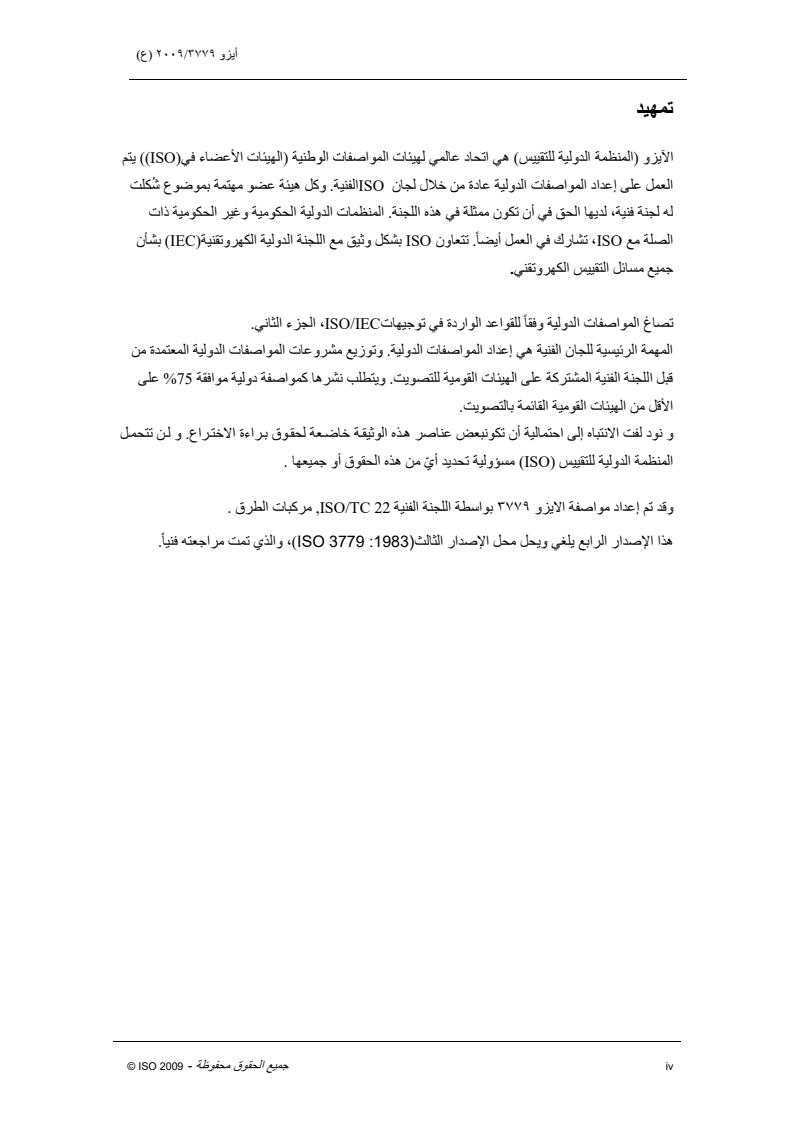
ذٍهًح
ُز٠ ))ISO)ٟف ءبعػ٤ا دبئ١ٌٙا( خ١ٕغٌٛا دبفصاٌّٛا دبئ١ٌٙ ٌّٟبػ دبؾرا ٟ٘ )ظ١١مزٌٍ خ١ٌٚذٌا خّظٌّٕا( ٚض٠٢ا
ذٍىُش عٛظّٛث خّزِٙ ٛعػ خئ١٘ ًوٚ .خ١ٕفٌاISO ْبغٌ يلاخ ِٓ حدبػ خ١ٌٚذٌا دبفصاٌّٛا داذػش ٍٝػ ًّؼٌا
دار خ١ِٛىؾٌا ش١غٚ خ١ِٛىؾٌا خ١ٌٚذٌا دبّظٌّٕا .خٕغٌٍا ٖز٘ ٟف خٍضِّ ْٛىر ْأ ٟف كؾٌا بٙ٠ذٌ ،خ١ٕف خٕغٌ ٌٗ
ْأشث )IEC)خ١ٕمرٚشٙىٌا خ١ٌٚذٌا خٕغٌٍا غِ ك١صٚ ًىشث ISO ْٚبؼزر .ًبع٠أ ًّؼٌا ٟف نسبشر ،ISO غِ خٍصٌا
.ٟٕمرٚشٙىٌا ظ١١مزٌا ًئبغِ غ١ّع
.ٟٔبضٌا ءضغٌا ،ISO/IECدبٙ١عٛر ٟف حدساٌٛا ذػاٛمٌٍ ًبمفٚ خ١ٌٚذٌا دبفصاٌّٛا ؽبصر
ِٓ حذّزؼٌّا خ١ٌٚذٌا دبفصاٌّٛا دبػٚششِ غ٠صٛرٚ .خ١ٌٚذٌا دبفصاٌّٛا داذػش ٟ٘ خ١ٕفٌا ْبغٌٍ خ١غ١ئشٌا خٌّّٙا
ٍٝػ %75 خمفاِٛ خ١ٌٚد خفصاّٛو ب٘ششٔ تٍطز٠ٚ .ذ٠ٛصزٌٍ خ١ِٛمٌا دبئ١ٌٙا ٍٝػ خوشزشٌّا خ١ٕفٌا خٕغٌٍا ًجل
.ذ٠ٛصزٌبث خّئبمٌا خ١ِٛمٌا دبئ١ٌٙا ِٓ ًل٤ا
ًذّؾزر ٓذٌ ٚ .عاشذزخلاا حءاشذث قٛذمؾٌ خؼذظبخ خذم١صٌٛا ٖزذ٘ شصبٕػ طؼجٔٛىر ْأ خ١ٌبّزؽا ٌٝش ٖبجزٔلاا ذفٌ دٛٔ ٚ
. بٙؼ١ّع ٚأ قٛمؾٌا ٖز٘ ِٓ ّٞأ ذ٠ذؾر خ١ٌٚؤغِ (ISO) ظ١١مزٌٍ خ١ٌٚذٌا خّظٌّٕا
. قشطٌا دبجوشِ ,ISO/TC 22 خ١ٕفٌا خٕغٌٍا خطعاٛث 9772 ٚض٠لاا خفصاِٛ داذػش ُر ذلٚ
.ًب١ٕف ٗزؼعاشِ ذّر ٞزٌاٚ ،)ISO 3779 :1983)شٌبضٌا ساذصلإا ًؾِ ًؾ٠ٚ ٟغٍ٠ غثاشٌا ساذصلإا از٘
)ع( 9112/9772 ٚض٠أ
تيذمي
:ٍٟ٠ بِ بّٙ٘أٚ كثبغٌا ساذصلاا ٓػ دلا٠ذؼزٌا طؼث ًّػ ُر،خفصاٌّٛا ٖز٘ خؼعاشِ سبغش ٟف
.خمؽلاٌا دٕٛجٌا ُ١لشر ٗجعّٛث ُرٚ ،ذؽاٚ ذٕث ٟف )ك١جطزٌا قبطٔ(ٚ )يبغٌّا( ٓ١ٍصفٌّٕا ٓ٠ذٕجٌا ظِد ُر ـــ
.يبغٌّا از٘ ٟف دبف٠شؼزٌا سذؽ٤ ًبمجغ )1/9( غِّٕصٌّا ف٠شؼر ش٠ذؾر ُر ـــ
.])VDS( خجوشٌّا ف١صٛر ءضع[ )9/9( ٜٛزؾِ ؼ١ظٛر ُر ـــ
.)خٕغٌا ض١١ّزٌ خِذخزغٌّا سبؾٌّا(5 ُلس يٚذغٌا ً٠ذؼر ُر ـــ
v
ISO 2009 © ةظوفحم قوقحلا عيمج
)ع( 9112/9772 ٚض٠أ
ثبٌىخحًنا– )سًًٍنا ىلرنا( VIN تبكرًنا فٌرعح ىلر-كٌرطنا ثببكري
مكٍهناو
لبجًنا -1
ٍٝػ ذؽِٛ ٟف٠شؼر ُ١لشر َبظٔ ءبشٔش ضشغث VIN خجوشٌٍّ ٟف
...
INTERNATIONAL ISO
STANDARD 3779
Fourth edition
2009-10-15
Road vehicles — Vehicle identification
number (VIN) — Content and structure
Véhicules routiers — Numéro d'identification des véhicules (VIN) —
Contenu et structure
Reference number
©
ISO 2009
PDF disclaimer
This PDF file may contain embedded typefaces. In accordance with Adobe's licensing policy, this file may be printed or viewed but
shall not be edited unless the typefaces which are embedded are licensed to and installed on the computer performing the editing. In
downloading this file, parties accept therein the responsibility of not infringing Adobe's licensing policy. The ISO Central Secretariat
accepts no liability in this area.
Adobe is a trademark of Adobe Systems Incorporated.
Details of the software products used to create this PDF file can be found in the General Info relative to the file; the PDF-creation
parameters were optimized for printing. Every care has been taken to ensure that the file is suitable for use by ISO member bodies. In
the unlikely event that a problem relating to it is found, please inform the Central Secretariat at the address given below.
© ISO 2009
All rights reserved. Unless otherwise specified, no part of this publication may be reproduced or utilized in any form or by any means,
electronic or mechanical, including photocopying and microfilm, without permission in writing from either ISO at the address below or
ISO's member body in the country of the requester.
ISO copyright office
Case postale 56 • CH-1211 Geneva 20
Tel. + 41 22 749 01 11
Fax + 41 22 749 09 47
E-mail copyright@iso.org
Web www.iso.org
Published in Switzerland
ii © ISO 2009 – All rights reserved
Foreword
ISO (the International Organization for Standardization) is a worldwide federation of national standards bodies
(ISO member bodies). The work of preparing International Standards is normally carried out through ISO
technical committees. Each member body interested in a subject for which a technical committee has been
established has the right to be represented on that committee. International organizations, governmental and
non-governmental, in liaison with ISO, also take part in the work. ISO collaborates closely with the
International Electrotechnical Commission (IEC) on all matters of electrotechnical standardization.
International Standards are drafted in accordance with the rules given in the ISO/IEC Directives, Part 2.
The main task of technical committees is to prepare International Standards. Draft International Standards
adopted by the technical committees are circulated to the member bodies for voting. Publication as an
International Standard requires approval by at least 75 % of the member bodies casting a vote.
Attention is drawn to the possibility that some of the elements of this document may be the subject of patent
rights. ISO shall not be held responsible for identifying any or all such patent rights.
ISO 3779 was prepared by Technical Committee ISO/TC 22, Road vehicles.
This fourth edition cancels and replaces the third edition (ISO 3779:1983), which has been technically revised.
Introduction
In the course of revising this International Standard, the following significant modifications have been made
with respect to the previous edition:
⎯ the separate clauses “Scope” and “Field of application” have been combined into a single Clause 1, and
the subsequent clauses have been renumbered accordingly;
⎯ the definition of manufacturer (3.5) has been revised in accordance with the state of the art;
⎯ the content of 4.3 [“Vehicle descriptor section (VDS)”] has been clarified;
⎯ Table 1 (“Characters used for designating the year”) has been amended.
iv © ISO 2009 – All rights reserved
INTERNATIONAL STANDARD ISO 3779:2009(E)
Road vehicles — Vehicle identification number (VIN) — Content
and structure
1 Scope
This International Standard specifies the content and structure of a vehicle identification number (VIN) in order
to establish, on a world-wide basis, a uniform identification numbering system for road vehicles.
This International Standard applies to motor vehicles, towed vehicles, motorcycles and mopeds as defined in
ISO 3833.
2 Normative references
The following referenced documents are indispensable for the application of this document. For dated
references, only the edition cited applies. For undated references, the latest edition of the referenced
document (including any amendments) applies.
ISO 3780, Road vehicles — World manufacturer identifier (WMI) code
3 Terms and definitions
For the purposes of this document, the following terms and definitions apply.
3.1
vehicle identification number
VIN
structured combination of characters assigned to a vehicle by the manufacturer for identification purposes
3.2
world manufacturer identifier
WMI
first section of the vehicle identification number, which designates the manufacturer of the vehicle and is
assigned to a vehicle manufacturer in order to allow identification of that manufacturer
NOTE When used in conjunction with the remaining sections of the VIN, the WMI ensures the uniqueness of the VIN
for all vehicles manufactured in the world for a period of 30 years.
3.3
vehicle descriptor section
VDS
second section of the vehicle identification number, which provides information describing the gen
...
NORME ISO
INTERNATIONALE 3779
Quatrième édition
2009-10-15
Véhicules routiers — Numéro
d'identification des véhicules (VIN) —
Contenu et structure
Road vehicles — Vehicle identification number (VIN) — Content
and structure
Numéro de référence
©
ISO 2009
PDF – Exonération de responsabilité
Le présent fichier PDF peut contenir des polices de caractères intégrées. Conformément aux conditions de licence d'Adobe, ce fichier
peut être imprimé ou visualisé, mais ne doit pas être modifié à moins que l'ordinateur employé à cet effet ne bénéficie d'une licence
autorisant l'utilisation de ces polices et que celles-ci y soient installées. Lors du téléchargement de ce fichier, les parties concernées
acceptent de fait la responsabilité de ne pas enfreindre les conditions de licence d'Adobe. Le Secrétariat central de l'ISO décline toute
responsabilité en la matière.
Adobe est une marque déposée d'Adobe Systems Incorporated.
Les détails relatifs aux produits logiciels utilisés pour la création du présent fichier PDF sont disponibles dans la rubrique General Info
du fichier; les paramètres de création PDF ont été optimisés pour l'impression. Toutes les mesures ont été prises pour garantir
l'exploitation de ce fichier par les comités membres de l'ISO. Dans le cas peu probable où surviendrait un problème d'utilisation,
veuillez en informer le Secrétariat central à l'adresse donnée ci-dessous.
DOCUMENT PROTÉGÉ PAR COPYRIGHT
© ISO 2009
Droits de reproduction réservés. Sauf prescription différente, aucune partie de cette publication ne peut être reproduite ni utilisée sous
quelque forme que ce soit et par aucun procédé, électronique ou mécanique, y compris la photocopie et les microfilms, sans l'accord écrit
de l'ISO à l'adresse ci-après ou du comité membre de l'ISO dans le pays du demandeur.
ISO copyright office
Case postale 56 • CH-1211 Geneva 20
Tel. + 41 22 749 01 11
Fax + 41 22 749 09 47
E-mail copyright@iso.org
Web www.iso.org
Publié en Suisse
ii © ISO 2009 – Tous droits réservés
Avant-propos
L'ISO (Organisation internationale de normalisation) est une fédération mondiale d'organismes nationaux de
normalisation (comités membres de l'ISO). L'élaboration des Normes internationales est en général confiée
aux comités techniques de l'ISO. Chaque comité membre intéressé par une étude a le droit de faire partie du
comité technique créé à cet effet. Les organisations internationales, gouvernementales et non
gouvernementales, en liaison avec l'ISO participent également aux travaux. L'ISO collabore étroitement avec
la Commission électrotechnique internationale (CEI) en ce qui concerne la normalisation électrotechnique.
Les Normes internationales sont rédigées conformément aux règles données dans les Directives ISO/CEI,
Partie 2.
La tâche principale des comités techniques est d'élaborer les Normes internationales. Les projets de Normes
internationales adoptés par les comités techniques sont soumis aux comités membres pour vote. Leur
publication comme Normes internationales requiert l'approbation de 75 % au moins des comités membres
votants.
L'attention est appelée sur le fait que certains des éléments du présent document peuvent faire l'objet de
droits de propriété intellectuelle ou de droits analogues. L'ISO ne saurait être tenue pour responsable de ne
pas avoir identifié de tels droits de propriété et averti de leur existence.
L'ISO 3779 a été élaborée par le comité technique ISO/TC 22, Véhicules routiers.
Cette quatrième édition annule et remplace la troisième édition (ISO 3779:1983), qui a fait l'objet d'une
révision technique.
Introduction
Dans le travail de révision de la présente Norme internationale, les modifications significatives suivantes ont
été apportées par rapport à l'édition précédente:
⎯ les articles séparés «Objet» et «Domaine d'application» ont été fondus en un seul Article 1; les articles
qui suivent ont été renumérotés en conséquence;
⎯ la définition de constructeur (3.5) a été révisée dans les règles de l'art;
⎯ le contenu de 4.3 [«Descripteur (VDS)»] a été clarifié;
⎯ le Tableau 1 («Caractères utilisés pour la désignation de l'année») a été modifié.
iv © ISO 2009 – Tous droits réservés
NORME INTERNATIONALE ISO 3779:2009(F)
Véhicules routiers — Numéro d'identification des véhicules
(VIN) — Contenu et structure
1 Domaine d'application
La présente Norme internationale spécifie le contenu et la structure d'un numéro d'identification des véhicules
(VIN) permettant d'assurer, à l'échelle mondiale, un système uniforme de numérotation pour l'identification
des véhicules routiers.
La présente Norme internationale s'applique aux véhicules à moteur, aux véhicules tractés, aux motocycles et
aux cyclomoteurs définis dans l'ISO 3833.
2 Références normatives
Les documents de référence suivants sont indispensables pour l'application du présent document. Pour les
références datées, seule l'édition citée s'applique. Pour les références non datées, la dernière édition du
document de référence s'applique (y compris les éventuels amendements).
ISO 3780, Véhicules routiers — Code d'identification mondiale des constructeurs (WMI)
3 Termes et définitions
Pour les besoins du présent document, les termes et définitions suivants s'appliquent.
3.1
numéro d'identification d'un véhicule
VIN
combinaison structurée de caractères attribuée à un véhicule par son constructeur en vue de son
identification
3.2
code d'identification mondiale du constructeur
WMI
première section du numéro d'identification d'un véhicule, qui désigne le constructeur du véhicule, et qui est
assignée à un constructeur de véhicules afin de permettre l'identification dudit constructeur
NOTE Lorsqu'il est utilisé en conjonction avec les autres sections du VIN, le WMI garantit l'unicité du VIN pour tous
les véhicules construits dans le monde durant une période de 30 ans.
3.3
descripteur
VDS
deuxième section du numéro d'identification d'un véhicule, qui donne une in
...
МЕЖДУНАРОДНЫЙ ISO
СТАНДАРТ 3779
Четвёртое издание
2009-10-15
Транспорт дорожный.
Идентификационный номер
автомобилей (VIN). Содержание и
структура
Road vehicles — Vehicle identification number (VIN) — Content and
structure
Ответственность за подготовку русской версии несёт GOST R
(Российская Федерация) в соответствии со статьёй 18.1 Устава ISO
Ссылочный номер
©
ISO 2009
Отказ от ответственности при работе в PDF
Настоящий файл PDF может содержать интегрированные шрифты. В соответствии с условиями лицензирования, принятыми
фирмой Adobe, этот файл можно распечатать или вывести на экран, но его нельзя изменить, пока не будет получена
лицензия на загрузку интегрированных шрифтов в компьютер, на котором ведется редактирование. В случае загрузки
настоящего файла заинтересованные стороны принимают на себя ответственность за соблюдение лицензионных условий
фирмы Adobe. Центральный секретариат ISO не несет никакой ответственности в этом отношении.
Adobe − торговый знак фирмы Adobe Systems Incorporated.
Подробности, относящиеся к программным продуктам, использованным для создания настоящего файла PDF, можно найти в
рубрике General Info файла; параметры создания PDF были оптимизированы для печати. Были приняты во внимание все
меры предосторожности с тем, чтобы обеспечить пригодность настоящего файла для использования комитетами-членами
ISO. В редких случаях возникновения проблемы, связанной со сказанным выше, просьба проинформировать Центральный
секретариат по адресу, приведенному ниже.
ДОКУМЕНТ ЗАЩИЩЁН АВТОРСКИМ ПРАВОМ
© ISO 2009
Все права сохраняются. Если не указано иное, никакую часть настоящей публикации нельзя копировать или использовать в
какой-либо форме или каким-либо электронным или механическим способом, включая фотокопии и микрофильмы, без
предварительного письменного согласия ISO по адресу, указанному ниже, или членов ISO в стране регистрации пребывания.
ISO copyright office
Case postale 56 • CH-1211 Geneva 20
Tel. + 41 22 749 01 11
Fax + 41 22 749 09 47
E-mail copyright@iso.org
Web www.iso.org
Опубликовано в Швейцарии
ii
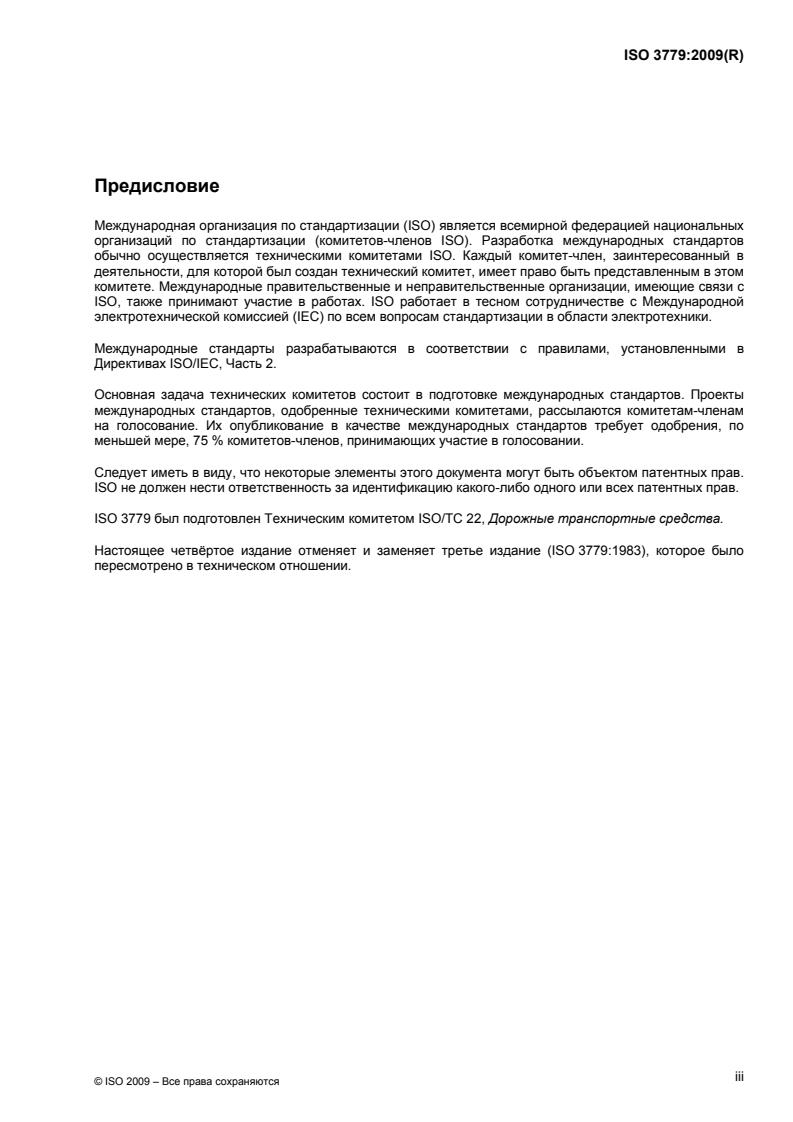
Предисловие
Международная организация по стандартизации (ISO) является всемирной федерацией национальных
организаций по стандартизации (комитетов-членов ISO). Разработка международных стандартов
обычно осуществляется техническими комитетами ISO. Каждый комитет-член, заинтересованный в
деятельности, для которой был создан технический комитет, имеет право быть представленным в этом
комитете. Международные правительственные и неправительственные организации, имеющие связи с
ISO, также принимают участие в работах. ISO работает в тесном сотрудничестве с Международной
электротехнической комиссией (IEC) по всем вопросам стандартизации в области электротехники.
Международные стандарты разрабатываются в соответствии с правилами, установленными в
Директивах ISO/IEC, Часть 2.
Основная задача технических комитетов состоит в подготовке международных стандартов. Проекты
международных стандартов, одобренные техническими комитетами, рассылаются комитетам-членам
на голосование. Их опубликование в качестве международных стандартов требует одобрения, по
меньшей мере, 75 % комитетов-членов, принимающих участие в голосовании.
Следует иметь в виду, что некоторые элементы этого документа могут быть объектом патентных прав.
ISO не должен нести ответственность за идентификацию какого-либо одного или всех патентных прав.
ISO 3779 был подготовлен Техническим комитетом ISO/TC 22, Дорожные транспортные средства.
Настоящее четвёртое издание отменяет и заменяет третье издание (ISO 3779:1983), которое было
пересмотрено в техническом отношении.
iii
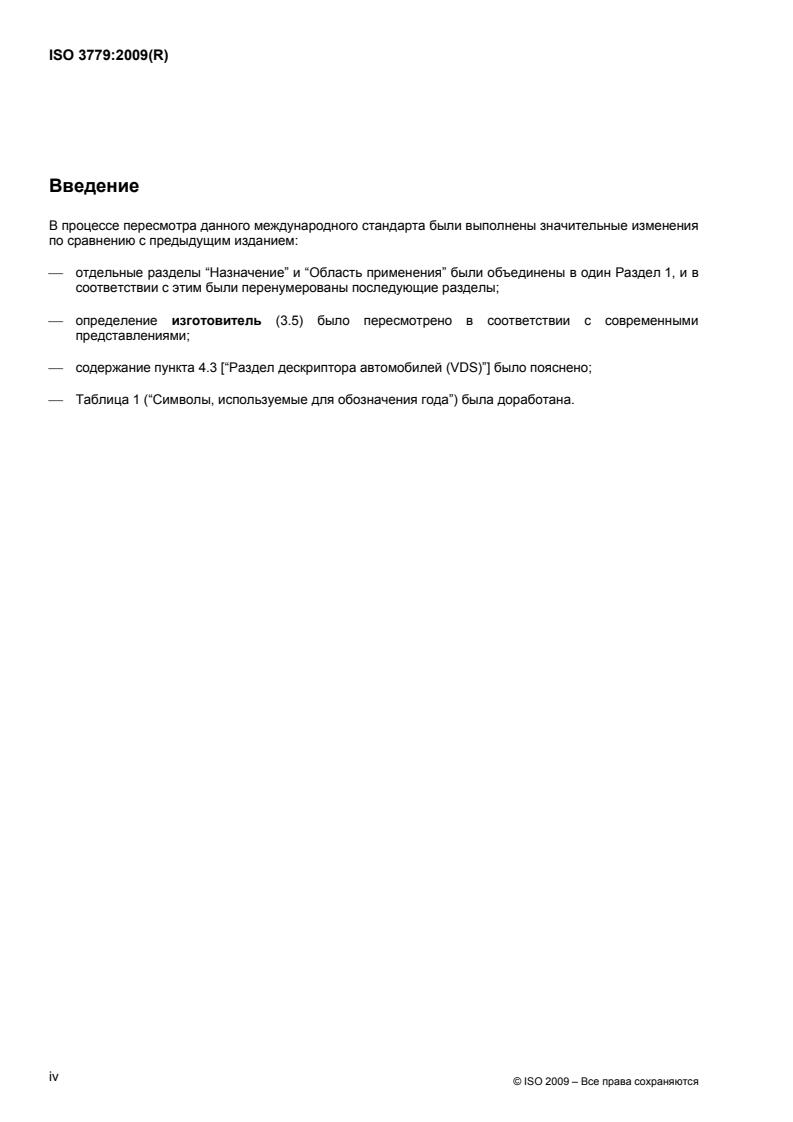
Введение
В процессе пересмотра данного международного стандарта были выполнены значительные изменения
по сравнению с предыдущим изданием:
⎯ отдельные разделы “Назначение” и “Область применения” были объединены в один Раздел 1, и в
соответствии с этим были перенумерованы последующие разделы;
⎯ определение изготовитель (3.5) было пересмотрено в соответствии с современными
представлениями;
⎯ содержание пункта 4.3 [“Раздел дескриптора автомобилей (VDS)”] было пояснено;
⎯ Таблица 1 (“Символы, используемые для обозначения года”) была доработана.
iv
МЕЖДУНАРОДНЫЙ СТАНДАРТ ISO 3779:2009(R)
Транспорт дорожный. Идентификационный номер
автомобилей (VIN). Содержание и структура
1 Область применения
Настоящий международный стандарт устанавливает содержание и структуру идентификационного
номера автомобилей (VIN) в целях определения во всемирном масштабе унифицированной системы
цифрового обозначения дорожных машин.
Данный международный стандарт применяется к автомобилям, прицепным машинам, мотоциклам и
мопедам, определённым в ISO 3833.
2 Нормативные ссылки
Следующие ссылочные документы обязательны для применения в настоящем документе. В случае
датированных ссылок применяются только цитированные издания. При недатированных ссылках
используется последнее издание ссылочного документа (включая все изменения).
ISO 3780, Транспорт дорожный. Международный идентификационный код изготовителей (WMI)
3 Термины и определения
Для целей данного документа применяются указанные ниже термины и определения.
3.1
идентификационный номер автомобиля
vehicle identification number
VIN
имеющая определённую структуру комбинация символов, присвоенная транспортному средству
изготовителем для целей идентификации
3.2
международный идентификационный код изготовителя
world manufacturer identifier
WMI
первый раздел идентификационного номера автомобиля, обозначающий изготовителя автомобиля и
присвоенный изготовителю автомобиля в целях идентификации изготовителя
ПРИМЕЧАНИЕ При использовании совместно с другими разделами VIN, WMI гарантирует уникальность
...