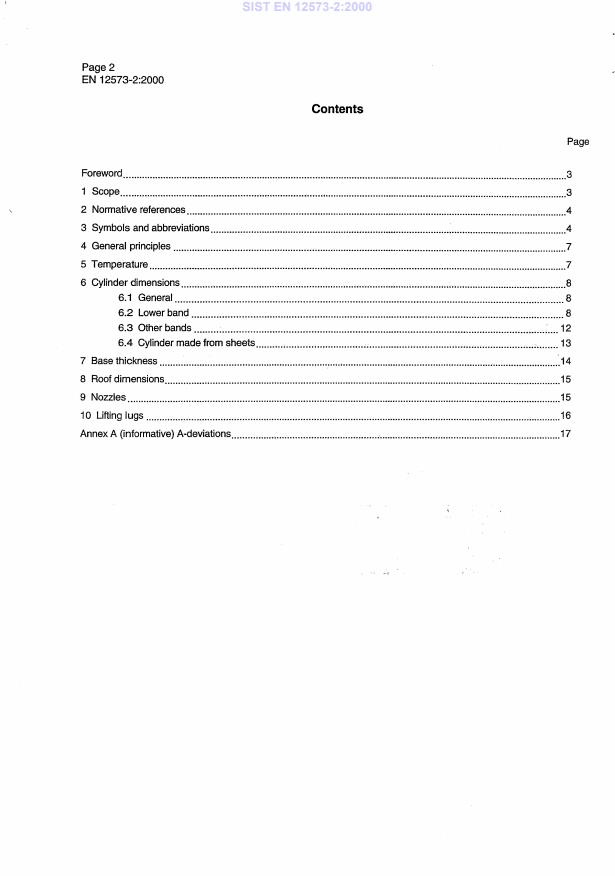
Welded static non-pressurised thermoplastic tanks - Part 2: Calculation of vertical cylindrical tanks

This standard establishes rules for the design and calculation of welded static,vertical, non-pressurised, cylindrical, flat-bottom thermoplastic tanks. This standard applies to tanks fabricated in the following thermoplastics: Polyethylene (PE), Polypropylene (PP), Poly (vinyl chloride) (PVC), Poly (vinylidene fluoride) (PVDF). This standard does not take into account wind and/or snow loading. If wind or/and snow loading has to be taken into account additional calculations are necessary.

Geschweißte orstfeste drucklose Behälter (Tanks) aus Thermoplasten - Teil 2: Berechnung von runden stehenden Behältern (Tanks)

Diese Norm legt Regeln für die Konstuktion und Berechnung von geschweißten ortsfesten drucklosen runden stehenden Flachbodentanks aus Thermoplasten fest. Diese Norm gilt für Tanks, die aus den folgenden Thermoplasten gefertigt werden: Polyethylen (PE), Polypropylen (PP), Polyvinylchlorid (PVC), Polyvinylidenfluorid (PVDF). Wind- und/oder Schneelasten werden in dieser Norm nicht berücksichtigt. Wenn Wind- und/oder Schneelasten zu berücksichtigen sind, sind zusätzliche Berechnungen notwendig.

Cuves statiques soudées en matieres thermoplastiques sans pression - Partie 2: Calcul des cuves cylindriques verticales

La présente norme fixe les règles de conception et de calcul des cuves cylindriques verticales, statiques, soudées, à fond plat, en matières thermo- plastiques, sans pression. La présente norme s'applique aux cuves fabriquées à partir des matériaux thermoplastiques suivants: polyéthylène (PE), polypropylène(PP), polychlorure de vinyle (PVC), polyfluorure de vinylidène (PVDF). La présente norme ne tient pas compte de la charge due au vent et/ou à la neige. Si la charge due au vent et/ou la neige doit être prise en compte, des calculs supplémentaires sont nécessaires.

Welded static non-pressurised thermoplastic tanks - Part 2: Calculation of vertical cylindrical tanks

General Information

Status
Published
Publication Date
30-Nov-2000
Current Stage
6060 - National Implementation/Publication (Adopted Project)
Start Date
01-Dec-2000
Due Date
01-Dec-2000
Completion Date
01-Dec-2000

Overview

EN 12573-2:2000 specifies rules for the design and calculation of welded static, non-pressurised, vertical cylindrical thermoplastic tanks with flat bottoms. It covers tanks fabricated from common thermoplastics - polyethylene (PE), polypropylene (PP), poly(vinyl chloride) (PVC) and poly(vinylidene fluoride) (PVDF) - and provides engineers and manufacturers with a consistent framework for structural calculation and safe dimensioning. The standard explicitly excludes consideration of wind and snow loads; when those actions are relevant, additional calculations are required.

Key topics and requirements

  • Scope and applicability: Vertical, flat-bottom, welded, static tanks made of PE, PP, PVC, PVDF; non-pressurised service.
  • Design rules: Principles for wall and base thickness, joint/weld considerations, and material property use for thermoplastics in static storage applications.
  • Structural calculation methods: Guidance for determining stresses, deformations and stability under hydrostatic loads and self-weight (note: wind/snow not included).
  • Material considerations: Use of thermoplastic mechanical properties appropriate to temperature and duration of load (creep and long-term behavior implied).
  • Safety margins and factors: Prescribed or recommended safety factors and design criteria to ensure reliable service life.
  • Manufacturing and welding: Requirements related to welded construction specific to thermoplastic tanks (weld integrity and detail design).
  • Limitations: Clear exclusion of external dynamic loads (wind/snow) - additional local or project-specific checks needed.

Applications and users

EN 12573-2:2000 is intended for:

  • Tank designers and structural engineers performing calculation of vertical cylindrical thermoplastic tanks
  • Tank manufacturers and fabricators using welded thermoplastic construction
  • Asset owners/operators specifying design standards for on-site chemical or water storage
  • Regulatory bodies, clients and procurement teams seeking conformity to European design practice

Typical applications include storage of liquids in industrial, chemical, water treatment and agricultural facilities where non-pressurised, vertical thermoplastic tanks are used.

Related standards and implementation

  • EN 12573-2:2000 is part of the EN 12573 series addressing thermoplastic tanks (consult other parts of the series for design, testing, materials or installation details).
  • Many countries adopt the EN text as a national standard (for example, SIST EN 12573-2:2000), facilitating harmonised design and procurement across Europe.

Keywords: EN 12573-2:2000, thermoplastic tanks, welded vertical cylindrical tanks, non-pressurised design, polyethylene PE, polypropylene PP, PVC, PVDF, tank calculation, flat-bottom tanks.

Standard
SIST EN 12573-2:2000
English language
17 pages
sale 10% off
Preview
sale 10% off
Preview
e-Library read for
1 day

Frequently Asked Questions

SIST EN 12573-2:2000 is a standard published by the Slovenian Institute for Standardization (SIST). Its full title is "Welded static non-pressurised thermoplastic tanks - Part 2: Calculation of vertical cylindrical tanks". This standard covers: This standard establishes rules for the design and calculation of welded static,vertical, non-pressurised, cylindrical, flat-bottom thermoplastic tanks. This standard applies to tanks fabricated in the following thermoplastics: Polyethylene (PE), Polypropylene (PP), Poly (vinyl chloride) (PVC), Poly (vinylidene fluoride) (PVDF). This standard does not take into account wind and/or snow loading. If wind or/and snow loading has to be taken into account additional calculations are necessary.

This standard establishes rules for the design and calculation of welded static,vertical, non-pressurised, cylindrical, flat-bottom thermoplastic tanks. This standard applies to tanks fabricated in the following thermoplastics: Polyethylene (PE), Polypropylene (PP), Poly (vinyl chloride) (PVC), Poly (vinylidene fluoride) (PVDF). This standard does not take into account wind and/or snow loading. If wind or/and snow loading has to be taken into account additional calculations are necessary.

SIST EN 12573-2:2000 is classified under the following ICS (International Classification for Standards) categories: 23.020.10 - Stationary containers and tanks. The ICS classification helps identify the subject area and facilitates finding related standards.

SIST EN 12573-2:2000 is associated with the following European legislation: EU Directives/Regulations: 305/2011, 89/106/EEC; Standardization Mandates: M/131. When a standard is cited in the Official Journal of the European Union, products manufactured in conformity with it benefit from a presumption of conformity with the essential requirements of the corresponding EU directive or regulation.

You can purchase SIST EN 12573-2:2000 directly from iTeh Standards. The document is available in PDF format and is delivered instantly after payment. Add the standard to your cart and complete the secure checkout process. iTeh Standards is an authorized distributor of SIST standards.

Standards Content (Sample)


2003-01.Slovenski inštitut za standardizacijo. Razmnoževanje celote ali delov tega standarda ni dovoljeno.Welded static non-pressurised thermoplastic tanks - Part 2: Calculation of vertical cylindrical tanksGeschweißte orstfeste drucklose Behälter (Tanks) aus Thermoplasten - Teil 2: Berechnung von runden stehenden Behältern (Tanks)Cuves statiques soudées en matieres thermoplastiques sans pression - Partie 2: Calcul des cuves cylindriques verticalesWelded static non-pressurised thermoplastic tanks - Part 2: Calculation of vertical cylindrical tanks23.020.10UH]HUYRDUMLStationary
...

Questions, Comments and Discussion

Ask us and Technical Secretary will try to provide an answer. You can facilitate discussion about the standard in here.

Loading comments...

SIST EN 12573-2:2000は、溶接された静的非加圧熱可塑性タンクの設計と計算に関する重要な標準であり、特に垂直で円柱形の平底タンクに焦点を当てています。この標準はポリエチレン(PE)、ポリプロピレン(PP)、ポリ(塩化ビニル)(PVC)、およびポリ(ビニリデンフルオリド)(PVDF)などの熱可塑性材料によって製造されたタンクに適用されます。 この標準の強みは、タンク設計のための具体的で明確な計算方法を提供する点にあります。これにより、設計者はタンクの安全性と信頼性を確保するための適切な基準を持つことができます。また、このドキュメントは、実際のタンクの使用条件を考慮に入れており、材料の特性を生かした設計を促進するための重要なガイドラインを含んでいます。 ただし、この標準は風や雪の荷重を考慮していないため、これらの要素が設計に影響を及ぼす場合は、追加の計算が必要です。これにより、特定の環境条件下でのタンクのパフォーマンスを正確に評価するためのフレキシビリティを持っています。 SIST EN 12573-2:2000は、熱可塑性タンクの設計と計算の標準化において極めて重要であり、業界の専門家にとって信頼できる資源です。設計者やエンジニアにとって、この標準は必要不可欠な指針となり、適切な設計と施工を実現するための礎となるでしょう。

SIST EN 12573-2:2000 표준은 용접된 정적 비압력 열가소성 탱크의 설계 및 계산에 대한 명확한 규칙을 제공합니다. 이 표준은 수직 원통형의 평평한 바닥을 가진 탱크에 적용되며, 사용 가능한 열가소성 재료는 폴리에틸렌(PE), 폴리프로필렌(PP), 폴리염화비닐(PVC), 폴리비닐리덴 플루오르화물(PVDF)로 한정됩니다. 이 표준의 강점 중 하나는 다양한 열가소성 재료에 대한 구조적 안정성을 보장하는 설계 지침을 제공한다는 점입니다. 이를 통해 제조업체는 재료 선택에 따라 최적의 설계를 할 수 있으며, 이는 안전성과 효율성을 높이는 데 기여합니다. 또한, SIST EN 12573-2:2000은 탱크 설계 시 바람이나 눈 하중을 고려하지 않으므로, 이러한 부하가 필수적인 경우 추가 계산을 통해 안전을 확보할 수 있도록 안내합니다. 이 같은 접근은 엔지니어에게 유연성을 제공하고, 각 환경 조건에 최적화된 설계를 가능하게 합니다. 결과적으로, 이 표준은 비압력 열가소성 탱크 설계에 있어서 필수적인 기준이자, 관련 산업에서의 활용도를 높여주는 중요한 문서로 여겨집니다. 이러한 이유로 SIST EN 12573-2:2000은 현재와 미래의 설계 및 안전 기준을 만족시키는 데 기여할 것으로 기대됩니다.

Die Norm SIST EN 12573-2:2000 bietet eine umfassende Grundlage für die Konstruktion und Berechnung von geschweißten statischen, vertikalen, nicht druckbeaufschlagten zylindrischen Flachtanks aus thermoplastischen Materialien. Der Anwendungsbereich dieser Norm ist klar definiert und umfasst Tanks, die aus Polyethylen (PE), Polypropylen (PP), Polyvinylchlorid (PVC) und Polyvinylidenfluorid (PVDF) gefertigt sind. Ein zentraler Vorteil dieser Norm ist die detaillierte Anleitung zur Berechnung der strukturellen Integrität und zur Gewährleistung der Sicherheit von thermoplastischen Tanks, was für Hersteller und Bauingenieure von großer Bedeutung ist. Die Regeln unterstützen die Einhaltung von industriellen Standards und Vorschriften, wodurch die Qualität und Zuverlässigkeit der Tanks erhöht wird. Die Norm berücksichtigt jedoch nicht die Einflüsse von Wind- und Schneelast, was bedeutet, dass in solchen Fällen zusätzliche Berechnungen erforderlich sind. Dies könnte potenzielle Herausforderungen für Projekte darstellen, die in windigen oder schneereichen Regionen umgesetzt werden. Dennoch bleibt die SIST EN 12573-2:2000 relevant für die Einschätzung der strukturellen Leistung von Tanks in typischen Einsatzbereichen ohne solche externen Belastungen. Zusammenfassend lässt sich sagen, dass die SIST EN 12573-2:2000 ein wertvolles Werkzeug für die Planung und Berechnung von thermoplastischen Tanks darstellt und sich besonders an die Bedürfnisse der Industrie anpasst, die sich mit der Herstellung und Nutzung von nicht druckbeaufschlagten Zylindertanks auseinandersetzt.

The standard SIST EN 12573-2:2000 presents a comprehensive framework for the design and calculation of welded static non-pressurised thermoplastic tanks, specifically vertical cylindrical tanks with flat bottoms. The scope of this standard is essential for engineers and manufacturers involved in the construction of tanks made from thermoplastics such as Polyethylene (PE), Polypropylene (PP), Poly (vinyl chloride) (PVC), and Poly (vinylidene fluoride) (PVDF). One of the significant strengths of this standard is its clear delineation of the parameters necessary for the effective design and calculation of these tanks, ensuring that they meet safety and operational criteria. The focus on vertical cylindrical designs addresses a common configuration in various industrial applications, augmenting the relevance of the standard within sectors that utilize thermoplastic storage solutions. Additionally, the standard provides guidelines tailored for specific materials, thereby enhancing specificity and applicability. By detailing acceptable thermoplastics, the standard empowers manufacturers to choose appropriate materials based on their properties, thereby aligning construction practices with the unique requirements of their intended use. However, it is important to note that while the standard effectively outlines the structural aspects, it explicitly states that it does not consider factors such as wind or snow loading. This limitation necessitates that users seek additional calculations if external environmental forces must be accounted for in the design process. Hence, while the standard is robust in its coverage of tank design and construction, users must be aware of the additional requirements that may arise based on specific site conditions. Overall, SIST EN 12573-2:2000 holds significant relevance in the context of thermoplastic tank design, providing a structured approach that supports both regulatory compliance and practical safety in the manufacturing of welded static non-pressurised vertical cylindrical tanks.

La norme SIST EN 12573-2:2000 établit des règles précises pour la conception et le calcul des cuves thermoplastiques cylindriques, statiques, verticales et non pressurisées, dont le fond est plat. Elle s'applique à des réservoirs fabriqués à partir de divers thermoplastiques tels que le polyéthylène (PE), le polypropylène (PP), le chlorure de polyvinyle (PVC), et le fluorure de polyvinylidène (PVDF). L'un des points forts de cette norme réside dans sa clarté et sa spécificité. En fournissant des directives détaillées, elle permet aux ingénieurs et concepteurs de s'assurer que les cuves respectent les exigences de sécurité essentielles tout en optimisant leur conception. De plus, sa portée est extrêmement pertinente dans les industries où le stockage de liquides est crucial, garantissant ainsi la conformité des réservoirs à des critères standardisés. Cependant, il est important de noter que la norme ne prend pas en compte les charges dues au vent et à la neige. Cette omission invite à une prudence supplémentaire lors de la conception et à des calculs additionnels si ces facteurs environnementaux doivent être intégrés. Cela accentue l'importance d'une évaluation minutieuse des conditions d'installation, renforçant ainsi la pertinence de cette norme dans une approche globale de sécurité et d’efficacité. En résumé, la SIST EN 12573-2:2000 offre une base solide pour la conception de cuves thermoplastiques, tout en soulignant la nécessité d'une évaluation complémentaire dans certaines situations. Cette norme est donc une référence indispensable pour les professionnels souhaitant garantir la fiabilité et la sécurité de leurs cuves.