Welded static non-pressurized thermoplastic tanks - Part 3: Design and calculation for single skin rectangular tanks

This standard specifies the design and calculation for single sking rectangular tanks, fabricated from the following thermoplastics: Polyethylene (PE), Polypropylene (PP), Poly (vinyl chloride) (PVC), Poly (vinylidene fluoride) (PVDF). The tanks may be strengthened on the outside by means of ribs or frames made of the same or other materials. This standard is only applicable to tanks which are not intended to withstand internal pressure or vaccuum, other than that which may occur during the transfer of fluids (including gases) in their normal operation.

Geschweißte ortsfeste drucklose Behälter (Tanks) aus Thermoplasten - Teil 3: Konstruktion und Berechnung von einwandigen Rechteckbehältern (-tanks)

Diese Norm legt die Konstruktion und Berechnung von einwandigen Rechtecktanks fest, die aus den folgenden Thermoplasten gefertigt werden: Polyethylen (PE), Polypropylen (PP), Polyvinylchlorid (PVC), Polyvinylidenfluorid (PVDF). Die Tanks können von außen mit Rippen oder Rahmen aus demselben oder anderen Werkstoffen verstärkt sein. Diese Norm ist nur anwendbar für Tanks, die ohne inneren Überdruck oder Vakuum betrieben werden, ausgenommen die während des Befüllens/Entleerens mit Fluiden (einschließlich Gasen) bei Normalbetrieb vorkommenden Drücke.

Cuves statiques soudées en matieres thermoplastiques sans pression - Partie 3: Conception et calcul des cuves parallélépipédiques rectangles a simple paroi

La présente norme prescrit la conception et les calculs concernant les cuves parallélépipédiques rectangles à simple paroi, fabriquées à partir des matériaux thermoplastiques suivants: polyéthylène (PE), polypropy- lène (PP), polychlorure de vinyle (PVC), polyfluorure de vinylidène (PVDF). Les cuves peuvent être renforcées extérieurement par des nervures ou des cadres fabriqués soit dans la même matière, soit dans une autre matière.

Welded static non-pressurized thermoplastic tanks - Part 3: Design and calculation for single skin rectangular tanks

General Information

Status
Published
Publication Date
30-Nov-2000
Current Stage
6060 - National Implementation/Publication (Adopted Project)
Start Date
01-Dec-2000
Due Date
01-Dec-2000
Completion Date
01-Dec-2000

Overview

EN 12573-3:2000 - Welded static non-pressurized thermoplastic tanks (Part 3) specifies requirements for the design and calculation of single skin rectangular tanks fabricated from thermoplastics: Polyethylene (PE), Polypropylene (PP), Poly(vinyl chloride) (PVC) and Poly(vinylidene fluoride) (PVDF). The standard applies to welded, stationary, non‑pressurized tanks and permits external strengthening (ribs or frames) made of the same or other materials. It is limited to tanks not intended to resist internal pressure or vacuum except transient effects occurring during normal fluid transfer.

Key topics and technical scope

The standard focuses on practical design and structural calculation aspects for single‑skin rectangular thermoplastic tanks, including:

  • Material scope: guidance applicable for PE, PP, PVC and PVDF constructions.
  • Structural design: provisions for calculating and verifying the structural integrity of rectangular single‑skin tanks (wall panels, bases, corners).
  • Reinforcement options: design considerations where tanks are strengthened externally by ribs or frames made from thermoplastics or other materials.
  • Service conditions: application limits tied to static, non‑pressurized operation; allowance for transient pressures during normal transfer of fluids (including gases).
  • Fabrication context: intended for welded tanks (fabrication and jointing techniques are considered in design guidance).

(Note: EN 12573-3:2000 provides methodical design/verification requirements; specific formulas, allowable stresses or test methods are contained in the full standard document.)

Practical applications

EN 12573-3:2000 is used where safe, economical storage of liquids or gases in non‑pressurized thermoplastic rectangular tanks is required. Typical applications include:

  • Chemical processing and storage of compatible liquids
  • Water and wastewater treatment tanks
  • Industrial process storage and holding tanks
  • Agricultural and slurry storage
  • Any stationary installation requiring corrosion‑resistant, welded thermoplastic tanks

Who should use this standard

  • Tank designers and structural engineers specifying single‑skin rectangular thermoplastic tanks
  • Manufacturers and fabricators of welded thermoplastic tanks (PE, PP, PVC, PVDF)
  • Project specifiers, plant engineers and procurement teams selecting storage solutions
  • Regulatory authorities and inspectors assessing compliance with recognized design practices

Related standards

EN 12573-3:2000 is part of the EN 12573 series addressing welded static thermoplastic tanks; users should consult other parts of the series and national adoptions for complementary guidance (e.g., general requirements, other tank shapes or construction types).

Keywords: EN 12573-3:2000, welded thermoplastic tanks, single skin rectangular tanks, PE PP PVC PVDF, non-pressurized tank design, thermoplastic tank standard.

Standard
SIST EN 12573-3:2000
English language
32 pages
sale 10% off
Preview
sale 10% off
Preview
e-Library read for
1 day

Frequently Asked Questions

SIST EN 12573-3:2000 is a standard published by the Slovenian Institute for Standardization (SIST). Its full title is "Welded static non-pressurized thermoplastic tanks - Part 3: Design and calculation for single skin rectangular tanks". This standard covers: This standard specifies the design and calculation for single sking rectangular tanks, fabricated from the following thermoplastics: Polyethylene (PE), Polypropylene (PP), Poly (vinyl chloride) (PVC), Poly (vinylidene fluoride) (PVDF). The tanks may be strengthened on the outside by means of ribs or frames made of the same or other materials. This standard is only applicable to tanks which are not intended to withstand internal pressure or vaccuum, other than that which may occur during the transfer of fluids (including gases) in their normal operation.

This standard specifies the design and calculation for single sking rectangular tanks, fabricated from the following thermoplastics: Polyethylene (PE), Polypropylene (PP), Poly (vinyl chloride) (PVC), Poly (vinylidene fluoride) (PVDF). The tanks may be strengthened on the outside by means of ribs or frames made of the same or other materials. This standard is only applicable to tanks which are not intended to withstand internal pressure or vaccuum, other than that which may occur during the transfer of fluids (including gases) in their normal operation.

SIST EN 12573-3:2000 is classified under the following ICS (International Classification for Standards) categories: 23.020.10 - Stationary containers and tanks. The ICS classification helps identify the subject area and facilitates finding related standards.

SIST EN 12573-3:2000 is associated with the following European legislation: EU Directives/Regulations: 305/2011, 89/106/EEC; Standardization Mandates: M/131. When a standard is cited in the Official Journal of the European Union, products manufactured in conformity with it benefit from a presumption of conformity with the essential requirements of the corresponding EU directive or regulation.

You can purchase SIST EN 12573-3:2000 directly from iTeh Standards. The document is available in PDF format and is delivered instantly after payment. Add the standard to your cart and complete the secure checkout process. iTeh Standards is an authorized distributor of SIST standards.

Standards Content (Sample)


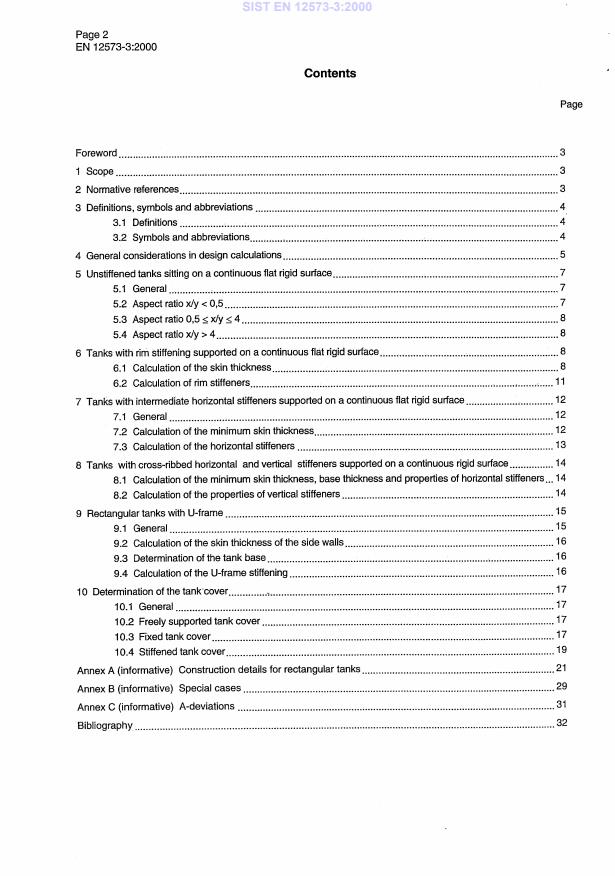
2003-01.Slovenski inštitut za standardizacijo. Razmnoževanje celote ali delov tega standarda ni dovoljeno.Welded static non-pressurized thermoplastic tanks - Part 3: Design and calculation for single skin rectangular tanksGeschweißte ortsfeste drucklose Behälter (Tanks) aus Thermoplasten - Teil 3: Konstruktion und Berechnung von einwandigen Rechteckbehältern (-tanks)Cuves statiques soudées en matieres thermoplastiques sans pression - Partie 3: Conception et calcul des cuves parallélépipédiques rectangles a simple paroiWelded static non-pressurized thermoplastic tanks - Part 3: Design and calculation for single skin rectangular tanks23.020.10UH]HUYRDUMLStationary containers and tanksICS:Ta slovenski standard je istoveten z:EN 12573-3:2000SIST EN 12573-3:2000en01-december-2000SIST EN 12573-3:2000S
...

Questions, Comments and Discussion

Ask us and Technical Secretary will try to provide an answer. You can facilitate discussion about the standard in here.

Loading comments...

La norme SIST EN 12573-3:2000 traite de la conception et du calcul des réservoirs rectangulaires en thermoplastique non pressurisés à peau simple. Elle est spécifiquement applicable aux réservoirs fabriqués à partir de matériaux comme le polyéthylène (PE), le polypropylène (PP), le poly(chlorure de vinyle) (PVC) et le poly(vinylidène fluoré) (PVDF). L'un des principaux points forts de cette norme est sa précision dans la définition des exigences de conception pour ces réservoirs, ce qui garantit non seulement la sécurité mais aussi l'efficacité dans le stockage de fluides, y compris des gaz. De plus, la possibilité de renforcer les réservoirs à l'extérieur avec des nervures ou des cadres, fabriqués dans le même matériau ou d'autres matériaux, offre une flexibilité significative dans le processus de fabrication et d'adaptation aux besoins spécifiques des utilisateurs. La norme est particulièrement pertinente dans le contexte des applications industrielles où des réservoirs non pressurisés sont requis. En spécifiant clairement que les réservoirs ne doivent pas supporter de pression interne ou de vide, excepté celles pouvant survenir lors du transfert de fluides, elle permet aux concepteurs et aux fabricants d'éviter des erreurs coûteuses et potentielles défaillances structurelles. En somme, la SIST EN 12573-3:2000 se positionne comme une référence essentielle pour les professionnels de l'industrie cherchant à s'assurer que leurs réservoirs rectangulaires en thermoplastique répondent aux exigences de conception rigoureuses tout en respectant les normes de sécurité.

The SIST EN 12573-3:2000 standard provides comprehensive guidelines for the design and calculation of single skin rectangular tanks made from various thermoplastics, specifically Polyethylene (PE), Polypropylene (PP), Poly (vinyl chloride) (PVC), and Poly (vinylidene fluoride) (PVDF). This standard is essential for ensuring the structural integrity and safety of these tanks, particularly for applications that do not require them to withstand internal pressure or vacuum, aside from typical operational conditions. One of the key strengths of this standard is its thorough specification of the design parameters necessary for creating robust and reliable tanks. By outlining the acceptable materials and construction methods, it guides manufacturers in producing tanks that are not only functional but also compliant with safety regulations. The explicit mention of the option to strengthen tanks using ribs or frames-either of the same or different materials-further enhances the versatility and resilience of tank designs. Moreover, the relevance of the SIST EN 12573-3:2000 standard cannot be overstated, as it addresses the growing need for safe storage solutions in a variety of industries. With the increasing use of thermoplastics in tank fabrication, this standard serves as a crucial reference point for manufacturers, engineers, and safety inspectors, ensuring that the tanks can withstand normal operational stresses without compromising safety. In summary, the SIST EN 12573-3:2000 standard plays an instrumental role in establishing best practices for the design and calculation of welded static non-pressurized thermoplastic tanks. Its focus on specific materials, construction techniques, and safety considerations makes it a critical document for stakeholders involved in the design and manufacturing of single skin rectangular tanks.

SIST EN 12573-3:2000 표준은 단일 스킨 직사각형 탱크의 설계 및 계산을 명확하게 규정하고 있습니다. 이 표준은 폴리에틸렌(PE), 폴리프로필렌(PP), 폴리염화비닐(PVC), 폴리비닐리덴플루오르화물(PVDF)과 같은 다양한 열가소성 소재로 제작된 탱크에 적용됩니다. 특히, 이 표준은 내부 압력이나 진공을 견딜 수 없는 탱크를 대상으로 하며, 정상적인 운영 과정 중 유체의 이동에 의해 발생할 수 있는 압력 상태를 제외합니다. SIST EN 12573-3:2000의 강점은 설계 및 계산 과정에서 효율성을 제공하는 명확한 지침을 포함하고 있다는 점입니다. 탱크의 구조적 안정성을 높이기 위한 외부 보강 요소인 리브나 프레임과 같은 추가 구조물 설계도 가능합니다. 이러한 특징은 탱크 사용자의 요구에 부합하는 커스터마이징을 허용하여, 다양한 사용 환경에 적합한 솔루션을 제공하는 데 기여합니다. 또한, 이 표준은 열가소성 탱크의 디자인을 특정하여 담당 엔지니어와 설계자에게 중요한 지침을 제공함으로써 산업 현장에서의 일관성을 높이고 안전성을 강화하는 데 중요한 역할을 합니다. 이와 같은 특성 덕분에 SIST EN 12573-3:2000 표준은 비압력성 열가소성 탱크 설계 분야에서 높은 관련성을 가지며, 실제 적용 시 산업계의 요구를 충족시키는 데 기여하고 있습니다.

SIST EN 12573-3:2000は、単層矩形タンクの設計および計算に関する標準であり、この分野において特に重要な役割を果たしています。この標準は、ポリエチレン (PE)、ポリプロピレン (PP)、ポリ (塩化ビニル) (PVC)、ポリ (フッ化ビニリデン) (PVDF) などの熱可塑性材料から製作された非加圧静的タンクに適用されます。 この標準の範囲は、主に内部圧力や真空に耐えることを目的としないタンクの設計に制限されていますが、流体(気体を含む)の通常の運転中に発生する可能性のある圧力には対応しています。この点は、タンクの安全性を確保するために非常に重要です。 SIST EN 12573-3:2000の強みは、単層矩形タンクを扱う際の明確な設計基準を提供している点にあります。これにより、エンジニアや設計者は、タンクの構造的健全性を保障しつつ、材料の特性を最大限に活かすことができます。また、外部のリブやフレームによって強化されるタンクは、適切な設計によってさらなる耐久性を持つことが可能となります。 現在の産業界においては、環境に配慮した素材の選定がますます重要視されており、SIST EN 12573-3:2000は、これらの熱可塑性材料の使用を促進し、関係者が持続可能な製品を開発するための参考になります。標準は、関連するすべての業界における品質管理の向上を支援し、設計および製造プロセスにおける信頼性を高めるために不可欠です。

Die Norm SIST EN 12573-3:2000 behandelt die Konstruktion und Berechnung von geschweißten, statischen, nicht druckbeaufschlagten thermoplastischen Tanks in rechteckiger Form mit einer einzelnen Wand. Der Anwendungsbereich dieser Norm ist klar definiert und konzentriert sich auf Tanks, die aus verschiedenen Thermoplasten gefertigt sind, nämlich Polyethylen (PE), Polypropylen (PP), Polyvinylchlorid (PVC) und Polyvinylidenfluorid (PVDF). Ein herausragendes Merkmal dieser Norm ist ihre umfangreiche Ausrichtung auf das Design und die Berechnung dieser Tanks. Sie bietet präzise Richtlinien und Berechnungsansätze, die für Ingenieure und Designer von entscheidender Bedeutung sind, damit diese Tanks sicher und effizient betrieben werden können. Die Möglichkeit, die Tanks durch die Anbringung von Rippen oder Rahmen zu verstärken, ist ein weiterer Vorteil, da dies die strukturelle Integrität erhöhen kann, ohne die grundlegenden Vorgaben der Norm zu verletzen. Die Relevanz der Norm SIST EN 12573-3:2000 ist besonders hoch, da sie den Anforderungen der Industrie an die Sicherheit und Effizienz von Lagertanks gerecht wird. Diese Norm liefert nicht nur spezifische Designparameter, sondern stellt auch sicher, dass die Tanks unter den normalen Betriebsbedingungen, bei denen Innendrücke und Vakuums nicht signifikant sind, optimal funktionieren. Die Tatsache, dass sie sich auf nicht druckbeaufschlagte Tanks konzentriert, macht sie besonders wertvoll für Anwendungen, bei denen Flüssigkeiten und Gase in einem kontrollierten Umfeld gelagert werden. Insgesamt ist die SIST EN 12573-3:2000 Norm ein unverzichtbares Dokument für Fachleute im Bereich der Tanksysteme, da sie sowohl die Sicherheit als auch die Effizienz in der Konstruktion und Anwendung von thermoplastischen Tanks gewährleistet. Die präzisen Vorgaben und die klare Fokussierung auf relevante Materialien und Designaspekte unterstreichen die hohe Bedeutung dieser Norm in der Praxis.