

ASTM D2384-23
(Test Method)Standard Test Methods for Traces of Volatile Chlorides in Butane-Butene Mixtures
General Information
- Abstract
SIGNIFICANCE AND USE
4.1 These test methods are used to determine trace amounts of volatile chlorides in butane-butene mixtures. Such information is valuable in cases where chloride is deleterious in the use of this product; also, chloride contributes to corrosion problems in processing units in instances where further processing of this material is involved.
SCOPE
1.1 These test methods cover the determination of the total volatile organic chlorides in concentrations from 10 mg/kg to 100 mg/kg in butane-butene mixtures. The amperometric finish is not directly applicable in the presence of other substances that combine with silver ion or oxidize chloride ion in dilute acid solution. Bromides, sulfides, ammonia, tobacco smoke, and more than 25 μg of hydrogen peroxide in the test solution interfere in the spectrophotometric procedure.
1.2 Dissolved sodium chloride is not quantitatively determined using these test methods.
1.3 The values stated in SI units are to be regarded as standard. No other units of measurement are included in this standard.
1.4 This standard does not purport to address all of the safety concerns, if any, associated with its use. It is the responsibility of the user of this standard to establish appropriate safety, health, and environmental practices and determine the applicability of regulatory limitations prior to use. Specific warning statements are given in Sections 5, 8, 11, 14, 19, and Annex A1.
1.4.1 The user is advised to obtain LPG safety training for the safe operation of this test method procedure and related activities.
1.5 This international standard was developed in accordance with internationally recognized principles on standardization established in the Decision on Principles for the Development of International Standards, Guides and Recommendations issued by the World Trade Organization Technical Barriers to Trade (TBT) Committee.
- Status
- Published
- Publication Date
- 28-Feb-2023
- Technical Committee
- D02 - Petroleum Products, Liquid Fuels, and Lubricants
- Drafting Committee
- D02.D0.04 - C4 and C5 Hydrocarbons
Buy Documents
ASTM D2384-23 - Standard Test Methods for Traces of Volatile Chlorides in Butane-Butene Mixtures
REDLINE ASTM D2384-23 - Standard Test Methods for Traces of Volatile Chlorides in Butane-Butene Mixtures
Overview
ASTM D2384-23: Standard Test Methods for Traces of Volatile Chlorides in Butane-Butene Mixtures is a critical standard developed by ASTM International. It provides laboratory procedures for accurately determining trace amounts of volatile organic chlorides, in concentrations ranging from 10 mg/kg to 100 mg/kg, in butane-butene mixtures. As chlorides in these hydrocarbon streams can lead to significant corrosion in processing equipment and cause detrimental effects on end-use applications, routine trace chloride analysis is essential for quality assurance and plant reliability.
This standard supports organizations in the chemical, petrochemical, and energy sectors in monitoring, reporting, and managing volatile chloride contamination in liquefied petroleum gas (LPG) products such as butane and butene.
Key Topics
- Scope and Range: The test methods are designed to measure total volatile organic chlorides in butane-butene mixtures, covering a detection range from 10 mg/kg to 100 mg/kg.
- Significance: Accurate chloride quantification helps prevent process unit corrosion, optimize downstream processing, and assure product quality where chloride is a contaminant.
- Test Procedures: The standard outlines two primary methods for sample combustion:
- Lamp Combustion: Suitable for batch processing of multiple samples.
- Oxy-Hydrogen Combustion: Faster for single sample analysis.
- Determination Techniques: After combustion, chloride ions are quantified using:
- Amperometric Titration
- Spectrophotometric Analysis
- Interferences: Particular care must be taken to avoid interference in results from substances such as bromides, sulfides, ammonia, tobacco smoke, and elevated hydrogen peroxide.
- Units of Measurement: All results are reported in SI units for global consistency.
Applications
ASTM D2384-23 is widely used in sectors where control of volatile chlorides in LPG streams is crucial, including:
- Petrochemical Production: Ensures feedstock purity to minimize corrosive wear on heat exchangers, pipelines, and reactors.
- LPG Blending and Storage: Helps maintain product specifications for butane and butene mixtures, safeguarding the integrity of storage and transport systems.
- Refinery Processes: Reduces risks of process upsets and equipment failures associated with chloride corrosion, especially during catalytic or cracking operations.
- Quality Control Laboratories: Provides a reliable protocol for routine screening of trace impurities in hydrocarbon gases.
- Regulatory Compliance: Supports demonstration of compliance with environmental and operational standards regarding halide contamination.
By using the standardized procedures outlined in ASTM D2384-23, organizations can detect and address chloride-related risks early, resulting in enhanced system reliability and safer operations.
Related Standards
ASTM D2384-23 references and complements several other important industry standards, notably:
- ASTM D329: Specification for Acetone, commonly used in sample preparation and analytical procedures.
- ASTM D1266: Test Method for Sulfur in Petroleum Products, which shares equipment and operational principles with the lamp combustion methodology.
- International Standardization: The procedures in ASTM D2384-23 are aligned with globally recognized principles, as outlined by the World Trade Organization Technical Barriers to Trade (TBT) Committee.
Organizations seeking comprehensive control over halides and other contaminants in petroleum products frequently use ASTM D2384 in conjunction with these related standards to ensure a robust quality management system.
Summary
ASTM D2384-23 delivers a precise, reliable approach for detecting traces of volatile chlorides in butane-butene mixtures. By supporting rigorous quality control, equipment protection, and compliance efforts, this standard helps keep petrochemical operations efficient and safe. For continuous improvements in analytical accuracy or procedural updates, refer to ASTM’s official publications and related documentation.
Relations
- Effective Date
- 01-Apr-2018
- Effective Date
- 01-Dec-2007
- Effective Date
- 01-Jun-2007
- Effective Date
- 01-Jun-2007
- Effective Date
- 10-May-2003
- Effective Date
- 10-Dec-2002
- Effective Date
- 10-Dec-1999
- Effective Date
- 10-Feb-1998
Buy Documents
ASTM D2384-23 - Standard Test Methods for Traces of Volatile Chlorides in Butane-Butene Mixtures
REDLINE ASTM D2384-23 - Standard Test Methods for Traces of Volatile Chlorides in Butane-Butene Mixtures
Get Certified
Connect with accredited certification bodies for this standard

Element Materials Technology
Materials testing and product certification.

ABS Group Brazil
ABS Group certification services in Brazil.

ABS Quality Evaluations Inc.
American Bureau of Shipping quality certification.
Sponsored listings
Frequently Asked Questions
ASTM D2384-23 is a standard published by ASTM International. Its full title is "Standard Test Methods for Traces of Volatile Chlorides in Butane-Butene Mixtures". This standard covers: SIGNIFICANCE AND USE 4.1 These test methods are used to determine trace amounts of volatile chlorides in butane-butene mixtures. Such information is valuable in cases where chloride is deleterious in the use of this product; also, chloride contributes to corrosion problems in processing units in instances where further processing of this material is involved. SCOPE 1.1 These test methods cover the determination of the total volatile organic chlorides in concentrations from 10 mg/kg to 100 mg/kg in butane-butene mixtures. The amperometric finish is not directly applicable in the presence of other substances that combine with silver ion or oxidize chloride ion in dilute acid solution. Bromides, sulfides, ammonia, tobacco smoke, and more than 25 μg of hydrogen peroxide in the test solution interfere in the spectrophotometric procedure. 1.2 Dissolved sodium chloride is not quantitatively determined using these test methods. 1.3 The values stated in SI units are to be regarded as standard. No other units of measurement are included in this standard. 1.4 This standard does not purport to address all of the safety concerns, if any, associated with its use. It is the responsibility of the user of this standard to establish appropriate safety, health, and environmental practices and determine the applicability of regulatory limitations prior to use. Specific warning statements are given in Sections 5, 8, 11, 14, 19, and Annex A1. 1.4.1 The user is advised to obtain LPG safety training for the safe operation of this test method procedure and related activities. 1.5 This international standard was developed in accordance with internationally recognized principles on standardization established in the Decision on Principles for the Development of International Standards, Guides and Recommendations issued by the World Trade Organization Technical Barriers to Trade (TBT) Committee.
SIGNIFICANCE AND USE 4.1 These test methods are used to determine trace amounts of volatile chlorides in butane-butene mixtures. Such information is valuable in cases where chloride is deleterious in the use of this product; also, chloride contributes to corrosion problems in processing units in instances where further processing of this material is involved. SCOPE 1.1 These test methods cover the determination of the total volatile organic chlorides in concentrations from 10 mg/kg to 100 mg/kg in butane-butene mixtures. The amperometric finish is not directly applicable in the presence of other substances that combine with silver ion or oxidize chloride ion in dilute acid solution. Bromides, sulfides, ammonia, tobacco smoke, and more than 25 μg of hydrogen peroxide in the test solution interfere in the spectrophotometric procedure. 1.2 Dissolved sodium chloride is not quantitatively determined using these test methods. 1.3 The values stated in SI units are to be regarded as standard. No other units of measurement are included in this standard. 1.4 This standard does not purport to address all of the safety concerns, if any, associated with its use. It is the responsibility of the user of this standard to establish appropriate safety, health, and environmental practices and determine the applicability of regulatory limitations prior to use. Specific warning statements are given in Sections 5, 8, 11, 14, 19, and Annex A1. 1.4.1 The user is advised to obtain LPG safety training for the safe operation of this test method procedure and related activities. 1.5 This international standard was developed in accordance with internationally recognized principles on standardization established in the Decision on Principles for the Development of International Standards, Guides and Recommendations issued by the World Trade Organization Technical Barriers to Trade (TBT) Committee.
ASTM D2384-23 is classified under the following ICS (International Classification for Standards) categories: 75.160.30 - Gaseous fuels. The ICS classification helps identify the subject area and facilitates finding related standards.
ASTM D2384-23 has the following relationships with other standards: It is inter standard links to ASTM D1266-18, ASTM D1266-07, ASTM D329-07, ASTM D329-07e1, ASTM D1266-98(2003)e1, ASTM D329-02, ASTM D329-99, ASTM D1266-98. Understanding these relationships helps ensure you are using the most current and applicable version of the standard.
ASTM D2384-23 is available in PDF format for immediate download after purchase. The document can be added to your cart and obtained through the secure checkout process. Digital delivery ensures instant access to the complete standard document.
Standards Content (Sample)
This international standard was developed in accordance with internationally recognized principles on standardization established in the Decision on Principles for the
Development of International Standards, Guides and Recommendations issued by the World Trade Organization Technical Barriers to Trade (TBT) Committee.
Designation: D2384 − 23
Standard Test Methods for
Traces of Volatile Chlorides in Butane-Butene Mixtures
This standard is issued under the fixed designation D2384; the number immediately following the designation indicates the year of
original adoption or, in the case of revision, the year of last revision. A number in parentheses indicates the year of last reapproval. A
superscript epsilon (´) indicates an editorial change since the last revision or reapproval.
1. Scope* D1266 Test Method for Sulfur in Petroleum Products (Lamp
Method)
1.1 These test methods cover the determination of the total
volatile organic chlorides in concentrations from 10 mg ⁄kg to
3. Summary of Test Methods
100 mg ⁄kg in butane-butene mixtures. The amperometric fin-
3.1 Combination Test Methods—Either the lamp or oxy-
ish is not directly applicable in the presence of other substances
hydrogen test method may be used for combustion.
that combine with silver ion or oxidize chloride ion in dilute
acid solution. Bromides, sulfides, ammonia, tobacco smoke,
NOTE 1—Lamp combustion is readily applicable to multiple testing.
Although an oxy-hydrogen burner does not lend itself to multiple testing,
and more than 25 μg of hydrogen peroxide in the test solution
it affords much more rapid analysis for a single sample than does the lamp
interfere in the spectrophotometric procedure.
combustion.
1.2 Dissolved sodium chloride is not quantitatively deter-
3.1.1 Lamp Combustion—The sample is burned in an atmo-
mined using these test methods.
sphere of carbon dioxide and oxygen or in purified air; the
1.3 The values stated in SI units are to be regarded as
halogen-containing combustion products are absorbed in dilute
standard. No other units of measurement are included in this
sodium carbonate solution.
standard.
3.1.2 Oxy-Hydrogen Combustion—The sample is burned in
an oxy-hydrogen atomizer burner, and the combustion products
1.4 This standard does not purport to address all of the
are absorbed in a dilute solution of sodium carbonate.
safety concerns, if any, associated with its use. It is the
responsibility of the user of this standard to establish appro-
3.2 Finishes—Either the amperometric titration or spectro-
priate safety, health, and environmental practices and deter-
photometric finish may be used for the chloride ion determi-
mine the applicability of regulatory limitations prior to use.
nation.
Specific warning statements are given in Sections 5, 8, 11, 14,
3.2.1 Amperometric Titration—The chloride ion in aqueous
19, and Annex A1.
solution is titrated amperometrically with standard silver ni-
1.4.1 The user is advised to obtain LPG safety training for
trate solution, using a saturated calomel electrode as reference
the safe operation of this test method procedure and related
electrode. The diffusion currents are plotted against the corre-
activities.
sponding volumes of silver nitrate solution used; the end point
1.5 This international standard was developed in accor- is taken as the intersection of the two straight-line portions of
dance with internationally recognized principles on standard- the curve.
ization established in the Decision on Principles for the 3.2.2 Spectrophotometric Finish—Chloride ion in the ab-
Development of International Standards, Guides and Recom- sorber solution is determined by reaction with mercuric thio-
mendations issued by the World Trade Organization Technical cyanate to release thiocyanate, which forms a reddish orange
+++
Barriers to Trade (TBT) Committee. complex with Fe . The intensity of the color is measured at
460 nm with a spectrophotometer or filter photometer.
2. Referenced Documents
4. Significance and Use
2.1 ASTM Standards:
D329 Specification for Acetone
4.1 These test methods are used to determine trace amounts
of volatile chlorides in butane-butene mixtures. Such informa-
These test methods are under the jurisdiction of ASTM Committee D02 on
tion is valuable in cases where chloride is deleterious in the use
Petroleum Products, Liquid Fuels, and Lubricants and are the direct responsibility
of this product; also, chloride contributes to corrosion prob-
of Subcommittee D02.D0.04 on C4 and C5 Hydrocarbons.
lems in processing units in instances where further processing
Current edition approved March 1, 2023. Published June 2023. Originally
approved in 1965. Last previous edition approved in 2019 as D2384 – 19. DOI: of this material is involved.
10.1520/D2384-23.
For referenced ASTM standards, visit the ASTM website, www.astm.org, or 5. Purity of Reagents
contact ASTM Customer Service at service@astm.org. For Annual Book of ASTM
5.1 Purity of Reagents—Reagent grade chemicals shall be
Standards volume information, refer to the standard’s Document Summary page on
the ASTM website. used in all tests. Unless otherwise indicated, it is intended that
*A Summary of Changes section appears at the end of this standard
Copyright © ASTM International, 100 Barr Harbor Drive, PO Box C700, West Conshohocken, PA 19428-2959. United States
D2384 − 23
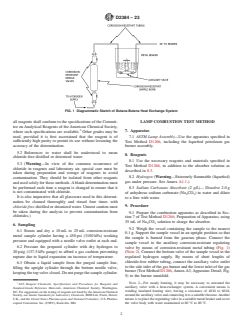
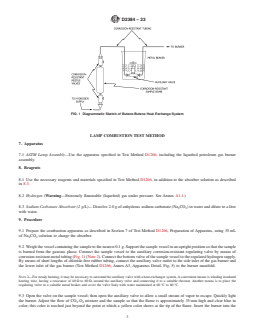
FIG. 1 Diagrammatic Sketch of Butane-Butene Heat Exchange System
all reagents shall conform to the specifications of the Commit- LAMP COMBUSTION TEST METHOD
tee on Analytical Reagents of the American Chemical Society,
7. Apparatus
where such specifications are available. Other grades may be
used, provided it is first ascertained that the reagent is of 7.1 ASTM Lamp Assembly—Use the apparatus specified in
sufficiently high purity to permit its use without lessening the
Test Method D1266, including the liquefied petroleum gas
accuracy of the determination. burner assembly.
5.2 References to water shall be understood to mean
8. Reagents
chloride-free distilled or deionized water.
8.1 Use the necessary reagents and materials specified in
5.3 (Warning—In view of the common occurrence of
Test Method D1266, in addition to the absorber solution as
chloride in reagents and laboratory air, special care must be
described in 8.3.
taken during preparation and storage of reagents to avoid
8.2 Hydrogen (Warning—Extremely flammable (liquefied)
contamination. They should be isolated from other reagents
gas under pressure. See Annex A1.1.)
and used solely for these methods. A blank determination must
be performed each time a reagent is changed to ensure that it
8.3 Sodium Carbonate Absorbent (2 g/L)— Dissolve 2.0 g
is not contaminated with chloride.
of anhydrous sodium carbonate (Na CO ) in water and dilute
2 3
It is also imperative that all glassware used in this determi-
to a litre with water.
nation be cleaned thoroughly and rinsed four times with
9. Procedure
chloride-free distilled or deionized water. Utmost caution must
be taken during the analysis to prevent contamination from
9.1 Prepare the combustion apparatus as described in Sec-
chlorides.)
tion 7 of Test Method D1266, Preparation of Apparatus, using
35 mL of Na CO solution to charge the absorber.
2 3
6. Sampling
9.2 Weigh the vessel containing the sample to the nearest
6.1 Steam and dry a 10 mL to 25 mL corrosion-resistant
0.1 g. Support the sample vessel in an upright position so that
metal sample cylinder having a 450 psi (3100 kPa) working
the sample is burned from the gaseous phase. Connect the
pressure and equipped with a needle valve outlet at each end.
sample vessel to the auxiliary corrosion-resistant regulating
6.2 Pressure the prepared cylinder with dry hydrogen to
valve by means of corrosion-resistant metal tubing (Fig. 1)
20 psig (137.5 kPa gauge) to afford a gas cushion preventing
(Note 2). Connect the bottom valve of the sample vessel to the
rupture due to liquid expansion on increase of temperature.
regulated hydrogen supply. By means of short lengths of
chloride-free rubber tubing, connect the auxiliary valve outlet
6.3 Obtain a liquid sample from the purged sample line,
to the side inlet of the gas burner and the lower inlet of the gas
filling the upright cylinder through the bottom needle valve,
burner (Test Method D1266, Annex A3, Apparatus Detail, Fig.
keeping the top valve closed. Do not purge the sample cylinder.
5) to the burner manifold.
NOTE 2—For steady burning, it may be necessary to surround the
ACS Reagent Chemicals, Specifications and Procedures for Reagents and
auxiliary valve with a heat-exchanger system. A convenient means is
Standard-Grade Reference Materials, American Chemical Society, Washington,
winding insulated heating wire, having a resistance of 40 Ω to 60 Ω,
DC. For suggestions on the testing of reagents not listed by the American Chemical
around the auxiliary valve and connecting it to a suitable rheostat. Another
Society, see Analar Standards for Laboratory Chemicals, BDH Ltd., Poole, Dorset,
U.K., and the United States Pharmacopeia and National Formulary, U.S. Pharma- means is to place the regulating valve in a suitable metal beaker and cover
copeial Convention, Inc. (USPC), Rockville, MD. the valve body with water maintained at 60 °C to 80 °C.
D2384 − 23
9.3 Open the valve on the sample vessel; then open the
auxiliary valve to allow a small stream of vapor to escape.
Quickly light the burner. Adjust the flow of CO -O mixture
2 2
and the sample so that the flame is approximately 35 mm high
and clear blue in color; this color is reached just beyond the
point at which a yellow color shows at the tip of the flame.
Insert the burner into the chimney and readjust the flame if
necessary. When the sample has burned almost to completion,
open the valve on the bottom of the sample vessel and flush the
residual sample from the cylinder chamber by passing hydro-
gen through the bottom valve for several minutes.
9.4 When all of the residual material has been flushed from
the sample vessel, turn off the hydrogen and close the valves on
the sample vessel. Disconnect the hydrogen flushing line and
the line to the heated auxiliary valve and weigh the sample
vessel to the nearest 0.1 g. Draw the combustion atmosphere
through one absorber of a set to serve as a blank on the purity
of this atmosphere. Rinse the chimneys and spray traps with
water and add the rinsings to the absorbers.
9.5 Proceed in accordance with either Section 16 or 21.
OXY-HYDROGEN COMBUSTION TEST METHOD—
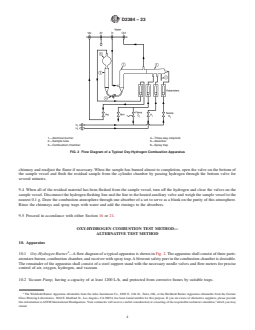
1—Atomizer-burner 4—Three-way stopcock
ALTERNATIVE TEST METHOD
2—Sample tube 5—Absorber
3—Combustion chamber 6—Spray trap
10. Apparatus
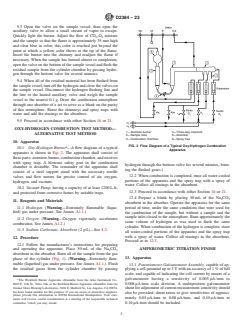
4 FIG. 2 Flow Diagram of a Typical Oxy-Hydrogen Combustion
10.1 Oxy-Hydrogen Burner —A flow diagram of a typical
Apparatus
apparatus is shown in Fig. 2. The apparatus shall consist of
three parts: atomizer-burner, combustion chamber, and receiver
with spray trap. A blowout safety port in the combustion
hydrogen through the bottom valve for several minutes, burn-
chamber is desirable. The remainder of the apparatus shall
ing the flushed gases.)
consist of a steel support stand with the necessary needle
12.2 When combustion is completed, rinse all water-cooled
valves and flow meters for precise control of air, oxygen,
portions of the apparatus and the spray trap with a spray of
hydrogen, and vacuum.
water. Collect all rinsings in the absorbent.
10.2 Vacuum Pump, having a capacity of at least 1200 L ⁄h,
12.3 Proceed in accordance with either Section 16 or 21.
and protected from corrosive fumes by suitable traps.
12.4 Prepare a blank by placing 50 mL of the Na CO
2 3
11. Reagents and Materials
absorbent in the absorber. Operate the apparatus for the same
11.1 Hydrogen (Warning—Extremely flammable (lique-
period of time, under the same conditions that were used for
fied) gas under pressure. See Annex A1.1.) the combustion of the sample, but without a sample and the
sample inlet closed to the atmosphere. Burn approximately the
11.2 Oxygen (Warning—Oxygen vigorously accelerates
same volume of hydrogen as was used to flush the same
combustion. See Annex A1.2.)
cylinder. When combustion of the hydrogen is complete, rinse
11.3 Sodium Carbonate, Absorbent (2 g/L)—See 8.3.
all water-cooled portions of the apparatus and the spray trap
with a spray of water. Collect all rinsings in the absorbent.
12. Procedure
Proceed as in 12.3.
12.1 Follow the manufacturer’s instructions for preparing
and operating the apparatus. Place 50 mL of the Na CO AMPEROMETRIC TITRATION FINISH
2 3
absorbent in the absorber. Burn all of the sample from the gas
13. Apparatus
phase of the cylinder (Fig. 1). (Warning—Extremely flam-
mable (liquefied) gas under pressure. See Annex A1.1.). Flush
13.1 Potentiometer-Galvanometer Assembly, capable of ap-
the residual gases from the cylinder chamber by passing
plying a cell potential up to 3 V with an accuracy of 1 % of full
scale, and capable of indicating the cell current by means of a
4 galvanometer having a sensitivity of 0.005 μA ⁄mm to
The Wickbold Burner Apparatus obtainable from the Atlas Instrument Co.,
0.008 μA ⁄mm scale division. A multiposition galvanometer
8902 E. 11th St., Tulsa, OK, or the Richfield Burner Apparatus obtainable from the
Greiner Glass Blowing Laboratories, 3604 E. Medford St., Los Angeles, CA 90034,
shunt for adjustment of current measurement sensitivity should
has been found suitable for this purpose. If you are aware of alternative suppliers,
also be provided; shunt ratios to give sensitivities of approxi-
please provide this information to ASTM International Headquarters. Your com-
mately 0.05 μA ⁄mm to 0.08 μA ⁄mm, and 0.10 μA ⁄mm to
ments will receive careful consideration at a meeting of the responsible technical
committee, which you may attend. 0.16 μA ⁄mm should be included.
D2384 − 23
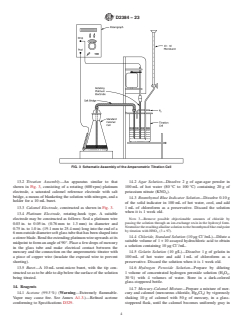
FIG. 3 Schematic Assembly of the Amperometric Titration Cell
13.2 Titration Assembly—An apparatus similar to that 14.2 Agar Solution—Dissolve 2 g of agar-agar powder in
shown in Fig. 3, consisting of a rotating (600 rpm) platinum 100 mL of hot water (80 °C to 100 °C) containing 20 g of
electrode, a saturated calomel reference electrode with salt potassium nitrate (KNO ).
bridge, a means of blanketing the solution with nitrogen, and a
14.3 Bromthymol Blue Indicator Solution—Dissolve 0.10 g
holder for a 10 mL buret.
of the solid indicator in 100 mL of hot water, cool, and add
1 mL of chloroform as a preservative. Discard the solution
13.3 Calomel Electrode, constructed as shown in Fig. 3.
when it is 1 week old.
13.4 Platinum Electrode, rotating-hook type. A suitable
NOTE 3—Remove possible objectionable amounts of chloride by
electrode may be constructed as follows: Seal a platinum wire
passing the solution through an ion-exchange resin in the hydroxyl form.
0.03 in. to 0.05 in. (0.76 mm to 1.3 mm) in diameter and
Neutralize the resulting alkaline solution to the bromthymol blue end point
0.75 in. to 1.0 in. (19.1 mm to 25.4 mm) long into the end of a
by titration with HNO (3 + 97).
6 mm outside diameter soft glass tube that has been shaped into
−
14.4 Chloride, Standard Solution (10 μg Cl /mL)—Dilute a
a stirrer blade. Bend the extending platinum wire upwards at its
suitable volume of 1 + 10 assayed hydrochloric acid to obtain
midpoint to form an angle of 90°. Place a few drops of mercury
−
a solution containing 10 μg Cl /mL.
in the glass tube and make electrical contact between the
mercury and the connection on the amperometric titrator with 14.5 Gelatin Solution (10 g/L)—Dissolve 1 g of gelatin in
a piece of copper wire (insulate the exposed wire to prevent 100 mL of hot water and add 1 mL of chloroform as a
shorting). preservative. Discard the solution when it is 1 week old.
14.6 Hydrogen Peroxide Solution—Prepare by diluting
13.5 Buret—A 10 mL semi-micro buret, with the tip con-
1 volume of concentrated hydrogen peroxide solution (H O ,
structed so as to be able to dip below the surface of the solution
2 2
30 %) with 4 volumes of water. Store in a dark-colored
being titrated.
glass-stoppered bottle.
14. Reagents
14.7 Mercury-Calomel Mixture—Prepare a mixture of mer-
14.1 Acetone (99.5 %) (Warning—Extremely flammable. cury and calomel (mercurous chloride, Hg Cl ) by vigorously
2 2
Vapor may cause fire. See Annex A1.3.)—Refined acetone shaking 10 g of calomel with 50 g of mercury, in a glass-
conforming to Specifications D329. stoppered flask, until the calomel becomes uniformly gray in
D2384 − 23
TABLE 1 Titration Conditions
color. (Warning—Mercury has been designated by many
regulatory agencies as a hazardous substance that can cause Expected Chloride Content
Materials and Operations
serious medical issues. Mercury, or its vapor, has been dem- Be
...
This document is not an ASTM standard and is intended only to provide the user of an ASTM standard an indication of what changes have been made to the previous version. Because
it may not be technically possible to adequately depict all changes accurately, ASTM recommends that users consult prior editions as appropriate. In all cases only the current version
of the standard as published by ASTM is to be considered the official document.
Designation: D2384 − 19 D2384 − 23
Standard Test Methods for
Traces of Volatile Chlorides in Butane-Butene Mixtures
This standard is issued under the fixed designation D2384; the number immediately following the designation indicates the year of
original adoption or, in the case of revision, the year of last revision. A number in parentheses indicates the year of last reapproval. A
superscript epsilon (´) indicates an editorial change since the last revision or reapproval.
1. Scope*
1.1 These test methods cover the determination of the total volatile organic chlorides in concentrations from 10 mg ⁄kg to
100 mg ⁄kg in butane-butene mixtures. The amperometric finish is not directly applicable in the presence of other substances that
combine with silver ion or oxidize chloride ion in dilute acid solution. Bromides, sulfides, ammonia, tobacco smoke, and more than
25 μg of hydrogen peroxide in the test solution interfere in the spectrophotometric procedure.
1.2 Dissolved sodium chloride is not quantitatively determined using these test methods.
1.3 The values stated in SI units are to be regarded as standard. No other units of measurement are included in this standard.
1.4 This standard does not purport to address all of the safety concerns, if any, associated with its use. It is the responsibility
of the user of this standard to establish appropriate safety, health, and environmental practices and determine the applicability of
regulatory limitations prior to use. Specific warning statements are given in Sections 5, 8, 11, 14, 19, and Annex A1.
1.4 This standard does not purport to address all of the safety concerns, if any, associated with its use. It is the responsibility of
the user of this standard to establish appropriate safety, health, and environmental practices and determine the applicability of
regulatory limitations prior to use. Specific warning statements are given in Sections 5, 8, 11, 14, 19, and Annex A1.
1.4.1 The user is advised to obtain LPG safety training for the safe operation of this test method procedure and related activities.
1.5 This international standard was developed in accordance with internationally recognized principles on standardization
established in the Decision on Principles for the Development of International Standards, Guides and Recommendations issued
by the World Trade Organization Technical Barriers to Trade (TBT) Committee.
2. Referenced Documents
2.1 ASTM Standards:
D329 Specification for Acetone
D1266 Test Method for Sulfur in Petroleum Products (Lamp Method)
3. Summary of Test Methods
3.1 Combination Test Methods—Either the lamp or oxy-hydrogen test method may be used for combustion.
These test methods are under the jurisdiction of ASTM Committee D02 on Petroleum Products, Liquid Fuels, and Lubricants and are the direct responsibility of
Subcommittee D02.D0.04 on C4 and C5 Hydrocarbons.
Current edition approved Dec. 1, 2019March 1, 2023. Published January 2020June 2023. Originally approved in 1965. Last previous edition approved in 20142019 as
D2384 – 83 (2014).D2384 – 19. DOI: 10.1520/D2384-19.10.1520/D2384-23.
For referenced ASTM standards, visit the ASTM website, www.astm.org, or contact ASTM Customer Service at service@astm.org. For Annual Book of ASTM Standards
volume information, refer to the standard’s Document Summary page on the ASTM website.
*A Summary of Changes section appears at the end of this standard
Copyright © ASTM International, 100 Barr Harbor Drive, PO Box C700, West Conshohocken, PA 19428-2959. United States
D2384 − 23
NOTE 1—Lamp combustion is readily applicable to multiple testing. Although an oxy-hydrogen burner does not lend itself to multiple testing, it affords
much more rapid analysis for a single sample than does the lamp combustion.
3.1.1 Lamp Combustion—The sample is burned in an atmosphere of carbon dioxide and oxygen or in purified air; the
halogen-containing combustion products are absorbed in dilute sodium carbonate solution.
3.1.2 Oxy-Hydrogen Combustion—The sample is burned in an oxy-hydrogen atomizer burner, and the combustion products are
absorbed in a dilute solution of sodium carbonate.
3.2 Finishes—Either the amperometric titration or spectrophotometric finish may be used for the chloride ion determination.
3.2.1 Amperometric Titration—The chloride ion in aqueous solution is titrated amperometrically with standard silver nitrate
solution, using a saturated calomel electrode as reference electrode. The diffusion currents are plotted against the corresponding
volumes of silver nitrate solution used; the end point is taken as the intersection of the two straight-line portions of the curve.
3.2.2 Spectrophotometric Finish—Chloride ion in the absorber solution is determined by reaction with mercuric thiocyanate to
+++
release thiocyanate, which forms a reddish orange complex with Fe . The intensity of the color is measured at 460 nm with a
spectrophotometer or filter photometer.
4. Significance and Use
4.1 These test methods are used to determine trace amounts of volatile chlorides in butane-butene mixtures. Such information is
valuable in cases where chloride is deleterious in the use of this product; also, chloride contributes to corrosion problems in
processing units in instances where further processing of this material is involved.
5. Purity of Reagents
5.1 Purity of Reagents—Reagent grade chemicals shall be used in all tests. Unless otherwise indicated, it is intended that all
reagents shall conform to the specifications of the Committee on Analytical Reagents of the American Chemical Society, where
such specifications are available. Other grades may be used, provided it is first ascertained that the reagent is of sufficiently high
purity to permit its use without lessening the accuracy of the determination.
5.2 References to water shall be understood to mean chloride-free distilled or deionized water.
5.3 (Warning—In view of the common occurrence of chloride in reagents and laboratory air, special care must be taken during
preparation and storage of reagents to avoid contamination. They should be isolated from other reagents and used solely for these
methods. A blank determination must be performed each time a reagent is changed to ensure that it is not contaminated with
chloride.
It is also imperative that all glassware used in this determination be cleaned thoroughly and rinsed four times with chloride-free
distilled or deionized water. Utmost caution must be taken during the analysis to prevent contamination from chlorides.)
6. Sampling
6.1 Steam and dry a 10 mL to 25 mL corrosion-resistant metal sample cylinder having a 450 psi (3100 kPa) working pressure and
equipped with a needle valve outlet at each end.
6.2 Pressure the prepared cylinder with dry hydrogen to 20 psig (137.5 kPa gauge) to afford a gas cushion preventing rupture due
to liquid expansion on increase of temperature.
6.3 Obtain a liquid sample from the purged sample line, filling the upright cylinder through the bottom needle valve, keeping the
top valve closed. Do not purge the sample cylinder.
ACS Reagent Chemicals, Specifications and Procedures for Reagents and Standard-Grade Reference Materials, American Chemical Society, Washington, DC. For
suggestions on the testing of reagents not listed by the American Chemical Society, see Analar Standards for Laboratory Chemicals, BDH Ltd., Poole, Dorset, U.K., and
the United States Pharmacopeia and National Formulary, U.S. Pharmacopeial Convention, Inc. (USPC), Rockville, MD.
D2384 − 23
FIG. 1 Diagrammatic Sketch of Butane-Butene Heat Exchange System
LAMP COMBUSTION TEST METHOD
7. Apparatus
7.1 ASTM Lamp Assembly—Use the apparatus specified in Test Method D1266, including the liquefied petroleum gas burner
assembly.
8. Reagents
8.1 Use the necessary reagents and materials specified in Test Method D1266, in addition to the absorber solution as described
in 8.3.
8.2 Hydrogen (Warning—Extremely flammable (liquefied) gas under pressure. See Annex A1.1.)
8.3 Sodium Carbonate Absorbent (2 g/L)— Dissolve 2.0 g of anhydrous sodium carbonate (Na CO ) in water and dilute to a litre
2 3
with water.
9. Procedure
9.1 Prepare the combustion apparatus as described in Section 7 of Test Method D1266, Preparation of Apparatus, using 35 mL
of Na CO solution to charge the absorber.
2 3
9.2 Weigh the vessel containing the sample to the nearest 0.1 g. Support the sample vessel in an upright position so that the sample
is burned from the gaseous phase. Connect the sample vessel to the auxiliary corrosion-resistant regulating valve by means of
corrosion-resistant metal tubing (Fig. 1) (Note 2). Connect the bottom valve of the sample vessel to the regulated hydrogen supply.
By means of short lengths of chloride-free rubber tubing, connect the auxiliary valve outlet to the side inlet of the gas burner and
the lower inlet of the gas burner (Test Method D1266, Annex A3, Apparatus Detail, Fig. 5) to the burner manifold.
NOTE 2—For steady burning, it may be necessary to surround the auxiliary valve with a heat-exchanger system. A convenient means is winding insulated
heating wire, having a resistance of 40 Ω to 60 Ω, around the auxiliary valve and connecting it to a suitable rheostat. Another means is to place the
regulating valve in a suitable metal beaker and cover the valve body with water maintained at 60 °C to 80 °C.
9.3 Open the valve on the sample vessel; then open the auxiliary valve to allow a small stream of vapor to escape. Quickly light
the burner. Adjust the flow of CO -O mixture and the sample so that the flame is approximately 35 mm high and clear blue in
2 2
color; this color is reached just beyond the point at which a yellow color shows at the tip of the flame. Insert the burner into the
D2384 − 23
1—Atomizer-burner 4—Three-way stopcock
2—Sample tube 5—Absorber
3—Combustion chamber 6—Spray trap
FIG. 2 Flow Diagram of a Typical Oxy-Hydrogen Combustion Apparatus
chimney and readjust the flame if necessary. When the sample has burned almost to completion, open the valve on the bottom of
the sample vessel and flush the residual sample from the cylinder chamber by passing hydrogen through the bottom valve for
several minutes.
9.4 When all of the residual material has been flushed from the sample vessel, turn off the hydrogen and close the valves on the
sample vessel. Disconnect the hydrogen flushing line and the line to the heated auxiliary valve and weigh the sample vessel to the
nearest 0.1 g. Draw the combustion atmosphere through one absorber of a set to serve as a blank on the purity of this atmosphere.
Rinse the chimneys and spray traps with water and add the rinsings to the absorbers.
9.5 Proceed in accordance with either Section 16 or 21.
OXY-HYDROGEN COMBUSTION TEST METHOD—
ALTERNATIVE TEST METHOD
10. Apparatus
10.1 Oxy-Hydrogen Burner —A flow diagram of a typical apparatus is shown in Fig. 2. The apparatus shall consist of three parts:
atomizer-burner, combustion chamber, and receiver with spray trap. A blowout safety port in the combustion chamber is desirable.
The remainder of the apparatus shall consist of a steel support stand with the necessary needle valves and flow meters for precise
control of air, oxygen, hydrogen, and vacuum.
10.2 Vacuum Pump, having a capacity of at least 1200 L ⁄h, and protected from corrosive fumes by suitable traps.
The Wickbold Burner Apparatus obtainable from the Atlas Instrument Co., 8902 E. 11th St., Tulsa, OK, or the Richfield Burner Apparatus obtainable from the Greiner
Glass Blowing Laboratories, 3604 E. Medford St., Los Angeles, CA 90034, has been found suitable for this purpose. If you are aware of alternative suppliers, please provide
this information to ASTM International Headquarters. Your comments will receive careful consideration at a meeting of the responsible technical committee, which you may
attend.
D2384 − 23
11. Reagents and Materials
11.1 Hydrogen (Warning—Extremely flammable (liquefied) gas under pressure. See Annex A1.1.)
11.2 Oxygen (Warning—Oxygen vigorously accelerates combustion. See Annex A1.2.)
11.3 Sodium Carbonate, Absorbent (2 g/L)—See 8.3.
12. Procedure
12.1 Follow the manufacturer’s instructions for preparing and operating the apparatus. Place 50 mL of the Na CO absorbent in
2 3
the absorber. Burn all of the sample from the gas phase of the cylinder (Fig. 1). (Warning—Extremely flammable (liquefied) gas
under pressure. See Annex A1.1.). Flush the residual gases from the cylinder chamber by passing hydrogen through the bottom
valve for several minutes, burning the flushed gases.)
12.2 When combustion is completed, rinse all water-cooled portions of the apparatus and the spray trap with a spray of water.
Collect all rinsings in the absorbent.
12.3 Proceed in accordance with either Section 16 or 21.
12.4 Prepare a blank by placing 50 mL of the Na CO absorbent in the absorber. Operate the apparatus for the same period of time,
2 3
under the same conditions that were used for the combustion of the sample, but without a sample and the sample inlet closed to
the atmosphere. Burn approximately the same volume of hydrogen as was used to flush the same cylinder. When combustion of
the hydrogen is complete, rinse all water-cooled portions of the apparatus and the spray trap with a spray of water. Collect all
rinsings in the absorbent. Proceed as in 12.3.
AMPEROMETRIC TITRATION FINISH
13. Apparatus
13.1 Potentiometer-Galvanometer Assembly, capable of applying a cell potential up to 3 V with an accuracy of 1 % of full scale,
and capable of indicating the cell current by means of a galvanometer having a sensitivity of 0.005 μA ⁄mm to 0.008 μA ⁄mm scale
division. A multiposition galvanometer shunt for adjustment of current measurement sensitivity should also be provided; shunt
ratios to give sensitivities of approximately 0.05 μA ⁄mm to 0.08 μA ⁄mm, and 0.10 μA ⁄mm to 0.16 μA ⁄mm should be included.
13.2 Titration Assembly—An apparatus similar to that shown in Fig. 3, consisting of a rotating (600 rpm) platinum electrode, a
saturated calomel reference electrode with salt bridge, a means of blanketing the solution with nitrogen, and a holder for a 10 mL
buret.
13.3 Calomel Electrode, constructed as shown in Fig. 3.
13.4 Platinum Electrode, rotating-hook type. A suitable electrode may be constructed as follows: Seal a platinum wire 0.03 in. to
0.05 in. (0.76 mm to 1.3 mm) in diameter and 0.75 in. to 1.0 in. (19.1 mm to 25.4 mm) long into the end of a 6 mm outside
diameter soft glass tube that has been shaped into a stirrer blade. Bend the extending platinum wire upwards at its midpoint to form
an angle of 90°. Place a few drops of mercury in the glass tube and make electrical contact between the mercury and the connection
on the amperometric titrator with a piece of copper wire (insulate the exposed wire to prevent shorting).
13.5 Buret—A 10 mL semi-micro buret, with the tip constructed so as to be able to dip below the surface of the solution being
titrated.
14. Reagents
14.1 Acetone (99.5 %) (Warning—Extremely flammable. Vapor may cause fire. See Annex A1.3.)—Refined acetone conforming
to Specifications D329.
D2384 − 23
FIG. 3 Schematic Assembly of the Amperometric Titration Cell
14.2 Agar Solution—Dissolve 2 g of agar-agar powder in 100 mL of hot water (80 °C to 100 °C) containing 20 g of potassium
nitrate (KNO ).
14.3 Bromthymol Blue Indicator Solution—Dissolve 0.10 g of the solid indicator in 100 mL of hot water, cool, and add 1 mL of
chloroform as a preservative. Discard the solution when it is 1 week old.
NOTE 3—Remove possible objectionable amounts of chloride by passing the solution through an ion-exchange resin in the hydroxyl form. Neutralize the
resulting alkaline solution to the bromthymol blue end point by titration with HNO (3 + 97).
−
14.4 Chloride, Standard Solution (10 μg Cl /mL)—Dilute a suitable volume of 1 + 10 assayed hydrochloric acid to obtain a
−
solution containing 10 μg Cl /mL.
14.5 Gelatin Solution (10 g/L)—Dissolve 1 g of gelatin in 100 mL of hot water and add 1 mL of chloroform as a preservative.
Discard the solution when it is 1 week old.
14.6 Hydrogen Peroxide Solution—Prepare by diluting 1 volume of concentrated hydrogen peroxide solution (H O , 30 %) with
2 2
4 volumes of water. Store in a dark-colored glass-stoppered bottle.
14.7 Mercury-Calomel Mixture—Prepare a mixture of mercury and calomel (mercurous chloride, Hg Cl ) by vigorously shaking
2 2
10 g of calomel with 50 g of mercury, in a glass-stoppered flask, until the calomel becomes uniformly gray in color.
(Warning—Mercury has been designated by many regulatory agencies as a hazardous substance that can
...