

ASTM D7520-16(2023)
(Test Method)Standard Test Method for Determining the Opacity of a Plume in the Outdoor Ambient Atmosphere
General Information
- Abstract
SIGNIFICANCE AND USE
5.1 Air permits from regulatory agencies often require measurements of opacity from stationary air pollution point sources in the outdoor ambient environment. Opacity has been visually measured by certified smoke readers in accordance with USEPA (USEPA Method 9). DCOT is also a method to determine plume opacity in the outdoor ambient environment.
5.2 The concept of DCOT was based on previous method development using Digital Still Cameras and field testing of those methods.7,8 The purpose of this standard is to set a minimum level of performance for products that use DCOT to determine plume opacity in ambient environments.
SCOPE
1.1 This test method describes the procedures to determine the opacity of a plume, using digital imagery and associated hardware and software. The aforementioned plume is caused by particulate matter emitted from a stationary point source in the outdoor ambient environment.
1.2 The opacity of emissions is determined by the application of a Digital Camera Opacity Technique (DCOT) that consists of a Digital Still Camera, Analysis Software, and the Output Function’s content to obtain and interpret digital images to determine and report plume opacity.
1.3 This method is suitable to determine the opacity of plumes from zero (0) percent to one hundred (100) percent.
1.4 Conditions that shall be considered when using this method to obtain the digital image of the plume include the plume’s background, the existence of condensed water in the plume, orientation of the Digital Still Camera to the plume and the sun (see Section 8).
1.5 This standard describes the procedures to certify the DCOT, hardware, software, and method to determine the opacity of the plumes.
1.6 This standard does not purport to address all of the safety concerns, if any, associated with its use. It is the responsibility of the user of this standard to establish appropriate safety, health, and environmental practices and determine the applicability of regulatory limitations prior to use.
1.7 This international standard was developed in accordance with internationally recognized principles on standardization established in the Decision on Principles for the Development of International Standards, Guides and Recommendations issued by the World Trade Organization Technical Barriers to Trade (TBT) Committee.
- Status
- Published
- Publication Date
- 28-Feb-2023
- Technical Committee
- D22 - Air Quality
- Drafting Committee
- D22.03 - Ambient Atmospheres and Source Emissions
Overview
ASTM D7520-16(2023), titled Standard Test Method for Determining the Opacity of a Plume in the Outdoor Ambient Atmosphere, provides a widely recognized procedure for measuring the opacity of emissions from stationary sources using digital imagery. Developed by ASTM International, this standard serves as a modern alternative and complement to traditional, visually-based methods like USEPA Method 9, enabling more standardized, objective, and traceable opacity measurements through the Digital Camera Opacity Technique (DCOT).
Opacity measurement is vital for regulatory compliance as it helps monitor and manage visible emissions that can affect air quality. ASTM D7520 outlines the requirements for using digital still cameras, analysis software, and output functions to accurately evaluate the percentage of light-blocking particulate emissions in a plume.
Key Topics
Digital Camera Opacity Technique (DCOT):
- Utilizes a certified digital still camera to capture sets of images of emission plumes against a contrasting background.
- Software analyzes images, compares plume to background, and calculates average opacity values.
Comprehensive Procedures:
- Detailed guidelines on capturing images, including camera alignment, appropriate environmental conditions, position relative to sun and plume, and sufficient natural lighting.
- Opacity determination is valid from 0% to 100%, covering the full range of potential emission scenarios.
System and Certification Requirements:
- Certification procedures for DCOT hardware and software to ensure consistent performance and accuracy.
- DCOT operators must undergo training and certification, verifying competence in image capture and analysis per the standard.
Record-Keeping and Environmental Considerations:
- Mandates documentation of critical parameters such as facility details, environmental conditions (wind, temperature, humidity), and operational status during opacity evaluation.
- Special consideration for factors like background contrast, presence of water vapor or steam in the plume, and correct image orientation to reduce errors.
Applications
Regulatory Compliance:
- Used by industrial facilities, environmental consultants, and regulatory agencies to fulfill air permit requirements for visible emissions.
- Ensures compliance with local, state, and national air quality regulations through standardized opacity monitoring.
Air Quality Management:
- Enables objective, repeatable documentation of particulate emissions, supporting efforts to improve community air quality and reduce public health risks.
Emission Source Evaluation:
- Suitable for application at a wide range of stationary sources, such as power plants, manufacturing facilities, and waste incinerators, offering a credible method for measuring and reporting plume opacity.
Training and Certification:
- Supports operator training programs to standardize skillsets for digital opacity measurement, promoting consistency across compliance activities and reporting.
Related Standards
- USEPA Method 9: Visual determination of opacity from stationary sources, often referenced alongside ASTM D7520 for regulatory measurement of visible emissions.
- ASTM D1356: Terminology relating to sampling and analysis of atmospheres, providing definitions essential for understanding and implementing ASTM D7520.
- ISO 9001: Quality management systems standard, referenced as a requirement for manufacturers of digital still cameras used in DCOT.
- IEEE 12207: Systems and software engineering standards for software life cycle processes, relevant for DCOT analysis software certification.
- JEITA CP-3451-1 (EXIF): Exchangeable image file format requirements for digital still cameras, ensuring data integrity in image capture and transfer.
By establishing a robust, digital-based methodology for quantifying plume opacity, ASTM D7520-16(2023) advances the precision, traceability, and regulatory acceptance of visible emissions monitoring, playing a crucial role in air quality standards and environmental protection.
Relations
- Effective Date
- 01-Sep-2020
- Effective Date
- 15-Mar-2020
- Effective Date
- 15-Oct-2015
- Effective Date
- 01-Jul-2015
- Effective Date
- 01-Dec-2014
- Effective Date
- 01-May-2014
- Effective Date
- 15-Jan-2014
- Effective Date
- 01-May-2013
- Effective Date
- 01-Nov-2011
- Effective Date
- 01-Apr-2010
- Effective Date
- 01-Oct-2008
- Effective Date
- 01-Nov-2005
- Effective Date
- 01-May-2005
- Effective Date
- 10-Nov-2000
- Effective Date
- 10-May-1999
Get Certified
Connect with accredited certification bodies for this standard

CIS Institut d.o.o.
Personal Protective Equipment (PPE) certification body. Notified Body NB-2890 for EU Regulation 2016/425 PPE.

Kiwa BDA Testing
Building and construction product certification.
Kmetijski inštitut Slovenije
Agricultural Institute of Slovenia. Soil testing, plant health, agricultural product analysis.
Sponsored listings
Frequently Asked Questions
ASTM D7520-16(2023) is a standard published by ASTM International. Its full title is "Standard Test Method for Determining the Opacity of a Plume in the Outdoor Ambient Atmosphere". This standard covers: SIGNIFICANCE AND USE 5.1 Air permits from regulatory agencies often require measurements of opacity from stationary air pollution point sources in the outdoor ambient environment. Opacity has been visually measured by certified smoke readers in accordance with USEPA (USEPA Method 9). DCOT is also a method to determine plume opacity in the outdoor ambient environment. 5.2 The concept of DCOT was based on previous method development using Digital Still Cameras and field testing of those methods.7,8 The purpose of this standard is to set a minimum level of performance for products that use DCOT to determine plume opacity in ambient environments. SCOPE 1.1 This test method describes the procedures to determine the opacity of a plume, using digital imagery and associated hardware and software. The aforementioned plume is caused by particulate matter emitted from a stationary point source in the outdoor ambient environment. 1.2 The opacity of emissions is determined by the application of a Digital Camera Opacity Technique (DCOT) that consists of a Digital Still Camera, Analysis Software, and the Output Function’s content to obtain and interpret digital images to determine and report plume opacity. 1.3 This method is suitable to determine the opacity of plumes from zero (0) percent to one hundred (100) percent. 1.4 Conditions that shall be considered when using this method to obtain the digital image of the plume include the plume’s background, the existence of condensed water in the plume, orientation of the Digital Still Camera to the plume and the sun (see Section 8). 1.5 This standard describes the procedures to certify the DCOT, hardware, software, and method to determine the opacity of the plumes. 1.6 This standard does not purport to address all of the safety concerns, if any, associated with its use. It is the responsibility of the user of this standard to establish appropriate safety, health, and environmental practices and determine the applicability of regulatory limitations prior to use. 1.7 This international standard was developed in accordance with internationally recognized principles on standardization established in the Decision on Principles for the Development of International Standards, Guides and Recommendations issued by the World Trade Organization Technical Barriers to Trade (TBT) Committee.
SIGNIFICANCE AND USE 5.1 Air permits from regulatory agencies often require measurements of opacity from stationary air pollution point sources in the outdoor ambient environment. Opacity has been visually measured by certified smoke readers in accordance with USEPA (USEPA Method 9). DCOT is also a method to determine plume opacity in the outdoor ambient environment. 5.2 The concept of DCOT was based on previous method development using Digital Still Cameras and field testing of those methods.7,8 The purpose of this standard is to set a minimum level of performance for products that use DCOT to determine plume opacity in ambient environments. SCOPE 1.1 This test method describes the procedures to determine the opacity of a plume, using digital imagery and associated hardware and software. The aforementioned plume is caused by particulate matter emitted from a stationary point source in the outdoor ambient environment. 1.2 The opacity of emissions is determined by the application of a Digital Camera Opacity Technique (DCOT) that consists of a Digital Still Camera, Analysis Software, and the Output Function’s content to obtain and interpret digital images to determine and report plume opacity. 1.3 This method is suitable to determine the opacity of plumes from zero (0) percent to one hundred (100) percent. 1.4 Conditions that shall be considered when using this method to obtain the digital image of the plume include the plume’s background, the existence of condensed water in the plume, orientation of the Digital Still Camera to the plume and the sun (see Section 8). 1.5 This standard describes the procedures to certify the DCOT, hardware, software, and method to determine the opacity of the plumes. 1.6 This standard does not purport to address all of the safety concerns, if any, associated with its use. It is the responsibility of the user of this standard to establish appropriate safety, health, and environmental practices and determine the applicability of regulatory limitations prior to use. 1.7 This international standard was developed in accordance with internationally recognized principles on standardization established in the Decision on Principles for the Development of International Standards, Guides and Recommendations issued by the World Trade Organization Technical Barriers to Trade (TBT) Committee.
ASTM D7520-16(2023) is classified under the following ICS (International Classification for Standards) categories: 13.040.20 - Ambient atmospheres. The ICS classification helps identify the subject area and facilitates finding related standards.
ASTM D7520-16(2023) has the following relationships with other standards: It is inter standard links to ASTM D1356-20a, ASTM D1356-20, ASTM D1356-15a, ASTM D1356-15, ASTM D1356-14b, ASTM D1356-14a, ASTM D1356-14, ASTM E691-13, ASTM E691-11, ASTM D1356-05(2010), ASTM E691-08, ASTM E691-05, ASTM D1356-05, ASTM D1356-00a, ASTM E691-99. Understanding these relationships helps ensure you are using the most current and applicable version of the standard.
ASTM D7520-16(2023) is available in PDF format for immediate download after purchase. The document can be added to your cart and obtained through the secure checkout process. Digital delivery ensures instant access to the complete standard document.
Standards Content (Sample)
This international standard was developed in accordance with internationally recognized principles on standardization established in the Decision on Principles for the
Development of International Standards, Guides and Recommendations issued by the World Trade Organization Technical Barriers to Trade (TBT) Committee.
Designation: D7520 − 16 (Reapproved 2023)
Standard Test Method for
Determining the Opacity of a Plume in the Outdoor Ambient
Atmosphere
This standard is issued under the fixed designation D7520; the number immediately following the designation indicates the year of
original adoption or, in the case of revision, the year of last revision. A number in parentheses indicates the year of last reapproval. A
superscript epsilon (´) indicates an editorial change since the last revision or reapproval.
1. Scope 2. Referenced Documents
1.1 This test method describes the procedures to determine 2.1 ASTM Standards:
the opacity of a plume, using digital imagery and associated D1356 Terminology Relating to Sampling and Analysis of
hardware and software. The aforementioned plume is caused Atmospheres
E691 Practice for Conducting an Interlaboratory Study to
by particulate matter emitted from a stationary point source in
the outdoor ambient environment. Determine the Precision of a Test Method
2.2 U.S. Environmental Protection Agency (USEPA) Docu-
1.2 The opacity of emissions is determined by the applica-
ment:
tion of a Digital Camera Opacity Technique (DCOT) that
USEPA Method 9 Visual Determination of the Opacity of
consists of a Digital Still Camera, Analysis Software, and the
Emissions from Stationary Sources, 40 CFR, Part 60,
Output Function’s content to obtain and interpret digital images
Appendix A-4
to determine and report plume opacity.
2.3 Institute of Electrical and Electronics Engineers (IEEE)
1.3 This method is suitable to determine the opacity of
Document:
plumes from zero (0) percent to one hundred (100) percent.
IEEE 12207-2008 Systems and Software Engineering—
Software Life Cycle Processes (ISO/IEC 12207:2008(E)),
1.4 Conditions that shall be considered when using this
method to obtain the digital image of the plume include the Edition: 2nd, Institute of Electrical and Electronics
Engineers, 01-Feb-2008, 138 pages, ISBN:
plume’s background, the existence of condensed water in the
plume, orientation of the Digital Still Camera to the plume and
the sun (see Section 8).
2.4 Japanese Electronic and Information Technology Indus-
tries Association (JEITA) Document:
1.5 This standard describes the procedures to certify the
Exchangeable Image File Format (EXIF) for Digital Still
DCOT, hardware, software, and method to determine the
Cameras Joint Photographic Experts Group: JPEG file
opacity of the plumes.
format version 2.21, JEITA CP-3451-1 (English version)
1.6 This standard does not purport to address all of the
dated 2003-09
safety concerns, if any, associated with its use. It is the
2.5 International Organization for Standardization (ISO)
responsibility of the user of this standard to establish appro-
Standard:
priate safety, health, and environmental practices and deter-
ISO 9001:2000(s) Quality Management Systems – Require-
mine the applicability of regulatory limitations prior to use.
ments
1.7 This international standard was developed in accor-
dance with internationally recognized principles on standard-
ization established in the Decision on Principles for the
For referenced ASTM standards, visit the ASTM website, www.astm.org, or
Development of International Standards, Guides and Recom-
contact ASTM Customer Service at service@astm.org. For Annual Book of ASTM
mendations issued by the World Trade Organization Technical
Standards volume information, refer to the standard’s Document Summary page on
Barriers to Trade (TBT) Committee.
the ASTM website.
Available from United State Environmental Protection Agency (USEPA), Ariel
Rios Bldg, 1200 Pennsylvania Ave., NW, Washington, DC 20460, http://
www.epa.org.
1 4
This test method is under the jurisdiction of ASTM Committee D22 on Air Available from Institute of Electrical and Electronics Engineers, Inc., (IEEE),
Quality and is the direct responsibility of Subcommittee D22.03 on Ambient 1828 L St., NW, Suite 1202, Washington, DC 20036-5104, http://www.ieee.org.
Atmospheres and Source Emissions. Available from http://www.jeita.or.jp/english/standard/list/
Current edition approved March 1, 2023. Published March 2023. Originally list.asp?cateid=1&subcateid=4.
approved in 2009. Last previous edition approved in 2016 as D7520 – 16. Available from American National Standards Institute (ANSI), 25 W. 43rd St.,
DOI:10.1520/D7520-16R23. 4th Floor, New York, NY 10036, http://www.ansi.org.
Copyright © ASTM International, 100 Barr Harbor Drive, PO Box C700, West Conshohocken, PA 19428-2959. United States
D7520 − 16 (2023)
3. Terminology certification between numbered runs (that is, black smoke from
Run 1, and white smoke from Run 2.)
3.1 Definitions—For definitions of terms used in this test
method, refer to Terminology D1356.
4. Summary of Test Method
3.2 Definitions of Terms Specific to This Standard:
4.1 A Digital Still Camera is used to capture a set of digital
3.2.1 analysis software—software that when combined with
images of a plume against a contrasting background. Each
a defined operating environment: (a) inputs images captured by
image is analyzed with software that determines plume opacity
the Digital Still Camera image capture devices; (b) produces
by comparing a user defined portion of the plume image where
opacity measurements from the combination of human
opacity is being measured in comparison to the background
interaction, open or proprietary calculations and algorithms,
providing the contrasting values. The Analysis Software is
and image content viewing; (c) and then outputs said opacity
used to average the opacities from the series of digital images
measurement along with Analysis Software’s configuration,
taken of the plume over a fixed period of time. The software is
image source documentation and other environmental param-
also used to archive the image set utilized for each opacity
eters.
determination including the portion of each image selected by
3.2.2 certified—for the purpose of this standard, certified
the operator.
refers to achieving or excelling the requirements described in
4.2 The following conditions must be followed to make a
this method.
valid opacity determination:
3.2.3 DCOT certification package—for the purpose of this
4.2.1 The image must be captured in a JPEG format that
standard, certification package refers to 300 images (150 white
adheres to the EXIF 2.1 (or higher) standard.
smoke and 150 black smoke) captured against at least two
4.2.2 The image must be captured with the sun located
different backgrounds.
behind the Digital Still Camera and within a 140° sector
3.2.4 DCOT operator—refers to the human operating the
directly behind the Digital Still Camera (see Table 1 for
DCOT system who records the digital still images with the
schematic).
Digital Still Camera and then determines plume opacity with
4.2.3 The image must be captured perpendicular to the
the Analysis Software.
direction of plume travel.
4.2.4 The ambient light must be sufficient to show a clear
3.2.5 Digital Still Camera—an image capture device used to
contrast between the plume and its background.
collect store and forward digital still images to the Analysis
4.2.5 The portion of the plume selected for opacity deter-
Software for analysis as defined by the DCOT vendor’s
certification documentation. mination shall not contain condensed water vapor.
4.2.6 The selected portions of each image representing the
3.2.6 image transfer file—an electronic file that contains the
visible plume and the uniform background must contrast
image captured by the Digital Still Camera and its associated
sufficiently for the software to differentiate between the plume
environment documentation that is consistent with EXIF 2.1
and its background.
JPG (or higher) format and is input to the Analysis Software;
4.2.7 The portion of the plume selected for opacity deter-
all of the digital images obtained by a DCOT system shall be
mination shall represent the part of the plume with the highest
reviewed by a qualified human DCOT operator to assess if the
apparent opacity, excluding water vapor, as determined by the
digital images are acceptable (for example, no obvious errors
DCOT operator.
in the digital images).
4.2.8 The area of the digital image to be analyzed for
3.2.7 opacity—measurement of the degree to which particu-
opacity shall be centered in the digital image when taking the
late emissions reduce the intensity of transmitted photopic light
photograph.
and obscure the view of an object through an effluent gas
4.2.9 Each DCOT vendor shall provide training for opera-
stream of a given path length in ambient air.
tors of their DCOT system. The training shall include the
3.2.8 opacity source—any source that produces emissions
content of the “Principles of Visual Emissions Measurements
that are visible to the human eye.
and Procedures to Evaluate those Emissions Using the Digital
Camera Optical Technique (DCOT)” (Annex A1) and a de-
3.2.9 output function—human readable information docu-
scription of how to operate that specific DCOT system that
menting the image being analyzed and configuration of the
passed smoke school.
Analysis Software used, the opacity measurement and the other
required environment variables defined (for example, view
5. Significance and Use
angle, wind direction).
5.1 Air permits from regulatory agencies often require
3.2.10 run—for the purpose of this standard, run or smoke
school run refers to 50 consecutive images (25 white and 25 measurements of opacity from stationary air pollution point
black); smoke schools identify Runs with a number (normally sources in the outdoor ambient environment. Opacity has been
1–10), a date, and a location; smoke schools may allow visually measured by certified smoke readers in accordance
D7520 − 16 (2023)
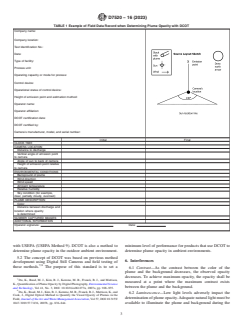
TABLE 1 Example of Field Data Record when Determining Plume Opacity with DCOT
Company name:
Company location:
Test Identification No.:
Date:
Type of facility:
Process unit:
Operating capacity or mode for process:
Control device:
Operational status of control device:
Height of emission point and estimation method:
Operator name:
Operator affiliation:
DCOT certification date:
DCOT certified by:
Camera’s manufacturer, model, and serial number:
Initial Final
CLOCK TIME
CAMERA LOCATION
Distance to discharge
Vertical angle of emission point
to camera
Angle of sun to back of camera
Height of emission point relative
to camera
ENVIRONMENTAL CONDITIONS
Background of plume
Wind direction
Wind speed
Ambient temperature
Relative humidity
Sky condition (for example,
clear, partially cloudy, overcast)
PLUME DESCRIPTION
Color
Distance between discharge and
location where opacity
is determined
NUMBER CAPTURED IMAGES
ADDITIONAL INFORMATION
Operator signature: Date:
with USEPA (USEPA Method 9). DCOT is also a method to minimum level of performance for products that use DCOT to
determine plume opacity in the outdoor ambient environment. determine plume opacity in ambient environments.
5.2 The concept of DCOT was based on previous method
6. Interferences
development using Digital Still Cameras and field testing of
7,8
those methods. The purpose of this standard is to set a
6.1 Contrast—As the contrast between the color of the
plume and the background decreases, the observed opacity
decreases. To achieve maximum opacity, the opacity shall be
Du, K., Rood, M. J., Kim, B. J., Kemme, M. R., Franek, B. J., and Mattison,
measured at a point where the maximum contrast exists
K., Quantification of Plume Opacity by Digital Photography, Environmental Science
between the plume and the background.
and Technology, Vol 41, No. 3, DOI: 10.1021/es061277n, 2007a, pp. 928–935.
Du, K., Rood, M. J., Kim, B. J., Kemme, M. R., Franek, B. J., Mattison, K., and
6.2 Luminescence—Low light levels adversely impact the
Cook, J., Digital Optical Method to Quantify the Visual Opacity of Plumes in the
determination of plume opacity. Adequate natural light must be
Field, Journal of the Air and Waste Management Association, Vol 57, DOI:10.3155/
1047-3289.57.7.836, 2007b, pp. 836–844. available to illuminate the plume and background during the
D7520 − 16 (2023)
period the images are captured. This method shall only be used Digital Still Camera must be capable of generating EXIF 2.1
during daytime conditions. JPG (or higher) formatted output files (JEMA EXIF 2.1 JPG,
1995) and the Analysis Software shall stipulate the required
6.3 Steam Plumes—Steam plumes (or condensed water
values of the EXIF 2.1 JPG (or higher) file as defined in its
vapor) cause significant errors in measuring opacity, and occur
certification documentation as described in A2.1. The Digital
in two distinct modes as either attached plumes or detached
Still Camera performs the image acquisition function and thus
plumes. When either condition is noted to exist, the camera
images must be captured in accordance with the procedures
operator must record sufficient images to document the type of
described in Section 8 to ensure that interferences are reduced
plume observed and the relative position of the exhaust stack
as discussed in Section 6. Once the images have been captured
with relationship to the point the opacity measurement is made.
and stored into the resulting EXIF 2.1 JPG (or higher) file per
6.3.1 Attached Steam Plumes—When condensed water va-
the minimum EXIF 2.1 JPG (or higher) data requirements in
por is present within the plume as it emerges from the emission
Annex A2 of this standard the image capture component is
outlet, opacity images shall be made beyond the point in the
complete and the Analysis Software takes over. The Digital
plume at which condensed water vapor is no longer visible.
Still Camera is dependent on the minimum image requirements
The operator shall record the approximate distance from the
of the associated Analysis Software and thus must conform to
emission outlet to the point in the plume at which the images
the requirements for image capture as dictated by the Analysis
are made (Table 1).
Software component.
6.3.2 Detached Steam Plume—When water vapor in the
plume condenses and becomes visible at a distinct distance 7.1.2 The second component of the DCOT is the Analysis
from the emission outlet, the opacity of emissions shall be Software which reads the images captured by the Digital Still
evaluated at the emission outlet prior to the condensation of Camera, performs analysis of the image and calculates the
water vapor and the formation of the steam plume. opacity level of the pictorially represented emission from the
Digital Still Camera. Analysis Software modifications are
6.4 Angle of View—The position of the camera operator
subject to procedures established in Annex A3. The Analysis
with respect to the smoke plume and sun will impact the
Software portion of the DCOT enforces the specific require-
perceived contrast between the smoke plume and the back-
ments of the Digital Still Camera (that is, JPEG 2.1 output, or
ground. Changes in apparent contrast will impact the measure-
higher) and the minimum requirements of the system to
ment of opacity using this technique and must be minimized by
support required output capabilities (that is, compliant with
following the procedures specified in Section 8 of this method.
Method 9 and certification documentation (IEEE 12207-
6.5 Slant-Angle—The path length of the plume is length-
2008)). The configuration documentation describing the Analy-
ened when a Digital Still Camera is too close to a stack. The
sis Software must include a listing of all non-proprietary
plume shall be observed at least three stack heights away,
components of the software, such as: (1) the required hardware
where the slant-angle is 18° or less to reduce the effect of slant
platform (that is, processors supported), (2) basic input output
angle on the perceived opacity of the plume.
system (BIOS) supported, (3) storage media required and
supported, (4) video drivers and Dynamic Link Libraries
7. System Description
(DLLs) required and supported, (5) visual display
7.1 The DCOT system is formulated into three distinct and
requirements, (for example, VGA, SVGA), and (6) image
severable components: (1) Digital Still Camera, (2) Analysis
viewers required and supported (for example, Internet Explorer
Software and its associated computing platform, and (3) the
6.1, Microsoft Picture Manager 2.1). The configuration of the
Output Function. This section describes each of the compo-
Analysis Software must also include the source version num-
nents and the dependency each component has to the others.
bering definition, and the version control plan for the propri-
7.1.1 The first component of the system is the Digital Still
etary components of the Analysis Software, such as required by
Camera. The Digital Still Camera’s sole purpose with respect
IEEE 12207. The Analysis Software shall be locally hosted on
to the DCOT system is the acquisition of images and docu-
personal computing platforms, mobile devices and/or network
mentation of the pictorially represented emission source. All
hosted. The certification documentation defines the Analysis
manufacturers of a Digital Still Camera used with the DCOT
Software and its host platform environment under which
system shall meet ISO 9001 Quality Standards. The DCOT
certification of this standard was achieved.
operator shall use the Digital Still Camera in accordance with
7.1.3 The third and final component of the DCOT is the
the certification documentation of the DCOT, for example,
Output Function. The Output Function serves as the audit
camera settings matching the certification documentation of the
capability for the DCOT as well as the formal reporting of the
DCOT. The Analysis Software shall verify that such conditions
output of the DCOT. Each DCOT shall establish its own
were used when obtaining the digital images. The Analysis
representation of output as long as the minimum set of
Software shall define the areas to determine plume opacity and
information that is described in Section 8 and A2.1 is included
the acceptable size of areas used to determine plume opacity.
in the Output Function file. The minimum required content
The entire digital image shall remain in its native state. The
from the header of the EXIF 2.1 JPG (or higher) file is
described in Annex A2. Further the output must contain the
version of the Analysis Software and the configuration of
Water droplets in steam plumes will scatter light resulting in increased plume
prerequisite components used in the determination of the
opacity until the water evaporates, and shall not be included in the determination of
opacity. opacity of the image and/or image set being analyzed.
D7520 − 16 (2023)
7.1.4 Each combination of the Digital Still Camera make speed, description of the sky condition (presence and color of
and model number, Analysis Software, and Output Function clouds), and plume background are recorded on a field data
shall determine a specified DCOT configuration for testing and record at the time the Digital Still Camera captures the images
possible certification by this ASTM method. The DCOT is to be used by the Analysis Software to determine opacity.
certified to this standard as a single entity with requisite
8.4 A minimum of 24 consecutive opacity images shall be
definitions of the components embedded in the certification
taken at 15-s intervals. These 24 images constitute a record set.
documentation. For instance a single configuration of the
Each image taken shall be deemed to represent the average
Analysis Software and Output Function meets this requirement
opacity of emissions for a 15-s period.
with multiple Digital Still Cameras with the same make and
8.5 Opacity shall be determined as an average of 24
model number and a single Digital Still Camera make and
consecutive images recorded at 15-s intervals. Divide the
model number is certifiable to this standard to operate with
recorded images into sets of 24 consecutive images. A set is
multiple specified Analysis Software and Output components.
composed of any 24 consecutive images with the opacity
values from each digital image rounded to the closest 5 %. Sets
8. Procedures
need not be consecutive in time and in no case shall two sets
8.1 The DCOT operator must be knowledgeable about
overlap. For each set of 24 images, calculate the average by
observing plumes to determine their opacity in accordance with
summing the opacity of the 24 observations and dividing this
“Principles of Visual Emissions Measurements and Procedures
sum by 24. If an applicable standard specifies an averaging
to Evaluate those Emissions Using Digital Camera Optical
time requiring other than 24 images, calculate the average for
Technique (DCOT)” (Annex A1). The DCOT operator shall
all images made during the specified time period.
use the following procedures for determining the opacity of
emissions in the ambient environment. All equipment shall be
9. Certification of DCOT and DCOT Operator
maintained in accordance with the manufacturer’s specifica-
9.1 Certification Requirements of DCOT—To be certified to
tions.
this standard as a qualified DCOT, the specified DCOT must be
8.2 The Digital Still Camera of the certified DCOT shall be
tested and demonstrate the ability to assign opacity readings in
held as steady as possible or be tripod mounted at a distance
5 % increments to 25 different black plumes and 25 different
sufficient to provide a clear view of the plume with the sun
white plumes, with an error not to exceed 15 % opacity on any
oriented in the 140° sector behind the Digital Still Camera’s
one reading and average error not to exceed 7.5 % opacity in
line of sight and toward the plume (Table 1). Consistent with
each category. Specified DCOT configurations shall be tested
maintaining the above requirement, the Digital Still Camera
in accordance with the procedures described in 9.2. Smoke
shall, as much as possible, capture digital images from a
generators used pursuant to 9.2 shall be equipped with a smoke
position such that the Digital Still Camera’s line of sight is
meter which meets the requirements of A3.1. Valid certification
perpendicular to the plume’s direction and, when photograph-
for that DCOT will last for 3.5 years for the documented
ing opacity of emissions from rectangular outlets (for example,
DCOT configuration as described by the manufacturer, model
roof monitors, open baghouses, noncircular stacks), approxi-
name, and model number of the Digital Still Camera the
mately perpendicular to the longer axis of the outlet. The
version of the Analysis Software, and the Output Function.
Digital Still Camera’s line of sight must be such that any plume
Re-certification to this standard is required if the documented
shall be isolated from its background and analyzed independent
configuration of the original DCOT is revised. Each DCOT
of other sources, and in any case the Digital Still Camera’s line
shall provide a self-test facility upon startup. The self-test shall
of sight shall be perpendicular to the longer axis of such a set
utilize existing certification data to ensure that no impacts to
of multiple stacks (for example, stub stacks on baghouses). The
the configured DCOT have occurred due to operating system
relative areas of the plume and its background in the digital
updates. The procedure shall utilize the same comparison
image are dependent on the software used and will be
methodology as the certification. For instance, if the DCOT
described with training associated with the software that is
identifies an area in the plume as compared to an area outside
used to analyze the digital images. The observation shall be
the plume (background) to derive opacity, the exact same
restarted at a time when the conditions are appropriate to restart
areas/dimensions must be used for the self-test. If a different
the observation if ambient conditions change to inappropriate
result on any reading is returned, a re-certification is required,
conditions during the observation (for example, change in wind
or the OS update must be rolled back, restoring the DCOT
direction causing the plume’s path to change direction). Qual-
configuration to a version consistent with what was certified.
ity assurance of the camera shall occur by the human operator
9.2 DCOT Certification Procedure—The specific DCOT
viewing the camera to visually assess the operating conditions
shall be certified to determine the opacity of plumes once it
of the camera.
passes six runs of 50 plumes, in front of various backgrounds
8.3 The DCOT operator shall record at a minimum the name
of color and contrast representing conditions anticipated during
of the facility, emission location, facility type, operator’s name
field use. The certification package must include at least two
and affiliation, the date of the field data record, and the Digital
different backgrounds. Four (4) independent Analysis Opera-
Still Camera’s make, model and serial numbers (for example,
tors must successfully apply the software to determine the
Table 1). The time, estimated distance to the emission location,
location of the Digital Still Camera with respect to the emission
http://olegkikin.com/shutterlife and http://www.weibull.com/hotwire/issue22/
source and sun, approximate wind direction, estimated wind hottopics22.htm.
D7520 − 16 (2023)
visible opacity of the 300 certification plumes within a six Still Camera, default auto focus settings, default auto exposure
month period as described in 9.1. The DCOT must enforce the settings, image stabilization set off, flash set off, using optical
configuration settings of the Digital Still Camera per its zoom through the standard lens, with a resultant EXIF 2.1 JPG
certification requirement, for example, if auto focus is used in per the detailed values in A2.1. There were 57 full tests of 50
certification, auto focus must be enforced on all imagery smoke plumes (25 black plumes and 25 white plumes) con-
processed by that certified DCOT. The DCOT must include in ducted at eleven different smoke school locations.
the certification documentation the results of all smoke school 10.1.2 The level of opacity being generated by the smoke
tests. Those results shall include whether the DCOT passed or generator and being read by the DCOT affects the achievable
failed the tests and for the time periods between and during the precision of the measurement. Table 2 describes the 95 %
six successful smoke school tests. Each individual run consists repeatability and 95 % reproducibility for each opacity level
12,13
of collecting images of a complete run of 50 plumes: 25 black during the smoke school tests.
plumes and 25 white plumes-generated by a calibrated smoke
10.2 Precision:
generator. Plumes within each set of 25 black and 25 white
10.2.1 The precision for DCOT was calculated at every 5 %
runs shall be presented in random order and distributed over
interval of opacity because that is the procedure dictated by
the entire range of opacities (that is, 0 to 100 % opacity values
USEPA Method 9 and an operational constraint of smoke
for black and white plumes). The DCOT operator shall ensure
school operators. Further USEPA Method 9 dictates that only
the Digital Still Camera is set in accordance with DCOT
absolute error be used in determining the bias of the opacity
certification documentation. The Analysis Software shall verify
reading, for example confidence intervals are not used in
that such conditions were used when obtaining the digital
USEPA Method 9. ASTM standards typically follow Practice
images. The Analysis Software shall define the areas to
E691 in determining bias and requires a 2.8 multiplier on
determine plume opacity and the acceptable size of areas used
absolute error to determine the confidence interval of 95 %. It
to determine plume opacity. The entire digital image shall
also makes sense that the absolute precision might be expected
remain in its native state. The DCOT must capture the image of
to vary based on opacity level. The database included 96 to 256
the measured plume and assign an opacity value to each along
tests at each opacity level from eleven (11) smoke school runs.
with the required environment information listed in Section 8
This precision statement may be updated with additional data
of this standard. At the completion of each run of 50 readings,
prior to each reauthorization of the method. The precision, in
the score of the DCOT is determined. If a DCOT fails to
terms of repeatability and reproducibility, of the smoke school
qualify, the complete run of 50 readings must be repeated in
tests are shown in Table 2.
any retest. The smoke test shall be administered as part of a
smoke school or training program.
9.3 Certification of DCOT Operator—The DCOT operator
The 95 % repeatability and reproducibility were calculated using a coverage
shall be certified to acquire digital images from the Digital Still
factor of 2.8 as prescribed by Practice E691 and the ASTM Blue Book.
Camera to determine plume opacity by meeting the require- 13
There are 21 opacity levels between 0 and 100 % opacity.
ments specified by the training course for the specified DCOT
system. The operator will use and shall be knowledgeable of
A, B
TABLE 2 Repeatability and Reproducibility
the content described in “Principles of Visual Emissions
Repeatability (r) Reproducibility (R)
Opacity Level
Measurements and Procedures to Evaluate those Emissions
Absolute Opacity, % Absolute Opacity, %
Using Digital Camera Optical Technique (DCOT)” as provided 0 3 4
5 7 8
in Annex A1. The DCOT Operator shall be certified to perform
10 10 12
analysis with the DCOT system by attending a smoke school,
15 11 11
acquiring images, and successfully performing analysis on
20 11 16
25 16 16
smoke school imagery with the DCOT system. The jurisdiction
30 11 14
of the smoke school may conduct schools differently. The
35 15 17
intent here is to have DCOT analyst candidates, under what- 40 10 17
45 9 17
ever prevailing weather conditions exist, successfully capture
50 13 17
and analyze 25 white plumes and 25 black plumes in a “run”
55 12 17
as defined by the jurisdiction and smoke school operator. 60 10 17
65 12 14
70 8 17
10. Precision and Bias
75 10 16
80 7 17
10.1 General Considerations:
85 9 17
10.1.1 The precision and bias of this test method has been
90 10 16
evaluated by using the statistical procedures described in
95 10 14
100 5 11
Practice E691 and the guidance provided by the ASTM “Blue
A
Book.” The only tests available with an accepted reference Large uncertainties are the consequence of using Practice E691 to present
repeatability and reproducibility. However, the raw datasets used to determine
value were Method 9 smoke school (smoke generator) com-
these values meet the requirements of Method 9 for individual and average opacity
parison tests using a certified DCOT “DOCS II” using a Digital
errors.
B
Data utilized to create Precision and Bias tables came from images acquired
under smoke school conditions.
“Form and Style for ASTM Standards,” March 2009.
D7520 − 16 (2023)
TABLE 3 Bias
10.2.2 The repeatability and reproducibility values are in
percent opacity absolute. For example, if 15 % opacity is Opacity Level Bias, % of reading
A
presented by the smoke generator, then there is a 95 % 0 NA
5 -7 %
probability that the DCOT will read between 26 % and 4 %
10 0 %
opacity (15 % 6 11 %). As a point of clarification, the percent
15 0 %
opacity absolute is the absolute opacity value. For example, the 20 0 %
25 -5 %
absolute opacity difference between 20 % opacity and 10 %
30 -4 %
opacity is 10 % opacity. It is critical to understand the USEPA,
35 -5 %
in support of Method 9, utilized average error over the 40 0 %
45 6 %
spectrum of opacity (0 to 100), and segregated their data based
50 0 %
on white or black smoke to report precision and bias type
55 -3 %
60 -3 %
information. Consequently, to understand the method described
65 -5 %
herein as relates to Method 9, one would apply Precision and
70 0 %
Bias calculations as performed in this method, per the ASTM
75 -5 %
80 –1 %
Blue Book to Method 9 data. For instance, if the data
85 –4 %
supporting the USEPA method 9 reported an average error of
90 –3 %
5 % for white smoke, apply 5 % equally across the spectrum of
95 0 %
A
opacity (0 to 100). Thus there is a 95 % probability that the 100 NA
A
trained human reader would read between 29 % and 1 % NA is utilized in Table 3 because 0-100 is the range of acceptable values. One
cannot attain a number <0 for an opacity, nor can one attain an opacity of >100. As
opacity if presented a known opacity of 15 %.
such the values for bias at 0 and 100 are not applicable.
10.3 Bias:
10.3.1 Bias is a systematic error that contributes to the
difference between the mean of a large number of test results bility of the opacity measurement. Mandatory environment
and an accepted reference value. Variables such as the angle at variables are described in Section 8 of this standard. DCOTs
which images of the plume are captured, portion of the plume certified to this standard are instructed to round to the nearest
analyzed, direction of plume travel versus angle of image 5 % increment. DCOTs report opacity in increments of 5 %.
captured, luminescence and color contrast between the plume 10.3.2 Table 3 shows the bias associated with the smoke
and the background against which the plume is viewed exert an school data. As expected, the bias varied from opacity level to
opacity level.
influence upon the appearance of the plume and affect the
ability of the technology to assign accurate opacity values. 10.3.3 Bias was determined by comparing the mean differ-
ence between the readings and the smoke generator reference
Studies of the theory of plume opacity have demonstrated that
a plume is most visible and presents the greatest apparent value. If the absolute value of the mean difference was greater
than the 95 % confidence coefficient, then a bias was calculated
opacity when viewed against a contrasting background
(USEPA Method 9). Accordingly, the opacity of a plume by dividing the mean difference by the mean DCOT value. The
viewed under conditions where a contrasting background is database included 96 to 256 tests at each opacity level from
present is assigned with the greatest degree of accuracy. eleven (11) smoke schools’ runs.
DCOT’s opacity results must document the bias variables in
11. Keywords
order to minimize their effects on the resulting opacity deter-
mination. Captured images must document the environment 11.1 digital camera; digital image; digital still camera;
under which the image was captured to determine the applica- opacity
ANNEXES
(Mandatory Information)
A1. PRINCIPLES OF VISUAL EMISSIONS MEASUREMENTS AND PROCEDURES TO EVALUATE THOSE EMISSIONS US-
ING DIGITAL CAMERA OPTICAL TECHNIQUE (DCOT)
A1.1 Abstract documentation needed when measuring visual emissions with
DCOT, and the certification and duration of certification of
A1.1.1 This document was developed to provide back-
DCOT. DCOT was developed as a possible alternative to
ground information pertaining to the principles of visual
Method 9 and this document provides background information
emission measurement, United States Environmental Protec-
about Method 9 that is also applicable to DCOT.
tion Agency (USEPA) Reference Method 9 requirements,
ASTM Standard Practice for Competence of Air Emission A1.1.2 A note about terminology: the term “observer” is
Testing Bodies, equipment needed to collect visual emission used in this document when referring to Method 9 to describe
data for the Digital Camera Optical Technique (DCOT), the person who is making a visual emission evaluation to
D7520 − 16 (2023)
determine plume opacity. However, “observer” is replaced
Rangefinder A1.7.6
Clinometric Devices A1.7.7
with “Digital Still Camera” when referring to DCOT as the
Anemometer A1.7.8
means to record digital still images that are then used to
Relative Humidity Sensor A1.7.9
determine plume opacity. The term “operator” is used when
Documentation Needed to Determine Plume Opacity A1.8
with DCOT
referring to DCOT to describe the operation of the Digital Still
Company Name and Location A1.8.1
Camera that obtains the digital still images and the collection
Test Identification Number and Date A1.8.2
of supporting documentation that are needed to provide a Type and Operational Status of the Facility, Process A1.8.3
Unit and Control Device
complete dataset for DCOT to determine plume opacity.
Height of Emission Point and Estimation Method A1.8.4
Description of Operator, DCOT and Digital Still Camera A1.8.5
A1.1.3 An extensive amount of the information provided
Source Layout Sketch A1.8.6
below is from the student manual for the “Visible Emission
Clock Time A1.8.7
Camera’s Location A1.8.8
Evaluation Procedures Course,” Air Pollution Training Insti-
Environmental Conditions A1.8.9
tute (APTI) Course 325, Final Review Draft (January 1995).
Plume Description A1.8.10
The principal author of the student manual is Thomas H. Rose
Additional Information A1.8.11
Operator’s Signature and Date A1.8.12
with style and editing by Monica L. Loewy.
Certification of DCOT A1.9
Testing Requirements A1.9.1
A1.2 Table of Contents
Grading A1.9.2
Abstract A1.1 Certification of DCOT and Certification Period A1.9.3
Knowledgeable Users A1.10
Table of Contents A1.2
List of Figures A1.3 Testing Requirements A1.10.1
Grading A1.10.2
Principles of Visual Emissions Measurement A1.4
Certification of Digital Still Camera Operators A1.10.3
Ringelmann Method A1.4.1
Equivalent Opacity A1.4.2
A1.3 List of Figures
Opacity and Transmission of Light A1.4.3
Light and Particles A1.4.4
Ringelmann Chart Fig. A1.1
Absorption A1.4.5
Electromagnetic Spectrum Fig. A1.2
Scattered Light A1.4.6
Dependence of Slant Angle on Distance between the Observer Fig. A1.3
Rayleigh Scattering A1.4.7
and Plume
Mie Scattering A1.4.8
Orientation of the Observer to the Plume and Sun Fig. A1.4
Particle Size A1.4.9
Effect of Slant Angle on Path Length and Apparent Opacity Fig. A1.5
Variables Influencing Opacity Observations A1.4.10
Card-Type and Needle-Type Compasses Fig. A1.6
Selecting the Background A1.4.11
Sling Psychrometer Fig. A1.7
Method 9 Requirements A1.5
Slant-Angle Determination Fig. A1.8
Method 9 A1.5.1
The Reference Method is one of Observation A1.5.2
Opacity Variances A1.5.3
Changes in USEPA Procedures A1.5.4
A1.4 Principles of Visual Emissions Measurement—This
Analysis of Error A1.5.5
section describes concepts related to opacity and discusses the
Averaging was Introduced to Increase Accuracy A1.5.6
Sun Position became an Issue A1.5.7
scientific principles associated with measuring opacity and the
Slant-Angle Considerations were Introduced A1.5.8
practical application of those principles.
The Issue of Steam Source Plumes was Introduced A1.5.9
Smoke Generators were Standardized A1.5.10
A1.4.1 Ringelmann Method:
Minor Changes to the Method A1.5.11
A1.4.1.1 Evaluation of visible emissions evolved from a
Appearance and Controllable Observational Variables A1.5.12
Appearance and Uncontrollable Observational Variables A1.5.13 concept developed by Maximillian Ringelmann during the late
High-Contrast Backgrounds A1.5.14
1800s. Ringelmann used a chart of calibrated black grids on a
Low-Contrast Backgrounds A1.5.15
white background to measure dark or black smoke emissions
Positive Error Defined A1.5.16
Positive Observational Error A1.5.17 from coal-fired boilers. The grids ranged from approximately
Principle A1.5.18
Applicability A1.5.19
Procedures A1.5.20
Observer Position Relative to the Sun Notes A1.5.21
Observer Line of Sight A1.5.22
Multiple Stacks A1.5.23
Field Records A1.5.24
Observation Point in the Plume A1.5.25
Attached Steam Plumes A1.5.26
Detached Steam Plumes A1.5.27
Recording Observations A1.5.28
Data Reduction A1.5.29
Calculation of Opacity A1.5.30
General Certification Requirements A1.5.31
Period of Certification A1.5.32
Introduction to Digital Camera Opacity Technique (DCOT) A1.6
Equipment to Determine Plume Opacity in the Field Using A1.7
Digital Camera Opacity Technique
Introduction A1.7.1
Digital Camera Opacity Technique (DCOT) A1.7.2
Tripod A1.7.3
Timer/Watch A1.7.4
Direction Finder A1.7.5
FIG. A1.1 Ringelmann Chart
D7520 − 16 (2023)
FIG. A1.2 Electromagnetic Spectrum
FIG. A1.3 Dependence of Slant Angle on Distance between the Observer and Plume
A1.4.2.2 United States Environmental Protection Agency
(USEPA) discontinued using Ringelmann numbers with USE-
PA’s Reference Method 9 procedures for New Source Perfor-
mance Standards (NSPS). Although current procedures are
based solely on opacity, some state regulations (notably Cali-
fornia’s) still specify the use of the Ringelmann Chart to
evaluate black and gray plumes. The general trend, however, is
toward reading all visible emissions in unit of percent opacity.
A1.4.3 Opacity and Transmission of Light:
FIG. A1.4 Orientation of the Observer to the Plume and Sun
A1.4.3.1 Plume opacity is defined as one of the following:
(1) The degree to which light transmission through the
width of a plume is reduced.
20 % ink coverage for a Ringelmann #1 through 100 % ink
(2) The degree to which the visibility of a background
coverage, or solid black, for a Ringelmann #5 (Fig. A1.1). The
viewed through the diameter of a plume is obscured.
observer then compared the shade of the smoke with the shade
A1.4.3.2 When light strikes an object or substance, the light
of the card.
is attenuated by either absorption or scattering. The amount of
light that is absorbed or scattered determines the opacity of the
A1.4.2 Equivalent Opacity:
substance. Simply put, in the observation of a plume, opacity is
A1.4.2.1 During the early 1950s, the Ringelmann concept
the light obscuring power of the plume.
was expanded to include colors of smoke other than black by
introducing “equivalent opacity.” Equivalent opacity is the A1.4.3.3 In terms of physical optics, opacity is related to
opacity equivalent to the obscuring power of black smoke transmittance (I/I ) through the plume. Percent opacity and
o
characterized by a specific Ringelmann grid. Thus, Ringel- percent transmittance always total 100 %. Percent opacity is
mann #1 was equivalent to 20 % opacity. defined by the following equation:
D7520 − 16 (2023)
FIG. A1.5 Effect of Slant Angle on Path Length and Apparent Opacity
FIG. A1.6 Card-Type and Needle-Type Compasses
FIG. A1.8 Slant-Angle Determination
FIG. A1.7 Sling Psychrometer
A1.4.4.1 The wavelengths of visible light in the electromag-
netic spectrum range from 400 nanometres (nm) for blue light
Percent opacity 5 ~1 2 I/I ! × 100 (A1.1)
o
to 700 nm for red light. Below 400 nm is the ultraviolet (UV)
wavelength, and above 700 nm is the infrared (IR) wavelength
where:
(Fig. A1.2). Human vision peaks in the middle of the visible
I = light flux leaving the plume along the same path, and
range, at 550 nm, a yellowish-green color. This color is seen
I = light flux entering the plume (incident light flux).
o
the best, and not coincidentally, it is also the best background
A1.4.3.4 Many factors influence plume opacity readings:
for light-colored plumes.
particle number density, particle refractive index, particle size
A1.4.4.2 Opacity is a function of the interaction between
distribution, wavelength of light, plume color, plume
light over this visible spectrum and particles. This interaction is
background, plume width, path length of observation, distance
affected by properties of both the particles and the light that
and relative elevation of the observer to the stack’s exit, sun
include:
angle relative to the observer and plume, and lighting condi-
(1) Number and size of the particles,
tions.
(2) Particle shape,
A1.4.4 Light and Particles: (3) Particle color,
D7520 − 16 (2023)
(4) Index of refraction of the particles, ground. To the degree possible, the observer should maximize
(5) Spectral characteristics of the light, the color contrast between the plume and the background to get
(6) Light direction, and the most accurate readings.
(7) Amount of light. A1.4.10.3 Luminous contrast is the diff
...