

ASTM D3608-19
(Test Method)Standard Test Method for Nitrogen Oxides (Combined) Content in the Atmosphere by the Griess-Saltzman Reaction
General Information
- Abstract
SIGNIFICANCE AND USE
5.1 Both NO2 and NO play an important role in photochemical-smog-forming reactions. In sufficient concentrations NO2 is deleterious to health, agriculture, materials, and visibility.
5.2 In combustion processes, significant amounts of NO may be produced by combination of atmospheric nitrogen and oxygen; at ambient temperatures, NO can be converted to NO2 by oxygen and other atmospheric oxidants. Nitrogen dioxide also may be generated from processes involving nitric acid, nitrates, the use of explosives, and welding.
SCOPE
1.1 This test method covers the manual determination of the combined nitrogen dioxide (NO2) and nitric oxide (NO) content, total NOx; in the atmosphere in the range from 4 to 10 000 μg/m3 (0.002 to 5 ppm (v)).
1.2 The maximum sampling period is 60 min at a flow rate of 0.4 L/min.
1.3 The values stated in SI units are to be regarded as standard. The values given in parentheses are for information only.
1.4 This standard does not purport to address all of the safety concerns, if any, associated with its use. It is the responsibility of the user of this standard to establish appropriate safety, health, and environmental practices and determine the applicability of regulatory limitations prior to use.
1.5 This international standard was developed in accordance with internationally recognized principles on standardization established in the Decision on Principles for the Development of International Standards, Guides and Recommendations issued by the World Trade Organization Technical Barriers to Trade (TBT) Committee.
- Status
- Published
- Publication Date
- 28-Feb-2019
- Technical Committee
- D22 - Air Quality
- Drafting Committee
- D22.03 - Ambient Atmospheres and Source Emissions
Buy Documents
ASTM D3608-19 - Standard Test Method for Nitrogen Oxides (Combined) Content in the Atmosphere by the Griess-Saltzman Reaction
REDLINE ASTM D3608-19 - Standard Test Method for Nitrogen Oxides (Combined) Content in the Atmosphere by the Griess-Saltzman Reaction
Overview
ASTM D3608-19 - Standard Test Method for Nitrogen Oxides (Combined) Content in the Atmosphere by the Griess-Saltzman Reaction details a manual analytical method for determining the combined nitrogen dioxide (NO₂) and nitric oxide (NO) content-referred to as total NOx-in atmospheric samples. This method is critical for environmental monitoring, particularly in assessing air quality, industrial emissions, and the impact of combustion and chemical processes on the environment.
Total nitrogen oxides (NOx) are significant because both NO₂ and NO play essential roles in the formation of photochemical smog and can have adverse effects on public health, agricultural productivity, structural materials, and atmospheric visibility.
Key Topics
- Scope of Method: Covers manual measurement of combined NO₂ and NO (NOx) in the range of 4 to 10,000 μg/m³ (0.002 to 5 ppm(v)), with sampling conducted over a maximum of 60 minutes at a flow rate of 0.4 L/min.
- Griess-Saltzman Reaction: Utilizes an azo-dye-forming reagent that develops a red-violet color in the presence of NOx, measured by spectrophotometry.
- Sampling and Calibration:
- Detailed procedures for sample collection, including apparatus setup and reagent preparation.
- Calibration techniques ensure accuracy, using standardized permeation tubes or sodium nitrite solutions.
- Health and Environmental Significance:
- NOx instigates photochemical reactions leading to smog.
- Sufficient concentrations of NO₂ are harmful to health, crops, materials, and reduce visibility.
- Cross-Industry Impact: NO and NO₂ emissions are seen in combustion processes, industrial activities using nitric acid or nitrates, explosives, and welding.
Applications
- Ambient Air Quality Monitoring: Fundamental for regulatory agencies, research institutions, and industrial facilities to assess compliance with air quality standards.
- Emission Source Assessments: Used at combustion sources, manufacturing plants, and during environmental impact studies to determine levels of nitrogen oxides in emissions.
- Smog Formation Studies: Supports atmospheric research into the mechanisms and mitigation of photochemical smog.
- Occupational Health: Valuable for workplace air monitoring where nitric oxide and nitrogen dioxide generation is possible.
- Environmental Compliance: Assists organizations in meeting regulatory requirements and in supporting claims for environmental protection.
Related Standards
The ASTM D3608-19 method references and complements several other ASTM standards critical to air sampling and gaseous analysis, including:
- ASTM D1071 - Test Methods for Volumetric Measurement of Gaseous Fuel Samples
- ASTM D1193 - Specification for Reagent Water
- ASTM D1356 - Terminology Relating to Sampling and Analysis of Atmospheres
- ASTM D1357 - Practice for Planning the Sampling of the Ambient Atmosphere
- ASTM D3195 - Practice for Rotameter Calibration
- ASTM D3609 - Practice for Calibration Techniques Using Permeation Tubes
- ASTM D3631 - Test Methods for Measuring Surface Atmospheric Pressure
- ASTM E1 - Specification for ASTM Liquid-in-Glass Thermometers
- ASTM E128 - Test Method for Maximum Pore Diameter and Permeability of Rigid Porous Filters
Practical Value
Implementing ASTM D3608-19 ensures reliable and repeatable results for NOx analysis in ambient atmospheres. The method's explicit guidance on sampling, reagent preparation, and calibration enables laboratories, environmental professionals, and regulatory agencies to monitor and manage air quality with confidence. By adhering to this international standard, organizations contribute to public health protection, regulatory compliance, and improved environmental stewardship.
Keywords: ASTM D3608, nitrogen oxides, NOx, Griess-Saltzman reaction, NO2, NO, air quality monitoring, environmental testing, atmospheric analysis, photochemical smog, emission assessment, colorimetric analysis.
Relations
- Effective Date
- 01-Mar-2019
- Effective Date
- 01-Sep-2020
- Effective Date
- 15-Mar-2020
- Effective Date
- 01-Nov-2019
- Effective Date
- 01-Aug-2019
- Effective Date
- 01-Apr-2017
- Effective Date
- 01-Mar-2017
- Effective Date
- 15-Oct-2015
- Effective Date
- 01-Jul-2015
- Effective Date
- 01-Dec-2014
- Effective Date
- 01-May-2014
- Effective Date
- 15-Jan-2014
- Effective Date
- 01-May-2013
- Effective Date
- 01-Oct-2011
- Effective Date
- 01-Oct-2011
Buy Documents
ASTM D3608-19 - Standard Test Method for Nitrogen Oxides (Combined) Content in the Atmosphere by the Griess-Saltzman Reaction
REDLINE ASTM D3608-19 - Standard Test Method for Nitrogen Oxides (Combined) Content in the Atmosphere by the Griess-Saltzman Reaction
Get Certified
Connect with accredited certification bodies for this standard

CIS Institut d.o.o.
Personal Protective Equipment (PPE) certification body. Notified Body NB-2890 for EU Regulation 2016/425 PPE.

Kiwa BDA Testing
Building and construction product certification.
Kmetijski inštitut Slovenije
Agricultural Institute of Slovenia. Soil testing, plant health, agricultural product analysis.
Sponsored listings
Frequently Asked Questions
ASTM D3608-19 is a standard published by ASTM International. Its full title is "Standard Test Method for Nitrogen Oxides (Combined) Content in the Atmosphere by the Griess-Saltzman Reaction". This standard covers: SIGNIFICANCE AND USE 5.1 Both NO2 and NO play an important role in photochemical-smog-forming reactions. In sufficient concentrations NO2 is deleterious to health, agriculture, materials, and visibility. 5.2 In combustion processes, significant amounts of NO may be produced by combination of atmospheric nitrogen and oxygen; at ambient temperatures, NO can be converted to NO2 by oxygen and other atmospheric oxidants. Nitrogen dioxide also may be generated from processes involving nitric acid, nitrates, the use of explosives, and welding. SCOPE 1.1 This test method covers the manual determination of the combined nitrogen dioxide (NO2) and nitric oxide (NO) content, total NOx; in the atmosphere in the range from 4 to 10 000 μg/m3 (0.002 to 5 ppm (v)). 1.2 The maximum sampling period is 60 min at a flow rate of 0.4 L/min. 1.3 The values stated in SI units are to be regarded as standard. The values given in parentheses are for information only. 1.4 This standard does not purport to address all of the safety concerns, if any, associated with its use. It is the responsibility of the user of this standard to establish appropriate safety, health, and environmental practices and determine the applicability of regulatory limitations prior to use. 1.5 This international standard was developed in accordance with internationally recognized principles on standardization established in the Decision on Principles for the Development of International Standards, Guides and Recommendations issued by the World Trade Organization Technical Barriers to Trade (TBT) Committee.
SIGNIFICANCE AND USE 5.1 Both NO2 and NO play an important role in photochemical-smog-forming reactions. In sufficient concentrations NO2 is deleterious to health, agriculture, materials, and visibility. 5.2 In combustion processes, significant amounts of NO may be produced by combination of atmospheric nitrogen and oxygen; at ambient temperatures, NO can be converted to NO2 by oxygen and other atmospheric oxidants. Nitrogen dioxide also may be generated from processes involving nitric acid, nitrates, the use of explosives, and welding. SCOPE 1.1 This test method covers the manual determination of the combined nitrogen dioxide (NO2) and nitric oxide (NO) content, total NOx; in the atmosphere in the range from 4 to 10 000 μg/m3 (0.002 to 5 ppm (v)). 1.2 The maximum sampling period is 60 min at a flow rate of 0.4 L/min. 1.3 The values stated in SI units are to be regarded as standard. The values given in parentheses are for information only. 1.4 This standard does not purport to address all of the safety concerns, if any, associated with its use. It is the responsibility of the user of this standard to establish appropriate safety, health, and environmental practices and determine the applicability of regulatory limitations prior to use. 1.5 This international standard was developed in accordance with internationally recognized principles on standardization established in the Decision on Principles for the Development of International Standards, Guides and Recommendations issued by the World Trade Organization Technical Barriers to Trade (TBT) Committee.
ASTM D3608-19 is classified under the following ICS (International Classification for Standards) categories: 13.040.20 - Ambient atmospheres. The ICS classification helps identify the subject area and facilitates finding related standards.
ASTM D3608-19 has the following relationships with other standards: It is inter standard links to ASTM D3608-95(2011), ASTM D1356-20a, ASTM D1356-20, ASTM E128-99(2019), ASTM D1357-95(2019), ASTM D1071-17, ASTM D3631-99(2017), ASTM D1356-15a, ASTM D1356-15, ASTM D1356-14b, ASTM D1356-14a, ASTM D1356-14, ASTM E1-13, ASTM D3631-99(2011), ASTM E128-99(2011). Understanding these relationships helps ensure you are using the most current and applicable version of the standard.
ASTM D3608-19 is available in PDF format for immediate download after purchase. The document can be added to your cart and obtained through the secure checkout process. Digital delivery ensures instant access to the complete standard document.
Standards Content (Sample)
This international standard was developed in accordance with internationally recognized principles on standardization established in the Decision on Principles for the
Development of International Standards, Guides and Recommendations issued by the World Trade Organization Technical Barriers to Trade (TBT) Committee.
Designation: D3608 − 19
Standard Test Method for
Nitrogen Oxides (Combined) Content in the Atmosphere by
the Griess-Saltzman Reaction
This standard is issued under the fixed designation D3608; the number immediately following the designation indicates the year of
original adoption or, in the case of revision, the year of last revision.Anumber in parentheses indicates the year of last reapproval.A
superscript epsilon (´) indicates an editorial change since the last revision or reapproval.
1. Scope D3609Practice for Calibration Techniques Using Perme-
ation Tubes
1.1 Thistestmethodcoversthemanualdeterminationofthe
D3631Test Methods for Measuring Surface Atmospheric
combined nitrogen dioxide (NO ) and nitric oxide (NO)
Pressure
content, total NO ; in the atmosphere in the range from 4 to
x
3 E1Specification for ASTM Liquid-in-Glass Thermometers
10000 µg/m (0.002 to 5 ppm (v)).
E128Test Method for Maximum Pore Diameter and Perme-
1.2 The maximum sampling period is 60 min at a flow rate
ability of Rigid Porous Filters for Laboratory Use
of 0.4 L/min.
3. Terminology
1.3 The values stated in SI units are to be regarded as
standard. The values given in parentheses are for information 3.1 Definitions—For definitions of terms used in this test
only.
method, refer to Terminology D1356.
1.4 This standard does not purport to address all of the
4. Summary of Test Method
safety concerns, if any, associated with its use. It is the
4.1 The NO is quantitatively (1) converted to NO by a
responsibility of the user of this standard to establish appro- 2
chromicacidoxidizer.TheresultingNO ,plustheNO already
priate safety, health, and environmental practices and deter-
2 2
present, are absorbed in an azo-dye-forming reagent (2).A
mine the applicability of regulatory limitations prior to use.
red-violet color is produced within 15 min, the intensity of
1.5 This international standard was developed in accor-
which is measured spectrophotometrically at 550 nm.
dance with internationally recognized principles on standard-
ization established in the Decision on Principles for the
5. Significance and Use
Development of International Standards, Guides and Recom-
5.1 Both NO and NO play an important role in
mendations issued by the World Trade Organization Technical
Barriers to Trade (TBT) Committee. photochemical-smog-forming reactions. In sufficient concen-
trationsNO isdeleterioustohealth,agriculture,materials,and
2. Referenced Documents
visibility.
2.1 ASTM Standards:
5.2 In combustion processes, significant amounts of NO
D1071Test Methods for Volumetric Measurement of Gas-
may be produced by combination of atmospheric nitrogen and
eous Fuel Samples
oxygen;atambienttemperatures,NOcanbeconvertedtoNO
D1193Specification for Reagent Water
by oxygen and other atmospheric oxidants. Nitrogen dioxide
D1356Terminology Relating to Sampling and Analysis of
also may be generated from processes involving nitric acid,
Atmospheres
nitrates, the use of explosives, and welding.
D1357Practice for Planning the Sampling of the Ambient
6. Interferences
Atmosphere
D3195Practice for Rotameter Calibration
6.1 Anysignificantinterferencesduetosulfurdioxide(SO )
should be negated by the oxidation step. The addition of
1 acetone to the reagent retards color-fading by forming a
This test method is under the jurisdiction of ASTM Committee D22 on Air
Quality and is the direct responsibility of Subcommittee D22.03 on Ambient temporary addition product with SO . This will protect the
Atmospheres and Source Emissions.
reagent from incidental exposure to SO and will permit
Current edition approved March 1, 2019. Published April 2019. Originally
readingthecolorintensitywithin4to5h(insteadofthe45min
approved in 1977. Last previous edition approved in 2011 as D3608–95 (2011).
required without acetone) without appreciable losses.
DOI: 10.1520/D3608-19.
For referenced ASTM standards, visit the ASTM website, www.astm.org, or
contact ASTM Customer Service at service@astm.org. For Annual Book of ASTM
Standards volume information, refer to the standard’s Document Summary page on The boldface numbers in parentheses refer to a list of references at the end of
the ASTM website. this standard.
Copyright © ASTM International, 100 Barr Harbor Drive, PO Box C700, West Conshohocken, PA 19428-2959. United States
D3608 − 19
6.2 A five-fold ratio of ozone to NO will cause a small 7.3.2 Measure the porosity of an absorber in accordance
interference, the maximal effect occurring in 3 h. The reagent with Test Method E128. If the frit is clogged or visibly
assumes a slightly orange tint. discolored, carefully clean with concentrated chromic-sulfuric
acid mixture, rinse well with water, and redetermine the
6.3 The interferences from nitrous oxide and nitrogen
maximum pore diameter.
pentoxide, and other gases that might be found in polluted air
7.3.3 Rinse the bubbler thoroughly with water and allow to
are considered to be negligible.
dry before using.
7. Apparatus
7.4 Mist Eliminator or Gas Drying Tube filled with acti-
vated charcoal or soda lime is used to prevent damage to the
7.1 Sampling Probe—A glass or TFE-fluorocarbon (pre-
flowmeter and pump.
ferred) tube, 6 to 10 mm in diameter, provided with a
downward-facing intake (funnel or tip). The dead volume of
7.5 Air-Metering Device—A calibrated glass variable-area
thesystemshouldbekeptminimal,toavoidlossofNO onthe
x
flowmeter, or dry gas meter coupled with a flow indicator
surfaces of the apparatus.
capableofaccuratelymeasuringaflowof0.4L/minissuitable.
7.2 Oxidizer Tube—Soak 14 to 16-mesh firebrick or ⁄16-in.
7.6 Thermometer—ASTM Thermometer 33C, meeting the
(1.5mm)molecularsievepelletsina17%aqueoussolutionof
requirements of Specification E1, will be suitable for most
chromium trioxide (CrO ) for 10 to 30 min.After draining the
3 applications of the method.
excess solution and drying in an oven at 105°C for 30 min, the
7.7 Manometer, accurate to 670 Pa (0.20 in. Hg).
solid oxidizer has a dull pink color. This color changes to rich
7.8 Air Pump—A suction pump capable of drawing the
yellow (active color) after 24-h equilibration with ambient air
required sample flow for intervals of up to 60 min.
at 40 to 70% relative humidity, or after drawing ambient air
through at a flow rate of 0.5 L/min for 1 h. A change in color
7.9 Spectrophotometer or Colorimeter—A laboratory in-
to a greenish brown indicates the exhaustion of oxidizing
strument suitable for measuring the intensity of the red-violet
ability, and progresses with a sharp boundary. Place about 3 g
color at 550 nm, with stoppered tubes or cuvettes. The
oftheoxidizerina30-mLmidgetimpinger,orfilla5-mmtube
wavelength band-width is not critical for this determination.
to a height of 80 mm and plug each end with glass wool.
7.10 Stopwatch or Timer.
7.3 Absorber—Anall-glassbubblerwitha60-µmmaximum
pore diameter frit, commonly labeled “coarse,” similar to that 8. Reagents and Materials
illustrated in Fig. 1.
8.1 Purity of Reagents—Reagent grade chemicals shall be
7.3.1 The porosity of the fritted bubbler, as well as the
usedinalltests.Allreagentsshallconformtothespecifications
sampling flow rate, affect absorption efficiency. An efficiency
of the Committee on Analytical Reagents of the American
of over 95% may be expected with a flow rate of 0.4 L/min or
Chemical Society, where such specifications are available.
less and a maximum pore diameter of 60 µm. Frits having a
Other grades may be used, provided it is first ascertained that
maximum pore diameter less than 60 µm will have a higher
the reagent is of sufficiently high purity to permit its use
efficiency, but will require an inconvenient pressure drop for
without lessening the accuracy of the determination.
sampling.
8.2 Purity of Water—Water shall be deionized water in
accordance with Specification D1193 for Type I and II reagent
water. Water must be nitrite-free.
8.3 Absorbing Reagent—Dissolve5gof anhydrous sulfa-
nilic acid (or 5.5 g of the monohydrate) in almost a litre of
water containing 140 mLof glacial acetic acid. Gentle heating
is permissible to speed up the process. To the cooled mixture,
add 20 mL of the 0.1% stock solution of N-(1-naphthyl)-
ethylenediaminedihydrochlorideand10-mLacetone.Diluteto
1 L. The solution will be stable for several months if kept
well-stoppered in a brown bottle in the refrigerator. The
absorbing reagent must be at room temperature before use.
Avoidlengthycontactwithairduringbothpreparationanduse,
since absorption of nitrogen dioxide will discolor the reagent.
8.4 Chromic Acid Oxidant—Dissolve 17 g of chromium
trioxide (CrO ) in 100 mL of water.
Reagent Chemicals, American Chemical Society Specifications, American
Chemical Society, Washington, DC. For suggestions on the testing of reagents not
listed by the American Chemical Society, see Analar Standards for Laboratory
Chemicals, BDH Ltd., Poole, Dorset, U.K., and the United States Pharmacopeia
and National Formulary, U.S. Pharmacopeial Convention, Inc. (USPC), Rockville,
FIG. 1 Fritted Bubbler for Sampling Combined Nitrogen Oxides MD.
D3608 − 19
8.5 N-(1-Naphthyl)-Ethylenediamine Dihydrochloride, gasstreamtothedesiredconcentrationbyvaryingtheflowrate
Stock Solution (0.1 %)—Dissolve 0.1 g of the reagent in 100 of the “clean dry air.” This flow rate can normally be varied
mL of water. The solution will be stable for several months if from 0.2 to 15 L/min. The flow rate of the sampling system
kept well-stoppered in a brown bottle in the refrigerator. determines the lower limit for the flow rate of diluent gases.
(Alternatively,weighedsmallamountsofthesolidreagentmay The flow rates of the nitrogen and the diluent air must be
be stored.) measured to an accuracy of 1 to 2%. With a tube permeating
NO at a rate of 0.1 µL/min (0.19 µg/min), the range of
8.6 Sodium Nitrite (NaNO ), Standard Solution (0.0246
concentration of NO will be between 20 to 1000 µg/m (0.01
g/L)—One mL of this working solution of NaNO produces a
to 0.50 ppm (v)), a generally satisfactory range for ambient air
colorequivalenttothatof20µgofNO in1Lofairat101kPa
conditions. When higher concentrations are desired, calibrate
(29.92 in. Hg) and 25°C (see 10.2.2). Prepare fresh just before
using longer permeation tubes.
use by diluting from a stock solution containing 2.460 g/L of
10.2.1.4 Procedure for Preparing Simulated Calibration
NaNO (calculated as 100%). It is desirable to assay the solid
Curves—A multitude of curves may be prepared by selecting
reagent (3). The stock solution is stable for 90 days at room
differentcombinationsofsamplingrateandsamplingtime.The
temperatures, and for a year in a brown bottle under refrigera-
following description represents a typical procedure for ambi-
tion.
ent air sampling of short duration. The system is designed to
8.7 NO Permeation Device—See Practice D3609.
provideanaccuratemeasureofNO inthe40to10 000µg/m
(0.02 to 5 ppm (v)) range. It can be modified to meet special
9. Sampling
needs.
9.1 Sampling procedures are described in Section 11. Dif-
10.2.1.5 The dynamic range of the colorimetric procedure
ferent combinations of sampling rates and time may be chosen
fixes
...
This document is not an ASTM standard and is intended only to provide the user of an ASTM standard an indication of what changes have been made to the previous version. Because
it may not be technically possible to adequately depict all changes accurately, ASTM recommends that users consult prior editions as appropriate. In all cases only the current version
of the standard as published by ASTM is to be considered the official document.
Designation: D3608 − 95 (Reapproved 2011) D3608 − 19
Standard Test Method for
Nitrogen Oxides (Combined) Content in the Atmosphere by
the Griess-Saltzman Reaction
This standard is issued under the fixed designation D3608; the number immediately following the designation indicates the year of
original adoption or, in the case of revision, the year of last revision. A number in parentheses indicates the year of last reapproval. A
superscript epsilon (´) indicates an editorial change since the last revision or reapproval.
1. Scope
1.1 This test method covers the manual determination of the combined nitrogen dioxide (NO ) and nitric oxide (NO) content,
total NO ; in the atmosphere in the range from 4 to 10 000 μg/m (0.002 to 5 ppm (v)).
x
1.2 The maximum sampling period is 60 min at a flow rate of 0.4 L/min.
1.3 The values stated in SI units are to be regarded as standard. The values given in parentheses are for information only.
1.4 This standard does not purport to address all of the safety concerns, if any, associated with its use. It is the responsibility
of the user of this standard to establish appropriate safety safety, health, and healthenvironmental practices and determine the
applicability of regulatory limitations prior to use.
1.5 This international standard was developed in accordance with internationally recognized principles on standardization
established in the Decision on Principles for the Development of International Standards, Guides and Recommendations issued
by the World Trade Organization Technical Barriers to Trade (TBT) Committee.
2. Referenced Documents
2.1 ASTM Standards:
D1071 Test Methods for Volumetric Measurement of Gaseous Fuel Samples
D1193 Specification for Reagent Water
D1356 Terminology Relating to Sampling and Analysis of Atmospheres
D1357 Practice for Planning the Sampling of the Ambient Atmosphere
D3195 Practice for Rotameter Calibration
D3609 Practice for Calibration Techniques Using Permeation Tubes
D3631 Test Methods for Measuring Surface Atmospheric Pressure
E1 Specification for ASTM Liquid-in-Glass Thermometers
E128 Test Method for Maximum Pore Diameter and Permeability of Rigid Porous Filters for Laboratory Use
3. Terminology
3.1 Definitions—For definitions of terms used in this test method, refer to Terminology D1356.
4. Summary of Test Method
4.1 The NO is quantitatively (1) converted to NO by a chromic acid oxidizer. The resulting NO , plus the NO already present,
2 2 2
are absorbed in an azo-dye-forming reagent (2). A red-violet color is produced within 15 min, the intensity of which is measured
spectrophotometrically at 550 nm.
5. Significance and Use
5.1 Both NO and NO play an important role in photochemical-smog-forming reactions. In sufficient concentrations NO is
2 2
deleterious to health, agriculture, materials, and visibility.
This test method is under the jurisdiction of ASTM Committee D22 on Air Quality and is the direct responsibility of Subcommittee D22.03 on Ambient Atmospheres
and Source Emissions.
Current edition approved Oct. 1, 2011March 1, 2019. Published October 2011April 2019. Originally approved in 1977. Last previous edition approved in 20052011 as
D3608 – 95 (2005).(2011). DOI: 10.1520/D3608-95R11.10.1520/D3608-19.
For referenced ASTM standards, visit the ASTM website, www.astm.org, or contact ASTM Customer Service at service@astm.org. For Annual Book of ASTM Standards
volume information, refer to the standard’s Document Summary page on the ASTM website.
The boldface numbers in parentheses refer to thea list of references appended to this test method.at the end of this standard.
Copyright © ASTM International, 100 Barr Harbor Drive, PO Box C700, West Conshohocken, PA 19428-2959. United States
D3608 − 19
5.2 In combustion processes, significant amounts of NO may be produced by combination of atmospheric nitrogen and oxygen;
at ambient temperatures, NO can be converted to NO by oxygen and other atmospheric oxidants. Nitrogen dioxide also may be
generated from processes involving nitric acid, nitrates, the use of explosives, and welding.
6. Interferences
6.1 Any significant interferences due to sulfur dioxide (SO ) should be negated by the oxidation step. The addition of acetone
to the reagent retards color-fading by forming a temporary addition product with SO . This will protect the reagent from incidental
exposure to SO and will permit reading the color intensity within 4 to 5 h (instead of the 45 min required without acetone) without
appreciable losses.
6.2 A five-fold ratio of ozone to NO will cause a small interference, the maximal effect occurring in 3 h. The reagent assumes
a slightly orange tint.
6.3 The interferences from nitrous oxide and nitrogen pentoxide, and other gases that might be found in polluted air are
considered to be negligible.
7. Apparatus
7.1 Sampling Probe—A glass or TFE-fluorocarbon (preferred) tube, 6 to 10 mm in diameter, provided with a downward-facing
intake (funnel or tip). The dead volume of the system should be kept minimal, to avoid loss of NO on the surfaces of the apparatus.
x
7.2 Oxidizer Tube—Soak 14 to 16-mesh firebrick or ⁄16-in. (1.5 mm]mm) molecular sieve pellets in a 17 % aqueous solution
of chromium trioxide (CrO ) for 10 to 30 min. After draining the excess solution and drying in an oven at 105°C for 30 min, the
solid oxidizer has a dull pink color. This color changes to rich yellow (active color) after 24-h equilibration with ambient air at
40 to 70 % relative humidity, or after drawing ambient air through at a flow rate of 0.5 L/min for 1 h. A change in color to a greenish
brown indicates the exhaustion of oxidizing ability, and progresses with a sharp boundary. Place about 3 g of the oxidizer in a
30-mL midget impinger, or fill a 5-mm tube to a height of 80 mm and plug each end with glass wool.
7.3 Absorber—An all-glass bubbler with a 60-μm maximum pore diameter frit, commonly labeled “coarse,” similar to that
illustrated in Fig. 1.
7.3.1 The porosity of the fritted bubbler, as well as the sampling flow rate, affect absorption efficiency. An efficiency of over
95 % may be expected with a flow rate of 0.4 L/min or less and a maximum pore diameter of 60 μm. Frits having a maximum
pore diameter less than 60 μm will have a higher efficiency, but will require an inconvenient pressure drop for sampling.
7.3.2 Measure the porosity of an absorber in accordance with Test Method E128. If the frit is clogged or visibly discolored,
carefully clean with concentrated chromic-sulfuric acid mixture, rinse well with water, and redetermine the maximum pore
diameter.
7.3.3 Rinse the bubbler thoroughly with water and allow to dry before using.
7.4 Mist Eliminator or Gas Drying Tube filled with activated charcoal or soda lime is used to prevent damage to the flowmeter
and pump.
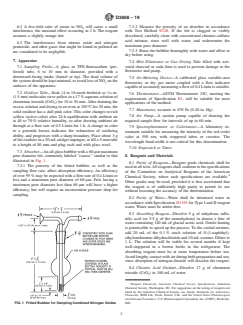
FIG. 1 Fritted Bubbler for Sampling Combined Nitrogen Oxides
D3608 − 19
7.5 Air-Metering Device—A calibrated glass variable-area flowmeter, or dry gas meter coupled with a flow indicator capable
of accurately measuring a flow of 0.4 L/min is suitable.
7.6 Thermometer—ASTM Thermometer 33C, meeting the requirements of Specification E1, will be suitable for most
applications of the method.
7.7 Manometer, accurate to 670 Pa (0.20 in. Hg].Hg).
7.8 Air Pump—A suction pump capable of drawing the required sample flow for intervals of up to 60 min.
7.9 Spectrophotometer or Colorimeter—A laboratory instrument suitable for measuring the intensity of the red-violet color at
550 nm, with stoppered tubes or cuvettes. The wavelength band-width is not critical for this determination.
7.10 Stopwatch or Timer.
8. Reagents and Materials
8.1 Purity of Reagents—Reagent grade chemicals shall be used in all tests. All reagents shall conform to the specifications of
the Committee on Analytical Reagents of the American Chemical Society, where such specifications are available. Other grades
may be used, provided it is first ascertained that the reagent is of sufficiently high purity to permit its use without lessening the
accuracy of the determination.
8.2 Purity of Water—Water shall be deionized water in accordance with Specification D1193 for Type I and II reagent water.
Water must be nitrite-free.
8.3 Absorbing Reagent—Dissolve 5 g of anhydrous sulfanilic acid (or 5.5 g of the monohydrate) in almost a litre of water
containing 140 mL of glacial acetic acid. Gentle heating is permissible to speed up the process. To the cooled mixture, add 20 mL
of the 0.1 % stock solution of N-(1-naphthyl)-ethylenediamine dihydrochloride and 10-mL acetone. Dilute to 1 L. The solution will
be stable for several months if kept well-stoppered in a brown bottle in the refrigerator. The absorbing reagent must be at room
temperature before use. Avoid lengthy contact with air during both preparation and use, since absorption of nitrogen dioxide will
discolor the reagent.
8.4 Chromic Acid Oxidant—Dissolve 17 g of chromium trioxide (CrO ) in 100 mL of water.
8.5 N-(1-Naphthyl)-Ethylenediamine Dihydrochloride, Stock Solution (0.1 %)—Dissolve 0.1 g of the reagent in 100 mL of
water. The solution will be stable for several months if kept well-stoppered in a brown bottle in the refrigerator. (Alternatively,
weighed small amounts of the solid reagent may be stored.)
8.6 Sodium Nitrite (NaNO ), Standard Solution (0.0246 g/L)—One mL of this working solution of NaNO produces a color
2 2
equivalent to that of 20 μg of NO in 1 L of air at 101 kPa (29.92 in. Hg]Hg) and 25°C (see 10.2.2). Prepare fresh just before use
by diluting from a stock solution containing 2.460 g/L of NaNO (calculated as 100 %). It is desirable to assay the solid reagent
(3). The stock solution is stable for 90 days at room temperatures, and for a year in a brown bottle under refrigeration.
8.7 NO Permeation Device—See Practice D3609.
9. Sampling
9.1 Sampling procedures are described in Section 11. Different combinations of sampling rates and time may be chosen to meet
special needs, but sample volumes and air flow rates must be adjusted so that linearity is maintained between absorbance and
concentration over the dynamic range.
9.2 See PracticesPractice D1357 for sampling guidelines.
10. Calibration and Standardization
10.1 Sampling Equipment—If a flowmeter is used to measure sample air, calibrate it prior to use using Practice D3195. If a gas
meter is used, calibrate it prior to use in accordance with Test MethodMethods D1071.
10.2 Analysis:
10.2.1 Recommended Procedure:
10.2.1.1 Calibrated permeation tubes that contain liquefied NO can be used to prepare standard concentrations of NO in air
2 2
(4). See Practice D3609 for details. Analyses of these known concentrations give calibration curves that simulate all the operational
conditions performed during the sampling and chemical procedures. This calibration curve includes the important correction for
collection efficiency at various concentrations of NO .
10.2.1.2 Prepare or obtain a TFE-fluorocarbon permeation tube that emits NO at a rate of 0.1 to 0.2 μg/min (0.05 to 0.1μ L/min
at standard conditions of 25°C and 101.3 kPa (29.92 in. Hg].Hg). Calibrate permeation tubes under a stream of dry nitrogen, using
Practice D3609.
Reagent Chemicals, American Chemical Society Specifications, American Chemical Society, Washington, DC. For suggestions on the testing of reagents not listed by
the American Chemical Society, see Analar Standards for Laboratory Chemicals, BDH Ltd., Poole, Dorset, U.K., and the United States Pharmacopeia and National
For
...