

ASTM F2951-19
(Specification)Standard Consumer Safety Specification for Baby Monitors
General Information
- Abstract
ABSTRACT
This consumer safety specification addresses incidents associated with corded baby monitors that were identified by the U.S. Consumer Product Safety Commission (CPSC), including strangulations as a result of entanglement in cords. It establishes requirements for corded baby monitors, including audio monitors, video monitors, and motion sensor monitors. It also provides requirements for labeling, instructional material and packaging, and is intended to minimize injuries to children resulting from normal usage and reasonably foreseeable misuse or abuse of baby monitors. This specification also addresses calibration and standardization, general requirements, test methods, product marking and labeling, and instructional literature.
SCOPE
1.1 This consumer safety specification establishes requirements for corded baby monitors, including audio monitors, video monitors, and motion sensor monitors. It also provides requirements for labeling, instructional material and packaging.
1.1.1 This consumer safety specification is intended to minimize injuries to children resulting from normal usage and reasonably foreseeable misuse or abuse of baby monitors.
1.2 No product produced after the approval date of this consumer safety specification shall, either by label or other means, indicate compliance with this specification unless it conforms to all applicable requirements contained herein, before and after all testing.
1.3 Units—The values stated in inch-pound units are to be regarded as standard. The values given in parentheses are mathematical conversions to SI units that are provided for information only and are not considered standard.
1.4 This standard does not purport to address all of the safety concerns, if any, associated with its use. It is the responsibility of the user of this standard to establish appropriate safety, health, and environmental practices and determine the applicability of regulatory limitations prior to use.
1.5 This international standard was developed in accordance with internationally recognized principles on standardization established in the Decision on Principles for the Development of International Standards, Guides and Recommendations issued by the World Trade Organization Technical Barriers to Trade (TBT) Committee.
- Status
- Published
- Publication Date
- 31-Jul-2019
- Technical Committee
- F15 - Consumer Products
- Drafting Committee
- F15.68 - Baby Monitors
Overview
ASTM F2951-19: Standard Consumer Safety Specification for Baby Monitors is a vital international standard developed by ASTM International to address the safety of corded baby monitors. The specification focuses on minimizing injuries, including strangulation hazards associated with the cords of baby monitors such as audio, video, and motion sensor models. The standard sets out comprehensive requirements for product design, labeling, instructions, and packaging, ensuring safer usage for infants and young children.
This standard was established in response to safety incidents reported by the U.S. Consumer Product Safety Commission (CPSC), primarily involving entanglement in monitor cords. ASTM F2951-19 not only covers safety requirements for the physical monitor units but also mandates preventive labeling and clear instructions for the end-user. By adopting these guidelines, manufacturers and sellers can demonstrate commitment to consumer safety and product compliance.
Key Topics
Cord Safety & Accessibility
- Requirements to prevent accessible cords within 3 feet (0.9 m) of a crib.
- Mandates for rigid protective coverings on cords or alternative designs to eliminate accessible cords.
- Test methods for measuring cord accessibility using specialized probes.
Warning Labels & Markings
- Permanent, conspicuous warning labels on products and packaging.
- Standardized warning statements and pictograms addressing strangulation hazards.
- Label placement requirements on cords and protective coverings.
Instructional Materials
- Clear operating and safety instructions for assembly, use, cleaning, and maintenance.
- Warnings included in user manuals that mirror the on-product cautions.
Product Construction & Materials
- Prohibition of hazardous sharp points, sharp edges, and flammable solids.
- Surface coating and paint requirements in line with federal safety regulations.
Battery Safety
- Requirements for battery-powered baby monitors referencing additional international standards for equipment safety.
Testing & Standardization
- Calibration, preconditioning, and test procedures for product evaluation.
- Mechanical tests for cord protective covers and label adherence.
Applications
ASTM F2951-19 is directly applicable to:
- Producers, designers, and brands manufacturing corded baby monitors for the global market.
- Retailers and distributors responsible for sourcing or selling compliant baby monitors.
- Testing laboratories performing safety evaluations for consumer electronics.
- Regulatory bodies overseeing consumer product safety and certification.
By following this standard, manufacturers can:
- Reduce the risk of strangulation injuries by ensuring cords are inaccessible or well-protected.
- Inform caregivers and end-users through effective warnings and pictograms to help prevent accidental misuse.
- Enhance the credibility and marketability of baby monitors through adherence to recognized consumer safety standards.
- Remain compliant with both national and international consumer product safety laws and best practices.
Related Standards
To support comprehensive product safety and compliance, ASTM F2951-19 references and aligns with several important standards, including:
- ASTM D3359 - Methods for adhesion testing, relevant for label permanency.
- ASTM F963 - Standard Consumer Safety Specification for Toy Safety, particularly for accessory components.
- 16 CFR 1303 - U.S. federal regulations on lead content in paints and surface coatings.
- 16 CFR 1500 - Federal requirements for hazardous substances, sharp points, and use-and-abuse simulation.
- ANSI/UL 62368-1 - Safety requirements for audio/video and communication technology equipment, addressing battery safety.
By integrating these guidelines, ASTM F2951-19 provides a robust framework that assists manufacturers in producing safer baby monitors, helping to prevent injuries and enhancing consumer confidence in juvenile product safety.
Keywords: baby monitor safety, corded baby monitors, ASTM F2951, consumer product safety, strangulation hazard, product labeling, accessory testing, instructional literature, electronics safety compliance
Relations
- Effective Date
- 01-Aug-2019
- Effective Date
- 01-Aug-2023
- Effective Date
- 01-Aug-2016
- Effective Date
- 01-Dec-2011
- Effective Date
- 01-Jun-2009
- Effective Date
- 01-Dec-2008
- Effective Date
- 01-Nov-2007
- Effective Date
- 15-Mar-2007
- Effective Date
- 01-Oct-2003
- Effective Date
- 10-Aug-2002
- Effective Date
- 10-Nov-1996
- Effective Date
- 10-Nov-1996
- Effective Date
- 10-Nov-1996
Frequently Asked Questions
ASTM F2951-19 is a technical specification published by ASTM International. Its full title is "Standard Consumer Safety Specification for Baby Monitors". This standard covers: ABSTRACT This consumer safety specification addresses incidents associated with corded baby monitors that were identified by the U.S. Consumer Product Safety Commission (CPSC), including strangulations as a result of entanglement in cords. It establishes requirements for corded baby monitors, including audio monitors, video monitors, and motion sensor monitors. It also provides requirements for labeling, instructional material and packaging, and is intended to minimize injuries to children resulting from normal usage and reasonably foreseeable misuse or abuse of baby monitors. This specification also addresses calibration and standardization, general requirements, test methods, product marking and labeling, and instructional literature. SCOPE 1.1 This consumer safety specification establishes requirements for corded baby monitors, including audio monitors, video monitors, and motion sensor monitors. It also provides requirements for labeling, instructional material and packaging. 1.1.1 This consumer safety specification is intended to minimize injuries to children resulting from normal usage and reasonably foreseeable misuse or abuse of baby monitors. 1.2 No product produced after the approval date of this consumer safety specification shall, either by label or other means, indicate compliance with this specification unless it conforms to all applicable requirements contained herein, before and after all testing. 1.3 Units—The values stated in inch-pound units are to be regarded as standard. The values given in parentheses are mathematical conversions to SI units that are provided for information only and are not considered standard. 1.4 This standard does not purport to address all of the safety concerns, if any, associated with its use. It is the responsibility of the user of this standard to establish appropriate safety, health, and environmental practices and determine the applicability of regulatory limitations prior to use. 1.5 This international standard was developed in accordance with internationally recognized principles on standardization established in the Decision on Principles for the Development of International Standards, Guides and Recommendations issued by the World Trade Organization Technical Barriers to Trade (TBT) Committee.
ABSTRACT This consumer safety specification addresses incidents associated with corded baby monitors that were identified by the U.S. Consumer Product Safety Commission (CPSC), including strangulations as a result of entanglement in cords. It establishes requirements for corded baby monitors, including audio monitors, video monitors, and motion sensor monitors. It also provides requirements for labeling, instructional material and packaging, and is intended to minimize injuries to children resulting from normal usage and reasonably foreseeable misuse or abuse of baby monitors. This specification also addresses calibration and standardization, general requirements, test methods, product marking and labeling, and instructional literature. SCOPE 1.1 This consumer safety specification establishes requirements for corded baby monitors, including audio monitors, video monitors, and motion sensor monitors. It also provides requirements for labeling, instructional material and packaging. 1.1.1 This consumer safety specification is intended to minimize injuries to children resulting from normal usage and reasonably foreseeable misuse or abuse of baby monitors. 1.2 No product produced after the approval date of this consumer safety specification shall, either by label or other means, indicate compliance with this specification unless it conforms to all applicable requirements contained herein, before and after all testing. 1.3 Units—The values stated in inch-pound units are to be regarded as standard. The values given in parentheses are mathematical conversions to SI units that are provided for information only and are not considered standard. 1.4 This standard does not purport to address all of the safety concerns, if any, associated with its use. It is the responsibility of the user of this standard to establish appropriate safety, health, and environmental practices and determine the applicability of regulatory limitations prior to use. 1.5 This international standard was developed in accordance with internationally recognized principles on standardization established in the Decision on Principles for the Development of International Standards, Guides and Recommendations issued by the World Trade Organization Technical Barriers to Trade (TBT) Committee.
ASTM F2951-19 is classified under the following ICS (International Classification for Standards) categories: 97.190 - Equipment for children. The ICS classification helps identify the subject area and facilitates finding related standards.
ASTM F2951-19 has the following relationships with other standards: It is inter standard links to ASTM F2951-18, ASTM F963-23, ASTM F963-16, ASTM F963-11, ASTM D3359-09e1, ASTM F963-08, ASTM D3359-07, ASTM F963-07e1, ASTM F963-03, ASTM D3359-02, ASTM F963-96ae2, ASTM F963-96a, ASTM F963-96ae1. Understanding these relationships helps ensure you are using the most current and applicable version of the standard.
ASTM F2951-19 is available in PDF format for immediate download after purchase. The document can be added to your cart and obtained through the secure checkout process. Digital delivery ensures instant access to the complete standard document.
Standards Content (Sample)
This international standard was developed in accordance with internationally recognized principles on standardization established in the Decision on Principles for the
Development of International Standards, Guides and Recommendations issued by the World Trade Organization Technical Barriers to Trade (TBT) Committee.
Designation:F2951 −19
Standard Consumer Safety Specification for
Baby Monitors
This standard is issued under the fixed designation F2951; the number immediately following the designation indicates the year of
original adoption or, in the case of revision, the year of last revision. A number in parentheses indicates the year of last reapproval. A
superscript epsilon (´) indicates an editorial change since the last revision or reapproval.
INTRODUCTION
This consumer safety specification addresses incidents associated with corded baby monitors that
were identified by the U.S. Consumer Product Safety Commission (CPSC).
Incidents identified by the CPSC and addressed in this consumer safety specification include
strangulations as a result of entanglement in cords.
This consumer safety specification is not intended to address corded monitors that are either
blatantly misused or abused. This consumer safety specification is written within current state-of-the-
art technology and is intended to be updated if substantive information becomes available that
necessitates additional requirements or justifies revision of existing requirements.
1. Scope ization established in the Decision on Principles for the
Development of International Standards, Guides and Recom-
1.1 This consumer safety specification establishes require-
mendations issued by the World Trade Organization Technical
ments for corded baby monitors, including audio monitors,
Barriers to Trade (TBT) Committee.
video monitors, and motion sensor monitors. It also provides
requirements for labeling, instructional material and packag-
2. Referenced Documents
ing.
1.1.1 This consumer safety specification is intended to 2
2.1 ASTM Standards:
minimize injuries to children resulting from normal usage and
D3359 Test Methods for Rating Adhesion by Tape Test
reasonably foreseeable misuse or abuse of baby monitors.
F963 Consumer Safety Specification for Toy Safety
1.2 No product produced after the approval date of this 3
2.2 Federal Standards:
consumer safety specification shall, either by label or other
16 CFR 1303 Ban of Lead-Containing Paint and Certain
means, indicate compliance with this specification unless it
Consumer Products Bearing Lead-Containing Paint
conforms to all applicable requirements contained herein,
16CFR1500 HazardousSubstancesActRegulationsinclud-
before and after all testing.
ing sections: 1500.3 (c) (6) (vi) Definition of “Flammable
1.3 Units—The values stated in inch-pound units are to be
Solid”
regarded as standard. The values given in parentheses are
1500.48 Technical Requirements for Determining a Sharp
mathematical conversions to SI units that are provided for
Point In Toys and Other Articles Intended for Use By
information only and are not considered standard.
Children Under Eight Years of Age
1500.49 Technical Requirements for Determining a Sharp
1.4 This standard does not purport to address all of the
MetalorGlassEdgeinToysorOtherArticlesIntendedfor
safety concerns, if any, associated with its use. It is the
Use by Children Under Eight Years of Age
responsibility of the user of this standard to establish appro-
priate safety, health, and environmental practices and deter- 1500.53 TestMethodsforSimulatingUseandAbuseofToys
mine the applicability of regulatory limitations prior to use. and Other Articles Intended for Use by Children Over 36
1.5 This international standard was developed in accor- but Not Over 96 Months of Age
dance with internationally recognized principles on standard-
For referenced ASTM standards, visit the ASTM website, www.astm.org, or
This specification is under the jurisdiction of ASTM Committee F15 on contact ASTM Customer Service at service@astm.org. For Annual Book of ASTM
Consumer Products and is the direct responsibility of Subcommittee F15.68 on Standards volume information, refer to the standard’s Document Summary page on
Baby Monitors. the ASTM website.
Current edition approved Aug. 1, 2019. Published September 2019. Originally AvailablefromU.S.GovernmentPrintingOfficeSuperintendentofDocuments,
approved in 2012. Last previous edition approved in 2018 as F2951 – 18. DOI: 732 N. Capitol St., NW, Mail Stop: SDE, Washington, DC 20401, http://
10.1520/F2951-19. www.access.gpo.gov.
Copyright © ASTM International, 100 Barr Harbor Drive, PO Box C700, West Conshohocken, PA 19428-2959. United States
F2951−19
2.3 ANSI/UL Standard: at least 1 h before testing. Testing shall then be conducted
ANSI/UL 62368-1 Audio/video, information and communi- within this temperature range.
cation technology equipment – Part 1: Safety require-
4.3 All testing required by this specification shall be con-
ments
ducted on the same unit.
3. Terminology
5. General Requirements
3.1 Definitions of Terms Specific to This Standard:
5.1 There shall be no hazardous sharp points or edges as
3.1.1 accessible, adj—describes any portion of cord that,
defined by 16 CFR 1500.48 and 16 CFR 1500.49 before or
afterperformingtesting,isexposedwithin36in.(91cm)ofthe
after testing to this consumer safety specification.
crib and can be contacted by any portion forward of the collar
5.2 Corded Monitors:
of the accessibility probe as described in 16 CFR 1500.48 and
5.2.1 Cords of corded monitors intended to be attached to a
16 CFR 1500.49.
crib or used within 36 in. (91 cm) of a crib shall have a
EXCEPTION: For units that are secured to a crib and the
protective covering that complies with either 5.2.1.1 or 5.2.1.2.
cord extends downward to the floor, the cord is considered
5.2.1.1 Continuous Protective Covering—When installed
accessible if it can be exposed within 20 in. (51 cm) in any
according to the manufacturer’s instructions, the entire length
direction from the top of the crib mattress.
of cord protected by the protective covering shall remain
3.1.1.1 Discussion—Cords protected by protective covering
inaccessible when tested to 6.1.
are considered inaccessible.
5.2.1.2 Non-continuous Protective Covering—When in-
3.1.2 conspicuous, adj—describes a label that is visible
stalled according to the manufacturer’s instructions, if the
whentheunitisinamanufacturer’srecommendeduseposition
product includes a portion of accessible cord between separate
to a person standing near the unit at any one position around
sections of protective covering, any bounded opening formed
the unit but not necessarily visible from all positions.
between the cord and any other surface(s) shall not permit the
3.1.3 cord, n—ExternalPowerSupply(ACadapter)orother passage of the Small Head Test Probe (Fig. 1) after testing to
electrical cords which are connected to the monitor. 6.1 and 6.4.
3.1.3.1 Discussion—Additionally, any non-electrical cords
5.2.2 All protective covering provided by the manufacturer
such as a length of slender, flexible material including shall be shipped assembled and attached to the cord or shall be
monofilaments, woven and twisted cord, rope, plastic textile
designed such that the monitor cannot be attached to a crib rail
tapes, ribbon, and those fibrous materials commonly called or crib slat without the use of the protective covering.
string.
5.3 The paint and surface coating on the product shall
3.1.4 corded monitor, n—monitor that uses a cord or one
comply with 16 CFR 1303.
that has an option to use a cord.
5.4 Thereshallbenoflammablesolidsasdefinedin16CFR
3.1.5 manufacturer’s recommended use position, n—any
1500.3 (c) (6) (vi) after testing in accordance with this
position that is presented by the manufacturer in any descrip-
specification.
tive or instructional literature as a normal, allowable, or
5.5 Warning Labels:
acceptable configuration for use of the product.
5.5.1 Warning labels (whether paper or nonpaper) shall be
3.1.5.1 Discussion—This specifically excludes positions
permanent when tested in accordance with 6.2.
that the manufacturer shows in a like manner in its literature to
be unacceptable, unsafe, or not recommended.
3.1.6 nonpaper label, n—any label material (such as plastic
or metal) that either will not tear without the aid of tools or
tearsleavingasharplydefinededgeorlabelsmadefromfabric.
3.1.7 paper label, n—any label material that tears without
the aid of tools and leaves a fibrous edge.
3.1.8 protective covering, n—a rigid material that encloses a
cord, such as an encasement, shield, or other means to prevent
the cord from being touched.
4. Calibration and Standardization
4.1 The unit shall be completely assembled, unless other-
wise noted, in accordance with the manufacturer’s instructions.
4.2 The product to be tested shall be preconditioned in a
room with an ambient temperature of 73 6 9°F (23 6 5°C) for
NOTE 1—Dimensions are based on a 5th percentile 3-month-old child.
Gauge may be modified to facilitate testing to allow for pulling of the
gauge.
Available from Underwriters Laboratories (UL), 2600 N.W. Lake Rd., Camas,
WA 98607-8542, http://www.ul.com. FIG. 1Head Probe for Cords and Elastics
F2951−19
5.5.2 Warning statements applied directly onto the surface (111 N), allowing the cord enough flexure to conform to the
of the product by hot stamping, heat transfer, printing, wood probe. Apply the force perpendicular to the base of the probe
burning, or other means shall be permanent when tested in within a period of 5 s and maintain it for an additional 10 s.
accordance with 6.2.
7. Product Marking and Labeling
5.6 Toy accessories included with baby monitors shall meet
7.1 Labeling:
applicable requirements of Consumer Safety Specification
7.1.1 Each product and its retail package shall be marked or
F963 and shall not be attached to the baby monitor.
labeled clearly and legibly to indicate the following:
5.7 Battery powered baby monitors shall comply with the
7.1.1.1 The name of the manufacturer, distributor, or seller
requirements inAnnex M, Equipment containing batteries and
and either the place of business (city, state, and mailing
their protection circuits, ANSI/UL 62368-1, Audio/video, in-
address, including zip code) or telephone number or both.
formation and communication technology equipment – Part 1:
7.1.1.2 A code mark or other means that identifies the date
Safety requirements.
(month and year as a minimum) of manufacture.
7.1.2 The markings on the product shall be permanent.
NOTE 1—Complete baby monitor systems that comply with ANSI/UL
7.1.3 The warning statements on the product and retail
62368-1 are considered to comply with this requirement.
package shall be in contrasting color(s), permanent, and sans
6. Test Methods
serif style font.
6.1 When in the manufacturer’s recommended use position,
7.1.4 Photographs on the product, retail package, or instruc-
the protective covering shall be tested per 16 CFR 1500.53 to tions of monitors that are not intended to be attached to a crib
both a 4 in.-lb (4.6 kg-cm) torque test and a 15-lb (7-kg)
shall support the fact that the transmitter (camera or micro-
tension test to any attachment point in a direction normally phone or both) and cord shall be mounted out of the reach of
associated with detachment.
children. No image shall imply that a corded transmitter
(camera or microphone or both) may be mounted on the crib or
6.2 Permanency of Warning Labels:
placed in the crib.
6.2.1 A paper label (excluding labels attached by a seam)
shall be considered permanent if, during an attempt to remove 7.2 Warning Statements—For products not intended to be
it without the aid of tools or solvents, it cannot be removed, it
attached to a crib, each product’s transmi
...
This document is not an ASTM standard and is intended only to provide the user of an ASTM standard an indication of what changes have been made to the previous version. Because
it may not be technically possible to adequately depict all changes accurately, ASTM recommends that users consult prior editions as appropriate. In all cases only the current version
of the standard as published by ASTM is to be considered the official document.
Designation: F2951 − 18 F2951 − 19
Standard Consumer Safety Specification for
Baby Monitors
This standard is issued under the fixed designation F2951; the number immediately following the designation indicates the year of
original adoption or, in the case of revision, the year of last revision. A number in parentheses indicates the year of last reapproval. A
superscript epsilon (´) indicates an editorial change since the last revision or reapproval.
INTRODUCTION
This consumer safety specification addresses incidents associated with corded baby monitors that
were identified by the U.S. Consumer Product Safety Commission (CPSC).
Incidents identified by the CPSC and addressed in this consumer safety specification include
strangulations as a result of entanglement in cords.
This consumer safety specification is not intended to address corded monitors that are either
blatantly misused or abused. This consumer safety specification is written within current state-of-the-
art technology and is intended to be updated if substantive information becomes available that
necessitates additional requirements or justifies revision of existing requirements.
1. Scope
1.1 This consumer safety specification establishes requirements for corded baby monitors, including audio monitors, video
monitors, and motion sensor monitors. It also provides requirements for labeling, instructional material and packaging.
1.1.1 This consumer safety specification is intended to minimize injuries to children resulting from normal usage and reasonably
foreseeable misuse or abuse of baby monitors.
1.2 No product produced after the approval date of this consumer safety specification shall, either by label or other means,
indicate compliance with this specification unless it conforms to all applicable requirements contained herein, before and after all
testing.
1.3 Units—The values stated in inch-pound units are to be regarded as standard. The values given in parentheses are
mathematical conversions to SI units that are provided for information only and are not considered standard.
1.4 This standard does not purport to address all of the safety concerns, if any, associated with its use. It is the responsibility
of the user of this standard to establish appropriate safety, health, and environmental practices and determine the applicability of
regulatory limitations prior to use.
1.5 This international standard was developed in accordance with internationally recognized principles on standardization
established in the Decision on Principles for the Development of International Standards, Guides and Recommendations issued
by the World Trade Organization Technical Barriers to Trade (TBT) Committee.
2. Referenced Documents
2.1 ASTM Standards:
D3359 Test Methods for Rating Adhesion by Tape Test
F963 Consumer Safety Specification for Toy Safety
2.2 Federal Standards:
16 CFR 1303 Ban of Lead-Containing Paint and Certain Consumer Products Bearing Lead-Containing Paint
16 CFR 1500 Hazardous Substances Act Regulations including sections: 1500.3 (c) (6) (vi) Definition of “Flammable Solid”
This specification is under the jurisdiction of ASTM Committee F15 on Consumer Products and is the direct responsibility of Subcommittee F15.68 on Baby Monitors.
Current edition approved July 1, 2018Aug. 1, 2019. Published July 2018September 2019. Originally approved in 2012. Last previous edition approved in 20132018 as
F2951 – 13.F2951 – 18. DOI: 10.1520/F2951-18.10.1520/F2951-19.
For referenced ASTM standards, visit the ASTM website, www.astm.org, or contact ASTM Customer Service at service@astm.org. For Annual Book of ASTM Standards
volume information, refer to the standard’s Document Summary page on the ASTM website.
Available from U.S. Government Printing Office Superintendent of Documents, 732 N. Capitol St., NW, Mail Stop: SDE, Washington, DC 20401, http://
www.access.gpo.gov.
Copyright © ASTM International, 100 Barr Harbor Drive, PO Box C700, West Conshohocken, PA 19428-2959. United States
F2951 − 19
1500.48 Technical Requirements for Determining a Sharp Point In Toys and Other Articles Intended for Use By Children Under
Eight Years of Age
1500.49 Technical Requirements for Determining a Sharp Metal or Glass Edge in Toys or Other Articles Intended for Use by
Children Under Eight Years of Age
1500.53 Test Methods for Simulating Use and Abuse of Toys and Other Articles Intended for Use by Children Over 36 but Not
Over 96 Months of Age
2.3 ANSI/UL Standard:
ANSI/UL 62368-1 Audio/video, information and communication technology equipment – Part 1: Safety requirements
3. Terminology
3.1 Definitions of Terms Specific to This Standard:
3.1.1 accessible, adj—describes any portion of cord that, after performing testing, is exposed within 36 in. (91 cm) of the crib
and can be contacted by any portion forward of the collar of the accessibility probe as described in 16 CFR 1500.48 and 16 CFR
1500.49.
EXCEPTION: For units that are secured to a crib and the cord extends downward to the floor, the cord is considered accessible
if it can be exposed within 20 in. (51 cm) in any direction from the top of the crib mattress.
3.1.1.1 Discussion—
Cords protected by protective covering are considered inaccessible.
3.1.2 conspicuous, adj—describes a label that is visible when the unit is in a manufacturer’s recommended use position to a
person standing near the unit at any one position around the unit but not necessarily visible from all positions.
3.1.3 cord, n—External Power Supply (AC adapter) or other electrical cords which are connected to the monitor.
3.1.3.1 Discussion—
Additionally, any non-electrical cords such as a length of slender, flexible material including monofilaments, woven and twisted
cord, rope, plastic textile tapes, ribbon, and those fibrous materials commonly called string.
3.1.4 corded monitor, n—monitor that uses a cord or one that has an option to use a cord.
3.1.5 manufacturer’s recommended use position, n—any position that is presented by the manufacturer in any descriptive or
instructional literature as a normal, allowable, or acceptable configuration for use of the product.
3.1.5.1 Discussion—
This specifically excludes positions that the manufacturer shows in a like manner in its literature to be unacceptable, unsafe, or
not recommended.
3.1.6 nonpaper label, n—any label material (such as plastic or metal) that either will not tear without the aid of tools or tears
leaving a sharply defined edge or labels made from fabric.
3.1.6 occupant retention area, n—any area designated by the manufacturer as being the recommended area for the occupant of
the product.
3.1.7 paper label, n—any label material that tears without the aid of tools and leaves a fibrous edge.
3.1.8 protective covering, n—rigid shielding, rigid encasement, a rigid material that encloses a cord, such as an encasement,
shield, or other means of enclosing a cord.to prevent the cord from being touched.
4. Calibration and Standardization
4.1 The unit shall be completely assembled, unless otherwise noted, in accordance with the manufacturer’s instructions.
4.2 The product to be tested shall be preconditioned in a room with an ambient temperature of 73 6 9°F (23 6 5°C) for at least
1 h before testing. Testing shall then be conducted within this temperature range.
4.3 All testing required by this specification shall be conducted on the same unit.
5. General Requirements
5.1 There shall be no hazardous sharp points or edges as defined by 16 CFR 1500.48 and 16 CFR 1500.49 before or after testing
to this consumer safety specification.
Available from Underwriters Laboratories (UL), 2600 N.W. Lake Rd., Camas, WA 98607-8542, http://www.ul.com.
F2951 − 19
5.2 Corded monitors shall provide warnings to instruct consumers not to place a baby monitor cord where it is accessible to a
child, or, if intended to be attached to a crib or used within 3 ft (0.9 m) of a crib, shall have cords that are encased in a rigid
protective covering to prevent access to a cord that could cause a strangulation hazard.Corded Monitors:
5.2.1 Corded monitors not Cords of corded monitors intended to be attached to a crib shall have warning labels as defined in
or used within 36 in. (91 cm) of a crib shall have a protective covering that complies with either 7.25.2.1.1 or 5.2.1.2.
5.2.1.1 Continuous Protective Covering—When installed according to the manufacturer’s instructions, the entire length of cord
protected by the protective covering shall remain inaccessible when tested to 6.1.
5.2.1.2 Non-continuous Protective Covering—When installed according to the manufacturer’s instructions, if the product
includes a portion of accessible cord between separate sections of protective covering, any bounded opening formed between the
cord and any other surface(s) shall not permit the passage of the Small Head Test Probe (Fig. 1) after testing to 6.1 and 6.4.
5.2.2 Corded monitors intended to be All protective covering provided by the manufacturer shall be shipped assembled and
attached to the cord or shall be designed such that the monitor cannot be attached to a crib or used within 3 ft (0.9 m) of a crib
shall have cords that are inaccessible to the occupant by rigid encasement, shielding, or other means. When installed according
to the manufacturer’s instructions, cords shall remain inaccessible when tested to rail or crib slat without the use 6.1. Cords are
considered accessible if, after performing these tests, any portion of the cord is exposed within 36 in. (91 cm) to the occupant
retention area and can be contacted by any portion forward of the collar of the accessibility probe as described in 16 CFR 1500.48
and 16 CFR 1500.49. EXCEPTION: For units that are secured to a crib and the shield/enclosure extends downward to the floor,
the cord is considered accessible if it can be exposed within 20 in. (51 cm) from the top of the mattress in the occupant retention
area.of the protective covering.
5.2.2.1 A protective covering provided by the manufacturer shall come assembled and attached to the cord or shall be designed
such that the monitor cannot be attached to a crib rail or crib slat without the use of the protective covering over the cord. The
protective covering shall comply with the requirement of 5.2.2 for accessibility.
5.3 The paint and surface coating on the product shall comply with 16 CFR 1303.
5.4 There shall be no flammable solids as defined in 16 CFR 1500.3 (c) (6) (vi) after testing in accordance with this
specification.
5.5 Warning Labels:
5.5.1 Warning labels (whether paper or nonpaper) shall be permanent when tested in accordance with 6.2.
5.5.2 Warning statements applied directly onto the surface of the product by hot stamping, heat transfer, printing, wood burning,
or other means shall be permanent when tested in accordance with 6.2.
5.6 Toy accessories included with baby monitors shall meet applicable requirements of Consumer Safety Specification F963 and
shall not be attached to the baby monitor.
5.7 Battery powered baby monitors shall comply with the requirements in Annex M, Equipment containing batteries and their
protection circuits, ANSI/UL 62368-1, Audio/video, information and communication technology equipment – Part 1: Safety
requirements.
NOTE 1—Complete baby monitor systems that comply with ANSI/UL 62368-1 are considered to comply with this requirement.
NOTE 1—Dimensions are based on a 5th percentile 3-month-old child. Gauge may be modified to facilitate testing to allow for pulling of the gauge.
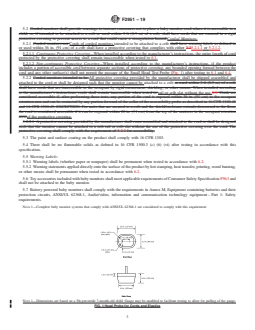
FIG. 1 Head Probe for Cords and Elastics
F2951 − 19
6. Test Methods
6.1 When in the manufacturer’s recommended use position, rigid shielding, rigid encasements, or other means of enclosing a
cord intended to prevent accessibility to the cord the protective covering shall be tested per 16 CFR 1500.53 to both a 4 in.-lb (4.6
kg-cm) torque test and a 15-lb (7-kg) tension test to any attachment point in a direction normally associated with detachment.
6.2 Permanency of Warning Labels:
6.2.1 A paper label (excluding labels attached by a seam) shall be considered permanent if, during an attempt to remove it
without the aid of tools or solvents, it cannot be removed, it tears into pieces upon removal, or such action damages the surface
to which it is attached.
6.2.2 A nonpaper label (excluding labels attached by a seam) shall be considered permanent if, during an attempt to remove it
without the aid of tools or solvents, it cannot be removed or such action damages the surface to which it is attached.
6.2.3 A warning label affixed to a cord shall be considered permanent if it does not completely detach when subjected to a 10-lbf
(45-N) pull force applied in any direction most likely to cause failure using a ⁄4-in. (19-mm) diameter clamp surface. Gradually,
apply the forc
...