

ASTM D8480-23
(Test Method)Standard Test Method for Determining the Tensile Strength of GCCM Materials
General Information
- Abstract
SIGNIFICANCE AND USE
4.1 This test method is applicable for testing GCCMs in the cured state. This determines the initial and final breaking load to determine the initial and final tensile strength of the GCCM. It is used with a constant rate of extension type tensile testing machine.
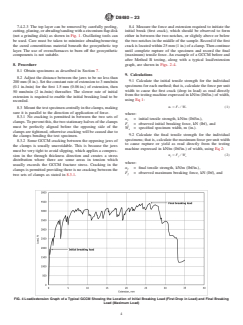
4.2 GCCMs are composites, and the cured cementitious material typically has a lower tensile strength to the geosynthetic layer(s). When testing the tensile strength of a cured GCCM, multiple cracks will typically form in the cementitious material, transferring loads to the reinforcing fibers (or linking elements) before the ultimate tensile strength of the GCCM is reached. In certain applications, engineers need to know the initial tensile strength of the GCCM, which is when the cementitious material first breaks and the material’s rigidity is reduced, not just the final tensile strength (ultimate strength), which is governed primarily by the geosynthetic layer(s).
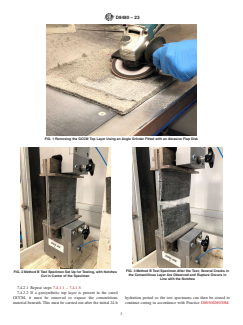
4.3 In service, the top layer of geosynthetic in a GCCM is particularly exposed to degradation from UV exposure and abrasion, especially in erosion control applications such as for channel lining with high levels of sedimentation in water flow. It is important that reported values take account of the effects of environmental degradation where this has a significant effect on in-service performance. It is therefore also necessary to test the initial and final tensile strength of the GCCM when the top layer has been removed to provide an indication of long-term GCCM tensile performance.
SCOPE
1.1 The purpose of the proposed test method is to determine the tensile strength of cured/hydrated GCCM materials to include reporting the initial tensile strength (first crack in the cementitious layer) and final tensile strength for GCCMs as supplied and in a weathered state with the geosynthetic top layer(s) removed.
1.2 As a performance test, this method will be used relatively infrequently and to test large lots of material. This test is not intended for routine quality control testing of GCCMs.
1.3 The values in SI units are to be regarded as the standard. Values in inch-pound units are in parentheses for information.
1.4 This standard does not purport to address all of the safety concerns, if any, associated with its use. It is the responsibility of the user of this standard to establish appropriate safety, health, and environmental practices and determine the applicability of regulatory limitations prior to use.
1.5 This international standard was developed in accordance with internationally recognized principles on standardization established in the Decision on Principles for the Development of International Standards, Guides and Recommendations issued by the World Trade Organization Technical Barriers to Trade (TBT) Committee.
- Status
- Published
- Publication Date
- 30-Sep-2023
- Technical Committee
- D35 - Geosynthetics
- Drafting Committee
- D35.05 - Geosynthetic Erosion Control
Overview
ASTM D8480-23: Standard Test Method for Determining the Tensile Strength of GCCM Materials specifies procedures for measuring the tensile strength of geosynthetic cementitious composite mat (GCCM) materials in the cured state. This method allows for assessment of both the initial tensile strength (at the first crack in the cementitious layer) and final tensile strength (maximum tensile load before failure), reflecting real-world performance, including weathering effects.
This testing procedure is essential for performance evaluation and specification conformance of GCCMs, commonly used in civil engineering and environmental protection applications, including erosion control, channel lining, and infrastructure projects.
Key Topics
- Cured GCCM Testing: Focuses on materials that have completed hydration, representing actual use conditions in the field.
- Initial vs. Final Tensile Strength:
- Initial tensile strength: The load required to cause the first crack in the cementitious layer, indicating the loss of initial rigidity.
- Final tensile strength: The load at which the geosynthetic layer governs ultimate failure, accounting for material reinforcement.
- Weathering and Degradation: Evaluates tensile performance with and without the geosynthetic top layer, considering degradation due to UV exposure and abrasion during service life.
- Sampling and Test Preparation: Specifies methods for specimen selection, preparation, and directionality (machine/cross-machine), ensuring representative and consistent testing.
- Testing Apparatus and Procedure: Requires a constant rate of extension tensile testing machine and standardized conditions for accurate, repeatable results.
- Reporting Requirements: Mandates detailed test reporting for traceability, including sample identification, testing methods, measured values, and any deviations.
Applications
ASTM D8480-23 provides a robust framework for:
- Performance Testing of GCCMs: Used primarily for large lots or certification testing, rather than routine quality control.
- Design and Specification: Supplies engineers and specifiers with critical data on initial and long-term tensile performance, guiding material selection for projects exposed to environmental stressors.
- Erosion Control and Channel Lining: Ensures that GCCMs meet mechanical property requirements for applications such as water channel linings, where abrasion and UV exposure can degrade performance.
- Quality Assurance and Specification Conformance: Enables manufacturers and purchasers to verify that GCCMs conform to relevant physical property standards.
- Research and Product Development: Assists manufacturers in optimizing composite formulations to achieve targeted performance in various service environments.
Related Standards
ASTM D8480-23 references several complementary standards for geosynthetics and composite materials, enhancing consistency and interoperability in test methodology and terminology:
- ASTM D76/D76M: Specification for tensile testing machines used in textile and geosynthetic testing
- ASTM D4354: Practice for sampling geosynthetics and rolled erosion control products
- ASTM D4439: Terminology for geosynthetics
- ASTM D8030/D8030M: Practice for sample preparation of GCCMs
- ASTM D8364/D8364M: Specification for geosynthetic cementitious composite mat materials
These related documents provide additional guidance on equipment, sample handling, terminology, and product performance, supporting comprehensive GCCM evaluation and compliance with internationally recognized standardization principles.
By adhering to ASTM D8480-23, stakeholders ensure reliable, transparent evaluation of GCCM tensile properties, supporting safe and effective use in demanding geotechnical and environmental applications.
Keywords: ASTM D8480, GCCM, geosynthetic cementitious composite mat, tensile strength, performance testing, erosion control, channel lining, material specification, geosynthetics, quality assurance.
Relations
- Effective Date
- 01-Feb-2024
- Effective Date
- 15-Jul-2023
Frequently Asked Questions
ASTM D8480-23 is a standard published by ASTM International. Its full title is "Standard Test Method for Determining the Tensile Strength of GCCM Materials". This standard covers: SIGNIFICANCE AND USE 4.1 This test method is applicable for testing GCCMs in the cured state. This determines the initial and final breaking load to determine the initial and final tensile strength of the GCCM. It is used with a constant rate of extension type tensile testing machine. 4.2 GCCMs are composites, and the cured cementitious material typically has a lower tensile strength to the geosynthetic layer(s). When testing the tensile strength of a cured GCCM, multiple cracks will typically form in the cementitious material, transferring loads to the reinforcing fibers (or linking elements) before the ultimate tensile strength of the GCCM is reached. In certain applications, engineers need to know the initial tensile strength of the GCCM, which is when the cementitious material first breaks and the material’s rigidity is reduced, not just the final tensile strength (ultimate strength), which is governed primarily by the geosynthetic layer(s). 4.3 In service, the top layer of geosynthetic in a GCCM is particularly exposed to degradation from UV exposure and abrasion, especially in erosion control applications such as for channel lining with high levels of sedimentation in water flow. It is important that reported values take account of the effects of environmental degradation where this has a significant effect on in-service performance. It is therefore also necessary to test the initial and final tensile strength of the GCCM when the top layer has been removed to provide an indication of long-term GCCM tensile performance. SCOPE 1.1 The purpose of the proposed test method is to determine the tensile strength of cured/hydrated GCCM materials to include reporting the initial tensile strength (first crack in the cementitious layer) and final tensile strength for GCCMs as supplied and in a weathered state with the geosynthetic top layer(s) removed. 1.2 As a performance test, this method will be used relatively infrequently and to test large lots of material. This test is not intended for routine quality control testing of GCCMs. 1.3 The values in SI units are to be regarded as the standard. Values in inch-pound units are in parentheses for information. 1.4 This standard does not purport to address all of the safety concerns, if any, associated with its use. It is the responsibility of the user of this standard to establish appropriate safety, health, and environmental practices and determine the applicability of regulatory limitations prior to use. 1.5 This international standard was developed in accordance with internationally recognized principles on standardization established in the Decision on Principles for the Development of International Standards, Guides and Recommendations issued by the World Trade Organization Technical Barriers to Trade (TBT) Committee.
SIGNIFICANCE AND USE 4.1 This test method is applicable for testing GCCMs in the cured state. This determines the initial and final breaking load to determine the initial and final tensile strength of the GCCM. It is used with a constant rate of extension type tensile testing machine. 4.2 GCCMs are composites, and the cured cementitious material typically has a lower tensile strength to the geosynthetic layer(s). When testing the tensile strength of a cured GCCM, multiple cracks will typically form in the cementitious material, transferring loads to the reinforcing fibers (or linking elements) before the ultimate tensile strength of the GCCM is reached. In certain applications, engineers need to know the initial tensile strength of the GCCM, which is when the cementitious material first breaks and the material’s rigidity is reduced, not just the final tensile strength (ultimate strength), which is governed primarily by the geosynthetic layer(s). 4.3 In service, the top layer of geosynthetic in a GCCM is particularly exposed to degradation from UV exposure and abrasion, especially in erosion control applications such as for channel lining with high levels of sedimentation in water flow. It is important that reported values take account of the effects of environmental degradation where this has a significant effect on in-service performance. It is therefore also necessary to test the initial and final tensile strength of the GCCM when the top layer has been removed to provide an indication of long-term GCCM tensile performance. SCOPE 1.1 The purpose of the proposed test method is to determine the tensile strength of cured/hydrated GCCM materials to include reporting the initial tensile strength (first crack in the cementitious layer) and final tensile strength for GCCMs as supplied and in a weathered state with the geosynthetic top layer(s) removed. 1.2 As a performance test, this method will be used relatively infrequently and to test large lots of material. This test is not intended for routine quality control testing of GCCMs. 1.3 The values in SI units are to be regarded as the standard. Values in inch-pound units are in parentheses for information. 1.4 This standard does not purport to address all of the safety concerns, if any, associated with its use. It is the responsibility of the user of this standard to establish appropriate safety, health, and environmental practices and determine the applicability of regulatory limitations prior to use. 1.5 This international standard was developed in accordance with internationally recognized principles on standardization established in the Decision on Principles for the Development of International Standards, Guides and Recommendations issued by the World Trade Organization Technical Barriers to Trade (TBT) Committee.
ASTM D8480-23 has the following relationships with other standards: It is inter standard links to ASTM D4439-24, ASTM D4439-23b. Understanding these relationships helps ensure you are using the most current and applicable version of the standard.
ASTM D8480-23 is available in PDF format for immediate download after purchase. The document can be added to your cart and obtained through the secure checkout process. Digital delivery ensures instant access to the complete standard document.
Standards Content (Sample)
This international standard was developed in accordance with internationally recognized principles on standardization established in the Decision on Principles for the
Development of International Standards, Guides and Recommendations issued by the World Trade Organization Technical Barriers to Trade (TBT) Committee.
Designation: D8480 − 23
Standard Test Method for
Determining the Tensile Strength of GCCM Materials
This standard is issued under the fixed designation D8480; the number immediately following the designation indicates the year of
original adoption or, in the case of revision, the year of last revision. A number in parentheses indicates the year of last reapproval. A
superscript epsilon (´) indicates an editorial change since the last revision or reapproval.
1. Scope 3. Terminology
1.1 The purpose of the proposed test method is to determine 3.1 For definitions of common technical terms used in this
the tensile strength of cured/hydrated GCCM materials to standard, refer to Terminology D4439.
include reporting the initial tensile strength (first crack in the
3.2 Definitions:
cementitious layer) and final tensile strength for GCCMs as
3.2.1 cured, adj—a description of the state of a GCCM after
supplied and in a weathered state with the geosynthetic top
hydration for a specified period of time and quantity of water
layer(s) removed.
(when known) under specified conditions, followed by a period
1.2 As a performance test, this method will be used rela- of time where the GCCM is kept under a specified environ-
tively infrequently and to test large lots of material. This test is mental condition during which the cementitious material con-
not intended for routine quality control testing of GCCMs. tinues to cure and develop compressive strength.
3.2.2 final tensile strength, n—the tensile strength, ex-
1.3 The values in SI units are to be regarded as the standard.
pressed in kilonewtons per meter (pound force per inch), is
Values in inch-pound units are in parentheses for information.
calculated from the maximum breaking load of a GCCM
1.4 This standard does not purport to address all of the
specimen and dividing by the specimen width. The final tensile
safety concerns, if any, associated with its use. It is the
strength is oriented in either the machine or cross-machine
responsibility of the user of this standard to establish appro-
direction.
priate safety, health, and environmental practices and deter-
3.2.3 initial tensile strength, n—the tensile strength, ex-
mine the applicability of regulatory limitations prior to use.
pressed in kilonewtons per meter (pound force per inch), is
1.5 This international standard was developed in accor-
calculated from the initial breaking load of a GCCM specimen
dance with internationally recognized principles on standard-
(when the cementitious material first cracks, observed as the
ization established in the Decision on Principles for the
first reduction in load on a load/extension graph) and dividing
Development of International Standards, Guides and Recom-
by the specimen width. The initial tensile strength is oriented in
mendations issued by the World Trade Organization Technical
either the machine or cross-machine direction.
Barriers to Trade (TBT) Committee.
3.2.4 top layer, n—the upper layer of the GCCM in contact
2. Referenced Documents
with the cementitious material that would face away from the
2.1 ASTM Standards:
subgrade (upwards) in a normal installation. Without this layer,
D76/D76M Specification for Tensile Testing Machines for the loose cementitious fill will no longer be constrained.
Textiles
3.2.5 uncured, adj—a description of the state of a GCCM
D4354 Practice for Sampling of Geosynthetics and Rolled
before it has been exposed to a hydration source and typically
Erosion Control Products (RECPs) for Testing
describes the “as received” dry product after conditioning in a
D4439 Terminology for Geosynthetics
prescribed manner.
D8030/D8030M Practice for Sample Preparation for GCCM
D8364/D8364M Specification for Geosynthetic Cementi-
4. Significance and Use
tious Composite Mat (GCCM) Materials
4.1 This test method is applicable for testing GCCMs in the
cured state. This determines the initial and final breaking load
to determine the initial and final tensile strength of the GCCM.
This test method is under the jurisdiction of ASTM Committee D35 on
Geosynthetics and is the direct responsibility of Subcommittee D35.05 on Geosyn-
It is used with a constant rate of extension type tensile testing
thetic Erosion Control.
machine.
Current edition approved Oct. 1, 2023. Published October 2023. DOI: 10.1520/
D8480-23.
4.2 GCCMs are composites, and the cured cementitious
For referenced ASTM standards, visit the ASTM website, www.astm.org, or
material typically has a lower tensile strength to the geosyn-
contact ASTM Customer Service at service@astm.org. For Annual Book of ASTM
thetic layer(s). When testing the tensile strength of a cured
Standards volume information, refer to the standard’s Document Summary page on
the ASTM website. GCCM, multiple cracks will typically form in the cementitious
Copyright © ASTM International, 100 Barr Harbor Drive, PO Box C700, West Conshohocken, PA 19428-2959. United States
D8480 − 23
material, transferring loads to the reinforcing fibers (or linking 7. Sampling, Test Specimens, and Test Units
elements) before the ultimate tensile strength of the GCCM is
7.1 Lot Sample—For the lot sample, refer to Practice D4354
reached. In certain applications, engineers need to know the
for discussion of recommended practice for breaking up
initial tensile strength of the GCCM, which is when the
shipments of GCCM into lots for testing.
cementitious material first breaks and the material’s rigidity is
7.2 Laboratory Samples—Cut a full-width sample from the
reduced, not just the final tensile strength (ultimate strength),
lot sample that must be large enough to enable the required
which is governed primarily by the geosynthetic layer(s).
number of test specimens for both the machine and cross-
4.3 In service, the top layer of geosynthetic in a GCCM is
machine directions to be cut from it. The laboratory sample
particularly exposed to degradation from UV exposure and
must be cut at least 300 mm (1 ft) from the ends of the lot
abrasion, especially in erosion control applications such as for
sample. It is essential that the cementitious material is not
channel lining with high levels of sedimentation in water flow.
damaged and has not fallen out of the GCCM. In cases of
It is important that reported values take account of the effects
dispute, take a laboratory sample that will exclude material
of environmental degradation where this has a significant effect
from the outer wrap of the roll or the inner wrap around the
on in-service performance. It is therefore also necessary to test
core, of at least 900 mm (3 ft) from the interior end of the roll
the initial and final tensile strength of the GCCM when the top
(wrapped around the core) or exterior end of the material roll,
layer has been removed to provide an indication of long-term
measured from the edge of the cementitious portion of the
GCCM tensile performance.
material.
7.3 Test Specimens—Take a total of 20 test specimens from
5. Summary of Test Method
the laboratory sample, with ten test specimens for Method A
5.1 This method applies to testing GCCM tensile strength in tests (five in the machine direction and five in the cross-
machine direction) and ten test specimens for Method B tests
the cured state only. The initial breaking load (first crack), the
(five in the machine direction and five in the cross-machine
load-versus-displacement behavior, and the final breaking load
(maximum load) are all a part of this specification. Uncured direction). Take specimens at random but equally spaced from
the laboratory sample, with those for the measurement of the
GCCM tensile strength testing methodology is described in
Specification D8364/D8364M. machine direction tensile properties from different positions
across the sample width, and the specimens for the measure-
5.2 Finally, a specimen with the geosynthetic top layer
ment of the cross-machine direction tensile properties from
removed/abraded before testing commences allows a better
different positions along the length of the laboratory sample.
understanding of the long-term in-service strength of these
Test specimens must be taken a minimum of 100 mm (4 in.)
materials.
from the edge of the laboratory sample, measured from the
edge of the cementitious portion of the material.
6. Apparatus
7.4 Test Specimen Preparation:
6.1 Tensile Testing Machine—A testing machine of the
7.4.1 Method A—To determine the tensile properties for
constant rate of extension type as described in Specification
cured GCCMs with the geosynthetic top layer still present (if
D76/D76M shall be used. The machine shall be equipped with
no geosynthetic top layer is present in the cured GCCM, use
a device for recording the tensile force and the amount of
Method B).
separation of the grips. Both of these measuring systems shall
7.4.1.1 GCCM samples shall be prepared in accordance
be accurate to 62 % and, preferably, shall be external to the
with Practice D8030/D8030M with a sufficient number of
testing machine. The rate of separation shall be uniform and
cured specimens prepared for testing.
capable of adjustment within the range of t
...