

ASTM D5224-12(2019)
(Practice)Standard Practice for Compression Molding Test Specimens of Thermosetting Molding Compounds
General Information
- Abstract
SIGNIFICANCE AND USE
5.1 The conditions at which compounds are molded are known to influence the properties of the specimens. The degree of cure, elimination of knit-lines between particles, density of the part, and degradation of the polymer are among those factors which will be affected by the molding conditions. Thus it is important to conform to a standard set of conditions in order to have a valid comparison of properties between different compounds and different batches of the same compound.
5.2 Molded specimens showing evidence of low-density areas due to trapped gases shall be discarded. A breathe step can be incorporated to eliminate this situation. If used, it is critical that the breathe step be as brief as possible to avoid precuring of the compound before full pressure is applied leading to poorly “knitted” areas and lower strength in the molded specimen.
SCOPE
1.1 This practice covers the general principles to be followed when compression molding test specimens of thermosetting molding compounds, such as phenolics, aminoplastics, melamine phenolics, epoxies, and unsaturated polyesters.
1.2 Molding conditions are given for amino, phenolic, and allyl molding compounds. The exact molding conditions will vary from material to material, and, if not incorporated in the material specification, shall be agreed upon between the purchaser and the supplier or determined by previous experience with the particular type of material being used
1.3 The values stated in SI units are to be regarded as standard. The values in parentheses are given for information only.
1.4 This standard does not purport to address all of the safety concerns, if any, associated with its use. It is the responsibility of the user of this standard to establish appropriate safety, health, and environmental practices and determine the applicability of regulatory limitations prior to use.
Note 1: This standard and ISO 295 address the same subject matter, but differ in technical content.
1.5 This international standard was developed in accordance with internationally recognized principles on standardization established in the Decision on Principles for the Development of International Standards, Guides and Recommendations issued by the World Trade Organization Technical Barriers to Trade (TBT) Committee.
- Status
- Published
- Publication Date
- 30-Apr-2019
- Technical Committee
- D20 - Plastics
- Drafting Committee
- D20.09 - Specimen Preparation
Overview
ASTM D5224-12(2019) is the internationally recognized standard practice for compression molding test specimens of thermosetting molding compounds. Developed by ASTM International, this standard establishes best practices and general principles for preparing specimens from materials such as phenolics, aminoplastics, melamine phenolics, epoxies, and unsaturated polyesters. Standardized specimen preparation is essential for ensuring reliable and comparable test results when evaluating the physical and mechanical properties of thermoset polymers.
Following ASTM D5224-12(2019) enables clear, repeatable methods for compression molding that minimize variables associated with molding conditions. By strictly controlling factors such as cure degree, elimination of knit-lines, specimen density, and polymer degradation, this standard ensures valid comparison not only between different material batches but also among different compound types.
Key Topics
- Material Types: Covers a range of thermosetting molding compounds, including phenolic, amino, and allyl molding compounds.
- Molding Conditions: Defines key variables such as molding temperature, pressure, time, preheating requirements, and the importance of the “breathe step” to release trapped gases.
- Specimen Integrity: Mandates the discarding of molded specimens with evidence of low-density areas, typically caused by trapped gases. The use and duration of the breathe step must be carefully controlled to avoid defects that would affect specimen strength.
- Dimensional Standards: Specifies that, where possible, specimens should be molded directly to required dimensions instead of being machined from larger plaques, preserving any skin effects that may influence test outcomes.
- Equipment Requirements: Recommends robust steel molds and hydraulic presses capable of maintaining consistent pressure and temperature throughout the molding process.
- Safety and Compliance: Reminds users to follow relevant safety, health, and environmental protocols, and to ensure compliance with applicable regulations.
Applications
This standard is crucial in a wide array of industries where thermosetting plastics are molded and their properties are tested, including:
- Quality Control: Ensures that different batches or types of thermosetting compounds can be fairly compared during quality assurance and batch validation processes.
- Material Development: Supports research and development efforts by providing a consistent framework for testing new thermoset formulations.
- Regulatory Compliance: Aligns with internationally recognized standardization principles, facilitating trade and acceptance of test results across borders.
- Product Certification: Provides essential guidance for preparing test specimens for certification or performance evaluation in accordance with industry requirements.
- Failure Analysis: Enables accurate reproduction of test conditions when investigating material failures.
Using ASTM D5224-12(2019) in compression molding not only improves consistency and repeatability of results but also helps prevent rejected parts resulting from casting defects like voids, knit-lines, or incomplete curing.
Related Standards
- ASTM D638: Standard Test Method for Tensile Properties of Plastics
- ASTM D883: Terminology Relating to Plastics
- ISO 295: Plastics - Compression Molding of Test Specimens of Thermosetting Materials
- ISO 3167: Plastics - Multipurpose Test Specimens
These standards collectively enhance best practices in preparation, terminology, and the testing of plastic and thermosetting materials, supporting a harmonized approach to global plastics testing and quality assurance.
By adhering to ASTM D5224-12(2019), organizations reinforce reliability and credibility in their laboratory testing and product validation efforts for compression molded thermoset plastics.
Relations
- Effective Date
- 01-May-2019
- Effective Date
- 01-Feb-2024
- Effective Date
- 01-Nov-2023
- Effective Date
- 01-Jan-2020
- Effective Date
- 01-Aug-2019
- Effective Date
- 15-Apr-2019
- Effective Date
- 01-Feb-2019
- Effective Date
- 01-Dec-2018
- Effective Date
- 01-Nov-2018
- Effective Date
- 15-Aug-2017
- Effective Date
- 15-Nov-2012
- Effective Date
- 15-May-2011
- Effective Date
- 15-May-2010
- Effective Date
- 01-Mar-2008
- Effective Date
- 01-May-2007
Get Certified
Connect with accredited certification bodies for this standard

Element Materials Technology
Materials testing and product certification.

Inštitut za kovinske materiale in tehnologije
Institute of Metals and Technology. Materials testing, metallurgical analysis, NDT.
Sponsored listings
Frequently Asked Questions
ASTM D5224-12(2019) is a standard published by ASTM International. Its full title is "Standard Practice for Compression Molding Test Specimens of Thermosetting Molding Compounds". This standard covers: SIGNIFICANCE AND USE 5.1 The conditions at which compounds are molded are known to influence the properties of the specimens. The degree of cure, elimination of knit-lines between particles, density of the part, and degradation of the polymer are among those factors which will be affected by the molding conditions. Thus it is important to conform to a standard set of conditions in order to have a valid comparison of properties between different compounds and different batches of the same compound. 5.2 Molded specimens showing evidence of low-density areas due to trapped gases shall be discarded. A breathe step can be incorporated to eliminate this situation. If used, it is critical that the breathe step be as brief as possible to avoid precuring of the compound before full pressure is applied leading to poorly “knitted” areas and lower strength in the molded specimen. SCOPE 1.1 This practice covers the general principles to be followed when compression molding test specimens of thermosetting molding compounds, such as phenolics, aminoplastics, melamine phenolics, epoxies, and unsaturated polyesters. 1.2 Molding conditions are given for amino, phenolic, and allyl molding compounds. The exact molding conditions will vary from material to material, and, if not incorporated in the material specification, shall be agreed upon between the purchaser and the supplier or determined by previous experience with the particular type of material being used 1.3 The values stated in SI units are to be regarded as standard. The values in parentheses are given for information only. 1.4 This standard does not purport to address all of the safety concerns, if any, associated with its use. It is the responsibility of the user of this standard to establish appropriate safety, health, and environmental practices and determine the applicability of regulatory limitations prior to use. Note 1: This standard and ISO 295 address the same subject matter, but differ in technical content. 1.5 This international standard was developed in accordance with internationally recognized principles on standardization established in the Decision on Principles for the Development of International Standards, Guides and Recommendations issued by the World Trade Organization Technical Barriers to Trade (TBT) Committee.
SIGNIFICANCE AND USE 5.1 The conditions at which compounds are molded are known to influence the properties of the specimens. The degree of cure, elimination of knit-lines between particles, density of the part, and degradation of the polymer are among those factors which will be affected by the molding conditions. Thus it is important to conform to a standard set of conditions in order to have a valid comparison of properties between different compounds and different batches of the same compound. 5.2 Molded specimens showing evidence of low-density areas due to trapped gases shall be discarded. A breathe step can be incorporated to eliminate this situation. If used, it is critical that the breathe step be as brief as possible to avoid precuring of the compound before full pressure is applied leading to poorly “knitted” areas and lower strength in the molded specimen. SCOPE 1.1 This practice covers the general principles to be followed when compression molding test specimens of thermosetting molding compounds, such as phenolics, aminoplastics, melamine phenolics, epoxies, and unsaturated polyesters. 1.2 Molding conditions are given for amino, phenolic, and allyl molding compounds. The exact molding conditions will vary from material to material, and, if not incorporated in the material specification, shall be agreed upon between the purchaser and the supplier or determined by previous experience with the particular type of material being used 1.3 The values stated in SI units are to be regarded as standard. The values in parentheses are given for information only. 1.4 This standard does not purport to address all of the safety concerns, if any, associated with its use. It is the responsibility of the user of this standard to establish appropriate safety, health, and environmental practices and determine the applicability of regulatory limitations prior to use. Note 1: This standard and ISO 295 address the same subject matter, but differ in technical content. 1.5 This international standard was developed in accordance with internationally recognized principles on standardization established in the Decision on Principles for the Development of International Standards, Guides and Recommendations issued by the World Trade Organization Technical Barriers to Trade (TBT) Committee.
ASTM D5224-12(2019) is classified under the following ICS (International Classification for Standards) categories: 77.180 - Equipment for the metallurgical industry. The ICS classification helps identify the subject area and facilitates finding related standards.
ASTM D5224-12(2019) has the following relationships with other standards: It is inter standard links to ASTM D5224-12, ASTM D883-24, ASTM D883-23, ASTM D883-20, ASTM D883-19c, ASTM D883-19a, ASTM D883-19, ASTM D883-18a, ASTM D883-18, ASTM D883-17, ASTM D883-12e1, ASTM D883-11, ASTM D638-10, ASTM D883-08, ASTM D883-07. Understanding these relationships helps ensure you are using the most current and applicable version of the standard.
ASTM D5224-12(2019) is available in PDF format for immediate download after purchase. The document can be added to your cart and obtained through the secure checkout process. Digital delivery ensures instant access to the complete standard document.
Standards Content (Sample)
This international standard was developed in accordance with internationally recognized principles on standardization established in the Decision on Principles for the
Development of International Standards, Guides and Recommendations issued by the World Trade Organization Technical Barriers to Trade (TBT) Committee.
Designation: D5224 − 12 (Reapproved 2019)
Standard Practice for
Compression Molding Test Specimens of Thermosetting
Molding Compounds
This standard is issued under the fixed designation D5224; the number immediately following the designation indicates the year of
original adoption or, in the case of revision, the year of last revision. A number in parentheses indicates the year of last reapproval. A
superscript epsilon (´) indicates an editorial change since the last revision or reapproval.
1. Scope 2.2 ISO Standard:
ISO 295 Plastics—Compression Molding Test Specimens
1.1 This practice covers the general principles to be fol-
of Thermosetting Materials
lowed when compression molding test specimens of thermo-
ISO 3167 Plastics—Multipurpose—Test Specimens
setting molding compounds, such as phenolics, aminoplastics,
melamine phenolics, epoxies, and unsaturated polyesters.
3. Terminology
1.2 Molding conditions are given for amino, phenolic, and
3.1 Definitions—For definitions of terms pertaining to plas-
allyl molding compounds. The exact molding conditions will
tics used in this practice, see Terminology D883.
vary from material to material, and, if not incorporated in the
material specification, shall be agreed upon between the 3.2 Definitions of Terms Specific to This Standard:
purchaser and the supplier or determined by previous experi-
3.2.1 breathe step, n—in plastics molding, the part of the
ence with the particular type of material being used molding cycle in which the mold halves are opened
momentarily, prior to curing, to release volatiles from the
1.3 The values stated in SI units are to be regarded as
molded part.
standard. The values in parentheses are given for information
3.2.2 skin, n—in plastics molding, the thin resin-rich layer
only.
(skin) on the surface of the molded part.
1.4 This standard does not purport to address all of the
3.2.3 skin effect, n—in plastics testing, the positive or
safety concerns, if any, associated with its use. It is the
negativeeffectontheresultsofsomestandardtestsattributable
responsibility of the user of this standard to establish appro-
to the skin.
priate safety, health, and environmental practices and deter-
mine the applicability of regulatory limitations prior to use.
4. Summary of Practice
NOTE 1—This standard and ISO 295 address the same subject matter,
but differ in technical content.
4.1 Compression molded test specimens are produced by
loading a mold cavity with some form of the molding material,
1.5 This international standard was developed in accor-
applying a specified pressure to the mating surface for a
dance with internationally recognized principles on standard-
specified time and at a specified temperature, and then remov-
ization established in the Decision on Principles for the
ing the part from the cavity.
Development of International Standards, Guides and Recom-
mendations issued by the World Trade Organization Technical
5. Significance and Use
Barriers to Trade (TBT) Committee.
5.1 The conditions at which compounds are molded are
2. Referenced Documents
knowntoinfluencethepropertiesofthespecimens.Thedegree
2.1 ASTM Standards:
of cure, elimination of knit-lines between particles, density of
D638 Test Method for Tensile Properties of Plastics
the part, and degradation of the polymer are among those
D883 Terminology Relating to Plastics
factors which will be affected by the molding conditions. Thus
it is important to conform to a standard set of conditions in
order to have a valid comparison of properties between
ThispracticeisunderthejurisdictionofASTMCommitteeD20onPlasticsand
different compounds and different batches of the same com-
is the direct responsibility of Subcommittee D20.09 on Specimen Preparation.
pound.
Current edition approved May 1, 2019. Published June 2019. Originally
approved in 1992. Last previous edition approved in 2012 as D5224 - 12. DOI:
10.1520/D5224-12R19.
For referenced ASTM standards, visit the ASTM website, www.astm.org, or
contact ASTM Customer Service at service@astm.org. For Annual Book of ASTM ISO Standards Handbook 21, Vol 2, Plastics, 2nd Ed., 1990, available from
Standards volume information, refer to the standard’s Document Summary page on AmericanNationalStandardsInstitute(ANSI),25W.43rdSt.,4thFloor,NewYork,
the ASTM website. NY 10036.
*A Summary of Changes section appears at the end of this standard
Copyright © ASTM International, 100 Barr Harbor Drive, PO Box C700, West Conshohocken, PA 19428-2959. United States
D5224 − 12 (2019)
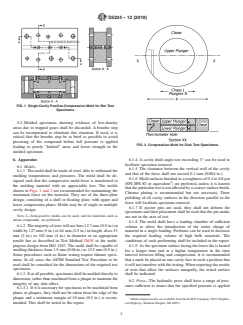
FIG. 1 Single-Cavity Positive-Compression Mold for Bar Test
Specimens
5.2 Molded specimens showing evidence of low-density
areas due to trapped gases shall be discarded. A breathe step
can be incorporated to eliminate this situation. If used, it is
critical that the breathe step be as brief as possible to avoid
precuring of the compound before full pressure is applied
FIG. 2 Compression Mold for Disk Test Specimens
leading to poorly “knitted” areas and lower strength in the
molded specimen.
6.1.4 A cavity draft angle not exceeding 3° can be used to
6. Apparatus
facilitate specimen removal.
6.1 Molds:
6.1.5 The clearance between the vertical wall of the cavity
6.1.1 The mold shall be made of steel, able to withstand the
and that of the force shall not exceed 0.1 mm (0.004 in.).
molding temperatures and pressures. The mold shall be de-
6.1.6 Mold surfaces finished to a roughness of 0.4 to 0.8 µm
signed such that the compressive mold force is transferred to
(SPI-SPE #2 or equivalent ) are preferred, unless it is known
the molding material with no appreciable loss. The molds
thattheparticulartestisnotaffectedbyacoarsersurfacefinish.
shown in Figs. 1 and 2 are recommended for maintaining the
Chrome plating is recommended but not necessary. Draw
maximum force on the material. They are of the three-plate
polishing of all cavity surfaces in the direction parallel to the
design; consisting of a shell or floating plate, with upper and
force will facilitate specimen removal.
lower compression plates. Molds may be of single or multiple
6.1.7 If ejector pins are used, they shall not deform the
cavity design.
specimens and their placement shall be such that the pin marks
NOTE 2—Semi-positive molds can be used, and for materials such as
are not in the area of test.
amino compounds, are preferred.
6.1.8 The mold shall have a loading chamber of sufficient
6.1.2 Themajorityoftestswillusebars12.7mm(0.5in.)in
volume to allow the introduction of the entire charge of
width by 127 mm (5 in.) or 64 mm (2.5 in.) in length, discs 51
material in a single loading. Preforms can be used to decrease
mm (2 in.) or 102 mm (4 in.) in diameter or an appropriate
the required loading volume of high bulk materials. The
tensile bar as described in Test Method D638 or the multi- conditions of such preforming shall be included in the report.
purpose design from ISO 3167. The mold shall be capable of
6.1.9 As the specimen surface facing the lower die is heated
molding thickness from 1.5 mm (0.06 in.) to 12.5 mm (0.5 in.). for a longer time and at a higher temperature in the time
Some procedures such as flame testing require thinner speci-
interval between filling and compression, it is recommended
mens. In all cases the ASTM Standard Test Procedure to be that a mark be placed on one cavity face in such a position that
used shall be consulted for the dimensions of the required test
it will not interfere with the testing. When reporting the results
specimens. of tests that affect the surfaces unequally, the tested surface
6.1.3 Ifatallpossible,specimensshallbemoldeddirectlyto
shall be indicated.
dimension, rather than machined from a plaque to maintain the
6.2 Press—The hydraulic press shall have a range of pres-
integrity of any skin effect.
sures sufficient to insure that the specified pressure is applied
6.1.3.1 If it is necessary for specimens to be machined from
plates or plaques, they shall not be taken from the edge of the
plaque and a minimum margin of 10 mm (0.5 in.) is recom-
Mold comparison kits are available from the D-M-E Company, 29111 Stephen-
mended. This shall be noted in the report. son Highway, Madison Heights, MI 48071.
D5224 − 12 (2019)
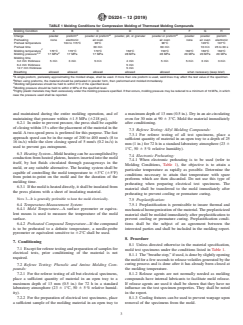
TABLE 1 Molding Conditions for Compression Molding of Thermoset Molding Compounds
Molding Condition A B C D E F G H
A B B
Charge powder preform powder or preform powder,
...