

ASTM D5846-07(2017)
(Test Method)Standard Test Method for Universal Oxidation Test for Hydraulic and Turbine Oils Using the Universal Oxidation Test Apparatus
General Information
- Abstract
SIGNIFICANCE AND USE
5.1 Degradation of hydraulic fluids and turbine oils, because of oxidation or thermal breakdown, can result in the formation of acids or insoluble solids and render the oil unfit for further use.
5.2 This test method can be used to estimate the relative oxidation stability of petroleum-base oils. It should be recognized that correlation between results of this test and the oxidation stability in use can vary markedly with service conditions and with various oils.
SCOPE
1.1 This test method covers a procedure for evaluating the oxidation stability of petroleum base hydraulic oils and oils for steam and gas turbines.
1.2 This test method was developed to evaluate the oxidation stability of petroleum base hydraulic oils and oils for steam and gas turbines.
1.2.1 Rust and oxidation inhibited hydraulic, anti-wear hydraulic and turbine oils of ISO 32–68 viscosity were used to develop the precision statement. This test method has been used to evaluate the oxidation stability of fluids made with synthetic basestock and in-service oils; however, these fluids have not been used in cooperative testing to develop precision data.
1.3 The values stated in SI units are to be regarded as standard.
1.3.1 Exception—The values given in parentheses are for information only.
1.4 This standard does not purport to address all of the safety concerns, if any, associated with its use. It is the responsibility of the user of this standard to establish appropriate safety, health, and environmental practices and determine the applicability of regulatory limitations prior to use. Identified hazardous chemicals are listed in 7.3, 7.6, and 7.8. Before using this test method, refer to suppliers' safety labels, Material Safety Data Sheets, and other technical literature.
1.5 This international standard was developed in accordance with internationally recognized principles on standardization established in the Decision on Principles for the Development of International Standards, Guides and Recommendations issued by the World Trade Organization Technical Barriers to Trade (TBT) Committee.
- Status
- Published
- Publication Date
- 30-Sep-2017
- Technical Committee
- D02 - Petroleum Products, Liquid Fuels, and Lubricants
- Drafting Committee
- D02.09.0D - Oxidation of Lubricants
Overview
ASTM D5846-07(2017), "Standard Test Method for Universal Oxidation Test for Hydraulic and Turbine Oils Using the Universal Oxidation Test Apparatus," provides a standardized procedure for evaluating the oxidation stability of petroleum-based hydraulic and turbine oils. Developed by ASTM International, this method assesses the susceptibility of lubricating oils to degradation due to oxidation or thermal stress. The test is crucial for predicting oil life and ensuring the reliability and longevity of hydraulic systems and steam or gas turbines by mitigating risks associated with oil breakdown, acid formation, and insoluble solid generation.
Key Topics
- Oxidation Stability Testing: The core of the standard is a laboratory method to estimate the oxidation life of hydraulic and turbine oils by exposing samples to controlled air flow and heat, often in the presence of metal catalysts.
- Apparatus and Method Consistency: The test is conducted using a universal oxidation test apparatus, which maintains specified temperature and air flow conditions to ensure repeatability. The evaluation is typically performed at 135°C, following detailed procedures for sample handling, catalyst preparation, and apparatus calibration.
- Acid Number and Sludge Formation: Results are based on monitoring changes in acid number and the presence of insoluble solids, both of which are indications of oil degradation.
- Significance for Oil Quality: The method detects degradation that may render the oil unfit for service, prompting timely maintenance or oil replacement.
- Applicability Limits: While suitable for petroleum-based fluids, results may not directly predict in-service performance for all oils, especially those using synthetic bases or operating under unique service conditions.
Applications
ASTM D5846-07(2017) is a valuable tool within several industries:
- Hydraulic Systems: This test method is widely used for quality control of hydraulic oils in manufacturing, maintenance, and service operations. It helps prevent failures caused by oxidation-related deposits and acidity.
- Steam and Gas Turbines: Power generation facilities and other industries with rotating equipment may employ this test to monitor the oxidation stability of turbine oils, ensuring efficient operation and minimizing downtime.
- Lubricant Development and Certification: Oil formulators and manufacturers use this standard to compare formulations, optimize additive packages, and certify that products meet required performance specifications.
- Predictive Maintenance: By identifying oils at risk of premature failure, facility managers can schedule maintenance at optimal intervals, reducing unexpected breakdowns and safety hazards.
- Quality Assurance Laboratories: Ensures batch-to-batch consistency and compliance with both internal and industry-wide standards for fluid longevity.
Related Standards
The ASTM D5846 test method references and is closely associated with several other standards designed for the analysis and evaluation of lubricants:
- ASTM D4871: Guide for Universal Oxidation/Thermal Stability Test Apparatus
- ASTM D664: Test Method for Acid Number of Petroleum Products by Potentiometric Titration
- ASTM D974: Test Method for Acid and Base Number by Color-Indicator Titration
- ASTM D4057: Practice for Manual Sampling of Petroleum and Petroleum Products
- ASTM D943: Test Method for Oxidation Characteristics of Inhibited Mineral Oils
- ASTM D4740: Test Method for Cleanliness and Compatibility of Residual Fuels by Spot Test
Common keywords associated with this standard include hydraulic fluids, turbine oils, oxidation stability, lubricant degradation, petroleum-based oils, fluid maintenance, and universal oxidation test. For organizations seeking to assure oil reliability and compliance in critical systems, ASTM D5846 provides a practical solution for oil stability assessment and lifecycle management.
Relations
- Effective Date
- 01-Oct-2017
- Effective Date
- 01-Oct-2018
- Effective Date
- 15-Jun-2017
- Effective Date
- 01-May-2017
- Effective Date
- 01-Dec-2014
- Effective Date
- 01-May-2014
- Effective Date
- 01-Oct-2013
- Effective Date
- 15-Nov-2012
- Effective Date
- 15-Apr-2012
- Effective Date
- 15-Apr-2012
- Effective Date
- 01-Dec-2011
- Refers
ASTM D4057-06(2011) - Standard Practice for Manual Sampling of Petroleum and Petroleum Products - Effective Date
- 01-Jun-2011
- Effective Date
- 15-May-2011
- Effective Date
- 15-May-2011
- Effective Date
- 15-May-2011
Get Certified
Connect with accredited certification bodies for this standard

Element Materials Technology
Materials testing and product certification.

ABS Group Brazil
ABS Group certification services in Brazil.

ABS Quality Evaluations Inc.
American Bureau of Shipping quality certification.
Sponsored listings
Frequently Asked Questions
ASTM D5846-07(2017) is a standard published by ASTM International. Its full title is "Standard Test Method for Universal Oxidation Test for Hydraulic and Turbine Oils Using the Universal Oxidation Test Apparatus". This standard covers: SIGNIFICANCE AND USE 5.1 Degradation of hydraulic fluids and turbine oils, because of oxidation or thermal breakdown, can result in the formation of acids or insoluble solids and render the oil unfit for further use. 5.2 This test method can be used to estimate the relative oxidation stability of petroleum-base oils. It should be recognized that correlation between results of this test and the oxidation stability in use can vary markedly with service conditions and with various oils. SCOPE 1.1 This test method covers a procedure for evaluating the oxidation stability of petroleum base hydraulic oils and oils for steam and gas turbines. 1.2 This test method was developed to evaluate the oxidation stability of petroleum base hydraulic oils and oils for steam and gas turbines. 1.2.1 Rust and oxidation inhibited hydraulic, anti-wear hydraulic and turbine oils of ISO 32–68 viscosity were used to develop the precision statement. This test method has been used to evaluate the oxidation stability of fluids made with synthetic basestock and in-service oils; however, these fluids have not been used in cooperative testing to develop precision data. 1.3 The values stated in SI units are to be regarded as standard. 1.3.1 Exception—The values given in parentheses are for information only. 1.4 This standard does not purport to address all of the safety concerns, if any, associated with its use. It is the responsibility of the user of this standard to establish appropriate safety, health, and environmental practices and determine the applicability of regulatory limitations prior to use. Identified hazardous chemicals are listed in 7.3, 7.6, and 7.8. Before using this test method, refer to suppliers' safety labels, Material Safety Data Sheets, and other technical literature. 1.5 This international standard was developed in accordance with internationally recognized principles on standardization established in the Decision on Principles for the Development of International Standards, Guides and Recommendations issued by the World Trade Organization Technical Barriers to Trade (TBT) Committee.
SIGNIFICANCE AND USE 5.1 Degradation of hydraulic fluids and turbine oils, because of oxidation or thermal breakdown, can result in the formation of acids or insoluble solids and render the oil unfit for further use. 5.2 This test method can be used to estimate the relative oxidation stability of petroleum-base oils. It should be recognized that correlation between results of this test and the oxidation stability in use can vary markedly with service conditions and with various oils. SCOPE 1.1 This test method covers a procedure for evaluating the oxidation stability of petroleum base hydraulic oils and oils for steam and gas turbines. 1.2 This test method was developed to evaluate the oxidation stability of petroleum base hydraulic oils and oils for steam and gas turbines. 1.2.1 Rust and oxidation inhibited hydraulic, anti-wear hydraulic and turbine oils of ISO 32–68 viscosity were used to develop the precision statement. This test method has been used to evaluate the oxidation stability of fluids made with synthetic basestock and in-service oils; however, these fluids have not been used in cooperative testing to develop precision data. 1.3 The values stated in SI units are to be regarded as standard. 1.3.1 Exception—The values given in parentheses are for information only. 1.4 This standard does not purport to address all of the safety concerns, if any, associated with its use. It is the responsibility of the user of this standard to establish appropriate safety, health, and environmental practices and determine the applicability of regulatory limitations prior to use. Identified hazardous chemicals are listed in 7.3, 7.6, and 7.8. Before using this test method, refer to suppliers' safety labels, Material Safety Data Sheets, and other technical literature. 1.5 This international standard was developed in accordance with internationally recognized principles on standardization established in the Decision on Principles for the Development of International Standards, Guides and Recommendations issued by the World Trade Organization Technical Barriers to Trade (TBT) Committee.
ASTM D5846-07(2017) is classified under the following ICS (International Classification for Standards) categories: 75.080 - Petroleum products in general; 75.120 - Hydraulic fluids. The ICS classification helps identify the subject area and facilitates finding related standards.
ASTM D5846-07(2017) has the following relationships with other standards: It is inter standard links to ASTM D5846-07(2012), ASTM B1-13(2018), ASTM D943-17, ASTM D664-11a(2017), ASTM D974-14e1, ASTM D4740-04(2014), ASTM B1-13, ASTM B1-12, ASTM D3339-12, ASTM D974-12, ASTM D4871-11, ASTM D4057-06(2011), ASTM D3339-11, ASTM D664-11, ASTM D974-11. Understanding these relationships helps ensure you are using the most current and applicable version of the standard.
ASTM D5846-07(2017) is available in PDF format for immediate download after purchase. The document can be added to your cart and obtained through the secure checkout process. Digital delivery ensures instant access to the complete standard document.
Standards Content (Sample)
This international standard was developed in accordance with internationally recognized principles on standardization established in the Decision on Principles for the
Development of International Standards, Guides and Recommendations issued by the World Trade Organization Technical Barriers to Trade (TBT) Committee.
Designation: D5846 − 07 (Reapproved 2017)
Standard Test Method for
Universal Oxidation Test for Hydraulic and Turbine Oils
Using the Universal Oxidation Test Apparatus
This standard is issued under the fixed designation D5846; the number immediately following the designation indicates the year of
original adoption or, in the case of revision, the year of last revision.Anumber in parentheses indicates the year of last reapproval.A
superscript epsilon (´) indicates an editorial change since the last revision or reapproval.
1. Scope 2. Referenced Documents
2.1 ASTM Standards:
1.1 This test method covers a procedure for evaluating the
A510SpecificationforGeneralRequirementsforWireRods
oxidationstabilityofpetroleumbasehydraulicoilsandoilsfor
and Coarse Round Wire, Carbon Steel
steam and gas turbines.
B1Specification for Hard-Drawn Copper Wire
1.2 This test method was developed to evaluate the oxida-
D664Test Method for Acid Number of Petroleum Products
tion stability of petroleum base hydraulic oils and oils for
by Potentiometric Titration
steam and gas turbines. D943TestMethodforOxidationCharacteristicsofInhibited
Mineral Oils
1.2.1 Rust and oxidation inhibited hydraulic, anti-wear hy-
D974Test Method for Acid and Base Number by Color-
draulic and turbine oils of ISO 32–68 viscosity were used to
Indicator Titration
develop the precision statement. This test method has been
D3339TestMethodforAcidNumberofPetroleumProducts
used to evaluate the oxidation stability of fluids made with
by Semi-Micro Color Indicator Titration
synthetic basestock and in-service oils; however, these fluids
D4057Practice for Manual Sampling of Petroleum and
have not been used in cooperative testing to develop precision
Petroleum Products
data.
D4740Test Method for Cleanliness and Compatibility of
1.3 The values stated in SI units are to be regarded as
Residual Fuels by Spot Test
standard.
D4871Guide for Universal Oxidation/Thermal Stability
Test Apparatus
1.3.1 Exception—The values given in parentheses are for
D5770Test Method for Semiquantitative Micro Determina-
information only.
tion of Acid Number of Lubricating Oils During Oxida-
1.4 This standard does not purport to address all of the
tion Testing
safety concerns, if any, associated with its use. It is the
2.2 Energy Institute Standard:
responsibility of the user of this standard to establish appro-
IP 2546 Practice for Sampling of Petroleum Products;
priate safety, health, and environmental practices and deter-
alternate to Practice D4057
mine the applicability of regulatory limitations prior to use.
2.3 British Standard:
Identified hazardous chemicals are listed in 7.3, 7.6, and 7.8.
BS 1829Specification for Carbon Steel Wire; alternate to
Before using this test method, refer to suppliers’ safety labels,
Specification A510
Material Safety Data Sheets, and other technical literature.
2.4 ASTM Adjuncts:
Reference Spot Sheet
1.5 This international standard was developed in accor-
dance with internationally recognized principles on standard-
3. Terminology
ization established in the Decision on Principles for the
3.1 Definitions of Terms Specific to This Standard:
Development of International Standards, Guides and Recom-
mendations issued by the World Trade Organization Technical
Barriers to Trade (TBT) Committee.
For referenced ASTM standards, visit the ASTM website, www.astm.org, or
contact ASTM Customer Service at service@astm.org. For Annual Book of ASTM
Standards volume information, refer to the standard’s Document Summary page on
the ASTM website.
1 3
This test method is under the jurisdiction of ASTM Committee D02 on Available from Energy Institute, 61 New Cavendish St., London, WIG 7AR,
Petroleum Products, Liquid Fuels, and Lubricants and is the direct responsibility of U.K., http://www.energyinst.org.uk.
Subcommittee D02.09.0D on Oxidation of Lubricants. Available from British Standards Institute (BSI), 389 Chiswick High Rd.,
Current edition approved Oct. 1, 2017. Published November 2017. Originally London W4 4AL, U.K., http://www.bsi-global.com.
approved in 1995. Last previous edition approved in 2012 as D5846–07(2012). Available from ASTM International Headquarters. Order Adjunct No.
DOI: 10.1520/D5846-07R17. ADJD4740. Original adjunct produced in 2000.
Copyright © ASTM International, 100 Barr Harbor Drive, PO Box C700, West Conshohocken, PA 19428-2959. United States
D5846 − 07 (2017)
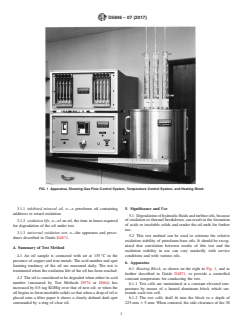
FIG. 1 Apparatus, Showing Gas Flow Control System, Temperature Control System, and Heating Block
3.1.1 inhibited mineral oil, n—a petroleum oil containing 5. Significance and Use
additives to retard oxidation.
5.1 Degradationofhydraulicfluidsandturbineoils,because
of oxidation or thermal breakdown, can result in the formation
3.1.2 oxidation life, n—of an oil, the time in hours required
of acids or insoluble solids and render the oil unfit for further
for degradation of the oil under test.
use.
3.1.3 universal oxidation test, n—the apparatus and proce-
5.2 This test method can be used to estimate the relative
dures described in Guide D4871.
oxidation stability of petroleum-base oils. It should be recog-
nized that correlation between results of this test and the
4. Summary of Test Method
oxidation stability in use can vary markedly with service
conditions and with various oils.
4.1 An oil sample is contacted with air at 135°C in the
presence of copper and iron metals. The acid number and spot
6. Apparatus
forming tendency of the oil are measured daily. The test is
6.1 Heating Block, as shown on the right in Fig. 1, and as
terminated when the oxidation life of the oil has been reached.
further described in Guide D4871, to provide a controlled
4.2 Theoilisconsideredtobedegradedwheneitheritsacid
constant temperature for conducting the test.
number (measured by Test Methods D974 or D664) has
6.1.1 Test cells are maintained at a constant elevated tem-
increased by 0.5 mg KOH/g over that of new oil; or when the
perature by means of a heated aluminum block which sur-
oil begins to form insoluble solids so that when a drop of oil is
rounds each test cell.
placed onto a filter paper it shows a clearly defined dark spot
6.1.2 The test cells shall fit into the block to a depth of
surrounded by a ring of clear oil. 225mm 6 5mm. When centered, the side clearance of the 38
D5846 − 07 (2017)
diameter, 300mm 65 mm length, with open end fitted with a
34/45 standard-taper, ground-glass outer joint.
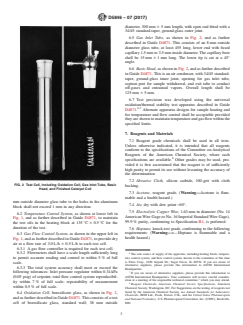
6.5 Gas Inlet Tube, as shown in Fig. 2, and as further
described in Guide D4871. This consists of an 8mm outside
diameter glass tube, at least 455 long, lower end with fused
capillary1.5mmto3.5mminsidediameter.Thecapillarybore
shall be 15mm 61mm long. The lower tip is cut at a 45°
angle.
6.6 Basic Head,asshowninFig.2,andasfurtherdescribed
inGuideD4871.Thisisanaircondenser,with34/45standard-
taper, ground-glass inner joint, opening for gas inlet tube,
septum port for sample withdrawal, and exit tube to conduct
off-gases and entrained vapors. Overall length shall be
125mm 65mm.
6.7 Test precision was developed using the universal
oxidation/thermal stability test apparatus described in Guide
6,7
D4871. Alternate apparatus designs for sample heating and
for temperature and flow control shall be acceptable provided
theyareshowntomaintaintemperatureandgasflowwithinthe
specified limits.
7. Reagents and Materials
7.1 Reagent grade chemicals shall be used in all tests.
Unless otherwise indicated, it is intended that all reagents
conform to the specifications of the Committee on Analytical
Reagents of the American Chemical Society, where such
specifications are available. Other grades may be used, pro-
vided it is first ascertained that the reagent is of sufficiently
high purity to permit its use without lessening the accuracy of
the determination.
7.2 Abrasive Cloth, silicon carbide, 100-grit with cloth
FIG. 2 Test Cell, Including Oxidation Cell, Gas Inlet Tube, Basic
backing.
Head, and Finished Catalyst Coil
7.3 Acetone, reagent grade. (Warning—Acetone is flam-
mable and a health hazard.)
mm outside diameter glass tube to the holes in the aluminum
7.4 Air, dry with dew point−60°.
block shall not exceed 1 mm in any direction.
7.5 Electrolytic Copper Wire, 1.63mm in diameter (No. 14
6.2 Temperature Control System, as shown at lower left in
AmericanWireGageorNo.16ImperialStandardWireGage),
Fig. 1, and as further described in Guide D4871, to maintain
99.9% purity, conforming to Specification B1, is preferred.
the test oils in the heating block at 135°C 60.5°C for the
duration of the test.
7.6 Heptane, knock-test grade, conforming to the following
requirements: (Warning—n—Heptane is flammable and a
6.3 Gas Flow Control System, as shown in the upper left in
health hazard.)
Fig.1,andasfurtherdescribedinGuideD4871,toprovidedry
air at a flow rate of 3.0L⁄h 60.5L⁄h to each test cell.
6.3.1 A gas flow controller is required for each test cell.
6.3.2 Flowmeters shall have a scale length sufficiently long 6
The sole source of supply of the apparatus, including heating block, tempera-
ture control system, and flow control system, known to the committee at this time
to permit accurate reading and control to within 5% of full
is Falex Corp., 1020 Airpark Dr., Sugar Grove, IL 60554. If you are aware of
scale.
alternative suppliers, please provide this information to ASTM International
6.3.3 The total system accuracy shall meet or exceed the
Headquarters.
following tolerances: Inlet pressure regulator within 0.34kPa
If you are aware of alternative suppliers, please provide this information to
ASTM International Headquarters. Your comments will receive careful consider-
(0.05 psig) of setpoint; total flow control system reproducibil-
ation at a meeting of the responsible technical committee, which you may attend.
ity within 7% of full scale; repeatability of measurement
Reagent Chemicals, American Chemical Society Specifications, American
within 0.5% of full scale.
Chemical Society, Washington, DC. For Suggestions on the testing of reagents not
listed by the American Chemical Society, see Annual Standards for Laboratory
6.4 Oxidation Cell, borosilicate glass, as shown in Fig. 2,
Chemicals, BDH Ltd., Poole, Dorset, U.K., and the United States Pharmacopeia
andasfurtherdescribedinGuideD4871.Thisconsistsofatest
and National Formulary, U.S. Pharmacopeial Convention, Inc. (USPC), Rockville,
cell of borosilicate glass, standard wall; 38 mm outside MD.
D5846 − 07 (2017)
abrasionwith100-gritsiliconcarbideabrasiveclothuntilfresh
Density at 20 °C 0.6826 to 0.6839
Refractive index at 20 °C 1.3876 to 1.3879
metal surfaces are exposed. Wipe with dry absorbent cotton to
Solidification temperature, min −90.72°
remove loose particles of metal and abrasives. Repeat with
Distillation 50 % shall distill between 98.38° and
fresh cotton until no particles are visible. In the following
98.48°. Temperature rise between 20
and 80 % recovered shall be 0.20° max
operations, handle the catalyst with clean gloves (cotton,
7.7 Low-Metalloid Steel Wire, 1.59mm in diameter (No. 16 rubber, or plastic) to prevent contamination from oils on the
Washburn and Moen Gage). Carbon steel wire, soft bright skin.
annealed and free from rust, of Grade 1008 as described in 9.2.2 One procedure for preparing clean catalyst wire is to
Specification A510, is preferred. Similar wire conforming to cut 0.50m 60.01m lengths of wire. Hold one end of the wire
British Standard1829 is also satisfactory. tightly with a pair of clean pliers or in a vise while cleaning
with the abrasive cloth. Reverse ends of the wire and repeat.
7.8 Propan
...