

ASTM C1943-24
(Test Method)Standard Test Method for Grout Retention Properties of Ceramic Tile
General Information
- Abstract
SIGNIFICANCE AND USE
4.1 This test method provides a means for testing combinations of tile, grout, installation materials and installation practices to determine grout retention behavior. This method can be used by installers to determine if installation materials and techniques are synergetic; by tile and grout manufacturers to evaluate product performance and as a forensic tool to determine if an installation system was appropriate.
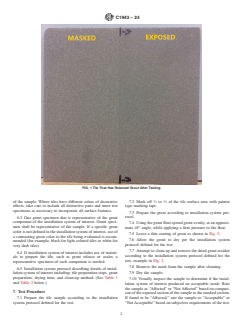
FIG. 1 Tile That Has Retained Grout After Testing
4.2 It is acceptable for other (mainly unglazed) ceramic tile surfaces to have some grout retention if it is light and evenly distributed.
SCOPE
1.1 This test method covers the testing and evaluation of grout retention on glazed and unglazed ceramic tile surfaces and is intended to give the user a uniform procedure to make a comparative assessment of specific tile and grout systems.
1.2 The values stated in inch-pound units are to be regarded as the standard. The values in parentheses are for information only.
1.3 This qualitative method is intended to be used to visually detect abnormal grout retention for a specific tile and installation material system installed in a specified way.
1.4 This method is intended to evaluate the specific grout and tile system specified and is not intended for test results to encompass other tile and grout combinations.
1.5 This standard does not purport to address all of the safety concerns, if any, associated with its use. It is the responsibility of the user of this standard to establish appropriate safety, health, and environmental practices and determine the applicability of regulatory limitations prior to use.
1.6 This international standard was developed in accordance with internationally recognized principles on standardization established in the Decision on Principles for the Development of International Standards, Guides and Recommendations issued by the World Trade Organization Technical Barriers to Trade (TBT) Committee.
- Status
- Published
- Publication Date
- 31-Jan-2024
- Technical Committee
- C21 - Ceramic Whitewares and Related Products
- Drafting Committee
- C21.06 - Ceramic Tile
Overview
ASTM C1943-24: Standard Test Method for Grout Retention Properties of Ceramic Tile is an internationally recognized method developed by ASTM International to assess the grout retention characteristics of both glazed and unglazed ceramic tiles. This standard establishes a uniform, qualitative procedure for evaluating how well grout is removed or retained on ceramic tile surfaces after typical installation and cleanup processes. By providing a systematic approach, ASTM C1943-24 enables accurate comparisons of different tile and grout combinations under specified installation protocols.
Key Topics
- Grout Retention Behavior: The standard focuses on measuring residual grout-grout haze or staining-that persists on the tile surface following normal clean-up activities.
- Comprehensive Evaluation: Test specimens reflect actual installation conditions, including tile and grout types, preparation methods, grout formulation, drying times, and cleaning procedures.
- Visual Assessment: Results are qualitatively determined by visually inspecting if abnormal grout retention is present and whether such retention is within acceptable limits for a specific tile and grout system.
- Applicability: The test is best used for comparative assessment within the same installation system and is not intended to extrapolate results to other tile or grout combinations.
- Safety Considerations: Users must ensure appropriate safety, health, and environmental practices while conducting testing as the standard does not address specific safety concerns.
Applications
ASTM C1943-24 supports a variety of practical applications within the ceramic tile industry:
- Installers: Allows professional tile installers to evaluate whether selected installation materials and methods are compatible, aiming to prevent excessive grout haze or staining.
- Manufacturers: Tile and grout manufacturers use this method as a product performance assessment tool, aiding in product development and quality assurance.
- Forensic Investigations: Acts as a forensic tool for investigating tile installations where grout retention may indicate issues with products or techniques used.
- Specifiers and Quality Control: Architects, specifiers, and project managers reference ASTM C1943-24 to verify that specified grout and tile combinations meet aesthetic and maintenance requirements.
- Comparison Testing: Enables direct comparison of grout retention across various ceramic tile finishes, grout types (sanded, unsanded, cementitious, or epoxy), and the effects of grout release or sealers.
Related Standards
For comprehensive evaluation and specification of ceramic tile installations, consult these related standards:
- ANSI A137.1: American National Standard Specifications for Ceramic Tile - covers classification, characteristics, and performance criteria for ceramic tiles.
- ASTM C920: Standard Specification for Elastomeric Joint Sealants - pertinent for installations requiring specialized joint treatments.
- ASTM C482: Standard Test Method for Bond Strength of Ceramic Tile to Portland Cement Paste - assesses adhesive performance which may influence grout retention.
- ISO 13007: International standard for ceramic tile adhesives and grouts - complements grout retention evaluations on an international scale.
Practical Value
Applying ASTM C1943-24 assures stakeholders that grout retention concerns have been properly assessed, facilitating the selection of compatible tiles, grouts, and installation methods. This improves long-term appearance, reduces maintenance costs, and supports customer satisfaction. By referencing this standard, professionals can clearly communicate expectations, reduce installation failures, and enhance project outcomes in tile flooring and wall cladding applications.
Keywords: grout retention, ceramic tile, ASTM C1943-24, tile installation, grout haze, grout test method, tile standards, tile and grout compatibility, grout clean-up, quality control.
Frequently Asked Questions
ASTM C1943-24 is a standard published by ASTM International. Its full title is "Standard Test Method for Grout Retention Properties of Ceramic Tile". This standard covers: SIGNIFICANCE AND USE 4.1 This test method provides a means for testing combinations of tile, grout, installation materials and installation practices to determine grout retention behavior. This method can be used by installers to determine if installation materials and techniques are synergetic; by tile and grout manufacturers to evaluate product performance and as a forensic tool to determine if an installation system was appropriate. FIG. 1 Tile That Has Retained Grout After Testing 4.2 It is acceptable for other (mainly unglazed) ceramic tile surfaces to have some grout retention if it is light and evenly distributed. SCOPE 1.1 This test method covers the testing and evaluation of grout retention on glazed and unglazed ceramic tile surfaces and is intended to give the user a uniform procedure to make a comparative assessment of specific tile and grout systems. 1.2 The values stated in inch-pound units are to be regarded as the standard. The values in parentheses are for information only. 1.3 This qualitative method is intended to be used to visually detect abnormal grout retention for a specific tile and installation material system installed in a specified way. 1.4 This method is intended to evaluate the specific grout and tile system specified and is not intended for test results to encompass other tile and grout combinations. 1.5 This standard does not purport to address all of the safety concerns, if any, associated with its use. It is the responsibility of the user of this standard to establish appropriate safety, health, and environmental practices and determine the applicability of regulatory limitations prior to use. 1.6 This international standard was developed in accordance with internationally recognized principles on standardization established in the Decision on Principles for the Development of International Standards, Guides and Recommendations issued by the World Trade Organization Technical Barriers to Trade (TBT) Committee.
SIGNIFICANCE AND USE 4.1 This test method provides a means for testing combinations of tile, grout, installation materials and installation practices to determine grout retention behavior. This method can be used by installers to determine if installation materials and techniques are synergetic; by tile and grout manufacturers to evaluate product performance and as a forensic tool to determine if an installation system was appropriate. FIG. 1 Tile That Has Retained Grout After Testing 4.2 It is acceptable for other (mainly unglazed) ceramic tile surfaces to have some grout retention if it is light and evenly distributed. SCOPE 1.1 This test method covers the testing and evaluation of grout retention on glazed and unglazed ceramic tile surfaces and is intended to give the user a uniform procedure to make a comparative assessment of specific tile and grout systems. 1.2 The values stated in inch-pound units are to be regarded as the standard. The values in parentheses are for information only. 1.3 This qualitative method is intended to be used to visually detect abnormal grout retention for a specific tile and installation material system installed in a specified way. 1.4 This method is intended to evaluate the specific grout and tile system specified and is not intended for test results to encompass other tile and grout combinations. 1.5 This standard does not purport to address all of the safety concerns, if any, associated with its use. It is the responsibility of the user of this standard to establish appropriate safety, health, and environmental practices and determine the applicability of regulatory limitations prior to use. 1.6 This international standard was developed in accordance with internationally recognized principles on standardization established in the Decision on Principles for the Development of International Standards, Guides and Recommendations issued by the World Trade Organization Technical Barriers to Trade (TBT) Committee.
ASTM C1943-24 is available in PDF format for immediate download after purchase. The document can be added to your cart and obtained through the secure checkout process. Digital delivery ensures instant access to the complete standard document.
Standards Content (Sample)
This international standard was developed in accordance with internationally recognized principles on standardization established in the Decision on Principles for the
Development of International Standards, Guides and Recommendations issued by the World Trade Organization Technical Barriers to Trade (TBT) Committee.
Designation: C1943 − 24
Standard Test Method for
Grout Retention Properties of Ceramic Tile
This standard is issued under the fixed designation C1943; the number immediately following the designation indicates the year of
original adoption or, in the case of revision, the year of last revision. A number in parentheses indicates the year of last reapproval. A
superscript epsilon (´) indicates an editorial change since the last revision or reapproval.
1. Scope This can be related to surface texture or porosity of the surface,
grout formulation, and/or installation practices. Fig. 1 is an
1.1 This test method covers the testing and evaluation of
example of a tile that retained grout after testing.
grout retention on glazed and unglazed ceramic tile surfaces
3.1.2 installation system protocol, n—the set of instructions
and is intended to give the user a uniform procedure to make
describing the conditions used to achieve requirements of the
a comparative assessment of specific tile and grout systems.
test.
1.2 The values stated in inch-pound units are to be regarded
3.1.2.1 Discussion—Typically based on, but not limited to,
as the standard. The values in parentheses are for information
the instructions provided by the manufacturers of the compo-
only.
nents used in the test. The complete set of procedures shall
1.3 This qualitative method is intended to be used to
determine the overall method for preparing tile, mixing grout,
visually detect abnormal grout retention for a specific tile and
applying grout, and subsequent grout clean up. This can vary
installation material system installed in a specified way.
based on the specific products selected or the outcome being
investigated using the test.
1.4 This method is intended to evaluate the specific grout
and tile system specified and is not intended for test results to
4. Significance and Use
encompass other tile and grout combinations.
4.1 This test method provides a means for testing combina-
1.5 This standard does not purport to address all of the
tions of tile, grout, installation materials and installation
safety concerns, if any, associated with its use. It is the
practices to determine grout retention behavior. This method
responsibility of the user of this standard to establish appro-
can be used by installers to determine if installation materials
priate safety, health, and environmental practices and deter-
and techniques are synergetic; by tile and grout manufacturers
mine the applicability of regulatory limitations prior to use.
to evaluate product performance and as a forensic tool to
1.6 This international standard was developed in accor-
determine if an installation system was appropriate.
dance with internationally recognized principles on standard-
4.2 It is acceptable for other (mainly unglazed) ceramic tile
ization established in the Decision on Principles for the
Development of International Standards, Guides and Recom- surfaces to have some grout retention if it is light and evenly
distributed.
mendations issued by the World Trade Organization Technical
Barriers to Trade (TBT) Committee.
5. Apparatus
2. Referenced Documents
5.1 A solid rubber or silicone grout float appropriate for the
type of grout being utilized,
2.1 ANSI Documents:
ANSI A137.1 American National Standard Specifications
5.2 Mixing container for the grout,
for Ceramic Tile
5.3 Masking tape,
3. Terminology 5.4 Sponge, of the type typically sold for grout clean up, and
3.1 Definitions: 5.5 Stiff bristled brush or scrub pad for textured surfaces.
3.1.1 grout retention, n—residual grout remaining on a tile
6. Test Specimens
surface after normal clean up procedures have been completed
6.1 The tile product, type of grout, method of preparing the
tile, method of preparing the grout, drying time after grout
This test method is under the jurisdiction of ASTM Committee C21 on Ceramic
application, and clean-up method may be varied with the
Whitewares and Related Products and is the direct responsibility of Subcommittee
requirements of the test.
C21.06 on Ceramic Tile.
Current edition approved Feb. 1, 2024. Published February 2024. DOI: 10.1520/
6.2 At least three tile specimens that are free of facial
C1943–24.
defects and representative of the tile component of the instal-
Available from American National Standards Institute (ANSI), 25 W. 43rd St.,
4th Floor, New York, NY 10036, http://www.ansi.org. lation system of interest. Test specimens shall be representative
Copyright © ASTM International, 100 Barr Harbor Drive, PO Box C700, West Conshohocken, PA 19428-2959. United States
C1943 − 24
FIG. 1 Tile That Has Retained Grout After Testing
1 1
of the sample. Where tiles have different colors of decorative 7.2 Mask off ⁄3 to ⁄2 of the tile surface area with painter
effects, take care to include all distinctive parts and more test type masking tape.
specimens as necessary to incorporate all surface features.
7.3 Prepare the grout according to installation system pro-
tocol.
6.3 One grout specimen that is representative of the grout
component of the installation system of interest. Grout speci-
7.4 Using the grout float spread grout evenly, at an approxi-
men shall be representative of the sample. If a specific grout
mate 45° angle, while applying a firm pressure to the float.
color is not defined in the installation system of interest, use of
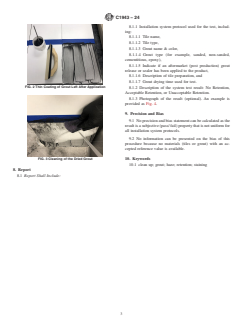
7.5 Leave a thin coating of grout as shown in Fig. 2
...