

ASTM D8390-21
(Classification)Standard Classification for Domestic Cannabis/Hemp Plant Indoor Growing Appliances
General Information
- Abstract
SIGNIFICANCE AND USE
4.1 This classification standard creates clear definitions for main types of domestic cannabis/hemp plant indoor growing appliances.
4.2 The purpose of this classification is to standardize the naming of cannabis/hemp plant indoor growing appliance types under the classification.
4.3 This classification helps to achieve a clarity on the type of configuration available for domestic cannabis/hemp plant indoor growing appliance usage.
4.4 This classification standard outlines some individual components and aspects of various types of domestic cannabis/hemp plant indoor growing appliances.
4.5 This classification is not intended to define all terminology, design, mechanical, physical or universal functions and impacts of different technologies attributable to domestic cannabis/hemp plant indoor growing appliances. Such characteristics and category details and nomenclature will be defined in Guide D8374.
4.6 This standard provides clarity to industry, government, and the public on types of domestic growing appliances for indoor growing cannabis/hemp plants.
SCOPE
1.1 This standard classifies the types of domestic cannabis/hemp plant indoor growing appliances.
1.2 This classification shall be applicable to growing of cannabis/hemp plants using indoor growing appliances.
1.3 This classification differentiates between the various types of cannabis/hemp plant indoor growing appliances.
1.4 The examples for each type of cannabis/hemp plant indoor growing appliance are not intended to be all-inclusive. Examples shown or described in this classification are included only as an aid in the understanding and comprehension of each type under the classification.
1.5 The values stated in SI units are to be regarded as standard. The values given in parentheses after SI units are provided for information only and are not considered standard.
1.6 This standard does not purport to address all of the safety concerns, if any, associated with its use. It is the responsibility of the user of this standard to establish appropriate safety, health, and environmental practices and determine the applicability of regulatory limitations prior to use.
1.7 This international standard was developed in accordance with internationally recognized principles on standardization established in the Decision on Principles for the Development of International Standards, Guides and Recommendations issued by the World Trade Organization Technical Barriers to Trade (TBT) Committee.
- Status
- Published
- Publication Date
- 31-May-2021
- Technical Committee
- D37 - Cannabis
- Drafting Committee
- D37.08 - Personal/Household-Use Cannabis Devices and Appliances
Overview
ASTM D8390-21: Standard Classification for Domestic Cannabis/Hemp Plant Indoor Growing Appliances is a key international standard developed by ASTM to bring clarity and uniformity to the naming and classification of appliances used for the indoor cultivation of cannabis and hemp plants in domestic environments. This standard establishes a system to differentiate between the main types of indoor growing appliances and their configurations, supporting the growing cannabis and hemp industries as well as consumers, regulators, and manufacturers seeking consistent definitions and terminology.
By clearly defining various types of domestic cannabis/hemp plant indoor growing appliances, ASTM D8390-21 helps stakeholders understand and communicate about the wide range of product offerings and their features. The standard does not prescribe detailed technical requirements or address all safety concerns; rather, it focuses on categorizing appliances to streamline communication and support further standardization.
Key Topics
- Classification System: The standard outlines a two-part classification - grow tents and grow boxes, each further broken down by flexibility (manual, semi-manual, automated, and standalone systems).
- Definitions: Clear definitions are provided for terms such as manual, semi-manual, automated, standalone appliances, and specific components like drying appliances and curing appliances.
- Clarity in Appliance Types: The classification creates transparent distinctions based on structure (tent or box), configuration, and level of automation.
- Component Outlines: Describes various components and elements that may be included in each appliance type, such as lighting systems, environmental controls, and nutrient delivery systems.
- Intended Use: Covers appliances used specifically for the indoor cultivation of cannabis and hemp at the domestic level, including the scope for flexible and rigid growing systems.
Applications
ASTM D8390-21 is valuable to a variety of users:
- Manufacturers: Helps companies accurately design, label, and market indoor growing appliances in line with standardized categories, aiding product development and comparison.
- Regulators and Policymakers: Assists government agencies in understanding the range of domestic growing appliances, facilitating clear regulatory guidance and policy development.
- Retailers and Distributors: Simplifies product selection and consumer education through standardized product names and classifications.
- Consumers and Hobbyists: Offers guidance for selecting the appropriate indoor growing systems based on their needs, experience, and desired level of automation.
- Industry Stakeholders: Facilitates communication among suppliers, service providers, and users in both the cannabis and hemp sectors.
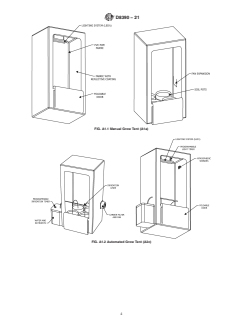
Specific examples included in the standard, such as manual and automated grow tents, semi-manual and standalone grow boxes, help illustrate practical differentiation points for real-world applications.
Related Standards
- ASTM D8374: Guide for Personal Cannabis/Hemp Plant Growing Appliances - Provides supplementary terminology, design details, and characterization not covered by D8390-21.
- UL 8800: Standard for Horticultural Lighting Equipment and Systems - Addresses safety and performance for lighting equipment used in horticultural settings, complementing appliance-focused classification.
- ASTM D8245: Guide for Disposal of Resin-Containing Cannabis - Relevant for waste handling considerations.
- ASTM D8270: Standard Terminology Relating to Cannabis Raw Materials and Downstream Products - Assists in understanding related product and process terminology across the cannabis sector.
By referring to ASTM D8390-21 and related standards, industry participants can ensure greater consistency, efficiency, and safety in the growing sector of domestic cannabis and hemp cultivation appliances. This standard plays a critical role in advancing the professionalism and reliability of products designed for personal and home-based cultivation.
Get Certified
Connect with accredited certification bodies for this standard

Control Union Certifications
Global certification for agriculture and sustainability.

ECOCERT
Organic and sustainability certification.

FSC International
Forest Stewardship Council certification.
Sponsored listings
Frequently Asked Questions
ASTM D8390-21 is a standard published by ASTM International. Its full title is "Standard Classification for Domestic Cannabis/Hemp Plant Indoor Growing Appliances". This standard covers: SIGNIFICANCE AND USE 4.1 This classification standard creates clear definitions for main types of domestic cannabis/hemp plant indoor growing appliances. 4.2 The purpose of this classification is to standardize the naming of cannabis/hemp plant indoor growing appliance types under the classification. 4.3 This classification helps to achieve a clarity on the type of configuration available for domestic cannabis/hemp plant indoor growing appliance usage. 4.4 This classification standard outlines some individual components and aspects of various types of domestic cannabis/hemp plant indoor growing appliances. 4.5 This classification is not intended to define all terminology, design, mechanical, physical or universal functions and impacts of different technologies attributable to domestic cannabis/hemp plant indoor growing appliances. Such characteristics and category details and nomenclature will be defined in Guide D8374. 4.6 This standard provides clarity to industry, government, and the public on types of domestic growing appliances for indoor growing cannabis/hemp plants. SCOPE 1.1 This standard classifies the types of domestic cannabis/hemp plant indoor growing appliances. 1.2 This classification shall be applicable to growing of cannabis/hemp plants using indoor growing appliances. 1.3 This classification differentiates between the various types of cannabis/hemp plant indoor growing appliances. 1.4 The examples for each type of cannabis/hemp plant indoor growing appliance are not intended to be all-inclusive. Examples shown or described in this classification are included only as an aid in the understanding and comprehension of each type under the classification. 1.5 The values stated in SI units are to be regarded as standard. The values given in parentheses after SI units are provided for information only and are not considered standard. 1.6 This standard does not purport to address all of the safety concerns, if any, associated with its use. It is the responsibility of the user of this standard to establish appropriate safety, health, and environmental practices and determine the applicability of regulatory limitations prior to use. 1.7 This international standard was developed in accordance with internationally recognized principles on standardization established in the Decision on Principles for the Development of International Standards, Guides and Recommendations issued by the World Trade Organization Technical Barriers to Trade (TBT) Committee.
SIGNIFICANCE AND USE 4.1 This classification standard creates clear definitions for main types of domestic cannabis/hemp plant indoor growing appliances. 4.2 The purpose of this classification is to standardize the naming of cannabis/hemp plant indoor growing appliance types under the classification. 4.3 This classification helps to achieve a clarity on the type of configuration available for domestic cannabis/hemp plant indoor growing appliance usage. 4.4 This classification standard outlines some individual components and aspects of various types of domestic cannabis/hemp plant indoor growing appliances. 4.5 This classification is not intended to define all terminology, design, mechanical, physical or universal functions and impacts of different technologies attributable to domestic cannabis/hemp plant indoor growing appliances. Such characteristics and category details and nomenclature will be defined in Guide D8374. 4.6 This standard provides clarity to industry, government, and the public on types of domestic growing appliances for indoor growing cannabis/hemp plants. SCOPE 1.1 This standard classifies the types of domestic cannabis/hemp plant indoor growing appliances. 1.2 This classification shall be applicable to growing of cannabis/hemp plants using indoor growing appliances. 1.3 This classification differentiates between the various types of cannabis/hemp plant indoor growing appliances. 1.4 The examples for each type of cannabis/hemp plant indoor growing appliance are not intended to be all-inclusive. Examples shown or described in this classification are included only as an aid in the understanding and comprehension of each type under the classification. 1.5 The values stated in SI units are to be regarded as standard. The values given in parentheses after SI units are provided for information only and are not considered standard. 1.6 This standard does not purport to address all of the safety concerns, if any, associated with its use. It is the responsibility of the user of this standard to establish appropriate safety, health, and environmental practices and determine the applicability of regulatory limitations prior to use. 1.7 This international standard was developed in accordance with internationally recognized principles on standardization established in the Decision on Principles for the Development of International Standards, Guides and Recommendations issued by the World Trade Organization Technical Barriers to Trade (TBT) Committee.
ASTM D8390-21 is classified under the following ICS (International Classification for Standards) categories: 65.020.20 - Plant growing; 65.160 - Tobacco, tobacco products and related equipment. The ICS classification helps identify the subject area and facilitates finding related standards.
ASTM D8390-21 is available in PDF format for immediate download after purchase. The document can be added to your cart and obtained through the secure checkout process. Digital delivery ensures instant access to the complete standard document.
Standards Content (Sample)
This international standard was developed in accordance with internationally recognized principles on standardization established in the Decision on Principles for the
Development of International Standards, Guides and Recommendations issued by the World Trade Organization Technical Barriers to Trade (TBT) Committee.
Designation: D8390 −21
Standard Classification for
Domestic Cannabis/Hemp Plant Indoor Growing Appliances
This standard is issued under the fixed designation D8390; the number immediately following the designation indicates the year of
original adoption or, in the case of revision, the year of last revision. A number in parentheses indicates the year of last reapproval. A
superscript epsilon (´) indicates an editorial change since the last revision or reapproval.
1. Scope 3. Terminology
1.1 This standard classifies the types of domestic cannabis/
3.1 Definitions of Terms Specific to This Standard:
hemp plant indoor growing appliances.
3.1.1 automated, n—agrowingsystemthatisautomatedand
pre-configured but can be user modified or user input pro-
1.2 This classification shall be applicable to growing of
grammed.Userimputableinformationcanincludeatmospheric
cannabis/hemp plants using indoor growing appliances.
monitoring, grow system and lighting system control, with
1.3 This classification differentiates between the various
varying feature levels of automation control for lighting,
types of cannabis/hemp plant indoor growing appliances.
watering, and nutrient dispense systems that require the inter-
1.4 The examples for each type of cannabis/hemp plant
action by the experienced cannabis grower.
indoor growing appliance are not intended to be all-inclusive.
3.1.2 curing appliance, n—an appliance used to dehydrate,
Examples shown or described in this classification are included
preserve dry cannabis and develop cannabinoid profiles.
only as an aid in the understanding and comprehension of each
3.1.3 drying appliance, n—an appliance used to remove
type under the classification.
moisture.
1.5 The values stated in SI units are to be regarded as
3.1.4 grow tent, n—a specialized tent enclosure designed for
standard. The values given in parentheses after SI units are
growing cannabis plants, consisting of frame, fabric, and
provided for information only and are not considered standard.
reflective lining.
1.6 This standard does not purport to address all of the
3.1.4.1 Discussion—Agrow tent may be portable, stationary
safety concerns, if any, associated with its use. It is the
or be intended to be permanently fixed in place.
responsibility of the user of this standard to establish appro-
3.1.4.2 Discussion—A grow tent is used for growing
priate safety, health, and environmental practices and deter-
cannabis, but can also be used for growing herbs and veg-
mine the applicability of regulatory limitations prior to use.
etables such as tomatoes all indoors.
1.7 This international standard was developed in accor-
dance with internationally recognized principles on standard-
3.1.5 grow box, n—a specialized box enclosure that is
ization established in the Decision on Principles for the
explicitly designed for growing cannabis plants, consisting of a
Development of International Standards, Guides and Recom-
rigid structure made with light reflecting material (such as
mendations issued by the World Trade Organization Technical
polished metal) or coated material to reflect light.
Barriers to Trade (TBT) Committee.
3.1.5.1 Discussion—A grow box may be stationary or be
intended to be permanently fixed in place.
2. Referenced Documents
3.1.5.2 Discussion—A grow box can also be used for
2.1 ASTM Standards:
growing herbs and vegetables such as tomatoes all indoors.
D8374 Personal Cannabis/Hemp Plant Growing Appliances
3.1.6 horticultural system, n—a prefabricated chamber,
2.2 UL Standards:
cabinet, or open frame structure of which identified for the
UL 8800 ANSI/CAN/UL Standard for Horticultural Light-
purpose outfitted with electrical infrastructure for the active
ing Equipment and Systems
optimization of plant growth. These systems may incorporate
1 pre-installed materials and equipment which, after installation,
This classification is under the jurisdiction of ASTM Committee D37 on
Cannabis and is the direct responsibility of Subcommittee D37.08 on Cannabis
may be concealed and may not be accessible for inspection at
Devices and Appliances.
the final installation site. They may additionally include
Current edition approved June 1, 2021. Published June 2021. DOI: 10.1520/
lighting, shutters, controls, control panels, plumbing compo-
D8290-21.
nents (such as pump motors, solenoid valves, water reservoirs),
For referenced ASTM standards, visit the ASTM website, www.astm.org, or
contact ASTM Customer Service at service@astm.org. For Annual Book of ASTM
and cooling and heating components, as part of the plant
Standards volume information, refer to the standard’s Document Summary page on
growth management control horticultural system. A horticul-
the ASTM website.
tural system may include hydroponic, aeroponic, aquaponic,
Available from Underwriters Laboratories (UL), UL Headquarters, 333 Pfing-
sten Road, Northbrook, IL, 60062, http://www.ul.com. and other forms of irrigation methods. Passive growing
Copyright © ASTM International, 100 Barr Harbor Drive, PO Box C700, West Conshohocken, PA 19428-2959. United States
D8390 − 21
structures, such as greenhouses or tent like coverings, are not 4. Significance and Use
considered horticultural lighting structures in the context of
4.1 This classification standard creates clear definitions for
this classification. UL 8800
main types of domestic cannabis/hemp plant indoor growing
appliances.
3.1.6.1 Discussion—The term horticultural system in the
cannabis industry is commonly known as “a growing 4.2 The purpose of this classification is to standardize the
appliance,” “a grow box,” or “grow tent.” In some cases, the naming of cannabis/hemp plant indoor growing appliance
growing appliance, grow box or grow tent, depending on types under the classification.
characteristics can serve to offer additional functionality such
4.3 This classification helps to achieve a clarity on the type
as a curing appliance or drying appliance for cannabis.
of configuration available for domestic cannabis/hemp plant
3.1.6.2 Discussion—Agrowing appliance may be used with
indoor growing appliance usage.
or without programming logic and supporting applications, for
4.4 This classification standard outlines some individual
growing cannabis through the stages of plant growth or
components and aspects of various types of domestic cannabis/
lifecycle. A plant’s lifecycle in simple terms consists of seed
hemp plant indoor growing appliances.
germination, vegetation, flowering, and seed cycles.
4.5 This classification is not intended to define all
3.1.6.3 Discussion—The growing appliance may be station-
terminology, design, mechanical, physical or universal func-
ary or be intended to be permanently fixed in place.
tions and impacts of different technologies attributable to
3.1.7 manual, n—a plant growing system explicitly de-
domestic cannabis/hemp plant indoor growing appliances.
signed to grow cannabis, that is user configured and requires
Suchcharacteristicsandcategorydetailsandnomenclaturewill
the full manual intervention and monitoring by the novice or
be defined in Guide D8374.
experi
...