

EN 61000-4-25:2002
(Main)Electromagnetic compatibility (EMC) - Part 4-25: Testing and measurement techniques - HEMP immunity test methods for equipment and systems
General Information
- Abstract
Describes the immunity test levels and related test methods for electrical and electronic equipment and systems exposed to high-altitude electromagnetic pulse (HEMP) environments. Specifications for test equipment and instrumentation test set-up, test procedures, pass/fail criteria, and test documentation requirements are also defined by this standard. These tests are intended to demonstrate the immunity of electrical and electronic equipment when subjected to HEMP radiated and conducted electromagnetic disturbances. The objective of this part of EN 61000 is to establish a common and reproducible basis for evaluating the performance of electrical and electronic equipment, when subjected to HEMP radiated environments and the associated conducted transients on power, antenna, and input/output (I/O) signal and control lines.
- Status
- Published
- Publication Date
- 28-Mar-2002
- Withdrawal Date
- 28-Feb-2005
- Technical Committee
- CLC/TC 210 - Electromagnetic Compatibility (EMC)
- Drafting Committee
- IEC/SC 77C - IEC_SC_77C
- Parallel Committee
- IEC/SC 77C - IEC_SC_77C
- Current Stage
- 6060 - Document made available - Publishing
- Start Date
- 29-Mar-2002
- Completion Date
- 29-Mar-2002


Overview
EN 61000-4-25:2002 (HEMP immunity test methods) is a CENELEC/CLC standard that specifies testing and measurement techniques for demonstrating the immunity of electrical and electronic equipment and systems to high‑altitude electromagnetic pulse (HEMP) environments. It adopts IEC 61000‑4‑25:2001 and defines the test levels, required instrumentation and set‑up, test procedures, pass/fail criteria and documentation needed to provide a reproducible, common basis for HEMP evaluation.
Key topics and requirements
- Scope of immunity testing: Procedures cover both radiated HEMP exposures and associated conducted transients on power, antenna and I/O/control lines.
- Test levels and objectives: Establishes immunity levels to be applied to equipment and systems to evaluate performance under HEMP conditions.
- Test equipment and instrumentation: Specifications for the types of generators, antennas, coupling networks and measurement instruments required for repeatable HEMP testing.
- Test set‑up and procedures: Guidance on physical arrangement, cabling, coupling and grounding to ensure consistent, reproducible results.
- Pass/fail criteria and documentation: Defines how to record test outcomes, acceptance criteria and minimum reporting requirements so results can be validated and compared.
- Reproducibility and common methodology: Emphasises standardized methods to allow consistent evaluation across labs and manufacturers.
Practical applications and users
This standard is essential for organizations that need to assess or certify equipment against HEMP hazards, including:
- EMC test laboratories performing HEMP immunity assessments.
- Manufacturers of critical infrastructure electronics (power systems, telecommunications, transport control, industrial control, aerospace and defence) who require HEMP robustness evidence.
- System integrators and utilities validating system‑level resilience to high‑altitude EMP events.
- Regulators and certification bodies that reference standardized test methods for compliance.
Using EN 61000‑4‑25 helps stakeholders mitigate operational risk from HEMP by delivering repeatable test results and clear pass/fail conclusions for equipment and system designs.
Related standards
EN 61000‑4‑25 aligns with and references related EMC and HEMP publications such as:
- IEC/EN 61000‑2‑9, 61000‑2‑10, 61000‑2‑11 (HEMP environment descriptions/classification)
- IEC/EN 61000‑4‑4, 4‑5, 4‑11, 4‑12, 4‑20 (other immunity test techniques)
- IEC 61000‑5‑3 and IEC/TR 61000‑5‑4 (HEMP protection and installation guidelines)
Keywords: EN 61000‑4‑25, HEMP immunity, EMC testing, HEMP test methods, radiated and conducted disturbances, pass/fail criteria, test procedures, electromagnetic compatibility.
Relations
- Refers
ISO 7137:1995 - Aircraft — Environmental conditions and test procedures for airborne equipment - Effective Date
- 10-Feb-2026
- Effective Date
- 09-Feb-2026
- Effective Date
- 09-Feb-2026
- Effective Date
- 03-Feb-2026
- Effective Date
- 03-Feb-2026
- Effective Date
- 03-Feb-2026
- Effective Date
- 03-Feb-2026
- Effective Date
- 03-Feb-2026
- Effective Date
- 03-Feb-2026
- Effective Date
- 03-Feb-2026
- Effective Date
- 03-Feb-2026
- Effective Date
- 03-Feb-2026
- Effective Date
- 03-Feb-2026
- Effective Date
- 03-Feb-2026
- Effective Date
- 09-Feb-2026
Get Certified
Connect with accredited certification bodies for this standard

ANCE
Mexican certification and testing association.

Intertek Slovenia
Intertek testing, inspection, and certification services in Slovenia.

LNE (Laboratoire National de Métrologie et d'Essais)
French national laboratory for metrology and testing.
Sponsored listings
Frequently Asked Questions
EN 61000-4-25:2002 is a standard published by CLC. Its full title is "Electromagnetic compatibility (EMC) - Part 4-25: Testing and measurement techniques - HEMP immunity test methods for equipment and systems". This standard covers: Describes the immunity test levels and related test methods for electrical and electronic equipment and systems exposed to high-altitude electromagnetic pulse (HEMP) environments. Specifications for test equipment and instrumentation test set-up, test procedures, pass/fail criteria, and test documentation requirements are also defined by this standard. These tests are intended to demonstrate the immunity of electrical and electronic equipment when subjected to HEMP radiated and conducted electromagnetic disturbances. The objective of this part of EN 61000 is to establish a common and reproducible basis for evaluating the performance of electrical and electronic equipment, when subjected to HEMP radiated environments and the associated conducted transients on power, antenna, and input/output (I/O) signal and control lines.
Describes the immunity test levels and related test methods for electrical and electronic equipment and systems exposed to high-altitude electromagnetic pulse (HEMP) environments. Specifications for test equipment and instrumentation test set-up, test procedures, pass/fail criteria, and test documentation requirements are also defined by this standard. These tests are intended to demonstrate the immunity of electrical and electronic equipment when subjected to HEMP radiated and conducted electromagnetic disturbances. The objective of this part of EN 61000 is to establish a common and reproducible basis for evaluating the performance of electrical and electronic equipment, when subjected to HEMP radiated environments and the associated conducted transients on power, antenna, and input/output (I/O) signal and control lines.
EN 61000-4-25:2002 is classified under the following ICS (International Classification for Standards) categories: 33.100.99 - Other aspects related to EMC. The ICS classification helps identify the subject area and facilitates finding related standards.
EN 61000-4-25:2002 has the following relationships with other standards: It is inter standard links to ISO 7137:1995, EN 14893:2006, EN 13589:2003, ENV 61024-1:1995, EN 61000-4-20:2003, EN 61000-4-5:1995, EN 61000-2-9:1996, EN 60068-1:1994, EN 61000-4-4:1995, EN 61000-2-10:1999, EN 61000-4-11:1994, HD 472 S1:1989, EN 61000-4-12:1995, EN 61000-4-13:2002, EN 1776:2015. Understanding these relationships helps ensure you are using the most current and applicable version of the standard.
EN 61000-4-25:2002 is associated with the following European legislation: EU Directives/Regulations: 2004/108/EC, 2004/108/EU, 2014/30/EU, 89/336/EEC; Standardization Mandates: M/490. When a standard is cited in the Official Journal of the European Union, products manufactured in conformity with it benefit from a presumption of conformity with the essential requirements of the corresponding EU directive or regulation.
EN 61000-4-25:2002 is available in PDF format for immediate download after purchase. The document can be added to your cart and obtained through the secure checkout process. Digital delivery ensures instant access to the complete standard document.
Standards Content (Sample)
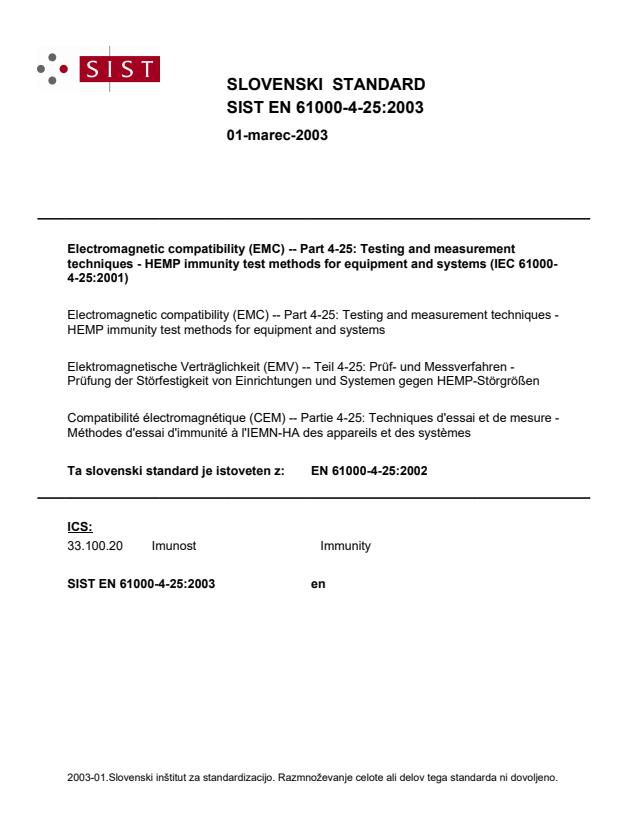
SLOVENSKI STANDARD
01-marec-2003
Electromagnetic compatibility (EMC) -- Part 4-25: Testing and measurement
techniques - HEMP immunity test methods for equipment and systems (IEC 61000-
4-25:2001)
Electromagnetic compatibility (EMC) -- Part 4-25: Testing and measurement techniques -
HEMP immunity test methods for equipment and systems
Elektromagnetische Verträglichkeit (EMV) -- Teil 4-25: Prüf- und Messverfahren -
Prüfung der Störfestigkeit von Einrichtungen und Systemen gegen HEMP-Störgrößen
Compatibilité électromagnétique (CEM) -- Partie 4-25: Techniques d'essai et de mesure -
Méthodes d'essai d'immunité à l'IEMN-HA des appareils et des systèmes
Ta slovenski standard je istoveten z: EN 61000-4-25:2002
ICS:
33.100.20 Imunost Immunity
2003-01.Slovenski inštitut za standardizacijo. Razmnoževanje celote ali delov tega standarda ni dovoljeno.
EUROPEAN STANDARD EN 61000-4-25
NORME EUROPÉENNE
EUROPÄISCHE NORM March 2002
ICS 33.100.99
English version
Electromagnetic compatibility (EMC)
Part 4-25: Testing and measurement techniques –
HEMP immunity test methods for equipment and systems
(IEC 61000-4-25:2001)
Compatibilité électromagnétique (CEM) Elektromagnetische Verträglichkeit (EMV)
Partie 4-25: Techniques d'essai Teil 4-25: Prüf- und Messverfahren -
et de mesure – Prüfung der Störfestigkeit von
Méthodes d'essai d'immunité Einrichtungen und Systemen
à l'IEMN-HA des appareils et gegen HEMP-Störgrößen
des systèmes (IEC 61000-4-25:2001)
(CEI 61000-4-25:2001)
This European Standard was approved by CENELEC on 2002-03-05. CENELEC members are bound to
comply with the CEN/CENELEC Internal Regulations which stipulate the conditions for giving this European
Standard the status of a national standard without any alteration.
Up-to-date lists and bibliographical references concerning such national standards may be obtained on
application to the Central Secretariat or to any CENELEC member.
This European Standard exists in three official versions (English, French, German). A version in any other
language made by translation under the responsibility of a CENELEC member into its own language and
notified to the Central Secretariat has the same status as the official versions.
CENELEC members are the national electrotechnical committees of Austria, Belgium, Czech Republic,
Denmark, Finland, France, Germany, Greece, Iceland, Ireland, Italy, Luxembourg, Malta, Netherlands,
Norway, Portugal, Spain, Sweden, Switzerland and United Kingdom.
CENELEC
European Committee for Electrotechnical Standardization
Comité Européen de Normalisation Electrotechnique
Europäisches Komitee für Elektrotechnische Normung
Central Secretariat: rue de Stassart 35, B - 1050 Brussels
© 2002 CENELEC - All rights of exploitation in any form and by any means reserved worldwide for CENELEC members.
Ref. No. EN 61000-4-25:2002 E
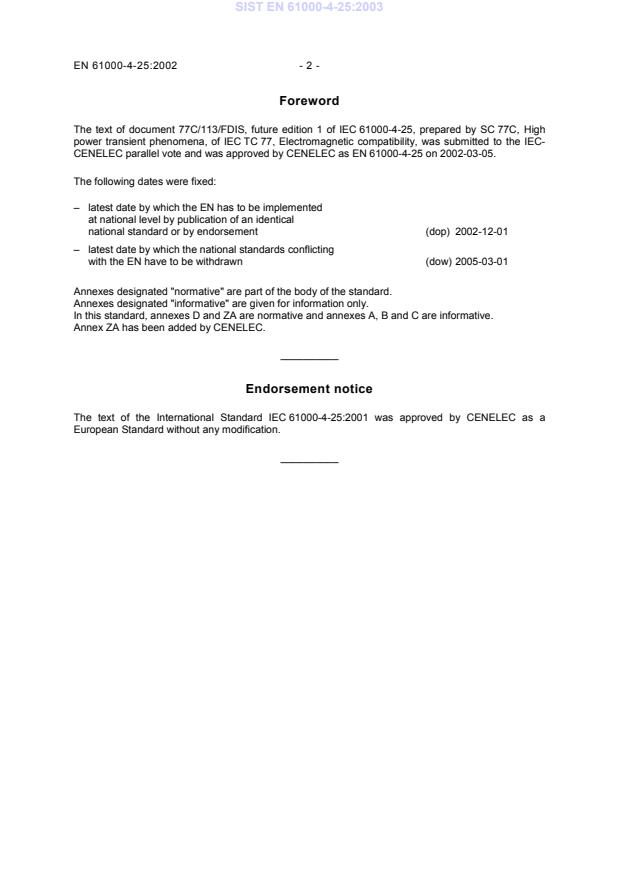
Foreword
The text of document 77C/113/FDIS, future edition 1 of IEC 61000-4-25, prepared by SC 77C, High
power transient phenomena, of IEC TC 77, Electromagnetic compatibility, was submitted to the IEC-
CENELEC parallel vote and was approved by CENELEC as EN 61000-4-25 on 2002-03-05.
The following dates were fixed:
– latest date by which the EN has to be implemented
at national level by publication of an identical
national standard or by endorsement (dop) 2002-12-01
– latest date by which the national standards conflicting
with the EN have to be withdrawn (dow) 2005-03-01
Annexes designated "normative" are part of the body of the standard.
Annexes designated "informative" are given for information only.
In this standard, annexes D and ZA are normative and annexes A, B and C are informative.
Annex ZA has been added by CENELEC.
__________
Endorsement notice
The text of the International Standard IEC 61000-4-25:2001 was approved by CENELEC as a
European Standard without any modification.
__________
- 3 - EN 61000-4-25:2002
Annex ZA
(normative)
Normative references to international publications
with their corresponding European publications
This European Standard incorporates by dated or undated reference, provisions from other
publications. These normative references are cited at the appropriate places in the text and the
publications are listed hereafter. For dated references, subsequent amendments to or revisions of any
of these publications apply to this European Standard only when incorporated in it by amendment or
revision. For undated references the latest edition of the publication referred to applies (including
amendments).
NOTE When an international publication has been modified by common modifications, indicated by (mod), the relevant
EN/HD applies.
Publication Year Title EN/HD Year
1)
IEC 60050-161 - International Electrotechnical Vocabulary--
(IEV)
Chapter 161: Electromagnetic compatibility
- 1) 2)
3)
IEC 60038 (mod) IEC standard voltages HD 472 S1 1989
4)
IEC 60068-1 1988 Environmental testing EN 60068-1 1994
Part 1: General and guidance
1)
IEC 61000-2-5 - Electromagnetic compatibility (EMC) --
Part 2-5: Environment - Classification of
electromagnetic environments - Basic EMC
publication
1) 3)
IEC 61000-2-9 - Part 2: Environment - EN 61000-2-9 1996
Section 9: Description of HEMP
environment - Radiated disturbance
1) 3)
IEC 61000-2-10 - Part 2-10: Environment - Description of EN 61000-2-10 1999
HEMP environment - Conducted
disturbance
1)
IEC 61000-2-11 - Part 2-11: Environment - Classification of--
HEMP environments
1) 3)
IEC 61000-4-4 - Part 4-4: Testing and measurement EN 61000-4-4 1995
techniques - Electrical fast transient/burst
immunity test
1) 3)
IEC 61000-4-5 - Part 4-5: Testing and measurement EN 61000-4-5 1995
techniques - Surge immunity test
1)
Undated reference.
2)
The title of HD 472 S1 is: Nominal voltages for low-voltage public electricity supply systems.
3)
Valid edition at date of issue.
4)
EN 60068-1 includes corrigendum October 1988 + A1:1992 to IEC 60068-1.
Publication Year Title EN/HD Year
1) 3)
IEC 61000-4-11 - Part 4-11: Testing and measurement EN 61000-4-11 1994
techniques - Voltage dips, short
interruptions and voltage variations
immunity tests
1) 3)
IEC 61000-4-12 - Part 4-12: Testing and measurement EN 61000-4-12 1995
techniques - Oscillatory waves immunity
test
5) 5)
IEC 61000-4-13 - Part 4-13: Testing and measurement EN 61000-4-13 -
techniques - Harmonics and
interharmonics including mains signalling
at a.c. power port, low frequency immunity
tests - Basic EMC publication
5)
IEC 61000-4-20 - Part 4-20: Testing and measurement --
techniques – Emission and immunity
testing in transverse electromagnetic
(TEM) waveguides
1)
IEC 61000-5-3 - Part 5: Installation and mitigation --
guidelines -
Section 3: HEMP protection concepts
1)
IEC/TR 61000-5-4 - Part 5: Installation and mitigation --
guidelines -
Section 4: Immunity to HEMP -
Specifications for protective devices
against HEMP radiated disturbance
1)
IEC 61024-1 - Protection of structures against lightning--
(mod) Part 1: General principles
- 1)
ISO 7137 - Aircraft - Environmental conditions and test--
procedures for airborne equipment
5)
To be published.
����� ���
�������������� ���
����������
�������������
����������������
��������
�������������
�������
�<=����������������������������
=����������<=��������
���������������������������������������
����������!
"��#�����$�%&�$$������%����$�����
���#�%�$�%&�$$���%&���������’��&���(�)*
%�$���������$����%�$�$+$�,��$
����������������������������+��������
��������!
"�$�������%����$�����������#�����$��
)�� ��������+���$�����#�%$�-������������
��%�$+$���$
©�����������������������%���# ����������&����⎯����%’��(!����$�����(!��������&��
�# #���%$�������� �����%#)�� $��������%�#��*������%���#������ ���%$����+��!���%#)�� $������$’�)����%���# ������#����/�����
#����������#��"#��"#��+�����"#�� ����������%$��$# #��%�� ���, $�’� +���� ��� )’� $�’� ��$��,� ��� ����� � ��� �� !$�� $�,
��� �����"#���#� �� $��"#�,� ’� ��%�����$�%!��� �%��� ������ �� �#���(�%!��� �%’��(�$����� ��+���,�0��!�#��%������������
�� ��+����,��$����-$ ����� ��������-�����#�. 0�����(�+�����!��%#)���!��.
������$����$����� ����� !�� $������������ 1,��#�����2$���)���3���&$,��0��/���$��
����+$45�67�����8�8��1�� ���$��5����$��9�� . ! �����0�)�������!��%5::000.�� . !
��������;
������������ ��� ����� !��"#�� ������$����$��
;
����������
�������$����$�� ��� ����� !�� $�� ����������
������������������������������������
��������������������������������
>�����7��?�©����5���� @�1�@
��������
����A���.B
������<�����.��
� � �%�.�1
� ����$��&����+���� ��.�1
1 ��+�������� .�?
7 3����$� .�1
? ���#���’�������$������#���’��������&��� .�1
?.� ������# ���� .�1
?.� ���#���’������.�1
?.1 ���#���’��������&���.�?
?.7 �$��$��������#�)$� �������.�?
?.7.� �$��$�������#���’��������&���.�?
?.7.� �$��$�������#���’�������%� �+� $�����.�?
?.7.1 ��$����$��$���������+$ ������� .�B
?.7.7 �$�(��C�������#�$���� .�8
?.7.? ���"#�� ’����$����%� ��#����"#��������.1�
?.? ����# ��������#�)$� �������.11
?.?.� ����# �������#���’��������&���.11
?.?.� ����# �������#���’�������%� �+� $�����.18
> ������"#�%����.7�
>.� �$��$����+����������.7�
>.�.� �$��$����+�����(����$���.7�
>.�.� �����#����$����.7�
>.� ����# ��������#�)$� �������.71
>.�.� �����(����$���.71
>.�.� �����#����$����.7B
B ���������#%.7B
B.� �$��$��������#�)$� ������ .7B
B.� ����# ��������#�)$� ������ .78
D �����%�� ��#�� .78
D.� ����$�� � ���������.?�
D.� ���#���’��������&���$���������4%��#���.?�
D.1 �$��$��������#�)$� �������%�� ��#��.?1
D.1.� �����%$�$��������$�#������� .?1
D.1.� �$��$���������%�� ��#��.?1
D.7 ����# ��������#�)$� �����#���’������%�� ��#�� .??
D.? ������4� #����.?B
D.?.� �4� #������+��!���$��$�������#���’�����.?B
D.?.� �4� #������+��!�� ���# �������#���’�����.?B
8 ��������#����$����������%���� .?8
����4���E��+���$��&�F���$����$���+����!�����#���’��������&���.>�
����4�=�E��+���$��&�F������# �������#���’�������+���$�����$�.B8
����4���E��+���$��&�F������# ��������#�)$� �����#���’������.D1
����4���E����$��&�F���$�%����� ���$���’�0$&������.8�
>�����7��?�©����5���� @�?�@
��(#�����@����"#�� ’����$����%� ��$���$(���#���)��0��������GC/�$���1����C/.�B
��(#����.��@�=�� G���$(�$��+��������$�����������#���’������ .D?
��(#����.��@��4$�%����+�$����%��+���� �� #�����$(�$���+�$�+$�����$������:)#����(����$���.D?
��(#����.1�@�A$&��!$%���+�$�������%#���������$�?�����$�.DB
��(#����.7�@��4$�%����+�$�������(����$����E���� �$#����.��+������$���F.DB
��(#����.?�@�A$&��!$%���+�$�������%#���������$�?�����$�.D8
��(#����.>�@����%��+����)�� G���$(�$��+���������#���’��������&���.D8
��(#����.B�@�A$&��!$%���+��!��������0�%#���.D8
�$)�����@��$��$�������#���’��������&������+���������!��%���������$��$��.�?
�$)�����@��$��’������ ���# �������#���’��������&��� .1?
�$)���1�@����������$��������C���� ���# �������#���’��������&���.1B
�$)���7�@�����# ������&������������#���’��������&����+����$��������C���.18
�$)���?�@��$��������C���� ���# ������&����������++� ���������+�����0�&���$(��$. .
%�0���%����.18
�$)���>�@�����# ����C�������#���’�������%� �+� $�����.7�
�$)����.��@��$��$�������#���’��������&��� .>1
�$)����.��@�����# ���� ������������$��’������C������&���������.>?
�$)����.1�@��$��’������C���� ���# ������&��������������2� �� #����E��0�&���$(�
�� #����#%����������2.F .>B
�$)����.7�@�����# ������&����������+����$��’������C��� .>8
�$)����.?�@��$��’������C���� ���# ������&�������������#���’��������&����+����2
�� #����E��0�&���$(�� �� #����#%���������2F.B�
�$)����.>�@��4$�%����$��’������C�������#���’��������&����+���&$���#��$%%�� $�����.B1
�$)����.��@�����B�1B������%�� ��#�����+���� ���#�)���1.D.8�
�$)����.��@�23� #��������H� ���������.81
�$)����.1�@���������7>���.81
>�����7��?�©����5���� @�B�@
������������������������C����������������
...........
�/��"01�*2(�"����1� *"�3�/�"4��������
��������!�"�$�������%����$�����������#�����$��
)�� ��������+���$�����#�%$�-���������������%�$+$���$
����A���
�F �!������E������$����$����� ����� !�� $������������F����$�0����0������($��/$�����+�����$��$���/$����� ��%�����(
$��� �$����$�� ��� ����� !�� $�� ���������� E���� �$����$�� ����������F.� �!�� �)H� �� �+� �!�� ���� ��� ��� %������
������$����$�� ��%��$��������$���"#�������� �� �����(���$��$���/$���������!����� ��� $��$������ ����� �+�����.���
�!�������$������$�������������!���$ ��&�����,� �!�� ���� %#)���!��� ������$����$�� ��$��$���.� �!���� %��%$�$����� ��
����#����� ��� �� !�� $�� ���������I� $�’� ���� �$����$�� ���������� ����������� ��� �!�� �#)H� �� ��$��� 0��!� �$’
%$��� �%$�������!���%��%$�$���’�0��G.�������$����$�,�(�&�������$��$�������(�&�������$����($��/$��������$����(
0��!��!������$����%$��� �%$�������!���%��%$�$����.��!������ ���$)��$���� �����’�0��!��!��������$����$����($��/$����
+��� ��$��$���/$����� E���F� ��� $ ���$� �� 0��!� ���������� ����������� )’� $(�������� )��0���� �!�� �0�
��($��/$�����.
�F �!�� +���$�� �� ������� ��� $(��������� �+� �!�� ���� ��� �� !�� $�� �$������ �4%����,� $�� ��$��’� $�� %����)��,� $�
������$����$�� ������#���+��%�������������&$����#)H� ������ ���$ !��� !�� $�� ���������!$����%������$�����+���
$���������������$����$������������.
1F �!���� #������%���# ���!$&���!��+�����+��� ������$������+���������$����$��#���$���$���%#)���!�������!��+���
�+� ��$��$���,� �� !�� $�� �%� �+� $�����,� �� !�� $�� ��%����� ��� (#����� $��� �!�’� $��� $ �%���� )’� �!�� �$����$�
���������������!$�������.
7F ������������%�������������$����$��#��+� $����,������$����$�������������#�����$G�����$%%�’�����������$����$�
��$��$���� ��$��%$�����’� ��� �!�� �$4��#�� �4����� %����)��� ��� �!���� �$����$�� $��� ��(���$�� ��$��$���.� ��’
��&��(�� ��)��0�����!��������$��$���$����!�� �����%�����(��$����$�������(���$����$��$����!$���)�� ��$��’
���� $��������!���$����.
?F �!������%��&���������$�G��(�%�� ��#���������� $�������$%%��&$��$��� $�����)��������������%����)���+���$�’
�"#�%������� �$�������)����� ��+�����’�0��!������+�������$��$���.
>F ���������������$0������!��%����)����’��!$��������+��!������������+��!���������$����$����$��$����$’�)���!���#)H� �
�+�%$�������(!��.��!�������!$�������)��!�������%����)���+���������+’��(�$�’����$����# !�%$�������(!��.
������$����$����$��$�������>�����7��?�!$��)����%��%$����)’��#) ���������BB�5�C�(!�%�0��
��$�������%!������$,��+������� !�� $�� ���������BB5���� ����$(���� � ��%$��)����’.
���+�����%$���7��?��+�����>����.����!$���!����$�#���+�$�)$�� �����%#)�� $��������$ ���$� ��0��!
����3#������B.
�!����4���+��!�����$��$������)$��������!��+����0��(��� #�����5
���� ��%�������&����(
BB�:��1:���� BB�:��B:�2�
�#�����+���$���������!��&����(�+����!��$%%��&$���+��!�����$��$��� $��)��+�#�������!����%������
&����(����� $��������!��$)�&���$)��.
�!���%#)�� $�����!$��)������$+�������$ ���$� ��0��!��!�����:�������� ��&��,��$���1.
����4���+�����$������(�$��%$����+��!�����$��$��.
����4����,�=�$�����$���+�����+���$��������’.
>�����7��?�©����5���� @�8�@
�!�� ���������!$���� ������!$���!�� ��������+��!���%#)�� $�����0�������$���#� !$�(���#����
���D.�����!����$��,��!��%#)�� $�����0����)�
•� �� ��+�����I
•� 0��!��$0�I
•� ��%�$ ���)’�$���&������������,���
•� $������.
>�����7��?�©����5���� @����@
������<�����
�!�����$��$������%$����+��!������>�����������,�$ �����(�����!��+����0��(����# �#��5
�����!�2������
3����$�� �������$������E������# ����,�+#��$����$��%��� �%���F
��+��������,����������(’
�����!���5��������
��� ��%������+��!����&��������
��$���+� $������+��!����&��������
���%$��)����’���&���
����6!�/����$
���������������
���#���’��������E������+$��$���!�’��������+$���#������!�����%����)����’��+�%���# �� ���������F
�����!�"�$�������%����$�����������#�����$
��$�#��������� !��"#��
������(��� !��"#��
�����!���$������������%���������������%�����$
����$��$�����(#��������
����($��������!����$�����&� ��
�����!�2�������$���%��%$
����7!���$���������$
�$ !�%$������+#��!����#)��&������������&��$��%$���,�%#)���!������!���$��������$����$����$��$���
���$���� !�� $���%� �+� $����������� !�� $����%����,�������+�0!� !�!$&��$���$�’�)����%#)���!��
$���� �����.���!����0����)��%#)���!���0��!��!��%$����#�)���+����0���)’�$��$�!�$��� ��%�����
)’�$��� �����#�)���������+’��(��!���#)��&������E�4$�%��5�>�����>��F.
>�����7��?�©����5���� @��1�@
�/��"01�*2(�"����1� *"�3�/�"4��������
��������!�"�$�������%����$�����������#�����$��
)�� ��������+���$�����#�%$�-���������������%�$+$���$
�� 8����
�!��� %$��� �+� ���� >����� ��� ��)��� �!�� ���#���’� ����� ��&���� $��� ���$���� ����� ���!���� +��
��� ��� $�� $��� ��� ����� � �"#�%����� $��� �’������ �4%����� ��� !�(!�$����#��� ��� ����$(����
%#����EC���F���&���������.������+������$�(����+����#���’��������&����$������$)���!�������
%�� ��#���.��%� �+� $������+���������"#�%�����$��������#����$��������������#%,������%�� ��#���,
%$��:+$��� ������$,� $��� ����� �� #����$����� ��"#��������� $��� $���� ��+����� )’� �!��� ��$��$��.
�!����������$�����������������������$����!�����#���’��+���� ��� $��$������ ����� ��"#�%����
0!����#)H� �������C�����$��$����$��� ���# ������� ����$(���� �����#�)$� ��.������$��$���
����#�)$� �� ���#���’� �����,� �%� �+� $������ $��� ��+����� ��� �!��� ��$��$��� )��!� +��� ��$��� ����
+$ ��������$����$�(��C�������#�$����.
�!��� %$��� �+� ���� >����� ��+����� �%� �+� $������ +��� �$)��$���’� ���#���’� �����.� �������� �����
%��+����������"#�%���������!��+��$������$��$��������&���+’����#���’�$���$�����%� �+���.��!���
&���+� $����� ������ #��� �!�� �$��� �%� �+� $������ $�� �$)��$���’� �����,� �4 �%�� +��� �!�� ���$��
��&��������$���%� �+� $�����.
�!���)H� ��&���+��!���%$����+�����>��������������$)���!�$� ������$�����%���# �)���)$����+��
�&$�#$���(��!��%��+���$� ���+���� ��� $��$������ ����� ��"#�%����,�0!����#)H� �������C���
�$��$���� ��&���������� $��� �!�� $��� �$���� ���# ���� ��$�������� ��� %�0��,� $�����$,� $��
��%#�:�#�%#��E�:�F���(�$��$��� ������������.
�� (������5����-������$
�!��+����0��(�����$��&���� #������ ���$���%��&�������0!� !,��!��#(!���+���� ������!�����4�,
������#���%��&��������+��!���%$����+�����>����.������$������+���� ��,��#)��"#����$���������
��,������&��������+,�$�’��+��!����%#)�� $�������������$%%�’.�C�0�&��,�%$���������$(��������
)$��������!���%$����+�����>�����$����� �#�$(��������&����($����!��%����)����’��+�$%%�’��(��!�
������� ��������������+��!������$��&���� #���������� $����)���0.�����#��$������+���� ��,��!�
�$��������������+��!������$��&���� #�������+���������$%%����.����)�����+�����$��������$���$��
��(��������+� #������’�&$����������$����$����$��$���.
����>��?�E�>�F,� �������������� ����������������� ����������� �� �������� ����� ���������������
�������������
����>��1D,��������� �� ���������
����>��>D��5�8DD,���������������������������������!��������� ���� ����
����>�������?,� ���������������� �������������� "�#�$� �� ����� %�� ������������ �� &������� ’�
������(���������(�����������������������������)�=$�� �����%#)�� $����
>�����7��?�©����5���� @��?�@
���� >�������8,� ���������������� �������������� "�#�$� �� ����� %�� ������������ �� &������� *�
+������������(�,�#����������������-� ���� � ����������)�=$�� �����%#)�� $����
����>���������,� ���������������� �������������� "�#�$� �� ����� %�� ������������ �� &������� �.�
+������������(�,�#������������������� ���� � ����������
����>���������,� ���������������� �������������� "�#�$� �� ����� %�� ������������ �� &������� ���
������(���������(�,�#��������������)�=$�� �����%#)�� $����
����>�����7�7,� ���������������� �������������� "�#�$� �� ����� /�� 0������� �� � �����������
������1������&�������/�������������(�������������2�������������������)�=$�� ������#)�� $����
����>�����7�?,� ���������������� �������������� "�#�$� �� ����� /�� 0������� �� � �����������
������1������&�������’��&������������������
����>�����7���,� ���������������� �������������� "�#�$� �� ����� /�� 0������� �� � �����������
������1������&������������������� ��������������������������� ����������������������������������
����>�����7���,� ���������������� �������������� "�#�$� �� ����� /�� 0������� �� � �����������
������1������&��������%��3�����������4������������������
����>�����7��1,�������������������������������"�#�$��������/5�6��0��������� ������������
������1������,����������� ��������������������� �������������������������)�)���4�����������4
�
(��1�����������������������=$�� ������#)�� $�����
����>�����7���,�������������������������������"�#�$��������/5%.��0��������� ������������
�
������1����������������� ������������������������������������������������"0�#$�4������ ��
����>�����?�1,� ���������������� �������������� "�#�$� �� ����� ’56�� ������������� �� � ����������
��� ���������,�#���������������������
����>�����?�7:��,�������������������������������"�#�$��������’����������������� �����������
��� ������� �� &������� /�� ��������� ��� ,�#�� �� &����(��������� (��� ����������� ������� �������
,�#���� ���� � ����������)�=$�� ������#)�� $����
����>���7��,�������������(����������������������������������������!�����������������
����B�1B,�7�����(��������������������� ��������� ����������� �����(�������������1�������
6� 9�-�������$
�����!��%#�%�����+��!���%$����+�����>����,��!��+����0��(���+���������$%%�’.
6:�
������������+���5��
�%� �+������� ����$(���� �����#�)$� ����&���#����$��$���+���� ����&���+��� �������$���������!�
������(��+����������$������#���’�������
J��2��>���1���K
LLLLLLLLLLL
�
����)��%#)���!��
>�����7��?�©����5���� @��B�@
6:�
����������)�� �
�����$ ������+���� ����$(���� �+������0��!�$��’��������%���# �� #�������$���&���$(�������’����
�#�+$ ���$��� $)���
6:6
��������������
��&� ���+���+����������������$��� !$�$ ������� ��+��� ����������� �#%���(��+��!������#�)$� �
��(�$������!�� �� #���#����������0��!�#��$�’�($�&$�� � ���� ����������
6:�
������������;��<
��� ��� $�� �� #���+����!��%#�%�����+���$��+�����(�����(’�+�������� �� #������$���!��
6:�
%�������������;��<
��� ��� $�� �� #���+����!��%#�%�����+�%��&�����(��&���&���$(���$%%���������!���<��+����$++� ���(
��!�����&� ��,��"#�%���������’�����,�0!� !�$�������#���������
6:�
%����%��������-����-��������
#�����������%$��#�������!���%��$����$��%��+���$� ���+�$�’���&� �,��"#�%���������’�����+���
�������������%��+���$� �
������ �!�������M��(�$�$����N� $��$%%�’����$����%��$�’����%���$�����+$��#��.
J��2��>������8K
6:=
����������������%�$��������
$�’���� ����$(���� �%!���������0!� !��$’���(�$����!��%��+���$� ���+�$���&� �,��"#�%����
����’����
J��2��>������?,�����+���K
6:>
���������������������-������
��(�$�$������+��!��%��+���$� ���+�$���&� �,���$���������� !$���������’����� $#����)’�$�
��� ����$(���� �����#�)$� �
J��2��>������>K
6:7
����������������$�$����������+
��$)����’��+�$���&� �,��"#�%���������’��������%��+����0��!�#����(�$�$���������!��%����� ���+�$�
��� ����$(���� �����#�)$� �
������ �#� �%��)����’����$��$ G��+����#���’.
J��2��>�������K
6:��
�?"��������������%�����$��
�!���"#�%�����#���������� $��)��$����(���#��������#���%���#���������� ���� ����)’� $)���,��$�$
���G�,��� .
������ �#���%���#���������� ���� ����)’� $)���,��� .�$���$���� $�����$��’�����J����1.�B�)���0K.
>�����7��?�©����5���� @��8�@
6:��
-�$��@�����������$-���
@@"
�$�!��$�� $��%�� ��#���+����$%���’� ��%#���(��!������ �������&�������#�������$��+�����+�$�����
�
���$�����(�$������+�$�+��"#�� ’����$����%� ��#�,����%� ��&��’.������"#������ �E��O�����(��F
�$�$�%�������!$��$����"#$��’��%$ ��������������+��"#�� ’,�$�����&��&����# !������ ��%#�$����
������!$��$���$��$������ �������#�������$��+����E���F
6:��
�����%���-������������
+�$�� ���# ��&���#�+$ �,�0!����%������$�����#����$��$� ��������+���� �
J��2��>���7�1>K
6:�6
)A�����$��$$��������
%�0��������0��!�$������$��$. .��’�����&���$(���"#$��������(��$�����!$������G2
6:��
$#�������������������
�
$�
#���������#����(�+����$��$)����$�� ���� ������+����$��&��’���0�������$� ��)��0�����0��%�����
�+���++������%������$������$� �� #��
6:��
�������+�������%�$���������
$)����’��+�$���&� �,��"#�%���������’��������%��+����0��!�#����(�$�$���������!��%����� ���+�$�
��� ����$(���� �����#�)$� �
J��2��>�������K
6:��
�������+���5��
�$4��#�� ��&��� �+� $� (�&��� ��� ����$(���� � ����#�)$� �� �� ������ ��� $� %$��� #�$�� ��&� �,
�"#�%����� ��� �’����� +��� 0!� !� ��� ���$���� $%$)��� �+� �%��$���(� $�� $� ��"#����� ��(���� �+
%��+���$� �
J��2��>���1��7K
6:�=
�������+���$����5��
&$�#���+�$����+�#�� ��(���� ����$(���� �"#$����’��%� �+����+���$�����#���’�����
������ ���������)���������!$���!����4���+��!�����+������������!���$���$��+�����&����’���&��.����������$��$��� $���%� �+’
��&��$����&����’���&����$ �����(������++���������#���’���&���.
6:�>
������)�� �$��������
��$���������� ����$(���� �%#���������+$ ����’�0��!�$������&��#����#++� �����’��$�(�����������)H� ��
0��!� #)� $��������������"#$��������(��$�����!$���������������
6:�7
/A����;�5����������;����������
%�0��� �� #���0��!�$������$��$. .�&���$(��)��0��������2�$���������2
������ �!����$��$���&���$(�������!���&���$(���$�(��$���%����������������>��1D.
>�����7��?�©����5���� @����@
6:��
�A����%����5��������%�$������������;�������
%�0��������0��!�$������$��$. .�&���$(��$)�&����G2�$��������4 �����(�1?�G2�#�������������)#��
%�0���0��!���$��� $��$��$
������ �!����$��$���&���$(�������!���&���$(���$�(��$���%����������������>��1D.
6:��
�������-�����+
������-�����+
��
�!��%!’�� $���� $�����E%����:%���F�����!����� ����$(���� �)$�����,�0!�����������(’��$’���������
�4���$���%���(� $��&��#��,�#������$��$��"#$�������%���� ��&����&� �����%��&����.�������������
�������� ��� $� (������� $�� %����.� ����� $��� �$���+���� $�� $%���#��� ����� ��� ���# ���� ����,
$ �����(�����!���’%���+�%�����$����.��!�’�$���$���� �$���+����$��$� !��� �#�$�,��� !$�� $�,
���# �#�$�������� ��� $������,�$ �����(�����!��$� !��� �#�$����(�������(���� �%��������0!� !��!�’
$���#�#$��’��� �#������
6:��
���$��;�%�#
����������&$��)��0�����!��%����������!����$���(�$�����$����(���(����+�$�%#����$��0!� !��!�
����$��$���#��&$�#�����?��P��+��!��%�$G�%#����$�%���#��
6:�6
��$���������-������$��
�����&$���+������)��0�����!������$����$��0!� !��!������$��$���#��&$�#���+�$�%#����+�������$ !���$
�%� �+������0���&$�#��$����!���$��%� �+����#%%���&$�#�
J��2��>������?K
������ ����!�����$��$��,��!����0���&$�#���������E��F�%�� �����+��!��%�$G,�$����!��#%%���&$�#����������’�E8�F�%�� ���
�+��!��%�$G�&$�#�
6:��
$�5����+���5��
&$�#���+�$����+�#�� ��(���� ����$(���� �"#$����’��%� �+����+���$�����#���’�����
������ ���������)���������!$���!����4���+��!�����+������������!���$���$��+������#���’��������&��.����������$��$��� $�
�%� �+’���&��$����&����’���&����$ �����(������++���������#���’���&���.
6:��
$�������%����%���$��-������+
�$)��$���’���$���������� ����$(���� �%#���������+$ ����’��# !�$��$����� ����0��!�$������&��#��
�#++� �����’��$�(�����������)H� ���0��!� #)� $�������������������!$����×���×��������
6:��
$����������������%�5�����8 9�
��&� ������#%%���������� ���# �����&��&���$(���$��� #������
������ �4$�%����$����#�(���#%%����������+������������>���7��.
6:�=
$+$���
�#���%����"#�%����������� ��� $��#����� ���� ����)’� $)���,��$�$����G�,��� .
6:�>
��$��5������
&��#������0!� !��!���� ��������� ����$(���� �+����������,�����4 ���,��!����"#����������(�!�$��
+�����#��+�����’���"#��������.
>�����7��?�©����5���� @��1�@
6:�7
����$����
%!���������0!� !�&$�����)��0�����0�� ���� #��&�����$�’���$�����#���(�$�����������&$���!���
��%$����0��!��!�������� $����+���������
J��2��>�������K
6:6�
�������������5������
�
��
&���$(��)��0����%���������$� �� #���0!���������+��!��%������0$�� ��$����)’��%����(����)��$G��(
�!�� �� #��
�� 2������
�!�� �# ��$�� !�(!�$����#��� ��� ����$(���� � %#���� ����� �������� �+� �0�� �$H��� %$���5� �$��$���
���#���’�������(�$��� ���# �������#���’�������(.��!���$��$�������#���’���������%��+������+��
�!�� %#�%���� �+� ��������$���(� �!$�� �!�� �"#�%����� #����� ����� !$�� �!�� $)����’� ��� �����#�
+#� ������(�0!����4%���������� ���� �C����+�����.������$��’,��!�� ���# �������#���’��������
%��+������+����!��%#�%�����+���������$���(��!$���!���"#�%�����#����������0��������)��$�&�����’
$++� ����)’��4%��#��������� ���� �C������$�������.��!������$��������$��� #������$���&���$(�
%#����� ��� ���# ����� E0����,� $)���F� �!$�� $��� ���� ���� ��� �!�� �"#�%����.� ��� (����$�,
���# ����C������$�����������# ������%�0���$������� ���������$����+�����!���������&���
�!��$��� ��� �"#�%����.� �!�� ���#���’� ������ ��� ��)��� ��� �!��� ��$��$��� ��&��&�� !$/$���#�
&���$(��.�C�(!�&���$(��%�� $#������0����)���� ���$�’����%���� ���!��!�$��!�$����$+��’��+�����
%��������.
�� �������+���$�$���%��������+���$����5��$
�:�� �����%������
�!��� ��$��$��� !$�� )���� ��&���%��� ��� �%� �+’� �!�� C���� ���#���’� ����� +��� ��� ��� $�� ��
��� ����� ��"#�%�����$����’�����.��!���������������$���0��$�#+$ �#��������"#$��+’��"#�%����
�$��’�����!������(�� ’ ��,�$������#����$�’��+��!���$��������$)��$���’����#���’��������!$��$��
$���$�’�%��� ��)���+�����!�������%#�%����.
�:�� �������+���$�$
C���� ���#���’� ������ ������� �+� �0�� �$H��� �’%��5� �$��$���� ���#���’� ������ $��� ���# ���
���#���’������.������!��%#�%�����+��!�����$��$��,��!�������Q��� ����� ��"#�%����Q���������$�
$%%$�$�#���!$��%��+�����$��%� �+� �+#� ����.��!��� �#���)��$���$��� ��%#�������$�����%!���.
������"#�%�����E+����4$�%��,�$� ��%#���� ���� �������$�������$��%���%!��$����# !�$�� ������
)�$���������������%�� ���������$�+$ ���’F��$’�)�� ����������$��%$����+�$��$�(����’����.��+���,
��� ����� ��"#�%�����$������$��&��’���$���@�����!���������+�����4�����4����������$����.������
�4%� �����!$��������+��!������������# !���$����"#�%�����0����)��%��+����������$)��$������
#���(� #��������H� ��������#�$�����$������� ����.
����C����E$������F������,���/�� $��)��$����%���$���+$ ���,���� ��&��’��$�(���’�������$’�)�
��++� #����������,���%� �$��’�)’��$��$����+�����.����(����$�,��$��$����+���������������’������$��
�$�(�� �"#�%����� 0��!� ����������� (��$���� �!$�� ���� ��� $� ����� 0���� ��"#���� $� �$�(�� C���
���#�$���.�����$�%� ���+�C����������(��!$�������++������+������!���G������+�����������(�����!$�
�!����$�����&��$���$�(��E∼�����!�(!F��$��’������E��R��� µ�F�C�������#�$������!��#(!�#���!�
0����.�������%����)�������4%����������’������$����$�(���"#�%���������!���$��’������C���
>�����7��?�©����5���� @��?�@
�!��$��)’���%���# ��(��!��%#�������� ��� �$����$(���� �+�����.��!�������#�$�����$���$����#��+#�
���&���+’��(��!$���"#�%���������(����$����������+���C�����#�&�&$��$���!���"#�%�������&��,�0���
0��G�%��%���’�0!�������(�$���������$� ��%������’����.
�:6� �������+���$����5��$
�!�����$��$�����+�������� ����$(���� �����#�)$� ����!$����%��������!����0!� !� �#������#���$�
�!���"#�%�����%������#�����$�!�(!�$����#����# ��$���&���.��!������� ����$(���� �����#�)$� ��
0���� )�� �!�� ���#��� �+� �!�� �$��$���� $��� ���# ���� C���� ��&���������,� $�� ����+���� )’� $�’
%���� ����� ��������.� �!���� ��� ����$(���� � ����#�)$� ��� $��� ��� ��)��� ��� ����>�������8,
����>���������� $��� ����>���������.� �!�� �$����$��� +��� �!�� ���#���’� ����� ��&���� $��� �!��$�
���# �������#�����%���� ��������������$���%��)$)���+�$�!�&����$������ ��)������$���4��.
�:�� 0�%����%�%�$�����������$�$
�:�:�� 0�%����%��������+���$����5��$
�!���$��$�������#���’��������&������� ��)���)���0���&��&�����’��!���$��’�������$��$����+�����.
������(� +��� �!�� ���������$�������� $��� �$�������� C���� +������ $��� ���� ��"#����.� ��+���$����
��($����(��!������ ������+��!�����#���’��������&�������(�&������$���4��.��!��%�$G�&$�#����+��!�
�$��’��������� ��� �+����,�� ,�+������� �������#���’��������&����$��������������$)����.
%�$G
"���������0�%����%��������+���$����5��$�%�-���%�����#�����$����$���%��%
�
�������+���$����5�� "�$���������%�-���������������% ��-���%����<�5����
�
$+$���$�;��#��#��-����;���������������
� ��
���<
�� ��� �%��7 �,?
�� ���������$���&$�#� �
�1 ���������$���&$�#� �
�7 ��� �%�����,��=,�1 ?
�? ���������$���&$�#� ��
�> ���������$���&$�#� ��
�B ��� �%�����,��= ?�
�; �%� �$��$%%�� $����� ;
$
�!��%���� ����� �� �%���$������ ��)����������>�����?�1
)
� �����(��������>���������,��$)����
�:�:�� 0�%����%��������+���$��$����-�������$
����!��$)��� ���+�$���)H� ������!�����#�$���,��!����� ��� �+���������!�������&��#������$�0$&�
��%$�$)������$�"#$���%�$���0$&�,�0��!�$���#)����4%������$��%#���������!�����’���� ��)���)’�$
�,?:�?����0$&�,��.�.�$�#��%��$��0$&��0��!�$����P�8��P������������+��,?����$���$�%#����0���!
�"#$������?���.��!���0$&�+�������(�&���)’��!���"#$�����)���0.
−�� −��
�E�F = � ×� × (� −� )���������2:�� E�F
%�$G
0!���
D �� B� ��
α�O�>,��×��� �� ,�β�O�7,��×��� � ,�$��
��O��,1.
>�����7��?�©����5���� @��B�@
� ����!��%�$G�&$�#���+��!����� ��� �+��������&�����%��������.
%�$G
������ � �����!�����#���’��������&������� ����+�����$)����.
%�$G
�������!������������ ����.
�!��+��"#�� ’����$����%� ��$���$(���#���+����"#$�����E�F����(�&���)’
� ×� ×Eα − βF
%�$G
�E� F = ���E2:�:C/F E�F
[]π α π β
EE� � FS�6� SF�EE� � FS�6� SF
0!���
������!��+��"#�� ’����!���/.
���� �!�� 0$&�+���� %$�$������� (�&��� $)�&�,� �!�� +��"#�� ’����$��� �%� ��$�� �$(���#��� �+
�"#$�����E�F�����!�0�����+�(#����.
��@B
��@D
��@8
��@��
�,� � �� ���
���"#�� ’����C/
������%��82.�
@����������@�������+�%������$���������������%�����;��������<)C���%�6����)C:
�:�:6� 8�������%����%���$��-��������$
��$��� ����� +$ �������� $�� ����� �$���’� ����� �!�� �������� +����� �%� �+� $������ 0��!� ��$����
�����$� ������%$�$������&$��$�������!$���!���$�(��C�������#�$����.��!������$���+$ ��������0���
)��#����%���$���’������������$��&��’���$����"#�%����.������$� ���+����!���$��’������C����%#���
0$&�+�����&����!���������%$�$�����%�%��������&��#����+��!����$��������+$ ����’��!$���)��$��+����0�.
@ �!���$�����+�%�$G���� ��� �+���������!��%�$G��$(���� �+������!$���)���"#$�����1BB Ω�T�?� Ω.
@ �!������������)��0�������P�$���8��P��+��!��%�$G�&$�#���!$���)��0��!����!���$�(���+��,����
$����,?���.
@ �!����� ��� �+������!$���)�� �����#�#��’��� ��$���(��#���(��!�����P�$���8��P����������.
@ �!��%#����0���!�E�!��������#�$�����)��0����%����������!����$���(�$�����$����(���(����+��!�
%#����$��?��P��+�� F��!$���)��0��!����!���$�(���+��?����$���1����.
%�$G
⏐��E�F:� ⏐
%�$G
E�:C/F
>�����7��?�©����5���� @��8�@
@ �!���$(���#����+�$�’�%���%#��������!����� ��� �+������!$���)���"#$��������������!$��B�P��+
�!���$(���#����+��!��%�$G�+����.
@ ��� ��� �+�������+�� ������+�����!��������$�����+��!�����#�$�����!$���)��������!$�����P.
@ ��# �#$����������!�������!���+��"#�� ’��%� ��#���+��!����� ��� �+�����$���!�� �������+��!�
�����&��#���E����?.7.?F��!$�������)���$�(����!$��T1��=� ��%$��������!������ $���%� ��#�
(�&���)’��"#$�����E�F�����!��)$��0���!�)��0��������GC/�$���1����C/.
@ ����!��������+��!��%�$G�&$�#���+��!�����#�$����+�����,���!�������%��� �%$����� ����$(����
��%��������!$���)����$������!$�����P��+��!��%�$G�&$�#���+��!�����#�$����+����.
@ �!��%�$G���� ��� �+������!$���)��#��+��������!�������&��#������0��!����!��+����0��(� ������$5��!�
%�$G���� ��� �+�����0��!����!�������&��#����!$���)��0��!����!���$�(���+�� �$���� 6>��=.
%�$G %�$G�
@ ����&$�#$����!��+����������$� ��,���� ��� �$����$(���� �+�������$�#��������$���!�� �����
$����!����(!�� ��������+��!�������&��#����!$���)��%��+����������!��$)��� ���+��!���<�.
�:�:�� /�����)�� �$��������$
�$�(��C�������#�$����� $��)��#�������������$�(���"#�%�����$��� ��%������’�����.��#������!�
&$����’��+��# !����#�$����,��!����$���0�����$�(����+�����������,�%#����0���!��$���$�%���#�����+
�!��+������%���# ���)’��!������&� ��.������"#����’,��$�(��C�������#�$�����$�����&���������
�0���’%��,�)$��������!�����$��$����+�����)�!$&��#�5��’%�����$�����.�3����$��’,��’%�������#�$����
%��&����$��!����������������$���%#����0���!��!$������!���’%��������#�$����.���%��������$�$�’������
��"#�����+���������0��!��’%��������#�$����,���� ���!���������+$ ���������������������!���$��$���
���#���’��%� �+� $������(�&������?.7.�.
�!�����%������+�$����� ��� $�� ��%������0��!���$��’������#�����C������%������������’���
�!��%#�����!$%��E���+��"#�� ’����$����%� ��#�F,�)#��$��������!�� �#%���(�$���%�����$����
�� !$������!$���!��C������(�$���#������%��%$($���(�+�����!���4����$��%���������+��!���’����
����!�� ��%�����.��������� �$������+��’������E�.�.,���$����’������0��!�������(� ���# ���(
$%%���$(��,� ��G�� $� ��)���� ����%!���F,� �!�� C���� �#%���(� 0���� )�� �����$���� )’� $%���#��
%�����$������@�$����!������’�!�(!�+��"#�� ’��� !$����.������"#����’,��!���’%�������#�$����
!$&��(�$��$�(���!�(!�+��"#�� ’��%� ��$�� �������0�#���)�������$)���+���������(.�C�0�&��,���
��!����’%����+��’������ ���$����(����(����4����$�� ���# �����E$�C���$���,�+����4$�%��F,��!�
�����$���C�������%�����0�������#���+�����!��+����� �#%���(�����!��$�����$.��!#�,��!���’%����
���#�$�����0��!�$����0��������$������(���%#����0���!�0�#�����G��’�)��$��"#$���+���������(��!���
%$��� #�$���’�����.
�!�� +$ �� �!$�� ��++������ �’������ $�� ��$ �� ��� ��++������ ��%������� �+� �!�� �� ������ C���
��&��������� ���#���$���� �!�� %����� �!$�� $� %�������� $�$�’���� %��(�$�� ��� �� ���$�’� +��� �’%�� ��
���#�$����.� �!�� %�������� $�$�’���� �!$��� )�� %��+������ ��� ���������� �4$ ��’� !�0� �!�� �’%�� ��
���#�$����+������0���� �#%�������!���’����,�$������$�������!��$��"#$ ’��+��!���’%��������#�$����
+���%��+�����(��!�����#���’�����.��!��$��"#$ ’��+��!��������!$���)����������$����)’� ��%$���(
�!�������$ �����$��� �#%���(����#�����+��!�����#�$����+������0��!��!�����+��!���!������ $��%#���
��� ��)������?.7.�.
�:�:�:�� /�����)�� �$��������$�−−−−��+����
����������(�����!���’%�������#�$����,��!��%�$G���� ��� �+����,�� ,��!$���)�� !�����+�����$)����
%�$G
�����%�����(�����!�����#���’��������&������� ����+����!������.������$� ���+����!���$��’�����
C����%#�����&����!���������%$�$�����%�%��������&��#����+��!�����#�$�����!$���)��$��+����0�.
>�����7��?�©����5���� @�1��@
@ �!���$�����+�%�$G���� ��� �+���������!��%�$G��$(���� �+������!$���)���"#$�����1BB Ω�T�?� Ω.
@ �!������������)��0�������P�$���8��P��+��!��%�$G�&$�#���!$���)���,?����T��,?���.
@ �!����� ��� �+������!$���)�� �����#�#��’��� ��$���(��#���(��!�����P�$���8��P����������.
@ �!��%#����0���!�E�!��������#�$�����)��0����%����������!����$���(�$�����$����(���(����+��!�
%#����$��?��P��+�� F��!$���)��0��!����!���$�(���+��?����$���B?���.
%�$G
@ �!���$(���#����+�$�’�%���%#��������!����� ��� �+������!$���)���"#$��������������!$��B�P��+
�!���$(���#����+��!��%�$G�+����.
@ ��� ��� �+�������+�� ������+�����!��������$�����+��!�����#�$�����!$���)��������!$�����P.
@ ��# �#$����������!�������!���+��"#�� ’��%� ��#���+��!����� ��� �+�����$���!�� �������+��!�
�����&��#���E����?.7.?F��!$�������)���$�(����!$��T����=� ��%$��������!������ $���%� ��#�
(�&���)’��"#$�����E�F�����!��)$��0���!�)��0�������C/�$��������C/.
@ �!��%�$G���� ��� �+������!$���)��#��+���
...