

ASTM D4466-02(2018)
(Terminology)Standard Terminology Related to Multicomponent Textile Fibers
General Information
- Abstract
SCOPE
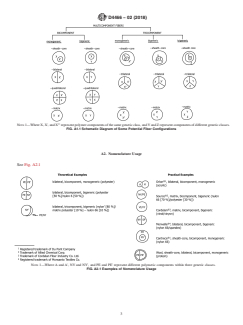
1.1 Man-made polymers can be combined during manufacture, or natural polymers can be formed during growth, to produce multicomponent fibers having special properties such as cross dyeability, differential shrinkage, or bulk. This standard contains terms which can be used to describe the physical arrangement of components of such fibers. The schematic diagram in Annex A1 provides a guide for interpreting the terminology used in describing two- and three-component fibers, but is not intended to be limiting. Some examples of usage are given in Annex A2, and a bibliography of related literature is given in Appendix X1.
1.2 For definitions of other textile terms, refer to Terminology D123.
1.3 This international standard was developed in accordance with internationally recognized principles on standardization established in the Decision on Principles for the Development of International Standards, Guides and Recommendations issued by the World Trade Organization Technical Barriers to Trade (TBT) Committee.
- Status
- Published
- Publication Date
- 30-Jun-2018
- Technical Committee
- D13 - Textiles
- Drafting Committee
- D13.58 - Yarns and Fibers

Overview
ASTM D4466-02(2018), Standard Terminology Related to Multicomponent Textile Fibers, provides essential definitions and terminology for describing fibers made from two or more polymer components. Developed by ASTM International, this standard enables consistent classification and clear communication regarding the structure and composition of multicomponent textile fibers. These fibers, which can be produced by combining man-made polymers during manufacture or by the natural growth of polymer combinations, offer unique properties such as cross-dyeability, differential shrinkage, and enhanced bulk.
This terminology standard supports professionals in the textile industry, research, manufacturing, and quality assurance by detailing the arrangement and nomenclature of multicomponent textile fibers.
Key Topics
- Component and Polymer Definitions: Distinguishes key concepts such as polymer (macromolecular material) and component (polymer with distinguishable properties).
- Multicomponent Fibers: Introduces fiber types including bicomponent (two polymers) and tricomponent (three polymers) fibers, clarifying their chemical and physical arrangements.
- Physical Arrangements:
- Sheath-core: One polymer encases another in a core-shell structure.
- Matrix: One or more fibrous polymers are dispersed inside another polymer matrix.
- Lateral: Polymers are arranged side-by-side along the continuous longitudinal external surface.
- Nomenclature Guidance: Provides a systematic method for fiber naming based on the number and type of polymer components, their arrangement, and generic classes (such as polyester, nylon, spandex).
- Deprecated Terms: Recommends the use of current terminology such as bicomponent bigeneric fiber instead of outdated terms.
- Reference to Related Textile Terminology: Points users to other standards (e.g., ASTM D123) for broader textile definitions and industry consistency.
Applications
- Textile Manufacturing: Enables manufacturers to specify, describe, and differentiate between complex fiber structures in technical documents, labels, and product specifications.
- Product Development: Facilitates the design and engineering of fibers with tailored functionalities, including custom dyeing, heat or moisture management, and material performance.
- Quality Control and Compliance: Supports regulatory and quality assurance processes by providing standardized fiber terminology, essential for meeting international trade requirements and textile labeling laws.
- Research and Innovation: Assists academic and industrial researchers in clearly defining fiber structures and properties, promoting consistency in publication and patent writing.
- Trade and Export: Enhances clarity in global commerce by ensuring fiber terminology aligns with recognized standards and World Trade Organization (WTO) guidelines.
Related Standards
- ASTM D123 - Terminology Relating to Textiles: The principal reference for general textile terms, offering comprehensive definitions for fibers, yarns, and fabrics.
- Regulations Under the Textile Fiber Products Identification Act: Provides legal definitions and requirements for the labeling and identification of textile fibers in commerce.
- International Standards and WTO Guidelines: ASTM D4466 is aligned with international standardization principles, ensuring its terminology is accepted across borders for trade facilitation.
Key terms in this standard include: multicomponent fibers, bicomponent fibers, tricomponent fibers, sheath-core structure, fiber matrix, synthetic textile polymers, and fiber nomenclature. Using ASTM D4466-02(2018) ensures uniformity, accuracy, and compliance with best practices in the classification and communication of advanced textile materials.
Relations
- Effective Date
- 01-Jul-2018
- Effective Date
- 01-Mar-2017
- Effective Date
- 15-Sep-2015
- Effective Date
- 01-Sep-2015
- Effective Date
- 01-Apr-2015
- Effective Date
- 15-Jun-2013
- Effective Date
- 15-Jun-2013
- Effective Date
- 15-May-2013
- Effective Date
- 01-Feb-2012
- Effective Date
- 01-Feb-2012
- Effective Date
- 15-Jan-2009
- Effective Date
- 15-Jan-2009
- Effective Date
- 15-Jan-2009
- Effective Date
- 01-Jul-2007
- Effective Date
- 10-Feb-2003
Get Certified
Connect with accredited certification bodies for this standard

Control Union Certifications
Global certification for agriculture and sustainability.

Hohenstein Institut
Textile testing and certification.

Bureau Veritas Bangladesh
Bureau Veritas certification services in Bangladesh.
Sponsored listings
Frequently Asked Questions
ASTM D4466-02(2018) is a standard published by ASTM International. Its full title is "Standard Terminology Related to Multicomponent Textile Fibers". This standard covers: SCOPE 1.1 Man-made polymers can be combined during manufacture, or natural polymers can be formed during growth, to produce multicomponent fibers having special properties such as cross dyeability, differential shrinkage, or bulk. This standard contains terms which can be used to describe the physical arrangement of components of such fibers. The schematic diagram in Annex A1 provides a guide for interpreting the terminology used in describing two- and three-component fibers, but is not intended to be limiting. Some examples of usage are given in Annex A2, and a bibliography of related literature is given in Appendix X1. 1.2 For definitions of other textile terms, refer to Terminology D123. 1.3 This international standard was developed in accordance with internationally recognized principles on standardization established in the Decision on Principles for the Development of International Standards, Guides and Recommendations issued by the World Trade Organization Technical Barriers to Trade (TBT) Committee.
SCOPE 1.1 Man-made polymers can be combined during manufacture, or natural polymers can be formed during growth, to produce multicomponent fibers having special properties such as cross dyeability, differential shrinkage, or bulk. This standard contains terms which can be used to describe the physical arrangement of components of such fibers. The schematic diagram in Annex A1 provides a guide for interpreting the terminology used in describing two- and three-component fibers, but is not intended to be limiting. Some examples of usage are given in Annex A2, and a bibliography of related literature is given in Appendix X1. 1.2 For definitions of other textile terms, refer to Terminology D123. 1.3 This international standard was developed in accordance with internationally recognized principles on standardization established in the Decision on Principles for the Development of International Standards, Guides and Recommendations issued by the World Trade Organization Technical Barriers to Trade (TBT) Committee.
ASTM D4466-02(2018) is classified under the following ICS (International Classification for Standards) categories: 01.040.59 - Textile and leather technology (Vocabularies); 59.060.01 - Textile fibres in general. The ICS classification helps identify the subject area and facilitates finding related standards.
ASTM D4466-02(2018) has the following relationships with other standards: It is inter standard links to ASTM D4466-02(2012), ASTM D123-17, ASTM D123-15b, ASTM D123-15a, ASTM D123-15, ASTM D123-13ae1, ASTM D123-13a, ASTM D123-13, ASTM D123-12, ASTM D123-12e1, ASTM D123-09, ASTM D123-09e1, ASTM D123-09e2, ASTM D123-07, ASTM D123-03. Understanding these relationships helps ensure you are using the most current and applicable version of the standard.
ASTM D4466-02(2018) is available in PDF format for immediate download after purchase. The document can be added to your cart and obtained through the secure checkout process. Digital delivery ensures instant access to the complete standard document.
Standards Content (Sample)
This international standard was developed in accordance with internationally recognized principles on standardization established in the Decision on Principles for the
Development of International Standards, Guides and Recommendations issued by the World Trade Organization Technical Barriers to Trade (TBT) Committee.
Designation: D4466 − 02 (Reapproved 2018)
Standard Terminology Related to
Multicomponent Textile Fibers
This standard is issued under the fixed designation D4466; the number immediately following the designation indicates the year of
original adoption or, in the case of revision, the year of last revision. A number in parentheses indicates the year of last reapproval. A
superscript epsilon (´) indicates an editorial change since the last revision or reapproval.
Textile Fiber Products Identification Act.” Technically, fibers may be
1. Scope
bigeneric, trigeneric, etc.
1.1 Man-made polymers can be combined during
manufacture, or natural polymers can be formed during
Components
growth, to produce multicomponent fibers having special
polymer, n—a macromolecular material formed by the chemi-
properties such as cross dyeability, differential shrinkage, or
cal combination of monomers having either the same or
bulk. This standard contains terms which can be used to
different chemical composition.
describe the physical arrangement of components of such
fibers. The schematic diagram in Annex A1 provides a guide
component, n—as used with textile fiber polymers, a polymer
for interpreting the terminology used in describing two- and
with distinguishable properties.
three-component fibers, but is not intended to be limiting.
bicomponent fiber, n—a fiber consisting of two polymers
Some examples of usage are given in Annex A2, and a
which are chemically different or physically different, or
bibliography of related literature is given in Appendix X1.
both.
1.2 For definitions of other textile terms, refer to Terminol-
ogy D123. biconstituent fiber, n—deprecated term. Use the preferred
term bicomponent bigeneric fiber.
1.3 This international standard was developed in accor-
DISCUSSION—As used in the Federal Trade Commission’s “Rules and
dance with internationally recognized principles on standard-
Regulations Under the Textile Fiber Products Identification Act,”
ization established in the Decision on Principles for the
“biconstituent fiber” is “essentially a physical combination or mixture
Development of International Standards, Guides and Recom-
of two or more chemically distinct constituents or components com-
mendations issued by the World Trade Organization Technical
bined at or prior to the time of extrusion, which if separately extruded,
Barriers to Trade (TBT) Committee.
would fall within different .” generic classes. In the preferred ASTM
terminology, a biconstituent fiber is a bicomponent bigeneric fiber. It is
not clear from the “Rules” whether a biconstituent fiber has a
2. Referenced Documents
sheath-core, bilateral, or matrix configuration.
2.1 ASTM Standards:
tricomponent fiber, n—a fiber consisting of three polymers
D123 Terminology Relating to Textiles
which are chemically different, physically different, or any
Generic Class
combination of such differences.
Physical Arrangement of Components
3. Terminology
generic class, n—as used with textile fibers, a grouping having lateral, adj—a descriptive term for a textile fiber composed of
similar chemical compositions or specific chemical charac-
two or more polymers at least two of which have a
teristics. continuous longitudinal external surface.
DISCUSSION—In the United States, the generic names and definitions
sheath-core, adj—a descriptive term for a multicomponent
of man-made fibers, such as nylon, polyester, and acrylic, are published
by the FederalTrade Commission in “Rules and Regulations Under the textile fiber consisting of a continuous envelope which
encases a continuous, central, internal region. (See also
component.)
DISCUSSION—Both the sheath and the core can consist of more than
ThisterminologyisunderthejurisdictionofASTMCommitteeD13onTextiles
and is the direct responsibility of Subcommittee D13.58 on Yarns and Fibers. one component arranged laterally, concentrically, or in matrix.
Current edition approved July 1, 2018. Published August 2018. Originally
ε 1
matrix, adj—a descriptive term for a textile fiber in which one
approved in 1985 . Last previous edition approved in 2012 as D4466 – 02(2012).
DOI: 10.1520/D4466-02R18.
ormorepolymericfibrousmaterial(s)isdispersedinanother.
For referenced ASTM standards, visit the ASTM website, www.astm.org, or
contact ASTM Customer Service
...